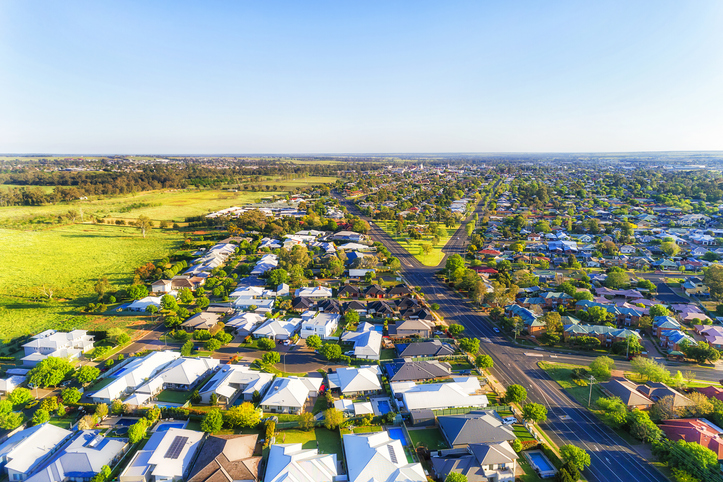
More pain for mortgage holders as RBA announces another rate rise

After months of speculation, the Reserve Bank has raised the cash rate by 25 basis points at a meeting of the board this afternoon, bringing the interest up to 4.35 percent. It marks the first increase since Michele Bullock took on the role of RBA Governor in September but was widely expected, with all four of the major banks predicting the rise.

Pointing to the increasing costs of services, which has resulted in a rate of inflation that is proving hard to draw down, the board said today that the target of 3.5 percent level of inflation was not likely to be achieved until the end of next year.

“Inflation in Australia has passed its peak but is still too high and is proving more persistent than expected a few months ago,” Ms Bullock said in a statement. “The latest reading on CPI inflation indicates that while goods price inflation has eased further, the prices of many services are continuing to rise briskly. While the central forecast is for CPI inflation to continue to decline, progress looks to be slower than earlier expected. “The Board judged an increase in interest rates was warranted today to be more assured that inflation would return to target in a reasonable timeframe.”

While today’s decision would not be welcomed by mortgage holders, CoreLogic research director Tim Lawless said it would likely take some of the heat out of the housing market where prices have continued to their upward trajectory.

“Another 25 basis points translates, roughly, to another $80 per month in mortgage repayments on a $500k loan on top of the $1,040 monthly increase already seen since rates started to rise in May last year,” he said. “Higher interest rates also imply a further diminishing in borrowing capacity as lenders continue to assess borrowers using a three-percentage point serviceability buffer.”

While global events such as the Israel-Gaza conflict were beyond the control of Australian markets, he said it was important to avoid high inflation becoming entrenched.

However, Zippy Financial director and principal broker Louisa Sanghera said the board’s decision did not make sense given many mortgage holders were already stretched to the limit following a 4 percent rise in rates since May last year.

“Many of the new or existing borrowers we speak with have absolutely no chance of refinancing, with a lot of them technically not servicing their current debt levels,” she said.

“Over the past two months in particular, borrowers are becoming more desperate with many homeowners turning to interest-only repayments as the only way they can continue to hold on to their homes.

“Unfortunately, their current lenders don’t necessarily offer interest only to owner occupiers – and they can’t refinance – so they may need to sell or opt for a repayment pause to keep the roof over their heads.”


1 In 4 Australians Don’t Have Enough Super Or Assets To Retire

Almost one in four Australians say they do not have enough superannuation or other investments to get by in retirement, according to a survey by Finder. When extrapolated to a population level, this indicates that 4.6 million people are facing up to a financially difficult future.

A further 27% said they were not sure if they would have enough in superannuation to retire. Just 17% said they were confident they would have enough wealth for retirement, while a further 22% said they would have enough in super but would cut back on spending.

One in 10 said their superannuation balance was too low but they had other investments that would provide enough income or capital to fund their retirement. 

“Superannuation is something many Australians, including the younger demographic, don’t engage in enough,” said Sarah Megginson, Finder’s money expert. “It can be a sad case of ‘too little too late’ for many who realise that by the time they reach retirement age, their super balance will fall well short of the amount of money they will need.” 

According to the Australian Retirement Standard, a ‘comfortable’ retirement costs $70,806 per annum for couples and $50,207 for singles. A modest lifestyle costs $45,946 and $31,867, respectively. The superannuation balances required for a comfortable retirement are $690,000 for couples and $595,000 for singles by age 67. For a modest lifestyle, both couples and singles need a superannuation balance of $100,000.

Currently, the full pension including supplements is $42,988 per annum for couples and $28,514 for singles. However, income and asset tests apply. A couple with their own home is eligible for the full pension if their combined assets (excluding their home) are worth less than $451,500 and they earn an annual income below $9,360. If they do not own a home, the threshold is $693,500. For a single homeowner, the asset limit is $301,750 and the income limit is $5,304. For single non-homeowners, the asset threshold is $543,750.

Ms Megginson said Australians needed to assess their superannuation carefully. “First, it’s essential to know how much you have in super and to consolidate your funds,” she said. “You pay fees for each fund you have – it’s like having your savings split across three savings accounts and paying account-keeping fees on all of them.”

Ms Megginson suggested workers contribute to their super through salary sacrifice or voluntary lump-sum payments. An earlier Finder survey conducted in June 2022 found 46% of Australians do not make additional contributions to super. In FY23 and FY24, taxpayers are allowed to contribute a total of $27,500 per annum concessionally (meaning less tax) incorporating compulsory super paid by their employers and other payments and benefits.

“For instance, if you salary sacrifice $1,000 over 12 months, you’d pay $150 on that income and $850 will go to super where it will be invested for your future. Otherwise, you’ll pay $325 tax on that money and have $675 in your bank account. Any income earned within your super is capped at a maximum tax rate of 15% per annum. If you currently pay say 32.5% tax, you’re ahead immediately.”

Megginson warned workers to compare their super fund’s fees to other super funds. “Make sure you aren’t stuck in a fund charging exorbitant fees and check regularly that your employer is paying your 11% Superannuation Guarantee contributions on time.”

Accounting For The Cost Of Going To Work

Time spent in peak hour traffic, unreliable (and crowded) public transport, the cost of petrol and the ever-elusive quest for a parking spot — the daily commute has long been synonymous with inconvenience and expense.

But as companies urge their employees to reclaim their desks, a fresh wave of calculations has entered the scene and many are now meticulously tallying up the cost of heading into the office compared with working from home.

“Getting back into the office can be great for productivity but it comes at a cost to workers,” says Angus Kidman, money expert at comparison website Finder.

“Whether it’s paying for parking or fares to catch public transport, commuting into the office can be a hefty cost for consumers travelling into the office every day.

“But while remote work eliminates the need for commuting and transport costs, there are still plenty of other costs to be considered working from home.”

It’s no secret that patterns of work have changed drastically since the early days of 2020.

Where once we were content with the daily trip into the office — complete with full corporate wardrobe, coffees, lunch and drinks after work — the pandemic highlighted the ease with which many of us were able to work from home. Fast forward a few years and hybrid work arrangements are now more commonplace. However, in recent months we’ve seen many larger companies beginning to put their foot down on flexible working arrangements.

The truth is that thanks to the rising cost of living and those unrelenting interest rates many Australians are now paying more regardless of where they choose to work. But it seems a conservative estimate of around $10,000 per year to go to the office is the norm when you consider travel, food and your work wardrobe.

Research from Finder reveals consumers spend $122 per week on the commute which amounts to $5,856 over a 48-week work year.

Once we’re at work the spending doesn’t stop, with data indicating Australian workers spend around $1548 a year in their lunch hour — and that doesn’t include your morning coffee.

Commutes and coffees aside, the other big expense with working from the office is undoubtedly the corporate wardrobe although, according to experts, these days it’s more acceptable to be a little less corporate than we may have been used to pre-pandemic.

“Even prior to COVID we were witnessing a more relaxed workplace dress code and now that people have had a taste of dressing more casually, we won’t be in a rush to get back to the corporate that we used to know,” says stylist and corporate image consultant Caitlin Stewart.

“Designers have amended their offerings to reflect greater comfort and versatility in their garments so when curated carefully additional comfort elements can be implemented and still look professional.”

Stewart says a corporate wardrobe update can cost anywhere between $3000-$5000.

She also says while most men are still opting for suits in a corporate environment, the days of office heels and a full face of makeup for women are definitely over.

“A woman can look exceptionally polished in professional, flat loafers and a light face of makeup or just a clean and fresh face.”

Naturally, the actual costs people incur in the office or at home will depend on their specific circumstance but for Simon Kuestenmacher, co-founder of The Demographics Group, the bottom line is clear.

“There’s no question working from home is a cheaper option for many employees — especially in the capital cities,” he says.

Corporate image consultant Caitlin Stewart says comfort dressing can still be professional for women as well as men.

“There’s no tolls, no public transport fees, cheaper lunch, and you can get away with a smaller work wardrobe. Of course, working from home can incur extra costs but these are minimal compared with what it costs to actually physically go into the office each day.”

Undoubtedly, the biggest out- of-pocket expense in the current economic climate when working from home is increased electricity usage and associated bills.

Data from Finder estimates the extra electricity used when working from home will add between $324 in summer and $340 in winter to the average quarterly electricity bill — or an average of around $110 per month.

“You can claim a portion of those costs through tax, but the rules around that are being tightened this year,” warns Kidman.

According to figures from the ATO, almost nine million Australians claim about $22 billion worth of work-related expenses, many relating to working from home.

Other costs to consider in an home office include furniture, equipment, and software. However, according to Kuestenmacher, companies will often foot part of that bill for employees.

Further, experts say the savings associated with working from home are not just financial.

“One of the drivers for people to continue working from home is the cost of lost time that many people experience because of long commutes,” says Dr Penelope Williams from QUT’s Business School and the Centre for Decent Work and Industry.

“For many, the extra time they get back by not travelling to and from another workplace, not only helps them achieve better work-life balance, but also increases their productivity.

“It’s important to consider the financial aspect just as much as the impact of social connections, career advancement, networking and development opportunities.”

That being said, Williams points out that there are physical and mental benefits and challenges for both office and WFH environments.

“It’s really dependent on the needs of the individual and the requirements of the workplace.”

The Improbably Strong Economy

The economy is still generating jobs. A year ago, a lot of economists and Federal Reserve policy makers thought that it would be shedding them by now.

On Friday, the Labor Department reported that the U.S. added a seasonally 150,000 jobs in October from the previous month, versus September’s gain of 297,000 jobs. Some of that step down was due to auto workers’ strikes, which have since been resolved but temporarily caused workers to not draw pay checks.

Average hourly earnings rose 0.2% from a month earlier, putting them 4.1% higher than a year earlier. That was the smallest year-over-year gain since June 2021, though unlike then wages are now outpacing inflation.

One takeaway is that the job market is moderating, but not buckling—a message reinforced by a variety of other data, including low levels of weekly unemployment claims and layoffs. Another is that the Federal Reserve is probably through with tightening: Futures markets on Friday morning indicated that the chance of the central bank raising its target range on overnight rates at its December meeting was below 10%. The yield on the 10-year Treasury note, which briefly hit 5% less than two weeks ago, continued to retreat Friday, falling to 4.53% midmorning.

This wasn’t the sort of job market the Fed expected. When policy makers offered projections last December, they forecast that the unemployment rate would average 4.6% in this year’s fourth quarter, versus the 3.7% rate (since revised to 3.6%) they had seen in the November 2022 job report. That was tantamount to a recession forecast, though they didn’t put it that way, since such a large increase in the unemployment rate would count as a strong signal the U.S. is in a downturn. Friday’s report showed the October unemployment rate at 3.9%.

Economists got it wrong, too. In October of last year, forecasters polled by The Wall Street Journal estimated the unemployment rate at the end of 2023 to be at 4.7%, on average. They also put the chances of a recession within the next 12 months at 63%. By last month, they dropped the recession chance to 48%. Available data show that, as a group, economists have never forecast a recession before it has actually started. Now it looks as if the one time they did forecast one, they were either wrong or early.

It is easy to make fun of other people’s past forecasts, but considering the hurdles the economy has had to clear, it really is striking that it has done so well. A year ago there was some hope that the continued recovery in the service sector, and service-sector jobs, might help take up the slack as the goods sector adjusted to slowing demand. But there was also the concern that the service sector could run out of steam before the goods sector found its footing.

Another worry: That the excess savings that Americans had built up after the pandemic struck would run out, and that would cut into their ability to spend. But recent revisions to the available data suggest there was more money left in the tank than thought.

To these, add that inflation has cooled despite the addition of 2.4 million jobs so far this year, and gross domestic product is expanding much faster than economists expected. Plus, at least so far this year, the economy has made it through a regional bank crisis, a sharp increase in both short- and long-term borrowing costs, and the resumption of student-debt payments.

The jury is out on what happens next. The cooling in the job market could turn into a lurch lower, for example, as the full effect of the Fed’s past rate increases begins to take hold. Inflation, which is still too high, could accelerate, prompting the central bank to further tighten the screws.

But the chances of the economy avoiding a recession seem stronger now than they did even a few months ago. A lot of that would be down to luck, but it would nonetheless be something worth celebrating.

China Unleashes Crackdown on ‘Pig Butchering.’ (It Isn’t What You Think.)

It’s called “pig butchering.”

Armies of scammers operating from lawless corners of Southeast Asia—often controlled by Chinese crime bosses—connect with people all over the world through online messages. They foster elaborate, sometimes romantic, relationships, and then coax their targets into making bogus investments. Over time, they make it appear that the investments are growing to get victims to send more money. Then, they disappear.

In recent months, China has unleashed its most aggressive effort to crack down on the proliferation of the scam mills, reaching beyond its territory and netting thousands of people in mass arrests. Its main target is a notorious stretch of its border with Myanmar controlled by narcotics traffickers and warlords.

For decades, frontier fiefdoms such as those in Myanmar have been havens for gambling and trafficking of everything from drugs to wildlife to people. Now, they are dens for pig-butchering operations.

The scammers operate out of secretive, dystopian compounds, many of which are run by Chinese fugitives who fled their country to places where it was easier to flout the law. They cheat Chinese citizens out of billions of dollars each year, as well as victims across the globe. The U.S. Treasury Department in September warned Americans about the scams.

In addition to remote hillside towns in Myanmar, these heavily guarded enclaves are also found in gambling hubs such as Cambodia’s Sihanoukville and Poipet. Cambodian authorities have carried out sporadic raids with China’s help, but the problem has persisted.

For Beijing, it is a significant source of embarrassment that Chinese criminals are at the centre of scams ensnaring people the world over, said Jason Tower, Myanmar country director for the United States Institute of Peace, an independent research organisation founded by the U.S. Congress that specialises in conflict mitigation.

China is “quite sensitive to the narratives that could potentially emerge,” he said. “These are largely Chinese crime groups which China, for years, did very little to check.”

The operations flourished during the Covid-19 pandemic when border trade stopped and internet use surged. They have also fuelled a human-trafficking crisis.

Many of the scammers entrapping people are themselves victims of human trafficking, lured abroad by fake job ads and held captive by withholding pay and passports. The United Nations human-rights office says more than 120,000 people may be forced to work as scammers in Myanmar, with another 100,000 in Cambodia.

One Malaysian trafficking victim told The Wall Street Journal that he was trained to spend weeks or months “fattening” his victims by gaining their trust before “butchering” them. His story was similar to those told by others lured into working in the scam mills. After responding to an ad on a job-recruitment website, he said he accepted an offer for a customer-service role in Cambodia. Once there, he was driven to a prison-like complex in Sihanoukville and forced to work as a scammer under threats of violence.

He said he had a handler who trained him, supplying him with a smartphone preloaded with fake social-media accounts, a “victim list” containing contact information of potential targets and various scripts designed to break the ice and build their trust. After several weeks, he said he convinced a driver who brought people and supplies to the compound to help him escape.

Regional migration researchers have documented trafficking from dozens of countries. Many victims come from Southeast Asia but some from as far as Brazil and Kenya.

“China is starting to signal that enough is enough,” said Inshik Sim, a Bangkok-based lead analyst for the U.N. Office on Drugs and Crime’s regional operations.

In August, China launched a “special joint operation” with three nearby countries and increased pressure on armed groups that oversee remote parts of Myanmar, convincing them to hunt down, round up and repatriate almost 5,000 Chinese nationals suspected of illicit activity.

Chinese authorities have zeroed in on several border areas that are part of Myanmar but are fully controlled by armed groups. These places have often drawn large investments from Chinese nationals—both legal and illicit. Many Chinese people, including notorious fugitives, live in these enclaves, where the Mandarin language and Chinese currency are commonplace.

The Wa Self-Administered Division, located along China’s southwestern border, is of particular interest to China, in part because Beijing has so much leverage over it. The area is home to the ethnic minority Wa people, who claim the territory as their ancestral home. China has been the group’s main benefactor for decades; historians say they helped the Chinese Communist Party flush out enemies who fled across the border in the 1950s and ’60s. The area later became a major economic gateway to resource-rich Myanmar.

Independent researchers say its de facto leadership, the United Wa State Army, commands a force of more than 20,000 people armed with modern Chinese equipment such as portable surface-to-air missiles and armoured vehicles.

The area has been a major source of opium for almost two centuries, and in recent decades has become a leading producer of synthetic drugs such as methamphetamine. The U.S. Treasury blacklisted the UWSA in 2003 under the Kingpin Act, and has sanctioned dozens of people and businesses linked to the group, calling it “the largest and most powerful drug trafficking organisation in Southeast Asia.”

The UWSA and other criminal networks have increasingly turned to scamming in addition to the drug trade.

According to a 2022 report in Chinese state media, authorities blocked 2.1 million fraudulent websites and some $51.6 billion in suspicious transactions over the previous year. Beijing has warned citizens to look out for dubious rebate offers, investment schemes and unsolicited contact from anyone claiming to represent a company or law enforcement.

The first sign of a serious cleanup came in early September, when China worked with the UWSA to orchestrate two days of raids that ended with more than 1,000 suspects being marched across the border into Chinese custody. Then China upped the ante, taking aim at the group’s leadership.

On Oct. 12, China’s Ministry of Public Security said arrest warrants had been issued for two senior Wa officials accused of leading scam networks: the state’s construction minister Chen Yanban and a mayor named Xiao Yankui. Four days later, the UWSA said both had been stripped of their roles. Their whereabouts is unknown.

The same day, Chinese authorities said they had transferred 2,349 “telecommunication fraud” suspects from Myanmar two days prior—the single largest such handover. China says 4,666 suspects have been repatriated from Myanmar since the crackdown began earlier this year.

“This is by any measure a major operation, which speaks to the impact on China and Chinese citizens, and the seriousness with which Beijing is approaching this,” said Richard Horsey, senior adviser on Myanmar for the International Crisis Group, a Brussels-based think tank specializing in conflict prevention.

While China may be turning up the heat on cybercriminals along its border, experts say scamming is so lucrative that the ringleaders are likely to simply look for more fertile ground—areas in weak states where law enforcement is lax.

“These groups are not going to go away easily,” said Tower, of the U.S. Institute of Peace. “They’re sitting on a massive source of capital and there are many fragile places in the world that they’ll be able to exploit.”

Homeowners’ Spare Rooms Worth $700 A Month In Today’s Rental Crisis

Thousands of Australian homeowners are renting out spare rooms amid the rising cost of living, anaemic wages growth and a national shortage of rental homes. A survey by consumer company Finder shows 9% of respondents – extrapolated to more than 600,000 householders — are renting out their spare rooms. They’re making an average of $667 per month or $167 per week by renting out the spare room.

According to the Australian Bureau of Statistics, 77% of households have at least one spare bedroom that they could rent out during today’s rental housing crisis. CoreLogic estimates there is currently a rental housing shortfall of 47,500 homes, making it difficult for many Australians to find a rental home amid weekly rents increase by 30% over the past three years as a result. Meanwhile, homeowners are grappling with large increases in loan repayments due to rapid-fire interest rate rises. The combination of these two problems is creating a strong market for spare-room renting, with apps such as flatmates.com.au and AirBnb facilitating connections.

Finder’s money expert Richard Whitten said: “For many Aussies, living with a roommate is better than the consequences of missed repayments. It’s also a good opportunity to create an extra revenue stream. You could be missing out on thousands of dollars by not making use of your extra room. If you do decide to go ahead with it, you’ll need landlord insurance to be covered. Home insurance doesn’t typically cover damage caused by tenants.”

The number of householders living in larger homes than they require is a structural problem in the Australian housing market that was raised by former Reserve Bank Governor Philip Lowe at a Senate hearing in May.

During the pandemic, many householders switched from smaller forms of accommodation in inner city areas, such as apartments, to larger suburban houses on the city outskirts or in the regions because they were allowed to work from home. The number of people renting share housing also fell as people sought their own space to make working from home more comfortable and to cope with long periods of lockdown.

Now, Dr Lowe says rising interest rates and rents will force people to “economise on housing”. “The way that this ends up fixing itself, unfortunately, is through higher housing prices and higher rents,” Dr Lowe said. “Because as rents go up people decide not to move out of home, or you don’t have that home office, you [get] a flatmate. That’s the price mechanism at work. We need more people on average to live in each dwelling, and prices do that,” he said.

Dr Lowe said strong population growth would exacerbate the housing shortage, and rents would continue to rise. This means demand for accommodation, including spare rooms, is likely to remain high. “We’re going to have 2 percent more people in the country this year, [but] the capital stock is not increasing by 2 percent,” he said.

Rents have risen by 10% in capital cities and 4.1% in the regions over the past 12 months.

Renting it out is the latest method used by homeowners to derive an income from their homes. An explosion in short-stay accommodation apps over the past decade has also seen many homeowners renting separate living quarters or studios at their homes to short-term holidaymakers or travelling executives. In addition, the Finder survey found that 5% of the population – or more than 300,000 people – are renting out a garage. Australian websites such as Parkhouse, Parking Made Easy and Space Out are enabling homeowners to rent parking spaces including their own driveways.

The Finder survey asked respondents about their side hustles to earn extra income amid today’s cost of living crisis brought about by the highest rate of inflation in three decades and rising interest rates. The survey found that 35% of Australians — or 7.1 million people – are earning additional income through a side hustle. ABS data shows a record number of Australians now have a second job. Popular side hustle jobs include dog walking, mystery shopping, tutoring, freelancing and ride-sharing. The favoured non-employed side hustles include recycling cans and bottles, earning an average of $46 a month, making and selling goods ($213 per month) and selling pre-owned goods ($897 per month).

Macquarie’s 1H Profit Falls, to Launch Up to A$2 Billion Buyback

SYDNEY—Macquarie Group’s first-half net profit fell by 39%, but the company said its strong capital position means it could soon begin buying back shares worth up to 2.0 billion Australian dollars (US$1.29 billion).

Macquarie, Australia’s biggest investment bank and asset manager, said its net profit for the six months through September fell to A$1.42 billion, from A$2.31 billion a year earlier.

Chief Executive Shemara Wikramanayake said Macquarie’s underlying client franchises were resilient amid less certain market conditions.

“Our annuity-style businesses saw growth in loan books, deposits and assets under management, but the first-half result was substantially down compared to a strong period of realizations in the prior corresponding period,” she said. “Our markets-facing businesses delivered solid performances despite lower market activity and volatility levels.”

Macquarie said its group capital surplus was A$10.5 billion at the end of September, down from A$12.6 billion at end-March. Still, the company said its financial position comfortably exceeded regulatory minimum requirements, allowing it to buy back shares worth up to A$2 billion.

Macquarie’s annuity-style activities contributed A$1.3 billion to first-half profit, although this down 43% on a year earlier. This reflected the timing of asset realizations in green investments in Macquarie Asset Management, which more than offset a positive result in Banking and Financial Services.

Markets-facing activities, which include most of its Commodities and Global Markets businesses, fell 32% on year to A$1.56 billion.

“The prior corresponding period featured a strong performance from commodities in CGM together with material asset realizations in Macquarie Capital,” said the company.

Directors declared an interim dividend of A$2.55 per share, lower than a payout of A$3.00 a share a year ago. Still, that beat under consensus forecasts compiled by FactSet, which projected Macquaries’s interim dividend would be A$2.42.

Macquarie’s net operating income of A$7.91 billion was down 8% on year, while operating expenses of A$5.92 billion rose by 6% on year.

International income accounted for 65% of Macquarie’s total income, the company said

Macquarie, which has a reputation among analysts for conservative forecasts, didn’t provide specific guidance.

Starbucks’ New CEO Tells Investors He Plans to Follow the Schultz Roadmap

Investors got a long-awaited glimpse of Starbucks’ future under CEO Laxman Narasimhan Thursday, when the company unveiled an updated strategic plan.

The so-called “Triple-Shot Reinvention Strategy,” which the company announced at an investor event in New York, comes nearly eight months after Narasimhan took the company’s reins from former CEO Howard Schultz.

The event was the first time many investors heard from Narasimhan about his long-term vision for the company. Those who feared a drastic about-face now that Schultz has stepped away can rest easy: Narasimhan describes his new plan as relying “on the foundation” of the reinvention plan laid out by Schultz in September 2022.

“This huge focus on my part, on my team’s part, over the last year to build the foundations—that is continuing,” Narasimhan said in an interview with Barron’s. “All we’ve done here is to say ‘Hey, there’s further stuff [to do] about the store, there are things to do in innovation that we can bring in.’”

Triple-Shot will focus on three areas intended to propel the next stage of the company: improving the store experience, scaling its digital capabilities, and expanding its global footprint. The plan also seeks to increase efficiency and reinvest in its employees.

The company believes the strategy paves the way for long-term revenue growth of 10% or greater, and earnings per share growth of 15% or greater. Long-term guidance issued in 2022 called for revenue to grow between 10% to 12% annually through 2025, and earnings per share to increase between 15% and 20% in that time. Same-store sales will grow by at least 5%, Starbucks said Thursday. Last year, the company forecast they would grow between 7% and 9% annually.

Starbucks also announced a $3 billion cost savings plan, set to be implemented over the next three years.

The company’s store expansion plan is largely unchanged. Starbucks is reiterating its aim to operate 55,000 stores by 2030, an increase of 45% from its current tally of about 38,000. Most of these new store openings will be outside North America, Starbucks added.

Starbucks rewards members are expected to double from the current 79 million within the next five years.

Here are more takeaways from Thursday’s event.

Narasimhan Sees Better, More Efficient Stores.

The pandemic was hard on Starbucks stores, Narasimhan told Barron’s. The early stages of the lockdown snarled supply chains and closed off cafes. Many locations pivoted to drive-through and mobile-order only formats—and in the process, trained customers to drink their coffee on the go, analysts say.

Although grab-and-go is typically a more profitable business model than the company’s traditional sit-down cafe model, it comes with a new set of challenges. Perhaps the biggest is the impact on baristas. Some baristas told Barron’s that their jobs have gotten more stressful with the rise of mobile ordering and delivery, as they now have to juggle an onslaught of orders that, in some cafes, have turned every hour into rush hour.

“A lot of things didn’t go the way that they normally do for a company that was focused on human connection,” Narasimhan said.

Triple-Shot aims to streamline baristas’ work every step of the way—from overhauling back-end procedures, such as recording inventory, to improving daily minutiae, like the way customers pick up their orders. Part of this effort includes opening stores with new layouts, like drive-through only or delivery only, to better serve the needs of the local market. Starbucks is planning on increasing the number of take-out only or delivery-only stores, both of which comprise 1% or less of the current store portfolio. By 2025, Starbucks aims to redirect 40% of delivery orders to delivery-only stores.

Through its investment in efficiencies, the company says it can cut more than $3 billion in costs over the next three years up and down the supply chain. It plans to reinvest those funds in the business and to deliver shareholder returns.

Investments in Employees Will Continue

Starbucks announced plans to invest $1 billion in employee initiatives, including installing new technology in stores, raising wages, boosting benefits, and improving scheduling. Since 2020, hourly total cash compensation has increased by nearly 50%. By 2025, the company plans to double hourly incomes compared with 2020 through more hours and higher wages.

This is the second round of workforce investment Starbucks has rolled out since it started dealing with a rise in unionisation activity two years ago. The first billion-dollar round was announced in May 2022, and was funneled into pay raises, additional training, and better technology in stores.

Some union members and politicians have criticised the way Schultz and the company handled the company’s early stages of unionisation. They point to dozens of complaints the National Labor Relations Board has filed against the company, and Schultz’s public comments that unions were contrary to his vision for Starbucks. A month after Narasimhan took control of the company, a group of more than 40 of the union’s allies sent him a letter, urging him to “create and build a healthy working relationship with unionised partners.”

Close to half a year later, Narasimhan’s stance on unionisation is still a bit of a mystery, investors say. When Barron’s asked him how the employee investments factored into his and the company’s perspective on unionisation, he said he would only talk about the partner investments. The company has long emphasised the investments made in its workforce when asked about unionisation efforts.

“We have a holistic view of the kind of bridge that we provide our partners to a better future and it is grounded in the idea of a strong operating culture,” he told Barron’s. “It is grounded in the idea of human connection. If you look even at our mission, every word in that mission is about giving the barista agency.”

Global Expansion and China

China has become Starbucks’ second largest market after the U.S. On Thursday, the company reaffirmed its commitment to growing in the country despite rising operational challenges.

“I’m really bullish on China, in the long run,” Narasimhan said in an interview.

He added that the company was also planning on expanding even further in other international markets. Three out of four new stores over the near term will be opened in markets outside the U.S., including in Southeast Asia and Latin America.By 2030, the company plans to have 35,000 stores outside of North America. As of Oct. 1, it had a little over 21,000 international stores.

Starbucks stock closed 9.5% higher Thursday, buoyed by a stronger-than-expected fiscal fourth quarter. Shares were largely unchanged in after-hours trading, up 0.2%.

Cheapest Capital City Suburbs To Rent Today

It costs a median $616 per week to rent a property across Australia’s combined capital cities, with rents rising 10% over the past 12 months alone, according to new CoreLogic data. The cost is lower across the combined regions a median of $507 per week, up 4.1% over the past year.

Rents across Australia have risen by 30% over 38 consecutive months, adding $137 per week to the median cost of renting. The number of properties being advertised for rent fell to its lowest level in more than 10 years during the September quarter. A rental vacancy rate of 3% is considered a balanced market but rates are now at record lows of 1% in the capitals and 1.2% in the regions.

CoreLogic Economist Kaytlin Ezzy said record high net overseas migration and an estimated shortfall of 47,500 rental homes were pushing rental values higher. However, she noted that the pace of rental growth is starting to slow, with national rents rising 1.6% in the September quarter compared to 2.2% in the June quarter, as renters hit an affordability ceiling.

Ms Ezzy said more renters were banding together to form larger households to share the burdensome cost – a trend that is creating stronger demand for rental houses, in particular. “There is already some evidence that a structural change in household formation, coupled with worsening affordability in the unit sector, has shifted some rental demand back in favour of the low-density sector,” Ms Ezzy said. “National house rents are now rising faster than unit rents … reversing the trend seen through much of 2022 and the first half of 2023.”

CoreLogic has published a report revealing the cheapest suburbs to rent in within a 20km radius of capital city CBDs. The list below shows the current median weekly rent in each suburb.

Cheapest rents within 20km of CBDs

Sydney houses

Auburn $648 pw

South Granville $657 pw

Granville $673 pw

Regents Park $675 pw

Sefton $676 pw


Sydney apartments

Berala $486 pw

Wiley Park $491 pw

Punchbowl $498 pw

Lakemba $501 pw

Regents Park $509 pw


Melbourne houses

Albanvale $441 pw

Laverton $441 pw

Broadmeadows $441 pw

Kings Park $442 pw

Ardeer $443 pw


Melbourne apartments

Albion $366 pw

St Albans $398 pw

Deer Park $406 pw

Kingsville $411 pw

Thomastown $420 pw


Brisbane houses

Woodridge $501 pw

Inala $503 pw

Ellen Grove $523 pw

Darra $526 pw

Rocklea $544 pw


Brisbane apartments  

Woodridge $352 pw

Rochedale South $436 pw

Strathpine $446 pw

Brendale $459 pw

Alexandra Hills $468 pw


Adelaide houses

Salisbury $473 pw

Braham Lodge $475 pw

Salisbury Downs $478 pw

Paralowie $498 pw

Taperoo $502 pw


Adelaide apartments

Salisbury East $361 pw

Salisbury $378 pw

Kilburn $397 pw

Klemzig $402 pw

St Marys $403 pw


Perth houses

Girrawheen $491 pw

Gosnells $501 pw

Midland $503 pw

Middle Swan $518 pw

Koondoola $519 pw


Perth apartments 

Midland $433 pw

Gosnells $441 pw

Noranda $445 pw

Hamilton Hill $457 pw

Coolbellup $462 pw


Hobart houses

Bridgewater $485 pw

Midway Point $501 pw

Chigwell $501 pw

Claremont $509 pw

Berridale $516 pw


Hobart apartments

Claremont $411 pw

West Moonah $422 pw

Glenorchy $431 pw

Lindisfarne $456 pw

New Town $463 pw


Canberra houses

Higgins $597 pw

Scullin $598 pw

Page $599 pw

Charnwood $599 pw

Holt $599 pw


Canberra apartments

Lyons $468 pw

Chifley $494 pw

Hawker $501 pw

Mawson $528 pw

Gungahlin $529 pw


Darwin houses

Moulden $539 pw

Gray $549 pw

Driver $564 pw

Woodroffe $587 pw

Bakewell $591 pw


Darwin apartments 

Bakewell $457 pw

Leanyer $468 pw

Coconut Grove $475 pw

Millner $478 pw

Rapid Creek $494 pw


The 1% Club: What It Takes To Be Rich In The Lucky Country

The pathway to growing wealth in Australia is changing, with new research revealing that the amount of money you need behind you to be in the top one percent of wealthiest people in Australia has doubled over the past two years.

While many households across the country are battling the rising cost of living pressures, it has been revealed that 2.2 million Australians have amassed at least $8 million in money and assets, up from $4 million in 2021. This status places them in the list of the nation’s High Net Wealth Individuals.

The data, revealed in this year’s Knight Frank’s Wealth Report, gives anyone interested in wealth fascinating insights into just how much money it takes to reach the one percent threshold across the world. The report reveals that Australia now ranks as third for the money required to be in the top one percent, up from seventh in 2021,

sitting behind Monaco in top place and then Switzerland.

In Monaco, it takes $18.1 million to be considered rich, but bear in mind that the nation has long been considered a tax haven, with residents avoiding income and capital gains taxes.

Finance experts are adamant that the fundamentals that help you get rich haven’t changed — the wealthy purchase property, pay down their debt, stick to a budget and utilise the tax offsets that exist within the nation’s superannuation system to build their wealth.

Sounds simple enough, but amid a cost of living crisis, it’s not quite so straightforward.

The power of money

Rachael Evans entered the realm of HNWIs a few years ago, admitting that she takes a structured approach to building and managing her wealth.

Money isn’t just a functional, tangible thing. There’s energy associated with it, she says.

“The first thing that you have to get your head around is that money wants structure, so if you don’t have rules that govern your money, it will not stay with you, no matter how much you earn,” she says.

The CEO of four-day work week consultancy, 4 Days 4 All, and business coach always pays herself first as the owner of her business, and then allocates what’s left over back to the business.

“Most business owners do it the other way around, which leaves owners with a very small portion left over, if anything,” Evans says.

Evans and her husband aim to be debt free by the time they reach 55 years of age, and have reverse engineered their finances based on that to allocate what’s needed to pay off her investment properties.

She has a team of experts

< to help her achieve that goal. “What’s changed over the past five years is the value that I place on the people we hire to advise us, such

as our property adviser, financial adviser and our accountant. There’s far too many financial advisers out there advising others on how to handle their money based on theory because they don’t actually have any skin in the game.”

Investing in herself is also critical, so she sets aside up to 10 percent
of her annual revenue in business- related coaching for herself and her team.

Millionaire status

Melbourne businessman Ryan Watson has reached the HNW status. The founder of financial advice firm Tribeca Financial admits that it dawned on him that he had reached a financial milestone that he considered to place him among other wealthy Australians about four years ago. He’s since stepped down to working four days a week and likes to spend his money on buying experiences, like travelling with family when he can.

The business has nearly 1,000 clients and has an annual turnover in excess of $5 million. Being in a position to build the financial literacy of his clients spurs him on.

“I have been able to build my personal wealth from receiving a small inheritance in 2002 to today where I’m now worth 8 figures,” he says.

A key plank in wealth-building has been his focus on diversifying his investments. He’s also not risk averse, buying shares in lithium companies nine years ago.

“It’s certainly not been an overnight success, the shares have gone up and down over the years, but with the advent of electric cars, they make a lot of sense at the moment,” Watson says.

The forced discipline of structuring his finances so that he’s always paying something off also appeals to him. Right now, he and his wife pour a minimum off 33 per cent of their income into paying off their principal residence.

“The responsibility and commitment of paying back debt works well for us,” he says.

Rich getting richer

The mega-rich are also getting richer. People with a net worth of more than $43.8 million is a category of wealth expected to grow by 40.9 percent over the next five years from 17,456 in 2022 to 24,589 in 2027. That’s almost 3,000 additional UHNWIs than the 31.1 percent growth over the past five years.

A large contributor to the top one percent wealth doubling in Australia over the past two years has been prime residential property performance recording an upward trajectory, resilient despite the rising cost of finance, with half of this cohort tending to be cash buyers.

“The level of wealth required to reach the wealthiest one percent varies extensively, depending on where you live in the world, but it has risen across the board … reflecting the growth in wealth portfolios over the past two years, despite the dip in 2022,” Knight Frank’s head of residential research Australia, Michelle Ciesielski says.

“We can’t underestimate how much the pandemic brought forward decision making, rebalancing of portfolios and re- evaluating how much time is spent in Australia going forward, given many spent longer periods of time grounded at home than they had over the past decade,” she says.

“On average, the UHNWI population in Australia owns 2.9 homes, or equivalent to 36 per cent of their total wealth is in primary and secondary homes.

“For their investible wealth, 94 percent of their portfolios tend to be held in Australia, 34 percent is in some form of commercial property ownership, while 21 per cent is in equities.”

Sam Bankman-Fried’s Lawyers Seek to Regain Ground in FTX Trial

Sam Bankman-Fried’s lawyers rested their case Tuesday after seeking to rehabilitate the FTX founder’s credibility from the prosecutors’ two-day grilling.

Bankman-Fried, dressed in a grey suit, floundered through the end of Assistant U.S. Attorney Danielle Sassoon’s cross-examination.

For a second day, Sassoon walked Bankman-Fried through balance sheets, communications and tweets, again highlighting inconsistencies—or what she portrayed as outright lies—between the defendant’s public statements and his private knowledge.

Bankman-Fried repeatedly told jurors he couldn’t recall many of his past statements. He said he couldn’t remember the exact time line of things.

Defence attorney Mark Cohen sought to elicit testimony to explain his client’s evasiveness. He asked about reasons for his foggy memory and his use of a private jet and his contempt for regulation.

“You used the phrase ‘f— regulators,’ ” Cohen said, referring to a series of messages between Bankman-Fried and a Vox reporter. “Was that the full extent of the chain?”

It wasn’t, said Bankman-Fried, adding that he felt that his efforts to work with regulators might have only led to more bad regulation. “I was somewhat frustrated,” he said.

Cohen asked about the huge amount of evidence in the case—suggesting his client couldn’t possibly remember every document—and his many media interviews.

Bankman-Fried told the jury he talked to about 50 reporters during the time between FTX’s collapse and his arrest, typically preparing between 30 seconds and an hour for each interview. When he testified before Congress, others helped him prepare his testimony, he said.

Bankman-Fried’s testimony, which formed the bulk of his defence team’s presentation, is likely crucial to jurors’ determination of whether to find him guilty of fraud and other charges. Closing arguments are scheduled for Wednesday, clearing the way for the jury to likely get the case on Thursday.

About half of the jurors watched Bankman-Fried as he spoke. Some scribbled notes and others gazed at the floor. One man closed his eyes. Damian Williams, the Manhattan U.S. attorney who has given priority to prosecuting cryptocurrency cases, sat in the front row of the courtroom gallery.

Bankman-Fried again answered some of the prosecutor’s questions by quibbling with their premise. When asked about an $8 billion hole in the balance sheet of Alameda Research, FTX’s sister hedge fund, he said that “hole” wasn’t the word he would use. He said he couldn’t speak with exact confidence about whether some FTX customers, outside of its sister hedge fund, had special privileges.

Sassoon asked if it was Bankman-Fried’s practice to maximise making money even with the risk of going bust. “It depends on the context,” he replied. He later added, “With respect to some of them, yes.”

Sassoon concluded her cross-examination by playing a recording of a Nov. 9, 2022, all-hands meeting in which Caroline Ellison, the former chief executive of Alameda Research and Bankman-Fried’s former girlfriend, spoke with Alameda staffers. Ellison, her voice halting, said she had talked about Alameda’s use of customer funds with Bankman-Fried and two of his top deputies, Nishad Singh and Gary Wang.

“Ms. Ellison identified you, Gary and Nishad as her co-conspirators, correct?” Sassoon asked.

Sassoon showed jurors a document, from Dec. 25, 2022, in which Bankman-Fried appeared to be analysing his own potential legal jeopardy and assessing how the government viewed the alleged conspiracy. While it was public that Ellison and Wang were cooperating with prosecutors, Bankman-Fried wasn’t sure if Singh, a former FTX executive, would be charged.

“They don’t seem to be keeping a seat warm for him as a defendant,” the document said.

“You wrote that, Mr. Bankman-Fried?” asked Sassoon. “I think so,” he said.

Singh, who later pleaded guilty, testified for the government earlier in the trial.

Later, Bankman-Fried’s lawyer referenced a photograph of Bankman-Fried on a private jet, reclining with his eyes closed. The prosecution had showed the jury the photo as an example of excess spending. Cohen asked Bankman-Fried if he remembered the photo.

“A very flattering one,” Bankman-Fried said sarcastically, before agreeing that using a private jet was a valid business expense.

“It was very logistically difficult to travel between the Bahamas and a few places, chiefly Washington, D.C.,” the FTX founder told the jury.

After the defence attorney wrapped up, Sassoon told the judge she had no more questions. Bankman-Fried took a long swig from his water bottle as he stepped down for his final time from the witness stand.

ASX uranium stocks go gangbusters as the world turns to nuclear energy

Uranium is set to play a major role in the world’s green energy transition, with many nations proactively developing their nuclear energy capacity to reduce their reliance on fossil fuels for power generation in the future.

Whilst most nations are pursuing renewables and green energy storage systems as their definitive long-term solution for climate change, it is likely not possible to develop enough wind and solar technology and infrastructure quickly enough to replace fossil fuels in time to meet 2050 net-zero emissions targets.

On top of this, volatile oil and gas prices amid supply uncertainty have enhanced the interest in nuclear power. The pandemic and Russia-Ukraine conflict created significant oil supply disruptions, OPEC has recently placed limits on production, and the Israel-Gaza war may make the situation even worse. AMP Chief Economist Shane Oliver says the global oil price could rise to US$150 per barrel – up from the low $80 range today – if Israel and Iran commence a military engagement.

Against this backdrop, nations are rushing to embrace nuclear technology to act, at least, as an initial first step on the road to a green energy future. According to the International Atomic Energy Agency (IAEA), there are approximately 440 reactors in operation across 32 countries today, with 56 new ones under construction. Monash Investors estimates there are another 100 reactors in the advanced planning stages across 17 countries. China alone is expected to build 32 new reactors by the end of the 2020s.

Surging demand for uranium has been met with low existing inventories. This has created a perfect storm for the global uranium price, which is now at a 12-year high of US$73 per pound. The rising uranium price has made it economical for many mining companies to restart dormant mines and develop new ones in the face of new and likely ongoing long-term demand. “We see prices rising year-on-year for the next 10-20 years or till the world finds another source for large scale uninterruptible base load power with a low carbon footprint,” SP Angel mining analyst John Meyer told Reuters recently.

All of this has led to skyrocketing share prices for ASX uranium stocks this year.

In Australia, nuclear energy is banned. The Federal Opposition has been arguing to include nuclear energy in the mix for Australia’s own green energy transition. The Albanese Government disagrees, advocating for continuing renewables development instead. Federal Energy Minister Chris Bowen says developing local nuclear energy production is too expensive. He says recent modelling shows it would cost $387 billion to replace Australia’s coal-fired power plants with small modular reactors.


Australia’s 3 largest ASX uranium stocks


The three biggest pure-play uranium shares on the ASX have outperformed the broader market exponentially in 2023. While the S&P/ASX 200 Index has lost 2.5% of its value, Australia’s biggest listed pure-play uranium miners have exploded with share price growth of 40% to 115% between them.


Paladin Energy

Paladin Energy is the biggest pure-play uranium stock listed on the ASX, with a market capitalisation of $2.81 billion. The Paladin Energy share price closed on Monday at 95 cents, up 43% in 2023 so far. The stock reached a decade-high price of $1.15 in September.  According to a survey of analysts on CommSec, five out of seven analysts covering Paladin Energy shares rate them a strong buy.


Boss Energy

Boss Energy has a market capitalisation of $1.59 billion. The Boss Energy share price closed on Monday at $4.37, up 115% in 2023. It hit an all-time record price of $4.98 in September. Three out of six analysts covering Boss Energy shares rate them a hold.


Deep Yellow

Deep Yellow has a market capitalisation of $963 million. The Deep Yellow share price closed yesterday at $1.27, up 85% in 2023. The stock cracked a 10-year high of $1.41 per share in October.  Three out of three analysts covering Deep Yellow shares rate them a strong buy.

Aussies Seek Sustainable Shopping: The Rise and Impact of B Corp Certification in Australia

Shopping never used to be this hard. Once a matter of whether there was enough cash in your wallet or room on your credit card, now consumers are becoming increasingly concerned about the cost of buying something new not just for themselves, but the planet as well. Nearly 60 percent of Australians value sustainability more than they did two years ago, according to a recent survey by market analysts NIQ.

Yet just 37 percent say they could shop sustainably with ease versus
a global average of 50 percent. Bombarded with slogans and social media touting a brand’s “eco- friendly” or sustainable credentials, consumers struggle to cut through the greenwash.

Environmental claims are a powerful marketing tool and in Australia it is illegal for business to make false ones. But for customers or investors looking for certainty, the market has provided it through a growing movement called B Corp.

Companies that meet high sustainability standards can attain B Corp Certification — an internationally-recognised tick of approval. It was introduced by B Lab, a United States non-profit organisation founded in 2006 by three friends wanting to make business a force for good.

Companies have to prove to B Lab they’re making a positive impact on the “quadruple” bottom line: people, planet, profit, purpose.

‘B’ stands for ‘benefit for all’ and the fee-based application process is rigorous.

Unlike Environment, Social and Governance (ESG) reporting frameworks, B Corp measures a company’s entire footprint, from supply chain practices and input materials to employee benefits and governance structures.

Businesses submit detailed evidence to B Lab on these standards and must be scored 80 or above on their B Impact Assessment. Once verified, a company’s score appears on the global B Corp Directory.

They can also use the distinctive B Corp logo — an encircled black B — in marketing.

While B Corps don’t carry any particular legal or government status in Australia, the logo carries weight with consumers.

“Most market research finds
that the most important thing to consumers is a company’s reputation or credentials,” Emma Herd, EY Oceania Partner in Climate Change and Sustainability Services, says.

“B Corp Certification is a
quick and recognised way of demonstrating you are taking voluntary action to address sustainability issues that affect your markets, consumers and banks.”

There are more than 6,000 B Corps globally, including about 470 in Australia and New Zealand.

Big names include Danone and Patagonia.

The latest Australian business to join the ranks is designer furniture and lighting supplier Living Edge.

With showrooms nationwide, the luxury retailer has a 15-year history of sustainable practice, from partnering with eco-friendly brands to using electric vehicles.

Living Edge Sustainability Strategist Guy Walsh says that certification — a “great validation of what we have achieved so far” — has provided pivotal business insights.

“We always believed we had a sustainable portfolio of products but going through the B Corp certification process was the first time we could look at an actual metric,” Walsh says.

“We found in the 2021-22 financial year, 69 percent of our revenue was generated from the sale of products certified to internationally recognised environmental accreditations.

“Another one that I found interesting, and which is so important for creating industry circularity, is that 21 percent of our revenue is coming from recycled materials. This data gives us a clear baseline to improve on.”

Constant improvement lies at the heart of B Corp. Businesses must recertify every three years as standards evolve. Australian firm WOWOWA Architecture, known for its whimsical and sustainable creations, was recently recertified after gaining B Corp status in 2019.

Director Monique Woodward says they “lost some points but gained others and that’s OK.”

She says certification has provided a “road map for growth” and helped the firm attract environmentally- focused clients.

“Our favourite residential family clients come to us because they believe what we believe, then also want a deliciously colourful and wildly textured home,” Woodward says. “Crumpler came to us wanting a fresh but nostalgic look thatspoke to their motto ‘bags that will probably outlast you’. We are now doing all their stores.”

For Woodward, industry and supply chain sustainability can improve if more firms jump on the B Corp bandwagon.

“Moving forward, all projects need to far exceed current regulatory requirements. Award winners
need to push hard and set new benchmarks for zero carbon, no waste, no gas as the bare minimum,” she says.

According to B Lab, B Corps are 4.5 times more likely than other businesses to use 100 percent renewable energy and 7.3 times more likely to be carbon-neutral.

EY Oceania sustainability expert Herd says the pressure is on business to be more sustainable.

“The investment thesis of ESG and sustainability is that a well-managed company on ESG credentials is generally better run and more profitable,” she says.

“We are seeing it’s harder for companies to do nothing on sustainability and ESG. We’re also seeing an increased push from business in Australia to government to provide consensus building around accredited certification schemes. There is a hunger from business to have a benchmark.”

For newly-minted B Corp Living Edge, certification is a gamechanger for business and consumers.

“Now we have got a measure for how sustainable our products are, we can be more targeted when we bring brands to market,” Walsh says.

“Our brand is not about throwaway consumables or fast furniture. We’re building a socially responsible and sustainable business. B Corp Certification is valuable to our customers because it gives them third-party assurance that we’re trying to do the right thing.”

The Hunt for Crypto’s Most Famous Fugitive. ‘Everyone Is Looking for Me.’

Fallen crypto tycoon Do Kwon was ready to get out of Montenegro. He and his colleague arrived at the small Balkan country’s main airport, where a Bombardier business jet was waiting to take them to Dubai.

Inside the VIP terminal, Kwon handed his passport to an immigration officer, who swiped it. An alert flashed across the officer’s screen. Kwon, it said, was the target of an Interpol red notice—a request to police around the world to arrest him.

Kwon had been lying low in the Balkans for months, but his luck was running out. About two hours earlier that day, March 23, a tipster had separately warned Montenegro’s top cop, Interior Minister Filip Adžić, that Kwon was likely in the country.

The tipster sent Kwon’s passport details to the interior minister’s phone, according to Adžić, who recounted the arrest for The Wall Street Journal. When Adžić called the border police chief, officers had just detained Kwon at the airport.

“Do you know who that person is?” the interior minister said he told the chief. “He is famous and he has a lot of money.”

U.S. and South Korean authorities had been investigating Kwon over his role in one of the biggest disasters in cryptocurrency history. In May 2022, two tokens that he created, TerraUSD and Luna, crashed in value. The implosion erased $40 billion from the cryptocurrency markets and triggered a chain reaction that pushed other digital-asset firms into bankruptcy. Investors around the world lost their savings.

The investigators concluded that he lied to investors, and suspected he was secretly sitting on a crypto fortune. He now faces charges in both the U.S. and South Korea, including fraud and violations of capital-markets laws. Prosecutors in South Korea have said that if convicted there, Kwon would likely face the longest jail term for a financial crime in the country’s history.

Kwon denied committing fraud. But just before he faced potential arrest, he vanished from his home in a Singapore luxury high-rise. He taunted authorities by tweeting and giving interviews from his undisclosed location. Even after his capture, he kept stirring up drama: A letter he sent from prison to Montenegro’s prime minister unleashed a major political scandal in the tiny U.S. ally.

The 32-year-old Kwon now sits in a Montenegrin prison, where he is kept in isolation. Officials found that the Costa Rican passport he showed at the airport was a fake. The U.S. and South Korea are battling for his extradition. If sent to the U.S., he would likely end up in the same New York jail that now houses Sam Bankman-Fried—another disgraced crypto tycoon, whose companies were fatally weakened by fallout from the TerraUSD-Luna crash.

This account of Kwon’s life on the lam is based on interviews with officials in South Korea and Montenegro, current and former employees of his company, Terraform Labs, and people close to Kwon. He didn’t respond to requests for comment given to his Montenegrin lawyer.

‘Steady lads’

TerraUSD was a stablecoin, designed to maintain a price of $1. Crypto investors often use stablecoins as a haven to save profits from successful trades. TerraUSD differed from many other stablecoins because it wasn’t backed by dollars in a bank. A so-called algorithmic stablecoin, it relied on complicated financial engineering and the collective efforts of traders to keep its $1 peg.

Kwon hailed TerraUSD as the centerpiece of a new monetary system, uncontrolled by banks and governments. Some crypto observers warned it was a ticking time bomb.

On May 7, 2022, its price began to slip, spooking investors. The trigger for the decline was a few big withdrawals from Anchor Protocol, a sort of pseudo-bank that offered investors annual returns of nearly 20% for TerraUSD deposits.

“Deploying more capital – steady lads,” Kwon tweeted as TerraUSD tumbled. His team tapped a $3 billion reserve fund to bolster the stablecoin. He scrambled to arrange a bailout. Nothing worked. Within days, TerraUSD was worth pennies.

Investors were furious. They had poured billions into TerraUSD, putting most of it in Anchor, which many treated as a savings account. Others had gambled on Luna, a related coin that fell more than 99%.

While Terraform Labs was based in Singapore, Seoul was perhaps the crash’s epicenter. Kwon, a South Korean citizen who graduated from an elite foreign-language high school in Seoul and studied computer science at Stanford University in California, had been a figure of national pride. Some 100,000 South Koreans lost money on TerraUSD and Luna, officials there say. Complaints flooded into prosecutors’ offices.

It was Dan Sung-han’s job to lead the investigation. A boyish-looking 49-year-old, Dan heads the Financial Crime Investigation Bureau of the Seoul Southern District Prosecutors’ Office. Local media have dubbed the unit the Grim Reaper of Yeouido, referring to Seoul’s financial district, for its fights against stock-market fraud and manipulation.

“It took us a good amount of time to build a solid understanding of the crypto market,” Dan said.

The South Korean investigators raided Terraform’s local office. They questioned current and former employees. They seized evidence from seven South Korean crypto exchanges, hauling away blue boxes stuffed with documents, laptops, smartphones and external hard drives.

Crypto high roller

Kwon at the time was living with his wife and infant daughter in the Sculptura Ardmore, a ritzy Singapore high-rise. His duplex apartment included a 46-foot-long cantilevered outdoor swimming pool. He kept Japanese whisky and Cuban cigars on hand for guests.

The baby had been born just weeks before the crash. Kwon named her Luna, after his cryptocurrency. “My dearest creation named after my greatest invention,” he tweeted just after her birth, posting a picture of the newborn.

That summer, Kwon met friends at French and Japanese restaurants including Les Amis, with three Michelin stars. He mused to some associates about visiting Europe with his family on an extended trip, so he could be relatively anonymous in a new city.

At one party he attended in Singapore, not long after the crash, many of the attendees were crypto entrepreneurs who came to show their support for Kwon. Cristal Champagne and Martell XO cognac flowed freely, according to one person familiar with the event.

Meanwhile, Kwon’s investors were suffering.

In war-torn Ukraine, web designer Yuri Popovich said he lost $9,000 that he had stashed in TerraUSD because he didn’t trust his country’s banks. In Britain, a 36-year-old IT consultant lost more than $30,000. He said it took him two months to muster the courage to tell his wife. He took a job as a window cleaner to pay the bills.

In Taiwan, local media reported that a man fell to his death from his 13th-floor apartment in an apparent suicide, after telling friends and relatives that he had lost some $2 million on Luna.

Kwon told the Journal through a spokesman in June 2022, “I’ve been devastated by recent events and hope that all the families who’ve been impacted are taking care of themselves and those that they love.”

A Singapore law firm, Drew & Napier, prepared to sue Kwon on behalf of a group of TerraUSD investors who said they collectively lost more than $50 million.

On Sept. 6, 2022, Kwon marked his 31st birthday at home. His wife shared photos with friends of him enjoying a Korean meal with her and playing with their baby.

The next day, a representative of Drew & Napier arrived at the Sculptura Ardmore to serve him with lawsuit papers—but he was already gone.

Red notice

On Sept. 7, Kwon flew to Dubai, and then Serbia, South Korean prosecutors say. He settled in the capital, Belgrade, known for its nightlife scene and tech sector.

Days later, South Korean prosecutors obtained a warrant for Kwon’s arrest on charges that he had violated the country’s capital-markets law. They had worked long hours, feeling intense public pressure to bring Kwon to justice. Dan, their leader, sometimes napped on a black recliner in his office.

Among other alleged irregularities, Dan’s investigators zeroed in on the relationship between Terraform Labs and Chai, a South Korean payment app that at one point boasted two million users.

Before the crash, Kwon had repeatedly claimed that Chai used his firm’s Terra blockchain to move funds between users and merchants. The claim was a key selling point for investors, who saw Chai’s use of Terra as a rare real-world use of blockchain technology. Proponents see blockchain—the underlying technology behind bitcoin and other cryptocurrencies—as a way to empower individuals while cutting out banks and other traditional middlemen.

But Kwon’s claim was false, South Korean prosecutors alleged. In reality, they said, Chai used traditional payment systems to settle transactions and its use of blockchain was a sham. Lawyers for Chai founder Daniel Shin said Chai initially used the Terra blockchain to process payments, but stopped in 2020. Shin, a former business partner of Kwon’s, has denied wrongdoing. Lawyers for Kwon have defended his statements about Chai.

“I am not ‘on the run’ or anything similar,” Kwon tweeted on Sept. 17 after news of the arrest warrant. He still refused to reveal his location, citing threats to his security.

South Korean prosecutors filed a red notice through Interpol, the global policing body, effectively asking cops worldwide to capture Kwon.

From Serbia, Kwon told one crypto-industry associate that he had a deal with the local government. He told another that Serbian law enforcement allowed him to remain even after learning about the Interpol red notice.

Serbia’s Interior Ministry, Justice Ministry, Foreign Affairs Ministry and main public prosecutor’s office didn’t respond to interview requests.

Kwon continued to manage Terraform Labs from hiding, and pushed a long-shot plan to revive its Terra blockchain. He joked with colleagues in Terra Rebirth League, a group on the Telegram messaging app with over 300 members, according to messages seen by the Journal.

Early in his stay in Belgrade, Kwon lived in an apartment near Knez Mihailova, a pedestrian street in central Belgrade known for its shops, sidewalk cafes and 19th-century architecture, said Milojko “Mickey” Spajić, a politician from Montenegro who met Kwon there.

Spajić told the Journal that Kwon invited him for a visit, and the two spent about an hour chatting over coffee, including about Kwon’s ambitions to revive Terra.

The two had known each other since 2018, when Spajić—then a Singapore-based partner with venture-capital firm DAS Capital—agreed to invest $75,000 in Luna. He later returned to his homeland and entered politics, and hoped to turn Montenegro into a blockchain development hub.

Spajić said he didn’t know at the time that Kwon was a fugitive.

On Oct. 12, Kwon registered a company called Codokoj22 d.o.o. Beograd, listing himself and Chang-joon Han as directors, according to Serbia’s corporate registry.

Han was a former Terraform Labs and Chai executive who joined Kwon in the Balkans. Serbian real-estate records from December 2022 show Han owned a 4,300-square-foot apartment in an affluent neighborhood of Belgrade.

On Nov. 8, Kwon made an appearance on UpOnly, a livestreamed crypto podcast. He bantered with another guest: Martin Shkreli, the former hedge-fund manager who had been imprisoned on securities-fraud charges.

“Jail’s not that bad,” Shkreli told him. “It sucks, but it’s not the worst thing ever.”

“Good to know,” Kwon replied.

The pressure builds

Within days of Kwon’s departure from Singapore, investigators in South Korea learned through Interpol bureaus that he was in Serbia, said Dan, the head prosecutor. On Dec. 12, prosecutors in Seoul publicly confirmed his whereabouts. Kwon’s activity on Twitter dropped off sharply.

Later that month, South Korea formally asked Serbia to arrest Kwon and extradite him.

In late January, Dan and a South Korean Justice Ministry official flew to Belgrade. Over several days, they met Serbian law-enforcement officials. The Serbians shared details on the company Kwon had incorporated and his internet address, Dan recalled. They promised to hand over Kwon if he was caught.

On Feb. 16, the U.S. Securities and Exchange Commission sued Kwon for fraud, accusing him of lying about the stability of TerraUSD and Chai’s use of blockchain. The agency also said Kwon and Terraform Labs converted thousands of bitcoin into cash via a Swiss bank, and withdrew more than $100 million after the crash.

Lawyers for Kwon and Terraform Labs criticised the SEC’s lawsuit as government overreach. They denied the Swiss bank allegations, saying the money transfers were for business expenses, and disputed the SEC’s allegations about Chai.

On March 11, Kwon posted his final message in Terra Rebirth League. Replying to a message from an admirer in the private Telegram group, Kwon posted a picture of North Korean leader Kim Jong Un raising his hand in a triumphal greeting.

Two days later, the Journal reported that the U.S. Justice Department was also investigating the TerraUSD crash.

Arrest

Kwon slipped across the border into Montenegro in mid-March and hunkered down in Petrovac, a resort town on the Adriatic Sea, police say.

On March 23, he and Han took a taxi to the airport in the country’s capital of Podgorica, a drive that usually takes about an hour. They paid their driver 4,000 euros ($4,230), a huge sum for ordinary Montenegrins.

After Kwon’s passport triggered the alert, officers detained him and Han, who was also found to have a fake Costa Rican passport. Border police searched the men’s luggage and found three laptops, five phones and one more set of fake passports from Belgium.

“Everyone is looking for me,” a downcast Kwon told the officers, according to Adžić, the interior minister.

Han protested their detention, according to Adžić, saying, “We are VIPs everywhere that we go.” Han didn’t respond to requests for comment through his lawyers.

Hours later, federal prosecutors in New York filed fraud charges against Kwon. A South Korean ambassador soon showed up at Adžić’s office to discuss extradition proceedings.

A Montenegrin court convicted Kwon and Han for using forged passports. It sentenced them to four months in prison, but they can be held longer as they await extradition. Kwon has said he didn’t realise the passports were fake, and that he was swindled by the agency in Singapore that obtained them for him.

Since his arrest, Kwon has been confined to Spuž prison, a cluster of brick buildings in a valley near Podgorica. He is allowed outdoors for one hour a day in a yard surrounded by a barbed-wire fence, overgrown fields and a rock-strewn mountainside.

After being jailed, Kwon had a tearful reunion with his wife, in which he expressed regret for the trouble he had caused her and their young daughter, a person familiar with the matter said.

Kwon tried to post bail of 400,000 euros ($423,000), but prosecutors opposed his request, calling him a flight risk.

On June 5, a one-page letter from Kwon arrived at the office of Montenegrin Prime Minister Dritan Abazović. The letter, in Kwon’s tidy handwriting, described his friendly ties with Spajić, the politician who had met Kwon in Belgrade—and a rival of the incumbent prime minister. Spajić’s party was expected to win an election days away.

The letter said Spajić tried to raise funds from Kwon and other “friends in the crypto industry,” according to a copy seen by the Journal.

Spajić denied asking Kwon for money. He said the letter was a trick masterminded by his political foes and the Serbian secret police. He suggested that Kwon was duped into writing the letter with a promise that Montenegrin authorities would free him on bail and let him escape the country. Serbia’s intelligence agency didn’t respond to a request for comment.

The letter prompted an uproar. Rival politicians attacked Spajić, who had built up an image as a corruption fighter, saying he had cozied up to a crypto fugitive. Spajić’s party narrowly won the June 11 election, putting him on track to become Montenegro’s next prime minister.

Kwon hasn’t disputed that he wrote the letter. His Montenegrin lawyer, Goran Rodić, said Kwon didn’t donate to Spajić. The lawyer declined to share more details, citing an open investigation.

European officials who visited Spuž prison last year said its cells were poorly ventilated and stiflingly hot in the summertime. They also noted poor hygiene and overcrowding.

To occupy his time, Kwon watches television with a limited number of English-language channels in his cell, his lawyer said during a sweltering day this summer.

“Considering the current weather conditions, and considering the general nature of being in prison, I think he is doing OK,” Rodić said

China’s Economy Shows Signs of Stabilizing—and a Slower Recovery

China’s economy is showing signs of stabilising but the improvements are decelerating. That could leave it in an L-shaped recovery—where the economy doesn’t see an upturn—that is unlikely to excite investors.

The iShares MSCI China ETF (ticker: MCHI) is down 11% so far this year. China’s recovery from three years of Covid restrictions has underwhelmed, there are concerns about the country’s longer term growth prospects, and geopolitical tensions loom.

While most analysts expect China to hit its 5% economic growth target, that may keep officials from bigger stimulus efforts, resulting in a recovery that is still anemic.

Indeed, a spate of October data from independent research firm China Beige Book show areas such as the property market still struggling to find a bottom, while there has been a slowdown in consumer spending.

Housing sales have softened in October from a month earlier and commercial real estate has had its worst showing this year. Both factory production and domestic orders also slowed.

Consumer spending is cooling, with households pulling back from big-ticket items including cars and appliances. They also are reducing their revenge spending on travel and dining out in recent months, according to China Beige Book.

Still, analysts are feeling more confident Beijing will do what is needed to create some stability, especially after it approved an additional $1 trillion renminbi government bond issuance to support infrastructure investment.

The debt will be issued not by local governments but by the sovereign, pushing headline deficit to 3.8% of GDP. It is a surprise move indicating political will to put a floor under economic activity, but also the latest signal of pain in the economy, says TS Lombard’s Rory Green in a note to clients.

Central authorities are trying to put a floor on equities, with reports Central Huijin Investment Limited—which is a part of the sovereign-wealth fund—bought exchange-traded funds. And authorities are trying to limit weakness in the yuan as part of stimulus efforts, he adds.

The next guideposts are a Politburo meeting in November and a Central Economic Work Conference in December that could offer clues to next year’s growth and fiscal outlook.

Green expects more emphasis on reallocating resources to technology sectors aligned with Beijing’s efforts to become more self-reliant, and a possible plan on how officials resolve local government debt burden.