Sky High Real Estate Above Glass House Mountains
A hidden masterpiece above the Glass House Mountains, Asgard is a $15 million modern fortress where luxury meets breathtaking elevation.
 3 min
3 min


A futuristic fortress in the clouds, Asgard sits above the Glass House Mountains at Mount Mellum; the epitome of a sky-high real estate dream come to life.
At an altitude of nearly 400m, the remarkable residence is a modern retreat hidden from the world, but crafted so the homeowner can cast an eye over the Sunshine Coast hinterland out to the Coral Sea.
Named after its mythological namesake, Asgard was designed by Dan Sparks of Sparks Architects and completed in 2020.
A year later, the enviable estate earned the coveted Australian Institute of Architects Commendation Award for Residential Architecture and was featured in a long list of publications, including The Design Files and The Local Project.
Today, agents Melissa Schembri and Daniel Rees of Sotheby’s International Realty Maroochydore have been tasked with selling the contemporary home, which has price expectations of more than $15 million.
“It’s rare to find something this elevated in both design and geography,” Schembri said.
“Asgard is for someone who wants to feel like king—or queen—of the mountain.”
In Nordic mythology, Asgard is a location associated with the gods, befitting of this parcel of paradise.
Tech entrepreneur and vendor Matthew Myers is no stranger to innovation.
After exiting multiple startups, he built Asgard as his dream home. However, with a new partner and a baby on the way, Myers is preparing for his next chapter; a nearby property complete with equestrian facilities and a go-kart track.
“I built this to be my forever home,” he said.
“But forever just got a little more exciting.”
The main home and separate guest lodge span a combined six bedrooms and four bathrooms, complemented by three fireplaces and a solar-heated infinity pool. The compound has also been built to withstand a Category 5 cyclone.
Thanks to an L-shaped dual-pavilion design, the footprint makes the most of sweeping 360-degree views and allows for loads of natural light to stream through walls of engineered glass.
The exterior is a sophisticated palette of blackened Ironbark cladding—treated using the traditional Japanese Shou Sugi Ban technique—adds a layer of fire and pest resistance while complementing the rugged Queensland landscape.
European oak floors are contrasted against darker architectural elements, while a gourmet kitchen with Miele appliances, black granite bench tops, and a butler’s pantry anchors the home’s central living area.
For days when the Sunshine Coast turns off the heat, a fireplace warms the space and bifold doors blur the line between indoors and out, spilling onto a covered terrace with a built-in barbecue and bar fridge.
Beyond the living areas, the main bedroom is a luxury hotel-inspired zone including a walk-in wardrobe and a spa-like ensuite with a freestanding soaking tub.
The sleeping quarters also feature three additional en-suite bedrooms, a flexible sitting room, and a handy study nook.
A partially subterranean level hosts a gym, a laundry, an infrared sauna, and a fifth bedroom – ideal for dual living or longer-term guests.
The second residence, tucked behind the main home, was also finished alongside the main house five years ago. A fully self-contained guest lodge, it includes its own kitchen, designer bathroom, alfresco deck, and open-plan living zone.
Across the 4.7ha grounds, there are 7000 native trees, plenty of room for wallabies and deer, a 127,000 litre rainwater tank, a grand saltwater and chlorine pool, fire pits, and multiple storage sheds.
Backed by solar, Tesla battery power, a generator, and rainwater tanks, Asgard offers off-grid capabilities without compromising comfort.
The townships of Landsborough and Beerwah are nearby, while Noosa Heads is approximately an hour away, with the Sunshine Coast airport accessible within about 30 minutes.
Asgard, at 35a Agnew Rd, Mount Mellum is listed via private treaty through Sotheby’s International Realty Maroochydore with a price guide of more than $15 million.

From making unpopular decisions to learning when to listen, leaders from five businesses reveal what nobody prepared them for — and how running a company has challenged their expectations.

Technology and semiconductor shares fell sharply as investors questioned the debt financing the AI infrastructure boom and confronted higher rates and Chinese competition.
 4 min
4 min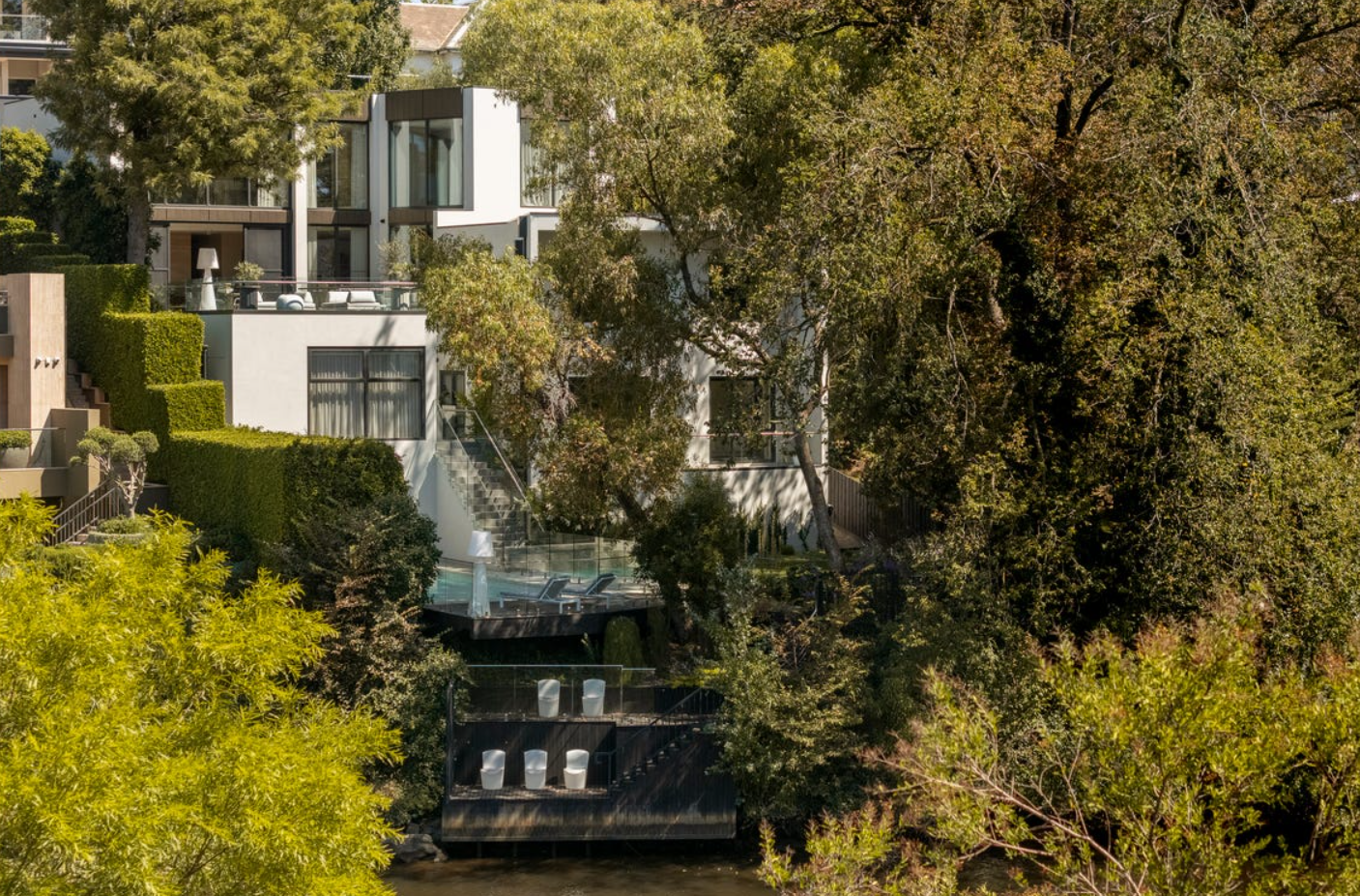
Toorak’s reputation has been built on grand estates, tightly held boulevards and some of Melbourne’s most valuable residential land. Yet one of its rarest attributes is largely hidden from the street: direct frontage to the Yarra River.
Although the river traces much of Toorak’s northern boundary, just over 20 homes in the blue-chip suburb are believed to border the water—and fewer still provide genuine river access. There is no definitive public register of Toorak homes with private jetties, but prestige agents have consistently described them as only a handful.
It is rare, then, for a property offering both river frontage and direct water access to become available in Melbourne’s so-called billionaire’s playground. The newly built Solara on Orrong Road presents precisely that opportunity.
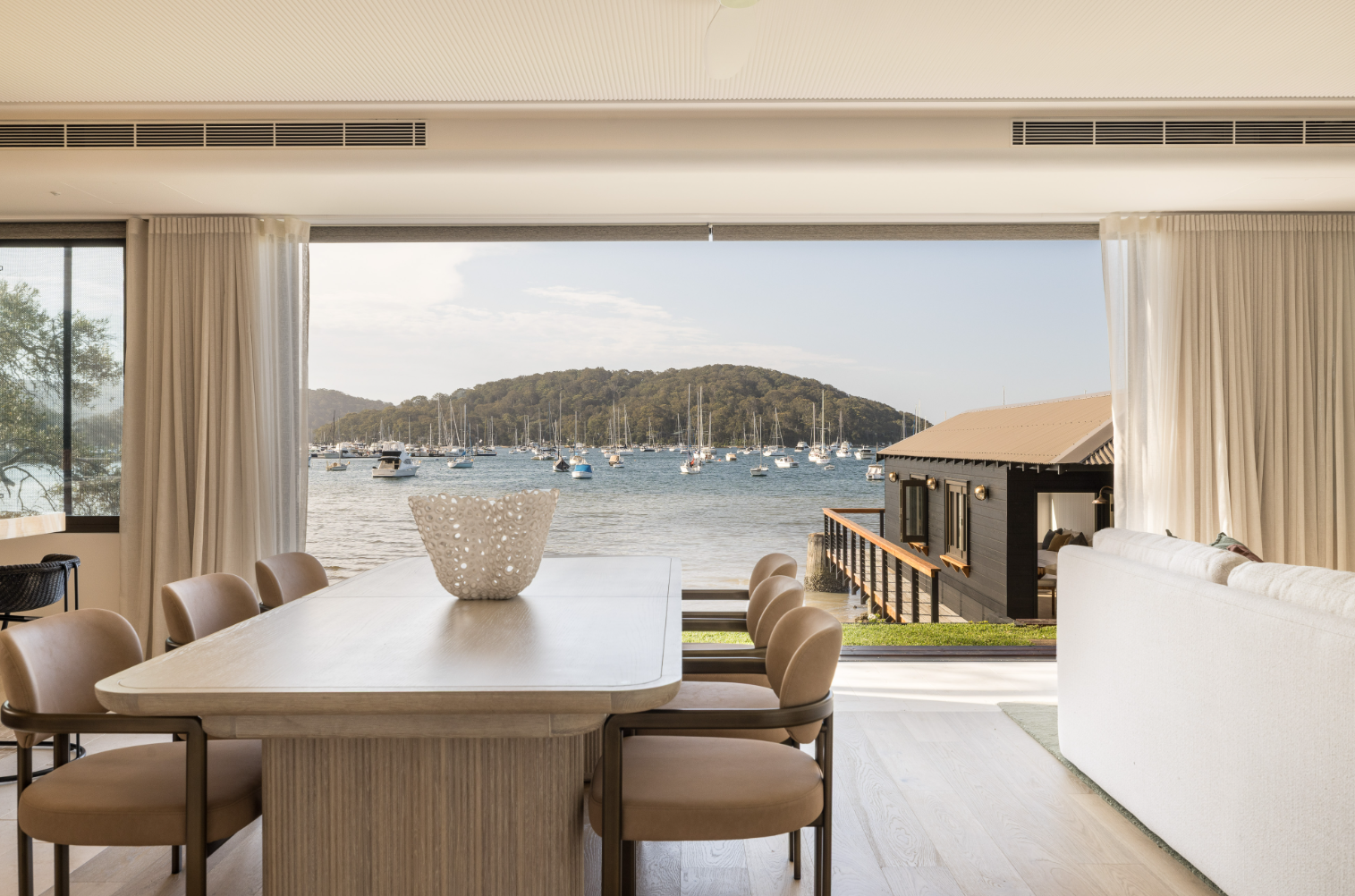
Set on approximately 1,129sqm, the five-bedroom residence descends towards the river, culminating in a private, double-tiered jetty. Here, the Yarra is more than a distant outlook: it becomes part of daily life, offering a place to launch a boat, relax beside the water or travel towards the city from home.
That distinction is significant in Toorak. Many of the suburb’s finest properties offer scale, security and architectural pedigree, but very few combine all three with direct access to the river.
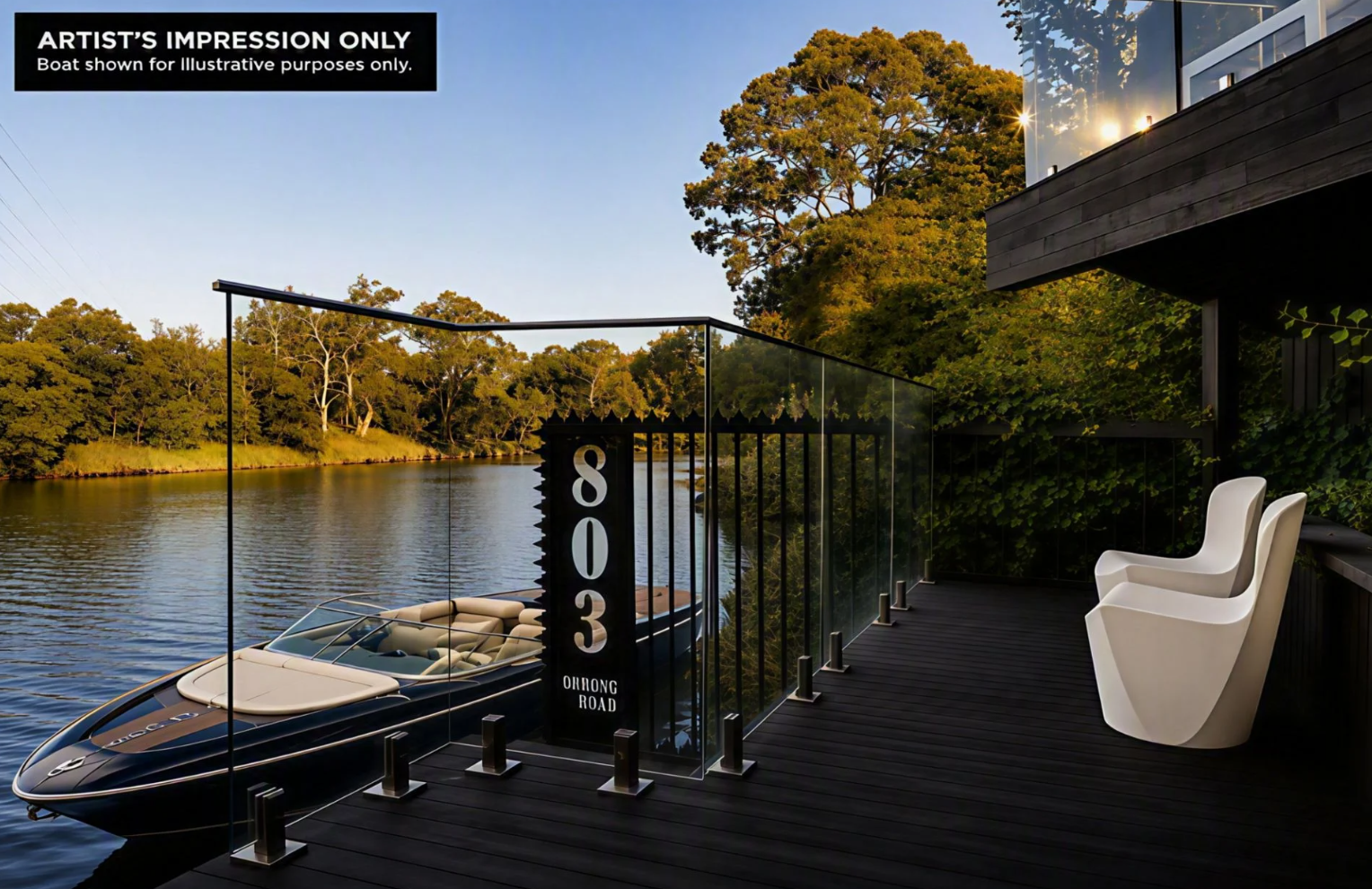
Architecture shaped by the site
Designed by Melbourne studio Alta and constructed by EASTON, Solara has been conceived as a series of interconnected levels descending towards the Yarra.
Rather than presenting as a single imposing volume, the house responds to its sloping site through stepped terraces, landscaped outdoor areas and large expanses of glazing. The architecture gradually reveals the water, drawing the eye through the interior and towards the river below.
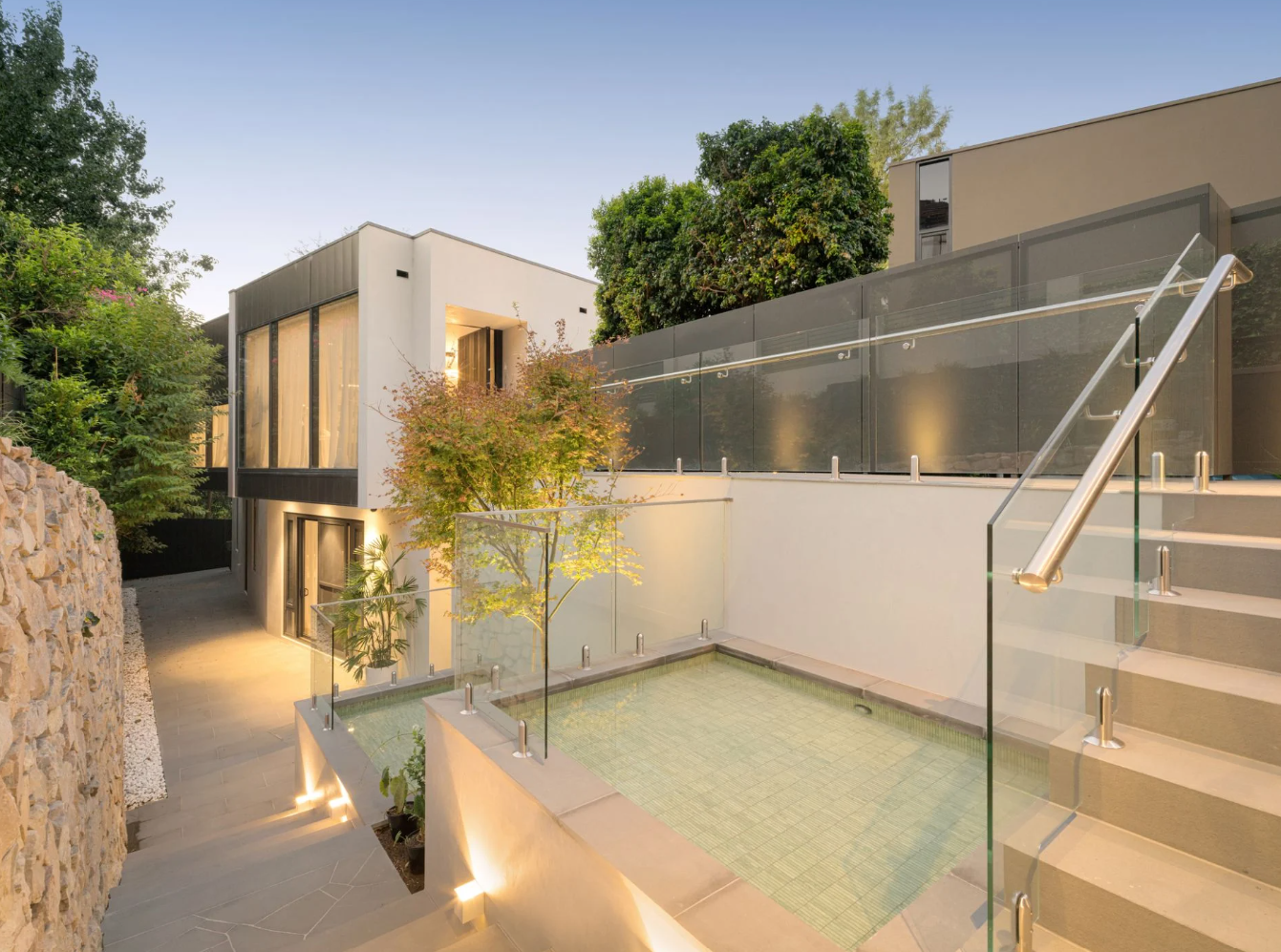
The design has earned Solara a nomination in the 2026 Master Builders Excellence in Housing Awards.
Inside, a restrained material palette allows texture, proportion and natural light to carry the design. Stone, timber, glass and finely detailed joinery establish a sense of permanence without overwhelming the river setting.
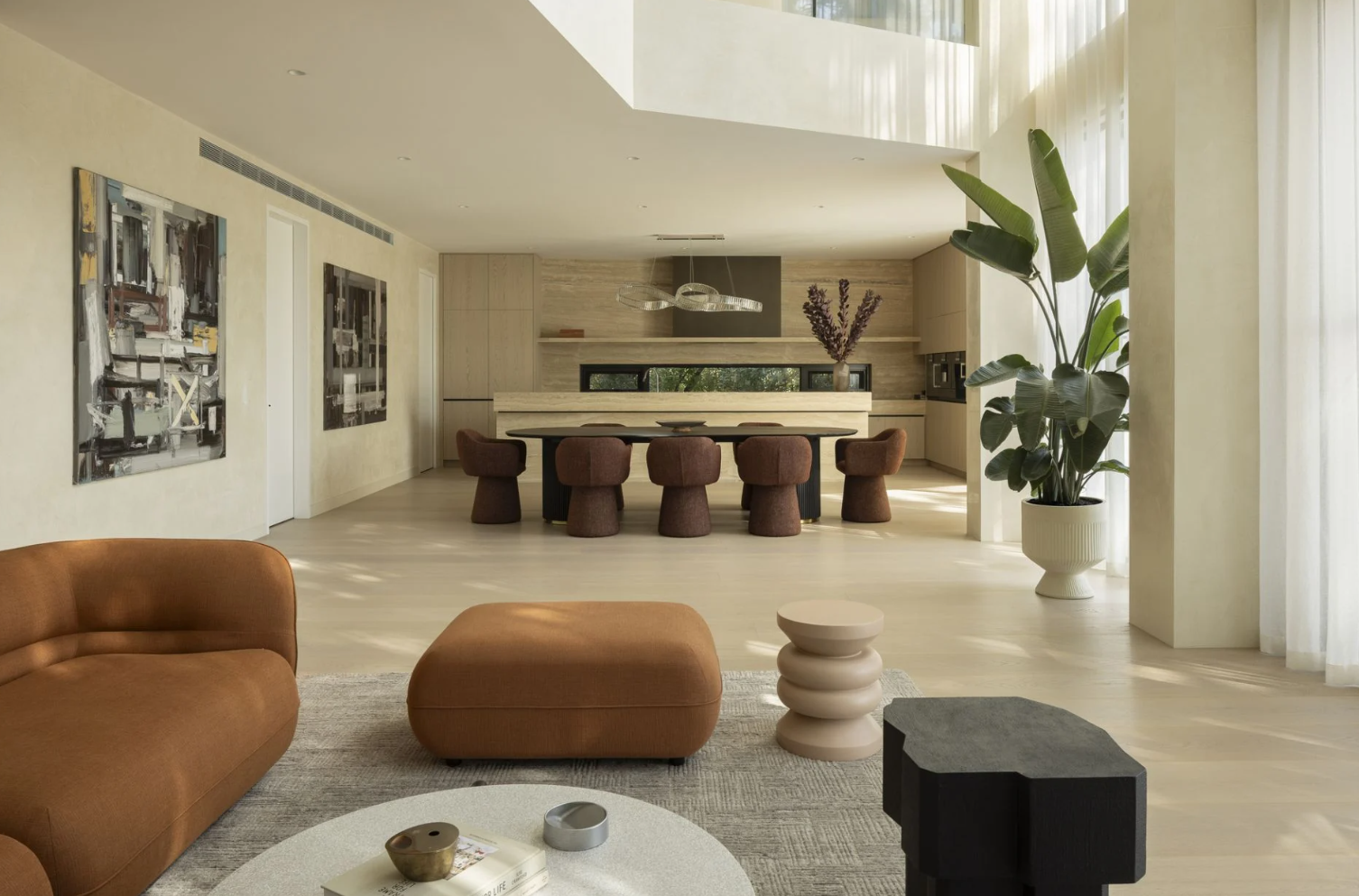
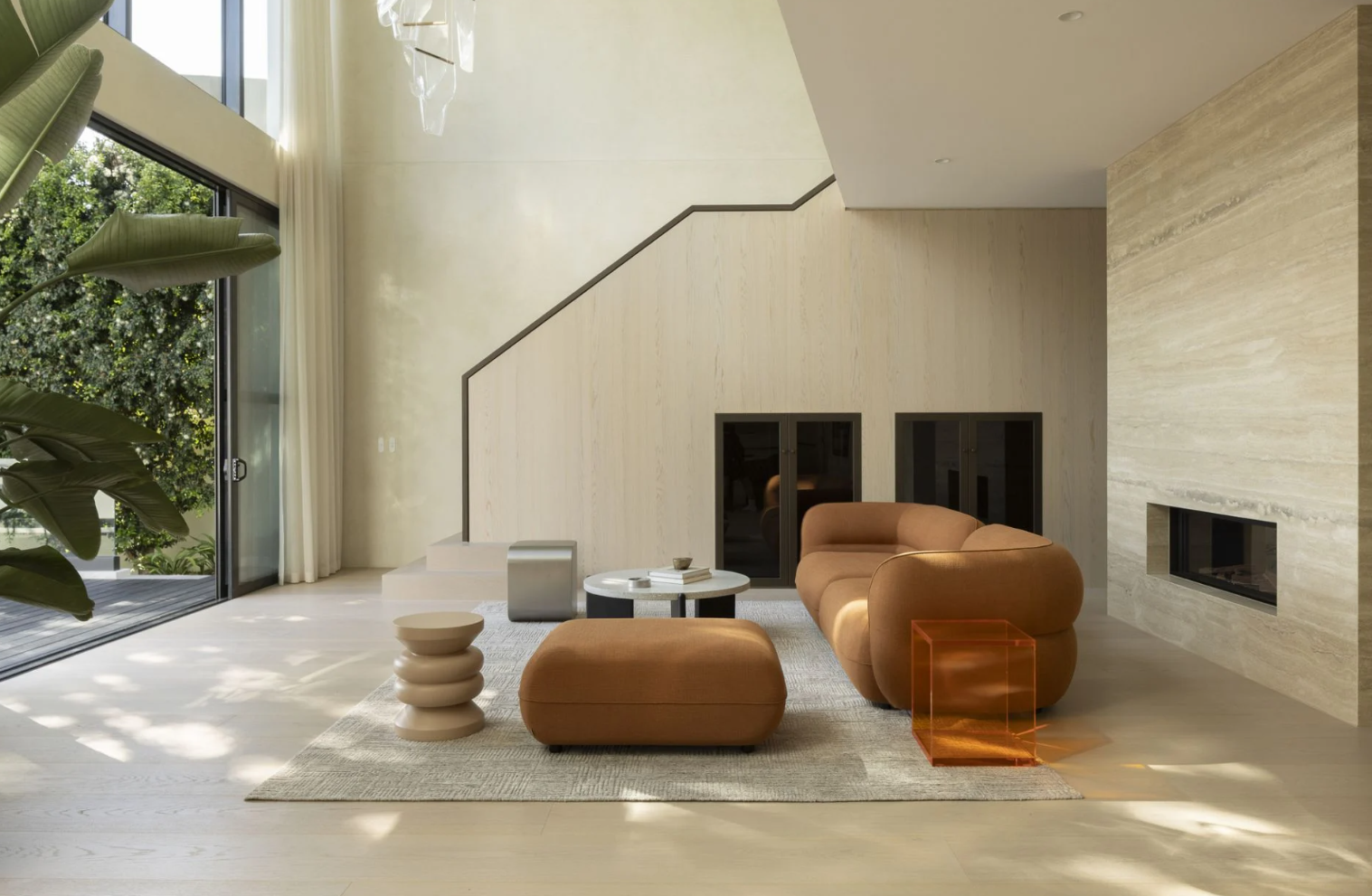
The principal living area is arranged beneath a dramatic double-height ceiling, giving the room the scale expected of a major Toorak residence while maintaining a strong connection to the garden and water.
Full-height glazing opens the house to its outlook, while multiple living and entertaining spaces allow the property to transition between intimate family use and larger gatherings.
A private resort beside the Yarra
Solara’s principal living spaces open onto an expansive river-facing terrace containing a swimming pool and spa.
The outdoor area has been positioned to take advantage of both the northern light and the relative seclusion of the riverbank. Mature landscaping provides another layer of privacy, softening the architecture and creating the atmosphere of a private resort.
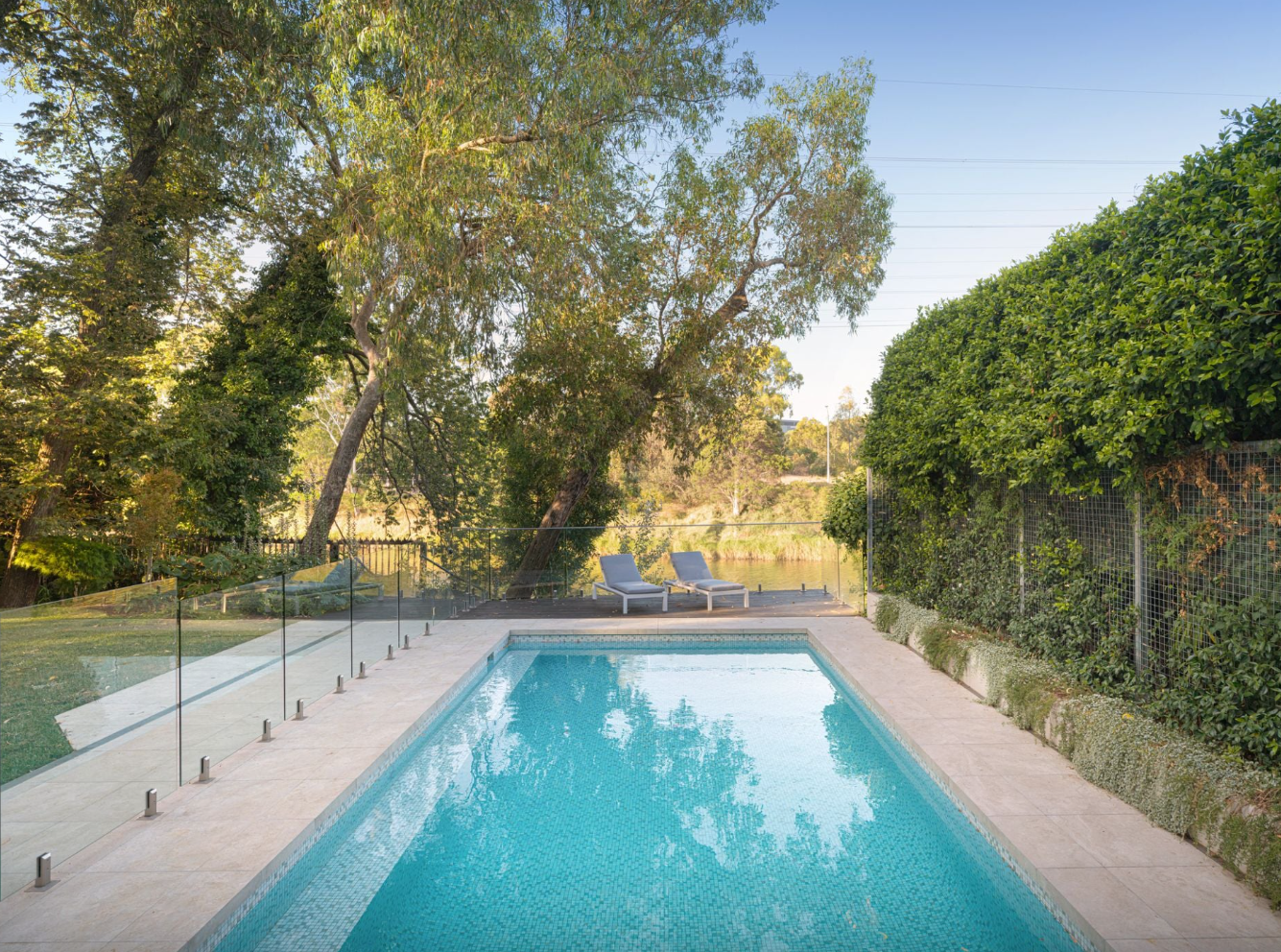
Below, the grounds continue towards the double-tiered jetty.
The residence also incorporates a dedicated wellness area and gym, reinforcing the sense that the home has been designed to provide a complete lifestyle within its boundaries.
Its accommodation includes five bedrooms and six bathrooms, with the principal suite occupying a private domain of its own. The house also provides garaging for four cars—an important consideration in a property of this scale.
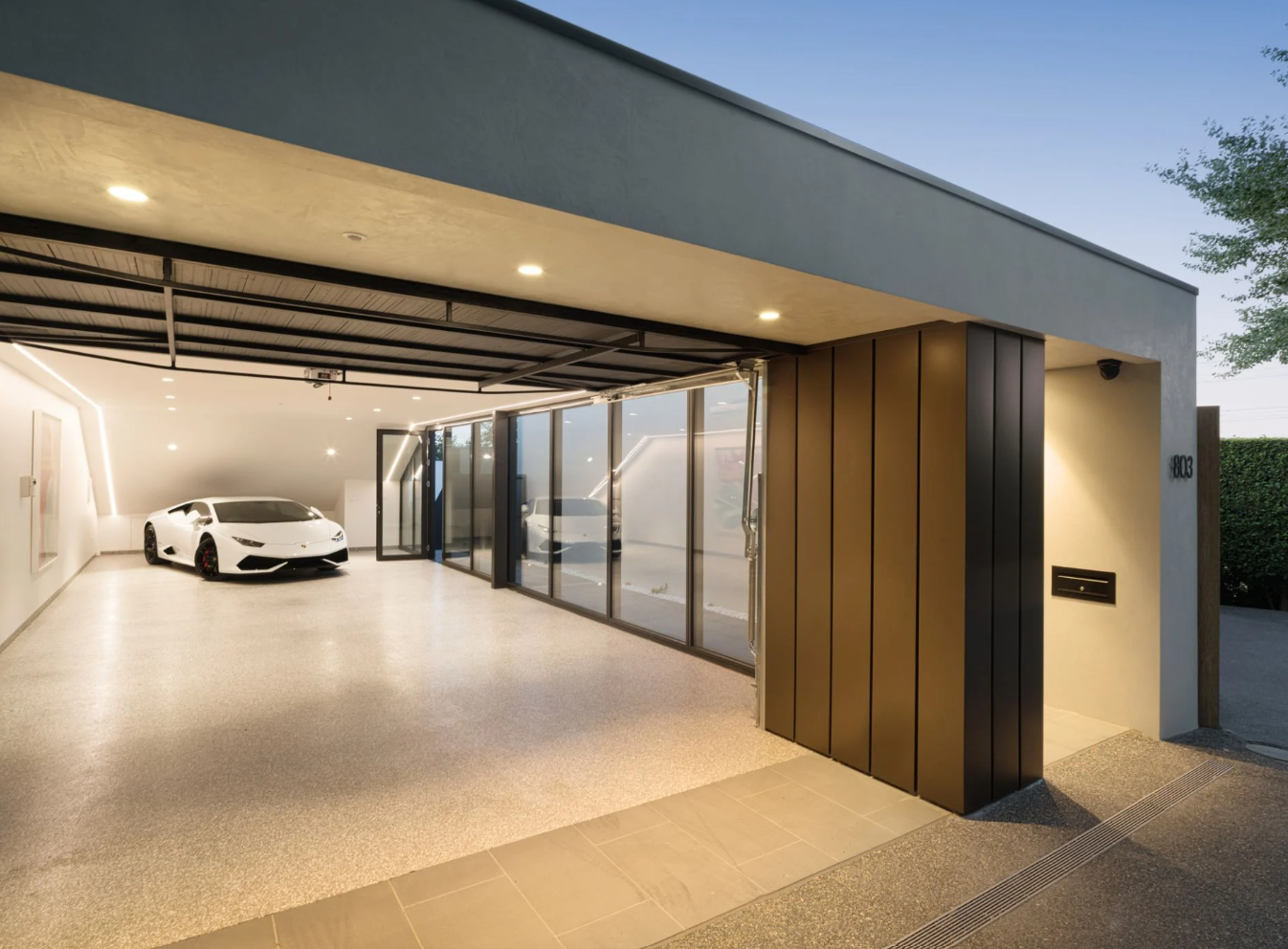
Across the residence, the emphasis is less on overt decoration than on volume, outlook and craftsmanship. Sightlines have been carefully managed so that the river is encountered repeatedly, rather than being confined to a single formal room.
A different expression of Toorak prestige
Toorak’s luxury market is often associated with historic mansions and large European-inspired estates. Solara represents a more contemporary interpretation of the suburb: architecturally ambitious, highly private and organised around lifestyle rather than formality.
Its position also places it within a particularly scarce segment of the market.
Riverfront homes have previously appeared along addresses including St Georges Road and Edzell Avenue, although they tend to remain in the same ownership for long periods. Even among these properties, private jetties and convenient access to the water are not universal.
That scarcity separates Solara from other prestige homes that may offer river views without actually reaching the river.
For buyers operating at the upper end of Melbourne’s residential market, the value proposition is therefore not simply the size of the house or its list of amenities. It is the combination of new architecture, substantial land, resort facilities and an attribute that cannot readily be recreated: private access to the Yarra from Toorak.
Solara is being marketed with a guide of $16.8 million to $18.3 million through Jamie Mi of Kay & Burton.
Property snapshot
Address: 803 Orrong Road, Toorak, Victoria
Guide: $16.8 million–$18.3 million
Agent: Kay & Burton agent Jamie Mi
Land: Approximately 1,129sqm
Accommodation: Five bedrooms, six bathrooms and four-car accommodation
Design: Alta
Builder: EASTON
Key features: Private jetty, direct river access, gym, indoor spa and double-height living volume

As interest rates, inflation and market sentiment fluctuate, investors are being urged to focus on data, not panic.
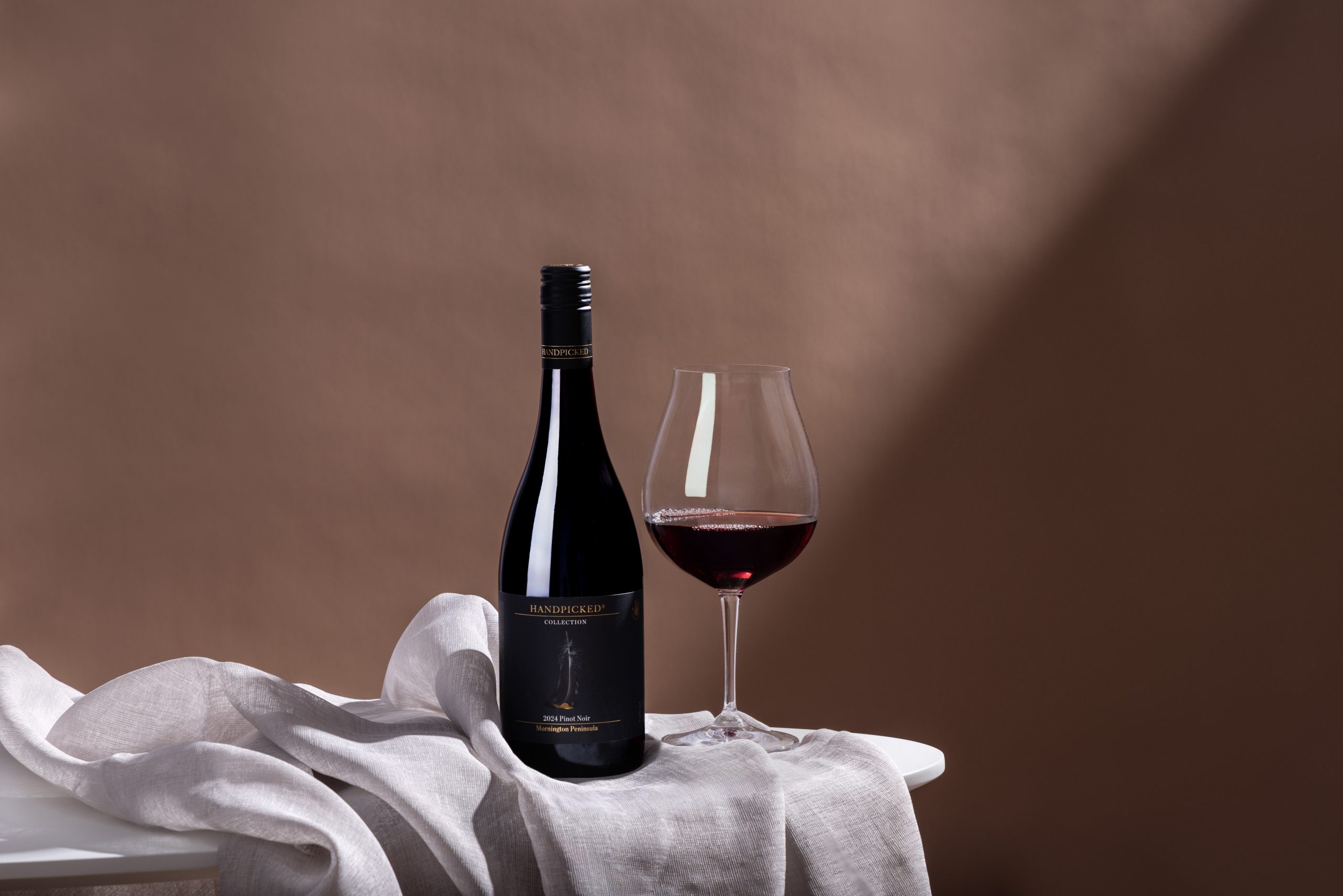
As the season turns, Handpicked Wines’ latest Pinot Noir and Chardonnay releases reveal how subtle shifts in place shape what ends up in the glass.