Taking lessons in French in the heart of Sydney
A stunning transformation by award-winning designer Greg Natale takes a basic Sydney home to a whole new level
 4 min
4 min
From the Spring issue of Kanebridge Quarterly. Order your copy here
When you engage a designer like Greg Natale, there’s a level of expectation that comes with that. An international sensibility is a given, as is attention to detail and a good dose of opulence. What you might not anticipate though, is flexibility or speed.
But when Natale got the call from the owners to work on their home in Oatley in Sydney’s south, the ability to make haste was an essential element.
“The owner had grand ideas and she needed someone really quickly to help her because she had started (the build),” he says.
“I had to move walls and the bricklayers (were already) there.”
Natale describes the existing Development Application for the brand new home as ‘basic’ with little of the detail he would normally require to undertake a project.

The owner had her heart set on a Georgian-style two-storey home more often seen in Melbourne suburbs such as Kew or Brighton, characterised by a symmetrical facade, with a French influence, but the approved DA came up lacking. There was also little evidence of the sense of home the owners wanted to create.
“Georgian style is classic but it’s quite simple,” Natale says.
To make the necessary changes, he submitted a Section 4.55 with council which allows for modifications to the DA and created the opportunity to ‘rejig’ the floorplan at the rear and introduce some softness to the design.
“I wanted this house to feel very soft — it’s where interior design is now,” he says. “When I started opening all the spaces at the back, we introduced these really beautiful fluted portals into the big lounge and the big dining room.”
Indeed, fluting has been used extensively in the detailing of this house, linking spaces and adding a textural layer that simultaneously makes rooms feel permanent and welcoming. It’s a strategy designed to imbue warmth to the understated soft grey palette, while letting the detailing be the hero.

This decision to stay with the single colour for most of the living spaces makes the blue dining room and adjoining study feel even more exceptional, almost extravagant.
“The rest of the house is all quite calm and the dining room is calm too — but it’s moody,” he says. “You start with the blue and we liked all those European interiors where you have all those highly lacquered bookshelves.”
A master class in pattern and colour, Manohari Delft wallpaper from UK textiles company, Designers Guild, has been applied to the dining room walls with cobalt blue lacquered bookshelves and a coffered ceiling in the same colour.
A custom made rug from Natale’s own collection for Designer Rugs injects a softer, more organic element, with the salmon pink harmonising with burgundy-coloured dining chairs and Japan black dining table.

Next door, the small study has gone even bolder with Atlantis Aube wallpaper from the Christian Lacroix range for Designers Guild.
“The study space is the owner’s,” he says. “She had this vision for this really big pattern in that study and I wanted another room to talk to that dining room.”
While the temptation in a house like this would be to fit it out with Art Deco-style pieces and antiques, furniture is unashamedly modern. Natale says it was a deliberate move to keep spaces elegant, but light.
“She didn’t want a heavy home and if we started using Art Deco-style furniture or anything traditional it would have been very heavy — and I don’t think that look is in anyway,” he says.
“The owners both liked modern and clean design but they also love this Georgian style so it was mixing both.
“That look of mixing modern, Danish and Italian (furniture is happening) in France and even in Milan, and with those beautiful old floors and the panelling, we were definitely emulating that look.”
While the US has dominated interior design trends over the past 10 to 15 years, with names like Kelly Wearstler and Martyn Lawrence Bullard, Natale says all eyes are now on Europe.
“Ten or 15 years ago, it was all about New York and LA and Palm Springs but now it’s really looking at Europe — even Americans are looking at Europe now,” he says.
“We are probably using more European furniture now and all the European brands are here so it’s a bit easier.
“Design is definitely looking at Italy, Denmark and France now.”

Although Natale went to great lengths to finesse every aspect of this house, it’s also about what you can’t see.
“The owner does a bit of (property) developing and he has an aircon business and because of that, I really pushed the detail in the aircon,” he says. “All the aircon here comes out of slots or shadowlines of the cornice.
“The days of sticking in a grill and then Photoshopping it (out of images), I’m not interested in that. I want the air conditioning to be integrated.”
To really embed the five-bedroom property, the whole site has been landscaped with soft hedging and evergreen planting that will look good all year round.
“The landscaping really anchors the architecture and as the plants grow it will enhance that further,” he says. “In that area, there are a lot of big houses like that and if you don’t have good landscaping the house just sits there like a UFO.”
More: gregnatale.com

From making unpopular decisions to learning when to listen, leaders from five businesses reveal what nobody prepared them for — and how running a company has challenged their expectations.

Technology and semiconductor shares fell sharply as investors questioned the debt financing the AI infrastructure boom and confronted higher rates and Chinese competition.
Mirvac’s 45-level Trielle has topped out at Yarra’s Edge, pairing riverfront apartments with wellness facilities, private dining and resident services.
3 min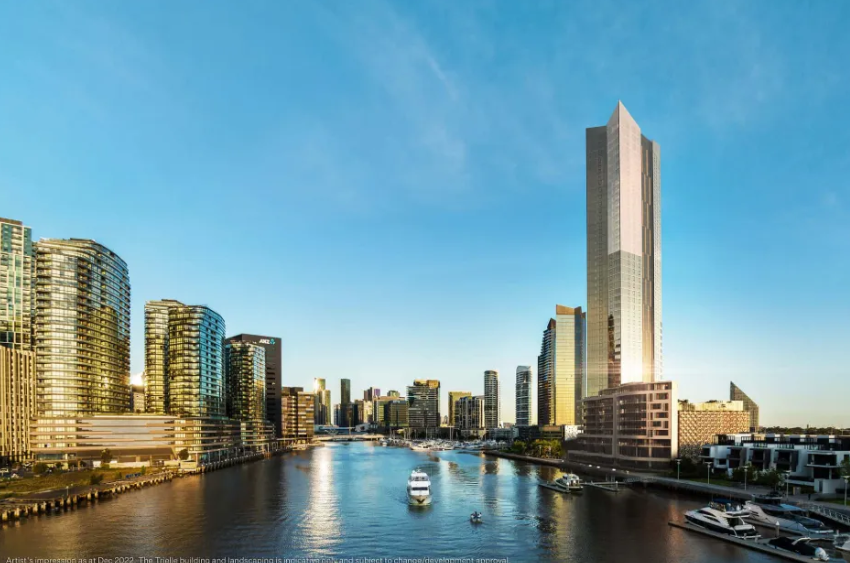
Mirvac has topped out Trielle at Melbourne’s Yarra’s Edge, with more than 70 per cent of the riverfront development sold and approximately 80 per cent of purchasers intending to make their apartment a home.
The figures, released on September 22, point to an owner-occupier audience for one of the precinct’s final residential towers. Mirvac began developing Yarra’s Edge in 2003, and its latest addition occupies one of the remaining absolute riverfront sites.
Mirvac CEO of Development Stuart Penklis said existing residents were among those moving up within the neighbourhood.
“Many purchasers already have a connection to Yarra’s Edge,” Mr Penklis said, describing buyers whose changing needs were encouraging an upgrade within the precinct.
“As one of the final residential towers within Yarra’s Edge, Trielle represents the culmination of more than two decades of creating one of Melbourne’s most established and sought-after waterfront communities,” Penklis said.
“Positioned on the Collins Street axis with absolute river frontage, Trielle offers residents a rare opportunity to enjoy sweeping views across the Yarra River, Melbourne skyline and Port Phillip Bay, while remaining seamlessly connected to the CBD. With Trielle now more than 70 per cent sold, we’re continuing to see strong demand from buyers seeking quality homes in established locations.”
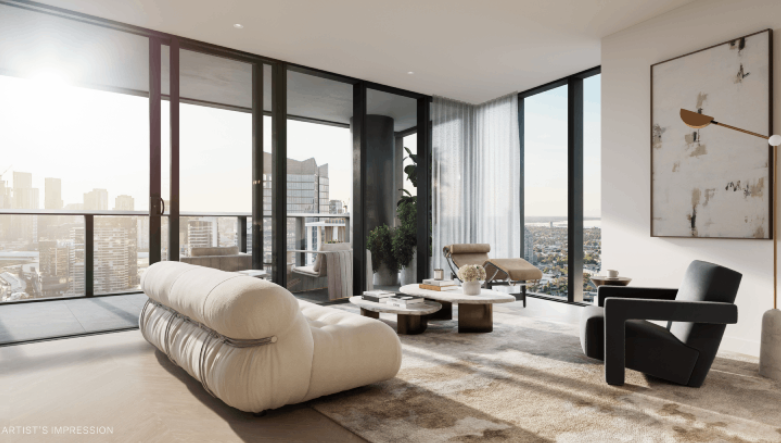
The developer also flagged a penthouse and sub-penthouse collection with larger layouts, premium finishes and broad outlooks. The planned wellness centrepiece, The Oasis, encompasses a 900-square-metre elevated urban rainforest.
Mirvac General Manager Residential Development Victoria Elysa Anderson said Trielle had resonated strongly with buyers seeking a rare lifestyle offering in Melbourne.
“Opportunities to secure a new luxury residence on a riverfront site of this calibre are incredibly rare, particularly within a community like Yarra’s Edge,” Anderson said.
“What makes Trielle unique is the combination of exceptional views, world-class residential facilities and the lifestyle that already exists around it. Residents are buying into a mature waterfront community with parks, promenades, dining, wellness and strong community connections already in place.”
The 45-level tower brings a substantial new presence to that waterfront. Its residential offering spans one-, two-, three- and four-bedroom apartments, with Signature, Prestige and Sub-Penthouse collections accommodating different household sizes. The north-facing position connects the apartments visually to the river and city beyond.
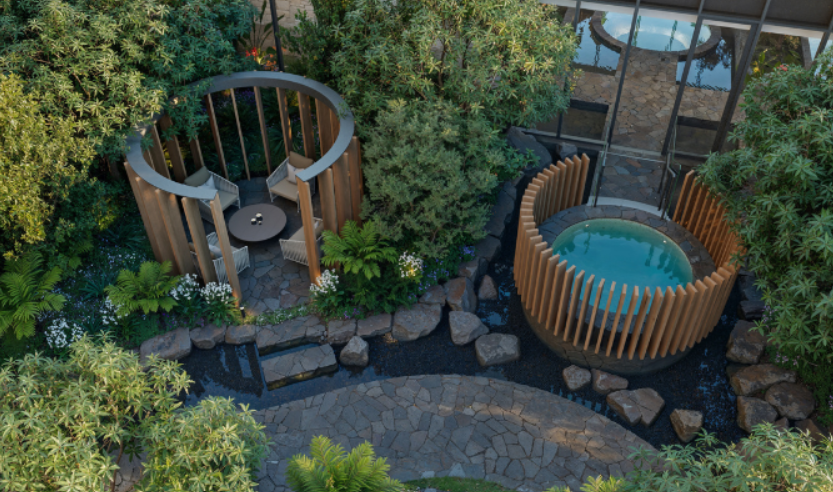
Seven storeys above the promenade, the planned Oasis combines planting and a running stream with a Scandinavian-inspired wellness club developed with spa specialist Naomi Gregory. Facilities include a 25-metre lap pool, hot magnesium pool, sauna, hydrotherapy, a gym, yoga and Pilates room, and treatment spaces.
The amenity extends beyond exercise. Residents will have access to The Biblioteca library and workspaces, ground-floor work pods, and The Salone piano lounge. A private Chef’s Table dining room offers a setting for larger gatherings, while a cinema, games room and sports lounge broaden the entertaining options. Concierge services and a dog-wash area support everyday routines.
Trielle comprises a collection of one, two, three and four-bedroom residences. Reflecting strong demand from owner occupiers, approximately 80 per cent of purchasers to date intend to live in their homes, highlighting the project’s appeal to those seeking a long-term waterfront lifestyle.
Mirvac has recently delivered The Albertine, a premium apartment development on the edge of Melbourne’s CBD, and is nearing completion of Prince & Parade in Brunswick, further strengthening its portfolio of thoughtfully designed apartment communities in some of Melbourne’s most sought-after urban locations.

Travellers are swapping traditional sightseeing for immersive experiences, with Africa emerging as a must-visit destination.

Rising rates, construction inflation and shrinking investor confidence are pushing Australia deeper into a dangerous housing spiral that monetary policy alone cannot fix.