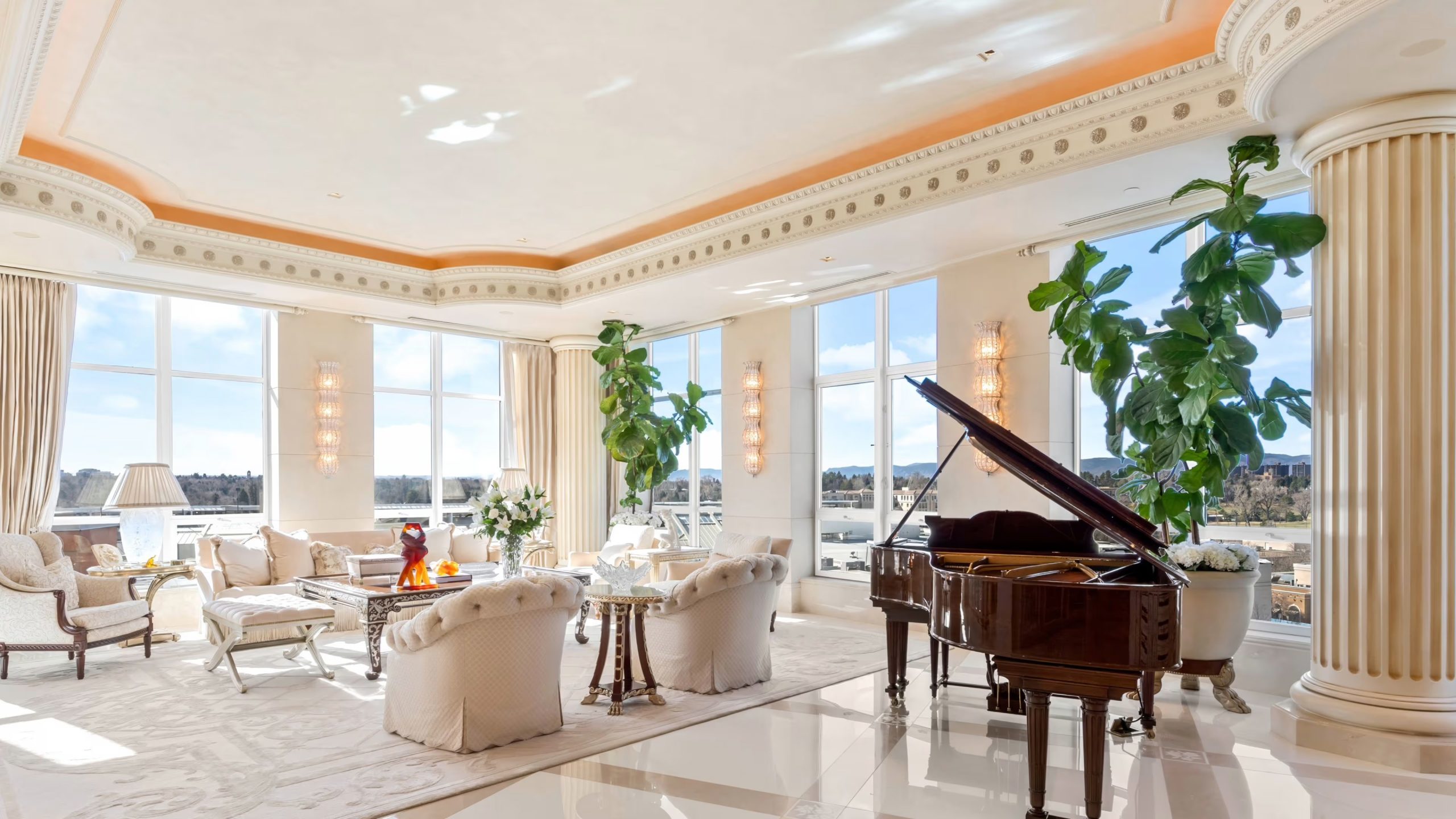
The Secret to Selling a $100 Million Mansion
They’ve dealt with billionaires, signed NDAs and fielded bizarre requests. Four real-estate power brokers dish on how they got the deal done.

 11 min
The first $100 million home sale in the U.S. happened in 2011, when Russian-born billionaire Yuri Milner purchased a lavish mansion in Silicon Valley in a nine-figure deal. Back then, Milner’s buy was an outlier and set an ambitious benchmark for the luxury market. Nowadays, as the ranks of ultra wealthy individuals swell globally, $100 million-plus transactions barely cause ripples in markets like New York, Miami, Los Angeles, Palm Beach, Fla., and Aspen, Colo. More than 40 transactions have closed nationally at or above that benchmark in the intervening years, according to appraiser Jonathan Miller .
Behind those deals are a small group of real-estate power brokers responsible for marketing and selling the homes to the billionaire class. We talked to four agents whose deals have crossed the nine-figure threshold about how the biggest transactions really unfold. The interviews have been edited for clarity.
For real-estate agents, landing a high-profile or billionaire client is a painstaking and competitive process, and often means pitching against rival agents. Each agent has their own secret for getting an advantage.
JILL HERTZBERG : “You’ve got to read the paper and watch the news. I remember when Shaquille O’Neal was coming to the Miami Heat, each person on my team probably called 100 people, asking ‘Do you know Shaq?’ One person would give us the name of another person and then another person. We were lunatics.
We finally got to him and he said, ‘No, I have an agent already.’ But we convinced him to give us a couple of hours, and that no one knew Miami like we did. The first house we took him to was the one he eventually bought, a beautiful estate on Star Island.
RYAN SERHANT: For the buyers we know who are trophy-home hunters, we keep our eyes on the homes in Palm Beach, Miami, Texas, Colorado and California that could go at these price points. We keep tabs on whether the owners would be willing to sell.
HERTZBERG: We went on a really big listing appointment on La Gorce Island in Miami Beach once. They asked us to come Tuesday at 10 a.m. When we showed up, there was another top agent already sitting on the patio. Another one arrived soon after. They had lined us all up at half-hour intervals. There was a little smile there to each other, like maybe we should just all do it together.
For $100 million homes, the prospective buyer pool is relatively small. That often means dealing with the same people over and over.
RAYNI WILLIAMS: It’s a very elite group of people. A lot of times they are collectors of trophy homes. Even if they don’t want to buy the property, they often will call because they want to come see it. It’s just a vanity showing. For me, it’s kind of like being a docent in an art gallery. They are coming in to admire the art. They’ll say, ‘please tell me about this architecturally significant property,’ and ask me what I know about Tadao Ando, the Japanese architect whose work is really in vogue. You’re cultivating relationships. Wealthy people love to educate themselves on all the latest and greatest.
Pricing homes at the highest end of the market is more art than science. Frequently, luxury homes come on the market for big-ticket prices, but later sell for significantly less .
WILLIAMS: It starts with the seller and what their expectation is. It’s about replacement cost, location and then data. You have to take into account how much it’s going to take to get them out of there without losing money, and the brain damage that it would take for somebody to re-create the property. People at this level are willing to pay a premium when they find something they love, because maybe they are getting older and they only have 20 good summers left, or their grandchildren are getting older. What is the value of your life if you’re under construction and you’re taking daily and weekly construction and design meetings? It’s a headache and a lot of clients tell me it can be hard on their marriage.
HERTZBERG: We’re going to go to the highest number we can possibly get without tipping over, then see how the market responds. If you tip over, that’s when you have price reductions, or you lose the listing or people get unhappy. Sometimes, you advise the seller to price at $100 million and then he speaks to other agents and they say $200 million. The seller will say, ‘We’re going to go with them, because they believe in the property more.’
RILEY WARWICK: Some agents have a strategy I don’t particularly subscribe to, which is to take a listing at all costs or at any price, then use it to market themselves. They say, ‘Well, who knows, maybe someone will pay this. Or if I can get the fish in the boat, then I can lower the price until eventually someone buys it.’
SERHANT: Sometimes the best marketing plan is to have no price, and not go officially on the market at all. Oftentimes, especially with super luxury homes, people want what other people can’t have. We’ve had buyers pay a premium because they don’t want the seller to put the property on the market. They don’t want anyone else to have it, and they don’t want anyone talking about it ever.
In 2017, a Los Angeles spec house became the highest priced home in the country when it listed with Williams for $250 million. It was the creation of Bruce Makowsky, who made a fortune selling handbags on QVC. It sold in 2019 for $94 million, plus $10 million of furniture.

WILLIAMS: I think his strategy was just to get it on everyone’s radar. It worked. We touched hands with every single extraordinarily wealthy person that came to L.A. at that time. They all wanted to see it. At one point, he had a $150 million offer from a local that really wanted it and Bruce didn’t take it. I think he wanted it to be the most expensive house in the world and he wanted the price to have a 2 in front of it. Years later, he ended up selling it for $104 million to one of the first people who ever saw it. (The purchase was tied to Saudi real-estate magnate Fawaz Al-Hokair. )
These houses either sell in three months, or they sell in three years. They are hard to sell quickly because it’s a discretionary purchase. It’s emotional. This isn’t a family that’s relocating from New York City and has to get here to get their kids into school in Bel-Air. This isn’t a family that needs a house. If you’re buying a $100 million-plus dollar house, you already have a really nice home somewhere.
Even the most expensive homes often need to be staged .
WARWICK: That means removing potentially offensive items. We’ve had animal mounts replaced with contemporary art and political flags or signs removed. People get very offended. I’ve had people walk into an ultra luxury home, see an animal mount and turn around and walk right out. More than once.
Many brokers approach finding a buyer for a mega-listing systematically, but sometimes it comes down to chance.
SERHANT: You’re mass marketing and you’re also target marketing. We draw up a list of names from the Forbes list, the Bloomberg Billionaires Index, all the global wealth lists. We look at which companies went public over the last 24 months, which companies are about to go public. Who recently had or is about to have a liquidity event? Have there been major marriages or engagements? Sometimes, I think I know exactly who the buyer is going to be for a New York apartment, and then it’s a fracking billionaire from Texas. I’m like, really?
I once went to Masa, the expensive sushi restaurant in New York, with my wife. The couple next to us recognises me. He recognised me from TV. She recognised me from TikTok. I saw that she had a really big rock on her finger, so I asked if they were engaged. I suggested they needed a new place. Two weeks later, I sold them a full-floor apartment at Central Park Tower for $50 million.

Listings for trophy homes inevitably draw millions of eyeballs. Agents must determine whether interested parties are qualified buyers before they let them in the door.
SERHANT: To see a $100 million house, you need to show the ability to close in cash or that your net worth is over $1 billion.
WILLIAMS: Nobody gets into my properties unless I can prove who they are. Ninety-nine percent of people can be googled, except Asian buyers. If they can’t be googled, then we require proof of funds, usually in the form of a letter from a bank or private wealth manager on professional letterhead. It’s usually not hard to verify if somebody is real or not. If you are a mega-buyer, you have a footprint. You’ve donated money, you’ve been photographed.
SERHANT: There are con artists everywhere, there are people that want to waste your time everywhere. Even billionaires. Sometimes they are just in New York or they are in Florida and they fancy seeing something nice. They have no intention to buy.
HERTZBERG: If they say they are under the radar, we don’t take them. Nowadays, no one’s under the radar who has money.
Dealing with the global elite often requires being flexible for showings.
SERHANT: I’ve done showings in the middle of the night and early in the morning when the streets are totally empty. I had a very prominent and recognizable guy in finance who asked to see a New York property at 4:30 a.m. I understood why he did it. He knew that no one would see us. I’ve also had people wear disguises. I had somebody pre-Covid, a celebrity, who wore a baseball hat with a long black wig underneath and sunglasses. Post-Covid, everyone just wears masks.
WILLIAMS: Sometimes, a really high-profile person will register the name under their CFO or under an alias of another prominent person that would still be approved for the showing. And then when they turn up, you know who they are, and you play along.
And it can require pulling out all the stops.
WILLIAMS: I once had a guy who had just had a ton of success and he told me during the first showing that he was soon headed to Miami with his friends to celebrate. He wanted to bring them to see the house before they headed to the airport. I tried to get into the psyche of this guy and what he was into. I did some research and I found out that he loved gaming, so in the movie theatre, I put an Xbox. He had told me that he loved Japanese food, so I had catered sushi with servers throughout the property. Then, I got these gorgeous Ralph Lauren leather satchel bags as carry-ons he could take on the plane and filled them with chocolate from all the best spots in L.A., as well as marketing materials for the home. He texted me from the plane to say how incredible the experience was. And he bought the house. For $70 million.”
WARWICK: You think that these incredibly successful people are so busy, but I actually find them to be interested in every little detail of the properties we show them. One of my clients wanted to walk the entire property line of a 40- or 50-acre property, which took about an hour. They wanted to understand the land they are buying. One client was very fixated on the picture frames in the house and they wanted the seller to leave them behind, over 100 of them. The seller had to take their own family photos out of every single frame. I had another client who came in with their own water-testing kit to test the drinkability of the water and make sure the PH level wasn’t too high. They wanted the water in the kitchen to have a higher mineral content for their espresso machine.
Sometimes agents field unusual requests from sellers and buyers
WARWICK: I’ve seen more than once where a buyer will allow the seller to stay in the property or rent the property back for sometimes up to a year, or return for a holiday. I’ve had a seller want just one more Christmas in the house with their family, and the buyer allowed them that. I’ve also had deals where people trade additional houses as part of the transaction. The buyer has a property in another state, so they’ll give the seller X dollars plus their house in another state.
SERHANT: We had one very well known mega-billionaire come through a $250 million penthouse listing in New York. That apartment has the highest private residential ballroom on the planet. We’re standing in that empty room and he beckons me over with his finger. He says, ‘If I put a ping pong table in this room, will it be the highest ping-pong table on earth?’ I was like, ‘I’ll have to check, but I think it’s definitely up there.’

WILLIAMS : We had somebody that wanted to test out the house, and use it for a weekend. I wasn’t convinced but the seller wanted to do it. The person probably wanted to do their own thing, but I couldn’t help myself. I went full on to make their experience as pleasurable as possible. I had a masseuse and a private chef come to the house to cater to them. If they wanted freshly-baked chocolate chip cookies at 3.30 in the morning, they could have them.
The typical commission for an average real-estate sale is 6%, split between the buyer’s and seller’s agents. For nine-figure luxury homes, agents often settle for a lower fee.
WILLIAMS: Taking on these big listings is expensive, and you have to have a big book of business to afford it. You can spend $100,000 out of your own pocket to market these. The commission is usually a 2% fee, but they might ask if you would do it for a little less, like 1.75%. But generally speaking, the most successful people I’ve worked with are very happy to pay the full commission. They want you to do an amazing job.
WARWICK: We fly videographers in from all over the country to film our properties, we have architects design renderings of what could be built on these properties, we do all-day photoshoots from sunup to sundown.
Any out-of-pocket expenses aren’t reimbursed or paid back should an agent lose the listing before it sells.
WARWICK: It’s a huge financial commitment and sometimes you carry these properties for a year or two. It’s a risk and that’s why sometimes we don’t take listings. If the seller is unrealistic, it’s an investment not worth making.
It’s very common for buyers and sellers at the top end of the market to ask agents to sign nondisclosure agreements, preventing them from speaking about the parties involved in the deal. However, news of the transaction often leaks regardless.
SERHANT: It’s tough to keep the deals private because of everyone that touches the transaction. Your buyer is coming in contact with door staff, the seller, the other real-estate agents that might be involved and their teams, the driver. There are points of contact everywhere. I spend a lot of time making sure that everybody in the transaction is aware of the confidentiality.
HERTZBERG: I would love for people to know that I work with these types of people, but it’s more important to work with the people. It’s funny because I’m married to a litigator and he has so many confidential relationships that I don’t know about. If I have a big deal with an NDA, I can’t tell him the name either. We just don’t go there.
Negotiations often require creativity.
WILLIAMS: I was doing a deal close to $100 million and there was a $5 million delta between what the buyer was offering and the seller was willing to accept. It’s all relative; at that price point, $5 million is not a big difference. I normally wouldn’t do this, but I decided to get them together. I had them meet in a private room at the Beverly Hills Hotel. We ordered them some food, set them up and then left. By about four or five hours later— maybe some cocktails were involved— they bridged the gap and split the difference. Sometimes, you have to be smart enough to know to get out of the way. The two of them are still friends.
Dealing with the wealthiest clients comes with perks.
WILLIAMS: After I sold the Bruce Makowsky house, he called and said, ‘Meet me in your office in 20 minutes.’ He walks in with this huge, white box and plops it on my desk. Inside, there’s a coffee-table book all about his megayacht. “It’s yours,” he said. He gifted us 12 days on his yacht, which was docked in St. Barts. I took my whole family and best friends.
 Copyright 2020, Dow Jones & Company, Inc. All Rights Reserved Worldwide. LEARN MORE




From making unpopular decisions to learning when to listen, leaders from five businesses reveal what nobody prepared them for — and how running a company has challenged their expectations.

Technology and semiconductor shares fell sharply as investors questioned the debt financing the AI infrastructure boom and confronted higher rates and Chinese competition.

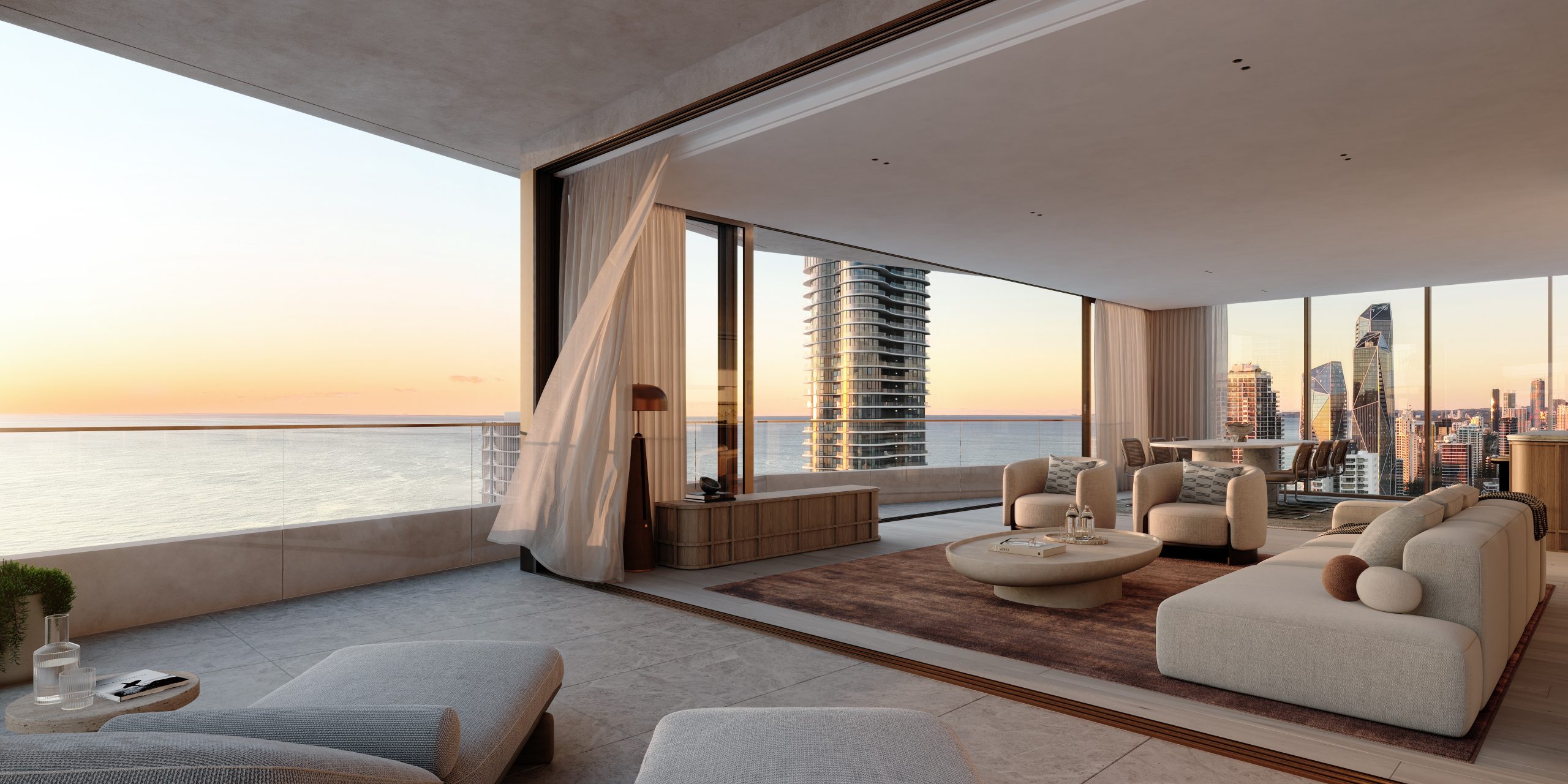
Mirvac’s 45-level Trielle has topped out at Yarra’s Edge, pairing riverfront apartments with wellness facilities, private dining and resident services.
3 min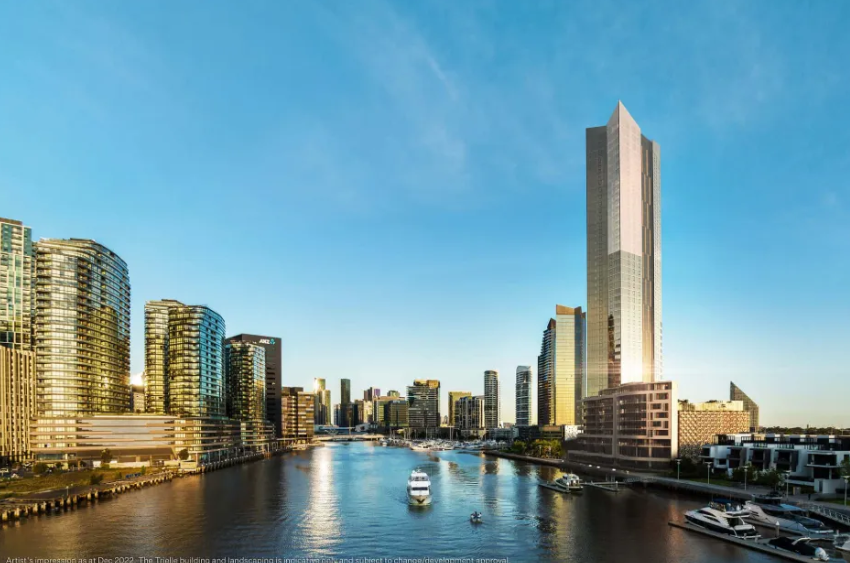
Mirvac has topped out Trielle at Melbourne’s Yarra’s Edge, with more than 70 per cent of the riverfront development sold and approximately 80 per cent of purchasers intending to make their apartment a home.
The figures, released on September 22, point to an owner-occupier audience for one of the precinct’s final residential towers. Mirvac began developing Yarra’s Edge in 2003, and its latest addition occupies one of the remaining absolute riverfront sites.
Mirvac CEO of Development Stuart Penklis said existing residents were among those moving up within the neighbourhood.
“Many purchasers already have a connection to Yarra’s Edge,” Mr Penklis said, describing buyers whose changing needs were encouraging an upgrade within the precinct.
“As one of the final residential towers within Yarra’s Edge, Trielle represents the culmination of more than two decades of creating one of Melbourne’s most established and sought-after waterfront communities,” Penklis said.
“Positioned on the Collins Street axis with absolute river frontage, Trielle offers residents a rare opportunity to enjoy sweeping views across the Yarra River, Melbourne skyline and Port Phillip Bay, while remaining seamlessly connected to the CBD. With Trielle now more than 70 per cent sold, we’re continuing to see strong demand from buyers seeking quality homes in established locations.”
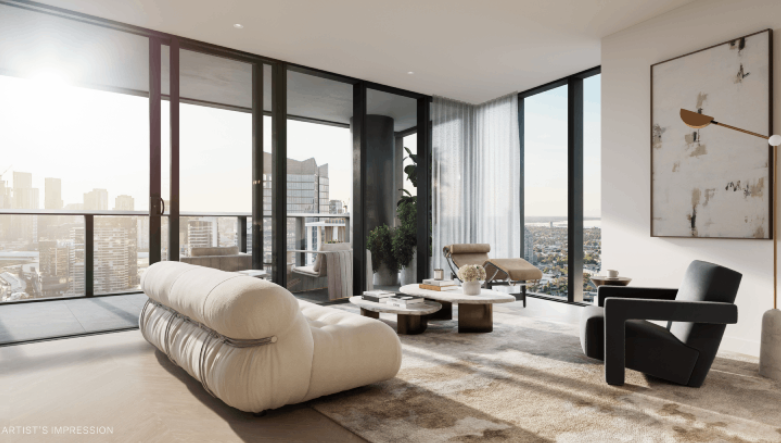
The developer also flagged a penthouse and sub-penthouse collection with larger layouts, premium finishes and broad outlooks. The planned wellness centrepiece, The Oasis, encompasses a 900-square-metre elevated urban rainforest.
Mirvac General Manager Residential Development Victoria Elysa Anderson said Trielle had resonated strongly with buyers seeking a rare lifestyle offering in Melbourne.
“Opportunities to secure a new luxury residence on a riverfront site of this calibre are incredibly rare, particularly within a community like Yarra’s Edge,” Anderson said.
“What makes Trielle unique is the combination of exceptional views, world-class residential facilities and the lifestyle that already exists around it. Residents are buying into a mature waterfront community with parks, promenades, dining, wellness and strong community connections already in place.”
The 45-level tower brings a substantial new presence to that waterfront. Its residential offering spans one-, two-, three- and four-bedroom apartments, with Signature, Prestige and Sub-Penthouse collections accommodating different household sizes. The north-facing position connects the apartments visually to the river and city beyond.
Seven storeys above the promenade, the planned Oasis combines planting and a running stream with a Scandinavian-inspired wellness club developed with spa specialist Naomi Gregory. Facilities include a 25-metre lap pool, hot magnesium pool, sauna, hydrotherapy, a gym, yoga and Pilates room, and treatment spaces.

The amenity extends beyond exercise. Residents will have access to The Biblioteca library and workspaces, ground-floor work pods, and The Salone piano lounge. A private Chef’s Table dining room offers a setting for larger gatherings, while a cinema, games room and sports lounge broaden the entertaining options. Concierge services and a dog-wash area support everyday routines.
Trielle comprises a collection of one, two, three and four-bedroom residences. Reflecting strong demand from owner occupiers, approximately 80 per cent of purchasers to date intend to live in their homes, highlighting the project’s appeal to those seeking a long-term waterfront lifestyle.
Mirvac has recently delivered The Albertine, a premium apartment development on the edge of Melbourne’s CBD, and is nearing completion of Prince & Parade in Brunswick, further strengthening its portfolio of thoughtfully designed apartment communities in some of Melbourne’s most sought-after urban locations.

With two waterfronts, bushland surrounds and a $35 million price tag, this Belongil Beach retreat could become Byron’s most expensive home ever.

From office parties to NYE fireworks, here are the bottles that deserve pride of place in the ice bucket this season.