Picture This: More Wealthy Americans Are Tapping the U.K.’s Royal Painters for Personal Portrait
In an era of snapping quick selfies, Britain’s Royal Society of Portrait Painters has seen a 40% increase in the number of U.S. clients.

 4 min
4 min
An avatar, Instagram selfie or AI clone is enough for some people.
But a growing number of Americans are going old school and having their portraits painted—and many are turning to Britain’s Royal Society of Portrait Painters to create those very analog images.
Founded in 1891, the society―whose members paint all portraits of the royal family―reported a 40% increase in portrait commissions from the U.S. in 2024. Americans now make up 20% of its clients.
“They love the connection to the royal family, and they’re excited about the idea of a trip to the U.K. for sittings,” said Martina Merelli, fine art commissions manager at London’s Mall Galleries.
Mall Galleries is the home of visual arts charity the Federation of British Artists, whose nine art societies include the Royal Society of Portrait Painters.
Merelli heads a portrait commission service that matches clients with artists, and guides them from sittings to completion. Private-commission clients range across age groups and location, though many are Americans based in London.
“Clients tell us, ‘When you have everything, what is it you’re missing?’,” she said. “It’s not vanity, which some people think it is. It’s a love thing. Some clients have multimillion-dollar homes full of art, but none of it means as much as a portrait commission of themselves, a spouse or their children.”
The Royal Society of Portrait Painters includes 46 painters chosen through “a tough selection process,” Merelli said. “We want to preserve the quality the society stands for.” Most members are British.
For Will Cappelletti, a 41-year-old Washington, D.C., entrepreneur, commissioning a portrait was “a bucket-list thing”―though he was skeptical of the idea at first.
“An ex had talked about having it done a few years ago, and I thought it was ridiculous and vain,” he said. “Why would you want to do that?”
But over time, Cappelletti “began to see something else. It’s not about being absorbed with yourself. It’s more about the fact that we live in a world with hundreds of thousands of images of ourselves getting created. They’re impermanent,” he said. “The nice thing about a portrait is that it’s meant to capture you.”
Partly inspired by “classic portraits in public spaces like the Ralph Lauren store on the Upper East Side” of New York, Cappelletti reached out to the portrait society about a commission.
“There is definitely a cultural component to why I chose to get the portrait done in the U.K.,” said Cappelletti, whose personal art collection spans American Impressionism, Greek and Roman antiquities, prints and books.
“The word ‘Royal’ in the title has a punch. I didn’t see a parallel organization in the United States. And most importantly, this commission service exists, with a portrait consultant who gets to know you and your preferences, and has an encyclopedic knowledge of the artists. That sealed it,” he said.
While the society usually recommends an artist based on a client’s input, Cappelletti had one in mind. He had seen a news report on Northumberland artist Frances Bell, who had once painted actor Derek Jacobi.
“I tacked on some personal days to a business trip in Europe, took the train to Northumberland, and was a guest of Frances, her husband and her two kids. She made a shepherd’s pie for dinner the first night and the sittings started the next day.”
Close collaboration with subjects “is extremely important,” said Bell, the artist, from her Northumberland home studio. “The view of themselves, or how people close to them see them, is really important. And when I consult them, they don’t say, ‘Can I be thinner? Can you give me better skin?’ It’s, ‘Please use more of that expression.’”
American clients “love the experience, love the sittings and love the interaction,” she said. “A lot of them are Anglophiles. They like hearing about our slightly different worlds. And I wouldn’t be surprised if Downton Abbey was an influence.
“We are the Royal Society of Portrait Painters, with the king as our patron, and the queen before him. I’m also based in Northumberland, which people love to visit. There’s a whole sense of adventure and oddness about it.”
While Cappelletti estimates he spent about $10,000 dollars on his wood-framed portrait―which now resides in his parents’ home in Ohio―commissions can average from £3,000 to £60,000 (US$3,810 to US$76,200), said Merelli of the Royal Society of Portrait Painters.
“The variables include the size, background, head-and-shoulders versus full length. But for an oil portrait, a good starting point is about £5,000 (US$6,350),” she said. About 80cm x 70 cm (31 inches x 28 inches) is a popular size, though some clients go much larger, Merelli said.
“As a charity, we’re here to preserve portraiture. And I’m here to help clients find the right artists. We send the client a very tailored portfolio of three to five artists, coordinate conversations between them, and finally connect them. It’s a bespoke experience.”
While the society charges no fee for the consultation, “we take a cut of 30%, which is much smaller than a commercial gallery. That supports our annual exhibition,” Merelli said.
Some clients also choose to share photos of themselves instead of taking time for in-person sittings, Merelli said. “Photos also work as people tend to be very busy. Of course at least one sitting makes the experience more interesting, but if needed, they can. We also work with posthumous portraits so photos are required,” she said.
Most clients hang their portraits in living rooms, “so people get to admire them,” Merelli said. “If there’s a long hallway, many will put them there, or over a fireplace, if they have one.”
In 40 years of private commissions, she said, the society “has never had a complaint about a portrait. It takes some adjusting to see yourself as someone else sees you,” Merelli said.
“And today, the artist sometimes has to remind them it’s not Photoshop. Some clients even come back over the years, to see the effects of time on themselves or capture changes in time.”
Cappelletti has no plans to sit for another portrait, “but never say never. If I ever have kids, I’d want them to have this experience,” he said. “From start to finish, this is one of those things you’ve got to do in life.”
 Copyright 2020, Dow Jones & Company, Inc. All Rights Reserved Worldwide. LEARN MORE




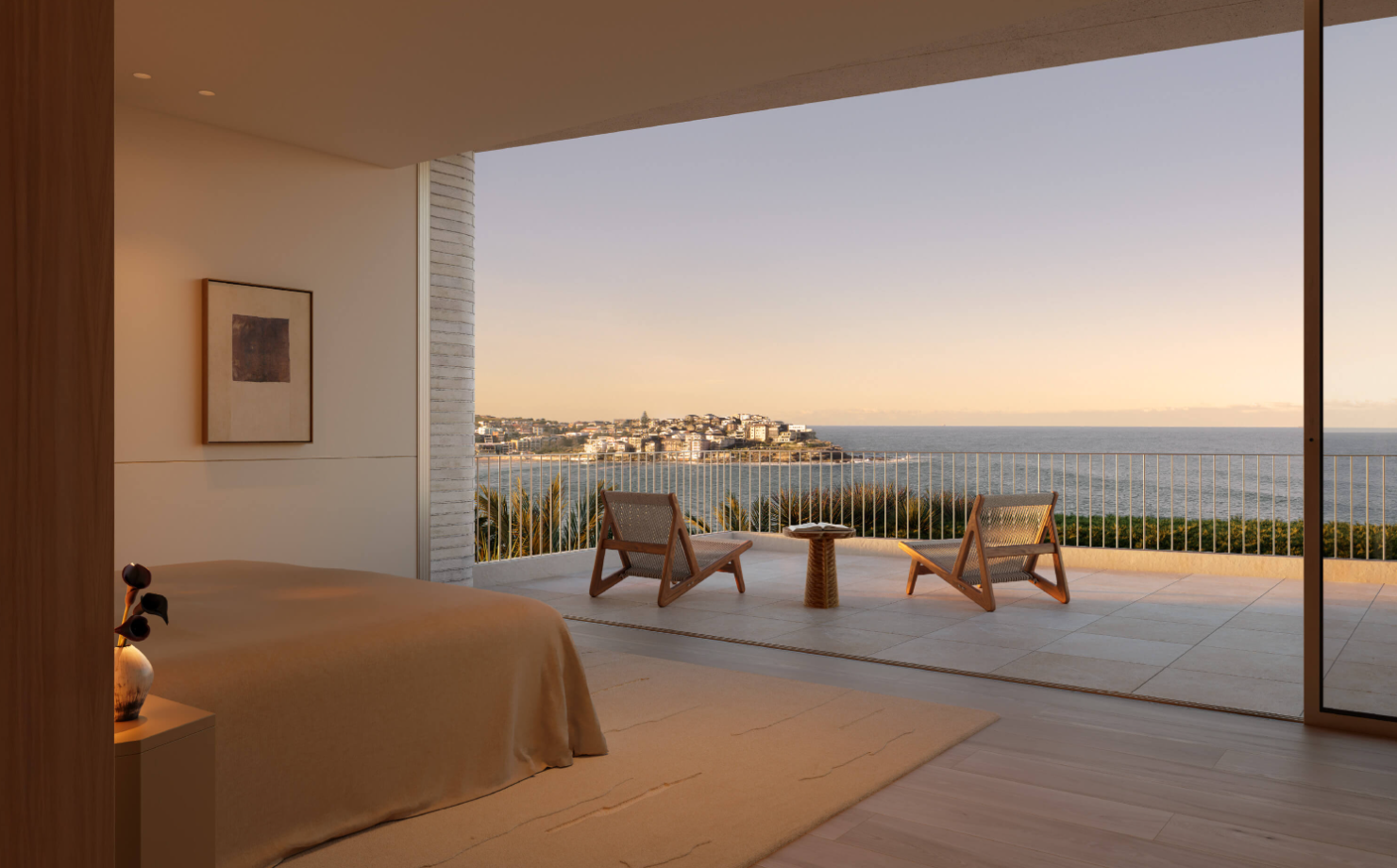
For Central Element, the start of work at Pearl represents another step in the company’s growing eastern suburbs pipeline.

All three vehicles will form part of a broader charitable initiative benefiting Big Brothers Big Sisters of America, the American Red Cross and Starlight Children’s Foundation

Randy Boyagoda’s new novel, “Lords of Serendipity,” delivers a biting satire of cheating, politics and dysfunction across modern universities.
5 min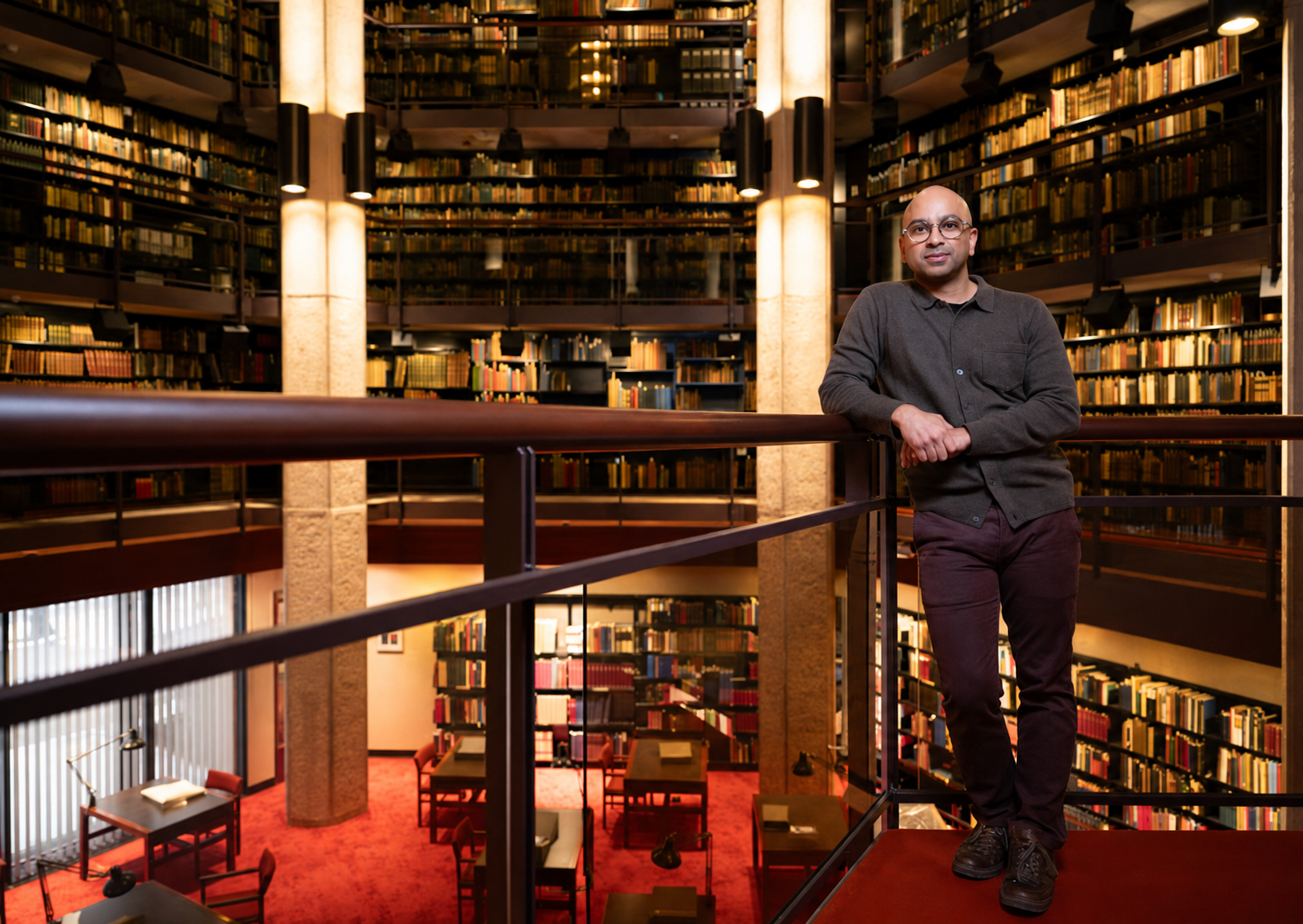
Administrative cowardice. Rampant cheating. The soaking and scamming of undergrads and grad students. Performative wokeism. Intensifying competition for international tuition dollars from an expansive China.
These are either the latest dire headlines about American higher ed or the myriad subplots of “Lords of Serendipity,” an ambitious new novel by Randy Boyagoda. Unlike most campus fiction, its scope extends well beyond the cloister of the liberal arts classroom to whammy the entire university system, from its financial model to its function within a globalized economy. Along the way, it skewers its lightning-rod targets with a precision too sharp to be considered entirely fictional.
That its author is not only well-versed in satire, having written four other novels in the genre, but is also a professor of English at the University of Toronto and an experienced college administrator, further blurs the lines between comic fiction and brutal fact. It’s the kind of no-holds-barred book only a consummate insider would know to write—but only one who is also conveniently outside the American university system could get away with writing.
“This is someone who’s got the inside dope on what can go on at universities, especially with international students, and what kind of con games are going on,” said Margaret Atwood, a friend and fellow Torontonian.
The novel, like Boyagoda himself, is often very funny—even as the dilemmas its characters face read as tragedy. Its cast includes the bickering members of a Sri Lankan hotel cleaner’s family, insecure American freshmen, dead-end third-tier college professors and their highflying Ivy League counterparts and dispirited university functionaries. An old-fashioned Dickensian tale, it sweeps across continents and campuses, from a classic liberal-arts college to a stand-in for Harvard University to an urban technical school to the dilapidated buildings of a state-run university in Sri Lanka.
“I’m a joyful person,” Boyagoda said in an interview, though he prefers to see his outlook on academia as “hopeful” rather than optimistic. He smiles and laughs frequently. He bikes everywhere. He derives energy from his students and from his four daughters, ages 14 to 20. They help him and his American wife, Anna, also an educator, care for Boyagoda’s father, an immigrant from Sri Lanka who has dementia and lives with the family.
The germ of the novel came to Boyagoda during the pandemic, when he was serving as a vice-dean. An urban legend was circulating about a statistics grad student selling passing grades to international students. The cheating scheme itself may well have been apocryphal, but it felt tantalizingly plausible.
“As a novelist, it stayed with me,” Boyagoda said. “Who would sell grades for a stats course? Why would someone buy grades? What’s motivating them? Why wouldn’t the university be doing something about it?” What he didn’t want to do, he explained, was write “another novel about a creative writing professor and his drama with students.”
In addition to writing novels—the first of which was a finalist for Canada’s prestigious Giller Prize; he’s written eight books in total—Boyagoda teaches literature full-time. For his students next semester, kids raised in a purportedly “post-literature era,” he’s assigning three 700-page novels, he noted mischievously, books by George Eliot, Ralph Ellison and Kiran Desai.
On RateMyProfessors, students remark on Boyagoda’s heavy assignments, tough grading and distaste for cellphones, but also hail his “comedy.” When alerted to these reviews, Boyagoda laughed. “Guilty as charged,” he said.
“Randy’s one of those people in academia who is very well educated but doesn’t have an ounce of superiority about him,” said John Irving, who frequently guest lectures in Boyagoda’s classroom. “It’s amazing to see how willing students are to talk in his classrooms, how little afraid they feel of being mocked or put down—he gets complete candor out of them.”
Negotiating competing interests seems to come naturally to him. Like many college campuses, after the Oct. 7 Hamas attack on Israel, the University of Toronto was embroiled in protests, encampments and discord; part of the school’s response was to convene a working group on civil discourse. Boyagoda was put in charge, serving for two years. It’s the kind of thankless task many professors would flee from, but Boyagoda relished the prospect and thinks the group, which is ongoing, made progress.
He has since pivoted to another formidable academic concern: the waning prestige of the humanities. In July, Boyagoda became the director of the Jackman Humanities Institute and special advisor on the humanities to the dean of arts and science. This fall, he is starting a series of gatherings he calls the Dead Book Club. (Dead writers feature heavily among his favorites: St. Augustine, Dante, William Faulkner, Evelyn Waugh, Saul Bellow.)
“The goal is to encourage students to read for its own sake and have conversation for its own sake,” Boyagoda said. “The importance of the humanities will be revealed to those who participate.”
“Lords of Serendipity,” which publishes next week, reflects Boyagoda’s commitment to the pursuit of knowledge: “I’m supposed to say I learn more from my students than they do from me, but no,” Boyagoda said. “I enjoy sharing my excitement and joy about literature and ideas. There are these moments when you are teaching and you can see someone’s face change because they didn’t know something and then they did. That moment when you’re actually watch someone enlarge themselves is deeply satisfying.”
In literary circles, Boyagoda is often referred to as a Catholic novelist, a description he embraces. “A novelist willing to give shape and voice to contemporary religious experience is needed,” Boyagoda said. “I understand myself as a Catholic novelist, provided that I’m not only a Catholic novelist, I’m also a South Asian novelist and I’m a Canadian novelist. I don’t want to be captive to one label.”
His characters, he said, are subjected to what he calls “Graham Greene character situations.”
“They are trying to do good in a fallen world and realize the most they can do is less harm than someone else would do in that same role,” he explained. “They have to accept they are complicit in something that provides some good thing to others. It’s a very Graham Greene way of thinking about sacrifice.”
The campus green they inhabit is a febrile zone in which lofty ideals and cynicism regularly collide. It’s a place where a traditional holiday college celebration is now an occasion for political protest. Kids freely police one another inside and out of the classroom with social media their constant, ready weapon of choice. International students, knowing their family’s financial futures hinge on their degrees, operate in terror of failure and deportation.
Early readers of the book include Gary Shteyngart and Junot Diaz, both of whom have taught at universities and written comic novels. They each contacted Boyagoda midway through to say, in essence, “You nailed it.”
As biting as “Lords of Serendipity” can be, Boyagoda’s faith in higher education remains undaunted.
“It’s absurd that we live in societies that make the decision to take people between the ages of 18 and 22, when they are most physically capable of contributing to our nations and communities, and tell them, ‘Go away for four years, and read and learn and have conversations,’” he said. “I want students to be aware of what an incredible privilege that is.”
Corrections & Amplifications
Randy Boyagoda is a special advisor on the humanities to the dean of arts and science at the University of Toronto. An earlier version of this article incorrectly said he is a special adviser to the dean of humanities. (Corrected on Sept. 2)

From farm-to-table Thai to fairy-lit mango trees and Coral Sea vistas, Port Douglas has award-winning dining and plenty of tropical charm on the side.

Three completed developments bring a quieter, more thoughtful style of luxury living to Mosman, Neutral Bay and Crows Nest.