Melbourne’s top five new penthouses to buy in 2025
Penthouses are smashing suburb records across Melbourne. From South Yarra to Alphington, these five new sky-high homes lead the luxury pack in 2025.
 5 min
5 min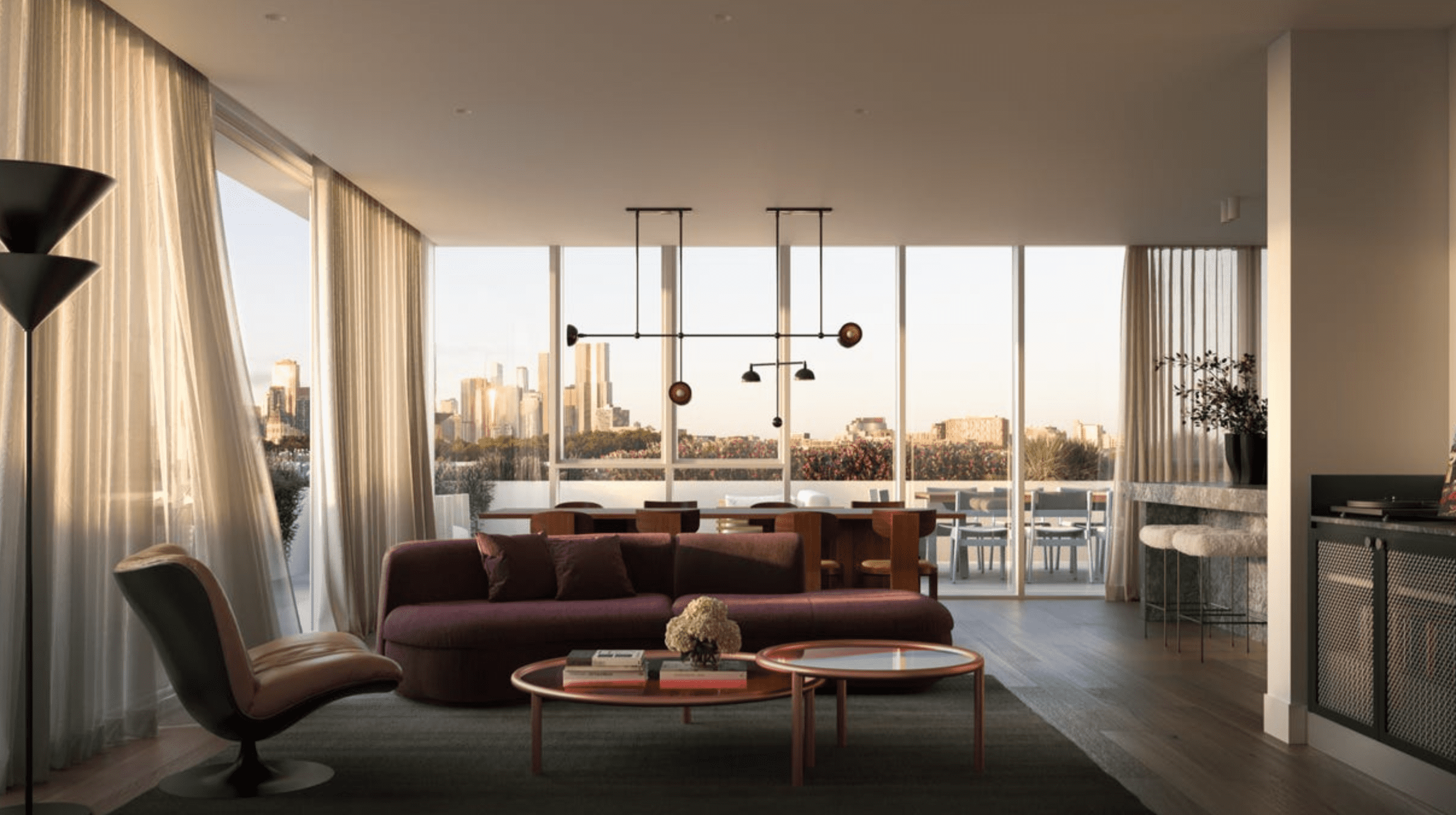
Penthouses have long represented the pinnacle of luxury living, but in Melbourne’s most sought-after inner suburbs, they’re now also setting suburb records—sometimes surpassing the price of standalone houses.
One recent sale in Fitzroy saw a penthouse atop the under-construction Fitzroy development change hands for $10 million, with an additional $3.5 million to be spent on the fitout—a new benchmark for the area.
It was the same story in Camberwell, where the penthouse crowning Victoria Hill by Time & Place sold off the plan for more than $15 million, another suburb record.
While Melbourne’s skyline remains more restrained than Sydney’s, its penthouses are growing more ambitious in scale and design. Most crown boutique developments are between 10 and 20 storeys high, taking advantage of uninterrupted views and prime, walkable locations.
Developers are pushing the boundaries of height and amenity, with rooftop pools, private lifts, sculptural interiors, and expansive outdoor spaces becoming the norm at the high end.
From South Yarra’s $19.5 million Art Deco-inspired showpiece to a heritage-blending super penthouse in Alphington and a rare full-floor offering in East Melbourne, we’ve rounded up the top five new penthouse apartments currently on the market in 2025.
South Yarra House, South Yarra
One of the priciest new penthouses on the market can be found in South Yarra, one of Melbourne’s premier suburbs. Joint venture partners Wattletree and Dorman Capital are asking $19.5 million for the penthouse of its under-construction new development, South Yarra House.
The two-level, full-floor penthouse, with interiors by Hecker Guthrie, will have four bedrooms, one of which is a master suite pitched as “one of the most luxurious spaces in Melbourne.” It will come with a walk-in wardrobe, an ensuite with a sculpted marble bath and natural stone floor and wall tiles, and a private terrace with north-west facing views of the city.
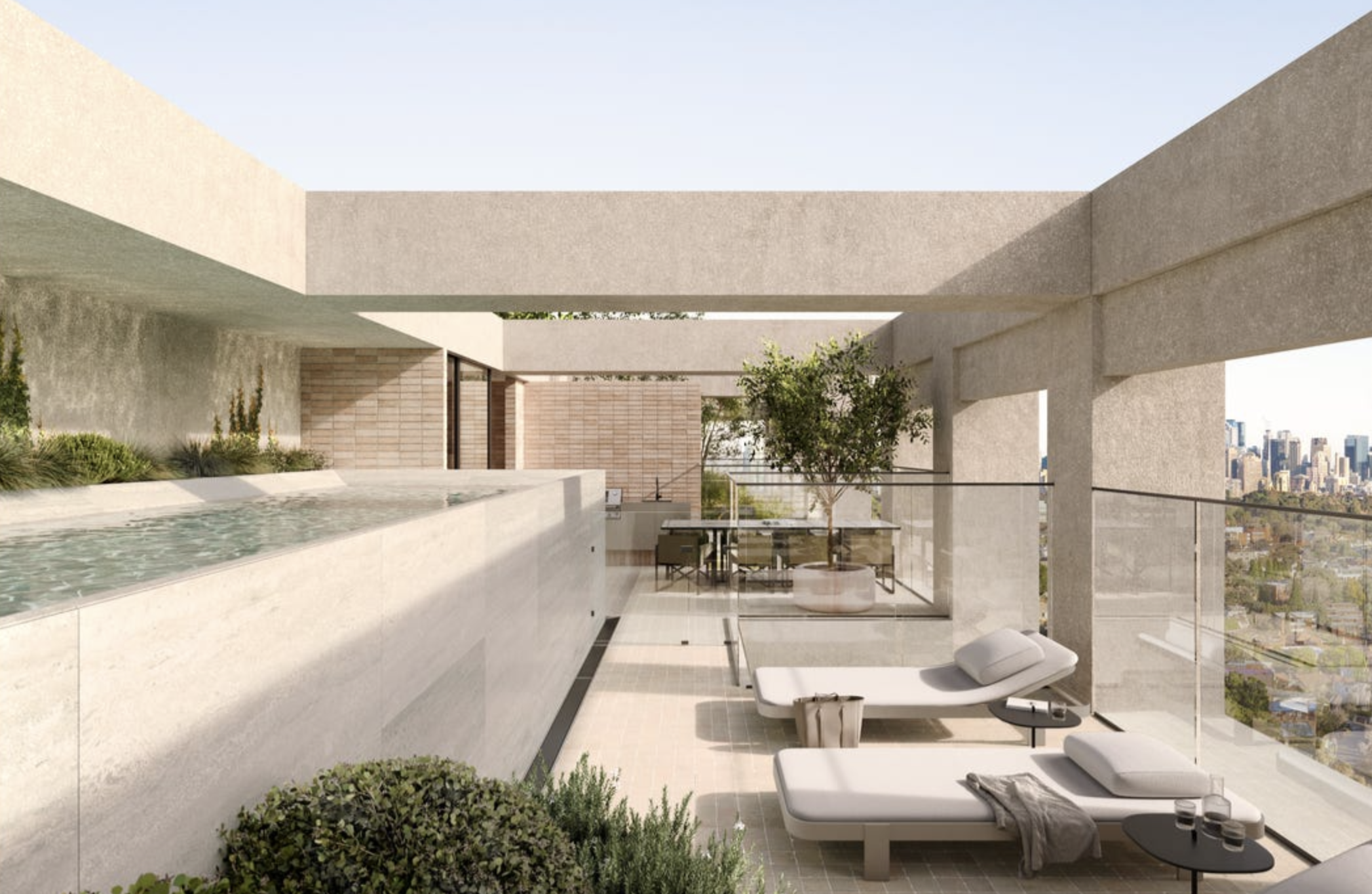
There will be a glass-wrapped rooftop terrace, on the 20th-level of the building, which will feature an alfresco and outdoor kitchen, and a raised lap pool.
South Yarra House has been designed by SJB Architects to reflect South Yarra’s rich Art Deco history.
“South Yarra House takes subtle cues from its surrounds, and the heritage buildings dotted throughout, and blends it with a modernist sensibility to create an outcome of clarity, elegance and distinction,” SJB said.
The building will have just 58 two-, three-, and four–bedroom apartments. Renowned construction firm Hickory is building South Yarra House.
One Charles, Prahran
Another special penthouse by SJB and Hecker Guthrie is coming to Melbourne’s neighbouring Prahran. They’ve been the architects behind One Charles, a new apartment project being developed by Monde near Prahran Station.
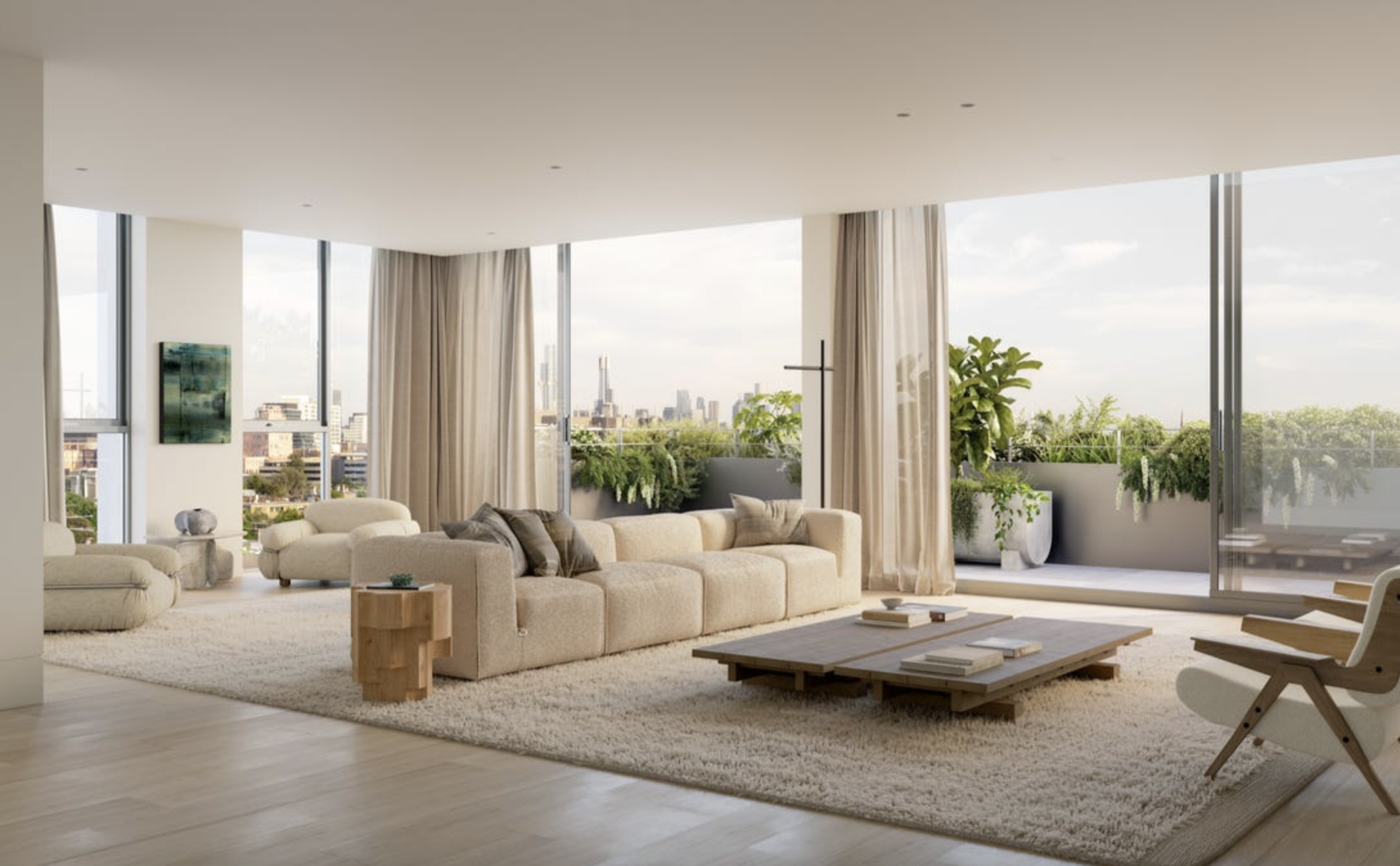
Another full-floor apartment, north-facing, will have soaring three-metre-high ceilings, four bedrooms, a private study, and a large 355 sqm wrap-around terrace.
The interiors feature a sculptural stone kitchen with Gaggenau appliances and a butler’s pantry, while there’s a secure garage, not for one, but four cars.
The penthouse is priced at $12.5 million. One Charles will comprise 28 two and three-bedroom apartments, walking distance to Greville Street, Chapel Street, and the Prahran Market.
The Regent, Fitzroy
Unlike its neighbouring suburbs, Fitzroy rarely sees full-floor penthouse apartments hit the market, which makes the recently released penthouse by SMA Projects even more special.
The four-bedroom penthouse atop their new development The Regent Fitzroy, will offer sweeping views from every one of its rooms. It will have four bedrooms and two living areas, designed by Studio Tate for multi-generational living.
The main living area will be wrapped in a terrace, with enough space for several lounge and alfresco areas, and an outdoor barbecue kitchen.
Hayball has designed the new building, which pays homage to The Regent Theatre, which used to occupy the Fitzroy Street site before it burned down in 1984.
It will feature 69 one-, two-, three-, and four-bedroom apartments, along with shared spaces that include a communal rooftop terrace with barbecue facilities, a bookable overnight guest suite for visiting friends and family, and both a dedicated ground-floor concierge and a digital concierge.
Seren Row, Alphington
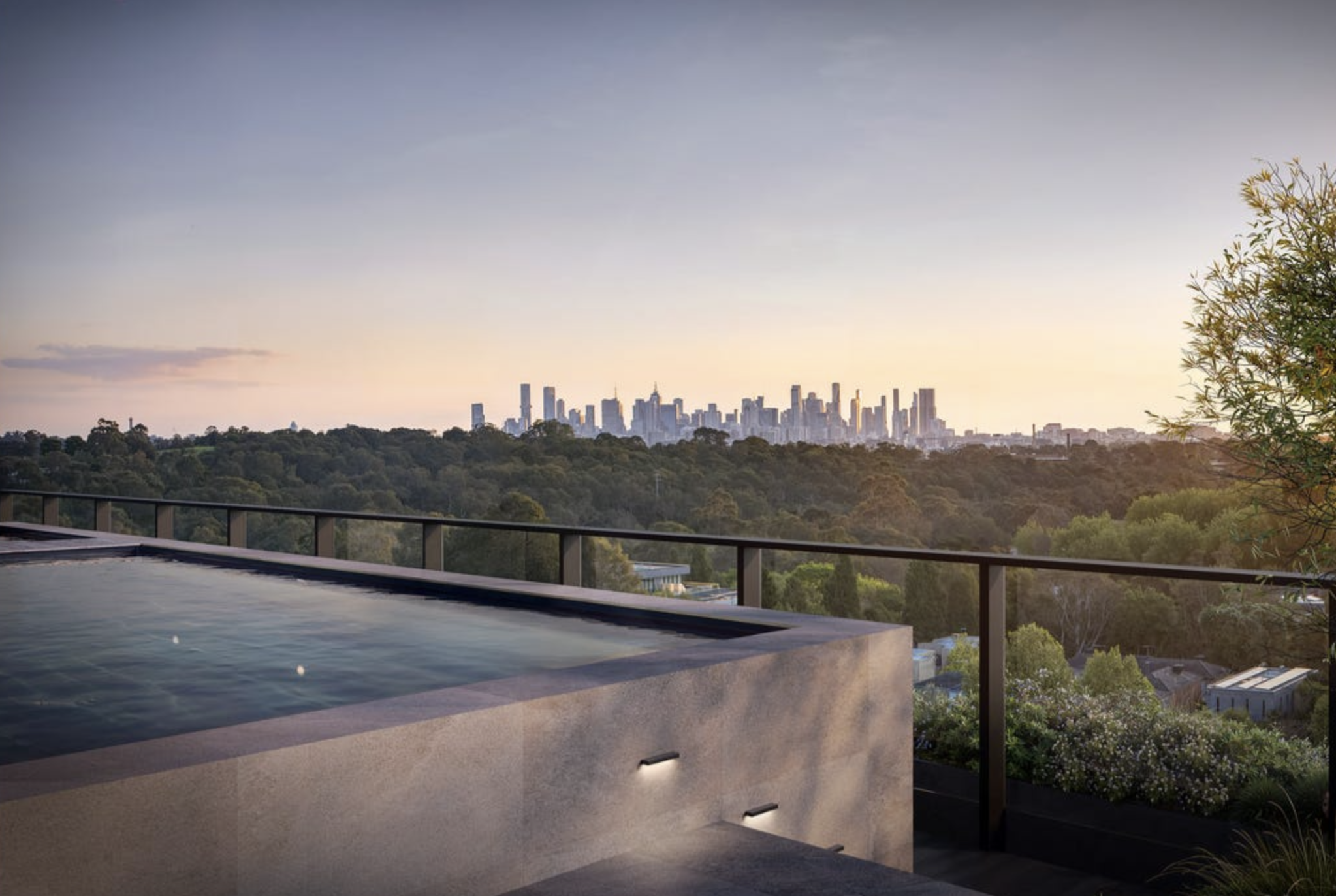
Veteran builder-developer Glenvill is selling what it calls its “Super Penthouse” at its Seren Row stage of its multistage, 16.5-hectare YarraBend masterplan.
The Super Penthouse, one of 12 penthouse and sub-penthouses within the historic grounds of the former Australian Paper Mill in Alphington, has been designed by Fraser & Partners to blend heritage character with refined contemporary living. The 416 sqm apartment will have four bedrooms, four bathrooms, a separate home office, a multi-purpose room, and a private rooftop with a pool, spa, and outdoor kitchen. It will have finishes in travertine, quartzite, and herringbone timber.
Residents of the Seren Row penthouse collection will also gain exclusive access to the Signature Club, a next-level suite of amenities including a subterranean wellness centre onsen, gym, sauna and steam rooms, golf simulator, co-working spaces, and even a monthly cleaning and chauffeur service. They will also have access to The Hub—a co-working and social space—plus The Bend, a dining precinct curated by acclaimed chef Adam D’Sylva.
Dyason, East Melbourne
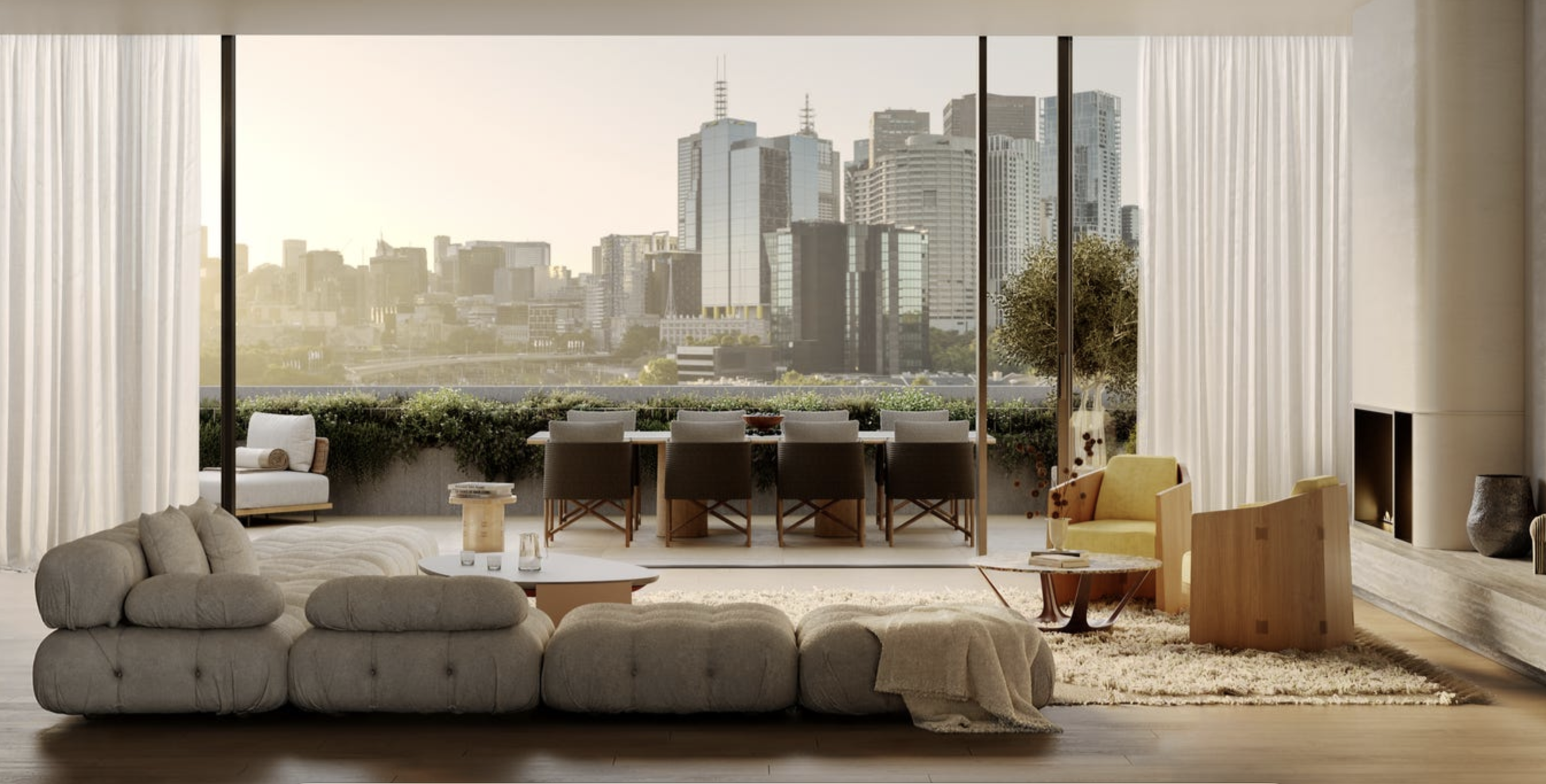
Nearly $12 million is being sought for the penthouse atop Dyason, the new East Melbourne apartment development by Valli. The two-level, four-bedroom penthouse, with direct private elevator access, has been designed by Pandolfini Architects in collaboration with interiors by Lisa Buxton and landscaping by Acre.
The clever design creates a 14.5-metre-long living area that captures extensive views from the MCG to the CBD. Sunrise will flood the eastern kitchen with light, and sunsets will cast a glow over the open fireplace. The kitchen features a Sub-Zero fridge, Wolf ovens, a 400-bottle wine cellar, and an integrated bar. There will be two outdoor terraces on each level.
Dyason, on East Melbourne’s dress circle Jolimont Street, will have just five apartments and a heritage home, which will be restored and converted into a townhouse.

Australian shares fell on Thursday as Wall Street weakness, rising oil and persistent rate concerns weighed on most of the market. The S&P/ASX 200 declined 0.72 per cent to 8,702. The All Ordinaries lost 0.66 per cent to finish at 8,897. Mining stocks were hit particularly hard, while real estate also dragged on the index. …
Continue reading “ASX falls 0.7 per cent as miners and property stocks retreat”

Borrowers cannot control the Reserve Bank, but they can control how exposed their household budget is to its next decision. The RBA meets on 29 September with inflation concerns still elevated and major-bank economists increasingly bringing forward their rate-rise calls. Fixed mortgage rates have also been moving, reducing the value of waiting for perfect certainty. …
Continue reading “What mortgage holders should do before the next RBA decision”

A five-bedroom Palo Alto home designed by Steven Ehrlich is listed for $44 million, making it the city’s most expensive listing. Built around a dramatic concrete spine, the home features four courtyards and a pool.
3 min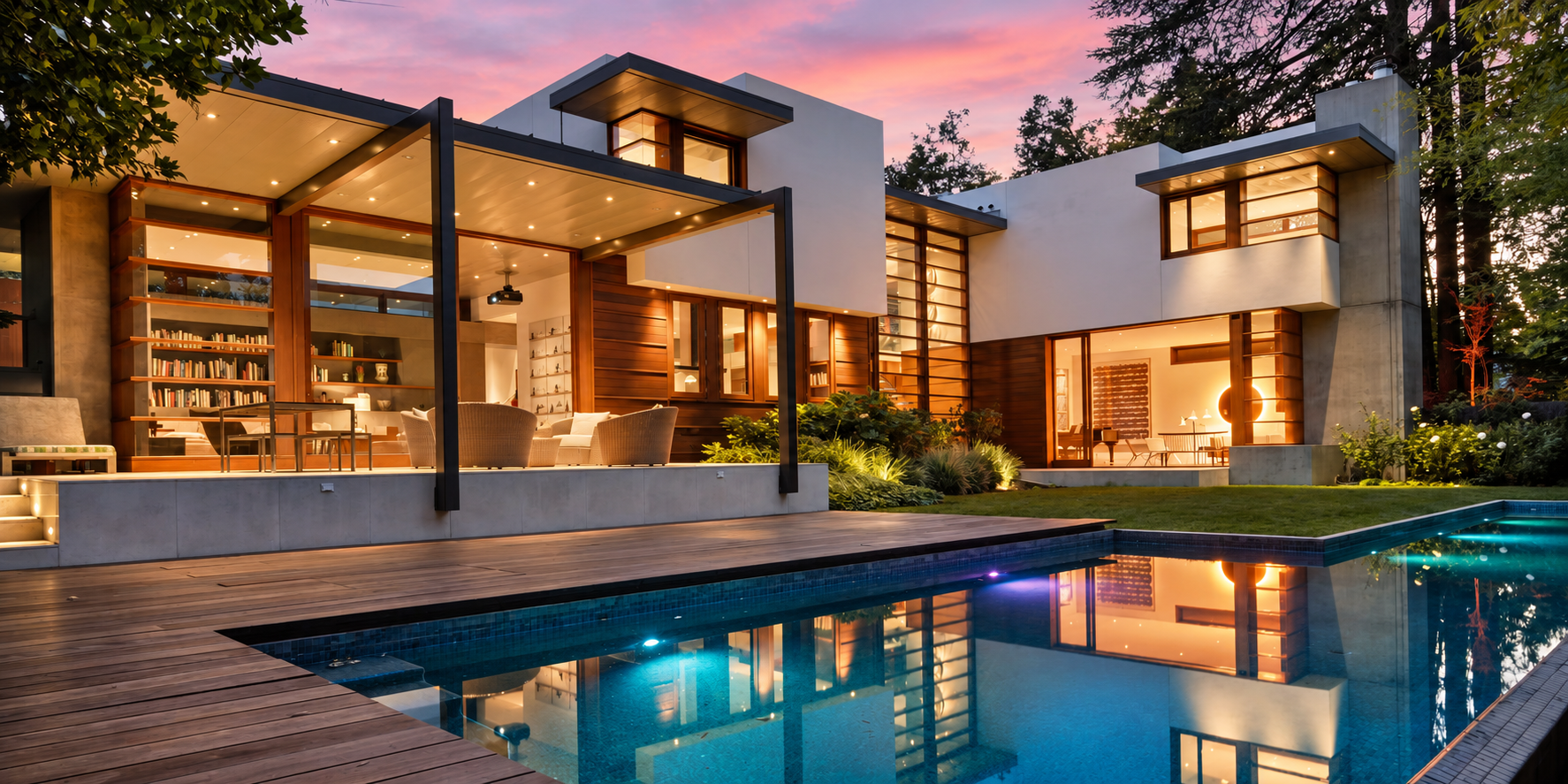
For years, tech entrepreneur Asher Waldfogel and his wife, Helyn MacLean, dreamed of building a modern house in Palo Alto, Calif.
The couple, however, worried about clashing with the Mediterranean-style architecture typically associated with their neighborhood of Old Palo Alto.
So they tapped architect Steven Ehrlich to create a design that paid homage to its surroundings with stucco, mahogany and titanium zinc cladding. They spent $20 million over several years building the house, completed in 2005.
Now looking to be closer to their adult daughter on the East Coast, they are putting the five-bedroom home on the market for $44 million—the most expensive listing in Palo Alto.
Waldfogel is an angel investor who co-founded Redback Networks, a telecommunications-equipment company. MacLean previously had a career in fundraising.
The couple purchased the roughly 0.4-acre site for $7.1 million in 2000 and demolished a circa-1930s Spanish Colonial home. The house they built pinwheels around a central staircase. It has 7,900 square feet of livable space, with four distinct courtyards and a pool.
A key feature of the home is a cast-in-place concrete wall, or spine, that is two stories high and about 80 feet long. “There’s a little bit of controlled chaos in what comes out of the form,” unlike a perfectly uniform surface, Waldfogel said. “If you want that, you do it in plastic.”
Waldfogel said he and his wife are thinking about the next phase of life now that their daughter is grown, although they have not decided where they will move. They also have a home in Sun Valley, Idaho.
“Right now we’re just trying to emotionally let go and decide what to do next,” he said.
Palo Alto, an epicenter of venture capital and tech startups in Silicon Valley, is home to some of the country’s biggest tech titans. Sales volume and prices are rising, with a median sale price of $3.5 million for the three months ending in August, up 5.8% year-over-year, according to real-estate brokerage Redfin.
Arthur Sharif of Sotheby’s International Realty—San Francisco Brokerage has the listing.

Chinese carmaker GAC will expand its Australian electric vehicle line-up with the city-focused AION UT hatchback.

From Italy’s $93,000-a-night villas to a $20,000 Bowral château, a new global ranking showcases the priciest Airbnbs available in 2026.