Rose Bay House: Sydney’s newest waterfront mansion 
Kanebridge News
Share Button

Rose Bay House: Sydney’s newest waterfront mansion 

A $20 million rebuild is set to reshape Rose Bay’s dress circle, with Tribe Studio proposing a sustainable, sculptural mansion to replace the existing trophy home and reclaim its coveted harbour views.

By Staff Writer
Tue, Nov 18, 2025 10:05amGrey Clock 2 min

What happens in one of Sydney’s most affluent suburbs when a neighbour’s trees block your panoramic views of the Harbour? You build a new $20 million house.

That’s the reality in Rose Bay, where there are plans for a knockdown rebuild of the trophy home Indah on the dress circle Bayview Hill Road. That last sold for just over $27 million in 2015 when it was bought by barrister Georgina Black. 

Two years ago, Black sought to have four recently planted palm trees on her neighbour’s property removed because they obstructed her view of the Sydney Opera House.

Council rejected the application, so Black took the matter to the Land and Environment Court. They also sided with her neighbour.

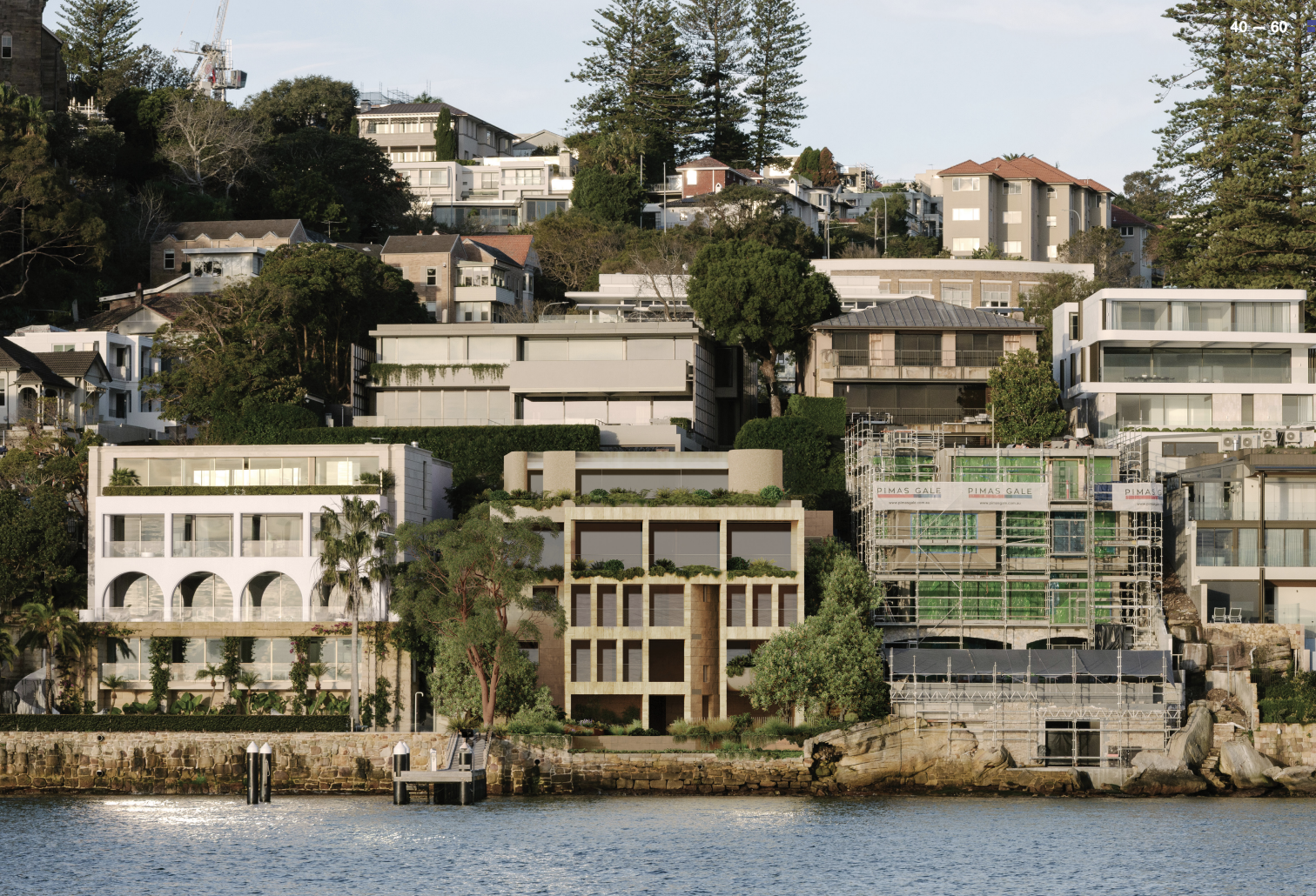
Now a new four-level home is planned for the prime 888 sqm block. The documents suggest it will be more in keeping with its location than the existing five-bedroom, glass-swathed mansion.

In its Design Statement submitted to Woollahra Council, Tribe Studio Architects described Rose Bay House as an “ambitious project.” They said they aim to set a high watermark for sustainable and Country-centred design.

Ironically, the report notes that, in a traditional sense, they are “being a good neighbour to the surrounding sites.”

“We are honouring shared views, we are creating landscape buffers, and we have liaised closely with neighbours where possible to secure their support for the proposal,” the report states.
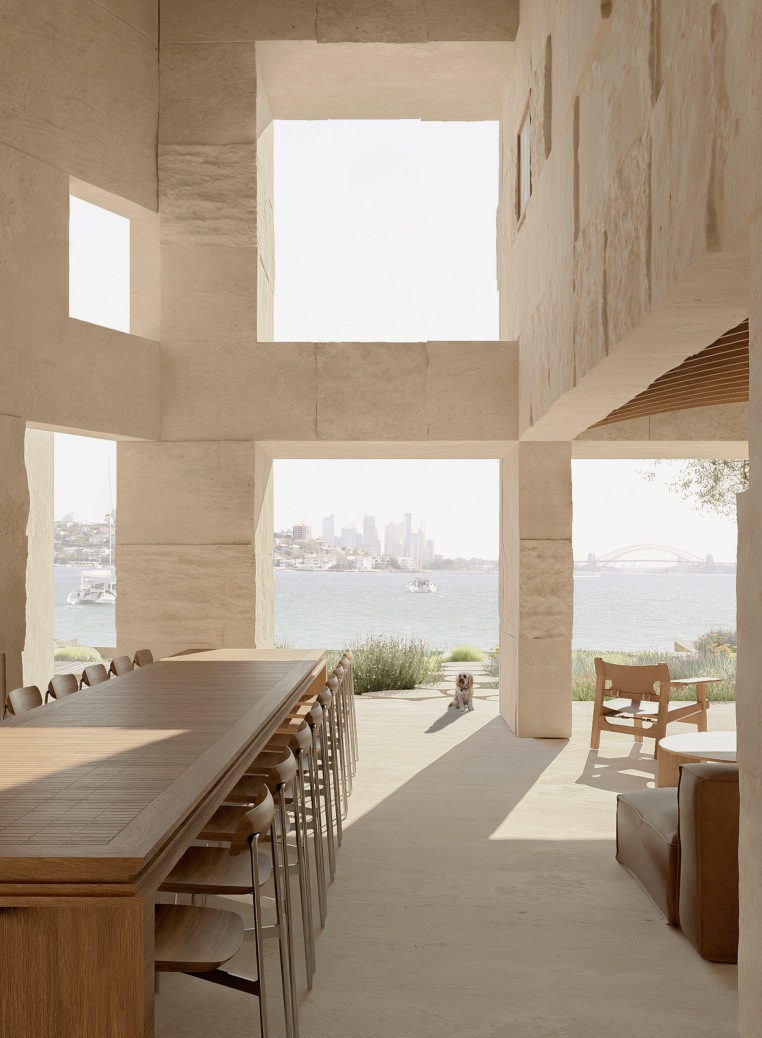
They also say they are driven by being a “good neighbour” to the Harbour.

“In this prominent location, the house is a shared foreshore for everyone using the Harbour. The design reinstates a sandstone, bushy foreshore and reduces the sense of highly reflective, large glass spans that dominate the existing dwelling.”

“We hope to inspire a new generation of luxury that is not reliant on imports and extraction, but rather is inventive, crafted and responsible.”

The elements of the home are categorised for longevity to manage maintenance, upgrades, and overall durability. Permanent elements are designed to last for hundreds of years.

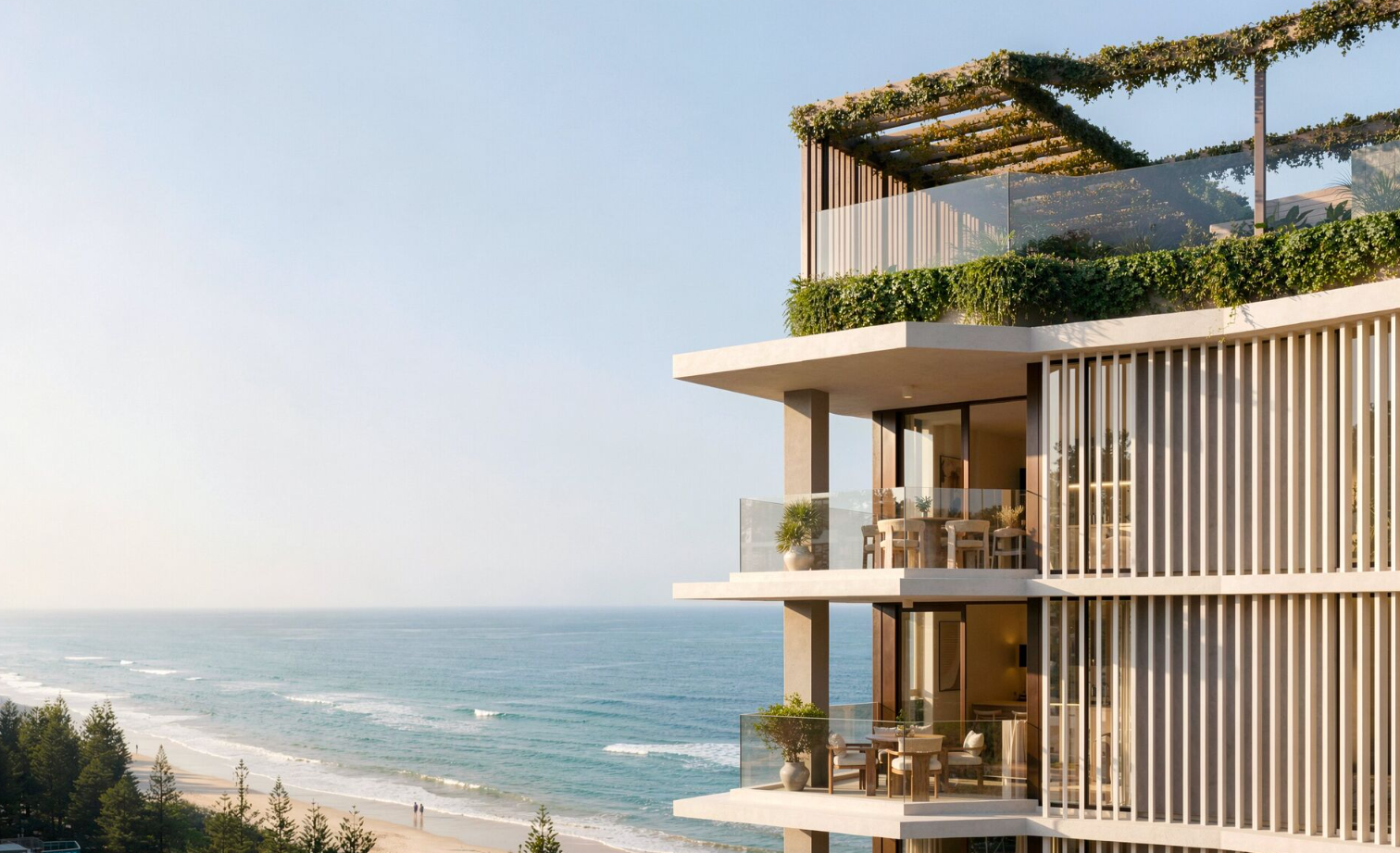
The new home will span four levels. The entry level will feature an open-plan kitchen, living, and dining area opening to gun-barrel views of the Harbour.

Two levels will sit below ground. The lowest level includes a natural pool and a quarry-like, double-height outdoor dining area and undercroft pool zone. Tribe drew inspiration from the Ca’n Terra House by Ensamble Studio in Menorca, Spain, converted in 2020 from an abandoned limestone quarry.

The entire top level will be a dedicated master suite with a dressing room and ensuite. In total, six bedrooms are proposed, along with several home office spaces and lounge areas.

It would be realistic that given the purchase price of the home a decade ago, and a $20 million rebuild, the new trophy residence would become one of the priciest in Rose Bay.

The current Rose Bay record was set earlier this year when a harbourfront home on Tivoli Avenue, with three separate residences on the 1,138 sqm block, sold for a reported $82.5 million.


MOST POPULAR

As housing drives wealth and policy debate, the real risk is an economy hooked on growth without productivity to sustain it.

Limited to 630 units, Lamborghini’s latest Urus Capsule pushes personalisation further than ever, blending hybrid performance with over 70 bespoke design combinations.

Related Stories
Property
AUSTRALIA’S PROPERTY BOOM IS MASKING A DEEPER ECONOMIC PROBLEM
By Paul Miron, Opinion 01/05/2026
Property of the Week
PROPERTY OF THE WEEK: BOUTIQUE BYRON RETREAT WITH FIVE-STAR RETURNS
By Kirsten Craze 01/05/2026
Property
REVEALED: THE REAL OPPORTUNITIES IN AUSTRALIA’S PROPERTY MARKET
By Staff Writer 28/04/2026
AUSTRALIA’S PROPERTY BOOM IS MASKING A DEEPER ECONOMIC PROBLEM

As housing drives wealth and policy debate, the real risk is an economy hooked on growth without productivity to sustain it.

By Paul Miron, Opinion
Fri, May 1, 2026 3 min

For decades, Australia has leaned into its reputation as the lucky country. But luck, as it turns out, is not an economic strategy. 

What once looked like resilience now appears increasingly fragile. Beneath the surface of rising property values and steady headline growth, the Australian economy is showing signs of strain that can no longer be ignored. 

Recent data paints a sobering picture. Australia has recorded one of the largest declines in real household disposable income per capita among advanced economies.  

Wages have failed to keep pace with inflation, meaning many Australians are working harder for less. On a per capita basis, income growth has stalled and, at times, reversed. 

And yet, on paper, things still look relatively solid. GDP is growing. Unemployment remains low. But that growth is increasingly being driven by population expansion rather than productivity.  

More people are contributing to output, but not necessarily improving living standards. 

That distinction matters. 

For years, Australia’s economic success rested on a powerful combination: a once-in-a-generation mining boom, a credit-fuelled housing market, strong migration and a property sector that rarely faltered. Between 1991 and 2020, the country avoided recession entirely, building enormous wealth in the process. 

But much of that wealth is tied to property. Around two-thirds of household wealth sits in real estate, inflated by leverage and sustained by demand. It has worked, until now. 

The problem is the supply side of the economy has not kept up. 

Housing supply is falling behind population growth. Rental vacancies are near record lows.  

Construction firms are collapsing at an elevated rate. At the same time, massive infrastructure pipelines are competing with residential projects for labour and materials, pushing costs higher and delaying delivery. 

The result is a system under pressure from all angles. 

Despite near full employment, productivity growth has stagnated for years. In simple terms, Australians are putting in more hours without generating more output per hour. The economy is running faster, butgoing nowhere. 

Meanwhile, government spending continues to expand. Public debt is approaching $1 trillion, with spending now accounting for a record share of GDP.  

The gap between spending and revenue has been filled by borrowing for decades, adding further pressure to an already stretched system. 

This is where the uncomfortable question emerges. 

Has Australia become too reliant on a model driven by rising property values, expanding credit and population growth? 

As asset prices rise, households feel wealthier and borrow more. Banks lend more. Governments collect more revenue. Migration fuels demand. The cycle reinforces itself. 

But when productivity stalls and debt outpaces real income, the system begins to depend on constant expansion just to stay stable. 

It is not a collapse scenario. But it is not particularly stable either. 

Nowhere is this more evident than in housing. 

The National Housing Accord targets 1.2 million new homes over five years, yet current completion rates are well below that pace. With approvals falling and construction costs rising, the gap between supply and demand is widening, not narrowing. 

Housing is also one of the largest contributors to inflation, with costs rising sharply across rents, construction and utilities. Yet the private sector, from small investors to major developers, is struggling to make projects stack up in the current environment. 

This brings the policy debate into sharper focus. 

Tax settings such as negative gearing and capital gains concessions have undoubtedly boosted demand over the past two decades. But they have also supported supply. Removing them may ease prices briefly, but risks deepening the supply shortage over time. 

That is the paradox. 

Policies designed to make housing more affordable can, in practice, make the shortage worse if they discourage development. The optics may appeal, but the economics are far less forgiving. 

It is also worth remembering that most property investors are not institutional players. The majority own just one investment property. They are, in many cases, ordinary Australians using real estate as their primary wealth-building tool. 

Undermining that system without replacing it with a viable alternative risks unintended consequences, from reduced supply to higher rents and increased inflation. 

So where does that leave Australia? 

At a crossroads. 

The country can continue to rely on population growth and rising asset prices to drive economic activity. Or it can shift towards a model built on productivity, innovation and sustainable growth. 

The latter is harder. It requires structural reform, long-term thinking and political discipline. 

But it is also the only path that leads to genuine, lasting prosperity. 

The question is no longer whether Australia has been lucky. 

It is whether it can evolve before that luck runs out. 

Paul Miron is the Co-Founder & Fund Manager of Msquared Capital. 

MOST POPULAR

Odd Culture Group brings a new kind of after-dark energy to the CBD, where daiquiris, disco and design collide beneath the city streets.

From elevated skincare to handcrafted home pieces, this year’s most thoughtful gifts go beyond the expected.

Related Stories
Lifestyle
The Glow-Up That Hurt: What It’s Really Like to Get Skin Needling
By Leticia Estrada Rahme 05/08/2025
Property
McDonald’s Yass listing offers rare turnover lease with uncapped income potential
By Jeni O'Dowd 10/04/2026
Property
Record-breaking US luxury agents to lead high-level real estate summit
By Jeni O'Dowd 13/03/2026
0
    Your Cart
    Your cart is emptyReturn to Shop