REAL ESTATE POWER COUPLE’S GREATEST DEAL ARRIVES FOR VALENTINE’S DAY
Powerhouse real estate couple Avi Khan and Kaylea Sayer welcome their daughter while balancing record-breaking careers, proving success and family can grow side by side.
 2 min
2 min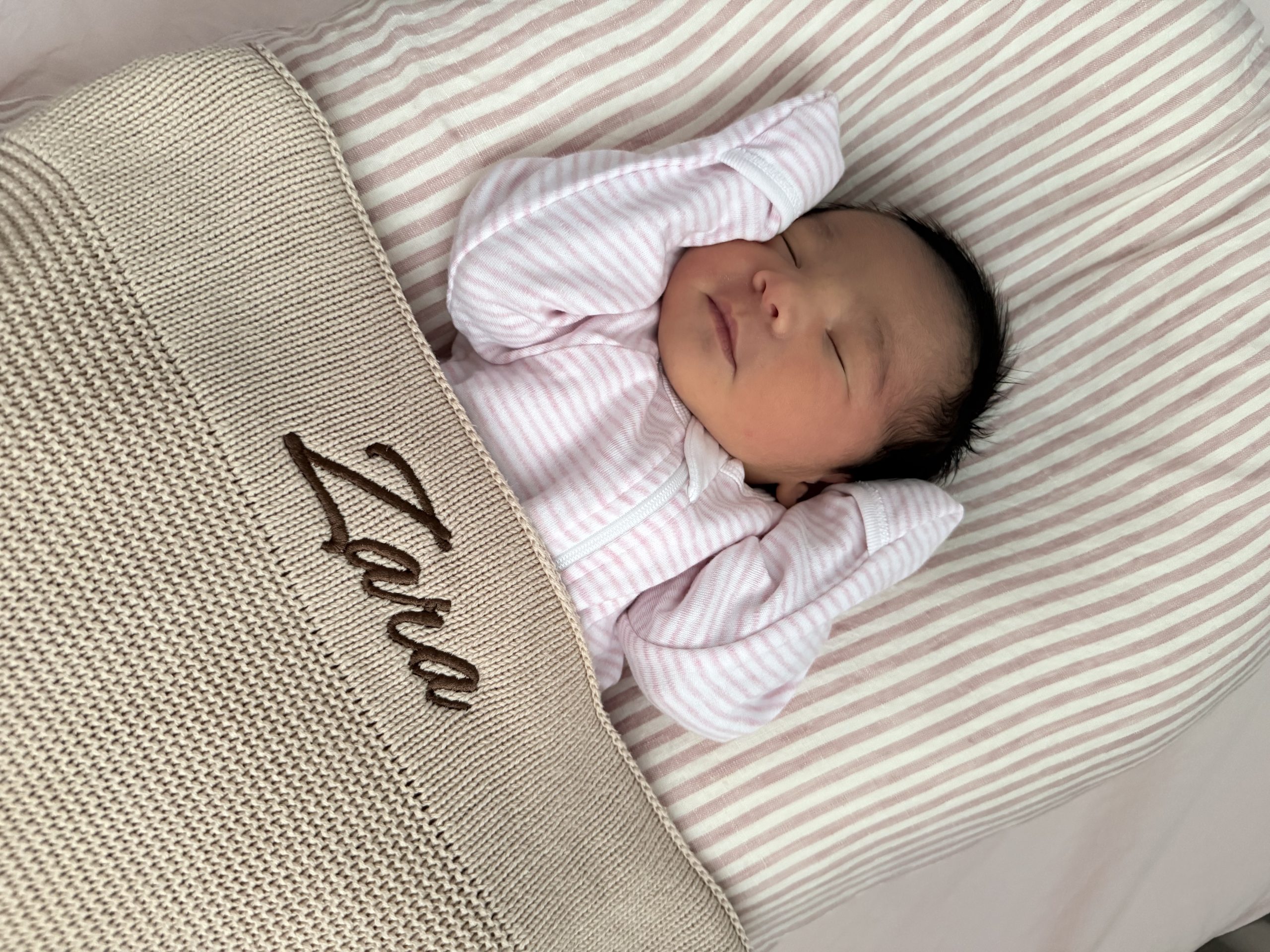
For Ray White AKG Group chief executive Avi Khan and his fiancée, top-performing agent Kaylea Sayer, no multimillion-dollar property transaction could rival their most treasured arrival, daughter Zara Mae Khan, born just in time for Valentine’s Day.
In a testament to her renowned work ethic, Ms Sayer continued assisting clients from her hospital bed just days after giving birth, finalising settlements while cradling her newborn daughter.
“I had two properties settle yesterday,” said Ms Sayer, who worked right up until Zara’s arrival.
“I am so grateful for my clients, buyers and sellers, they’ve been amazing – I was literally lying in bed organising settlements.”
Weighing 3.5 kilograms, Zara made her entrance at 11.28 pm on Sunday, February 8, at Mater Mothers’ Private Hospital in South Brisbane, arriving just one day after her due date.
“It was my due date, and I was having lunch at mum’s when I started feeling a bit off,” Ms Sayer said.
“I said to Avi, ‘I think we should go home.”
Later that day, her waters broke at home, and the couple headed to the hospital, where an emotional four-hour labour followed.
The experience became even more meaningful when Ms Sayer’s obstetrician, Dr Jill Cox, who was not scheduled to work that weekend, logged in remotely before travelling to the hospital to personally assist with the birth.
“She wasn’t supposed to work that weekend, but she came in around 10 pm,” Ms Sayer said.
“I thought she had just come into work, but she told me she came specifically to help Avi and I. It was so nice having her there.”
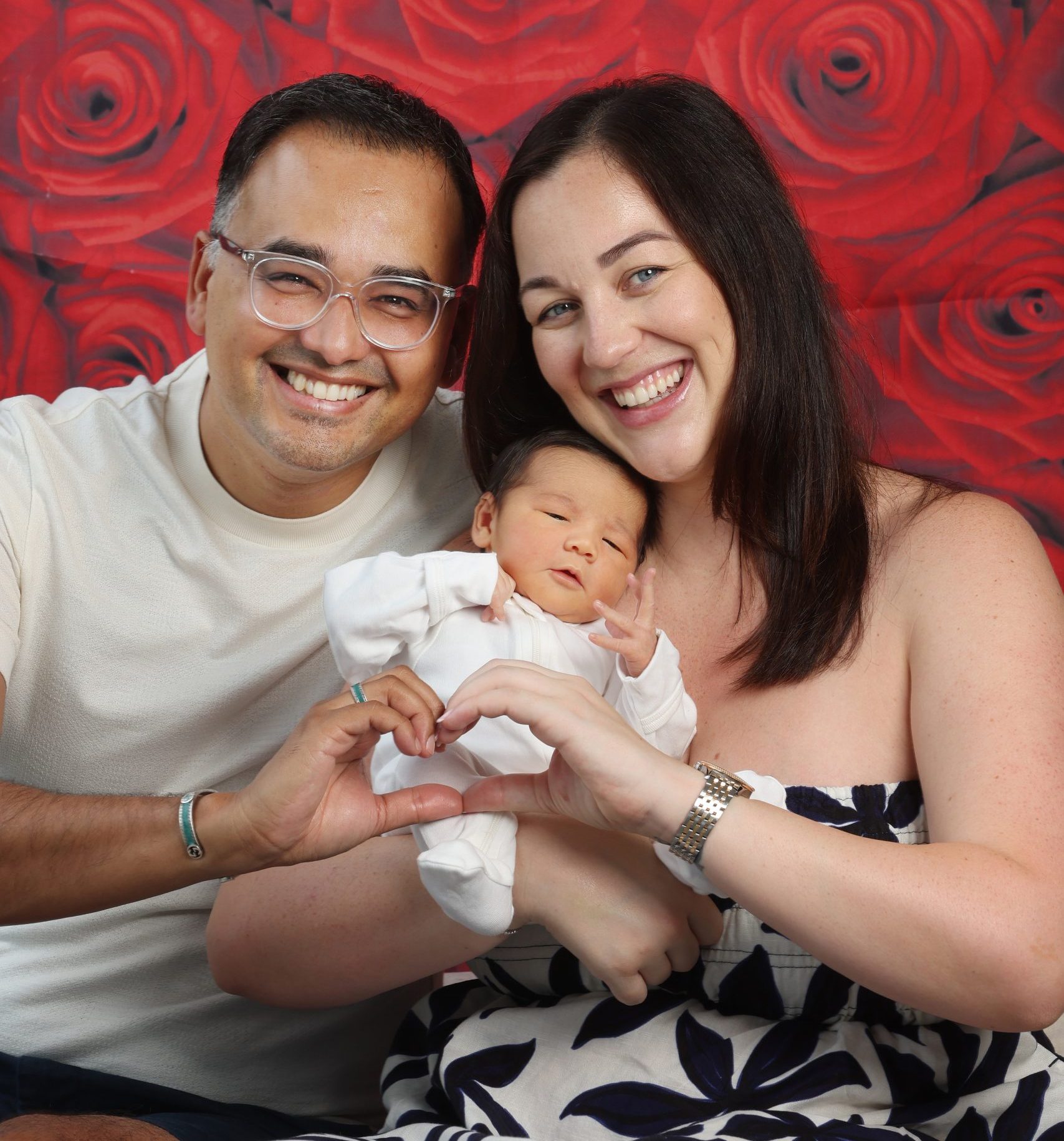
For Mr Khan, already a devoted father to Aisha, 12, and Amir, 10, welcoming Zara brought a profound sense of perspective.
“It’s hard to put into words,” he says softly. “In that instant, everything else fades away. Nothing matters except that little heartbeat in your hands.”
“Even the third time, it doesn’t feel routine. It feels sacred. You look at them and think, ‘I am a father.’ And it hits you just as powerfully as the first time.”
The couple selected the name Zara for its shared cultural significance.
“We wanted something that resonated with both our identities,” Mr Khan said.
“Zara means princess, radiance, and blooming flower. It has really cool meanings in both English and Muslim backgrounds”.
Ms Sayer’s professional drive has been evident throughout her career. Entering real estate at just 16 years old, she worked throughout her pregnancy, including helping organise the company’s flagship The One conference, which attracted more than 1000 of Australia’s leading real estate performers while she was nine months pregnant.
“January was actually the easiest month,” she said.
“I knew I was on the home stretch.”
Valentine’s Day celebrations this year, however, will take on a more intimate tone.
“We’ll probably be changing nappies, eating in, and watching a cool movie together,” Mr Khan said.
With strong family support, a high-performing team and now baby Zara completing their household, Mr Khan believes balancing professional ambition with family life is both achievable and deeply rewarding.
“There’s no manual for any of this,” he said.
“But with good family, good support, and a good team around us, we’ll figure it out.”
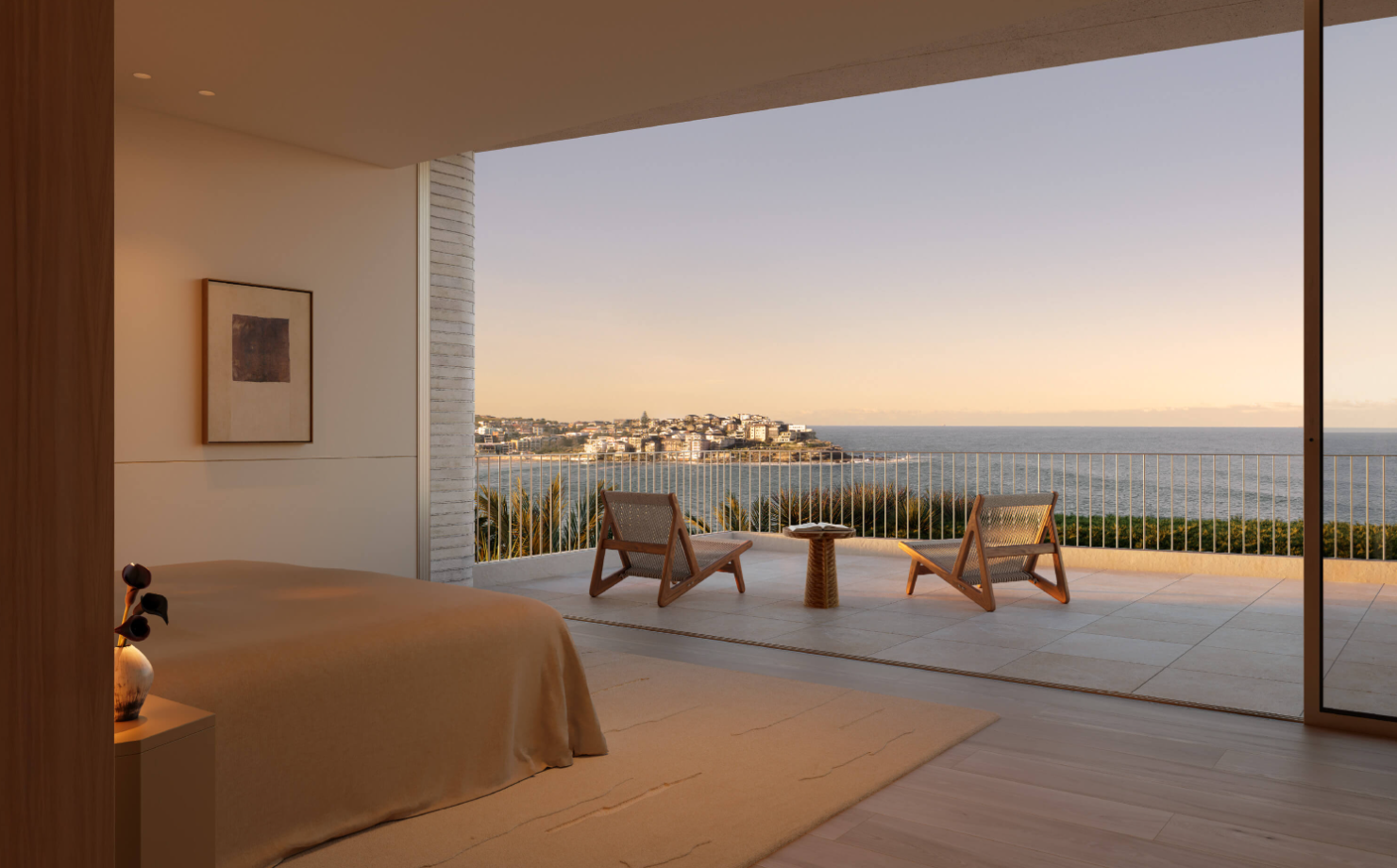
For Central Element, the start of work at Pearl represents another step in the company’s growing eastern suburbs pipeline.

All three vehicles will form part of a broader charitable initiative benefiting Big Brothers Big Sisters of America, the American Red Cross and Starlight Children’s Foundation
Apple’s first foldable, the $1,999 iPhone Duo, combines an iPhone and iPad Mini experience—but its size, weight and price come with compromises.
4 min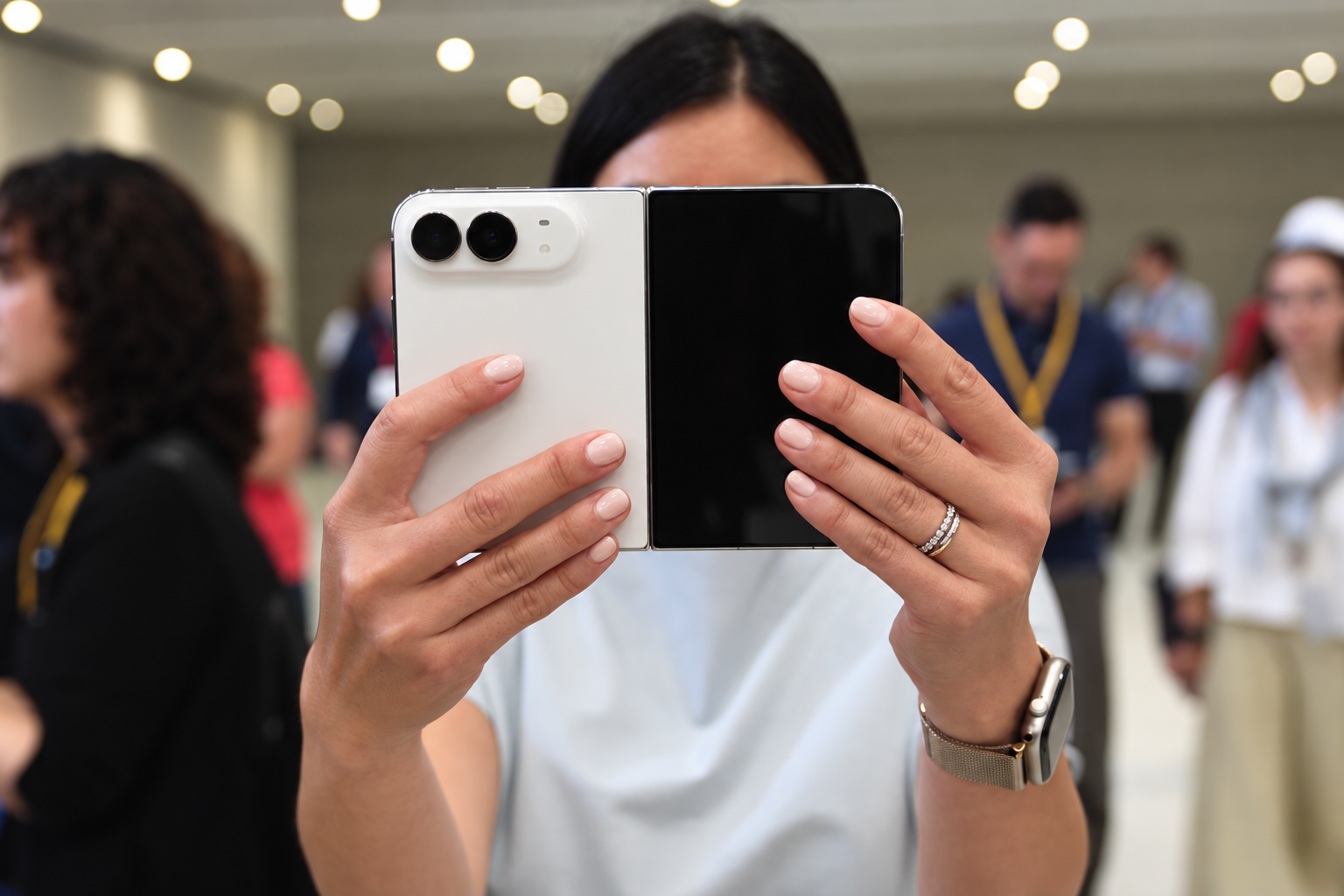
As I watched a Netflix show on Apple’s first foldable, the iPhone Duo, I had two surprising thoughts.
The first: Maybe I don’t need my iPad Mini anymore.
The second: Uh oh, am I about to spend $1,999 on a phone?
I didn’t think folding phones were for me. I’ve been testing Android versions from Samsung and Google since 2019, and those early editions came with too much screen and too many compromises.
Fast forward seven years, and the technology has come a long way. Apple—in its very Apple way—has also come up with some hardware and software trickery to make up for some shortcomings of the basic design. My desire for a folding phone before today was zero. After today, it’s a lot more than zero.
I’m not ready to recommend the Duo, which ships on Oct. 23, just yet. Not until I am able to test it more fully, so be on the lookout for that review in a few weeks. But from what I experienced at Apple Park on Wednesday, I could actually picture myself using this new half-phone, half-tablet hybrid.
Crease camouflage
For months, I’ve been using Samsung’s Galaxy Z Fold 8, a similarly squat, passport-shaped foldable that opens up to a larger screen. It’s impressively thin and can easily fit into the infuriatingly tiny pockets in women’s pants and dresses. Samsung did a lot of work to minimize the crease—the dip between the two halves of the big interior display—but it’s still clearly there.
When I held the iPhone Duo open, the crease was barely visible. As I slid my finger across the display, I could feel it, but it’s more subtle than Samsung’s. Most of the time, the screen looked as flat and smooth as the one on an iPad.
Apple employed both software and hardware techniques to camouflage the crease. The matte surface of the interior 7.6-inch screen minimizes reflections to hide it. (Samsung’s Fold 8 screen is shiny.)
And as you begin to open or close the iPhone Duo, the interface shifts the controls and content away from the center crease. If, say, you’re watching a video on the outer screen, you can open the Duo to switch to the bigger display within. A black fade marks the transition. You don’t see the video full screen until the phone is completely flat.
Heavy handed
My second observation was that, when the Duo is closed, in phone mode, it was harder to use one-handed than I expected.
In the keynote trailer and press release, Apple touted how thin the Duo is. It’s marketed as the thinnest iPhone ever—when open.
But it’s actually thicker and heavier than most of its Android competitors. The Duo weighs 254 grams, and is 11.3 millimeters thick when closed. The Samsung Galaxy Fold 8 is just 201 grams, with a thickness of 9.7 millimeters. Google’s Pixel 11 Pro Fold is 239 grams and 10.1 millimeters.
Because the Duo is also wider than a standard iPhone, I found it quite a challenge to type.
I admit, I do have smaller-than-average hands. So I consulted my colleague Rolfe Winkler, who has a larger grip. He agreed the Duo feels big.
Apple rearranged the interface on the outer screen so it looks different than traditional iPhones. The dock and control center are off to the right to be more reachable. Committing to the Duo as your main device will require adjustments in your handling. You will have to learn a new way to use and type.
Work and play
My most surprising takeaway? I feel a pull toward this device.
I always thought that combining an iPhone and an iPad would mean bigger compromises. The battery life is about the same as the 18 Pro (up to 24 hours of “regular use” on a single charge), though I’ll need to verify that in my real-world testing. And it’s also as durable, with the same IP68 dust- and water-resistance rating as the rest of the iPhone lineup.
There are trade-offs, for sure. Trying out the camera, I immediately missed the 8X zoom in my Pro model. The Duo has just 2X zoom, which wouldn’t cut it for the dozens of pictures I take of my kid every day.
But the dual screens unlock new photo functionality. You can see what your shot looks like from the outside screen. As someone who has tried tirelessly to self-direct a family photo—or a spouse—I am very eager to try this out more.
Foldables, I initially thought, were for classic mobile-warrior jet-setter types, who never sit at a desk and are always on calls. For that crowd, the Duo can run two apps side-by-side.
Me, I’m more of a bed binge-watcher and ebook reader. That’s what my beloved iPad Mini is for.
Watching videos on the Duo is a nice experience—nice enough that you forget the screen is 0.7 inches smaller than the iPad Mini’s. The main screen is also a 4:3 aspect ratio. Very similar, by the way, to the IMAX edition of the Odyssey.
Because I wasn’t able to snag a ticket to one of the sold-out screenings, I will be watching Christopher Nolan’s version of Homer’s epic on the Duo, just as the director intended. (Just kidding! Sort of.)
The Duo costs $800 more than an iPhone 18 Pro, and I’m not sure I want to spend that premium on a first-generation Apple device. But I’m not ruling out the idea that a Duo might one day be in my future. Stay tuned for my full review.

An opulent Ryde home, packed with cinema, pool, sauna and more, is hitting the auction block with a $1 reserve.

Two coming 2027 models – the first of the “Neue Klasse” cars coming to the U.S. early next year – have been revealed.