Why the next three years could be the best time to invest in property
Stable rates, tight supply and improving confidence are creating a rare three-year window for strategic property investment.
 4 min
4 min
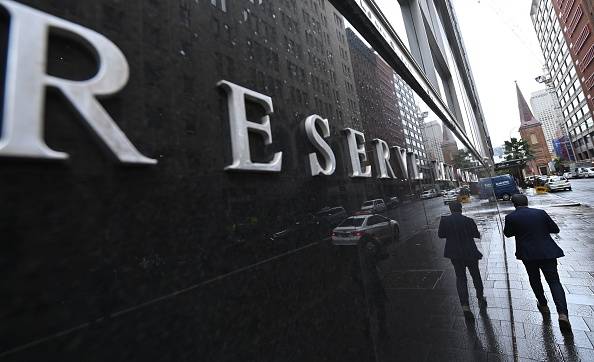
After the RBA failed to cut interest rates earlier this month, many Australians are still sitting on the sidelines, waiting for “the right time” to buy.
But as every experienced investor knows, there’s rarely a perfect moment. Only windows where fundamentals align.
The next three years look to be one of those windows. This period represents a great opportunity to step into the market strategically, supported by strong long-term tailwinds and a more stable lending environment.
Supply is tight and that’s not changing anytime soon
Australia’s housing shortage has become structural.
The government’s target of 1.2 million new homes by 2029 is already slipping out of reach, with completions tracking closer to 160,000 per year.
Construction costs, planning bottlenecks, and labour shortages continue to restrict new supply, while population growth and immigration remain high.
Australian market snapshot
Perth (WA)
4,251 listings (week ending 1 Jun 2025)
2,832 listings (Oct 2025) ↓ 40 % YoY; sales ↓ 3.1 %; median days on market ≈ 12
Significant supply contraction
Despite small weekly lifts, total stock remains 40 % below 2024. Homes under the median are selling within days.
Brisbane (QLD)
Median value $945 k; monthly growth 1.5 %
Median value $992,864 (+1.8 % MoM, +10.8 % YoY); unit listings 45 % below 5-yr avg
Tight supply + rising prices
Affordable pockets < $1 m remain highly competitive. Demand concentrated around family suburbs.
Melbourne (VIC)
Listings below 5-yr avg; mild buyer hesitancy
Supply still below 5-yr avg; tight in inner east, north & inner west
Selective undersupply
Now Australia’s most affordable capital on income-to-debt ratio. Tight supply in established suburbs positions it for rebound.
Across Perth, Brisbane and Melbourne, in particular, demand continues to outstrip supply, a formula for steady, sustainable growth rather than speculation.
In Perth, listings have fallen roughly 40% year-on-year, and properties are turning over in just 12 days on average, the fastest market in the country.
For Brisbane, supply remains well below normal, particularly under $1 million, where investors and first-home buyers overlap.
And in Melbourne, affordability is now the best in the country, with tight supply in key inner corridors setting up for a cyclical recovery as rates stabilise.
Confidence is returning
After two years of turbulence, the rate environment has finally steadied. Most lenders now sit between 5.3% and 5.6%, roughly 1% lower than a year ago.
On an average $800,000 loan, that’s about $8,000 in annual savings, a meaningful improvement to serviceability and household cash flow.
While no one expects large cuts in the short term, the broader shift will breed confidence.
Borrowers who were cautious in 2023–24 are re-entering the market with renewed clarity around repayments and borrowing power.
This is an ideal time to re-engage clients who paused during the rate-rise cycle. With the right structuring, many can now step forward without over-stretching.
Demand, supply & location
In a market where many investors fixate on short-term yields, it’s critical to bring clients back to fundamentals.
The best opportunities over the next three years will be in locations with strong demand drivers, limited supply, and genuine affordability.
Strong demand drivers
Focus on markets backed by tangible fundamentals, infrastructure investment, job growth, and migration inflows. Areas with improving economies and active employment hubs consistently attract owner-occupiers, which supports long-term value.
Limited incoming supply + affordability
When affordability and low supply align, upward price pressure follows. Australia is currently building only around 160,000 new dwellings per year, well below the 240,000 needed to meet national targets. Markets with low construction pipelines and accessible entry prices are positioned for sustained growth.
Location and value-creation potential
Established, owner-occupied suburbs tend to outperform because they’re insulated from large-scale supply shocks.
Look for houses or properties with strong land content, ideally a 50 % or higher land-to-asset ratio and those that allow for renovations, granny-flat additions, or subdivisions over time.
While every market will move through its own cycle, the next three years should continue to deliver solid opportunities across Australia, particularly in locations where supply is tight, economies are strong, and demand is anchored by real fundamentals.
The market is resetting its risk profile
Macquarie Bank’s recent decision to halt lending to new property purchases in trust structures could also change parts of the investor market.
While it may slow activity in investment-heavy markets, it’s unlikely to affect demand in locations where most of the activity is driven by home buyers.
These areas are largely found within the major capital cities, and even in some of the smaller capitals with growing owner-occupier bases.
When assessing these markets, it’s important to look at the local economy, the industries that support employment, infrastructure investment, and migration.
Even indicators like Gross State Product (GSP) can provide valuable insight into the health of the local market and its resilience to policy changes.
This shift reinforces the importance of sticking to fundamentals such as strong economies, real demand, and sustainable affordability, not investor-driven locations.
Thinking long-term
The next three years won’t be about chasing quick gains.
They’ll be about steady, compounding growth driven by constrained supply, stable rates, and solid demand. Property wealth isn’t about speculation, it’s about structure, patience, and the discipline of buying the right asset and holding it through cycles.
If you’re considering entering the market, now is the time to act. Stable rates, limited supply, and improving affordability create a strong foundation for the next property cycle.
Abdullah Nouh is the Founder and Director of Mecca Property Group, one of Australia’s leading buyers’ agencies specialising in high-growth residential and commercial investments.

From making unpopular decisions to learning when to listen, leaders from five businesses reveal what nobody prepared them for — and how running a company has challenged their expectations.

Technology and semiconductor shares fell sharply as investors questioned the debt financing the AI infrastructure boom and confronted higher rates and Chinese competition.
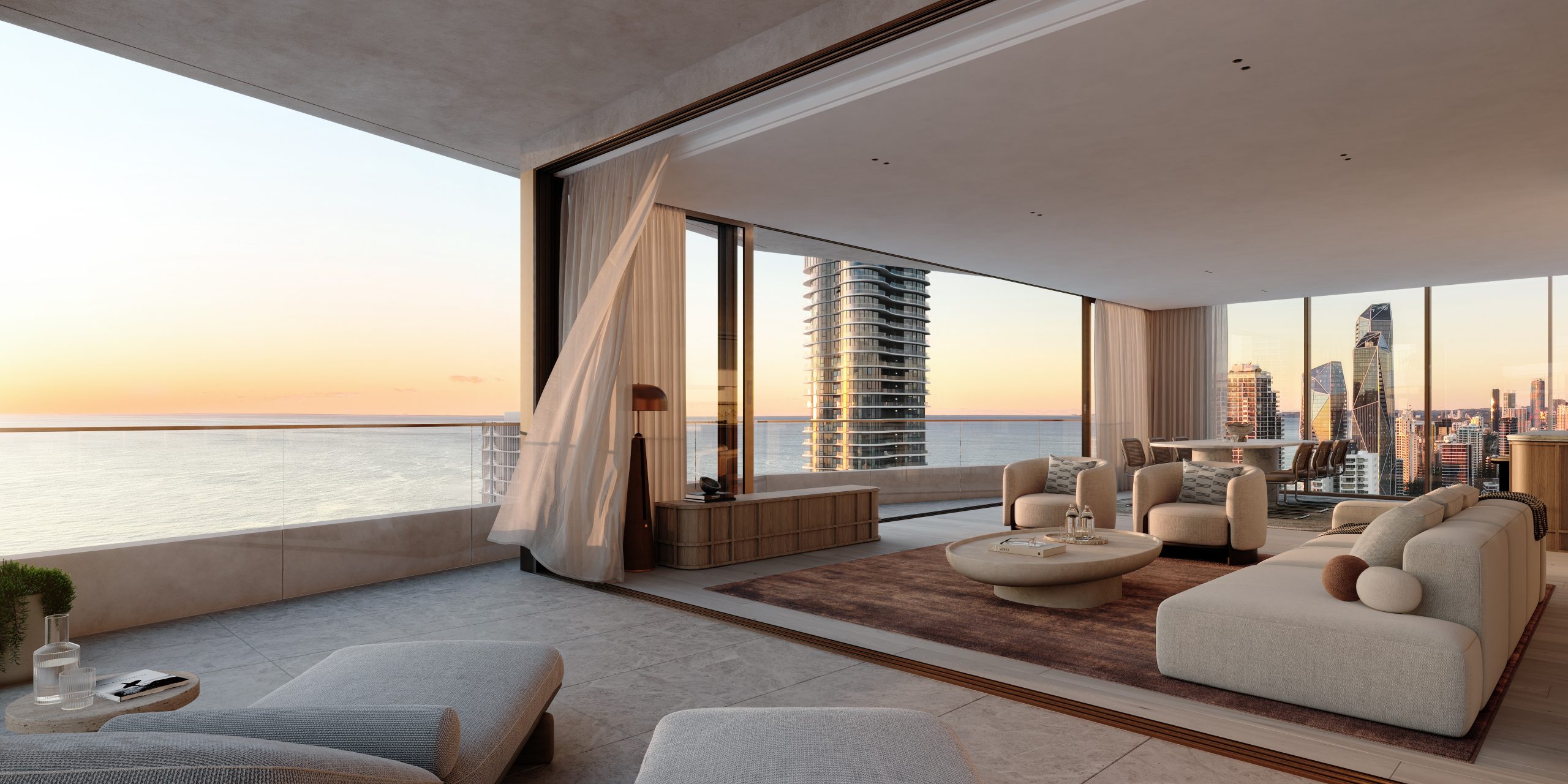
Mirvac’s 45-level Trielle has topped out at Yarra’s Edge, pairing riverfront apartments with wellness facilities, private dining and resident services.
3 min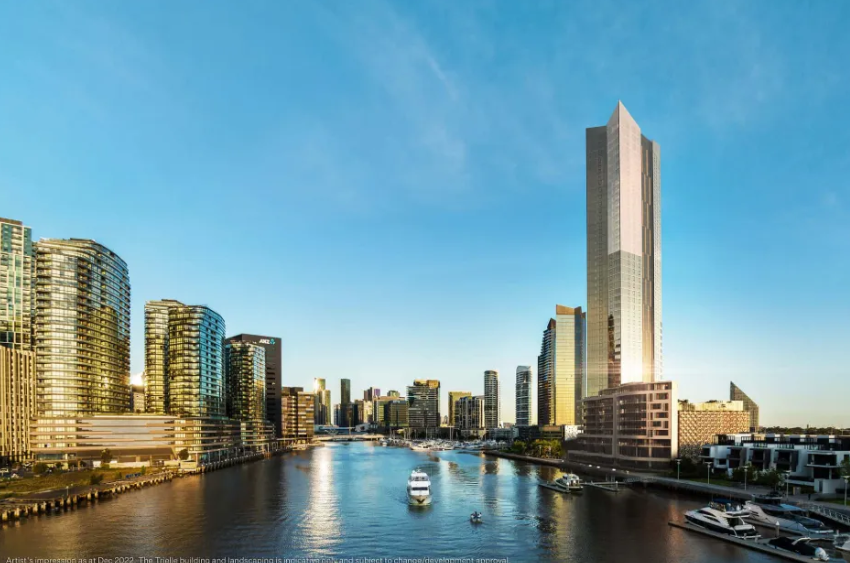
Mirvac has topped out Trielle at Melbourne’s Yarra’s Edge, with more than 70 per cent of the riverfront development sold and approximately 80 per cent of purchasers intending to make their apartment a home.
The figures, released on September 22, point to an owner-occupier audience for one of the precinct’s final residential towers. Mirvac began developing Yarra’s Edge in 2003, and its latest addition occupies one of the remaining absolute riverfront sites.
Mirvac CEO of Development Stuart Penklis said existing residents were among those moving up within the neighbourhood.
“Many purchasers already have a connection to Yarra’s Edge,” Mr Penklis said, describing buyers whose changing needs were encouraging an upgrade within the precinct.
“As one of the final residential towers within Yarra’s Edge, Trielle represents the culmination of more than two decades of creating one of Melbourne’s most established and sought-after waterfront communities,” Penklis said.
“Positioned on the Collins Street axis with absolute river frontage, Trielle offers residents a rare opportunity to enjoy sweeping views across the Yarra River, Melbourne skyline and Port Phillip Bay, while remaining seamlessly connected to the CBD. With Trielle now more than 70 per cent sold, we’re continuing to see strong demand from buyers seeking quality homes in established locations.”
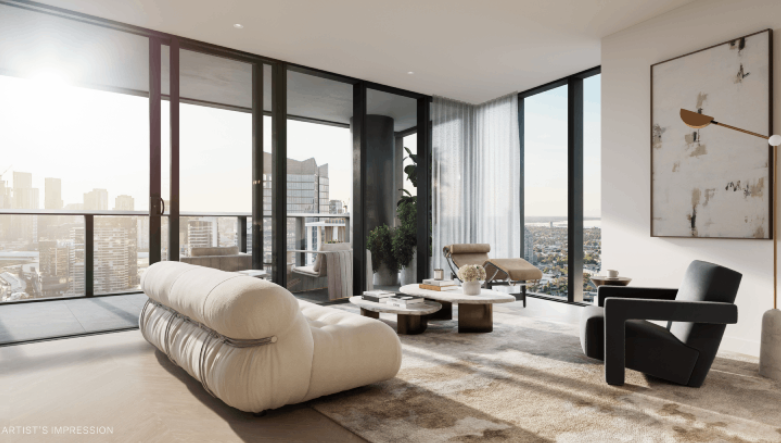
The developer also flagged a penthouse and sub-penthouse collection with larger layouts, premium finishes and broad outlooks. The planned wellness centrepiece, The Oasis, encompasses a 900-square-metre elevated urban rainforest.
Mirvac General Manager Residential Development Victoria Elysa Anderson said Trielle had resonated strongly with buyers seeking a rare lifestyle offering in Melbourne.
“Opportunities to secure a new luxury residence on a riverfront site of this calibre are incredibly rare, particularly within a community like Yarra’s Edge,” Anderson said.
“What makes Trielle unique is the combination of exceptional views, world-class residential facilities and the lifestyle that already exists around it. Residents are buying into a mature waterfront community with parks, promenades, dining, wellness and strong community connections already in place.”
The 45-level tower brings a substantial new presence to that waterfront. Its residential offering spans one-, two-, three- and four-bedroom apartments, with Signature, Prestige and Sub-Penthouse collections accommodating different household sizes. The north-facing position connects the apartments visually to the river and city beyond.
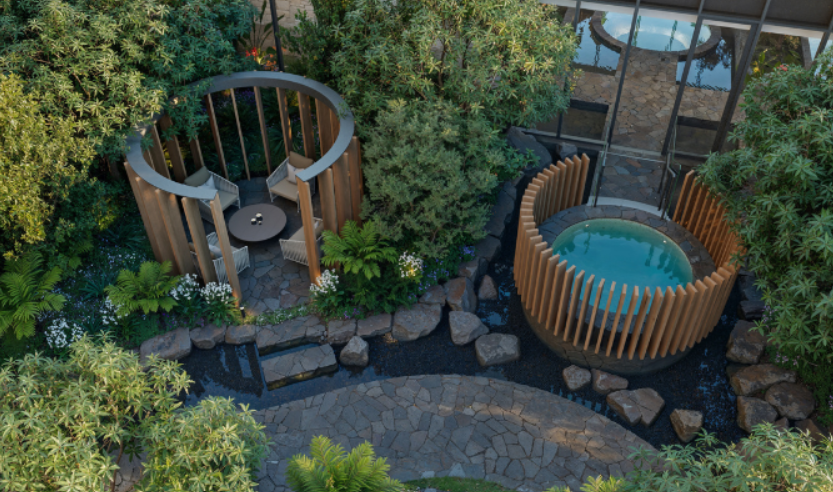
Seven storeys above the promenade, the planned Oasis combines planting and a running stream with a Scandinavian-inspired wellness club developed with spa specialist Naomi Gregory. Facilities include a 25-metre lap pool, hot magnesium pool, sauna, hydrotherapy, a gym, yoga and Pilates room, and treatment spaces.
The amenity extends beyond exercise. Residents will have access to The Biblioteca library and workspaces, ground-floor work pods, and The Salone piano lounge. A private Chef’s Table dining room offers a setting for larger gatherings, while a cinema, games room and sports lounge broaden the entertaining options. Concierge services and a dog-wash area support everyday routines.
Trielle comprises a collection of one, two, three and four-bedroom residences. Reflecting strong demand from owner occupiers, approximately 80 per cent of purchasers to date intend to live in their homes, highlighting the project’s appeal to those seeking a long-term waterfront lifestyle.
Mirvac has recently delivered The Albertine, a premium apartment development on the edge of Melbourne’s CBD, and is nearing completion of Prince & Parade in Brunswick, further strengthening its portfolio of thoughtfully designed apartment communities in some of Melbourne’s most sought-after urban locations.

ABC Bullion has launched a pioneering investment product that allows Australians to draw regular cashflow from their precious metal holdings.
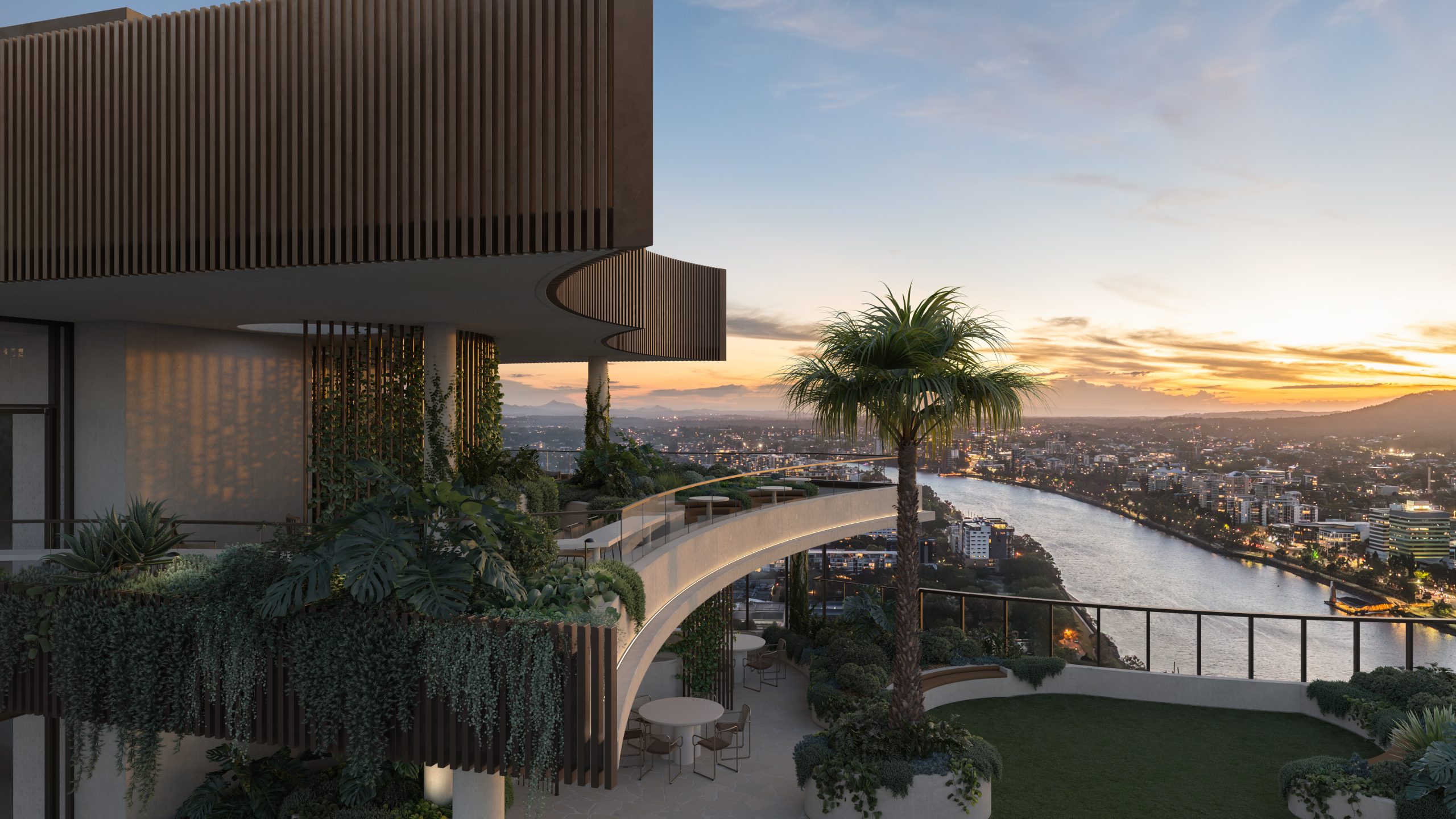
Set on one of the city’s last absolute riverfront sites, The Riversdale by Mosaic combines irreplaceable waterfront ownership with one of Brisbane’s most significant residential opportunities.