





LAMBORGHINI URUS SE TETTONERO CAPSULE REVEALED
Limited to 630 units, Lamborghini’s latest Urus Capsule pushes personalisation further than ever, blending hybrid performance with over 70 bespoke design combinations.
 2 min
2 min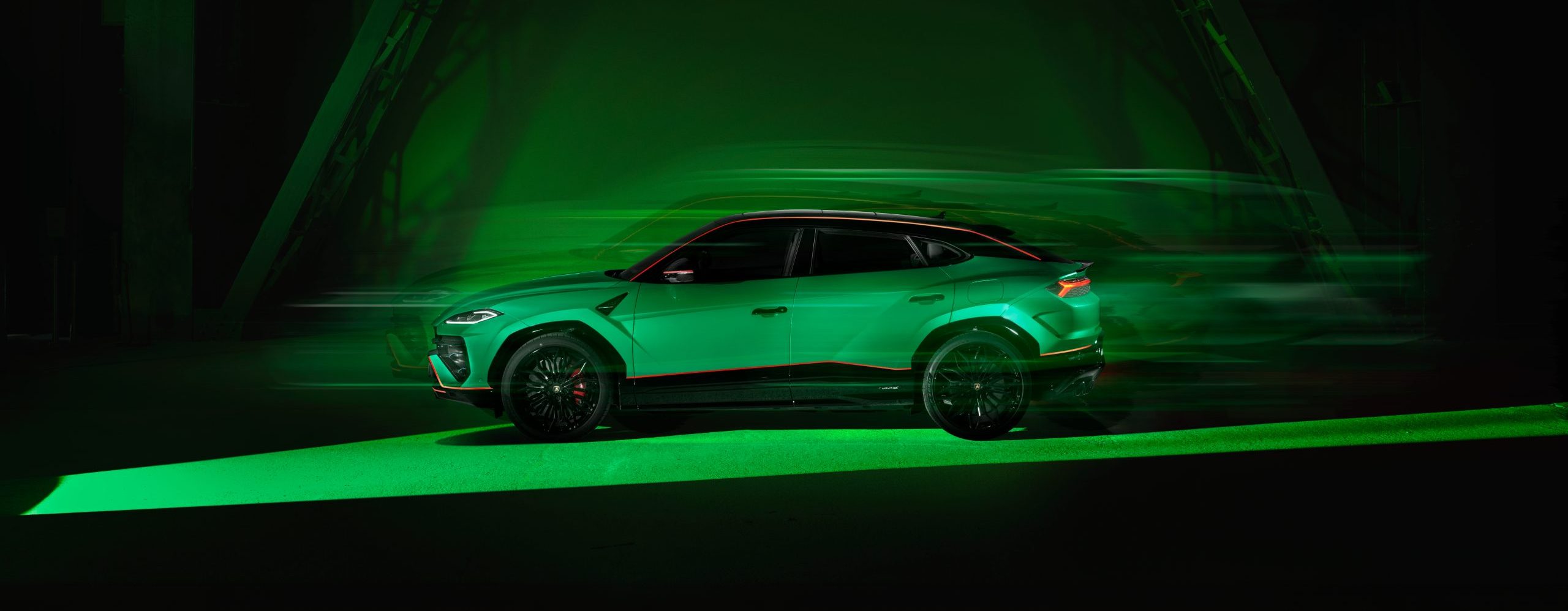
Lamborghini has unveiled its most customisable Super SUV to date, introducing the Urus SE “Tettonero” Capsule at Milan Design Week.
Limited to 630 units globally, the new release builds on the brand’s hybrid Urus SE platform, combining a V8 twin-turbo engine with an electric motor to deliver a total output of 800 CV and 950 Nm of torque.
But performance is only part of the story.
Personalisation at scale
The Tettonero Capsule is designed around Lamborghini’s Ad Personam programme, allowing buyers to create highly individual vehicles through an extensive palette of colours, finishes and interior treatments.
Six exterior paint colours can be paired with contrasting Nero Shiny detailing across the roof, upper body and design elements, alongside a further six exclusive livery options. The result is more than 70 possible combinations, making it the most customisable Urus yet.
“The Lamborghini Ad Personam program represents the most authentic and pure expression of our commitment to exclusivity,” says Federico Foschini, Chief Marketing and Sales Officer.
“When it comes to a limited-edition Urus, personalization is not just a distinctive quality, but also something that amplifies the product’s uniqueness.”
Additional exterior options include multiple brake caliper colours, wheel sizes ranging from 21 to 23 inches, and optional detailing such as the ‘63’ logo, referencing the year Lamborghini was founded.
Inside the cabin
The interior continues that level of detail.
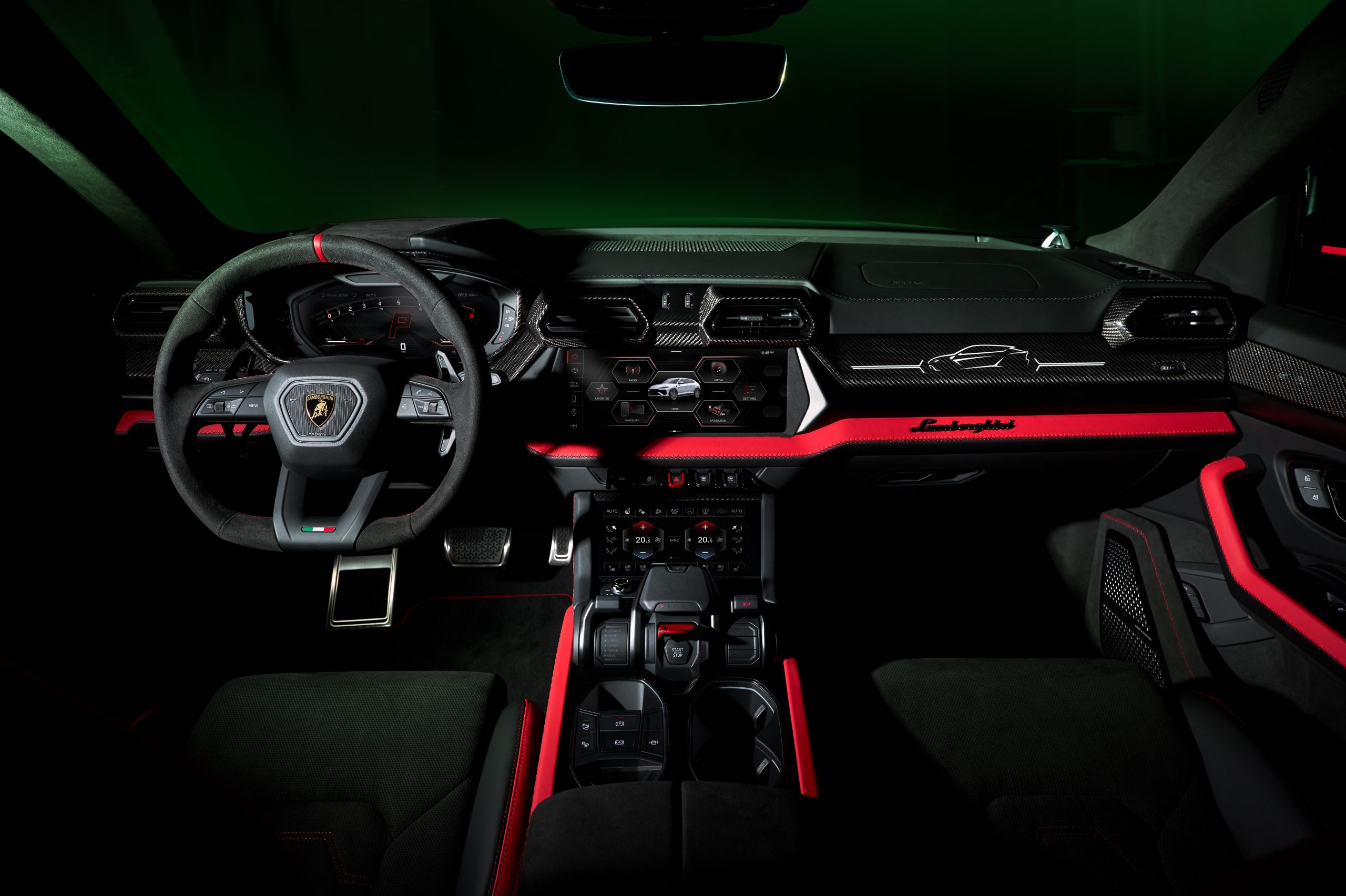
Carbon fibre features heavily throughout, from the dashboard and central tunnel to the door panels, complemented by Dinamica leather and Corsa-Tex microfiber finishes. A dedicated carbon fibre plaque marks the anniversary of the Ad Personam studio, reinforcing the model’s focus on individualisation.
The primary interior tone, Nero Ade, can be paired with a selection of contrast colours and embroidery options, allowing owners to tailor the cabin to a high degree.
Hybrid performance
Underneath, the Tettonero Capsule retains the Urus SE’s hybrid powertrain, pairing a 4.0-litre V8 with an electric motor and a 25.9 kWh battery.
The system enables all-wheel-drive electric capability, with a pure electric range of more than 60 kilometres, while also enhancing performance across all driving conditions.
A centrally mounted torque splitter and electronically controlled rear differential work together to distribute power dynamically, allowing for what Lamborghini describes as “oversteer on demand”.
Performance figures remain firmly in supercar territory, with 0 to 100 km/h in 3.4 seconds and a top speed of 312 km/h.
A design-led release
The Tettonero Capsule was presented during Milan Design Week, with launch imagery captured at Pirelli HangarBicocca, a contemporary art space in Milan.
It’s a fitting backdrop for a model that leans as heavily into design as it does engineering.
For Lamborghini, the message is clear: in a segment where performance is expected, it is personalisation that now defines the experience.
From making unpopular decisions to learning when to listen, leaders from five businesses reveal what nobody prepared them for — and how running a company has challenged their expectations.

Technology and semiconductor shares fell sharply as investors questioned the debt financing the AI infrastructure boom and confronted higher rates and Chinese competition.
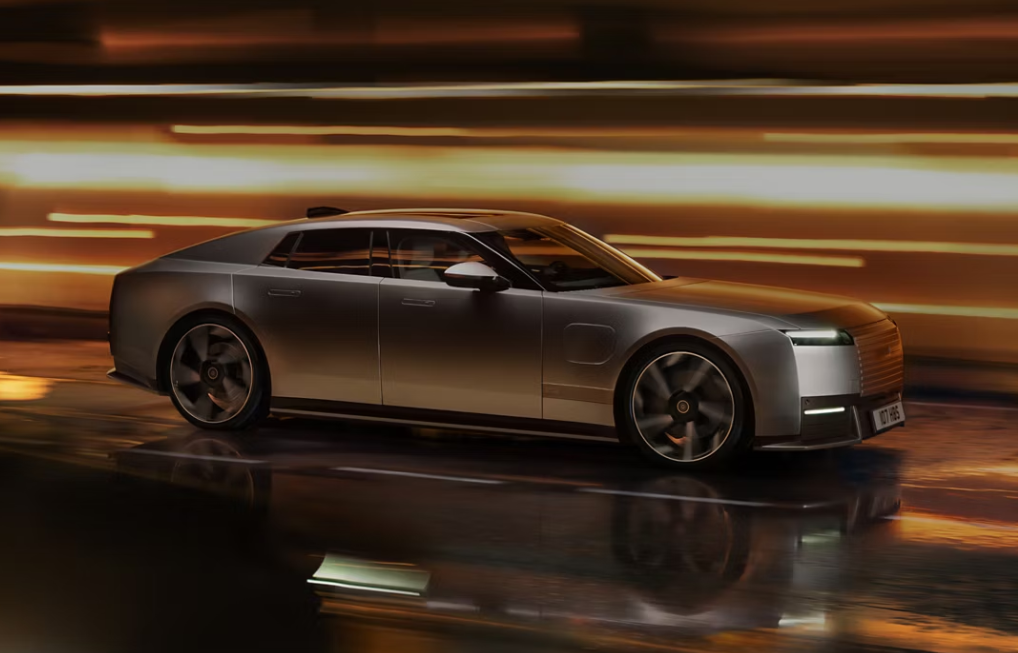
Tesla’s new Roadster used suction technology and SpaceX-derived thrusters to jump and flip—but production, price and road legality remain unresolved.
3 min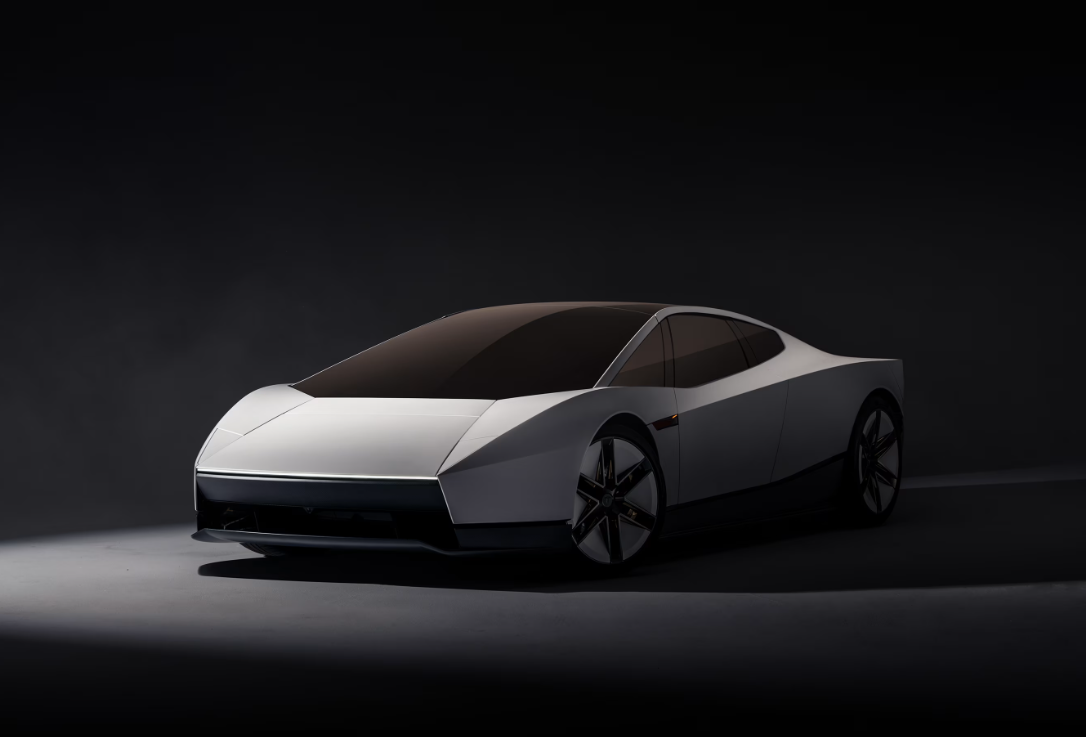
Tesla has finally revealed its radically redesigned Roadster—and delivered the airborne spectacle Elon Musk has been promising for years.
Unveiled at a SpaceX testing facility near Waco, Texas, the new electric supercar drove onto a steeply curved ramp, used a suction system to cling to its underside and launched into the air. Cold-gas thrusters stabilised the vehicle as it rotated and returned to the ground.
In another demonstration, the Roadster cleared a line of Tesla vehicles that included a Semi, Cybertruck, Cybercab, Model Y and Model 3.
It was an extraordinary stunt. Whether it proved Tesla has created a genuine flying car is another matter.
The vehicle did not demonstrate sustained, controlled flight of the kind associated with an aircraft or electric vertical take-off and landing vehicle. Its thrusters instead produced brief powered leaps, rotation and landing control.
“We’re not talking about sustained flight,” Smithsonian National Air and Space Museum curator Roger Connor told CNN. “We are literally talking about hopping.”
How does it work?
Tesla has outlined three intended Roadster configurations.
The two-seat Performance model is the comparatively conventional version, although little about it sounds ordinary. It uses active aerodynamics and what Tesla calls a multi-mode suction system to increase downforce and allow the car to adhere to steep or inverted surfaces.
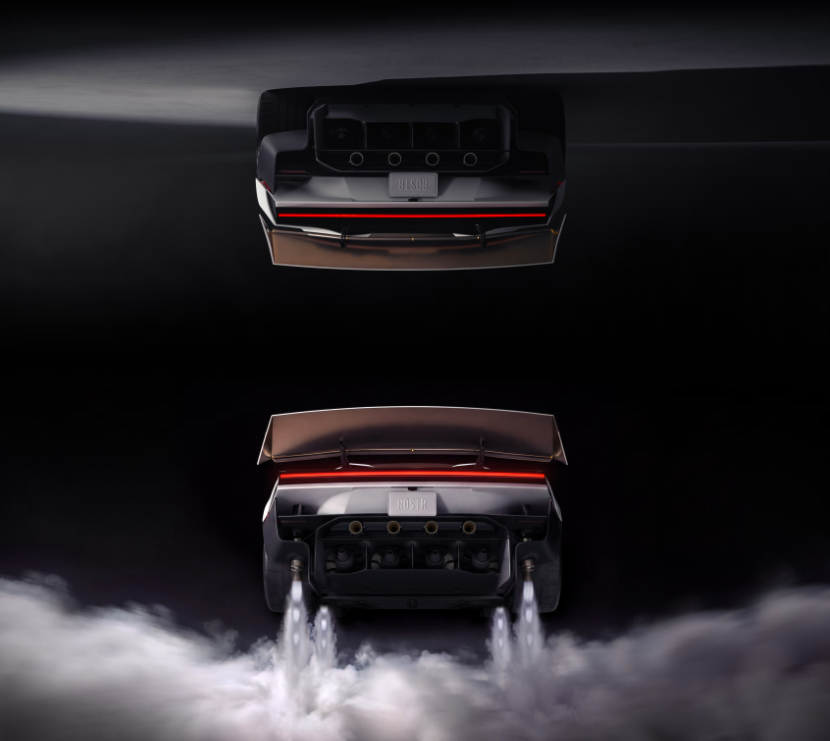
The two-seat Thrust adds rear-mounted cold-gas thrusters, designed to deliver acceleration from zero to 60mph—approximately 97km/h—in less than one second.
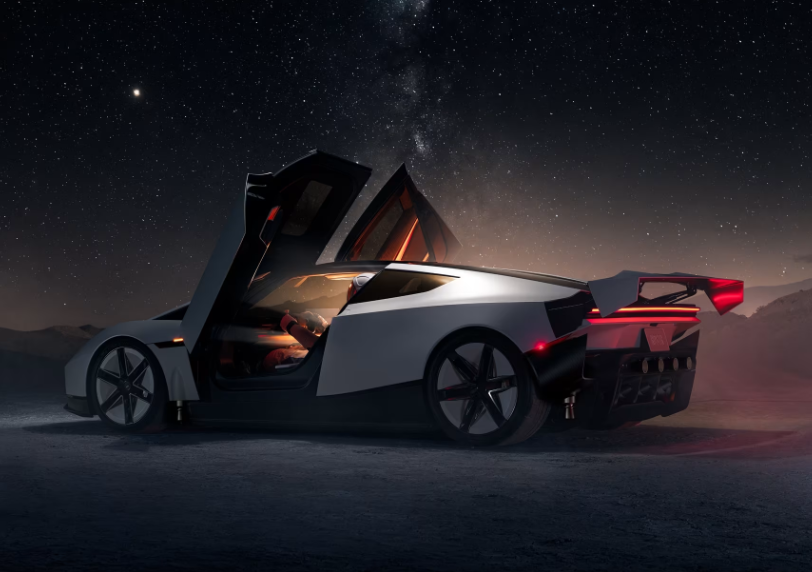
At the top is the single-seat Rocket, equipped with 10 thrusters positioned around the vehicle. This is the version intended to perform the airborne manoeuvres demonstrated in Texas.
Tesla engineering vice-president Lars Moravy said the system uses approximately 600 litres of compressed air. Carbon-fibre-wrapped pressure vessels occupy available spaces throughout the car, supplying the thrusters used for acceleration, lift and directional control.
The technology is more closely related to a rocket reaction-control system than a conventional flying-car powertrain. Rather than producing continuous lift through wings or propellers, it releases highly pressurised gas to generate short bursts of thrust.
Tesla says all three versions will offer approximately 300 miles—or 483 kilometres—of driving range and a top speed exceeding 230mph, equivalent to about 370km/h.
These remain company claims rather than independently verified production specifications.
Can buyers order one?
Reservations have reopened in selected markets. According to reporting from the launch, Tesla is seeking US$50,000 to reserve the Performance variant and US$250,000 for the Thrust. Access to the Rocket is described as invitation-only.
No final purchase price was announced, and Tesla has not confirmed Australian pricing, delivery timing or regulatory approval.
Musk said production would begin in 2028. That should be treated as an ambition rather than a settled delivery date.
The second-generation Roadster was originally unveiled in 2017 and was expected to reach customers within several years. The program was subsequently delayed in 2020, 2021, 2023 and 2024. Some customers have consequently held substantial reservations for close to a decade.
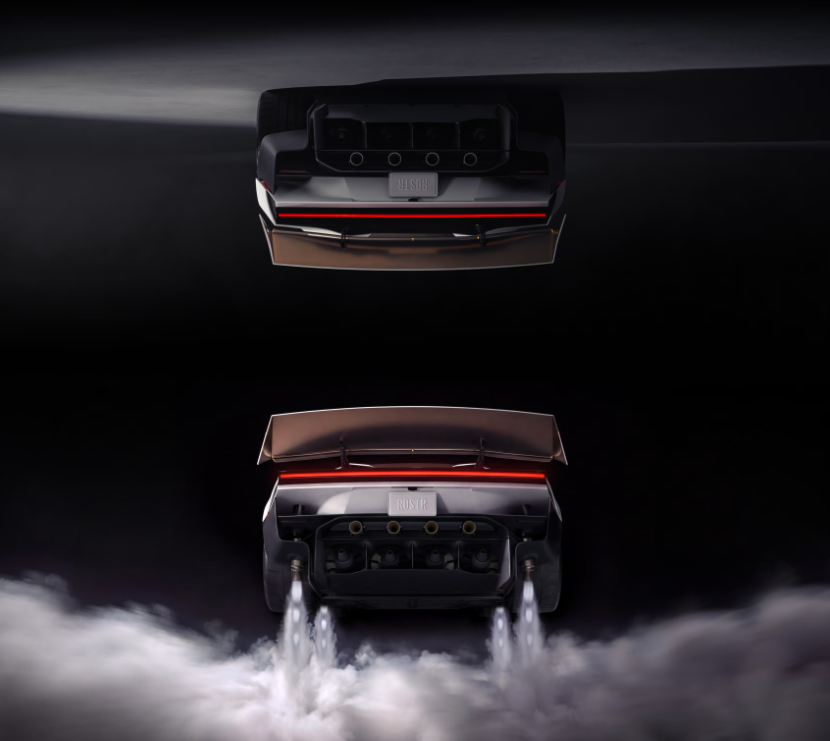
There are also formidable regulatory questions. A road-registered vehicle capable of deliberately leaving the ground, rotating and landing among other traffic does not fit neatly within existing vehicle standards. Its compressed-air system, pressure vessels and unconventional manoeuvres would require extensive safety assessment.
The more plausible outcome is that Tesla produces the Performance and perhaps Thrust versions for road and track use, while tightly restricting the Rocket’s airborne functions—or reserving them for controlled environments.
Tesla has produced a genuine moving prototype capable of remarkable stunts. It has not yet demonstrated that customers will be permitted to repeat them on public roads.
For now, the Roadster is real enough to jump. Whether it becomes a car people can buy, register and use as demonstrated remains the more consequential test.

French luxury-goods giant’s results are a sign that shoppers weren’t splurging on its collections of high-end garments in the run-up to the holiday season.

Parts for iPhones to cost more owing to surging demand from AI companies.


