National rents hit record high as Melbourne and Perth lead latest increases
Australia’s median advertised rent has climbed to a record high, with every capital city recording quarterly price growth despite a slight lift in vacancy rates.
 2 min
2 min
Australia’s rental market has reached a new milestone, with national median advertised rents climbing to a record $670 per week in the June quarter as prices continued to rise across every capital city.
New data from realestate.com.au shows national rents increased 3.1 per cent over the quarter and 6.4 per cent over the past year, while capital city rents rose 2.2 per cent over the quarter to a median of $690 per week, up $10 from the March quarter.
REA Group economist Luc Redman said rental price growth had continued despite a small increase in vacancy rates.
“National median rents reached a new high in the June quarter, with widespread price growth across the capitals,” he said.
“The rent increases occurred despite a small increase in the rental vacancy rate over the same period.”
Melbourne and Perth recorded the strongest quarterly growth among the capitals, with rents increasing 3.5 per cent in each city. On an annual basis, Perth led the nation with rental growth of 10.3 per cent, followed by Hobart at 9.1 per cent and Darwin at 7.7 per cent.
Sydney remained Australia’s most expensive city for renters, with a median advertised rent of $800 per week, while Melbourne and Hobart were the most affordable capital cities at $600 per week.
Regional markets were more subdued, with rents holding steady over the quarter but remaining 5.3 per cent higher than a year ago, suggesting the rapid pace of growth outside the capitals has eased.
Mr Redman said the full impact of the Federal Budget’s changes to investor tax settings was yet to be seen.
“The May Federal Budget, which announced sweeping changes to investor tax settings, occurred in the middle of the quarter, so the full impact on the rental market is yet to be seen,” he said.
“While the vacancy rate has edged higher, the expected decrease in investor demand due to the budget’s tax changes could slow the pace of new supply, putting further pressure on rents.”
The report also found house rents continued to outpace units, rising 2.9 per cent across capital cities over the quarter compared with 1.5 per cent for units. Melbourne was the only capital where renting a unit was more expensive than renting a house, reflecting demand for well-located apartments.
A record-breaking $11 million sale at The Centennial Collection has set a new benchmark for luxury apartment living in Bondi Junction.

As interest rates, inflation and market sentiment fluctuate, investors are being urged to focus on data, not panic.

While many investors are waiting for commercial property prices to fall alongside the residential market, buyers’ advocate Abdullah Nouh says they’re looking at the wrong data, with demand strengthening across several commercial sectors.
2 min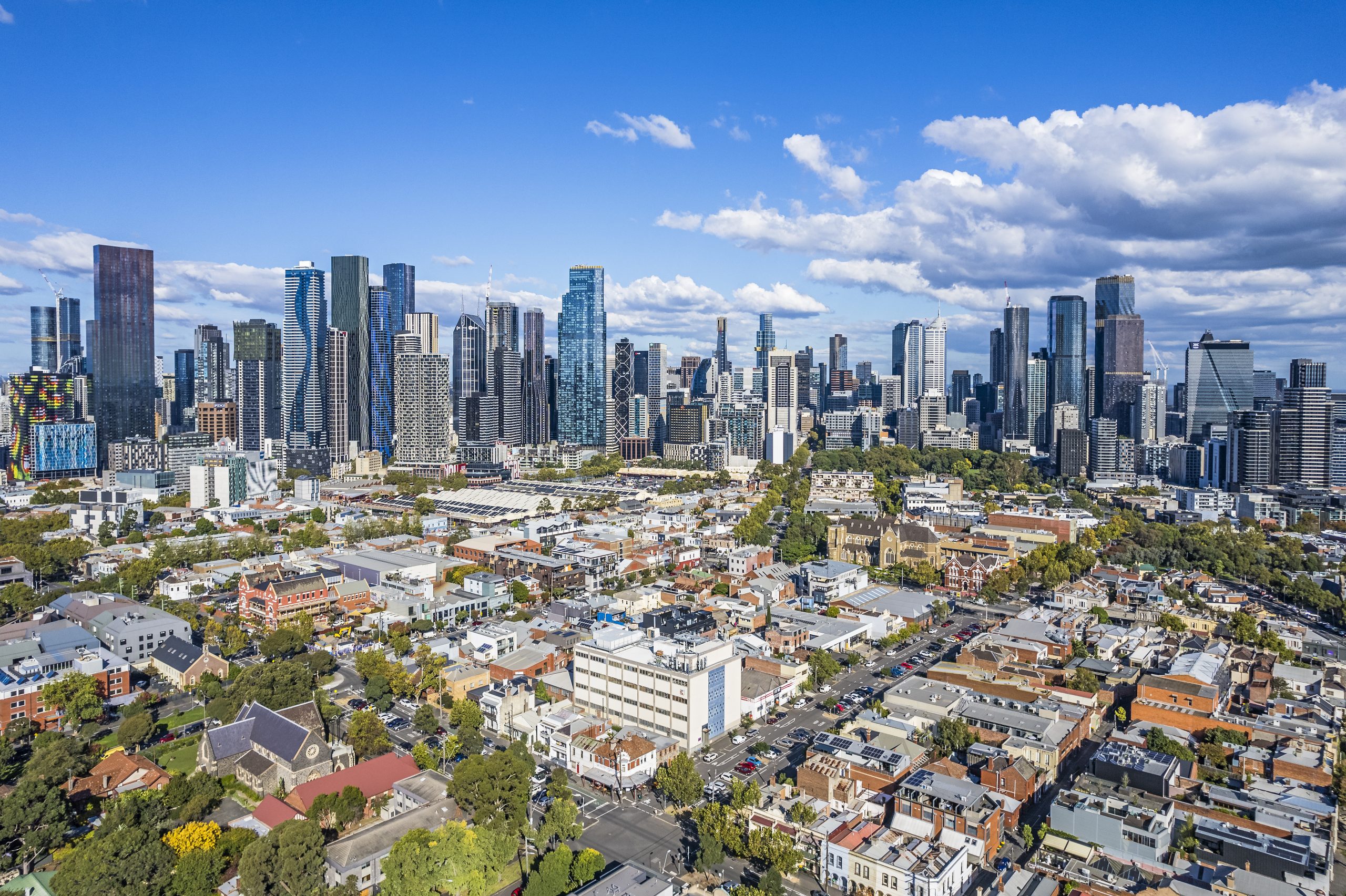
For months, Australia’s property conversation has centred on falling house prices, higher interest rates and the impact of the Federal Budget on investors.
But according to Melbourne buyers’ advocate Abdullah Nouh, many investors expecting commercial property to follow the same path are overlooking what’s actually happening across the market.
“The biggest mistake investors are making is treating commercial property as one market that moves in one direction at one time,” Nouh says.
“Office towers, neighbourhood medical centres, industrial warehouses and childcare centres all respond to completely different supply and demand dynamics.”
Rather than experiencing a broad downturn, he says that parts of the commercial market continue to perform strongly, particularly sectors supported by essential services and with limited new supply.
Neighbourhood retail centres anchored by supermarkets and medical services have proven more resilient than many expected, while industrial property continues to benefit from tight supply in most major cities.
Medical centres, childcare assets and other essential service properties are also attracting sustained tenant demand despite higher borrowing costs.
Office markets, however, are telling a different story.
Premium buildings in well-connected locations are beginning to stabilise, Nouh says, while secondary office stock in oversupplied precincts continues to face pressure.
“This isn’t a story about commercial property going up or going down,” he says.
“It’s a story about asset selection mattering more than the headlines.”
The changing market is also altering the questions investors are asking.
Rather than focusing solely on buying another residential investment property, Nouh says more investors are now looking for higher rental income and improved cash flow.
“Instead of asking how to buy another investment property, investors are increasingly asking how they can generate more income from their portfolio,” he says.
He believes commercial property has become part of that conversation because it can deliver stronger rental returns while still offering long-term capital growth when quality assets are selected carefully.
However, Nouh warns investors against assuming every commercial property represents a sound investment simply because it offers a higher yield.
“I’ve seen commercial properties remain vacant for years because they’re in locations with weak business activity,” he says.
“A high yield isn’t necessarily evidence of a good investment. Sometimes it’s evidence of the opposite.”
Instead, he says investors should focus on the same fundamentals that have always underpinned successful commercial acquisitions, including tenant demand, constrained future supply, location quality and whether another tenant would readily occupy the property if the existing lease expired.
“The lease and the tenant both matter,” Nouh says.
“But neither replaces buying a quality asset in a quality location.”
As investors continue to assess the outlook for property following this year’s Budget changes, Nouh believes the biggest opportunity may lie in recognising that commercial property is not a single market.
“Property has never moved as one market,” he says.
“The better question isn’t whether commercial property will fall in the short term. It’s which assets are likely to be in greater demand over the next decade, and whether today’s market creates an opportunity that looks obvious in hindsight.”

Automobili Lamborghini and Babolat have expanded their collaboration with five new colourways for the ultra-exclusive BL.001 racket, limited to just 50 pieces worldwide.

Three completed developments bring a quieter, more thoughtful style of luxury living to Mosman, Neutral Bay and Crows Nest.