The ‘shot in the arm’ for Australian affordable housing
An ambitious agenda to provide accessible, affordable housing needs to push ahead, national property council says
 2 min
2 min
The Federal Government’s proposed housing fund is the ‘shot in the arm’ required to address the housing crisis, the Property Council of Australia said today.
Property Council chief executive Mike Zorba said the Albanese Government’s second attempt to pass the Housing Australia Future Fund (HAFF) Bill through the Senate next week was to be welcomed.
The Federal Government announced the HAFF in June this year, describing it as ‘an ambitious agenda’ for affordable and social rental housing. At that time, Federal Housing Minister Julie Collins signed an amendment to the National Housing Finance and Investment Corporation’s (NHFIC) investment mandate to increase its liability cap from $5.5 billion to $7.5 billion.
However, the bill failed to pass the senate on its first attempt, sparking talk of a double dissolution trigger if it fails again next week.
Mr Zorba said Senate approval would go some way to addressing the housing shortfall in Australia. Estimates based on data from the 2021 Census revealed that more than 500,000 Australians on low income were in inappropriate housing on census night, which included homelessness, overcrowding or households where more than 30 percent of income was spent on rent.
Minister Collins said the $10 billion HAFF represented ‘the single biggest investment in social and affordable housing by a Federal Government in more than a decade’. The new initiative is expected to fund 30,000 new social and affordable rental homes.
Mr Zorba said Senate approval would kickstart the housing supply recovery.
“The HAFF is the shot in the arm the nation needs to close the housing deficit,” Mr Zorbas said.
“The 30,000 new social and affordable houses that hang in the balance need to be green-lighted by all Senators as soon as possible.
“Beyond the HAFF, the fastest paths to new housing remain setting housing targets, creating incentives for more supply and fixing broken state planning systems.
“We also need governments to boost helpful asset classes like purpose-built student accommodation, retirement living communities and build-to-rent housing,” he said.

The Perpetual Padellone draws its name from the coveted reference 8171 while introducing an instantaneous complete annual calendar to Rolex’s modern Perpetual collection.

The Swiss watchmaker’s first collaboration with Atlassian Williams F1 Team produces two sporting Laureato models inspired by the team’s 2026 racing car.


Australia’s housing challenge is increasingly about conversion: moving approved projects through finance, commencement and completion.
2 min
Australia’s housing debate often treats a development approval as though it were a completed home. In practice, the distance between those two milestones can stretch for years—and a growing number of projects never cross it.
The National Housing Supply and Affordability Council reported in August that approximately 308,000 homes had been completed since the Housing Accord period began, roughly one quarter of the national target. It also identified 244,000 dwellings under construction in the March quarter, the largest pipeline recorded since 1984, while approvals and commencements had improved against their pre-Accord comparisons.
Those numbers show activity, but they also expose the conversion challenge. A planning consent establishes what may be built. It does not lock in the price of labour and materials, guarantee a construction loan or persuade enough buyers to sign unconditional contracts.
For apartment developers, the first hurdle is feasibility. Land, consultant, authority, finance and construction costs must be covered by realistic sales revenue. When building prices rise faster than achievable apartment values, a project can be approved and still be economically unbuildable.
The second hurdle is debt. Financiers typically require substantial equity, a fixed or sufficiently certain building contract and presales to acceptable purchasers. Valuers may discount speculative pricing, while lenders can treat contracts with long settlement periods or highly concentrated buyer profiles cautiously.
Presales form the third constraint. Owner-occupiers may prefer to see construction under way before committing; developers often need commitments before construction can begin. This circular dependency is particularly difficult for first-time developers and projects in untested locations.
The practical metric for policymakers and the industry is therefore not approvals in isolation, but conversion: how many approved dwellings progress to finance, commencement and completion, and how long each step takes.
There are no simple fixes. Faster planning can reduce holding costs, but cannot rescue an unviable scheme. Government-backed finance can help suitable projects, but should not disguise unrealistic land values. Standardised design and modern construction methods may improve productivity, provided procurement risk and quality control are addressed.
For buyers, an approval or sales launch should be viewed as the start of the delivery process—not proof that a home will exist on schedule. The most relevant questions concern finance, builder appointment, sunset provisions, deposits and the developer’s record of completing comparable projects.
Australia has made progress in filling the front end of the housing pipeline. The next challenge is getting those homes out the other end.

Mirzaian is a senior director within CBRE’s Development NSW business, operating across the company’s Western Sydney and North Sydney offices
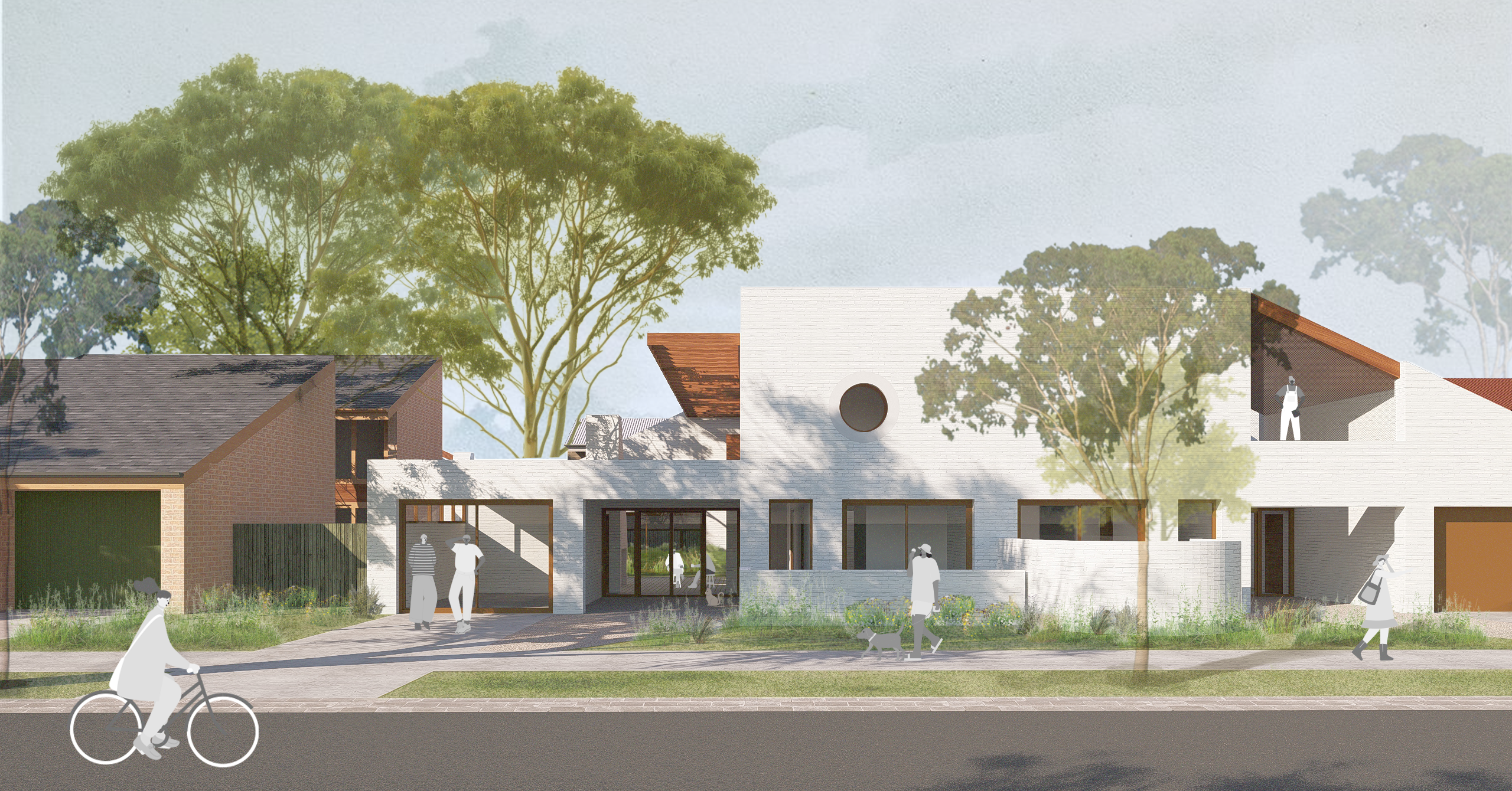
Brickworks has enlisted acclaimed architecture studio Kennedy Nolan to explore how homes could become more adaptable, energy-efficient and connected to community.