AUSTRALIA’S HOUSING CRUNCH: MCGRATH REPORT CALLS FOR SUPPLY-LED SOLUTIONS
The 2026 McGrath Report warns that without urgent reforms to planning, infrastructure and construction, housing affordability will continue to slip beyond reach for most Australians.
 3 min
3 min
Australia’s housing market has reached a critical juncture, with home ownership and rental affordability deteriorating to their worst levels in decades, according to the McGrath Report 2026.
The annual analysis from real estate entrepreneur John McGrath paints a sobering picture of a nation where even the “lucky country” has run out of luck — or at least, out of homes.
New borrowers are now spending half their household income servicing loans, while renters are devoting one-third of their earnings to rent.
The time needed to save a 20 per cent deposit has stretched beyond ten years, and the home price-to-income ratio has climbed to eight times. “These aren’t just statistics,” McGrath writes. “They represent real people and real pain.”
McGrath argues that the root cause of Australia’s housing crisis is not a shortage of land, but a shortage of accessibility and deliverable stock.
“Over half our population has squeezed into just three cities, creating price pressure and rising density in Sydney, Melbourne and Brisbane while vast developable land sits disconnected from essential infrastructure,” he says.
The report identifies three faltering pillars — supply, affordability and construction viability — as the drivers of instability in the current market.
Developers across the country, McGrath notes, are “unable to make the numbers work” due to labour shortages and soaring construction costs.
In many trades, shortages have doubled or tripled, and build costs have surged by more than 30 per cent, stalling thousands of projects.
Need for systemic reform
McGrath’s prescription is clear: the only real solution lies in increasing supply through systemic reform. “We need to streamline development processes, reduce approval timeframes and provide better infrastructure to free up the options and provide more choice for everyone on where they live,” he says.
The 2026 edition of the report also points to promising trends in policy and innovation. Across several states, governments are prioritising higher-density development near transport hubs and repurposing government-owned land with existing infrastructure.
Build-to-rent models are expanding, and planning reforms are gaining traction. McGrath notes that while these steps are encouraging, they must be accelerated and supported by new construction methods if Australia is to meet demand.
One of the report’s key opportunities lies in prefabrication and modular design. “Prefabricated homes can be completed in 10–12 weeks compared to 18 months for a traditional house, saving time and money for everyone involved,” McGrath says.
The report suggests that modular and 3D-printed housing could play a significant role in addressing shortages while setting a new global benchmark for speed, cost and quality in residential construction.
Intelligent homes
In a section titled Weathering the Future: The Power of Smart Design, the report emphasises that sustainable and intelligent home design is no longer aspirational but essential.
It highlights new technologies that reduce energy use, improve thermal efficiency, and make homes more resilient to climate risks.
“There’s no reason why Australia shouldn’t be a world leader in innovative design and construction — and many reasons why we should be,” McGrath writes.
Despite the challenges, the tone of the 2026 McGrath Report is one of cautious optimism. Demand is expected to stabilise at around 175,000 households per year from 2026, and construction cost growth is finally slowing. Governments are also showing a greater willingness to reform outdated planning frameworks.
McGrath concludes that the path forward requires bold decisions and collaboration between all levels of government and industry.
“Australia has the land, demand and capability,” he says. “What we need now is the will to implement supply-focused solutions that address root causes rather than symptoms.”
“Only then,” he adds, “can we turn the dream of home ownership back into something more than a dream.”

From making unpopular decisions to learning when to listen, leaders from five businesses reveal what nobody prepared them for — and how running a company has challenged their expectations.

Technology and semiconductor shares fell sharply as investors questioned the debt financing the AI infrastructure boom and confronted higher rates and Chinese competition.

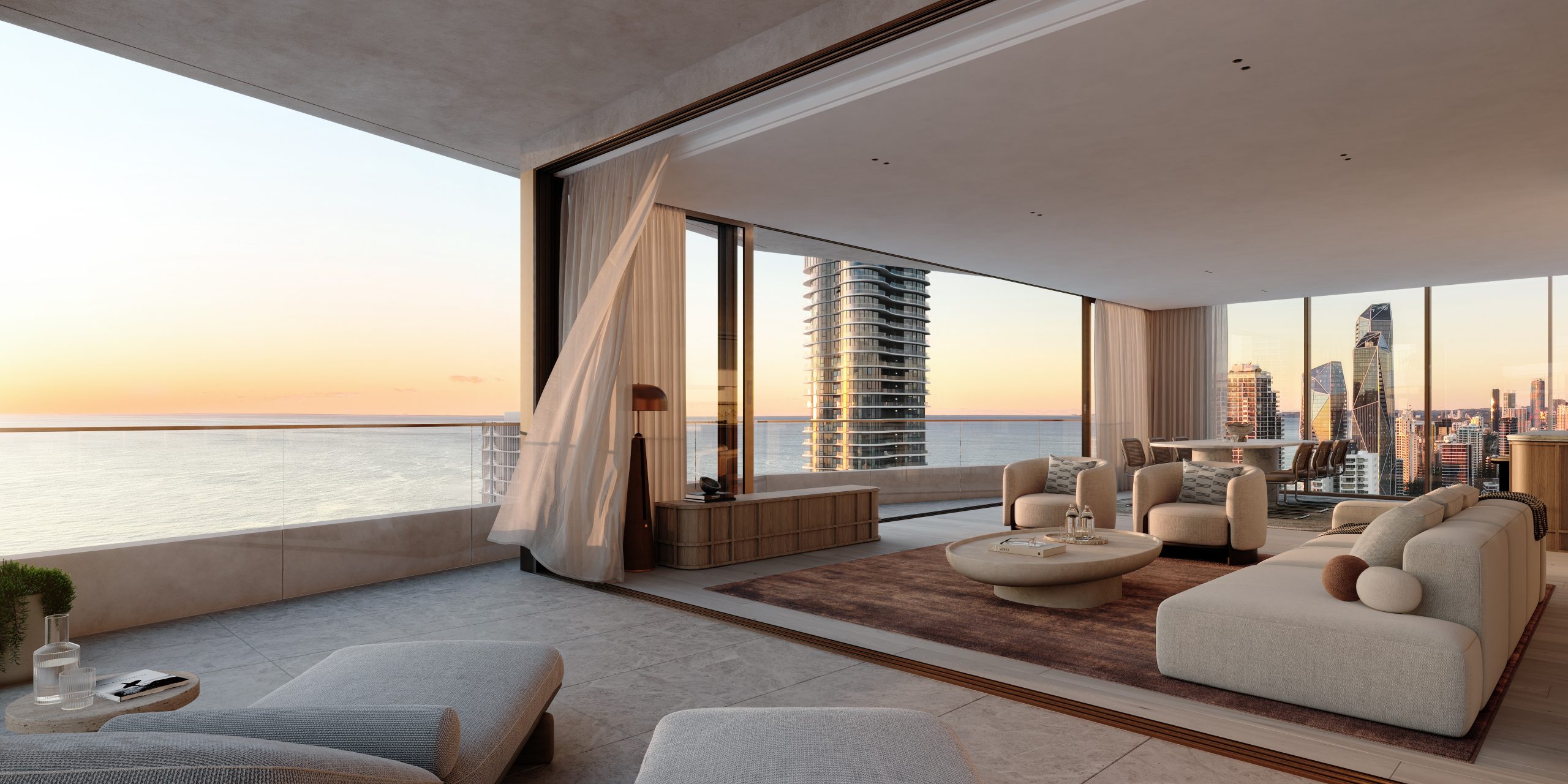
Mirvac’s 45-level Trielle has topped out at Yarra’s Edge, pairing riverfront apartments with wellness facilities, private dining and resident services.
3 min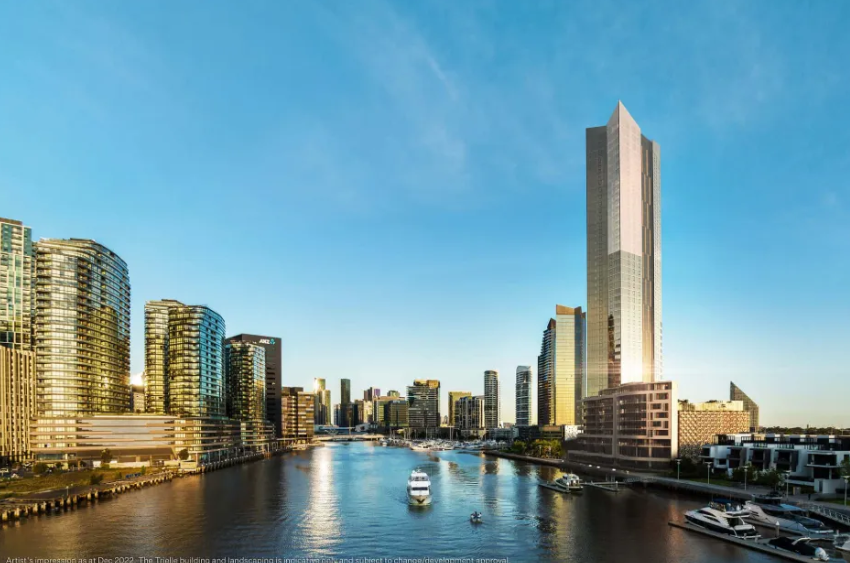
Mirvac has topped out Trielle at Melbourne’s Yarra’s Edge, with more than 70 per cent of the riverfront development sold and approximately 80 per cent of purchasers intending to make their apartment a home.
The figures, released on September 22, point to an owner-occupier audience for one of the precinct’s final residential towers. Mirvac began developing Yarra’s Edge in 2003, and its latest addition occupies one of the remaining absolute riverfront sites.
Mirvac CEO of Development Stuart Penklis said existing residents were among those moving up within the neighbourhood.
“Many purchasers already have a connection to Yarra’s Edge,” Mr Penklis said, describing buyers whose changing needs were encouraging an upgrade within the precinct.
“As one of the final residential towers within Yarra’s Edge, Trielle represents the culmination of more than two decades of creating one of Melbourne’s most established and sought-after waterfront communities,” Penklis said.
“Positioned on the Collins Street axis with absolute river frontage, Trielle offers residents a rare opportunity to enjoy sweeping views across the Yarra River, Melbourne skyline and Port Phillip Bay, while remaining seamlessly connected to the CBD. With Trielle now more than 70 per cent sold, we’re continuing to see strong demand from buyers seeking quality homes in established locations.”
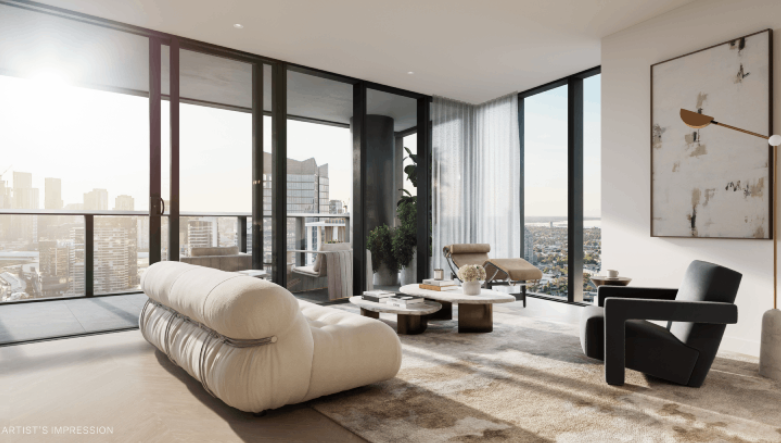
The developer also flagged a penthouse and sub-penthouse collection with larger layouts, premium finishes and broad outlooks. The planned wellness centrepiece, The Oasis, encompasses a 900-square-metre elevated urban rainforest.
Mirvac General Manager Residential Development Victoria Elysa Anderson said Trielle had resonated strongly with buyers seeking a rare lifestyle offering in Melbourne.
“Opportunities to secure a new luxury residence on a riverfront site of this calibre are incredibly rare, particularly within a community like Yarra’s Edge,” Anderson said.
“What makes Trielle unique is the combination of exceptional views, world-class residential facilities and the lifestyle that already exists around it. Residents are buying into a mature waterfront community with parks, promenades, dining, wellness and strong community connections already in place.”
The 45-level tower brings a substantial new presence to that waterfront. Its residential offering spans one-, two-, three- and four-bedroom apartments, with Signature, Prestige and Sub-Penthouse collections accommodating different household sizes. The north-facing position connects the apartments visually to the river and city beyond.
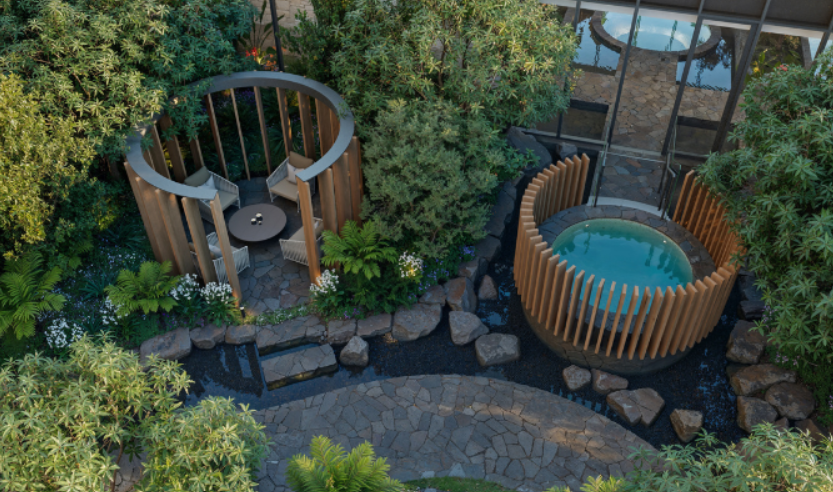
Seven storeys above the promenade, the planned Oasis combines planting and a running stream with a Scandinavian-inspired wellness club developed with spa specialist Naomi Gregory. Facilities include a 25-metre lap pool, hot magnesium pool, sauna, hydrotherapy, a gym, yoga and Pilates room, and treatment spaces.
The amenity extends beyond exercise. Residents will have access to The Biblioteca library and workspaces, ground-floor work pods, and The Salone piano lounge. A private Chef’s Table dining room offers a setting for larger gatherings, while a cinema, games room and sports lounge broaden the entertaining options. Concierge services and a dog-wash area support everyday routines.
Trielle comprises a collection of one, two, three and four-bedroom residences. Reflecting strong demand from owner occupiers, approximately 80 per cent of purchasers to date intend to live in their homes, highlighting the project’s appeal to those seeking a long-term waterfront lifestyle.
Mirvac has recently delivered The Albertine, a premium apartment development on the edge of Melbourne’s CBD, and is nearing completion of Prince & Parade in Brunswick, further strengthening its portfolio of thoughtfully designed apartment communities in some of Melbourne’s most sought-after urban locations.

Limited to 630 units, Lamborghini’s latest Urus Capsule pushes personalisation further than ever, blending hybrid performance with over 70 bespoke design combinations.
From making unpopular decisions to learning when to listen, leaders from five businesses reveal what nobody prepared them for — and how running a company has challenged their expectations.