Can Formula One Ever Be Sustainable?
The motor sport famed for its fast cars, glamorous lifestyle and Champagne finishes is trying to halve its emissions by 2030.

 5 min
5 min
Sebastian Vettel is a four-times Formula One World Champion. By any measure, the German racing driver has had a glittering career. The only thing he wished he had done more of: Speaking out more about the harmful effects of car racing on the environment.
“If I look back, that’s maybe the only thing I regret,” said the 37-year-old. “Formula One has to become sustainable because otherwise there is a serious threat of it not existing,” Vettel said.
F1 is a sport built on burning fuel. Drivers fly across the world, staying at luxurious locations such as Monaco, Miami and Monza to speed around racetracks at more than 200 miles an hour. But all of this comes at a cost to the environment.
In 2022, Formula One’s carbon footprint totaled 223,031 tons of carbon dioxide equivalent, including both its direct and indirect emissions, according to the sport’s latest sustainability report—roughly the same as the Pacific island nation of Tonga. That figure is down from 2018, but is still far from the emissions target the motor sport has set itself — net zero, or halving emissions, by 2030.
The bulk of the emissions in F1 come from logistics, roughly 49% of the total. The cars themselves and the fuel they burn account for less than 1% of total emissions. Some 29% of F1’s emissions are generated by business travel, with a further 12% coming from event operations. The last 10% come from factories and facilities, designing and producing the cars and kit needed for races.
But the sport has grown rapidly in popularity in recent years , especially with younger and female fans. In the U.S. alone, 3 million viewers tuned in for the Miami Grand Prix in May last year, according to Blackbook Motorsport, while Netflix’s “Drive to Survive” documentary series , pulled in nearly half a million viewers during its sixth season debut week last year, according to audience-measurement firm Nielsen. The new season kicks off with the Australian Grand Prix this weekend.
F1 is also one of the few sports that actually has committed to lowering its impact on the environment. It first launched its sustainability strategy in 2019. Meanwhile major sports leagues like the NFL, MLB, NBA and Premier League have yet to offer assessments of their own carbon footprint.
However, F1 remains bankrolled by oil-and-gas companies, showcasing a contradiction with its green ambitions. “It is a fossil fuel party that happens nearly every week now,” said Vettel.
Between races, practice and other events, many drivers use private jets. Ferrari itself is sponsored by a private jet firm VistaJet, while some F1 stars have their own personal planes.
Vettel said he was ashamed when he realized his carbon footprint as an F1 driver tallied 400 tons of carbon dioxide a year. The average person’s annual footprint is about four tons. Vettel reduced his footprint to about 60 tons a year by cutting back on use of private jets, taking commercial flights outside of Europe and taking the train or driving to races within Europe.
Vettel wants other drivers to do the same. “I disagree with the fact that you can’t move in a public airport because you can’t move in terms of ‘oh, I’m so famous I can’t travel this way’,” he said. “I think they should be banned because they’re just horrible for no real benefit.”
While F1 as a championship has its own goals , so too do the individual teams taking part. McLaren Racing and Mercedes-Benz Motorsport, for example, have both published their own sustainability reports and say they are increasingly worried about climate risk and the ability to race in the future.
“We have done some analysis on climate risk on our ability to race and we know that heat, flooding and potential sea-level rise are issues that are real,” said Kim Wilson, sustainability director at McLaren Racing, parent of McLaren Formula One. “Extreme weather not only affects our ability to go racing but also moving freight. So it’s about how we adapt and use our influence so that we are going to be able to continue as an industry.”
A recent change made by F1 to regroup most of its European races together will reduce miles traveled between races, and help lower its emissions. The championship uses biofuel-powered trucks to move equipment between venues, which it says has reduced related emissions by 83%. F1 and teams like Mercedes are also purchasing sustainable aviation fuel credits to help mitigate emissions from flying.
For the race in Austria last year, much of the event was powered by renewable energy, using a combination of vegetable oils, solar panels and battery storage. Doing so cut emissions from the pit, paddock and technical center by 90%, according to F1.
Calendar changes have also been made in the Asia-Pacific region and in North America to reduce mileage traveled between races. Teams are now sending equipment ahead on boats instead of planes, using more in-country resources and building hubs from where equipment can be moved over shorter distances.
Some teams are also turning to carbon removal and offsets to help meet their goals. McLaren has partnered with soil carbon sequestration firm UNDO , an enhanced rock-weathering project developer, while Mercedes is purchasing its offsets through Frontier, a group of largely technology companies that has committed more than $1 billion to carbon removals.
“Our priority is to reduce our emissions and that’s why we’ve got our 75% reduction target by 2030,” said Alice Ashpitel, head of sustainability at Mercedes-Benz Motorsport. “But we also recognize that we are going to need removal credits to help us kind of neutralize that residual 25%, and then beyond that carbon removals will play a role in neutralizing those kind of hard to abate, final emissions.”
But F1’s links with the fossil-fuel companies are drawing scrutiny. Saudi Arabian Oil Co., known as Aramco, the largest oil producer in the world, is a flagship sponsor. Most Formula One races take place in fossil-fuel-producing countries, including the U.S. but also places like Abu Dhabi, Bahrain and the host of last year’s United Nations COP29 climate conference, Azerbaijan.
F1 and its proponents argue that by having these types of sponsors, it helps them and the countries in which they are based to push environmental changes. It cites an advanced sustainable fuel created by Aramco as an example, which it says all race cars will run on from 2026, leading to an 80% cut in emissions.
“F1 is great at solving technology problems,” said Mark Preston, former head of design at McLaren Racing. He said that the sport attracts the best engineers, who help to create new technologies and designs that, while benefiting the cars, can also be used farther afield.
However, Andrew Simms, co-director of the New Weather Institute, a climate-focused think tank, said that Aramco is looking to produce only 35 barrels a day of the synthetic e-fuel, compared with the 9 million barrels a day of crude oil it produces. The New Weather Institute has lodged a claim with the U.K.’s Advertising Standards Authority, saying that F1 and Aramco have been misleading in their advertisements on advanced and low-carbon fuels in F1 and the wider transport sector. The claim is under investigation.
F1 said it believes the new fuels could have an impact on road vehicles as carmakers seek to reduce global automotive emissions. Aramco said its “relationships in motorsports allows us to test these advanced fuels under extreme conditions, which helps to validate their potential.”
Despite the issues, researchers like Simms are optimistic sports such as F1 can foster change, with athletes serving as role models for fans. “There are sports people calling on governing bodies to minimize the impact of sport on the environment,” he said. “The more we see people speaking out about it the more sport can be seen as an example.”
For Vettel, he says F1 has the opportunity to lead by example on climate and sustainability. “I see a huge opportunity because Formula One’s got the money,” he said. “The question is, do they want to spend that money or not?”
Write to Yusuf Khan at yusuf.khan@wsj.com
 Copyright 2020, Dow Jones & Company, Inc. All Rights Reserved Worldwide. LEARN MORE




From making unpopular decisions to learning when to listen, leaders from five businesses reveal what nobody prepared them for — and how running a company has challenged their expectations.

Technology and semiconductor shares fell sharply as investors questioned the debt financing the AI infrastructure boom and confronted higher rates and Chinese competition.

Elon Musk is exploring a potential merger between Tesla and SpaceX, a deal that could reshape the future of AI, robotics, autonomous vehicles and space technology. With a combined valuation potentially reaching $3.5 trillion, the move could bring Musk’s vision of an interconnected technology ecosystem closer to reality, although a deal remains uncertain.
5 min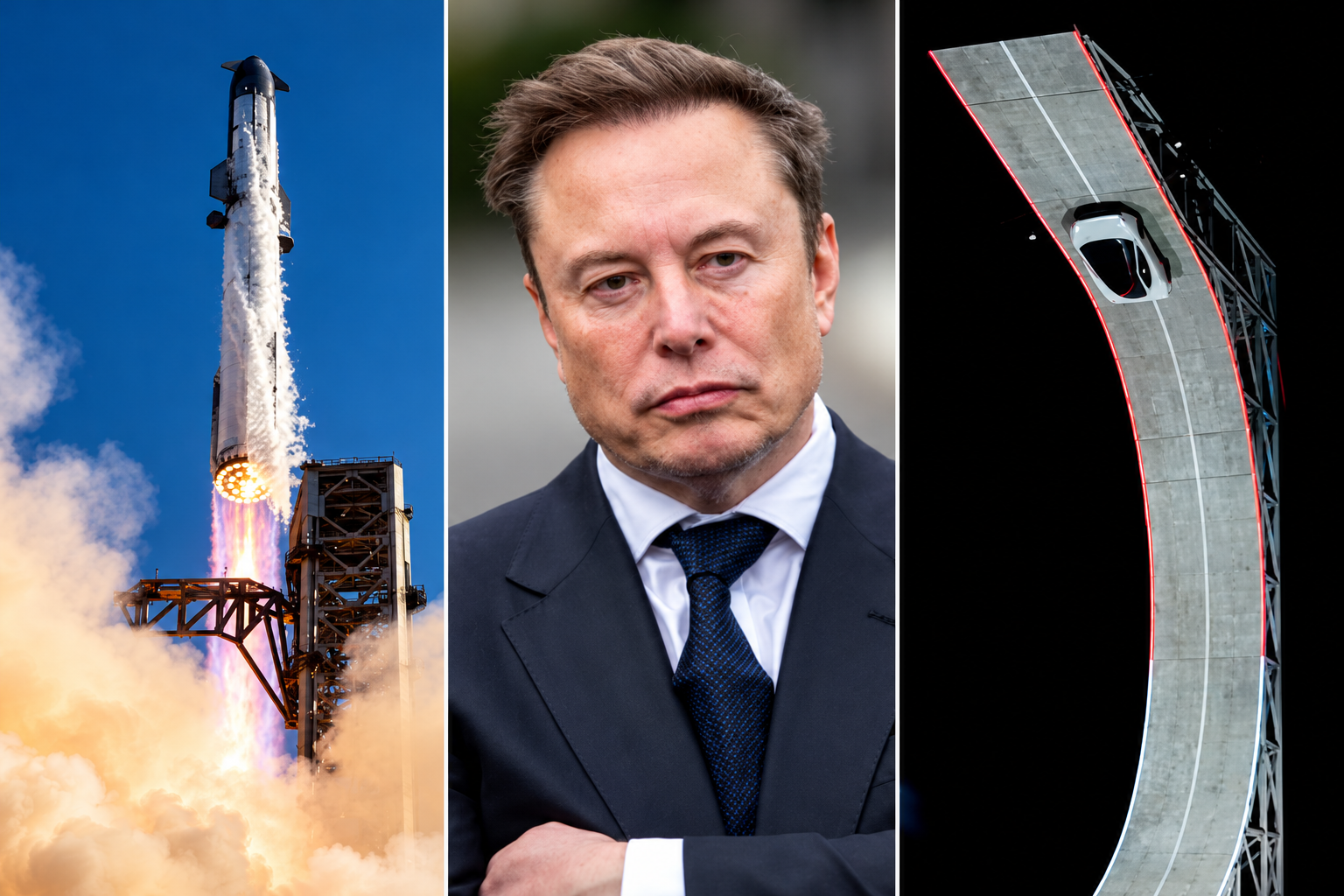
Elon Musk has engineered ties between Tesla TSLA 3.41%increase; up pointing triangle and SpaceX SPCX 7.79%increase; up pointing triangle that are hard to break, and now he wants to fuse them together permanently.
Musk has run both Tesla and SpaceX concurrently over the past two decades, using a schedule that dictated which days he spent focused on each business.
The companies have often shared resources and personnel, signaling their close ties. Last year, SpaceX looked into creating a spacesuit for Tesla’s humanoid robot Optimus, a person familiar with the matter said. Tesla last week showed off its new Roadster, a vehicle featuring SpaceX rocket thrusters that it hopes to soon bring to market.
And in recent months, Musk has repositioned both companies by expanding beyond their core operations toward a shared mission centered on artificial intelligence.
The world’s richest man on Tuesday signaled his interest in tying up SpaceX and Tesla, marking what would be the biggest corporate merger of all time. Because he serves as chief executive of SpaceX and Tesla, Musk said committees of independent directors at both companies are evaluating a possible deal, adding that a transaction might not come to fruition.
The committees will likely evaluate, with lawyers and bankers, how each company would fare in a potential deal and how a deal might best be structured. They then present their conclusions to their respective boards, who typically vote on whether to proceed.
“It’s an odd Kabuki dance where two groups of people are talking and I can’t be in the conversation,” Musk told SpaceX investors on Tuesday in response to an analyst’s question about a potential deal.
For Musk, the merger supports his vision of a world full of autonomous cars, humanoid robots and weekly rocket launches, as well as the data centers and satellites required to keep the whole thing running.
Some investors and analysts said they expect a transaction would be structured as an all-stock deal, with SpaceX potentially paying a modest premium for Tesla shares.
SpaceX, which has a market value of about $2 trillion, said it is seeing sharp growth in revenue across its businesses, which include operating data centers, launching rockets and operating satellite networks such as the internet service Starlink. Tesla is valued at about $1.5 trillion and is expanding its operations beyond its automotive and energy business. Shares in both companies traded higher following the news Tuesday.
Musk’s substantial ownership stakes in both companies, along with voting control at SpaceX, has enabled him to set the deal in motion. Analysts and investors said the deal will probably face regulatory scrutiny internationally, though some see Musk’s close relationship with the Trump administration as an asset to getting approval.
Blurred lines
The companies haven’t said which directors are on the special committees evaluating a potential deal. Several SpaceX and Tesla board members have either personal or business ties to Musk. And like Musk, venture capitalist Ira Ehrenpreis sits on both boards.
In a filing this week, Tesla outlined millions of dollars in business agreements with SpaceX and its subsidiaries last year, including $143 million in car sales to SpaceX, $3.3 million in advertising that it bought on the social-media platform X and $430 million in revenue from the sale of Megapack batteries for SpaceX’s data centers.
The companies also split the cost of resources including the use of Musk’s SpaceX jet and the bill for his personal security, which he runs through a private company.
Employees at both companies routinely move between companies to work on special projects, and some executives have dual roles, including Charles Kuehmann, vice president of materials engineering at both SpaceX and Tesla, and Ashok Elluswamy, the vice president of AI software at Tesla who runs a joint venture with SpaceX called Digital Optimus.
Over the years, Musk has launched new startups within his empire, including brain-implant company Neuralink, underground-tunnel developer the Boring Company and xAI, the AI startup that merged with SpaceX in February.
It is that AI business that Musk thinks can serve a market worth tens of trillions of dollars, justifying the need for a merger.
The business case goes like this: Tesla is developing robotaxis and robots, which it calls “physical AI.” SpaceX is working on the back end of physical AI: the data-center capacity and internet connection required for those robotaxis and robots to operate continuously.
“I don’t see what the value of Tesla is if it’s not merged with SpaceX,” said investment adviser Ross Gerber, a former Tesla bull turned critic invested in both companies. “If they don’t merge, the brains of everything that runs Tesla is owned by another company.”
On top of it all, both companies face constraints on the supply chains they need to make this world a reality, particularly when it comes to chips. To address this, Musk earlier this year announced a joint venture between Tesla, SpaceX and Intel to design and manufacture chips in Texas. “The most epic chip-building exercise by far,” he has said.
Musk at the wheel
For Musk, a merger would also solve two problems: demands on his attention and his lack of control at Tesla.
Tesla for years was Musk’s only public company, a status that came with greater scrutiny. There, Musk reports to a public board, as well as individual investors who make up around 30% of Tesla’s voting power, according to FactSet.
The question of Musk’s attention became a particular focus for investors and the board in recent years after he acquired Twitter in 2022 and launched xAI in 2023, and again in 2025 as he spent time in Washington, D.C., running the Department of Government Efficiency in the early months of President Trump’s second term.
As Tesla’s car business suffered in 2025, Musk threatened to take his AI ambitions outside the company if he wasn’t granted 25% voting control. Last November, Tesla shareholders approved a new pay package for Musk, which created a path for him to vastly expand his stake.
As of Sept. 30, Musk owned a roughly 20% stake in Tesla, according to the company’s proxy filing.
The SpaceX IPO gave Musk a different path. When SpaceX went public in June, the deal’s structure enabled him to have more than 80% voting power at the company—so much that he can’t be fired and decisions can’t be made without his support.
If SpaceX acquires Tesla, he will likely stay in control.

Formula 1 may be the world’s most glamorous sport, but for Oscar Piastri, it’s also one of the most lucrative. At just 24, Australia’s highest-paid athlete is earning more than US$40 million a year.
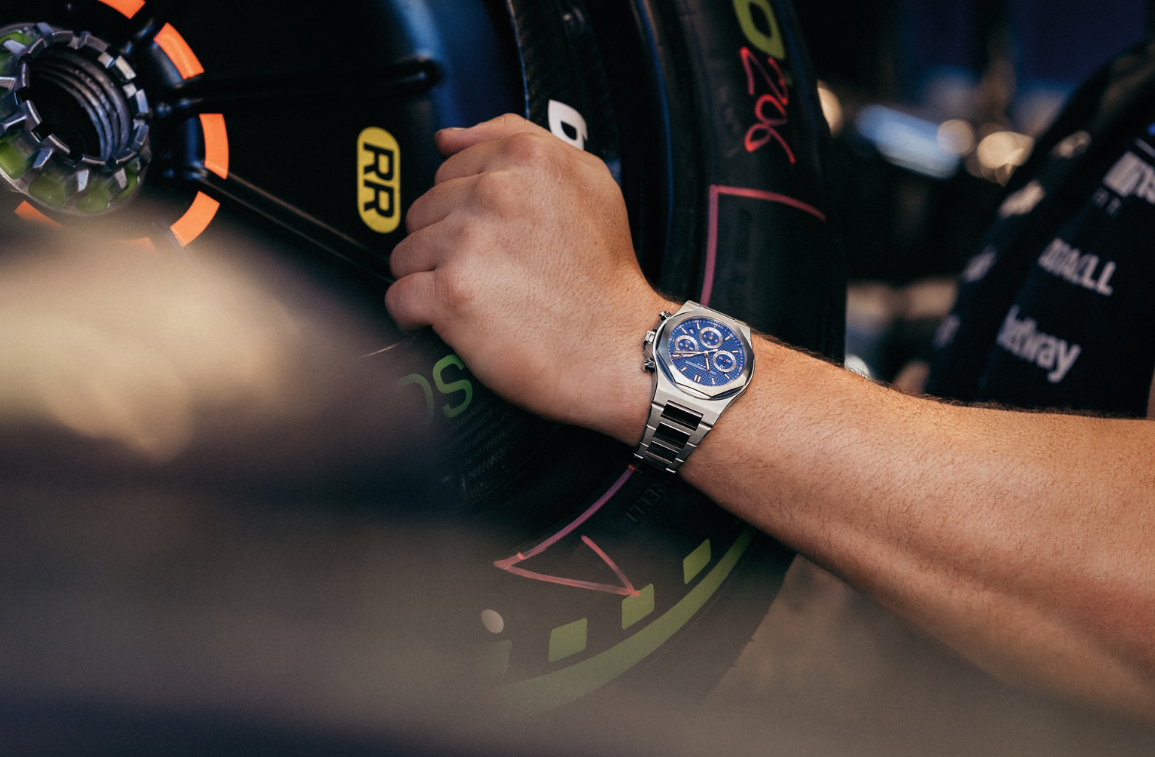
The Swiss watchmaker’s first collaboration with Atlassian Williams F1 Team produces two sporting Laureato models inspired by the team’s 2026 racing car.