Can Private Skiing Lure Wealthy Home Buyers to the Top of a Remote Mountain?
Powder Mountain was a ‘classic failed development’ when Reed Hastings took over. Now, the Netflix co-founder thinks he can revitalize one of America’s biggest ski areas.

 7 min
7 min
EDEN, UTAH— Reed Hastings , the billionaire co-founder of Netflix , is wagering that he can persuade 650 homeowners to join him in living a rugged-yet-refined lifestyle at roughly 9,000 feet in northern Utah.
Hastings bought a controlling interest in Powder Mountain, a ski area with about 8,000 skiable acres, 18 months ago. He’s aiming to turn around the area’s fortunes with the allure of a private ski club, where the key to membership is owning property.
“I had zero thoughts of getting involved in real estate,” Hastings said in a February interview in the living area of his approximately 5,000-square-foot, five-bedroom mountain house. He started building in 2019 and finished in 2021 for about $1,000 per square foot. Nestled on a steep lot, its curved roof accommodates the wind, and the minimalist wood interior allows sweeping views to take center stage. “If I didn’t live here, this project would be ‘no way’ just as an investment,” he says. “I’d rather invest in A.I.”
“But,” he says, “I love this place, and I could afford it and the timing was right.”
The private ski community, called Powder Haven, sits atop Powder Mountain in the Wasatch Mountain Range, about 60 miles north of Salt Lake City. Think private golf club, but swap out the 18-hole golf course for a ski area with no lift lines and plenty of untouched snow. Lots start at around $2 million, and annual membership dues are around $25,000, plus an initiation fee.
Hastings’s vision for Powder Haven caters to a high-end outdoors subculture that is perhaps best described as backcountry lite. People who belong to this tribe crave the solitude of the untamed wild, yet also enjoy the camaraderie of adventure companions. They revel in the challenge of outdoor pursuits, but want inconspicuous creature comforts like designer wood-burning stoves and heated bathrooms floors. And they are willing to pay for a one-of-a-kind experience.
Hastings bought a controlling interest in the mountain for an undisclosed sum in September 2023, eight months after stepping down as co-chief executive from streaming giant Netflix. Currently, Powder Haven has 44 built houses, 24 houses under construction, 14 homes in architectural review and 80 sold but unbuilt lots.
With the investment, Hastings took on $100 million in debt from the prior owners and a turnaround project. His plan involves making more than one-third of Powder Mountain’s terrain available only to existing and future Powder Haven homeowners, with the remainder open to the public. Because infrastructure costs are shared across private and public spaces, membership fees will help support both sides, Hastings says.
In total, Powder Mountain has approximately 4,200 acres of lift-serviced skiing, which includes everything from groomers to tree skiing to advanced technical terrain, and about 3,800 acres of backcountry terrain. Its ambience is unfrilly.
Powder Mountain’s previous leadership—helmed by the millennial founders of Summit Series, which hosts events for entrepreneurs, techies and creatives—had a 2016 plan to transform the mountain with 500 houses, plus hotels, restaurants, shops and event centers. The project had quirky stipulations, like guidelines for keeping lot sizes and house square footage purposefully small.
Before Hastings took over, the ski area—one of the largest in the U.S. by acreage—had only six lifts and three lodges from the ’70s and ’80s that were feeling their age. Six residential neighborhoods were in various stages of development, with less than 10% of the proposed units built. No hotels, restaurants or shops materialized. A small yurt-style lodge for residents had been built. The overall effect, still today, is a rudimentary network of roads, lodges and houses.
“It was losing money, and real estate was not selling—a classic failed development,” says Hastings, 64. He is worth $6.74 billion, according to the Bloomberg Billionaires Index. “You have to have a lot of imagination, because what you see are half-built homes and that kind of thing.”
Almost all U.S. ski areas are like a pyramid. Their base, at the bottom of a hill or mountain, has parking, a lodge and, at bigger ski areas, a town. You take a lift up to then ski down.
Powder Mountain, however, which opened in 1972 on the site of an early 20th century sheep farm, is an inverted pyramid. The ski area’s main hub is more or less at the top of the mountain. Snowsports enthusiasts park at the top and take their first run by dropping into a valley.
Getting to and from the ski area requires driving a roughly 5-mile road that is steep, curvy and, in snow, slippery. Going 1 mph down the mountain after a dusting of snow, my SUV, equipped with snow tires, started slipping around a curve. Had someone not appeared out of thin air to push it, the vehicle would have ended up in a ditch. The closest boutique hotel and grocery store are 7 miles south in the main hub of Eden, a community with a population of about 900.
The unique locale with a single road in has been a challenge for developers, says Alex Zhang, Powder’s chief creative officer. “A lot of them have been unpleasantly surprised by how much capital it takes and how labor-intensive it is to build at the top of a mountain,” he says.
In addition to being difficult to access, up here the wind can feel unpleasantly biting with nothing to block it, and snow averages more than 360 inches annually. But harsh conditions bring out people’s primal urge to know their neighbors, and the tightknit bunch that already lives here is at-the-ready to help with frozen pipes or pantry supplies (also, Instacart delivers).
Bryan Meehan , 56, the former chief executive of Blue Bottle Coffee who runs a Relais & Châteaux hotel in Ireland, completed building a 2,000-square-foot, four-bedroom vacation home on Powder Mountain in 2018. Meehan says what he, his wife and their three 20-something daughters appreciate most is how the high-alpine environment allows them to rise above their day-to-day lives. “It is the only place where we are totally switched off and there together with just us as our family,” says Meehan, who declined to disclose his building cost.
Meehan isn’t bothered by inconveniences caused by the elements, such as needing to wait for the snowplows after a storm. After all, he doesn’t need plowed roads to go skiing: His property is ski-in/ski-out. “I would have an issue if I lived at the base of the mountain and had to go up and down all the time” on the road, he says. “That’s hair-raising.”
Hastings thinks he can lure more homeowners like Meehan to the mountaintop with his new private skiing offering, which launched this season.
Only three Powder Haven houses have been on the market since Hastings took over, says Brandi Hammon, Powder’s chief revenue officer. The most recent sale, in January, was for $2.6 million, at $1,354 per square feet. That is in the ballpark of a 50% increase in price per square foot since before Hastings’s time. In 2022, there were only two sales: $4.85 million at $881 per square foot, and $2.695 million at $916 per square foot.
Currently, there is only one Powder Haven house on the market, for $2.85 million, which is $1,425 per square foot. That is up from a list price of $2 million in November 2022, according to public records.
Hastings’s plans for Powder Mountain have caused some locals and visitors anxiety about the mountain becoming exclusive and expensive. Yet people also seem relieved that Hastings’s intention seems to be trying to improve the ski area without overdeveloping it—and keeping it out of the red. “Maybe people might be upset about the concept of private, but the public can ski 60% of the mountain and I think it’s the best 60%,” Meehan says.
Hastings has already invested $100 million in making improvements at Powder Mountain, which includes building two new lifts and upgrading two existing ones. Now, he says he’s investing $200 million more, primarily focused on Powder Haven. Projects include improving homeowner services such as snowplowing and landscaping, building new infrastructure like trails that connect homes to key buildings and updating the design guidelines to improve lot sizes, easements and view corridors.
Plans are under way to break ground this summer on a 55,000-square-foot private lodge to replace the yurt-style one. A contemporary structure with a nod to Swiss chalet architecture, it will have a spa, gym, pool, pickleball courts, kids adventure center, ski valet, private dining space and a restaurant. A new neighborhood with 39 ski-in/ski-out lots is fully reserved; building costs, inclusive of the lot, start around $1,500 per square foot. More private ski lifts are coming, too.
Meanwhile, on the public side, Hasting is adding artwork such as a James Turrell light installation, which will be located in a trailside pavilion.
Hastings is wrestling with a U.S. ski landscape that has changed dramatically since the early 2000s. For one, the introduction of the Epic Pass, in 2008, and Ikon Pass, in 2018, allows people to visit multiple ski areas without purchasing individual lift tickets. At some resorts, this has led to complaints about overcrowding and slopes getting skied out within hours of a snowstorm. Powder Mountain is not part of either program.
For those who can afford it, private skiing is a mass-pass antidote, offering no lift lines, mostly empty slopes and uncut powder two weeks after it snows. Since its founding in the 1990s, Yellowstone Club in Big Sky, Mont., had long been the only significant private ski club with luxury real estate in the U.S. It is adjacent to Big Sky Resort.
There’s a reason there aren’t many private ski clubs. Unlike Powder Mountain, which is on private land, many ski areas are on public land. Finding and buying enough private land that checks all the boxes for a good ski resort would be a tall order, says Scott Shuman, a partner and auctioneer at Eaton, Colo.-based Hall & Hall, which specializes in large ranch auctions. In 35 years, Shuman can only remember one land auction involving a ski hill. The “lift” was a snowmobile.
Besides Powder Haven, at least one new private skiing club is now operating. Wasatch Peaks Ranch, about 40 miles north of Salt Lake City and not far from Powder Mountain, is a residential community with private skiing.
Lara Cumberland, 50, a longtime tech executive, splits her time between Powder Haven and California’s Bay Area. Her mountain house is 5,200 square feet and five bedrooms. Construction cost around $1,150 per square foot and took about three years, as building slowed because of two extreme winters. The property was finished in 2024.
Cumberland appreciates that her house location affords her access to private skiing, but she is glad Powder Mountain didn’t go all private. “I like its local history and wouldn’t have wanted to give that up,” she says. Besides the panoramic mountain and valley views from her house—a result of being located at the top of the mountain—what she has come to love about the area is the people. “I want to be part of the community and work to preserve it as it grows,” she says.
At Powder Mountain, Hastings is catering to a narrow set of enthusiasts who are into a particular high-end outdoor subculture. And they all have one thing in common.
“It is a very interesting group of people who are willing to drive up that road and live at the top of the mountain,” Hastings says.
Write to Jessica Flint at Jessica.Flint@wsj.com
 Copyright 2020, Dow Jones & Company, Inc. All Rights Reserved Worldwide. LEARN MORE




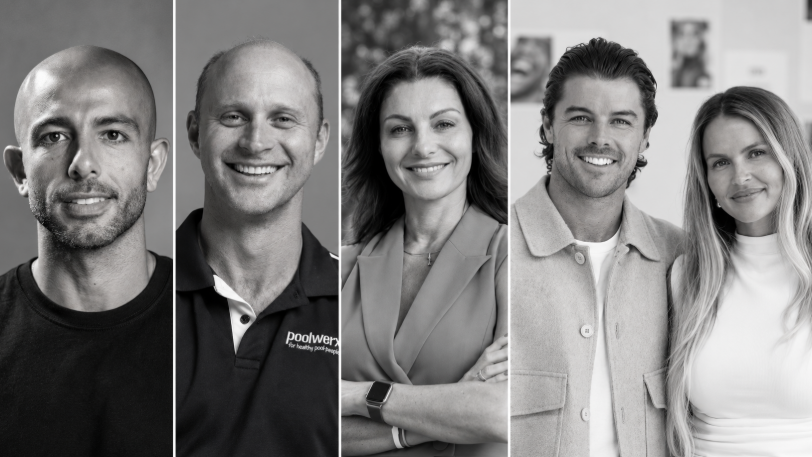
From making unpopular decisions to learning when to listen, leaders from five businesses reveal what nobody prepared them for — and how running a company has challenged their expectations.

Technology and semiconductor shares fell sharply as investors questioned the debt financing the AI infrastructure boom and confronted higher rates and Chinese competition.

Elon Musk is exploring a potential merger between Tesla and SpaceX, a deal that could reshape the future of AI, robotics, autonomous vehicles and space technology. With a combined valuation potentially reaching $3.5 trillion, the move could bring Musk’s vision of an interconnected technology ecosystem closer to reality, although a deal remains uncertain.
5 min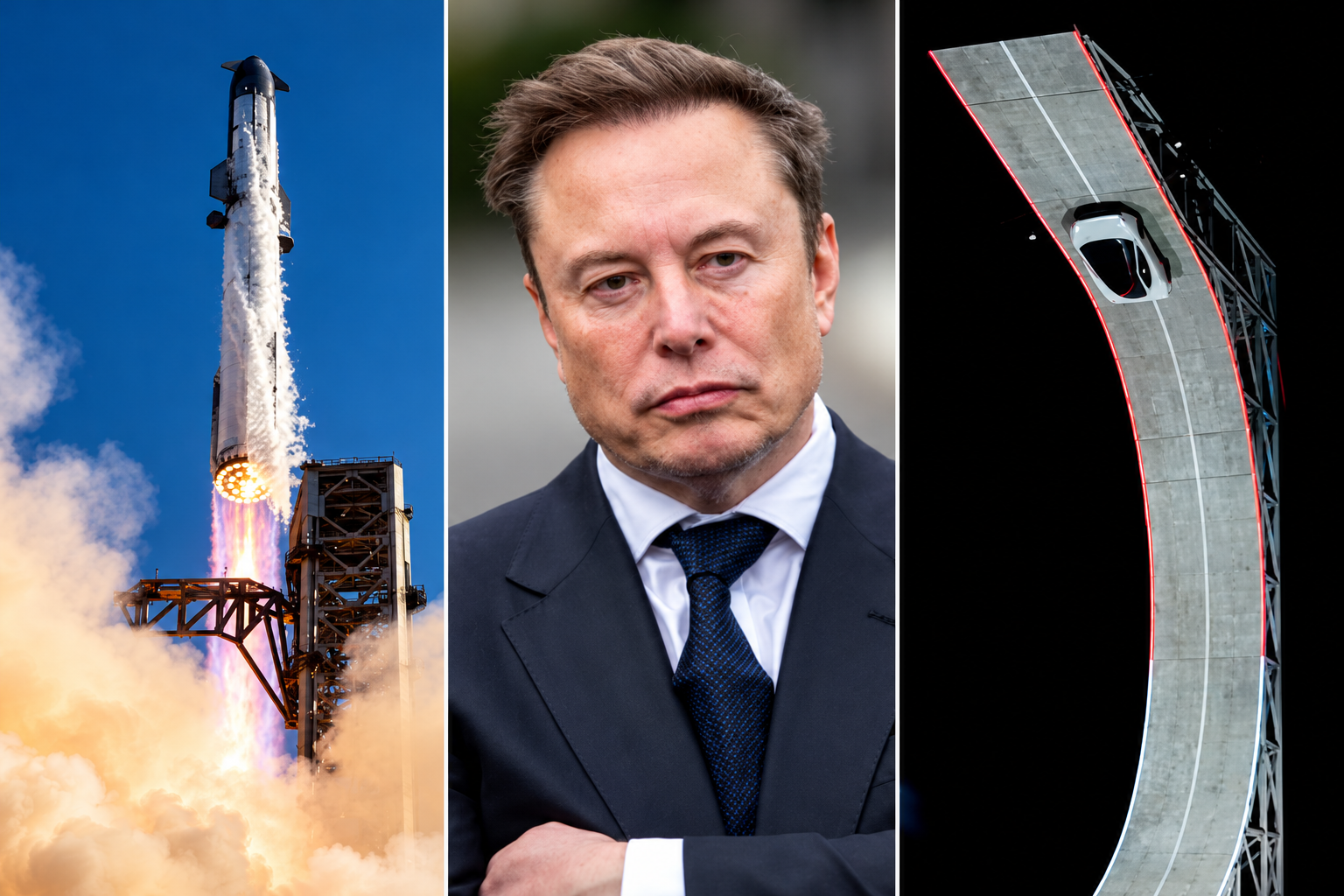
Elon Musk has engineered ties between Tesla TSLA 3.41%increase; up pointing triangle and SpaceX SPCX 7.79%increase; up pointing triangle that are hard to break, and now he wants to fuse them together permanently.
Musk has run both Tesla and SpaceX concurrently over the past two decades, using a schedule that dictated which days he spent focused on each business.
The companies have often shared resources and personnel, signaling their close ties. Last year, SpaceX looked into creating a spacesuit for Tesla’s humanoid robot Optimus, a person familiar with the matter said. Tesla last week showed off its new Roadster, a vehicle featuring SpaceX rocket thrusters that it hopes to soon bring to market.
And in recent months, Musk has repositioned both companies by expanding beyond their core operations toward a shared mission centered on artificial intelligence.
The world’s richest man on Tuesday signaled his interest in tying up SpaceX and Tesla, marking what would be the biggest corporate merger of all time. Because he serves as chief executive of SpaceX and Tesla, Musk said committees of independent directors at both companies are evaluating a possible deal, adding that a transaction might not come to fruition.
The committees will likely evaluate, with lawyers and bankers, how each company would fare in a potential deal and how a deal might best be structured. They then present their conclusions to their respective boards, who typically vote on whether to proceed.
“It’s an odd Kabuki dance where two groups of people are talking and I can’t be in the conversation,” Musk told SpaceX investors on Tuesday in response to an analyst’s question about a potential deal.
For Musk, the merger supports his vision of a world full of autonomous cars, humanoid robots and weekly rocket launches, as well as the data centers and satellites required to keep the whole thing running.
Some investors and analysts said they expect a transaction would be structured as an all-stock deal, with SpaceX potentially paying a modest premium for Tesla shares.
SpaceX, which has a market value of about $2 trillion, said it is seeing sharp growth in revenue across its businesses, which include operating data centers, launching rockets and operating satellite networks such as the internet service Starlink. Tesla is valued at about $1.5 trillion and is expanding its operations beyond its automotive and energy business. Shares in both companies traded higher following the news Tuesday.
Musk’s substantial ownership stakes in both companies, along with voting control at SpaceX, has enabled him to set the deal in motion. Analysts and investors said the deal will probably face regulatory scrutiny internationally, though some see Musk’s close relationship with the Trump administration as an asset to getting approval.
Blurred lines
The companies haven’t said which directors are on the special committees evaluating a potential deal. Several SpaceX and Tesla board members have either personal or business ties to Musk. And like Musk, venture capitalist Ira Ehrenpreis sits on both boards.
In a filing this week, Tesla outlined millions of dollars in business agreements with SpaceX and its subsidiaries last year, including $143 million in car sales to SpaceX, $3.3 million in advertising that it bought on the social-media platform X and $430 million in revenue from the sale of Megapack batteries for SpaceX’s data centers.
The companies also split the cost of resources including the use of Musk’s SpaceX jet and the bill for his personal security, which he runs through a private company.
Employees at both companies routinely move between companies to work on special projects, and some executives have dual roles, including Charles Kuehmann, vice president of materials engineering at both SpaceX and Tesla, and Ashok Elluswamy, the vice president of AI software at Tesla who runs a joint venture with SpaceX called Digital Optimus.
Over the years, Musk has launched new startups within his empire, including brain-implant company Neuralink, underground-tunnel developer the Boring Company and xAI, the AI startup that merged with SpaceX in February.
It is that AI business that Musk thinks can serve a market worth tens of trillions of dollars, justifying the need for a merger.
The business case goes like this: Tesla is developing robotaxis and robots, which it calls “physical AI.” SpaceX is working on the back end of physical AI: the data-center capacity and internet connection required for those robotaxis and robots to operate continuously.
“I don’t see what the value of Tesla is if it’s not merged with SpaceX,” said investment adviser Ross Gerber, a former Tesla bull turned critic invested in both companies. “If they don’t merge, the brains of everything that runs Tesla is owned by another company.”
On top of it all, both companies face constraints on the supply chains they need to make this world a reality, particularly when it comes to chips. To address this, Musk earlier this year announced a joint venture between Tesla, SpaceX and Intel to design and manufacture chips in Texas. “The most epic chip-building exercise by far,” he has said.
Musk at the wheel
For Musk, a merger would also solve two problems: demands on his attention and his lack of control at Tesla.
Tesla for years was Musk’s only public company, a status that came with greater scrutiny. There, Musk reports to a public board, as well as individual investors who make up around 30% of Tesla’s voting power, according to FactSet.
The question of Musk’s attention became a particular focus for investors and the board in recent years after he acquired Twitter in 2022 and launched xAI in 2023, and again in 2025 as he spent time in Washington, D.C., running the Department of Government Efficiency in the early months of President Trump’s second term.
As Tesla’s car business suffered in 2025, Musk threatened to take his AI ambitions outside the company if he wasn’t granted 25% voting control. Last November, Tesla shareholders approved a new pay package for Musk, which created a path for him to vastly expand his stake.
As of Sept. 30, Musk owned a roughly 20% stake in Tesla, according to the company’s proxy filing.
The SpaceX IPO gave Musk a different path. When SpaceX went public in June, the deal’s structure enabled him to have more than 80% voting power at the company—so much that he can’t be fired and decisions can’t be made without his support.
If SpaceX acquires Tesla, he will likely stay in control.

From farm-to-table Thai to fairy-lit mango trees and Coral Sea vistas, Port Douglas has award-winning dining and plenty of tropical charm on the side.

Porsche has revealed a one-off 911 GT2 RS that brings the extraordinary silhouette of its 935/78 “Moby Dick” racing car onto the road. Created by Porsche Sonderwunsch with Manthey, the commission began with a near-new GT2 RS. The owner requested greater performance, a Slantnose profile and a rear wing influenced by the limited 911 GT3 …
Continue reading “Porsche Builds a Road-Going “Moby Dick” From a 911 GT2 RS”