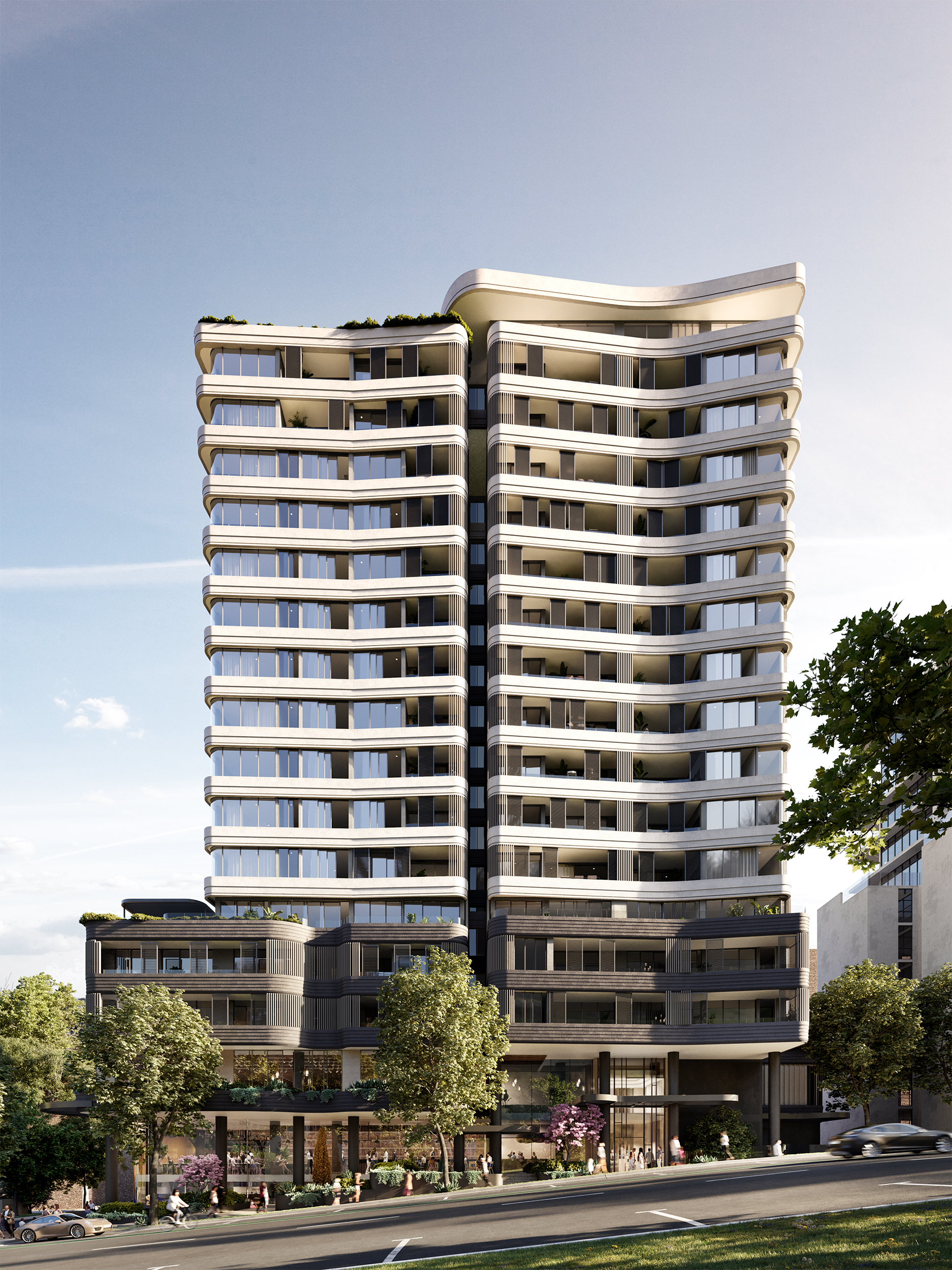
MOSAIC SECURES $30M RIVERFRONT SITE FOR LANDMARK SOUTH BRISBANE PROJECT
The developer’s most ambitious Brisbane tower to date will anchor new era of riverfront living.
Mosaic Property Group has made its long-anticipated move into South Brisbane, acquiring a $30 million north-facing riverfront site at 91 Montague Road for what will become its largest project to date, with Stage 1 expected to carry an end value of around $500 million.
The 4,282-square-metre parcel, purchased from the Schiavello Group through Knight Frank’s Christian Sandstrom, commands 35 metres of uninterrupted Brisbane River frontage and sits in the city’s cultural heart, with access to West End and the CBD.
The site adjoins a precinct earmarked for new parkland, housing, and cultural infrastructure, putting the development at the centre of Brisbane’s next wave of riverside regeneration.
Mosaic has begun concept planning with Bureau Proberts for a luxury, owner-occupier-focused tower consistent with its flagship projects across South-East Queensland.
Founder and Managing Director Brook Monahan said the acquisition represented a pivotal step in the company’s growth and its evolution as a leader in the luxury residential market.
“This is one of the most extraordinary opportunities we have ever secured — a once-in-a-generation riverfront site that gives us the platform to deliver something truly transformative for Brisbane,” Monahan said.
He added that Mosaic’s vertically integrated model and disciplined site-selection strategy had been key to maintaining momentum despite industry headwinds.
“Escalating costs, tighter finance, planning complexity and labour shortages are causing many projects to stall or be shelved. Mosaic’s vertically integrated model and disciplined approach — targeting only the most exceptional locations where people genuinely want to live — has enabled us to continue bringing projects to life.”
Founded in 2004 and rebranded in 2012, Mosaic has completed more than 70 projects worth over $2 billion and has another $2 billion pipeline secured. This year alone, the group has delivered five luxury developments totalling $580 million and currently has six active construction sites worth $1.35 billion.
Monahan said Mosaic’s philosophy remained customer-first. “We had to learn to crawl before we could walk — steadily building capability, growing our people, refining our model, investing heavily in our business, and deepening our understanding of what customers truly value.”
The South Brisbane project is scheduled for release in early 2026.
A record-breaking $11 million sale at The Centennial Collection has set a new benchmark for luxury apartment living in Bondi Junction.
As interest rates, inflation and market sentiment fluctuate, investors are being urged to focus on data, not panic.
Australia’s housing affordability crisis is being fuelled by chronic undersupply, planning delays and rising development costs, as politicians continue to focus on the wrong solutions.
Australia’s housing crisis will not be solved by first-home buyer incentives or tax changes alone, with leading property figures warning governments must tackle supply constraints if affordability is to improve.
Speaking at the Kanebridge Quarterly Property Leadership Summit in Sydney last week, expert project marketing specialist Sam Elbanna, property investor and fund manager Paul Miron and property consultant Karla McNeice said that a lack of housing supply remained the central issue facing the market.
Elbanna, Director of CPM Realty with more than 30 years’ experience in project sales, argued that successive governments had focused too heavily on stimulating demand rather than addressing the barriers preventing new housing from being delivered.
“The misconception is that politicians think the way to solve the housing crisis is to drive demand,” he said.
“The reality is that’s not the way. This is a supply-side problem, and it needs to be solved on the supply side.”
Drawing on his experience in project sales, Elbanna said policies designed to help first-home buyers often had unintended consequences, pointing to previous grants that ultimately flowed through to higher property prices.
Instead, he said developers were facing increasing red tape, approval delays and rising costs, which were discouraging new housing supply.
“In the absence of stock, demand exceeds supply,” he said.
Miron, a Co-Founder and Fund Manager of Msquared Capital, said the housing debate had become overly focused on tax policy while overlooking broader structural issues.
He argued that affordability challenges stemmed from a combination of factors, including planning constraints, supply shortages, migration levels and interest rates.
“No-one can be 100 per cent certain on the real reason for property prices is going up,” he said.
“The reason why property prices are higher is a combination of interest rates, lack of supply, migration, vacancy rates and maybe taxes play a role.”
Miron was critical of recent federal housing policy changes, warning they could reduce the number of new homes being built and further constrain supply that was even highlighted in the budget.
He also highlighted the importance of the property sector to the broader economy, noting that residential real estate and related industries employed more than one million Australians.
McNeice, who advises developers on sales strategy and market intelligence, said understanding buyers had become increasingly important as affordability pressures intensified.
While affordability remained a major consideration, she said today’s buyers were focused on value rather than simply price.
“People are looking for value for money,” she said.
She said buyers were increasingly evaluating factors such as transport connections, walkability, nearby amenities and flexible living spaces that could accommodate changing family needs.
“What infrastructure is going on? Can I walk to the shops? Can I meet people at the local cafe?” she said.
The panel also discussed the mounting pressures facing developers, with Elbanna arguing that many projects become financially unviable from the moment a site is purchased.
“The viability of a development happens at the moment the site is bought,” he said.
He said rising construction costs, higher interest rates and overly optimistic feasibility assumptions had left some developers exposed as market conditions changed.
While acknowledging the growing number of smaller and first-time developers entering the market, Elbanna said property development required expertise across finance, construction, marketing and legal disciplines.
“It is actually a business that requires a level of expertise,” he said.
Looking ahead, the panel agreed opportunities remained in the market despite current challenges.
Miron said property should continue to be viewed as a long-term investment and cautioned against trying to time short-term market movements.
McNeice said success would increasingly depend on identifying projects that genuinely met changing buyer expectations.
Elbanna said affordable housing remained achievable, but developers needed to deliver more than just homes.
“We can provide affordable housing in this country,” he said.
“But we’ve got to wrap that affordable housing with the things that people want.”
As Australia’s housing affordability debate intensifies, the panellists agreed on one point: without a meaningful increase in housing supply, demand-side measures alone are unlikely to solve the nation’s property challenges.
Scotch whisky expert, luxury hospitality strategist and Keeper of the Quaich inductee Ross Blainey is bringing a new philosophy of luxury experiences to Citizen Kanebridge.
A survey of people with at least $1 million in investable assets found women in their 30s and 40s look nothing like older generations in terms of assets and priorities