Forget Shark Week: Now’s Your Chance to Own a 190 Million-Year-Old Ocean Monster

Sotheby’s is selling mounted fossil skeletons of a Pteranodon from the late Cretaceous and a Plesiosaur from the lower Jurassic—both considered fearsome predators—at a natural history auction on July 26 in New York.

The Pteranodon, a flying species that existed some 85 million years ago, is expected to achieve as much as US$6 million. The Plesiosaur, a marine reptile that existed 190 million years ago, could achieve as much as US$800,000.

The fossils continue Sotheby’s foray into selling dinosaur bones. A year ago, the auction house sold a Gorgosaurus fossil for US$6.1 million, and in December, a Tyrannosaurus rex skull nicknamed Maximus also sold for US$6.1 million. Both sales include fees. The latter result fell far short of expectations that the 200-plus pound skull could fetch as much as US$20 million.

Fossil bones of the Pteranodon—named “Horus” in honour of an ancient Egyptian deity of kingship, protection, and sky—were found by an anonymous fossil hunter in 2002 in Logan County in Kansas. The bones had been buried under layers of chalk in the seabed of what was once an inland water body known as the Western Interior Seaway. The water had divided North America into two land masses at the time.

Pteranodon longiceps Courtesy of Sotheby’s

The resulting skeleton is one of the “largest well-preserved Pteranodons ever discovered,” Sotheby’s said in a news release, noting it is also the most complete and highest quality. Also, unusually, most of the original fossil bones are “essentially unrestored” without artificial filler, which the auction said is “especially ideal for scientific study and transparency of authenticity.” Mounted, the skeleton has a 20-foot wingspan.

The flying creature’s skull, however, was created with the help of 3-D restoration to fill in pieces that weren’t found at the site. Filling in missing parts of bone with sculpted epoxies or plasters that are painted to match the fossils is very common in the restoration of dinosaurs, because it’s extremely unlikely to ever dig up a full skeleton, according to Cassandra Hatton, global head of science and popular culture at Sotheby’s.

“You are incredibly lucky if you have half of the pieces,” Hatton says. “You have to fill in those blanks in order to do the kind of 3-D, big T. rexes and Apatosauruses [seen] at Natural History Museums.”

Hatton mentions this as the auction house is selling these fossils in the wake of questions raised about the authenticity of other specimens that have been sold commercially. Perhaps the most high-profile example was the scheduled auction of a T. rex that Christie’s canceled after questions were raised about the specimen’s authenticity. The fossil skeleton was estimated to fetch at least US$15 million.

Clients have become “uncomfortable with the fact that it’s hard for people to tell the

difference, or the fact that unscrupulous people can easily pull the wool over people’s eyes,” Hatton says.

To ensure the Pteranodon’s authenticity is evident, those who prepared it for display didn’t attempt to meld the original fossil bone with sculpted materials. “It’s really clear when you look at it that O.K., ‘this is original’ and ‘this isn’t,’” she says.

The rib cage area, for example, includes a big plate on the sternum that’s original and attached to a sculpted rib cage. But there’s been no attempt to make the rib cage look like actual bone, so what’s real and what isn’t is obvious even to an untrained eye, Hatton says. Potential buyers also will be able to see an osteograph, or bone map, which lists the actual bones in the skeleton, in addition to a site map of the discovery, and photos of the dinosaur bones being excavated

“We wanted to be sure that people understood what was going on,” she says.

The 11-foot-long Plesiosaur Sotheby’s is selling was unearthed in the early 1990s in Blockley quarry, Gloucestershire, England. It was first prepared and studied by Mike Taylor, a British Plesiosaur expert, who discovered that it was a Cryptocleidus, a previously unknown species of the Jurassic, according to a Sotheby’s Paris catalog entry from 2010. The skeleton, which had been in a collection at a private museum in Germany, was sold at that time for €456,750. The current consignor is anonymous.

Unlike the Pteranodon, Sotheby’s doesn’t have a site map or photos of the Plesiosaur’s discovery, because no one at that time probably could have imagined the fossils being sold at a public auction, Hatton says.

The Plesiosaur has been nicknamed ‘Nessie’ in reference to the Loch Ness monster, as many sightings of the mythical beast describe a creature with similar features to the Plesiosaur, including a long neck, small head, and four flippers, Sotheby’s said. Reported sightings of the monster also increased in the years after the first Plesiosaur skeleton was discovered in 1823.

The highest price for a dinosaur skeleton to date is the nearly US$32 million, with fees, paid for a T. rex skeleton dubbed “Stan” in October 2020 at Christie’s in New York. The 39-foot-long skeleton will be displayed at the Natural History Museum Abu Dhabi when the institution opens in 2025.

Visitors to Sotheby’s New York galleries will have a chance to see if they can tell the difference between real bone and plaster casts by visiting the fossils on display before the auction later this month. The natural history sale is one in a series of “geek week” offerings at the auction house that also feature science and technology and space exploration.

Sustainable buildings take out top honours at state property awards

Heritage preservation and sustainability concerns have won out at the Property Council of Australia’s state awards.

Brookfield Place in the heart of Sydney’s CBD took out the NSW Development of the Year award. With direct access to Wynyard Station it offers more than 6,300sqm of lettable retail space and 27 floors, while providing expansive views across Wynyard Park. While it represents an attractive commercial opportunity, Brookfield Place has achieved a 6 Star Green Star Office Design & As Built v3 rating as well as WELL Health/Safety accredited in 2022. It is also targeting NABERS ratings for energy and water.

Brookfield Place took out the state award for NSW

In further signs that sustainable building practices have gained ground, the state honours in Queensland went to the Midtown Centre, where two 1970s buildings have been reimagined to create a commercial precinct including office spaces, a retail laneway and wellness destination. As the hybrid working model becomes the norm, office spaces are outward looking towards green vistas.

Old and new building work is evident in Midtown Centre in Brisbane, which won the state award for Queensland.

The building also has a 6 Star Green Star Design & As Built v1.1 rating and 5 Star NABERS energy rating. It also works as a celebration of the past, with the older buildings on show, contrasting with the new work.

The Midtown Centre in Brisbane’s CBD has a 5 star Green Star rating

Other state winners include the BHP workplace in Adelaide, which took the top state honour in South Australia, and the cantilevered 405 Bourke Street in Victoria.

The BHP workplace in Adelaide was a standout for its family friendly focus and accessibility.

The state winners will now go through to the Property Council’s National Innovation & Excellence Awards with winners to be announced in Sydney later this year.

Property Council of Australia Chief Executive Mike Zorbas said the winners represent the pinnacle of property innovation, design and construction in Australia.

 “Our winners have created incredible places for people to enjoy and to thrive in. I congratulate them for their extraordinary rolemodelling and their dedication to the communities they serve,” he said. 


Companies Are Drowning in Too Much AI

Businesses are facing an influx of new artificial-intelligence tools, many of which overlap and cause confusion for employees, as corporate-technology sellers race to capitalise on the generative AI trend.

“Since the ChatGPT excitement, I must have had at least 20 to 25 vendors in my portfolio reach out to me saying, ‘Hey, let us tell you about our generative AI co-pilot strategy,’” said Milind Wagle, chief information officer at Equinix, one of the world’s biggest data-centre landlords.

Generative AI features, which can respond to user prompts by generating images or text, often come in the forms of co-pilots, or virtual assistants that work in tandem with an IT seller’s offerings, sometimes automating certain tasks within that platform. Wagle said Equinix is drowning in a flood of co-pilots—and he is trying to figure out how, if at all, they should coexist.

“I feel like there’s a co-pilot war that needs to sort of happen,” he said, adding that to humanize AI in a meaningful way, there needs to be more coherence in how these tools are deployed.

The co-pilot proliferation is leading to confusion for employees who are looking for a single common interface to accomplish certain tasks, Wagle said. It can also create potential governance risks if there is a possibility that private data from a company that interacts with the co-pilots could make its way into public training models for generative AI tools.

Gartner analyst Arun Chandrasekaran said IT sellers are feeling pressure to move into the generative AI space or risk falling behind, meaning some half-baked features will be rushed out without the proper privacy and security guardrails in place. Established IT sellers also need to consider security concerns, including whether a customer’s data can be fed back to train the model, because this is uncharted territory, he added.

Chandrasekaran estimates that a fifth of independent software vendors have stepped into the generative AI space since ChatGPT was launched about seven months ago—a huge amount of growth in a short time, he said.

“I don’t think I’ve had a partner or vendor meeting this year where I wasn’t pitched a generative AI play,” said Brian Woodring, CIO of Rocket Mortgage, a nonbank mortgage provider.

Rocket Mortgage CIO Brian Woodring PHOTO: ISABELLE BOUSQUETTE / THE WALL STREET JOURNAL

Sometimes the co-pilots appear in system updates as a freebie, and sometimes they cost extra, Woodring said. He added that in some cases, the generative AI features are tacked on, despite not being compelling additions or the best tool for the job.

“Everyone’s trying to fit it in everywhere,” he said, adding, “It’s not something you can just spread around like peanut butter. It’s not a coat of paint you put on your product afterwards and say, now it’s AI.”

In other instances, the features are things that Rocket Mortgage could confidently and more cheaply build in house, Woodring said. For example, a number of tools on the market pull and analyse data from phone calls, a feature that Rocket Mortgage was able to build itself, he said.

Tech executives said they are looking critically at new generative AI tools to distinguish between the truly compelling ones and the ones that are just paying lip service to the hype. How well the tools will be able to integrate with each other is another consideration.

“We want clarity on how we can connect every single one,” said Noé Angel, CIO at agriculture company NatureSweet. When tools are too fragmented, it ends up creating more work for those who have to manage them, he said.

Jim Stratton, chief technology officer of Workday, a provider of enterprise cloud applications for finance and human resources, said that longer term, he expects consolidation and clearer winners to emerge when it comes to certain AI capabilities, which could simplify things for companies.

But nearer term, navigating the complexity of the landscape remains a challenge. “There’s still a lot of noise at the moment,” he said.

Rolling Stones Drummer Charlie Watts’ Copy of ‘The Great Gatsby’ Could Sell for £300,000 at Auction

Charlie Watts created the consistent beat for the Rolling Stones as the band’s drummer on every album by the group since 1964, but his first love was jazz.

That passion, alongside a zeal for modern literature, will be on display in a two-part auction at Christie’s of rare-edition books and jazz memorabilia that is expected to fetch more than £2.5 million (US$3.2 million). Watts died in August 2021 at age 80.

Among 500 items to be offered in a live sale on Sept. 28 in London, and in an online sale running from Sept. 15-29, is a copy F. Scott Fitzgerald’s The Great Gatsby, inscribed to MGM screenwriter Harold Goldman as “the original Gatsby,” for an estimate between £200,000 and £300,000. Set in the Roaring ’20s, the novel captures the jazz age of the time.

Watts began collecting jazz memorabilia when he was in his teens, Dave Green, a childhood friend and jazz musician, said in a news release. The collection “reflects his enduring love of the music and the musicians who made it,” Green said.

F. Scott Fitzgerald’s inscription in a copy of The Great Gatsby that’s in the collection of drummer Charlie Watts
Courtesy of Christie’s Images Ltd. 2023

Among the memorabilia are items Watts collected related to saxophonist Charlie Parker, including his Associated Musicians Membership card, contracts for Parker’s Alto Break sessions, and a pair of awards from Down Beat magazine in 1952 that are expected to achieve up to £15,000.

Watts pursued jazz even through his career as the Stones’ drummer, joining his bandmate Ian Stewart, a keyboardist, in the “boogie-woogie” band Rocket 88 in the 1970s. The Charlie Watts Big Band performed globally in the 1980s and in 1993, he released a jazz album, Warm & Tender, with the Charlie Watts Quintet.

Watts’ music collection also includes an annotated score of George Gershwin’s Porgy and Bess, estimated to achieve up to £15,000, and two scores by Irving Berlin. Songs from Top Hat and Songs from Follow the Fleet by Berlin are inscribed to Ginger Rogers, and are estimated to achieve between £4,000 and £6,000.

Other top literature lots include rare editions of books by Agatha Christie, George Orwell, Arthur Conan Doyle, and James Joyce. Christie’s The Thirteen Problems carries an estimate between £40,000 and £60,000.

The range of items will give many Watts fans a chance at owning something the legendary drummer once collected, as prices range as low as £800.

Beautiful one day, pricey the next

Renters in Queensland are experiencing the greatest rental pressure in the country, new data shows.

The Rental Pain Index released by content and research provider Suburbtrends shows the Sunshine State has seen the highest average rental increase in 12 months across the country at 16.33 percent.

“The significant increase in rental prices over the past year in Queensland is a clear contributor to the heightened rental pain felt by residents,” said founder of Suburbtrends, Kent Lardner. “Similar trends are observed in South Australia and Western Australia, where rental prices have risen by approximately 15.95 percent and 15.37 percent, respectively.”

The findings are the result of analysis of the top 25 rental results in each state comparing advertised rentals, vacancy rates and average rent increases over a 12 month period. It also examines average rents as a percentage of income.

The report comes on the back of data released by Ray White Real Estate which reveals that unit prices in Brisbane are growing at a faster pace than houses.

Ray White chief economist Nerida Conisbee said unit price growth has kept pace with that of houses, with apartment prices now back to their 2022 peak. She attributed the recent downturn in apartment prices to the lockdown lifestyle of the pandemic.

“Apartment living wasn’t much fun during lockdowns. Living in smaller spaces with restricted movement was difficult and a lot of the best things about urban living were not available,” Ms Conisbee said. 

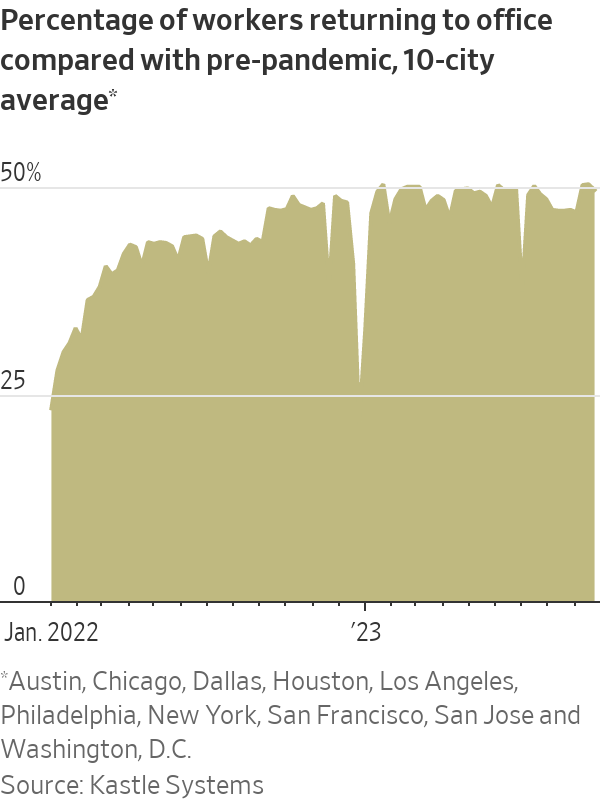
“Now that things are pretty much back to normal, apartment living is again attractive. Most of us are going back to the office more frequently and all the best things about living in higher density suburbs are back. 

“We have moved quickly from a situation where there were too many apartments to not enough. Demand is exceeding supply, driving up prices and rents.”


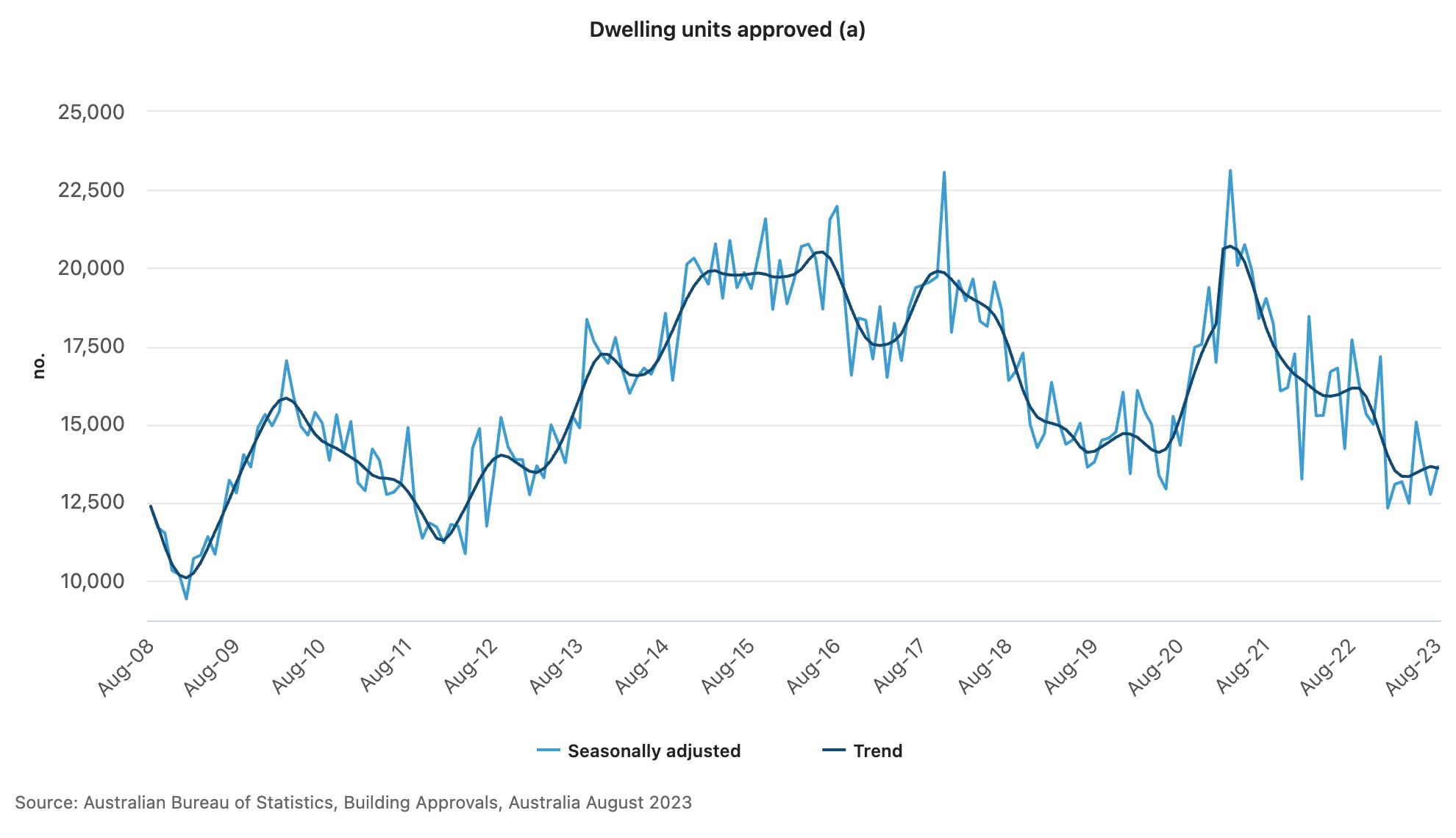
Ms Conisbee noted that demand for apartments would continue to outstrip supply as building approvals were at their lowest point in more than a decade while construction costs were at record highs.

She said the future of the Australian residential market was apartment living, which is not reflected in current housing stock around the country.

“Australia has extremely low density relative to other major cities,” Ms Conisbee said. “Sydney is our highest density city but half of all homes are still detached houses. In Hobart, just 15 percent of homes are attached or apartments.” 

America’s Green Skills Gap Raises Concerns About Energy Transition

Green skills in the U.S. aren’t growing as fast as green jobs, pressuring companies to get creative to find the workers they need to carry out the energy transition and take advantage of the historic amount of money pouring into climate technology.

Generous incentives in last year’s Inflation Reduction Act have prompted billions of dollars in clean-energy investment announcements that are forecast to create millions of U.S. jobs. But recent data shows strong growth in demand for green skills exacerbating an already tight market where demand outstrips supply.

In 2022, the number of U.S. LinkedIn profiles with at least one green skill grew around 8.4%, compared with a 20% rise in green job postings on the platform, according to data from LinkedIn provided to The Wall Street Journal. The online professional network defines green skills as those that make economic activities more environmentally sustainable, such as carbon accounting, hydrogen engineering and battery manufacturing. It considers green jobs to be ones which include climate action objectives such as removing pollution and preserving natural resources.

Likewise, more than 114,000 U.S. clean-energy jobs were created in 2022, according to last week’s annual employment report from the U.S. Department of Energy. Every state recorded an increase in these jobs and the rise outpaced employment growth in both the wider economy and the overall energy sector. More than 40% of all U.S. energy jobs last year were in clean energy, defined as ones that include technologies aligned with a net-zero future such as electric vehicles, renewables or hydrogen.

“We need this concentration of workers with green skills to be higher,” said Sue Duke, head of global public policy at LinkedIn.

The IRA earmarked around $369 billion of government incentives for energy and climate-related programs over 10 years. The legislation was predicted to create more than nine million clean-energy and climate-related jobs over the next decade, according to the Political Economy Research Institute at the University of Massachusetts Amherst.

The utility-scale clean energy industry has announced more than $150 billion of investment as well as 18,000 new manufacturing jobs associated with new or expanded facilities since the IRA was passed in August 2022, the American Clean Power Association, an industry group for wind, solar and battery storage, said in April.

“The transition to a cleaner economy, as envisioned by many policy makers, will involve building a vast amount of infrastructure,” said Kenneth Gillingham, economics professor at the Yale School of the Environment.

“There has certainly been an uptick in hiring,” Gillingham said. “But much of the building of infrastructure and clean energy is yet to come if the goals of the IRA come to pass.”

The current green skills supply shortage has raised concerns about how U.S. companies will find the workers they need as the IRA-related projects are built and eventually start operating. However, there are some mitigating factors.

“Today’s workforce is not ready for such a scaling up, but the skills needed are not always specific to green technology,” Gillingham said. There are also plenty of traditional economy roles that can quite easily transition to green jobs, such as from construction, electrical work and engineering, he said.

To help close the green skills gap, companies are getting creative. For newer, fast-growing roles such as sustainability manager and energy auditor, some businesses have recruited workers without prior green job experience, according to LinkedIn. It also said around half of the solar consultants and waste managers hired in the U.S. had no prior experience.

Businesses are also upskilling current workers and hiring people from areas of the economy that are shrinking. For example, Gillingham said coal-power plant workers are being trained to run renewable-energy farms, operate electric-vehicle charging networks or expand transmission lines.

Universities are also stepping up to help close the green skills gap. For example, the Yale School of the Environment has begun a “major push” into certification programs to train professionals with new greenskills that they can quickly bring into their companies, said Sara Smiley Smith, associate dean at the school.

Yale offers two online certification programs, each taking roughly 11 months to complete. One is on financing and deploying clean energy, while the other concerns restoring, conserving and sustainably using tropical forests. It is developing three more certifications and experimenting with the Coursera learning platform.

“The applications to the master’s program I run here have doubled in the last three years,” said Steven Cohen, director of Columbia University’s Master of Science in Sustainability Management. Cohen added: “The growth of programs to educate people to play sustainability roles in private corporations is exploding.”

The need for green skills varies across industries: The green shift in the energy and transport workforces are quite pronounced as they develop lower-carbon energy sources and electric vehicles, respectively.

More than 84% of net new electric power generation jobs last year were in clean energy such as renewables, geothermal and nuclear, although oil and gas jobs grew too, with only coal jobs falling, according to the U.S. Department of Energy. However, LinkedIn data shows that even within the U.S. oil-and-gas industry there has been a steady increase in the share of its workforce acquiring green skills, which has risen to 22%, well above the average across U.S.industries, at around 12%.

Likewise, there were more than 200,000 jobs added last year in the clean energy vehicle sector, reflecting year-over-year growth of more than 20%, according to the U.S. Department of Energy.As of 2023, nearly 11% of U.S. transport workers, such as employees of carmakers, have green skills, according to LinkedIn. The U.S.’s share of auto workers with electric vehicle-related skills rose by 68% between 2018 and 2023.

In contrast, the U.S. finance industry is lagging behind the national average despite many businesses talking up how they are increasingly basing their investments on environmental, social and governance criteria. The proportion of U.S. financial workers with green skills reached 8% in 2023, but is growing faster than most industries with a 14.8% year-over-year increase.

—Rochelle Toplensky contributed to this article.

Corrections & Amplifications
Yale School of the Environment offers two online certification programs to train professionals on new green skills, both taking roughly 11 months. A previous version of this article incorrectly said Yale’s course on financing and deploying clean energy was 10 months and a second course on restoring, conserving and sustainably using tropical forests was eight weeks. (Corrected on July 7)

As Greedflation Starts to Fade, Wageflation Creeps In

When inflation took off in 2021 in the U.S., so did corporate profits, leading to accusations of “greedflation” and calls in some corners for price controls. This year, Europe is going through the same debate amid soaring food prices.

Judging by recent developments, inflation driven by corporations flexing their power to jack up prices more than costs—greedflation, as some called it—is on its way out. Pretax margins, which widened sharply in 2021 and 2022, were roughly back to pre pandemic levels in the first quarter of 2023, according to revised government data released last week. Margins in six of the S&P 500’s 11 sectors were lower in the second quarter than four years earlier, according to FactSet.

Narrowing profit margins, though, doesn’t necessarily mean an end to inflation. Wages are now growing faster than prices. While that doesn’t provoke the same outrage as soaring profits, it’s just as problematic for getting inflation down.

The circumstances of 2021 and 2022 made for a seller’s paradise. As the economy reopened, newly vaccinated consumers rushed to spend pent-up savings and stimulus cash. That demand collided with supply held down by pandemic disruptions and the inability of meeting so much demand with existing capacity.

The result: pretax margins shot from 15.6% in the fourth quarter of 2019 to 17.9% in the second quarter of 2021. That’s based on the Commerce Department’s measure of total value added by corporate businesses. This measure separates total costs into labor, profits, and non labour costs such as depreciation, interest and excise taxes, while excluding inputs, such as energy.

In the year through the second quarter of 2021, those companies’ prices rose 4.3%. At the same time, the cost of labour per unit of output fell 2.3%, because though wages were rising in that time, output per worker (productivity) was rising faster. Profit per unit of output rose a whopping 40%.

Greedflation is a catchy phrase, but not of much analytical value. Businesses always set prices to maximise profits. Raising them too much risks competitors ramping up supply to take market share.

But in 2021 and most of 2022 many companies couldn’t expand supply because of shortages of materials, labour or transport capacity. In the past when demand for vehicles rose, manufacturers effortlessly boosted output. This time, a shortage of semiconductors curtailed production and manufacturers responded to strong demand by slashing incentives and raising prices. General Motors sold fewer vehicles in both 2021 and 2022 than in 2019 but in both years made about 50% more profit. Companies weren’t the only beneficiaries: so was anyone with a used car to sell.

While greed is timeless, companies conceivably may have more power to translate greed into prices because of declining competition. The Biden administration, for example, blamed soaring meat prices in part on consolidation among meatpackers. But that wouldn’t have translated into such high prices without so much demand from locked-down consumers and the industry enduring production interruptions and labour shortages due to Covid-19, drought, avian flu and shrunken herds.

In recent quarters demand has softened. Adjusted for inflation, consumer spending was flat in three of the past four months. Tyson Foods lost money in the second quarter as soft demand pulled down prices for pork and beef while feed and labour expenses rose.

Supply, meanwhile, seems to be improving, at least for goods. In a report this week, economists at Goldman Sachs said global shipments of automotive semiconductor chips and U.S. auto production in the past few months are finally above pre pandemic levels. As a result, automotive inventories and incentives are both on the rise. In May the average new car buyer paid $410 below sticker price, compared with $637 above a year earlier, according to Cox Automotive.

Demand for services is holding up better than for goods, and services supply is still constrained, in particular by labour shortages. One reason air travel is so expensive is that airline capacity this year is about 14% below pre pandemic trend levels, Delta Air Lines recently told shareholders.

As airlines add flights they stretch staff, aircraft and air-traffic controllers to capacity, leaving them vulnerable to the slightest disruption. After thunderstorms triggered hundreds of flight cancellations in recent weeks, United Airlines said it might reduce flights out of its Newark, N.J. hub to create a buffer.

Airlines also reflect a broader reality: Whatever pricing power business still commands is increasingly eaten up by labor costs. Pilot shortages caused by pandemic retirements have given unions bargaining leverage, with many seeking to replicate a 34%, four-year increase Delta gave its pilots this year.

Workers are slowly recapturing more of the economic pie. In the first quarter of 2023, wages and salaries rose to 49.3% of corporate value added, higher than in 2019. Labor costs per unit of sales rose 6% in the year through the first quarter, ahead of prices, which were up 5.3% in the same period. Profits per unit of output rose just 1.6%.

The trend of wages rising faster than prices has continued in recent months. That’s welcome relief for workers but poses a set of difficult tradeoffs: Either profit margins will have to narrow further, which businesses will resist; high inflation will have to continue, which the Federal Reserve is fighting; or productivity will have to boom, of which there is no sign yet. If none of those things happen, then wageflation, like greedflation, will have to go away.

The west coast home with a zen-like sensibility

One of the exceptional aspects of living in Australia is public access to foreshore areas. From beach promenades to riverside cycleways, being able to freely enjoy the waterways, beaches and parklands is something that many Australians hold dear.

However, for those fortunate enough to live by the water and enjoy the sometimes breathtaking views, it has its drawbacks, especially if your home is not designed to manage being in such a public position.

Interested in more stories like this? Order your copy of the latest issue of Kanebridge Quarterly magazine here.

The owners of this property overlooking Swan Canning Riverpark in South Perth had recently decided to buy a home in the city to be closer to their extended family of children and grandchildren. But while they love the views across the park to the Swan River and the city beyond, the strata title property left something to be desired.

Built in the 1980s, it lent heavily on floor-to-ceiling glass windows and downlighting, creating a goldfish bowl-like experience for those living within.

The property has exceptional waterfront views. The design has reached a balance between capturing the vista and managing privacy. Image: Dion Robeson

In addition to the need for privacy, project architect Suzanne Hunt says the owners wanted to create a sense of sanctuary for their home, citing peace and quiet as a high priority. They also required a home that would allow them to live in comfort and safety as they grew older, while still being stylish.

“The strata unit as it was would not allow them to age in place — it was all shiny tiles,” says Hunt. “I suggested we look at some new options that would give us the opportunity to really investigate doing a house that was smaller but had all the details they love.”

The palette is neutral and limited with multiple but interconnected living areas. Image: Dion Robeson Styling: Anna Flanders

Hunt had previously designed their existing home, a sprawling property in the Perth Hills, which had reflected the owners’ affinity with Japanese design. Given the city site had neighbours on or close to both boundaries and strata rules about height and setbacks were fixed, a Japanese approach to the design was an obvious match. It would also meet the owners’ desire for a serene environment.

“Japanese design has a calmness,” says Hunt. “There are minimal materials and the interior design is architectural. 

“The beauty is in the architecture, like timber battens on the walls.”

Starting from scratch, Hunt designed a two-bedroom, single-level home using a pared back palette made up primarily of timber, stone, concrete and glass.

“Everything in the house is calming, simple and highly crafted with a Japanese influence,” she says. 

The house has a Japanese sensibility, with wider doorways and seamless thresholds to allow the owners to age in place. Image: Dion Robeson Styling: Anna Flanders

Thresholds are seamless, doorways have been designed to be wide enough for wheelchairs to easily pass through and fixtures like taps do not require twisting to function. Skirting height sensor lights mark common pathways, like from the garage to the living space, to improve safety without compromising the interior design aesthetic.

“The lighting has been designed to make life easier for them,” she says. “It’s very subtle. One of the owners has sight issues because of cataracts, so glaring light is really bad.”

Because of the narrow nature of the site, drawing light into the north west-facing house was always going to be a challenge. Hunt designed three internal courtyards with retractable doors placed at different points throughout the floorplan to allow in light and improve ventilation. These internal gardens also serve to bring a natural element into the house, connecting it to the parklands outside. 

“The courtyards are on the west side and the east side,” Hunt says. “They have shade blinds controlled via remote control to go out over the whole courtyard to protect the plants when it is really bright light. 

“They are all plants the owner has nurtured in her greenhouse so we had instant gardens.” 

The flexibility of the design allows the owners to close the house off when the wind picks up while keeping all the internal spaces 

The Most Stylish Guys You Know Are Getting Everything Tailored (Even T-shirts)

SOMETIMES WHEN Evan Glick, who’s cursed with a “fairly short torso,” tries on T-shirts in stores, “it just looks like I’m wearing a summer dress.” But if you spotted the 32-year-old Brooklyn data engineer in the street, you’d never mistake his top for a frock. Last summer, he began taking his tees and shorts to get tailored at his local wash and fold, for $15 a pop. Now everything fits snugly. “I don’t have to be disappointed with a too-big shirt,” he said.

A tailored T-shirt? Many men reserve tailoring for pricey, special-occasion suits. But in-the-know guys are turning to local, low-key tailors—with no hint of stuffy Savile Row—to tweak casual items from jeans to swim trunks. The move neatly solves an oft-ignored problem: Most off-the-rack clothes fit guys imperfectly. Men can easily look disheveled in too-long jeans or toothpick-armed in polos with gaping sleeves.

It’s Not Just for the Rich

For less money and effort than you’d think, a smarter-looking wardrobe awaits. Getting casual items tailored is “like a cheat code,” said Jermaine Crawford, 30, a Los Angeles actor who has all his jeans nipped at the waist because he finds belts bothersome.

But even men less hostile to belts are seeking help. Over the past two years, Yamil Vaca, founder of Manhattan’s Flatiron Tailor Shop, has noticed more guys bringing in casual items. Most commonly submitted for surgery: tees that billow, jeans that puddle on the floor and running shirts that run too roomy. Men with ill-fitting pajama sets also want his services. Vaca’s prices start at around $20 for abbreviating a pair of pants, and often just one, 5-minute fitting is required. Usually the tweaked item can be picked up in 24 hours if needed (the industry standard is about 3-7 days).

Less? Yep. More? Sure.

In many cases, said Vaca, guys with newly rigorous workout regimens want more-fitted clothes to better flaunt their physiques. But a good tailor can magically make items bigger too. A client of New York personal stylist Turner Allen recently lamented the too-short sleeves on a chore jacket. So a clever tailor stole fabric from its back to lengthen them. Allen doubts most men “would know you could do that, but it made all the difference.”

One particularly egregious issue any good tailor can easily fix? Overly roomy shirt sleeves that make men’s arms look spindly. L.A. style consultant Andrew Weitz said he’s always having clients’ sleeves narrowed. Recently, one guy’s knit polo with short but cavernous sleeves got the treatment and suddenly he looked like he’d been eating his spinach. “Now it hugs his biceps and gives him that [defined] arm shape,” said Weitz.

Weitz also finds swim shorts often disappoint off-the-rack. “A lot of guys feel they’re a little too long,” he said, so they’ll get an inch or so snipped off. Flashing more thigh gives the illusion of longer, leaner legs, he said. Swim shorts should hit at about mid-quad, he added.

L.A. stylist Ugo Mozie seeks out tailoring to alter garments more dramatically. He once tasked his tailor with transforming a women’s trench-coat dress into a men’s jacket. For less statuesque clients, he has shirts, T-shirts and tank tops all hewed to right below the waist. That length works on shorter guys, said Mozie—it suggests “a longer frame.”

How to Ease In Gradually

Whether you’re after a startling chop or a subtle tweak, you’ll need a trustworthy tailor. Beyond checking reviews, experts suggest first testing a new tailor with an easy alteration, like hemming some pants. “If you’re happy with that, you can take a shirt to be slimmed, and then a blazer to be altered,” said Allen. “Start small and go from there.” Snip by snip, let the style upgrade begin.

They Got What Tailored?

Insiders report on some of the unlikely items that men have been getting tweaked

1. Sportswear

Billowing running tops and Lycra cycling tights in need of extra tightening are a common sight at Manhattan’s Flatiron Tailor Shop, said Vaca.

2. Swimwear

Lots of guys find swim trunks a little too long off-the-rack, said Weitz. He’ll ask a tailor to slice about an inch off. Result: Guys’ legs look longer (and they can sun their thighs).

3. Casual slacks

Mozie’s hot tip to achieve a louche pant cut? Buy a wide-leg pair in a slightly too-big size and get the waist and upper thigh taken in. This, he said, achieves the ideal relaxed shape.

4. Pajamas

Vaca has been seeing more sleepwear drift into his shop—especially pajama sets that men want either lengthened or trimmed. “I guess guys want to feel stylish right before they go to bed.”

5. Workwear

Allen recently had the sleeves of a chore jacket lengthened for a long-limbed client whose wrists were awkwardly sticking out.

6. Knitwear

When a knit polo or a sweater is too voluminous, Weitz will have a tailor “take in the body.” Even if it’s meant to be an oversize design, too many guys end up swimming in their sweaters, he said. It shouldn’t wear you, he added.

Threads vs. Twitter: What’s the Difference?

If you’re wondering what it’s like to use the new Threads app, just close your eyes and picture Twitter but with a lot less Elon Musk—and that’s exactly the point.

Meta—owner of Instagram, Facebook and WhatsApp—on Wednesday launched its latest service, called Threads. While linked to Instagram (you even need an Instagram account to sign up for Threads), the new app’s primary focus is sharing short snippets of text. Users can post up to 500 characters or share videos up to five minutes long.

Welcome to Mark Zuckerberg’s new Metaverse. No virtual-reality spectacles or legless 3-D avatars here. Just good ol’ fashioned words…in a good ol’ fashioned social-media feed…on your good ol’ fashioned smartphone.

“There’s a hunger for something new,” Connor Hayes, Meta’s vice president of product, said in an interview. He added that public figures and creators have specifically been looking for an alternative to Twitter that “feels more productive and positive.”

Since Musk took over Twitter in October, the company has had numerous technical issues, changed its blue-check-mark verification policies and faced criticism from users and advertisers for how it moderates content. This past weekend, Musk limited how many posts users could see, saying he wants to combat “extreme levels of data scraping.”

That’s left a potential opening for competitors. There’s Mastodon, Bluesky, Spill. Is Threads any better than those? Are there privacy concerns—as with other Meta apps? Is it easy to set up and close a Threads account? Can Twitter actually be beaten?

Here are our answers and first impressions after using the app for the past day.

What is Threads? And how do I use it?

Threads is Meta’s latest social-media app, and this one directly takes on Twitter with short missives you can share with followers. It lets you post text, photos, links and videos.

Thanks to some serious Twitter copying and pasting, Threads is simple to use. Download the iOS or Android app and you’ll be prompted to log in with your Instagram account and fill out your Threads profile. You can choose to keep following the same people you follow on Instagram or pick just some of them—or none at all.

The Home tab includes a feed of posts. Tap the button with an abstract-looking paper and pen to compose a new Thread, and tap the paper clip icon to add a photo or video. You can mention other people by using the @ symbol in front of their usernames and “repost.”

The app is available in more than 100 countries, though not in the European Union.

Wait, I already have Instagram! Do I have to download a separate app?

You can’t join Threads without an Instagram account, but the new service operates as its own app. Do we really need another app on our phones? Nope, but here we are.

If you really don’t want to download another app, you can access the service from the Threads.net website, similar to how you can use Instagram in a browser. Hayes said there are no plans right now for a dedicated Mac or Windows app.

I tried Threads and want to delete it. What happens to my Instagram account?

Because of the Instagram integration, setting up Threads is fast and easy. Quitting it—not so much. You can’t completely delete your Threads profile unless you also delete your Instagram account, the app’s privacy policy says.

If you really don’t want to use Threads but want to keep Instagram, you can deactivate your account, which hides your profile, Threads, replies and likes. Deactivating Threads doesn’t impact your Instagram account.

Adam Mosseri, the head of Instagram, on Thursday said that because Threads is powered by Instagram, it’s currently one account. “But we’re looking into a way to delete your Threads account separately,” he said on Threads.

What does Threads have that Twitter doesn’t?

On the surface Threads is a Twitter clone, but dig deeper and you can find some real differences:

  • Instagram integration: Because Threads is so closely linked to your Instagram account, you don’t have to start from scratch when it comes to finding your friends and others to follow. People you’ve blocked on Instagram will carry over, and you can share Threads to your Instagram Stories.
  • Decentralised support: Threads will be compatible with ActivityPub, a decentralised social-networking protocol—the same one used by Mastodon. What does that mean? It is “decentralised” because hosting of accounts, including people’s followers, can be done on independent servers, rather than those operated privately by a single company. This is the way Meta currently runs Facebook and Instagram. Ultimately, it could give users more freedom to take their followers and information when they leave the service, and allows you to view posts from other social-media networks that support the protocol. There’s no specific date when ActivityPub will roll out, Hayes said.
  • Rate limit: Twitter this past weekend limited the number of posts users can read to 600 a day for unverified accounts and 6,000 a day for those paying a monthly subscription fee. Threads imposes no limit or boundaries, whether you’re verified or not.
What does Twitter have that Threads doesn’t?

It takes just a few minutes of using Threads to see where Meta rushed things. “There are a bunch of features that are coming that weren’t quite ready for launch,” Hayes said.

Here are some features found on Twitter that we expect on Threads:

  • Follower feed: Right now there is just the one main algorithmic feed, which includes posts from people you follow and others that are popular on the service. You can’t see a feed of just the people you follow or a purely chronological feed.
  • Edit button: You cannot edit your posts after you’ve posted.
  • Character count: How are we supposed to know when we’re blabbing away when there’s no indicator that you’re nearing the 500-character limit?
  • Search: You can search for other accounts but not for words contained in posts. There is also no support for hashtags yet.
  • Direct messaging: You can’t send private messages through Threads. You’ll have to head back to Instagram for that.
  • Ads: There are no ads on Threads—at least for now. “The priority for this launch is to make the app as great as possible for consumers and creators,” Hayes said. “And we haven’t prioritised ads as a part of this.” (Translation: There will eventually be ads.)
Who is on Threads?

Well, us. (Follow WSJ hereJoanna here and Ann-Marie here!) But we certainly cannot sing like Shakira and Nick and Joe Jonas. Or act like Zooey Deschanel and Beanie Feldstein. Or tell jokes like Ellen DeGeneres and Jack Black. Or stream shows like Netflix or cook up burgers like Shake Shack. Or even take off into the skies like American Airlines. Big names and companies seem to be joining the service by the minute.

What about my privacy on Threads?

Check the Threads listing in the Apple App Store and you’ll see that Meta may collect loads of data from the app: Health & Fitness, Purchases, Financial Info, Location, Contacts…The list goes on.

Hayes said that list doesn’t give much context about why or under what circumstances that sort of data would be used. Instead, he pointed us to Threads’s two privacy policies: the Meta privacy policy and a new supplemental Threads-specific policy due to the coming ActivityPub integration. Threads also allows you to designate your account and your posts as public or private.

Still, this is Meta we’re talking about. If you have been a Facebook or Instagram user, it has built up quite a bit of data about you over the years. Expect this to just be another app that feeds into that.

Is this it? A real Twitter competitor?

It sure looks like the closest thing to it. Threads has an edge over most Twitter competitors because it uses Instagram to immediately build your following and populate your feed. Heck, in just the first four hours, it had over five million sign-ups, according to Zuckerberg’s own Thread. The app hit 30 million sign-ups as of Thursday morning, he posted.

But as Zuckerberg (or an actor playing him) was once famously told, sort of: “Thirty million sign-ups isn’t cool. You know what’s cool? A billion sign-ups.”

(OK, that might not happen this week, but it’s probably what he’s aiming for.)

Meet the heritage home with the lot – including a pool room

Sydney’s inner west is generally characterised by workers’ cottages and terrace houses with postage stamp-sized courtyards barely large enough to take a swing on the Hills Hoist.

While there are still some substantial homes in Burwood, where this six-bedroom Victorian Italianate mansion is located, they have become increasingly rare as the developer’s wrecking ball threatens larger heritage homes that have seen better days.

Which makes this property at 24 Ethel Street even more special. Built c1888, this home in Sydney’s second smallest LGA is set over two levels, with multiple living areas and multipurpose bedrooms that can be used for hosting guests or as individual home office spaces. Entry is via a spacious portico and wraparound veranda with tessellated tiled floors in keeping with the age and style of the home. Stepping through threshold with stained glass front door and Marseille parquetry floors, there are enclosed living areas on either side of the hallway, including a pool room fitted out like a gentlemen’s club, complete with Timothy Oulton furnishings. At the rear, a Degabriele entertainer’s kitchen features Calcatta Vagli marble and Miele appliances.

Marble has also been carried through to the fireplace surrounds while contemporary chandeliers create a sense of drama to the open plan kitchen and living area.

There is also a basement area providing parking and storage. As is appropriate to a house this size, the 1098sqm property is set into spacious, well-maintained formal gardens with additional room for parking at the rear.

Perhaps the best thing about this home at a time when finding tradespeople is a struggle is that it is move-in ready. Period details such as ornate, coffered ceilings internally and iron lacework externally have been maintained and restored while modern conveniences including zoned heating and cooling, heated flooring and CCTV have been included.

With room for everyone, it’s a period home designed for modern zoning, creating spaces for multiple generations to come together and spend time apart.

With primary and high schools located within easy walking distance and the hustle and bustle of Burwood’s lively restaurant and entertainment scene just around the corner, this home is perfect for 21st century living.

Last sold in 2014 for $1.9m, it has a price guide of $8m.


Address: 24 Ethel Street, Burwood 

Price guide: $8 million

Next open for inspection: Saturday July 8, 2.30pm-3pm

Agent: Michael Murphy, principal McGrath Strathfield 0486 123 888  

Here’s When We Hit Our Physical and Mental Peaks

When are we our fastest, strongest and most creative?

Elite swimmers peak in their early 20s, powerlifters peak at 35 and equestrians later still, on average. Creativity peaks either very early in our careers or later, depending on how we think. Our ability to quickly absorb facts reaches its zenith in our late teens, while our vocabulary skills crest in our sixth decade.

Economists, sports scientists and psychologists have analysed Olympic performances and chess matches, as well as thousands of online quizzes to determine the average age when people peak mentally and physically. They are trying to understand how our brain and bodies work and if there are lessons on strengthening each.

The good news is that while we may have peaked in one endeavour, we are likely getting better in another.

“At every age, you are getting better at some things and worse at others,” says Joshua Hartshorne, an assistant professor of psychology at Boston College, who researches how various cognitive functions change with age.

People reach their various physical peaks at different times for different reasons, according to the studies. Fast-twitch muscle fibres help with speed and power—think sprinting—and are more prevalent in our muscles when we are young. Slow-twitch muscle fibres, which are those related to endurance, are more prevalent in muscles when we are older.

Physical attributes can play a role, too. Women have less muscle to lose, and peak at younger ages than men in muscle-intense sports like swimming.

The science on physical peaks

Rafal Chomik, an Australian economist at the ARC Centre of Excellence in Population Ageing Research, led a study of peak physical performances among Olympic and professional athletes looking at how well different age groups perform in different sports.

For sports like sprinting, which requires speed, power and maximum oxygen consumption, athletes tend to peak in their mid-20s. In endurance sports, such as marathons, the peak is typically reached by 40. In tactical low-impact sports, like sailing and equestrian competition, athletes compete at elite levels in their 50s.

This is consistent with findings on cognitive capacity, says Chomik, noting that young people are better at tasks requiring raw processing power while older people excel at strategy.

Another finding from the athlete study: Peak performance ages for elite athletes are increasing. For example, the average age of the top 100 men and women in tennis is four to six years older, respectively, than it was in the 1980s. Athletes are competing longer, due in part to advances in training, equipment and sports science.

Steffen Peters, an equestrian who lives in San Diego, has competed in five Olympic Games and won bronze medals in 1996 and in 2016. But he says he had his best year in the 2020 Olympics in Tokyo. At the age of 56, he was part of the silver-medal-winning U.S. Dressage Team.

“In my younger age, I had more energy,” says Peters. “But I think at an older age I have extra wisdom that goes pretty far.” Peters plans to compete in 2024 and 2028.

Reaching mental peaks

Mental peaks come at different ages, too. Most people associate creativity with youth, but it depends on the type of creativity, says Bruce Weinberg, a professor of economics at Ohio State University.

“Innovation tends to follow two distinct patterns,” says Weinberg, who co-wrote a study looking at the age when 31 Nobel Prize winners in economics published their most significant research, defined as the one with the most citations. One pattern of thinking is conceptual and the other is experimental.

Economists who challenge conventional wisdom and think more abstractly published their single most significant work at the age of 25. They would be considered conceptual thinkers. Economists who tend to refine their work based on accumulated knowledge and experience wrote their most significant paper in their mid-50s. They would be considered experimental thinkers.

Those same two innovation patterns emerged in studies of writers and artists, says Weinberg. Pablo Picasso, considered a conceptual artist, painted some of his most important works in his mid 20s. Robert Frost, a more experimental innovator, wrote for years before his first book of poetry was published around the age of 40.

Another study of peak mental performance involved the game of chess. Chess is considered a good proxy for “performance in a cognitively demanding task,” says Uwe Sunde, an economics professor at the Ludwig Maximilian University of Munich.

He and fellow researchers analysed 24,000 professional chess matches to track the performance of top players. The researchers compared an individual’s recorded moves with the best moves suggested by a modern chess computer, to see how a player’s performance changed over the years and when they peaked.

Individual performance rose sharply until the early 20s and peaked around the age of 35, says Sunde.

Not all thinking skills peak at the same time or the same age, says Hartshorne, of Boston College. Processing speed—the ability to think quickly and recall information like names—peaks around 18, based on data from standardised IQ and internet-based tests. Crystallised intelligence—the accumulation of facts and knowledge—peaks later. Vocabulary skills peak about 65.

In another study he led, using results of online grammar quizzes, he found that grammar and language-learning skills continue to build for about 30 years. For a native language, the 30-year learning period starts roughly around birth. For a second language, it starts whenever someone starts learning that language.

“Move to Paris and start speaking French at the age of 30 and you can expect continued improvement until you reach around 60,” he says. “Learning goes on longer than we might expect.”

An interest rate pause, but the pain may not be over yet

The prospect of another interest rate hike rests on the outcome of the June quarter inflation figures, research director at property data analysts CoreLogic said.

CoreLogic’s Tim Lawless said while yesterday’s decision by the RBA Board to keep interest rates on hold was welcome news for mortgage holders, it was not an indication that rates had peaked.

“The June quarter inflation outcome, to be released late this month, will be critical in determining whether there are more rate hikes ahead,” he said.

Although most economists expected the RBA Board to increase the cash rate by another 25 basis points yesterday, governor Philip Lowe said the board recognised the need for a pause as the full impact of a four per cent rise in rates since May last year fully played out. 

However, another rate rise is clearly still on the table.

“Inflation in Australia has passed its peak and the monthly CPI indicator for May showed a further decline,” Mr Lowe said. “But inflation is still too high and will remain so for some time yet.

“And if high inflation were to become entrenched in people’s expectations, it would be very costly to reduce later, involving even higher interest rates and a larger rise in unemployment. For these reasons, the Board’s priority is to return inflation to target within a reasonable timeframe.”

Navigating a pathway through managing inflation via additional rate rises without further limiting access to credit will be tricky, Mr Lawless said. At the same time, higher cost of living was having a negative impact on consumer confidence.

“Currently high interest rates and the potential for a hike in August could weigh further on consumer sentiment, which is already around GFC lows,” he said. “Historically consumer sentiment and housing market sales have been closely correlated.

“The combination of high cost of living pressures, negative real income growth and the high cost of debt have made it hard for borrowers to obtain credit approval, especially with lenders less willing to lend on high debt-to-income ratios, high loan-to-income ratios or on smaller deposits.”

He said the current level of interest rates would most likely expose more borrowers to mortgage arrears in the coming months, although it may not be as severe as some predicted.

“To date, the majority of borrowers have kept on track with their mortgage repayments, with APRA data for the March quarter indicating only half a percent of home loan borrows had fallen less than 90 days behind on their mortgage repayments,” Mr Lawless said.  

“While the portion of borrowers falling behind on their repayment schedule is likely to rise, Australia’s unemployment rate is forecast to remain below 5 percent, which should help to prevent a material blowout in mortgage arrears.”

America’s Hot Labour Market Fuels Job Growth in Unexpected Places

The U.S. labor market is showing surprising pockets of strength as companies directly in the crosshairs of rising interest rates hold on to or add workers.

Builders, architects and engineers, real-estate agents, vehicle manufacturers and other businesses typically sensitive to higher borrowing costs have increased employment during the opening months of 2023.

Those job gains, along with much larger increases in industries still trying to claw back workers lost during the pandemic, have added up to almost 1.6 million jobs in the first five months of 2023, outpacing economists’ forecasts.

The Labor Department will release June jobs figures on Friday.

“The labor market has continually surprised,” said Daniel Zhao, lead economist for the research team at Glassdoor, an online employment site.

Robust hiring defies theFederal Reserve

The strong job gains come despite companies and consumers facing higher borrowing costs.

The Federal Reserve raised interest rates to a 16-year high in 2023. And it is expected to increase them further later this year as part of a campaign to slow the economy, cool the labor market and tamp down inflation that is running too hot.

Some industries are defying the Fed’s efforts.

Construction employment has been one of the biggest surprises in recent months. In the past, builders have been hit especially hard when interest rates rose.

But employment in residential construction has merely levelled off in 2023, while industrial and infrastructure businesses gallop ahead.

Projects related to electric-vehicle batteries and semiconductors are driving much of the growth, spurred in part by the Chips and Science Act of 2022, which set aside $52.7 billion for financial assistance for the construction and expansion of semiconductor manufacturing facilities and other programs.

“Many of these were announced or broke ground before the Chips Act, but that added fuel to the bonfire,” said Kenneth Simonson, chief economist at Associated General Contractors of America.

Architectural and engineering firms have also added workers. The real-estate industry hasn’t shed any jobs this year despite a slowdown in single-family home sales.

American factories also often get caught in the Fed’s crosshairs when costs go up for auto loans and other personal loans. But auto and parts manufacturers have added almost 20,000 workers so far in 2023, helping to offset losses at makers of furniture, plastics and paper products.

According to Commerce Department data, car sales are still below pre pandemic levels, held back by limited supplies and high prices. But figures from the Fed show factories are trying to catch up. Auto and light-truck assemblies were above an annual pace of 11 million in April and May, the first time that number has been topped in back-to-back months since 2018.

Some employers stabilise, others heat up

The story is similar in other corners of the economy. Home-improvement and furniture stores have shed workers, for example, but department stores and warehouse clubs have added them. The final result: Overall retail employment has grown slightly so far this year.

The financial sector has also posted growth despite banking sector turmoil, with gains at insurers, brokers and financial advisers outpacing losses in banking.

Other sectors aren’t merely holding up—they are rapidly hiring. Government, leisure and hospitality and healthcare account for about 60% of all employment gains so far in 2023. The first two categories are still playing Covid-19 catch-up: Employment at restaurants, hotels, schools and in other municipal services are still below pre pandemic levels.

The picture isn’t entirely rosy.

Tech layoffs are well documented. Some economists worry that residential construction employment could be headed for a fall as a big run-up in apartment projects leads to an oversupply of units and signs of falling rents.

The number of hours people are spending on the job is declining, a possible sign that employers have less work for them. Wage growth remains strong but has eased, suggesting that demand for workers is cooling. And job growth has become more concentrated in fewer industries, possibly indicating that the breadth of the economic expansion is also narrowing.

“There are signals on the periphery that the labor market is slowing,” said Brett Ryan, senior U.S. economist at Deutsche Bank.

Meet the CEOs Who Pull In More Than $100 Million a Year

The highest-paid CEOs aren’t always the ones running the biggest companies.

The chief executives of Hertz, Peloton and Pinterest all earned more than $100 million in 2022, topping almost every CEO in the S&P 500 including Apple’s Tim Cook, who made $99 million. Also on that list: The man who runs CS Disco, a cloud-services provider that caters to attorneys and has a market capitalisation of about $500 million.

Six of the 10 highest-paid CEOs last year ran companies that weren’t in the S&P 500, according to C-Suite Comp, an executive-pay-data and analytics company. The S&P 500 comprises most of the biggest U.S. publicly traded companies.

Stephen Schwarzman of private-equity giant Blackstone earned the biggest pay package overall, at $253 million. Blackstone, larger than many S&P 500 companies at a market capitalisation of more than $100 billion, has a corporate structure similar to dual share-class setups that until recentlyhave kept other companies out of the index.

Schwarzman edged out Sundar Pichai, who runs Google parent Alphabet and received a pay package of $226 million—a total that put Pichai atop The Wall Street Journal’s annual CEO pay survey earlier this year. Pichai was followed in the earlier survey by Live Nation’s Michael Rapino, at $139 million.

Some executives in C-Suite Comp’s top-paid list, such as the leaders of Pinterest and Hertz, wouldn’t make the Journal’s annual pay ranking because those CEOs started during the year. The Journal’s analysis only ranks CEOs who served the full year.

Median pay for CEOs of S&P 500 companies slipped to $14.5 million last year, from $14.7 million the year before.

More broadly, nine CEOs made more than $100 million in 2022, of nearly 4,000 publicly traded U.S. companies in C-Suite Comp’s analysis. That is down from more than 20 a year earlier, as equity awards slimmed down, the firm said.

The bulk of CEO pay usually consists of restricted stock or options, the value of which can fluctuate. Many equity awards often only vest—becoming fully the executive’s property—if certain performance targets are met, or if the executive remains employed for a specified period.

For Schwarzman, Blackstone’s co-founder, about $190 million of his pay came in the form of carried interest and incentive-fee allocations. Carried interest refers to a cut of profit above a target that some investment managers receive. A further $58.8 million consisted of shares in real-estate investment trusts that Blackstone manages.

Schwarzman’s total pay was more than 50% larger than his 2021 package of $160 million. Total return for Blackstone shares, including the company’s dividend, was minus 40% last year, compared with minus 18% for the S&P 500. Through late June this year, Blackstone’s total return was 22%, compared with about 14% for the index.

Schwarzman owns almost 20% of Blackstone, a stake qualifying for dividends of about $1 billion in 2022.

A Blackstone spokesman said nearly 30% of Schwarzman’s 2022 pay reflects investment performance in 2021, in a period when the company’s share price also doubled. “Virtually all his compensation is carried interest and incentive fees—which are only paid when we deliver for our customers,” the spokesman said. He declined to say how much of Schwarzman’s pay was in cash.

At Hertz, Stephen Scherr’s total pay of $182 million included $3.4 million in salary and bonus. A further $178 million in restricted stock is structured to vest through 2026, much of it only if the company’s shares reach 90-day average price targets ranging up to nearly double its current share price.

In its annual proxy statement, Hertz said two price targets had already been met, meaning about $50 million in shares at recent prices stand to vest if Scherr stays employed through 2026, in addition to roughly $20 million that vested on Dec. 31.

Scherr, who earlier worked as Goldman Sachs Group’s chief financial officer, took Hertz’s top job in February 2022, about seven months after the rental-car chain emerged from bankruptcy-court protection.

Hertz shares fell 22% during Scherr’s tenure last year, while the S&P 500 fell 16%. The company valued Scherr’s equity award at roughly $128 million at year-end, securities filings show. Hertz shares were up about 20% this year through June 30.

A Hertz spokesman declined to comment beyond company disclosures.

Peloton’s Barry McCarthy started as CEO in February 2022, after stints as chief financial officer at Spotify and Netflix. His $168 million pay package at Peloton was almost entirely in stock options, which vest monthly over four years.

With Peloton trading near $7.50 in recent days, those eight million options are underwater, meaning they would cost more to exercise than the underlying shares are worth.

Peloton shares have fallen about 3% this year through June 30, and fell 79% in 2022 as declining demand left the company with a glut of the exercise bikes it sells.

Peloton representatives didn’t respond to requests for comment.

Of the $123 million Pinterest awarded Bill Ready last year, nearly $101 million came in stock options and $21.5 million in restricted stock made up most of the rest. Both were awarded in connection with his hiring as CEO in late June 2022.

The equity awards vest quarterly over four years if Ready remains employed. By year-end, Ready’s 2022 stock and option awards had increased in value to $153.6 million, Pinterest said in its securities filings.

Pinterest shares rose just over 20% last year. So far this year, Pinterest shares have risen about 13% through June 30.

A Pinterest spokeswoman said Ready isn’t expected to receive additional equity during his first four years, and the company sees his 2022 equity awards as the equivalent of about $30 million a year over that time. Ready also had to buy and hold $5 million in shares.

“If the company performs well, then Bill’s options have value,” the spokeswoman said. “If the company doesn’t perform well, then Bill’s compensation is going to be impacted.”

CS Disco, a 10-year-old Austin, Texas, company that sells online services to law firms, attorneys and legal-services companies, is the smallest company in the top-paid set. CEO Kiwi Camara, a co-founder, received $500,000 in salary plus stock options valued at $109 million, an award shareholders approved in a vote last year.

Camara’s options vest only if the company’s 90-day average share price reaches any of six targets through 2032, or if the company is acquired or Camara loses his job under certain circumstances.

Camara earned just under $1 million total in 2021, the year the company went public in late July. Its shares closed at $8.22 on Friday, up 30% for the year so far but down more than 75% from the company’s share price at the start of 2022.

CS Disco didn’t respond to requests for comment.