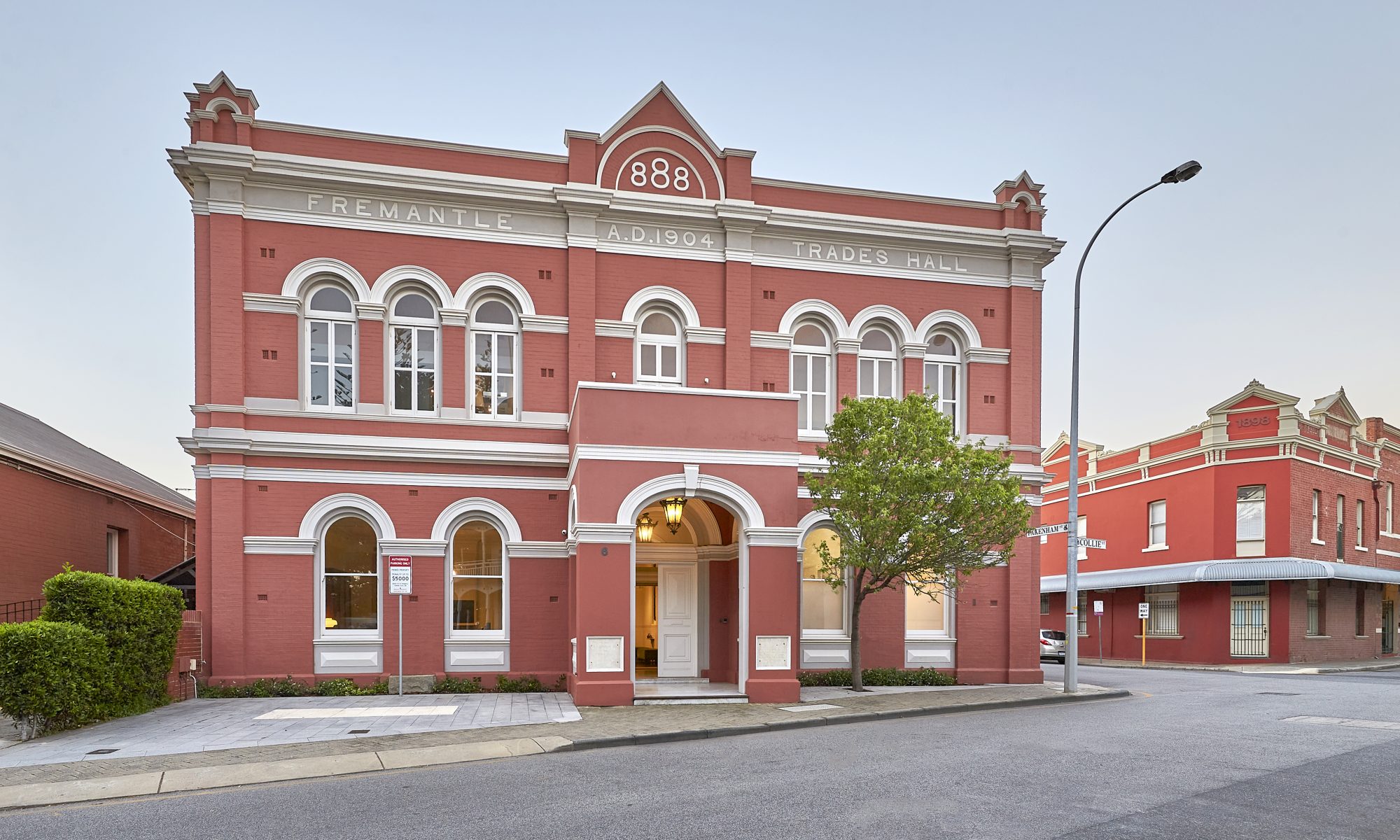
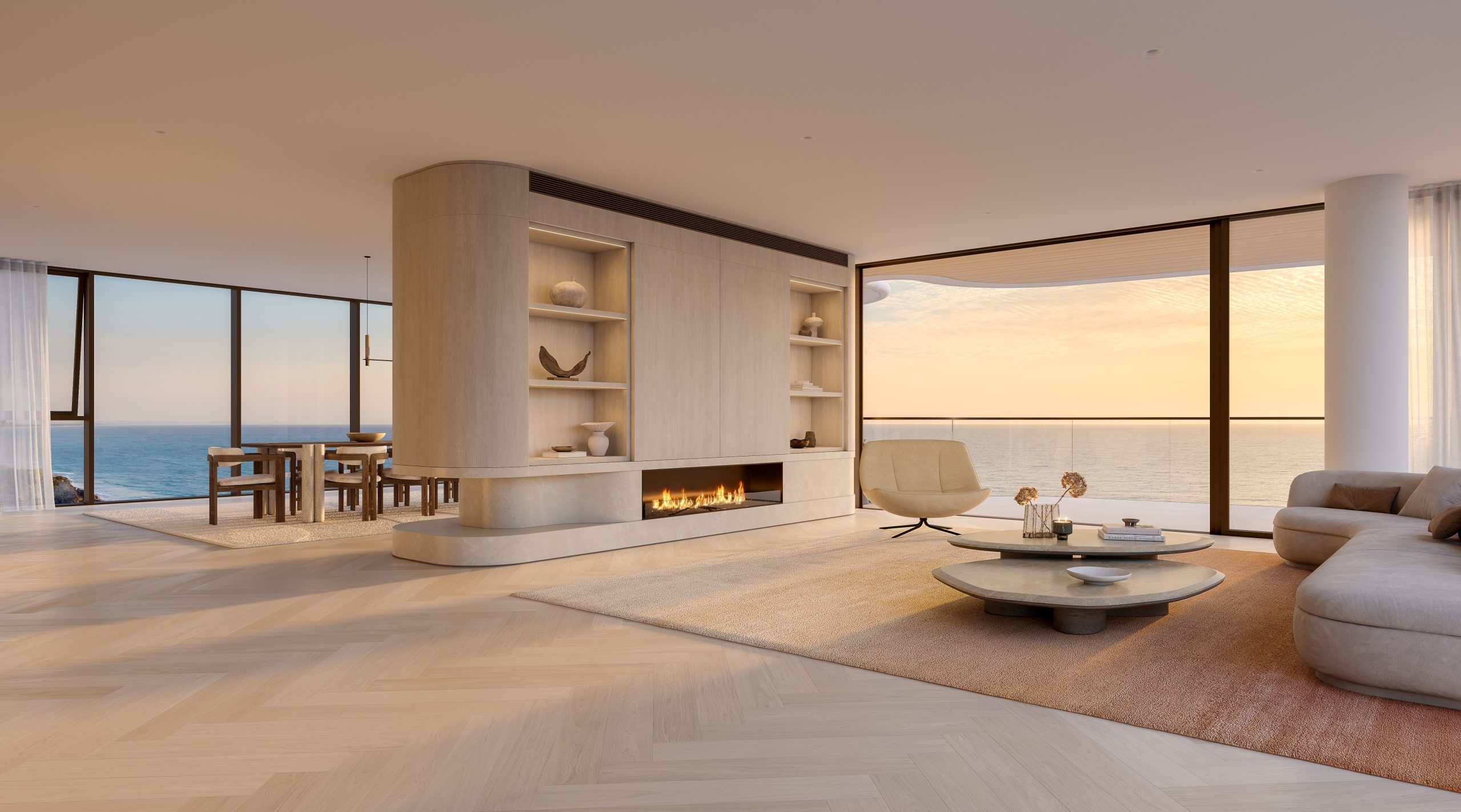
The numbers 8 8 8 gracing the facade at Fremantle’s former Trades Hall aren’t a mark of the historic building’s address, or even the year of construction.
The digits are a nod to the labour movement’s motto of eight hours work, eight hours rest and eight hours leisure. It’s a symbolic welcome to a heritage home with a big story to tell and plenty of space to work, rest and play.
Few residences capture the spirit of a city quite like 6 Collie St, in Fremantle’s vibrant West End. Since its foundation stone was laid in 1901 by Western Australia’s first Premier, Sir John Forrest, the period property has lived several colourful lives.
Originally the headquarters of the trades and labour movement, the 701 sq m site was sold for $21,000 in 1968, when it became a popular music hall. By the early 1980s, it had been turned into a landmark restaurant known as Zorba the Buddha, operated by the Rajneeshee – aka the controversial Orange People.
Then the block became Club Le Maschere, a high-society Italian restaurant and bar, made famous after the America’s Cup win, when, in December 1986, it even earned a glowing review in the LA Times. Later, the two-storey building served as a convention centre until it was transformed into one of Fremantle’s most iconic private residences in 2009.
The Collie St home last sold in 2022 for $5.5 million, but is now seeking new custodians. Michael Harries and Kat Goddard of Ray White Dethridge Groves have listed it via an expressions of interest campaign, expecting in the “high $7 millions”.
Beyond the marble-floored portico, arched niches still display the workers’ organisations that once filled the hallowed halls. The remainder of the home, however, has been transported into the 21st Century through a sophisticated interior makeover.
At ground level, there is a ballroom-sized multipurpose workspace framed by tall curved windows, intricate pressed tin ceilings, stately bookcases salvaged from the old Battye Library, a kitchenette, and a bathroom. The vast space flows out to a private courtyard with sheltered seating and a sculptural pond.
Across the hallway, the main bedroom features a fireplace and a palatial ensuite with a freestanding tub. The same floor also houses two more bedrooms, a media room, and a laundry room.
Upstairs, via a meticulously restored sweeping jarrah staircase, the primary living level is a grand open-plan lounge and dining zone with cathedral-style ceilings. The contemporary commercial-grade kitchen features a large butler’s pantry and two work islands.
Additionally, there is another bedroom with an ensuite, an internal deck with a plunge pool overlooking Esplanade Park, plus three Juliet balconies.
In total, there are four bedrooms, with the possibility of a fifth, artwork lighting systems, CCTV security and alarm, climate control, electronic blinds, and off-street parking for three cars.
Sitting across the road from the Esplanade Hotel, this rare residence is also within walking distance of Bathers Beach, museums, galleries and sought-after restaurants.
The unique heritage home at 6 Collie St, Freemantle is for sale via an expressions of interest campaign with Harries and Kat Goddard of Ray White Dethridge Groves.
In a quiet workshop in inner city Melbourne, one of the most ambitious performance cars in Australia is being built by hand.
Limited to just 10 cars a year and priced at $1.6 million, the Zeigler/Bailey Z/B 4.4 is not designed to chase mass appeal.
It is built for a very specific kind of driver. One who wants feel over flash, engineering over hype, and a car with soul as well as speed.
The Z/B 4.4 takes visual cues from the classic air-cooled Porsche era of the late 1970s and 80s, but beneath the familiar silhouette sits an entirely new platform.
Rather than restoring or lightly modifying an old chassis, the team has replaced the floor and structure with a clean-sheet, motorsport-bred tub, engineered to modern Australian safety standards and designed to work in both right- and left-hand drive.
The result is a car that looks nostalgic, but behaves like a thoroughly modern performance machine.
Power comes from a bespoke 4.4-litre air-cooled flat-six engine, designed and assembled in-house and machined from solid aluminium billet.
With 300 kilowatts of power and 500 Newton-metres of torque, its output slightly surpasses that of today’s Porsche 911 Carrera, while retaining the raw sound and character of classic air-cooled engineering.
Much of the car’s suspension architecture is inspired by Le Mans prototype racing, with push-rod actuated dampers and a multi-link rear system designed to deliver both comfort and precision.
The electronics have also been built from scratch, using a solid-state CAN-bus architecture that allows for digital instrumentation, remote diagnostics and ongoing software updates.
Every Z/B 4.4 begins life as a donor Porsche 911 from the 1975 to 1989 G-series era. From there, almost everything mechanical, structural and electronic is reimagined. More than 3,500 bespoke parts go into each finished car.
Despite the engineering depth, this is not a track-only machine.
Owners are involved in the personalisation of colour, trim and finishes, with many choosing to take part in selected phases of the build itself. Seating, ride settings, digital displays and even engine tuning can all be adjusted to suit the driver.
Behind the project are entrepreneur and Porsche collector John Zeigler Jr and automotive engineer Greg Bailey.
Together, they have created not just a car, but a global low-volume manufacturing model, using advanced CNC machining and 3D printing to produce parts that would once have been impossible to fabricate locally.
The business now employs a specialised team of designers, engineers and assemblers, and has plans to scale internationally through engines, components and licensed assembly.
For collectors, the appeal is as much about rarity as performance. Only 10 cars a year will be built for the Australian market. Six are already sold. Delivery from order is about 12 months.
In a world where hypercars increasingly blur into one another, the Z/B 4.4 stands apart as something deeply personal and proudly Australian. It is not designed to dominate social media feeds or sit under velvet ropes. It is designed to be driven.
As the creators like to say, you do not buy cool. You build it.
A new luxury riverboat set to sail the Nile from late 2026 has opened for bookings, as Egypt experiences its biggest surge in international tourism in more than a decade following the opening of the Grand Egyptian Museum.
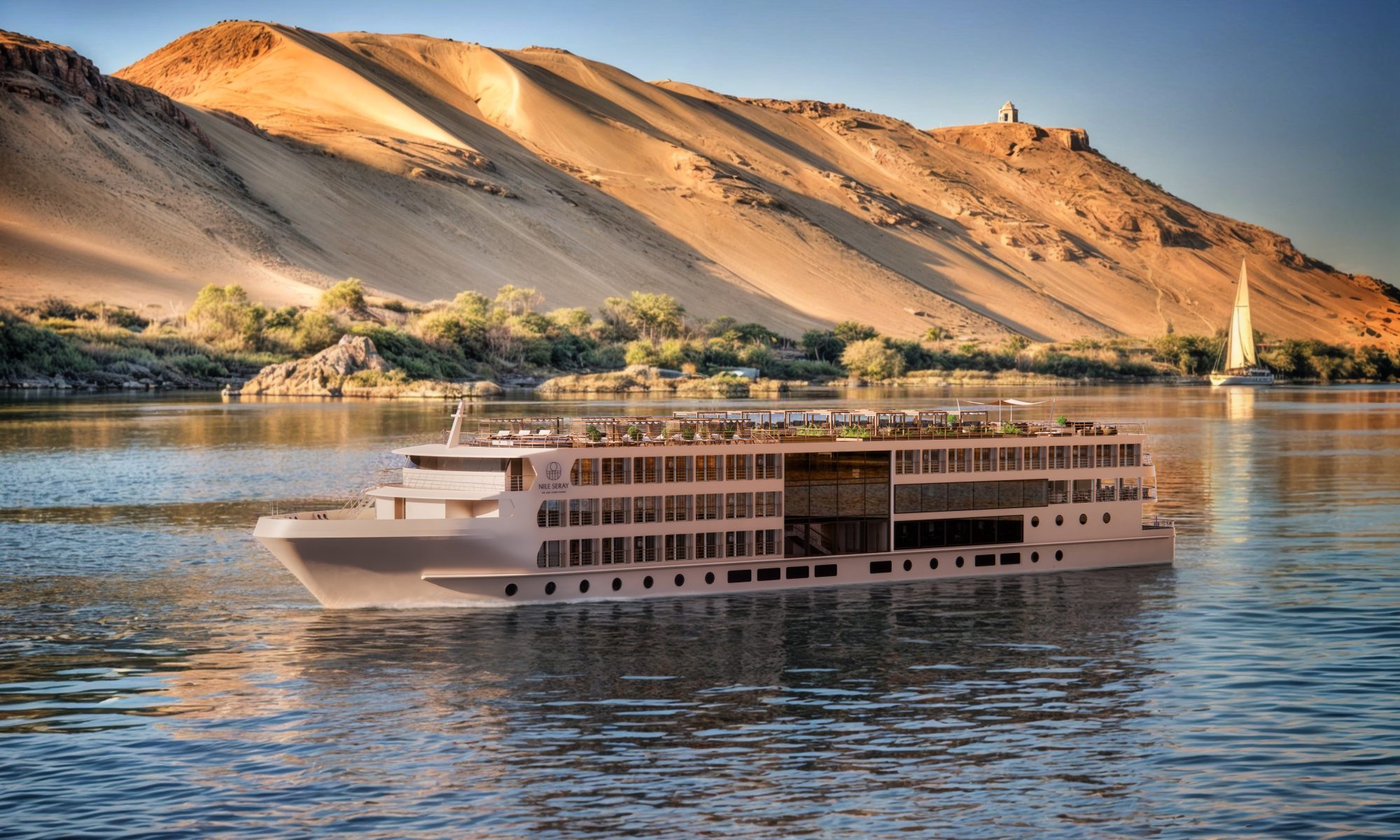
Nile Seray, the latest vessel from A&K Sanctuary, will launch in October and operate four-night voyages between Aswan and Luxor.
The boat will accommodate just 64 guests across 32 suites, placing it firmly at the premium end of the fast-expanding Nile cruising market.
The launch coincides with the opening of the Grand Egyptian Museum in November 2025, a project more than 20 years in the making.
Located near the Giza pyramids, the museum spans more than 480,000 square metres and is now the largest archaeological museum in the world.
It houses more than 100,000 artefacts, including, for the first time ever, the complete collection of King Tutankhamun’s treasures displayed together in one place.
The museum’s opening has been widely credited with transforming global interest in Egypt, driving record visitor numbers and sparking a wave of new hotel openings, aviation capacity and high-end travel investment across the country.
Photo: A&K
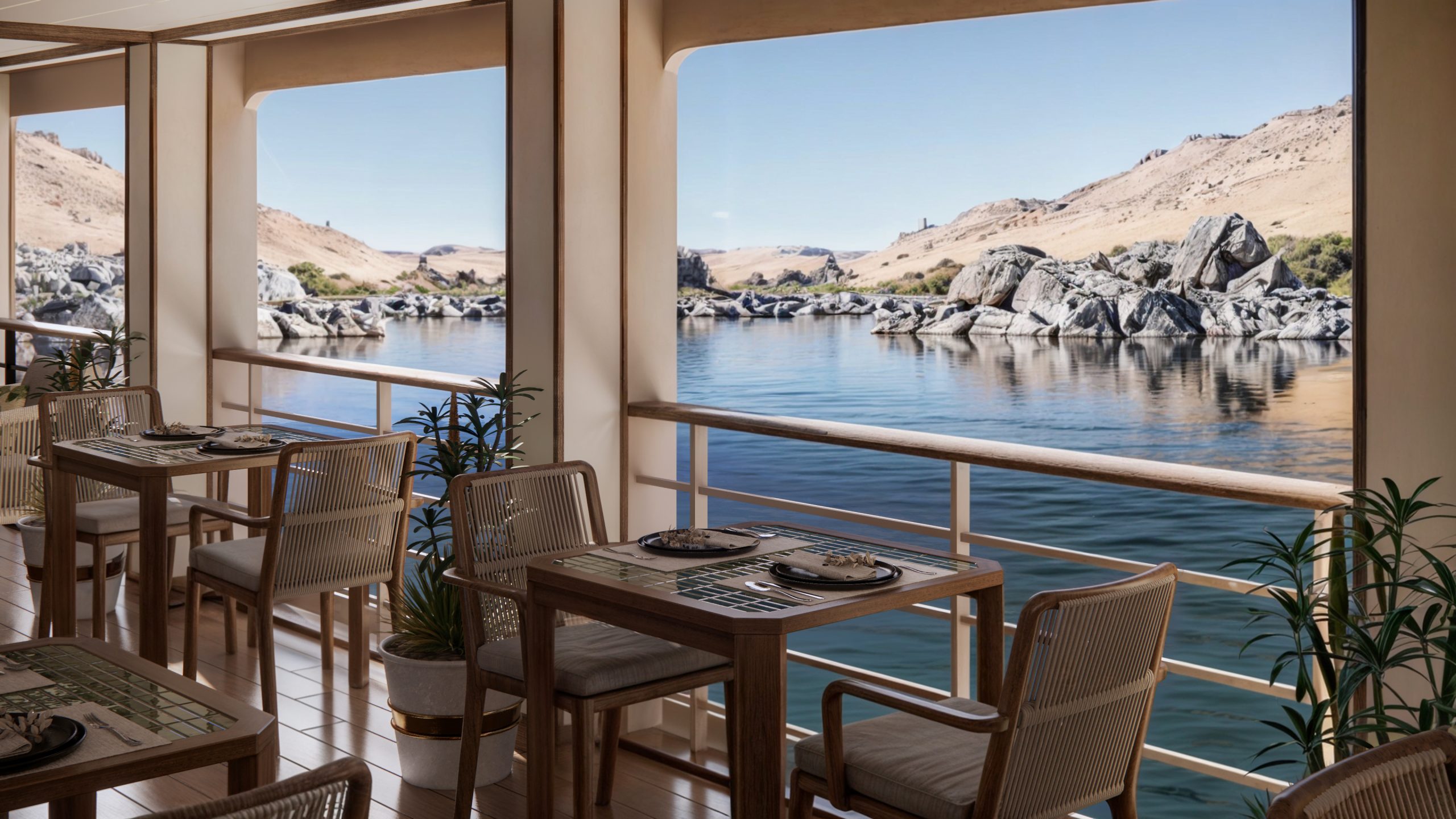
Interior renderings released this week show Nile Seray adopting a contemporary design approach that blends modern lines with heritage references.
The 32 suites feature floor-to-ceiling windows overlooking the Nile, with natural materials and colour palettes drawing from Egypt’s desert landscape.
Two onboard restaurants open onto deck spaces, while the top deck includes a swimming pool and shaded daybeds designed for daytime cruising and sunset views.
Each voyage will include guided access to key archaeological sites on the West Bank, including the tombs of Seti I and Ramses VI, along with private openings of the tombs of King Tutankhamun and Amenhotep III. Excursions are led by specialist Egyptologists, with daily touring built into the itinerary.
With only 64 guests onboard, the vessel is aimed at travellers seeking a more intimate alternative to the larger Nile cruise ships that dominate the route during peak season.
Luxury hotel availability across Egypt remains tight during busy periods, particularly following the museum’s opening.
Nile Seray becomes the fifth vessel in A&K Sanctuary’s Nile fleet, joining the Nile Adventurer, Sun Boat III, Sun Boat IV and Zein Nile Chateau. A sister ship is also scheduled for launch in 2028.
Voyages include visits to the temples of Luxor, Karnak and Aswan, felucca sailing around Elephantine Island, Egyptian cooking demonstrations and traditional entertainment. All meals, excursions and onboard activities are included.
Each sailing will also contribute to A&K Philanthropy programs in Egypt, including long-running partnerships in Luxor and Aswan focused on youth education and cardiac care.
Luxury means different things to different people. On the Lower North Shore, it often means the everyday things are well considered and exceptionally executed.
House-like proportions. An abundance of natural light. Security and privacy. Materials crafted with care.
Homes built for the way people truly live, shaped by industry expert and Lower North Shore local resident at the helm, Justin Brown, whose attention to detail is constant and uncompromising.
This is the space Abadeen has occupied for more than 25 years.
The developer has delivered premium residential, commercial and mixed-use projects across Australia, but the Lower North Shore has become the clearest expression of its philosophy.
A recent example is Cremorne Point Estate, completed in 2020.
Its craftsmanship is so enduring that the penthouse is now reselling for almost twice its original price in only four years. Smaller buildings. Real liveability. Design that retains its elegance over time.
Abadeen’s current portfolio also includes The Villas, Mosman Residences, Park Residences, Northcote Collective and the newly announced Burran Residences in Balmoral. But three completed buildings now take centre stage: The Hampden in Mosman, ENSO in Neutral Bay and KOYO in Crows Nest.
All are complete, move-in ready, and only a limited number of residences remain. At The Hampden, only one whole-floor residence remains available.
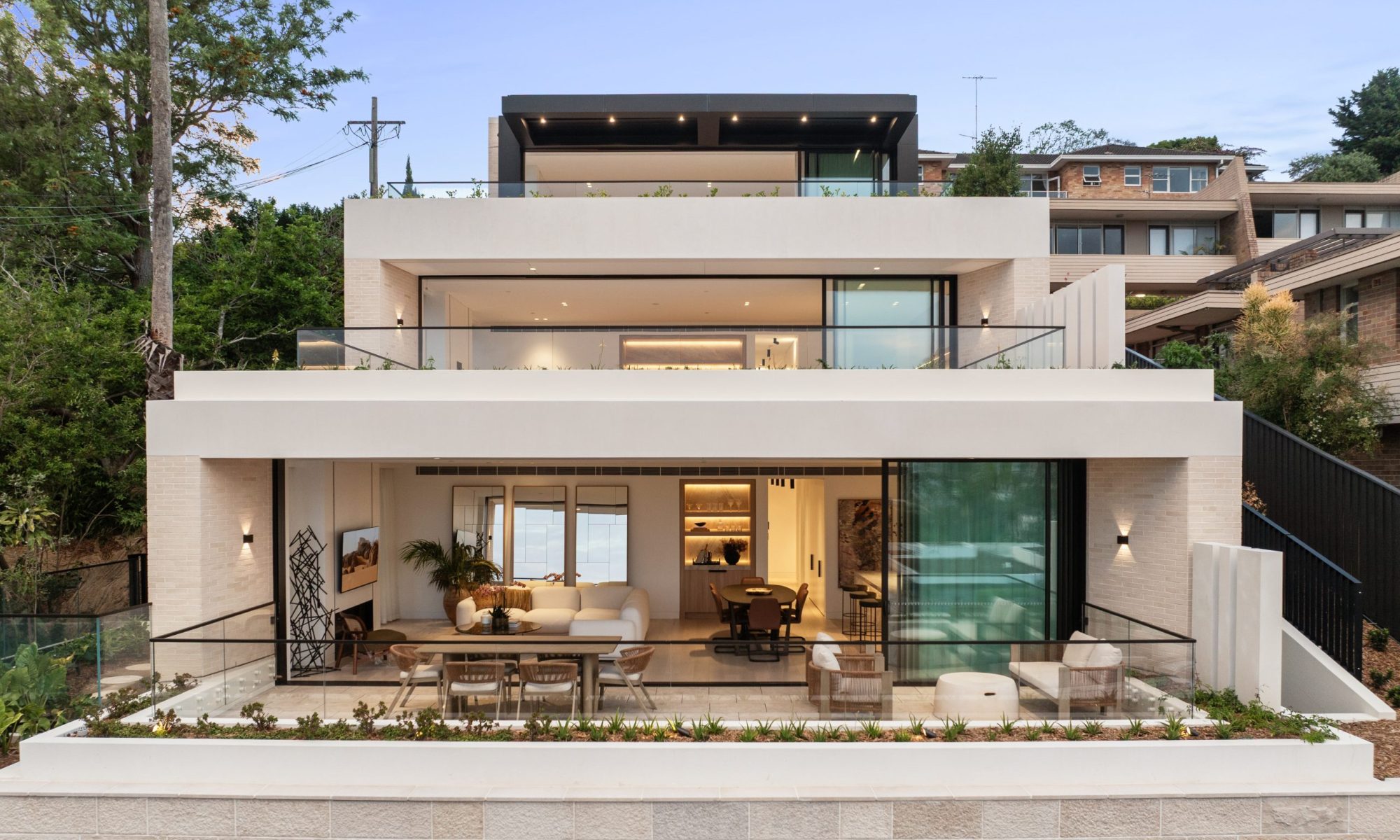
North-facing luxury living with sweeping Middle Harbour views, The Hampden.
Meticulously crafted by acclaimed Mathieson Architects and delivered by Abadeen, The Hampden offers a rare level of refinement within an exclusive collection of only three residences.
The final available home is a brand-new, whole-floor residence capturing sweeping Middle Harbour views over Chinamans and Clontarf Beaches from a prized northerly aspect. It delivers a house-like ambience with floor-to-ceiling glass that draws in natural light, paired with exquisite finishes in natural stone and warm timber.
Expansive open plan living and dining areas are anchored by a premium fireplace and flow out to a generous north-facing entertainers’ terrace overlooking boat-studded waters. The high-spec kitchen includes a full butler’s pantry, WOLF appliances, an integrated Sub-Zero fridge and freezer, a wine fridge and a Taj Mahal Quartzite island.
Residences include:
Three bedrooms positioned away from the living areas and designed as peaceful retreats. Each has built-in wardrobes, while the master suite features a dressing room, a walk-in wardrobe and a deluxe ensuite with stone finishes and a rainwater shower. There is a second stone bathroom, a powder room and a large laundry adjoining the butler’s pantry.
Ducted air-conditioning, engineered oak floors, premium wool carpet, extensive storage and lift-to-foyer access from secure basement double parking.
Perfectly positioned, The Hampden is a short walk to the water’s edge at Rosherville Reserve, Balmoral and Chinamans Beach, and close to Mosman Village.
Best suited for buyers seeking a high-end, low-maintenance luxury with elevated craftsmanship and effortless indoor-outdoor living.
ENSO’s serene open-plan living with warm materials and curated finishes.
With only nine residences, ENSO is a boutique collection where Koichi Takada’s architecture focuses on calm, contemporary living.
Natural stone, timber and soft curves create a sense of warmth, while generous glazing and landscaped outlooks bring light and greenery into the heart of each home. Rooms are designed for real daily use, with integrated joinery, considered storage and floor plans that prioritise ease and comfort. The result is a series of homes that feel composed, tactile and effortless to live in every day.
Residences include:
Three-bedroom residences and a spectacular, whole-floor, four-bedroom penthouse are yet to be released to the market.
Ground floor garden residences that extend living outdoors with private landscaped courtyards or balconies, while elevated homes enjoy quiet village outlooks.
Gourmet stone kitchens with premium V-Zug, Fisher & Paykel and Liebherr integrated appliances and abundant storage.
Restful bedrooms appointed with refined finishes and thoughtful proportions.
Three-bedroom layouts with generous open-plan living.
Contemporary homes with secure parking, storage and lift access.
KOYO’s sculptural, light-filled living framed by lush, private landscaping.
Designed by Koichi Takada, KOYO is a boutique collection of 27 residences shaped by natural textures, soft curves and a refined sense of luxury.
Its low-rise form sits within a leafy cul-de-sac, offering privacy only moments from Crows Nest village and the new Victoria Cross Metro station.
Inside, every space is crafted for daily ease. Timber, stone and sculptural details create a warm, tactile palette, while full-height glazing draws light into the heart of each home.
Integrated joinery, intuitive circulation and thoughtful storage keep rooms open, calm and effortless to live in.
KOYO reflects Abadeen’s approach to modern living: refined, confident and beautifully functional. KOYO is modern, confident and created for daily life without unnecessary embellishment.
Residences include:
A three-bedroom whole-floor penthouse with dual terraces, panoramic views, private lift access and sculptural interior detailing
Three-bedroom apartments with generous indoor-outdoor layouts and private balconies or landscaped courtyards
A garden residence with secure direct entry and a house-like feel
An upper-level home with district views and sun-filled living spaces
Designer kitchens with V Zug appliances, premium stone and integrated Liebherr refrigeration
Sculptural interiors with timber accents, curved joinery, study spaces and in-built bars
Refined bedrooms including master suites with walk-through wardrobes and well-appointed en-suites
Elegant bathrooms with stone vanities, brushed platinum tapware and ambient lighting
Fireplaces in selected residences for warm, inviting living spaces
Lift access, secure parking, storage cages, ducted air conditioning and video intercom
A landscaped rooftop terrace with garden seating and a BBQ area
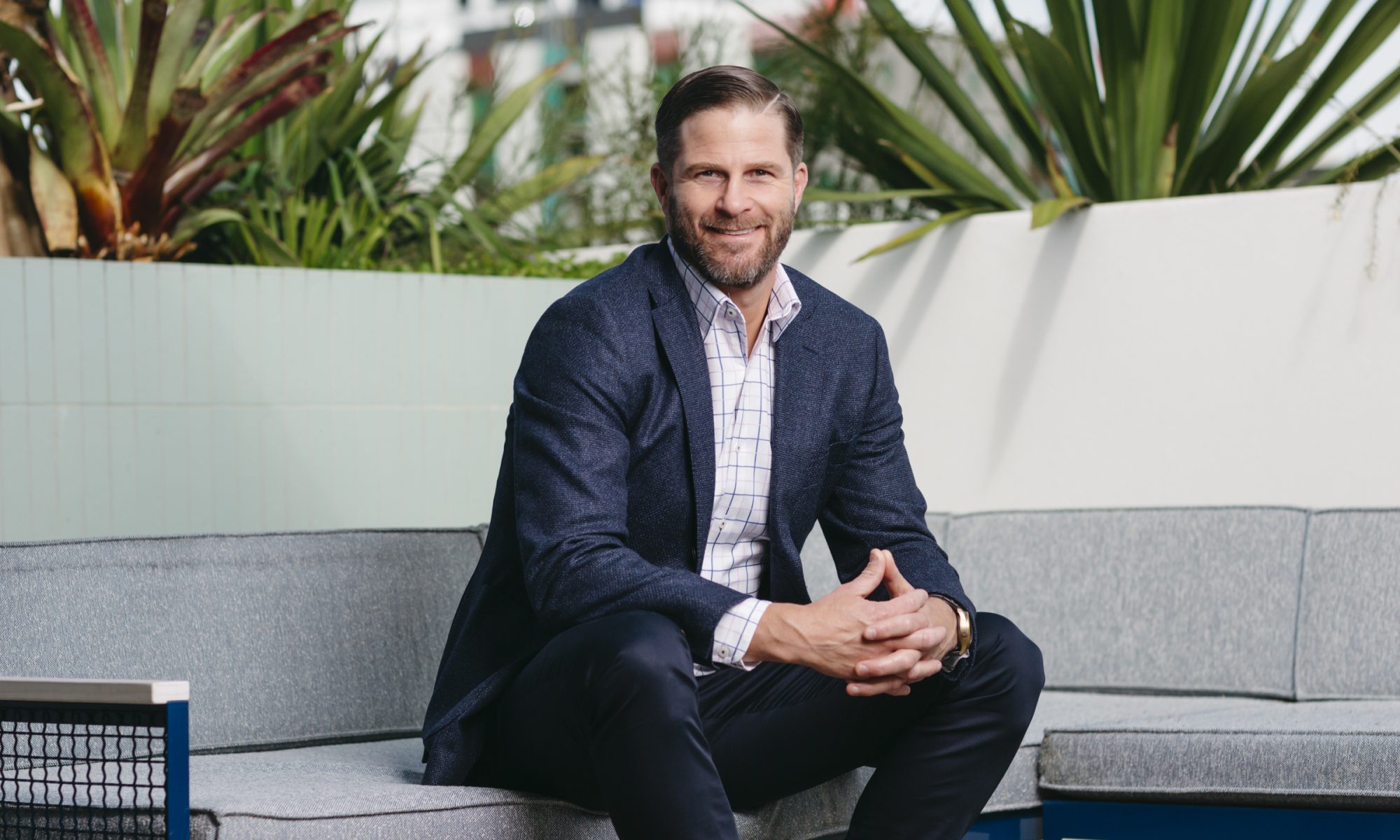
Abadeen’s philosophy is shaped by Executive Chairman & Founder Justin Brown, whose three decades in the industry have defined a distinct approach to residential development on the Lower North Shore and beyond.
Justin believes luxury should feel effortless. A home should work beautifully every day, with planning that makes sense, materials that age gracefully and detailing that supports calm, comfortable living long after the first inspection.
This philosophy is embedded early in the design process. Acoustic comfort, natural shading, solar orientation and circulation are resolved from the outset.
Landscapes are designed to welcome residents rather than simply frame buildings. Interiors prioritise clarity and ease, with joinery, storage and spatial proportions refined to deliver homes that feel composed, tactile and intuitive to live in.
Justin’s values-led approach unifies Abadeen’s Lower North Shore projects. Each reflects the same commitment to certainty, longevity and quiet architectural excellence. These are homes built to be lived in, not performed, shaped around the daily rituals, warmth and comfort that define enduring residential design.
The Lower North Shore Advantage
This part of Sydney reflects Abadeen’s values. Established neighbourhoods. Walkable villages. Tree-lined streets. Natural light and natural rhythm. It is a quieter style of luxury that holds its value and relevance over time.
Abadeen is a leading Australian property developer with premium residential and mixed-use projects across NSW, VIC, QLD and WA. Limited residences remain at The Hampden in Mosman, ENSO in Neutral Bay and KOYO in Crows Nest. Private appointments and viewings are now available. Call Jay Carter on 0417 248 117.
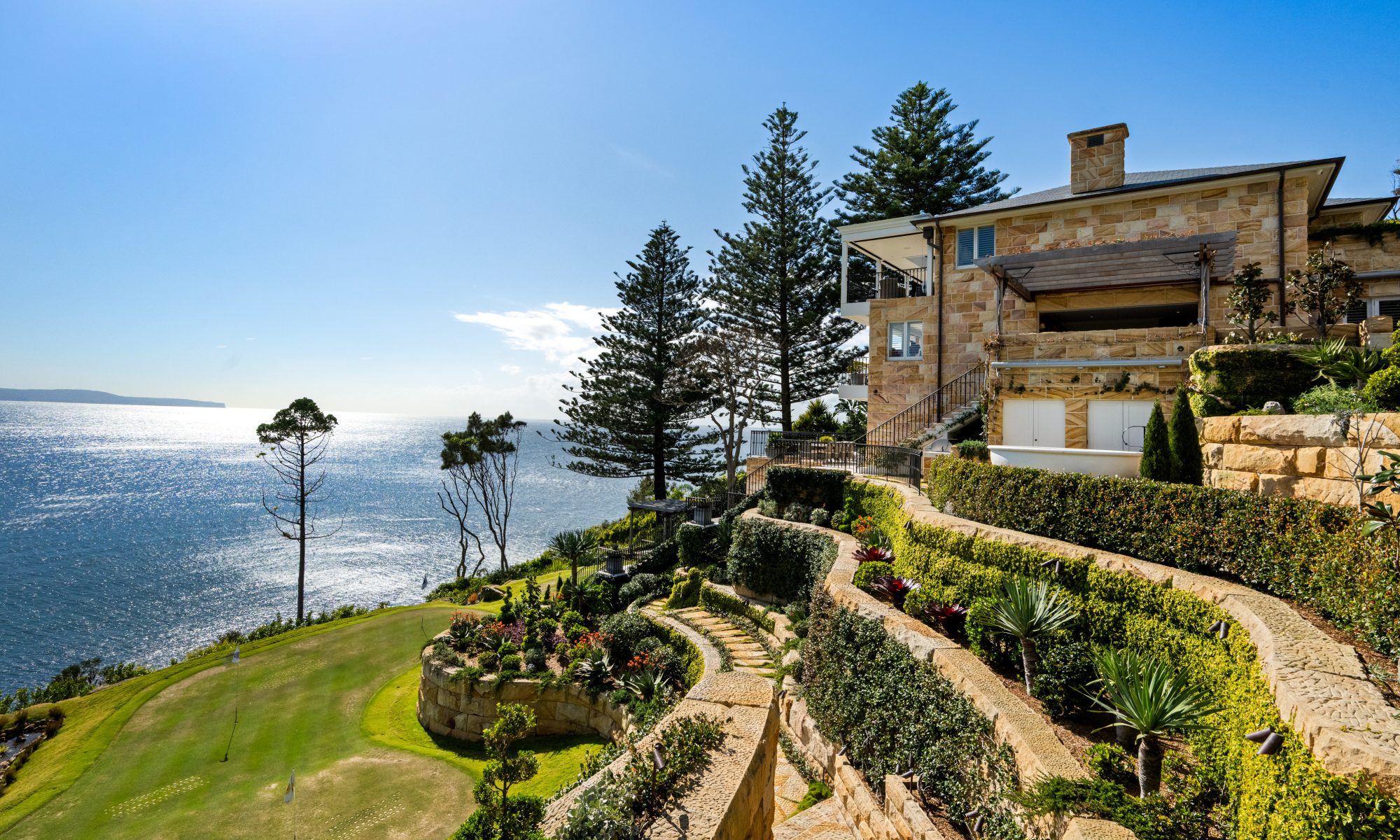
It’s only fitting that the CEO and co-owner of menswear giant, Lowes, has fabricated an extra-large family compound overlooking one of Australia’s most exclusive beaches.
Linda Penn and her dentist husband, David, have just listed their clifftop villa, Lodge Dauphin, at Whale Beach on Sydney’s northern beaches.
Although no public price guide has been announced by the father-and-son agent duo, David Edwards and BJ of LJ Hooker Palm Beach, a source places expectations at “about” $30 million.
More than just a glamorous trophy home, Lodge Dauphin is a self-contained resort, complete with a private golf course, sauna, spa, and infinity pool.
The Penns bought the mansion in 2012 for $3.075 million, according to title records, but took three years to craft a show-stopping estate with the help of an expert team of award-winning designers.
Acclaimed architect Michael Suttor crafted the sandstone main residence, while designer Deanne Rooz curated its sophisticated interiors. Outdoors, landscapers Richard Unsworth and Paul Bangay created a waterside wonderland with terraced fairways on the 2150 sq. metre site.
A private playground with sweeping ocean views across Whale Beach up to the Central Coast, the expansive Whale Beach property cascades down the clifftop, surrounded by towering pine and gum trees as well as gardens bursting with native flora, manicured hedges, and immersive garden zones.
The five-bedroom, five-bathroom home was built from more than 1000 tonnes of stone, and features multiple living spaces over three primary levels. Rich natural materials are showcased throughout the property, with stone, solid oak, marble, brass, and European Oak antique basket-weave flooring all elevating the luxury interiors.
Beyond a central entry court, the everyday spaces include a palatial lounge and dining area with high cathedral ceilings, a central marble fireplace, and a vast balcony with enviable views.
This same level houses a state-of-the-art kitchen with an integrated Sub-Zero fridge and freezer, a Wolf oven, a gas stove, and a separate drinks fridge.
The upper level features a separate lounge area and four bedrooms, each with a private ensuite and built-ins. In the primary bedroom, there is an opulent open ensuite with a handmade freestanding bathtub, twin vanities, a powder room and a walk-in wardrobe.
Three of the four bedrooms also have personal balconies.
A self-contained guest bedroom with a kitchenette on the entry level is an ideal space for visitors or live-in staff.
Resort-style amenities on the lower floor include a large gym or games area with a wet bar, a sauna, a wine cellar, and a vast terrace spilling out to the heated infinity pool, “egg” spa, and poolside lounge room.
Taking resort-style living to another level, the landscaped grounds also feature more than 50 smart-zoned areas, 200 LED copper garden lights, and A4 Bent Grass greens on the personal golf course.
The high-tech compound has the latest smart home integration, including lighting, seven-zone air conditioning, Vintec air filtration, 30 security cameras, Sonos sound, and irrigation.
Additional features of the property include three water tanks, Wi-Fi throughout the grounds, an elevator to all levels, underfloor heating, three powder rooms, and a double-lockup garage with a turntable.
If you’re hunting for a Christmas present that won’t end up re-gifted by February, LARK Distillery has delivered something genuinely special.
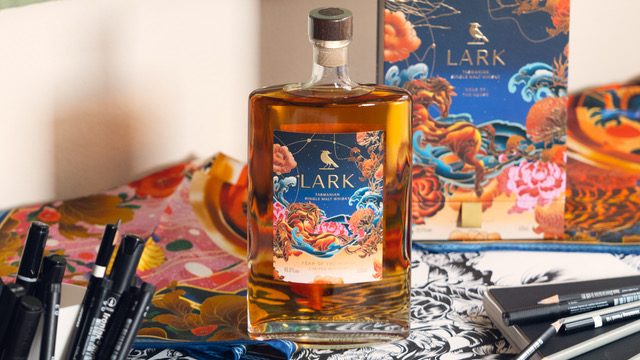
The Tasmanian whisky house has unveiled its 2026 Limited Edition Lunar New Year release, the Fire Horse Edition, a striking single malt that blends craftsmanship, culture and collectability.
Inspired by the Year of the Fire Horse, the release is as much an artistic object as it is a whisky.
Sydney artist Chris Yee has cloaked the bottle in a luminous wrap of symbolism and texture. His design fuses fire, wood and water, with Cradle Mountain and celestial motifs anchoring the scene.
Waves of movement and paths of connection run through the artwork, reflecting the journeys, traditions and family reunions that define the season.
Yee describes the concept in the release as an homage to the natural elements that shape both Asian and Australian cultures, saying he wanted to highlight how “fire, wood and water” sit at the heart of the distilling process and the stories we share.
Inside the bottle, the whisky is just as layered.
Matured in first-fill Sherry and Port casks, it opens with soft pear blossom and honeyed tea notes before moving through orange-spiced cake, apricot compote and treacle sponge pudding.
The finish lingers with hazelnut praline, glazed fruits and a whisper of highland peat smoke. It’s indulgent without being heavy; festive without being overly sweet.
LARK Master Distiller Chris Thomson captures the sentiment neatly in the release, saying the Fire Horse Edition “is about more than flavour, it’s about the feeling of coming together.”
The whisky holds the celebration in the glass, while the artwork reflects the journey home.
For those planning Lunar New Year drinks, LARK also suggests a few seasonal serves, including a Sencha Blossom Old Fashioned and a Toasted Fortune Highball with toasted sesame cordial.
With only a limited number available and strong gifting appeal, expect this one to move quickly.
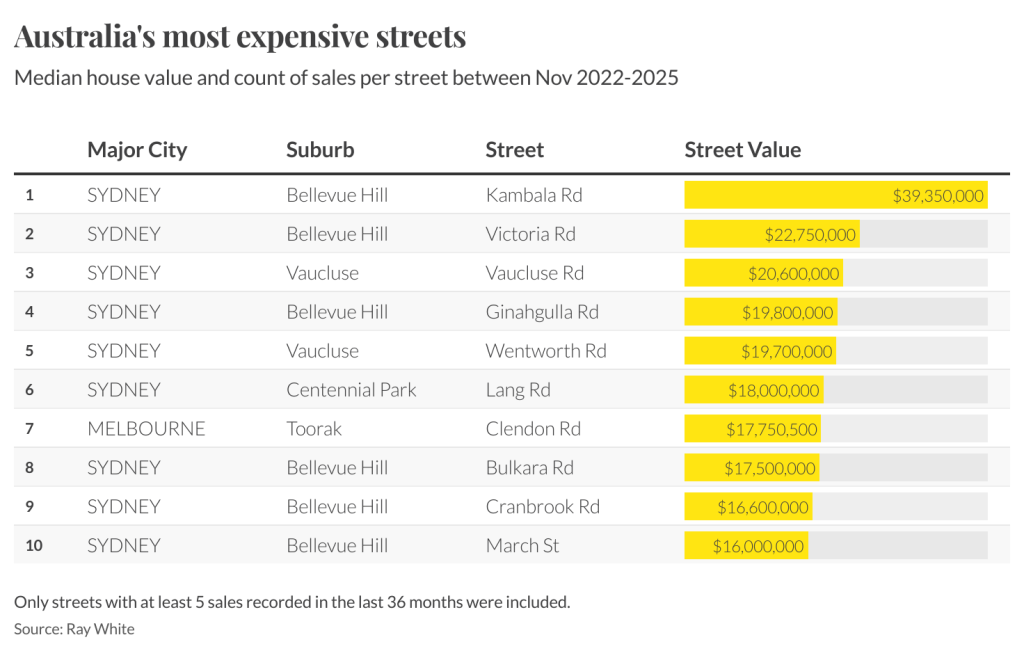
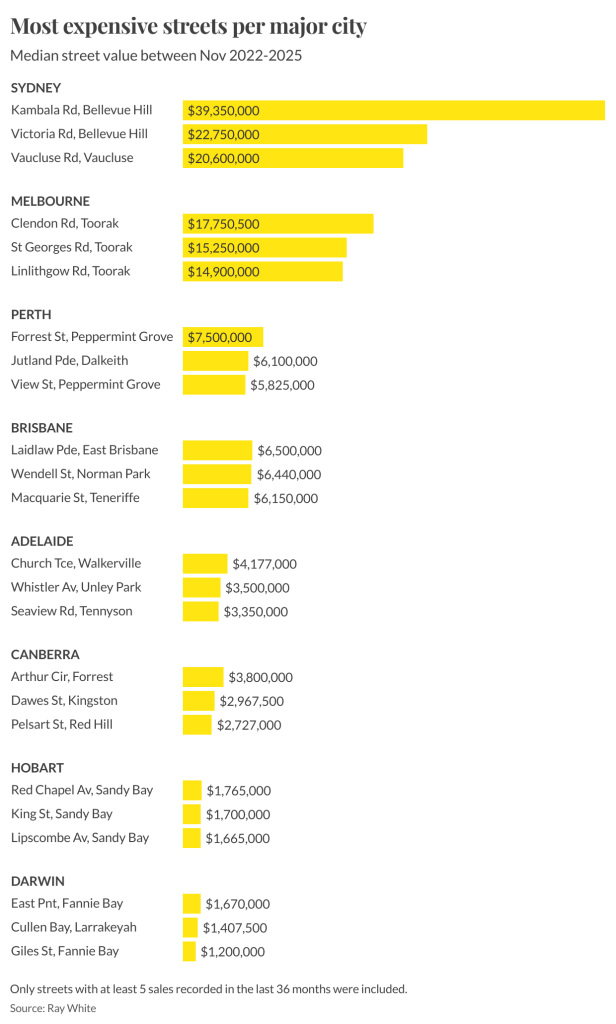
Sydney has cemented its status as the nation’s luxury capital, with Kambala Road in Bellevue Hill being Australia’s most expensive street this year, posting a median house price of $39.35 million.
And, according to Ray White senior data analyst Atom Go Tian, last year’s leader, Wolseley Road, was excluded from this year’s rankings due to limited sales.
“Wolseley Road recorded only three sales this year and was therefore excluded from the rankings, though its $51.5 million median would have otherwise retained the top position,” he says.
Bellevue Hill continues its dominance, accounting for six of the nation’s top 10 streets. Tian says the suburb’s appeal lies in its rare blend of location and lifestyle advantages.
“The suburb’s enduring appeal lies in its rare combination of proximity to both the CBD and multiple beaches, harbour views, and large estate-sized blocks on tree-lined streets.”
Vaucluse remains a powerhouse in its own right. “Vaucluse extends this harbourside premium with even more direct beach access and panoramic water views,” he says.
The gulf between Sydney and the rest of the country remains striking.
According to Tian, “Sydney’s most expensive streets are more than five times more expensive than the leading streets in Perth and Brisbane, and more than 10 times the premium streets in Canberra and Adelaide.”
He attributes this to Sydney’s economic role and geographic constraints, describing it as “Australia’s financial capital and its most internationally connected city.”
Beyond Sydney, each capital city has developed its own luxury hierarchy. Tian highlights Melbourne’s stronghold in Toorak, noting that “Melbourne’s luxury market remains centred around Toorak, led by Clendon Road, St Georges Road and Linlithgow Road.”
Brisbane’s prestige pockets are more dispersed: “Brisbane’s luxury real estate shows a more diverse pattern,” he says, led by Laidlaw Parade at $6.5 million. Perth’s top-end market remains anchored in the Peppermint Grove–Dalkeith corridor, with Forrest Street at $7.5 million.
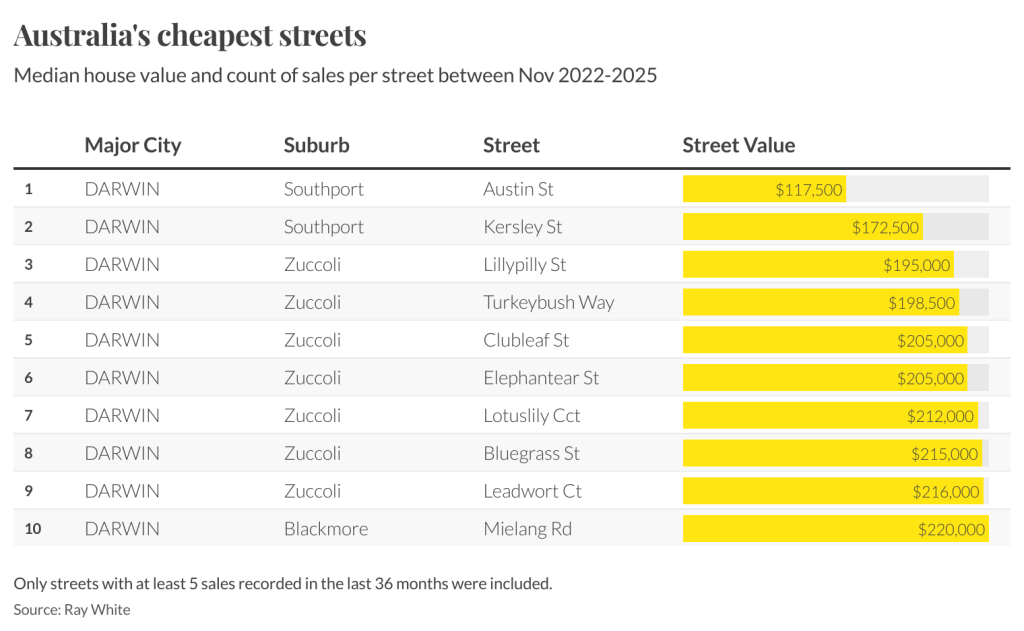
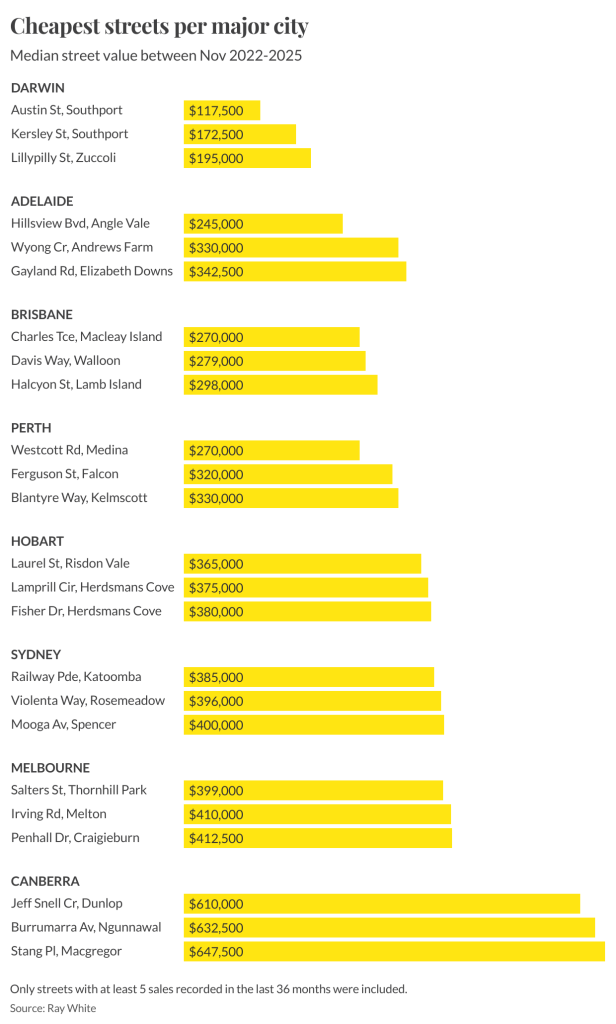
He also points to the stark contrast at the lower end of the spectrum. “Darwin presents a mirror image, hosting all 10 of the country’s cheapest streets,” Tian says. Austin Street in Southport sits at just $117,500.
The national spread reaches its extreme in New South Wales. “Sydney emerges as the most polarised market, spanning an extraordinary range from Railway Parade in Katoomba at $385,000 to Kambala Road’s $39.35 million,” Tian says.
Methodology: Tian’s analysis examines residential house sales between November 2022 and November 2025, with only streets recording at least five sales included. Several streets with higher medians, including Black Street, Queens Avenue and Clairvaux Road in Vaucluse, were excluded because they did not meet the sales threshold.
As companies rethink how their offices should function in an age of rapid tech shifts, Geyer Valmont is spending its time reworking the buildings we already have.
CEO Marcel Zalloua says most of the structures dominating our skylines will still be here in 2050, but the way we use them will look nothing like today.
In this Q and A, he breaks down how AI, data and smarter design are set to transform the workplace.
Q: How are businesses futureproofing offices and buildings for 2050?
A: When we think about the future of the commercial building environment, it’s interesting to note that in 2050, most of the buildings making up our current horizon will still be standing, however what’s inside them will be completely transformed.
When we talk about future proofing commercial office spaces, our job really is to reshape the existing built world so that it continues to be fit for purpose, and incorporates infrastructure and design that enables our future state.
At Geyer Valmont, our remit is primarily to reimagine and redesign current spaces to be smarter, more sustainable and more efficient.
Q: How is technology influencing the way companies design and manage their office spaces, and how do you see this evolving in the next few years?
A: Offices are growing increasingly complex, incorporating new technologies, spaces and tools which continue to challenge traditional office design.
At the same time, technology has dramatically changed how we can enhance increasingly available data, to leverage many years of design intelligence, streamline processes and optimise performance.
This abundance of data has unlocked the ability to utilise new forms of technology that help companies visualise, simulate and redesign spaces with greater agility.
At Geyer Valmont, we’re using these technology advances to create new tools that can simulate office layouts, like our recently launched GVi tool.
GVi is an AI-powered ‘digital twin’ platform that can test design changes in real-time and forecast how spaces will perform before clients have to commit committing to physical adjustments, turning risk into evidence.
As Geyer Valmont is a fully integrated design and construction firm, GVi was developed as a critical tool to streamline the complexity of this process into one platform, and one simple, easy to use interface.
Our clients now only need to focus on their needs and the design outcome, as the delivery programme and costs are automatically calculated through the tool.
In the coming years, we expect AI to continue to play a deeper role in office design, taking the rapidly evolving needs of the business into consideration and helping companies accelerate the design process, with cost savings and efficiencies along the way.
Q: In 2026 and beyond, how do you see client expectations from their physical workplaces evolving?
The physical workplace is no longer just a place to work and meet, it can actively shape culture and performance through hyper-personalisation driven through AI tools and data.
As AI continues evolving, physical workplaces will too. AI will be used as a predictive tool to adapt to human needs in real time, using real data – lowering risk and recommending improvements.
This has the dual use of tailoring environments to individual preferences, for example lighting and temperature, as well as driving efficiencies for the business.
We believe that AI is a tool that should be embraced to streamline processes, as it enables us to spend more time with our clients, getting to know their businesses, so we can ensure we get under the hood of their operations to deliver workplace solutions that are right for now and for the future.
Australia’s top-end property scene has shifted gear. Gone are the days when luxury meant marble overload and imported everything. The new elite buyer is hunting something quieter; homes that feel grounded, crafted and enduring.
Few understand that evolution better than Brook Monahan, Founder and Managing Director of Mosaic Property Group, whose projects span the Gold Coast, Brisbane and the Sunshine Coast.
Monahan says resilience in Queensland’s prestige market comes from authenticity: design integrity, lifestyle appeal and a deep sense of place.
Here, he shares his insights on the state’s most resilient luxury markets, the evolution of Australian design, and the quiet details that separate good from great.
Q: In Queensland, prime buyer demand has shifted between beach, river and the inner-city. Where is the most resilient pocket for top-end stock, and why?
Resilience comes from substance — locations where natural beauty, amenity and scarcity combine with established demand from owner-occupiers. In Queensland, that strength is most evident across the beachfront Gold Coast, Brisbane’s inner riverside suburbs and on the Sunshine Coast its river and oceanfront corridors.
On the Gold Coast, the beachfront market has matured. There’s an extraordinary depth of demand for homes that can’t be replicated; true beachfront positions with scale, architectural integrity, and enduring appeal. Scarcity of developable beachfront land means that a premium product, well-executed, holds its value through every cycle.
In Brisbane, the river and city-view corridors continue to outperform. These are tightly held, highly liveable suburbs that balance connection and calm: walkable to local amenity and major precincts, yet private and residential in feel. Infrastructure investment and the city’s ongoing evolution ahead of 2032 are only strengthening that desirability.
The Sunshine Coast has also matured into a sophisticated prestige market, particularly along the Maroochydore River, Cotton Tree and oceanfront corridor.
The mix of natural beauty, limited developable waterfront land, and the emergence of a vibrant new CBD has created genuine long-term demand. Buyers are drawn to its balance of connection and calm; the ability to live on the water’s edge with access to strong local amenity and year-round liveability.
Ultimately, these are end-user-driven markets, not speculative ones. They attract people buying for lifestyle, and that’s what underpins long-term stability and growth.
Q: Define Australian luxury in 2025. How does that identity show up in Mosaic’s latest projects?
Australian luxury has matured. It’s less about statement and more about detail and quality, a quiet confidence built on space, natural light, clever design, craftsmanship, and connection to place. The new benchmark isn’t excess; it’s effortlessness. It’s how a home makes you feel every day – calm, confident, comfortable, and intuitively functional.
True luxury in Australia is deeply contextual. Our climate, our landscape, and our way of life demand homes that breathe, that blur the boundary between indoors and outdoors, and that are as enduring as they are beautiful. It’s architecture that sits lightly in its environment but delivers a richness of experience through proportion, materiality, and detail.
At Mosaic, that philosophy defines everything we do. Our approach to design is grounded in longevity, homes crafted for permanence, not fashion or social media likes.
Because we design, build and manage our buildings end-to-end, we see how they perform over time, and that accountability sharpens our focus on what genuinely matters: enduring materials, intelligent layouts, acoustic privacy, and a sense of calm that comes from considered design.
You see that in every Mosaic address, = luxury residences that feel inherently Australian, refined yet relaxed, built for real living and for the long term. That’s the future of Australian luxury: less show, more soul.
Q: What quiet inclusions deliver the biggest lift in comfort, privacy and resale?
The features that have the greatest impact aren’t always the ones people notice first;they’re the ones you feel. Acoustic performance, for example, makes an enormous difference to day-to-day comfort. The ability to live in peace, to hear nothing but what you choose, is one of the greatest luxuries there is.
Proportion and planning are just as powerful. Well-considered layouts that separate living and sleeping zones, generous storage, and logical flow elevate liveability in a way that’s immediately intuitive. When a home simply “works”, buyers sense it.
Then there’s climate control through passive design, orientation, advanced glazing systems, and cross-ventilation that make a space comfortable year-round without overreliance on mechanical systems. It’s a smarter, more sustainable form of comfort that Australians instinctively value.
These are the quiet qualities that underpin both enjoyment and long-term value. They’re not about embellishment; they’re about thoughtfulness. A well-designed home ages gracefully and that’s what ultimately protects resale.
Q: Materials are having a truth moment. Which finishes or systems have proven their worth over ten years of Queensland sun and salt?
You can’t outlast Queensland’s climate without respect for it. The combination of heat, humidity and salt is unforgiving. It exposes every weakness in design and material choice. Over time, we’ve learned that honest, well-detailed materials always win.
We continue to rely on solid masonry construction, high-performance glazing systems, and powder-coated aluminium for their resilience and low maintenance. Natural stone, when correctly specified and detailed, weathers beautifully.
But the real difference isn’t the material itself, it’s the way it’s resolved. Longevity lives in the detailing: fixings, joints, drainage and protection from the elements.
Because we design, build and then manage our projects for up to 25 years post completion, we see how every decision performs over time.
The customer feedback loop has also shaped a culture of accountability and refinement. We’re constantly learning from what we’ve delivered. Ten years on, the buildings that still look and function as they did on day one are the ones that were designed with restraint, built with care, and finished with authenticity.
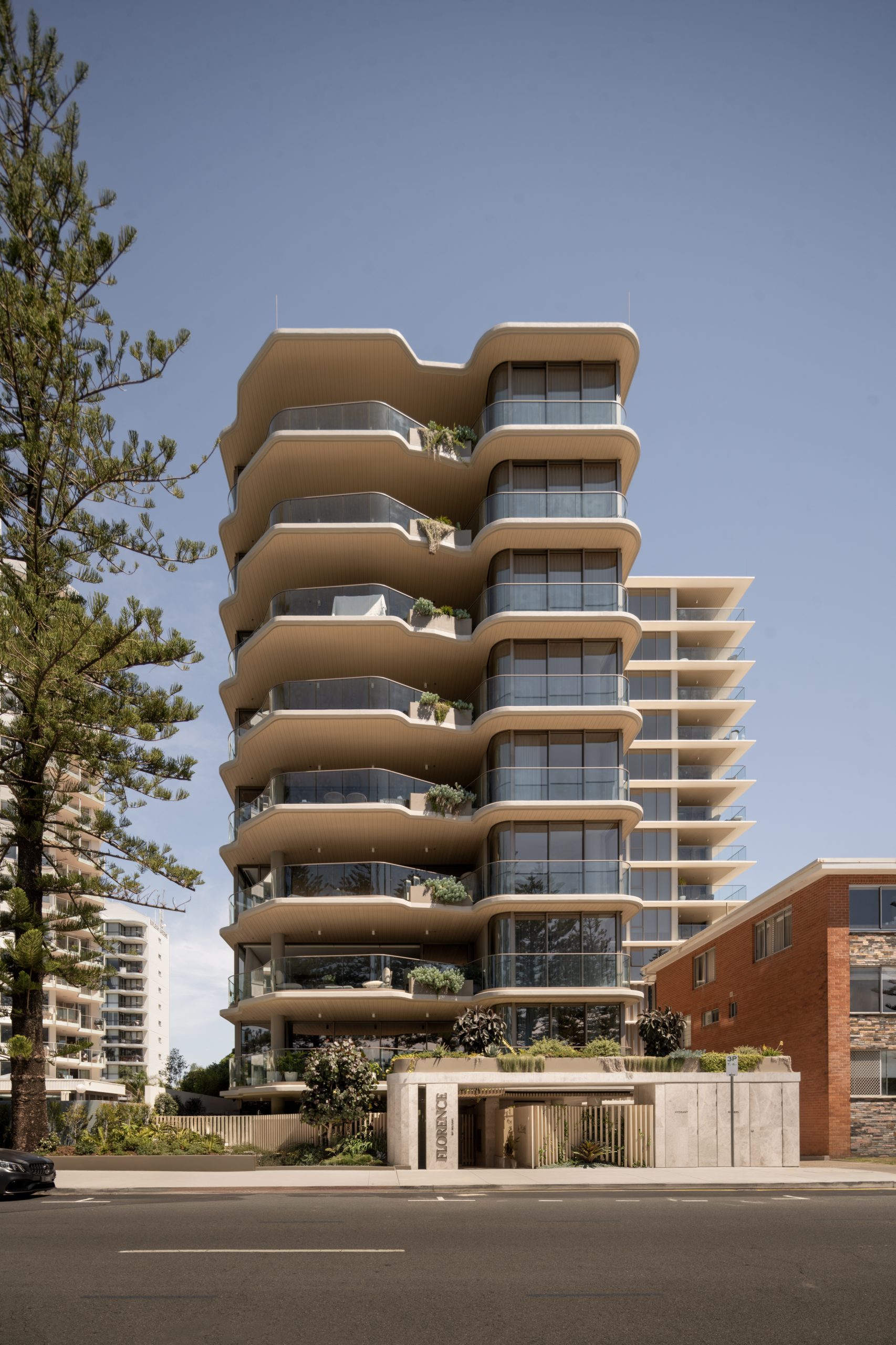
Moasic’s stunning Florence project, in Burleigh Heads.
Q: What do you think will be the impact of Brisbane 2032 on the property market?
The 2032 Games will be a defining moment for Brisbane, not just economically, but culturally. It will fast-track infrastructure, elevate global awareness, and build confidence in the city’s long-term potential. But its real legacy won’t be about short-term growth; it will be about maturity.
Brisbane is already evolving from a big country town into a genuinely international city. The Olympics will accelerate that transformation, attracting talent, capital, and global attention, but the lasting benefit will come from the way the city learns to carry itself.
We’ll see more design excellence, stronger placemaking, and a shift toward higher expectations in quality and delivery.
For developers like Mosaic, that’s an exciting challenge. It raises the bar, which is exactly what the city needs. But resilience won’t come from hype; it will come from substance – well-located, enduring homes that respond to Brisbane’s climate, character, and way of life.
That’s where we’re focused: delivering projects that will stand the test of time long after 2032.
Q: What is the strongest source of buyer demand you expect over the next two years, and how are you designing apartments to match it?
The strongest demand continues to come from downsizers and rightsizers, people at a stage in life where quality, comfort and connection matter most. They’re looking to simplify without compromise; to exchange maintenance for mastery, a home that offers the same sense of space, privacy and permanence they’ve always valued, but in a location that genuinely enhances daily life.
For this buyer, location is everything. They want to stay close to the places and communities they love, the beach, the river, the village, but in a home that delivers ease rather than upkeep.
Walkability, outlook and proximity to amenity have become defining qualities of luxury. The most sought-after sites are those with inherent, lasting value, places that can’t simply be replicated elsewhere.
We’re also seeing continued growth from professionals and families who now view apartment living as a permanent choice rather than a stepping stone.
They expect the design sophistication and amenity of a freestanding home, paired with the connection, convenience and security of well-considered, professionally managed communities.
We invest heavily in research and customer feedback to deeply understand how people live and what they value most. Insights from that process shape everything, from apartment functionality and material selection to communal amenity and building management.
It’s a constant learning loop that ensures the homes we create consistently meet the market and evolve with changing buyer expectations.
That understanding directly informs our design philosophy. Many of our residences now occupy full or half floor apartments, offering the scale and privacy of a traditional home within a secure, low-maintenance building.
Layouts are generous and highly functional, with direct lift access, thoughtful zoning between living and sleeping areas, refined acoustics and abundant storage. The goal is simple: create apartments that live comfortably, privately and intuitively.
Curated resident amenities extend that sense of comfort and belonging beyond the front door, from pools, wellness spaces and landscaped retreats to private dining areas and lounge zones that encourage genuine connection while preserving privacy.
These spaces are designed as an extension of home, reflecting the same level of care and craftsmanship that defines the residences themselves.
The homes that continue to perform, both in liveability and value. are those conceived with longevity in mind: defined by place, designed for real living, and crafted to stand the test of time.
Genuine demand always centres on where and how people truly want to live.
Q: What is one piece of advice you can give high-net-worth buyers?
Buy quality, and buy from people who stand behind what they deliver. In today’s market, trust, track record and delivery are everything.
We’ve seen too many projects falter because promises weren’t matched by execution or capability. A developer’s record of delivery, their depth of involvement, and their willingness to remain accountable beyond settlement are the clearest indicators of genuine value.
Quality isn’t about surface impressions, it’s about integrity. The way a building is conceived, constructed, detailed and maintained determines how it performs over time.
Too often, decisions are made on aesthetics or views, but true confidence comes from how a home lives: how it feels every day and how it continues to function years down the track. A well-built home should age gracefully, not visibly.
We’re unique in that we’re not just the developer, we’re also the co-designer and builder. That direct control from concept to completion safeguards quality at every stage and ensures what’s promised is what’s delivered.
Over the years, we’ve built deep trust in our brand because we’ve delivered every project we’ve ever committed to, through every cycle, without exception.
People know that we remain involved long after completion, and that level of accountability gives them confidence their investment will stand the test of time.
For buyers, the smartest decision is to align with a developer that designs and builds for longevity and legacy, not for turnover. When values and intentions align, you’re not just buying a property, you’re investing in confidence, continuity and something that will hold its worth in every sense of the word.
This interview appeared in the summer 2025 issue of Kanebridge Quarterly Magazine, which you can buy here.
Locals in Pawleys Island have a special affection for classic vehicles. The coastal South Carolina town is home to many nostalgic retirees, and on weekends its streets see plenty of restored ‘60s-era muscle cars.
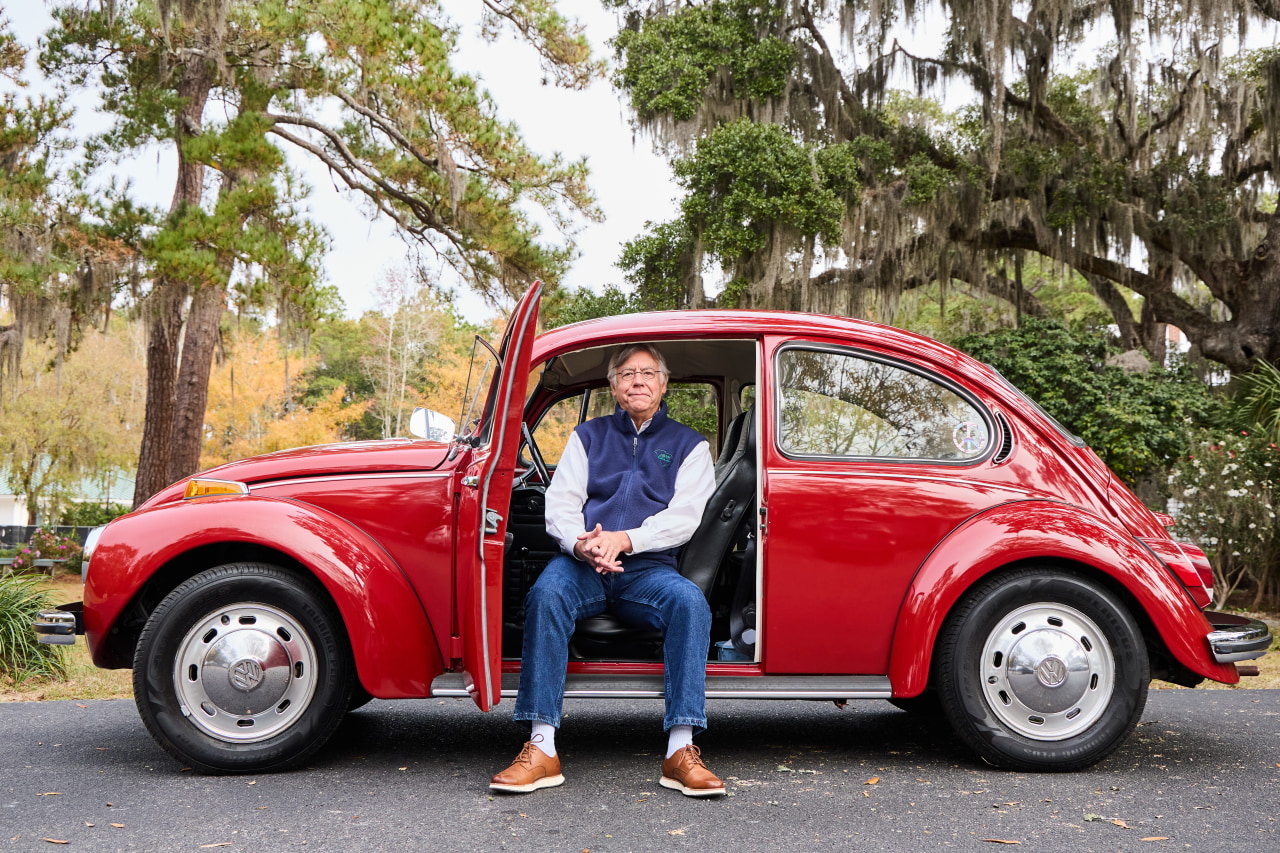
Of all the classics motoring past Parlor Doughnuts on Ocean Highway, none has captured the community’s attention like Rudolph the Red-Nosed Volkswagen.
“Everybody in town rubber necks and waves when this Beetle drives by,” says Rev. Wil Keith, a 47-year-old priest. “It’s one of the much-adored cars in our little town right now.”
It is a 1971 red Super Beetle and its story is special.
Jeff Siegrist was a student at the University of Tennessee when he first set eyes on her at a Knoxville dealership.
Siegrist pounced, handing over his father’s old Ford Falcon and $2,278.54 for the Bug. He kicked in $67.45 for an AM radio and $5.95 for a cigarette lighter.
“So that was my car from that day forward,” says Siegrist, an executive search consultant specialising in the forest products industry.
The Beetle was a sales phenomenon and a pop-culture hit that ushered in the era of mass European auto imports. It was also a Hollywood star, thanks to Herbie from the “Love Bug” movie franchise.
Siegrist road-tripped his Beetle all over. When he met his future wife, Mary, he took her on a first date in the red Bug. When the couple had their first child, the baby boy came home in the backseat.
“It was part of the family,” says Siegrist. Mary gave the car its name, around Christmas time in 1972: Rudolph.
The couple had two more children and ultimately sold the car in 1996. “It just wasn’t practical anymore,” he says. “There were tears in my eyes.”
Up to this point, the story isn’t much different from many of the more than 21.5 million original Beetles that Volkswagen sold.
But during the pandemic, things got interesting.
“I kept thinking, ‘Boy, I wish I knew where my old Beetle was,’” says Siegrist. “I wondered whether other people loved it the way my wife and I did.”
Eventually he got serious. He dug up the car’s original bill of sale, which had a vehicle identification number. He had sold the car to someone in Georgia, a quarter century earlier.
So he called the Georgia department of motor vehicles. Turns out the car was still registered and on the road. But that’s all the office would say.
Siegrist got an attorney involved. Two weeks later, the lawyer called with a name and a phone number for a woman he believed to be the current owner. So Siegrist called.
“I was shocked,” says Tracy Swift, who teaches dental hygiene at Albany State University in Georgia. “He started the conversation with, ‘You’re going to find this phone call very weird.’” Swift thought she had a stalker, and recalls Siegrist saying, “I’m not crazy, I promise. Just let me tell you my story.”
Swift did drive a 1971 Beetle. She checked the VIN number and it was a match.
Siegrist traveled to Georgia, met Swift at her office, and drove the car in the parking lot. “I didn’t want to sell the car,” she says, “but because of his story, I felt like it needed to go back to its owner. It was the sweetest story.”
They agreed on a price (he says “many times over the original cost”) and the car showed up on a truck in Siegrist’s driveway days later. It was just before Christmas in 2022.
The first thing Siegrist and his wife did was drive around the block, with tears in their eyes. “Rudolph is back!” his wife yelled as they drove.
Siegrist went digging in a bucket full of coins and junk for a key chain. At the bottom, he found Rudolph’s original key. He didn’t remember saving it.
The Beetle needed restoration. So Siegrist asked advice from someone he trusted. Enter Keith, the rector at Siegrist’s church.
“When you’re at church,” Keith says, “and the service is over and everyone is filing out, that’s when folks share, often, important information about their lives.”
Keith, it turns out, had grown up the son of a car restorer and worked on cars himself in his garage. He was not a professional. He worried if he would have enough time. But a parishioner needed help. How could he say no?
It took about a year. “Aside from the paint and some engine work,” Keith says, “I ended up doing more than I was expecting, with no complaints whatsoever. In some ways, it was like I gained a parishioner. Only it was a car.”
In 2024, Siegrist began driving Rudolph around Pawleys Island. “Rarely can I go anywhere where somebody doesn’t stop me,” he says.
“Because probably 50% of the people of my generation have owned a Beetle or have had an adventure in a Beetle. People want to know the car’s story. So I tell it.”
As for Keith, he says, “It’s a point of pride that I had a hand in it.” Like most classic car stories, this one continues.
“As soon as Jeff stops finding little things for me to fix, then the story will be over,” he says. “But he keeps finding things for me to do! Which I don’t mind one bit.”
Capital Haus has moved to expand its national presence with the acquisition of Adelaide advisory firm Baker Young, one of Australia’s longest-standing private wealth practices.
The deal will see the combined group’s funds under management exceed AUD$1 billion, as adviser numbers and client coverage grow across the country.
Founded more than 40 years ago by Alan Young and David Baker, Baker Young today serves over 6,000 clients and manages AUD$700 million in assets.
Under the agreement, the Baker Young brand will be retained, and senior principals including Young and Baker will continue in active advisory roles.
Capital Haus will also migrate its existing clients to the refreshed ‘Baker Young, a Capital Haus company’ banner, which becomes its flagship advisory business.
A new offering for ultra-high-net-worth clients, Baker Young Private, will be introduced, providing access to wholesale opportunities, global private credit financing and capital raises.
Both firms’ clients will continue working with their current advisers, while gaining access to broader group-level capability, including global research, multi-asset solutions and cross-border services. Baker Young will also gain upgraded institutional-grade infrastructure and portfolio management systems.
The acquisition adds further momentum to Capital Haus’ expansion. Established in Sydney in 2019, the company has since launched offices in Dubai and Zurich and acquired practices in Townsville and Bateman’s Bay.
With the addition of Baker Young’s team, plus new managers from RiverX Investment Management and Active Super, the group now employs 41 advisers and support staff.
Brendan Gow, Founder and CEO of Capital Haus Group, said: “Baker Young has been a cornerstone of South Australia’s advice community for four decades, built on deep relationships and trust. We feel privileged to be the next custodian of that legacy.
“By moving our existing client base across to the Baker Young brand, as well as launching the new Baker Young Private service, this deal represents more than just a passing-the-torch moment. We’re combining heritage and innovation to set a new standard for financial advice at a time when the industry needs it most.”
The acquisition lands at a pivotal moment for the sector. Adviser numbers have halved since 2018, falling from around 28,900 to fewer than 15,300 as at September 2025, even as demand surges.
More than 10.2 million Australian adults were seeking financial advice in 2024, driven in part by intergenerational wealth transfer and growing expectations from Millennials and Gen Z for both trusted relationships and digitally enabled service.
Alen Young, left, and David Baker
Alan Young, Co-Founder and Joint MD of Baker Young, said: “For 40 years, our focus has been simple: put clients first and build relationships that span generations. Capital Haus shares that philosophy.
“We are planning for the long term – for our clients, our team and our brand. Becoming part of the Capital Haus Group means our legacy will endure, while also providing stability for clients, as well as access to exciting new opportunities. It is the right succession step for our practice and a positive evolution for our clients.”
David Baker, Co-Founder and Joint MD, added: “We’ve spent four decades building Baker Young on a foundation of trust, personalised service, and consistent performance. We’re energised by the shared vision Capital Haus is pursuing and we’re proud to be part of it.”
Gow said: “We believe the future of advice belongs to firms that can combine old-fashioned relationship banking with modern, global wealth capabilities. By bringing Baker Young into the Capital Haus family, we’re preserving one of Australia’s great advisory brands while building a platform that can serve the next generation of investors.”
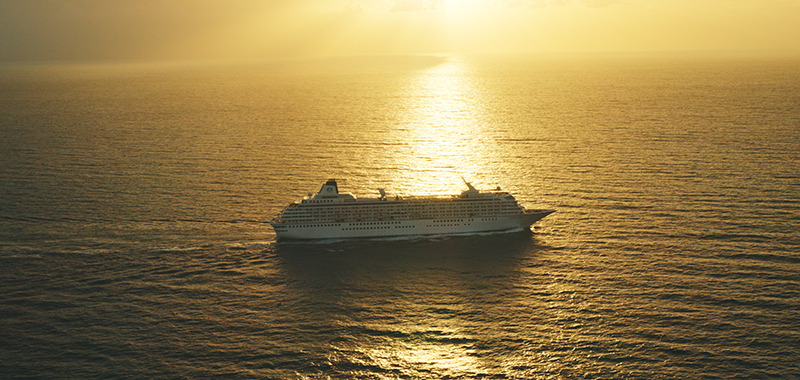
Crystal has announced the return of its Wellness at Sea retreats, revealing two 2026 voyages aboard Crystal Symphony that place balance, vitality and deep restoration at the heart of the experience.
Timed for National Wellness Month, the sailings offer a curated programme of movement, mindfulness and nutrition, wrapped in the refined comforts of one of the world’s leading ships.
The first voyage runs from August 17-24, travelling from Vancouver to San Diego. The second follows immediately from August 24 to September 5, sailing from San Diego to Guayaquil, Ecuador.
Guests may book either journey individually or combine them for a continuous Pacific wellness experience.
Leading the programme once again is Dalila Roglieri, Crystal’s wellness ambassador and registered nutritionist, whose Mediterranean-inspired approach has underpinned the retreat since it launched.
“These voyages represent wellness at its most complete, where every sunrise, every movement, and every meal becomes part of a greater harmony. It’s an invitation to reconnect with yourself and the world, surrounded by the exceptional elements that define Crystal,” said Dalila.
She will be joined by returning specialists Jenni Demus, yoga and mental well-being specialist; Mandi Appelberg, fitness and yoga specialist; and Magnus Appelberg, cold exposure expert, somatic therapist and yoga and meditation teacher.
The team is further strengthened with the addition of Chef Abbie Gellman, MS, RD, CDN, a nationally recognised culinary nutrition authority and director of Teaching Kitchen and Culinary Medicine at SBH Health System in New York.
Across both voyages, guests can expect a series of immersive Wellness at Sea sessions ranging from yoga and meditation to functional training, sound baths, breathwork and mind-reset classes including Wake Me Up Breath and Master Your Mind. A two-day detox at sea encourages digital mindfulness and invites guests into a deeper state of rest.
Longevity science is again central to the educational programme, with lectures focused on ageing well, cognitive sharpness, emotional health and maintaining long-term physical vitality.
Culinary wellness is a major pillar of the retreat, with Crystal expanding its plant-rich menus created under Roglieri’s guidance.
Dishes balance flavour and nourishment, featuring daily options including wellness-driven juices, smoothies, toasts, soups, appetisers, dips, mains and desserts. Hands-on culinary workshops and demonstrations led by Gellman and Roglieri blend nutritional insight with gastronomic flair, while individual nutrition consultations and blind tasting sessions offer a personalised and sensory-rich experience.
This commitment to wellness cuisine recently earned Crystal a place in the Women’s Health 2025 Travel Awards for Best Healthy Food.
To complement the restorative programme, onboard pickleball instruction is also available, offering guests a social, active way to stay moving at sea.
For those seeking sanctuary, Tasmania is no longer just a stop on the gourmet trail; it has become the retreat of choice for travellers who value privacy, natural beauty and rarefied experiences.
Here, unspoilt wilderness collides with an extraordinary food and wine culture, creating a backdrop that is both invigorating and restorative.
The island state inspires visitors to “come down for air”, not just a slogan, but a reminder that this is a place to disconnect from the noise of the mainland.
Beyond the plate and the glass, Tasmania delivers experiences that draw people outdoors: iconic multi-day treks such as the Three Capes Track, encounters with award-winning winemakers in the Tamar Valley, or the solitude of Bruny Island’s windswept beaches.
Whether it’s cold-water immersion at sunrise, venturing into the rugged wilds of the West Coast, or dining on oysters pulled fresh from the ocean, Tasmania offers its guests something rare in modern luxury: the ability to feel both utterly indulged and completely at ease.
Here are some of the most luxurious accommodations on offer, regardless of which part of the state you want to explore.
PUMPHOUSE POINT
Floating serenely on Lake St Clair, the converted hydro station at Pumphouse Point feels like a work of architectural theatre.
Guests reach the retreat via a jetty that stretches into the still, polar waters, before stepping into suites where glass walls frame the wilderness.
Days unfold with bushwalks, e-bike rides or rowing across the lake, while evenings are about curated menus showcasing Tasmania’s finest produce. Cold-water swimming, here considered therapy rather than challenge, is one of the most restorative rituals on offer.
THE INLET
On the windswept north-west coast, The Inlet blends beachfront living with agrarian charm. Four contemporary houses are tucked into sand dunes overlooking a private stretch of coast, part of a working cattle farm just minutes from the historic port of Stanley.
Guests wake to the rhythm of the tide, wander along deserted sands, or watch birdlife gather in the inlet, all the while feeling miles from the outside world.
BARNBOUGLE
For those whose idea of leisure involves a perfect swing, Barnbougle is nothing short of a pilgrimage.
Once farmland for potatoes, the dunes of north-east Tasmania have been transformed into a trio of world-class golf courses sculpted from the natural contours of the land.
The Dunes, Lost Farm and Bougle Run now attract serious players from around the globe.
Private charters deliver guests directly from Melbourne, where evenings end in elegant villas overlooking the wild, rolling landscape.
In the high-octane world of international sport, homegrown Formula 1 star Oscar Piastri is big business. After a trailblazing 2025 season, Piastri is on track to be one of our most successful athletes ever. Almost certainly, he’ll be the richest.
The 24-year-old Melbourne-born driver inked a lucrative deal with McLaren reportedly worth US$41 million a year, making him Australia’s highest-paid athlete. Not bad for a Brighton boy who left home at 14.
Driving all the way to the bank
When Piastri lines up on the F1 grid at Melbourne’s Albert Park this year, the world’s eyes will be on him as he attempts to achieve what no other Australian driver has by winning the Australian Grand Prix. Football might have the most fans (an estimated 3.5 billion), but F1 still commands around 430 million devoted followers.
According to F1 owner, US giant Liberty Media, the motorsport generated a whopping US$3.65 billion in 2024. While some of that revenue comes from ticket sales, media rights account for roughly a third of the pie. These include broadcasting deals with television networks that know the adrenaline-charged drama of F1 racing translates into ratings-winning viewing.
Adding to the fascination is the Netflix docuseries “Formula 1: Drive to Survive,” which tracks the lives of drivers, managers, and team owners both on and off the circuit. The big screen joined the party in 2025 with F1: The Movie, starring Brad Pitt as an ageing driver attempting a comeback, which proved a hit with cinemagoers, grossing US$624 million (A$946 million) worldwide.
Much like Grand Slam tennis, which counts Rolex and Emirates among its sponsors, F1 attracts prestigious brands such as Louis Vuitton, Moët & Chandon and TAG Heuer. It’s no surprise F1 drivers can command enviable salaries.
At the end of Piastri’s second season with McLaren, in 2024, the Aussie is reported to have pocketed US$34.5 million, including a base pay of US$7.8 million plus US$26.7 million in bonuses. His current deal with McLaren will see him in the team’s famous papaya orange colours until at least 2028.
Piastri also benefits from team sponsors such as Mastercard, as well as personal deals with companies including Quad Lock, software group Dubber, burger chain Grill’d and his father Chris Piastri’s automotive software company HP Tuners.
Piastri is undoubtedly a champion in a cut-throat sport where split-second decision-making at more than 300 km/h can mean the difference between a chequered flag and crashing out. But it’s his future marketability and brand potential where the young driver could outshine his rivals.
It may not, however, be as simple as saying more wins equal more money, according to Hans Westerbeek, Professor of International Sport Business at Victoria University.
“In modern F1, the financial equation is far more complex,” Westerbeek says. “A driver’s value to a team and to sponsors isn’t just measured by podium finishes. It’s about their ability to generate global attention, connect with fans, and represent the brand values of their team and sponsors.”
In the age of “algorithmic fandom”, Westerbeek says digital engagement through social media matters just as much.
“A spectacular overtake that goes viral on TikTok may deliver more commercial value than a quiet second place,” he argues. “Teams and sponsors now monitor real-time sentiment data on how fans react online to every race weekend, and this affects negotiations and commercial deals.
“So, Oscar’s growth in earning potential depends on a combination of performance and digital visibility.”
When Piastri crashed out in the Azerbaijan Grand Prix in September, he was understandably deflated, telling Sky Sports F1 the race was “not my finest moment”. And yet Piastri’s first-lap exit drew most of the headlines, not rival Max Verstappen’s win.
“In many ways, F1 drivers are no longer just athletes; they’re content creators,” Westerbeek says. “An unexpected post-race interview that resonates globally might drive as much sponsor interest as a podium finish.
“The sport’s economics are shifting from pure sporting results to a hybrid model of performance plus digital storytelling.”
Mosaic Property Group is pushing Queensland’s prestige market into a new era, leveraging design excellence, construction certainty and a fully integrated operating model to deliver some of the most sought-after residences on the coast.
With its flagship Florence by Mosaic capturing the Urban Development Institute of Australia’s Queensland Project of the Year, and two new coastal projects, Madeline in Broadbeach and Josephine in Burleigh Heads, surpassing early sales expectations, Mosaic has cemented itself as one of the nation’s most consistent and compelling luxury developers.
For Mosaic, luxury isn’t about embellishment. It’s about precision—architectural, experiential and operational.
That philosophy has driven rapid evolution into the top tier of residential development, redefining how high-end buyers think about design, craftsmanship and developer reliability. As the market becomes increasingly selective, Mosaic’s approach has struck a powerful chord.
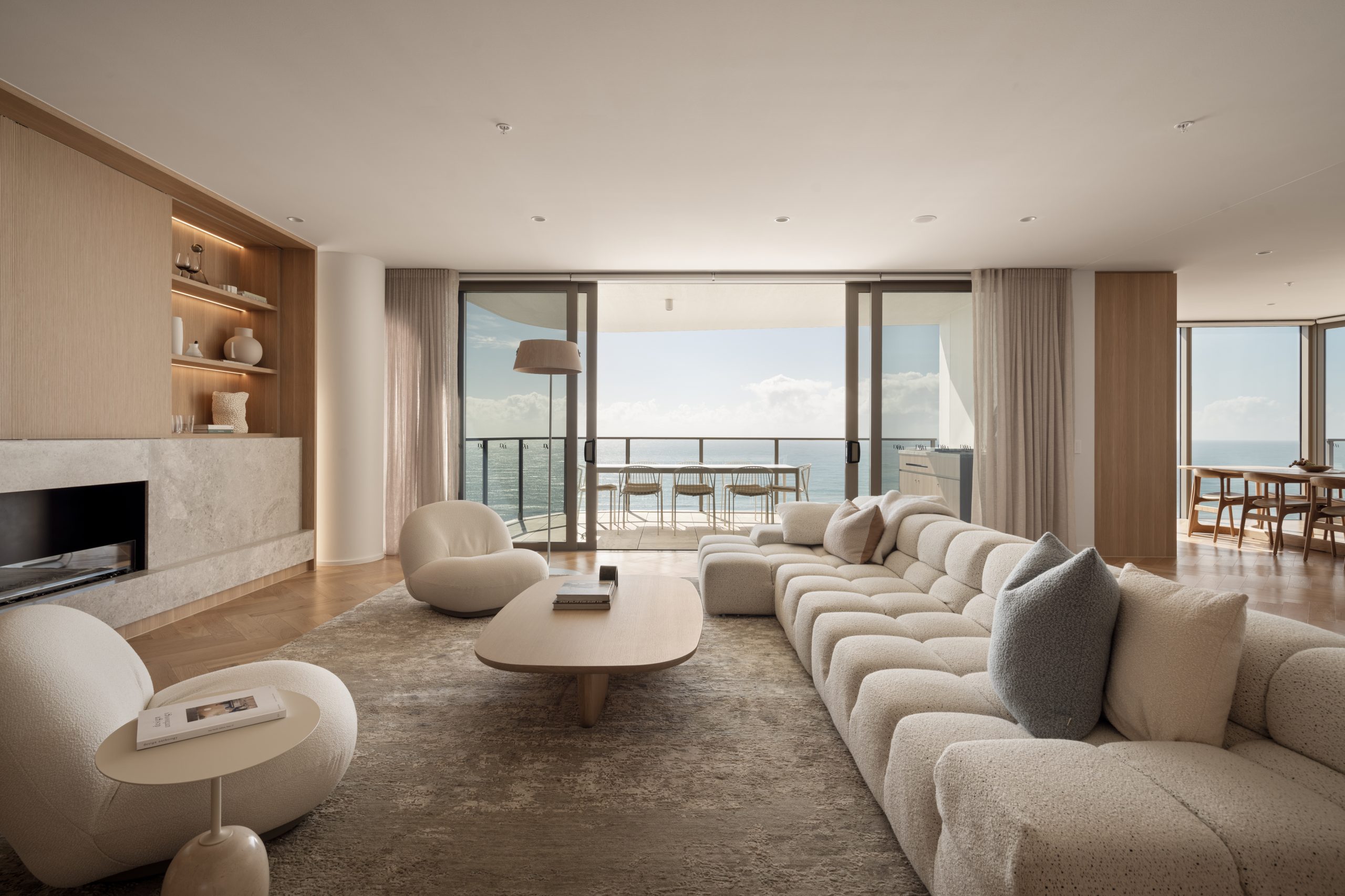
Florence features expansive, light-filled living spaces with bespoke detailing and seamless indoor-outdoor connections.
Florence: The Project That Rewrote Expectations
Florence by Mosaic marked a turning point for the company. Receiving the 2025 UDIA QLD Project of the Year and being recognised as Australia’s best mid-rise development at The Urban Developer Awards affirmed what industry insiders had already observed: Mosaic’s end-to-end business model is delivering residential outcomes of rare consistency and quality.
The project showcased the group’s signature methodology, from meticulous site selection and architecture-led planning to in-house construction and client care that continues long after settlement.
Madeline delivers a sophisticated coastal aesthetic, with expansive interiors and uninterrupted ocean views.
Madeline: Broadbeach Refined for A New Generation of Luxury Buyers
Madeline by Mosaic represents a confident expression of contemporary seaside prestige. Comprising a boutique collection of half-floor and full-floor residences, the project has been designed to maximise protected views of Broadbeach’s coastline—an increasingly rare commodity in the city’s accelerating development environment.
Each residence is shaped around privacy, spatial generosity and a seamless interplay between indoors and out. Interiors adopt a restrained, timeless material palette that favours longevity over decorative flourish, with bespoke detailing that signals the shift toward quiet luxury now dominating the upper end of the market.
The response has been emphatic. Madeline is approaching 90 percent sell-out within months, reflecting both deep demand for premium coastal residences and strong confidence in Mosaic’s delivery capabilities.
For buyers seeking security in a volatile market, Mosaic’s track record and disciplined processes have become a significant point of differentiation.
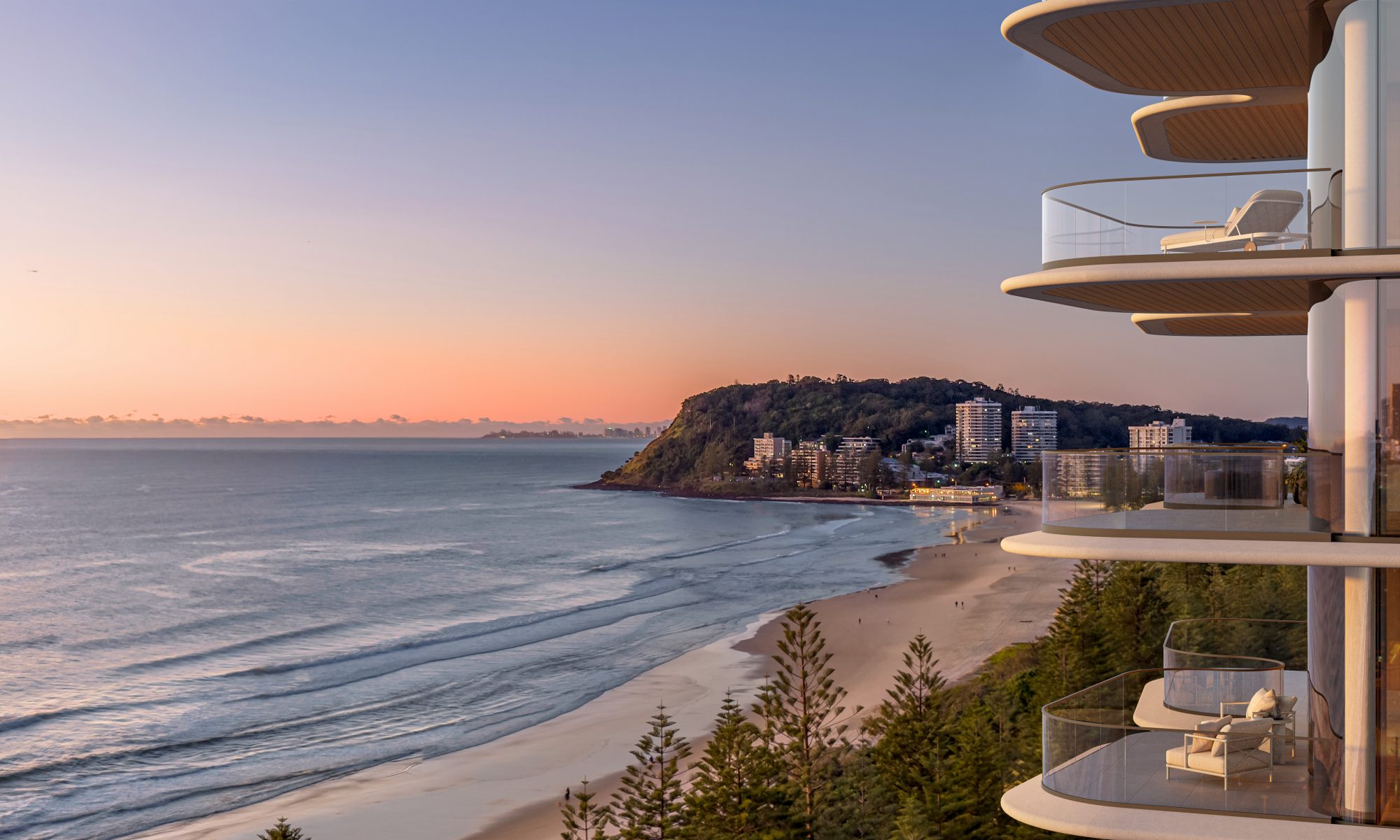
Josephine offers an intimate, beachfront living experience, with serene, sculptural interiors.
Josephine: A Boutique Icon for Burleigh Heads
On the iconic Burleigh Heads Esplanade, Josephine by Mosaic takes a more intimate approach to prestige living.
Its limited collection of half-floor and full-floor residences places exclusivity at the centre of the experience, with uninterrupted ocean views on the very prestigious Burleigh Heads beachfront, and architecture that embraces the raw beauty of the coastline.
Josephine’s early release was met with intense buyer interest, resulting in sales exceeding 50 per cent within weeks.
This momentum reflects the broader shift among affluent purchasers toward boutique coastal buildings that deliver privacy, permanence and a strong sense of place—qualities that Josephine captures with clarity.
Mosaic’s founder and Managing Director, Brook Monahan, encapsulates the project ethos simply: “Josephine is the antithesis of the high-rise tower. It’s intimate, personal, highly considered and deeply connected to its coastal setting.”
The Power of an Integrated Model
Much of Mosaic’s success in the luxury segment stems from its atypical business structure.
While many developers outsource design, construction and even customer service, Mosaic retains full control of every component—from research and site acquisition to architecture, building and post-completion care.
This end-to-end model compresses risk, eliminates handoff errors and ensures accountability at every stage.
For high-net-worth purchasers, that reliability is invaluable. In a prestige market shaped increasingly by uncertainty, the assurance that a project will be delivered exactly as promised has become a decisive factor.
Mosaic complements this with a research-led approach to site selection, targeting high-demand lifestyle destinations with enduring capital growth prospects.
This discipline has created a consistent portfolio of developments aligned with long-term value creation, not short-term speculation.
Florence presents a sculptural coastal façade with curved balconies and finely detailed stonework.
A Design Philosophy Built to Last
Across Florence, Madeline and Josephine, Mosaic’s design principles remain constant: scale rooms for real life, not marketing imagery; choose natural finishes that age with beauty; prioritise privacy, acoustic performance and engineering excellence; and orientate homes to capture light, views and a strong emotional connection to place.
This is luxury as functionality—not spectacle. Mosaic’s homes feel composed rather than crowded, timeless rather than trendy. As Monahan puts it, “Our ambition is simple: to create homes that feel as exceptional in 20 years as they do on day one.”
A Brand Built on Trust
In the luxury sector, reputation is everything. Mosaic’s rapid absorption rates at Madeline and Josephine are less about hype and more about the trust it has earned. Buyers recognise the brand not just for design, but for delivery discipline and transparency—qualities often promised but rarely upheld.
Projects are documented, audited and communicated with unusual clarity, and Mosaic’s client-care program continues long after completion. This culture of accountability has become one of its most valuable brand assets.
A New Standard for Prestige Living
Florence set the tone. Madeline and Josephine extend it. Together, these projects illustrate an evolution that is reshaping Queensland’s prestige residential market.
Mosaic isn’t simply building luxury residences—it is redefining what luxury means. With its integrated model, design-led philosophy and award-winning execution, the developer has established a new benchmark for premium living in Australia’s fastest-growing coastal region.