South Korea Can Go Only So Far Copying Japan’s Market Reforms

South Korea is taking a page from Japan to boost its stock market. There are certainly some low-hanging fruits to pick, but the country’s large family-controlled corporate empires, known as chaebols, could be an obstacle to more meaningful structural change.

The country’s stock exchange is set to unveil a stock index that will take into account factors such as profitability and shareholder returns. That is modeled after a similar move taken in 2014 by Japan, which uses its new index to essentially name and shame companies that failed to make the grade.

The new index is just a part of Korea’s “corporate value-up” program announced in February, aiming to boost the valuations of its market with shareholder-friendly policies. The government also proposed making changes to the tax code to encourage companies to pay more dividends. More broadly, South Korea hopes to copy the success of Japan’s drive to improve corporate governance and returns to investors.

Buybacks and dividends in Japan have risen, and shareholders have grown more vocal. Companies also are unloading their nonstrategic shareholdings in other companies, slimming down their balance sheets.

As a result, Japan has been one of the best-performing markets in the world in recent years. The Topix index hit a record high in July, nearly 35 years after its famous bubble burst.

On the other hand, South Korea’s stock market has long suffered from a so-called Korea discount , as it trades more cheaply than other emerging markets. Its main benchmark, Kospi Composite index, has been valued at an average 12 times forward earnings in the past decade, compared with around 15 times for Japan’s Topix and Taiwan’s Taiex each.

Japan’s index has gained 40% since the end of 2022, while Taiwan’s has surged 57%. Korea’s, by contrast, has gone up only 16% over the same period.

Similar to their counterparts in Japan, Korean companies haven’t historically been willing to return much capital to shareholders. The dividend yield on the Kospi is below 2%, which is lower than many markets. Buybacks are paltry and, more important, many Korean companies don’t cancel the shares they have bought back, instead keeping them as treasury shares, using that as a tool for major shareholders to keep control of the company.

On that front, there seems to be some progress. Treasury share cancellation, excluding Samsung Electronics , so far this year has already more than doubled the full-year level of 2023, according to Goldman Sachs . New regulations restricting how companies can use their treasury shares is probably one reason. Financial companies, in particular, have been eager to buy back and cancel their shares.

The elephant in the room, however, is the power of chaebols, which dominate Korea’s economy and stock market. Companies in the Samsung group, for example, make up more than 20% of the Kospi index. Besides the electronics brand, this includes companies in areas as disparate as financial services and shipbuilding. The interests of the families who control these vast corporate empires don’t usually align with those of the minority shareholders.

Instead, they have long used convoluted corporate structures, including extensive cross-shareholdings, to maintain their grip on the conglomerates. Given the chaebols’ strong economic and political influence in the country, they won’t be so easily pressured as Japanese companies have been to unwind these arrangements.

High inheritance taxes are another reason the families might not necessarily want high share prices for their companies. The government has proposed reducing the tax, but it might not be enough.

Korea’ stock market, which houses some of the world’s best-known brands, including Samsung and Hyundai Motor , has long been a laggard. The government’s new push might yield some successes, but its biggest companies could remain the toughest nuts to crack.

Landslides Swallowed Up Houses in California. Owners Still Have to Pay.

When Nic and Alison Grillo bought their home seven years ago in the Seaview neighbourhood of Rancho Palos Verdes, Calif., south of Los Angeles, Nic knew that the wider Palos Verdes Peninsula had multiple landslide zones. He grew up there.

But he had never heard of any issues happening in Seaview itself. An adjacent neighbourhood, called Portuguese Bend, is where there had been slides since the 1950s. Nic studied the geologist’s report he received and hired an inspector before closing on their four-bedroom, 1,800-square-foot, 1956 ranch house for $1.195 million. “I felt comfortable buying,” he says.

Then, in the summer of 2023, his neighbourhood started coming apart.

Today, there are foot-long cracks on the outside and inside of his house. Since June, two houses nearby have partially collapsed due to landslides and have been deemed unsafe; others were abandoned by owners spooked by the constant creaking of their houses as they were pulled apart by the ground crumbling beneath them. Power and gas were cut off in September, and some worry the sewage system will be next, which would mandate evacuation.

Nic, 45, estimates that he and Alison, a 42-year-old health clerk at an elementary school, have spent more than $25,000 over the past few months in an attempt to stay in their home. He bought a Tesla power wall and solar panels a few years ago, in case there were occasional power outages, but he never anticipated having to use them indefinitely. Now he’s added a generator, a propane tank, and a tankless water heater. They are using an REI solar camp stove to cook until they get hooked up to propane. They go days without showers.

Alison says they don’t want to leave, since two of their children are still in local schools. However, she says it has been hard not to get overwhelmed by it all. “This isn’t sustainable,” she says.

Nic, who works in medical-device sales, says he can’t afford to buy another house somewhere else because he doesn’t see any chance of selling the one he already owns, even at a discount, given what’s happening around it. His homeowners insurance doesn’t cover damages caused by land movement, which is standard for policies in the U.S.

“It’s scary. We are just taking it one day at a time,” he says.

Life in a Slide Zone

The roads on the Palos Verdes Peninsula, which juts into the Pacific Ocean south of Los Angeles, have been cracking for decades. A landslide in 1956 damaged over 100 houses in Portuguese Bend and has been moving ever since. In 1980, farther up in the city of Rolling Hills, a section known as the Flying Triangle started sliding. The movement was at a rate of 5 to 7 feet a year.

Now, triggered in part by periods of exceptionally heavy rainfall over the past two years, the rate of land movement has increased significantly. Some areas had reached a velocity of 7 to 13 inches a week and are currently averaging about 8 inches a week, or about 80 times faster than it was moving, on average, in October 2022, according to Mike Phipps, a geologist whose firm was hired by the City of Rancho Palos Verdes.

Geologists discovered a second slide this summer that is about twice as deep as the other tracked slides. That has been pushing out the slide area to almost double its size, from 380 acres to nearly 700 acres, says Phipps. A major concern is that it will continue to expand farther uphill, he says. Movement in another adjacent city, Rolling Hills, led SoCalGas to shut off gas on Sept. 16 to 37 homes, with a warning that power would follow in coming days.

About 44% of the country is at risk for a landslide, according to a new report by the United States Geological Survey. Homeowners in one of the Palos Verdes Peninsula slide areas, as in any of the areas across the U.S. that have been hit by landslides, such as Washington and western Pennsylvania, find themselves in a unique kind of financial hell. Insurance companies don’t write standard homeowner policies that cover landslide losses and surplus landslide policies aren’t available right now in California, according to the Insurance Information Institute. Mortgage companies expect loans to be paid, even if the underlying asset no longer exists or is damaged with no chance of repair; forbearance and forgiveness decisions are up to the individual bank, and they are loath to grant them.

Although some state legislatures, such as in Pennsylvania, are working to address the lack of financial recourse for slide victims, no measures are currently under way in California. If the area were declared a major disaster by President Biden, it would trigger access to emergency funds for individual homeowners via the Federal Emergency Management Agency, but the state of California hasn’t yet requested this declaration, saying the current situation doesn’t meet federal requirements for such action.

As a result, owners who don’t want to declare bankruptcy must still pay their mortgages, property taxes—barring a reassessment, which can sometimes take months—homeowner association and other fees, even if their home, and the land it sat on, no longer exists. For those whose homes are damaged, owners are left with few options except to either walk away or stay put and hope their home doesn’t sustain any further damage. Others believe the landslides will abate at some point in the future and trust that they will be able to sell their home when potential buyers simply forget about the landslide threat.

Wei Yen, 74, a retired finance officer, and his wife, Leesa Yen, 66, a teacher, owned one of eight homes that, in July 2023, slid off a cliff into a canyon in Rolling Hills Estates, in an area that had never had a landslide before. It is completely separate from the Portuguese Bend slide complex. The city has a mixture of townhomes and single-family homes that sell for anywhere from $1 million to $4 million. Five other homes were badly damaged.

The Yens bought their 2,000-square-foot, three-bedroom, three-bathroom townhome on Peartree Lane in Rolling Hills Estates in 2010 for $765,000. In early July 2023, Leesa noticed a skinny, 7-foot-long crack on the tiled patio outside the front door. A few days later, Wei noticed that the crack had expanded. The next day, one of their neighbors called the fire department over similar cracks. The department advised all the homeowners in the surrounding block to pack up essentials just in case. About six hours later, Wei was given 15 minutes to evacuate by the fire chief. By 9 a.m. the next day, the house, and the land on which it sat, started sliding into the adjacent canyon. “I was lucky to get out of there in time,” says Wei.

Now, a year later, the Yens’ home equity is gone. The property had been worth $1.55 million, according to Zillow , just before the slide. Now it is worthless, according to a letter from the city assessor’s office. They have a small mortgage, which they have no plans to ask the bank to modify because they worry their credit rating will be impacted and because they say they can afford it and feel responsible.

They are renting an apartment and had to buy new furniture and clothing, all of which is eating into their retirement savings. They lost what they estimate is around $500,000 worth of items that were precious to them, including antiques and art Wei collected throughout Asia in the 16 years he lived in Hong Kong. They are worried about looters, since the bottom of the slide is right next to a public trail. The danger of the collapsed structure has kept the Yens and public officials from going in.

“Mentally it’s very challenging,” he says. “I’m talking to a therapist for the first time in my life. I’m decimated by this. I see no way out. We asked for help and everyone said they’d do their best, but it’s been empty promises.”

“I didn’t realise I would have to start worrying again about finances in my 70s, ” he says. He says he might have to find a job.

Over in Seaview, Matt Stelwagen, 44, a supply-chain manager for a hospital, and his family moved out of their home in August. He bought his house in June 2022 for $2.5875 million. It was meant to be his forever home, where he and his wife could raise their son, who was 1 year old at the time. The pool cracked in July 2023. Over the next year, the floors started coming apart and the windows and doors would no longer shut. The floors became so uneven he could feel the house tilt, he says. The creaking noises at night from the moving and cracking were terrifying.

“We got to a point where mentally it was better for our stress levels and our son to get out,” he says. They are still paying the mortgage and taxes on the house, along with the rent on the house where they now live, a financial burden he says is staggering: His housing cost is now more than half his income. He’s paying for it through his salary and from savings. “We are stretched,” he says. “You make it work because you’re a parent and you want to provide a stable home life.”

He plans to get the house reassessed so he doesn’t have to pay such high taxes.

“We are exhausted,” says Stelwagen. He says he’s gone through stages, first feeling scared, then really upset and angry, and most recently putting his head down and trying to figure out what to do. “No one will come in with a cape and save me,” he says.

No One With a Cape

Efforts to stabilise the Portuguese Bend slide complex, moving for decades, stepped up in August 2023, when the city of Rancho Palos Verdes received a $23 million federal grant from FEMA. But the discovery this past summer of the deeper slide has made mitigation much more complicated.  The project is being revised because of emergency work and the discovery of the deeper movement. Whether current attempts to slow the movement will be successful is still uncertain, says the geologist Phipps. The landslide velocity has decelerated since July, but it is still moving a foot a week in some areas. That means within a week of drilling a well to dewater the ground, that well could be damaged by the landslide. “It’s a Herculean task,” he says.

Lacking other financial recourse, dozens of residents affected by the slides in Seaview and Portuguese Bend have individually and jointly filed legal claims, alleging myriad failures that have contributed to the slide activity, including insufficient stormwater sewers and drains. Defendants include the city of Rancho Palos Verdes, the city of Rolling Hills, CalWater, Los Angeles County, and the Rolling Hills Community Association of Rancho Palos Verdes, exposing hundreds of homeowners in Rolling Hills to liability.

Rancho Palos Verdes mayor John Cruikshank says he fully understands why people are frustrated. He thinks Southern California Edison should be more open to alternative energy sources, such as power walls and solar; he’s working to get the state to expand its emergency declaration and to request FEMA funding so that both will also support individual homeowners who have been displaced. But suing the city doesn’t make sense, he says. Of its 15,000 homes, about 400 are in the landslide area. “Everyone’s tax dollars are going to help. Why are we being sued by people who we are trying to help?” he says.

These legal fights could take years to resolve and owners are in need of assistance now. Aside from some small local outreach efforts, not much has been forthcoming. One of the biggest supporters after the 2023 Peartree slide in Rolling Hills Estates was a local high-school student named Christian Yoshino, who lives down the street from where the houses collapsed. He went door to door asking for donations, raising about $5,300 that was distributed to affected homeowners, based on need, by the Rotary Club of Palos Verdes Peninsula for necessities such as medicine, clothing and beds.

A lack of help is the norm in many communities affected by landslides, which have been exacerbated in recent years due to extreme weather events such as heavy rainstorms and fires that destabilise soil. Some states are trying. In Pennsylvania, where a landslide outside Pittsburgh last January forced homeowners to evacuate, a bill to create a new state landslide-insurance program for homeowners is up for consideration by the House of Representatives.

After a landslide in the city of Ketchikan, Alaska, damaged homes and killed one person in August 2024, affected residents were allowed to apply for assistance and temporary housing programs. In Washington state, where a mudslide in 2014 east of Oso destroyed dozens of homes and killed more than two dozen people, the governor successfully got President Obama to declare a major disaster, opening up FEMA aid to homeowners and funding a one-time program to buy back properties in the Oso slide.

A Buying Opportunity?

Until the power was cut in September, homes were still selling in Portuguese Bend and Seaview, says Jason Buck, with Re/Max Estate Properties. A 1,834-square-foot house in Seaview sold for $1.78 million in July, not far off its listing price. A four-bedroom, 1,994-square-foot house in the heart of upper Portuguese Bend sold for $800,000 in May, 22% lower than its listing price. But, Buck says, news of the damage and gas and power cuts have started to affect prices on houses in areas near the slide zone.

Buyers are now backing out of deals. Charlie Raine, a real-estate agent for Coastal Legacy, currently has a listing for a four-bedroom, 4,000-square-foot house in Seaview. It first went on the market in June 2024 for $1.95 million. It is currently listed at $1.45 million. Raine says buyers terminated an agreement in August after they saw news-media images of the house in the same shot as a construction project that made it look like a disaster zone. A second buyer, five days into a 12-day escrow, backed out after the power was cut in September.

During showings, Raine uses a cardboard model he made to demonstrate how lifting a house and inserting steel I-beams can, he says, keep it from damage when the earth moves due to fissures. It is a technique his own parents used on their home in 1986 in the Flying Triangle in Rolling Hills and which other homeowners are spending hundreds of thousands of dollars to do now in Portuguese Bend.

The marketing for Raine’s listing now includes a note that warns that the home has been adversely affected by the land movement in Seaview, but assures potential buyers that “there are methods available to retrofit the foundation and isolate the affected portion of the home from the movement.”

Rancho Palos Verdes is currently waiving permit fees for what it calls “temporary solutions” such as placing homes on cargo structures and inserting I-beams. Amy Recenmacher, a professor of civil and environmental engineering practice at the University of Southern California, says even if horizontal beams under the house could stop the house from splitting apart, they wouldn’t stop it from moving in a big slide. Placing a reinforced house atop vertical footings to stop it from moving with the slide is impractical in many cases; to be effective, the footings would have to be set into stationary ground or bedrock below the active slide. The Portuguese Bend slide extends hundreds and hundreds of feet deep.

Alejandro Bustillos, president, AB Structural Design, who drew the plan for Raine, says the design isn’t aimed at big hillside collapses; he says it works when fissures appear under a house causing slow movement because adjustable supports allow the house to “follow the movement without breaking apart.”

The price on a house across the street from Raine’s listing just dropped to $999,000 on Sept. 12 from $1.39 million after an investment group backed out of a contract. The listing, advertised on Zillow as an “enchanting storybook home,” with three bedrooms, 1,800 square feet and a new renovation, now says: “Seller has found replacement home and is ready to move immediately. +Incredible Opportunity + NON CONTINGENT CASH OFFERS ONLY.” The listing also warns that gas and electricity have been disconnected by the city.

In the upper section of Portuguese Bend, an area full of artists and teachers where the damage is particularly bad, residents are thinking long term. Tyson Schilz, 40, an electrical contractor, spent $875,000 in 2014 building a 3,700-square-foot, five-bedroom home in an area called Monks Lots, where landowners won a lawsuit in 2008 to overturn a building moratorium put in place by the city in 1978 over landslide concerns.

In December, Schilz realized his house was ripping in two pieces, so he decided to finish the job, spending several hundred thousand dollars raising it and splitting the roof in two. He cut the utilities and reinstalled them into the two, separated halves, among other measures.

“We’re not crying crocodile tears,” says Schilz. “It was always in the back of my mind that it could slide one day.” He is renting a place in nearby Manhattan Beach for the next year while his son finishes high school. He is hoping that in 10 years or so the land will have settled and everyone will have forgotten what happened, at which time he will either move back or sell. “I’m long landslide,” he says.

Corrections & Amplifications undefined SoCalGas cut gas to 37 homes on Sept. 16. An earlier version of this article incorrectly said it had cut gas to 35 homes. (Corrected on Sept. 20)

Electricity That Costs Nothing—or Even Less? It’s Happening More and More

KERKDRIEL, the Netherlands—For much of the spring and summer, Jeroen van Diesen got paid for using electricity.

Sometimes his neighbours came over to power up too, generating even more cash.

Van Diesen’s situation reflects the strange, new dynamics of electricity that could soon become the norm in many parts of the world: A big increase in wind and solar power has pushed wholesale prices to zero or below for many hours of the year, spurring a sea change in the way people use power—based on whether the sun is shining or the wind is blowing.

Most people pay a fixed price for each kilowatt-hour of electricity they consume throughout the day. The price is set by their power company and only changes at infrequent intervals—once a week, a month or even only once a year.

Van Diesen, a software salesman, recently signed up to receive electricity from two providers that charge him the hourly price on the Dutch wholesale power market, rather than a fixed price that resets monthly or annually. When the price of electricity falls low enough, smart meters in his house begin charging his two electric cars.

Wholesale prices swing wildly each hour of the day, and even more so as a larger share of electricity flows from wind and solar installations. Because the generation costs of wind or solar farms are negligible, market prices will be near zero when there is enough renewable power to cover most of a region’s electricity demand.

Electricity market dynamics get weirder when renewable-energy producers don’t have an incentive to stop feeding power into the grid, usually because of government subsidies. Then grids can be flooded with excess power, pushing prices into negative territory.

Van Diesen said he’s made 30 euros, equivalent to around $34, over the past five months charging his car, enough to cover the service fee from his power supplier, a Norwegian company called Tibber.

“I’m charging the car for free,” said van Diesen, who is part of a group of clean-energy enthusiasts in the Netherlands who call themselves green nerds. “To me it’s also like a hobby and a game—how far can I go?”

Doing laundry in the evening? The electricity could be free a few hours later when demand dies down and the wind picks up. Likewise, in regions with lots of solar power, charging an electric vehicle in the morning is usually far more expensive than powering up under the midday sun—or whenever the price is right.

In the U.S., most states don’t currently allow such real-time pricing, but many think that will change. Already, in some of the world’s biggest economies from Western Europe to California, the occurrence of zero and negative wholesale power prices is growing fast.

Negative prices

Wholesale prices across continental Europe have fallen to zero or below in 6% of all hours this year, up sharply from 2.2% in 2023 and just 0.3% in 2022, according to data collected by Entso-E, the group of European transmission system operators. In markets with lots of renewable capacity, this year’s figure was higher: 8% in the Netherlands, 11% in Finland and 12% in Spain. Analysts expect those numbers will grow as more solar panels and wind turbines are installed.

The changes sweeping Europe’s electricity markets, which were accelerated by the energy crisis brought on by the war in Ukraine, show what could happen in the U.S. in a few years when renewable capacity reaches a similar scale. In 2023, 44% of EU electricity was generated by renewables, compared with 21% in the U.S.

In some U.S. markets—sunny California, the wind-swept Great Plains, and Texas—zero and negative prices are already common. The wholesale price in Southern California was negative nearly 20% of all hours this year because of the region’s boom in solar-panel installations. That compares to around 5% last year, according to data collected by the U.S. Energy Information Administration.

U.S. regulators have been cautious about allowing households and companies to sign up for electricity plans that charge them wholesale prices, fearing consumers could be hit with big bills if prices jump. Texas consumers who signed such contracts were walloped with huge bills in 2021 when a rare winter storm sent prices soaring.

States’ reluctance, however, may now be waning as policymakers increasingly see real-time pricing as a way to lower peak demand, reduce the need for costly infrastructure and integrate more renewables into the grid.

California regulators this year ordered the state’s utilities to expand dynamic price pilot programs that have only been available for a select group of customers.

Your overall power bill still won’t be zero in a clean-energy future. Generation costs comprised around 60% of customer bills on average in the U.S. in 2023. Transmission and distribution costs account for most of the rest—and are expected to grow sharply in the coming decade to reinforce the grid for electric heating, electric transport and data centers.

Negative prices could also be reined in over the next few years as governments from Europe to California pare back renewable-energy subsidies. Governments are particularly focused on trimming subsidies for solar power, which is driving negative prices in a number of markets.

Green nerds

In Europe, energy-hungry manufacturers are shifting their operating strategies to maximise energy consumption when prices are close to zero or negative, while throttling back when prices are high.

Linde, a U.K.-based engineering company, is building a new generation of industrial gas plants that can be quickly ramped up and down depending on the wholesale price of power.

When solar and wind power drive prices down, Linde’s plants fire up and send the output to large tanks. When electricity prices shoot up again, the plants can ramp back down and supply customers out of the gases stored in the tanks.

“The tank functions like a virtual battery,” said Klaus Ohlig, a research and development executive at Linde Engineering.

Trimet, an aluminium producer that is one of Germany’s single-largest power consumers, is overhauling its smelters to vary their power consumption depending on the availability of renewable energy on the grid.

A new European Union law requires dynamic-price power contracts be made available to consumers across the 27-nation bloc. Tibber, a power retailer based in Norway that charges its customers the wholesale hourly price, has signed up more than one million households across the Nordic countries, Germany and the Netherlands.

Edgeir Aksnes, Tibber’s co-founder and chief executive, says he doesn’t expect customers to constantly track the hourly price before deciding when to charge their car or run appliances.

“We can automate all of this for you. You don’t have to think about it,” he said.

Some enthusiasts, however, like to get into the weeds.

Wouter van Embden, a 49-year-old Dutch entrepreneur and one of the country’s so-called green nerds, switched to Tibber earlier this year. On a recent summer Sunday, the battery in his home began charging as solar power flooded the Dutch grid and the wholesale power price fell to zero. He also charged his two electric cars and programmed his heat pump to make the water in the house tank extra hot.

Toward the evening, as prices rose with the drop-off in solar, van Embden’s battery—which he and his son built at home—would power his home as well as feed into the Dutch grid.

“I have to be honest, when I started building the battery I had so many outages. There was a lot of testing to do,” he said. “But now it’s working pretty stable.”

AVRA AT BONDI BEACH SETTING A NEW STANDARD FOR LUXURY LIVING

Bondi Beach is known for setting new benchmarks, especially when it comes to prestige property. Avra, the iconic suburb’s newest grand-scale luxury residential offering, is making waves thanks to its sophisticated architectural design, large north-facing layouts and high-end finishes.

Located at 135–155 Curlewis St, only steps from the famous beach and the landmark Hotel Bondi, Avra will soon to be home to 18 spacious three-bedroom residences and three and four-bedroom penthouse-style homes balancing beachside serenity with urban elegance.

Named after the Greek goddess of “breeze” and playing homage to its natural landscape, Avra is the eighth project in Sydney’s east created by Clutch and is designed in a creative collaboration between PDB Architects and Woods Bagot.

The building’s concrete blades, curved architectural forms and ethereal screens echo the shapes, colours and textures of the eastern beaches.

“AVRA has been inspired by the wavelike sculptural forms that define each dwelling. The spirit of movement is captured within the flowing forms and soft tonal edges,” says Paul Buljevic of PDB Architects.

Tracey Wiles of Woods Bagot said the brief by Clutch was to create an address as equally iconic as its globally-recognised location with the splendour of a luxury Mediterranean villa.

“These residences have such grandeur and scale that they feel like true private homes. Down to the finest detail, we’ve considered every aspect. That’s the thing about Avra, it’s immaculate detail on a grand scale,” she adds.

“We curated kitchens and bathrooms with a lovely sense of curvaceousness. The materials, the soft sandy textures and tones: it all reflects beachside elegance and quiet luxury.”

Each house-sized apartment has an neutral interior palette that is a nod to the local sand and natural coastline of Bondi while expansive living spaces open up to reveal large private balconies. The kitchens are to feature curved Champagne quartzite bench tops as well as Gaggenau, Wolf, Sub-Zero, Whispair and Miele appliances with fully-equipped butlers pantries. The deluxe ensuite bathrooms have double stone vanities, centrepiece stone bathtubs, Onyx lighting fixtures and infrared saunas.

Every residence opens to a private gallery with an internal atrium courtyard filled with dappled light, soft breezes and a botanical backdrop by Myles Baldwin Landscape Design including olive trees, agaves and prickly pears that will grow and mature over time.

Residents will have access to a concierge for everything from reservation bookings and housekeeping arrangements to dry cleaning and pet grooming.

The Curlewis St address is footsteps from Bondi Beach’s vibrant coastal lifestyle offerings with the legendary stretch of sand, a buzzing café culture and world-class restaurants metres away.

On the ground floor, a carefully-curated selection of retail stores and eateries will blend with Bondi Beach’s unique aesthetic.

Avra offers a rare chance to own a grand north-facing luxury residence in one of Sydney’s most legendary areas.

Be the first to discover Avra and enquire to book your private appointment to the display suite, opening soon.

www.avrabondibeach.com.au

Property of the week: 10 Highgate Hill, Toorak

Highgate Hill in Melbourne’s illustrious Toorak snuck onto Australia’s most expensive street list last year, coming in 19th position according to Suburbtrends data. Although the real estate research group said the median sale price was $5.102 million, trophy homes on the exclusive cul de sac can command far more.

Number 10 is a sleek new designer residence, the brainchild of architects David Watson and Christopher Doyle with gardens by prized landscaper Jack Merlo. Listed with a guide of $20 million to $22 million, the bespoke five-bedroom family home is an innovative benchmark for modern luxury in Melbourne, showcasing a vast floor plan and sophisticated finishes topped off with enviable city views.

On describing the designer dwelling, Doyle said it is a “symphony of light”.

“Highate Hill is an excellent showcase for our passion and dedication to luxury. Every element has been tuned to create the masterpiece you see before you,” he says.

“It’s a very sharp, elegant type of modernism, it’s not a hard edge sort of modernism. The site is blessed because of its geography, it’s high on the hill and has this lovely vista towards the city which is really unusual in Melbourne. And in Toorak, when you have that opportunity, you take every advantage of it.”

Overflowing with space over three levels, the artfully designed home has a choice of entertaining areas and private retreats suitable for all the family and plenty of guests all year round.

The ground floor is the central gathering space with a formal combined living and dining room spilling out to a peaceful courtyard, a separate den with a fireplace and a casual open plan zone adjoining the dream kitchen.

This culinary heart of the home has a grand Galassia marble island bench, sleek black American oak cabinetry, a suite of Gaggenau appliances, and a full butler’s pantry housing Miele appliances for hidden meal preparation. All this flows seamlessly out to a palatial terrace complete with a barbecue area and an Italian Artusi grill. For outdoor entertaining beyond the terrace, there is an infinity pool, a spa and a private courtyard.

“Architecture is the intersection between art and science. We love creating a house that is both gallery large, yet individual and intimate. The best buildings tell a story. They evoke emotions and create a strong sense of home. Highgate Hill is a testimony to this idea,” Doyle adds.

Up on the first floor, all five bedrooms have walk-in wardrobes and ensuites, but the primary suite goes above and beyond. This spacious main has a full dressing room with a bench seat and a deluxe five-star ensuite featuring a freestanding bathtub and twin vanities.

The Highgate Hill home hits every mark on an avid entertainer’s wish list with a host of added extras, including a second-floor private lounge and bar with a top-floor terrace capturing the city skyline, plus a lower ground floor home cinema with custom-made furniture, a ultra HD 4K projector, the latest Dolby Atmos sound and a kitchenette.

Additional features include a home office, a lift to all levels, a wine cellar, gym, marble and oak herringbone floors in the living spaces, or carpet in the bedrooms.

Other high-tech extras include a Savant whole-house automation system, Dynalight intelligent lighting, CCTV, zoned heating and cooling, electric sheer curtains and solar power.

Located near Toorak’s shops and eateries, Chapel Street boutiques, sought-after schools, Como Park and the Kooyong Lawn Tennis Clubs.


The Toorak residence is listed through Kay & Burton Stonnington with Oliver Booth and Ross Savas with an expressions of interest campaign.

Who’s Still Sending Virtue Signals?

It seems that just about all San Francisco political leaders have lately acknowledged the need to rein in progressive policies—except perhaps the one running for President of the United States.

Compared to past elections, the mayor’s race in San Francisco this year has been striking for its focus on the need for law and order. Even many leftist politicos are sounding more moderate these days and offering fewer progressive virtue signals—perhaps because such signals don’t yield progress and lack virtue.

The San Francisco Standard’s David Sjostedt reports on the incumbent running for re-election:

How very Texan of Ms. Breed. Earlier this year she led a successful referendum campaign to cut off cash assistance to drug addicts who refuse to enter treatment programs. While she’s at it, perhaps she’ll consider turning off the subsidy spigot entirely for able-bodied adults.

Meanwhile across the Bay, there is a similar political hunger for a new approach to social problems. Rigel Robinson, a former member of the Berkeley City Council, opines in the Standard:

Back in San Francisco, another Breed departure from the kooky dogma of the extreme left is suddenly relevant to our national political discourse. Last December this column noted a Jose Martinez report for CBS News in San Francisco:

The office would have been a precursor to attempting to redistribute money from people who never owned slaves to people who were never enslaved. It isn’t just the principle of reparations plans that’s offensive , or the difficulty and destructiveness of government officials trying to precisely define the level of ancestral guilt or victimhood within the great American melting pot. It’s also the money.

In early 2023, after studying the work of San Francisco’s reparations committee, Lee Ohanian at Stanford’s Hoover Institution provided a ballpark estimate:

Pretty much everyone in San Francisco, even those who favor expansive social spending, recognized that this leap into the depths of progressive insanity wasn’t going to happen.

In February of this year, Aldo Toledo reported in the San Francisco Chronicle:

Opposing reparations plans—un-American efforts to punish or reward people based on their ancestry—is now a perfectly safe space for politicians on the left to show how reasonable they have become. If a massive reparations plan failed in San Francisco for goodness sake, politicians campaigning nationwide can be comfortable rejecting it, too.

But the Democratic presidential candidate from San Francisco still won’t do it. Curtis Bunn reports for NBC News:

Any gathering of journalists is likely to be deflated when a candidate refuses to stake out the leftwardmost position on an issue of public policy. But for the rest of America, it’s bound to be disturbing that Ms. Harris won’t repudiate an extreme position she held as a presidential candidate in the last election.

The logical conclusion is that she’s still just as radical as her record.

Michael Jordan Scores a Buyer for His Chicago Megamansion After More Than a Decade

Michael Jordan has found a buyer for his Chicago estate after more than 12 years.

The 7-acre compound, custom built for the basketball legend in the ’90s in the area’s Highland Park suburb, first hit the market in 2012 asking $29 million. By 2015, the price on the nine-bedroom home was reduced to $14.855 million—the digits of which add up to 23, Jordan’s jersey number—and it’s remained at that price ever since.

Spanning over 32,000 square feet on Point Lane, the home reflects the larger-than-lifeness of its owner, with 19 bathrooms, five fireplaces, a regulation-sized basketball court, a massive weight room where Jordan used to train, and a built-in aquarium, according to the Wall Street Journal.

The sale was first reported by Crain’s Chicago Business.

Outside the home, there is a tennis court, a putting green and a circular infinity pool with its own island, accessible by a small bridge. There are plenty of circular touches throughout, including a round skylight above a circular eat-in kitchen, an arched wine cellar and a circular sitting room with views directly onto the basketball court.

A large lounge area that was once an indoor pool includes glass sliding walls on either side that can open up completely during Chicago’s milder months.

Other unique features include doors from the original Playboy Mansion, a three-bedroom guesthouse and the number 23 emblazoned on the front gate.

Compass agent Katherine Malkin, who is marketing the property, confirmed the pending sale to The Athletic. Malkin did not respond to a request for comment, and the buyer and price were not immediately available. Jordan could not immediately be reached for comment.

It’s unlikely to exceed the asking price. A year after the home first hit the market in 2012, Jordan decided to sell via auction, but the home failed to even meet the reserve bid of $13 million. Despite the lack of movement, Jordan has not dropped the asking price any further since 2015.

Homes in Highland Park, a wealthy suburb of Chicago can fetch upward of $5 million, but Jordan’s home has been the priciest option on the market for a long time. Fellow Chicago Bulls legend Scottie Pippen sold a nearby home in 2023 after a five-year wait. That home, which Pippen bought for $2.6 million in 2004, sold for $1.7 million two decades later, according to Realtor.com.

It seems that despite the home court advantage, this is one game that Jordan has not been able to win.

Luxurious Coastal Living: 60 Blake Street, Dover Heights Hits the Market

A sanctuary of modern design and craftsmanship, this stunning north-facing family home in Dover Heights sets a new benchmark for luxury coastal living. Perched on a sun-drenched 563sqm block, the newly renovated residence combines elegance with functionality, making it the ultimate entertainer’s retreat.

Designed for seamless indoor-outdoor living, the open-plan living and dining areas lead out to a sunlit alfresco zone with a swimming pool. “It’s where we spend most of our time, whether we’re hosting friends or relaxing with family,” says the owner. Floor-to-ceiling glass doors maximise the natural light and offer views of the beautifully landscaped backyard.

At the heart of the home is a gourmet kitchen equipped with premium Bosch and Siemens appliances, including two 900mm ovens, two dishwashers, and a gas wok with dual extraction fans.

Upstairs, the four spacious bedrooms offer plenty of privacy. The master suite is a true retreat with a luxurious ensuite and custom-built wardrobes. Two other bedrooms feature their own ensuites, while a home office and gym complete the upper level. Convenience is key, with lift access to both floors, a remote-controlled garage with internal access, and off-street parking for three cars.

The home is packed with modern features like Daikin ducted air-conditioning with room-specific controls, rain-sensor skylights and CCTV. Sustainability is also a priority, with 48 solar roof panels and a Tesla 2.5kw solar edge inverter reducing the home’s environmental impact.

Located a short stroll from Rodney Reserve and local favourite Archies Café Co., the house is close to prestigious schools, Rose Bay village, and the iconic Bondi Beach. It’s the perfect blend of convenience and tranquillity, offering a family-friendly neighbourhood while being just minutes away from Sydney’s finest attractions.

With its timeless Hampton-style aesthetic and modern amenities, 60 Blake Street is more than just a home—it’s a lifestyle. Whether you’re entertaining guests or enjoying a quiet evening by the pool, every inch of this property has been thoughtfully designed for comfort and luxury.

Raine and Horne Double Bay

Retail Sales Are the Last Big Economic News Before Fed Rate Decision

Tuesday’s retail sales report could be the scrap of evidence that tips the balance as Federal Reserve officials decide how much to cut interest rates on Wednesday.

It is practically a given that the central bank will reduce rates. Inflation has fallen to its lowest point since February 2021, giving the Fed more flexibility to focus on the second component of its dual mandate—achieving maximum employment. Although the labor market remains resilient, the most recent two jobs reports have been weaker than expected, putting some pressure on the Fed to loosen monetary policy.

The question now is by how much rates will fall—0.5 percentage point, or 0.25 point? The indications from interest-rate futures are split , recently favoring the more aggressive half-percentage-point decrease.

Andrew Hollenhorst, an economist at Citi , leans toward the likelihood the Fed is more cautious on Wednesday, cutting rates by 0.25 percentage points. But he notes that it it is a close call that depends on the dynamics of the bank’s rate-setting committee and the strength or weakness of Tuesday’s retail sales report.

A positive surprise would suggest that both consumers and the labor market remain resilient, paving the way for a more modest cut. If the report comes in well below expectations, however, Fed officials may grow concerned that a weaker labor market is weighing on consumer spending, which could lead to a bigger cut, Hollenhorst added.

Louis Navellier, founder and chief investment officer of the money-management firm Navellier agrees. “In theory, if the August retail sales report is horrible, then a 0.5% Fed key interest rate cut may be forthcoming on Wednesday,” he said.

Economists are expecting retail sales will decline by 0.2% in August from July, according to FactSet. They jumped by a surprising 1% in July .

Lower gasoline prices and car sales will likely drag the headline number lower. Indeed, stripping out car and gas sales, retail sales are projected to increase by about 0.3% month over month.

Yet there is growing concern that even excluding autos and gas sales, the sales figure will be soft. While spending was remarkably strong in July, the Fed’s latest Beige Book flagged that consumer spending ticked down in August, points out Bill Adams, chief economist for Comerica Bank . Many retailers, particularly those catering to lower-income shoppers, have warned that Americans are being cautious and exceedingly choosy about what they are buying and where.

The impact of the retail sales report will likely extend beyond the immediate rate cut. The insights it contains about U.S. consumers will also factor into the Fed’s quarterly update to its Summary of Economic Projections, containing officials’ latest forecasts for the U.S. economy, inflation, and near-term interest rates.

The so-called dot plot , which charts the individual interest-rate projections of the seven members of the Fed’s board of governors and the 12 regional Fed presidents, is always closely watched as investors try to chart the Fed’s future actions.

Hollenhorst believes the median dot showing where rates will be at the end of 2024 should show “at least” 0.75 percentage-point of cuts, factoring in 0.25 point at each meeting through the end of the year. But it is likely that officials will leave the door open for more cuts in case data on the job market or consumer spending sour faster than expected.

Starbucks’ North America Head to Retire One Week After New CEO Started

Starbucks is making another major leadership change just one week after new CEO Brian Niccol started his job.

Michael Conway, the 58-year-old coffee chain’s head of North America, will be retiring at the end of November, according to a Monday filing with the Securities and Exchange Commission.

The decision came only six months after Conway took on the job. His position won’t be filled. Instead, the company plans to seek candidates for a new role in charge of Starbucks’ global branding.

The chief brand officer role will have responsibilities across product, marketing, digital, customer insights, creative and store concepts.

“Recognizing the unmatched capabilities of the Starbucks team and seeing the energy and enthusiasm for Brian’s early vision, I could not think of a better time to begin my transition towards retirement,” wrote Conway in a statement.

Conway has been at Starbucks for more than a decade, and was promoted to his current job—a newly created role—back in March, as part of the company’s structural leadership change under former CEO Laxman Narasimhan.

The coffee giant has been struggling with weaker sales in recent quarters, as it faces not only macroeconomic headwinds, but also operational, branding, and product development challenges.

Narasimhan was taking many moves to turn around the business, but faced increasing pressure from the board, shareholders, and activist investors.

One month ago, Starbucks ousted Narasimhan and appointed Brian Niccol, the former CEO at Chipotle, as its top executive. The stock has since jumped 20% in a show of faith for Niccol, who started at Starbucks last week.

When he was at Chipotle, Niccol made a few executive hires that were key to the company’s turnaround.

How Russia Profits From Ukraine Invasion by Selling Stolen Grain on a Global Black Market

KYIV, Ukraine—Beyond the bombs and gunfire of Russia’s war in Ukraine , a parallel economic war is raging.

Its front line is on occupied Ukrainian farmlands, from which Russia and its partners have sold almost $1 billion in stolen grain on a burgeoning black market.

Moscow’s forces in Ukraine since 2022 have occupied some of Europe’s most fertile farmland. The occupiers have either seized harvests or bought them cheaply, often forcibly.

The business involves a wide network of clients who benefit from Moscow’s wartime patronage system, including a Russian shipyard equipping the invasion, a company affiliated with Iran’s Revolutionary Guard and a Crimean businessman who trades with Syria and Israel. Another company sells through the United Arab Emirates.

Trading the looted Ukrainian agricultural products keeps Russia’s allies funded and loyal to Moscow even as it faces mounting economic pressure , offering a sort of off-balance-sheet vehicle financing Kremlin objectives.

The Kremlin didn’t return requests for comment on its exports of Ukrainian crops.

“It’s like the war is feeding itself,” said Pascal Turlan, legal director at rights organization Project Expedite Justice, which is helping Ukrainian prosecutors investigate grain theft. “The illicit trade brings revenue to a Kremlin-sponsored patronage system, which in turn helps the conflict and the occupation to continue.”

The exact commercial value of Russia’s pilferage is difficult to determine amid the war’s chaos and Moscow’s subterfuge, but it is large. Since 2022, the operation has directly shipped at least 4 million tons of grain and other produce from occupied Ukraine to international markets, generating revenue of $800 million, said Markiyan Dmytrasevych, Ukraine’s deputy agriculture minister.

Much more has been exported by land or small ships, according to Ukrainian nonprofit organization Texty, which estimates the total value of grain taken by Russia in occupied territories could be as high as $6.4 billion.

The patronage take many forms. Three bulk vessels that export large volumes of illicit grain are owned through a chain of corporate entities by Russia’s state-run United Shipbuilding Corp., which also produced warships used to shell Ukrainian cities, according to the U.S. government.

A Russian company that exclusively sold grain from the occupied region of Zaporizhzhia donated 10 million rubles, or $111,000, to a battalion fighting in the province, according to a document obtained by KibOrg News, a Ukrainian project that documents Russian economic-looting activities in the occupied territories.

Moscow is also attacking Ukraine’s own grain exports. Late Wednesday, a Russian missile struck at a ship that was carrying Ukrainian wheat just after it had left a Black Sea port for Egypt, Ukraine’s president Volodymyr Zelensky said on his Telegram channel.

From farm to sea
Russia’s illicit agricultural trade begins on Ukrainian farms. Moscow’s forces either compel farmers to sell their crops at below-market prices or steal them, sometimes at gunpoint.

Bohdan Katerenyak, the manager of a silo in Kherson, a southern Ukrainian province conquered by Russia at the beginning of the war, said he was at work in August 2022 when men with machine guns, clad in balaclavas, entered his office.

“We have an order to take over,” one told him in a Chechen accent, handing him an identification card from the FSB, Russia’s domestic security service, Katerenyak said. A few days later, another man, also claiming to be an FSB agent, arrived and impounded the facility’s grain.

“They are bandits,” Katerenyak said of the men. Fearful, he fled to Ukrainian-controlled territory and later learned the silos had been emptied.

From farms like Katerenyak’s, produce is shipped by truck and rail to ports along the Black Sea, some on occupied Ukrainian territory.

Russian authorities say that in the first half of this year they sent 15 ships carrying 81,000 tons of wheat to Turkey from Mariupol, another city conquered during the war.

Turkey bans ships from occupied Ukrainian terminals and cooperates with Kyiv to block illicit trade, the country’s foreign-affairs officials said.

Separately, Ukrainian prosecutor Ihor Ponochovniy in June started tracking a Turkish-owned ship, the Usko MFU, which he suspected had carried stolen grain last year from the Crimean port of Sevastopol . Russia seized Crimea from Ukraine in 2014 and in 2022 linked it with occupied Kherson.

Ukraine’s border force in June told Ponochovniy the Usko MFU had entered Ukrainian waters. He issued a search warrant and police boarded it. Onboard they found records showing it had left Sevastopol last November for Turkey carrying 2,100 tons of crushed sunflower seeds and brown wheat potentially worth half a million dollars.

Investigators said they found onboard a message from the ship’s managers to the captain instructing him to conceal the cargo’s Crimean origin. Ukraine’s border force in July seized the Usko MFU.

The ship’s owner, USKO Shipping Management, didn’t respond to a request for comment. A lawyer representing the vessel’s captain declined to comment.

Mikhail Ganaga, a former professional wrestler and the son of a district governor in Crimea, is among a select group of collaborators who have profited from the grain theft.

Ganaga controls Agro-Fregat LLC, which delivers grain harvested in occupied territories and has shipped grain to Israel and two of its foes, Syria and Iran, according to trade and shipping records and Ganaga himself. Ganaga and Agro-Fregat didn’t return requests for comment.

Pressure to halt shipments

Ukraine is applying diplomatic pressure on importing countries, with some success. In the past two years, Egypt, Israel and Lebanon either canceled loadings or stopped buying grain cargoes after Ukrainian diplomats told them they had departed from Russian-occupied parts of Ukraine , according to Ukrainian officials.

Foreign Ministry spokesman Heorhiy Tykhiy said that Lebanon shifted to Ukrainian grain. Egypt has refused some grain shipments that originated in Russian-occupied territories of Ukraine, according to Ukraine’s military intelligence agency.

Russian allies Iran and Syria have said they won’t abide by sanctions. Iran has supplied the Kremlin deadly weaponry that enhanced Russia’s ability to hit military and civilian targets. This month, Tehran started to supply ballistic missiles to the Kremlin. Iranian politicians said they were in exchange for Russian grain.

Tehran buys barley in Crimea for $140 a ton, a 34% discount from market prices, said Kateryna Yaresko, an analyst at SeaKrime, a nonprofit project in Kyiv that tracks illegal shipments from Crimea and provides information to the Ukrainian authorities.

Traders in Russian-occupied territories are building ties with Tehran’s hard-line circles. Igor Rudetsky, a manager at a grain terminal in occupied Crimea, last year posted on his social-media accounts pictures of himself meeting representatives of Islamic Republic of Iran Shipping Lines, which is sanctioned by the U.S. for shipping weapons on behalf of Iran’s military and nuclear technologies.

Rudetsky, according to his posts, also visited Pars Holding, an agricultural company that is part of a foundation controlled by Iranian Supreme Leader Ali Khamenei . Rudetsky said by text message that he spoke to the companies as part of an international marketing campaign that also included China, India and Africa, though he says he doesn’t sell produce himself.

Rudetsky said grain exports from Russia aren’t restricted by international sanctions and that he bought the port “for real money” in a deal that was “legally impeccable.”

Russia deems Crimea its territory but other countries don’t and consider any exports from it illegal.

Yemen is a new market for Crimean exports. In June, a Russian state-controlled vessel, the Zafar, delivered grains to al-Salif, a port held by the Iranian-backed Houthi faction in Yemen, according to shipping and corporate records.

As Kyiv cracks down, exporters are adopting increasingly complex evasion tactics such as transferring grain to Russia and mixing it with legitimate products before reselling it on international markets. Ukrainian authorities are struggling to keep up.

“We need more people,” said Ponochovniy, the prosecutor.

Ukrainian prosecutors in Kharkiv are probing a trader that it suspects stole grain and resold cargoes to an Emirati company. Helios Plus drew prosecutors’ attention after it removed all 700 tons of grain left at a bread factory flour mill in the nearby town of Kupyansk when Russia seized it in August 2022.

Helios Plus didn’t respond to a request for comment.

The company in 2015 started selling grain out of areas of eastern Ukraine that had come under control of Russian-backed separatists, according to Russian records viewed by The Wall Street Journal. The records were obtained in an investigation by Project Expedite Justice.

The documents indicate Helios Plus took a large volume of grain from other occupied territories in the past two years. It then sold the grain to buyers in Turkey, the U.A.E. and as far as Costa Rica, according to customs declarations.

Property of the week: 10 Orient Court, Buderim

A breathtaking view and a lush quarter-acre block are high up the wish list with any lifestyle property, but this contemporary Buderim residence takes things to another level.

Designed and built by owners Stu and Nat Faid, the Sunshine Coast home reflects their vision and incredible attention to detail.

As an architect and designer, Nat believes a prime position deserves an incredible project.

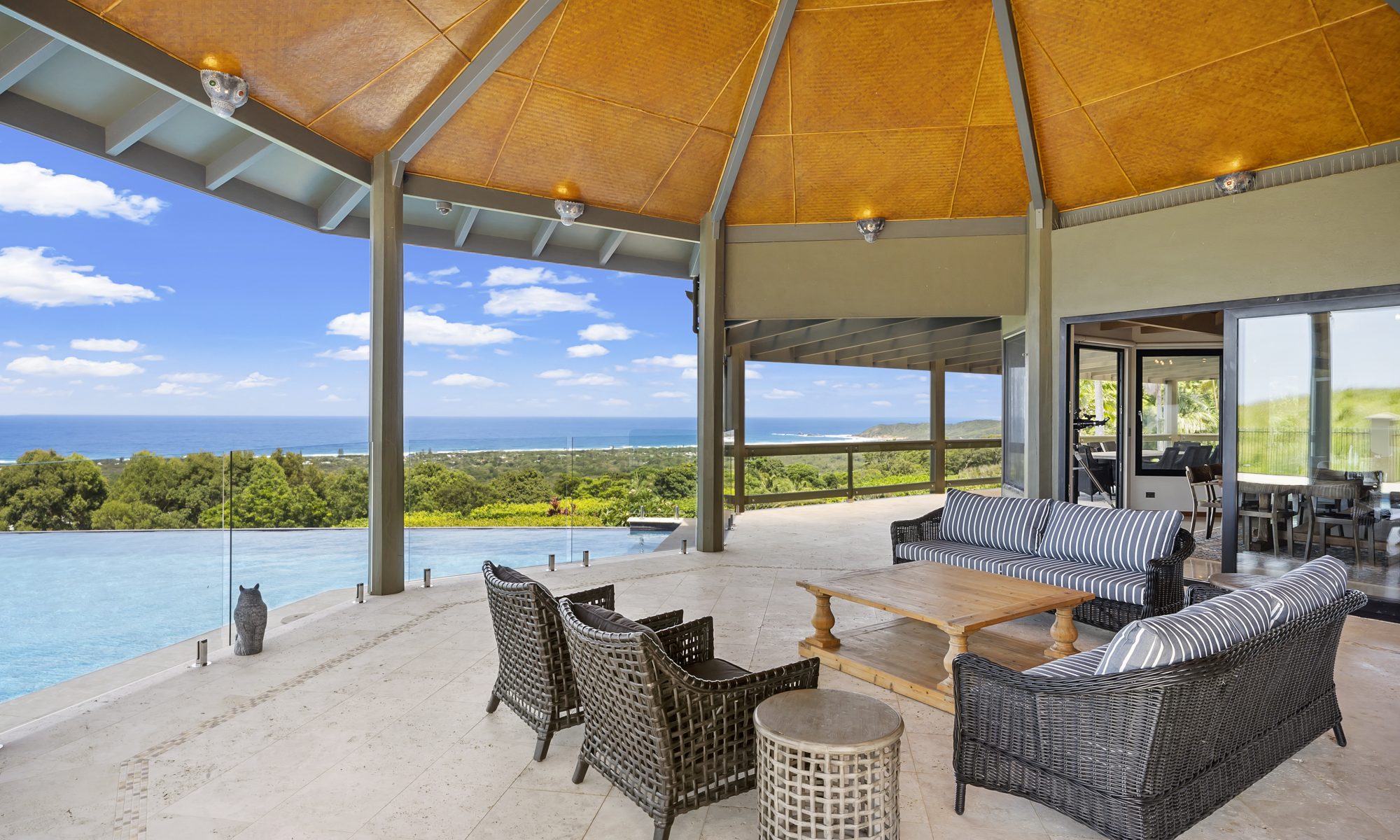
“The heart of the house is undoubtedly the living area and expansive deck. At over 100sq m and elevated more than 6m above the ground, you literally feel like you’re floating. We love how the views stretch from the Glass House Mountains along the coastline to Mooloolaba. Across the ocean, you can even see the sandbanks on Moreton Island,” she says.

While the views and the 1024sq m land parcel make their mark, it’s the suspended 12m heated shipping container swimming pool that’s making waves locally.

“When people arrive, the first thing they do is look up,” Nat adds.

After purchasing the property in 2021, the pair knew the existing house wouldn’t live up to their family of four, but they fell in love with the location and outlook so decided to adapt.

Initially, the pool’s unique design was simply a reaction to an everyday Queensland problem, but ultimately became a feature.

“The pool was at first a product of practicality. We wanted to be able to watch the kids in the pool from the house, but to do that required elevating the pool more than six meters off the ground,” Stu says.

“When we looked at the engineering required, it conflicted with our minimal-touch ethos in preserving the land and the visual aesthetic of the finished design. What followed was a lot of searching for a solution, and as luck would have it, the answer was almost on our doorstep.”

Shipping Container Pools seemed like a no-brainer answer to the pool problem. Having moved internationally multiple times, the couple saw an opportunity to weave their personal story into the fabric of their new home.

“The opportunity to incorporate a nod to that chapter of our life into the build was too good to miss,” he says.

“It also unashamedly reinforces the origins of the pool construction, which ties into the rest of the design in the house. Throughout the home, we have embraced where the old meets the new, we have not tried to blend, cover or hide the origins of the home, we have chosen instead to make sure the evolution of the house is clear to see.”

The Faids’ global family journey is evident throughout the home, from the grand Middle Eastern entry doors sourced from Dubai where the couple once lived, to the remarkable views from the Glass House Mountains to Mooloolaba.

Created to enjoy every season, the house has a space for all eventualities with an open plan living area spilling out to the full-width deck and pool, a sleek kitchen with an Ilve integrated fridge and freezer, Bosch ovens, an induction cooktop, built-in coffee machine and microwave, two dishwashers, filtered water and a butler’s pantry.

Four spacious bedrooms each have built-ins, the main features a large ensuite with twin vanities and two more bedrooms share a“Jack and Jill” style bathroom. There is also a third full bathroom.

The Buderim home is 12.5kms from Mooloolaba and the Mooloolaba River National Park with the Sunshine Coast Airport 13.5kms to the north, however Stu adds that there is rarely a reason to leave.

“It would be fair to say that apart from popping down the hill to go to the beach, we often go days without ever leaving the village. It’s really is a wonderful spot.”

Packed with mod cons, the Buderim home also features six-zone ducted air-conditioning, engineered oak floors and a double-sided Stuv wood-burning fireplace, a mudroom, heated floors and sensor lights in the bathrooms. There is also a private elevator, solar power and battery, as well as landscaped gardens and a large lock up garage and shed.

The property at 10 Orient Court, Buderim is listed with Zoe Byrne and Greg Ward from Ray White Buderim and will go to auction on September 22 at 9am at Mercedes-Benz Sunshine Coast, 65 Maroochy Blvd, Maroochydore.

Jack Ma Urges Alibaba to Trust in Market Forces, Innovation

Alibaba Group co-founder Jack Ma said competition will make the company stronger and the e-commerce giant needs to trust in the power of market forces and innovation, according to an internal memo to commemorate the company’s 25th anniversary.

“Many of Alibaba’s business face challenges and the possibility of being surpassed, but that’s to be expected as no single company can stay at the top forever in any industry,” Ma said in a letter sent to employees late Tuesday, seen by The Wall Street Journal.

Once a darling of Wall Street and the dominant player in China’s e-commerce industry, the tech giant’s growth has slowed amid a weakening Chinese economy and subdued consumer sentiment. Intensifying competition from homegrown upstarts such as PDD Holdings ’ Pinduoduo e-commerce platform and ByteDance’s short-video app Douyin has also pressured Alibaba’s growth momentum.

“Only with competition can we become stronger and allow the industry to remain healthy,” Ma said.

The letter came after Alibaba recently completed a three-year regulatory process in China.

Chinese regulators said in late August that they have completed their monitoring and evaluation of Alibaba after the company was penalized over monopolistic practices in 2021. Over the past three years, the company has been required to submit self-evaluation compliance reports to market regulators.

Ma reiterated Alibaba’s ambition of being a company that can last 102 years. He urged Alibaba’s employees to not flounder in the midst of challenges and competition.

“The reason we’re Alibaba is because we have idealistic beliefs, we trust the future, believe in the market. We believe that only a company that can create real value for society can keep operating for 102 years,” he said.

Ma himself has kept a low profile since late 2020 when financial affiliate Ant Group called off initial public offerings in Hong Kong and Shanghai that had been on track to raise more than $34 billion.

In a separate internal letter in April, he praised Alibaba’s leadership and its restructuring efforts after the company split the group into six independently run companies.

Alibaba recently completed the conversion of its Hong Kong secondary listing into a primary listing, and on Tuesday was added to a scheme allowing investors in mainland China to trade Hong Kong-listed shares.

Alibaba shares fell 1.2% to 80.60 Hong Kong dollars, or equivalent of US$10.34, by midday Wednesday, after rising 4.2% on Tuesday following the Stock Connect inclusion. The company’s shares are up 6.9% so far this year.

Australian Consumers Remain Downbeat About Economic Outlook

SYDNEY—Australian consumer confidence fell in September amid concerns about job security as economic growth slows to a crawl.

The Westpac-Melbourne Institute Consumer Sentiment Index slipped 0.5% to 84.6 in September from 85.0 in August.

While cost-of-living pressures are becoming a little less intense and fears of further interest rate rises have eased, consumers are becoming more concerned about where the economy may be headed and what this could mean for jobs, said Westpac’s Head of Australian Macro-Forecasting, Matthew Hassan.

Consumers remain concerned about rising inflation, which is stoking concerns that interest rates may rise further, Hassan added.

The report comes a week after data showed the economy barely registered a pulse in the second quarter as consumer spending dropped sharply.

On-year GDP growth in the second quarter was the weakest since the early 1990s, excluding the pandemic years.

At the same time, the Reserve Bank of Australia continued to signal that interest rate cuts are unlikely in the near term, while adding that under certain circumstances a further hike in interest rates may be needed.

The RBA remains concerned about price growth, with core inflation remaining stubbornly elevated at nearly 4.0% on year in the second quarter.

Still, while consumers are downbeat, economists expect spending to regather momentum over coming quarters as income tax cuts delivered in July boost household budgets.

Tax deductions you never knew you could make

Making sure you claim everything you’re legitimately eligible for can have a big impact on your annual discretionary income. But do you know what you can claim?

What is tax deductible?

When completing your tax return, bear in mind that there are a number of tax deductions you can claim against expenses related to your work. What each person can claim will vary depending on their occupation. To make a deduction for a work-related expense, you need to have spent the money yourself without being reimbursed by work, and the cost needs to directly relate to earning your income. You’re also going to need a record to prove the expense, usually a receipt.

While travel expenses, home office expenses, education and mobile phone expenses are commonly claimed, there are a number of deductions often overlooked that you may be able to claim when completing your tax return.

Artwork

Regardless of why you bought your latest artwork, the Australian Taxation Office views artwork as both an investment and a depreciating asset, meaning you can claim it as a tax deduction. How much you can claim will be determined by the size of your business and whether you are an employee.

If you work from home, you can claim a deduction for your artwork up to the value of $300 as part of your home office expenditure. Small and medium sized business owners can make a much higher claim for artwork.

An apartment in another city

Investment properties purchased away from your home that you stay in when travelling for work can be claimed.

Under ATO guidelines, if you’re required to work away from home and you choose to rent or buy an apartment in the other work location rather than relying on hotel accommodation, you can claim a deduction for the work-related costs that apply to the apartment. This includes rent or interest on the mortgage.

Work handbag

Each year, you are allowed to claim a bag that you use for work. This could be a laptop bag or backpack used for carrying work-related items, but claiming a designer luxury handbag, may raise a few eyebrows at the ATO. If you carry your laptop, tablet and paperwork in a bag for work, then claim it. If you’re using it for gym equipment or your lunch, don’t.

COVID tests

The ATO will let you claim the cost of a COVID test if it was used to see whether you are sick and therefore unable to attend work. This is particularly the case if you’re in a customer-facing role and you need to purchase the test to stop the spread of the disease.

Man’s best friend

In some limited circumstances, you may be able to claim a deduction for the cost of buying and caring for a dog if they assist in your occupation. The two most common scenarios for this claim are farming and security reasons.

A caravan

The ATO allows for travel expense claims and there have been instances where taxpayers have claimed a caravan — and it was accepted. If you travel extensively for work and a caravan is saving you from paying for a hotel room, you may be able to apportion the deduction if it is used for work, rather than private use.

Meals away from home

If you’re travelling for work, you can claim the cost of meals when you travel and stay away from home overnight. You may also be able to claim a deduction for the cost of a meal you buy and consume when working overtime.

Media subscriptions

Many media publications are now subscription-based and can be deductible if they relate to your profession. This includes subscriptions to newspapers, professional magazines and podcasts that are linked to your profession.

Desk lamps and stationery

You don’t have to be running a business from home to make work-related claims. If you have a dedicated workspace at home where you’re doing a few hours of work at home a week, you can claim a number of related items, including lamps, stationery, a shredder and printer cartridges.

Protective clothing

If it’s related to your work, you can claim
the cost of buying items like fire resistant clothing, steel-capped boots, hi-vis vests or sun protection. This can apply to people working directly on site, like construction workers, but also related industries, such as engineers and architects who visit.

Depending on your industry, you can claim items that relate to your work, including a bullet proof vest if you’re a police officer or anything used that relates to your performance if you’re a professional athlete. Media professionals can also claim sunglasses if they are required to be out in the sun in the course of their work.

While you’re at it, you may also be able to claim the costs to clean occupation-specific clothing, so ask your tax accountant.

Tax accountancy fees

Last but not least, the fees you pay for the preparation of your annual tax return if you used a tax agent to prepare and lodge your tax return can be claimed on this year’s tax return.

The ATO has a number of online tools and calculators to help you calculate your deduction correctly, including work from home, self-education and car expenses.

Visit the ATO website and type ‘calculators’ into the search bar.