Touch Screens Are Over. Even Apple Is Bringing Back Buttons.

The tyranny of touch screens may be coming to an end.

Companies have spent nearly two decades cramming ever more functions onto tappable, swipeable displays. Now buttons, knobs, sliders and other physical controls are making a comeback in vehicles, appliances and personal electronics.

In cars, the widely emulated ultra-minimalism of Tesla’s touch-screen-centric control panels is giving way to actual buttons, knobs and toggles in new models from Kia , BMW ’s Mini, and Volkswagen , among others. This trend is delighting reviewers and making the display-focused interiors of Tesla and its imitators feel passé.

Similar re-buttonisation is occurring in everything from e-readers to induction stoves.

Perhaps the most prominent exponent of this button boom is the company that set us lurching toward touch screens in the first place. Apple  added a third button it calls the “action button” to its full slate of new iPhone 16s unveiled this month, after introducing the feature on its upscale Apple Watch Ultra and Pro-model iPhones over the past couple of years. It also added a button-like “camera control” input on the iPhone’s side.

As Apple shows, companies aren’t just rediscovering buttons, they’re reconceiving them. The camera control includes touch features, and the company has also developed the “force sensor” that enables its AirPods to respond when you squeeze their stems.

Engineers and industrial designers—often prodded by user complaints—are tapping into our exquisitely sensitive sense of touch and spatial awareness, known as proprioception. And it’s all in service of making gadgets easier, more fun and, in some cases, safer to use. We want to touch type or operate cruise control without averting our eyes from the road.

Why buttons became sensors

To understand why buttons are making a comeback in a world in which any kind of controls are possible, it helps to understand how we got to the current, too-often sorry state of human-machine interfaces.

Touch screens have their virtues, which explains the initial enthusiasm for them. We can do a lot more by tapping our iPhones than we ever could have with the old-school BlackBerry , however much we miss those clicky little keyboards.

As soaring production drove down the price of such displays, though, they became something of a crutch for gadget designers and corporate bean counters.

“Now that touch screens are the cheapest option, they’re being deployed everywhere, even in places where they don’t belong,” says Sam Calisch, chief executive of Copper, a startup that makes induction ranges for cooking . In electric stoves and ovens, this has led to poor design decisions—for example, induction cooktops with touch-based controls that become inoperable when a pot boils over, as my Wall Street Journal colleague Nicole Nguyen lamented last year .

Even when our devices have buttons, they are too often the kind that are flat like touch screens, and have similar shortcomings. Capacitive buttons sit flush on hard surfaces and don’t actually give way when you press, and so can only signal they’ve been activated through sound or light. These, too, have taken over because they are cheap and easy to incorporate into the printed circuit boards that are already inside gadgets, whereas incorporating physical switches means additional wiring and complexity, Calisch says.

Anyone who has known the agony of having to mash a capacitive button on a newer washer, dryer or dishwasher knows how uniquely infuriating such cost-cutting measures—masquerading as futuristic interfaces—can be.

The hazards of ‘touch’ interfaces

Fundamentally, the problem with touch-based interfaces is that they aren’t touch-based at all, because they need us to look when using them. Think, for example, of the screen of your smartphone, which requires your undivided gaze when you press on its smooth surface.

As a result, “touch screen” is a misnomer, says Rachel Plotnick, associate professor of cinema and media studies at Indiana University Bloomington, and author of the 2018 book “Power Button: A History of Pleasure, Panic, and the Politics of Pushing,” the definitive history of buttons. Such interfaces would be more accurately described as “sight-based,” she says.

The hazards of burying many of a vehicle’s controls inside touch-screen menus that need drivers to look at them have become so obvious that the one European automotive safety body has declared that vehicles must have physical switches and buttons to receive its highest safety rating. Responding to criticism from drivers, Volkswagen has pledged to bring back physical controls for certain oft-used features, such as climate control.

Newer electric vehicles from BMW Mini are bristling with physical controls. To make it so drivers never have to take their eyes off the road, industrial designers at Mini put into their vehicles a user-customizable head-up display that drivers can navigate using buttons and a scroll wheel on the steering wheel, says Patrick McKenna, head of product and marketing at Mini USA. These controls can also be accessed through the vehicle’s round touch screen, and via a voice assistant. The entire point of the vehicle’s interfaces is redundancy, safety and a reduction in distractions, he adds.

Satisfying switches and clicky keyboards

The switch back to physical interfaces is also, in many ways, a vibe shift. With touch screens ubiquitous, what was once viewed as luxurious is becoming tacky. Physical controls, done well, now signal the kind of thoughtfulness and exclusivity once attached to the original iPhone.

Take the knobs on the induction range from Copper. Made of walnut, they let cooks know, without looking, the level of heat they’ve set a burner to—just like physical knobs on a gas range. This is deliberate, says Calisch, who admits that in the past he’s put capacitive-touch sensors on other electronics he’s designed.

Physical controls are effective in part because of our sixth sense, known as proprioception. Distinct from the sense of touch, proprioception describes our innate awareness of where our body parts are. It is the reason we can know the position of all our limbs in three-dimensional space down to the precise position of the tips of our fingers.

Making good physical interfaces isn’t just about the utility of engaging our sense of touch; the big button comeback is also about joy. Think of the satisfying heft of the volume knob on a hi-fi stereo, or the way a proper ergonomic keyboard can make typing seem less of a chore.

A good example of this sense of fun is the hand crank on the side of the Playdate portable video game system, which also includes a familiar, plus-shaped D-pad and two buttons. Putting a controller that works like the crank on an old coffee grinder onto a gadget resembling the original Gameboy is about whimsy, but also introduces new game mechanics that would otherwise be cumbersome or even impossible on other devices, says Greg Maletic, director of special projects at Panic, the company that makes the Playdate.

Makers of musical instruments have always understood the importance of physical controls. Teenage Engineering, the Swedish consumer-electronics company Panic partnered with to make the Playdate, makes a variety of synthesisers bristling with a dizzying array of buttons, sliders and knobs.

Once you know what to look for, it becomes apparent that this kind of design thinking is showing up all over the place, and that adding physical controls back to a device ignominiously stripped of them can unlock new kinds of interaction and utility.

E-readers have begun adding back page-turn buttons. While Amazon has abandoned such buttons in its Kindles, competitors from Kobo, Nook and Boox all now offer models that include them.

Similarly, Apple—whose 2007 launch of the iPhone ushered in a touch-screen era—is adding a surprising variety of buttons back to devices that previously seemed on a trajectory to have none at all.

It restored the physical function keys atop the keyboards on its MacBook Pro computers in 2021, after replacing them with much fanfare in 2016 with a touch-screen strip that it touted as the Touch Bar. Apple boasted that restoring physical keys brought “back the familiar, tactile feel of mechanical keys that pro users love.”

The push to re-physicalise interfaces has even led to an unexpected side gig for Dr. Plotnick, the academic authority on buttons. Companies are tapping her to consult on how to improve their physical controls. At its heart, these consultations—which include advising on the function of potentially lifesaving buttons on medical devices—are about making interactions with machines less intimidating and more intuitive.

“You know, there’s often a lot of skill behind button pushing—even though it seems like the simplest thing in the world,” she says.

World Economy on Track for Slight Pickup as Inflation Is Tamed

Falling interest rates and recovering real wages will help drive a slight pickup in global economic growth this year and next, while recent falls in oil prices could aid the final push to tame inflation, the Organization for Economic Cooperation and Development said Wednesday.

However, the Paris-based research body warned that “comparatively benign” projections may not come to pass, with uncertainties remaining about how large an impact high interest rates will have on demand in the months ahead, while an escalation of the conflicts in the Middle East could push oil prices sharply higher.

In its quarterly report on the economic outlook, the OECD said it now expects global output to increase by 3.2% in 2024 and again in 2025, having grown by 3.1% last year. That was a slight upgrade from the 3.1% growth it forecast in May, and a sizable revision from the 2.7% expansion it expected to see when it published forecasts at the end of 2023.

The U.S. is largely responsible for that better performance, but India and Brazil are also growing more rapidly than expected, as is the U.K. By contrast, Germany and Japan have disappointed, with the former now forecast to hover on the brink of stagnation this year, and the latter to experience a small contraction.

However, despite the improved outlook for growth, and inflation rates that the OECD expects to fall to central-bank targets by the end of next year, consumer confidence has yet to pick up significantly, which would give a further boost to growth.

The OECD said that persistent dissatisfaction with economic performance, which is not limited to the U.S., is likely linked to the fact that food prices remain well above their pre-pandemic levels.

“There is a disconnect between how the economy is perceived and how the economy is doing,” said Alvaro Pereira , the OECD’s chief economist. “For people who go to the supermarket, food prices relative to wages are still higher.”

In the U.S., the gap between food-price and wage inflation between the end of 2019 and the second quarter of this year was roughly four percentage points. But that gap was much wider in large European economies, and above 15 percentage points in Germany. In South Africa, it was above 20 points.

The recent fall in oil prices may help offset some of that dissatisfaction, and boost a global fight to tame inflation that appears to be in its final stages. The OECD estimated that the 10% decline since July would knock half a percentage point off the global rate of inflation, if it were to be sustained. But it is far from certain that it will be.

“If the conflict in the Middle East escalates, this will have an impact on energy prices,” Pereira said.

Should escalation be avoided, the OECD said further falls in oil prices could allow for a faster reduction in central-bank interest rates than it currently expects, and boost growth in countries that don’t produce oil.

With inflation rates set to fall further, the OECD said central banks should lower their key interest rates, but in a manner that is “carefully judged” to ensure price rises continue to slow. It expects the Federal Reserve’s key rate to fall by a further 1.5 percentage points by the end of 2025, while the European Central Bank’s key rate is forecast to fall by 1.25 percentage points.

The Paris-based body said the interest-rate rises that central banks announced in 2022 and 2023 to counter a surge in inflation continue to weigh on growth, although with diminishing force.

But it noted that many households and businesses continue to see the interest rates they pay rise as their debts mature and they enter into new contracts. The OECD estimated that almost a third of rich-country corporate debt is due to mature in 2026, with new debt issued to replace it likely paying a higher rate of interest.

The OECD left its forecast for U.S. growth in 2024 unchanged at 2.6%, and also retained its 4.9% projection for China. Pereira said the package of stimulus measures announced by the Chinese government Tuesday could lead to a “slight” upward revision when the OECD next releases growth forecasts in early December.

Unicef Has a Growing Circle of Ultra-Wealthy Individuals on Tap

During the Covid pandemic in 2021, Silicon Valley venture capitalist John O’Farrell organised a call with several tech CEOs to urge them to back Unicef’s efforts to distribute vaccines globally as he and his wife, Gloria Principe, were doing.

Stewart Butterfield , co-founder and—at the time—the CEO of Slack, and his wife, Jen Rubio , co-founder and CEO of Away, “gave US$25 million on the spot,” and challenged other tech CEOs to give, too, says Kristen Jones, Unicef’s fundraising manager, global philanthropy.

O’Farrell is on the national board of the organisation and a member of the Unicef International Council, a network of 150 wealthy individuals from 22 countries.

“We were trying to mobilise resources really quickly,” Jones says. In this instance, an International Council member showed how the “influence and trust” of individuals and their network can be extended to Unicef and its mission.

Unicef National Board Chairman Bernard Taylor, an arbitrator and mediator at Judicial Arbitration and Mediation ADR Services and a retired partner with Alston & Bird, is also a member of the organisation’s International Council.
Courtesy of Unicef

Unicef, officially the United Nations Children’s Fund, is a U.N. agency focused on humanitarian and developmental aid to children. It relies on funding from governments and intergovernmental agencies. But it also depends on the private sector, from US$1 gifts provided by individuals across the world to giving by corporations, foundations, and wealthy donors.

Total giving to Unicef from the private sector totalled US$2.07 billion last year, representing 23% of total revenue, according to its annual report. Of that total, US$829 million was unrestricted—money that is particularly valuable because it’s flexible.

“That funding is critical for us to be able to cover underfunded operations, emergencies or situations of armed conflict that are not in the headlines anymore,” says Carla Haddad Mardini, director of Unicef’s division of private fundraising and partnerships.

The International Council was formed in 2017 not only to boost private-sector donations, but to create a powerful group of individuals who could bring their knowledge, expertise, vision, and networks to the organisation, Haddad Mardini says.

“We don’t see them as donors, we see them as partners,” she says.

That’s because the council’s engagement with Unicef goes behind giving. “They support by opening their networks to us, thinking with us about the global problems that make children more vulnerable,” Haddad Mardini says. “It’s invaluable in terms of the advocacy that they do and the influence that they exert.”

The council, of course, also provides needed funding. Since it was formed, members—who give US$1 million when they join—have donated more than US$552 million.

This past year, the council brought on 15 new members, half from countries in the Southern Hemisphere, including India, Vietnam, Indonesia, and Mexico. The incoming chair is Muhammed Aziz Khan, founder and chairman of the Summit Group, a Bangladesh industrial conglomerate, whose foundation is focused on the education of vulnerable children in the country.

“We want this group to be as diverse as possible,” Haddad Mardini says. “They’re not there for their own visibility, they are there to really meaningfully and purposefully make a difference.”

Bernard Taylor, an arbitrator and mediator at Judicial Arbitration and Mediation ADR Services and a retired partner with Alston & Bird, an Atlanta-based international law firm, has been an active supporter of Unicef for years, joining its Southeast Regional Board in the U.S. in 2007. In 2018, he joined the council and this past summer, became chair of the organisation’s National Board.

One of Taylor’s earliest experiences with Unicef was a trip to Madagascar not long after the island in the southwest Indian Ocean off the coast of Africa had been hit by successive cyclones.

“It was really eye-opening from the standpoint of seeing the despair that so many people were living through and that the children were living through,” Taylor says. After returning home and taking his children on a trip to the local mall to buy supplies for a school project, he was overwhelmed by the abundance that surrounded them.

“Just a short plane ride away, people were living in despair and death—we had to do something about that, and what I saw was that Unicef was doing something about it,” he says. “That’s how I got involved and committed.”

Often, the council responds to emergencies such as the urgent need for global vaccine distribution during the pandemic. In 2022, the council raised US$3.2 million to support Unicef’s work in Afghanistan, and another US$5.5 million in response to the war in Ukraine.

But as Haddad Mardini says, the council also goes beyond check-writing.

“We are all focused on pulling together our resources, our expertise,

our networks,” Taylor says. “As a private philanthropy, we’re able to be nimble, to be fast and flexible in ways that can address the issues that Unicef is struggling with. As a council member, I’m able to utilise my influence with peers and business leaders and even governmental entities.”

Recently, he spoke with one of Georgia’s U.S. senators to inform him about Unicef’s activities and to get his support. “Maybe you would call us extenders of influence—we increase, substantially, the influence and the ability of Unicef to do its work.”

The experience of Taylor, O’Farrell and others as private sector executives can also be influential to the thinking of Unicef’s executives, Jones says.

“They’re bringing their private sector experience and what they’re seeing in their partnerships,” she says. “It’s a space where they feel comfortable being very open and candid. It’s a nice dialogue with leadership.”

Property of the Week: Yverlyn Farm, 44 Rishworths Lane, Brooklet

An equine retreat in the Byron Bay hinterland has recently resurfaced with a substantial price amendment, amounting to as much as a $4 million discount.

After initially listing for $14 million late last year, Yverlyn Farm is now on the market with price expectations between $10 and $12 million through Deborah Cullen and Richard Royle of Forbes Global Properties.

Tucked away in Brooklet, near Olivia Newton John’s former Gaia retreat and 22kms from the famous shores of Byron Bay, the 14ha estate blends the best of the region’s remote natural beauty with world class equestrian facilities and unobstructed views of the majestic Nightcap Ranges and Minyon Falls.

Owned by boutique renovation expert Rose Deo, co-founder of game design company Halfback Productions the company behind Fruit Ninja, Yverlyn Farm was once a working wholesale nursery. Today the luxury estate has been transformed into one of Byron Bay’s most desirable equestrian estates, home to a modern four-bedroom residence, additional guest accomodation, contemporary stables, an Olympic arena, several paddocks, and expansive grounds.

In the main house the spacious layout incorporates multiple living spaces framed by a choice of outdoor areas from the wraparound veranda to the alfresco dining area.

At the heart of the single-storey footprint, a grand dining room features a cosy sandstone combustion fireplace and an adjoining shaker-style kitchen features an imported Lacanche range cooker, bespoke cabinetry, and deVol aged brass tapware. There is also a butler’s pantry and laundry with external side access.

All four bedrooms have built-in wardrobes and big windows showcasing the picturesque natural surrounds. From the primary suite there are panoramic views of the hinterland, a large walk-in wardrobe and grand ensuite with freestanding bathtub.

When it comes to outdoor features there is a fully tiled and heated mineral pool, a majestic tree-lined driveway, a French limestone fountain, an orchard, parterre garden, and established vegetable patch. The property’s rich history is also evident in its original drystone fences, a legacy of the Irish settlers who built them in the late 1800s.

For the equestrian enthusiast, Yverlyn Farm includes a professionally designed stable block with six air-conditioned stalls, covered day yards, a tack room and wash bay. A full-sized Olympic arena comes complete with LED lighting and an irrigated European surface.

Above the stable block, a fully self-contained guest suite has two bedrooms with ensuites.

Additional accommodation includes the original dairy which has been transformed into a studio or office space with a slow-combustion wood fireplace, kitchenette and bathroom.

Nine paddocks and a dam provide ample space for roaming horses to roam and there is a separate barn plus a machinery shed.

Yverlyn Farm is listed with Deborah Cullen and Richard Royle of Forbes Global Properties with a price guide of $10 to $12 million.

When It Comes to Private Jet Perks, the Sky’s the Limit

With competition among private aviation firms as fierce as ever, the perks available to new and existing customers keep getting bigger. Gone are the days when complimentary transfers and customised in-flight amenities moved the needle. The industry’s top providers have entered into a virtual arms race, trying to out-do one another with one splashy offering after the next.

“The partnerships with celebrity chefs, VIP access to famous vineyards and sporting events, being invited to play in golf pro-ams … these comped memberships and perks valued at tens of thousands of dollars are part of a tried and tested marketing strategy among private jet companies,” says Doug Gollan, president and editor of Private Jet Card Comparisons, a buyer’s guide that tracks pricing, rules, and policies for more than 80 jet card, membership, and fractional providers.

Jet cards are a way to charter a private flight by pre-paying into a company’s program; a membership requires customers to pay an annual fee to unlock private aviation services; and fractional ownership allows individuals or businesses to share the cost and use of a private jet.

Key players such as NetJets, Flexjet, VistaJet, Wheels Up, and OneFlight have hospitality areas at in-demand events such as Formula 1, the Masters, and the Super Bowl, “places customers want to go, and where you want to make sure you are getting the VIP treatment because the crowds are overwhelming,” Gollan says.

Among the newest curated experiences and events for VistaJet members include a luxury cacao travel experience in Ecuador.
Courtesy of VistaJet

Though the perks don’t motivate users to pick a company, they play an important role for the jet companies, Gollan says.

“The perks don’t drive savvy [ultra-high-net-worth] consumers to choose one company over the other. However, they generate awareness of the companies via media coverage; they spark interest via partnering with luxury partner companies—fashion houses, private vacation clubs, luxury hotels, and automakers—and they allow the partners to market to each other’s clients,” he says. “They also allow executives to mix with their customers.”

This is important because there is a high cost of acquisition when it comes to finding potential clients who can afford private aviation. According to Gollum’s latest subscriber survey, around 40% said they were considering switching providers.

“That’s in line with previous years,” he says. “The perks and the personal interaction can be important in getting renewals.”

Earlier this year, flyExclusive announced that eligible customers will be granted one 12-month complimentary membership to Inspirato, which allows participants to book luxury travel experiences—including five-star vacation homes from Breckenridge, Colo., to Bordeaux, France—without paying a membership fee.

“We do see a wide variety of short-term perks offered in today’s market to win business,” says Brad Blettner, flyExclusive’s chief revenue officer. “We work to build relationships and lean into what our customers value—time, choice, and control—because every minute matters.”

Since becoming a flyExclusive client in 2020, a Delray Beach, Florida-based CEO of a software company who declined to be identified,  has attended a number of private member events, from fishing trips and the 2024 U.S. Open at Pinehurst—where flyExclusive hosted around 100 guests in a luxury suite—to the Firestone Grand Prix of St. Petersburg, Fla..

“In terms of the additional stuff, it’s icing on the cake. We’ve had amazing experiences,” he says. “It’s more than just a jet card. It’s like joining a real club with events you can look forward to. The perks definitely enhance customer loyalty.”

Another provider famous for its events is Wheels Up, whose members receive an invitation to join the brand every year for the Masters. During the golf tournament, the “Wheels Up Clubhouse” offers an array of luxury hospitality, including food, beverages, and entertainment.

Sentient Jet, which is celebrating its 25th anniversary, has added 12 partners—ranging from high-end hotels to luxury leather goods brands—to its latest “Exclusive Benefits Guide,” an annual premium perk available exclusively to its jet card owners.

Now in its 11th edition, the guide includes benefits across the worlds of travel, food and beverage, wellness, sporting events, and beyond. The estimated total value exceeds US$225,000, including exclusive discounts and partnerships with brands such as Auberge Resorts, Human Longevity Wellness & Medical Testing, and the Little Nell in Aspen.

“Sentient’s Exclusive Benefits Guide is like the Neiman Marcus holiday catalog, except everything is free or discounted. It’s impressive,” says Gollan of Private Jet Card Comparisons.

The provider’s best-known perk can be enjoyed every May through its partnership with the Kentucky Derby. (Sentient was the first private aviation partner of Churchill Downs beginning in 2016.) Card owners enjoy a “behind the gates” experience including access to Sentient’s private suite, where they can mingle with celebrity guests. A highlight is the annual Derby Day breakfast, a French-inspired bash in the Hotel Distil hosted by celebrity chef and Sentient Jet brand ambassador Bobby Flay. (As an extra perk for new card owners, Sentient offers a complimentary hour of flight time and a US$2,500 betting voucher.)

“Our longstanding partnership with the Kentucky Derby and Bobby Flay goes beyond a hosted breakfast—it’s a reflection of how we like to curate experiences for our card owners,” says Kirsten LaMotte, senior vice president, business development, partnerships and events at Sentient Jet. “We are proud to help our card owners focus less on the stress of getting to their events, and more on helping create unique travel memories.”

Card owners enjoy a “behind the gates” experience at the Kentucky Derby including access to Sentient’s private suite, where they can mingle with celebrity guests.
Meagan Jordan

VistaJet offers its biggest perks through its “Private World” portfolio of bespoke adventures crafted by the provider and its network of hundreds of trusted partners. In 2023, member requests more than doubled from the previous year, and 2024 is on track to surpass this, according to the company.

“We view Private World as a valuable enhancement to our members’ lives that extends beyond their time spent in the air,” says Matteo Atti, VistaJet’s chief marketing officer. “Private World is more than hedonistic; it’s a testament to our dedication to our members’ lives, in the air and on the ground.”

Notable examples include personalised wine tours, rejuvenating wellness retreats, and ultimate Formula 1 packages—a benefit of VistaJet’s partnership with Ferrari—featuring private dinners with drivers Charles Leclerc and Carlos Sainz.

The newest curated experiences and events for VistaJet members include a luxury cacao travel experience in Ecuador, and a humpback whale helicopter safari in Mozambique.

Like most providers, VistaJet refrains from commenting on specific customers.

Nearing 25 years in business, Flexjet has introduced its “Red Label” program. Offered to super-midsize aircraft fractional owners and above, key features include flight crews assigned to a single, specific aircraft, custom cabin interiors, and exclusive experiences such as the inaugural “Chairman’s Club” event. Clients have jetted to the likes of Anguilla and Lake Como, where they’ve been hosted by Flexjet’s chairman Kenn Ricci and CEO Mike Silvestro. (The only caveat was that the owners were required to use their fractional share to travel to the destination—the rest of the trip was complimentary.)

At the Anguilla event, 12 couples enjoyed accommodations at Cap Juluca, a Belmond Hotel, along with golfing and spa experiences, an exclusive luncheon on a private island, and a fireworks display that concluded the extended weekend. Earlier this year, 15 couples were hosted at Lake Como’s Villa d’Este while enjoying one-of-a-kind experiences including shopping with a Vogue fashion editor and a helicopter excursion to Lake Iseo where they enjoyed a private tour of Ferretti Group’s Riva shipyard (a tour not available to the public).

Next year, Ricci and Silvestro will be hosting the next Chairman’s Club event in San Miguel, Mexico.

According to David Gitman, CEO of Monarch Air Group, a Fort Lauderdale-based private jet charter provider, the private aviation industry has been experiencing a correction following a surge of interest during the pandemic.

“As the market cools off, the consumer has many more choices now as there are more available aircraft, compared to the shortage we experienced a few years earlier. This causes charter companies to provide more perks to the consumer,” he says. “In my opinion, the main perk that is happening right now is the competition between the various private jet providers. Clients that are not locked in to an agreement are benefiting from this market correction.”

To Get What You Want, Try Shutting Up

To get what you want, try closing your mouth.

A well-deployed silence can radiate confidence and connection. The trouble is, so many of us are awful at it.

We struggle to sit in silence with others, and rush to fill the void during a pause in conversation. We want to prove we’re smart or get people to like us, solve the problem or just stop that deafening, awkward sound of nothing.

The noise of social media and constant opinions have us convinced we must be louder to be heard. But do we?

“I should just shut up,” Joan Moreno , an administrative assistant in Spring, Texas, often thinks while hearing herself talk.

Still, she barrels on, giving job candidates at the hospital where she works a full history of the building and parking logistics. She slips into a monologue during arguments with her husband, even when there’s nothing good left to say. She tries to determine, via a torrent of texts, if her son is giving her the silent treatment. (Turns out he just had a cold.)

“I should have just held it in,” she thinks afterward.

We often talk ourselves out of a win. Our need to have the last word can make the business deal implode or the friend retreat, pushing us further from people we love and things we want.

“Let your breath be the first word,” advises Jefferson Fisher , a Texas trial lawyer who shares communication tips on social media.

The beauty of silence, he says, is that it can never be misquoted. Instead, it can act as a wet blanket, tamping down the heat of a dispute. Or it can be a mirror, forcing the other person to reflect on what they just said.

In court, he’ll pause for 10 seconds to let a witness’s insistence that she’s never texted while driving hang in the air. Sure enough, he says, she’ll fill the void, giving roundabout explanations and excuses before finally admitting, yes, she was on her phone.

For a mediation session, he trained a client to respond in a subdued manner if the other party said something to rile him up. When an insult was lobbed, the client sat quietly, then slowly asked his adversary to repeat the comment. No emotional reaction, just implicit power.

“You’re the one who’s in control,” Fisher says.

Acing negotiations

To be the boss, “you gotta be quiet,” says Daniel Hamburger , who spent years as the chief executive of education and healthcare technology firms.

He once sat across the negotiating table from an executive who was convinced his company was worth far more than Hamburger wanted to pay to acquire it. What Hamburger desperately wanted to do was explain all the reasons behind his math. What he actually did was throw out a number and then shut his mouth.

Soon they were shaking on a deal.

Hamburger, who retired last year and now sits on three corporate boards, also deployed strategic silence when running meetings or leading teams. If the boss chimes in first, he says, some people won’t speak up with valuable insights.

Days into one CEO job, Hamburger was confronted with two options for rewriting a piece of the company’s software. He didn’t answer, and instead turned the question back on the tech team.

“People were like, ‘Really? Are you really asking?’” he says. By morning, he had a 50-page deck from the team outlining the plan they’d long thought was best. He left them to it, and the project was done in record time, he says.

A day without speaking

Staying mum can feel like going against biology. Humans are social animals, says Robert N. Kraft , a professor emeritus of cognitive psychology at Otterbein University, in Ohio.

“Our method of connecting—and we crave it—is talking,” he says, adding that it excites us, raising our blood pressure, adrenaline and cortisol.

For years, Kraft assigned his students a day without words. No talking, no texting. Some of the students’ friends reported later that they’d been unnerved. After all, silence can be a weapon.

Many students also found that when forced to listen, they bonded better with their peers.

When we spend conversations plotting what to say next, we’re focused on ourselves. Those on the receiving end often don’t want to hear our advice or semi related anecdotes anyway. They just want someone to listen as they work through things on their own.

The question mark trick

Without pauses, we’re generally worse speakers, swerving into tangents or stumbling over sounds.

Michael Chad Hoeppner , a former actor who now runs a communications training firm, recommends an exercise to get used to taking a beat. Ask one question out loud, then draw a big question mark in the air with your finger—silently.

“That question mark is there to help you live through that fraught moment of, ‘I really should keep talking,’” Hoeppner says.

At a cocktail party or in the boardroom, you can subtly trace a question mark by your side or in your pocket to force a pause.

Sell with silence

Fresh out of college, Kyler Spencer struggled through meetings with potential clients. Some sessions stretched to two hours and still didn’t end in a yes.

The financial adviser, based in Nashville, Ill., realized he was rambling for 15-minute stretches, spouting off random economic facts in an attempt to sound savvy and experienced.

“I basically just bulldozed the meeting,” says Spencer, now 27.

He started meditating and doing breathing exercises to calm his nerves before meetings. He now makes sure to stop talking after a minute or two. The other person will jump in, sharing about their life, fears and goals. It’s information Spencer can use to build trust and pitch the right products.

His client list soon started filling up, and happy customers now send referrals his way.

“It’s amazing,” he says, “what you learn when you’re not the one talking.”

More Australian suburbs join the million dollar median club as housing affordability slips further

Almost one third of all Australian suburbs now have a median house or unit value at or above $1 million, new data has shown.

The latest CoreLogic Million-Dollar Markets report released today revealed 29.3 percent of the 4,772 suburbs analysed were members of the million-dollar club. The previous record was 26.9 percent in April 2022. CoreLogic economist Kaytlin Ezzy said the results are in stark contrast to median values in early 2020.

 “At the onset of COVID, just 14.3 percent of house and unit markets had a median value at or above the $1 million mark,” she said. “With almost 30 percent of suburbs now posting a seven-figure median, the increase is a natural consequence of rising values and worsening affordability.”

Unsurprisingly, Sydney topped the table as Australia’s most expensive capital with a median of $1,180,463 and adding 46 net suburbs to the list. Sydney now has 448 house and 107 unit markets with a current median value of $1 million or greater.

However, growth in the smaller capitals has also been significant. CoreLogic data showed dwelling values in Brisbane have risen by 15 percent over the past year with a net increase of 46 million-dollar markets, tying with Sydney.

“The positive flow of interstate migration, coupled with a continued undersupply of advertised listings as well as newly built housing stock, has seen Brisbane values rise 65.1 percent since the onset of COVID,” Ms Ezzy said. 

“Such a significant increase in home values has eroded much of the city’s previous affordability advantage, with Brisbane now having the second highest median dwelling value ($875,040) among the capitals.”

The results shine a light on housing affordability concerns, with the report noting that homeowners with a $800,000 mortgage and repayments based on current interest rates would need to be earning close to $200,000 in order to keep repayments under 30 percent of their income. Ms Ezzy said prior to the first interest rate hike, the minimum salary required for homeowners to avoid mortgage stress was about $125,000.

“Despite the increase in the number of million-dollar markets, borrowers are dedicating more of their income towards servicing their mortgage,” she said.

The Art Market Is Tanking. Sotheby’s Has Even Bigger Problems.

The art market is grinding through a rough patch, and no one is feeling the pain more than Sotheby’s.

The sales downturn, driven in part by China’s economic slowdown, wars and volatile U.S. elections, has hit at a crunchtime for the auction house’s highly leveraged billionaire owner, Patrick Drahi , who is fighting fires amid restructuring in his broader telecom empire, Altice .

Sotheby’s had been riding a rollicking art market wave in recent years, bringing in at least $7 billion in sales annually and setting record-level prices for trophies by Gustav Klimt and René Magritte.

Now, amid signs cash is running low, it is pushing off payments to its art shippers and conservators by as much as six months. Several former and current employees said Sotheby’s this spring gave senior staffers IOUs instead of their incentive pay. And at a meeting this month of higher-ranking executives, some executives expressed worries about whether the company would be able to keep paying its employees on time, according to a person familiar with the discussion.

Drahi has at the same time been under pressure to slash the crushing debt of roughly $60 billion at Altice. The conglomerate’s French arm is now going through restructuring talks with creditors, with the U.S. arm expected to enter restructuring talks later. Some Wall Street analysts had hoped Drahi might sell part of Sotheby’s to help bolster Altice.

Sotheby’s itself carries $1.8 billion in debt, almost double the level it had before the Franco-Israeli billionaire purchased it in 2019. The value of its bonds swooned in the first half of the year as investors worried that declining sales and higher interest rates would choke off the company’s cash flow.

The auction house received a lifeline with a $1 billion deal to sell a stake to Abu Dhabi sovereign-wealth fund ADQ , announced Aug. 9 but not expected to close until later this year. At the time, Drahi said he would contribute an undisclosed amount as part of the deal.

As it awaits the funds, Sotheby’s is toeing a high-wire act with an uncertain outcome.

Charles Stewart , Sotheby’s chief executive, dismissed fears about Sotheby’s financial standing as overblown, and the company disputed the meeting with higher-ranking executives occurred. Stewart said the company’s bonds, which have rebounded in price since the ADQ rescue was announced, are proof that Sotheby’s has smoothed over any worries. He said the ADQ investment will position the house for growth moving forward. “It’s a massive credit positive,” he said.

A Sotheby’s spokeswoman said: “Under Mr. Drahi’s ownership, Sotheby’s is significantly larger, more diversified and more profitable than ever before. During this period, we have invested hundreds of millions to enhance our facilities, technology and expand our offerings to clients.”

ADQ declined to comment.

The crisis at Sotheby’s comes at a time when the entire art market is reeling . Over the past year, collectors who see art as a financial asset have winced as higher interest rates and inflation made it more expensive to trade art. Contemporary art buyers have also suffered sticker shock after years of paying ever-higher prices for emerging artists—who may never pay off. Some smaller galleries, who rely on collectors to vouch for unknown artists, have shuttered, while dealers have reported lacklustre sales at art fairs.

Those factors have hurt collectors’ overall confidence. “I don’t feel like there’s a bunch of collectors waiting out there to save the day this time,” said Dallas collector Howard Rachofsky.

Growing debt load

Drahi, 61 years old, is famous for taking on a mountain of debt to build telecommunications empire Altice, which operates in the U.S. and Europe. He borrowed from Wall Street when interest rates were low, but now that rates have risen sharply, he has started selling off chunks of his companies to lower his debt burden. Last month, his Altice UK sold a 24.5% stake in its BT Group to the Indian international investment arm of Bharti Enterprises in a deal valued at roughly $4 billion.

Drahi used a similar high-debt strategy to buy Sotheby’s in 2019 for $2.7 billion. Drahi issued $1.1 billion in new bonds and loans to finance the deal, and separately also assumed some portion of Sotheby’s existing $1 billion debt.

He has since spent lavishly, including signing a deal to pay at least $100 million for New York’s Breuer building, a Madison Avenue showpiece once home to the Whitney Museum of American Art and temporarily used by both the Metropolitan Museum of Art and Frick Collection. The company is planning to move in at the end of next year and to lease out part of its current glassy headquarters closer to the East River in Manhattan. Sotheby’s has spent tens of millions more to renovate new luxury-retail-style spaces in Paris and Hong Kong.

Drahi also expanded Sotheby’s ability to auction multimillion-dollar homes by buying a chunk of real-estate seller Concierge, and added RM Sotheby’s, an entity that sells high-end cars.

At the same time, the owner has pulled funds out of the company via dividends. In total since the purchase, Sotheby’s has paid out $1.2 billion of dividends to a parent company controlled by Drahi, according to New Street Research.

The ballooning debt didn’t draw much attention during flush years when an influx of newly wealthy collectors from across China, Russia, the Middle East and even the world of cryptocurrency were clamouring after Sotheby’s offerings.

That changed when the market cooled. Sotheby’s told its bondholders the auction portion of the business had a loss of $115 million in the first half of the year, compared to a $3 million profit in the first half of 2023, according to a copy of Sotheby’s unaudited financials for the first half of the year reviewed by The Wall Street Journal.

Rival Christie’s, owned by luxury magnate François Pinault , has also taken a hit, with its auction sales dropping nearly a quarter during the first half of the year.

Sotheby’s adjusted operating free cash flow fell to $144 million in the 12 months ended June 30, a 43% decline from the same time last year, according to data from New Street Research. The figure measures whether a company is making enough money to pay its bills and turn a profit.

Credit rating firm Moody’s Investors Service in February knocked down the ratings for Sotheby’s bonds to B3, one of its lowest categories of junk debt, specifically citing the dividends paid out. “The downgrade also reflects governance considerations, particularly the company’s decision to continue dividend payments out of its credit group in 2023 despite its operating performance deterioration,” Moody’s said in its decision. S&P downgraded the debt into deep junk territory in June.

Stewart said the company’s credit rating has been lower since the Drahi purchase. He said its updates to bondholders revolve around its auction performance only and don’t include fees from the company’s real-estate holdings or financial-services arm, which Stewart said remain in the black. He declined to divulge the company’s full financial figures.

Stewart also said the dividends remain in the Sotheby’s ecosystem and aren’t being redirected to shore up Drahi or his other businesses.

Drahi’s arrival

Sotheby’s was flush with cash but lagging behind Christie’s in 2018 when Tad Smith, the auction house’s then-CEO, suggested to his board that it find a buyer. The company had been public for three decades, but Smith believed the demands for public shareholder returns hampered its ability to go toe-to-toe with the bigger and privately held Christie’s.

In early 2019, the board let Smith make overtures to prospective buyers, including an entity connected to Abu Dhabi’s royal family that expressed interest, according to a person familiar with the negotiations. Drahi moved more quickly and emerged as the winner.

At first, the art establishment didn’t know much about Drahi. The self-made billionaire was born in Morocco, educated in France and has homes in Switzerland and Israel. He was familiar to Sotheby’s staffers in their Tel Aviv office but wasn’t widely known in art circles.

At the time, he was a traditional collector of 19th- and 20th-century artists rather than trendier, contemporary ones, owning pieces by Pablo Picasso, Henri Matisse and Marc Chagall. But he didn’t sit on major museum boards or pop up regularly on the art-fair circuit.

The Sotheby’s purchase marked Drahi’s first foray into luxury. The art world wondered if he would manage a house that started off auctioning books in London in 1744 the same way he ran his broadband communications companies, where he was known for aggressively cutting costs and using debt to fuel ambitious expansions.

Drahi told Sotheby’s he saw the company as an investment for his family, regularly dismissing rumors he was teeing up Sotheby’s to be resold. In 2021, Sotheby’s promoted his son Nathan, then 26, to run Sotheby’s operations in Asia, a key market.

As part of the sale, Sotheby’s divided its various endeavors—such as its real-estate arm and its financial services arm, which lends against people’s art collections—into affiliated but separate entities from the main unit, which handles Sotheby’s auctions and private art sales.

Stewart said Drahi’s move was intended to keep each division nimble.

The art-world ecosystem noticed Drahi’s arrival in other ways. Soon after the sale, a network of smaller companies that auction houses typically enlist to conserve, frame, crate and ship its art around the world said they got word that the house would be lengthening its pay schedules, from a typical month to two or more. One conservator said payments started to arrive six months after a job was completed.

Sotheby’s also started paying sellers more slowly than its rivals. In the past, both Sotheby’s and Christie’s asked winning bidders to pay for their pieces within 30 business days of a sale, and then paid sellers five days later. Sotheby’s changed its contracts to allow it to pay sellers 15 days later, according to sellers familiar with the house’s contracts. The move allowed the house to hold the funds in its coffers longer.

Sotheby’s said its processing deadlines have been in place for many years to allow the company to adequately process payments.

Pay for top talent

When the pandemic hit, Drahi and his management team reoriented the company to sell art online, a pivot Sotheby’s is credited with embracing faster than its rivals.

Sotheby’s also started laying off staff during the lockdown, and continued to do so after the pandemic. When the ever-swirling calendar of fairs and museum openings and biennials got under way again, advisers including Philip Hoffman of the Fine Art Group said they noticed fewer Sotheby’s staffers turned up. The company would send one or two rainmakers, not a whole team.

Stewart confirmed the pandemic-related staff cuts “like many other companies” and winnowed travel were meant to make the company more efficient, though he said it remains “mission critical” to put its top specialists in front of collectors.

Drahi needed Sotheby’s key dealmakers to remain in place. High-end art deals at auction houses are wrangled primarily by a handful of executives and specialists able to cultivate an air-kiss closeness with collectors. They also must be able to discern a fake Picasso from a real one, and price it to sell well in good markets and bad.

In 2021, Drahi revised the incentive pay program for these top performers. In exchange for accepting an immediate pay cut of up to 20%, employees were told they could expect a cash payout in three years based on the company’s performance and representing up to half of their total compensation.

Some powerful executives still left, dealing a blow to the auction house. Patti Wong , Sotheby’s former international chairman for Asia, now works as a private adviser, and Brooke Lampley , its former global chairman of fine art, is now a senior director at the blue-chip gallery Gagosian.

When the delayed payout came due, staff were told in conference calls—some say last fall and others say in March—that it needed to be postponed; enrollees were issued promissory notes this spring instead, according to several former and current specialists. Specialists said they now are hoping to get paid by year’s end with a portion of the Abu Dhabi funds.

The company disputed the description of the incentive program but declined to give further details.

New fees for sellers

In February, Sotheby’s shocked the art world when it fundamentally restructured the way it collects fees for works that it auctions.

Both Sotheby’s and Christie’s, in efforts to bring sellers to their doors, often waived their fees. They even shared with sellers increasingly fatter slices of the fees they charge buyers—which can add up to roughly 27% to a work’s winning price.

At the same time, buyers have bristled over the fees they pay. Rachofsky, the Dallas collector, said he has long agitated that “auction fees are unsustainably high.”

Sotheby’s new fee plan, which went live in late May, now charges buyers a flat 20% for anything it sells for $6 million or less, and 10% for anything it sells for more. For sellers, Sotheby’s charges a fee of 10% on the first $500,000 of anything it sells for $5 million or less. Terms for larger deals continue to be negotiated.

Christie’s and smaller house Phillips said they also charge an undisclosed seller’s commission, but their fee is negotiable.

Stewart said the goal is to create a system that is “simpler and fairer.”

It’s too soon to tell if Sotheby’s new fee structure will help or hamper its effort to win consignments. Sotheby’s has landed the prized estate of the season, an estimated $200 million collection amassed by Palm Beach beauty mogul Sydell Miller that includes a Claude Monet water lily scene estimated to sell for $60 million. The collection will headline the November sales.

Art adviser Anthony Grant said one of his collectors reasons that Sotheby’s might hustle harder to find bidders for each work now that they’re charging sellers a fee to do so. But Grant said he worries the change could also steer sellers of midmarket pieces to other houses who may not charge them extra for anything.

“It’s one more thing that’s gotten harder for them,” he said of Sotheby’s, where he once worked.

Asia is expected to play a crucial role in Sotheby’s prospects. In recent years, newly wealthy bidders in Asia—spanning mainland China to Seoul to Singapore—have been relied upon to mop up art at the highest levels even when collectors elsewhere held back. Now, China’s economy has slowed, sparking fears about its buyers’ willingness to splurge on blue-chip art.

Instead of scaling back, the major auction houses are all doubling down on the region. Sotheby’s and Christie’s both just opened luxurious new spaces in Hong Kong. Sotheby’s Maison space in Hong Kong’s Central neighborhood, opened in late July, said it has already had 300,000 visitors.

This month, on the eve of what was supposed to be its inaugural fall sale series in Hong Kong, the house announced it was pushing back these sales to November. Advisers who work in the region said the move left the impression that the house had failed to gather enough marquee material.

Sotheby’s said the calendar shift gives it more time to organise shows and a sale lineup, and said the delay wasn’t because the art was too tough to source. It cited its plan to sell an estimated $30 million Mark Rothko from 1954, “Untitled (Yellow and Blue),” in Hong Kong later this year.

Collector and dealer Hong Gyu Shin initially consigned an Oscar Wilde manuscript of “The Picture of Dorian Gray” to Sotheby’s to offer in its Hong Kong sales, he said, but he later changed his mind. He said he wanted the auction house to revel in the piece, which contains Wilde’s own handwritten edits, and he wanted to brainstorm the best way to position it to buyers. Instead, there was little conversation after the paperwork was signed.

“Specialists used to be so excited,” he said, “but now they just slap an estimate on it. When you have historical work, it’s a form of art to sell it.”

How Hello Kitty Took Over the World

Hello Kitty is celebrating her 50th birthday this year. Sanrio , the Japanese company behind the iconic character, has much to cheer about too.

Sanrio’s share price is at a record high after surging 10-fold from its trough in 2020. The company is delivering record profits with strong revenue growth. Operating profit last quarter rose 80% from a year earlier.

Sanrio’s young chief executive, Tomokuni Tsuji —14 years younger than Hello Kitty—probably deserves some applause. He took over the helm from his grandfather in 2020. Sales and profit had been sliding for years when the pandemic arrived. Sanrio had created some of the best-known franchises around the world, but it wasn’t harnessing the full potential of its large portfolio of cute characters.

Tsuji has put younger management in place and finally expanded into the digital world. That includes marketing its characters through social media and other online platforms and ramping up its e-commerce business. It is also expanding its high-margin licensing business, with Sanrio’s characters now gracing products from microwave ovens to sneakers. The licensing business not only is more profitable but also allows more local designs and creates more contact points in overseas markets.

As a result, Sanrio’s business outside of Japan is booming, particularly in China and the U.S. Its profit contribution from abroad, including royalties payment from overseas subsidiaries to the parent company, nearly doubled year on year in the June quarter. Sanrio struck a deal with China’s e-commerce giant Alibaba in 2022 to license its characters in the country. But the U.S. is among its fastest-growing markets: Sales in the Americas grew 141% year on year last quarter. The younger generation is increasingly familiar with Sanrio’s characters given the company’s strong presence on social media.

And the company has also managed to diversify itself away from reliance on Hello Kitty. She has long been Sanrio’s most recognizable character, but the company has developed new characters and done a better job of promoting some existing ones. Hello Kitty accounted for around 30% of Sanrio’s gross profit in product sales and licensing in the fiscal year ended March, compared with 76% a decade earlier. Cinnamoroll, a puppy with white fluffy fur, was voted Sanrio’s top character in an online poll by the company.

The company is also using different types of media to market its characters. It has a Netflix show called “Aggretsuko,” which features an angry red panda struggling with office life, that has been airing for five seasons. A Hello Kitty movie with Warner Bros. is in the making.

Sanrio’s stock now trades at 34 times forward earnings, which isn’t cheap at face value. But if the company can manage to continue its overseas expansion with new characters, it could bring not just cuteness overload, but profit overload too.

Drop in inflation announced just a day after interest rates stay on hold

The rate of inflation has fallen to its lowest levels since August 2021, the Australian Bureau of Statistics revealed today. The news comes just a day after the Reserve Bank of Australia announced it would be keeping interest rates on hold at 4.35 percent.

The drop in the rate of inflation to 2.7 percent has been largely attributed to moderating prices of petrol and diesel, with automotive fuel 7.6 percent lower than a year ago, and electricity, which fell 17.9 percent over the same period. 

Michelle Marquardt, head of Prices Statistics at Australian Bureau of Statistics, said the decrease in electricity prices was largely due to Commonwealth and State Government energy rebates in Queensland, Western Australia and Tasmania.

“Electricity fell 17.9 percent in the 12 months to August, which is the largest annual fall since the electricity series started in the early 1980s,” Ms Marquardt said. “Commonwealth Government and State Government rebates led to a 14.6 percent fall in electricity prices in the month of August, which followed a 6.4 percent fall in July. 

“Excluding the rebates, electricity prices would have risen 0.1 percent in August and 0.9 per cent in July.”

The news was less positive for renters and those seeking to build or renovate, with rents up 6.8 percent over the past year and new dwelling prices also up by 5.1 percent.

Following a meeting of the RBA board yesterday, governor Michele Bullock announced that the cash rate would remain unchanged, citing persistently high inflation and economic uncertainties as major influences on the decision.

“Inflation has fallen substantially since the peak in 2022, as higher interest rates have been working to bring aggregate demand and supply closer towards balance,” Ms Bullock said in a statement. “But inflation is still some way above the midpoint of the 2–3 per cent target range. 

“Headline inflation is expected to fall further temporarily, as a result of federal and state cost of living relief. However, our current forecasts do not see inflation returning sustainably to target until 2026. In year-ended terms, underlying inflation has been above the midpoint of the target for 11 consecutive quarters and has fallen very little over the past year.”

While the decision to keep rates on hold was widely anticipated, it has raised eyebrows in some quarters given the US Federal Reserve announced last week it was dropping the official cash rate by 50 basis points. However, research director at CoreLogic Asia Pacific, Tim Lawless, says there was good reason for keeping rates on hold in Australia for now.

“Importantly, Australia hasn’t gone ‘as hard’ on monetary policy as most other Western nations, increasing the cash rate by 425 basis points compared with a 525 basis point increase in the US and NZ, and a 515 basis point rise in the UK,” he said. 

“Also, our tightening cycle has lagged most other nations, with the cash rate increasing from May 2022 compared with the US where the hiking cycle commenced in March 2022 or the UK where interest rates started rising in December 2021, or NZ and the EU which commenced rate hikes even earlier, in October and July 2021 respectively.”

Ms Bullock said the RBA board would be keeping a close on labour markets both here and overseas as it navigates a path to sustained lower inflation at the target rate of between 2 and 3 percent.

“Sustainably returning inflation to target within a reasonable timeframe remains the board’s highest priority,” she said. “This is consistent with the RBA’s mandate for price stability and full employment. To date, longer term inflation expectations have been consistent with the inflation target and it is important that this remain the case.

“While headline inflation will decline for a time, underlying inflation is more indicative of inflation momentum, and it remains too high.” 

Ford Unveils Holographic Technology to Keep Eyes on the Road

Ford, working with Scottish company Ceres Holographics, showed off last week what could become the future of head-up displays, or HUDs as they’re commonly known.

HUDs almost magically display useful information such as speed and turn-by-turn directions on the lower part of the windshield, where it can be seen without taking the driver’s eyes off the road. For years now, automakers and their suppliers have imagined an autonomous world in which cars drive themselves, and the glass currently needed to see traffic could be turned into big display scenes at will. But the arrival of full self-driving is still a long way off.

At a conference in Detroit, Ford displayed an interim step: what might be called HUD 2, a bright, clear display stretching across the windshield with three sections, two for the driver and one for the passenger. The latter, which could include projected video, would not be visible to the driver.

Andy Travers, the CEO of Ceres Holographics, says that the new display possibilities could be interactive, and help solve the dangerous situation of driver distraction using current controls.

“It’s compelling cost-wise for automakers to put everything on the screen,” Travers says. “And they’re hiring programmers who are used to working with computers, not mobile cars that need to have drivers watching the road. We think it’s a lot better to make choices from projected images on the windshield than having to look away to a centrally mounted screen.”

Chrysler’s Halcyon EV includes advanced HUD concepts.
Stellantis

The windshield incorporates Ceres-developed (with Eastman and Carlex) thin-film technology that is produced with embedded holographic optical elements and then sandwiched between laminated glass sections to enable a transparent display of any kind of information. Travers says the film will not discolour over time. An inexpensive LED projector, technology in use now, is built into the instrument panel.

Regulators are taking notice of the distraction problem. According to Matthew Avery, director of strategic development at the safety agency Euro NCAP, “the overuse of touchscreens is an industry-wide problem, with almost every vehicle maker moving key controls onto central touchscreens, obliging drivers to take their eyes off the road and raising the risk of distraction crashes.”

Janice Tardiff, a coating application technical expert at Ford, says the passenger display on its initial prototype vehicles would target entertainment and possibly business applications.

The driver would get fuel or charge level, speedometer, navigation, and, on the centre display, points of interest and music. In a customer clinic testing the technology, participants liked the idea of being able to see sports events and movies, but weren’t sure that the clarity was sufficient for business applications. Some wanted the displays to be bigger.

Use of the film has been thoroughly tested and approved for next-generation HUD use, Tardiff says. The next steps are to improve colour, brightness, and resolution, optimise the size of the displays, and ensure good performance under different light conditions, she says.

HUD was an option on the Oldsmobile Cutlass in 1988, and it’s been steadily evolving since. Other companies are working on holographic technology, including Hyundai, Stellantis, Jaguar Land Rover, and General Motors. Technology shown by a U.K. company called Envisics on this year’s Chrysler Halcyon EV concept car imagined images on auto windows that would show points of interest along the chosen route, allow video calls en route, and map constellations in the night sky.

But not all of this would be able to go into current cars.

“While all this visual information is probably too distracting for a driver in control of the vehicle, it may not be when the vehicle is operated in an autonomous Level Four mode,” according to Envisics. “At this level, the driver can relax and utilise these functions and features.”

But some of it will be seen soon. A Chrysler/Dodge spokesman, Darren Jacobs, said via email, that “select design elements and features [seen on the Halcyon] like the head-up display and SmartCockpit are ready for production and will be included in Chrysler’s first all-electric vehicle.”

The Ford-Ceres technology is possible for production today, and it could lower driver distraction and prove satisfying for auto buyers—especially if image clarity can be improved.

Wealthy Families Increasingly Question Where in the World to Keep Their Assets

Ultra-rich families have often run their wealth from a single-family office located where their business exists, or their money was made, and where most members of their family live. But the dynamics for many of these families has radically changed as their businesses, homes, and children spread across the world, according to a report from Citi Private Bank.

Dealing with multiple jurisdictions creates possibilities but also complexities and raises a question for families of where the bulk of their assets should reside, as the bank details in the report, titled Asset Location and Global Mobility. Citi, through its global family office group, works with 1,800 family offices with an average net worth of US$2 billion, says Hannes Hofmann, head of the group.

“A lot more families are now saying, ‘how do you professionalize the decision where these assets are sitting?’” Hofmann says.

Citi’s family office clients are very global. In a survey published last week, 71% of the bank’s clients reported that they were international in some way. Of that group, 53% said they have assets in multiple countries; 44% cited having family members in several countries; and 19% said they have family who are considering a move to another country or changing their citizenship.

Potential changes to tax regulations affecting the wealthy resulting from elections in the U.K. and France in Europe, and several countries in Latin America, could spark further globalisation of the world’s wealthiest families, the survey said.

In selecting a location for a family office, Citi recommends considering four criteria: the stability of the country’s financial, economic, and political systems; its financial and legal infrastructure; access to talent and cost considerations; and convenience, “including where family members live, work, and play,” the report said.

“We’re telling everyone: As you think about your asset strategy, you want safety that there’s a rule of law and there’s also a financial system that will protect your assets if things go wrong,” Hofmann says. “We might assume this is something that you get everywhere in the world, but the truth is you don’t.”

Strong financial and legal infrastructure also ensures families can find informed advisors and that regulations are secure, supporting, for instance, the movement of assets across jurisdictions.

The purpose of Citi’s report is to show how the four criteria are interlinked, Hofmann says. It may make sense to place a family office in a major wealth centre such as the U.S., Switzerland, or Singapore, but assets can also be kept in jurisdictions such as Jersey in the Channel Islands, or Luxembourg, Monaco, and Dubai.

The report details key factors in each of these places. Monaco, for instance, is less than a square mile in size but “has for centuries attracted the wealthiest families in the world given its favorable tax system, robust, if limited economy, safety, advanced medical facilities, and agreeable Mediterranean climate,” Citi said.

The Bahamas, meanwhile, is a politically and economically stable country just off of Florida’s east coast, making it convenient to the U.S., Canada, and Central and South America.

The U.S., meanwhile, accounts for 32% of global liquid investable wealth, and attracts ultra wealthy individuals with its “almost unrivalled breadth of education, lifestyle, business, innovation, and investing opportunities.”

“People need to think about these places and where they want to have their assets, where they want to base their residency, and then of course, what potentially their exit strategies and contingency plans are,” Hofmann says. The latter is important for a world facing rising instability and conflict.

For those who don’t have a plan in place yet, the report offers several locations where golden visas and residency programs offer a path to a backup location, such as Spain, Malta, St. Kitts and Nevis, and New Zealand. Most of these are countries where the wealthy already have connections through education or business interests, the report said.

Some of these jurisdictions don’t have tax regimes or their tax regulations don’t apply for short stays. As a result, people are choosing to become “tax nomads”—dividing their time between countries so they don’t spend long enough in one place to be taxed.

“There are some very wealthy people [who] we work with and some very wealthy families who’ve taken this global location topic to an art form,” Hofmann says.

“A lot of people want to be in L.A. or Miami or New York and London, so you can spend a third of the year in the U.K. and the U.S. and then the remainder of the year you spend in other places and you’re not a tax resident anywhere for tax purposes,” he says.

This strategy is “completely legal,” Hofmann adds. “This is not tax avoidance, it’s just tax management.”

The Australian property market where usual the rules don’t apply

From the Spring 2024 issue of Kanebridge Quarterly, out now. Order your copy here.

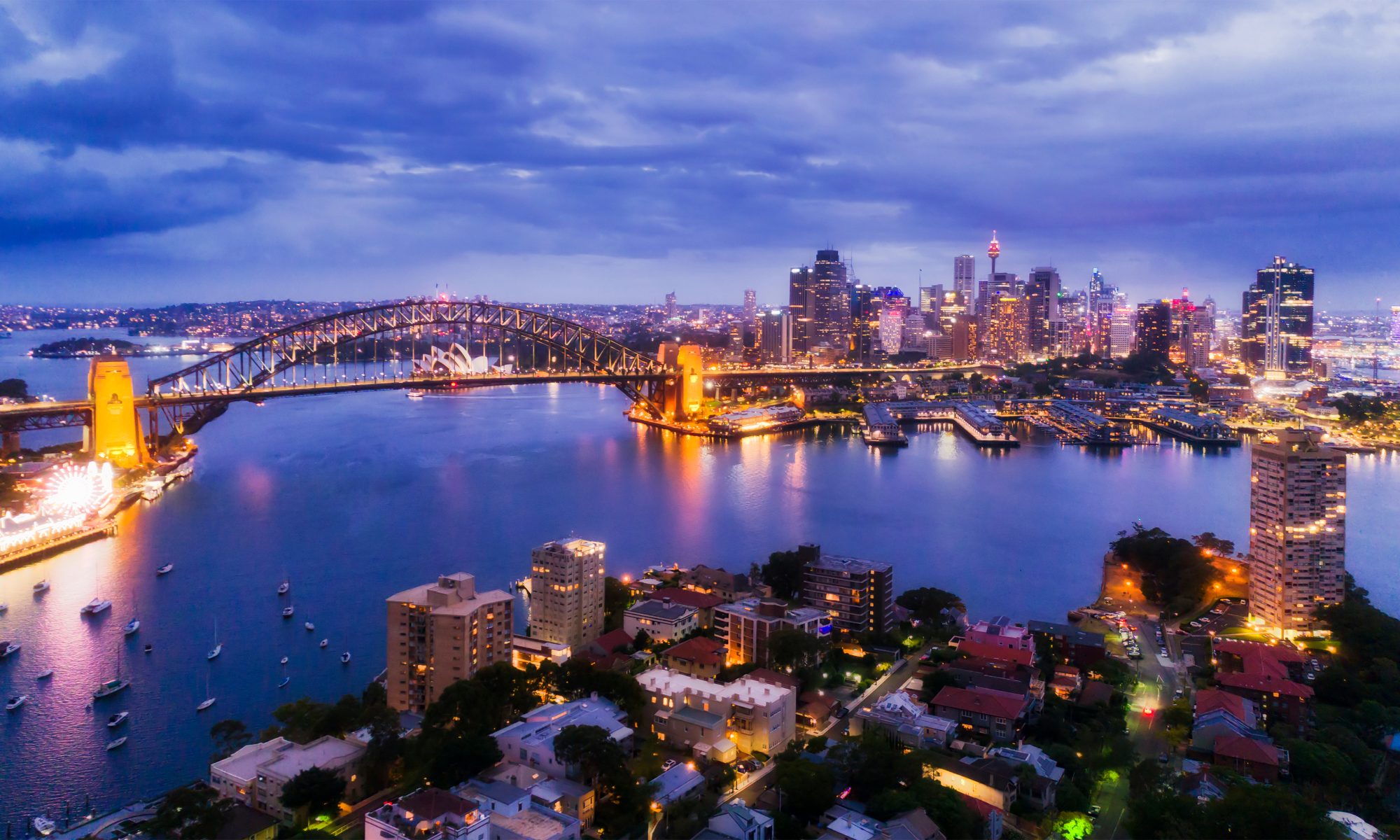
A glittering stretch of suburbia flanking the northern reaches of Sydney Harbour, the Lower North Shore is synonymous with affluence and coveted trophy homes. The drawcard for deep-pocketed house hunters is the area’s quiet leafy streets, prestigious schools and the opportunity to secure a waterfront property or an enviable harbour view. For cashed-up buyers, both big ticket items sit high on their wish lists.

Mosman leading the charge

While the Lower North Shore is home to prime high-profile suburbs like Neutral Bay, North Sydney, Cremorne, Crows Nest, Milsons Point and Kirribilli, it’s Mosman that takes centre stage when it comes to head-turning real estate. The large harbourside suburb is home to three sales over the $30 million mark.

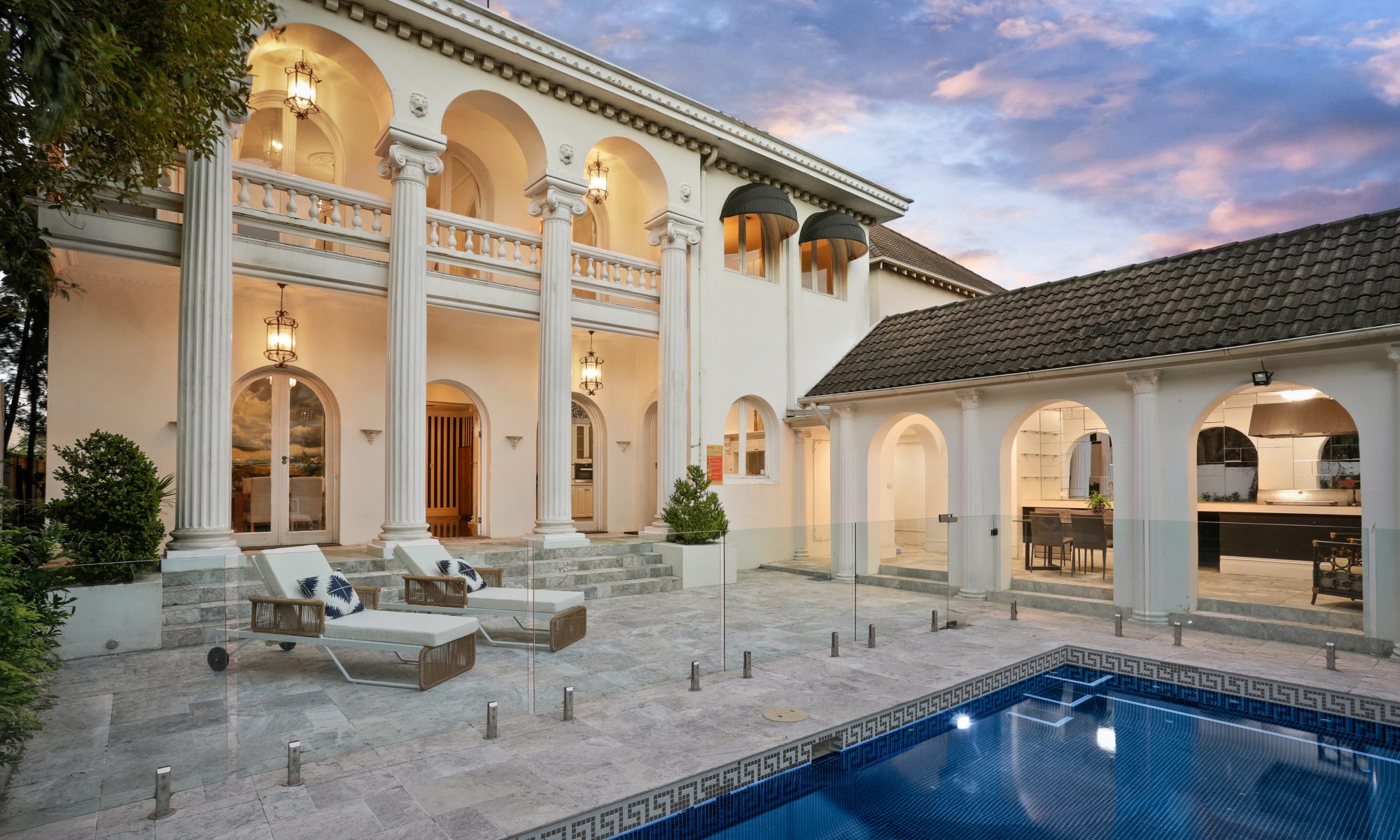
In 2022, a Stanley Avenue mansion on 1200sqm fetched $33 million and an Iluka Road home on 1700sqm achieved an undisclosed amount in the “low $30 millions”. A grand contemporary residence on 883sqm The Grove in Mosman exchanged in March for $30 million, the highest suburb price for 2024. Despite the sky high price tags, Mosman’s 12-month house median was $5.744 million, up 10.7 percent over the year, according to PropTrack.

Michael Coombs, director at Atlas by LJ Hooker, secured all three high-profile sales and says the local market has had a good calendar year to date.

“It’s no longer a cycle of traditional seasons, but activity is more driven by the greater economy and confidence,” Coombs says. “We saw that taper off at the end of the last quarter of 2023 so we actually held a few of our high end properties back. It paid off because about 90 percent of our sales this year over $20 million sold in March.

Michael Coombs says the North Shore market is less dependent on traditional selling seasons.

“If you go back five years, about 80 percent of buyers were in that lower end, under $10 million. Now I’m finding a significant amount of activity above that (level). Although it’s not necessarily booming, there’s just not a lot of quality stock in that upper end luxury market, but there are plenty of buyers around.”

More buyers, greater demand

An increasing number of buyers are prepared to play the waiting game, says Coombs, fuelling a local trade in under the radar, off-market deals.

“We’re probably doing just over 20 percent of our sales off market. The key drivers are those wanting privacy but sometimes, because these properties can be quite unique, buyers wait for them to come up. Then when a possibility arises they’re prepared to pay what they need to secure them,” he adds.

Scott Thornton, director of BresicWhitney’s newly opened Lower North Shore office, says the most active buyer profiles in the area are young families and professional couples.

“These buyers are looking for community, accessibility, and the lifestyle that the Lower North Shore’s harbourside suburbs offer,” Thornton says. “There’s also strong demand in the prestige market between $5 million and $10 million, as there’s persistent interest in architect-designed or more unique homes.”

Some buyers, he says, are crossing the bridge in search of better value.

“They’re not only locals looking to buy their first home or upsize, they’re also buyers coming from Sydney’s other markets. There’s a significant migration underway into the Lower North Shore from buyers currently in areas like the Eastern Suburbs or Inner West.

“We’re seeing this happen day-in, day-out with up to 5000 buyers a month actively looking for Lower North Shore property.”

It’s not all about the economy

While the wider Australian property market has slowed in response to high interest rates and greater cost of living woes, the Lower North Shore runs its own race according to  Thornton.

“Despite the broader economic uncertainties affecting some buyers and sellers, both local and international buyers recognise the Lower North Shore as a place that offers location, lifestyle and community. Homes are also generally quite tightly held and passed through generations, which keeps competition high and supports ongoing price stability,” he says.

“The combination of limited supply and good demand has, in some ways, insulated the market from any significant declines in values.”

Nerida Conisbee, economist with Ray White Australia, says cashed-up buyers have the power to move at their own pace.

“There are a lot of buyers who aren’t necessarily getting a loan which puts them in quite a different financial situation compared with someone trying to get into the market or simply upgrade,” she says. “The rich are getting richer — it’s not just a saying. There’s statistical evidence to show that.”

Ray White economist Nerida Conisbee

The Wealth Report 2024, compiled by global real estate consultancy Knight Frank, found that in Australia the number of ultra high net worth individuals — defined as those with a net worth of $30 million or more — rose by 2.9 percent between 2022 and 2023 to reach 15,347 people.

The report tipped that the figure is expected to rise a further 27 percent by 2028 to 19,491.

“That concentration of wealth is happening at the higher end, and it impacts Sydney premium markets because owning your own home is a tax-free asset,” Conisbee says. “There are definite benefits to buying a multimillion-dollar home if you want to put your money somewhere safe. And we know Sydney property is seen the world over as very safe.”

The future is heading up

Conisbee adds that plans in the pipeline to improve the North Sydney local government area are a bonus for potential buyers.

“There’s a lot of investment going into North Sydney,” she says. “There’s a new metro line improving accessibility and the council has some grand plans to open up the CBD and make it more pedestrian friendly while also improving the weekend and nighttime economy. Previously, it’s been very much a 9 to 5 worker area.”

North Sydney Council’s proposed $11 billion facelift to the country’s fastest-growing second CBD would create an extra 19,200sqm of parks and plazas — with an additional 25,000sqm of land proposed in a new bridge over a section of the Warringah Freeway.

Part of the new look Lower North Shore is welcoming new residential development.

“There are proposed changes to bring more density to some of the area which will allow for a larger mix of different apartments types, including one and two-bedroom units,” says Tim Abbott, of Ray White Projects Lower North Shore.

“Predominantly, the largest part of the project market has been with downsizers wanting to stay in the area and they’re looking for larger three and four-bedroom apartments. Developers have been designing specifically to meet that target market, knowing there’s such an undersupply there,” he says.

The apartment market north of the bridge comes with an eclectic price range, with luxury one-bedroom pads securing $1 million, while one furnished penthouse in the recently completed Kurraba Residences building by Third.i Group in exclusive Kurraba Point came to market earlier this year with $50 million expectations.

Abbott says he has high hopes for the future apartment market on the Lower North Shore as the landscape changes to match demand —and budgets.

“The luxury end starts at about $4 million, but of course it can go a lot higher than that, it just depends on size, finish and the views. The good thing is, with the projects now coming onto the market there’s a range to cater for a lot of different buyers. They’re no longer just building all the same thing and that’s a positive for all buyers.”

Estée Lauder Executive Chairman Says Good Leaders Have ‘Big Ears and a Little Mouth’

William P. Lauder might be a familiar name. His grandmother, Estée Lauder, founded her namesake brand in 1946 and grew it into one of the largest beauty companies today. Currently, the Estée Lauder Cos. have more than 45,000 employees worldwide and own over 20 brands, including Clinique, Tom Ford Beauty, La Mer, and Jo Malone.

Lauder, 64, is now the company’s executive chairman and chairman of the board of directors. He got his start in 1986 as the regional marketing director of Clinique U.S.A. in the New York metro area, helped launch the natural ingredients brand Origins, and eventually rose all the way to serve a stint as CEO of Estée Lauder in the late aughts. (It was recently announced his successor, longtime CEO Fabrizio Freda , will retire next summer amid slumping sales.)

In addition to his current position, Lauder teaches a class that he designed, “Decision-Making in the Leadership Chair,” at the Wharton School of the University of Pennsylvania for second-year MBA students.

Penta recently spoke to Lauder about his most memorable career moments, consumer preferences in the beauty industry, and his thoughts on leadership.

Penta : What is your role at Estée Lauder?

William P. Lauder: We have two great assets: brands and people, and my primary focus is to build great brands and to engage with our people. I travel and visit a lot of our markets and see how we can grow in that market. We have a presence in London, Paris, Korea, and many other international destinations. I host a town hall for Estée Lauder Cos. employees in many of our markets and talk to them about what makes us special and what our values are.

I also visit our factories and research and development facilities to do the same thing.

Can you share a career highlight since you joined 38 years ago?

I was one of the people who created and launched the Origins brand in 1990. The idea was to create a line that was backed by science but made with natural ingredients. We had a product called Peace of Mind to put on your temples and wrists to help relieve stress. We let people sample it in stores, and they loved it so much that they immediately came back to buy it. From there, the brand exploded, and we opened Origins stores. This was innovative at the time because single-brand stores didn’t exist.

Since I’ve moved into corporate management, my highlight is to be able to travel and show the Estée Lauder Cos. flag, as I like to call it, to our employees.

Have are consumer preferences with respect to luxury fragrances and beauty products changing?

post-Covid, there has been an explosion in interest in luxury fragrances, which is reflected in our brands like Jo Malone London, Le Labo, Editions de Parfums Frédéric Malle, Tom Ford, and Kilian Paris.

Also, we have new, much younger consumers in their late teens to early 20s who are very into makeup and buy our brands like Too Faced. They are getting into skin care by buying products from our brands, including Clinique and the Ordinary. Teenage boys are very interested in fragrances and buy Kilian Paris and Tom Ford. Our hope is that this younger generation continues their loyalty to us, especially as they get older and have more disposable income.

You teach a leadership class at Wharton. In your opinion, what are the attributes of a successful leader?

First and foremost, the most effective leaders must be effective communicators. I believe in short, quick, and concise comments and statements that you repeat, like mantras. These mantras should be able to be passed down to the people they lead.

Also, you have to be a great teacher to be a great leader. You need to make time for an in-depth conversation with the people you lead to get your message across.

And it’s important to have big ears and a little mouth. Listen more and talk less.

Breast cancer research is a priority for Estée Lauder. Can you tell us more about this? 

The Breast Cancer Research Foundation (BCRF) is a nonprofit that my mother, Evelyn, started more than 30 years ago. We, as a family, chose breast cancer because it’s the most common cancer that women are diagnosed with. One in eight women in the U.S. will be diagnosed with breast cancer, and 80% of our employees are women, so the statistic resonates.

The Estée Lauder Cos. Breast Cancer Campaign, our initiative that funds BCRF, is key to our company culture and a cause that brings us together meaningfully. In October, for Breast Cancer Awareness Month, we launch products across some of our brands, and proceeds from sales go toward the foundation. The campaign and the Estée Lauder Cos. Charitable Foundation have raised more than US$131 million to date for BCRF.

This interview has been edited for length and clarity.

South Korea Can Go Only So Far Copying Japan’s Market Reforms

South Korea is taking a page from Japan to boost its stock market. There are certainly some low-hanging fruits to pick, but the country’s large family-controlled corporate empires, known as chaebols, could be an obstacle to more meaningful structural change.

The country’s stock exchange is set to unveil a stock index that will take into account factors such as profitability and shareholder returns. That is modeled after a similar move taken in 2014 by Japan, which uses its new index to essentially name and shame companies that failed to make the grade.

The new index is just a part of Korea’s “corporate value-up” program announced in February, aiming to boost the valuations of its market with shareholder-friendly policies. The government also proposed making changes to the tax code to encourage companies to pay more dividends. More broadly, South Korea hopes to copy the success of Japan’s drive to improve corporate governance and returns to investors.

Buybacks and dividends in Japan have risen, and shareholders have grown more vocal. Companies also are unloading their nonstrategic shareholdings in other companies, slimming down their balance sheets.

As a result, Japan has been one of the best-performing markets in the world in recent years. The Topix index hit a record high in July, nearly 35 years after its famous bubble burst.

On the other hand, South Korea’s stock market has long suffered from a so-called Korea discount , as it trades more cheaply than other emerging markets. Its main benchmark, Kospi Composite index, has been valued at an average 12 times forward earnings in the past decade, compared with around 15 times for Japan’s Topix and Taiwan’s Taiex each.

Japan’s index has gained 40% since the end of 2022, while Taiwan’s has surged 57%. Korea’s, by contrast, has gone up only 16% over the same period.

Similar to their counterparts in Japan, Korean companies haven’t historically been willing to return much capital to shareholders. The dividend yield on the Kospi is below 2%, which is lower than many markets. Buybacks are paltry and, more important, many Korean companies don’t cancel the shares they have bought back, instead keeping them as treasury shares, using that as a tool for major shareholders to keep control of the company.

On that front, there seems to be some progress. Treasury share cancellation, excluding Samsung Electronics , so far this year has already more than doubled the full-year level of 2023, according to Goldman Sachs . New regulations restricting how companies can use their treasury shares is probably one reason. Financial companies, in particular, have been eager to buy back and cancel their shares.

The elephant in the room, however, is the power of chaebols, which dominate Korea’s economy and stock market. Companies in the Samsung group, for example, make up more than 20% of the Kospi index. Besides the electronics brand, this includes companies in areas as disparate as financial services and shipbuilding. The interests of the families who control these vast corporate empires don’t usually align with those of the minority shareholders.

Instead, they have long used convoluted corporate structures, including extensive cross-shareholdings, to maintain their grip on the conglomerates. Given the chaebols’ strong economic and political influence in the country, they won’t be so easily pressured as Japanese companies have been to unwind these arrangements.

High inheritance taxes are another reason the families might not necessarily want high share prices for their companies. The government has proposed reducing the tax, but it might not be enough.

Korea’ stock market, which houses some of the world’s best-known brands, including Samsung and Hyundai Motor , has long been a laggard. The government’s new push might yield some successes, but its biggest companies could remain the toughest nuts to crack.