Why city CEOS crave life on the farm — and how they’re making it work
Instead of buying second homes on the coast, urban professionals are taking on the charms and challenges of hobby farms
 4 min
4 min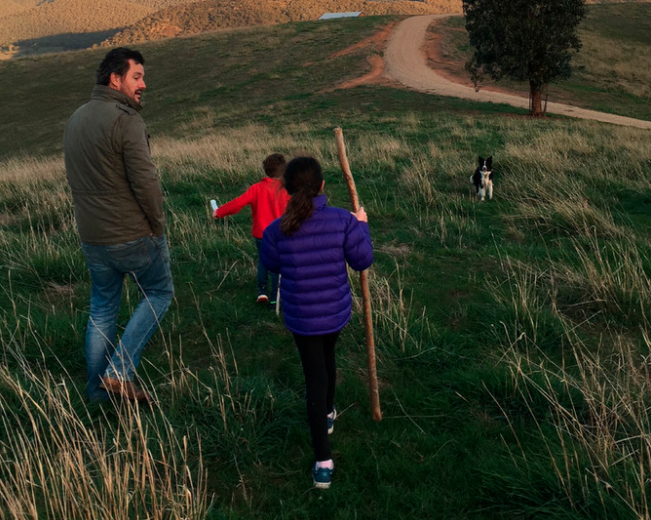
From the Spring issue of Kanebridge Quarterly magazine, on sale now. Order your copy here.
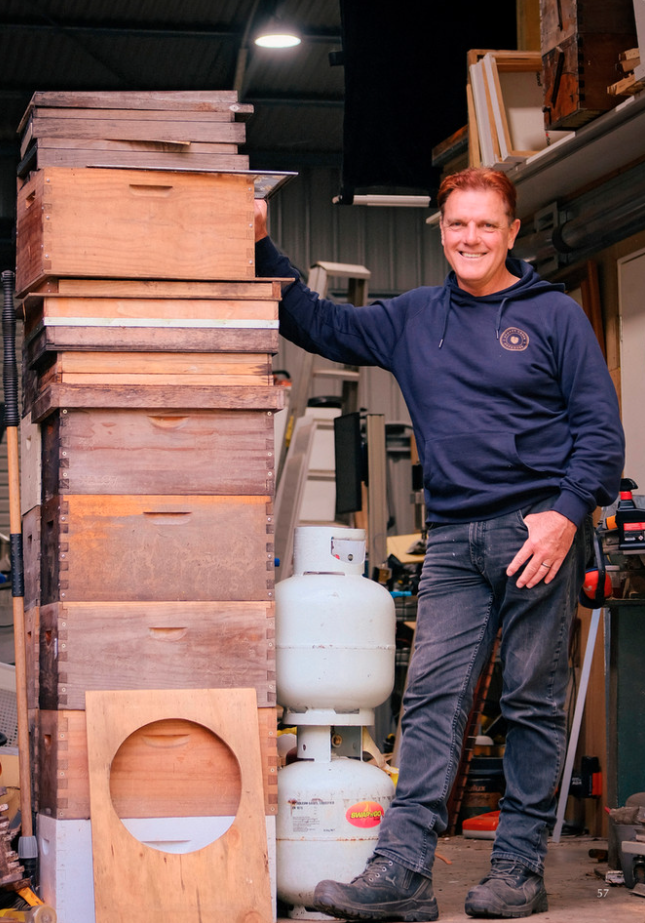
During the week, CEO Nick Keenan is a corporate king, working long hours and juggling the parenting of their three children with his wife Jodie from their East Malvern home in Melbourne. But on the weekend, he swaps tailored suits for jeans and work boots and heads 3.5 hours to his farm in the Victorian Alps. A desire to replicate his childhood growing up on a cattle and wheat farm in central NSW and give his kids—Jackson, 16, Jodi, 14, and Jessie, 11—a taste of great outdoors fuelled the purchase of a block of land near the country alpine town of Myrtleford in 2016. Today, their “hobby farm” features three-bedroom completely off-grid homestead, horses and truffle-producing oak trees. The Keenans have done the bulk of the work themselves in their spare time and during the COVID-19 lockdowns, when their new project also became a sanctuary.
“I wear a suit during the week and I’m a farmer on the weekends,” the CEO of media agency Publicis Groupe says.
“When I need to clear my head, it’s my dirty Hilux ute I jump into, not my latest European cars— the BMWs and Mercedes Benzs— you should see the looks I get from some other CEOs.”
The rise of a new crop of farming families. People making the shift are growing in numbers, with hobby farming a plausible option for those weary of city life and an unexpected way for suburban families to find more time together away from the cities—if only on weekends.
The Australian Bureau of Statistics shows 66,000 hobby farms in Australia, with more and more city families swapping their nine-to-five for the outdoors, driven by a desire to escape the rat race and show their kids another side of life.
Those who can afford it are discovering that farming comes with its own pros and cons, but financial decisions are key. The living farm fantasy among the well-heeled often means small-scale producers must accept they may never be able to sell their wares at a profit. While a successful hobby farm can become a profitable sideline, it should not be the main source of family income.
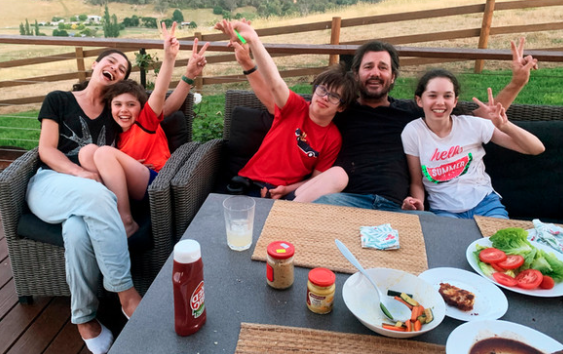
“I just really wanted to show the kids a little bit of what dad grew up with,” says Keenan. “My family had 1000 breeders and 28 bulls, so I wanted to replicate that on a minor scale. And then I wanted to put in a windbreak, and I discovered French Holly Oaks that can be inoculated with truffles.”
“We developed this over a year; I had these romantic notions of wandering out from the kitchen and grabbing a truffle to use in cooking. Essentially, it wanted to escape from the city but we didn’t want it to be a money pit either. I think we have nailed the lifestyle balance.”
The Keenans now have 330 truffle trees which, after just three and a half years, are already producing truffle, which they plan to sell on a small scale in the future. Despite the early success of their truffle farm, the Keenans make enough from their media company and not from hobby farming itself to even cover the Airbnb to keep the lights on.
The Keenans have up around 20 percent of their land, the equivalent of about two football fields, given over to a patch of the grazing truffle inoculated oak trees. They’ve planted another 30 around the outside of the house as a windbreak. But the truffle farm is just a sideline for the Keenans who have no desire to become full-time farmers, only to make a bit of money on the side for their personal use.
Bee farming is now Australia’s most popular hobby farm, according to the Department of Agriculture and Forestry. More Australians are finding bees easier and more economical to keep in their backyards than poultry or other small-scale farm animals. In fact, around 80 percent of all beehives in Australia fall into the category of hobbyists, says Mike Allerton of Amateur Beekeepers Australia.
“All sorts of people are attracted to beekeeping—lawyers, academics, students, retirees, dentists—you name it,” says Allerton, who has 10 beehives on three acres in the Blue Mountains.
“There are a lot of backyard beekeepers; some people have just one hive to make enough honey for themselves and give away to family and friends, and some have up to 50.”
Allerton says different councils have different restrictions on beekeeping, particularly if you keep hives in urban or built-up areas, and bees are classified as livestock. And in his area there is a requirement that the relevant Department of Primary Industry is in your yard.
Additionally, beekeeping must abide by the National Bee Biosecurity Code of Practice which dictates things like you cannot feed honey to bees and calling the Department of American Foulbrood, a bacterial disease for bees found in Australia, that can destroy a hive.
Hobby farmers need a few hundred dollars to start with beehive boxes, a smoker, and hive tools, and more ongoing funds to maintain them.
With farming come a few hurdles and hobby farmers who are new to it, as well as keeping up the stringent biosecurity standards and welfare of animals—and of course, as in breaking even. And you do not need agricultural genes or herb school.
“Our farm has been a lot of work, but it’s probably the most rewarding experience we’ve had,” Keenan says. “There’s nothing we love more than seeing the kids outside, swimming, kayaking, and running around the backyard in the fresh air.
“In my opinion, country kids have the greatest gift of all—the great outdoors.”
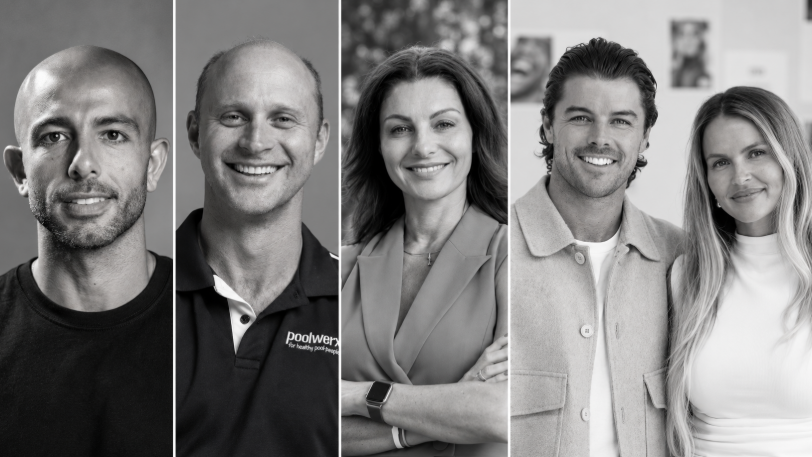
From making unpopular decisions to learning when to listen, leaders from five businesses reveal what nobody prepared them for — and how running a company has challenged their expectations.

Technology and semiconductor shares fell sharply as investors questioned the debt financing the AI infrastructure boom and confronted higher rates and Chinese competition.
Elon Musk is exploring a potential merger between Tesla and SpaceX, a deal that could reshape the future of AI, robotics, autonomous vehicles and space technology. With a combined valuation potentially reaching $3.5 trillion, the move could bring Musk’s vision of an interconnected technology ecosystem closer to reality, although a deal remains uncertain.
5 min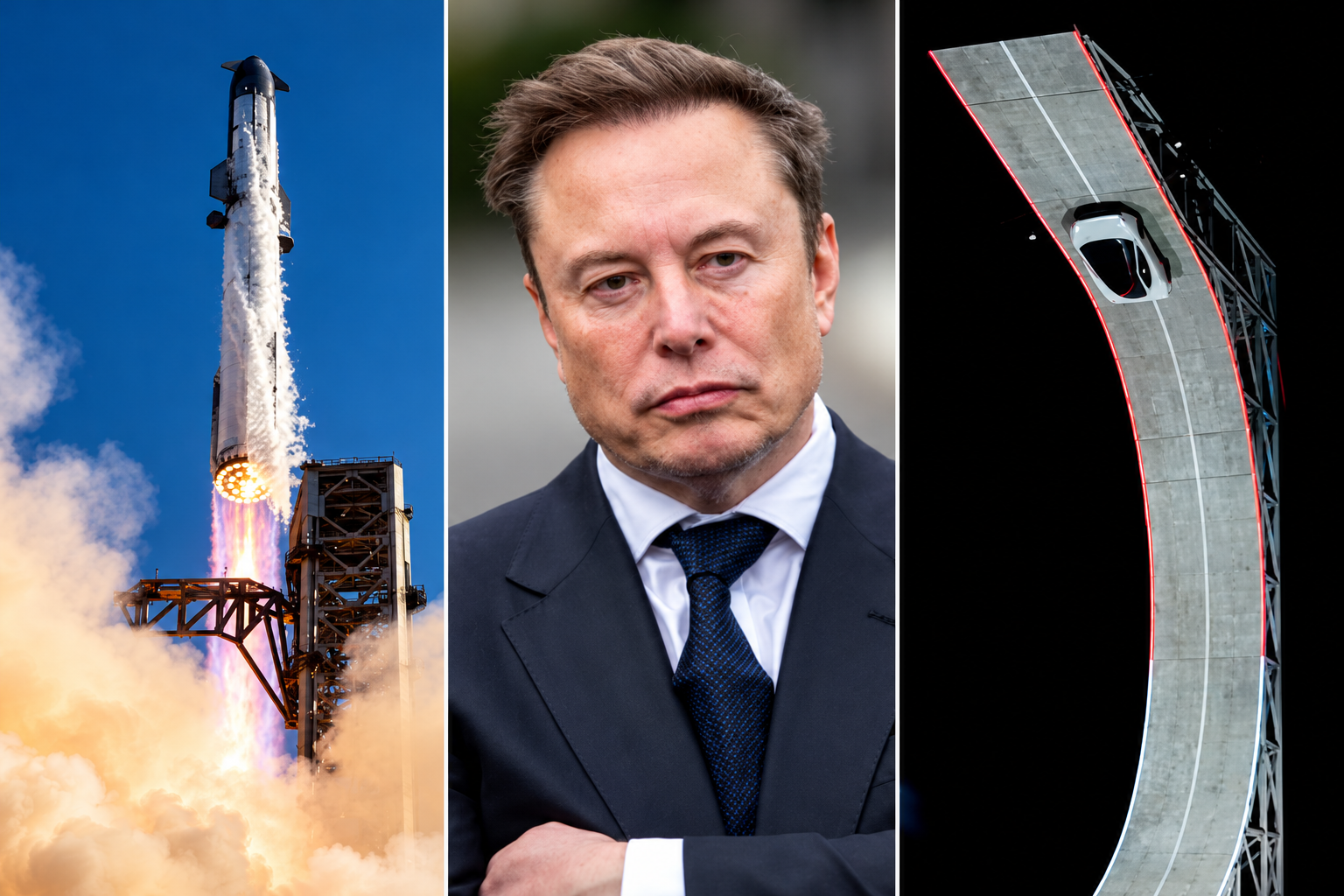
Elon Musk has engineered ties between Tesla TSLA 3.41%increase; up pointing triangle and SpaceX SPCX 7.79%increase; up pointing triangle that are hard to break, and now he wants to fuse them together permanently.
Musk has run both Tesla and SpaceX concurrently over the past two decades, using a schedule that dictated which days he spent focused on each business.
The companies have often shared resources and personnel, signaling their close ties. Last year, SpaceX looked into creating a spacesuit for Tesla’s humanoid robot Optimus, a person familiar with the matter said. Tesla last week showed off its new Roadster, a vehicle featuring SpaceX rocket thrusters that it hopes to soon bring to market.
And in recent months, Musk has repositioned both companies by expanding beyond their core operations toward a shared mission centered on artificial intelligence.
The world’s richest man on Tuesday signaled his interest in tying up SpaceX and Tesla, marking what would be the biggest corporate merger of all time. Because he serves as chief executive of SpaceX and Tesla, Musk said committees of independent directors at both companies are evaluating a possible deal, adding that a transaction might not come to fruition.
The committees will likely evaluate, with lawyers and bankers, how each company would fare in a potential deal and how a deal might best be structured. They then present their conclusions to their respective boards, who typically vote on whether to proceed.
“It’s an odd Kabuki dance where two groups of people are talking and I can’t be in the conversation,” Musk told SpaceX investors on Tuesday in response to an analyst’s question about a potential deal.
For Musk, the merger supports his vision of a world full of autonomous cars, humanoid robots and weekly rocket launches, as well as the data centers and satellites required to keep the whole thing running.
Some investors and analysts said they expect a transaction would be structured as an all-stock deal, with SpaceX potentially paying a modest premium for Tesla shares.
SpaceX, which has a market value of about $2 trillion, said it is seeing sharp growth in revenue across its businesses, which include operating data centers, launching rockets and operating satellite networks such as the internet service Starlink. Tesla is valued at about $1.5 trillion and is expanding its operations beyond its automotive and energy business. Shares in both companies traded higher following the news Tuesday.
Musk’s substantial ownership stakes in both companies, along with voting control at SpaceX, has enabled him to set the deal in motion. Analysts and investors said the deal will probably face regulatory scrutiny internationally, though some see Musk’s close relationship with the Trump administration as an asset to getting approval.
Blurred lines
The companies haven’t said which directors are on the special committees evaluating a potential deal. Several SpaceX and Tesla board members have either personal or business ties to Musk. And like Musk, venture capitalist Ira Ehrenpreis sits on both boards.
In a filing this week, Tesla outlined millions of dollars in business agreements with SpaceX and its subsidiaries last year, including $143 million in car sales to SpaceX, $3.3 million in advertising that it bought on the social-media platform X and $430 million in revenue from the sale of Megapack batteries for SpaceX’s data centers.
The companies also split the cost of resources including the use of Musk’s SpaceX jet and the bill for his personal security, which he runs through a private company.
Employees at both companies routinely move between companies to work on special projects, and some executives have dual roles, including Charles Kuehmann, vice president of materials engineering at both SpaceX and Tesla, and Ashok Elluswamy, the vice president of AI software at Tesla who runs a joint venture with SpaceX called Digital Optimus.
Over the years, Musk has launched new startups within his empire, including brain-implant company Neuralink, underground-tunnel developer the Boring Company and xAI, the AI startup that merged with SpaceX in February.
It is that AI business that Musk thinks can serve a market worth tens of trillions of dollars, justifying the need for a merger.
The business case goes like this: Tesla is developing robotaxis and robots, which it calls “physical AI.” SpaceX is working on the back end of physical AI: the data-center capacity and internet connection required for those robotaxis and robots to operate continuously.
“I don’t see what the value of Tesla is if it’s not merged with SpaceX,” said investment adviser Ross Gerber, a former Tesla bull turned critic invested in both companies. “If they don’t merge, the brains of everything that runs Tesla is owned by another company.”
On top of it all, both companies face constraints on the supply chains they need to make this world a reality, particularly when it comes to chips. To address this, Musk earlier this year announced a joint venture between Tesla, SpaceX and Intel to design and manufacture chips in Texas. “The most epic chip-building exercise by far,” he has said.
Musk at the wheel
For Musk, a merger would also solve two problems: demands on his attention and his lack of control at Tesla.
Tesla for years was Musk’s only public company, a status that came with greater scrutiny. There, Musk reports to a public board, as well as individual investors who make up around 30% of Tesla’s voting power, according to FactSet.
The question of Musk’s attention became a particular focus for investors and the board in recent years after he acquired Twitter in 2022 and launched xAI in 2023, and again in 2025 as he spent time in Washington, D.C., running the Department of Government Efficiency in the early months of President Trump’s second term.
As Tesla’s car business suffered in 2025, Musk threatened to take his AI ambitions outside the company if he wasn’t granted 25% voting control. Last November, Tesla shareholders approved a new pay package for Musk, which created a path for him to vastly expand his stake.
As of Sept. 30, Musk owned a roughly 20% stake in Tesla, according to the company’s proxy filing.
The SpaceX IPO gave Musk a different path. When SpaceX went public in June, the deal’s structure enabled him to have more than 80% voting power at the company—so much that he can’t be fired and decisions can’t be made without his support.
If SpaceX acquires Tesla, he will likely stay in control.

Micro-needling promises glow and firmness, but timing can make all the difference.
From mud baths to herbal massages, Fiji’s heat rituals turned one winter escape into a soul-deep reset.