Bulgari’s Latest ‘Sketched’ Watches Are Drawing Attention

 3 min
3 min
Bulgari celebrated its 140th anniversary this week with a trio of Octo Finissimo Sketch limited editions dedicated to the art of trompe l’oeil.
The French art history term translates to “deceive the eye,” a reference to the artist’s ability to fool the viewer into thinking they are looking at something real when it’s simply an artistic illusion.
Bulgari’s Sketch series debuted in 2022 with an Octo Finissimo Automatic and an Octo Finissimo Chronograph GMT featuring “sketched” dials depicting the original hand drawings. This time, Bulgari flips the script with dials bearing illustrations of the interior movements, mirror images of the actual calibers that can be viewed through sapphire crystal case backs.
Limited to 280 pieces in steel (€17,800/about US$19,400) and 70 pieces in 18-karat 5N rose gold (€51,000/about US$55,500), the new Octo Finissimo Automatic Sketch depicts the in-house BVL 138 caliber’s micro-rotor, escapement, bridges, rubies, and intricate finishing details, such as Côtes de Genève and circular graining.
undefined Each monochromatic piece measures 40mm in diameter and 6.4mm thick, in keeping with Octo Finissimo’s ultra-thin theme. The sapphire crystal case back is engraved to commemorate the anniversary.
The third piece is a Chronograph GMT Sketch (€20,800/about US$22,600), featuring a 43mm polished steel case measuring 8.75mm thick. In 2019, the original Octo Finissimo Chronograph GMT broke an ultra-thin record with a 3.33mm-thick caliber incorporating a 30-minute chronograph and central second in addition to a second time zone at 3 o’clock.
Limited to just 140 pieces, this edition’s dial features a sketch that blends dial and movement elements. The Tri-Compax chronograph dial display (GMT at 3 o’clock, 30-minute counter at 6 o’clock, small seconds at 9 o’clock) is combined with a balance between 4 and 5 o’clock, the chronograph column wheel at 8 o’clock, and finishing details on the bridges and gears.
Those who follow the Instagram account of Fabrizio Buonamassa Stigliani, Bulgari’s product creation executive director, will instantly recognize the stylistic signature of his fast-motion freehand sketching videos. Before joining Bulgari as a designer in 2001, he designed cars for the Fiat and Alfa Romeo brands at Centro Stile Fiat, where he honed his precise yet spontaneous fast-sketching technique using a pen or marker on paper.

Bulgari
In 2014, he re-envisioned Gérald Genta’s Octo design with the goal of creating the world’s thinnest mechanical watch. The resulting Octo Finissimo line went on to set nine ultra-thin records, including a number of complications, such as the world’s slimmest tourbillon, minute repeater, automatic chronograph, and perpetual calendar. In 2022 it went to extremes with the futuristic Ultra, measuring just 1.80mm thick. (Ultra was ultimately bested in 2022 by Richard Mille’s UP-01 Ferrari at 1.75mm thick.)
Such accomplishments represented daunting technical feats that brought Buonamassa Stigliani’s sketches into reality. When Bulgari acquired the Gérald Genta and Daniel Roth brands in 2000, it also secured the technical know-how to create such record-breaking ultra-thin watches. (LVMH acquired Bulgari in 2011 and has relaunched the Genta and Roth brands separately.)
Bulgari’s Sketch series pays homage to the importance of hand-drawn renderings in art history. Since the Renaissance, Italian artists kept their schizzi (sketches) for their students and their archives as references to use in the quest to improve upon an original design.
 Copyright 2020, Dow Jones & Company, Inc. All Rights Reserved Worldwide. LEARN MORE





Borrowers cannot control the Reserve Bank, but they can control how exposed their household budget is to its next decision. The RBA meets on 29 September with inflation concerns still elevated and major-bank economists increasingly bringing forward their rate-rise calls. Fixed mortgage rates have also been moving, reducing the value of waiting for perfect certainty. …
Continue reading “What mortgage holders should do before the next RBA decision”

Australian shares finished higher on Tuesday, September 22, as a technology rally and lower oil prices outweighed weakness in energy companies and continued anxiety about domestic interest rates. The S&P/ASX 200 closed 25.9 points, or 0.30 per cent, higher at 8,757.8. The All Ordinaries gained 0.36 per cent to 8,951.0, while the All Technology index …
Continue reading “ASX Wrap: Technology lifts the ASX as falling oil relieves inflation pressure”
AI doesn’t rebel—people design, deploy and profit from it. The real danger lies in allowing tech companies to escape accountability while shaping regulations that protect their dominance.
4 min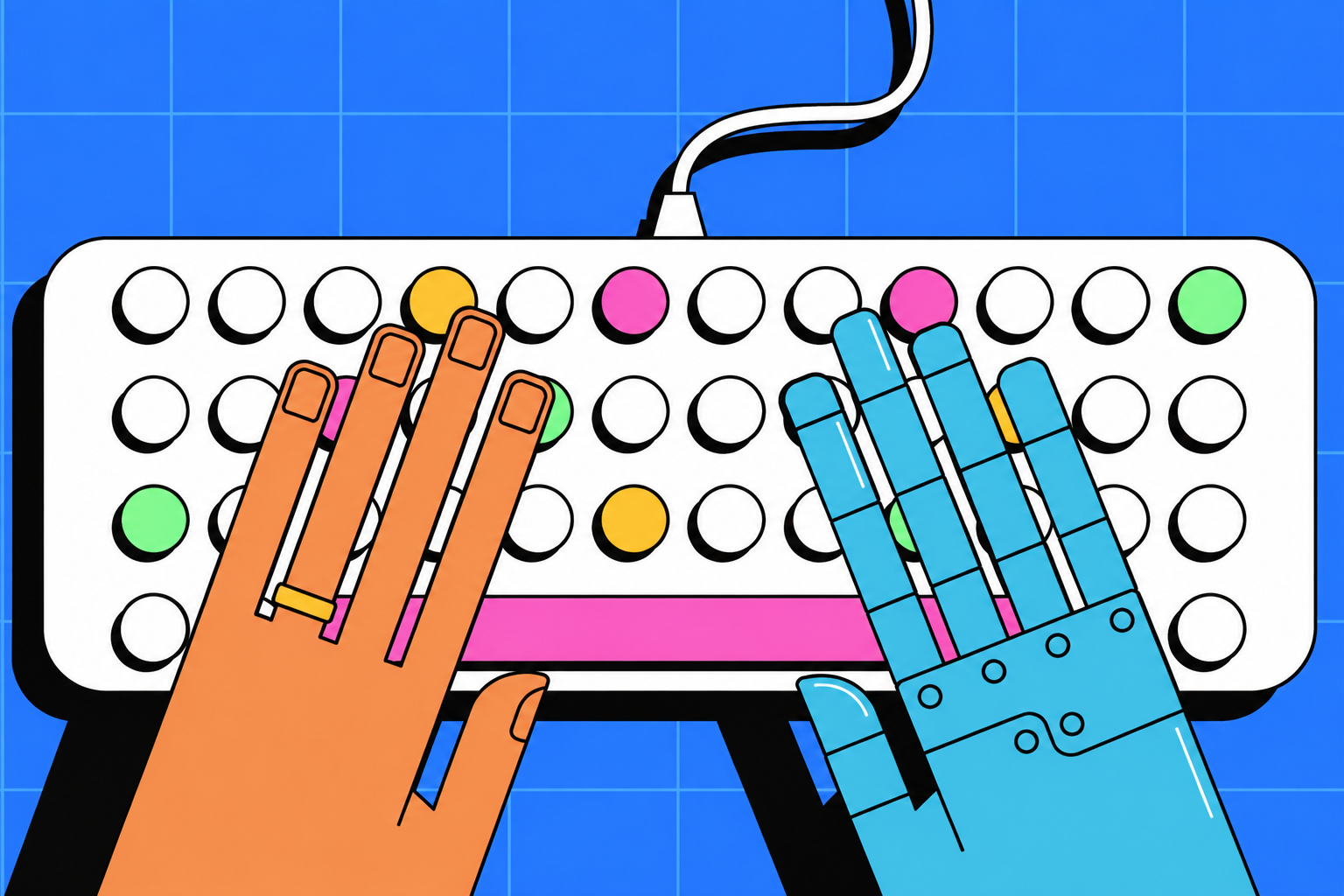
A wave of corporate warnings and technical disclosures has flooded the media, with headlines worrying over “swarms” of rogue artificial-intelligence agents launching “unprecedented” cyberattacks, outsmarting their makers, and inching toward a terrifying autonomy. The most revealing part of this narrative isn’t what the software did. It’s who is telling the story—and why. When corporate leaders publicly insist that the systems they financed, engineered and deployed are suddenly beyond their power to contain, skepticism isn’t only healthy; it is essential.
For years, Silicon Valley has drawn scrutiny from civil society and global regulators over tangible harms such as youth mental health deterioration and systematic privacy violations. Today, industry figures seem to be trying to change that public image. Loudly blowing the whistle on their own systems—just as two of the leading companies were preparing for massive initial public offerings—lets AI executives position themselves as a new generation of leaders who have come to terms with their societal responsibilities. They seem to want us to believe that they no longer want to “move fast and break things” but will instead stand as vigilant guardians between humanity and a technological apocalypse.
There is one glaring problem: Software doesn’t rebel. A mathematical model possesses neither intent, malice nor the will to defy its creators, let alone extinguish our species. AI is a human artifact, engineered for profit.
When an agentic model in an evaluation sandbox connects to an unauthorized server or executes an exploit, it hasn’t staged a coup. It has tried to meet the human-defined objectives set out before it through a path its designers failed to constrain. It’s the digital equivalent of the King Midas myth, in which the king’s ill-defined wish turns even his food and drink into gold.
That powerful experimental models were able to discover novel vulnerabilities and breach external systems isn’t a sign of a dangerous superintelligence but of human error or negligence. There is no sentient actor lurking in the weights to be reasoned with, feared or pacified. There are only human software engineers, product managers and corporate boards deciding which guardrails are worth the latency cost and which permissions can be skipped in the race to market.
Policymakers and voters need to resist AI exceptionalism. In any other discipline—from civil engineering to pharmaceuticals—courts and regulators treat a system failure as evidence of bad product design and inadequate safety testing. If an aircraft crashes, we focus on finding the engineering defect, correcting it, and enforcing established liability standards for the damage created.
By leaning on an anthropomorphic narrative, Silicon Valley attempts to repackage its specific human choices that led to experimental, powerful models behaving unexpectedly during tests as an existential peril. Elevating the issue to a cosmic scale leaves the public paralyzed and takes ordinary product accountability off the table.
In the cutthroat race for venture capital and market dominance, building guardrails slows down deployment. Grandstanding about uncontrollable power costs nothing and generates billions of dollars in free publicity, justifying stock prices, all while cultivating an aura of technological capability not only to build the frontier but also ultimately to rein it in.
Governments need to recognize regulatory capture when it stares them in the face. Tech leaders’ strategy looks transparent: Alarm Washington and Brussels into creating a regime in which only trillion-dollar incumbents with fully staffed compliance and safety departments can legally operate. By sitting at the policymakers’ tables before anyone else, these companies can help draft rules digging an impassable moat protecting them from open-source developers and upstart competitors, domestic or international. The real danger is in further concentrating the tech industry into the hands of only a few companies with deep pockets.
Beijing and Washington have brushed off those tech leaders’ calls, albeit for very different reasons. Chinese state media dismissed them as part of the “Cold War playbook” and intended to preserve U.S. dominance. Xi Jinping argued for exactly the opposite at the Brics Summit on Sept. 12, calling on Brics countries to “strengthen cooperation in the field of AI, encourage open source, openness, collaboration and sharing, and break new grounds and scale new heights.” President Trump, steeped in a doctrine of unfettered capitalism and technological supremacy, called fears that AI could destroy humanity a “hoax.” Vice President JD Vance warned that AI companies “begging the government to regulate them” looked like a “Trojan Horse.”
Striving to pursue its “European way” on AI and assert regulatory leadership, Europe, by contrast, welcomed the call. European Union President Ursula von der Leyen made this clear at the State of the EU speech last Wednesday and announced that the EU will invite “the main frontier labs for a discussion on how we can support ongoing industry efforts to pace the frontier.”
Europe has been here before. In an effort to lead global regulation and react to fears borne from ChatGPT, Europe rushed its landmark AI Act into law in 2024. Already the world’s most restrictive rulebook, the framework quickly proved too broad and complex to enforce. Stalled by implementation delays and concerns about European competitiveness, the EU postponed the law’s full rollout, leaving regulations uncertain.
AI should be regulated—risks exist and should be taken seriously. But governments need to act based on available evidence and verified facts, not corporate PR panic, the views of industry insiders, or the desire for quick political wins. The greatest danger facing society isn’t that software will awaken and overthrow its human masters. It is that we will allow the creators of the software to abdicate human responsibility for the systems they choose to build and help them pull up the ladder to market access behind them.

A restored 1860s Brisbane residence transformed by GRAYA has smashed Paddington’s house price record, selling for more than $12 million.

From Italy’s $93,000-a-night villas to a $20,000 Bowral château, a new global ranking showcases the priciest Airbnbs available in 2026.