Positive gearing suburbs in Australia’s hottest property market
Strong rents easily cover repayments in 57 suburbs of Western Australia
 3 min
3 min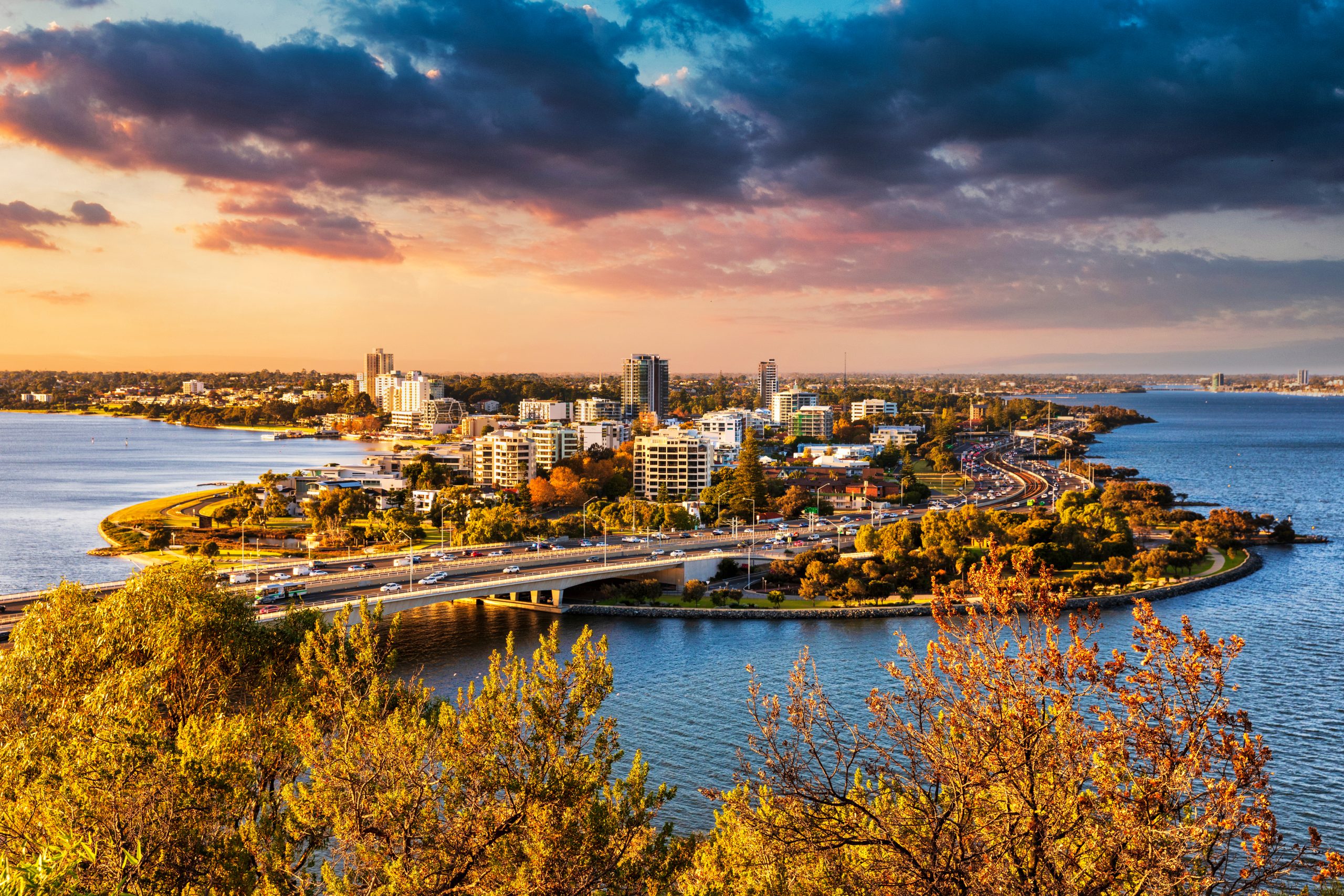
Western Australia remains Australia’s strongest property market, with home values up 23.2% to a median price of $751,000 in Perth and 14.9% to a median of $528,000 in regional Western Australia over the year to August. This is the highest rate of annual capital growth among Australia’s capital cities and regional areas, according to Proptrack data.
Rents have also risen more in Western Australia than anywhere else. The latest available Proptrack data covering the March quarter shows a 15.5% annual increase in rents in Perth and a 14.3% uplift in regional Western Australia. The state has also seen the strongest growth in property investment lending as investors from all over the country seek to buy in the booming market. Proptrack economic analyst Megan Lieu said investor lending in Western Australia was 48% higher in the June quarter compared to the same period last year, according to Australian Bureau of Statistics data.
Rapid increases in weekly rents have led to more suburbs across the country offering positive gearing opportunities for investors. Proptrack has identified 140 positive gearing suburbs nationwide where rental returns entirely cover the investment loan repayments for investors.
“Rent growth has … outpaced home price growth over the last 12 months, making conditions increasingly favourable for investors,” Ms Lieu said. “While many of them are benefiting from the current market, those with properties in select suburbs are not only seeing their rental income cover their mortgage but also deliver positive cash flow.”
The data shows Western Australia has 57 positive gearing suburbs, which is the most of any state and territory. Examples of these suburbs are listed below. The data assumes a 30-year loan at an 80% loan-to-value ratio (LVR) with an interest rate of 6.52%.
Positive gearing suburbs in Western Australia
Baynton
Baynton is in the Pilbara mining region and is the best positive gearing suburb in the state. Investors can cover their mortgage repayments with $2,100 per month to spare, according to Proptrack data. A typical house in Baynton costs a median of $682,500 and fetches $5,600 per month in rent. This is more than enough to cover the monthly loan repayment of $3,458.
Kambalda West
Kambalda West is in the Goldfields-Esperance mining region of Western Australia. A typical house costs $180,000 and rents for $1,520 per month. The mortgage costs $912 per month, which gives investors surplus cash of $607 per month to help cover other expenses like council and water rates.
Port Headland
Port Hedland is the second largest town in the Pilbara mining region and another strong positive gearing suburb. The median house price is $730,000 and the rental return is $4,900 per month. The investment loan repayment costs $3,698 per month, leaving the investor with $1,201 per month in their pocket. Investors on a lower budget can buy an apartment for a median of $474,396, which will rent for $3,200 per month and easily cover the mortgage of $2,403 per month.
Cable Beach
In the Broome region of Western Australia, Cable Beach sits on a 22km stretch of white sandy coastline along the Indian Ocean. The suburb was named after a telegraph cable that was laid between Broome and Java in 1889. Cable Beach houses have a median price tag of $670,000 and rent for $3,930 per month which is more than enough to cover the loan repayment of $3,394 per month.
Perth CBD
Investors can purchase a unit for a median of $465,000 and rent it out for $2,480 per month in Perth CBD. While the loan repayment gobbles up most of this, costing $2,356 per month, it is a notable rarity for a CBD suburb in the centre of an Australian capital city to deliver positive gearing.
Mosman Park
Mosman Park is an affluent suburb along the Swan River in Perth. An Australian house price record was set here in 2009 when mining magnate Chris Ellison bought a waterfront mansion for $52.5 million. Property investors can achieve positive gearing in this suburb with apartments. The median unit costs $380,000 and commands $2,000 per month in rent. This covers the monthly mortgage repayment of $1,925.
Somerville
Somerville is a positive gearing suburb in the city of Kalgoorlie-Boulder in the state’s Eastern Goldfields region. An investment unit here will cost a median of $282,000 and command a monthly rent of $2,440. This easily covers the loan repayment of $1,428 per month, with more than $1,000 to spare.
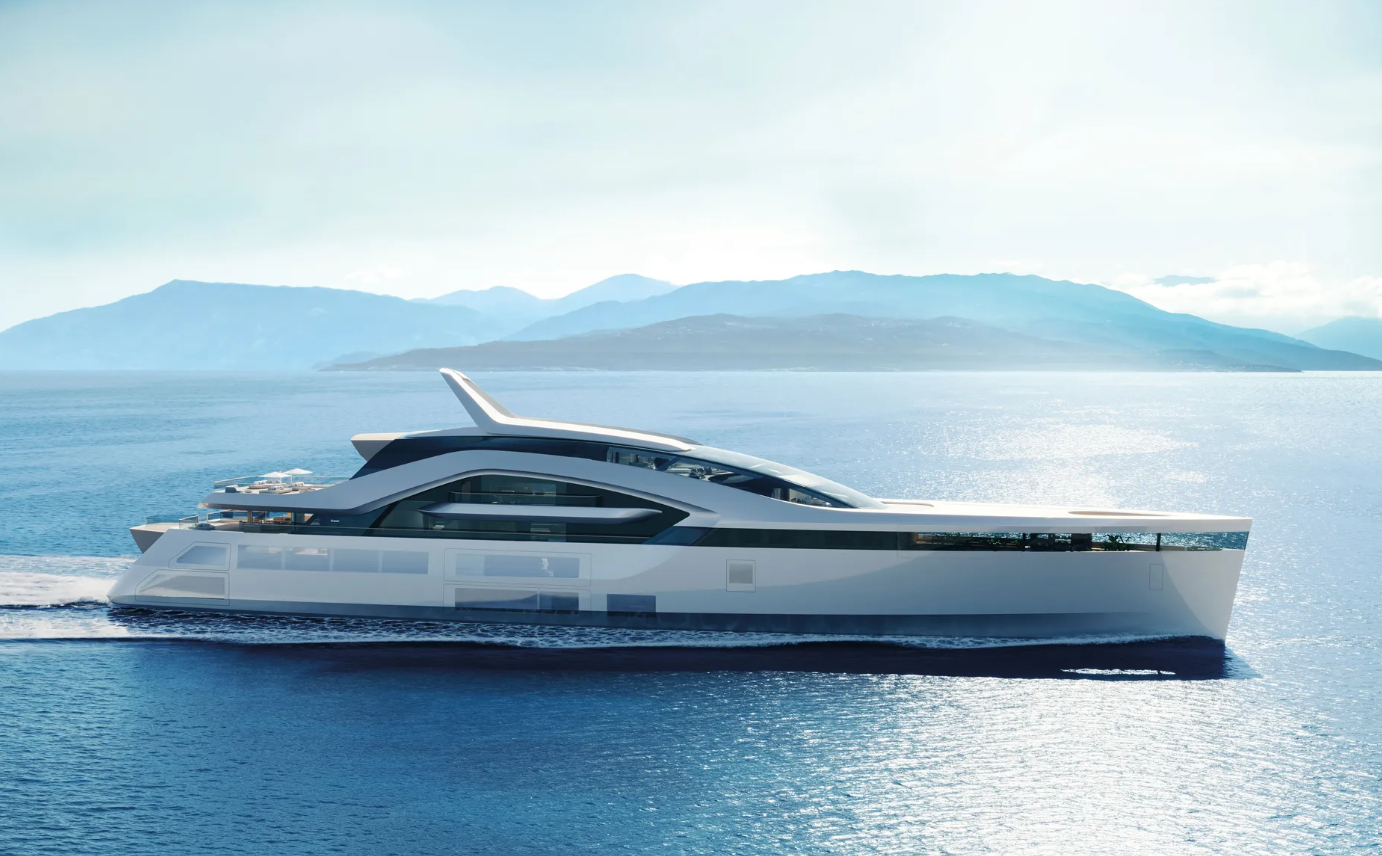
On the owner’s deck, a 20-metre swimming pool incorporates Feadship’s patented ContraWave technology and extends indoors as a suspended, glass-bottomed infinity pool.

Automobili Lamborghini is turning its attention to something considerably more difficult to define: what makes Italian excellence uniquely Italian?
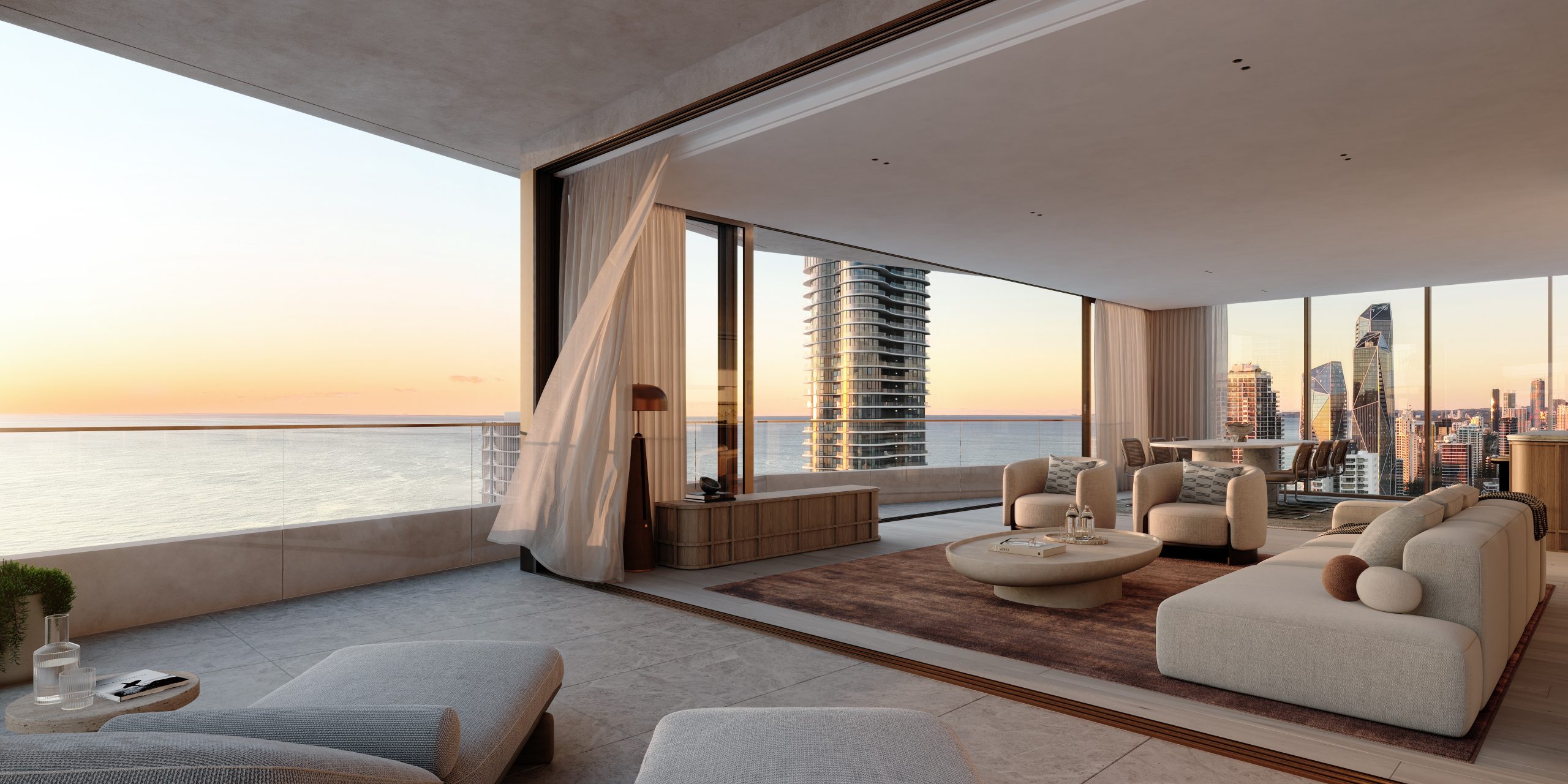
Mirvac’s 45-level Trielle has topped out at Yarra’s Edge, pairing riverfront apartments with wellness facilities, private dining and resident services.
3 min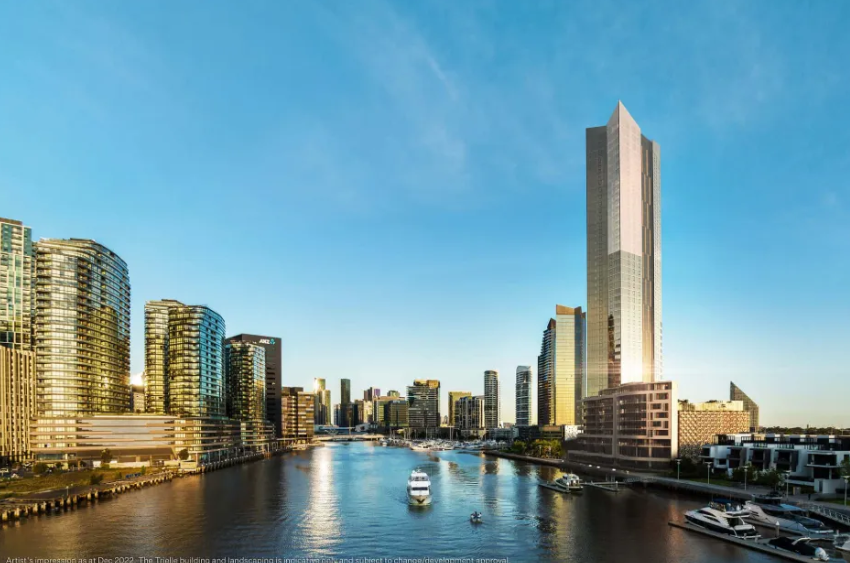
Mirvac has topped out Trielle at Melbourne’s Yarra’s Edge, with more than 70 per cent of the riverfront development sold and approximately 80 per cent of purchasers intending to make their apartment a home.
The figures, released on September 22, point to an owner-occupier audience for one of the precinct’s final residential towers. Mirvac began developing Yarra’s Edge in 2003, and its latest addition occupies one of the remaining absolute riverfront sites.
Mirvac CEO of Development Stuart Penklis said existing residents were among those moving up within the neighbourhood.
“Many purchasers already have a connection to Yarra’s Edge,” Mr Penklis said, describing buyers whose changing needs were encouraging an upgrade within the precinct.
“As one of the final residential towers within Yarra’s Edge, Trielle represents the culmination of more than two decades of creating one of Melbourne’s most established and sought-after waterfront communities,” Penklis said.
“Positioned on the Collins Street axis with absolute river frontage, Trielle offers residents a rare opportunity to enjoy sweeping views across the Yarra River, Melbourne skyline and Port Phillip Bay, while remaining seamlessly connected to the CBD. With Trielle now more than 70 per cent sold, we’re continuing to see strong demand from buyers seeking quality homes in established locations.”
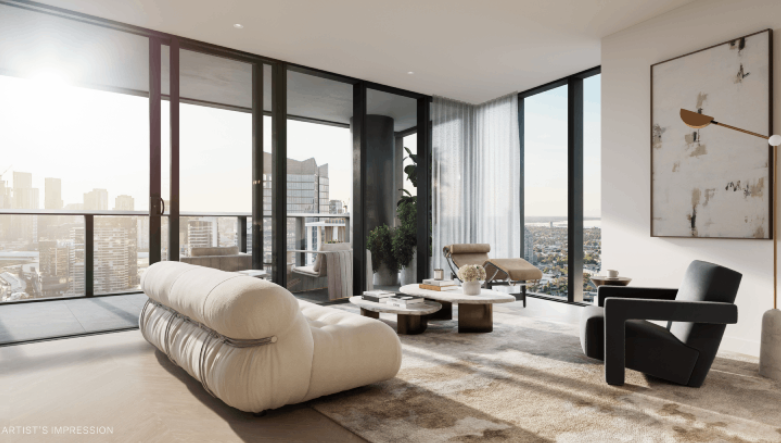
The developer also flagged a penthouse and sub-penthouse collection with larger layouts, premium finishes and broad outlooks. The planned wellness centrepiece, The Oasis, encompasses a 900-square-metre elevated urban rainforest.
Mirvac General Manager Residential Development Victoria Elysa Anderson said Trielle had resonated strongly with buyers seeking a rare lifestyle offering in Melbourne.
“Opportunities to secure a new luxury residence on a riverfront site of this calibre are incredibly rare, particularly within a community like Yarra’s Edge,” Anderson said.
“What makes Trielle unique is the combination of exceptional views, world-class residential facilities and the lifestyle that already exists around it. Residents are buying into a mature waterfront community with parks, promenades, dining, wellness and strong community connections already in place.”
The 45-level tower brings a substantial new presence to that waterfront. Its residential offering spans one-, two-, three- and four-bedroom apartments, with Signature, Prestige and Sub-Penthouse collections accommodating different household sizes. The north-facing position connects the apartments visually to the river and city beyond.
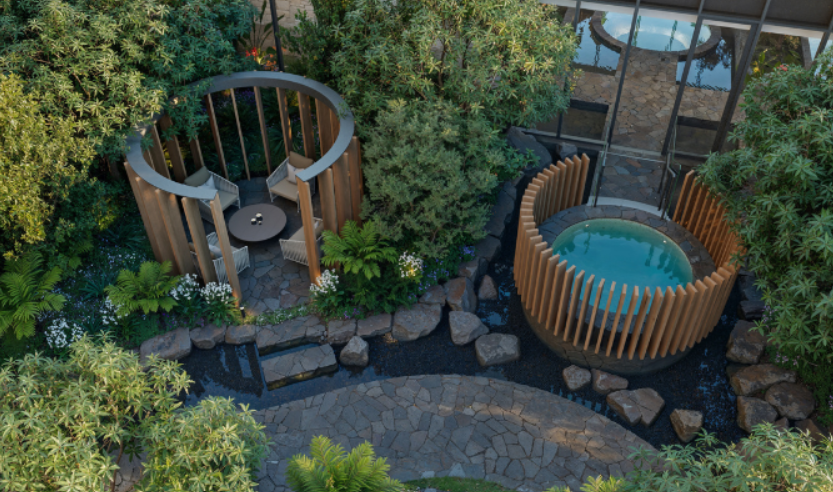
Seven storeys above the promenade, the planned Oasis combines planting and a running stream with a Scandinavian-inspired wellness club developed with spa specialist Naomi Gregory. Facilities include a 25-metre lap pool, hot magnesium pool, sauna, hydrotherapy, a gym, yoga and Pilates room, and treatment spaces.
The amenity extends beyond exercise. Residents will have access to The Biblioteca library and workspaces, ground-floor work pods, and The Salone piano lounge. A private Chef’s Table dining room offers a setting for larger gatherings, while a cinema, games room and sports lounge broaden the entertaining options. Concierge services and a dog-wash area support everyday routines.
Trielle comprises a collection of one, two, three and four-bedroom residences. Reflecting strong demand from owner occupiers, approximately 80 per cent of purchasers to date intend to live in their homes, highlighting the project’s appeal to those seeking a long-term waterfront lifestyle.
Mirvac has recently delivered The Albertine, a premium apartment development on the edge of Melbourne’s CBD, and is nearing completion of Prince & Parade in Brunswick, further strengthening its portfolio of thoughtfully designed apartment communities in some of Melbourne’s most sought-after urban locations.
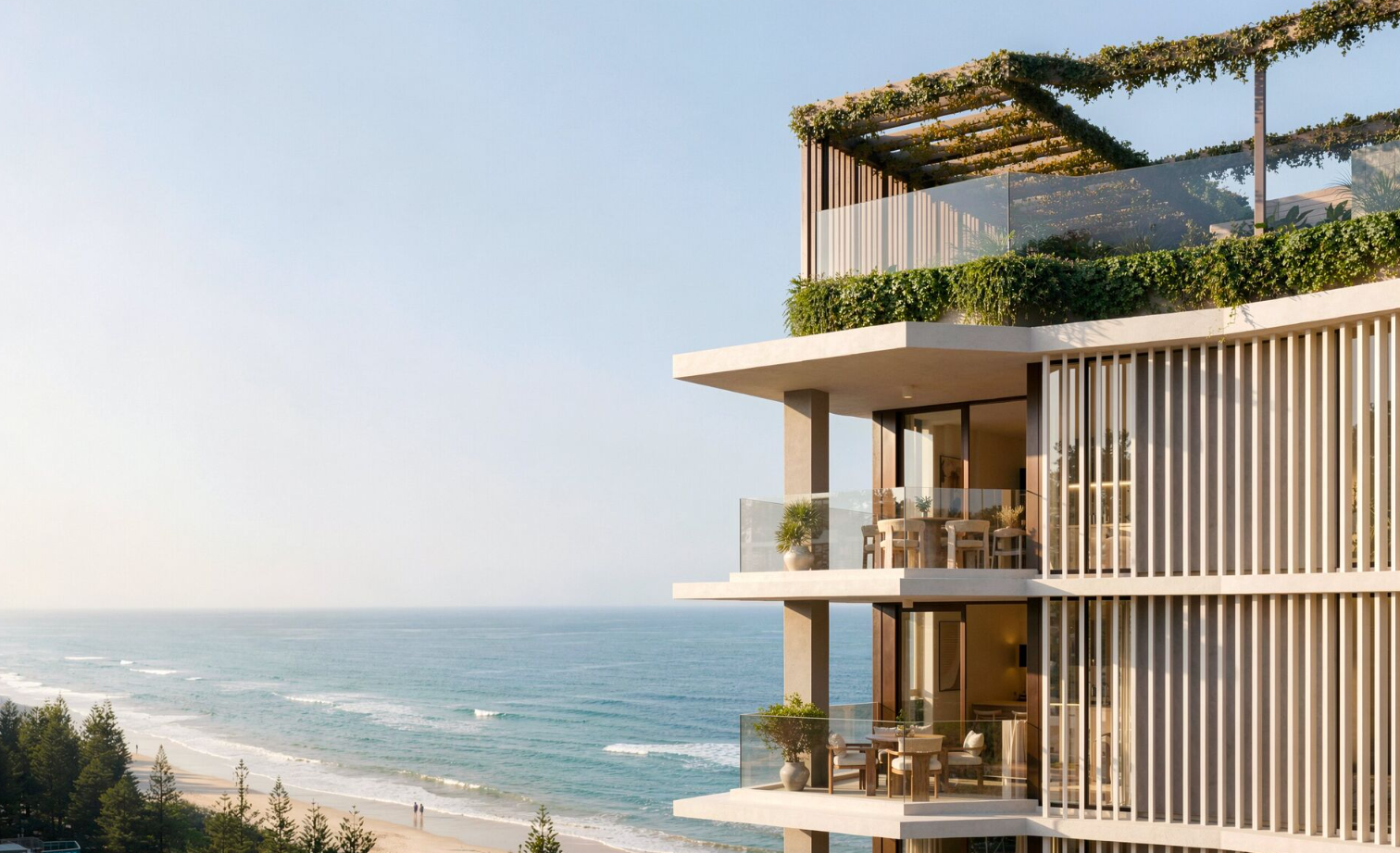
Studio apartments have almost disappeared from new Australian developments. Lura is bringing them back to Burleigh Heads from $495,000.

ABC Bullion has launched a pioneering investment product that allows Australians to draw regular cashflow from their precious metal holdings.