Property of the Week: 8-10 Howard St, Kew
Home to Sir Robert Menzies and Dame Pattie, this grand Melbourne estate is a piece of Australian political history.
 2 min
2 min


It may be a well-worn cliche, but if these walls could talk there would be plenty of state secrets to share. The landmark residence at 8-10 Howard St, Kew was once the private residence of Sir Robert Menzies and Dame Pattie between 1929 and 1949, during the Prime Minster’s first term in the top job. He later held the role again from 1949 to 1966, making him Australia’s longest serving Prime Minister.
Historical land records indicate that the Howard St property was sold to Leonard Clinton Shaw, brother-in-law of Pattie Menzies. Robert and Patti then moved to live into The Lodge in Canberra.
The stately arts and crafts era home was built in the 1910s and has reportedly played host to a long list of dignitaries and VIP guests. As rumour has it, the drawing room of the Kew property is where Menzies crafted his iconic speeches and held many clandestine meetings.
Today the imposing five-bedroom residence, which sits on a vast 1874sq m land parcel in the coveted Studley Park precinct, has come to market through Marshall White agents James Tostevin and Chris Barrett with a price guide of $8.3 million to $8.9 million.
According to CoreLogic, the property last sold in 2018 for $7.75 million.
Beyond the expansive parklike grounds that to pay homage to celebrated Australian landscaper Edna Walling, the two-storey house is packed with meticulously maintained period features.
Showcasing the best of arts and crafts design influences, the home has a charming tuck-point brick façade, a tessellated tile veranda, coloured leadlight glass windows, dark stained wood panelling inside, as well as high decorative ceilings and cornices.
The large foyer divides the lower level into two distinct zones; big formal rooms and more casual family-friendly spaces. Built for entertaining on a grand scale, both the lounge and dining rooms rooms have original fireplaces and open out to either the undercover veranda or enclosed sunroom.
Also on the ground level, a spacious family room with yet another fireplace connects to an everyday meals area, and the contemporary kitchen comes complete with granite surfaces, a Paul Bocuse stove, an integrated Miele dishwasher, a walk-in pantry and wine cellar. A home office, or potential guest bedroom, plus a large laundry and two powder rooms round out the lower level floor plan.
Up via a majestic timber staircase, four big bedrooms have fireplaces and built-in wardrobes, while the primary suite is home to a palatial ensuite and dressing room. This accommodation level also houses two family bathrooms and a rear balcony that overlooks the grounds.
Outdoors there are multiple lifestyle features including a north/south tennis court with lighting, a unique rounds swimming pool and all-weather terraces.
Other features include an alarm, hydronic heating, a 60,000L underground tank, a garden shed, a remote double garage and additional off-street parking.
Located on the old Oakland Estate, the Menzies’ former home is close to popular eateries, Xavier College, St Vincents Private Hospital and golf courses.
Expressions of interest close on March 11, at 5pm for 8-10 Howard St, Kew. The home is listed with a price guide of $8.3 million to $8.9 million through agents James Tostevin and Chris Barrett of Marshall White.

Australian shares fell on Thursday as Wall Street weakness, rising oil and persistent rate concerns weighed on most of the market. The S&P/ASX 200 declined 0.72 per cent to 8,702. The All Ordinaries lost 0.66 per cent to finish at 8,897. Mining stocks were hit particularly hard, while real estate also dragged on the index. …
Continue reading “ASX falls 0.7 per cent as miners and property stocks retreat”

Borrowers cannot control the Reserve Bank, but they can control how exposed their household budget is to its next decision. The RBA meets on 29 September with inflation concerns still elevated and major-bank economists increasingly bringing forward their rate-rise calls. Fixed mortgage rates have also been moving, reducing the value of waiting for perfect certainty. …
Continue reading “What mortgage holders should do before the next RBA decision”
A five-bedroom Palo Alto home designed by Steven Ehrlich is listed for $44 million, making it the city’s most expensive listing. Built around a dramatic concrete spine, the home features four courtyards and a pool.
3 min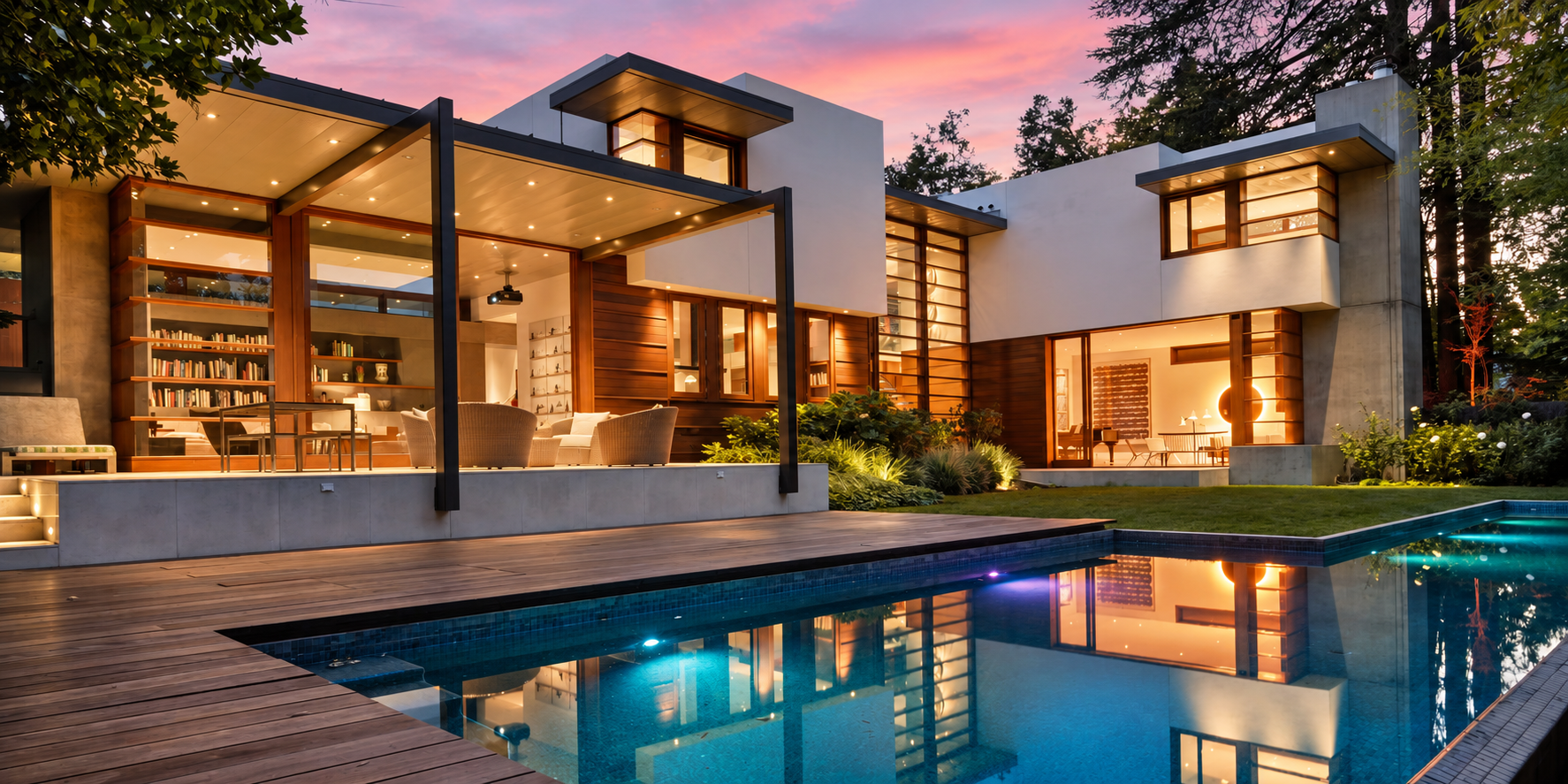
For years, tech entrepreneur Asher Waldfogel and his wife, Helyn MacLean, dreamed of building a modern house in Palo Alto, Calif.
The couple, however, worried about clashing with the Mediterranean-style architecture typically associated with their neighborhood of Old Palo Alto.
So they tapped architect Steven Ehrlich to create a design that paid homage to its surroundings with stucco, mahogany and titanium zinc cladding. They spent $20 million over several years building the house, completed in 2005.
Now looking to be closer to their adult daughter on the East Coast, they are putting the five-bedroom home on the market for $44 million—the most expensive listing in Palo Alto.
Waldfogel is an angel investor who co-founded Redback Networks, a telecommunications-equipment company. MacLean previously had a career in fundraising.
The couple purchased the roughly 0.4-acre site for $7.1 million in 2000 and demolished a circa-1930s Spanish Colonial home. The house they built pinwheels around a central staircase. It has 7,900 square feet of livable space, with four distinct courtyards and a pool.
A key feature of the home is a cast-in-place concrete wall, or spine, that is two stories high and about 80 feet long. “There’s a little bit of controlled chaos in what comes out of the form,” unlike a perfectly uniform surface, Waldfogel said. “If you want that, you do it in plastic.”
Waldfogel said he and his wife are thinking about the next phase of life now that their daughter is grown, although they have not decided where they will move. They also have a home in Sun Valley, Idaho.
“Right now we’re just trying to emotionally let go and decide what to do next,” he said.
Palo Alto, an epicenter of venture capital and tech startups in Silicon Valley, is home to some of the country’s biggest tech titans. Sales volume and prices are rising, with a median sale price of $3.5 million for the three months ending in August, up 5.8% year-over-year, according to real-estate brokerage Redfin.
Arthur Sharif of Sotheby’s International Realty—San Francisco Brokerage has the listing.

Travellers are swapping traditional sightseeing for immersive experiences, with Africa emerging as a must-visit destination.
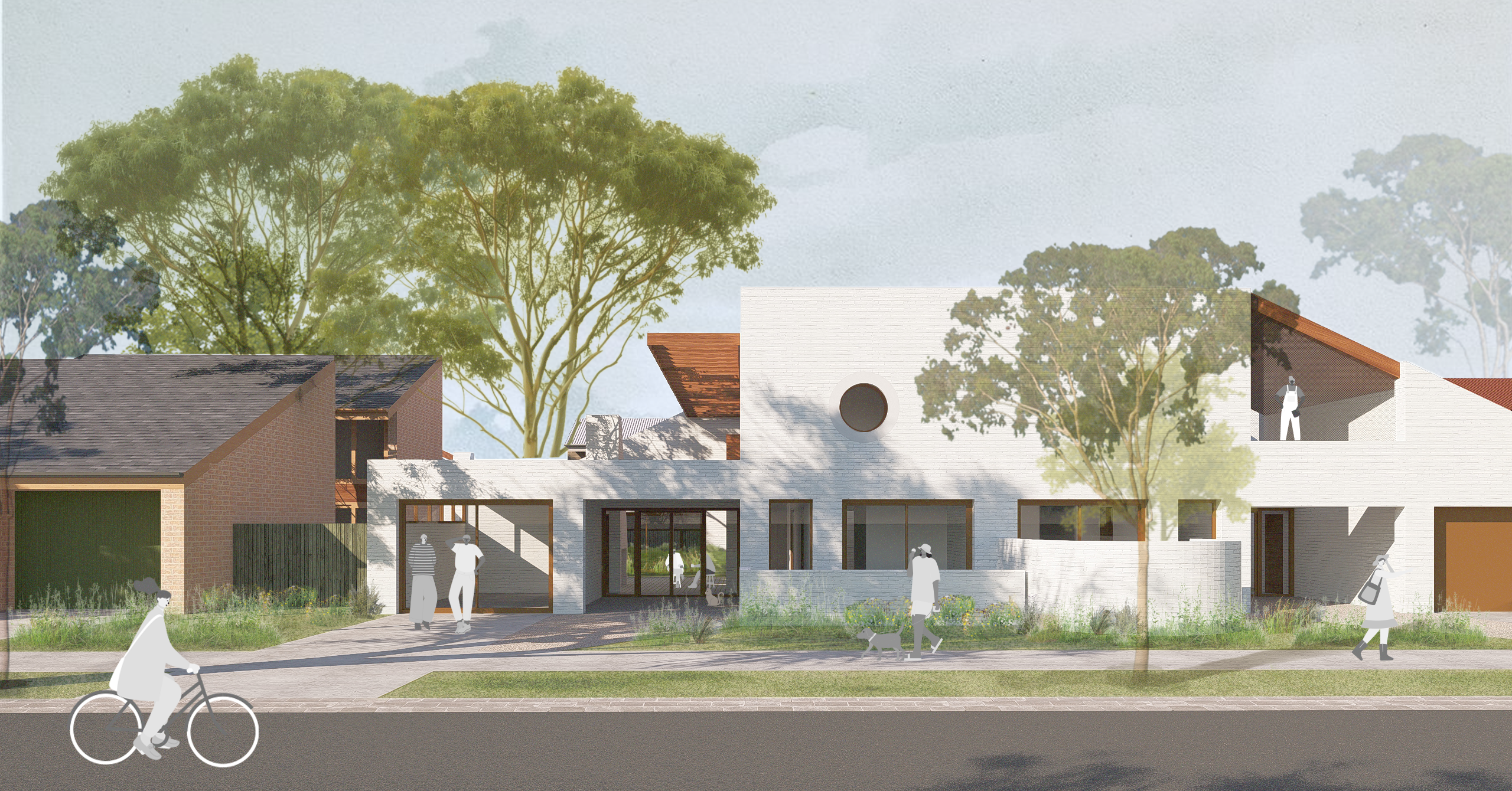
Brickworks has enlisted acclaimed architecture studio Kennedy Nolan to explore how homes could become more adaptable, energy-efficient and connected to community.