Beverly Hills Mansion Mark Wahlberg Built Is Back on the Market for $68 Million
It’s being sold by a Chinese billionaire who’s accumulated a handsome portfolio of lavish real estate in the U.S.

 2 min
2 min
The Beverly Hills megamansion Mark Wahlberg built is back up for sale asking $68 million.
The 6-acre European villa-style estate in the hills of South Beverly Park— with a five-hole golf course, a waterfall and 20 bathrooms—is being sold by an LLC linked to Shenzhen-based business mogul Xu Hang.
Hang, founder of a medical device company who is featured on Forbes’s list of China’s richest people with an estimated net worth of $8 billion, bought it from Wahlberg for $55 million in 2023, property records show.
MORE: A Private Racetrack Is Opening to Supercar Lovers by Nascar’s Charlotte Motor Speedways
The LLC is controlled by Hang’s wife, Gu Fang, who has snapped up several celebrity- and magnate-owned homes in recent years, including Heather and Terry Dubrow’s Newport Beach chateau and Rihanna’s New York City penthouse, according to reports.
Wahlberg let go of his 90210 address and the massive custom home while relocating to Las Vegas.
Since moving, the 53-year-old “Departed” star has made headway on his plan to create a “Hollywood 2.0” in the desert state. He’s been lobbying, along with Sony Pictures and Howard Hughes Holdings, to get a movie tax bill passed that would allow Sony to build a studio in Summerlin, Nevada.
The listing marks a $13 million price hike over what the buyer paid for the home just two years ago, though Wahlberg at one point had the mansion listed for as much as $87.5 million, Mansion Global previously reported .
MORE: Ellen DeGeneres Lists California Home After Relocating to the U.K.
The 30,000-square-foot mansion boasts a double-height foyer and a double staircase, a wood-paneled library, a two-island kitchen, glass gym and a home theater with dome ceiling detailing, according to the listing.
The lower level also has a “sophisticated tasting and smoking lounge,” the listing read.
Tucked in its own valley, according to listing photos, the grounds of the property feature an impressive circular motor court and fountain in the front and a wide lawn in the back. Beyond the lawn there’s a swimming pool and grotto, pickleball courts, basketball courts, a guest house and an abundance of patio space.
The estate was designed by Richard Landry, called the “King of the Megamansion,” who has erected homes for Kourtney Kardashian and Tom Brady.
Listing agent Ginger Glass at Compass didn’t respond immediately to a request for a comment.
 Copyright 2020, Dow Jones & Company, Inc. All Rights Reserved Worldwide. LEARN MORE





Australian shares fell on Thursday as Wall Street weakness, rising oil and persistent rate concerns weighed on most of the market. The S&P/ASX 200 declined 0.72 per cent to 8,702. The All Ordinaries lost 0.66 per cent to finish at 8,897. Mining stocks were hit particularly hard, while real estate also dragged on the index. …
Continue reading “ASX falls 0.7 per cent as miners and property stocks retreat”

Borrowers cannot control the Reserve Bank, but they can control how exposed their household budget is to its next decision. The RBA meets on 29 September with inflation concerns still elevated and major-bank economists increasingly bringing forward their rate-rise calls. Fixed mortgage rates have also been moving, reducing the value of waiting for perfect certainty. …
Continue reading “What mortgage holders should do before the next RBA decision”

A five-bedroom Palo Alto home designed by Steven Ehrlich is listed for $44 million, making it the city’s most expensive listing. Built around a dramatic concrete spine, the home features four courtyards and a pool.
3 min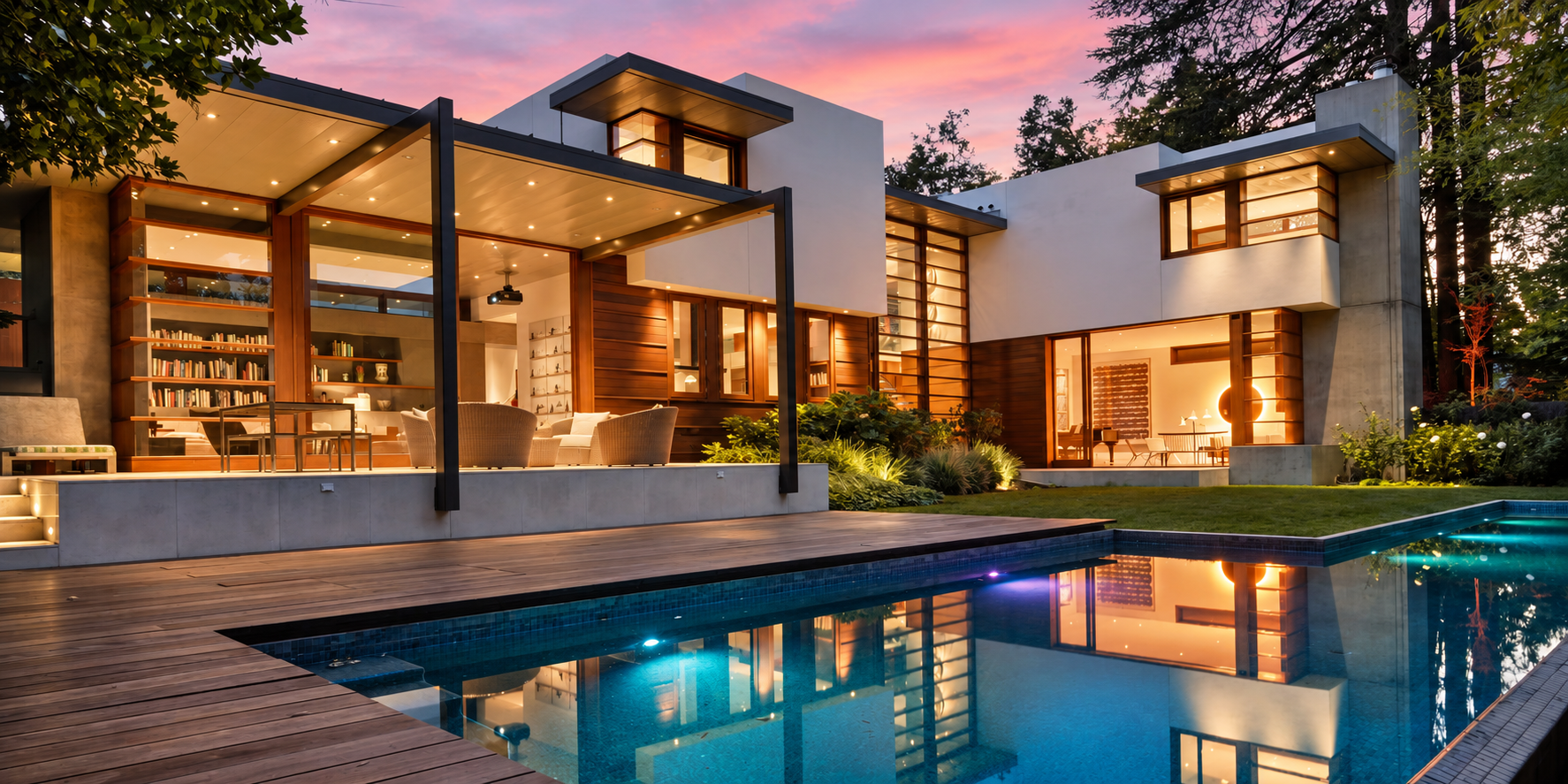
For years, tech entrepreneur Asher Waldfogel and his wife, Helyn MacLean, dreamed of building a modern house in Palo Alto, Calif.
The couple, however, worried about clashing with the Mediterranean-style architecture typically associated with their neighborhood of Old Palo Alto.
So they tapped architect Steven Ehrlich to create a design that paid homage to its surroundings with stucco, mahogany and titanium zinc cladding. They spent $20 million over several years building the house, completed in 2005.
Now looking to be closer to their adult daughter on the East Coast, they are putting the five-bedroom home on the market for $44 million—the most expensive listing in Palo Alto.
Waldfogel is an angel investor who co-founded Redback Networks, a telecommunications-equipment company. MacLean previously had a career in fundraising.
The couple purchased the roughly 0.4-acre site for $7.1 million in 2000 and demolished a circa-1930s Spanish Colonial home. The house they built pinwheels around a central staircase. It has 7,900 square feet of livable space, with four distinct courtyards and a pool.
A key feature of the home is a cast-in-place concrete wall, or spine, that is two stories high and about 80 feet long. “There’s a little bit of controlled chaos in what comes out of the form,” unlike a perfectly uniform surface, Waldfogel said. “If you want that, you do it in plastic.”
Waldfogel said he and his wife are thinking about the next phase of life now that their daughter is grown, although they have not decided where they will move. They also have a home in Sun Valley, Idaho.
“Right now we’re just trying to emotionally let go and decide what to do next,” he said.
Palo Alto, an epicenter of venture capital and tech startups in Silicon Valley, is home to some of the country’s biggest tech titans. Sales volume and prices are rising, with a median sale price of $3.5 million for the three months ending in August, up 5.8% year-over-year, according to real-estate brokerage Redfin.
Arthur Sharif of Sotheby’s International Realty—San Francisco Brokerage has the listing.

Here’s how they are looking at artificial intelligence, interest rates and economic pressures.
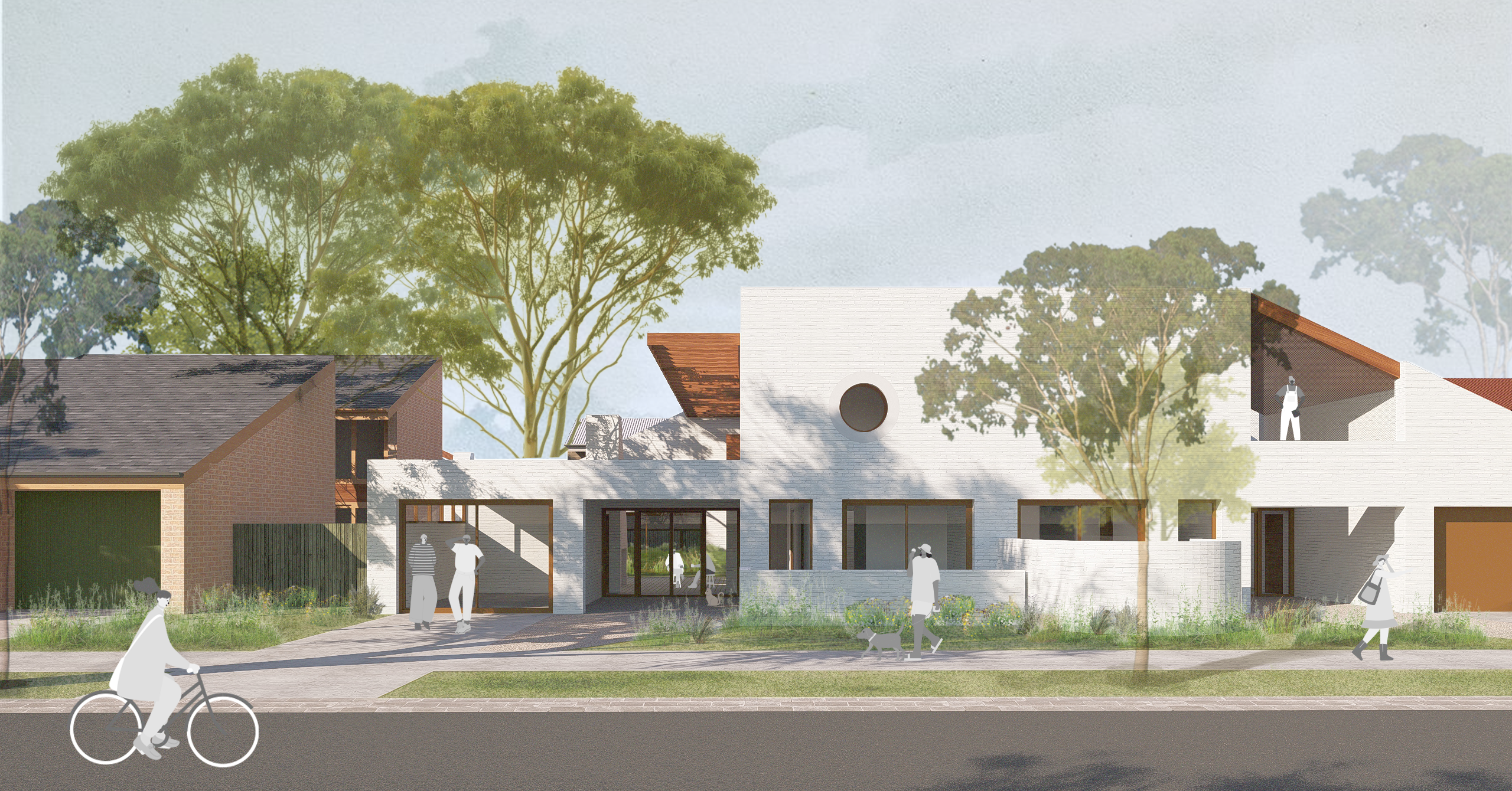
Brickworks has enlisted acclaimed architecture studio Kennedy Nolan to explore how homes could become more adaptable, energy-efficient and connected to community.