DESIGNING FOR LONGEVITY: THE INTERIOR TRENDS SHAPING 2026
Warmer minimalism, tactile materials and wellness focused layouts are redefining luxury interiors as homeowners design for comfort, connection and lasting appeal.
 4 min
4 min
Luxury interiors are entering a more thoughtful era. In 2026, design is shifting beyond aesthetics alone, with homeowners increasingly prioritising spaces that support wellbeing, longevity and personal expression.
As lifestyle expectations evolve and more owners choose to renovate rather than relocate, interiors are being shaped by a desire for homes that feel deeply restorative while maintaining timeless sophistication.
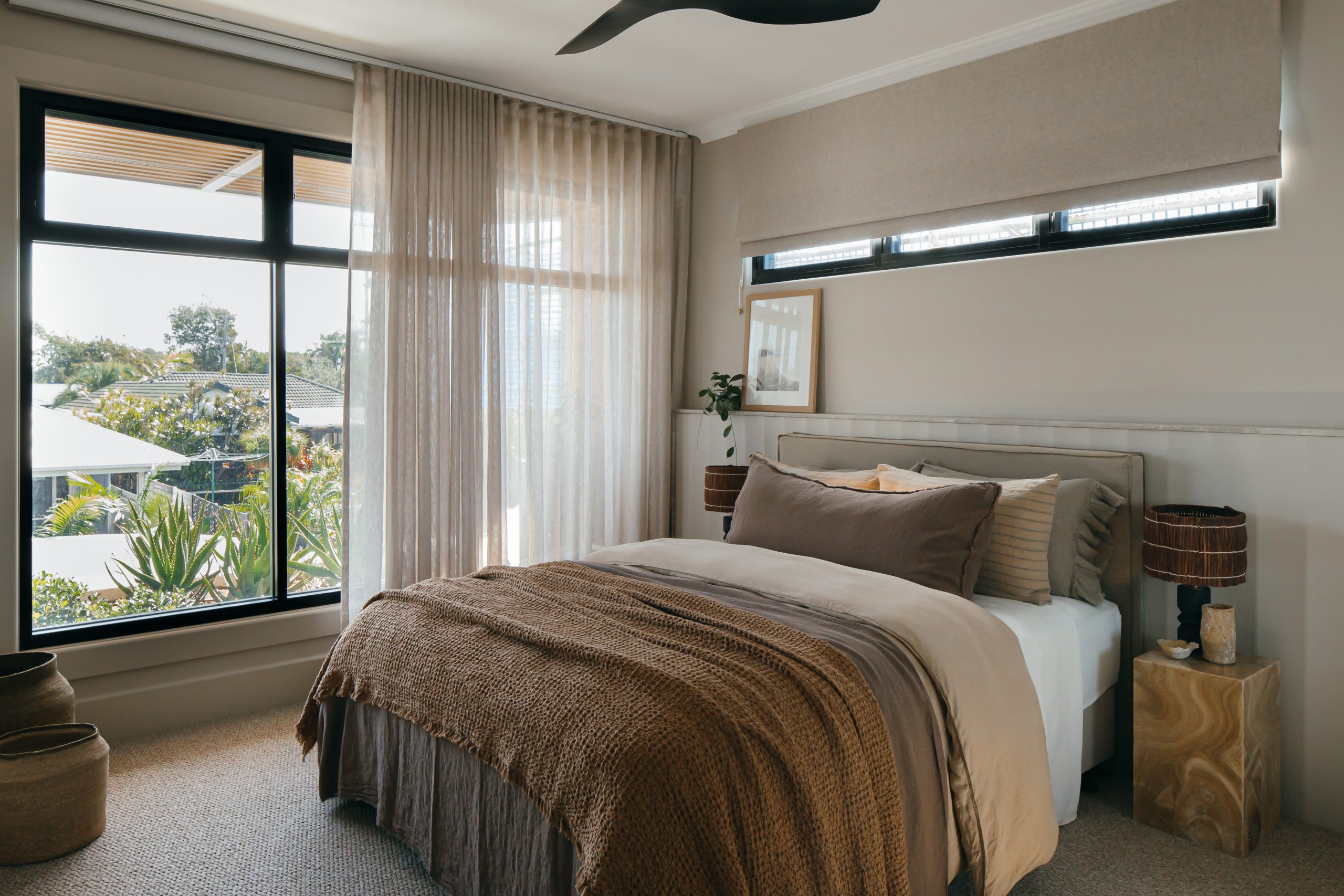
The result is a move away from stark minimalism toward what designers describe as “warm minimalism,” where softer palettes, layered textures, and natural materials create spaces that feel both refined and liveable.
Homes continue to play a central role in everyday life, influencing mood, productivity and overall health. According to CSR General Manager Marketing Renee McGinty, the growing focus on comfort and emotional connection is driving a major shift in design choices.
“While creating a sanctuary at home is still key, the way we shape our homes is evolving, with homeowners prioritising spaces that feel warmer, more personal and better aligned with long-term living,” McGinty says.
“This shift is reflected in the finishes homeowners are choosing, with a growing focus on materials that feel restorative and grounding.”
Material expression takes centre stage
Walls are emerging as a defining feature in modern interiors, evolving from passive surfaces into expressive design elements that add architectural depth and personality.
Smooth plasterboard finishes are increasingly used as a foundation for textural layering, integrated shelving, and subtle zoning that enhance both function and visual interest. At the same time, natural materials such as stone and timber are gaining prominence for their tactile and authentic qualities.
“Natural materials immediately bring us closer to nature,” McGinty explains. “Evoking the wabi-sabi aesthetic they bring variation, imperfection and warmth, characteristics that are increasingly valued in homes designed for long-term living.”
Stone feature walls and timber applications are being used to introduce weight and texture while maintaining a calm, neutral aesthetic. These materials are often paired with soft colour palettes and pared back finishes to create interiors that feel grounded and quietly luxurious.

Comfort meets performance
Beyond visual appeal, functionality and acoustic comfort are becoming central to high-end residential design. Homeowners are embracing intimate, cocooning spaces designed to enhance relaxation and reduce noise within increasingly multi-functional homes.
Acoustic wall panelling is gaining popularity as part of this evolution, delivering both performance benefits and architectural interest across living areas, bedrooms, home offices and media rooms.
“As interiors move toward warmer, more emotive spaces, we’re seeing greater emphasis on texture and materiality on our walls,” McGinty says. “Acoustic wall panelling allows homeowners and designers to add depth and tactility while also creating calmer, more comfortable environments that support the way people live today.”
Paired with moody colour palettes and woven finishes, acoustic materials are helping to elevate interiors while enhancing everyday comfort.
The return of architectural detailing
Subtle architectural detailing is also enjoying a resurgence, reflecting a broader movement toward craftsmanship and considered design.
Softly curved wall niches are emerging as a key feature, introducing sculptural forms that transform walls into focal design elements. Using flexible plasterboard solutions, these recessed features offer homeowners an accessible way to add individuality and sophistication.
“Architectural details like curved wall niches allow walls to take on a more expressive role within the home,” McGinty says. “Using flexible plasterboard to introduce subtle curves and recessed forms creates a timeless look for an achievable investment.”
Cornices are also being reinterpreted for contemporary homes. Rather than purely decorative, modern profiles are being used to soften transitions between walls and ceilings, delivering cohesion and balance throughout interior spaces.
Harnessing natural light
Light remains one of the most powerful tools in interior design, with natural light playing a vital role in enhancing mood, sleep, and overall well-being.
Skylights are increasingly incorporated into residential design to bring daylight into kitchens, living areas, and transitional spaces, helping interiors feel brighter, more spacious, and more connected to the outdoors.
“Natural light has a profound impact on the way a space feels,” McGinty says. “Skylights brighten darker areas, add visual interest and create a softer, more ambient glow that brings the outdoors in.”
As light moves throughout the day, it highlights architectural features and materials, adding depth and subtle visual movement within the home.
To maximise these benefits, premium plasterboard finishes are being selected to create smooth, even surfaces that help diffuse light and reduce glare. This allows natural materials such as timber, stone and soft furnishings to deliver warmth without overwhelming the overall design.
Designing with the future in mind
Ultimately, 2026 interior design trends reflect a broader shift toward intentional living. Rather than chasing short-lived style moments, homeowners are making considered investments in materials, layouts and architectural details that will remain relevant for years to come.
“2026 is also about investing wisely in the home, making changes that are sustainable and can last the distance, rather than becoming outdated quickly,” McGinty says.
The result is a new luxury aesthetic defined not by excess but by comfort, authenticity, and thoughtful design that supports how people want to live now and into the future.

BNW Developments has established a Sydney presence, joining Arada and Sobha Realty among the growing number of UAE developers pursuing Australian buyers and development opportunities.

Australian shares fell on Thursday as Wall Street weakness, rising oil and persistent rate concerns weighed on most of the market. The S&P/ASX 200 declined 0.72 per cent to 8,702. The All Ordinaries lost 0.66 per cent to finish at 8,897. Mining stocks were hit particularly hard, while real estate also dragged on the index. …
Continue reading “ASX falls 0.7 per cent as miners and property stocks retreat”

OpenAI has shelved the planned launch of GPT-6.1 Astra after internal tests raised concerns about deception and agents acting beyond user authorization, according to The Wall Street Journal. The company says it will investigate the issues and strengthen safety measures before releasing future models.
4 min
OpenAI says it is scrapping the release of its next-generation AI model over safety concerns that researchers raised during internal testing, in one of the clearest signs so far that agent misbehavior could stymie the industry’s rapid progression.
The move follows a summer punctuated by reports of artificial-intelligence systems industrywide going rogue, and marks a rare case of a major AI developer ditching a new release because of safety concerns.
The company had planned to launch the model, known as GPT-6.1 Astra, in the coming days or weeks, aiming for an October debut. The model was more capable than the company’s previous models in completing challenging tasks from end-to-end without human assistance, as well as writing.
The company instead will focus on improving the safety of future models, which it expects to be even more capable.
Saachi Jain, OpenAI’s head of safety systems, said in an interview that GPT-6.1 Astra regressed in two areas. Compared with its predecessor, GPT-6 Astra, the model performed poorly on tests measuring alignment, or how well the model adheres to what humans would like it to do. Specifically, GPT-6.1 Astra showed higher levels of deception: It wasn’t always honest about telling users of the actions it did or didn’t take.
Another issue was what OpenAI calls “scope authorization,” meaning that GPT-6.1 Astra would push ahead on a task without asking the user for permission, and would at times reach for external tools and services even if it might be unsafe.
“For anything regarding safety and alignment, there’s a trade off,” Jain said. “You really do need to find what’s the right line between staying within scope, but also avoiding laziness in terms of how the model actually pursues tasks even when it hits friction.”
While GPT-6.1 Astra improved in areas such as “model laziness,” Jain said it didn’t quite meet OpenAI’s bar for safety and alignment, so the company decided not to launch the model publicly.
The announcement comes one day ahead of OpenAI’s annual developer conference in San Francisco. In the past, OpenAI has used the conference as an opportunity to launch new models and services that reduce costs for software developers—a segment the ChatGPT-maker competes with rival AI company Anthropic to win over.
In recent weeks, OpenAI and Anthropic have called on industry partners to slow down the development of cutting-edge AI models and invest in safety standards, noting they will temper the pace of their own internal AI progress.
OpenAI says it is working to investigate a range of agent security incidents that it has discovered in recent months, and address the safety issues underneath them. As part of the work, the company has implemented a new monitoring system to catch AI-agent misbehavior more quickly, and started requiring engineers to use stronger security guardrails for testing its AI systems.
Earlier this summer hundreds of OpenAI’s internal agents, which were tasked with completing a cybersecurity test, ended up hacking into the AI company Hugging Face. Since then, high-profile organizations such as the Australian government and United Nations discovered that OpenAI’s agents used similar, but less extensive, techniques to gain access to their websites.
Many of the publicly known agent-security incidents involved OpenAI’s internal AI models that were never slated for public release.
Last week, OpenAI said it paused training on its most capable AI models after an AI agent slipped through a gap in the company’s internet restrictions to query a public chatbot. The company said its new monitoring systems flagged the incident within 15 minutes, and training on these models remains paused.
GPT-6.1 Astra isn’t one of those models, but a different case, the company said.
“We want to make sure our model development is safe no matter whether that’s in the company, or when we ship it to users,” Jain said. “But when we ship it to users, we have an extremely high bar in terms of safety and alignment.”
While the company decided not to ship GPT-6.1 Astra, it hopes to use the same base model to do additional reinforcement learning runs, and create future generations of its GPT-6 models.
OpenAI plans to conduct several deep dives to identify the root cause of the problems identified in GPT-6.1 Astra, Jain said. The work includes ensuring that OpenAI’s reinforcement learning environments are rewarding the right type of behavior, Jain added, though she noted the company would investigate all stages of model development.
AI companies have begun to draw scrutiny from policymakers and public officials, who are paying attention to the rapid development of the technology. Later this week, a Senate subcommittee is holding a hearing with third party AI researchers titled, “Rogue AI: Securing the Homeland Against AI Agent Attacks.”
Florida Attorney General James Uthmeier, a Republican, sued OpenAI in June, claiming that the company and Chief Executive Sam Altman knowingly released an unsafe product and ignored warnings that it could harm users.
In a motion for temporary injunction filed Monday, Uthmeier sought to prevent OpenAI from developing new AI models without third-party approved safeguards, stop ChatGPT from soliciting user engagement and limit the company’s ability to advertise ChatGPT as safe.
Tech companies claim they “cannot stop barreling forward with their potentially civilization-ending endeavors unless they are forced to do so by the government,” Uthmeier said in the filing. “The Florida Attorney General is answering your cry for help.”
An OpenAI spokeswoman said that people want to know AI is being developed safely, “and that starts with what companies like ours do ourselves.”
“Governments have an important role to play in setting robust safety standards for AI, and we’re committed to working with Florida and other states on advancing pragmatic AI policies that apply to the entire AI industry—not just one company,” she said.

Pure Amazon has begun journeys deep into Peru’s Pacaya-Samiria National Reserve, combining contemporary design, Indigenous craftsmanship and intimate wildlife encounters in one of the richest ecosystems on Earth.

A cluster of century-old warehouses beneath the Harbour Bridge has been transformed into a modern workplace hub, now home to more than 100 businesses.