The U.S. Wants to Ban China’s High-Tech Cars, but They’re Already Here in El Paso
Mexican dealers are selling cutting-edge Chinese cars that U.S. consumers can’t buy. Americans are warming to the idea of them.

 7 min
7 min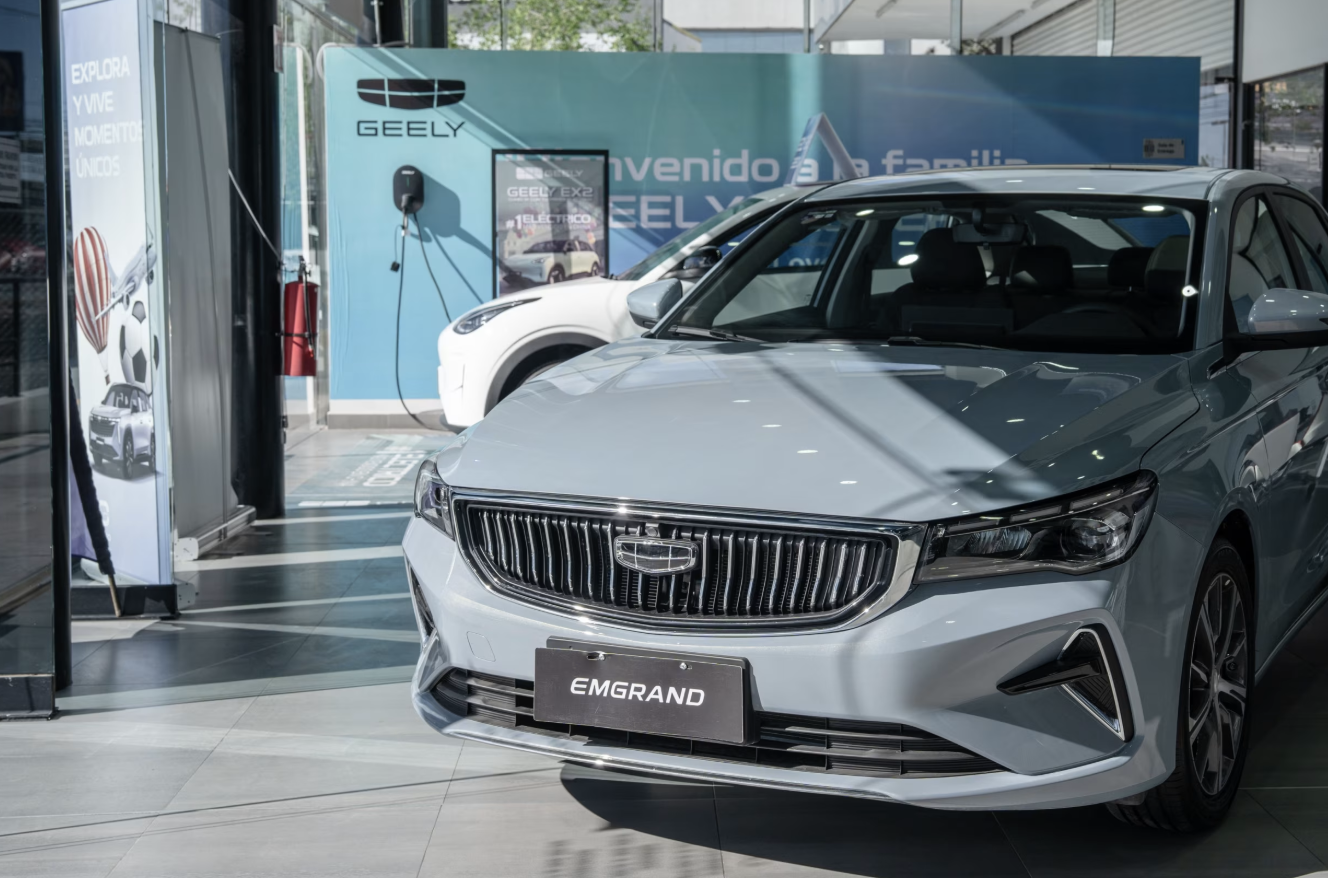
CIUDAD JUÁREZ, Mexico—Just 5 miles from the U.S. border, a bustling commercial strip here offers the buzzy Chinese car brands currently blocked from the American market.
A Geely dealership features the all-electric EX2, a sleek compact that starts at only around $20,000. A bulky hybrid pickup truck sits next to a charger outside a BYD dealership. Great Wall Motors boasts some beefy gas-powered sport-utility vehicles, one advertised with the slogan “Be More Tank.”
Luis Hernandez, a Geely salesman, said he has poached many longtime Ford and Chevrolet owners attracted to the affordable sticker prices and whiz-bang Chinese technology.
He recently sold two Geely Emgrand sedans, which start at around $17,000, to a Mexican family for their two daughters to commute to college in El Paso, where the sleekest Chinese cars are now attracting attention.
“If they were allowed to be sold in the United States,” Hernandez boasted of the Chinese models, “they would destroy the American car market.”
U.S. automotive executives don’t entirely disagree. Without a clear plan to deal with Chinese competitors, some of them said in interviews, the arrival of affordable, high-tech Chinese cars could upend a U.S. industry that contributes $1.3 trillion to the economy each year.
“I’m telling you, it is very difficult—not to say impossible—to compete,” said Hyundai Motor Chief Executive José Muñoz . “We cannot compete at the same price as the Chinese in the market where we operate. Otherwise, we will be losing money.”
So far, the many Chinese car companies that want to expand into the U.S. have been kept at bay. The U.S. has applied sky-high tariffs to vehicles imported from China, and regulations make it nearly impossible for such vehicles purchased in Mexico to be registered in the U.S.
A trio of senators has urged the Trump administration this month to ban Chinese vehicles sold and registered in Mexico and Canada from entering the country; several dozen House lawmakers sent a similar letter this week. A Senate bill to prohibit China’s carmakers from building cars in the U.S. is being crafted.
“Whenever there’re market challenges, reality is, we’ll need to find a way to adapt to it,” said Brian Gu , vice chairman of Chinese carmaker Xpeng . “But our long term goal is to make our products available to as many customers as possible, including the U.S. customers.”
It’s no secret that Chinese EVs match up well against their American counterparts. After test driving a Xiaomi SU7 MAX, a Wall Street Journal columnist in January wrote a love letter to the car that isn’t yet available in the U.S.
But it isn’t just Chinese EVs that are keeping American car executives awake at night. Some of China’s biggest automakers have expanded into gas-powered and hybrid vehicles that are more in line with the American market.
“For me, it’s not only an EV problem,” said Christian Meunier , chairman of Nissan Americas, which competes with Chinese carmakers in Mexico.
The threat to the U.S. car industry, which notched more than 16 million new-vehicle sales last year, is unlike anything it has faced in decades. Having largely abandoned budget cars years ago, Detroit’s Big Three now rely heavily on expensive SUVs and pickup trucks that deliver fatter profits.
At the same time, fewer entry-level models are being offered to car buyers. No new car offered in the U.S. today has a sticker price below $20,000. The Chinese have vehicles ready to fill that market hole.
Auto executives and lawmakers say China has created an unfair playing field, with heavy government subsidies and ultralow labor costs. In addition to applying tariffs, the U.S. government banned Chinese-connected software in new cars.
BYD, Geely and Great Wall Motors are now among the biggest carmakers in the world. They have been gobbling up market share in Europe and other parts of Asia. In Mexico, Chinese vehicles account for a quarter of total sales. Soon, Canada will allow tens of thousands of inexpensive Chinese EVs to be imported.
Sen. Bernie Moreno (R., Ohio) said the bill he plans to introduce would “hermetically seal” the U.S. from Chinese automakers. Chinese cars from Canada or Mexico couldn’t be driven into the country.
American car companies couldn’t pursue joint-ventures with Chinese automakers. Chinese car companies that own U.S. brands, such as Geely-controlled Volvo and Polestar, would have to divest themselves of those brands by 2030.
Cheaper and sleeker
U.S. consumers, though, are warming to the Chinese car alternative. About 30% of American car buyers would be open to buying a vehicle from China, up by 15 percentage points from a decade prior, according to a survey by Strategic Vision, a market-research firm.
Federal regulations allow Mexican residents and those with dual citizenship to drive their cars into the U.S., even if their vehicles aren’t compliant with relevant standards.
That is giving Americans along the border a firsthand look at the Chinese competition. undefined undefined Every week, 21-year-old Dario Araiza drives his Chinese BYD Song Pro plug-in hybrid across the border from Ciudad Juárez through El Paso to attend flight school. It’s a sleek four-door SUV.
BYD hooked him with affordability. Araiza paid about $31,500 for the vehicle last fall at the BYD dealer. The cabin technology is intuitive, he said. Airbags are labeled in both English and Chinese. A karaoke app—a hallmark of Chinese cars—is available for use while driving.
Araiza said no other automaker came close to offering something with as much value at that price. “Cars that were $35,000 were worse than what I had before,” he said.
At an El Paso car dealer network, Casa Auto Group, salespeople said prospective buyers have started asking why they don’t offer something as inexpensive as the Chinese cars sold just miles away in Mexico.
Ronnie Lowenfield, Casa’s chief executive, said that with new American cars now averaging $50,000, customers curious about Chinese cars mention affordability. That should sound the alarm for domestic automakers, he said.
“When manufacturers don’t have an interest in affordability, and they do have a financial interest—I will say, short-term financial interest—in producing a lot higher dollar vehicles, I think it’s a slow death,” he said.
The U.S. auto industry has been in this position before. In the 1970s, Toyota and other Japanese car companies began grabbing market share.
The subsequent entry of Hyundai and Kia undermined any lingering edge domestic carmakers had in the budget sedan market. The combined market share of General Motors and Ford Motor, once roughly 70%, declined sharply, and Chrysler nearly went bankrupt in the early 1980s.
That’s around when China’s auto industry got off the ground, helped by joint ventures with Western automakers.
In 2006, Geely showed up at the Detroit auto show with a dowdy sedan it hoped to sell in the U.S. within two years for less than $10,000. Car and Driver magazine deemed Geely’s vehicles “hopelessly outdated.”
At first, the U.S. industry shrugged off the new competition. In a 2011 interview, Tesla Chief Executive Elon Musk burst out laughing when asked about an EV that BYD hoped to bring to the U.S. “Have you seen their car?” Musk said.
But China continued to invest in automaking, bolstered by its access to crucial raw materials needed for components such as EV batteries and windshield wipers to work properly. Along the way, it continued to learn from the American industry, through the joint ventures that Beijing required of U.S. carmakers to operate in the country.
“They’ve had about 20 to 25 years of experience, and then it wasn’t a very big step for some of the entrepreneurial-focused ones—like BYD—to decide to go into business on their own,” said Bob Lutz, a former senior executive at Ford, Chrysler, BMW and GM, where he was vice chairman.
Earlier this decade, Lutz said, he had an epiphany about how advanced Beijing has become when he bought a China-made Buick Envision crossover, which GM exported to the U.S.
It rocked him—the fit and finish, the absence of road noise, the “total silkiness and sweet refinement” of the vehicle, he said. “I thought, ‘Boy, if they know how to make Buicks like this in China, they obviously know how to make great cars.’”
Export ambitions
In the mid-2010s, BYD brought several dozen street-legal EVs into the U.S. as part of a pilot program for taxi fleets. Complying with U.S. safety and emissions standards proved tough, and repeated attempts at launching in America proved too difficult at the time for the company and its Chinese counterparts .
Other brands tried to push ahead. Great Wall Motors had a product plan sketched for building vehicles in the U.S., and it was preparing to launch before the pandemic hit, people familiar with the discussions said. U.S. tensions with China stalled the effort.
With the U.S. market closed off, China’s carmakers started blitzing other countries. BYD eyed Mexico, where it began selling cars in 2023, as a manufacturing toehold for North America.
Like Volkswagen and Nissan before it, BYD looked to build a factory in Mexico , where it could export to the U.S. After President Trump won the election that year, Mexico got skittish about the proposed project and BYD shelved the idea .
Geely gained a foothold in the U.S. after acquiring Volvo from Ford in 2010, and later launched the EV brand Polestar in the country. Its U.S. presence remains limited, though, despite now being one of the 10 biggest carmakers in the world. Geely said earlier this year it could announce plans to expand in the U.S. within two to three years.
Despite the current barriers keeping Chinese cars out of the U.S., there is resignation in the industry that they will eventually come.
In some ways, they are already here. Alphabet’s autonomous driving unit Waymo is currently outfitting purpose-built robotaxis made by Zeekr, a Geely-owned brand, which are imported and worked on at an Arizona plant.
Some Chinese-made Volvos have been exported to the U.S. A California-based startup, Faraday Future, has said it is trying to work with Chinese carmakers to help bring their cars into compliance for the American market, using its own factory.
Faraday has imported prototype vehicles from Zeekr to work on, according to trade-data firm ImportGenius.
This month, car-shopping platform Edmunds published a review of the Geely Galaxy M9, a plug-in hybrid with three rows of seats that’s built in China and not for sale in the U.S. Edmunds put the vehicle through a 227-point evaluation process and came away impressed, saying it would deliver a premium interior and cutting-edge tech and compete mightily at its price point.
The vehicle gets more than 100 miles of all-electric range—more than any plug-in hybrid on sale in the U.S. today—and an estimated 800 miles total once it kicks into hybrid mode.
“The question we wanted to answer is, is the American consumer missing out?” said Alistair Weaver, Edmunds’s editor in chief. “There’s nothing in the vehicle that would make you think this wouldn’t work in America.”
On the streets of Mexico’s Ciudad Juárez, the Chinese cars are already plentiful. On a recent weekday, a Chery Omoda 5 crossover drove past a pickup truck from Great Wall Motors.
At Geely’s dealership, Hernandez, the salesman, said the store’s top seller is the entry-level, gas-powered Emgrand, which would compete in America against compact cars such as the Nissan Sentra or Hyundai Elantra.
Hernandez said he was in the process of selling one to a Mexican local who works as a lifeguard in El Paso. “People come, they see the difference, and they’re impressed,” he said.
That is exactly what U.S. car executives are preparing for.
“The Chinese are going to find a way to get to the U.S. market,” said Nissan Americas Chairman Meunier. “It will happen.”
 Copyright 2020, Dow Jones & Company, Inc. All Rights Reserved Worldwide. LEARN MORE




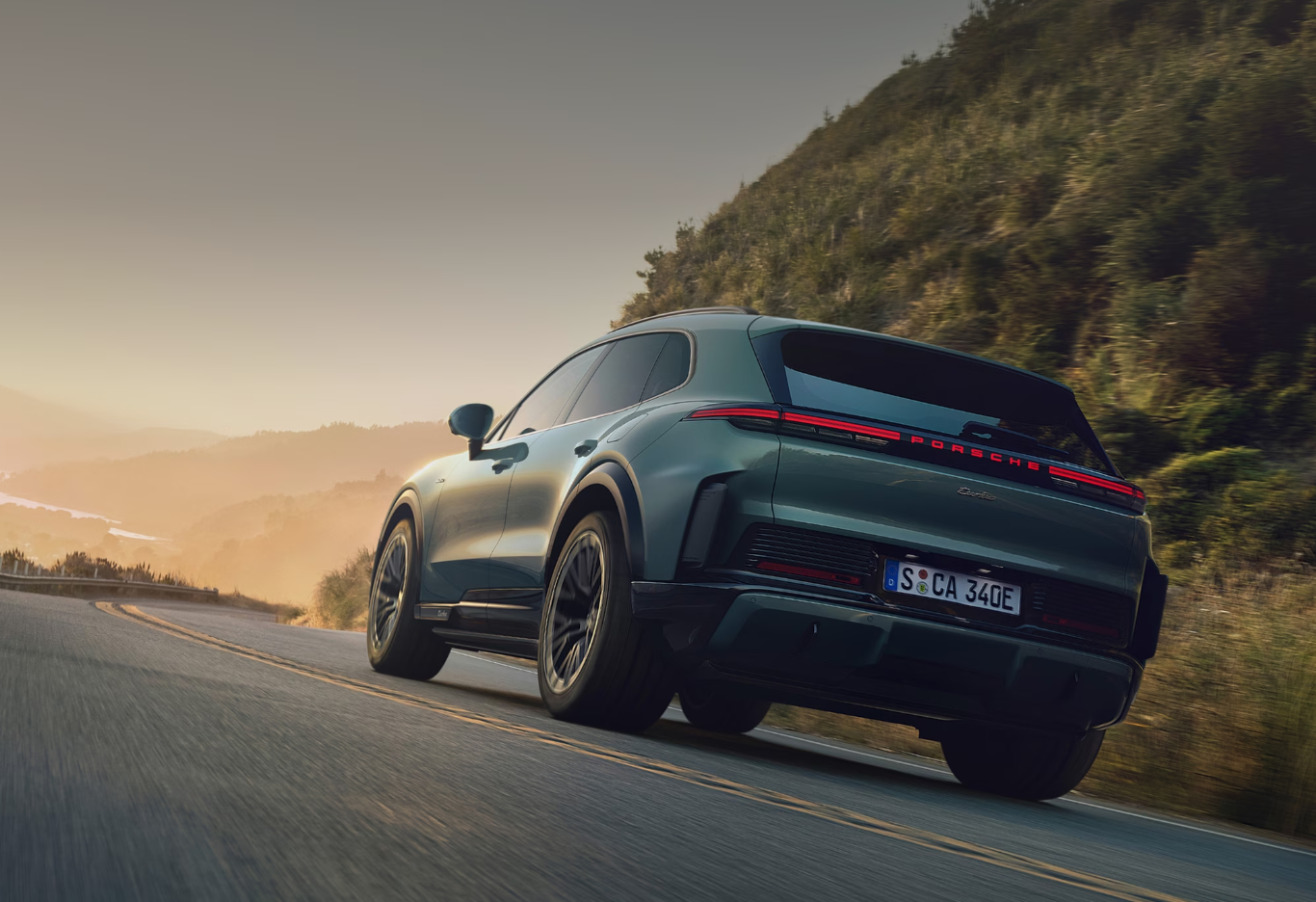
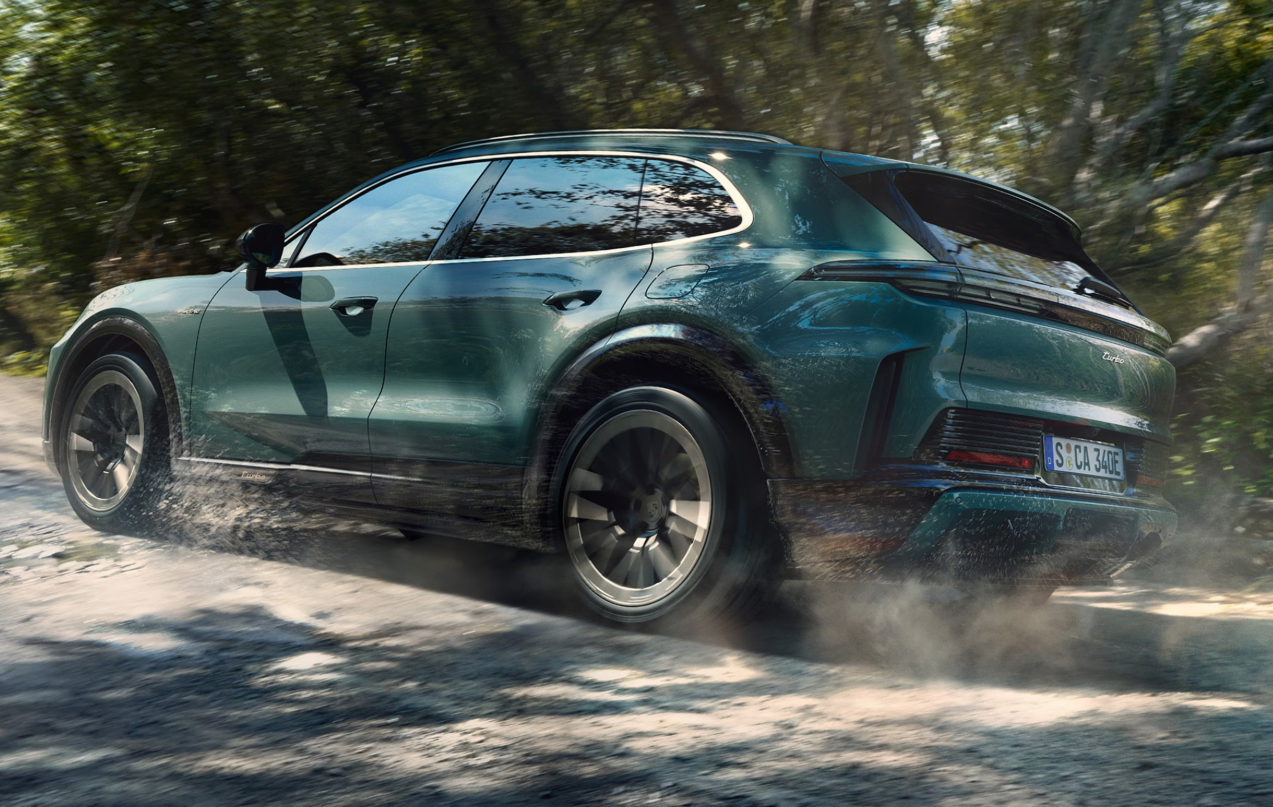
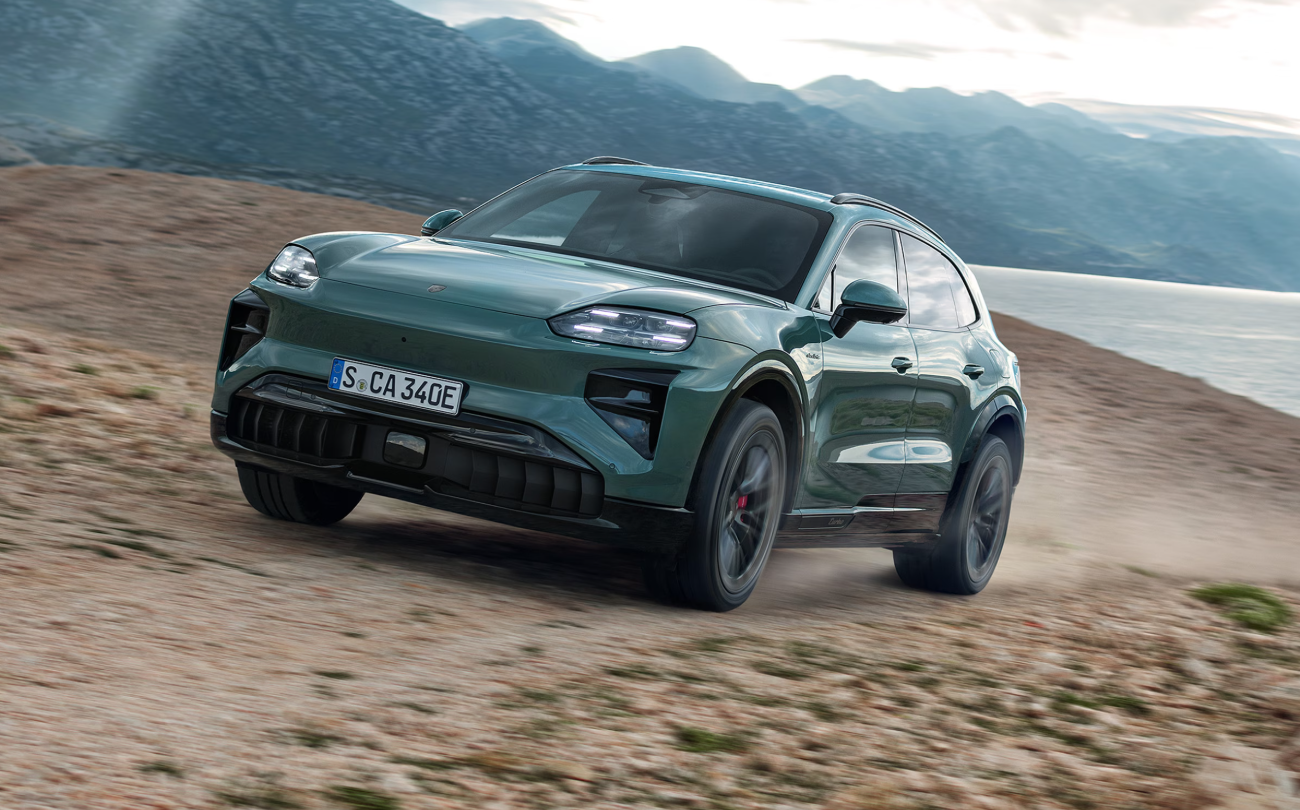
Porsche’s Cayenne Turbo Electric produces up to 1,156PS and reaches 100km/h in a claimed 2.5 seconds.

BNW Developments has established a Sydney presence, joining Arada and Sobha Realty among the growing number of UAE developers pursuing Australian buyers and development opportunities.
Porsche’s Cayenne Turbo Electric produces up to 1,156PS and reaches 100km/h in a claimed 2.5 seconds.
5 minFor all the attention Porsche’s move to electric power has generated, perhaps the most surprising number attached to its latest EV isn’t its range or charging speed.
It’s 1,156.
That is the maximum horsepower available from the new Cayenne Turbo Electric, making a large, five-seat family SUV the most powerful production Porsche ever built.
Not a 911. Not a Taycan. Not one of Stuttgart’s limited-production track specials. A Cayenne.
The new flagship produces up to 850kW, or 1,156PS, and 1,500Nm of torque with Launch Control activated, enough to send it from 0–100km/h in just 2.5 seconds.
Keep the accelerator pinned and 200km/h arrives in 7.4 seconds, before the Cayenne eventually reaches its 260km/h top speed. Those numbers put a vehicle capable of carrying five people and their luggage firmly into supercar territory.
It also represents something of a full-circle moment for the Cayenne.
When Porsche first revealed the original Cayenne more than two decades ago, the idea that the sports car specialist would build an SUV was controversial. It went on to become one of the company’s most important models and helped expand Porsche well beyond the traditional two-door sports car market.
Now the Cayenne is again being used to push Porsche into new territory.
The Cayenne Turbo Electric sits at the top of a growing three-model electric range in Australia, above the Cayenne Electric and Cayenne S Electric. Crucially, Porsche isn’t abandoning combustion power in the process. Petrol and plug-in hybrid versions of the Cayenne continue alongside the new electric generation, giving buyers a choice of powertrains rather than forcing an immediate wholesale transition.
But if the electric Cayenne is supposed to demonstrate what Porsche believes the next generation of its luxury SUV can do, the Turbo is the exclamation point.
In normal driving it produces up to 630kW, or 857PS. A Push-to-Pass function can temporarily add another 130kW for 10 seconds, while the full 850kW is unleashed with Launch Control.
Managing that much performance repeatedly is considerably more complicated than simply fitting powerful electric motors.
Porsche has equipped the rear motor with direct oil cooling, technology derived from motorsport, designed to maintain high continuous power output and efficiency rather than deliver one spectacular acceleration run before heat begins limiting performance.
It is part of the broader engineering challenge facing the new Cayenne.
Porsche hasn’t simply had to make a very fast electric SUV. It has had to make a 1,156PS electric SUV behave like a Porsche.
Adaptive air suspension with Porsche Active Suspension Management is standard, while the Turbo adds Porsche Torque Vectoring Plus. Rear-axle steering, capable of turning the rear wheels by up to five degrees, is optional.
Buyers can also specify Porsche Active Ride, the active suspension technology already seen elsewhere in the Porsche range. The system is designed to almost completely compensate for pitch and roll movements, helping keep the body level under acceleration, braking and cornering. That becomes particularly relevant in a large SUV carrying a substantial battery beneath its floor.
Even braking has been approached differently.
The Cayenne Electric can recover energy at up to 600kW under deceleration, a figure Porsche compares with the recuperation capabilities of its Formula E racing cars. The company says around 97 per cent of everyday braking can consequently be handled by the electric motors without requiring the conventional friction brakes.
For those intending to explore the outer edges of its performance envelope, Porsche Ceramic Composite Brakes remain available on the Turbo.
Then there is the battery.
A 113kWh high-voltage battery sits at the centre of the Cayenne’s new 800-volt electrical architecture. For the Turbo, Porsche quotes a European WLTP range of up to 623 kilometres, although Australian-specific range figures can vary depending on specification and testing.
More impressive is how quickly that battery can theoretically be replenished.
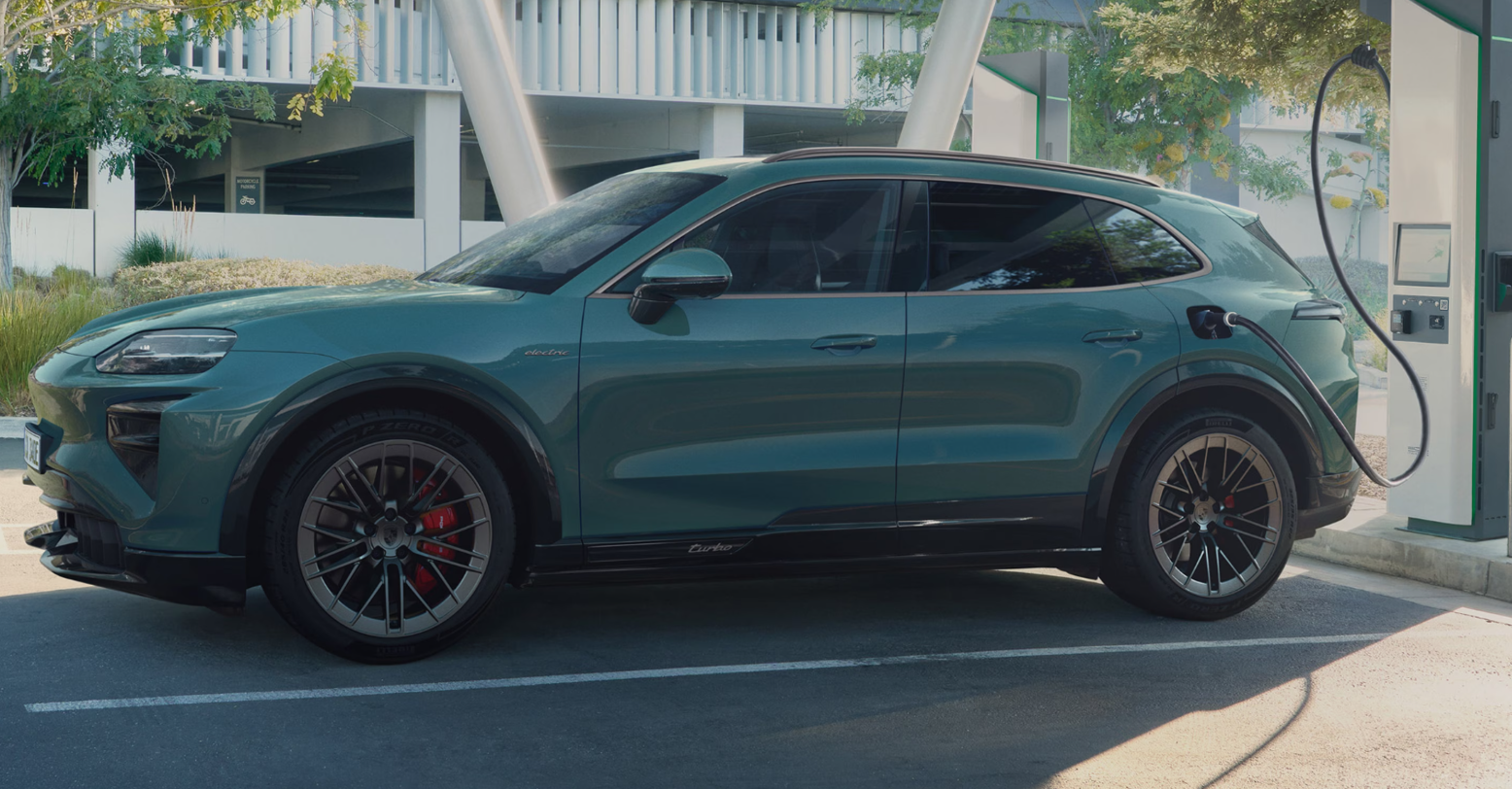
The Cayenne can accept DC charging at up to 390kW under optimal conditions, briefly reaching as much as 400kW under specific circumstances. Porsche says a 10 to 80 per cent charge can take less than 16 minutes when connected to sufficiently powerful infrastructure and with the battery at the appropriate temperature.
That potentially addresses one of the compromises that has traditionally separated a long-distance electric luxury SUV from its petrol equivalent.
Finding a charger capable of delivering anywhere near 400kW is another matter, particularly in Australia, but the car itself has been engineered with considerably more charging capacity than much of today’s infrastructure can provide.
Porsche is going further at home.
The Cayenne Electric is the first Porsche designed to support optional wireless charging. Rather than plugging the car into a wallbox, owners will eventually be able to park above a floor plate capable of inductively charging the battery at up to 11kW.
The system automatically recognises the vehicle and allows it to lower itself into the appropriate position above the plate. Porsche expects the wireless charging system to become available to order in Australia in the fourth quarter of 2026, with Australian Cayenne Electric models pre-wired to allow it to be retrofitted, unless buyers opt out.
For all those numbers, however, the Cayenne still has to fulfil the role that has made it such an important Porsche for more than 20 years. It needs to be useful.
The electric model is 4,985mm long and rides on a 3,023mm wheelbase, almost 13 centimetres longer between the axles than the combustion-engined Cayenne.
Most of that extra space has been used to improve rear passenger accommodation.
The electrically adjustable rear seats can move between comfort and cargo-oriented positions, while luggage capacity ranges from 781 litres to 1,588 litres. Removing an engine from the front also creates a further 90-litre luggage compartment under the bonnet.
Depending on specification, the Cayenne Electric can tow as much as 3.5 tonnes. It is that collision of figures that perhaps best explains the new Turbo.
This is a vehicle capable of reaching 100km/h in 2.5 seconds and producing 1,500Nm of torque, yet it can also carry a family, swallow more than 1,500 litres of luggage with the rear seats configured for cargo and tow a substantial boat or caravan.
Inside, Porsche has similarly moved the Cayenne further into its digital era.
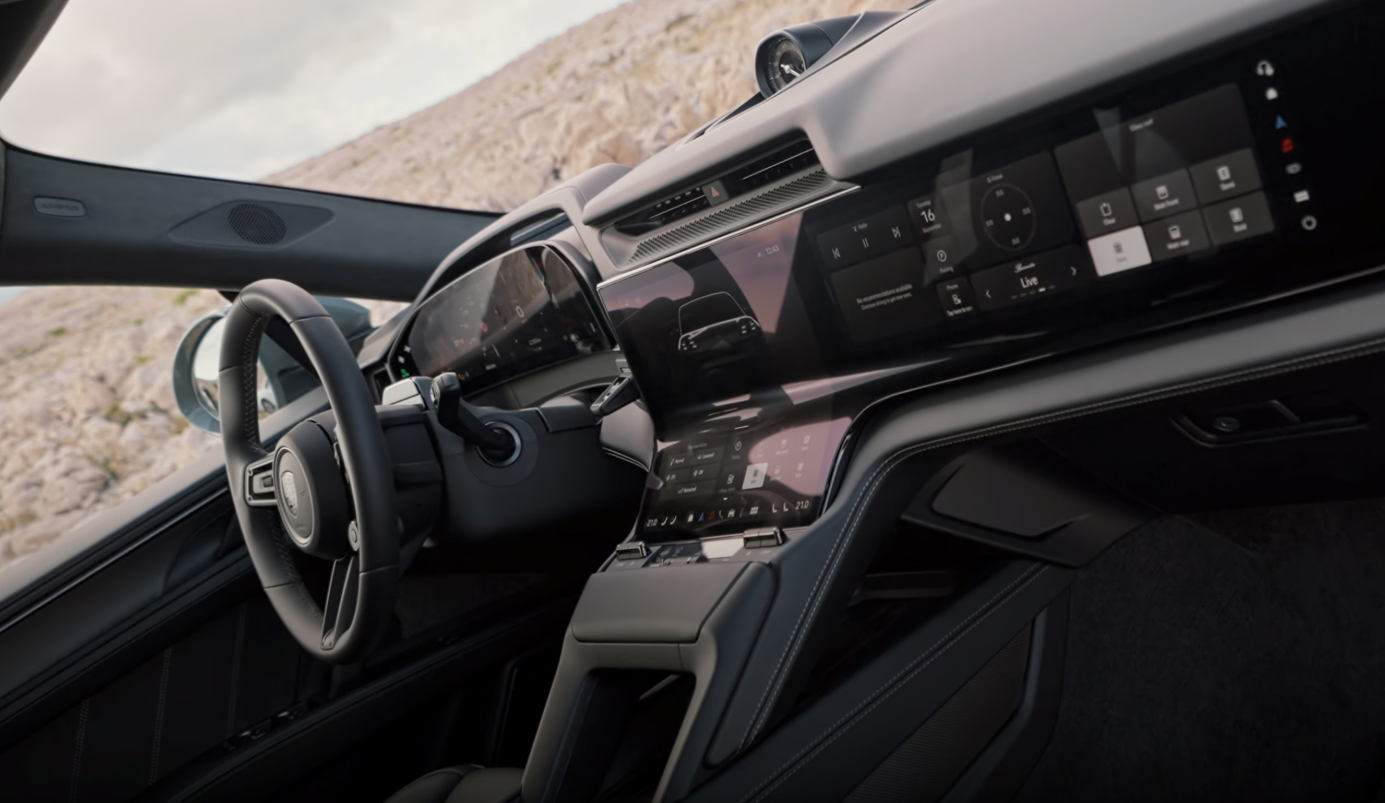
The new Porsche Driver Experience combines a fully digital instrument display with the curved central Flow Display, while a separate passenger display and augmented-reality head-up display are available.
Despite the expansion of screen real estate, Porsche has retained a mixture of digital and physical controls rather than moving every function behind a touchscreen.
Australian Turbo models also receive a generous standard specification, including a panoramic roof, ventilated front seats, four-zone climate control, privacy glass and Porsche’s Parking Entry Package with Surround View and Self-Steering ParkAssist.
And we now know what all of it will cost.
The Cayenne Turbo Electric is priced from $259,900 before on-road costs in Australia, compared with $167,800 for the Cayenne Electric and $193,100 for the Cayenne S Electric.
Orders are already open, with the first Australian deliveries expected from the third quarter of 2026.
There is also a Cayenne Turbo Coupé Electric for buyers wanting the same extraordinary drivetrain beneath a more sporting roofline. It is priced from $272,100 before on-road costs.
Ultimately, however, the significance of the Turbo isn’t simply that Porsche has electrified another model. The company has used electrification to move the performance ceiling of the Cayenne somewhere it has never been before.

Here’s how they are looking at artificial intelligence, interest rates and economic pressures.
Porsche’s Cayenne Turbo Electric produces up to 1,156PS and reaches 100km/h in a claimed 2.5 seconds.