Elon Musk Tries to Direct AI—Again
His latest startup follows a decade of being outmanoeuvred in his quest to steer the development of artificial intelligence

 6 min
6 min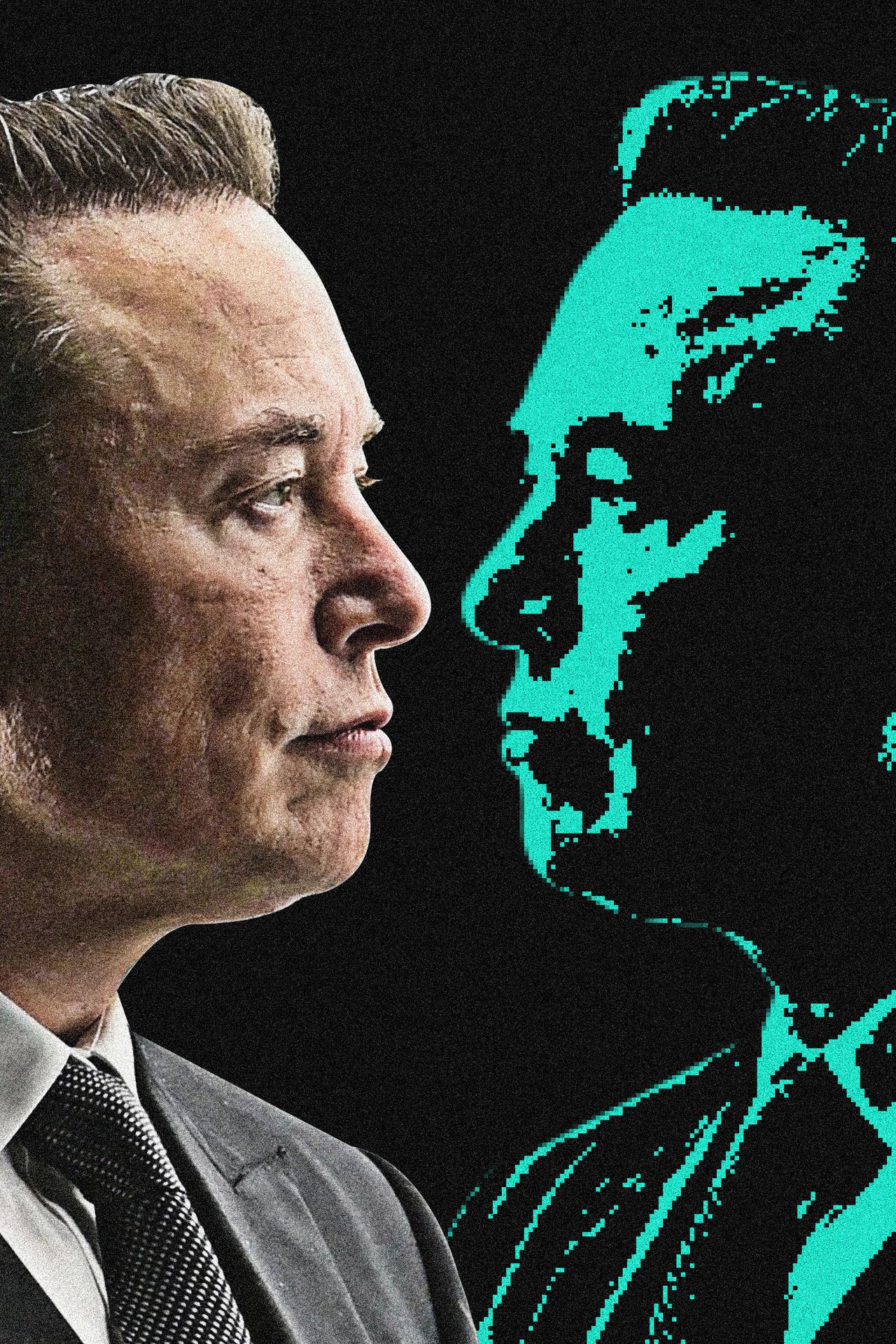
For at least a decade, Elon Musk has tried to steer the development of artificial intelligence—only to be outmanoeuvred by rivals and former allies.
He has now stepped up his efforts after the success of OpenAI, an organisation he co-founded but then left after a power struggle. Mr. Musk has warned for years that poorly built artificial intelligence could have catastrophic effects on humanity. Since OpenAI’s ChatGPT became a viral sensation last November, Mr. Musk has denounced it as politically correct and warned it could lead AI to become too powerful for humans to control.
He has called his new effort TruthGPT, and billed it as a truth-seeking artificial intelligence model that will one day comprehend the universe. On March 9, he incorporated a company called X.AI in Nevada, laying the formal groundwork.
So far, he has struggled to define a precise vision for his startup and is still in the process of assembling a team, said people familiar with the matter. Musk’s representatives have said X.AI intends to raise cash at some point from investors, the people said.
Mr. Musk didn’t respond to requests for comment.
Two weeks after incorporating X.AI, Mr. Musk signed an open letter calling for a six-month pause on the development of AI models stronger than the latest one released by OpenAI, called GPT-4. The letter was organised by the Future of Life Institute, which says its goal is to steer transformative technology away from extreme, large-scale risks. Its biggest funder is Mr. Musk.
Steven Weber, a professor at the University of California, Berkeley who met Mr. Musk several years ago at a gathering of A.I. academics in Northern California, sees a consistent thread through what appear to be opposing impulses.
“He holds both of these beliefs at once: that human beings can’t be relied on to really control technology, and technology is going to advance and it needs to advance subject to his vision, more than anybody else,” Mr. Weber said.
“AI stresses me out,” Mr. Musk said at the end of a March presentation given to Tesla Inc. investors. “It’s quite dangerous technology. I fear I may have done some things to accelerate it.”
For X.AI, he hired Igor Babuschkin, a senior scientist at DeepMind, an AI lab under Alphabet Inc.’s Google, to lead the effort, people familiar with the matter said. Mr. Musk also purchased powerful computer chips similar to ones used in the technology behind ChatGPT, one of the people said.
He is still trying to attract top talent from leading labs and universities, people familiar with the matter said. Some AI researchers said they have been turned off by Mr. Musk’s struggles to turn Twitter around since acquiring the social-media company in October, as well as his public attacks on OpenAI.
Mr. Musk’s faltering attempts to steer AI’s development date back more than a decade. He has previously said he made an early investment in DeepMind, founded in 2010, to monitor its AI research rather than make money.
In late 2013, he launched a last-minute bid to purchase DeepMind, the leading AI lab at the time, but lost out to Google, according to people familiar with the talks. Mr. Musk wanted to steer the lab’s research and told associates that Google’s then-Chief Executive Larry Page couldn’t be trusted to oversee the creation of advanced AI, according to people familiar with his thinking.
DeepMind has become a central element of Google’s efforts to infuse advanced AI into its search powerhouse, and recently merged with another AI unit called Brain to form Google DeepMind. In a recent interview with Tucker Carlson on Fox News, Mr. Musk said he and Mr. Page used to be close friends who spent nights discussing AI safety at Mr. Page’s home in Palo Alto, Calif.
Mr. Page wanted to create a “digital god” as soon as possible, Mr. Musk said, and in their conversations called Mr. Musk a “speciesist” for saying it was important that the technology protected humanity.
Mr. Page and representatives at Google didn’t respond to requests for comment.
Mr. Musk’s interest in buying DeepMind was informal and didn’t reach the DeepMind board, according to the people familiar with the talks. It hasn’t previously been reported.
Mr. Musk co-founded OpenAI two years later with Sam Altman, the current chief executive, and several others. The organisation was founded as a nonprofit and intended to serve as a counterweight to Google, with the goal of developing AI in a safer, more transparent way than large tech companies could.
Mr. Musk served as the financial linchpin for the project and promised to make sure that OpenAI fully received the $1 billion in funding promised by early backers, people involved with the effort said. He recruited employees and met regularly with company leaders to set the vision, they said.
Mr. Musk set an aggressive research timeline for OpenAI, warning that the company’s credibility would be compromised if it didn’t achieve a major breakthrough soon after its launch, according to former employees familiar with the remarks. He often conducted polls among employees to see when they thought so-called artificial general intelligence—in which machines are able to match or surpass the intelligence of humans—could be achieved, former employees said.
In September 2017, Mr. Musk told his brother, Kimball Musk, and a longtime financial backer that he saw OpenAI and Neuralink, a startup he founded to link humans with computers through brain implants, as worthy of more of his time, according to recently released court documents related to a lawsuit against Tesla over Mr. Musk’s compensation.
“OpenAI and Neuralink are both critical to a good future for humanity. My instincts tell me that I should be devoting a much higher percentage of time to them,” Mr. Musk texted them, according to the documents. OpenAI and Neuralink at one point shared an office in San Francisco.
Mr. Musk grew frustrated with what he saw as OpenAI’s slow progress and pushed for more control of the company, The Wall Street Journal previously reported. At the time, OpenAI didn’t have a chief executive or a formal management structure.
Mr. Musk clashed with Mr. Altman, who wanted to create a for-profit arm that would allow OpenAI to raise cash from investors, people familiar with the matter said.
Mr. Musk subsequently left. Mr. Altman, who has said he considers Mr. Musk a mentor, became CEO in 2019, created a for-profit entity and raised $1 billion from Microsoft Corp.
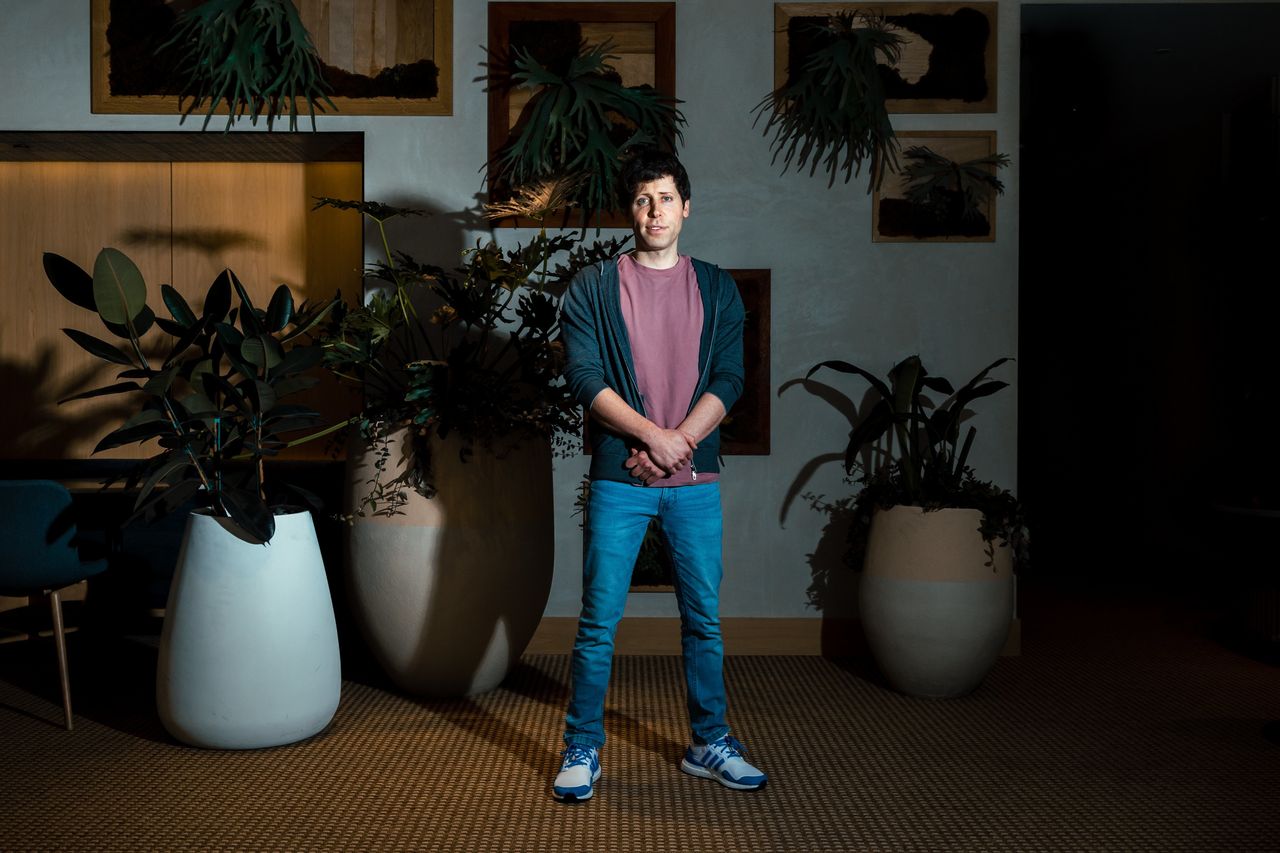
Mr. Musk tweeted in March that he had donated around $100 million to OpenAI, though people familiar with the figure said he contributed less than $50 million.
Mr. Musk focused his AI efforts at Tesla, where he made progress in using the technology to enhance its driver-assistance systems. He said the EV maker would start introducing a fleet of robotaxis by 2020, and showcased a humanoid robot he said would feature safeguards to prevent wrongdoing by the machine.
Regulators are scrutinising Tesla’s driver-assistance software for safety problems. The company has yet to roll out robotaxis, which rely on the kind of driverless technology that Google sister company Waymo and General Motors Co.’s Cruise LCC have begun to deploy.
Mr. Musk grew more publicly critical of OpenAI after the company released ChatGPT last fall, accusing the company of being a “maximum-profit company” controlled by Microsoft. “Not what I intended at all,” he tweeted.
In a March 28 interview with the Journal, Mr. Altman said OpenAI took its safety obligations seriously.
“We spent more than six months after we finished GPT-4 to safety test, to align it, to really probe its capabilities, at a time when I believe some of the [Future of Life Institute] letter signatories were even, you know, pushing us to release it faster,” Mr. Altman said. He declined to specify which signatories he meant but said seeing those names prompted “some eye rolls.”
In early 2023, Mr. Musk texted Mr. Altman that he was starting a rival AI effort, according to people familiar with the exchange. Mr. Altman wished him well but said he didn’t understand how a new lab would allay Mr. Musk’s concerns about AI development, they said.
One OpenAI board member, Shivon Zilis, stepped down in part due to a conflict of interest with Mr. Musk’s new AI efforts, said people familiar with the matter. Ms. Zilis is also an executive at Mr. Musk’s Neuralink and had twins with Mr. Musk in 2021. Ms. Zilis didn’t respond to a request for comment.
After ChatGPT’s release, Mr. Musk said on Twitter that he cut off OpenAI from access to a pipeline of Twitter data, which OpenAI could potentially use for training the AI models powering ChatGPT. “I just learned that OpenAI had access to Twitter database for training,” Mr. Musk tweeted in early December. “I put that on pause for now.” People familiar with OpenAI say the company didn’t use this Twitter data to train its models.
A few days later, Mr. Musk visited OpenAI’s San Francisco headquarters at Mr. Altman’s invitation and the two had what turned into a lengthy discussion about the Twitter decision, among other topics, according to current and former OpenAI employees.
At one point, an OpenAI researcher showed Mr. Musk how Twitter could potentially use ChatGPT. Mr. Musk brought one of his toddlers and a nanny, some of the people said, and he and the nanny took turns bouncing the child on their laps when the child grew fussy.
He struck a benign tone with employees, who found him wandering around the kitchen and hallways with his security detail, the employees said.
In one conversation, Mr. Musk entertained the idea that the universe was a computer simulation, they said. Soon after, he left the building.
 Copyright 2020, Dow Jones & Company, Inc. All Rights Reserved Worldwide. LEARN MORE




From making unpopular decisions to learning when to listen, leaders from five businesses reveal what nobody prepared them for — and how running a company has challenged their expectations.
Technology and semiconductor shares fell sharply as investors questioned the debt financing the AI infrastructure boom and confronted higher rates and Chinese competition.
Elon Musk is exploring a potential merger between Tesla and SpaceX, a deal that could reshape the future of AI, robotics, autonomous vehicles and space technology. With a combined valuation potentially reaching $3.5 trillion, the move could bring Musk’s vision of an interconnected technology ecosystem closer to reality, although a deal remains uncertain.
5 min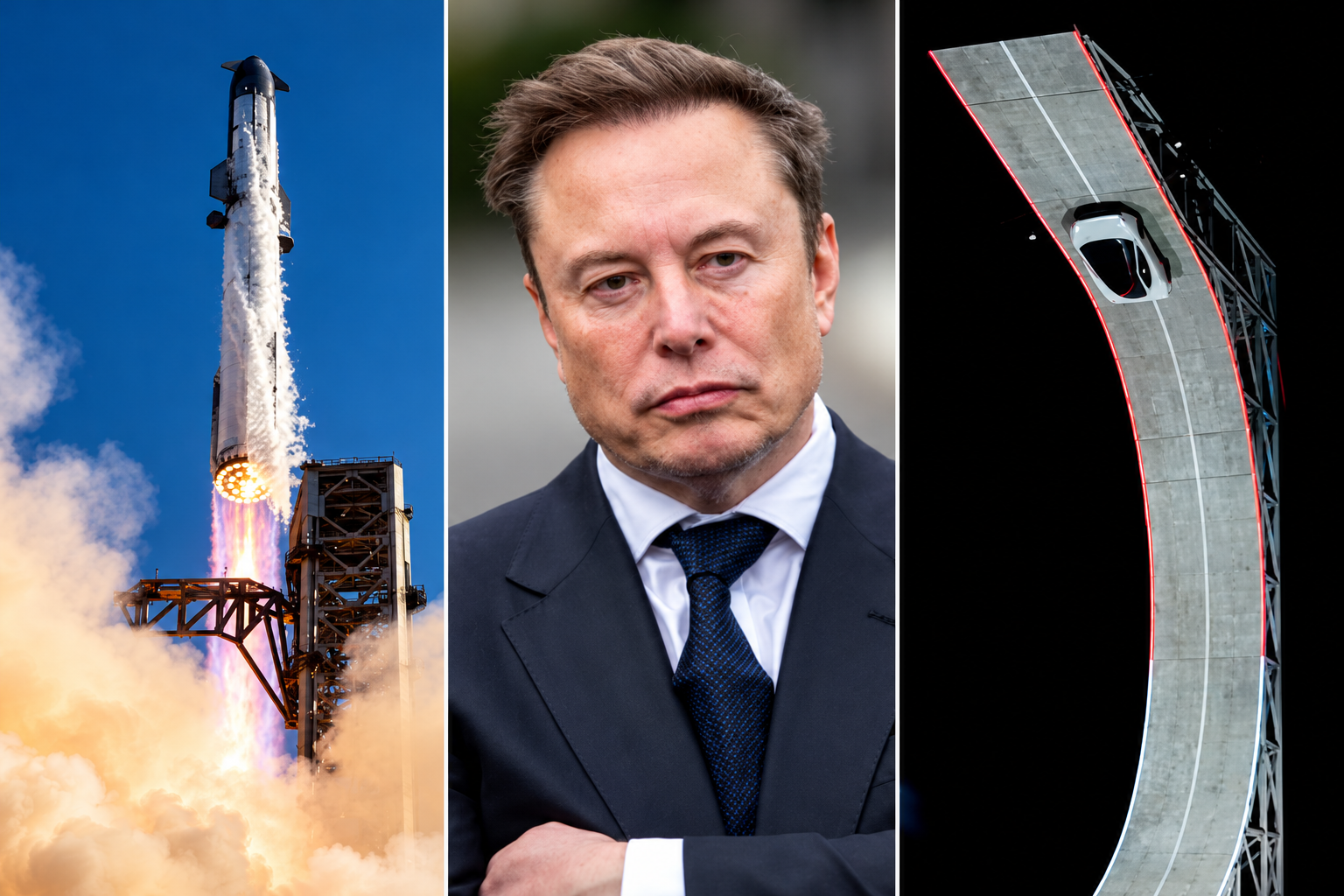
Elon Musk has engineered ties between Tesla TSLA 3.41%increase; up pointing triangle and SpaceX SPCX 7.79%increase; up pointing triangle that are hard to break, and now he wants to fuse them together permanently.
Musk has run both Tesla and SpaceX concurrently over the past two decades, using a schedule that dictated which days he spent focused on each business.
The companies have often shared resources and personnel, signaling their close ties. Last year, SpaceX looked into creating a spacesuit for Tesla’s humanoid robot Optimus, a person familiar with the matter said. Tesla last week showed off its new Roadster, a vehicle featuring SpaceX rocket thrusters that it hopes to soon bring to market.
And in recent months, Musk has repositioned both companies by expanding beyond their core operations toward a shared mission centered on artificial intelligence.
The world’s richest man on Tuesday signaled his interest in tying up SpaceX and Tesla, marking what would be the biggest corporate merger of all time. Because he serves as chief executive of SpaceX and Tesla, Musk said committees of independent directors at both companies are evaluating a possible deal, adding that a transaction might not come to fruition.
The committees will likely evaluate, with lawyers and bankers, how each company would fare in a potential deal and how a deal might best be structured. They then present their conclusions to their respective boards, who typically vote on whether to proceed.
“It’s an odd Kabuki dance where two groups of people are talking and I can’t be in the conversation,” Musk told SpaceX investors on Tuesday in response to an analyst’s question about a potential deal.
For Musk, the merger supports his vision of a world full of autonomous cars, humanoid robots and weekly rocket launches, as well as the data centers and satellites required to keep the whole thing running.
Some investors and analysts said they expect a transaction would be structured as an all-stock deal, with SpaceX potentially paying a modest premium for Tesla shares.
SpaceX, which has a market value of about $2 trillion, said it is seeing sharp growth in revenue across its businesses, which include operating data centers, launching rockets and operating satellite networks such as the internet service Starlink. Tesla is valued at about $1.5 trillion and is expanding its operations beyond its automotive and energy business. Shares in both companies traded higher following the news Tuesday.
Musk’s substantial ownership stakes in both companies, along with voting control at SpaceX, has enabled him to set the deal in motion. Analysts and investors said the deal will probably face regulatory scrutiny internationally, though some see Musk’s close relationship with the Trump administration as an asset to getting approval.
Blurred lines
The companies haven’t said which directors are on the special committees evaluating a potential deal. Several SpaceX and Tesla board members have either personal or business ties to Musk. And like Musk, venture capitalist Ira Ehrenpreis sits on both boards.
In a filing this week, Tesla outlined millions of dollars in business agreements with SpaceX and its subsidiaries last year, including $143 million in car sales to SpaceX, $3.3 million in advertising that it bought on the social-media platform X and $430 million in revenue from the sale of Megapack batteries for SpaceX’s data centers.
The companies also split the cost of resources including the use of Musk’s SpaceX jet and the bill for his personal security, which he runs through a private company.
Employees at both companies routinely move between companies to work on special projects, and some executives have dual roles, including Charles Kuehmann, vice president of materials engineering at both SpaceX and Tesla, and Ashok Elluswamy, the vice president of AI software at Tesla who runs a joint venture with SpaceX called Digital Optimus.
Over the years, Musk has launched new startups within his empire, including brain-implant company Neuralink, underground-tunnel developer the Boring Company and xAI, the AI startup that merged with SpaceX in February.
It is that AI business that Musk thinks can serve a market worth tens of trillions of dollars, justifying the need for a merger.
The business case goes like this: Tesla is developing robotaxis and robots, which it calls “physical AI.” SpaceX is working on the back end of physical AI: the data-center capacity and internet connection required for those robotaxis and robots to operate continuously.
“I don’t see what the value of Tesla is if it’s not merged with SpaceX,” said investment adviser Ross Gerber, a former Tesla bull turned critic invested in both companies. “If they don’t merge, the brains of everything that runs Tesla is owned by another company.”
On top of it all, both companies face constraints on the supply chains they need to make this world a reality, particularly when it comes to chips. To address this, Musk earlier this year announced a joint venture between Tesla, SpaceX and Intel to design and manufacture chips in Texas. “The most epic chip-building exercise by far,” he has said.
Musk at the wheel
For Musk, a merger would also solve two problems: demands on his attention and his lack of control at Tesla.
Tesla for years was Musk’s only public company, a status that came with greater scrutiny. There, Musk reports to a public board, as well as individual investors who make up around 30% of Tesla’s voting power, according to FactSet.
The question of Musk’s attention became a particular focus for investors and the board in recent years after he acquired Twitter in 2022 and launched xAI in 2023, and again in 2025 as he spent time in Washington, D.C., running the Department of Government Efficiency in the early months of President Trump’s second term.
As Tesla’s car business suffered in 2025, Musk threatened to take his AI ambitions outside the company if he wasn’t granted 25% voting control. Last November, Tesla shareholders approved a new pay package for Musk, which created a path for him to vastly expand his stake.
As of Sept. 30, Musk owned a roughly 20% stake in Tesla, according to the company’s proxy filing.
The SpaceX IPO gave Musk a different path. When SpaceX went public in June, the deal’s structure enabled him to have more than 80% voting power at the company—so much that he can’t be fired and decisions can’t be made without his support.
If SpaceX acquires Tesla, he will likely stay in control.
Odd Culture Group brings a new kind of after-dark energy to the CBD, where daiquiris, disco and design collide beneath the city streets.
Australia’s market is on the move again, and not always where you’d expect. We’ve found the surprise suburbs where prices are climbing fastest.