Luxury Buyers Drifted North, But the Tide May Be Turning
New data shows Sydney and Melbourne underperformed during the lifestyle-migration boom, but shifting price gaps suggest prestige buyers may be circling back.
 3 min
3 min
Australia’s luxury housing map has been flipped on its head over the past five years, but the pendulum may finally be swinging back toward the big cities.
According to Ray White Group Senior Data Analyst Atom Go Tian, the pandemic years reshaped where prestige buyers put their money.
“If you were speaking about luxury houses five years ago, you wouldn’t even consider markets outside of Sydney and Melbourne,” he says.
But when COVID accelerated lifestyle migration and buyers were suddenly free to look elsewhere, the country’s wealthiest house hunters proved highly mobile.
“Luxury buyers proved themselves to be the most flexible and flocked away to where luxury was still sold at a discount,” Tian says. The result: Sydney and Melbourne were largely overlooked while regional prestige markets surged.
Both major cities saw their luxury prices spike briefly in 2021 as the COVID boom lifted the entire country, but the gains evaporated almost as quickly.
Rising interest rates and the lure of discounted luxury in the regions saw Sydney and Melbourne lose roughly half their 2021 uplift the following year.
The recovery since has been patchy. Tian says Sydney “grew six per cent between 2024 and 2025 after growing just two per cent between 2023 and 2024 to finally reach a new peak luxury price of $4.5 million”.
Melbourne, meanwhile, still hasn’t clawed back its pandemic peak. Luxury prices there rose five per cent between 2024 and 2025 after falling one per cent the year prior, ending 2025 at $2.6 million.
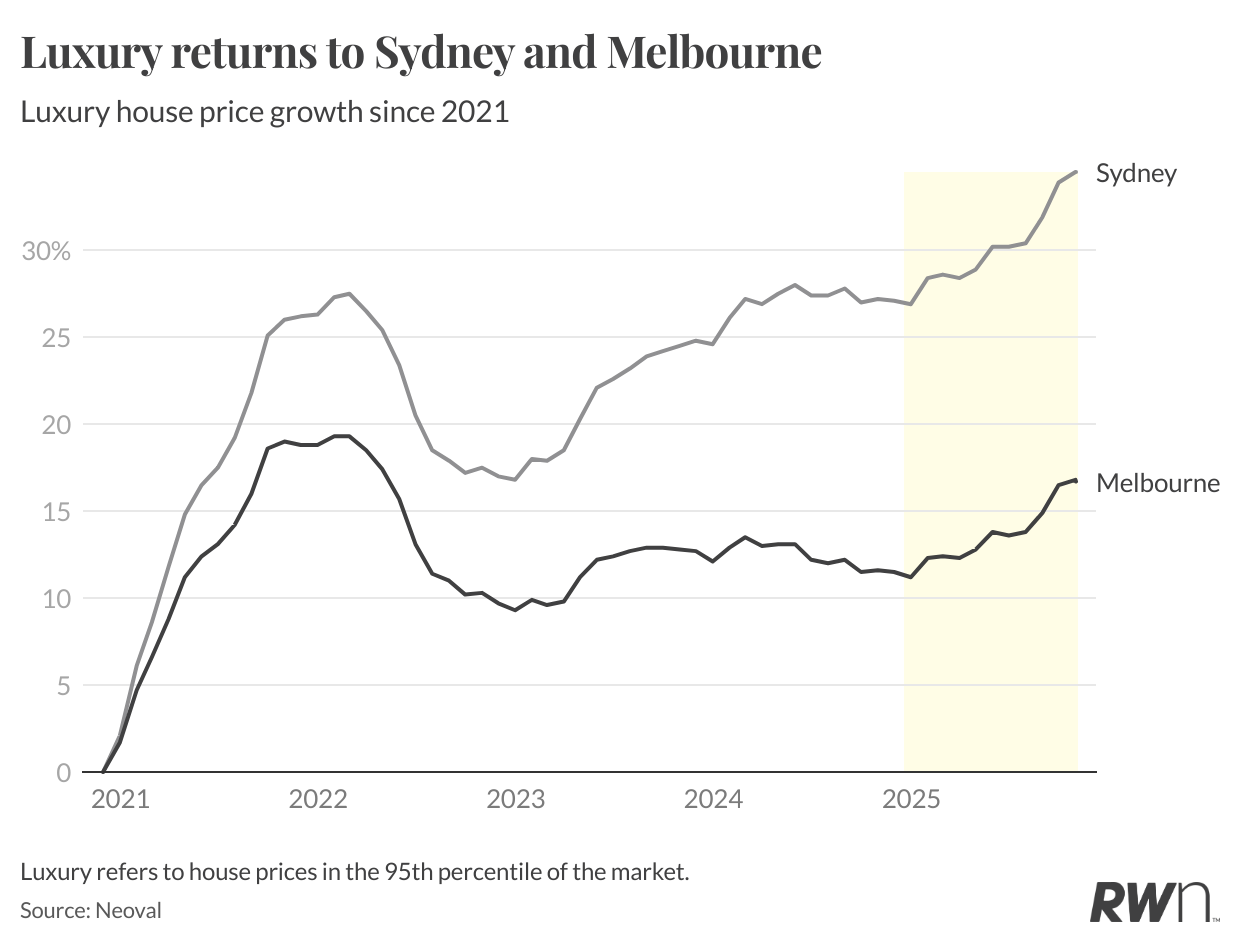 Over five years, the two major cities have been dwarfed by the east-coast lifestyle markets that stole their thunder. Sydney grew 35 per cent and Melbourne just 17 per cent.
Compare that with Brisbane (+77 per cent), Perth (+76 per cent), Adelaide (+73 per cent), the Gold Coast (+72 per cent), and the Sunshine Coast (+68 per cent).
That surge allowed the Sunshine Coast ($2.76 million) and Gold Coast ($2.86 million) to overtake Melbourne ($2.62 million) as the second and third most expensive luxury markets in the country.
Brisbane ($2.32 million) and Perth ($2.30 million) are now only 12 per cent cheaper than Melbourne, a huge shift from 2020 when both were 43 per cent cheaper.
Many assumed this decentralised luxury map was the new normal. But Tian says the last 12 months hint at a potential reversal.
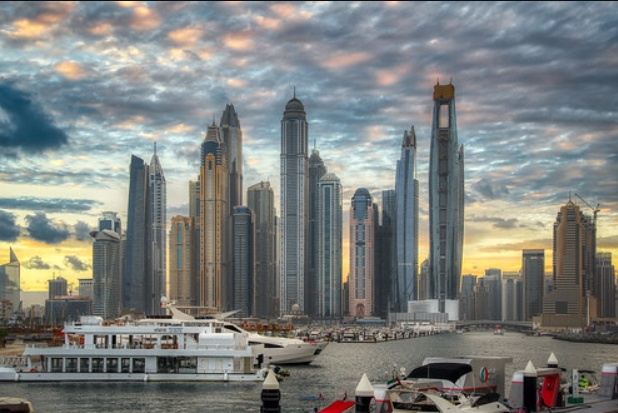
“It’s easy to assume the new normal is a decentralised luxury market, but if the last 12 months signal what’s to come, luxury buyers may just be beginning to rediscover the value of Sydney’s prestige waterfront streets and Melbourne’s leafy inner suburbs.”
The price gaps that once tempted buyers north and west have narrowed. In 2020, Sydney was twice as expensive as the Gold Coast and Sunshine Coast.
Now the gap is closer to 1.5 times. Against Brisbane and Perth, the premium has shrunk from 2.5 times to 1.9. “Sydney’s premium looks more justified than overpriced,” Tian says.
Melbourne is a more complicated story. Its long lockdowns hit confidence harder than anywhere else, sending affluent buyers to other states. But Tian believes that weakness may now be its strength.
“At only 17 per cent growth over five years, it significantly underperformed relative to its fundamentals as Australia’s second-largest city.”
If interest rate cuts arrive and confidence lifts, he says the very buyers who abandoned Sydney and Melbourne could return to find relative value they haven’t seen in years.
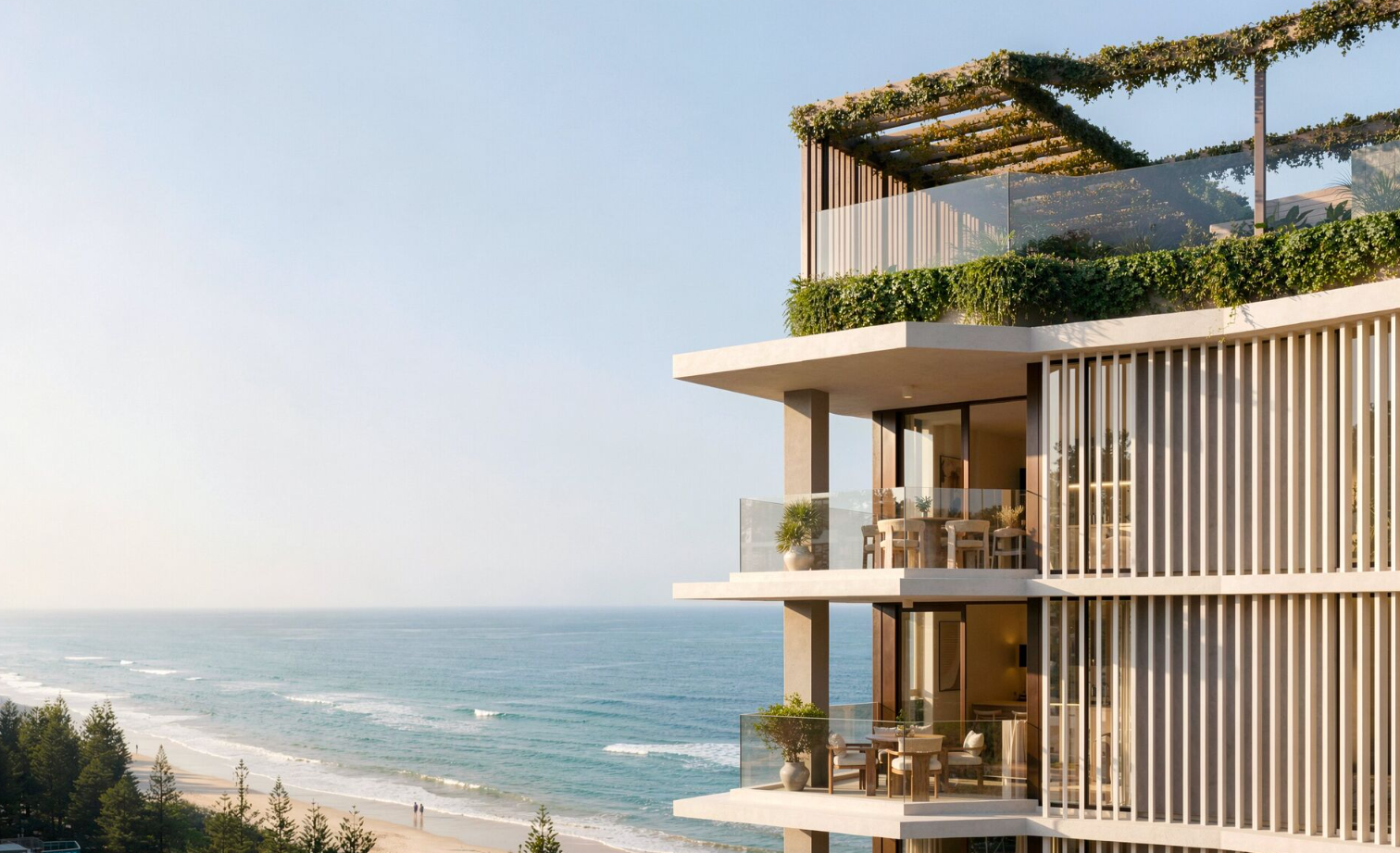
Studio apartments have almost disappeared from new Australian developments. Lura is bringing them back to Burleigh Heads from $495,000.
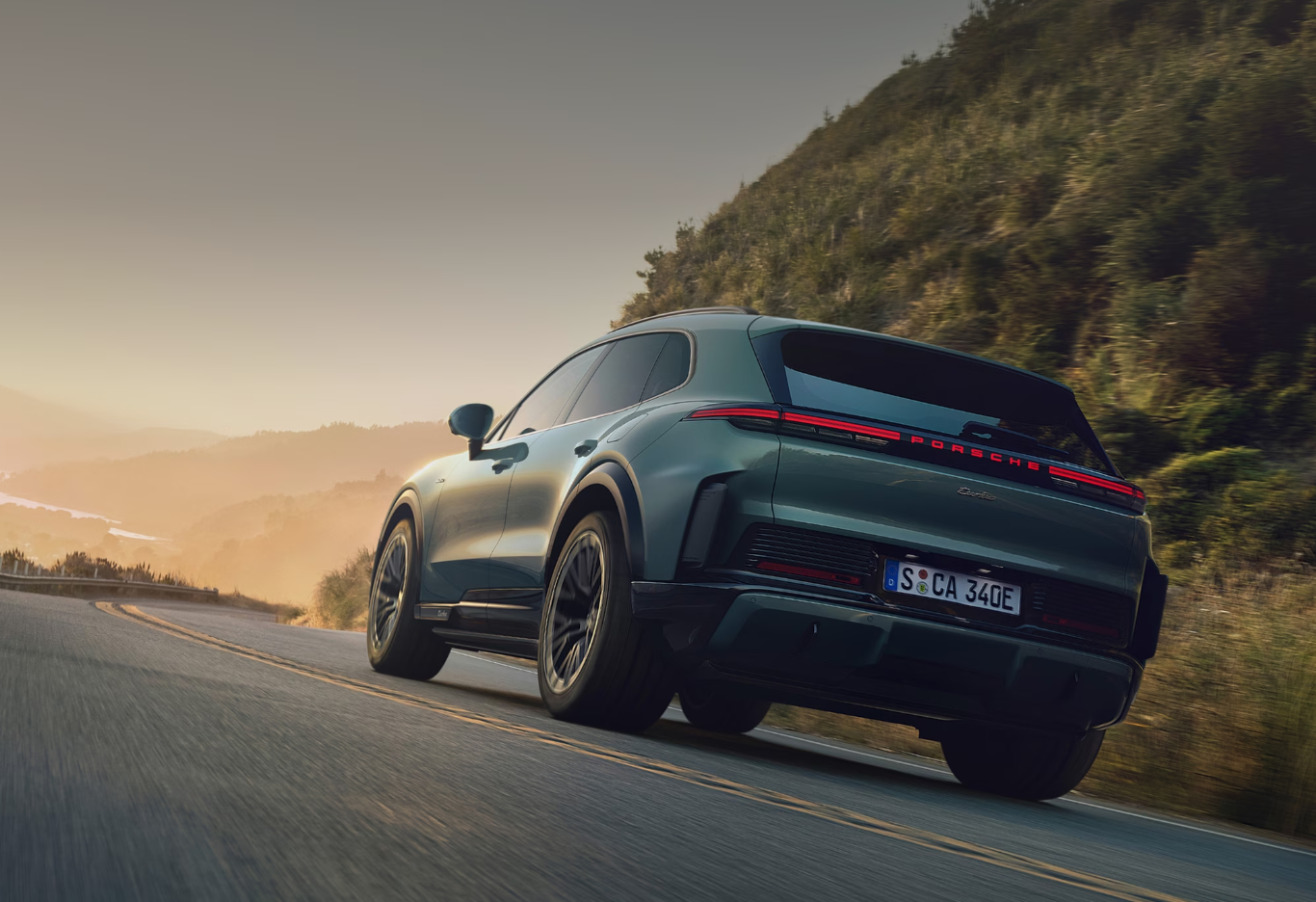
Porsche’s Cayenne Turbo Electric produces up to 1,156PS and reaches 100km/h in a claimed 2.5 seconds.
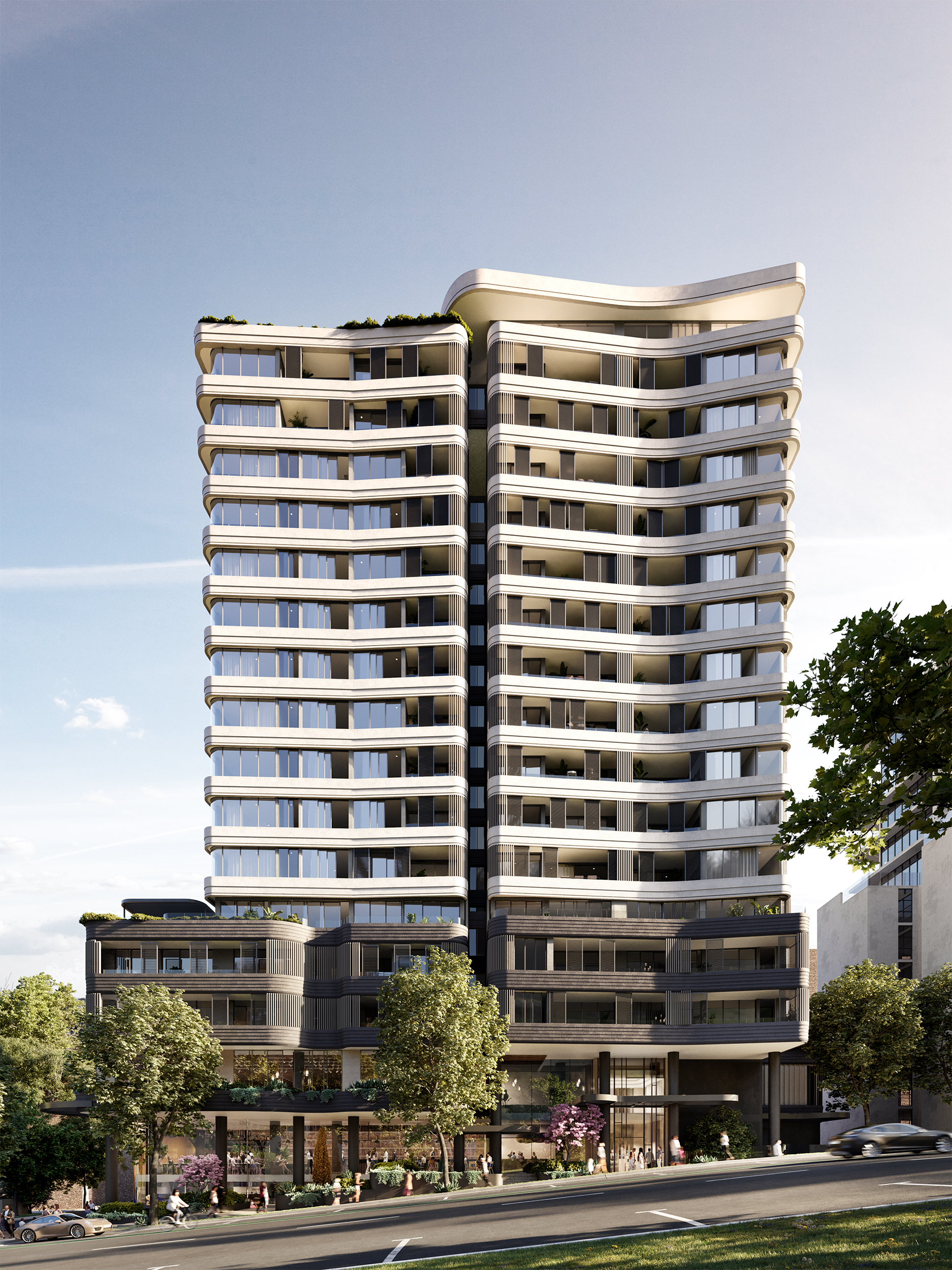
Bjorn Farrugia was named for Björn Borg, the ice-cool Swede who once ruled Wimbledon’s Centre Court, and for a long stretch of his young life the name felt like a mandate
3 min
A tennis scholarship took him to America two decades ago with no return ticket in mind. Today the Melbourne-born, Beverly Hills-based agent is one of the most decorated names in Los Angeles luxury real estate — and still calls himself an Australian first.

From farm-to-table Thai to fairy-lit mango trees and Coral Sea vistas, Port Douglas has award-winning dining and plenty of tropical charm on the side.
Scotch whisky expert, luxury hospitality strategist and Keeper of the Quaich inductee Ross Blainey is bringing a new philosophy of luxury experiences to Citizen Kanebridge.