

MONA VALE BEACH HOUSE WITH RARE DIRECT BEACH ACCESS HITS THE MARKET
This four bedroom coastal classic has been remade for modern living, delivering 270 degree ocean views and rare direct beach access.
 2 min
2 min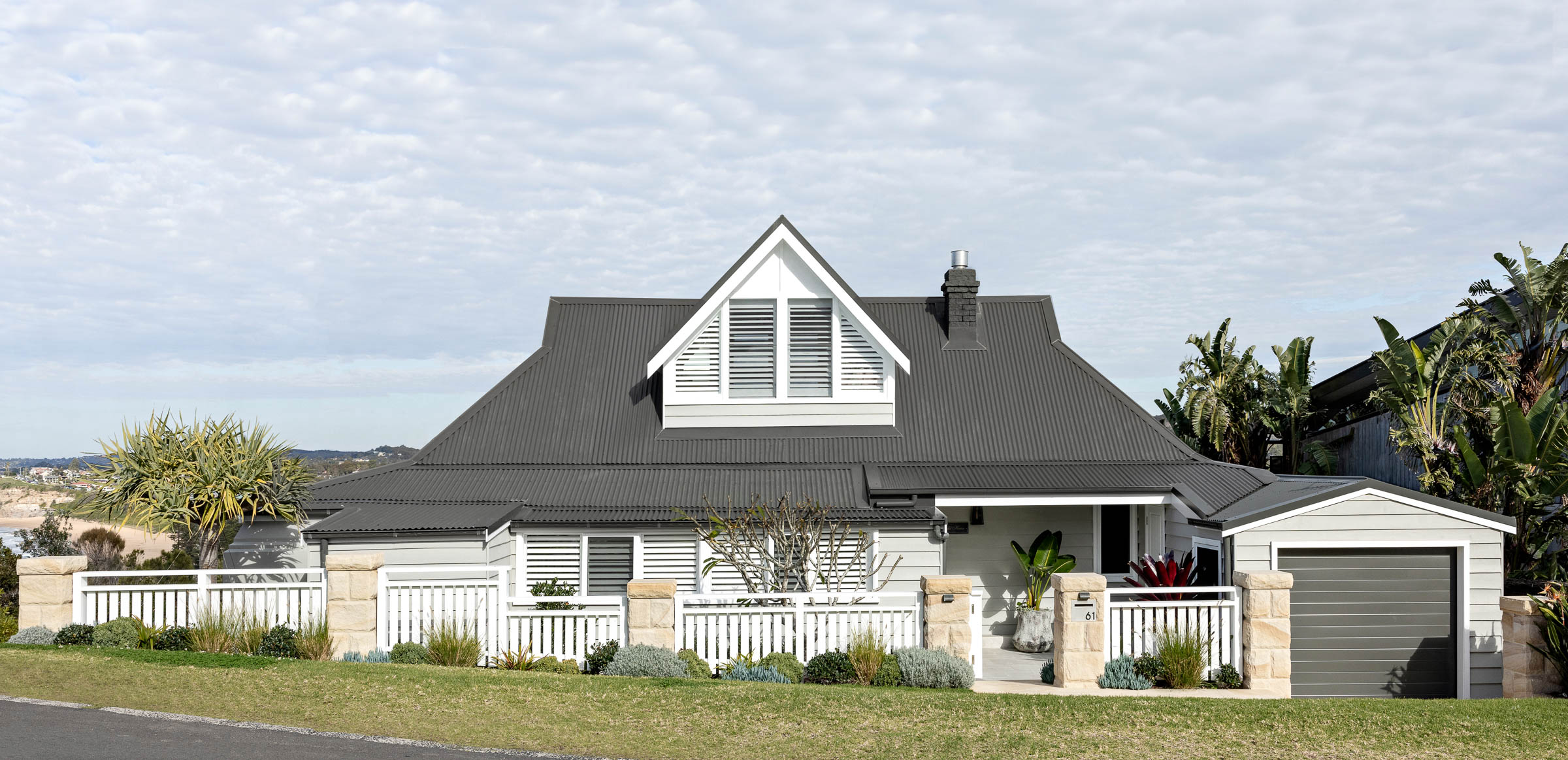
A beautifully renovated New South Wales home in a never-to-be-built-out location by the beach is on the market.
The property at 61 Hillcrest Avenue, Mona Vale, in New South Wales, has a price guide of $7.5+ million and is being marketed by Ray White Northern Beaches agents Emma Blake and Sasha de Bilde.
The property is set to go to auction on October 26.
Ms Blake said the “historic home” with direct beach access was set at the end of a cul-de-sac in one of Mona Vale’s most prestigious streets.
“The property is in a never-to-be-built-out position and there are large open plan living spaces looking out to Mona Vale Beach and beyond,” she said.
“The elevated position offers uninterrupted 270-degree views across Mona Vale Beach, the ocean horizon, and surrounding headlands – with expansive open-plan living spaces designed to embrace the coastal lifestyle.”
The home was once owned by local surf entrepreneur Shane Stedman, founder of Shane Surfboards and credited with popularising the Ugg boot in Australia.
Over the years, the property became something of a local icon – hosting several well-known guests, including Richard Branson.
In 2021, the home was purchased by Justin Riddett and his family, who were living in Singapore at the time.
Together with design firm Whitney & Co and Northern Beaches Constructions, the owners undertook a major renovation that transformed the home into a contemporary beachside haven while preserving its original character.
The four-bedroom, two-bathroom home features a high-quality build with thoughtful architectural enhancements, blending timeless coastal charm with modern functionality.
The renovation was led by Julie Fisk of Whitney & Co and Elliot Ryan of Northern Beaches Constructions, in close collaboration with the owners.
“From the outset, we wanted to honour the spirit of the home while elevating it to a new standard,” Mr Riddett said.
“The result is something truly special – a place where our family has thrived and connected deeply with the beach and community.”
While the family is ready to downsize, Mr Riddett said the lifestyle will be hard to leave behind.
“Most days the kids and I go to the beach after school – there’s no road to cross,” he said.
“For us, this house was about the kids, and I think it would best suit another family who can enjoy its location just like we have.”
The property’s location is unmatched – one of the few homes in the entire Northern Beaches with direct beach access and panoramic views, he said.

A resurgence in high-end travel to Egypt is being driven by museum openings, private river journeys and renewed long-term investment along the Nile.

In the lead-up to the country’s biggest dog show, a third-generation handler prepares a gaggle of premier canines vying for the top prize.

The new Brooklyn Tower, a mix of luxury condos and rentals, rises from the historic Dime Savings Bank building.
3 min
Listing of the Day
Location: Downtown Brooklyn, New York
Price: $16.75 million
Boasting 360-degree panoramic views across New York City, this new 92nd-floor penthouse is the highest residence in Brooklyn.
The full-floor apartment stands atop the new Brooklyn Tower, which encompasses 143 condos and 398 rentals in the heart of downtown Brooklyn, said Katie Sachsenmaier, senior sales director, Corcoran Sunshine Marketing Group.
The condos begin on the 53rd floor, and the penthouses begin on the 88th floor. This one, Penthouse 92, is the only full-floor penthouse.
“The building is coming into its own now,” she said. “It feels very busy when you step into the lobby.”
Developed by Silverstein Properties, the building at 85 Fleet Street rises from the historic Dime Savings Bank building, according to a news release.
It was designed by SHoP Architects with interiors curated by Gachot Studios, and it is the borough’s only super tall skyscraper.
Penthouse 92 features custom interiors by Brooklyn-based Susan Clark of design firm Radnor, Sachsenmaier said. “Her selections have made it really beautiful. It feels very warm and inviting.”
Architectural details include 12-foot ceilings, European white oak floors in a custom honey stain, mahogany millwork, bronze detailing and floor-to-ceiling windows.
The eat-in kitchen features Absolute Black stone countertops, an island with seating, oil-rubbed bronze Waterworks fixtures and integrated Miele appliances, according to the listing.
The primary en suite bathroom showcases large-format Honed Breccia Capraia marble. There is also a separate laundry room as well as a wet bar and a butler’s pantry.
The views are spectacular, Sachsenmaier said. “If you’re standing in the living room, you take in the Statue of Liberty and all the way up through Midtown. On a clear day, you can see the planes take off at LaGuardia (Airport).”

Photo: Sean Hemmerle
Moving around the apartment, you see south over the harbor and then north and east over the whole city, she said.
From the front door, “you’re immediately greeted with the expansive living room and the view,” she said. “It’s really the first thing you see.”
The primary suite features a dressing room, multiple walk-in closets, two bathrooms (one with a cedar sauna) and southwest-facing windows, Sachsenmaier said. “You get those really beautiful harbour views.
The amenities will be ready by the end of summer, she said. A Life Time club will occupy the entire sixth and seventh floors, and an outdoor pool deck wraps around the dome of the bank building.
Stats
The 5,891-square-foot home has four bedrooms, five full bathrooms and one partial bathroom.
Amenities
Residents will have access to over 100,000 square feet of exclusive indoor and outdoor leisure spaces.
Fitness company Life Time will manage an array of amenities that include a 75-foot indoor lap pool, outdoor pools, a poolside lounge and atrium, a billiards room, a library lounge, a conference room, a theatre with a wet bar, a children’s playground and playroom and limited off-site parking.
The Sky Park offers an open-air loggia with a basketball court, foosball, a playground and a dog run.

Photo: Gabriel Saunders
Neighbourhood Notes
Downtown Brooklyn is at the centre of a number of neighbourhoods, including Fort Greene, Cobble Hill, Boerum Hill and Brooklyn Heights. The tower has access to 13 subway lines, 11 commuter trains, the city’s ferry network and 22 Citi Bike stations.
“You can walk to Fort Greene Park in less than 10 minutes,” and Dekalb Market Hall, which has a Trader Joe’s, a Target and a food hall, is “right next door,” Sachsenmaier said.
Agent: Katie Sachsenmaier, senior sales director, Corcoran Sunshine Marketing Group

Pure Amazon has begun journeys deep into Peru’s Pacaya-Samiria National Reserve, combining contemporary design, Indigenous craftsmanship and intimate wildlife encounters in one of the richest ecosystems on Earth.

The sports-car maker delivered 279,449 cars last year, down from 310,718 in 2024.