

Why Are We So Obsessed With Ugly Dogs?
The era of the gorgeous golden retriever is over. Today’s most coveted pooches have frightful faces bred to tug at our hearts.

 5 min
5 min
Play, a four-year-old French bulldog, waddled down the street in Noho. Squinting in the morning sun, she had bat ears, a downturned mouth and the mien of a pissed-off mother-in-law.
“People tell me she’s ugly all the time,” said her owner Nakisha Lewis, 41, a stylist and impact strategist. “I think the little round face is absolutely adorable…but every parent thinks their baby is adorable.”
You can’t go around calling human babies ugly, but thankfully the rules are more lax with dogs.
I’ve been patrolling downtown Manhattan to find singularly unattractive breeds—then asking their owners why they chose them. (I haven’t asked if any believe the urban legend that dogs resemble their masters.)
As a superficial snob who grew up with golden retrievers that deserved Pantene commercials, I had to know: Why are we so into ugly dogs now?
In recent years, man’s best friend has plummeted from a 10 to a 2. Sure, you see lots of gorgeous doodles, but at the end of every second leash lurks a rat with an overbite or a popeyed goblin with ears so monstrous they make King Charles III’s seem not that big.
French bulldogs lead the charge for character-actor canines.
Celebs cradle the Yodalike pups, and millennials love them even more than a tasteful beige wall.
For 31 years Labradors topped the American Kennel Club’s purebred rankings, which are based on more than one million annual registrations.

But since 2022 Frenchies have been top dog, with Labs and golden retrievers settling for silver and bronze. It’s like the quarterback and homecoming queen losing a popularity contest to a wheezing weirdo.
Dr. Carly Fox, a senior veterinarian at New York’s Schwarzman Animal Medical Center, said that flat-faced dogs—they’re “brachycephalic” for people in the know—have been ascendant in the past decade.
Other popular members of this snub-nosed club include English bulldogs, Boston terriers, pugs and Brussels griffons.
A rival gang—more niche but no prettier—is the rat pack.
Think chihuahuas, hairless xoloitzcuintles and Chinese cresteds, a mostly hairless breed with wispy tufts on its head that the American Kennel Club called a “mover and shaker” and I call “a dog that got left in the microwave.”
This summer, a Chinese crested in a pink gown shivered through a starring role in Lena Dunham’s Netflix show “Too Much.”
The Victorians sparked the modern obsession with engineering “lots of different looking dogs to fit different human wants,” said Dr. Rowena Packer, senior lecturer at the University of London’s Royal Veterinary College.
The malleability of the dog genome allows for enormous physical variety, she explained, meaning that breeders can push features to extremes—squashing snouts, piling on wrinkles.
To evaluate a dog’s alterations, said Packer, consider how much it deviates from the original archetype: the wolf. I’d wager a wolf would sooner recognize a sheep as one of its own than a grinning pug.
Hal Herzog, a professor emeritus of psychology at Western Carolina University who studies human-animal relationships, said dog breeds become popular in the same way fashion trends do.
We look to movies and celebrities and, above all, copy each other. Chance plays a huge role in a breed going viral, he said, but it helps to have some inherent appeal.
The allure of wackadoo breeds? For starters, most skew small. That suits postpandemic demand for apartment dogs that can also travel, said Paula Fasseas, founder of PAWS Chicago, a no-kill animal welfare organisation.
But the big draw of brachycephalic (brachy) dogs is their cheek-squeezing cuteness.
When owners gushed that their Frenchies and pugs resembled human babies, I took offense on behalf of all parents.

Yet studies show that flat-faced dogs possess “kindchenschema” or “baby schema,” a term coined by ethologist Konrad Lorenz to describe infantile features that elicit caregiving reactions.
With wide eyes, small noses and bigger, rounder heads, a brachy dog’s face “is far more human than, say, a Labrador’s,” said Packer.
Those looks come at a high cost. Packer said that Frenchies, pugs and English bulldogs are more prone to chronic eye disease, skin-fold infections and spinal problems, as well as breathing issues caused by truncated airways—and exacerbated by faces that are often flatter than in the past.
Fox, the vet, owns a Frenchie but called extreme brachy breeds “nightmares” from a medical perspective. (Love the look? Packer recommends a healthier mix like a jack russell-pug, the superbly named “jug.”)
Some experts argue that brachy dogs’ health problems can make them more desirable to owners.
Authorities such as James Serpell have suggested that these dogs’ neediness brings out our maternal instincts, Herzog noted.
Forget about throwing a stick; as one young woman told me while her wet-nosed darling relieved himself in the park, you must wipe a Frenchie’s butt . Packer called this phenomenon “the parentification of dogs.”
The oversharing park-goer compared her Frenchie to a Labubu.
A cynic might say that, like those hideous-slash-adorable dolls, brachy pups are a trendy accessory for young urbanites to parade about and post on Instagram. Less debatable: Like those grinning monsters, dogs with scrunched faces are hilarious.

“There’s a tragicomedy aspect” to Frenchies’ appearance, said the Smashing Pumpkins frontman Billy Corgan, who owns a rescue, Colette.
“They look like something out of a Cervantes novel…they have this lost soul thing.” They also remind him of the late comic actor Marty Feldman, whose googly eyes shot off in different directions.
“They’re not beautiful like a greyhound,” he added, “but, you know, we’re not dating dogs.”
A Frenchie owner expects to field compliments like, “Oh my god, that’s hysterical,” said Will Thrun, 27, who works in finance. At a Halloween dog parade in the East Village, Poppy, Thrun’s Frenchie, lay in the sun dressed as a taco while the ancestral gray wolves howled in their graves.
Elias Weiss Friedman, who shares his photos of New York dogs with the nearly 8 million followers on his Instagram account, the Dogist, said people increasingly want pooches that stand out.
A weirdo dog lets you “show your individuality,” said Terence Nelson, 38, an influencer marketing strategist in New York whose fuzzy Brussels griffon, Sue, is a dead ringer for an Ewok. (I kept my mouth shut when Frenchie owners praised their dogs’ “uniqueness” with literally dozens of other Frenchies snorting about nearby.)
Brian Lee, founder of Way of the Dog, a dog-behaviour program in Southern California, offers another explanation for the prevalence of odd-looking pups: the rise in rescue-dog adoptions. People may think “I want to help this innocent animal” rather than focus on looks, said Lee.
When people call Eve-Marie Kuijstermans’s dog ugly she considers it a compliment. Edgar Allan Pup (“Eddie”), her Chinese crested-chihuahua mix, is mostly hairless, with old-mannish tufts on his head.
“He could be 100 years old,” said Kuijstermans. (He’s five.) “Kids are very confused by him,” added the 41-year-old SVP for a communications firm.
Lately, Kuijstermans has spotted more Brussels griffons, Chinese cresteds and “interesting mixes”—a revenge-of-the-nerds backlash to the flocks of fluffy doodles.
“For me, Eddie’s cuteness lies in the fact that he’s kind of a weird little guy,” she said, as her pooch scrambled onto my knee to survey the dog park.
Suddenly, this golden-retriever lifer began to fall for a sweet little thing as cuddly as a broom.
 Copyright 2020, Dow Jones & Company, Inc. All Rights Reserved Worldwide. LEARN MORE




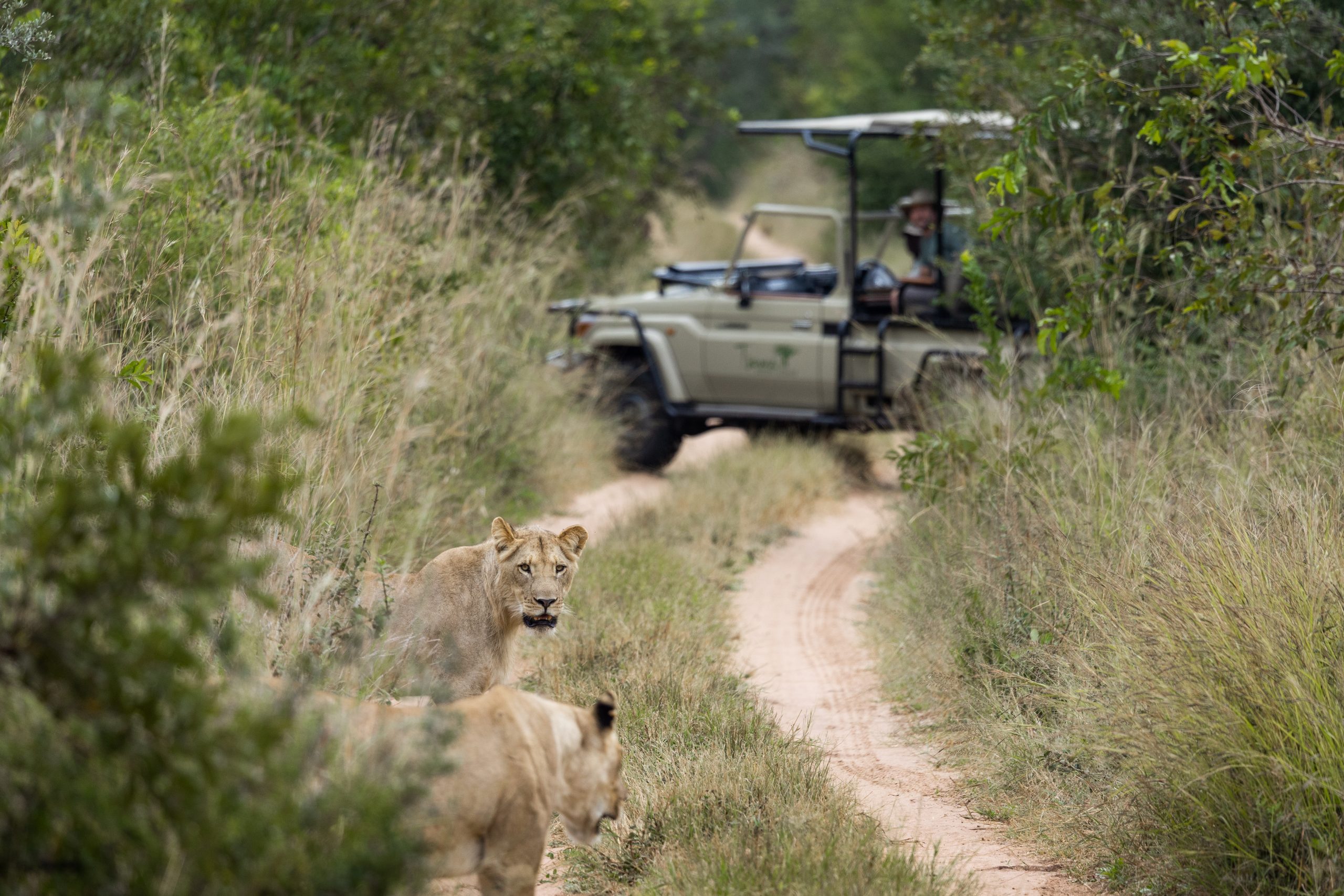
Exclusive eco-conscious lodges are attracting wealthy travellers seeking immersive experiences that prioritise conservation, community and restraint over excess.

Margot Robbie and Jacob Elordi star in an adaptation of the classic novel that respects the romance’s slow burn.

Exclusive eco-conscious lodges are attracting wealthy travellers seeking immersive experiences that prioritise conservation, community and restraint over excess.
2 minLuxury travel in Southern Africa is undergoing a quiet but profound transformation. Where sprawling resorts and visible opulence once defined status, a new generation of high-end travellers is gravitating towards smaller, low-footprint lodges that deliver exceptional experiences while preserving the environment around them.
This shift reflects a broader recalibration of priorities among affluent travellers, who are increasingly placing sustainability alongside comfort and exclusivity when selecting destinations.
Industry reports from Virtuoso and American Express Travel highlight growing demand for accommodation that supports conservation, limits environmental impact and contributes meaningfully to local communities.
For operators such as Isibindi Africa, this approach has long been central to their philosophy. Its flagship properties, Thonga Beach Lodge in South Africa and Tsowa Safari Island on the Zambezi River, demonstrate how thoughtful design and operational restraint can enhance rather than diminish the luxury experience.
DESIGNED TO DISAPPEAR INTO THE LANDSCAPE
Set within the UNESCO-listed iSimangaliso Wetland Park, Thonga Beach Lodge is defined by its deliberate invisibility. Guest numbers are strictly capped, and the lodge’s timber structures are elevated on stilts to minimise disruption to the fragile dune ecosystem.
Lighting is carefully controlled to avoid interfering with turtle nesting along the coastline, ensuring wildlife encounters remain entirely natural.
“Low-footprint luxury starts with knowing when to stop,” says Lucy Cooke, Group Marketing Manager at Isibindi Africa. “Guests notice when a place feels considered rather than overbuilt, and many now expect that.”
That same restraint extends to construction and daily operations. Traditional thatched roofs and local building techniques allow the lodge to blend seamlessly into its surroundings, while refillable amenities, reusable containers and the elimination of single-use plastics reduce waste.
POWERED BY NATURE, NOT EXCESS
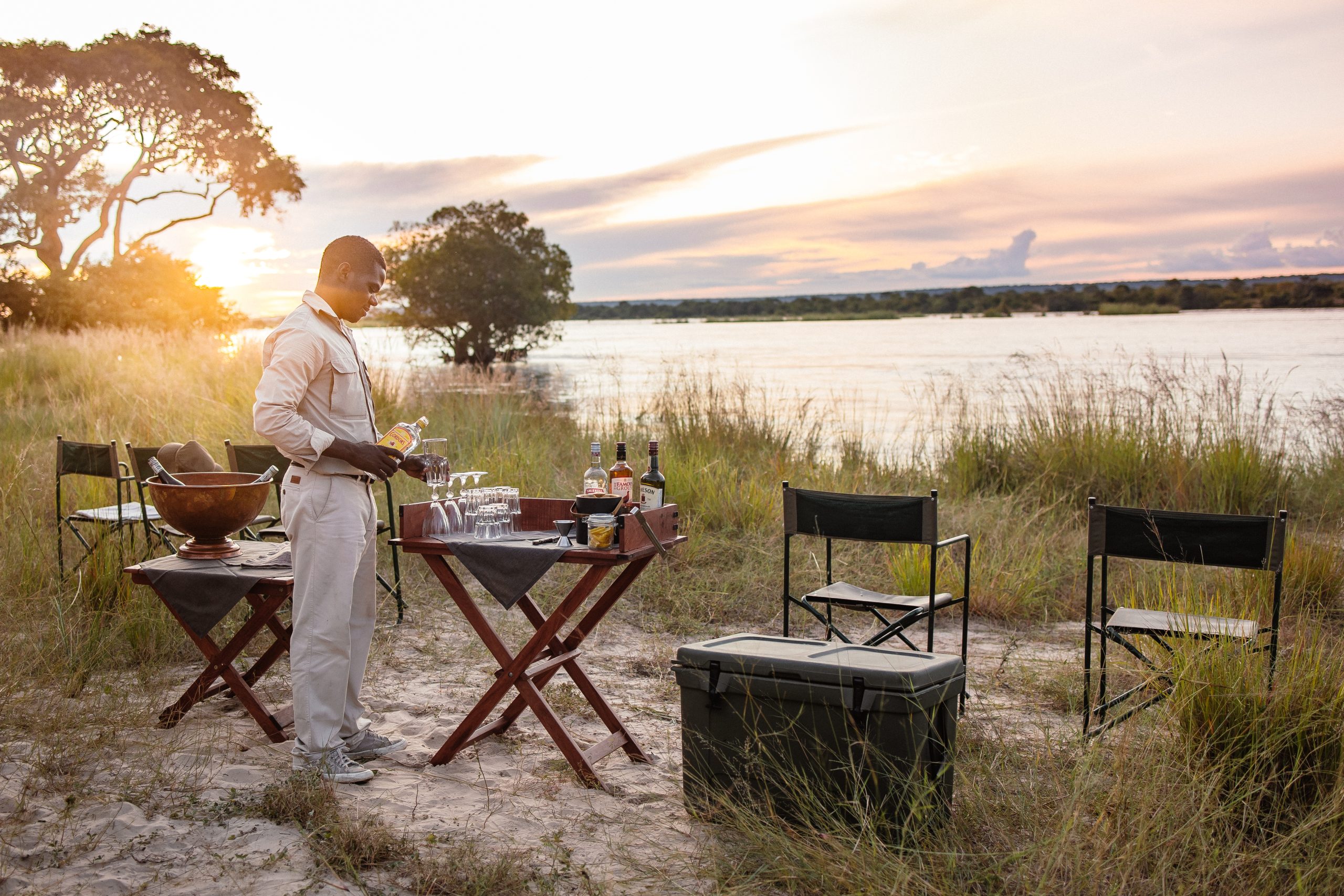
On the Zambezi River, Tsowa Safari Island offers an equally refined yet restrained experience. Limited to just nine safari tents and a maximum of 18 guests, the camp operates entirely on solar power, with water sourced from the river, filtered onsite and returned through environmentally sensitive systems.
The lodge was built without removing a single tree, with structures carefully positioned around existing vegetation to preserve the island’s natural character.
This intentional scarcity enhances the sense of exclusivity while ensuring the environmental footprint remains minimal.
COMMUNITY AND CONSERVATION AT THE CORE
Beyond environmental sensitivity, these lodges also reflect a deeper integration with local communities. At Thonga Beach Lodge, more than 90 per cent of staff come from the nearby Mabibi community, supported through training and long-term employment opportunities.
The lodge also supplies clean water to approximately 800 households each month, alongside investment in local schools, infrastructure and conservation initiatives.
Tsowa Safari Island similarly supports surrounding communities through water access programmes, agricultural support and anti-poaching partnerships with park authorities.
THE FUTURE OF LUXURY IS LESS, NOT MORE
As luxury travellers become more discerning about the true impact of their journeys, exclusivity is increasingly defined by authenticity, privacy and environmental sensitivity rather than scale.
These new-generation lodges demonstrate that luxury no longer requires excess. Instead, the most desirable experiences are those that tread lightly, preserve what makes a place special and offer guests a deeper connection to the natural world.
In Southern Africa, restraint has become the ultimate luxury.

From office parties to NYE fireworks, here are the bottles that deserve pride of place in the ice bucket this season.

ABC Bullion has launched a pioneering investment product that allows Australians to draw regular cashflow from their precious metal holdings.