Can Formula One Ever Be Sustainable?
The motor sport famed for its fast cars, glamorous lifestyle and Champagne finishes is trying to halve its emissions by 2030.

 5 min
5 min
Sebastian Vettel is a four-times Formula One World Champion. By any measure, the German racing driver has had a glittering career. The only thing he wished he had done more of: Speaking out more about the harmful effects of car racing on the environment.
“If I look back, that’s maybe the only thing I regret,” said the 37-year-old. “Formula One has to become sustainable because otherwise there is a serious threat of it not existing,” Vettel said.
F1 is a sport built on burning fuel. Drivers fly across the world, staying at luxurious locations such as Monaco, Miami and Monza to speed around racetracks at more than 200 miles an hour. But all of this comes at a cost to the environment.
In 2022, Formula One’s carbon footprint totaled 223,031 tons of carbon dioxide equivalent, including both its direct and indirect emissions, according to the sport’s latest sustainability report—roughly the same as the Pacific island nation of Tonga. That figure is down from 2018, but is still far from the emissions target the motor sport has set itself — net zero, or halving emissions, by 2030.
The bulk of the emissions in F1 come from logistics, roughly 49% of the total. The cars themselves and the fuel they burn account for less than 1% of total emissions. Some 29% of F1’s emissions are generated by business travel, with a further 12% coming from event operations. The last 10% come from factories and facilities, designing and producing the cars and kit needed for races.
But the sport has grown rapidly in popularity in recent years , especially with younger and female fans. In the U.S. alone, 3 million viewers tuned in for the Miami Grand Prix in May last year, according to Blackbook Motorsport, while Netflix’s “Drive to Survive” documentary series , pulled in nearly half a million viewers during its sixth season debut week last year, according to audience-measurement firm Nielsen. The new season kicks off with the Australian Grand Prix this weekend.
F1 is also one of the few sports that actually has committed to lowering its impact on the environment. It first launched its sustainability strategy in 2019. Meanwhile major sports leagues like the NFL, MLB, NBA and Premier League have yet to offer assessments of their own carbon footprint.
However, F1 remains bankrolled by oil-and-gas companies, showcasing a contradiction with its green ambitions. “It is a fossil fuel party that happens nearly every week now,” said Vettel.
Between races, practice and other events, many drivers use private jets. Ferrari itself is sponsored by a private jet firm VistaJet, while some F1 stars have their own personal planes.
Vettel said he was ashamed when he realized his carbon footprint as an F1 driver tallied 400 tons of carbon dioxide a year. The average person’s annual footprint is about four tons. Vettel reduced his footprint to about 60 tons a year by cutting back on use of private jets, taking commercial flights outside of Europe and taking the train or driving to races within Europe.
Vettel wants other drivers to do the same. “I disagree with the fact that you can’t move in a public airport because you can’t move in terms of ‘oh, I’m so famous I can’t travel this way’,” he said. “I think they should be banned because they’re just horrible for no real benefit.”
While F1 as a championship has its own goals , so too do the individual teams taking part. McLaren Racing and Mercedes-Benz Motorsport, for example, have both published their own sustainability reports and say they are increasingly worried about climate risk and the ability to race in the future.
“We have done some analysis on climate risk on our ability to race and we know that heat, flooding and potential sea-level rise are issues that are real,” said Kim Wilson, sustainability director at McLaren Racing, parent of McLaren Formula One. “Extreme weather not only affects our ability to go racing but also moving freight. So it’s about how we adapt and use our influence so that we are going to be able to continue as an industry.”
A recent change made by F1 to regroup most of its European races together will reduce miles traveled between races, and help lower its emissions. The championship uses biofuel-powered trucks to move equipment between venues, which it says has reduced related emissions by 83%. F1 and teams like Mercedes are also purchasing sustainable aviation fuel credits to help mitigate emissions from flying.
For the race in Austria last year, much of the event was powered by renewable energy, using a combination of vegetable oils, solar panels and battery storage. Doing so cut emissions from the pit, paddock and technical center by 90%, according to F1.
Calendar changes have also been made in the Asia-Pacific region and in North America to reduce mileage traveled between races. Teams are now sending equipment ahead on boats instead of planes, using more in-country resources and building hubs from where equipment can be moved over shorter distances.
Some teams are also turning to carbon removal and offsets to help meet their goals. McLaren has partnered with soil carbon sequestration firm UNDO , an enhanced rock-weathering project developer, while Mercedes is purchasing its offsets through Frontier, a group of largely technology companies that has committed more than $1 billion to carbon removals.
“Our priority is to reduce our emissions and that’s why we’ve got our 75% reduction target by 2030,” said Alice Ashpitel, head of sustainability at Mercedes-Benz Motorsport. “But we also recognize that we are going to need removal credits to help us kind of neutralize that residual 25%, and then beyond that carbon removals will play a role in neutralizing those kind of hard to abate, final emissions.”
But F1’s links with the fossil-fuel companies are drawing scrutiny. Saudi Arabian Oil Co., known as Aramco, the largest oil producer in the world, is a flagship sponsor. Most Formula One races take place in fossil-fuel-producing countries, including the U.S. but also places like Abu Dhabi, Bahrain and the host of last year’s United Nations COP29 climate conference, Azerbaijan.
F1 and its proponents argue that by having these types of sponsors, it helps them and the countries in which they are based to push environmental changes. It cites an advanced sustainable fuel created by Aramco as an example, which it says all race cars will run on from 2026, leading to an 80% cut in emissions.
“F1 is great at solving technology problems,” said Mark Preston, former head of design at McLaren Racing. He said that the sport attracts the best engineers, who help to create new technologies and designs that, while benefiting the cars, can also be used farther afield.
However, Andrew Simms, co-director of the New Weather Institute, a climate-focused think tank, said that Aramco is looking to produce only 35 barrels a day of the synthetic e-fuel, compared with the 9 million barrels a day of crude oil it produces. The New Weather Institute has lodged a claim with the U.K.’s Advertising Standards Authority, saying that F1 and Aramco have been misleading in their advertisements on advanced and low-carbon fuels in F1 and the wider transport sector. The claim is under investigation.
F1 said it believes the new fuels could have an impact on road vehicles as carmakers seek to reduce global automotive emissions. Aramco said its “relationships in motorsports allows us to test these advanced fuels under extreme conditions, which helps to validate their potential.”
Despite the issues, researchers like Simms are optimistic sports such as F1 can foster change, with athletes serving as role models for fans. “There are sports people calling on governing bodies to minimize the impact of sport on the environment,” he said. “The more we see people speaking out about it the more sport can be seen as an example.”
For Vettel, he says F1 has the opportunity to lead by example on climate and sustainability. “I see a huge opportunity because Formula One’s got the money,” he said. “The question is, do they want to spend that money or not?”
Write to Yusuf Khan at yusuf.khan@wsj.com
 Copyright 2020, Dow Jones & Company, Inc. All Rights Reserved Worldwide. LEARN MORE





For Central Element, the start of work at Pearl represents another step in the company’s growing eastern suburbs pipeline.

All three vehicles will form part of a broader charitable initiative benefiting Big Brothers Big Sisters of America, the American Red Cross and Starlight Children’s Foundation

Randy Boyagoda’s new novel, “Lords of Serendipity,” delivers a biting satire of cheating, politics and dysfunction across modern universities.
5 min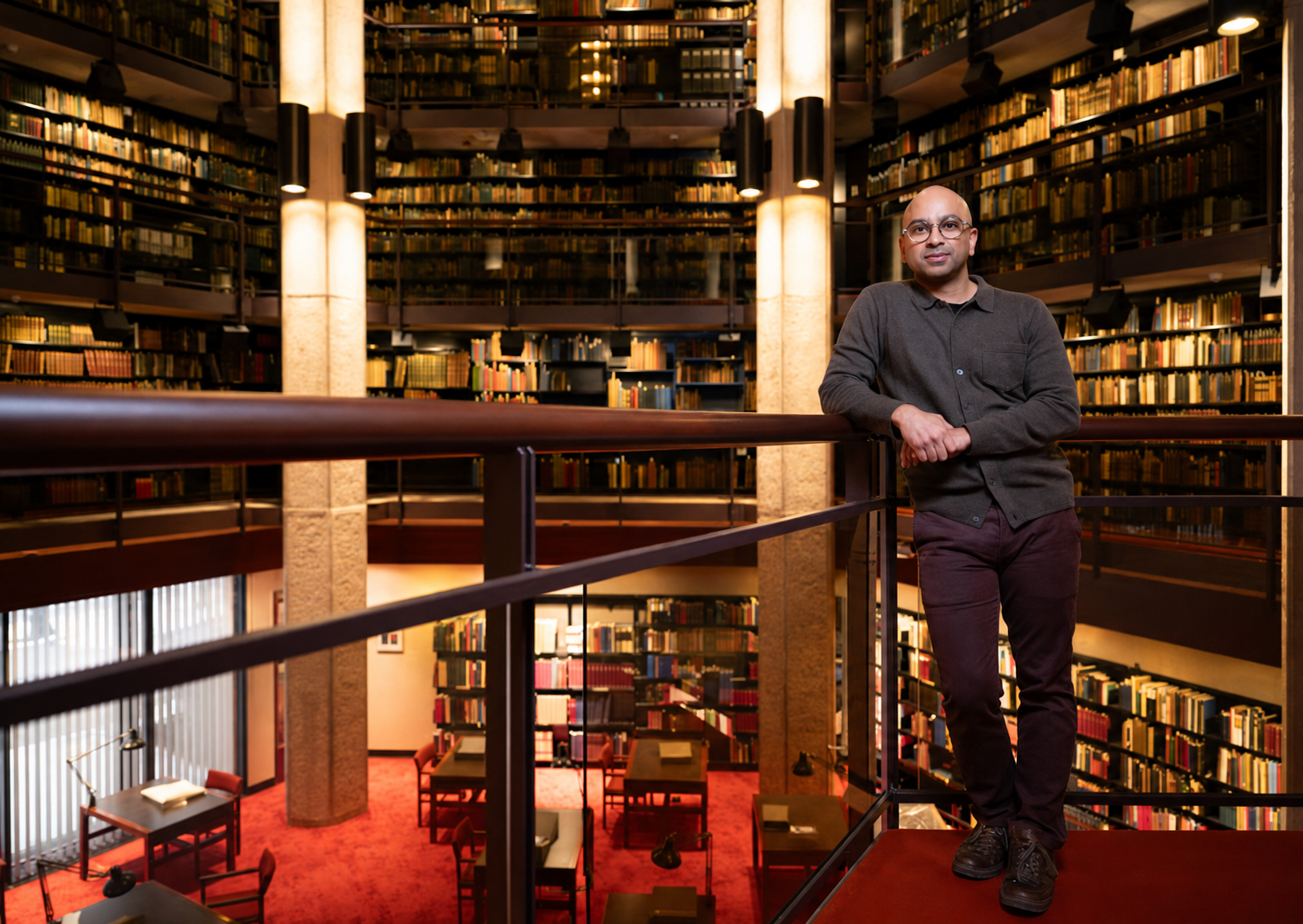
Administrative cowardice. Rampant cheating. The soaking and scamming of undergrads and grad students. Performative wokeism. Intensifying competition for international tuition dollars from an expansive China.
These are either the latest dire headlines about American higher ed or the myriad subplots of “Lords of Serendipity,” an ambitious new novel by Randy Boyagoda. Unlike most campus fiction, its scope extends well beyond the cloister of the liberal arts classroom to whammy the entire university system, from its financial model to its function within a globalized economy. Along the way, it skewers its lightning-rod targets with a precision too sharp to be considered entirely fictional.
That its author is not only well-versed in satire, having written four other novels in the genre, but is also a professor of English at the University of Toronto and an experienced college administrator, further blurs the lines between comic fiction and brutal fact. It’s the kind of no-holds-barred book only a consummate insider would know to write—but only one who is also conveniently outside the American university system could get away with writing.
“This is someone who’s got the inside dope on what can go on at universities, especially with international students, and what kind of con games are going on,” said Margaret Atwood, a friend and fellow Torontonian.
The novel, like Boyagoda himself, is often very funny—even as the dilemmas its characters face read as tragedy. Its cast includes the bickering members of a Sri Lankan hotel cleaner’s family, insecure American freshmen, dead-end third-tier college professors and their highflying Ivy League counterparts and dispirited university functionaries. An old-fashioned Dickensian tale, it sweeps across continents and campuses, from a classic liberal-arts college to a stand-in for Harvard University to an urban technical school to the dilapidated buildings of a state-run university in Sri Lanka.
“I’m a joyful person,” Boyagoda said in an interview, though he prefers to see his outlook on academia as “hopeful” rather than optimistic. He smiles and laughs frequently. He bikes everywhere. He derives energy from his students and from his four daughters, ages 14 to 20. They help him and his American wife, Anna, also an educator, care for Boyagoda’s father, an immigrant from Sri Lanka who has dementia and lives with the family.
The germ of the novel came to Boyagoda during the pandemic, when he was serving as a vice-dean. An urban legend was circulating about a statistics grad student selling passing grades to international students. The cheating scheme itself may well have been apocryphal, but it felt tantalizingly plausible.
“As a novelist, it stayed with me,” Boyagoda said. “Who would sell grades for a stats course? Why would someone buy grades? What’s motivating them? Why wouldn’t the university be doing something about it?” What he didn’t want to do, he explained, was write “another novel about a creative writing professor and his drama with students.”
In addition to writing novels—the first of which was a finalist for Canada’s prestigious Giller Prize; he’s written eight books in total—Boyagoda teaches literature full-time. For his students next semester, kids raised in a purportedly “post-literature era,” he’s assigning three 700-page novels, he noted mischievously, books by George Eliot, Ralph Ellison and Kiran Desai.
On RateMyProfessors, students remark on Boyagoda’s heavy assignments, tough grading and distaste for cellphones, but also hail his “comedy.” When alerted to these reviews, Boyagoda laughed. “Guilty as charged,” he said.
“Randy’s one of those people in academia who is very well educated but doesn’t have an ounce of superiority about him,” said John Irving, who frequently guest lectures in Boyagoda’s classroom. “It’s amazing to see how willing students are to talk in his classrooms, how little afraid they feel of being mocked or put down—he gets complete candor out of them.”
Negotiating competing interests seems to come naturally to him. Like many college campuses, after the Oct. 7 Hamas attack on Israel, the University of Toronto was embroiled in protests, encampments and discord; part of the school’s response was to convene a working group on civil discourse. Boyagoda was put in charge, serving for two years. It’s the kind of thankless task many professors would flee from, but Boyagoda relished the prospect and thinks the group, which is ongoing, made progress.
He has since pivoted to another formidable academic concern: the waning prestige of the humanities. In July, Boyagoda became the director of the Jackman Humanities Institute and special advisor on the humanities to the dean of arts and science. This fall, he is starting a series of gatherings he calls the Dead Book Club. (Dead writers feature heavily among his favorites: St. Augustine, Dante, William Faulkner, Evelyn Waugh, Saul Bellow.)
“The goal is to encourage students to read for its own sake and have conversation for its own sake,” Boyagoda said. “The importance of the humanities will be revealed to those who participate.”
“Lords of Serendipity,” which publishes next week, reflects Boyagoda’s commitment to the pursuit of knowledge: “I’m supposed to say I learn more from my students than they do from me, but no,” Boyagoda said. “I enjoy sharing my excitement and joy about literature and ideas. There are these moments when you are teaching and you can see someone’s face change because they didn’t know something and then they did. That moment when you’re actually watch someone enlarge themselves is deeply satisfying.”
In literary circles, Boyagoda is often referred to as a Catholic novelist, a description he embraces. “A novelist willing to give shape and voice to contemporary religious experience is needed,” Boyagoda said. “I understand myself as a Catholic novelist, provided that I’m not only a Catholic novelist, I’m also a South Asian novelist and I’m a Canadian novelist. I don’t want to be captive to one label.”
His characters, he said, are subjected to what he calls “Graham Greene character situations.”
“They are trying to do good in a fallen world and realize the most they can do is less harm than someone else would do in that same role,” he explained. “They have to accept they are complicit in something that provides some good thing to others. It’s a very Graham Greene way of thinking about sacrifice.”
The campus green they inhabit is a febrile zone in which lofty ideals and cynicism regularly collide. It’s a place where a traditional holiday college celebration is now an occasion for political protest. Kids freely police one another inside and out of the classroom with social media their constant, ready weapon of choice. International students, knowing their family’s financial futures hinge on their degrees, operate in terror of failure and deportation.
Early readers of the book include Gary Shteyngart and Junot Diaz, both of whom have taught at universities and written comic novels. They each contacted Boyagoda midway through to say, in essence, “You nailed it.”
As biting as “Lords of Serendipity” can be, Boyagoda’s faith in higher education remains undaunted.
“It’s absurd that we live in societies that make the decision to take people between the ages of 18 and 22, when they are most physically capable of contributing to our nations and communities, and tell them, ‘Go away for four years, and read and learn and have conversations,’” he said. “I want students to be aware of what an incredible privilege that is.”
Corrections & Amplifications
Randy Boyagoda is a special advisor on the humanities to the dean of arts and science at the University of Toronto. An earlier version of this article incorrectly said he is a special adviser to the dean of humanities. (Corrected on Sept. 2)

Automobili Lamborghini and Babolat have expanded their collaboration with five new colourways for the ultra-exclusive BL.001 racket, limited to just 50 pieces worldwide.
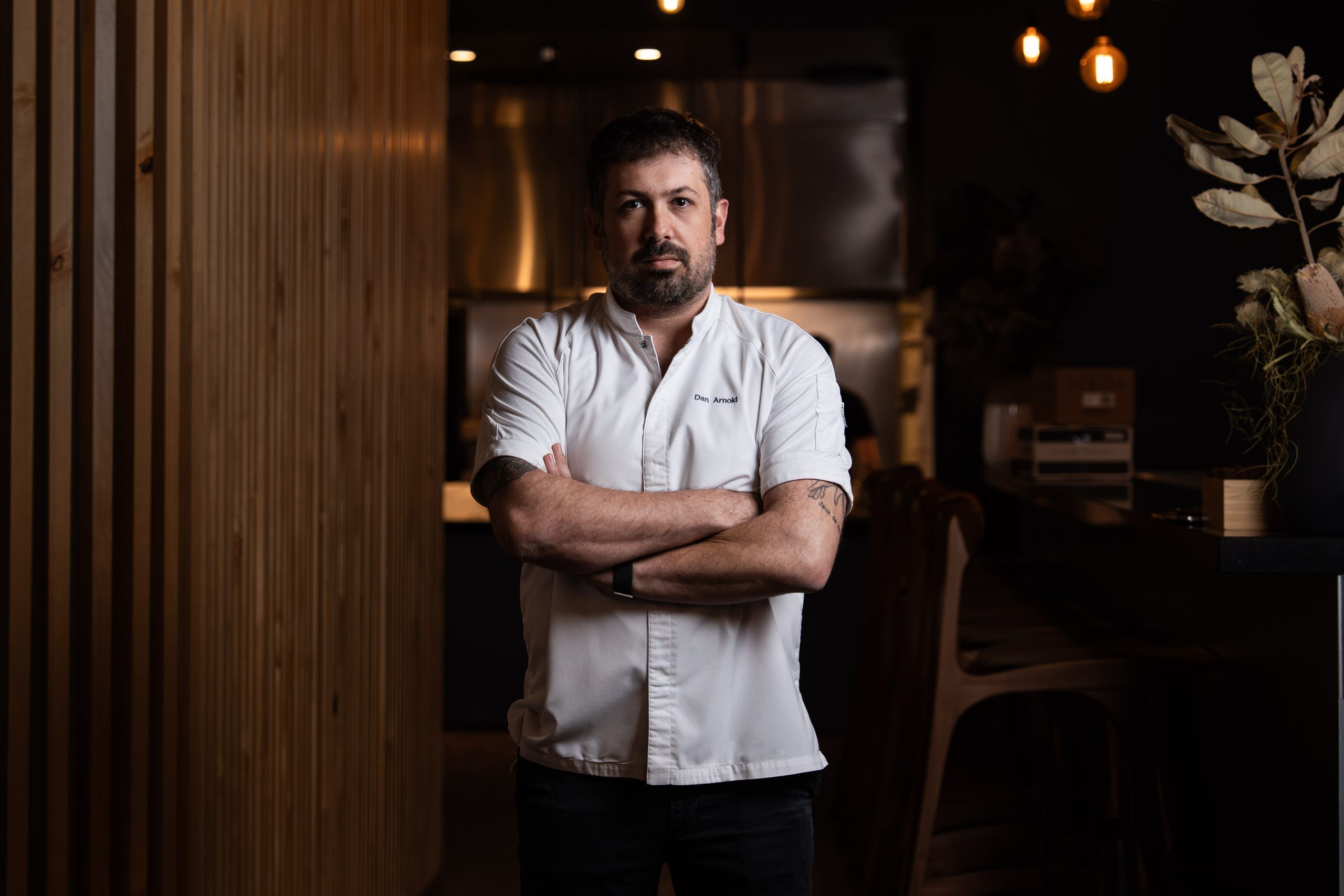
On October 2, acclaimed chef Dan Arnold will host an exclusive evening, unveiling a Michelin-inspired menu in a rare masterclass of food, storytelling and flavour.