

An Unforgettable Meal Can Cost $5 at Singapore’s Hawker Centres. Can the Next Generation Save Them?
No trip to Singapore is complete without a meal (or 12) at its hawker centres, where stalls sell multicultural dishes from generations-old recipes. But rising costs and demographic change are threatening the beloved tradition.

 6 min
6 min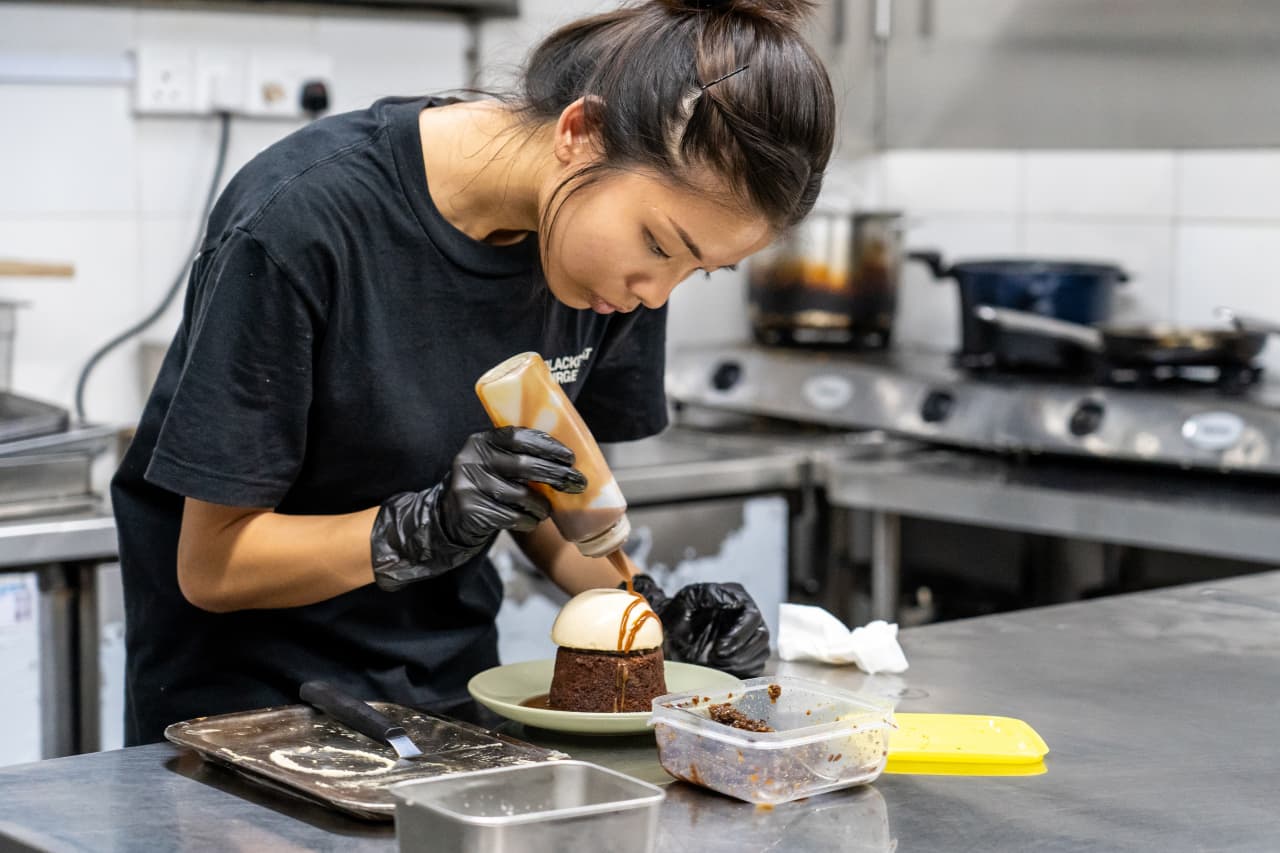
In Singapore, it’s not unusual for total strangers to ask, “Have you eaten yet?” A greeting akin to “Good morning,” it invariably leads to follow-up questions. What did you eat? Where did you eat it? Was it good? Greeters reserve the right to judge your responses and offer advice, solicited or otherwise, on where you should eat next.
Locals will often joke that gastronomic opinions can make (and break) relationships and that eating is a national pastime. And why wouldn’t it be? In a nexus of colliding cultures—a place where Malays, Indians, Chinese and Europeans have brushed shoulders and shared meals for centuries—the mix of flavours coming out of kitchens in this country is enough to make you believe in world peace.
While Michelin stars spangle Singapore’s restaurant scene , to truly understand the city’s relationship with food, you have to venture to the hawker centres. A core aspect of daily life, hawker centres sprang up in numbers during the 1970s, built by authorities looking to sanitise and formalise the city’s street-food scene. Today, 121 government-run hawker centres feature food stalls that specialise in dishes from the country’s various ethnic groups. In one of the world’s most expensive cities, hawker dishes are shockingly cheap: A full meal can cost as little as $3.
Over the course of many visits to Singapore, I’ve fallen in love with these places—and with the scavenger hunts to find meals I’ll never forget: delicate bowls of laksa noodle soup, where brisk lashes of heat interrupt addictive swirls of umami; impossibly flaky roti prata dipped in curry; the beautiful simplicity of an immaculately roasted duck leg. In a futuristic and at times sterile city, hawker centres throw back to the past and offer a rare glimpse of something human in scale. To an outsider like me, sitting at a table amid the din of the lunch-hour rush can feel like glimpsing the city’s soul through all the concrete and glitz.
So I’ve been alarmed in recent years to hear about the supposed demise of hawker centres. Would-be hawkers have to bid for stalls from the government, and rents are climbing . An upwardly mobile generation doesn’t want to take over from their parents. On a recent trip to Singapore, I enlisted my brother, who lives there, and as we ate our way across the city, we searched for signs of life—and hopefully a peek into what the future holds.
At Amoy Street Food Centre, near the central business district, 32-year-old Kai Jin Thng has done the math. To turn a profit at his stall, Jin’s Noodle , he says, he has to churn out at least 150 $4 bowls of kolo mee , a Malaysian dish featuring savoury pork over a bed of springy noodles, in 120 minutes of lunch service. With his sister as sous-chef, he slings the bowls with frenetic focus.
Thng dropped out of school as a teenager to work in his father’s stall selling wonton mee , a staple noodle dish, and is quick to say no when I ask if he wants his daughter to take over the stall one day.
“The tradition is fading and I believe that in the next 10 or 15 years, it’s only going to get worse,” Thng said. “The new generation prefers to put on their tie and their white collar—nobody really wants to get their hands dirty.”
In 2020, the National Environment Agency , which oversees hawker centres, put the median age of hawkers at 60. When I did encounter younger people like Thng in the trade, I found they persevered out of stubbornness, a desire to innovate on a deep-seated tradition—or some combination of both.
Later that afternoon, looking for a momentary reprieve from Singapore’s crushing humidity, we ducked into Market Street Hawker Centre and bought juice made from fresh calamansi, a small citrus fruit.
Jamilah Beevi, 29, was working the shop with her father, who, at 64, has been a hawker since he was 12. “I originally stepped in out of filial duty,” she said. “But I find it to be really fulfilling work…I see it as a generational shop, so I don’t want to let that die.” When I asked her father when he’d retire, he confidently said he’d hang up his apron next year. “He’s been saying that for many years,” Beevi said, laughing.
More than one Singaporean told me that to truly appreciate what’s at stake in the hawker tradition’s threatened collapse, I’d need to leave the neighbourhoods where most tourists spend their time, and venture to the Heartland, the residential communities outside the central business district. There, hawker centres, often combined with markets, are strategically located near dense housing developments, where they cater to the 77% of Singaporeans who live in government-subsidised apartments.
We ate laksa from a stall at Ghim Moh Market and Food Centre, where families enjoyed their Sunday. At Redhill Food Centre, a similar chorus of chattering voices and clattering cutlery filled the space, as diners lined up for prawn noodles and chicken rice. Near our table, a couple hungrily unwrapped a package of durian, a coveted fruit banned from public transportation and some hotels for its strong aroma. It all seemed like business as usual.
Then we went to Blackgoat . Tucked in a corner of the Jalan Batu housing development, Blackgoat doesn’t look like an average hawker operation. An unusually large staff of six swirled around a stall where Fikri Amin Bin Rohaimi, 24, presided over a fiery grill and a seriously ambitious menu. A veteran of the three-Michelin-star Zén , Rohaimi started selling burgers from his apartment kitchen in 2019, before opening a hawker stall last year. We ordered everything on the menu and enjoyed a feast that would astound had it come out of a fully equipped restaurant kitchen; that it was all made in a 130-square-foot space seemed miraculous.
Mussels swam in a mushroom broth, spiked with Thai basil and chives. Huge, tender tiger prawns were grilled to perfection and smothered in toasted garlic and olive oil. Lamb was coated in a whisper of Sichuan peppercorns; Wagyu beef, in a homemade makrut-lime sauce. Then Ethel Yam, Blackgoat’s pastry chef prepared a date pudding with a mushroom semifreddo and a panna cotta drizzled in chamomile syrup. A group of elderly residents from the nearby towers watched, while sipping tiny glasses of Tiger beer.
Since opening his stall, Rohaimi told me, he’s seen his food referred to as “restaurant-level hawker food,” a categorisation he rejects, feeling it discounts what’s possible at a hawker centre. “If you eat hawker food, you know that it can often be much better than anything at a restaurant.”
He wants to open a restaurant eventually—or, leveraging his in-progress biomedical engineering degree, a food lab. But he sees the modern hawker centre not just as a steppingstone, but a place to experiment. “Because you only have to manage so many things, unlike at a restaurant, a hawker stall right now gives us a kind of limitlessness to try new things,” he said.
Using high-grade Australian beef and employing a whole staff, Rohaimi must charge more than typical hawker stalls, though his food, around $12 per 100 grams of steak, still costs far less than high-end restaurant fare. He’s found that people will pay for quality, he says, even if he first has to convince them to try the food.
At Yishun Park Hawker Centre (now temporarily closed for renovations), Nurl Asyraffie, 33, has encountered a similar dynamic since he started Kerabu by Arang , a stall specialising in “modern Malay food.” The day we came, he was selling ayam percik , a grilled chicken leg smothered in a bewitching turmeric-based marinade. As we ate, a hawker from another stall came over to inquire how much we’d paid. When we said around $10 a plate, she looked skeptical: “At least it’s a lot of food.”
Asyraffie, who opened the stall after a spell in private dining and at big-name restaurants in the region, says he’s used to dubious reactions. “I think the way you get people’s trust is you need to deliver,” he said. “Singapore is a melting pot; we’re used to trying new things, and we will pay for food we think is worth it.” He says a lot of the same older “uncles” who gawked at his prices, are now regulars. “New hawkers like me can fill a gap in the market, slightly higher than your chicken rice, but lower than a restaurant.”
But economics is only half the battle for a new generation of hawkers, says Seng Wun Song, a 64-year-old, semiretired economist who delves into the inner workings of Singapore’s food-and-beverage industry as a hobby. He thinks locals and tourists who come to hawker centers to look for “authentic” Singaporean food need to rethink what that amorphous catchall word really means. What people consider “heritage food,” he explains, is a mix of Malay, Chinese, Indian and European dishes that emerged from the country’s founding. “But Singapore is a trading hub where people come and go, and heritage moves and changes. Hawker food isn’t dying; it’s evolving so that it doesn’t die.”
 Copyright 2020, Dow Jones & Company, Inc. All Rights Reserved Worldwide. LEARN MORE





Exclusive eco-conscious lodges are attracting wealthy travellers seeking immersive experiences that prioritise conservation, community and restraint over excess.

Margot Robbie and Jacob Elordi star in an adaptation of the classic novel that respects the romance’s slow burn.

Exclusive eco-conscious lodges are attracting wealthy travellers seeking immersive experiences that prioritise conservation, community and restraint over excess.
2 minLuxury travel in Southern Africa is undergoing a quiet but profound transformation. Where sprawling resorts and visible opulence once defined status, a new generation of high-end travellers is gravitating towards smaller, low-footprint lodges that deliver exceptional experiences while preserving the environment around them.
This shift reflects a broader recalibration of priorities among affluent travellers, who are increasingly placing sustainability alongside comfort and exclusivity when selecting destinations.
Industry reports from Virtuoso and American Express Travel highlight growing demand for accommodation that supports conservation, limits environmental impact and contributes meaningfully to local communities.
For operators such as Isibindi Africa, this approach has long been central to their philosophy. Its flagship properties, Thonga Beach Lodge in South Africa and Tsowa Safari Island on the Zambezi River, demonstrate how thoughtful design and operational restraint can enhance rather than diminish the luxury experience.
DESIGNED TO DISAPPEAR INTO THE LANDSCAPE
Set within the UNESCO-listed iSimangaliso Wetland Park, Thonga Beach Lodge is defined by its deliberate invisibility. Guest numbers are strictly capped, and the lodge’s timber structures are elevated on stilts to minimise disruption to the fragile dune ecosystem.
Lighting is carefully controlled to avoid interfering with turtle nesting along the coastline, ensuring wildlife encounters remain entirely natural.
“Low-footprint luxury starts with knowing when to stop,” says Lucy Cooke, Group Marketing Manager at Isibindi Africa. “Guests notice when a place feels considered rather than overbuilt, and many now expect that.”
That same restraint extends to construction and daily operations. Traditional thatched roofs and local building techniques allow the lodge to blend seamlessly into its surroundings, while refillable amenities, reusable containers and the elimination of single-use plastics reduce waste.

POWERED BY NATURE, NOT EXCESS
On the Zambezi River, Tsowa Safari Island offers an equally refined yet restrained experience. Limited to just nine safari tents and a maximum of 18 guests, the camp operates entirely on solar power, with water sourced from the river, filtered onsite and returned through environmentally sensitive systems.
The lodge was built without removing a single tree, with structures carefully positioned around existing vegetation to preserve the island’s natural character.
This intentional scarcity enhances the sense of exclusivity while ensuring the environmental footprint remains minimal.
COMMUNITY AND CONSERVATION AT THE CORE
Beyond environmental sensitivity, these lodges also reflect a deeper integration with local communities. At Thonga Beach Lodge, more than 90 per cent of staff come from the nearby Mabibi community, supported through training and long-term employment opportunities.
The lodge also supplies clean water to approximately 800 households each month, alongside investment in local schools, infrastructure and conservation initiatives.
Tsowa Safari Island similarly supports surrounding communities through water access programmes, agricultural support and anti-poaching partnerships with park authorities.
THE FUTURE OF LUXURY IS LESS, NOT MORE
As luxury travellers become more discerning about the true impact of their journeys, exclusivity is increasingly defined by authenticity, privacy and environmental sensitivity rather than scale.
These new-generation lodges demonstrate that luxury no longer requires excess. Instead, the most desirable experiences are those that tread lightly, preserve what makes a place special and offer guests a deeper connection to the natural world.
In Southern Africa, restraint has become the ultimate luxury.

The sports-car maker delivered 279,449 cars last year, down from 310,718 in 2024.
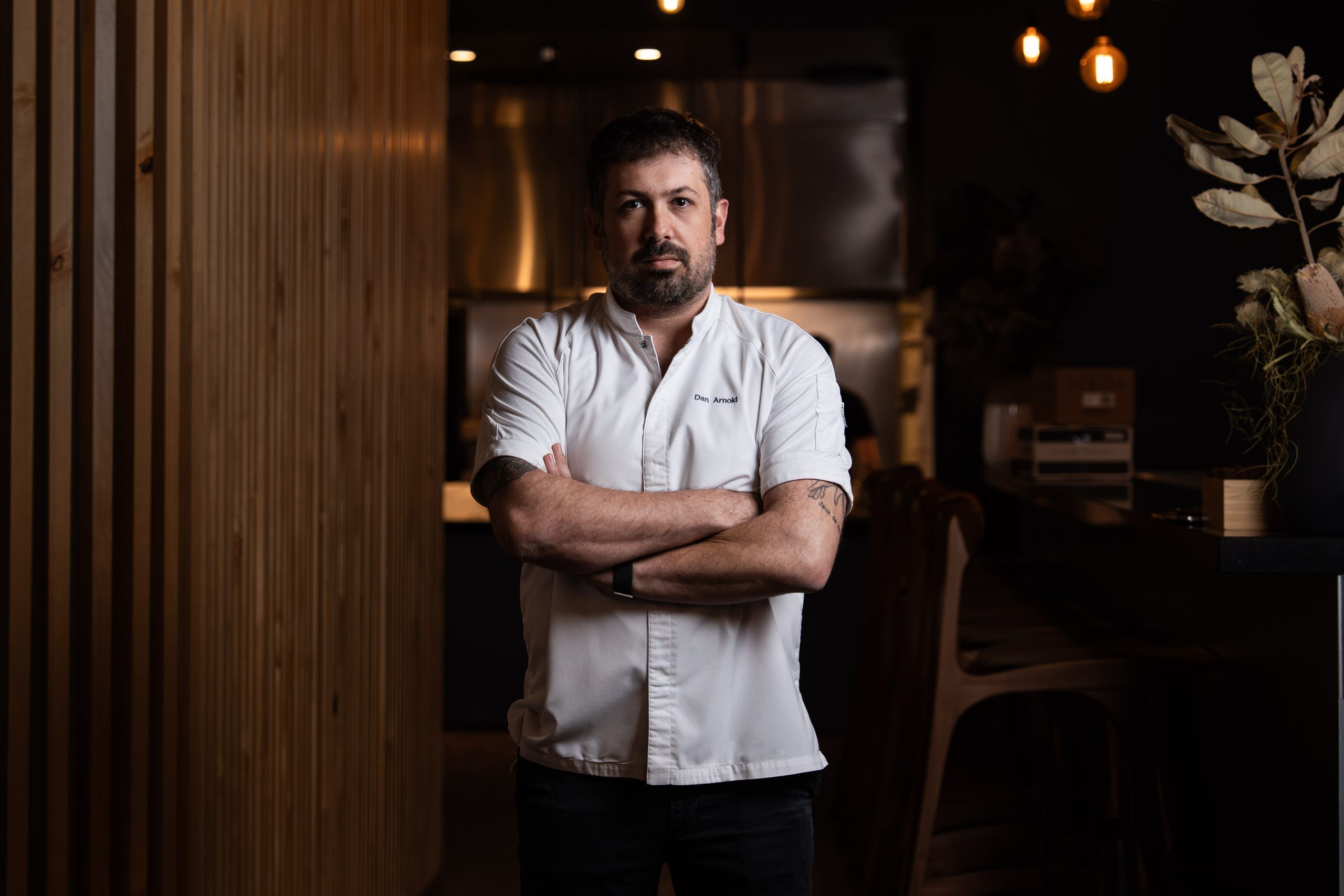
On October 2, acclaimed chef Dan Arnold will host an exclusive evening, unveiling a Michelin-inspired menu in a rare masterclass of food, storytelling and flavour.