





Dropping anchor on the cruise of a lifetime
As the appetite for luxury cruising grows, seeking truly exceptional experiences comes with a ship-sized price tag
 4 min
4 min
A private driver arrives at your home to transport you to your cruise suite, where you are welcomed aboard with a glass of Dom Perignon and introduced to your personal butler — exhale, your luxury voyage has begun.
Welcome to a new level of luxury cruising where rare and remote experiences are the currencies and every opulence you thought you knew on land is also available at sea.
“The luxury experience at sea has started to fragment, it’s different things to different people,” says Joe O’Sullivan, managing director of small ship booking specialist, Cruise Traveller. “For some, it’s the whole ethos of the white glove service, the personal touches like the butler who remembers your favourite drink. But another big driver in the luxury market is experiences, the people who want to camp on the ice in Antarctica or paddleboard off the bow of the ship.”
We did all the hard work for you and found five of the most luxurious experiences you can have at sea in 2025 — and what they cost.

Live like a VIP at sea
Want to organise a private dinner for 12 in your suite? No problem. What about a night in a luxury hotel before the ship sails? Of course. A growing number of ships are offering that VIP treatment once reserved for world leaders and celebrities. And for the right price, your wish is their command.
The Owner’s Residence aboard an Explora Journeys ship is about as luxe as it gets on sea. We’re talking an outdoor terrace that extends the full width of the ship, marble ensuite with a large bathtub, private steam room and Dyson appliances and a butler that packs and unpacks, launders and presses your clothes like an old-school majordomo. Of course, this will set you back almost $200,000 per couple for a two-week cruise.
For a similar, though no less opulent experience, Explora Journeys have four categories of Ocean Residences below this.
“Explora Journeys is the luxury division of MSC Cruises, but don’t let the mass-market MSC brand put you off, this is like Volkswagen owning Porsche and Audi,” says Mark Trim, managing director of Flat Beds Tour + Cruise, who was lucky enough to spend two weeks in an Ocean Residence with his family earlier this year. “And whilst it is a small ship, there was a lot of space, and the wellness facilities, bars and shopping were also incredible, highlighted by the inclusion of the exclusive Rolex boutique on Deck 4.”
The VIP treatment aboard a Regent Suite on select Regent Seven Seas ships carries a price tag of around $16,000 a night. For this you get 413sqm of space (more than double the average ship suite) at the bow of the ship with ocean views from two wraparound balconies.
And forget an ensuite, in the Regent Suite, it’s called a master bathroom spa retreat and includes a treatment area, full sauna and multi-jet shower, heated relaxation loungers, a heated spa and unlimited, complimentary in-suite spa treatments.
You also get access to The Study, a Private Dining Room for up to 12 guests, and a night in a luxury hotel pre-cruise including breakfast and transfers.
A 14-day cruise from Monte Carlo to Rome in a Retreat Residence suite on Explora II departing May 2025 is from $22,650 a person twin share and from $74,000 a person twin share in an Owner’s Residence suite.
A night in a Regent Suite aboard Regent Seven Seas Explorer, Grandeur or Splendor is from $16,000.

Walk among penguins
There are a few things you can be sure of when you step onto remote Snow Hill off the east coast of Antarctica — you will be surrounded by thousands of Emperor penguins and you will be part of a select few to do so.
Getting access to Snow Hill, where up to 10,000 breeding penguins and their offspring live, is by helicopter only.
Five years ago, Scenic launched their discovery yacht class called Scenic Eclipse equipped with two onboard helicopters and a custom submersible to take travellers on these types of rare adventures.
“We’ve seen significant demand for immersive experiences, particularly for unique offerings like our helicopter excursions,” says Anthony Laver, Scenic Group general manager, sales and Marketing, APAC. “This growing interest reflects a broader trend towards intimate, immersive and ultra-luxury journeys that go beyond traditional cruising. And given its sleek yacht design, Scenic Eclipse is also capable of sailing into places many ships are not able to reach.”
The 22-day Antarctica, South Georgia and the Falkland Islands itinerary departing Buenos Aires in February 2025 is from $32,020 a person twin share. Helicopter excursions operate from this cruise at an extra cost.
Meet the Inuit
Go hunting on dog sleds with Inuit masters, set off on a polar hike and experience the midnight sun. It may sound clichéd, but these are just some of the once-in-a-lifetime experiences you can have onboard Ponant’s first luxury hybrid electric polar exploration ship, Le Commandant Charcot.
“Unlike more standard polar cruise activities, travellers won’t travel on Zodiacs very much at all, as everything is done by dog sled,” says Ponant expedition experience director, Jose Sarica. “The charm of this voyage to the far north-west of Greenland is that it offers some very immersive experiences in icebound landscapes, including hiking and snowshoeing, traditional Inuit kayaking, beluga and narwhal watching and even snorkelling through the ice in a wetsuit.”
The 11-day Inuit Spring of Ammassalik aboard Ponant’s Le Commandant Charcot departing May 2025 is from $26,180 a person twin share (polar trek experience $1550 extra).
The luxury of time
Is there anything more luxurious than time, philosophically speaking? What about if you combine it with a prolonged journey aboard a six-star ultra-luxury ship? Sign up for the experience with Silversea who feature a range of Grand category itineraries designed to let you immerse yourself in your destination.
One of their most popular voyages is the 47-day circumnavigation of Australia which visits 23 ports and includes door-to-door private transfers from your home, your own butler to cater to your needs at sea, as well as all shore excursions and business class airfares.
The 47-day Grand Australia voyage departing Melbourne in October 2025 aboard Silver Nova is from $51,200 a person twin share with door-to-door service.
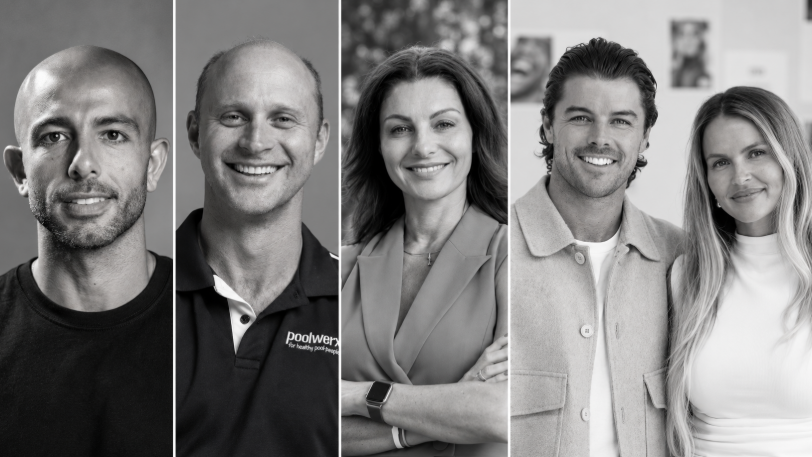
From making unpopular decisions to learning when to listen, leaders from five businesses reveal what nobody prepared them for — and how running a company has challenged their expectations.

Technology and semiconductor shares fell sharply as investors questioned the debt financing the AI infrastructure boom and confronted higher rates and Chinese competition.

Elon Musk is exploring a potential merger between Tesla and SpaceX, a deal that could reshape the future of AI, robotics, autonomous vehicles and space technology. With a combined valuation potentially reaching $3.5 trillion, the move could bring Musk’s vision of an interconnected technology ecosystem closer to reality, although a deal remains uncertain.
5 min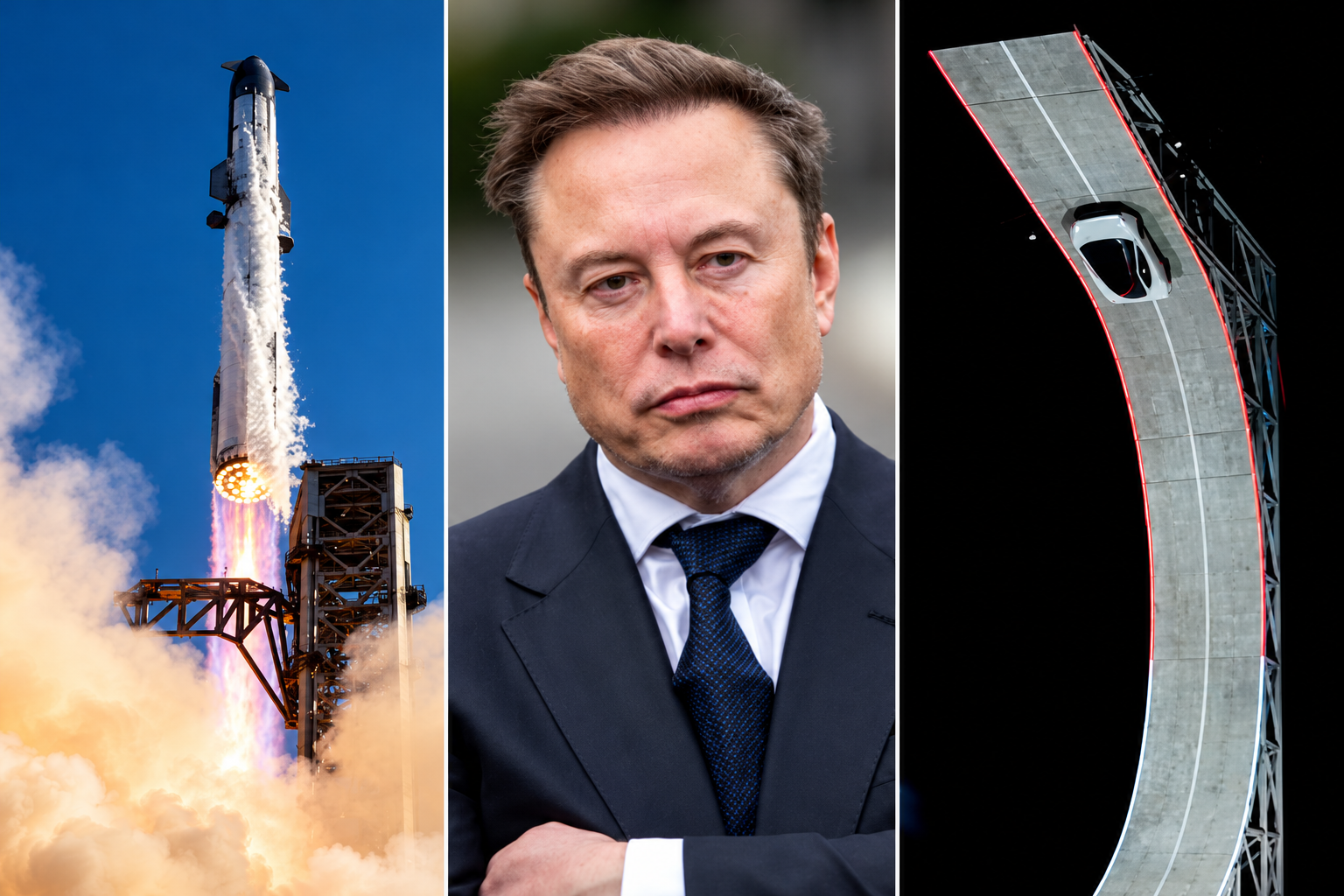
Elon Musk has engineered ties between Tesla TSLA 3.41%increase; up pointing triangle and SpaceX SPCX 7.79%increase; up pointing triangle that are hard to break, and now he wants to fuse them together permanently.
Musk has run both Tesla and SpaceX concurrently over the past two decades, using a schedule that dictated which days he spent focused on each business.
The companies have often shared resources and personnel, signaling their close ties. Last year, SpaceX looked into creating a spacesuit for Tesla’s humanoid robot Optimus, a person familiar with the matter said. Tesla last week showed off its new Roadster, a vehicle featuring SpaceX rocket thrusters that it hopes to soon bring to market.
And in recent months, Musk has repositioned both companies by expanding beyond their core operations toward a shared mission centered on artificial intelligence.
The world’s richest man on Tuesday signaled his interest in tying up SpaceX and Tesla, marking what would be the biggest corporate merger of all time. Because he serves as chief executive of SpaceX and Tesla, Musk said committees of independent directors at both companies are evaluating a possible deal, adding that a transaction might not come to fruition.
The committees will likely evaluate, with lawyers and bankers, how each company would fare in a potential deal and how a deal might best be structured. They then present their conclusions to their respective boards, who typically vote on whether to proceed.
“It’s an odd Kabuki dance where two groups of people are talking and I can’t be in the conversation,” Musk told SpaceX investors on Tuesday in response to an analyst’s question about a potential deal.
For Musk, the merger supports his vision of a world full of autonomous cars, humanoid robots and weekly rocket launches, as well as the data centers and satellites required to keep the whole thing running.
Some investors and analysts said they expect a transaction would be structured as an all-stock deal, with SpaceX potentially paying a modest premium for Tesla shares.
SpaceX, which has a market value of about $2 trillion, said it is seeing sharp growth in revenue across its businesses, which include operating data centers, launching rockets and operating satellite networks such as the internet service Starlink. Tesla is valued at about $1.5 trillion and is expanding its operations beyond its automotive and energy business. Shares in both companies traded higher following the news Tuesday.
Musk’s substantial ownership stakes in both companies, along with voting control at SpaceX, has enabled him to set the deal in motion. Analysts and investors said the deal will probably face regulatory scrutiny internationally, though some see Musk’s close relationship with the Trump administration as an asset to getting approval.
Blurred lines
The companies haven’t said which directors are on the special committees evaluating a potential deal. Several SpaceX and Tesla board members have either personal or business ties to Musk. And like Musk, venture capitalist Ira Ehrenpreis sits on both boards.
In a filing this week, Tesla outlined millions of dollars in business agreements with SpaceX and its subsidiaries last year, including $143 million in car sales to SpaceX, $3.3 million in advertising that it bought on the social-media platform X and $430 million in revenue from the sale of Megapack batteries for SpaceX’s data centers.
The companies also split the cost of resources including the use of Musk’s SpaceX jet and the bill for his personal security, which he runs through a private company.
Employees at both companies routinely move between companies to work on special projects, and some executives have dual roles, including Charles Kuehmann, vice president of materials engineering at both SpaceX and Tesla, and Ashok Elluswamy, the vice president of AI software at Tesla who runs a joint venture with SpaceX called Digital Optimus.
Over the years, Musk has launched new startups within his empire, including brain-implant company Neuralink, underground-tunnel developer the Boring Company and xAI, the AI startup that merged with SpaceX in February.
It is that AI business that Musk thinks can serve a market worth tens of trillions of dollars, justifying the need for a merger.
The business case goes like this: Tesla is developing robotaxis and robots, which it calls “physical AI.” SpaceX is working on the back end of physical AI: the data-center capacity and internet connection required for those robotaxis and robots to operate continuously.
“I don’t see what the value of Tesla is if it’s not merged with SpaceX,” said investment adviser Ross Gerber, a former Tesla bull turned critic invested in both companies. “If they don’t merge, the brains of everything that runs Tesla is owned by another company.”
On top of it all, both companies face constraints on the supply chains they need to make this world a reality, particularly when it comes to chips. To address this, Musk earlier this year announced a joint venture between Tesla, SpaceX and Intel to design and manufacture chips in Texas. “The most epic chip-building exercise by far,” he has said.
Musk at the wheel
For Musk, a merger would also solve two problems: demands on his attention and his lack of control at Tesla.
Tesla for years was Musk’s only public company, a status that came with greater scrutiny. There, Musk reports to a public board, as well as individual investors who make up around 30% of Tesla’s voting power, according to FactSet.
The question of Musk’s attention became a particular focus for investors and the board in recent years after he acquired Twitter in 2022 and launched xAI in 2023, and again in 2025 as he spent time in Washington, D.C., running the Department of Government Efficiency in the early months of President Trump’s second term.
As Tesla’s car business suffered in 2025, Musk threatened to take his AI ambitions outside the company if he wasn’t granted 25% voting control. Last November, Tesla shareholders approved a new pay package for Musk, which created a path for him to vastly expand his stake.
As of Sept. 30, Musk owned a roughly 20% stake in Tesla, according to the company’s proxy filing.
The SpaceX IPO gave Musk a different path. When SpaceX went public in June, the deal’s structure enabled him to have more than 80% voting power at the company—so much that he can’t be fired and decisions can’t be made without his support.
If SpaceX acquires Tesla, he will likely stay in control.

High-end homeowners are choosing to upgrade rather than relocate, investing in bespoke design, premium finishes and long-term lifestyle value.

In the lead-up to the country’s biggest dog show, a third-generation handler prepares a gaggle of premier canines vying for the top prize.


