Can Innovation Curb AI’s Hunger for Power?

Artificial intelligence is known for its seemingly insatiable appetite for energy. But some tech leaders and analysts are questioning the extent of AI’s footprint going forward, saying innovations in the sector could help offset rising energy demand.

There is certainly no shortage of forecasts detailing the ominous rise in AI’s energy consumption. One commonly-cited report by Climate Action against Disinformation, an association of environmental groups, suggests that AI could drive up global emissions by 80%.

Another estimate by researcher Alex de Vries—which he described as a worst-case scenario—suggests that Google’s AI alone could eventually rack up as much annual electricity demand as the country of Ireland.

Such predictions present a substantial challenge for the relationship between computing and the climate in the coming years.

However, others see reason for optimism. In a Salesforce survey of about 500 corporate sustainability professionals, published Wednesday, nearly half were concerned about AI’s potential negative impacts on sustainability efforts. Meanwhile, almost 60% thought the benefits of AI would offset its risks in addressing the climate crisis.

Microsoft founder  Bill Gates recently weighed in on the subject, urging governments not to go “overboard” on concerns about AI’s energy footprint, and suggesting that the technology  could actually drive a reduction in global energy demands.

Putting the AI boom in context

The rise of AI should be considered in a broader perspective, according to Charles Boakye, U.S. sustainability analyst at Jefferies. He noted that relative to other industries, the technology still makes up only a fraction of global power demands.

“Data centers—the engines powering everything from AI to traditional computing to cryptocurrency—currently account for about 2% of global electricity consumption. Of this, AI accounts for roughly 0.5%,” Boakye said.

In terms of emissions, statistics last year from the International Energy Agency showed in total, data centers and transmission networks are responsible for 1% of energy-related greenhouse gases. For comparison, the oil-and-gas industry contributed just under 15% of emissions in 2022.

Looking ahead, the intergovernmental organisation said that by 2026, demand for AI is expected to increase ten fold compared with 2023. Even so, IEA data showed that it will still only account for roughly an eighth of total data-center electricity consumption.

“So in terms of AI demand, we’re talking about a small piece of a small piece,” Boakye said, noting that other areas of electrification, such as electric mobility, traditional data center growth and the industrial transition, will ask much greater questions of the power sector.

Charting efficiency trends 

Demand is difficult to predict. But recent trends show that in practice, a rise in demand for computing power rarely correlates one for one with a rise in energy consumption, according to climate researcher Jonathan Koomey.

“Between 2010 and 2018, global data centres saw a 550% increase in compute instances and a 2,500% increase in storage capacity. This compares with just a 6% rise in electricity use,” he said.

Koomey, previously a visiting professor at Stanford, Yale and Berkeley, is best known for his work studying long-term trends in the energy-efficiency—now known as Koomey’s Law—highlighting the propensity of computing technologies to become more efficient over time.

AI may be a different animal, with some estimates suggesting large models such as ChatGPT use 10 times more energy than a Google search. But this is unsurprising for a relatively new technology, Koomey noted. In most areas of computing, energy demand tends to spike before levelling off as efficiencies gather pace, he said, noting that forecasts based on this inflection point will often be misguided.

Koomey cited a brief moment in the mid 1990s when internet data flows doubled every hundred days—a statistic that led to overinvestment in networks in the following years and 97% of fibre capacity sitting unused.

Similar efficiency trends can be seen in the development of AI, Jefferies analyst Boakye said. Google’s new TPU processors, for example, are more than 67% more efficient than in 2022, and the energy used to train OpenAI’s ChatGPT models has gone down by 350 times since 2016, he noted.

“It’s in their best interest, and in the interest of their business models, to increase that efficiency,” the analyst said.

Going for gold in the AI Olympics 

If any company will have a say in the future of AI, it’s Nvidia . The U.S. technology company designs roughly 80% of the world’s specialized AI chips. Its next-generation GPUs, known as Blackwell, are touted to be 25 times more energy efficient than current iteration Hopper, while offering 30 times more computing power. Blackwell chips are slated for release later this year.

So far, the progress appears consistent, with Hopper 25 to 30 times more efficient than Nvidia’s previous generation of chips. Overall, the company said it has experienced a 45,000 times improvement in GPU energy efficiency over the last eight years.

Nvidia added that software optimisation also plays a big role in increasing the energy efficiency of its products.

“Once a platform has been launched, we will make it more efficient in a single year,” the company said. In the year following its launch in 2022, Hopper became two times more efficient after taking part in MLPerf, otherwise known as the Olympics of AI, in which tech companies compete and collaborate to drive improvements in the speed and efficiency of their models.

Part of this optimization involves taking large, energy-intensive AI models—such as ChatGPT—and refining them to perform more specific tasks. On July 18, for example, OpenAI launched a  smaller, smarter and more energy efficient  version of its previous GPT model, known as GPT-4o mini. Koomey sees these more “lightweight” models  driving demand in the future .

“I’m not convinced large-scale AI has a good business model at this point, despite them driving all the investment. The slam dunk machine learning usually involves smaller, more efficient models, focused on a specific task. For me, this is where most of the business value lies,” he said.

Training and education will be essential for getting a more targeted and efficient experience with AI, helping to narrow the gap between businesses and their sustainability goals, said Suzanne DiBianca, Salesforce’s chief impact officer.

According to Nvidia, another way of alleviating AI’s impact is directing workloads—particularly the more energy-intensive jobs of training AI models—to regions with more abundant resources, ideally renewables which are set to keep a lid on electricity emissions in the coming years.

One company making strides in this space is NexGen Cloud, which builds renewable-powered data centers in areas with untapped energy resources.

According to co-founder and CSO Youlian Tzanev, a large portion of AI workloads don’t need to be performed close to traditional logistical hubs like London or New York, and can be powered from more remote areas in countries like Canada and Norway with excess hydropower.

“We have significantly more power than people believe. The power just isn’t reaching the grid in many cases and is going to waste, and so that is where we focus our efforts,” Tzanev said.

In the U.S., Crusoe Energy Systems offers another example of startups finding innovative ways to power the AI boom. Crusoe’s modular data centers are designed to run on excess natural gas produced at oil wells, achieving a 99.9% methane reduction in the process.

Common forecasting pitfalls 

Projecting an outlook for AI’s energy demands is far from straightforward. In its midyear electricity update, the IEA noted that estimates exhibit a wide range of uncertainty, with some analyses following overly “simplistic” extrapolations.

For instance, the organization said certain studies make the mistake of assuming data center operators build all the facilities for which they apply to utilities. Given that several applications can be made for each new data center, this can lead to a multiplication of estimates.

Within data centers themselves, it is tempting for forecasters to imagine computers working flat out around the clock, Koomey said. In practice, GPUs usually operate on much less than their full power capacity, he added.

Based on modeling carried out by Nvidia, GPUs on average tend to run on less than 70% of their potential power. One particular function, known as Multi-Instance GPU, enables workloads—and therefore energy consumption—to be split into seven distinct components, with each able to function independently.

In addition, the company noted the role of substitution effects, in which traditional computing workloads are transferred onto AI platforms and subsequently performed more efficiently—an aspect that can be easily overlooked.

Forecasts can also  conflate local data-centre developments with broader energy demands , Koomey added, noting that the most common estimates for electricity demand come from local utility companies.

In the U.S. as a whole, electricity use actually fell in 2023 compared with the previous year, according to the U.S. Energy Information Administration. In March 2024—the most recent month of available data—total demand reached 306 billion kilowatt-hours, down from 317 billion kWh in the year-prior period.

“I worry that people are jumping on the explosive demand-growth train before really understanding what’s going on,” Koomey said. “If you cluster data centers in certain places you’re going to see some local power constraints, but that doesn’t necessarily mean that AI will be a key driver of electricity use more broadly.”


Corrections & Amplifications undefined Nvidia said it has experienced a 45,000 times improvement in GPU energy efficiency over the last eight years. An earlier version of this article incorrectly said the company developed its first GPU eight years ago. (Corrected on July 24)

What I Wish I Knew Before I Downsized: Homeowners on Their Missteps and Smart Solutions

THREE YEARS AGO , when Marilee Bear looked around her 3,200-square-foot house in Marin County, Calif., it felt big and lonely. “I was a single parent of 6-year-old twins who spend half their time at their dad’s house,” said the software executive. She wanted to teach her children about adventure, travel and experience—“not things,” she recalls.

And so she sold her big house to create more cash flow and a simpler life in a 1,200-square-foot bungalow—albeit one with spiffy elements chosen with the help of Lisa Tornello, an interior designer with Millroad Studio in San Anselmo, Calif. Among them: Calacatta marble backsplashes and a white sectional big enough for her and her boys to cuddle on. “I am in my 40s and now living the life I truly wanted.”

Bear’s one regret? “I didn’t anticipate the amount of sports equipment the boys would need as they grew.” For now, two sets of basketball, flag football, soccer, tennis and lacrosse gear squat in the garage while Bear continues to pare down elsewhere.

The itch to simplify comes in many forms: retirees seeking walkable neighborhoods, empty-nesters preferring low-maintenance, lock-it-and-leave-it apartments. But there can be a lot of Dick van Dyke-like stumbles over old ottomans along the way to smaller digs. Here, designers and homeowners who’ve been knee-deep in stuffed basements and garages share the hard-earned lessons of shrinking their footprint.

Appreciate Your Desire for Company

A number of folks we spoke with realised quickly that they’d cut their hosting capacity too drastically. Empty-nesters Deborah Berger and her husband had moved from a 4,000-square-foot house to a 1,300-square-foot cottage in Maynard, Mass., when Covid hit. The couple’s two grown sons briefly returned home to bunk with them—one slept in the office and the other on a futon at the bottom of the attic steps. “Not only had I gotten rid of their family home, but I could not even welcome them to visit,” said the administrative assistant, 66. The boys have since moved out, but the couple are contemplating converting the attic into an extra bedroom.

Designer Jessica Jubelirer of Montecito, Calif., says some people discover they need to rightsize after they downsize. “One empty-nester couple I worked with chose a chic little condo in Bethesda, Md. They were quite excited,” she said, but they soon realized there was no room for family or friends to stay. Jubelirer says the problem was corrected two years after they moved in, when the unit next door became available for purchase. The two apartments are separated by a home office, so there is built-in privacy. “The units are together but apart,” she said.

An architect for 50 years, Steve Vanze tells prospective clients, “We’ve already made every mistake we could.” Still, the 71-year-old, a principal at BarnesVanze Architects in Washington, D.C., miscalculated the importance of entertainment space when in 2021 he downsized from a 5,000-square-foot home in Chevy Chase, Md., to a 2,700-square-foot row house in Georgetown. So he and partner Lizzie Berardi, 65, who still resides mostly in Massachusetts, transformed the back garden off of an open kitchen living area.

“Now you can be cooking in the kitchen and have 15 guests in there comfortably,” said Vanze. “It better suits our lifestyle.”

If You Can, Hire Help

“Downsizing was probably the most daunting task of my lifetime, and I cure cancer for my day job,” said Lisa Kachnic, a radiation oncologist.

Nine years ago, Kachnic, 59, took two months off to relax and move from a three-story house with a basement and attic in Boston to a home half that size in Nashville, Tenn. “Biggest mistake of my life. There was no relaxation and no income, just sweat and exhaustion in trying to purge a lifetime of stuff,” including the sports-memorabilia collection of her husband, a college-baseball coach.

Their next downsize move, to a 1,400-square-foot Manhattan condo in 2020, took weeks instead of months. The difference? They hired designer Francis Toumbakaris of Francis Interiors in New York, “a genius at small spaces,” said Kachnic.

He inventoried the Nashville furnishings and divided them into three buckets: what could fit in the condo, what could be sold and what could be donated. In the condo he helped them create an office den that doubles as a guest room with the help of a blue lacquer Murphy bed. The wheeled coffee table can be rolled to the living room. It pops up and expands to seat eight for dinner.

Bear’s designer, Tornello, helped her and her twins squeeze into their California bungalow with flip-top storage in kitchen banquettes and drawers under the boys’ beds, but Bear also hired Merci Magdalena. The professional organizer, whose company Great Moves, in Marin County, Calif., charges between $3,000 and $10,000 to sort out a home.

One of the many tips that is helping Bear make room for her kids’ unanticipated sports equipment: an open box into which she tosses clothes that she notices she has not been wearing. When the carton is full, Bear hauls it to charity. “Now I don’t have to set aside a weekend to work through my closet because I am constantly and consistently pruning,” she said.

Reimagine Your Furniture

Susie Mobley in her Athens, Ga., sunroom, decorated by interior designer Tami Ramsay of Cloth & Kind. Photo: Jason Thrasher for WSJ

“Things you think won’t work sometimes do,” said Tami Ramsay, partner and principal designer at Cloth & Kind in Athens, Ga. Ramsay helped client Susie Mobley, 58, switch from a 6,000-square-foot home she shared with a husband and three children to a 2,400 square-foot cottage in Athens all her own. The new house, renovated by local firm the Misfit House, and Mobley’s previous home “could not be more different,” said Ramsay, “but about 70% of the things in the new house come from the old house.”

A pair of natural bamboo chairs, for example, got a coat of vibrant yellow paint and now brighten a screened-in porch. “I’m at a different stage of my life,” said Mobley, a retired director of development for a nonprofit. “I can be daring, more colourful.”

Carter Kay, an interior designer in Atlanta, has helped lots of clients downsize without leaving much behind. “You must be willing to rethink, reshuffle and pivot,” said Kay. An armoire that starred in the living room might end up in your bedroom. A crystal chandelier can elevate a kitchen. A rug cut and surged will cover a new floor. “Sometimes you need to keep moving things around until you can say ‘Aha! That’s it!’” said Kay.

Creative Reuse Has Limits

Designers say that 90% of the time, the old sofa has got to go. Even when in pristine condition, it rarely works in the new space. “A sectional is like an albatross. If it works, it’s a miracle,” said Ramsay.

On the other end of the scale, Berger says she made the mistake of sweating the small stuff when she moved to her cottage. As she unpacked old pillowcases and towels she found herself asking, “Why did I bother to move these things?” What she really wanted was the pleasure of potholders without burn marks and crisp new sheets.

Avoid the Storage-Unit Crutch

Stashing surplus furnishings in a pay-as-you-stow unit can be a costly way of kicking the can down the road. Five years after moving into her smaller house, Berger is still trying to divest herself of the things that she mothballed. “It’s crazy! One of the reasons you downsize is to save money, but I’ve spent thousands on storage!”

One designer’s rule of thumb: “The pieces that go in storage should be the ones that can’t be replaced,” said Kay, who reminds homeowners what goes in must also come out. Her prescription? A checkup every six months to see if anything can be resuscitated.

Talk to Your Accountant

Vanze described himself as “ruthless” when it came to ditching papers and other junk during the relocation to his D.C. townhouse. “I stopped looking in boxes,” he said. Trucks hauled away four loads of mystery boxes. “Fortunately I’m old enough that I don’t remember what might have been in them.”

Unfortunately, though, he purged his papers a little too aggressively. He followed the 7-year guide for holding on to tax records but didn’t realise that to reduce the tax on the sale of his old house, he needed all paperwork related to capital improvements there. When it came time, proving the value of the equity he had put into his old place required a lot of leg work. So before you destroy documents, talk to pros familiar with your financial situation who can tell you what to dig out and save, and what’s safe to feed the shredder.

‘Market’ Your Family Furniture

Mobley always made sure her three children understood the emotional significance of the furnishings in their 6,000-square-foot family home. She believed her kids might one day want them. (“They just don’t know it yet,” she recalls thinking). Thanks to the memories with which she imbued the pieces, her children were happy to take some of them when she transitioned to a 2,400-square-foot cottage for herself.

Her middle child, John, took a dresser that used to belong to her father. A sturdy little Sheraton-style four-drawer dresser from the 1970s, it’s a piece that many others of the 26-year-old’s generation might have rejected as dowdy. But Mobley enticed him with family history. “I told my son that my father always kept important papers in the top drawer, such as the cards I gave him over the years, and I used to open the drawers and peek inside,” said Mobley, whose father, also named John, died when she was pregnant with his namesake. “My son never met his grandfather, and he loves that dresser.”

Another son, 28, took an old set of forest-green encyclopaedias for a similar reason. The vintage volumes now sit on a bookshelf in his one-bedroom condo. Mobley had recounted to her children that her mother frequently made her look up subjects in them. “In fact, she insisted I learn a new word every week, and sometimes I would pick one out of the encyclopaedia,” she said. “It’s a memory for him. And he thinks they look cool.”

Bank of England Rate Cut Offers a ‘Boost to Sentiment’ in the Luxury Sector

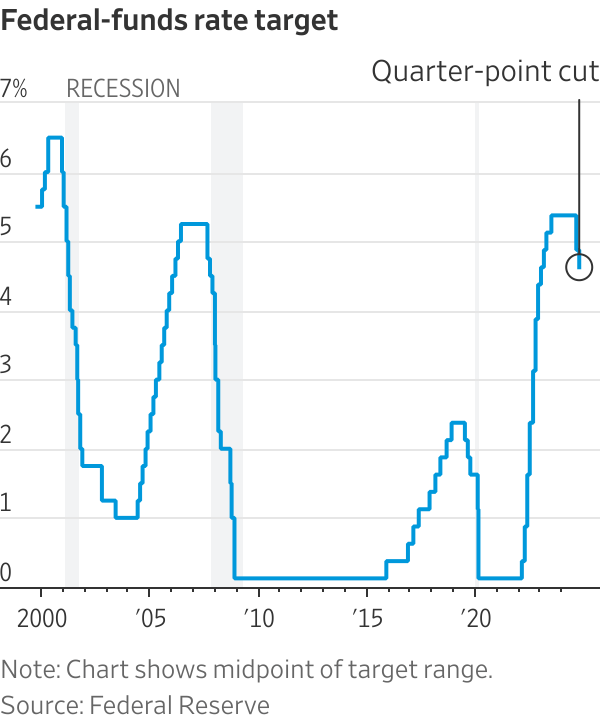
The Bank of England’s first interest rate cut in four years on Thursday prompted a sigh of relief from home buyers and sellers nationwide that will boost confidence in the luxury home market, too.

The central bank voted to cut the benchmark lending rate from 5.25% to 5% in a move that is expected to have a more pronounced impact on the middle and lower ends of the property market—who more frequently finance their home purchases—as opposed to the more discretionary top end.

However, it may prove to be an auspicious sign for foreign investors, according to Simon Barry, head of new developments at Harrods Estates. “Today’s rate cut, hopefully the first of several, sends a resounding message to international investors: Now is the opportune moment to move back into U.K. property,” Barry said.

“Investors who have enjoyed solid returns in cash over the past two years may now be tempted to shift their wealth into property before the market picks up, particularly in prime central London, where some areas remain undervalued compared to their 2014 peaks,” he added.

Though high-end buyers tend to be less affected by interest rate fluctuations, they aren’t completely decoupled from the shifts. “Even those who can afford to purchase properties outright at the top end of the market often opt for financing, as it can be a savvy investment strategy,” according to Barry.

Overall, he said, “this announcement will be warmly welcomed across the property sector.”

Following 14 consecutive rises, the base rate had been held at 5.25% since August 2023.

If nothing else, the cut will be a “boost to sentiment to the prime property markets going forward,” said Mark Parkinson, managing director of London-based real estate consultant Middleton Advisors.

“It reflects a positive direction of travel. Less positive was this morning’s news of the government confirming the end of the non-dom status,” Parkinson said, referring to the scrapping of a tax law that has benefited the wealthy for centuries . “But both of these developments today will provide buyers and sellers more certainty of what is in store.”

In July, asking prices across the U.K. dropped 0.4% monthly to £373,493, “a bigger July drop than usual,” according to a report from online property portal Rightmove

“Capacity for house price growth will remain limited until there is a more significant reduction in the cost of debt,” said Emily Williams, director of research at estate agency Savills. “However, this is a clear signal to the market that the Bank feels it has turned a corner in the battle against inflation, and it should give most buyers and sellers confidence that the market will improve as we head into 2025.”

The real reason Australian apartment prices are surging

Apartment prices are rising faster than house prices in most capital cities as more home buyers are forced to compromise on the type of property they purchase due to affordability constraints and restricted borrowing capacity. More owner-occupiers are deciding their budgets are too stretched and they would rather buy a highquality strata home instead of a house requiring renovations.

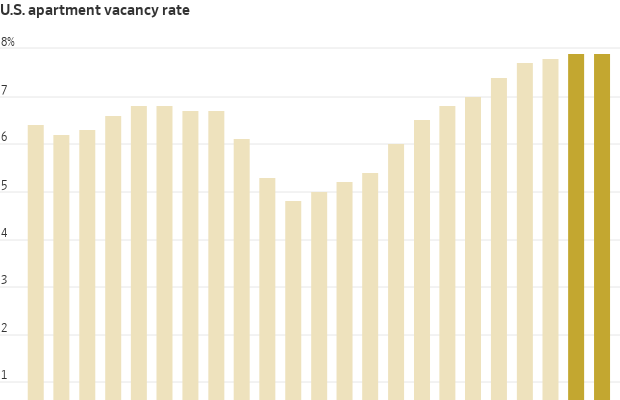
Additionally, growing demand from investors due to rising rents, low vacancy rates and ongoing capital growth is also pushing up apartment prices. Investors now represent 37.1 percent of the value of new loans to property buyers, according to the Australian Bureau of Statistics (ABS). This is the highest level in eight years. The number of loans issued to investors has increased by almost 25 percent over the past year.

First home buyers are also adding to demand for units, with support from the Bank of Mum and Dad a key factor allowing some young buyers to purchase their first homes when, historically, higher interest rates would normally dampen demand from starter buyers on strict budgets.

CoreLogic’s research director, Tim Lawless, said units had outperformed in every capital city over the past three months except Darwin and Canberra, where greater supply of medium to highdensity housing meant less competition per property and a reduction in median prices over the period.

“With stretched housing affordability, lower borrowing capacity and a lift in both investor and first home buyer activity, it’s not surprising to see the unit sector outperforming for a change,” he said.

Mr Lawless explained that most cities now have a median house value that is at least 1.5 times that of apartments. Choosing apartments over houses means buyers may have more choice over how much debt they are willing to take on and could also buy in more attractive lifestyle locations.

Increasing demand for apartments is being met with ongoing restricted supply in the new apartment market. In its latest monthly market report, CoreLogic said the supply of newly built homes remained insufficient relative to population growth. ABS data shows approvals for strata-title properties have fallen 22.1 percent over the 12 months to June.

Over the three months to July 31, CoreLogic data shows apartment values grew by 1.4 percent in Sydney vs. 1.1 percent for houses. Units rose 5.8 percent in Brisbane vs. 3.4 percent for houses. In Adelaide, unit values rose 7.1 percent vs. 4.7 percent for houses. In Perth, apartment prices rose 6.4 percent vs. 6.2 percent for houses. Hobart apartment prices rose 2.2 percent while house prices fell 1.5 percent. In Melbourne, apartments outperformed houses but the median values of both fell. Unit prices fell 0.2 percent while house prices fell 1.2 percent.

Overall, the national median dwelling price lifted 0.5 percent in June, which was the 18th consecutive month of growth. However, CoreLogic noted in its report that “it is clear momentum is leaving the cycle and conditions are becoming more diverse”. The market is very strong in Perth, Brisbane and Adelaide and weak in Melbourne, Hobart and Darwin, where overall median dwelling values fell over the past three months. The pace of property price growth has also “slowed markedly in Sydney as the number of listings for sale returns to normal levels.

Mr Lawless said supply was the key differentiating factor in the performance of Australia’s capital city markets. “The number of homes for sale in Brisbane, Adelaide and Perth is more than 30 percent below average for this time of the year, while weaker markets like Melbourne and Hobart are recording advertised supply well above average levels,” he said.

Mallorcan Megamansion That’s Set to Break Ground This Fall Lists for €42.5 Million

What will be a sprawling villa in Mallorca has hit the market for €42.5 million (US$45.8 million) making it one of the most expensive offerings currently available on the bucolic Spanish island.

Work on the almost 19,000-square-foot residence is set to begin in September, and construction is expected to take somewhere around two-and-a-half to three years, according to Alby Euesden, managing partner of the Agency’s Mallorca office, which brought the home to the market at the end of June.

Surrounded by Port d’Andratx and the scenic mountain ranges of the Tramuntana, “Villa Pura has been designed to frame its surrounding environment at every opportunity, using space, light and form,” Euesden said.

“In many ways the central feature of the space is its unique pool, which acts as its main focus point, providing a rich source of visual interest,” he said.

The sizeable infinity pool, which will run the length of the home, will be joined outside by multiple terraces, a lounge area, an outdoor bar and dining space.

Inside, the open-plan home is set to boast a sleek and organic palette, with walls of windows, exposed stone and wood details.

There will also be multiple living areas, a kitchen with two islands, a double-sided fireplace, a formal dining room, a gym and nine bedrooms, including a primary suite with a private terrace and hot tub. And of course, far-reaching Mediterranean views.

The property will have far-reaching views.
Nacho Riutort at PH Mallorca

The seller is one of the leading developers on the island, according to Euesden. “They acquired the land site over five years ago and have been meticulously planning the project, which initially consisted of various lots,” he said.

Euesden declined to comment on how much was paid for the underlying property.

Mallorca’s luxury market is “very buoyant right now,” he explained. “Spain has much lower mortgage rates than the rest of Europe and the U.S., with fixed rates [currently] from 2.15%.”

With Mallorca “being a destination market which attracts buyers from all over Europe, and with an ever-growing interest from U.S. investors, the market has remained stable and even seen an increase in pricing within new developments,” he added.

A Classic Mercedes Roadster Is Going Electric in a New Partnership

Hemmels, a Cardiff, Wales-based company that rebuilds Mercedes-Benz SLs, will soon offer an electric drivetrain for the W113 “Pagoda” models to the tune of half a million dollars through a new partnership.

The W113 SL is a glamorous two-seat roadster, which replaced the 190SL. It was introduced as the 230 SL at the 1963 Geneva Motor Show, then was gradually replaced by larger-engine models until the end of the line in 1971. The model was quite popular in the U.S., where nearly 20,000 were sold.

“We were on a route to develop a battery powertrain in-house at Hemmels, and we began to realize what a complex undertaking it is, given international regulations. That’s when we discovered that Everrati had already engineered a solution,” says CEO Tom Butterfield.

The result is a collaboration between Hemmels and Everatti—which restores and electrifies classic “icons” from Porsche, Mercedes, and Land Rover from its base in Bicester, Oxfordshire. Hemmels will restore the cars and Everrati will install electric powertrains. The partnership will be officially announced on Friday, and SLs from both companies will be shown at the upcoming Pebble Beach Concours d’Elegance during Monterey Car Week (Aug. 9-18). The first jointly produced car should be available to customers in November or December. Ordering a car and taking delivery will take eight to 10 months.

The price for a full Hemmels build, with the Everrati electric drivetrain, is £400,000 (US$513,000), excluding the donor vehicle that the company can locate for customers. The cars will be offered internationally.

The SLs will have 68-kilowatt-hour batteries, distributed to help maintain the car’s ideal front-rear balance.

“The bulk of the weight will be where the original engine and gearbox were located, and there will also be batteries in place of the fuel tank and a small pack in the boot [trunk] occupying about the space of the spare tire,” says Justin Lunny, Everrati’s founder and CEO. As battery technology evolves, Lunny says, it should be able to get a more powerful pack into the same locations, and upgrades can occur.

Another British company Helix, a Lotus supplier, will provide a power-dense but compact 300-horsepower motor that together with the battery pack should yield a range of 200 miles and a zero-to-60 miles per hour time of under seven seconds. The cars will use a limited slip differential for good grip, and will be equipped for regenerative braking—recapturing energy and allowing “one pedal” driving. “The end result is a very usable driving experience,” Lunny says.

“Our process in rebuilding the cars is very in-depth, and it’s what makes us stand out,” says Butterfield, whose family bought Hemmels in 2018. “We use brand-new and upgraded parts—we don’t restore what’s there unless we absolutely have to go that route.” The restoration process can take 4,000 worker hours, and bespoke buyers have wide latitude in colors, interior materials, and a choice of options. High-end audio and Bluetooth are available.

The cars will have already been rebuilt by Hemmels by the time they take their 130-mile journey to Everrati, where the drivetrains are—very carefully—installed.

Lunny says that the SLs will not be cut up or altered during the drivetrain installation. “We don’t damage the structure of the vehicle,” he says, “and everything is technically reversible. We retain the value of the original vehicle. The owners can keep the original internal-combustion engine, ensuring that it’s still with the car.” Butterfield adds that one of his clients is turning his engine into the base “for a glass table that will be installed in his man cave.”

Lunny describes the SLs as “art pieces that happen to have wheels. We love them like our babies, and everything we do is to a replicable standard, on par with what an [original equipment] manufacturer would do.”

The W113 SLs may be more than 50 years old, but their styling—and appeal across generations—remains timeless.

“It’s not just a certain age or demographic,” Lunny says. “The new audience is the ultra-high-net-worth individuals who adore beautiful iconic cars, especially the Pagoda, but want a clean-air powertrain, with modern air conditioning, that is enjoyable to drive.”

Butterfield intends to keep production relatively low, producing perhaps 10 to 12 electric Pagodas annually. “To stretch to 25 cars per year would risk the quality of our builds,” he says. Some 60% to 70% of Hemmels’ output has gone to U.S. buyers, and that’s one reason the Monterey appearance—the company’s first—is important to the brand.

Hemmels also works its magic on the earlier 190SL, and electric conversions of those models, through the partnership, are possible in the future, Butterfield says.

Property of the Week: 6601/35 Queensbridge Street, Southbank

High above Melbournes vibrant Southbank precinct on the 66th floor of Prima Tower, there is a stately sky high home capturing sweeping views of the citys best assets.

Developed by Schiavello Group, with interiors by Bates Smarts renowned director of interior design Jeff Copolov, this bespoke fully-furnished penthouse is an inner city box ticker residence.

Jamie Mi, co-listing agent and head of the international division at Kay & Burton, said the house-sized apartment is an unrivalled Melbourne listing.

“This property offers hotel-style living with amazing entertainment spaces, lounges, and an infinity pool with what is probably the best 360-degree view of Melbourne,she says, adding that the penthouse had already garnered global attention, particularly from across Southeast Asia.

The property offers hotel-style living. Kay & Burton

The masterpiece delivers breathtaking views and a rare opportunity to enjoy an unparalleled lifestyle in what is arguably Melbourne’s finest penthouse.

A high-speed elevator soars to the top floor where the single-level four-bedroom apartment features 660sq m of living space with walls of windows and panoramic views of Southbank, Albert Park, Royal Botanic Gardens, Port Phillip Bay, and the rest of Melbournes skyline.

The apartment has sweeping views of Melbourne. Kay & Burton

The heart of the home is its north-facing living space, characterised by clean lines, timeless design, and sophisticated finishes. This area seamlessly integrates multiple formal and informal living and entertaining zones, offering the ultimate vantage point for New Year’s Eve fireworks.

Built in 2015, the penthouse has been held onto by the developer and is only now coming to market for the first time.

Not quite a decade old, the premium finishes are state of the art with a food connoisseurs dream kitchen and butler’s pantry featuring 2 Pac polished cabinetry, marble surfaces as well as Gaggenau and Liebherr appliances.

The food lover’s kitchen includes a butler’s pantry, marble surfaces and Gaggenau and Liebherr. Kay & Burton

A central dining room is flanked by an expansive formal living area and separate family room with ample space for a study to one side and a meals area to the other off the kitchen.

There are two accommodation wings including a lavish main bedroom suite with a spa ensuite, dressing room and views of the city and Yarra River. Another bedroom on the same side of the floor plan has a built-in wardrobe and ensuite while the two additional bedrooms on the alternative wing have adjoining bathrooms.

The m ain bedroom with spa ensuite, dressing room has views of the city and the Yarra River. Kay & Burton

A second living space with a full kitchen means the versatile footprint offers up the option to create a self-contained apartment with its own private entrance.

Prima Tower residents have access to a host of hotel-style amenities including an infinity pool with spa, a gym and lounge area, private dining room, a second pool with an outdoor terrace, a private cinema, plus a 24-hour concierge service.

Prima Tower residents have access to an infinity pool. Kay & Burton

The Prima penthouse has five car spaces on title and is close to luxury boutiques, five-star restaurants such as the acclaimed Nobu and Rockpool, and the Crown Entertainment Complex.

The estimated sale price: $15.5 million and $17 million.

Agent: Jamie Mi on 0450 125 355, Ross Savas on 0418 322 994 or Rae Mano on 0413 768 163 of Kay & Burton Stonnington.

The 10 biggest costs of real estate investment

New tax data reveals the 10 largest holding costs that landlords pay to maintain their real estate investments. While the biggest expense is an obvious one interest on loans – the next biggest cost categories may be surprising. The second biggest expense was council rates and the third greatest cost was the fees landlords pay their property managers to collect the rent and organise repairs.

The Australian Taxation Office documents all 19 cost categories of real estate investment in the latest round of annual tax data just released for the 2022 financial year. Two of the cost categories are depreciation expenses, which do not come out of pocket but can be claimed by landlords as capital works and capital allowances to reduce their taxable income.

Landlords paid $15.76 billion in interest on their loans in FY22, along with $3.94 billion in council rates and $3.30 billion in property management fees. Property management is typically charged as a percentage of monthly rent, with other fees such as new tenancy agreements added on top.

Repairs and maintenance was the next biggest cost category with $3.19 billion shelled out to rectify issues. The fifth largest expense was body corporate fees at $3.12 billion. Body corporate fees are paid by landlords who own strata-title investment properties, such as apartments and townhouses.

The sixth biggest expense was insurance at $1.99 billion. Insurance costs may include protection against damage to the building as well as landlords’ insurance to cover rent defaults and contents. Landlords also paid $1.72 billion for water and sewerage services, with tenants in some parts of Australia like Queensland and Western Australia required to chip in to cover their water usage.

Land tax was next with $1.64 billion paid by landlords whose properties exceeded certain land values prescribed by their state or territory governments. Land tax has been a hot topic in Victoria in 2024 after the state government slashed the tax-free threshold from $300,000 to $50,000 from 1 January. The final two costs among the top 10 real estate investment expenses were $1.19 billion paid out to cover sundry expenses and $381.39 million for professional cleaning services.

In FY22, there were 2,268,161 landlords who owned investments either solely or jointly. This was one percent higher than in FY21 or the equivalent of 22,600 new landlords. FY22 was only the second year in more than two decades that a majority of landlords were cash flow neutral or positive instead of negatively geared. This was due to record low interest rates.

The official cash rate remained at an emergency low for the first 10 months of FY22, with the cheapest interest-only investment variable rates being about 2.5 percent at the time. Today, the cheapest interest-only variable rates are closer to seven percent, according to RateCity.

Eurozone Inflation Picks Up Pace in Blow to Rate-Cut Hopes

Inflation unexpectedly heated up in the eurozone this month, presenting a fresh challenge to policymakers looking for signs that eurozone price rises are easing sustainably.

Consumer prices were 2.6% higher on year in July, picking up pace from in June, according to EU figures released Wednesday. That defied economists’ expectations for a slight decrease in inflation over the month, and leaves the rate further from the European Central Bank’s elusive 2% target. Inflation heated up over the month in Germany, France and Italy, the eurozone’s three largest economies.

Core inflation, which strips out the often volatile effects of food and energy prices, meanwhile stayed stable, against expectations for a slight decrease. But services, a key focus for policymakers at the European Central Bank, did fall slightly.

That decline makes a cut to interest rates the most likely outcome in September, said Franziska Palmas, an economist at Capital Economics.

Still, the higher headline rate may give pause to the central bank as it mulls its next steps on the direction of interest rates in the 20-member eurozone.

The ECB cut interest rates in the currency union for the first time in five years last month, but has refused to be drawn on when and how quickly it will continue to lower rates from their current heights. Markets still expect a second cut to rates at the bank’s next policy meeting in September, but with less certainty than earlier in the summer.

“Until services inflation falls more significantly, the ECB is likely to continue to ease policy only slowly,” Palmas said.

Inside ‘Billionaires’ Bluff’: Why Paradise Cove Keeps Drawing the Superrich

Driving north in Malibu, Calif., on the famed Pacific Coast Highway, there is a spot where the road veers away from the ocean, and the views are replaced by a hillside, thick foliage and, in some places, a man-made barrier. Many drivers have no idea they are driving past some of the world’s most expensive homes, including a recently-expanded compound owned by the widow of Apple visionary Steve Jobs.

Beyond that hillside sits a roughly 1-mile stretch of beach known as Paradise Cove, known to local realtors as “Billionaires’ Bluff.” It is so exclusive that, since 2020, three of the approximately 25 homes there have sold for $100 million or more, making up a third of the deals that closed at that price point in the Los Angeles area during the same period. Two have broken the record for the most expensive home ever sold in California at the time of each sale.

They include transactions by household names such as Beyoncé and Jay-Z, as well as technology heavyweights such as venture capitalist Marc Andreessen , WhatsApp co-founder Jan Koum and Laurene Powell Jobs . Some buyers have gone to great lengths to piece together their blufftop Paradise Cove compounds over time.

“Rich people like to congregate and they’ve congregated here,” said local agent Leonard Rabinowitz. “It makes them feel safe and more comfortable.”

In some ways, the location, roughly 35 miles from Downtown Los Angeles, seems like an unlikely destination for the country’s wealthiest people. To the north is Paradise Cove Mobile Home Park, widely regarded as the most expensive trailer park in America. Dating to the 1950s, when the then-owners allowed commercial fishermen to park campers there, the park is a throwback to the days before Malibu was brimming with the super rich. Its roughly 250 trailers and manufactured homes have since drawn celebrities such as Stevie Nicks and Matthew McConaughey, who have helped drive prices of the trailers into the millions of dollars. A casual beachfront cafe sits at the base of the bluff.

On the other side of the trailer park, on the cusp of Paradise Cove, sits an estate long owned by Barbra Streisand. To the south is the iconic Geoffrey’s restaurant, which has been serving surf and turf from its oceanfront patio since 1983.

Local realtors say the appeal of the Cove is obvious. Rather than a beach house on the sand or a blufftop mansion with more far-reaching views, homes in Paradise Cove offer the best of both worlds. Sitting behind gates off the highway, the houses are largely shielded from public view and occupy multi-acre parcels much larger that those typically available in nearby Point Dume or in the neighbouring celebrity-filled Malibu Colony. Most of the homes are also shielded from the view of their neighbours. “If you do see them, you’re seeing the corner of a roof in the distance,” said local agent Kurt Rappaport , who has sold many of the homes on the cove.

A lot of the homes also offer direct beach access via private pathways and some include beachfront cabanas or smaller homes on the sand. One formerly owned by singer Kenny Rogers has a private funicular, a type of cable railroad, that leads from the blufftop house to the ocean.

While publicly accessible, the beach at Paradise Cove is rarely busy, since there is limited parking, though it is a draw for local surfers, local agents said. Some might recognise it from the 1970s television hit “The Rockford Files,” starring James Garner, which was filmed at the cove.

A steady drumbeat of big-ticket deals in recent years has helped cement the stretch’s reputation as the most sought-after beachfront enclave in California.

Most famously, entertainment power couple Beyoncé and Jay-Z paid $190 million for a mansion designed by Japanese architect Tadao Ando. The blufftop house, measuring about 42,000 square feet, was designed by Ando for prominent art collectors Bill and Maria Bell, who spent a dozen years constructing what Maria Bell has said is a “sculpture as much as it is a building.” The deal, which closed in May 2023, was briefly the most expensive ever in the state.

Before that, a deal by venture capitalist Marc Andreessen and his wife, Laura Arrillaga-Andreessen, on the same blufftop held the record. In 2021, they paid $177 million for a 7-acre compound formerly owned by fashion mogul Serge Azria and his wife, Florence Azria. That property includes a roughly 10,000-square-foot main residence, two guesthouses, a cinema and a spa.

More recently, Powell Jobs, founder of philanthropic and investment company Emerson Collective, added a $94 million property to her private Paradise Cove compound, bringing her total aggregate spending in the cove to more than $170 million. The assemblage has involved separate transactions with four sellers spanning from 2015 to 2024.

Other major transactions include WhatsApp co-founder Jan Koum’s purchase of two neighbouring compounds for a combined $187 million in 2020 and 2021, as well as movie producer Edward H. Hamm Jr’s $91 million deal to buy a home from British videogame designer Jonathan Burton and his ex-wife, Helen Musk, in 2023. In 2022, billionaire media mogul Byron Allen also paid $100 million for a Malibu estate formerly owned by self-storage billionaire Tammy Hughes Gustavson.

These wealthy newbies join a string of well-known names on the bluff. They include tennis legend John McEnroe, “The Apprentice” creator Mark Burnett, and Kari Clark, the wife of the late television host Dick Clark.

Leonardo DiCaprio is also doing construction on a home on Paradise Cove; he bought the site, which is next to the home owned by Burnett, for $23 million in 2016, according to property records and a person familiar with the deal. His property was formerly owned by director Ridley Scott.

Values in Paradise Cove have shot up so significantly thanks in large part to the lack of available inventory, Rappaport said. Since prices there are so high, the cove doesn’t typically draw speculators. Owners there are so rich they usually don’t need the money and don’t typically sell, unless they have had a significant change in circumstances, he said. One of the few available homes on the cove is an $85 million Greek-inspired estate owned by Peter O’Malley, the former owner of the Los Angeles Dodgers. O’Malley has owned the 2.5-acre property since around 2000 and is selling following the death of his wife, Annette O’Malley, last year.

When properties do come up, “there’s usually a neighbour to buy it,” Rappaport said.

Homeowners such as those on the cove don’t always start out with a plan to assemble a larger compound. Those plans shape up over time as opportunities arise, Rappaport said. The larger footprints mean increased privacy and protected views and limit the chance that homeowners will have to deal with construction on the neighbouring lot. “They think, ‘Oh, it would be nice to have the house next door,’ ” he said.

Even as the broader Los Angeles luxury market has been hobbled by interest rate increases, a drop in demand from foreign purchasers and an exodus of high-net worth individuals to lower-tax states, the Paradise Cove market has continued to post record deals.

“It reminds us that these home sales have nothing to do with the broader market they sit within,” said appraiser Jonathan Miller of Miller Samuel. “It’s a very specifically designed submarket and its success doesn’t wash over onto the whole housing market.”

Miller said it isn’t uncommon in ultrahigh-end communities for transactions to happen in clusters as they have in Paradise Cove.

“There is one big transaction and then a lot of copycats around it. I think it’s FOMO,” he said, using the popular acronym for “fear of missing out.”

In the overall L.A. market, the slowdown in deals has been compounded by a new mansion transfer tax, which applies only to the city of Los Angeles. It has “killed off excess demand,” particularly from developers and property speculators who plan to flip the properties, Miller said. Previously, that represented a significant portion of the buyer pool and the market fed on itself, he said. The new tax, enacted last year, requires sellers to pay 4% on sales of homes priced between $5 million and $10 million, and 5.5% on sales of properties at $10 million or above.

While sales are up 15% year-over-year in the overall luxury Los Angeles market, eight-figure sales are rare. None have closed in the city of Los Angeles since the introduction of the tax, according to data from Stephen Shapiro, co-founder of Westside Estate Agency.

The tax has only made sellers more resolute about their pricing, local agents said.

“Our problem [in Los Angeles] has been that the buyers think that it’s a buyer’s market and the sellers have been feeling like they’ll get their price if they hold out,” said agent Jade Mills of Coldwell Banker Realty.

In Paradise Cove, buyers are under no such illusion that the market favours them.

“They are willing to step up,” Mills said.

Wednesday’s Other Central Bank Meeting Might Be the One to Watch

All eyes will rightly be on the Federal Reserve’s interest-rate decision Wednesday. But the meeting of another central bank across the Pacific will be quite consequential too.

While Jerome Powell is pondering whether to cut rates now for the first time in more than four years or perhaps wait a couple more months, Kazuo Ueda , his counterpart in Japan, is considering whether to do the opposite . After the Bank of Japan exited its negative-interest-rate regime in March, investors are looking for more tightening to come.

The Bank of Japan raised its short-term interest rate from minus 0.1% to a range of around 0% to 0.1% in March, the first increase in 17 years. Japan’s consumer prices rose 2.8% year-on-year in June, which was off from inflation’s peak pace last year, but still well higher than Japan is accustomed to.

In a possible preview of what awaits markets if the Bank of Japan leans hawkish, the Japanese yen has risen sharply in the past few weeks, appreciating 5.2% against the dollar this month from a multi-decade low. That has likely contributed to market turmoil in other markets around the world over the past couple of weeks, including the selloff in global technology stocks, as the yen, with its low interest rates, is a favourite funding currency for traders .

Hedge funds have ramped up their short bets on the yen in the past two years but could exit their positions pretty abruptly. Leveraged funds have slashed their net short position in options and futures against the yen by half in the two weeks ended July 23, according to data from Commodity Futures Trading Commission via CEIC. That is equal to a nominal value of $4.6 billion.

But the market is divided over whether a Japanese rate increase could come as soon as this week. There is a 41% probability that the Bank of Japan could raise rates by 0.15 percentage point, inferred from pricing of overnight indexed swaps, according to Bank of America.

At the meeting this Wednesday, the Bank of Japan is also expected to outline plans to unwind its portfolio of $3.8 trillion in Japanese government bonds, likely giving a further boost to long-term rates. Japan’s 10-year government bond yields have gone up 0.44 percentage point to around 1.06% this year as investors expected higher rates.

The country was swimming against the tide over the past few years by staying put on its ultra-easy monetary policies when most major central banks were raising rates. The Bank of Japan will likely be more cautious going in the opposite direction: A sharply higher yen could be punishing to exporters , and policymakers in Japan live in perpetual fear of returning to deflation. Any surprises in the BOJ’s pace as it normalises policy could still rattle financial markets.

Over the longer term, a narrowing interest-rate differential between the U.S. and Japan could shift the pattern of investment flows. Japan had the equivalent of $4 trillion in foreign portfolio investments at the end of 2023, according to official data. That includes both companies and individuals which are scouring the globe for higher returns. Some of them might bring their money back to Japan if assets at home are generating higher yields, especially if the yen is getting stronger.

U.S. 10-year government bonds still yield around 3.1 percentage points more than Japanese ones, but that is already down from a 4.2-percentage-point gap in October. If that gap keeps narrowing, it could mean tighter financing conditions in markets around the world, which have long looked to Japan as a steady buyer.

It is rare for two of the world’s largest central banks to be at major turning points in their long-term policy settings at the same time, and rarer still for them to be moving in opposite directions. The consequences could be far-ranging and unpredictable. Investors around the world will have to get used to paying more attention to what is happening in Tokyo, not just Washington, D.C.

Affluent Home Buyers Are Driving up Prices in Southern European Cities

Lisbon was home to the fastest growing luxury-home prices in the first half of this year, according to a report Monday from Savills.

With gains of 4.2% in the six months through June, the Portuguese capital bested the performance of any of the other 29 prime property markets globally analysed by the property firm.

Cities in southern Europe and the Middle East saw their high-end home sectors perform best, with Lisbon followed by Amsterdam, Madrid and Athens, which all logged capital value increases above 3% over the same time. Dubai rounded out the top five with growth of 2.9%.

In southern Europe in particular, prime prices are being driven by a lack of supply, and American buyers have become a “key prospective buyer base,” Savills said, “thanks to a comparatively strong dollar and a growing interest in the lifestyle on offer.”

In the U.S., meanwhile, persistently high interest rates have impacted demand across the. housing market, and as a result, prime residential prices have fallen in three of the four U.S. cities monitored in the report, with only San Francisco seeing positive growth of 0.7% for the first half of the year.

Los Angeles ranked at the bottom of the list, with luxury prices falling roughly 4%.

Across all 30 cities analyzed by Savills, prime residential property prices “remained resilient over the first half of 2024,” recording an average growth of 0.8% and outperforming the 0.6% growth predicted for the year as a whole, the report said.

More than half (60%) of the cities recorded positive capital growth, “reflecting a level of relative confidence in the asset class,” according to Savills.

Looking ahead, “we predict an average capital value growth of 0.5% for the second half of the year, which would bring total 2024 growth to 1.3%,” said Kelcie Sellers, associate director at Savills World Research in the report.

“The ongoing supply-demand mismatch for high-end residential product is projected to fuel price growth in European cities such as Amsterdam, Lisbon and Barcelona, where 2% to 3.9% is forecast in the second half of 2024.”

This article first appeared on Mansion Global

Why 1.6 million Aussies have secret savings accounts

Millions of Australians admit to squirrelling money away in a secret savings account that their partners or family members don’t know about, new research shows. A Finder survey of 1,012 Australians found eight percent the equivalent of 1.6 million people – have a secret bank account. A further four percent, or 900,000 people, admit to having one in the past.

The survey found women are more likely to set up a secret savings account than men. It is also a more prevalent trend among younger generations, with 26 percent of Gen Z respondents admitting to having a secret account either now or in the past, compared to 14 percent of Millennials and 10 percent of Gen Xers.

Finder’s money expert, Rebecca Pike, said secret saving is a widespread practice.

Australians are stashing money away without their partner or family member’s knowledge. Individuals go to extraordinary lengths to hide income and savings from their partner or relatives,” she said.

Ms Pike said the reasons for setting up a secret stash of cash can vary. Some people may not trust their partners to spend joint finances wisely. Others want financial back-up ready and accessible if their relationship ends.

When it comes to hiding savings from your partner, there are harmless reasons like being able to buy them presents without their knowledge, to more sinister ones like a gambling addiction or adultery, Ms Pike said.

Regardless of the reasons, Ms Pike urged Australians to take advantage of the highest savings interest rates in decades and park their spare cash – whether secret or not – in a high interestbearing account. The highest interest rate among 189 savings accounts profiled on Finder is 5.5 percent.

Separate Finder research shows 45 percent of Australians have less than $1,000 in their bank account and 70 percent do not have an emergency fund. Emergency funds are savings accounts where money is held over the long term to cover unexpected expenses, such as major medical bills. At a time when economic growth is weak and unemployment is expected to rise, four in 10 Australians say they only have enough savings to get by for a month if they lose their jobs tomorrow.

Finder recommends aiming to generate enough savings to cover three to six months of living expenses. This would allow enough time to find a new job or deal with a personal situation that required time off work. Finder’s head of consumer research, Graham Cooke, said if people put $100 per month into a savings account paying 5.5percent compounded monthly, they would generate $2,642 in savings within two years.

How AI Could Keep Young Workers From Getting the Skills They Need

Whenever people talk about the dangers AI holds for the workforce, they usually have one thing in mind: technology stealing jobs. But artificial intelligence poses a much more subtle threat than that—one that will have consequences for business unless we address it.

Simply put, the way we’re handling AI is keeping young workers from learning skills.

For more than 12 years, I have been studying how work changes as a result of intelligent technologies like robots and AI. Across a number of industries, I’ve seen the same thing over and over: This new, sophisticated technology makes it easier for experts to do their jobs. Seasoned surgeons can operate more quickly and efficiently, for instance, when they use robots in the operating room.

But the efficiency comes at a cost. The technology allows experts to do more, independently, so they don’t need younger, less-experienced workers to help them out anymore—so those novices are left without mentors to teach them the skills they need to do their job. Looking at operating rooms again, it takes two people to perform most complex procedures with traditional tools. The senior surgeon generally provides “exposure” by retracting tissue while the resident does what most of us think of as surgery—incisions, suturing and so on. Residents are on task the entire time. Focused. Learning.

Now the residents mostly sit around during operations and watch veteran surgeons get the job done thanks to help from a robot. Limited work. Limited learning.

As learning opportunities like these are lost throughout more industries, the results could be profound for both individual workers and the economy. We are sacrificing skill building and human bonds of mentoring on the altar of productivity. No matter our role, tenure, occupation or industry, if we can’t collaborate with someone who knows more, we’re not going to learn effectively, and we won’t be able to keep up. And our organisations will struggle where they might otherwise race ahead—because workers won’t have the deep knowledge they need to innovate and step into senior roles.

Turning history on its head

We have decades of research showing that this situation is the opposite of what we want. We build skill by collaborating across the expert/novice divide, so novices get to see the work, help out at the edges and earn the privilege of doing more next time.

Now that mechanism is being lost. My observations, combined with primary data from other field researchers, show a destructive dynamic at work, across a range of industries. In industrial-process engineering, I have seen experts use software to do modeling on their own, instead of involving a junior engineer. In warehousing, I’ve watched area managers rely on dashboard analytics to understand staffing and process flows, instead of uncovering those things collaboratively with less-experienced line leads and workers.

My collaborator Callen Anthony at New York University found that junior investment-banking analysts were being separated from senior partners as those partners started to use algorithms to help create company valuations for mergers and acquisitions. Junior analysts—instead of collaborating with the senior partners as they had before—essentially just pulled data for the algorithms to use in their valuations.

The rationale for this arrangement was twofold: reduce errors by junior people in sophisticated work and maximise senior partners’ efficiency. Explaining the work to junior staffers pulled partners away from higher-level analysis.

This setup produced short-run productivity improvement, but it moved junior analysts away from challenging, complex work, making it harder for them to learn the entire valuation process and diminishing the firm’s future capability. Junior bankers become senior bankers, after all.

Less time at the table

One of the most striking examples of the widening skill gap is surgery. I observed hundreds of procedures at some of the top teaching hospitals in the country, where robots deeply reshaped how work was done. Surgery, as I said, used to take four hands; minimally invasive surgical robots can supply three, all controllable from a single console. They make things so much easier for surgeons that the million-dollar tools have become the de facto standard for many complex procedures.

Most important, robots make it possible for surgeons to perform operations solo, no residents needed. And, since residents are slower and make more mistakes than an experienced surgeon would, those surgeons are opting to cut residents out of the action. Before, residents might operate for four hours during a 4½-hour procedure. In my nationwide data, their robotic average time hovered in the 10- to 15-minute range. And residents got less operating time in 88% to 92% of cases.

In this situation, we end up with much-less-capable surgeons. My data shows that many newly minted surgeons struggle mightily when they get their first jobs—not just because they don’t have robotic skill, but because their failed quest to learn robotics took so much effort they lost key learning opportunities in other procedures and practice areas, from ureteroscopy to kidney stones to vasectomies, that they would be expected to handle in most new surgical jobs.

The long-term loss

The consequences of poor training go beyond day-to-day competence. Consider what happens to the culture of a hospital when it loses healthy expert/novice collaborations. Less teaching and learning, to be sure, but also more-limited career advancement as experts advocate less for trainees. What about hospitals’ ability to innovate in surgical practices? Limits there, too, as discoveries made by colleagues get tamped down by increasingly focused, efficient, expert-driven surgical performance. The ability to service skyrocketing surgical demand? In the short run, you serve more patients, but in the medium term you scramble to keep up as the pool of new talent dwindles.

Of course, different organisations, industries and professions in different places will feel the pinch on different time scales. They will also compensate in different ways. But in general, organisations will not sense the problem directly: Instead, they will incrementally accumulate a larger cost base—in areas such as (re)training and reduced billable or applied time—and build a bureaucracy to manage this skills gap. At law firms, new attorneys might take longer to ramp up to normal caseloads, while senior attorneys would have to spend more non billable time to handhold them.

Now imagine the consequences of similar skills gap across all types of companies, throughout the economy. Without a firm, immediate correction, this is what we can expect. This is our trillion-dollar skills problem.

A way forward?

Solving the problem is vital, but how should we do it? My collaborator and I found evidence of one approach that can work.

Remember, the problem right now is that senior workers are learning new technologies, such as robotic surgery, that make junior workers unnecessary. In our research, though, we found cases where junior and senior workers teamed up to learn about new technologies together .

By working closely with seniors in this way, the juniors didn’t just learn about the new technologies, they ended up collaborating with seniors on other aspects of the job. Since the older and younger workers were figuring out how the tech worked, they also needed to figure out how to integrate it into vital day-to-day tasks. So, the novices got to see firsthand how those jobs were done while performing actual work.

For instance, in my research, I saw some residents and senior urologists team up to learn robotic techniques in live surgical procedures. In those cases, the residents got much more actual hands-on operating time than residents who mostly just watched robotic procedures—10 times more. And the quality of that time was far better: Expert and novice were jointly figuring out how to use the tech, just as they had a patient on the table.

Granted, this process isn’t easy. In our research, we found that these collaborations often failed. But when they did work, they were powerfully effective. We need more companies to take the chance and implement this strategy, to figure out how to make it most effective and serve as examples.

It will not only help close the skills gap, it will give old and new workers a new sense of purpose on the job—through strengthened relationships. Research shows very clearly that we get motivation for our work when it builds trust and respect with those who share our values. Progressing to more competence therefore involves questions of the heart, like, “Have I earned this expert’s trust and respect?” or “Does this novice look up to me?”

We often treat these issues as unconnected with hard-nosed skill and results, when they are a core part of why we try at all in the first place. They are the animating force for the journey.

Matthew Beane is an assistant professor at the University of California, Santa Barbara, and author of   The Skill Code: How to Save Human Ability in an Age of Intelligent Machines.”

Can You ‘Unboss’ Yourself Without Ruining Your Career?

Sick of managing people? Maybe you should stop.

So many of us stumble into being the boss, or raise our hands because it feels like the only way to get ahead. We’re attracted to the cachet of the title, the promise of more money or the comfort of having a ladder to ascend.

Then come the performance reviews to write, the team drama to adjudicate, the meetings to attend . The job keeps getting harder. Managers oversee nearly three times as many people today as they did in 2017, according to data from research and advisory firm Gartner . Nearly one in five managers says that, given a choice, they’d prefer not to oversee people.

“That’s what we call buyer’s remorse,” says Swagatam Basu , a senior director in Gartner’s human-resources practice.

You can switch back. And your company might be amenable. More are “unbossing” their workplaces by shrinking middle-management layers .

The trick is figuring out a way to maintain your pay and influence. In some companies, the number of people you manage is a proxy for your power. Others now use special individual-contributor tracks, meant to ensure that technical experts have a set path to climb.

You might have to give something up. Making the shift could still feel like a relief.

“It was like, oh, I don’t have to deal with the people issues,” says Suzet McKinney , an executive at Sterling Bay, a Chicago real-estate company. She’d served in leadership positions before. When she started her current role in 2021—no pay cut required—she figured she’d eventually hire direct reports and build out a team. Then she realized she didn’t miss it.

“Managing people would be more of a distraction,” she says.

Making the ask

Dennis Henry , an engineering director overseeing about 45 staffers, was hungry to move to the next managerial rung at software company Okta last year. Then his supervisor explained that would mean even less time to do the technical work he loved. It made the 38-year-old wonder: Did he want to be a boss at all?

“What would hurt more?” Henry asked himself. Giving up managing or giving up coding? The latter felt unfathomable.

He pondered what he’d want if he left management entirely and became an individual contributor, ranking priorities. Maintaining his base salary—just shy of $300,000—was tops. He told his boss that he was happy to stay in his current role if a new opportunity didn’t pan out.

“You have to be ready to hear ‘no,’ ” the Orlando, Fla., resident says.

He got a yes: The company created a new job for him and preserved his pay. After 15 years as a manager, carving out a new kind of authority has been a transition.

As a boss, “I could just say, ‘Do this,’ ” he says. Now he spends more time amassing evidence for his ideas, making his case.

“It is so much harder to convince people that something is the best option,” he says.

The stress of managing

Jenny Blake ’s mental health took a dive after she was promoted to team lead at Google at age 24. She felt stressed and emotionally drained, deeply responsible for her team but beholden to decisions from above, like a department reorganisation ordered up by executives.

A 2024 survey from SHRM, a lobby for human-resources professionals, found that 40% of respondents said their mental health declined when they took on a managerial or leadership role.

Blake switched to an individual contributor job, spending several years rolling out new programs she felt had a much bigger impact than her management. Now an author and speaker focused on careers and business, she recommends broaching the transition conversation by laying out your unique strengths and how they can better serve the company in a new role. Don’t dwell on your distaste for managing people.

Want to ensure the shift isn’t a demotion? Make sure you’re staying close to parts of the business that are directly tied to revenue, she says. Build your reputation externally, speaking at conferences and publishing papers.

“Become an industry expert,” she says.

The reality of switching

Just because a company touts opportunities for individual contributors to grow doesn’t mean you’ll be able to rise to the top unimpeded. A former consultant at a professional-services firm told me that partners who didn’t have their own teams were treated like second-class citizens.

At Launch Potato, a digital-media company based in Delray Beach, Fla., the individual-contributor track tops out several levels below the executive level. Even on the lower rungs, managers have the opportunity to make higher salaries and bonuses than commensurate individual contributors, says Kristopher Osborne , the company’s senior vice president of talent.

“You are getting paid a premium to deal with a lot more issues and challenges,” he says of managers. “People have to be realistic.”

He recommends ambitious individual contributors show they’re bringing leadership to the company in different ways. Can you run strategy initiatives, coach teammates or get swaths of the organization on board with new initiatives?

Letting go

In a previous job, Sheri Byrne-Haber liked managing people and being a “one-stop shop” for her 20-person digital-accessibility department, even as the workload ballooned. So when her boss suggested splitting her role in two, she initially said no.

She reconsidered when performance-review season arrived. She had to write 19.

The company hired a new counterpart for her, charged with managing, and Byrne-Haber focused on strategy. Letting go was harder than she expected. It took her three months to unsubscribe from all the manager-only Slack channels, email lists and meetings she had been looped in on. When colleagues reached out with questions, she’d pause to determine whether the queries were still related to her responsibilities. If not, she forced herself to forward them to the new manager, even when she knew the answer.

“It felt awkward,” says Byrne-Haber, now at work on her own startup. “But that’s not my job anymore.”