Bitcoin Was Left for Dead. Why Wall Street Is Bringing It Back to Life.

Andrew Pratt doesn’t expect pushback when he pitches Bitcoin to his firm’s investment committee this week. Bitcoin’s 140% surge in the past year has all but erased memories of the crypto crash and scandals. And now that companies like BlackRock are backing Bitcoin funds, he sees no harm in adding 1% to some client portfolios.

“The downside, if it were to blow up, is just a percent,” says Pratt, investment manager at Wiser Wealth Management in Marietta, Ga. “But the upside benefits could be very large.”

Debating Bitcoin has come to feel futile. That the token has no underlying value or real-world uses increasingly seems beside the point. Buoyed by a flood of new crypto products and services, Bitcoin has scaled new heights, reaching $1.3 trillion in total market value and lifting the broader token market to $2.5 trillion.

Wall Street, after years of dismissing crypto, is now embracing it as a practical matter: There’s money to be made , fear of missing out, and fewer executives willing to call crypto an emperor with no clothes.

Many strategists argue that crypto remains a speculative trade without much underlying utility. Valuing it remains a black-art exercise of technical analysis, mixed with assumptions about supplies of tokens, demand from U.S. investors and overseas traders, and hopes that Bitcoin will endure as a “store of value” akin to gold . Making it all the more challenging are the opaque nature of crypto markets, thin liquidity and volumes, and valuation models that lack traditional analogues.

“To be a real asset, you have to generate cash flows,” says Barry Bannister, chief equity strategist at Stifel. “It’s also attempting to be a currency, but then it would have to be used for transactions. Until I see Bitcoin transacted in everyday life, it’s not a currency. It’s more of a speculative instrument.”

Yet on Wall Street, executives are now far more supportive. BlackRock CEO Larry Fink, a former critic, epitomizes the about-face. BlackRock scored a win with its iShares Bitcoin Trust , part of a crop of such ETFs approved in January. BlackRock’s fund is now the second-largest Bitcoin ETF on the market with nearly $18 billion in assets. And it’s promoted by Fink, who talks up Bitcoin in public, saying that he’s “very bullish” on Bitcoin’s long-term prospects in a recent Fox Business interview.

BlackRock’s backing of a Bitcoin ETF helped convince advisors like Pratt to consider buying some crypto for clients. And Fink is a powerful voice as head of BlackRock, the world’s largest asset manager with more than $10 trillion under management.

“When Larry speaks, a lot of people listen,” said WisdomTree Head of Digital Assets Will Peck, whose firm also launched a Bitcoin ETF and is creating tokens of assets like Treasuries that customers could then trade in digital wallets.

Some Wall Street firms and asset managers, meanwhile, are putting out lofty price targets for Bitcoin. Bernstein Research in late March raised its year-end price target to $90,000—a gain of 30% from recent prices around $69,000. Ark Invest CEO Cathie Wood, an uber Bitcoin bull, has said she expects the coins to trade above $1 million by 2030.

Bitcoin needs a few things to keep going right to maintain its momentum. Its run-up coincided with rising expectations that the Federal Reserve will soon cut rates; without favorable macro conditions, Bitcoin could slump like other areas of tech.

The price has also risen in anticipation of April’s “halving,” an event that occurs roughly every four years when the amount of Bitcoin that miners receive for processing transactions on the network drops in half. The next halving will cut the reward to 3.125 tokens, reducing new issuance sharply. Bulls see more gains with the event, but J.P. Morgan analysts have said Bitcoin’s price could fall to $42,000 after the halving “euphoria” wears off.

Is Bitcoin really worth $42,000 or $1 million? No one can say, reflecting the fact that Bitcoin lives in a mystery zone of valuation and trading dynamics. The token frequently has massive swings on seemingly little news. Regulators have said that many trading platforms, especially those based abroad, are subject to manipulation and “wash trading,” in which traders exchange tokens with themselves to create artificial volume.

Given the risks, some financial advisors aren’t convinced there’s no harm in owning a touch of Bitcoin. When Pratt mentioned to a colleague at another firm that he was considering adding Bitcoin to client portfolios, the response was, “That’s pretty insane,” Pratt says.

But the fact that traditional firms are now backing crypto may lead more people to invest. “Folks are buying these products assuming they’re legitimate because a legitimate Wall Street actor offers them,” says Mark Hays, a senior policy analyst for the Americans for Financial Reform. “That’s not the case.”

Also worrying to consumer advocates is that investment firms may sell and trade Bitcoin without traditional investor safeguards. Investment banks, for instance, are required to separate their equity research arms from the banking side and must disclose banking relationships; the goal is to avoid conflicts of interest in research. Since Bitcoin isn’t considered a security, such laws potentially don’t apply to it, according to former SEC counsel Tyler Gellasch.

“It’s easy to see the potential for the types of abuses that have plagued the investment research business since its creation,” says Gellasch.

Wall Street has far bigger aspirations for crypto than ETFs. While the products now hold more than $55 billion in assets, they aren’t big fee generators. BlackRock until next January will only charge a 0.12% expense ratio on the first $5 billion in assets of the iShares Bitcoin Trust, with the remaining assets carrying a 0.25% fee. Even after the waiver expires, the fund will only charge a quarter percentage point. Other firms including Invesco , Franklin Resources , and WisdomTree are charging similar fees or less. For firms like BlackRock with $17.9 billion in 2023 revenue, the ETFs alone won’t move the needle.

The real prize for much of Wall Street will be convincing pension funds, sovereign-wealth funds, and insurance-company portfolios to own Bitcoin and open actively traded separately managed accounts for crypto, says Steven McClurg, head of U.S. asset management for CoinShares . McClurg was co-founder of Valkyrie Investments, whose ETF business was recently acquired by CoinShares and was among the nine firms that launched a Bitcoin ETF in January . Now, he says he is competing with major investment managers to win the business of pensions and insurance companies’ portfolios.

“For the last four years it’s been me begging them to listen to me and now people are begging me to talk to them,” says McClurg of executives in traditional finance.

The financial industry’s embrace of Bitcoin isn’t entirely a recent phenomenon. Fidelity Investments was early with CEO Abigail Johnson heavily involved in the company’s early research and experiments into Bitcoin, according to her recounting at industry conferences. In 2017, the company started letting employees pay with Bitcoin in the company cafeteria. The firm started a blockchain meetup and developed an internal list of dozens of potential crypto use cases. Fidelity also started offering Bitcoin custody services to institutions.

Now Fidelity is all-in on crypto, with ETFs, custody, and brokerage services. Its research division puts out reports that are generally favourable to crypto. Fidelity is also offering digital assets accounts to 401(k) plan sponsors. Fidelity declined to comment on how much its 401(k) products and crypto platform have grown so far.

Some executives early on found Johnson’s Bitcoin focus risky but didn’t feel comfortable challenging her, partly because her family controls the company, according to a former Fidelity executive. Johnson herself said in 2022 that her early push into crypto “was very controversial in the organisation,” adding “a lot of people are still very confused, and you kind of can’t blame them.”

Yet 2022 may have marked a nadir for crypto’s reputational risk. Between late 2021 and the end of 2022, the token market crashed 70% amid a spate of scandals, culminating in the collapse of Sam Bankman-Fried’s trading platform FTX. In March, a federal judge sentenced Bankman-Fried to 25 years in prison for fraud.

Coinbase and some other large crypto companies survived, though, and the token market recovered amid a broader rebound in risky assets. Sentiment also got a big lift last June with BlackRock’s application to launch an ETF holding spot Bitcoin. Even though its product and the other applications wouldn’t be approved until January, others on Wall Street took it as a signal that it was safe to move into crypto.

“We continue to focus on education and believe it’s imperative for investors to consider the potential upside of investing in bitcoin and its volatile characteristics and risks,” BlackRock said in a statement.

Today, the conversation isn’t so much about whether to own crypto as how much. A few years ago, pro-Bitcoin firms and advisors would make the case that a 0.5% slug could improve risk-adjusted returns, said VanEck director of digital assets product Kyle DaCruz. Now advisors talk about 3% to 5% to a portfolio, he says.

“There are still folks asking the question ‘Is this a real asset?’ But the numbers are far less,” says DaCruz, whose employer offers a Bitcoin ETF and aims to launch an ETF holding Ether , the second-largest cryptocurrency.

Many advisors are getting ready to offer crypto to clients. The major wealth managers— Wells Fargo , Bank of America , UBS , and Morgan Stanley —can already include Bitcoin ETFs in some portfolios if clients ask. Some of their executives have met with ETF sponsors to consider whether to allow advisors to suggest Bitcoin ETF trades to clients, according to people familiar with the matter. UBS has no plans to put the ETFs in portfolios on a proactive basis, a person close to the firm said.

Pro-crypto advisors say the ETFs solve two problems: They make Bitcoin more seamless to own, and they allow advisors to charge fees far more easily on digital assets.

“For the first time in Bitcoin’s history, we have an easy and familiar way for everybody to participate,” says Ric Edelman, founder of the Digital Assets Council of Financial Professionals. Far more advisors are now seeking crypto education, he says, as well as personnel at companies that run model portfolios for other advisors. “Let’s be honest, advisors can now bill on the assets,” he says.

Major banks are also coming around to crypto after arguing for years that many of the industry’s products—like high-yield accounts and stablecoins pegged to the dollar—were similar to bank products and should be regulated as such. Now, lobbying groups like the Bank Policy Institute and American Bankers Association are urging the Securities and Exchange Commission to change rules that make it difficult for banks to custody crypto tokens.

Wall Street still has skeptics. JPMorgan Chase CEO Jamie Dimon is one, calling Bitcoin a “pet rock,” though his firm has experimented with blockchain technology.  Goldman Sachs Wealth Management chief investment officer Sharmin Mossavar-Rahmani recently told The Wall Street Journal that her firm’s executives are “not believers in crypto.” Vanguard remains unmoved, saying it won’t put the new Bitcoin ETFs on its brokerage platform due to the token’s lack of fundamentals.

Washington, for its part, is still cracking down on crypto. SEC enforcement is ongoing—notably a lawsuit the SEC is pursuing against Coinbase Global. SEC Chair Gary Gensler has said the entire industry is rife with fraud. Another big test is coming in May when the SEC will decide whether to approve ETFs holding Ether, the second largest token.

Firms including Coinbase have lobbied to convince Congress to pass crypto-specific rules though haven’t yet garnered enough support. The companies have given more than $80 million to pro-crypto political action committees this election cycle, a huge amount by Washington standards. The money will support crypto friendly candidates while blocking detractors.

“It gets harder and harder every year to find a crypto skeptic,” said Coinbase CEO Brian Armstrong put it at a D.C. policy event in March.

His comment reflects the fact that a technology meant to disrupt the financial industry is now being embraced as prices rise and fees roll in. While the Bitcoin bears may have been silenced for now, however, they may only be hibernating until the next crash.

— Paul R. La Monica contributed to this article.

The surprising passions paying off for investors

Art was the investment of passion that gained the most in value in 2023, according to Knight Frank’s Luxury Investment Index (KFLII). This is the second consecutive year that art has risen the most among the 10 popular investments tracked by the index, up 11 percent in 2023 and 29 percent in 2022. Art was followed by 8 percent growth in jewellery, 5 percent growth in watches, 4 percent growth in coins and 2 percent growth in coloured diamonds last year.

The weakest performers were rare whisky bottles, which lost nine percent of their value, classic cars down six percent and designer handbags down four percent. Luxury collectables are typically held by ultra-high-net-worth individuals (UHNWIs) who have a net worth of US$30 million or more. Knight Frank research shows 20 percent of UHNWI investment asset portfolios are allocated to collectables.

In 2023, the KFLII fell for only the second time, with prices down 1 percent on average.

“Despite record-breaking individual sales in 2023, a surge in financial market returns contributed to a shift in allocations impacting on luxury asset value,” the report said. “… our assessment reveals a need for an ever more discerning approach from investors, with significant volatility by sub-market.”

Sebastian Duthy of AMR said the 2023 art auction year began with notable sales including a record price for a Bronzino piece. But confidence waned as the year went on.

“It was telling that in May, Sotheby’s inserted one of its top Old Master lots – a Rubens’ portrait – into a 20th Century Modern evening sale. But by then, it was clear that the confidence among sellers, set by the previous year’s record-busting figures, was ebbing away. In the same month, modern and contemporary works from the collection of the late financier Gerald Fineberg sold well below pre-auction estimates.”

The value of ultra contemporary or ‘red-chip’ art contracted the most in 2023.

“Works by a growing group of artists born after 1980 have been heavily promoted by mega galleries and auction houses in recent years. With freshly painted works in excess of £100,000 almost doubling in 2022, it was little surprise that this sector was one of the biggest casualties last year. There is a risk there are now simply too many fresh paint artists with none really standing out.”

In the jewellery market, Mr Duthy noted that demand was strongest for coloured gemstones of exceptional quality, iconic signed period jewels, single-owner collections, and items with historic provenance in 2023. In the watches market, Mr Duthy said collectors chased the most iconic and rare timepieces.

“A Rolex John Player Special broke the model record when it sold for £2 million at Sotheby’s in May, double the price for a similar example sold at Phillips in 2021,” he said.

Although whisky was the worst-performing collectable in 2023, it has delivered the highest return on investment among the 10 items tracked by the index over the past decade, up 280 percent. Andy Simpson of Simpson Reserved, said 2023 was a challenging year but the best of the best bottles gained 20 percent in value. “In my opinion some bottles that lost significant value in 2023 will return through the next two years as they are simply so scarce and, right now at least, so undervalued,” Mr Simpson said.

Whisky was the worst performing collectable in 2023 but it had highest return on investment over a 10-year period. Image: Shutterstock

Classic car expert Dietrich Hatlapa said the 6 percent fall in collectable vehicle values in 2023 followed a 22 percent surge in 2022. “The strong performance of other investment classes such as equities may have dampened collectors’ appetites – it’s a very small market so it only takes a minor change in portfolio allocations to have an effect, and there has also probably been a degree of profit taking. However, we have seen some marques like BMW (up 9 percent in value) and Lamborghini (up 18 percent), which appeal to a younger breed of collector, buck the trend in 2023.”

Mr Duthy said a dip in the share price of the top luxury handbag brands last Autumn appeared to spook investors. “Last autumn it was possible to pick up an Hermès white Niloticus Himalaya Birkin in good condition for under £50,000. The recent slide reflects a general correction at the upper end that’s been underway for some time rather than changing attitudes to the harvesting of exotic skins.”

According to Knight Frank’s Attitudes Survey, the top five investments of passion among Australian UHNWIs are classic cars, art and wine. Fine wine values gained just 1 percent in 2023 as the market continued its correction, said Nick Martin of Wine Owners. “It’s been a hell of a long run, so I’m not that surprised. Some wines from very small producers that had enjoyed the most exuberant growth have seen the biggest drops. It had got a bit silly, £50 bottles had shot up to £200 or £300.”

Favourite investments of passion: Australia vs Global

1. Classic cars (61 percent of Australian UHNWIs vs 38 percent of global UHNWIs)
2. Art (58 percent vs 48 percent)
3. Wine (48 percent vs 35 percent)
4. Watches (42 percent vs 42 percent)
5. Jewellery (18 percent vs 28 percent)

Best returns among investments of passion (10 years)

1. Whisky 280 percent
2. Wine 146 percent
3. Watches 138 percent
4. Art 105 percent
5. Cars 82 percent

Ex-Melbourne Rebels Rugby Club Owner Puts 19th-Century Mansion Back up for Sale

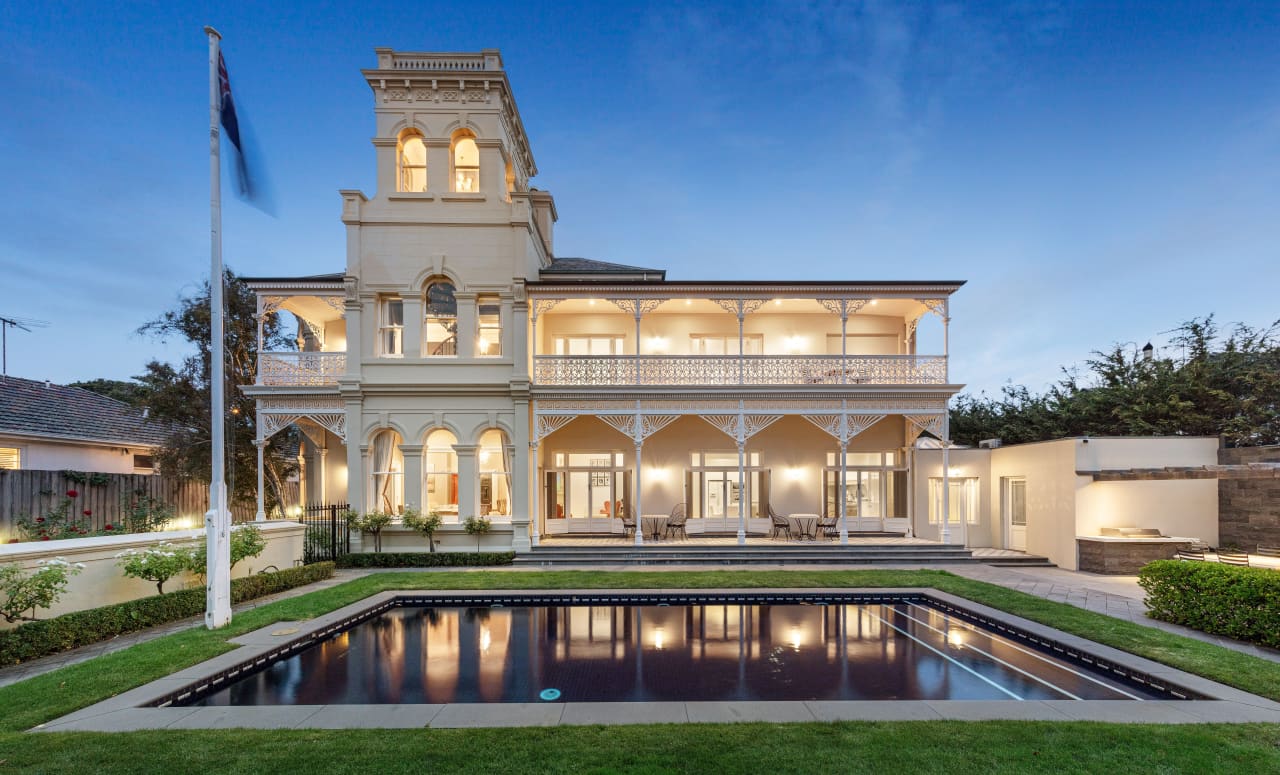
Former Melbourne Rebels rugby club owner Andrew Cox has put his notable 19th-century house in the Australian city’s Brighton suburb back on the market with a multimillion-dollar price cut.

The grand dame, a rare Italianate mansion called Narellan, was last on the market in April 2021—amid Melbourne’s on again off again series of strict pandemic-induced lockdowns. At the time, the 1880s residence had an ambitious asking price of A$18 million to A$19 million (US$11.88 million to US$12.54 million) but failed to sell. Now, with new listing agents, Gowan Stubbings and Will Maxted of Kay & Burton Stonnington, the house has a revised price guide of A$13.5 million to A$14.3 million.

Stubbings said the expansive six-bedroom house on 1,389 square meters on Moule Avenue, just streets from Brighton Beach, is priced to sell.

The home features a long list of ground floor entertainment spaces including an elegant entry porch.
Courtesy Kay & Burton Stonnington

“It’s certainly in very good company in the caliber of A$10 million up to A$50 million homes,” Stubbings said. “Brighton, like many of Melbourne’s elite suburbs, has seen several of its historic homes modernised and changed over the years, but Narellan is an icon for the area,”.

The home’s white Italianate Victorian facade is eye-catching, Stubbings said.

“It has such a majestic nature. You can see it being one of the original Brighton landmark homes,” he said. “When I walk up to the top of the turret and take in the views over Port Phillip Bay, it takes me back to another time and I can imagine the ships coming back towards the city.”

Cox, the former Melbourne Rebels Super Rugby club owner ,paid A$5.71 million for the estate in 2006, according to CoreLogic records.

New Zealand-born Cox now runs private equity fund Imperium Capital Group, a diversified investment company that acquires small and medium enterprises mainly in the tourism, hospitality and sports management sectors.

The house also belonged at one point to powerhouse employment website seek.com.au’s co-founder Andrew Bassat.

Cox declined to comment on the sale of the property, but it is understood that during his ownership the vast two-story house has been completely updated.“It’s been very sympathetically redone for its era,”  Stubbings said. “People love the big ceiling heights, the large rooms and the natural light, but it’s the kitchens and bathrooms that give it a more modern feel. It all works incredibly well together, especially when you’ve got bathrooms spilling out onto the upstairs terrace, it’s just like a luxury hotel.”

“This home has been designed so that someone can just move in and enjoy it. There’s nothing more to do. They’ve modernised it beautifully to the way we live today. I just think they’ve nailed it,” Stubbings added.

The home features a long list of ground floor entertainment spaces including an elegant entry porch and foyer leading to a large study or library, a sitting room, formal dining room, an elaborate billiard room with bar, a combined living area and a contemporary kitchen. There is also a sunroom, gym, sauna and self-contained two-bedroom guest wing with a commercial-grade kitchen.

Courtesy Kay & Burton Stonnington

Upstairs are six spacious bedrooms, including a main suite with bay window, private balcony, walk-in wardrobe and ensuite plus access to the unique turret with sweeping views of Port Phillip Bay and city skyline. The upper floor also houses two additional living rooms and two more balconies.

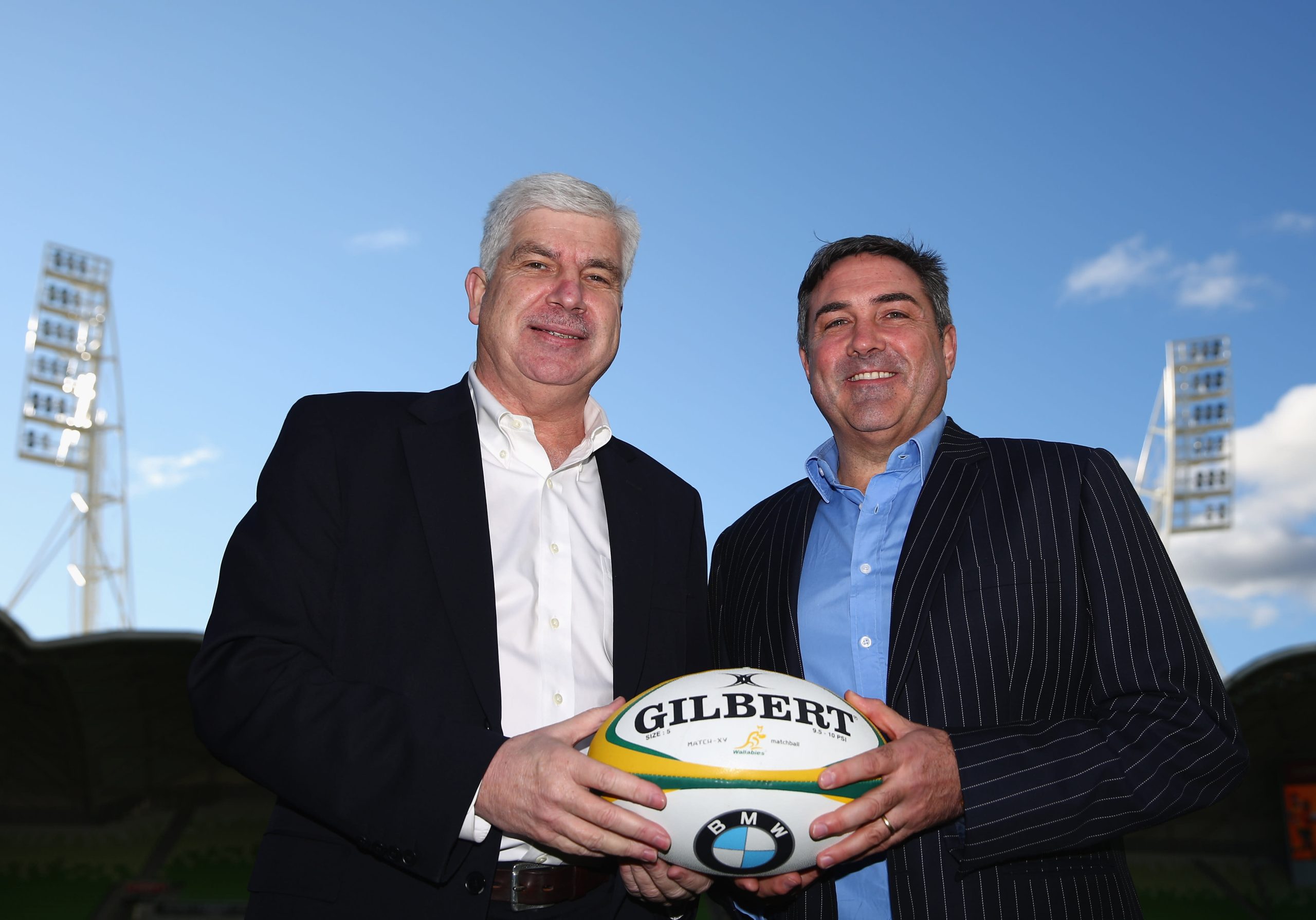
Peter Sidwell and Andrew Cox of Imperium Sports Management after becoming owners of the Melbourne Rebels, in 1995. (Photo by Robert Cianflone/Getty Images)

Outdoors, the home is surrounded by landscaped grounds with manicured hedges, rose bushes, level lawns, an alfresco barbecue terrace with fireplace as well as a pool house with a bathroom and kitchen and pool.

The period home is a short walk from the beach with sought-after schools, popular boutiques and eateries nearby.

A Megamansion in Dubai’s Swanky Emirates Hills Community Sells for $40.2 Million

In the latest example of Dubai’s thriving luxury real estate market, a 19-bedroom megamansion in the city’s prestigious gated golf community of Emirates Hills has sold for US$40.2 million.

The villa, which sits on the largest lot in the posh enclave, changed hands last week, and the sale was handled by Leigh Borg and Timothy Ogunniyi of Dubai Sotheby’s International Realty.

“To own the largest land plot in Emirates Hills along with one of the biggest homes in the community makes this property stand out,” Ogunniyi said. “To find a property that gives you 80,000 square feet of land and 55,700 square feet of living space is rare in Dubai.”

Other large plots in the community are “not quite as massive,” he added. It’s “very seldom these plots come into the market in Emirates Hills. No doubt, this presented a great appeal to the buyer and an opportunity to capitalise on its value.”

Dubai SIR

The home has a classic feel, with an exterior that “combines timeless architectural elements with the use of natural materials, all of which are reflected in the roof shape, window style and classic columns,” Ogunniyi said.

It also has far-reaching views of the Dubai skyline and the surrounding golf course.

“With the market in Dubai appreciating, it is fair to say that this was a very good deal to come by, both for buyer and seller,” Ogunniyi said, without disclosing the identities of the parties. The seller had owned the villa for the past 15 years and lived in the property when in town, he added. Mansion Global couldn’t identify either party.

Dubai’s luxury home market has been on a tear, complete with sky-high prices that grew 17.4% last year , and record-breaking transactions.

Dubai SIR

“This year, we have witnessed a significant evolution in the luxury real estate landscape, characterised by the introduction of new iconic developments and a sustained influx of wealthy investors, many of whom boast billionaire status,” said George Azar, CEO and chairman of Dubai Sotheby’s International Realty.

“While there exists a substantial demand for super prime homes, it’s crucial to note that the market currently lacks a sufficient number of uber-luxury projects and finishes that resonate with the discerning tastes of global billionaires,” he added. That gap “underscores the resilience and strength of this segment within our market.”

Kanebridge News partners with Dubai Fintech Summit

We’re pleased to announce our Kanebridge News partner in the Middle East, Kanebridgenews.me, is a media partner for the prestigious Dubai Fintech Summit next month.

The in-person event will take place on May 6-7 at the Madinat Jumeirah in Dubai, bringing together more than 300 speakers, including more than 20 central bank governors and ministers, as well as CEOs of top banks such as Bank of America and investment management firms managing trillions of dollars in assets.

In addition, the event will showcase the latest in fintech, with more than 200 exhibitors.

It’s a rare opportunity for the global finance and tech communities to come together and offers attendees the chance to connect with more than 8,000 C-suite leaders, 1,000 investors and key decision makers across the global financial ecosystem.

Kanebridge News is thrilled to be partnering with the Dubai Fintech Summit for 2024.

The Inside Tale of Tesla’s Fall to Earth

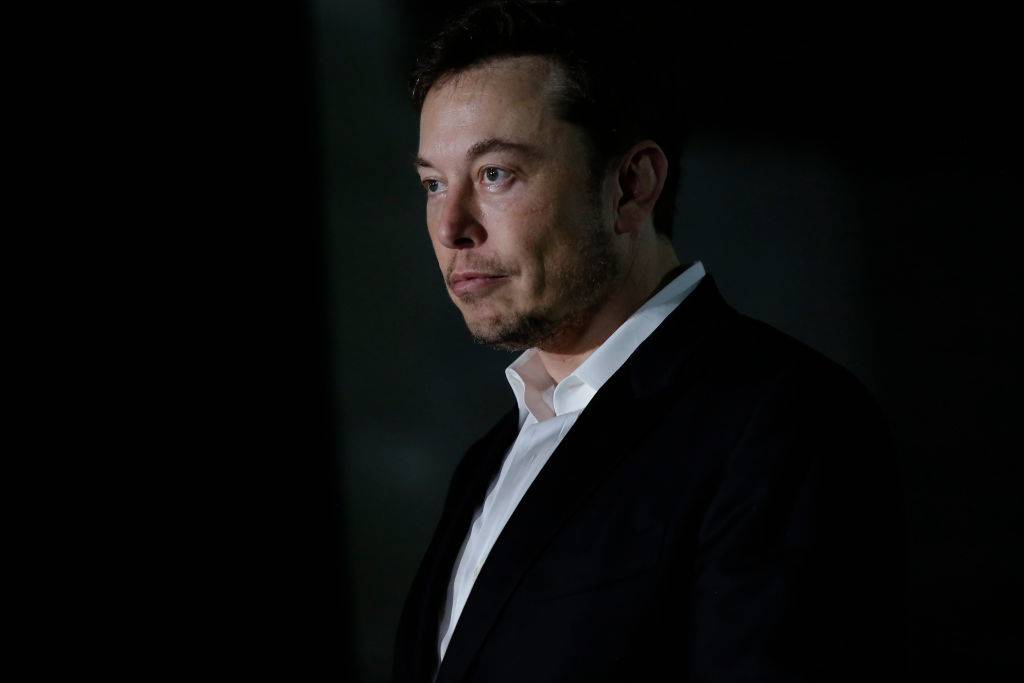
elon musk

Tesla Chief Executive Elon Musk has spent years trying to build the automaker of the future. It’s the electric-car company of the present that’s now giving him trouble.

After a period of rapid expansion, the company has seen its sales fall and its once-enviable margins shrink. For the first time in years, the biggest question for Tesla is not whether it will be able to make enough cars, but whether people will buy them.

The company’s stock, down 34% this year, has been the worst performer in the S&P 500 index. While Tesla remains the world’s most valuable automaker by a wide margin, its market capitalisation has tumbled by more than half since it peaked in 2021.

Consumer appetite for electric vehicles is cooling. The core of Tesla’s lineup is dated. The company has been cutting prices to spur demand. Big, moonshot bets have not panned out as Musk predicted—at least not yet. And Chinese carmakers are now the ones that look like nimble, tech-savvy upstarts.

Musk’s attention, meanwhile, has sometimes been elsewhere. He bought Twitter, sold some Tesla stock along the way and started an artificial-intelligence company . Of late, he has been picking fights with everyone from OpenAI to Disney Chief Executive Bob Iger . Surveys suggest his public persona has alienated some would-be Tesla buyers.

This week, the company reported its first year-over-year decline in quarterly deliveries since 2020—a result that badly missed Wall Street’s expectations.

Musk’s company remains a formidable player in the electric-vehicle market globally and is the clear leader in the U.S. It is still making money on its vehicles, while many established car companies are struggling to turn a profit on their EVs, after committing tens of billions of dollars to expand their offerings. But the boom times of Tesla’s past have faded, and the bright future imagined by Musk—where people will ride around in fully autonomous Teslas—remains distant.

“Tesla is going from the golden era to a really challenging era,” said Mark Fields , a former CEO of Ford Motor who now serves on several corporate boards. Tesla and Musk didn’t respond to requests for comment.

Boom times

Three years ago, Tesla appeared all but unstoppable.

After years of financial uncertainty and production challenges, the company had turned a corner and was delivering quarter after quarter of record profit.

Its factories were humming , even as a global shortage of semiconductors led many rivals to curtail auto production. Consumer demand was strong enough that Tesla was hiking prices, and waiting lists for new vehicles grew long enough that some buyers were paying a premium for lightly used ones.

As automakers set about remaking themselves in Tesla’s image, Musk—a master salesman with an uncanny knack for inspiring investors to believe in his vision —sought to catch the next market wave: artificial intelligence.

At a Tesla recruiting event in the summer of 2021, the billionaire took the stage in Palo Alto, Calif., dressed all in black, as is his custom.

Tesla had for years been working to develop technology that would allow a computer to assume more of the driving tasks, rolling out the software as part of its Autopilot system.

In an attempt to emphasise Tesla’s might in the artificial-intelligence space—and ambitions beyond the competitive, traditionally low-margin automotive business—Musk unveiled the company’s latest effort: a friendly humanoid robot. The robot, Optimus, was not ready yet. In its place, a human dressed in a robot costume danced on stage.

“Tesla is much more than an electric-car company,” Musk told the crowd. “In the future, physical work will be a choice.”

In late October 2021, rental-car company Hertz Global Holdings said it was ordering 100,000 Tesla vehicles as it looked to expand its fleet of EVs. For investors, the deal was a sign that EVs were becoming mainstream—and soon more drivers would have an opportunity to try one.

Tesla’s market value eventually peaked above $1.2 trillion in early November, up more than 2,000% in two years.

The euphoria was short-lived.

Musk soon began unloading Tesla stock, embarking on a spree that continued for more than a year and resulted in his selling more than $39 billion in shares. The sales—executed in part to fund Musk’s eventual purchase of Twitter—spooked the market and weighed on Tesla’s stock.

‘Enough on our plate’

The surprises kept coming in 2022.

On a late-January earnings call, Musk revealed Tesla would not be introducing any new models that year, attributing the decision to supply-chain constraints. Instead, the company would churn out as many of its existing models as possible.

Tesla sold four models at the time, but just two drove the lion’s share of the company’s sales: the Model Y sport-utility vehicle and the Model 3 sedan.

Plans for a $25,000 car—a model Musk had teased in late 2020 and said likely would be ready in three years—had been put on ice.

“We have enough on our plate right now,” Musk said.

The move was risky. In the car business, new and redesigned models are critical to holding buyers’ interest and maintaining pricing power.

Analysts were perplexed. One questioned whether Tesla could hit its growth targets with fewer than a half-dozen passenger-vehicle models in its lineup.

Musk brushed off the concern. Instead, he alluded to his vision for a future where Teslas would be able to operate autonomously around the clock—making them even more valuable.

“It’s apparent from the questions that the gravity of Full Self-Driving is not fully appreciated,” Musk said, referring to a souped-up version of Tesla’s driver-assistance technology. (The system doesn’t currently make Tesla vehicles autonomous.)

As the year wore on, investors grew increasingly jittery. Musk’s pursuit of Twitter only amplified concerns on Wall Street that the Tesla CEO was not focused enough on his carmaker.

“Twitter is a distraction,” Gary Black, managing partner of the Future Fund, a Tesla investor, said at the time. “All of the space has been sucked up by him talking about Twitter, and so you don’t hear him tweeting about EVs.”

Warning signs flashed in China, where wait times for new Teslas fell to about a month as of September 2022, from four-plus months in the spring, according to Bernstein Research.

Tesla executives, including chief designer Franz von Holzhausen, pressed Musk to revive plans for the company’s more affordable, mass-market car, arguing it was necessary for Tesla to reach its growth targets, according to Walter Isaacson ’s biography of the CEO. Musk had been more interested in developing autonomous cars that could operate in a robotaxi fleet.

‘Our responsibility is to try to get as many people into an EV as possible,’ says Tesla’s chief designer, Franz von Holzhausen. PHOTO: PHILIP CHEUNG FOR THE WALL STREET JOURNAL

“Our responsibility is to try to get as many people into an EV as possible,” von Holzhausen told The Wall Street Journal earlier this year.

And while he is optimistic about the promise of self-driving cars and encouraged by Tesla’s recent progress, von Holzhausen said the transition will not be simple.

“Maybe I’m more pragmatic about it, but I think autonomy is…it’s going to be a challenge,” he said. “It’s still sci-fi to a lot of people.”

In late October, Tesla cut prices in China by an average of around 7%, according to Bernstein.

Soon after, it began offering temporary discounts on its most popular models in the U.S.—by $3,750 at first, then $7,500 plus 10,000 miles of free fast-charging if customers took delivery before year-end.

Tesla’s 2022 ended on a downbeat note. Its annual vehicle deliveries—up 40% over the prior year— fell short of the company’s initial goal and underperformed Wall Street’s expectations. The stock suffered its worst annual performance on record, declining 65%.

By early January 2023, it became clear within Tesla’s finance department that the company needed to take more aggressive action to move cars, people familiar with the matter said.

Tesla had opened two new factories in 2022—one in Germany and another in Texas—expanding its production capacity roughly 80% in less than a year. Unsold inventory climbed to 13 days’ worth of supply in the final three months of 2022, from just four days in the second quarter, according to Tesla’s financial disclosures.

As January unfolded, orders weren’t keeping pace with internal forecasts, one of the people said.

Employees developed a plan that called for Tesla to cut prices more permanently, an unusual strategy in an industry where companies typically try to be more discreet with their incentives.

Deep price cuts

Elsewhere in the auto industry, Tesla’s rivals were unleashing a barrage of new EV models, including ones designed to directly compete with the Model Y and Model 3.

On a Thursday night in January 2023, Tesla quietly updated its website, slashing prices across its lineup, in some cases by nearly 20%.

Tesla made cuts that were even deeper than the finance department had initially proposed, the people familiar with the matter said.

For Musk, it was a calculated gamble. Tesla’s double-digit operating margins meant it could better absorb the price cuts than rivals, and the move would also put the squeeze on competitors—many of which were losing money on their EVs.

Across the Atlantic, Vincent Cobée, then-CEO of Stellantis ’s Citroën brand, was at the Brussels Motor Show when a journalist told him about Tesla’s price cuts.

Cobée’s first thought: “He’s completely nuts.”

Then: “We’re in deep trouble,” he recalled later.

The maneouvre did boost sales at Tesla—for a time. The company’s vehicle prices fell by an average of 12% globally in the first half of 2023, and deliveries rose 19% compared with the prior six months, according to Wells Fargo.

But in the second half of 2023, as Tesla continued to lower prices and layer on incentives, the company’s vehicle-delivery growth slowed to 3%, compared with the first half—a figure that Wells Fargo analysts described as “concerningly low.”

Some in the auto industry were also starting to sour on electric vehicles.

Dealers who once were bullish about the technology began worrying about the cars stacking up on their lots. Companies that had been racing to scale up EV production suddenly began delaying their investments and shifting their attention to hybrids, which were selling well.

For Tesla, the only new model on the horizon was the Cybertruck—a long-delayed and difficult-to-manufacture pickup truck that eventually hit the market in November . Even so, the model is only available in North America, and Musk has warned it is unlikely to generate significant cash flow before the end of this year.

A Cybertruck on display at the Petersen Automotive Museum in Los Angeles last year. Elon Musk Musk has warned that the truck is unlikely to generate significant cash flow for Tesla before the end of this year. PHOTO: ROGER KISBY FOR THE WALL STREET JOURNAL

In China, the world’s largest car market and a production hub for Tesla, a price war had already broken out. The country’s leading EV maker, BYD, and other Chinese car manufacturers were mounting their own offensive, rapidly releasing more affordable EVs that were winning over the domestic market and beginning to make inroads overseas.

In January of this year, Hertz delivered another blow, saying it was selling about a third of its global EV fleet —much of it made up of Tesla vehicles. The rental-car company had previously flagged problems with fast-falling EV resale values and pricey repairs.

Drop in deliveries

Then came the news from earlier this week: Tesla delivered 386,810 vehicles globally in the first three months of 2024, down 8.5% from a year earlier . It was the company’s lowest quarterly performance since the third quarter of 2022.

Wall Street analysts had slashed their expectations for Tesla’s first-quarter performance in the weeks before the disclosure on Tuesday, but the company still came up short.

Musk has sought to quell concerns by describing the company as being in between two growth waves—the first driven by the Model 3 and Model Y, the second to be propelled by the company’s next generation of vehicles, including the much-anticipated low-cost car , which he said in January is due to enter production in late 2025.

In recent weeks, employees were told to prioritise development of a robotaxi, according to a person familiar with the matter.

Reuters on Friday reported that Tesla had canceled plans for the inexpensive car. Musk denied the report on X, as Twitter is now known. Hours later, he added that Tesla plans to unveil its robotaxi model in August.

As Musk has used his social-media platform to address polarising topics such as immigration and race, there is evidence that Musk is doing Tesla no favors with his extracurricular activities.

The company’s reputation among potential U.S. buyers has taken a hit since Musk acquired Twitter, according to market-intelligence firm Caliber. The automaker’s “consideration” rate—where survey respondents said whether they are very likely to buy, or continue buying, products from Tesla—fell from 46% to 35% between September 2022 and this March, Caliber said.

As Tesla’s profitability has weakened, Musk has talked up the potential of the company’s autonomous-driving strategy.

“Most people still have no idea how crushingly good Tesla FSD will get,” he posted on X in late March. “Cars will take you where you want automatically, just like getting in an elevator and pressing a button, something that also used to be manual.”

Despite the recent stock decline, Tesla’s valuation—$525 billion at Friday’s close—still towers over those of other automakers.

Many investors remain confident that Musk, who has defied the odds many times before, can deliver on this vision. Some, such as Owuraka Koney, a managing director at investment manager Jennison Associates, are betting Tesla will be able to generate ample revenue by selling downloadable software, such as its driver-assistance technology, long after it makes that initial car sale.

Said Koney: “We remain very bullish over the long-term.”

— Ryan Felton, Tim Higgins, Mike Colias and Sean McLain contributed to this article.
Supercar Blondie Is Going Into the Auction Business

Social media personality Supercar Blondie, a London-based Australian whose real name is Alex Hirschi, found her niche posting automotive eyecandy for eager viewers rather accidentally.

“I started out as a journalist, and I just fell into cars through my radio show,” says Hirschi.

For someone who “fell into” cars, they’ve certainly been good to her—the Supercar Blondie network of social channels that includes Supercarblondie.com has 110 million subscribers, including 18.4 million on YouTube and 56 million on Facebook. The content has 2 billion views per month, according to the company.

Alex and Nik Hirschi, the Supercar Blondie couple, in Las Vegas.
Jim Motavalli photo

Hirschi, whose first car was a lowly Mitsubishi Lancer, produces the Supercar Blondie content with her husband, Nik Hirschi, who is Swiss. The radio show was on the Arabian Radio Network in Dubai from 2012 to 2017. Dubai is full of supercars, and Hirschi, then known as “Radio Blondie,” said it was a natural fit to drive some of them—Bentleys, McLarens, Ferraris—for on-air features. The independent Supercar Blondie content creation company was launched in Dubai (where Nik Hirschi worked at Bloomberg, Barclays, and Thomson Reuters) in 2017 and has been growing ever since.

“I just loved supercars, and what started out as a hobby after I was loaned a Bentley Flying Spur to drive around Dubai eventually got more serious,” Alex Hirschi says. “We started filming my encounters with cars and uploading the video to our channel.” These days the couple travels 300 days a year; Penta first caught up with them at the Consumer Electronics Show in Las Vegas .

The Tyde Icon electric hydrofoil uses BMW batteries.
SBX Cars Photo

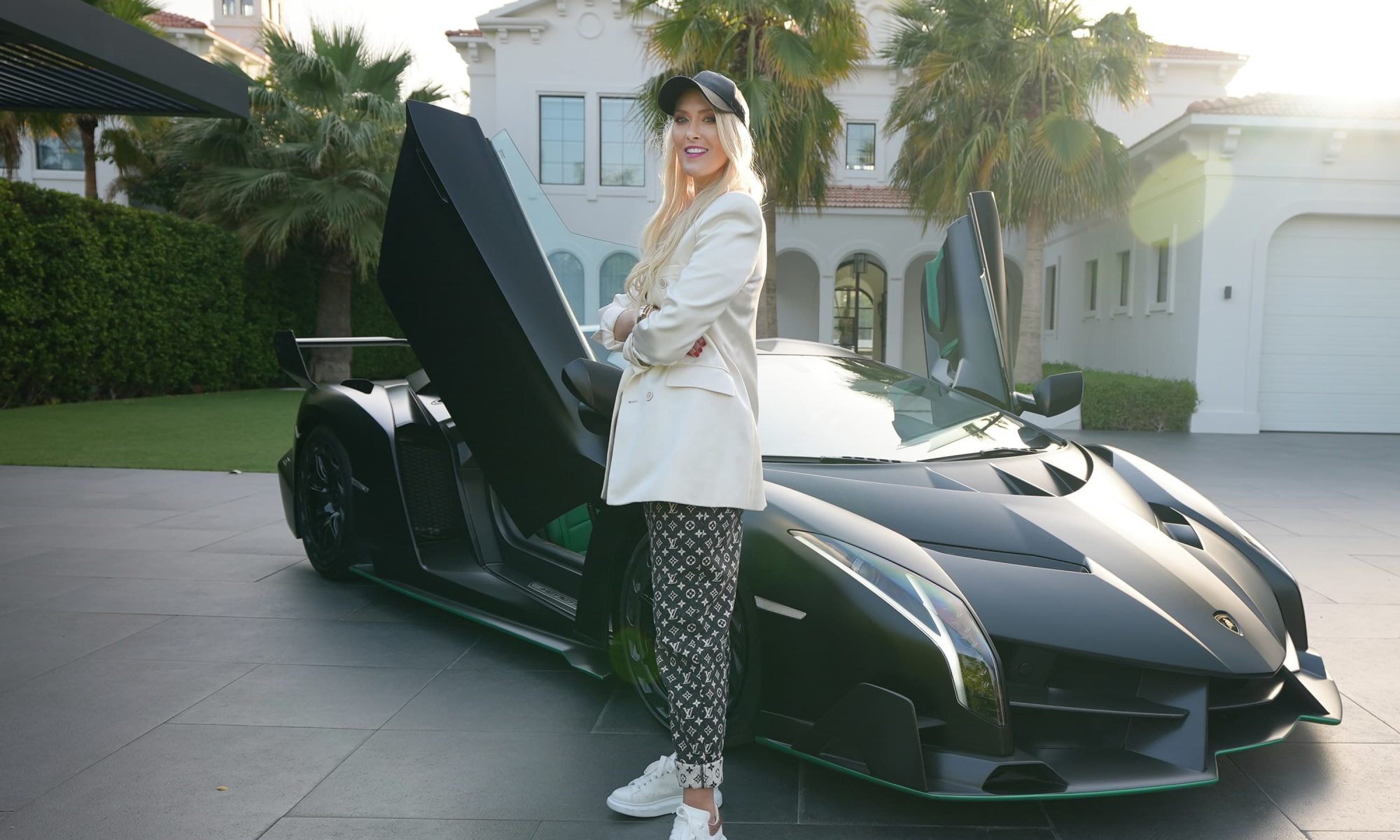
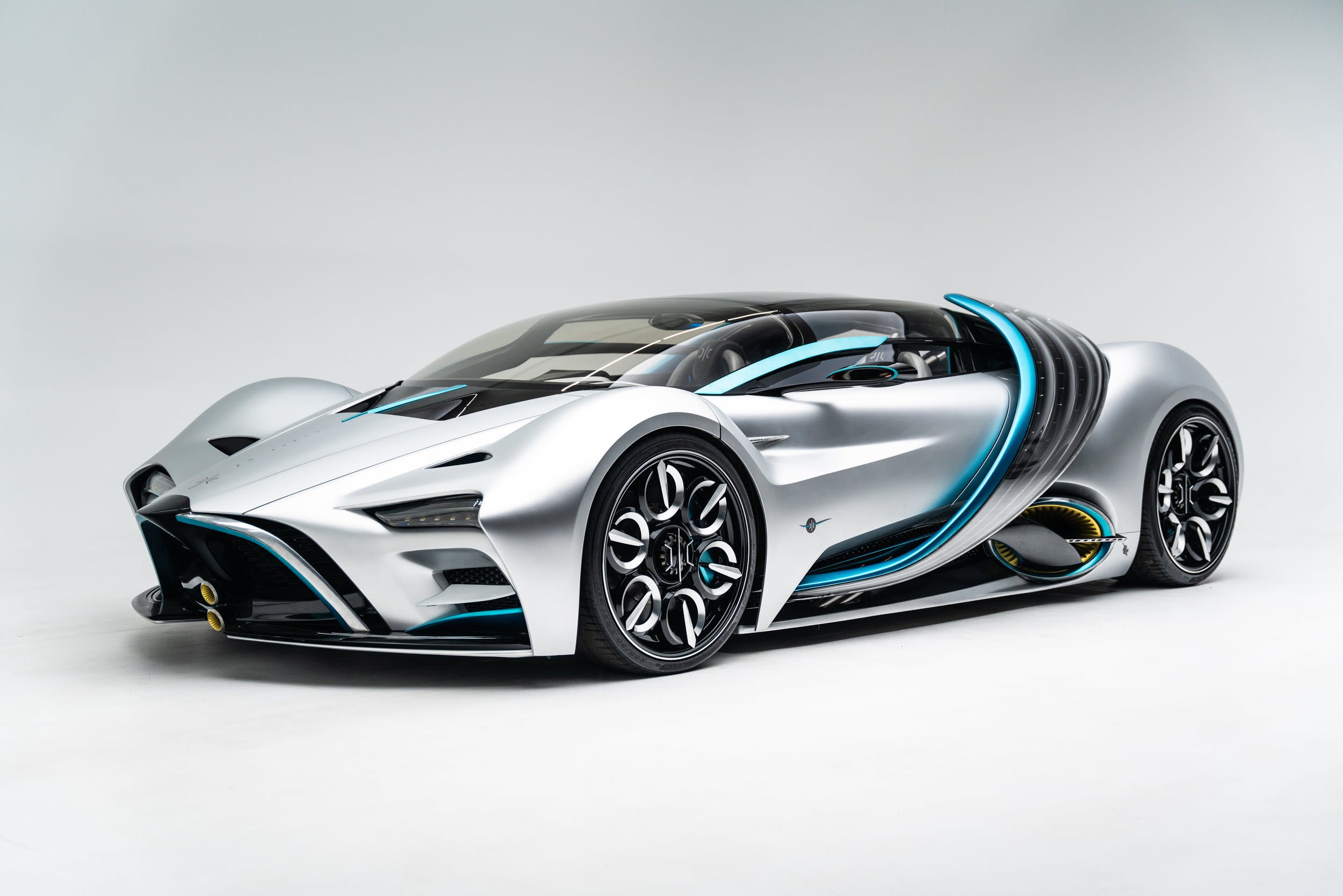
And now SB Media Group, based in London with 65 employees, Nik as CEO and Alex as the co-founder and on-air talent, is going into the auto auction business. SBX Cars, based in California, launched this week. The inaugural inventory goes beyond cars, and includes an electric Tyde hydrofoil yacht designed by BMW. There’s also a no-reserve Tesla Cybertruck, a one-of-nine Lamborghini Veneno Roadster, and a one-of-three Lamborghini Veneno Coupe. Likely attracting attention will be the first public auctions of the Mercedes-AMG One and the Hyperion XP-1 hydrogen-powered prototype. There were three LaFerrari prototypes, and one will be auctioned by SBX Cars.

A collection of John Player Special Lotus F1 racing cars will also be auctioned, as well as Lotus transporters, and founder Colin Chapman’s personal plane and some vehicles from his garage. Other high-dollar items include a Mercedes 300SL “Gullwing,” a Lamborghini Miura, a BMW 507, and an Aston Martin DB5. The estimated valuation of the auction lots consigned is US$100 million.

The Mercedes-AMG One was limited to 275 units.
SBX Cars Photo

The auctions will be online, but there could be some in-person events in the future. “We’re going to be the only digital auction site that focuses on the high end,” Nik Hirschi says. “We will focus on cars that are super-cool, with many that are one-of-a-kind, and we’re going to be attracting collectors from all over the world. Every car will be represented on the site with 200 photographs, taken by our global network.” Video will also be available.

SBX Cars says it will speed up the process for consignors, with just a few weeks until their cars become available on the site. Once up, the vehicles will remain available for one to two weeks. SBX Cars Auction Director Lance Butler, a Bonhams veteran, said in a statement that the auction “introduces our clients to a far easier buying and selling process, all while accessing one of the world’s largest global audiences by way of Supercar Blondie.”

The prototype Hyperion XP-1.
SBX Cars Photo

Mercedes 300SLs, Aston Martin DB5s, and BMW 507s are frequently auctioned around the globe, but SBX features some true exotics.

The Big Work Lie: Being Indispensable Will Save Your Job

It’s career advice we’ve all heard: Make yourself indispensable. Many who thought they’d accomplished that goal have been burned in recent white-collar layoffs .

Jilted workers and others who’ve witnessed job cuts say there’s no such thing as an irreplaceable employee. Some contend striving to be untouchable at work can backfire or invite exploitation. You can naively do more than what’s required, thinking effort means job security, then get axed anyway.

That disillusionment is fuelling debate over the wisdom of pursuing indispensability, often along generational lines. Older workers recount times when they survived rounds of job cuts by being too skilful or versatile to let go, while their younger counterparts tend to share examples of great performances that yielded no protection.

Beth McLaughlin McDonald , 52, is a recent convert to the more cynical side.

Though she’d endured three layoffs over the years, she still believed it was possible to become bulletproof when she took a recruiting job in 2022. Working remotely in Savannah, Ga., she was promoted quickly and felt she made her team at a healthcare-technology startup better by shouldering tasks that used to bog down others.

“I truly thought I was indispensable,” McLaughlin McDonald says.

She discovered she wasn’t when the company downsized last year. In less than an hour her department was slashed from 13 employees to three, she says. Each affected person was given notice in a five-minute video call. McLaughlin McDonald now thinks nobody is ever safe, so she works several part-time jobs, believing it’s wise to have multiple income streams in case one dries up.

It isn’t that the labor market is in a rout. The national unemployment rate remains at 3.9% and hiring exceeded economists’ predictions in the latest jobs report. Instead, two other factors drive workers’ pessimism: the march of artificial intelligence and the way cuts are handled .

I hear constantly from people who worry that AI-powered tools threaten positions that seemed secure a short time ago. Now that pink slips are frequently doled out virtually, in emails or on Zoom, many workers question whether they were truly valued in the first place.

Managers counter that workers’ job hopping in recent years, though slowing , means savvy leadership includes minimising a business’s dependence on individuals.

Some bosses say they strategically prevent employees from becoming irreplaceable. It isn’t sabotage, they insist. Rather, being overly reliant on their best team members is risky.

So if you sense a higher-up is trying to limit your importance, your gut might be right.

Too indispensable for anyone’s good

The veterinary technician was good at her job. Debbie Boone fired her anyway.

Boone managed veterinary clinics in the Carolinas for two decades before becoming an independent consultant and says she sometimes dismissed talented employees who hoarded knowledge to make themselves more valuable. She recalls this particular tech went further, stashing equipment manuals and implements in a private drawer.

“It was enhancing her status, but it was diminishing us as a whole,” she says.

Employees shouldn’t try to be indispensable, in Boone’s view. Being the only person with certain skills or information might feel like insurance. But it can lead to selfishness—and a surprise ouster by a boss who prefers team players.

Avin Kline , chief executive of the cannabis marketing agency Lucyd in Florida, says he expects most of his 55 employees to spend two to five years with the company. Understanding that turnover is inevitable, and perhaps imminent, he guards against individuals becoming essential.

Each client account has a point person, but those employees are required to share notes and reports with colleagues so that someone else can step in if needed. The idea: No account manager should be so important that a client would take its business elsewhere if the primary contact left the agency.

“When we have to replace someone, I want to feel that we’re losing somebody that’s providing a lot of value,” Kline says. “But I don’t want my business or myself to freak out.”

From irreplaceable to obsolete

Shannon Howard argues indispensability remains an ideal worth pursuing. The content-marketing director at a software company made that case recently to a group of college students near her home in North Carolina, urging them to resist the “ act your wage ” sentiment that drives many young workers, and others, to withhold extra effort.

At 31, Howard says she gets it. At-will employees can go above and beyond and get canned anyway, so why bother?

Still, “I’ve seen times when being the person who does their best, with a good attitude, saves someone’s neck,” she says. “At minimum, it builds a positive reputation and can help get another job.”

Jim Moechnig , laid off by a data-storage company in November, is still waiting for 17 years of service and good karma to be reciprocated.

He devoted nearly his entire tenure to a single software line, building unsurpassed institutional knowledge. Rather than irreplaceable, he says he came to be seen as one-dimensional.

When sales of his software slowed, his role was eliminated and job prospects for his narrow specialty were limited. Moechnig, 46, is working toward additional tech certifications that he hopes will yield new opportunities remotely or locally in Minnesota.

With several months to process his job loss, he takes a coolly objective view of the situation. His team was full of smart, hardworking people, but the business needed to cut costs. Ability provided no protection.

“If they were going to cut somebody, they were going to cut somebody good,” he says.

Adventure Travel Is Increasingly Not Just for the Young

When Peter Cox wrapped up his career as a paediatric critical-care doctor at age 65, he celebrated by signing up for the Tour d’ Afrique, a transcontinental bike trip with TDA Global Cycling. The roughly 5,600-mile route from Cairo to Cape Town spans 10 countries over 74 days of riding with just 28 rest days. Riders average 74 miles a day and spend only 10 nights in hotels. They camp the rest of the journey.

Cox wasn’t the oldest participant. The group had five riders over 70.

Outfitters specialising in adventure travel say the average age of their customers has ticked upward since Covid, according to a survey by travel research company Skift. At TDA, for example, the average client age currently is 62, compared with 57 pre pandemic. And some 6% of its clients last year were over 75; before the pandemic, the percentage never exceeded 1%, the company says.

Adventure South NZ, a New Zealand-based outfitter, says the average age of its hiking and biking guests was 55 during the 10 years before the pandemic. It jumped to 65 directly after.

A U.S.-based operator focusing on trips for women, Adventures in Good Company, says its average guest age rose to 62 in 2023, compared with 58 pre pandemic, and on many of its most-challenging trips, ages skewed even higher. Last year a 73-year-old completed a nine-day slackpacking trip along the Appalachian Trail in Georgia that averaged 7 to 16 miles a day, and an 80-year-old woman completed a nine-day trekking tour of Mont Blanc in France.

About 4.1 million Americans will reach 65 years old this year . “Sixty is the new 40,” says Shannon Stowell , president of the Adventure Travel Trade Association. “My dad stopped being active at 50.… People are living longer, healthier lives and are more active than ever.”

Intensity with comfort

Adventure travel doesn’t have to be as intense as it once was. Stowell says it has gained popularity with an older demographic in part because there are more comforts available, such as lodges with good food and guides who will transfer your gear. “Trekking to Machu Picchu or Everest Base Camp used to be so much more hard-core,” he says. “Better gear and more professionalism in guiding have made these adventures more accessible.”

Also, clients in the 55-plus crowd have traveled more than their parents and grandparents did, Stowell says. “They’ve done Rome and Paris. Now they want to go deeper to places like Mongolia,” he says.

Cox, who is now 70 and lives in Toronto, rode 2,547 miles from Bangkok to Ho Chi Minh City last year. This spring, his wife, 60, will join him on a 35-day, 1,637-mile bike expedition in Morocco. And in 2025, he plans to pedal 3,295 miles in the Himalayas from Srinagar, India, to Kathmandu, Nepal.

“I’ve never been on a cruise or to an all-inclusive resort,” he says. “The nice part of cycling is you’re moving at a speed that allows you to interact physically and emotionally with the environment.”

On long rides, Cox experiences discomfort in his shoulders and hips, but he says regular stretching has kept most aches at bay.

Rita Tellerman of New York City celebrated her 70th birthday in 2019 by cycling 1,885 miles through Madagascar with TDA Global Cycling. The trip featured 31 days of riding, nine rest days and a mix of hotel stays and camping.

“It ticked all of the areas that took me out of my comfort zone,” she says. “It was my first trip to a Third World country. I had no clue about camping equipment. And I’d never ridden a gravel bike.” The retired public-health nutritionist started cycling at age 50 and says her speed isn’t what it once was. “It pisses me off when I can’t keep up with the 50-and 60-year-olds,” she says.

Time and money

Such trips require significant time and money, two assets that many older people tend to have at their disposal. Monika Sundem , chief executive of trip planner Adventure Life, says her company’s trips, which average eight to 10 days, cost $600 to $800 a day per person. Her customers in the post-65 range, meanwhile, have gone from 23.5% in 2019 to 35% last year, and they are booking such trips as treks in Patagonia, mountain biking in Ecuador and climbing in the Alaskan backcountry.

Todd Rutledge , owner of expedition specialist Mountain Trip, says 60-plus customers make up 19% of clients on his Alaska Range itineraries. “A lot of people tell us they didn’t want to go away when their kids were at home,” he says.

“Our trips are a hefty investment,” says Rutledge, whose multi-week to two-months-long expeditions typically cost $10,000 to $60,000. Most require a high level of fitness, too. “People age 65 and older statistically are more likely to experience some form of altitude sickness,” he says. “We’re not physiologists or trainers so in 2018 we partnered with a company to design personalised training programs for guests—and most, particularly our older guests, take advantage.”

Deb Shucka, 72, of Battle Ground, Wash., walks and hikes regularly to maintain her fitness for hiking vacations. She celebrated her 70th birthday trekking el Camino de Costa Rica, a roughly 175-mile cross-country trail with a peak elevation of more than 7,600 feet.

“At one point our guide told us, ‘Every morning starts with breakfast and a hill,’ and he wasn’t joking,” she says. “I had to stop a bunch on the hills but I never felt impaired,” she says. Guides transferred bags, which she says made the 16-day trip more appealing. Along the way she slept in tents, cabins and on the floor of a village community centre.

Last year, Shucka completed the Cape Camino, a roughly 400-mile route in South Africa, and she is hoping to trek in Ireland this fall. “When I retired at 63 it dawned on me I have to do these things now even if my husband doesn’t love to travel,” she says. “I’ve fallen in love with travelling by myself .”

Surf’s up

Betsy Cuthberton, 65, an accountant in Vail, Colo., and her retired husband, Mike Cuthberton, 66, recently took a vacation in Costa Rica so they could learn to surf. “We aren’t sit-on-the-beach people,” the wife says. “We do TRX classes and yoga a few times a week so we’re still physically capable of trying anything.” The couple, who are devoted skiers, booked a weeklong stay with Surf Synergy, a surf camp in Jaco that incorporates training, yoga and massages into the programming.

Surf Synergy co-founder Marcel Oliveira says he has seen an uptick in 65-plus guests wanting to surf for the first time. He assigns each guest two coaches so they always have someone with them in the water, whether taking off on a wave or getting out of the water. Betsy Cuthberton stood up on her first wave, and her husband was up and riding by the end of the first day.

“Not once did anyone say, ‘You’re too old,’ ” she says. “I believe staying young is embracing a mindset where you’re always learning.”

Where single women are buying property in Australia — and why their purchase power matters

More single Australian women are buying their own homes, with a report published by Ray White revealing 71,900 sales to this cohort in 2022, up from 64,680 sales in 2014. As a proportion of all single buyers, men have historically outnumbered women but the gap is closing with purchasing rates now closer to parity at about 12 percent of sales each.

Ray White chief economist Nerida Conisbee said rising home values meant the proportion of all single buyers was falling, from 26.2 percent of purchases in 2014 to 24.5 percent in 2022.

“An interesting dynamic, however, is also occurring by gender,” Ms Conisbee said. “A drop in single male purchasers is driving the decline whereas the number of single female buyers as a proportion of total buyers remains steady. By volume, the number of purchases by single women has risen by over 11 percent since 2014.”

Ms Conisbee said increased education about the importance of home ownership in building wealth and government schemes such as the First Home Guarantee and State Government stamp duty waivers and concessions have driven more women to buy. McGrath CEO John McGrath said the trend in career women buying property on their own began about two decades ago.

“When I started in real estate 40 years ago, it was very rare to conduct an auction and have a 28-year-old female on her own buy the property,” Mr McGrath said. “Nowadays when you put a well-located, beautifully designed apartment block on the market, the first 10 apartments will be sold to single career women.”

Ms Conisbee said most single women preferred to buy affordable apartments in central city locations.

“Overwhelmingly, the largest number of purchases are of units in areas where very large numbers of units are available. Topping the list nationally is Melbourne CBD where there has been 7,750 purchases of apartments by single females since 2014. The Gold Coast,however, has also made several appearances on the list with Surfers Paradise coming in second (3,386 purchases).”—

The data shows Victoria has the highest proportion of single female purchasers and NSW the lowest. Ms Conisbee said very high levels of development in Melbourne had given single women more opportunities to buy. Incidentally, greater supply in Melbourne is a key reason why median home values have not increased as much as other cities over the past year. CoreLogic data shows Melbourne home values have risen just 3.2 percent over the past 12 months compared to 9.6 percent in Sydney and 15.9 percent in Brisbane.

Single women seeking to buy a house also targeted more affordable city fringe and regional areas. The statistics was calculated using Valuer General data on more than five million sales from 2014 to 2022 and cross referencing first names using an artificial intelligence application called Genderize to deliver the largest research sample available documenting single female purchasing patterns.

Top 10 suburbs for single female purchases (apartments) 2014-2022

1. Melbourne CBD, Victoria
2. Surfers Paradise, Queensland
3. Southbank, Victoria
4. South Yarra, Victoria
5. Southport, Queensland
6. Docklands, Victoria
7. St Kilda, Victoria
8. South Brisbane, Queensland
9. Labrador, Queensland
10. Richmond, Victoria

Top 10 suburbs for single female purchases (houses) 2014-2022

1. Point Cook, Victoria
2. Pakenham, Victoria
3. Craigieburn, Victoria
4. Mildura, Victoria
5. Traralgon, Victoria
6. Berwick, Victoria
7. Warrnambool, Victoria
8. Shepparton, Victoria
9. Werribee, Victoria
10. Sunbury, Victoria

The property portal you didn’t know you needed making big strides

A new property portal providing an overview of all properties — for sale or not — is proving a hit with buyers.

February data from market research analyst IPSOS shows that View.com.au is now Australia’s fastest growing residential property portal with 102 percent growth in unique audience since October last year. The rapid rise means it is now challenging longstanding property portal, Domain.com.au, for second position behind realestate.com.au, which remains the most popular property website in the country.

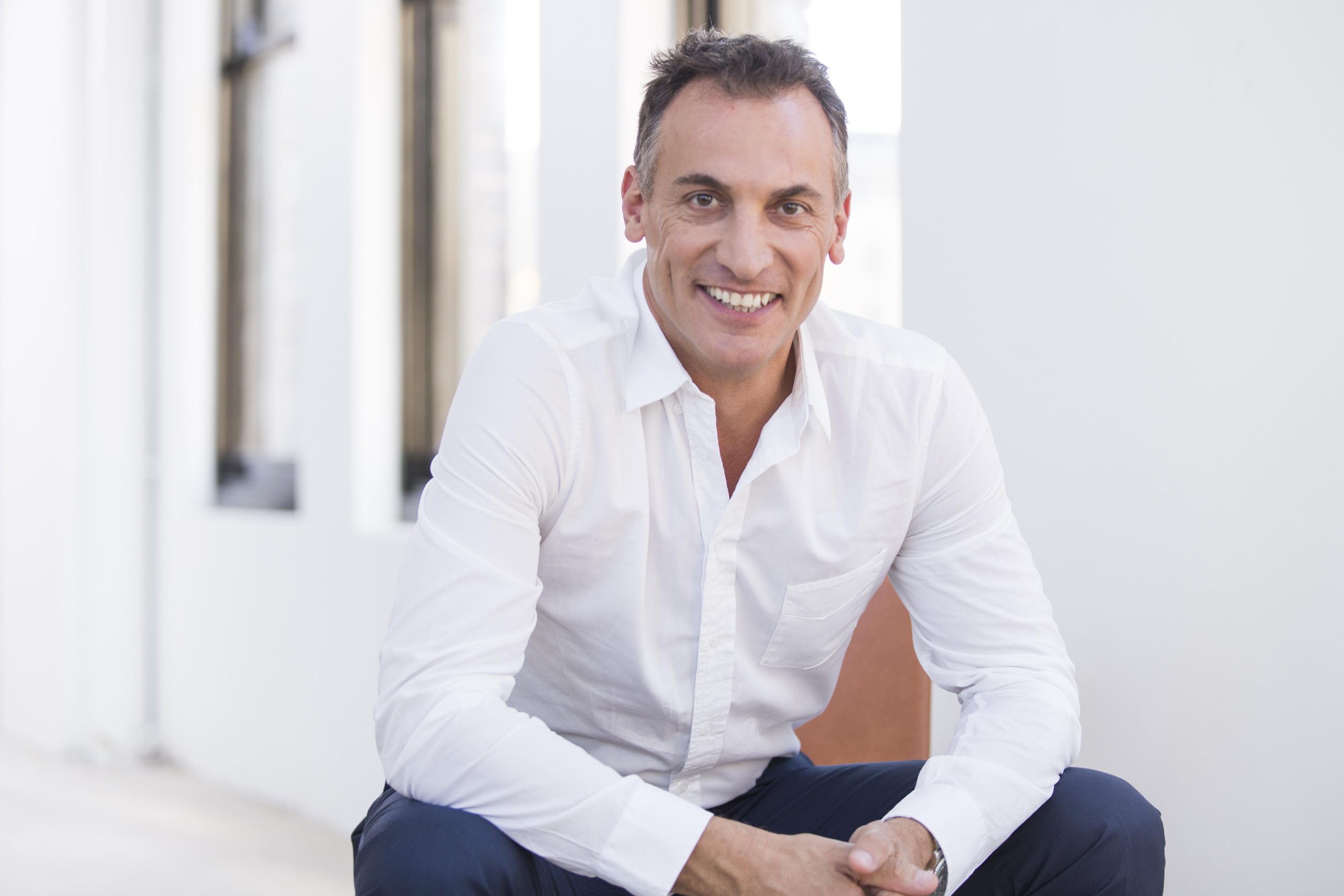
View.com.au is headed up by seven former Domain executives, including former Domain CEO Anthony Catalano. The team were responsible for growing Domain to a $2.2 billion listing on the ASX.

Anthony Catalano fronts the team at View.com.au

Chief marketing officer for View.com.au, Paul Tyrell said the audience growth for the relatively new portal was ‘fantastic’.

“Our consumer proposition is unique and features over 136,000 properties for sale, however it offers a complete view of the market with access to nearly 11 million properties Australia wide, with buyers able to express interest in properties even if they’re not for sale,” Mr Tyrell said. “All delivered by best in class mapping from Nearmap.

“To be the fastest growing property portal in the country is a testament to the hard work of the team and a clear demonstration of the need for a competitive alternative in the property portal space.”

Mr Catalano said View.com.au offered a genuine alternative for agents.

“We can make it free or keep prices low because VMG’s business model is not predicated on listings revenue, where the only option is annual price increases,” he said. “We’re creating a true property ecosystem that caters to all steps along the property journey. View will soon bring finance propositions to market with our banking partner ANZ.”

There Are Now a Record Number of Billionaires—With Taylor Swift and 19-Year-Old Brazilian Heiress Livia Voigt Joining the List

For celebrities like Taylor Swift, Rihanna, Tiger Woods, and Steven Spielberg, fame is bringing fortune.

They’re among 14 performers, athletes, and entertainment moguls―along with Oprah Winfrey, Tyler Perry, and Michael Jordan― on the 2024 Forbes World’s Billionaires List, which the media company released this week. The annual ranking “has seen an explosion in celebrity billionaires in recent years,” Forbes said in a statement.

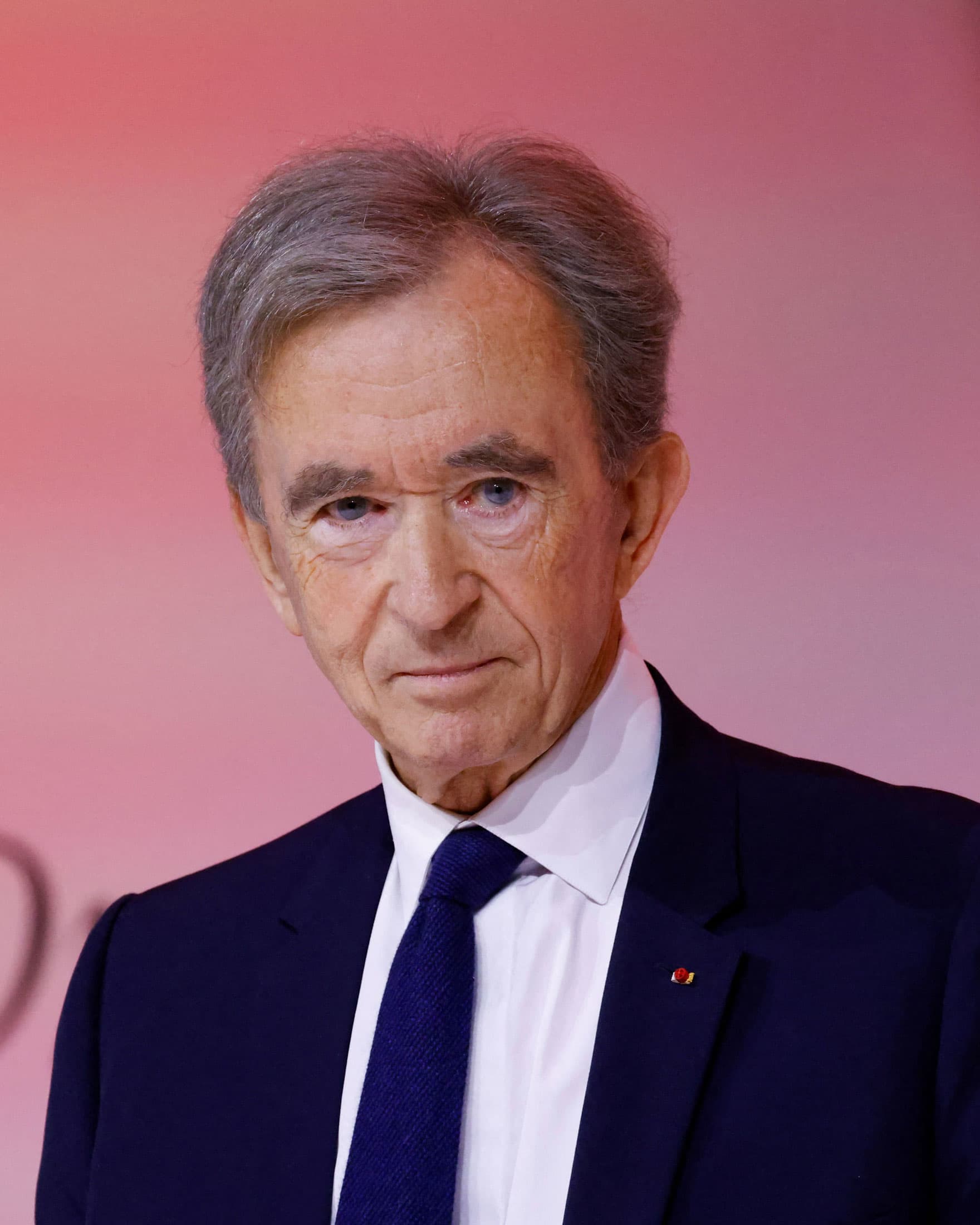
Topping the roster of fortunes: LVMH CEO Bernard Arnault , with an estimated net worth of US$233 billion―up from US$211 billion last year. Tesla and SpaceX founder Elon Musk ranked second, with a US$195 billion war chest, up from US$180 billion in 2023. Just a billion dollars short of second place, Amazon CEO Jeff Bezos placed third with US$194 billion, or $80 billion more than a year ago.

LVMH CEO Bernard Arnault topped the list with an estimated net worth of US$233 billion.
Getty Images

Tech titans dominate the rest of the top 10, which includes Meta CEO Mark Zuckerberg (US$177 billion), Oracle co-founder Larry Ellison (US$141 billion), Berkshire Hathaway CEO Warren Buffett (US$133 billion), Microsoft co-founder Bill Gates (US$128 billion), former Microsoft CEO Steve Ballmer (US$121 billion), Reliance Industries honcho Mukesh Ambani (US$116 billion), and Google co-founder Larry Page (US$114 billion.)

Swift made her debut on the list this year, along with 262 other “new billionaires” including shoe mogul Christian Louboutin, 19-year-old Brazilian heiress Livia Voigt, and NBA legend and entrepreneur Earvin “Magic” Johnson.

For Swift, worth an estimated US$1.2 billion, it’s the second star turn on a rich list this month. Last week, Swift made her first appearance on the 13th Hurun Global Rich Report, an annual survey from China-based media and research firm Hurun.

But the ultra wealthy had a very good year regardless of name recognition. The world now has more billionaires than ever, Forbes reported, with 2,781 in all. That adds up to 141 more than last year’s list, and 26 more than a record 2,755 billionaires set in 2021.

The richer are also richer, according to the list. Billionaires’ aggregate worth is now US$14.2 trillion, up US$2 trillion from 2023―and US$1.1 trillion above the previous record, also set in 2021, Forbes said.

A “flurry” of billionaires are getting rich through the AI “gold rush,” according to Forbes.

Taylor Swift made her debut on the list this year with an estimated US$1.2 billion.
Getty Images

“The poster child for all this is Nvidia co-founder and CEO Jensen Huang ,” whose company’s stock surged 300% over the past year. Open AI CEO Sam Altman , who briefly lost control of his company last year, also made the list, owing to canny investments in his former role as head of VC firm Y Combinator.

The U.S. leads in billionaires, with a record 813 worth a total US$5.7 trillion. China ranked second, with 473 billionaires whose combined net worth is US$1.7 trillion. India set a record with 200 billionaires this year. Forbes said it calculated wealth using stock prices and currency exchange rates as of March 8. Two-thirds of the billionaires on the list emerged wealthier than a year ago; one-third have lost money.

Forbes’ list diverged from the Hurun rich list, where Musk reigned as the world’s wealthiest and Bezos and Arnault ranked second and third, respectively. The Hurun list was even richer, ranking 3,279 billionaires, up from 3,112 the previous year. The number of billionaires increased by 5% and their total wealth was up 9%, Hurun said.

Business Schools Are Going All In on AI

At the Wharton School this spring, Prof. Ethan Mollick assigned students the task of automating away part of their jobs.

Mollick tells his students at the University of Pennsylvania to expect to feel insecure about their own capabilities once they understand what artificial intelligence can do.

“You haven’t used AI until you’ve had an existential crisis,” he said. “You need three sleepless nights.”

Top business schools are pushing M.B.A. candidates and undergraduates to use artificial intelligence as a second brain. Students are eager for the instruction as employers increasingly hire talent with AI skills .

American University’s Kogod School of Business is putting an unusually high emphasis on AI, threading teaching on the technology through 20 new or adapted classes, from forensic accounting to marketing, which will roll out next school year. Professors this week started training on how to use and teach AI tools.

Understanding and using AI is now a foundational concept, much like learning to write or reason, said David Marchick, dean of Kogod.

“Every young person needs to know how to use AI in whatever they do,” he said of the decision to embed AI instruction into every part of the business school’s undergraduate core curriculum.

Marchick, who uses ChatGPT to prep presentations to alumni and professors, ordered a review of Kogod’s coursework in December after Brett Wilson, a venture capitalist with Swift Ventures, visited campus and told students that they wouldn’t lose jobs to AI, but rather to professionals who are more skilled in deploying it.

American’s new AI classwork will include text mining, predictive analytics and using ChatGPT to prepare for negotiations, whether navigating workplace conflict or advocating for a promotion. New courses include one on AI in human-resource management and a new business and entertainment class focused on AI, a core issue of last year’s Hollywood writers strike.

Officials and faculty at Columbia Business School and Duke University’s Fuqua School of Business say fluency in AI will be key to graduates’ success in the corporate world, allowing them to climb the ranks of management. Forty percent of prospective business-school students surveyed by the Graduate Management Admission Council said learning AI is essential to a graduate business degree—a jump from 29% in 2022.

Many of them are also anxious that their jobs could be replaced by generative AI. Much of entry-level work could be automated, the management-consulting group Oliver Wyman projected in a recent report. That means that future early-career jobs might require a more muscular skillset and more closely resemble first-level management roles .

Faster thinking

Business-school professors are now encouraging students to use generative AI as a tool, akin to a calculator for doing math.

M.B.A.s should be using AI to generate ideas quickly and comprehensively, according to Sheena Iyengar, a Columbia Business School professor who wrote “Think Bigger,” a book on innovation. But it’s still up to people to make good decisions and ask the technology the right questions.

“You still have to direct it, otherwise it will give you crap,” she said. “You cannot eliminate human judgment.”

One exercise that Iyengar walks her students through is using AI to generate business idea pitches from the automated perspectives of Tom Brady, Martha Stewart and Barack Obama. The assignment illustrates how ideas can be reframed for different audiences and based on different points of view.

Blake Bergeron, a 27-year-old M.B.A. student at Columbia, used generative AI to brainstorm new business ideas for a project last fall. One it returned was a travel service that recommends destinations based on a person’s social networks, pulling data from their friends’ posts. Bergeron’s team asked the AI to pressure-test the idea, coming up with pros and cons, and for potential business models.

Bergeron said he noticed pitfalls as he experimented. When his team asked the generative AI tool for ways to market the travel service, it spit out a group of very similar ideas. From there, Bergeron said, the students had to coax the tool to get creative, asking for one out-of-the-box idea at a time.

Professors say that through this instruction, they hope students learn where AI is currently weak. Mathematics and citations are two areas where mistakes abound. At Kogod this week, executives who were training professors in AI stressed that adopters of the technology needed to do a human review and edit all AI-generated content, including analysis, before sharing the materials.

Faster doing

When Robert Bray, who teaches operations management at Northwestern’s Kellogg School of Management, realised that ChatGPT could answer nearly every question in the textbook he uses for his data analytics course, he updated the syllabus. Last year, he started to focus on teaching coding using large-language models, which are trained on vast amounts of data to generate text and code. Enrolment jumped to 55 from 21 M.B.A. students, he said.

Before, engineers had an edge against business graduates because of their technical expertise, but now M.B.A.s can use AI to compete in that zone, Bray said.

He encourages his students to offload as much work as possible to AI, treating it like “a really proficient intern.”

Ben Morton, one of Bray’s students, is bullish on AI but knows he needs to be able to work without it. He did some coding with ChatGPT for class and wondered: If ChatGPT were down for a week, could he still get work done?

Learning to code with the help of generative AI sped up his development.

“I know so much more about programming than I did six months ago,” said Morton, 27. “Everyone’s capabilities are exponentially increasing.”

Several professors said they can teach more material with AI’s assistance. One said that because AI could solve his lab assignments, he no longer needed much of the class time for those activities. With the extra hours he has students present to their peers on AI innovations. Campus is where students should think through how to use AI responsibly, said Bill Boulding , dean of Duke’s Fuqua School.

“How do we embrace it? That is the right way to approach this—we can’t stop this,” he said. “It has eaten our world. It will eat everyone else’s world.”

Copper and uranium prices rise as world seeks a low emissions future

The Department of Industry and Resources has released its official five-year forecasts for commodity prices, with the iron ore price expected to trade more than 25 percent lower than where it is today in FY29. Meantime, copper, nickel and uranium prices are expected to rise materially as the world decarbonises and embraces greater electrification and nuclear energy.

Mining stocks comprise a huge proportion of the ASX, and commodity prices directly affect share prices and company earnings. Therefore, these official price forecasts can provide valuable insights for shareholders of major miners like BHP, Rio Tinto, Fortescue, Mineral Resources and South32.

Australian resource and energy export earnings are forecast to be $417 billion in FY24. This is about 10 percent lower than the record $466 billion in exports last year. Those record exports were largely the result of a spike in energy prices as Western countries sought to avoid Russian oil and gas. Export earnings are expected to fall to about $369 billion in FY25 due to falling commodity prices, primarily energy prices, and a rising AU/US dollar. Exports would then level out through to FY29.

Iron ore is expected to remain Australia’s biggest earner among all our resource and energy exports, followed by liquified natural gas (LNG), other metals, metallurgical coal, thermal coal, base metals, and gold. The iron ore price closed 1.5 percent higher overnight at US$104 per tonne. It’s fallen 10.5 percent over the past month due to weaker Chinese demand. The department is forecasting an average price of US$103 per tonne in FY24. By FY29, the average is expected to have fallen to US$75 per tonne.

LNG prices are expected to fall from an average of AU$17 per gigajoule this financial year to AU$12 per gigajoule in FY29. Metallurgical coal will fall from US$289 per tonne in FY24 to US$207 per tonne in FY29. Thermal coal will drop from US$135 per tonne in FY24 to US$115 per tonne in FY29.

The oversupply of lithium seen last year as global production ramped up while demand fell amid fewer people buying electric vehicles (EVs) is set to continue to weaken lithium commodity prices. Some Australian lithium miners, such as IGO and Core Lithium, have suspended some of their operations after lithium prices plummeted in 2023. The department expects an average price of US$1,800 per tonne this year, falling to an average of US$1,231 per tonne in FY29.

Some particular metals are expected to soar in value due to the green energy transition. The average price of copper, which is essential for electrification and used in solar panels, wind turbines and EVs, is expected to be about US$8,258 per tonne this financial year. By FY29, the department expects copper to be trading above US$10,000 per tonne.

The nickel price has fallen dramatically in recent times, largely due to much new supply generated in Indonesia by Chinese-backed operators. The nickel price has dropped from an average price of US$23,911 in FY23 to US$16,845 today. The Federal Government recently added nickel to its Critical Minerals List to give Australian producers access to funding for support. The resources department expects the nickel price to recover somewhat to an average price of US$20,950 in FY29.

Another commodity expected to rise significantly in value over the outlook period is uranium. Many countries are embracing nuclear energy and building small modular nuclear reactors (SMRs) to support domestic energy needs. The uranium price leapt from an average US$51 per pound in FY23 to a 16-year high of US$106 per pound in February. The department anticipates an average price of US$85 per pound for FY24, rising to US$119 per pound in FY29.

“While global prices are easing, the [forecast] shows demand is likely to be sustained for commodities used in low emissions technologies, including iron ore, copper, aluminium and lithium,” said Resources Minister Madeleine King. The department noted that Chinese demand will continue to heavily influence commodity prices, however, India is now experiencing the world’s strongest economic growth and its expanding manufacturing sector will mean higher demand for resources.

Gold Is at a Record High. Why It Is Set to Rise Even More.

Is gold’s strength a flash in the pan or a golden opportunity?

The yellow metal just completed its best two-quarter stretch in eight years on its way to a record high of $2,319 per ounce today.

That performance comes as a bit of a surprise at first blush. After all, gold prices typically rise when interest rates decrease and fall when rates swing higher. Yet recent economic data suggest the Federal Reserve will have to keep interest rates elevated for longer than previously thought to tame inflation.

There has been some good news on inflation. Last Friday, for instance, we learned that the core personal consumption expenditures (PCE) index, which is the Fed’s preferred inflation measure, rose just 2.8% year over year and 0.3% month over month, as expected , in February.

Shorter-term trends paint a more challenging picture for the Fed, however, given that the three-month core PCE trend reflects 3.5% annual growth compared with 2.5% in late 2023.

“The relevant news is that recent inflation data are rising briskly,” writes Michael Lewis, who heads Free Market Inc., an economic consulting firm. This translates into higher rates for longer as the odds of a June rate cut have fallen to 58% from 73% a month ago. Mary Daly, the chief of the San Francisco Federal Reserve, said Tuesday there is “ really no urgency ” to cut rates. Fed Chairman Jerome Powell echoed that sentiment today.

Monday’s ISM manufacturing index report reinforces that narrative . In March, the index delivered its strongest growth since September 2022, rising to 50.3, easily exceeding the expectation of 48.4.

Not surprisingly, on Monday, stocks fell as the yield on the 10-year bond surged to 4.32%. Tuesday we saw more of the same with key stock indexes falling and the 10-year yield rising as high as 4.4% , its highest level in 2024 . Higher rates have been pressuring stocks, bonds, and cryptocurrencies .

Gold is powering higher, however. March 22 is the last day that gold prices fell. The price of gold has risen 9.7% this year while the yield on the 10-year has gained 10.4%.

“Gold is the near-zero yielder that is then showing record demand, despite a world where high nominal yields and carry are still dominant,” wrote Deutsche Bank macro strategist Alan Ruskin in a newsletter last week. “If gold prices won’t go down in an inflated nominal yield world, they can surely go up as the G-10 yield plateau gives way, and yields likely start their descent in” the second half of this year, Ruskin continued.

So what explains gold’s recent rise amid higher rates? Strong demand from China is one factor . The People’s Bank of China went on a buying spree last year, acquiring a net 225 metric tons of gold—the most among all central banks and the country’s biggest expansion of gold reserves since 1977.

With China’s central bank reserves at a record high, its consumers are also actively buying the precious metal, partly due to concerns about their economy and stock market. Among Chinese investors, demand for gold-related ETFs is “booming,” according to The Wall Street Journal, and Chinese imports of gold have surged 51% in the first two months of 2024 compared with the same period last year.

Gold’s more volatile counterpart, silver, surged to a two-year high today, gaining 5% to $27.22 per ounce. Unlike gold, which is at a record high, silver would need to rise more than 80% to reach its 2011 high of near $50.

“The formerly nonchalant silver finally appears ready to join gold’s advance,” John Roque, a technical analyst at 22V Research, wrote in a note, Barron’s reported . “$30 as the first target and then, presuming a breakout, $40 as the second target.” Silver prices are up 12.5% this year.

The entire commodities complex is showing relative strength as the Bloomberg Commodity Index is at its highest level since December . Crude oil is 20.6% higher this year.

Safe-haven demand for gold may increase given fast-rising geopolitical tensions in the Middle East. Moreover, concerns about the national debt are growing louder and more pointed from notable figures across the political spectrum. Unfortunately, there is no indication that politicians will quit pandering to short-term considerations (meaning votes) by making tough choices. As such, expect them to keep playing Kick the Can until one of them slices their foot.

Given all of this, the outlook for gold remains bright . On March 29, Barron’s cited an analysis by economist Charles Gave, founder of Gavekal Research. “The S&P 500 is on the verge of becoming overvalued versus the stock of capital, while gold is almost undervalued against my measure of retained earnings.”

Gave added, “Gold is ‘undervalued’ against the S&P 500 by a hefty -52% and -13% versus its own long-term trend. In contrast, the S&P 500 stands 33% above its own long-term trend level.” Recommending that investors hedge equity exposure with at least 20% of their portfolio in gold, Gave concluded, “At this point my preference based on the relative position of the two reserve assets is to favour gold, followed by equities.”