Louis Vuitton Owner LVMH Closes Year-End Quarter With Weak Sales Growth

LVMH Moët Hennessy Louis Vuitton wrapped up last year’s final quarter with sluggish sales growth, a sign that shoppers weren’t splurging on its collections of high-end garments and handbags in the run-up to the holiday season.

The French luxury-goods giant posted fourth-quarter sales of 22.72 billion euros ($27 billion), up 1% organically. Analysts had forecast €22.59 billion in sales and an organic decline of 0.3%, according to Visible Alpha.

LVMH’s fashion and leather goods division, which houses brands like Louis Vuitton and Dior, contributed €10.16 billion in sales, down 3% organically.

Sales at perfumes and cosmetics declined 1%, while the wines and spirits division reported a 9% contraction in sales. Selective retailing, the unit behind Sephora, fared better, with a 7% increase in sales, while watches and jewelry logged 8% growth.

For LVMH and the wider luxury-goods sector, the final quarter represents a key test of customers’ willingness to indulge on nonessential items in the run-up to Black Friday, Thanksgiving and Christmas.

Earlier this month, British trench-coat maker Burberry Group , Italian luxury-fashion house Brunello Cucinelli and Cartier owner Cie. Financière Richemont all reported higher sales for the quarter, raising the bar for industry bellwether LVMH.

Weak sales growth shows that LVMH’s collections aren’t appealing to clients and that the group is still contending with a slowdown in spending for luxury goods that has plagued the industry for years.

Demand weakened considerably after a postpandemic boom, especially among less affluent shoppers. The downturn has been particularly acute in China—a key market for LVMH and its rivals—as shoppers there have been holding back spending.

Last year brought a dose of uncertainty for LVMH and the sector as it took several months for the European Union to reach a trade deal with the U.S. after President Trump announced his Liberation Day tariffs.

Luxury goods are particularly sensitive to trans-Atlantic trade frictions and the specter of tariffs has never fully disappeared despite that trade deal.

Last week, LVMH and other luxury stocks slumped after Trump threatened 10% levies on various European countries he said were opposed to a U.S. takeover of Greenland. He subsequently called off those tariffs.

LVMH closed 2025 with €80.81 billion in annual sales, down 1% organically. Analysts had forecast €80.65 billion in 2025 sales with a 1.8% organic decline, according to Visible Alpha.

The group said revenue declined in Europe in the second half of the year, while the U.S. benefited from solid demand.

Sales in Japan were down from 2024, but the company said it had seen a noticeable improvement in trends in the rest of Asia, citing a return to growth in the second half of the year.

In an earnings call, executives expressed confidence for 2026 despite an uncertain geopolitical and macroeconomic environment, saying the positive trends they started to see in the second half were still there.

Net profit slid 13% on year to €10.88 billion, while profit from recurring operations fell 9% to nearly €17.76 billion. Analysts had forecast net profit of 10.55 billion euros and profit from recurring operations of €17.15 billion, according to Visible Alpha.

The group said it would propose a dividend of €13 a share at its shareholders’ meeting on April 23, the same as the previous year.

Defining Moments in TV History You’ve Probably Never Heard About

After roughly 85 years of television in American homes, viewers have collectively shared historical triumphs and unthinkable tragedies, from Neil Armstrong’s moonwalk in 1969 to the 9/11 terrorist attacks in 2001.

But lesser-known events in the world of television have also reshaped America’s cultural landscape in lasting ways.

From redefining suppertime to digitising games to symbolising sex, drugs and rock ’n’ roll, here are six examples of TV’s impact on the American psyche.

1950: Birth of the couch potato

In the late 1930s and early 1940s, television sets marched into American living rooms.

But like the venerable radios they replaced, TVs were incredibly inconvenient. Many viewers had to actually stand up and walk across the room just to change the channel.

In 1950, Zenith Radio addressed this gross shortcoming with its release of a remote control, albeit one with a long cord and only two buttons—one to change channels and the other to power the TV on and off. Zenith aptly dubbed its remote Lazy Bones.

Taking lazy to the next level, Swanson & Sons in 1953 introduced TV dinners, convenient bake-and-eat frozen meals in aluminum trays.

Clearly, suppertime had moved to the sofa, because in 1954, the first full year of production, Swanson sold 10 million TV dinners. We were becoming a nation of “couch potatoes.”

Of course, nobody knew it at the time because the term couch potato didn’t exist yet.

In 1976, a man named Tom Iacino called his friend’s house and flippantly asked the person who answered the phone if he could speak to “the couch potato.”

Another friend, cartoonist Robert Armstrong, later heard about the mocking moniker and went on to trademark it (with Iacino’s permission).

Armstrong co-wrote “The Official Couch Potato Handbook: A Guide to Prolonged Television Viewing,” and the term couch potato entered the nation’s vocabulary.

Sept. 9, 1950: Forced laughter

The name Hank McCune may be lost to history, but his short-lived television sitcom will forever be remembered for its chuckles, chortles, giggles and guffaws. All of it canned.

Woven throughout the show’s jokes and sight gags was a laugh track—a first in American television—to “sweeten” the material and cue viewers at home when something was funny.

Countless other shows went on to use the technique, with Charlie Douglass soon becoming the undisputed “master of laughter.”

Douglass, formerly a technical director for various live shows, incorporated prerecorded laughter into shows that were filmed both with and without studio audiences.

To do this, Douglass built what he called the “Laff Box” and operated it somewhat like an organ. The upper keys were pressed to combine different types of laughter, from titters to belly laughs, and the foot pedals controlled the timing and duration of the laughter.

TV Guide published a two-part series on the Laff Box in 1966 in which industry executives explained why they went for the easy laffs: “Live audiences in from the street are tense and nervous and you don’t get their true reactions,” explained producer Don McGuire.

Arthur Julian, a writer on “F Troop,” noted that “real audiences sound phonier than the laugh track. Sometimes they freeze up and act unnatural.”

Today, television shows have mostly done away with laugh tracks. But Douglass still gets the last laugh—even though he died in 2003.

A recent study confirmed what previous research has already determined: Laugh tracks get people to laugh. In 2021, researchers concluded that a laugh track “may socially facilitate viewers’ responses and succeed in increasing the perceived humor and enjoyability of a television comedic sitcom.”

1959: Fired for being Black

At his first job in TV in 1959, Max Robinson was a voice without a face. As he delivered the latest headlines on WTOV in Portsmouth, Va., viewers at home merely saw a slide that read “News” on their TV screens.

Then one day before his broadcast, Robinson instructed the cameraman to remove the slide.

“I thought it would be good for all my folks and friends to see me rather than this dumb ‘News’ sign up there. Vanity got the better of me,” Robinson told the Washington Post in 1988.

When the slide was removed, viewers at home discovered that Robinson was Black.

The next day, the owner called him and apologetically fired him, Robinson told the Post. “He’d gotten these calls from some irate whites who’d found out that one of ‘those people’ was working there,” Robinson said.

Nonetheless, even though he lost his job, Robinson made history as the first African-American nightly news television anchor.

After his WTOV stint, Robinson went on to report the news and sit in the anchor’s chair at various stations until his big break came on July 10, 1978. ABC-TV premiered “World News Tonight” with three anchors: Frank Reynolds, Peter Jennings and Max Robinson.

Despite his success, Robinson continued to decry what he saw as racial inequities in both the media and in media coverage.

In a 1981 address at Smith College, he called the news media “a crooked mirror” through which “white America views itself,” the New York Times reported. “Only by talking about racism, by taking a professional risk, will I take myself out of the mean, racist trap all Black Americans find themselves in.”

Robinson was one of the founders of the National Association of Black Journalists and advocated for the cause until his death in 1988.

Oct. 18, 1979: A flood of BUDs

To encourage the expansion of satellite TV, the FCC voted to drop its costly and complicated licensing requirement for owning a satellite dish.

Now, cable and premium channels could more readily install giant satellite dishes to transmit and receive signals.

But the rule change also meant that Joe Schmo could install a behemoth satellite dish in his backyard and scoop up signals from cable and premium channels—all without having to pay monthly subscription fees.

Even so, Joe Schmo soon learned that saving money came at a price: All the neighbours hated him.

Some early models of the satellite dishes measured 16 feet in diameter, and hundreds of thousands of them sprouted up across the country. Technically, they were referred to as C-band satellite dishes after the range of wireless frequencies they received.

But they were better known throughout neighbourhoods as BUDs, or Big Ugly Dishes.

BUDs could capture premium programming at no cost because initially the analog-TV signals weren’t encrypted by broadcasters.

Still, even if homeowners got free programming, the upfront costs of buying and installing a satellite dish ran into hundreds, if not thousands, of dollars.

The backyard BUDs shot up just as cable and satellite programming was just getting off the ground. Home Box Office was a pioneer on both fronts.

In 1972 it was the first pay-cable network, and in 1975, it became the first TV network to transmit programming via satellite.

Ted Turner in 1976 turned WTCG, a small, independent TV station into a national cable network and later rebranded it WTBS, for Turner Broadcasting System.

Other networks that were early to the cable game include the Entertainment and Sports Programming Network (ESPN) in 1979, and Music Television—MTV—in 1981.

In 1986, broadcasters began scrambling their signals in hopes of nipping their losses in the BUDs.

Some companies, including HBO, said homeowners could continue to use their backyard dishes, but in order for them to work, they would have to also buy a $395 descrambler and pay monthly subscription fee.

Needless to say, as more channels encrypted their signals, BUD sales withered.

1972: A whole new game in town

In September 1972, the world’s first home video game console made its debut, giving the words “What’s on TV?” a literal new meaning.

Named the Magnavox Odyssey, the console setup included translucent overlays that players stuck on the TV screen to create colourful game boards, such as table tennis, roulette and haunted house.

The underlying gaming technology itself was crude by today’s standards: Three white dots and a vertical line on a black background. Two of the dots were manipulated by players using hand-held controllers, the third by the system itself.

The console had dials that adjusted the placement of the vertical line and the speed of one of the dots.

With six game cartridges and plastic overlays, the Odyssey setup offered 12 different games when it first retailed for $100—or about $770 in today’s dollars.

While rudimentary, the Odyssey broke a barrier in the world of television. It changed the medium from a passive activity with a scripted outcome into an interactive pursuit controlled by users at home.

Today, the U.S. ranks No. 1 in the world videogame market, with revenue projected to exceed $140 billion in 2025, according to Statista Market Insights.

That figure includes the creation, publishing, distribution and monetization of PC, mobile and online games, as well as spending on related hardware and accessories. China holds the No. 2 spot, with a projected $137.8 billion in revenue in 2025.

1970s: Rock stars vs. TV sets

In the late 1960s, a peculiar new synergy emerged between rock ’n’ roll music and television: Put a rock star in a hotel room with a TV, and the TV wouldn’t come out alive.

Many in the music world trace the genesis of this phenomenon to Keith Moon, who was legendary both as a drummer for the Who and for trashing hotel rooms, including TVs.

A 1972 film recording documents Keith Richards of the Rolling Stones and saxophonist Bobby Keys throwing a TV off the 10th-floor balcony of Continental Hyatt House Los Angeles.

In the recording, one of them is kindly heard saying, “Let’s make sure there ain’t nobody down there,” before dropping the TV.

Not to be outdone, members of Led Zeppelin threw televisions from the windows of Seattle’s Edgewater Hotel into the waters of Elliot Bay.

The Brits weren’t the only bad boys. While visiting Asheville, N.C., for a show in July 1975, Elvis Presley reportedly shot to death the TV set in his motel room because the vertical hold setting wasn’t working properly, according to local historian Jon Elliston.

It didn’t take long for trashing hotel property to become a hallmark of the rock ’n’ roll mythology, with television sets seemingly taking the brunt of the abuse.

Still, destroying them was an expensive thrill, since the band was expected to reimburse hotels for the ravaged TVs and other damage to the rooms when checking out.

It could also be dangerous. After a night of heavy drinking, Black Sabbath’s former frontman Ozzy Osbourne and guitarist Zakk Wylde hurled a TV out of a sixth-floor window at the Four Seasons in Prague

Wylde, who recalled the incident in a 2024 interview, said it happened after Osbourne mentioned that he had never done it before.

Describing the TV drop in a 2019 interview, which has been edited for TV, Osbourne said, “I ripped the window open, picked it up and threw it out of the BLEEP window. It landed on the floor and BLEEP exploded. It went like a bomb. Little did I know that there was a guy smoking a cigarette, and I shudder to think if that had hit him on the head. I would have killed him stone BLEEP dead.”

Osbourne, who famously bit the head off a bat that was tossed onto the stage at a concert in Iowa (he said later he thought it was fake), died in July of 2025 of a heart attack at age 76.

On the opposite end of the safety scale: Guitarist Kelley Deal of the Breeders and Nirvana’s Krist Novoselic.

On tour in the early 1990s, the two musicians decided to toss a TV out of a hotel window, Deal told the Guardian.

Novoselic “called down to the front desk, got permission, paid for the TV and asked security to make sure nobody was below. This is the kind of sweet band they were. Then we shoved it through the window. It was fun, but the funniest bit was all the planning and anticipation.”

Today, rock ’n’ roll is past its heyday, and many icons of the genre are fading as well. But legends still have a soft spot for the old days.

Asked about artificial intelligence creeping into music, rocker Joe Walsh dismissed concerns in a 2023 video clip, saying: AI “can’t destroy a hotel room.

It can’t throw a TV off the fifth floor into the pool and get it right in the middle. When AI knows how to destroy a hotel room, then I’ll pay attention to it.”

TOWERING AMBITION BY THE BAY ON THE MARKET

It’s a beach house, but not as you know it. Despite its heritage-inspired facade, Tower House in the coastal pocket of Sorrento has all the hallmarks of a grand estate with the benefits of a contemporary build.

Although the striking residence with a tennis court and pool on Victoria’s coveted Mornington Peninsula was only built in the 1990s, it oozes old-world charm, echoing the classic Sorrento tower houses that pepper the beachside suburb.

Sorrento real estate has had a rollercoaster ride in recent years after surfing a significant price wave during the pandemic.

The 12-month median house price in the area was down 23.9 per cent to $1.75 million over the June quarter last year, according to Domain data – the steepest drop on the peninsula. However, by the close of 2025, REA Group’s PropTrack figures showed Sorrento was down only 3.2 per cent over the 12 months to December, indicating that values are on a slow climb.

Tower House has been held by the same family since 2002, last changing hands for $1.47 million according to CoreLogic records. Today, Rob Curtain and Danielle Vains of Peninsula Sotheby’s International Realty have listed the 1711sq m four-bedroom, four-bathroom property with a price guide of $7.3 million to $8 million.

Inside the palatial family residence, there are multiple living areas for formal and more casual entertaining spaces, which spill out onto traditional wraparound terraces.

The kitchen has stainless steel appliances, a double oven, a unique black-and-white checkered floor, and an adjoining sunroom.

All bedrooms have built-in wardrobes, three have their own ensuites and the fourth sits beside a full family bathroom. An additional multipurpose room could be a fifth bedroom or home office with a fireplace.

Beyond the entry portico and foyer, a statement spiral staircase rises up to the tower and vast rooftop terrace, complete with a built-in bar and sweeping views across Port Phillip Bay.

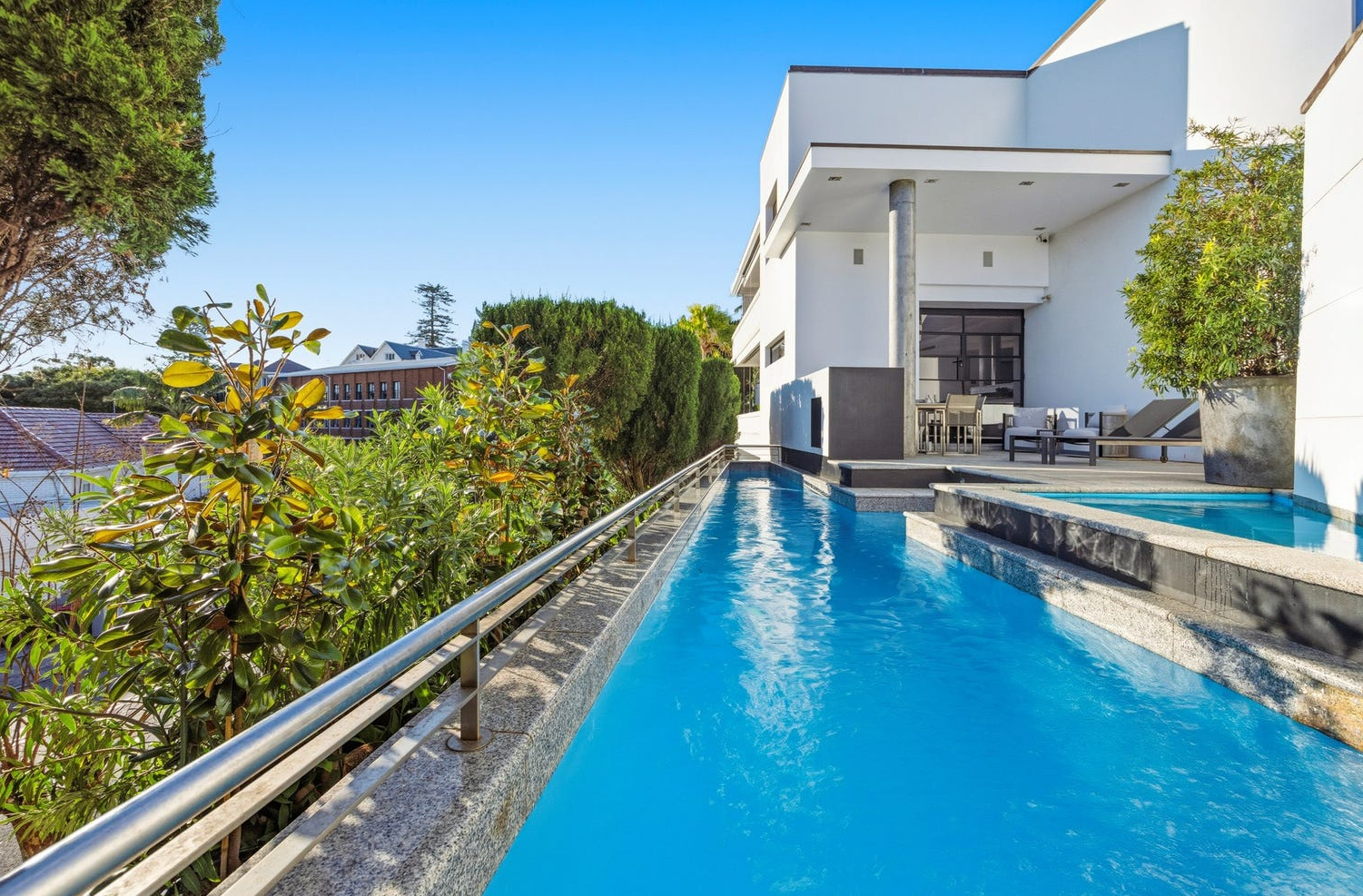
The grounds at Tower House have been designed for relaxed beachside living, ticking all the boxes for resort-style entertaining, from the full north-to-south-facing tennis court and heated pool to the spa and private manicured gardens. To showcase its peninsula setting, the property also features a row of iconic “Brighton beach boxes” as a colourful alternative poolside cabana.

Bonus features at the property include ducted heating, air-conditioning, and a double lock-up garage with loft storage.

Buyers seeking more space or an added income stream can seize a neighbouring opportunity with a three-bedroom, two-bathroom cottage on seperate title fronting Hotham Rd for sale by the same owners.

Tower House is close to Sorrento’s shopping strip, Sorrento Park, the beach and coastal walking trails.

The property at 3395 Point Nepean Rd, Sorrento is listed with Rob Curtain and Danielle Vains of Peninsula Sotheby’s International Realty.

Can the Beckhams’ Brand Survive Their Family Feud?

David Beckham was at the World Economic Forum in Davos, Switzerland, on Tuesday with Bank of America chief executive Brian Moynihan to promote their new partnership. But all anyone wanted to talk about was his son.

After the obligatory questions about business and the World Cup, a host on CNBC’s “Squawk Box” lobbed Beckham an out-of-left-field query about how young people can preserve their mental health in the age of social media.

“Children are allowed to make mistakes,” Beckham, 50, said. “That’s how they learn. So, that’s what I try to teach my kids, but you have to sometimes let them make those mistakes as well.”

Just a day earlier, his 26-year-old son Brooklyn Beckham had posted a series of accusations about his soccer-famous father and pop-star-turned-fashion-designer mother, Victoria Beckham.

He said that his parents had controlled him for years, lied about him to the press and sought to damage his relationship with his wife, Nicola Peltz Beckham. Their goal, he said, was to affect the image of a “perfect family.”

“My family values public promotion and endorsements above all else,” he wrote on Instagram. “Brand Beckham comes first.”

Brooklyn Beckham posted a series of accusations about his parents on his Instagram Stories this week.

Brooklyn Beckham posted a series of accusations about his parents on his Instagram Stories this week. Brooklyn Beckham


That brand has been burnished over decades of professional triumphs, tabloid scandals and slick dealmaking.

Recently, both David and Victoria Beckham put their legacies on-screen in docuseries that cast them as hardworking entrepreneurs and devoted parents. Their image appeared stronger than ever. Now their firstborn child is throwing stones.

Representatives for David Beckham, Victoria Beckham and Brooklyn Beckham did not respond to requests for comment. A representative for Nicola Peltz Beckham declined to comment.

In the U.K., the Beckhams are as close as you can get to royalty without sharing Windsor DNA. David is perhaps the most famous English player in soccer history, while Victoria parlayed her Spice Girls fame into a career as a respected fashion designer.

Their partnership was forged in the cauldron of 1990s celebrity gossip, with their every move—in their careers, their bumpy personal lives and their adventurous senses of personal style—subject to tabloid scrutiny.

“They were Taylor Swift and Travis Kelce before Taylor Swift and Travis Kelce,” said Elaine Lui, founder of the website Lainey Gossip.

Over time, the couple became savvy managers of their own brand, a sprawling modern empire including a professional soccer team, fashion and beauty lines, investment deals and commercial partnerships.

In recent years they each released a Netflix docuseries—“Beckham” in 2023, “Victoria Beckham” in 2025—featuring scenes from their private family life. (Brooklyn and Nicola appeared in David’s series, but not Victoria’s.)

“The way they’ve performed their celebrity has been togetherness,” Lui said: Appearing and engaging with the world as a happily married couple, in both relative calm and amid scandal. And as their family grew, their four children became smiling ambassadors for Brand Beckham, too.

Until Monday night. In a series of Instagram Story posts, Brooklyn accused his parents of “trying endlessly to ruin” his marriage to Nicola, an actress and model, and the daughter of billionaire investor Nelson Peltz . Brooklyn declared, “I do not want to reconcile with my family.”

Where Victoria and David seemed to see press scrutiny as part of the job, Brooklyn and Nicola are operating in a manner more typical of their own generation. Brooklyn’s posts call to mind the “no contact” boundaries some children have enforced with their parents in recent years to much pop-psych chatter.

Andrew Friedman, managing director of crisis communications at Orchestra, said he’d advised many clients through family drama. “Going public,” he said, should be a “last resort.”

He’s also warned clients that using social media to air grievances opens a can of worms. “Nuance is not welcome in social-media feeding frenzies,” Friedman said. “Sensational and unusual details will overshadow the central issue.”

Brooklyn and Nicola went public with their relationship in 2020 and married in a 2022 ceremony at her family’s Palm Beach estate.

Brooklyn and Nicola went public with their relationship in 2020 and married in a 2022 ceremony at her family’s Palm Beach estate. GC Images

Brooklyn, the eldest of the Beckhams’ four children, has built a following in his parents’ image, though without the benefit (or burden) of a steady career.

He’s worked as a model, photographer, cooking-show host and most recently founded a hot-sauce brand. Brooklyn and Nicola went public with their relationship in 2020 and married in a lavish 2022 ceremony at her family estate in Palm Beach, Fla.

Rumors of a family feud flared almost immediately after the wedding, including whispers about the fact that Nicola didn’t wear a dress made by her fashion-designer mother-in-law.

Brooklyn on Monday recounted further grievances related to a mother-son dance and the seating chart. In the months and years that followed, celebrity journalists and fans closely tracked both generations of the family, looking for cracks in the relationship.

But official dispatches from Beckham World suggested that things were just fine. In a scene from the final episode of David’s Netflix series, the Beckham family, including Brooklyn and Nicola, joke around on a visit to their country home. It’s a picture of familial bliss.

“We’ve tried to give our children the most normal upbringing as possible. But you’ve got a dad that was England captain and a mom that was Posh Spice,” David says in voice-over.

“And they could be little s—s. And they’re not. And that’s why I say I’m so proud of my children, and I’m so in awe of my children, the way they’ve turned out.”

Actor Tom Holland’s Nonalcoholic Beer BERO Gets Private-Equity Backing

Private-equity firm Paine Schwartz Partners is backing BERO, a nonalcoholic beer brand launched by British actor and “Spider-Man” star Tom Holland.

A person familiar with the transaction said it values New York-based BERO at more than $100 million and will help support the brand’s ambitious growth plans.

BERO co-founder and Chief Executive John Herman said the company aims to more than double its sales team and significantly expand distribution to roughly triple sales this year.

BERO, which Holland and Herman launched in late 2024, reached nearly $10 million in sales in its first year and expects sales to reach almost $30 million this year, said Herman, who previously served as president of C4 Energy brand drink maker Nutrabolt.

“We weren’t just looking for capital,” Herman said. “We were looking for great partners that could help us grow.”

Paine Schwartz is investing through BetterCo Holdings, a portfolio company in the firm’s sixth flagship fund that it formed late last year to hold non-control investments in better-for-you food and beverage businesses, Paine Schwartz CEO Kevin Schwartz said.

Ultimately, Schwartz said he expects BetterCo to hold five to 10 investments.

BERO, BetterCo’s third investment, falls within the firm’s typical growth investment range of $10 million to $25 million, he said.

Earlier BERO backers include leading talent agency William Morris Endeavor Entertainment and venture-capital firm Imaginary Ventures, which also participated in the latest investment.

“This first external raise is not just a milestone, but a validation of what’s been achieved in a single year,” said Logan Langberg, a partner at Imaginary Ventures.

When they started BERO, Holland and Herman tapped as brewmaster Grant Wood, a past Boston Beer executive who went on to found Revolver Brewing, now part of Tilray Brands.

The brand currently offers four types of beer, including two IPAs. Its products are sold at Target stores, on Amazon.com and at other retail locations, such as supermarket chains Sprouts Farmers Market and Wegmans Food Markets in the U.S. and Morrisons in the U.K. BERO is also available at a number of liquor stores and bars and restaurants.

The company also offers a $55 a year premium membership that offers such perks as free shipping and access to member-only products and limited-edition releases.

To help build the brand’s name, BERO has struck a series of partnerships, becoming the official nonalcoholic beer partner of luxury sports-car maker Aston Martin and fitness studio chain Barry’s.

Nonalcoholic beers, which generally contain less than 0.5% of alcohol by volume, have become increasingly popular and account for the biggest share of alcohol-free drink sales, according to the Beer Institute, a national trade association.

Sales of such drinks are growing at a more than 20% annual rate and were expected to exceed $1 billion in 2025, according to market-research firm NielsenIQ, citing so-called off-premise channel sales it tracks, such as sales at liquor stores and grocery stores. But the bulk of those sales come from the top five brands, such as Athletic Brewing, co-founded by a former trader at Steve Cohen’s hedge fund Point72 Asset Management, NielsenIQ said.

Alcohol-free drinks, the market-research firm said, have emerged as a lifestyle choice—one based not on quitting alcohol but expanding options, with most non-alcohol buyers also buying alcoholic drinks.

“There’s a pendular swing in behaviours that [is] happening right now when it comes to people’s relationship with alcohol,” Herman said.

Corrections & Amplifications undefined Nonalcoholic beer brand BERO offers its fans a premium membership for $55 a year. An earlier version of this article incorrectly said the membership costs $50. (Corrected on Jan. 20.)

Nu Skin Beauty Mogul Puts Longtime Manhattan Pied-à-Terre up for Sale Asking $80 Million

Eight is definitely someone’s lucky number—especially when a few zeros are tacked on at the end.

The top-floor unit of the 80-storey 80 Columbus Circle in Manhattan is coming to market for the first time in more than 20 years and asking a nice round $80 million.

The full-floor unit spans over 8,000 square feet and is part of the Mandarin Oriental Residences above the hotel in the Deutsche Bank Center. It has eight rooms with eight ensuite baths, each with its own walk-in shower.

It last sold in 2005 for a hair under $30 million to cosmetics executive Sandie Tillotson, a founding member and senior vice president at the Utah-based Nu Skin Enterprises. She agreed to purchase the unit in 2001 while the complex was under development as the Time Warner Center.

Today, the six-bedroom apartment features spacious living areas and views from every room, including a close-up view of Central Park and panoramic 360-degree vistas stretching to the Mario M. Cuomo Bridge, according to listing agent Eva J. Mohr of Sotheby’s International Realty.

“There are windows all the way around,” Mohr said. “The views are spectacular and there are no obstacles in front of the windows.

The apartment comes with a library and cinema, a primary bedroom with its own lounge, an oversized kitchen, a corner breakfast area with two glass walls and a utility room with caterer-level equipment and two sinks—one for prepping flowers and the other for bathing pets.

The 80th-floor unit has never been resold and was rarely used by the seller, according to information provided by the listing agency. The corresponding top-level unit in the complex’s second tower just sold. That unit once belonged to Related Companies boss Stephen Ross and sold for $50.7 million in an off-market deal last week.

“The one that went for $55 (sic) million was completely redone with marble and it was beautiful, but you don’t have the views,” Mohr said.

When Tillotson bought the property, the $30 million contract was a record price for a condominium, according to the New York Times. In 2005, the apartment was delivered as “8,200 square feet of raw space” and Tillotson brought her own team to do the interiors, the Times reported.

Tillotson’s Nu Skin is a seller of anti-ageing and wellness products that was founded in the 1980s and is active in more than 50 international markets, particularly in China. The publicly traded company has also recently expanded into India. Nu Skin has several thousand permanent employees at its Provo, Utah, headquarters as well as tens of thousands of salespeople worldwide.

Investor demand drives $155m in Sydney apartment block and townhouse sales

Sydney’s residential investment market has recorded $155 million in apartment block and townhouse sales over 2025, underscoring continued investor confidence in rental-led assets despite broader economic uncertainty.

The transactions were completed by Knight Frank’s Investment Sales agents James Masselos and Adam Droubi, who negotiated 19 sales across Sydney during the year.

Residential investments accounted for 75 per cent of their total sales activity, supported by more than 4,200 active purchaser enquiries.

Co-living deal sets national benchmark

Among the standout transactions was the off-market sale of 142 Carillon Avenue in Newtown, a 37-studio co-living apartment block located close to the University of Sydney and Royal Prince Alfred Hospital.

The property sold for $21.5 million, setting a new benchmark for the living sectors market nationally.

The deal achieved approximately $581,000 per bedroom, believed to be one of the highest per-bedroom results recorded for a co-living asset in Australia.

Inner-city assets trade in one line

Other notable sales included a group of 12 townhouses at 108 Illawarra Road in Marrickville, sold in one line for $14 million, and a block of 20 studio apartments at 171 Rowntree Street in Birchgrove, which changed hands for $6.7 million.

Both transactions reflected strong buyer competition for well-located residential assets with established income streams.

Supply constraints underpin momentum

Mr Masselos said Sydney’s apartment block market continued to benefit from tight supply and strong rental conditions.

“Apartment blocks and broader residential investments remain a robust asset class, underpinned by strong rental growth, record low vacancy levels and scarcity of stock,” he said.

He added that more than $25 million worth of residential investment opportunities are expected to come to market in 2026, with buyer enquiry remaining elevated.

Mr Droubi said competitive sales campaigns had become a feature of the market as investors sought secure income and long-term value.

“Supply constraints and ongoing population growth underpin market strength,” he said. “New approvals and completions lag demand, keeping stock tight and boosting both rents and prices.”

Vacancy rates keep pressure on rents

According to Knight Frank, rental demand across Sydney remains intense, with vacancy rates well below typical “healthy” levels.

Many middle and outer-ring suburbs are recording vacancies of around 1.5 per cent or lower, maintaining upward pressure on rents and reinforcing the appeal of residential investment assets.

Porsche Deliveries Fall on China Woes and Model Gaps

Porsche car deliveries fell 10% in 2025 as demand was hit by a slowdown in luxury spending in China and as it ceased production of its 718 Boxster and 718 Cayman models through the year.

The German luxury sports-car maker said Friday that it delivered 279,449 cars in the year, down from 310,718 in 2024.

The company had a tumultuous year as it contended with a stuttering transition to electric vehicles and a tough Chinese market, while the Trump administration’s automotive tariffs presented a further headwind.

Deliveries in its largest sales region of North America were virtually flat at 86,229, but continued challenges in China meant deliveries in the country dropped 26% to 41,938 vehicles.

Automakers have faced intense competition in China, sparking a prolonged price war as rivals cut prices to win customers, while a lengthy property market slump and economic-growth concerns in the country has also led to buyers pulling back on luxury spending.

“Key reasons for the decline remain the challenging market conditions, particularly in the luxury segment, and the very intense competition in the Chinese market, especially for all-electric models,” the company said.

Other German brands including Audi, BMW and Mercedes-Benz have all recently reported that the challenging Chinese market hit demand last year.

In Europe, Porsche deliveries fell 13% to 66,340 cars excluding its home market of Germany, while German deliveries dropped 16%.

The company cut guidance several times last year as it warned of hits from U.S. import tariffs, investments in new combustion engines and hybrid models amid the slow uptake of EVs, and the competitive situation in China.

Porsche also last year announced plans to scale back its EV ambitions and instead expand its lineup with more gas-powered and plug-in hybrid models than it had originally planned.

However, in its statement Friday, the company said it increased its share of electrified-vehicle deliveries in the year. Around 34% of vehicles delivered worldwide were electrified, an increase of 7.4 percentage points on year, with about 22% all-electric vehicles and 12% plug-in hybrids.

That leaves its global share of fully-electric vehicles at the upper end of its target range of 20% to 22% for 2025.

In Europe, for the first time in 2025, more electrified vehicles than purely combustion engine vehicles were delivered.

The Macan topped the delivery charts in the year, while the 911 reached a record high with 51,583 deliveries worldwide, it said.

Porsche said it is investing in its three-pronged powertrain strategy and will continue to respond to increasing demand for personalization requests from customers.

“We have a clear focus for 2026,” Sales and Marketing Chief Matthias Becker said. “We want to manage supply and demand in accordance with our ‘value over volume’ strategy.

“At the same time, we are realistically planning our volume for 2026 following the end of production of the 718 and Macan with combustion engines.”

Confidence returns to Australia’s hotels as pressures build

Australia’s accommodation sector is entering the peak summer travel season with renewed confidence – but structural challenges around staffing and technology adoption remain unresolved.

The third edition of the Australian Accommodation Barometer, released by Booking.com in partnership with Statista, draws on insights from travel executives across hotels, tourism operators and alternative accommodation providers nationwide.

Despite ongoing geopolitical and macro-economic uncertainty, 75 per cent of Australian accommodation operators report a positive business outlook for the coming season, a marked improvement from the sector’s low point of 61 per cent in 2022.

Confidence varies by state, with Victoria recording the strongest sentiment around business development over the past six months.

That optimism is translating into investment. Nearly half of all respondents plan to increase investment in the months ahead, while a further 35 per cent intend to maintain current levels.

Larger chain hotels are leading the charge, while small and mid-sized operators and lower-rated properties are taking a more cautious approach.

One of the clearest growth drivers identified in the report is event-led tourism, which is increasingly helping operators smooth out the peaks and troughs of traditional seasonality.

Among accommodation providers that have felt the impact of events, almost half reported an increase in international or long-haul guests, while 46 per cent saw stronger booking volumes during typically quieter periods.

Financial benefits were also evident, with higher revenue per room and longer stays reported across parts of the sector.

To capitalise on this shift, many operators are embedding events into their broader strategies.

More than a third already host events to attract group and non-leisure travellers, while partnerships with wedding planners and event organisers are proving particularly effective.

Looking ahead, over half of respondents plan to actively collaborate with event organisers, and many are seeking closer alignment with local governments and destination marketing bodies.

Yet behind the positive headline figures, staffing remains a persistent pressure point.

On average, Australian hotels expect to hire more than seven employees over the next year, but filling senior and specialised roles continues to be difficult.

High salary expectations, long or irregular working hours and skills shortages were all cited as key barriers, alongside the cost and complexity of training less experienced staff.

Technology adoption presents a similar fault line.

While most operators recognise the potential of digital tools and artificial intelligence, particularly in marketing, customer service and cybersecurity, uptake remains uneven.

High implementation costs, integration challenges and a lack of technical expertise are slowing progress, particularly for smaller properties, raising concerns about a widening digital divide across the sector.

“While the sustained optimism among Australian accommodation providers is genuinely encouraging, our findings highlight clear and urgent challenges,”  Todd Lacey, Regional Manager for Oceania at Booking.com, said.

“The skills shortage remains a major bottleneck, and the high cost and complexity of digital technology risks creating a digital divide where smaller businesses are left behind.

“However, the industry is not standing still; proactive strategies like embracing collaborative approaches to event tourism are showing real success in tackling seasonality, with accommodations seeing a crucial rise in bookings during typically low-demand periods.”

As Australia is in the midst of a busy summer, the barometer suggests an industry buoyed by demand and opportunity, but increasingly defined by a split between those able to invest and adapt, and those struggling to keep pace.
Compact electric hatch set to join Australia’s EV market

GAC Australia has confirmed the AION UT, an all-electric compact hatchback, as the fourth model to join its local range, with the vehicle set to go on sale mid-year.
The AION UT will be the second fully electric model released in Australia under GAC’s AION sub-brand, following the launch of the AION V medium SUV.
The company says the new hatch has been developed specifically with urban driving in mind, combining compact exterior dimensions with competitive interior space.

Designed at GAC’s Milan Design Centre, the AION UT features a fastback silhouette, two-tone floating roof and pixel-style lighting elements intended to give the car a distinctive, tech-forward appearance.

GAC also points to what it describes as the world’s first “eyebrow-style” headlamp design as a visual signature for the model.

Despite its compact positioning, the AION UT rides on a 2,750mm wheelbase, which GAC says allows for interior space that rivals larger vehicles in the same segment.

Full technical specifications, equipment levels and pricing for the Australian market have not yet been announced.

The confirmation of the AION UT comes as competition in Australia’s electric vehicle market continues to intensify, particularly at the more affordable end of the spectrum.

While early EV adoption was dominated by premium models and SUVs, manufacturers are increasingly turning their attention to smaller, city-oriented cars aimed at price-conscious buyers and urban commuters.

GAC entered the Australian market late last year with a mix of petrol, plug-in hybrid and electric models, including the AION V, M8 PHEV and EMZOOM.

The company has indicated it plans to introduce more than 10 models locally over the next five years as part of its long-term Australian strategy.

Sprawling Lifestyle Estate In Southern Highlands For Sale

A rolling 41ha parcel of farmland in the Southern Highlands, which last sold back in 2012 for $3.05 million, has come to market with a price guide of $10 million.

The sprawling rural estate, once featured in Highlife Magazine showcasing its colourful gardens, is listed with Anne Stone of McGrath Bowral through a private treaty sale.

Beyond the stately front gates and meandering driveway, the working farm consists of a five-bedroom main residence coupled with a three-bedroom guest cottage, as well as a private self-contained studio space.

Also known as Dragon Farm, the picturesque pocket sits 10kms west of Robertson and 47kms from the shores of Kiama.

Near the sleepy hamlet of Wildes Meadow, the provincial property houses 17 fenced paddocks, a championship-sized tennis court with a pavilion, plus a wellness area including a gym and steam room.

Just in time for the Australian Open, McGrath recently highlighted the value of a home grown tennis court in its 2026 Prestige Residential report.

The demand for lifestyle properties with sporting amenities has surged since the early days of the pandemic in 2020, with tennis courts proving to be a big hit.

Along Australia’s east coast, the study showed there were 71 prestige properties with tennis courts sold in the 12-months to October 2025.

New South Wales accounted for 46 per cent of those transactions, and the McGrath paper reported a price premium of 42 per cent achieved for listings with a tennis court during that period.

“Super-prestige properties equipped with tennis courts remain tightly held. Rather than being transacted for a premium they’re being land banked, as the increasing rarity of estates on large parcels will likely drive value over the longterm,” said McGrath research analyst, Michelle Ciesielski.

The main homestead at the Southern Highlands property makes the most of its panoramic setting with district views from three separate living areas and covered wraparound verandas.

Within the 323sq m footprint of the primary residence there is a modern country style kitchen, a central courtyard and main bedroom with a study nook and ensuite.

Ideal for visitors or live-in staff, the rustic cottage measures approximately 140sq m and has an open plan living zone with kitchen flowing through to a traditional veranda, plus three bedrooms with built-in wardrobes and one ensuite.

Beside the cottage an original dairy shed has been transformed into an entertainer’s space with an outdoor kitchen and the separate studio retreat dishes up more accommodation with an alfresco area and fireplace.

Additionally, the tennis court cabana is also set up with a kitchenette and wellness area.

Within the property there are established internal roads, cattle yards and multiple sheds to support livestock or equestrian pursuits.

Currently, the land is home to 35 cows, two bulls and 25 calves grazing across the lush fertile pastures.

The grounds features a potager vegetable garden, a woodland walk and a sculptural Celtic-inspired garden with a maze and two dams.

Listed with Anne Stone of McGrath Bowral, 100 Blencowes Lane, Wildes Meadow is on the market via a private treaty campaign with a price guide of $10 million.

Everyone Wants a Room Where They Can Escape Their Screens

James and Ellen Patterson are hardly Luddites. But the couple, who both work in tech, made an unexpectedly old-timey decision during the renovation of their 1928 Washington, D.C., home last year.

The Pattersons had planned to use a spacious unfinished basement room to store James’s music equipment, but noticed that their children, all under age 21, kept disappearing down there to entertain themselves for hours without the aid of tablets or TVs.

Inspired, the duo brought a new directive to their design team.

The subterranean space would become an “analog room”: a studiously screen-free zone where the family could play board games together, practice instruments, listen to records or just lounge about lazily, undistracted by devices.

For decades, we’ve celebrated the rise of the “smart home”—knobless, switchless, effortless and entirely orchestrated via apps.

But evidence suggests that screen-free “dumb” spaces might be poised for a comeback.

Many smart-home features are losing their luster as they raise concerns about surveillance and, frankly, just don’t function.

New York designer Christine Gachot said she’d never have to work again “if I had a dollar for every time I had a client tell me ‘my smart music system keeps dropping off’ or ‘I can’t log in.’ ”

Google searches for “how to reduce screen time” reached an all-time high in 2025. In the past four years on TikTok, videos tagged #AnalogLife—cataloging users’ embrace of old technology, physical media and low-tech lifestyles—received over 76 million views.

And last month, Architectural Digest reported on nostalgia for old-school tech : “landline in hand, cord twirled around finger.”

Catherine Price, author of “ How to Break Up With Your Phone,” calls the trend heartening.

“People are waking up to the idea that screens are getting in the way of real life interactions and taking steps through design choices to create an alternative, places where people can be fully present,” said Price, whose new book “ The Amazing Generation ,” co-written with Jonathan Haidt, counsels tweens and kids on fun ways to escape screens.

From both a user and design perspective, the Pattersons consider their analog room a success.

Freed from the need to accommodate an oversize television or stuff walls with miles of wiring, their design team—BarnesVanze Architects and designer Colman Riddell—could get more creative, dividing the space into discrete music and game zones.

Ellen’s octogenarian parents, who live nearby, often swing by for a round or two of the Stock Market Game, an eBay-sourced relic from Ellen’s childhood that requires calculations with pen and paper.

In the music area, James’s collection of retro Fender and Gibson guitars adorn walls slicked with Farrow & Ball’s Card Room Green , while the ceiling is papered with a pattern that mimics the organic texture of vintage Fender tweed.

A trio of collectible amps cluster behind a standing mic—forming a de facto stage where family and friends perform on karaoke nights. Built-in cabinets display a Rega turntable and the couple’s vinyl record collection.

“Playing a game with family or doing your own little impromptu karaoke is just so much more joyful than getting on your phone and scrolling for 45 minutes,” said James.

The Patterson family’s basement retreat ‘encapsulates the joy in the things that we love in one room.’ John Cole

Screen-Free ‘Escapes’

“Dumb” design will likely continue to gather steam, said Hans Lorei, a designer in Nashville, Tenn., as people increasingly treat their homes “less as spaces to optimise and more as spaces to retreat.”

Case in point: The top-floor nook that designer Jeanne Hayes of Camden Grace Interiors carved out in her Connecticut home as an “offline-office” space.

Her desk? A periwinkle beanbag chair paired with an ottoman by Jaxx. “I hunker down here when I need to escape distractions from the outside world,” she explained.

“Sometimes I’m scheming designs for a project while listening to vinyl, other times I’m reading the newspaper in solitude. When I’m in here without screens, I feel more peaceful and more productive at the same time—two things that rarely go hand in hand.”

A subtle archway marks the transition into designer Zoë Feldman’s Washington, D.C., rosy sunroom—a serene space she conceived as a respite from the digital demands of everyday life.

Used for reading and quiet conversation, it “reinforces how restorative it can be to be physically present in a room without constant input,” the designer said.

Laura Lubin, owner of Nashville-based Ellerslie Interiors, transformed a tiny guest bedroom in her family’s cottage into her own “wellness room,” where she retreats for sound baths, massages and reflection.

“Without screens, the room immediately shifts your nervous system. You’re not multitasking or consuming, you’re just present,” said Lubin.

As a designer, she’s fielding requests from clients for similar spaces that support mental health and rest, she said.

“People are overstimulated and overscheduled,” she explained. “Homes are no longer just places to live—they’re expected to actively support well-being.”

Designer Molly Torres Portnof of New York’s DATE Interiors adopted the same brief when she designed a music room for her husband, owner of the labels Greenway Records and Levitation, in their Lido Beach, N.Y. home. He goes there nightly to listen to records or play his guitar.

The game closet from the townhouse in “The Royal Tenenbaums”? That idea is back too, says Gachot. Last year she designed an epic game room backed by a rock climbing wall for a young family in Montana.

When you’re watching a show or on your phone, “it’s a solo experience for the most part,” the designer said. “The family really wanted to encourage everybody to do things together.”

Photo: John Cole

Analog Accessories

Don’t have the space—or the budget—to kit out an entire retro rec room?

“There are a lot of small tweaks you can make even if you don’t have the time, energy or budget to design a fully analog room from scratch,” said Price.

Gachot says “the small things in people’s lives are cues of what the bigger trends are.”

More of her clients, she’s noticed, have been requesting retrograde staples, such as analog clocks and magazine racks.

For her Los Angeles living room, chef Sara Kramer sourced a vintage piano from Craigslist to be the room’s centerpiece, rather than sacrifice its design to the dominant black box of a smart TV. Alabama designer Lauren Conner recently worked with a client who bought a home with a rotary phone.

Rather than rip it out, she decided to keep it up and running, adding a silver receiver cover embellished with her grandmother’s initials.

Some throwback accessories aren’t so subtle. Melia Marden was browsing listings from the Public Sale Auction House in Hudson, N.Y. when she spotted a phone booth from Bell Systems circa the late 1950s and successfully bid on it for a few hundred dollars.

“It was a pandemic impulse buy,” said Marden.

In 2023, she and her husband, Frank Sisti Jr., began working with designer Elliot Meier and contractor ReidBuild to integrate the booth into what had been a hallway linen closet in their Brooklyn townhouse.

Canadian supplier Old Phone Works refurbished the phone and sold them the pulse-to-tone converter that translates the rotary dial to a modern phone line.

The couple had collected a vintage whimsical animal-adorned wallpaper (featured in a different colourway in “Pee-wee’s Playhouse”) and had just enough to cover the phone booth’s interior.

Their children, ages 9 and 11, don’t have their own phones, so use the booth to communicate with family. It’s also become a favorite spot for hiding away with a stack of Archie comic books.

The booth has brought back memories of meandering calls from Marden’s own youth—along with some of that era’s simple joy. As Meier puts it: “It’s got this magical wardrobe kind of feeling.”

Dubai Luxury Home Sales Boomed in 2025, Hitting a Record 500 Deals

Dubai had a banner year in 2025, logging a record-breaking number of home sales at $10 million and above, according to a report from Knight Frank on Monday.

The U.A.E. city closed out the year with 500 sales valued at $10 million-plus—including 68 homes that sold for more than $25 million, another all-time high—producing a total value of $9.05 billion, a 27.7% increase of 2024’s luxury sales volume of $7.09 billion.

A strong fourth quarter helped propel the market to these record numbers, with 143 homes selling for more than $10 million during the final three months of the year, up from 103 in the third quarter.

Regional and worldwide luxury buyers alike continue to be compelled to buy property in Dubai, “attracted by the high quality of life, world-class amenities and infrastructure, enabled by the government’s ambitious investment programs,” Faisal Durrani, partner and head of research for Knight Frank’s Middle East and North Africa (MENA) region, said in the report.

“Dubai’s meteoric rise as the world’s busiest market for $10 million-plus homes, having increased from just 30 sales in 2020 to 500 by the end of 2025, is best reflected in the emirate’s growing reputation as a magnet for the global elite,” he said.

The tree-shaped man-made island of Palm Jumeirah retained its spot as the most popular community for luxury home buyers, recording 28 sales of homes valued at more than $10 million during the fourth quarter.

The yet-to-be-completed Palm Jebel Ali—which closely resembles the shape of Palm Jumeirah—was close behind with 22 sales. It’s expected to be completed in 2028.

“At 50% larger than its established neighbor Palm Jumeirah, Palm Jebel Ali remains a destination to watch,” said Will McKintosh, regional partner and head of residential for MENA.

“While it will obviously take time to reach the maturity of other established communities, the 2025 sales figures are a welcome indication of its high potential and the growing demand from the wealthiest buyers for prime waterfront property and the luxury Dubai lifestyle.”

The priciest deal of the quarter was for a six-bedroom apartment in Bugatti Residences by Binghatti, within the Business Bay community.

The 47,200-square-foot home sold for AED 550 million (US$149.7 million), setting a U.A.E. sale price record for a penthouse.

The previous record was held by a 22,000-square-foot penthouse at the Como Residences on the Palm Jumeirah that sold for AED 500 million in November 2023.

A TALE OF TWO VOYAGES IN FRENCH POLYNESIA

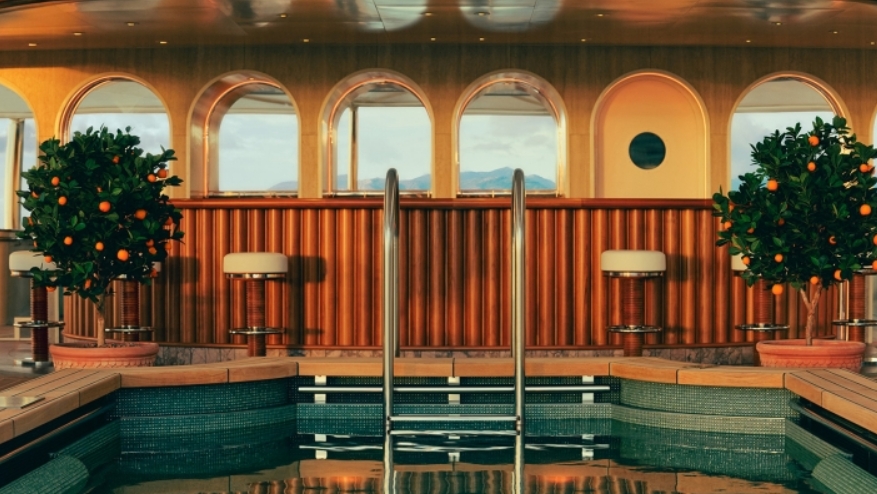
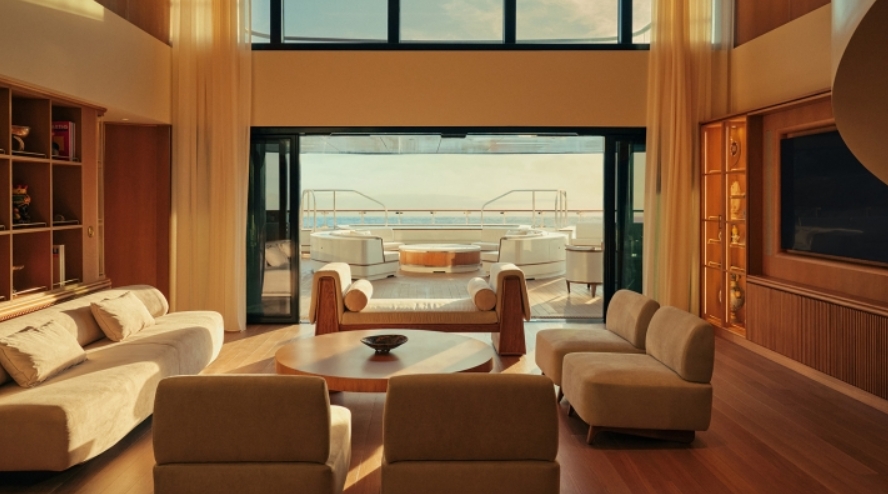
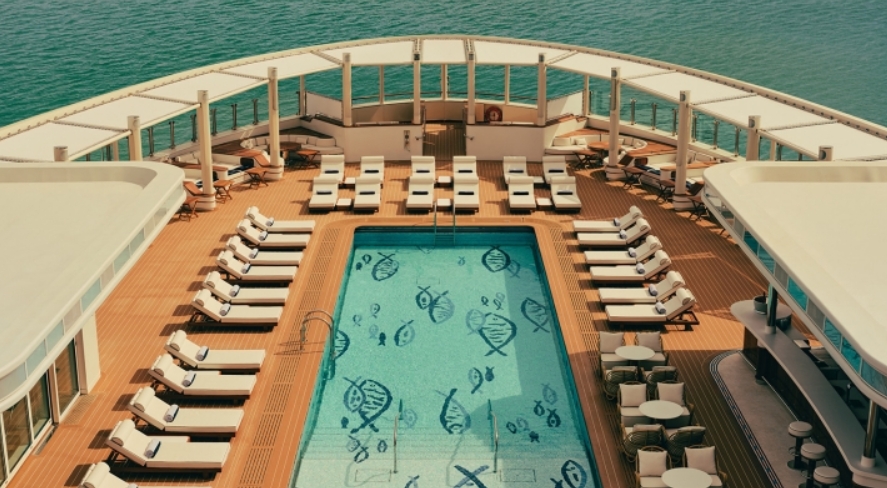
From late 2026 and into 2027, PONANT Explorations Group will base two ships in French Polynesia, offering travellers a choice between a culturally immersive classic and a far more exploratory deep-Pacific experience.

The move builds on more than 25 years of operating in the region with the iconic m/s Paul Gauguin, while introducing the expedition-focused Le Jacques Cartier to venture into lesser-known waters.

Together, the two vessels will cover all five Polynesian archipelagos — the Society, Tuamotu, Austral, Gambier and Marquesas Islands — as well as the remote Pitcairn Islands.

THE PAUL GAUGUIN: CULTURAL IMMERSION, POLYNESIAN STYLE

Long regarded as the benchmark for cruising in French Polynesia, m/s Paul Gauguin will remain based year-round in the region.

Renovated in 2025, the ship continues to focus on relaxed, culturally rich journeys with extended port stays designed to allow guests to experience daily life across the islands.

A defining feature of the onboard experience is the presence of the Gauguins and Gauguines — Polynesian hosts who share local traditions through music, dance and hands-on workshops, including weaving and craft demonstrations.

The atmosphere is deliberately intimate and internationally minded, catering to travellers seeking depth rather than distance.

Across the 2026–27 seasons, the ship will operate 66 departures, primarily across the Society Islands, Tuamotu and Marquesas, with select voyages extending to Fiji, Tonga and the Cook Islands.


LE JACQUES CARTIER: EXPLORATION AT THE EDGE

Le Jacques Cartier introduces a more adventurous dimension to PONANT’s Polynesian offering, with itineraries focused on the least visited corners of the South Pacific.

The ship will debut three new “Discovery” itineraries, each 14 nights in length, which can also be combined into a single, extended 42-night voyage — the most comprehensive Polynesian itinerary currently available.

In total, the combined journey spans six archipelagos, 23 islands and the Pitcairn Islands, a British Overseas Territory rarely included on cruise itineraries.

Unlike the Paul Gauguin’s cultural focus, Le Jacques Cartier centres on exploration.

Each day includes one guided activity led by local experts, with excursions conducted via tenders, local boats and zodiacs. Scuba diving is available on board, supported by a resident instructor.

Across the 2026–27 period, the ship will operate nine departures, offering a deliberately limited and low-impact presence in some of the Pacific’s most isolated communities.

THREE NEW DISCOVERY ITINERARIES

The new itineraries aboard Le Jacques Cartier include:

Secret Polynesia: Unexplored Tuamotu, the Gambier Islands and the Austral Islands
From Confidential French Polynesia to Pitcairn Island
Polynesian Bliss: Marquesas and Tuamotu

Each voyage departs from Papeete, with prices starting from $15,840 per person.

SCOUTING THE PACIFIC’S MOST REMOTE COMMUNITIES

In preparation for the new itineraries, PONANT Explorations Group undertook extensive scouting across the Austral and Tuamotu Islands to develop activities in collaboration with local communities.

José Sarica, the group’s R&D Expedition Experience Director, worked directly with residents to design experiences including welcome ceremonies, cultural workshops and visits to marae, the region’s sacred open-air temples.

Six new ports of call have been confirmed as part of this process, spanning both the Tuamotu and Austral archipelagos.

SIX NEW PORTS OF CALL CONFIRMED

New stopovers include:

– Mataiva, known for its rare mosaic lagoon
– Hikueru, home to one of the largest lagoons in the Tuamotus
– Makemo, noted for its red-footed boobies and frigatebirds
– Raivavae, famed for its crystal-clear lagoon pools
– Tubuai, rich in marae and spiritual heritage
– Rurutu, known for limestone caves and seasonal humpback whale sightings

A DUAL EXPERIENCE, ONE DESTINATION

By pairing its long-established cultural voyages with expedition-led exploration, PONANT Explorations Group is positioning French Polynesia not as a single experience, but as two distinct journeys — one grounded in tradition and comfort, the other pushing into the furthest reaches of the Pacific.

For travellers seeking either immersion or discovery, the South Pacific is about to feel both familiar and entirely new.

Cold Plunges Are Hot. But Can You Do It in Your Home Pool?

Cold plunges have gone from fringe curiosity to full-blown cultural phenomenon, the wellness world’s equivalent of a headline-grabbing breakout star.

Adherents slip into icy water on a daily basis, chasing an electric jolt of clarity that feels like a flip has been switched inside your brain.

Dedicated cold plunge practices are everywhere from upscale fitness studios and pro sports locker rooms to renowned wellness destinations such as Mountain Trek Health Reset Retreat in British Columbia.

Considering the ever-expanding assortment of companies flooding the market with cold plunge tubs and other custom devices dedicated to achieving icy bliss—with costs potentially reaching into the tens of thousands—some homeowners are tempted to use their swimming pools as an alternative.

“We’re absolutely seeing more homeowners use their pools as year-round cold plunges, especially in colder climates,” said Nick McNaught, CEO and co-founder of Toronto-based Stay Unbounded, which offers cold exposure workshops, retreats and certifications.

“The motivation is often simplicity and cost. If the water is already cold, people see value in keeping the pool open longer or winterizing it differently to support cold exposure.”

Suzanne Vaughan, president of Massachusetts-based pool builder SwimEx, points out the inherent convenience that comes with taking a frosty dip out back.

“From what homeowners tell us, the appeal of a cold plunge at home is less about chasing extremes and more about having a simple ritual that’s always available,” she said.

“It’s quick, accessible and easy to build into a daily routine.”

Among new clients Vaughan works with, year-round cold plunge use is usually planned from the start rather than as an afterthought.

“More are choosing indoor pools or small attached structures because that makes temperature control, equipment protection and day-to-day use much easier in colder climates,” she said.

Blue Cube / Courtesy of Jeff Dotson

If someone is thinking about using an existing home pool as a cold plunge, the main questions are likely to involve practicality and protection.

“Larger volumes of water take more energy and time to keep at colder temperatures, and you need a plan to protect plumbing, finishes and equipment from freeze–thaw cycles,” she added.

“Whatever the design, you want a system that’s built for the temperature range you have in mind, and a pool professional who can help you winterize safely.”

One such professional is Hunter Gary, a certified master pool builder and owner of H2 Outdoor Living in Tennessee.

“Most everyone has a ‘number’ in degrees when it comes to cold plunging. When a client asks our company to design a cold plunge for them, I ask ‘what’s your number?’” Gary said.

“A smaller body of water or cold plunge vessel may be much easier for maintaining a balanced temperature…but if using a pool gets you excited about a more serious approach to inviting this wellness experience in your life, then go for it.”

Amy McDonald, owner and CEO of Under a Tree, a wellness consultancy, said transforming a pool into a plunge might not be worth time and investment

“It is almost impossible to retrofit a standard swimming pool into a cold plunge,” she said.

“The energy and money to do it properly is greater compared to just creating a complimentary contrast circuit.”

A proper setup needs to be exceptionally cold, she noted, so depending on where the pool is located it might not get chilly enough to provide optimal health benefits.

“That could work in northern areas of the U.S., but it takes a lot for a pool to generate and keep that kind of cold, not even considering if the pool ices over,” she said.

McNaught echoed those concerns, citing how home pools aren’t designed specifically for cold plunging, so temperature consistency, cleanliness, ease of access and safety become important factors.

“Dedicated cold plunge setups offer more control, smaller volumes and lower ongoing maintenance,” he said.

“For many people, a pool works as an entry point. Over time, those who commit to the practice transition to a dedicated setup because it better supports frequency, comfort and long-term use.”

Beyond geography and climate, industry experts pointed out other challenges homeowners are likely to face.

“Pools are saturated with chlorine and other chemicals that directly absorb into the bloodstream. The advantage of many cold plunges is that no chemicals are required for residential use,” said David Haddad, as the co-founder of Oregon-based BlueCube Wellness.

“Constant ozonation and filtration is enough to kill organic compounds without exposure to sanitizing chemicals.”

Most cold-plunge systems are monitored to stay between 50-60 degrees Fahrenheit—with experienced plungers often preferring lower temperatures.

While “the ultimate experience might be a glacial lake in Finland, unfortunately that’s a bit out of reach for most of us,” said Andreas Stelluti, co-founder at Texas-based Colderatti, whose vessels feature the world’s first chemical-free cold plunge technology, powered by a triple filtration system that removes 99% of impurities to provide a system with drinking-quality water.

“Having a cold plunge at home brings that experience to your backyard, making it very easy and accessible, so you have the ability to make it part of your lifestyle,” he added.

Stelluti noted that as spring arrives and clients’ home pools start to warm up again, they begin to miss the cool water.

“Many say ‘I really need this to be part of my lifestyle year-round’ and that desire for consistent, accessible cold immersion is what motivates them to invest in a dedicated cold plunge setup,” he explained.

“Unfortunately, you can’t use your pool as a year-round cold plunge during the summer. Especially not here in Texas.”