HIGH-RISE APARTMENTS VS HOUSES: WHICH INVESTMENT COMES OUT ON TOP?

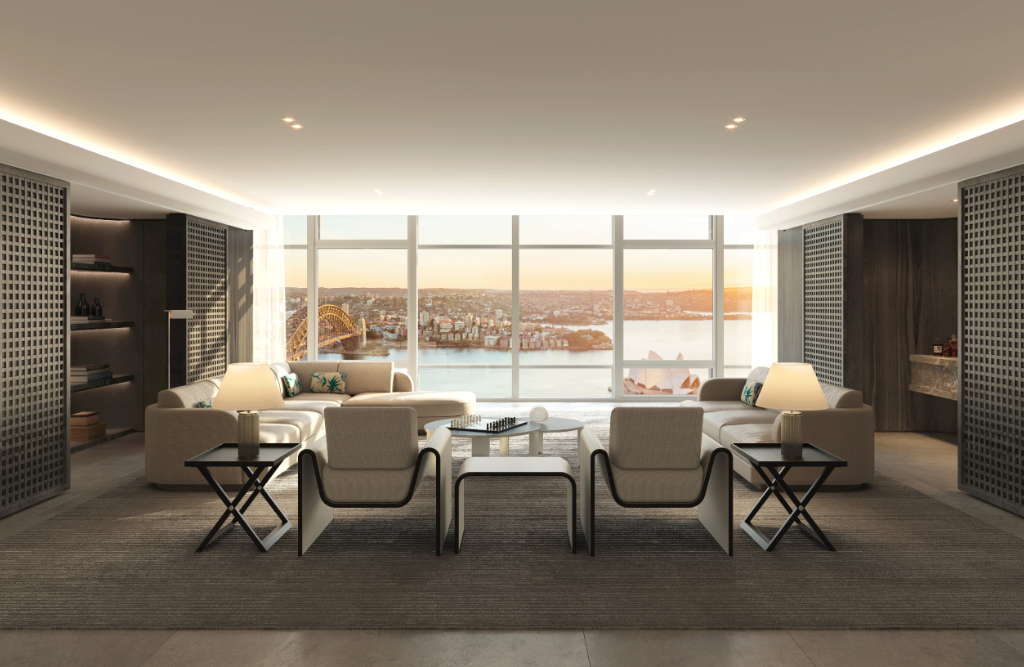
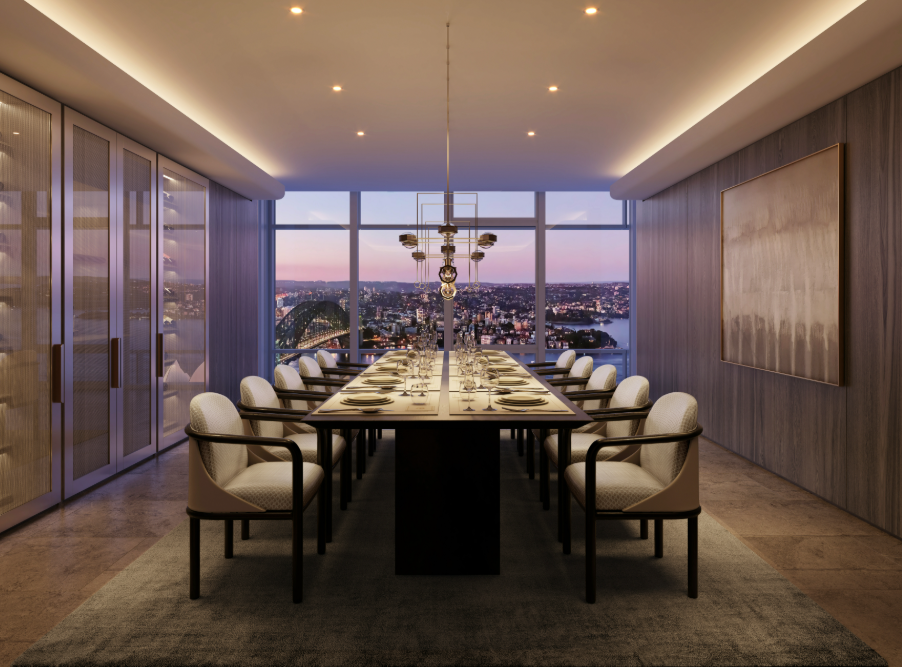
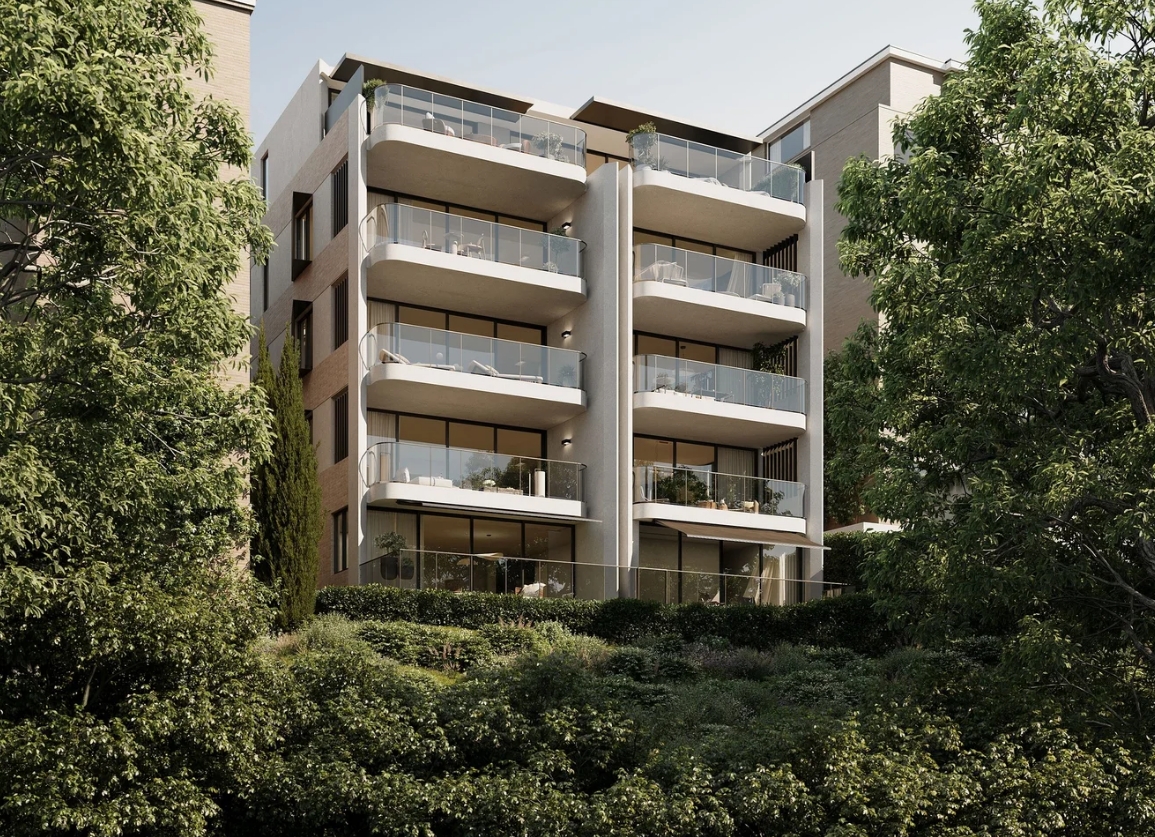
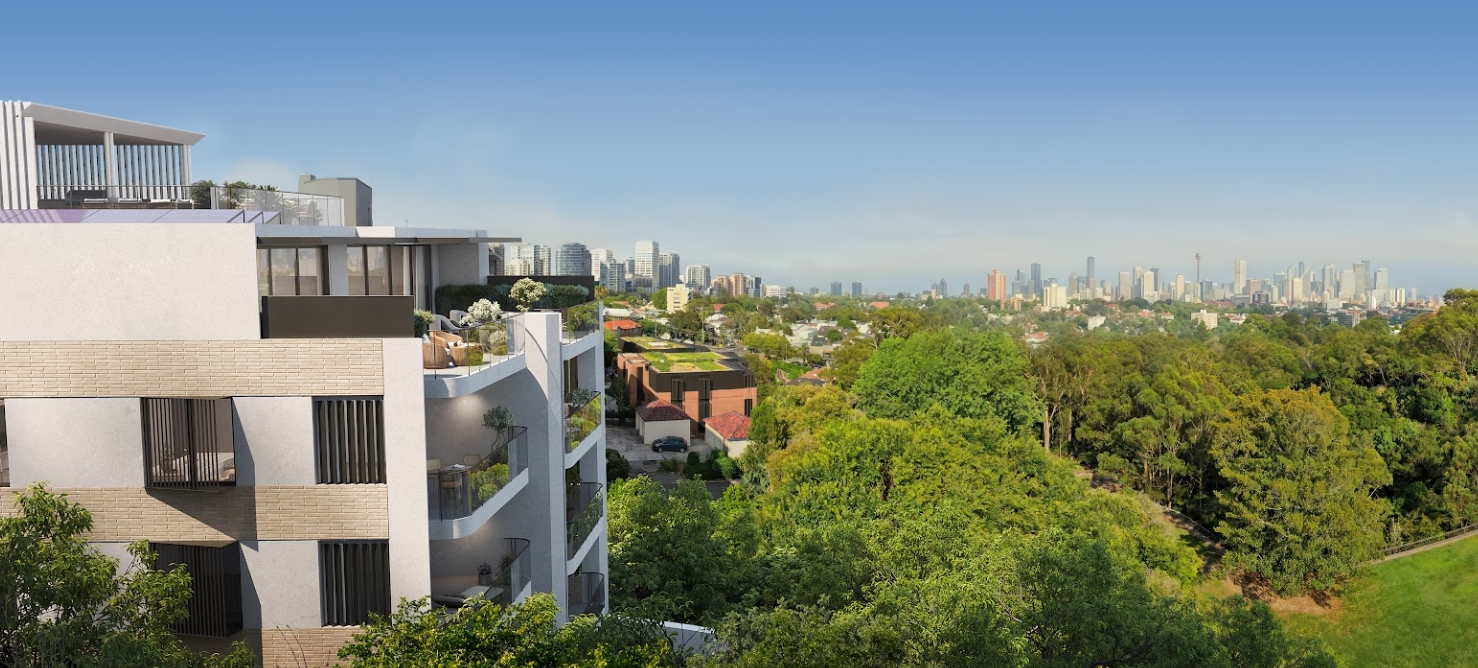
Australia’s housing shortage has long positioned real estate as a cornerstone of wealth creation. But as governments push to deliver 1.2 million new homes, many of them high-rise apartments, investors are increasingly weighing whether vertical living offers the same long-term returns as traditional houses.

While apartments offer lower entry prices and strong rental demand in key locations, critics warn that strata costs, oversupply and lack of land ownership can undermine long-term capital growth.

LOCATION AND LIFESTYLE DRIVE DEMAND

Company RE chief executive Marcus Buskey says thoughtfully designed high-rise developments in lifestyle precincts can deliver strong returns, particularly in premium coastal markets.

Demand remains robust across the Gold Coast and inner-city Brisbane, driven by downsizers, professionals and interstate buyers seeking convenience and lifestyle.

“Apartments in premium Gold Coast areas like Mermaid Beach, Broadbeach and Burleigh Heads have consistently demonstrated capital growth, driven by limited availability, desirability of location and ongoing demand from lifestyle-focused buyers,” Buskey says.

He adds that quality, exclusivity, views and proximity to amenities remain critical factors influencing performance.

MELBOURNE MARKET SHOWS MIXED SIGNALS

Melbourne project marketing specialist Jon Ellis, founder of The Move, says apartments continue to dominate transactions, accounting for 360 of his last 400 sales.

However, he warns not all developments perform equally.

“Some lower-grade apartments in Melbourne may never go back up to the sales price they were achieving a few years ago,” Ellis says.

He notes that construction costs have risen sharply, making it harder to deliver strong investment yields. Yet demand remains strong for well-executed developments.

“Investors purchasing an apartment for $600,000 need to get about $600 a week in rent. If you can get that right and prove it, demand for apartments certainly outstrips residential houses.”

THE LAND FACTOR REMAINS CRITICAL

Like all investment opportunities, others favour a freestanding home over a high-rise apartment.

“In my opinion, the only people who make money from high-rise apartments are the developers who build and sell them,” buyers’ agent Gianni Musumeci says.

For this reason, the Sydneysider steers investors away from high-rise apartments. “While they may appear to be an appealing investment on the surface with attractive guarantees, modern designs and convenient locations at somewhat lower entry points, high-rise apartments are, in my view, rarely a good investment,” Musumeci, of  Leverage Property Advisers, says.

“This is especially the case when compared to standard residential homes in suburban markets, primarily due to the overwhelmingly high supply of apartments, the high level of cash flow expenses, the number of defects commonly found in high-rise buildings and the cost to remediate them, as well as the lack of land ownership, which is the primary driver of capital growth.”

“Economics 101 tells us that capital growth is achieved when diminishing supply meets increasing demand. The issue with high-rise apartments is that they’re typically built in areas with overwhelming supply, and often, that supply exceeds demand,” he says.

“These developments are usually located around major transport hubs, and as a result, if you’re looking to buy in one of these areas, you’re competing with dozens or even hundreds of similar listings.”

“Apartments are far easier to mass produce because the only restriction is how high you can build. You can’t expect strong growth in a market that’s saturated. In contrast, standalone residential homes are limited by land availability,” Musumeci says.

WEALTH CREATOR FAVOURS FREEHOLD PROPERTY

Entrepreneur and investor Scott O’Neill, who has amassed a combined net worth of $252 million with his wife Mina, says his personal experience has reinforced the benefits of freehold ownership.

He owned a high-rise apartment early in his investing journey but sold it after two years.

“The yields can vary significantly, ranging from four to seven per cent, but that’s before accounting for sinking funds and strata fees. Your net returns often drop to between one and two per cent,” O’Neill says.

He says oversupply and rising strata costs can further weaken performance.

“Most long-term property owners end up selling high-rise apartments in favour of freehold properties.”

INVESTMENT DECISION DEPENDS ON STRATEGY

Despite the risks, apartments can still deliver strong results when chosen carefully.

Experts agree that location, developer quality, supply levels and long-term demand are critical factors.

While houses continue to offer superior land value and long-term growth potential, apartments can provide attractive yields and accessibility for investors seeking exposure to high-demand urban markets.

Ultimately, the right investment depends on an investor’s strategy, time horizon and appetite for risk.

‘Wuthering Heights’ Review: Emerald Fennell’s Emphasis on Longing

The most 2026 element of the latest screen adaptation of 1847’s hottest novel, “Wuthering Heights,” is the scene in which Heathcliff repeatedly asks the young lady he’s undressing, “Do you want me to stop?” even as she writhes with lust, indicating an affirmative response is unlikely.

Previously understood as a notorious brute even by 19th-century standards, Heathcliff now exhibits signs of having earned perfect grades in today’s campus training modules.

There’s also a reference to septicemia, which is writer-director Emerald Fennell’s perhaps too-technical stab at explaining the nonspecific Victorian disease that afflicts one character.
Mostly, however, Ms. Fennell has done an admirable job of not modernising a dark and moody romance. If most of today’s filmmakers crave hearing, “This is not your mother’s (fill in the blank)” when adapting classic material, this pretty much is your mother’s “Wuthering Heights,” or at least one she will recognise.

Catherine Earnshaw, played with great soapy gusto by Margot Robbie, is still the same judgment-impaired social-climbing drama queen as ever, and Ms. Fennell frequently associates her with a rich, decadent red—the colour of the bordello—to suggest that she has unwisely traded her body for riches.

Ms. Fennell, who won an Oscar for writing the feminist parable “Promising Young Woman,” doesn’t bother suggesting that Catherine is a victim of society’s impossible expectations for women, which allows her to focus on the core story without intrusive mutters of disapproval for 19th-century mores.

The plot is a template for every Harlequin romance about a woman caught between a sexy beast and a languid but wealthy wimp.

Catherine, who lives with her frequently drunken father (Martin Clunes) on a struggling Yorkshire estate called Wuthering Heights, grows up with a wild, apparently orphaned boy adopted by her father after being found hapless in the street.

The boy at first doesn’t even talk, and seems to have no name, so Catherine calls him Heathcliff. As an adult, he is played by Jacob Elordi , an excellent match for Ms. Robbie, both in comeliness and star power.

The pair grow up best friends and even sleep in the same bed. The desperate attraction between them is evident to both, but Catherine has her sights set on a higher-status mate than this mere stable boy.

After much figurative and literal peering over the walls of the posh neighbouring estate, Thrushcross Grange, she twists an ankle and becomes a six-week houseguest of the gentleman who owns it, the wealthy Edgar Linton (Shazad Latif). He lives with his ward, Isabella (Alison Oliver). Heathcliff, in agony, moves away without notice while Catherine marries Edgar.

Ms. Fennell has greatly streamlined the complicated plot of Emily Brontë’s novel, eliminating the framing device, the supernatural element, several peripheral figures and a second generation of characters.

Other adaptations have made similar excisions, and yet the latest version is luxuriantly long, fully half an hour longer than the much-loved 1939 film by William Wyler that starred Merle Oberon, Laurence Olivier and David Niven.

Ms. Fennell is a millennial who might have been expected to make the material slick, hip or at least fast; she has done none of that.

The story is a slow burn, as it should be, an extended sonata of moaning winds, crackling storms, smouldering glances and heaving bosoms. When you’ve got two actors as luminous as Ms. Robbie and Mr. Elordi, you don’t need them to say clever things, and they don’t.

Having simplified matters, Ms. Fennell sloughs off the psychological depth of the novel and instead lavishes attention on the heavy breathing and the decor, exhibiting much interest in the ornate mansion in which the Linton family lives (one room is set aside for ribbons only) and the costumes and accessories with which Ms. Robbie is gloriously draped.

Catherine essentially becomes a character in a Sofia Coppola movie who grows increasingly trapped and anguished in proportion to her cosseting. A slate of songs by Charli XCX captures Catherine’s tragic self-absorption without seeming jarringly modern.

The movie is very much aimed at female viewers, and Heathcliff (whose bare-chested form Ms. Fennell’s camera adoringly takes in) is less robustly drawn than in some previous iterations, driven mainly by carnal lust rather than a more all-encompassing rage.

Olivier’s demonic anger at the world came through clearly, whereas Mr. Elordi’s Heathcliff seems as though he’d be content to simply peel away Catherine from Edgar. And though Nelly (Hong Chau), Catherine’s maid and confidante, plays an essential role in developments, her character remains a bit frustratingly hazy.

Still, in the wake of adaptations such as 2012’s “Anna Karenina,” with Keira Knightley , and 2013’s “The Great Gatsby,” with Leonardo DiCaprio, that were all sizzle and flash, “Wuthering Heights” is a worthy throwback.

Deeply felt longing is its own kind of sizzle.

RENOVATION REVOLUTION RESHAPES AUSTRALIA’S LUXURY HOMES

Australia’s prestige homeowners are increasingly choosing to reinvent their existing properties rather than enter an uncertain property market, fuelling what industry insiders are calling a “Renovation Revolution.”

From heritage terraces to coastal retreats, this shift reflects a deeper change in mindset. Homes are no longer viewed as stepping stones, but as long-term assets worthy of thoughtful investment and personalisation.

“Homeowners are approaching renovation with purpose, balancing lifestyle needs, design aspirations, and long-term return on investment,” says Jodie Cramer, CEO of Andersens, a national flooring and interior finishes company.

“Viewed through this lens, renovating often makes more financial sense than moving. Homeowners with built-up equity are confidently premiumising their space, achieving better returns on capital.”

More than half of Australian homeowners were planning renovation or improvement projects within a year, with many considering structural changes such as reconfigured floor plans, extensions, or even additional levels.

Personalisation becomes the ultimate luxury

For affluent homeowners, renovation is no longer driven solely by financial logic. It is about crafting environments that reflect individual lifestyles, values, and aesthetic sensibilities.

“Home upgrades allow families to customise their spaces,” says interior designer Delena Pitman.

“They’re not always looking to move up the property ladder; they want to make where they are feel more like home. Renovations give people the freedom to design functional, comfortable, and visually inspiring spaces.”

This trend aligns with the broader luxury movement toward intentional living, where design choices prioritise comfort, wellbeing, and enduring quality over short-term trends.

Jodie Cramer

Flooring sets the foundation for luxury interiors

Among the most transformative elements in any high-end renovation is flooring, which establishes the visual and tactile foundation of a home’s design.

“Think of flooring as the canvas for your entire home,” Pitman explains. “Once it’s chosen, everything else — furniture, lighting, window treatments, and accessories — becomes easier to select, and the space feels cohesive and intentional.”

Premium materials such as engineered timber, natural stone and luxury vinyl planks are increasingly favoured for their durability and aesthetic appeal, while softer textures like wool carpet add warmth and acoustic comfort to private spaces.

Continuous flooring across open-plan living zones enhances spatial flow, while darker tones such as walnut or charcoal introduce richness and sophistication.

Designing cohesive, layered spaces

Today’s most successful renovations are guided by a holistic design approach, where flooring, cabinetry, lighting and furnishings work in harmony.

“Change the floor, and everything else either harmonises or clashes — it’s the anchor of your interior design,” says Pitman.

“Once the floor is selected, you can choose wall colours to complement or contrast, coordinate cabinetry and countertops, and adjust lighting to provide bright task illumination or soft mood lighting.”

This layered approach allows homeowners to create interiors that feel both elevated and deeply personal.

Renovation as a strategic property investment

Beyond aesthetics, renovation is increasingly viewed as a strategic investment decision. In prime suburbs and lifestyle regions alike, improving an existing home often delivers greater value than purchasing anew.

This approach enables homeowners to preserve location advantages while enhancing liveability, energy efficiency and long-term capital value.

Whether upgrading a waterfront residence, modernising a federation home, or refining a contemporary coastal retreat, the message is clear: in Australia’s luxury property market, the smartest move is often staying exactly where you are — and transforming it into something exceptional

SINGO RETURNS WITH LUXURY WATERFRONT APARTMENTS IN GOSFORD

Legendary adman John ‘Singo’ Singleton has unveiled the newest project under his John Singleton Group development company.

The new project, 49Caroline, named after its location at 49 Caroline Street, will deliver just 16 luxury apartments to the Caroline Bay foreshore.

It is being developed in partnership with privately owned financier Alceon, which has a strong track record in the area, having recently completed Rumbalara Residences, a gated community comprising four buildings and 188 apartments. The project recently set a Gosford record with the sale of a penthouse for $7 million.

The 16 apartments at 49Caroline will comprise a mix of three- and four-bedroom residences, priced from $2,295,000.

The absolute waterfront development on Caroline Bay has been designed by Mosman-based architect Enrique Blanco de Cordova of deBlanco Studio.

Gittoes agents Stephen Gittoes and Richard Faulkner are marketing the project as a “once-in-a-lifetime offering on the Central Coast”.

They say each residence is “shaped by an architectural philosophy that balances timeless elegance with contemporary coastal living.

“Expansive interiors, generous outdoor terraces and floor-to-ceiling glazing invite the water into every moment. From the private jetty to the pool glistening over the bay, life here unfolds with effortless beauty and ease,” Gittoes says.

Resident amenities include a waterfront spa, pool and cabana, landscaped gardens, indoor-outdoor entertaining spaces, and a firepit alcove designed for golden-hour gatherings.

Construction firm JDC Property has been appointed to build the project.

The John Singleton Group website also references a previous project in Gosford, Bonython Tower, completed in 2019. The 56-apartment building is located on Mann Street in central Gosford.

The group has another project in the pipeline. The Lodge will be a luxury “10-star” lodge and restaurant complex at Mount White on the NSW Central Coast, adjacent to his successful Saddles restaurant and his former Strawberry Hills stud, which he sold in 2023 to John Magnier’s Coolmore Stud for more than $30 million.

The Lodge will feature a 17- to 20-room boutique hotel, designed as a series of pavilions offering premium accommodation.

Singleton is one of Australia’s most well-known advertising entrepreneurs.

e co-founded SPASM in the late 1960s. In the mid-1980s, after selling SPASM, he started John Singleton Advertising, which went on to create the campaign for Bob Hawke’s successful 1987 federal election.

He has long had an affinity with property, both commercial and residential

He owned his Paddington office compound, The Bonython (unrelated to his Gosford tower project), for five decades before selling the former art gallery space in 2024 for $33 million to Annie Cannon-Brookes, the former wife of Atlassian billionaire Mike Cannon-Brookes.

REAL ESTATE POWER COUPLE’S GREATEST DEAL ARRIVES FOR VALENTINE’S DAY

For Ray White AKG Group chief executive Avi Khan and his fiancée, top-performing agent Kaylea Sayer, no multimillion-dollar property transaction could rival their most treasured arrival, daughter Zara Mae Khan, born just in time for Valentine’s Day.

In a testament to her renowned work ethic, Ms Sayer continued assisting clients from her hospital bed just days after giving birth, finalising settlements while cradling her newborn daughter.

“I had two properties settle yesterday,” said Ms Sayer, who worked right up until Zara’s arrival.

“I am so grateful for my clients, buyers and sellers, they’ve been amazing – I was literally lying in bed organising settlements.”

Weighing 3.5 kilograms, Zara made her entrance at 11.28 pm on Sunday, February 8, at Mater Mothers’ Private Hospital in South Brisbane, arriving just one day after her due date.

“It was my due date, and I was having lunch at mum’s when I started feeling a bit off,” Ms Sayer said.

“I said to Avi, ‘I think we should go home.”

Later that day, her waters broke at home, and the couple headed to the hospital, where an emotional four-hour labour followed.

The experience became even more meaningful when Ms Sayer’s obstetrician, Dr Jill Cox, who was not scheduled to work that weekend, logged in remotely before travelling to the hospital to personally assist with the birth.

“She wasn’t supposed to work that weekend, but she came in around 10 pm,” Ms Sayer said.

“I thought she had just come into work, but she told me she came specifically to help Avi and I. It was so nice having her there.”

For Mr Khan, already a devoted father to Aisha, 12, and Amir, 10, welcoming Zara brought a profound sense of perspective.

“It’s hard to put into words,” he says softly. “In that instant, everything else fades away. Nothing matters except that little heartbeat in your hands.”

“Even the third time, it doesn’t feel routine. It feels sacred. You look at them and think, ‘I am a father.’ And it hits you just as powerfully as the first time.”

The couple selected the name Zara for its shared cultural significance.

“We wanted something that resonated with both our identities,” Mr Khan said.

“Zara means princess, radiance, and blooming flower. It has really cool meanings in both English and Muslim backgrounds”.

Ms Sayer’s professional drive has been evident throughout her career. Entering real estate at just 16 years old, she worked throughout her pregnancy, including helping organise the company’s flagship The One conference, which attracted more than 1000 of Australia’s leading real estate performers while she was nine months pregnant.

“January was actually the easiest month,” she said.

“I knew I was on the home stretch.”

Valentine’s Day celebrations this year, however, will take on a more intimate tone.

“We’ll probably be changing nappies, eating in, and watching a cool movie together,” Mr Khan said.

With strong family support, a high-performing team and now baby Zara completing their household, Mr Khan believes balancing professional ambition with family life is both achievable and deeply rewarding.

“There’s no manual for any of this,” he said.

“But with good family, good support, and a good team around us, we’ll figure it out.”

Pinterest Tumbles as Advertiser Pullback Weighs on Fourth-Quarter Earnings, Guidance

Pinterest shares tumbled after the company projected that revenue growth would slow in the first quarter, amid an advertiser pullback that weighed on its fourth-quarter earnings.

Shares slid 18.5% to $15.10 in after-hours trading after closing the market session down 2.9% at $18.54.

Pinterest reported a 14% increase in fourth-quarter revenue to $1.32 billion, up from $1.15 billion a year earlier, but short of analysts’ estimate of $1.33 billion, according to FactSet. The company posted 17% revenue growth in the third quarter.

The company expects growth to decelerate further in the current first quarter, projecting growth between 11% and 14%. It’s forecasting revenue between $951 million and $971 million.

Chief Executive Officer William Ready said the company needs to broaden its revenue mix and accelerate sales going forward.

“We are not satisfied with our Q4 revenue performance and believe it does not reflect what Pinterest can deliver over time,” he told analysts on a call Thursday. “We are moving with urgency to return over time to the mid-to-high-teens growth, or better than what we have been consistently delivering.”

Pinterest on Thursday recorded a profit of $277.1 million, or 41 cents a share, compared with its profit of $1.85 billion, or $2.68 a share, a year earlier. The $1.85 billion profit in 2024 included a $1.6 billion benefit from deferred tax assets.

Stripping out certain one-time items, Pinterest logged adjusted earnings of 67 cents a share, in line with analyst expectations, according to FactSet.

Ready said the company continues to see headwinds from larger retailers pulling back on advertising spending to protect their margins amid the impact from President Trump’s tariffs.

“We saw continued softness from this cohort of large retailers,” Ready said. “While we see opportunity over the long term, the near-term outlook for this cohort on our platform remains pressured given these headwinds.”

Ready said the company has expanded its footprint among mid-market and small-to-medium business advertisers, as well as international businesses. Still, he said Pinterest had a ways to go to offset the headwinds from larger advertisers, which may become even more pronounced in the current quarter.

Chief Financial Officer Julia Donnelly added that the company is looking to increase its investments in sales and research and development related to artificial-intelligence following the launch of its restructuring effort in January. Pinterest said last month that it would cut about 15% of its workforce, or approximately 700 jobs.


DESIGNING FOR LONGEVITY: THE INTERIOR TRENDS SHAPING 2026

Luxury interiors are entering a more thoughtful era. In 2026, design is shifting beyond aesthetics alone, with homeowners increasingly prioritising spaces that support wellbeing, longevity and personal expression.

As lifestyle expectations evolve and more owners choose to renovate rather than relocate, interiors are being shaped by a desire for homes that feel deeply restorative while maintaining timeless sophistication.

The result is a move away from stark minimalism toward what designers describe as “warm minimalism,” where softer palettes, layered textures, and natural materials create spaces that feel both refined and liveable.

Homes continue to play a central role in everyday life, influencing mood, productivity and overall health. According to  CSR General Manager Marketing Renee McGinty, the growing focus on comfort and emotional connection is driving a major shift in design choices.

“While creating a sanctuary at home is still key, the way we shape our homes is evolving, with homeowners prioritising spaces that feel warmer, more personal and better aligned with long-term living,” McGinty says.

“This shift is reflected in the finishes homeowners are choosing, with a growing focus on materials that feel restorative and grounding.”

Material expression takes centre stage

Walls are emerging as a defining feature in modern interiors, evolving from passive surfaces into expressive design elements that add architectural depth and personality.

Smooth plasterboard finishes are increasingly used as a foundation for textural layering, integrated shelving, and subtle zoning that enhance both function and visual interest. At the same time, natural materials such as stone and timber are gaining prominence for their tactile and authentic qualities.

“Natural materials immediately bring us closer to nature,” McGinty explains. “Evoking the wabi-sabi aesthetic they bring variation, imperfection and warmth, characteristics that are increasingly valued in homes designed for long-term living.”

Stone feature walls and timber applications are being used to introduce weight and texture while maintaining a calm, neutral aesthetic. These materials are often paired with soft colour palettes and pared back finishes to create interiors that feel grounded and quietly luxurious.

Comfort meets performance

Beyond visual appeal, functionality and acoustic comfort are becoming central to high-end residential design. Homeowners are embracing intimate, cocooning spaces designed to enhance relaxation and reduce noise within increasingly multi-functional homes.

Acoustic wall panelling is gaining popularity as part of this evolution, delivering both performance benefits and architectural interest across living areas, bedrooms, home offices and media rooms.

“As interiors move toward warmer, more emotive spaces, we’re seeing greater emphasis on texture and materiality on our walls,” McGinty says. “Acoustic wall panelling allows homeowners and designers to add depth and tactility while also creating calmer, more comfortable environments that support the way people live today.”

Paired with moody colour palettes and woven finishes, acoustic materials are helping to elevate interiors while enhancing everyday comfort.

The return of architectural detailing

Subtle architectural detailing is also enjoying a resurgence, reflecting a broader movement toward craftsmanship and considered design.

Softly curved wall niches are emerging as a key feature, introducing sculptural forms that transform walls into focal design elements. Using flexible plasterboard solutions, these recessed features offer homeowners an accessible way to add individuality and sophistication.

“Architectural details like curved wall niches allow walls to take on a more expressive role within the home,” McGinty says. “Using flexible plasterboard to introduce subtle curves and recessed forms creates a timeless look for an achievable investment.”

Cornices are also being reinterpreted for contemporary homes. Rather than purely decorative, modern profiles are being used to soften transitions between walls and ceilings, delivering cohesion and balance throughout interior spaces.

Harnessing natural light

Light remains one of the most powerful tools in interior design, with natural light playing a vital role in enhancing mood, sleep, and overall well-being.

Skylights are increasingly incorporated into residential design to bring daylight into kitchens, living areas, and transitional spaces, helping interiors feel brighter, more spacious, and more connected to the outdoors.

“Natural light has a profound impact on the way a space feels,” McGinty says. “Skylights brighten darker areas, add visual interest and create a softer, more ambient glow that brings the outdoors in.”

As light moves throughout the day, it highlights architectural features and materials, adding depth and subtle visual movement within the home.

To maximise these benefits, premium plasterboard finishes are being selected to create smooth, even surfaces that help diffuse light and reduce glare. This allows natural materials such as timber, stone and soft furnishings to deliver warmth without overwhelming the overall design.

Designing with the future in mind

Ultimately, 2026 interior design trends reflect a broader shift toward intentional living. Rather than chasing short-lived style moments, homeowners are making considered investments in materials, layouts and architectural details that will remain relevant for years to come.

“2026 is also about investing wisely in the home, making changes that are sustainable and can last the distance, rather than becoming outdated quickly,” McGinty says.

The result is a new luxury aesthetic defined not by excess but by comfort, authenticity, and thoughtful design that supports how people want to live now and into the future.

SURGEON GIVES 160-YEAR-OLD PADDINGTON QUEENSLANDER A $5.8M FACELIFT

After a popular Brisbane plastic surgeon scored an NBL star’s period Paddington home in 2022, he performed a major facelift on the 160-year old Queenslander.

Now that the mansion has had its makeover, the luxury five-bedroom property is back on the market with a March 14 auction date.

The quintessential Queenslander at 49 Reading St was to be a fixer-upper project for Brisbane Bullets player, Aron Baynes and his wife, Rachel.

The couple had bought the 1634 sq m property – also known as The Governess – in 2021 for $4.5 million, with plans to undertake the renovation themselves.

Award-winning builders Graya were engaged to restore the estate to its former glory, but the game changed for the Baynes, who sold it in 2022. Canadian-born Dr Justin Perron spent $5.8 million for the landmark residence, which came complete with a DA for Graya to give it their Midas touch.

That sale was negotiated with Josh Brown and Matt Lancashire of Ray White New Farm, who are again trusted with the marketing campaign. Because it is being sold under the hammer in Queensland, state legislation prohibits agents from providing a public price guide.

Currently, the house price record for Paddington is $11.8 million, set early last year for a fully renovated pre-war five-bedroom house on Garfield Dr The Governess is expected to smash through that price barrier.

“Given its size, its heritage and the extraordinary inclusions with a five-car garage, internal lift and impeccable renovation, I do believe it represents really good value. There’s just nothing like it in Brisbane,” Brown says.

The property, which spans four blocks on the corner of Fernberg Rd and Reading St, dates back to the 1860s and is known locally as the older “sibling” of Government House, given that it was designed by the same architect, Benjamin Backhouse and sits just across the road from the grander heritage estate.

Now with its new look, The Governess is considered one of Paddington’s most significantly transformed homes; one that oozes with the charm of yesteryear, but the sophistication of today.

Blending old and new, the reimagined residence balances past and present over three spacious levels, separated by a statement spiral staircase.

Several period elements have been retained, including the iconic balustrades and wide wraparound verandas, while there is also a long list of modern conveniences, from a state-of-the-art kitchen to full home automation.

Inspired by nature, the interiors reflect the neighbourhood’s surrounding colour palette, with rich green marble accents and warm walnut-toned cabinetry. High 3.1m ceilings and floor-to-ceiling glass have also been used to frame the city and treetop views.

The gatehouse and veranda arches mirror the curves of the entrance hall, which, in turn, connects the original footprint to the contemporary addition and open plan family area.

In the gourmet kitchen, there are Miele appliances, a vast 4.5m island workbench beneath a skylight, and a large, hidden butler’s pantry. This space flows out to the alfresco dining space, barbecue terrace, pool and fenced lawn.

The main living level also houses three bedrooms, a study, a powder room and a family-friendly laundry.

Up via a private internal lift, the accommodation level is home to a palatial primary suite with a sitting area, dressing room and a luxury ensuite with a fireplace. Besides the main bedroom, a smaller bedroom with an ensuite could make an ideal nursery.

On the lower ground floor, there is even more space for entertaining on a grand scale, including a wine cellar, wet bar, tasting room, and gym.

The Governess has a long story to tell, with a range of added extras, including home automation via Electronic Living, a five-car garage, mudroom, communications room, panic room, air conditioning, and security.

It is about 550m to Paddington precinct, 900m to Rosalie Village shopping and 3.5km to Brisbane’s CBD.

The Governess at 49 Reading St, Paddington will go to auction on March 14 at The Calile Hotel from 9 am with Josh Brown and Matt Lancashire of Ray White New Farm.

BYRON HINTERLAND TROPHY HOME WITH STAR POWER RETURNS TO MARKET

A Byron Bay hinterland trophy home that once starred on Love Island Australia has resurfaced for sale after making a brief appearance on the market last year.

Amileka in Federal, 24kms from the famous shores of Byron Bay, was listed for a short time in July with a guide of more than $8m, but is now asking $7m to $7.7m with Sotheby’s agent Will Phillips via an expressions of interest campaign, closing on March 12, at 5pm.

The contemporary homestead on 10ha last sold for $9.5 million during the regional post-pandemic boom in 2022. Since then, the iconic house has been earning its owners thousands of dollars a night as a glamorous short term rental.

Built in 2008, Amileka took home the Australian Institute of Architects (NSW country division) Architecture Award in the same year. The minimalist design on secluded Blackbean Lane was crafted by architect owner Sharon ­Fraser and her husband, Steve Esson.

Tom Lane, of the Oroton fashion family empire and his stylist wife Emma, then bought Amileka for $4 million in 2011. They sold up in 2015 for $3.5  million to the Johnson family, who offered up the compound to feature as the Love Island home for the Channel 9 dating show’s third season in 2017.

Later, in 2022, the remote residence was snapped up by Mikaela Lancaster, Spotify Australia managing director, and her husband Mark Britt, founder of video-streaming platform Iflix. Lancaster and Britt are now seeking Amileka’s next custodians.

The main home has a large sunken lounge room and a spacious dining zone seamlessly connected to the gourmet kitchen and multiple outdoor terraces. In the designer gas kitchen there are stone surfaces including a big island bench, and a discreet but large butler’s pantry.

Created for grand scale outdoor entertaining, Amileka’s alfresco options include a central courtyard, level lawns with rolling district views punctuated by ancient Black Bean, fig and pandanus trees, plus an 18m by 5m pool and a fire pit.

Internally, the house features a stately formal entry, honed concrete floors with solar hydronic heating, bespoke cabinetry, walls of windows to capture the leafy outlook, a dedicated media room, and five bedrooms.

Off the primary suite there is a large walk-in wardrobe, an ensuite with bidet and a private hot tub, plus the house has two more family-friendly bathrooms.

Additionally, the estate also has a three-bedroom caretaker’s cottage with its own swimming pool.

Famous for its legendary lush vistas, untouched rainforest and waterfalls, the Byron Hinterland is also known for picturesque sleepy villages such as Bangalow and eclectic fine dining options.

Federal is home to a small general store, the popular Doma Cafe, and is approximately a 25-minute drive from Byron Bay, 35 minutes to Ballina Airport and 50 minutes to Coolangatta International Airport.

Amileka in the Byron Bay hinterland is for sale with Sotheby’s International Realty via an expressions of interest campaign, closing on March 12, 5pm.

Egypt surge signals new confidence among luxury travellers

Abercrombie & Kent says demand for Egypt is rising sharply across its key markets, with the destination now ranking among the company’s top performing regions for 2026.

The luxury travel group reports strong year-on-year growth across the UK, US and Australia, spanning private journeys, small group itineraries and high-end celebration travel.

Some Egypt itineraries in the US market have more than doubled compared with last year, while forward bookings already extend into 2027.

Industry observers point to a renewed confidence in Egypt as a destination, underpinned by significant cultural investment and a growing appetite for deeper, more personalised travel experiences.

One of the main catalysts has been the opening of the Grand Egyptian Museum, located beside the Giza Plateau.

The museum, the largest in the world dedicated to a single civilisation, brings together the full collection of Tutankhamun’s treasures for the first time and has reignited interest in Cairo as a standalone cultural destination rather than a gateway stop.

Abercrombie & Kent’s Senior Vice President, Egypt, Amr Badr, said: “The opening of the Grand Egyptian Museum has been transformative – we’ve seen a significant surge in enquiries since November, and the calibre of traveller is remarkable.

“These are culturally curious guests seeking genuine immersion rather than surface-level touring.

“They’re booking private after-hours access to the museum, arranging consultations with Egyptologists, and approaching Egypt with the same intentionality they’d bring to any major cultural pilgrimage.

“Egypt has always been extraordinary, but 2026 feels like a renaissance moment – the perfect convergence of world-class infrastructure and a new generation discovering why this civilisation has captivated humanity for millennia.” 

According to Abercrombie & Kent, British travellers are increasingly pairing museum-led experiences in Cairo with classic Nile journeys, while demand is also rising for private dahabiya charters and bespoke river itineraries.

In Australia, repeat high-spend travellers are returning to Egypt for milestone celebrations, often opting for private touring and exclusive access experiences.

The company is responding with further long-term investment along the Nile. Later this year it will launch Nile Seray, a new luxury riverboat that will feature in a private journey debuting in 2026.

A second vessel has already been commissioned, signalling confidence in sustained demand for high-end river travel in the region.

Egypt occupies a central place in the company’s history. Founder Geoffrey Kent first introduced Nile cruising to the brand in the late 1970s with the SS Memnon, laying the foundations for what has since become one of its most enduring destinations.

Nile Seray is now accepting reservations for departures from October 2026, with four-night voyages priced from USD $3,125 per person.

A 92nd-Floor Penthouse With 360-Degree City Views Is Brooklyn’s Highest Residence

Listing of the Day

Location: Downtown Brooklyn, New York

Price: $16.75 million

Boasting 360-degree panoramic views across New York City, this new 92nd-floor penthouse is the highest residence in Brooklyn.

The full-floor apartment stands atop the new Brooklyn Tower, which encompasses 143 condos and 398 rentals in the heart of downtown Brooklyn, said Katie Sachsenmaier, senior sales director, Corcoran Sunshine Marketing Group.

The condos begin on the 53rd floor, and the penthouses begin on the 88th floor. This one, Penthouse 92, is the only full-floor penthouse.

“The building is coming into its own now,” she said. “It feels very busy when you step into the lobby.”

Developed by Silverstein Properties, the building at 85 Fleet Street rises from the historic Dime Savings Bank building, according to a news release.

It was designed by SHoP Architects with interiors curated by Gachot Studios, and it is the borough’s only super tall skyscraper.

Penthouse 92 features custom interiors by Brooklyn-based Susan Clark of design firm Radnor, Sachsenmaier said. “Her selections have made it really beautiful. It feels very warm and inviting.”

Architectural details include 12-foot ceilings, European white oak floors in a custom honey stain, mahogany millwork, bronze detailing and floor-to-ceiling windows.

The eat-in kitchen features Absolute Black stone countertops, an island with seating, oil-rubbed bronze Waterworks fixtures and integrated Miele appliances, according to the listing.

The primary en suite bathroom showcases large-format Honed Breccia Capraia marble. There is also a separate laundry room as well as a wet bar and a butler’s pantry.

The views are spectacular, Sachsenmaier said. “If you’re standing in the living room, you take in the Statue of Liberty and all the way up through Midtown. On a clear day, you can see the planes take off at LaGuardia (Airport).”

Penthouse 92 features custom interiors by Brooklyn-based Susan Clark of Radnor.
Photo: Sean Hemmerle

Moving around the apartment, you see south over the harbor and then north and east over the whole city, she said.

From the front door, “you’re immediately greeted with the expansive living room and the view,” she said. “It’s really the first thing you see.”

The primary suite features a dressing room, multiple walk-in closets, two bathrooms (one with a cedar sauna) and southwest-facing windows, Sachsenmaier said. “You get those really beautiful harbour views.

The amenities will be ready by the end of summer, she said. A Life Time club will occupy the entire sixth and seventh floors, and an outdoor pool deck wraps around the dome of the bank building.

Stats

The 5,891-square-foot home has four bedrooms, five full bathrooms and one partial bathroom.

Amenities 


Residents will have access to over 100,000 square feet of exclusive indoor and outdoor leisure spaces.

Fitness company Life Time will manage an array of amenities that include a 75-foot indoor lap pool, outdoor pools, a poolside lounge and atrium, a billiards room, a library lounge, a conference room, a theatre with a wet bar, a children’s playground and playroom and limited off-site parking.

The Sky Park offers an open-air loggia with a basketball court, foosball, a playground and a dog run.

An outdoor pool deck wraps around the dome of the Dime Savings Bank building.
Photo: Gabriel Saunders

Neighbourhood Notes 


Downtown Brooklyn is at the centre of a number of neighbourhoods, including Fort Greene, Cobble Hill, Boerum Hill and Brooklyn Heights. The tower has access to 13 subway lines, 11 commuter trains, the city’s ferry network and 22 Citi Bike stations.

“You can walk to Fort Greene Park in less than 10 minutes,” and Dekalb Market Hall, which has a Trader Joe’s, a Target and a food hall, is “right next door,” Sachsenmaier said.

Agent: Katie Sachsenmaier, senior sales director, Corcoran Sunshine Marketing Group

What It Takes to Become a Westminster Dog Show Champion

The elite athlete is capable of tremendous discipline. At the moment, though, he’s humping the competition.

Sonny, the star Portuguese water dog, went nosing around for a girlfriend when he was supposed to be attending to press obligations in the Long Island living room of his professional dog-show handler, Kimberly Calvacca.

But there is much work to be done: In just a few days, Calvacca will load the freshly fluffed Sonny and five other crème-de-la-crème canines into a van and head to Manhattan to compete at the country’s biggest dog-sporting event: the Westminster Kennel Club Dog Show.

The pedigreed dogs are the epitome of their breeds, owned by enthusiasts who pay Calvacca $150 per show day for her more than 100 dog shows each year.

The circuit reaches divine heights Tuesday in Madison Square Garden with Westminster’s top award of best in show, a status symbol that has eluded Calvacca, a third-generation dog handler in her 50s who started showing dogs in high school.

Competing alongside Sonny are Valentina, a min pin and the only contender Calvacca partly owns; Tango, a pug; Estee, a canaan; Shindig, a vizsla; and Nala, a rambunctious toller who reacted to getting kicked out of this photo shoot by peeing on the floor.

When it’s showtime, the dogs perform. “It’s a lot of time, a lot of effort and making sure that this dog is raised right so it has the temperament to say, ‘Pick me!’” Calvacca says.

She trains them to stand stock-still when a judge inspects them nose to tail, or trot in a circle without getting distracted by the crowd.

At times, she recreates show conditions at home so her pageant queens and kings won’t be spooked by whatever the competition throws at them.

Most preshow work happens in her “dog room,” a basement utility space where pet scrubs and tinctures abound like makeup at Sephora.

She says the room is filled with the good juju of champions her grandfather groomed there when this was his house.

On her boombox, when Sade’s “Smooth Operator” switches to Britney Spears’s “Toxic,” the frantic synth reflects the chaos.

First, she must wash the dogs one by one in an elevated bathtub. Then she hoists each dog onto a work table, attaching the animal loosely to a loop she cheerfully calls a noose.

She trims their toenails with a repurposed woodworking tool, styles their fur with a $600 dog blow dryer and clips their coats with $1,000 scissors. She cleans their teeth with an electric toothbrush, a dental tool for plaque and a breath-freshener spray.

Each dog spends 15 to 30 minutes daily on treadmills, one of which costs $3,500 and is specifically for dogs.

Then come meals from 40-pound bags of dog food—she’s sponsored by Purina—and various biscuits and canned meats. In the ring, she gives them human treats such as salmon, steak and meatballs.

On a recent day, she heaved a 10-pound bag of frozen chicken from Costco onto her kitchen counter, then boiled breasts with onion powder and garlic powder.

She calls it her “winning chicken,” and during shows she’ll sometimes store a chunk of it between her teeth for quick access.

Calvacca doesn’t play favorites, she says, but she snuggles Valentina and calls Sonny Mister Handsome.

He is the exuberant frat boy, the alpha of the group. He licks, he yodels, he sleeps on a purple pillow. He plays it up in the ring. “Sonny always thinks he wins,” Calvacca says.

The AI Boom Is Coming for Apple’s Profit Margins

Apple has dominated the electronics supply chain for years. No more.

Artificial-intelligence companies are writing huge checks for chips, memory, specialised glass fibre and more, and they have begun to out-duel Apple in the race to secure components.

Suppliers accustomed to catering to Apple’s every whim are gaining the leverage to demand that the iPhone maker pay more.

Apple’s normally generous profit margins will face pressure this year, analysts say, and consumers could eventually feel the hit.

Chief Executive Tim Cook mentioned the problem in a Thursday earnings call, saying Apple was seeing constraints in its chip supplies and that memory prices were increasing significantly.

Those comments appeared to weigh on Apple shares, which traded flat despite blowout iPhone sales and record company profit.

“Apple is getting squeezed for sure,” said Sravan Kundojjala, who analyses the industry for research firm SemiAnalysis.

AI chip leader Nvidia recently became the largest customer of Taiwan Semiconductor Manufacturing , or TSMC, Nvidia Chief Executive Jensen Huang said on a podcast.

Apple had been TSMC’s biggest customer by a wide margin for years. TSMC is the world’s leading manufacturer of advanced chips for AI servers, smartphones and other computing devices.

Spokesmen for Apple and TSMC declined to comment.

The big computers that handle AI tasks don’t look like the smartphones consumers own, but many companies supply components for both. In particular, memory chips are in short supply as companies such as OpenAI, Alphabet’s Google, Meta , Microsoft and others collectively spend hundreds of billions of dollars to build AI computing capacity.

“The rate of increase in the price of memory is unprecedented,” said Mike Howard , an analyst for research firm TechInsights.

That applies both to the flash memory chips that store photos and videos, called NAND, as well as the memory used to run apps quickly, called DRAM.

By the end of this year, the price of DRAM will quadruple from 2023 levels, and NAND will more than triple, estimates TechInsights.

Howard estimates that Apple could pay $57 more for the two types of memory that go into the base-model iPhone 18 due this fall compared with the base model iPhone 17 currently on sale. For a device that retails for $799, that would be a big hit to profit margins.

Apple’s purchasing power and expertise in designing advanced electronics long made it an unrivaled Goliath among the Asian companies that make most of the iPhone’s parts and assemble the device.

Apple spends billions of dollars a year on NAND, for instance, according to people familiar with the figures, likely making it the single biggest buyer globally. Suppliers flocked to win Apple’s business, hoping to leverage its know-how and prestige to attract other customers.

These days, however, “the companies now pushing the boundaries of human‑scale engineering are the ones like Nvidia,” said Ming-chi Kuo, an analyst with TF International Securities.

Demand for AI hardware is poised to keep growing rapidly. Apple’s spending growth is modest in comparison with what is being spent to fill up AI data centers, even though it is breaking records with huge sales of the iPhone 17.

Samsung Electronics and SK Hynix are raising the price of a type of DRAM chip for Apple, according to people familiar with Apple’s supply chain.

Big AI companies pay generously and are willing to lock in supply and make upfront payments, giving the South Korean chip makers leverage against the iPhone maker.

Apple signs long-term contracts for memory, but it has used its heft to squeeze suppliers.

Its contracts have empowered it to negotiate prices as often as weekly, and to even refuse to buy any memory from a supplier if Apple didn’t view the price as favorable, according to people familiar with its memory purchases.

To boost leverage with suppliers, Apple even began stocking more inventory of memory. That was atypical for Cook, who normally cuts inventory to the bone to maximize Apple’s cash flow.

Apple is fighting not only for current deliveries but also for the attention of engineers at suppliers.

Glass scientists who worked on developing the smoothest and lightest smartphone displays are now also spending time on specialised glass for packaging advanced AI processing chips, according to industry executives.

Makers of sensors and other gizmos inside the iPhone are winning new business from AI companies such as OpenAI that are developing their own hardware.

Still, suppliers said they were far from giving up on business with Apple. Working with Apple is a form of education, they said, because it remains one of the most demanding and disciplined customers in the industry.

TSMC, the Taiwanese chip manufacturer, has built successive generations of its most advanced chips with Apple as its lead customer, relying on the big predictable demand for iPhones.

Now that TSMC is doing more business with Nvidia and other AI companies, people with knowledge of the chip supply chain said Apple was exploring whether some lower-end processors could be made by someone other than TSMC.

One of Apple’s biggest profit-spinners is selling extra memory for far more than the memory chips cost the company.

Last fall Apple discontinued the iPhone Pro model with 128 gigabytes of storage.

Customers who want that model must now start at 256 gigabytes and pay $100 more—the type of move that could be repeated this year to help Apple offset higher costs, wrote Craig Moffett, an analyst at Moffett Nathanson, in an investor note.

However, Apple isn’t expected to raise the price of its next iPhone models over similarly equipped iPhone 17s, said Kuo, the analyst.

News Corp, owner of The Wall Street Journal, has a commercial agreement to supply news through Apple services.

Soft Power: The Interior Mood Shift Defining 2026

For years, Australian interiors have been ruled by restraint. Pale palettes, clean lines and an almost reverential devotion to minimalism dominated living rooms and bedrooms alike. In 2026, that aesthetic is finally softening.

Designers are responding to a cultural shift that favours comfort and emotional connection over perfection. Homes are becoming warmer, more layered and more expressive, reflecting a growing desire for spaces that feel restorative rather than simply impressive. The new look is not about excess, but about depth.

Colour plays a central role in this evolution. Cool whites and greys are giving way to warmer, earth-based tones such as sandstone, oatmeal and soft mushroom, often lifted with muted greens or gentle spice notes. The effect is grounding and quietly sophisticated, creating interiors that feel calm without tipping into blandness.

Texture matters just as much. Natural materials, tactile fabrics and layered finishes are being used to add softness and movement to rooms that once relied on sharp contrasts. Raw timbers, stone and linen sit alongside more refined details, striking a balance between polish and authenticity. This look feels considered without being clinical.

Diana Altiparmakova, Head of Product and Marketing for Luxaflex Window Fashions, recognises that this movement toward layered softness marks a distinct shift from 2025.

“Last year’s approach leaned into minimalism and simplicity, but 2026 expands into a more expressive and sensory direction as designers and homeowners are favouring depth, tactility and warmer tones to create environments that feel cocooning and emotionally supportive,” she said.

“No longer just a practical addition, window coverings are also helping shape this design evolution by enhancing comfort, mood and individuality within the home.

“Window coverings in 2026 aren’t just about blocking light or adding privacy, they’re about shaping atmosphere, improving comfort and supporting wellbeing.

“Often seen as the finishing touch to a home’s overall design, the right window coverings can elevate a room, creating depth and warmth, while providing functionality tailored to the homeowner’s individual needs.”

Light has become a defining feature of how homes are designed and lived in. Rather than flooding interiors indiscriminately, there is a growing emphasis on controlling and filtering natural light to suit different moments of the day. Window treatments are no longer treated as an afterthought but as part of a space’s architectural language, shaping mood as much as function.

Technology is quietly supporting this shift. Automation is being embraced not for novelty, but for ease. The ability to adjust light and privacy seamlessly throughout the day speaks to a broader desire for homes that work intuitively around daily life, rather than demanding attention.

In particular, across regional and coastal homes, softer interpretations of farmhouse and coastal styles are emerging. These interiors lean into relaxed elegance, using filtered daylight, natural textures and unfussy forms to create spaces that feel timeless rather than trend-led. Fabric-forward window dressings, in particular, are used to soften hard architectural elements and create a sense of ease.

What defines this new design direction is not a single look, but a mindset. In a world that feels increasingly loud and accelerated, the modern Australian home is being reshaped as a place of retreat. Beauty still matters, but so does comfort, warmth and emotional resonance.

Minimalism is not disappearing. It is simply growing up.

La Gemme A Southern Highlands Showpiece For Sale

La Gemme Estate, a grand getaway meticulously reimagined by The Property Stylist founder Kyara Larcombe, has debuted on the coveted Southern Highlands property market with a price guide of $30 million.

Kyara and her husband Clayton, founder of PAC Capital and Pacific Partners, bought the Bowral estate in 2021 and collectively set about curating a stately country compound that would feel at home alongside the heritage chateaux of Europe.

The finance and design duo purchased the 40ha property as a luxury weekender, then in 2024 held their wedding (after eloping in Lake Como, Italy) at the 40ha estate – a glamorous event later covered in Vogue magazine.

Deborah Cullen and Richard Royle of Cullen & Royle are marketing La Gemme through an expressions-of-interest campaign, closing on March 10 at 5pm.

“It is an absolute divine experience to wander around this estate. The detailing and finishes are on another level,” Ms Cullen said.

“Excitingly, we have had some very well-known families reach out to learn more.”

Over four years, Kyara – whose team has styled private homes worth as much as $100 million and iconic venues such as the Sydney Opera House – exercised her design prowess to bring the dream project to life. Alongside Clayton, the globetrotters travelled throughout Europe to gather inspiration and acquire unique antique pieces to furnish La Gemme.

Rather than a renovation, Ms Cullen said the finished result is a custom-made mansion with all the must-haves of the 21st Century.

The brand-new estate was designed for offshore investors and high-net-worth homebuyers, with a focus on architectural excellence and complete privacy.

La Gemme Estate can house up to 24 guests in the five-bedroom main residence and a separate two-bedroom guest house.

In the primary house, each bedroom has its own ensuite, and there is an additional attic suite. There are formal lounge and dining spaces, a study, a library and lift access.

Designer elements include a bespoke marble kitchen with two large island benches, a Lacanche stove, butler’s pantry with integrated appliances, reclaimed French oak floors retrieved from a historic church in Normandy, Joseph Gilles hardware, and 18th and 19th-century French chandeliers and mirrors.

Modern features include a climate-controlled wine cellar, underfloor heating, ducted air conditioning, a Lutron home automation system and security, and an integrated Bose sound system.

La Gemme Estate is also home to a 14m heated swimming pool and spa with a cabana and limestone-paved courtyard terrace, an outdoor fireplace and a wellness centre with a fully equipped gym and sauna.

Gardens designed by Richard Haigh feature a long driveway lined with mature plane trees, an abundance of established Australian natives, and a koi lake. Additionally, DA approval has been granted for a luxury stables complex and covered arena, ideal for equestrian enthusiasts.

The property, which is about 120 kms from Sydney and 185 km from Canberra, is accessed via two gated entrances; either from Range Rd, Mittagong or Kimberley Dr, Bowral.

La Gemme at 31 Kimberley Dr, Bowral is listed with Cullen Royle via an expressions of interest campaign closing on March 10 at 5 pm.