The Casual Footwear Boom Is Over. It’s Bad News for Adidas.

The boom in casual footware ushered in by the pandemic has ended, a potential problem for companies such as Adidas that benefited from the shift to less formal clothing, Bank of America says.

The casual footwear business has been on the ropes since mid-2023 as people began returning to office.

Analyst Thierry Cota wrote that while most downcycles have lasted one to two years over the past two decades or so, the current one is different.

It “shows no sign of abating” and there is “no turning point in sight,” he said.

Adidas and Nike alone account for almost 60% of revenue in the casual footwear industry, Cota estimated, so the sector’s slower growth could be especially painful for them as opposed to brands that have a stronger performance-shoe segment. Adidas may just have it worse than Nike.

Cota downgraded Adidas stock to Underperform from Buy on Tuesday and slashed his target for the stock price to €160 (about $187) from €213. He doesn’t have a rating for Nike stock.

Shares of Adidas listed on the German stock exchange fell 4.5% Tuesday to €162.25. Nike stock was down 1.2%.

Adidas didn’t immediately respond to a request for comment.

Cota sees trouble for Adidas both in the short and long term.

Adidas’ lifestyle segment, which includes the Gazelles and Sambas brands, has been one of the company’s fastest-growing business, but there are signs growth is waning.

Lifestyle sales increased at a 10% annual pace in Adidas’ third quarter, down from 13% in the second quarter.

The analyst now predicts Adidas’ organic sales will grow by a 5% annual rate starting in 2027, down from his prior forecast of 7.5%.

The slower revenue growth will likewise weigh on profitability, Cota said, predicting that margins on earnings before interest and taxes will decline back toward the company’s long-term average after several quarters of outperforming. That could result in a cut to earnings per share.

Adidas stock had a rough 2025. Shares shed 33% in the past 12 months, weighed down by investor concerns over how tariffs, slowing demand, and increased competition would affect revenue growth.

Nike stock fell 9% throughout the period, reflecting both the company’s struggles with demand and optimism over a turnaround plan CEO Elliott Hill rolled out in late 2024.

Investors’ confidence has faded following Nike’s December earnings report, which suggested that a sustained recovery is still several quarters away. Just how many remains anyone’s guess.

But if Adidas’ challenges continue, as Cota believes they will, it could open up some space for Nike to claw back any market share it lost to its rival.

Investors should keep in mind, however, that the field has grown increasingly crowded in the past five years. Upstarts such as On Holding and Hoka also present a formidable challenge to the sector’s legacy brands.

Shares of On and Deckers Outdoor , Hoka’s parent company, fell 11% and 48%, respectively, in 2025, but analysts are upbeat about both companies’ fundamentals as the new year begins.

The battle of the sneakers is just getting started.

One of L.A.’s Most Expensive Homes for Sale Just Got a $40 Million Price Cut

One of the priciest homes for sale in the Los Angeles area just got $40 million knocked off its listing price.

The Beverly Hills megamansion is now listed for $135 million, the highest asking price on the open market in Los Angeles County.

One other property , in Bel-Air, is also asking $135 million after a similar-sized price cut last month.

“It’s time (for the sellers) to move to the next chapter…They’re ready to pass the torch,” said Kurt Rappaport of Westside Estate Agency, who shares the listing with his colleague Stephen Shapiro.

The home was built for Tony Pritzker—heir to the Hyatt Hotel fortune and brother of Illinois Gov. JB Pritzker—and Jeanne Pritzker, who listed the home for sale in October 2024 for $195 million after settling their divorce, The Wall Street Journal reported at the time. That price was lowered to $175 million in April.

The estate is made up of multiple parcels, and, under an LLC, they bought at least some underlying property in 2005 for about $14.7 million, according to records accessed via PropertyShark.

The Pritzkers hired architect Ed Tuttle to design their contemporary mansion, made of steel, glass and limestone and completed in 2011. At 50,000 square feet, it’s one of the largest homes in the U.S., and nearly as big as the White House.

It stands on a 6-acre promontory—an unusually large lot size for Beverly Hills—allowing for an unobstructed view that stretches across Los Angeles all the way to the ocean.

“It’s one of the best and largest view promontories in Los Angeles,” Rappaport said. “The architecture design and scale of the property are irreplaceable.”

The 16-bedroom, 27-bathroom home is filled with all the expected high-end amenities, including a theater, a game room, a bowling alley, a wellness centre, a gym and a wine cellar, according to the listing.

There’s also a security room, 18 fireplaces, solar panels, and a heating and cooling system powered by geothermal technology.

On the grounds, there’s a two-story, two-bedroom guest house; parking for up to 100 cars; a green marble infinity pool and hot tub; an outdoor kitchen; and a lighted tennis court with a pavilion, according to the listing.

The Pritzkers couldn’t be reached for comment.

Property of the Week: 6 Bulkara St, Wagstaffe, NSW

Agave has a history of making headlines.

The luxury Wagstaffe weekender earned the prestigious HIA Australian House of the Year award in 2018 and then went on to reset the Central Coast price record two times over.

The Dennis Rabinowitz-designed waterfront residence was sold by the owner architect in mid 2020 for $9.5 million – at the height of the pandemic rush to the regions.

It then changed hands again only two years later for $16.2 million when it was snapped up by fallen Forum Finance founder Bill Papas.

Since then, Agave has operated as a high-end short-term rental appearing on Nine’s top 10 most expensive Airbnbs in Australia list; reportedly earning its owner more than $10,000 a night.

After briefly sitting on the market in 2024, the head-turning seven-bedroom two-storey property is now listed with a new agent and a fresh competitive price tag.

Mat Steinwede of McGrath Terrigal has put a $12 to $14 million guide on the glamorous beach house at a time when the Central Coast is tipped to recapture some of its post-Covid malaise.

Overall, Central Coast house values are approaching their 2022 pandemic-era high, according to Cotality data, with the median up 45.1 per cent over five years to reach a median price of $1.063 million as of November.

Sitting on a spacious 2188sq m block in the exclusive San Toy estate, Agave at 6 Bulkara St is in the sleepy hamlet of Wagstaffe 19kms south of Terrigal.

It has direct waterfront access to Brisbane Water and its north-facing aspect captures the best of the Central Coast’s coveted climate.

Created with a focus on free-flowing lanai-inspired indoor/outdoor living, the home features multiple terraces, a saltwater pool with imported Moroccan tiles, a private beach, a jetty, a boathouse cabana and a deep-water mooring suitable for a “super yacht”.

In total, the expansive layout includes 556sq m of internal living and 289sq m of alfresco space.

The sophisticated interiors include bespoke finishes crafted from natural materials, a contemporary kitchen with marble bench tops, as well as a fully-equipped butler’s pantry, wine cellar, and five ensuite bathrooms.

There is also an executive study and a palatial main bedroom suite located in its own ground floor wing complete with a walk-in wardrobe, and a five star hotel-inspired ensuite with bidet.

A second level houses six more bedrooms including a bunk room, ideal for multiple family getaways. All up, Agave can sleep as many as 14 guests at a time.

Manicured grounds are framed by established tropical gardens, and with secure entry gates plus an advanced security system, the residence is an idyllic private compound.

Additional features include total climate control, three separate living rooms, a double lock up garage and

The property is a short walk to Wagstaffe Wharf with direct ferry access to Palm Beach on Sydney’s Northern Beaches. Agave is also close to Lobster Beach and Bouddi National Park.

Agave at 6 Bulkara St, Wagstaffe is listed with Mat Steinwede of McGrath Terrigal with a $12 to $14 million price guide.

What Readers Want to See in the Workplaces of the Future

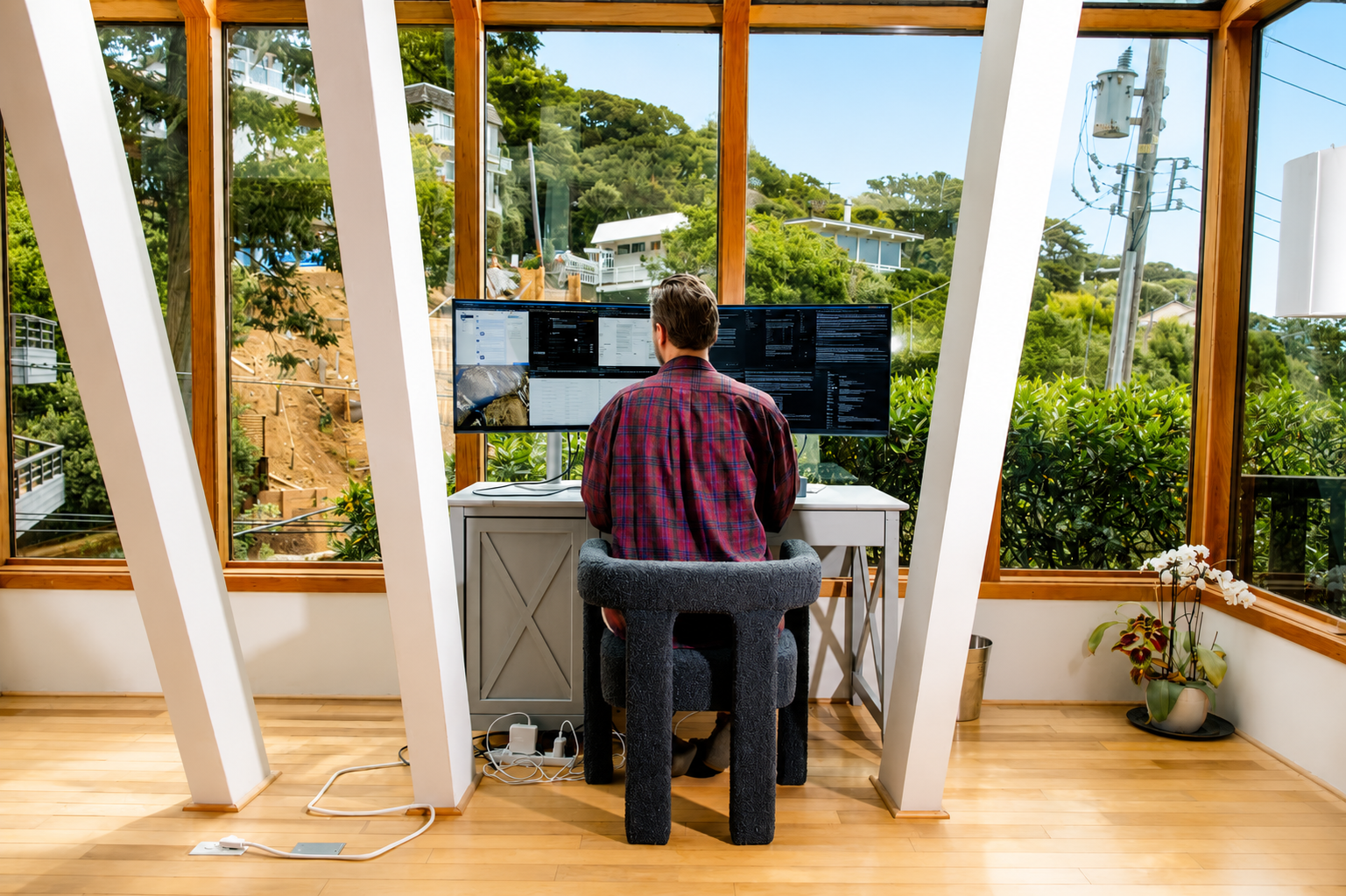
From mazes of cubicles to plentiful lush balconies , office designers keep re-envisioning spaces to support our professional lives. Not all of their ideas have been…work-friendly, shall we say.

We thought it would be productive to ask the workers themselves—in this case Wall Street Journal readers—for a little brainstorming to see what their employers could be doing better.

We asked, What office-design change would you most like to see?

Their responses covered a lot of ground, from workplace conventions to technology to the environment itself.

Put your phones away

Similar to a lunch break, I wish we could have a phone break each day. Staff members would place their phones in a box that would then be removed and face-to-face conversation would be encouraged instead.

This is an important cognitive disconnect. People are responding more slowly to face-to-face conversations as their minds alternate between concentrating on their device and in-real-life interactions.

This no-device speakeasy would be less structured around work and more like a hangout: Someone just kicks off a conversation and folks follow on.

• Desmond Latham, Pearly Beach, Western Cape, South Africa

No hoteling

One way companies could make the return to office smoother would be to have assigned offices and desks.

Having a consistent space provides employees with stability and a sense of belonging, rather than navigating the uncertainty of finding a spot each day.

• Gabriela Valdez, Prosper, Texas

Some place like home

I would like to see office buildings that blend seamlessly into residential neighbourhoods. I

nstead of towering corporate headquarters in city centers, companies would operate from house-like suites scattered across communities.

Employees could walk to work, bring their children or pets along, and enjoy flexible hours without the grind of daily commuting.

Walls would be lined with immersive video screens, allowing teams across the country to collaborate as if they were in the same room.

This model could save trillions in transportation costs, road construction and pollution while offering workers a healthier and more affordable lifestyle.

By eliminating the need for massive skyscrapers, corporations would redirect capital into smaller, interconnected hubs that foster community integration.

The environmental benefits are equally striking: fewer cars on the road, reduced emissions, and less strain on public infrastructure.

• Michael Lowery, Colorado Springs, Colo.

One size doesn’t fit all

I’d like to see a focus on the actual employees.

Why aren’t employers asking them what spaces they need to do the most productive work?

What environments are most conducive to enjoying the work they do? Private offices aren’t the answer for everyone but most workers need more than a traditional cubicle.

Same with artwork and furnishings. One size or style isn’t appealing to everyone.

• Nancy Sanders, Phoenix

Quiet, please

I want an actual functioning cone of silence at work. This would be used so workers that are on conference calls for many hours every day don’t disturb their co-workers with all of their talking.

At many firms, offices with hard walls and doors are only assigned to managers with a minimum number of direct reports.

I think they should be assigned instead based on how many hours a day the person is on conference calls.

And that’s not for the benefit of the projects they manage but for everyone else who otherwise has to listen to one side of a conversation for four to six hours a day.

I know many companies are enthusiastic about open-office plans, but I don’t know any engineers who like them, so many have no choice but to wear headphones and play music to drown out the distractions, which leads to isolation even in a well-populated office.

• Paul Egan, Milwaukee

Private time

I’m gobsmacked that there is no mention of bathrooms in these stories about future office design. If you want to get employees back to an office, offer more privacy there.

• Lisa Hale, Los Angeles

Double down on fitness

Standing desks are passé if not accompanied by an under desk treadmill.

• Taylor Archibald, Provo, Utah

Bring back the cubicle

I’d like to see a return to cubicles or small alcove-style workspaces and a step away from the fully open-office concept.

Open layouts were meant to spark collaboration, but in practice they often create constant noise, distractions and a sense of being “on display.”

Most knowledge work requires periods of sustained focus, and people do their best thinking when they have a bit of privacy and control over their environment.

Cubicles and alcoves don’t eliminate teamwork, but simply give employees a dedicated space to concentrate, recharge and hold quiet conversations without disrupting others.

When combined with designated collaboration zones, these semiprivate spaces create a healthy balance between focus and teamwork.

In a hybrid-work world, the office should be a place that enhances productivity and restoring a sense of personal space would help achieve that.

• James Wright, Grand Rapids, Mich.

A little colour

I’d love to see the addition of some colour. Any colour at all besides gray and beige. I’ve worked in offices for most of my life, and the “grayge” neutrals are suffocating.

I would also like to have more powered standing desks in the office. The hand-operated ones are too complicated or too fragile to allow for regular lifting and lowering. Every one I’ve had has broken.

• Tony Holmes, Prince William County, Va.

Keep us moving

I wish we had more flex space.

That would be where office designers create a variety of workspaces: standing desks, treadmill desks, quiet rooms, lounge areas, etc., so the team can move through different ergonomic worksites throughout the day and keep their bodies and minds flexible and active.

• Sam McNulty, Cleveland

Help us want to be there

I believe that companies should focus on how to make the workplace more comfortable, even homey.

We spend more of our time at the office than we do awake at home. The office therefore should be a place that one looks forward to going to.

This could be achieved with upholstery that shows the company cares that you’re there.

Comfortable chairs and desks, up-to-date technology, a subsidized kitchen and a dining room that invites collaboration and connection between co-workers.

• Andre Mora, Miami

Restorative options

We need nap areas, like pods or mini-bedrooms as well as gym and shower areas.

• Sara Jones, Hillsborough, N.C.

Let it shine

Get the private offices with doors away from the perimeter windows! Move those offices to the interior of the floor plates so more light can flood the workspace and everyone can look out the windows!

Our office was reworked this way and our copy/print/supply area ended up along a perimeter window.

Everyone looks outside while they wait for the print jobs to finish.

We also used low-rise desks so it’s possible to look out the perimeter windows from the private offices.

Our private offices are glass-doored and glass-walled, so there’s a lot of visibility throughout our offices.

• Andrew Skotdal, Everett, Wash.

The ultimate perk

I’m hoping for a coffee-delivery drone robot that lets me stay on a two-hour call without a BRB (Be Right Back) coffee break.

• John Dabbar, Oyster Bay, N.Y.

Five Wall Street Investors Explain How They’re Approaching the Coming Year

The S&P 500 just completed one of its best three-year runs ever, rising around 80% from the start of 2023 through New Year’s Eve. Wall Street thinks the party is just getting started.

Few expect the good times to keep rolling indefinitely, but you would be hard-pressed to find a major bank predicting anything except more gains in 2026.

Yet worries abound about the stretched valuations of artificial-intelligence companies, the path of interest rates and the outlook in Washington, D.C.

So we asked five investors where they’re putting their money:

Alex Chaloff

Count Alex Chaloff among the investors concerned about a reckoning with the huge gains in AI stocks.

The chief investment officer at Bernstein Private Wealth Management fielded questions from clients on the topic all last year.

After several years of huge returns, he is advocating a more surgical approach to picking stocks.

“On one hand, they’re thrilled with the returns. On the other, they’re scared of what the next chapter is, because I’ve been telling them: It’s 1990-something,” Chaloff said, referring to the final years of the dot-com bubble.

“Our view is that we still have room to run, but there will be an end to this.”

Chaloff isn’t selling out of AI, but he is happy to help concerned clients seeking protection against declines in the whole index or a handful of individual big tech stocks.

One tool he is using is buffered exchange-traded funds, which seek to smooth out market swings. Those offer “some upside exposure with either defined or variable protection, and a great level of visibility, transparency and liquidity,” he said.

Bernstein is also working on an “AI loser” list, screening specifically for companies with high debt loads and low free-cash flow—those that have gotten AI hype, but might lack the fundamentals to survive an arms race.

He also holds an upbeat outlook for U.S. growth, especially if the Supreme Court ends up striking down President Trump’s tariffs: “I think that possibility is being overlooked a bit. It could reduce inflationary pressures, allow more rate cuts and accelerate the economy.”

Saira Malik

Tech bulls point out a key difference between now and the dot-com bubble: Today’s most-valuable companies, such as Nvidia, Microsoft and Alphabet, are some of the most profitable in history. And those profits are growing fast.

Saira Malik , who oversees $1.4 trillion as chief investment officer at Nuveen, thinks there is more upside ahead to the technology and AI trade, and she plans to add to some of her favorite holdings in 2026. It all comes down to profits.

The Magnificent Seven tech companies plus chip maker Broadcom —a group Malik is now referring to as the “Great Eight”—are forecast to grow earnings by 24% this year, well over double the forecast for the S&P 500 as a whole.

“We think the earnings growth and future growth justifies the premium valuations in tech, which will continue to dominate and lead the S&P 500 higher,” Malik said.

Tech stocks’ years long dominant run has made a handful of the biggest companies a larger share of the S&P 500 index than ever, making some investors fret over concentration risk. Malik shrugs those concerns off.

“I don’t necessarily say the market has to broaden out for it to be healthy. We’ve been living in this world of tech dominance for basically a decade straight…as long as the earnings power is there, the stocks will follow,” she said.

Outside of stocks, Nuveen expects municipal bonds and private equity both to bounce back in 2026.

Heavy supply of new muni bonds led to them lagging behind taxable bonds last year, a trend that Malik expects to reverse in a “catch-up trade.” Private equity, meanwhile, stands to benefit from lower interest rates and a pickup in deal activity, she has told clients.

Jack Ablin

Concentration risk isn’t just a stock-market issue, says Jack Ablin , chief investment strategist at Cresset Capital. He worries about the growing share of consumer spending coming from wealthy individuals, which he said puts the economy at risk as well.

“We have a narrowing prosperity on both Wall Street and Main Street, and it probably does create a vulnerability. A minority of the participants are accounting for most of the results,” Ablin said.

Stock owners are feeling a wealth effect that leads to freer spending. That could change quickly during a market downturn, however, leading to a scenario where a drop in the stock market could push the economy into a recession, Ablin said.

Cresset has leaned into value stocks and small-caps recently, expecting that both will benefit from interest-rate cuts and lower financing costs this year.

When it comes to AI, Ablin isn’t ready to pick winners and losers.

“I don’t have a crystal ball. So we buy everything for now, and the winners will ultimately pay for the losers.

Larry Adam

Raymond James Chief Investment Officer Larry Adam thinks stocks will have a more modest 2026, projecting around a 4% gain for the S&P 500.

Equity valuations will struggle to move higher than they currently are, meaning those gains will need to come from earnings growth, he said.

“I think the market is vulnerable to some disappointment after going so long with remarkably low volatility,” he said.

Raymond James is adding to bets on the industrials and consumer discretionary sectors this year. Industrials look like an indirect AI play, since they act as suppliers to utility companies and others helping build out AI infrastructure.

Consumer discretionary stands to benefit from a pickup in consumer spending, Adam reckons, with major tax refunds from the One Big Beautiful Bill Act set to hit pockets this spring.

Rob Arnott 

Is there an AI bubble? Rob Arnott says yes, though the Research Affiliates founder and chairman cautions that it isn’t easy to profit on that idea.

“Shorting a bubble is a very fast way to go bankrupt. Bubbles can last longer and go further that you can imagine,” he said.

Like many on Wall Street, Arnott is convinced that AI is the “real deal” and a technological revolution is coming.

But he also warned that technological revolutions take time to play out—and said it is far too early to know which companies will emerge from the pack. During the dot-com boom, he said, Lucent and Nokia numbered among the world’s most-valuable companies.

“Dating back to the industrial revolution, every time you see major disruption there are winners and losers. A lot of losers,” he said. “The disrupters get disrupted.”

Arnott is now running a strategy that automatically trims exposure to stocks if their valuations soar quickly. “Just like averaging in is a time-honoured way to build a position in something cheap, averaging out is a great way to reduce exposure to what’s frothy and expensive,” he said.

With the profits taken from trimming exposure to fast-growing names, Arnott is putting money into areas that look cheaper and less loved, such as international and value stocks, to boost diversification.

Inside the Summer Surge Powering Australia’s Holiday Home Markets

Summer is truly the time in the sun for Australia’s holiday destinations.

An embarrassment of riches floods into town from the capitals, many arriving with the idea of securing a holiday home.

That means real estate markets run right through Christmas and New Year, in stark contrast to capitals like Sydney and Melbourne which largely shut down until after the school holidays post–Australia Day.

Some secured their purchases, or sales, in time for the Christmas holidays.

Take The Block judge Darren Palmer and his cosmetics expert husband, Olivier Duvillard.

They bought an original beach shack near Belongil Beach in Byron Bay for $4.2 million, after selling their former Suffolk Park retreat, Pompano House, for $2.6 million.

Sydney-based Cricketer Nic Maddinson secured himself a getaway in time for Christmas, spending $1.88 million on a four-bedroom home in Coorabell.

One of Chemist Warehouse’s largest shareholders, and managing director of its QLD and NSW operations, Brett Clark, and wife Maria paid $27.5 million for Copperstone, the luxury Bangalow retreat of Oroton heir Tom Lane and wife Emma, in July.

Closer to Christmas, they expanded the already 19-hectare holding by spending $3.5 million for the vacant 24-hectare block next door.

Copperstone, a luxury Bangalow retreat

Still in Bangalow, Susan Fashion Group founder Naomi Milgrom sold one of her Byron region holdings.

She offloaded a “Tuscan-style villa” for $4.9 million. Milgrom, who owns three adjoining properties on the dress-circle Lighthouse Road opposite Clarkes Beach in the heart of Byron, paid $3 million for the three-bedroom home on 2.4 hectares in 2017.

Fellow Melbourne-based best-selling author and podcaster Hugh Van Cuylenburg was also in a selling mood.

He sold his Bangalow retreat for $7.5 million. The founder of The Resilience Project took a hit on the 1905 original cottage, which had been architecturally upgraded into an ultra-modern home, having bought it less than two years ago for $8 million.

Hugh Van Cuylenburg’s Bangalow home

Closer to town, retired professional surfer Owen Wright sold one of his new development houses for $6 million just days before Christmas.

The Daniels Street home.

The Daniels Street home, with four bedrooms and a mineral pool, is one of four homes developed by Wright, who is keeping one of them. The buildings were completed at the start of December.

It was the same story for sellers Peter Ostick and his wife Ida Almasi, founders of Soma wellness spa, better known as the main filming location for Nicole Kidman’s Nine Perfect Strangers.

They nabbed a buyer for their five-bedroom Border Street home, which was reportedly asking around $20 million, after just six weeks on the market shortly before Christmas.

The couple sold the aforementioned Soma wellness spa this year in Ewingsdale, in the Byron hinterland, to Lorna Clarkson, founder of activewear giant Lorna Jane, for just shy of $11 million.

The Gold Coast, another one of Australia’s most popular holiday destinations, saw the same energy levels heading into the Christmas period.

An apartment in Dune Main Beach, the beachfront new development by Andrews Projects, sold for $6.8 million just before Christmas.

The full-floor, three-bedroom unit sits on the third level of the building that has a who’s who of Melbourne-based owners including former JB Hi-Fi owners Richard and Alison Bouris and a business entity with the directors tied to retail billionaire Solomon Lew.

Villa Casa

Former AFL legend Buddy Franklin and wife Jesinta secured a buyer for Villa Casa, their Mediterranean-inspired Reedy Creek estate.

They sold the five-bedroom, 2021-built home for $10.5 million, three years after they bought it for $8.75 million, such has been the boom in the local real estate market post-COVID and in the lead up to the 2032 Brisbane Summer Olympics.

A $72 Million Palm Beach Home Sale Is One of the Year’s First Major Deals

THE DEAL : In one of the first major home sales of 2026, a waterfront property in Palm Beach, Fla., has sold for US$72 million (approx $102 million AUD). The buyer wasn’t disclosed. undefined

THE SELLER : Pamela W. Starret, a British investor in the mining and energy industries, had owned the property since 2018, when she bought it for $21.355 million. Starret, who started wintering in Florida in the 1990s, spent about $25 million gut-renovating the house. She listed it for $95 million in 2024. Starret didn’t respond to requests for comment.

THE NEIGHBOURHOOD : On the Intracoastal Waterway on the North End of Palm Beach island, the property is next to a home owned by actor Sylvester Stallone.

THE SPECS : Originally built in 2005, the Neoclassical house measures roughly 16,000 square feet with six bedrooms. The roughly 1-acre property also has a $2 million travertine pool and cabana.

THE MARKET : There were a number of high-priced deals leading up to the New Year in Palm Beach, where the median sale price for luxury homes was $17.2 million in 2025’s third quarter, according to Miller Samuel.

In December, chewing-gum heir William Wrigley Jr., sold a North Palm Beach compound for $97.5 million , while a property a few doors down from Starret’s traded for around $66.1 million, property records show.

“We have had a pretty incredible flurry in the last couple of months,” said Gary Pohrer of Serhant, who had the listing with Ryan Serhant.

Margit Brandt of Premier Estate Properties represented the buyer.

Here’s What It’s Like to Retire to Portugal

Four years ago, with my adult daughters gone from the nest, it was time for me to fly, too. And even though I had never set foot in Portugal, I decided to retire to Lisbon.

It has paid off spectacularly.

I was a director of marketing and communications at a public university and 55 years old when I retired.

Around that time, there was a lot of publicity about Americans, especially older single women like myself, moving to Portugal.

It remains one of the easiest places in the European Union to gain citizenship after five years of temporary residency (though a proposed law would double that to 10 years and add other requirements for most foreigners).

Portugal checked other boxes for me, too: It’s safe and affordable, a good base for travel, the U.S. is reachable within six hours from the East Coast, and the culture and natural beauty provide a wonderful environment.

The life I have created here has exceeded all of my expectations. I am more active and have deeper friendships than ever before.

The best part is the vast community of friends I have cultivated—mostly Americans, but also some from countries around the world.

They all make living here a lot of fun. Almost daily there is some kind of social event I can join, whether it is visiting museums or attending concerts, going to the beach or hiking.

I started a hiking group two years ago that now has 65 members. We explore historic and natural sights in Lisbon and nearby, including the breathtaking hills nestling the palaces of Sintra.

Changing apartments

Not everything has been smooth sailing. Before arriving, I signed an apartment lease to qualify for a temporary visa.

But after I settled in, it became clear that lots of nice apartments with lower rents were available.

So, after the first year, I moved to Almada, across the Tagus River. The money I saved on rent helped pad my budget for travel.

There was just one problem: Across the river, I felt a bit isolated from my friends.

Now I am closer to central Lisbon in a comfortable one-bedroom second-floor walk-up in a neighborhood with a lot of stores and restaurants.

There is a park where locals gather to listen to music and have a drink or watch their kids play together. I pay the equivalent of about $1,000 in rent and roughly $160 to $215 a month for electricity, water, gas and internet.

And I have a great view of the famed 25th of April Bridge and the towering Christ the King (Cristo Rei) statue that overlooks the city.

Like many apartment dwellers here, I don’t have central air or heating. The climate is comfortable without either, except for a few weeks in January when I use a space heater.

In the summer, I have a portable air-conditioning unit but so far I haven’t had to use it. There is also no dishwasher and no dryer. I use a clothesline on the balcony and a laundromat nearby in case I have an urgent need to dry things.

Delicious fresh fruits, vegetables and fish are all available from my local shopkeepers.

Frequently, I meet friends for lunch or dinner. I love the seafood here. The sea bass and bream are always tasty.

My favourite meal is gambas à guilho: shrimp sautéed in garlic and olive oil. Meals at a typical Portuguese restaurant can cost as little as $12-$15 for soup, an entree, coffee and dessert.

Sometimes I miss having a car, but it’s easy to get around on public transportation. For a little over $46 a month, I have access to every bus, train, tram and ferry within 30 miles.

To go farther within Portugal and Spain there are inexpensive buses and trains. Flights within Europe and to Northern Africa also are affordable, depending on the season.

I have visited Austria, Hungary, Morocco and Jordan, and I’ve visited the U.K, Spain and Italy multiple times in the past four years.

Next year, I will take my three daughters to Turkey for my 60th birthday! I belong to a pet-sitting/home-swap group, so my accommodations are frequently free; I only have to pay to get to the location.

Most of my airfares have ranged between about $110 and $215.

The price of healthcare

Another important thing I had to consider when moving here was healthcare.

Even with a pre-existing condition, I was able to purchase excellent private insurance for about $1,840 a year, and I have had good experiences with the private healthcare system.

A public hospital, however, supplies free medication for my autoimmune disease.

My life here isn’t without its downsides. Rising rents are an issue and have forced a number of friends to move.

I have considered buying an apartment, but ones that I would consider—those requiring no major work—start at well over $380,000, which is more than I want to spend.

Also, apartments here commonly have “paper thin” walls and floors. Everyone has stories about noisy neighbours.

When I moved into my first apartment, I was so worried about making noise that I gave my downstairs neighbours my number to call if I was ever too loud.

They thanked me but said, “Noise is to be expected…don’t worry about it.” In my current apartment building, two out of the five apartments are vacant and I rarely see my neighbours.

The only complaint is noise above my bedroom in the middle of the night. Fortunately lately, that has become less of an issue.

Learning Portuguese has been a bit of a struggle. I have taken classes for more than two years, and technically, I have passed the B1 level course, but speaking in public is frightening to me and therefore locals sometimes still have trouble understanding me.

Thankfully, the Portuguese people are kind and no matter how badly I bomb when trying to speak, they always praise my attempt and encourage me to keep trying.

And when I greet people in my neighbourhood by name and ask about their day, it continues to make my connection here stronger.

I plan to apply for Portuguese citizenship, though I still consider myself an American and always will. Neither Portugal nor the U.S. requires sole citizenship.

I have only been back to the U.S. twice: for my youngest’s college graduation and for my eldest’s wedding.

My daughters have always encouraged me to live the life I want, and they love to tell their friends their mom moved to Portugal.

My youngest has been here once, and the middle daughter, who goes to college in England, has been here twice.

All of my daughters and my son-in-law will be coming to visit me for Christmas this year, and I am ecstatic.

If my daughters lived here with me, I would consider my life here perfect.

Conservative Young Women Flip the Script: Kids First, Then Career

For generations of women, the logic has seemed airtight: Focus on a career in your 20s, and worry about starting a family once you are established in a job.

This mindset has catapulted women into higher-earning positions, and into traditionally male-dominated fields.

The share of women in their prime working years who are in the workforce is around a record high. And women are having babies later, if they have them at all. The answer to fertility constraints, they’re told, is egg freezing.

Isabel Brown , 28, didn’t want to wait. She married last year and had a baby this year. She’s now building her career as a conservative activist, hosting a podcast for conservative media company the Daily Wire and speaking on college campuses as a representative for Turning Point, the youth organisation Charlie Kirk co-founded.

Kirk’s widow, Erika Kirk , now leads the organisation and is amplifying a message especially resonant for young conservative women: Family is central. Children come first.

“Young people are realising that our lives are going to be so much more meaningful if we have a family to share our success with from the start,” Brown said. She and other conservative women talk about timing family and work as “seasons” of life.

The term is from the biblical passage Ecclesiastes 3:1: “For everything there is a season, and a time for every matter under heaven.”

Many of the women who view their lives in this way say they think of themselves as existing in between the extremes of tradwives (who treat caring for their homes and families as a more permanent, full-time job) and girlbosses (who centre their lives around work).

As recently as 15 years ago, self-described conservative and liberal women between the ages of 18 and 35 were having children at around the same rate, according to an analysis from a large national study called the General Social Survey by Samuel Perry, a sociology professor at the University of Oklahoma.

But in recent years, the gap has widened, his analysis shows. As of 2024, roughly 75% of liberal women in this age range were childless, compared with around 40% of conservatives. In 2010, the difference was only 5 percentage points.

“Liberals are leaning hard into being DINKs (Dual Income No Kids), being childless or having fewer kids, and it being very much a choice, whereas for conservatives having kids is still very much a part of what it means to be a whole person,” Perry said.

Having kids doesn’t preclude workforce participation, and plenty of liberals are still putting a priority on parenthood. But as birth and marriage rates fall, some conservatives are doubling down on the importance of starting a family.

“If you decide to not work or not lean in in the first 10 years of being a mom and you do that in your 20s, there’s still plenty of time to start working in your 30s and have a meaningful career,” said Carrie Lukas , the president of Independent Women, a right-leaning public policy organisation focused on women’s economic issues.

At a conference for conservative college women in Scottsdale, Ariz., last month, speaker after speaker (including Brown) encouraged the 100 gathered women ages 18 to 22 to pursue careers and education—but not at the expense of marriage and children.

Reagan Conrad, who hosts “The Comments Section” podcast for the Daily Wire, discouraged egg freezing. “If we as women are putting our eggs on ice for a decade to make sure that our career is thriving,” she said, “we have a prioritisation problem.”

K.T. McFarland talked about leaving her job in public affairs at the Pentagon at 34 to raise five kids and deciding to return to the workforce after 9/11, when she was 50. The former Fox News analyst served as President Trump’s deputy national security adviser in his first term.

Kimberly Begg , president of the nonprofit Clare Boothe Luce Center for Conservative Women, which was hosting the event, told the audience that Gen Z is the “loneliest generation” because members of that demographic group are a part of smaller and more fractured families.

Begg also said that they have been told lies such as “faith and family hold you back.”

The 49-year-old says she regrets putting her travel-heavy job as general counsel of a nonprofit over the needs of her five young kids earlier in her career.

“One of my daughters learned how to use the phone and she called me constantly because she wanted me to come home,” Begg said in an interview after the conference. “My children were not thriving.”

She decided to quit that role after seeing how the big-eyed Beanie Babies she brought home as souvenirs for her daughter after each work trip had taken over her room.

After five years at home, during which time she wrote two nonfiction books and advised nonprofits, Begg joined the Luce Center in 2024.

A few months after she became president, she shifted the in-person office hours—which they call “collaboration hours”—to end at 2 p.m. to accommodate mothers picking their kids up from school and other family priorities.

“Children and marriages and families need more than just loving thoughts,” said Begg. “They need presence. And these hours allow me to be present with my children while I’m engaging in meaningful work.”

She encourages the students she mentors to look for the flexible work arrangements that have become more common postpandemic. (Though they can come with drawbacks for career advancement and pay.)

“You can have everything you want,” Begg says. “But you can’t have it all at once.”

Grace De Mars , a 21-year-old senior at California Baptist University who attended the conference, recently got engaged to her high school boyfriend.

She has been trying to reconcile her aspirations to become a history teacher with her desire to start a family in her mid-20s. Her mother, who had her at 39, warned her about how much harder that late pregnancy was than her previous three.

“I have to come to terms with what’s more important for our children and for our family,” said De Mars. “Especially as a teacher, it’s not like I can just clock out and go home and not take my work with me.”

As a young mother and policy analyst working remotely for conservative think tank the Heritage Foundation, 28-year-old Emma Waters is both living and researching the seasons approach.

She left a fast-paced, coalition-building role when she and her husband decided to have children so that she could be home with them—now ages 2½ and 11 months—during the day. Since then, she says she’s turned down other in-person career opportunities she would have otherwise enjoyed.

“I love my work, but my top priority is to raise my children, and that cannot be outsourced to someone else for eight hours a day, five days a week,” said Waters. “The ‘you can have it all’ mindset is so misleading and sets women up for disappointment.”

She knows that not every woman can work remotely, and that living on a single salary isn’t an option for many families. She also doesn’t prescribe her family’s approach as a singular ideal, acknowledging that seasons look different for everyone.

In her work as a policy analyst, she is advocating for “more financial support for married, working families in particular alongside the social support systems we have in place for single-parent families already.”

Mostly, however, she thinks it is the culture that needs to change to make it easier for people to fit their work around their families, rather than the other way around.

“The answer is more community support to find flexible work for young mothers,” Waters said.

In posts to her roughly 2 million mostly young Instagram and TikTok followers, Turning Point representative Brown asks: Why wait for marriage and parenthood? “It’s not true that walking down the aisle or welcoming a child into the world will somehow limit your personal freedom,” she said.

Brown records her show for the Daily Wire from her house in Washington, D.C., and often brings her daughter to the speaking engagements she travels to all over the country.

Her husband, Brock Belcher , who works in communications for the Trump administration, shares child-care responsibilities for their daughter Isla “with the exception of breast-feeding,” Brown joked.

Their experience as a young family, Brown said, differs from the message she thinks a lot of young people see about how they should structure their lives.

“We are looking around at the antifamily state of affairs in our country,” Brown said, “and realising that, for the most part, people aren’t happy or fulfilled.”

Why Are We So Obsessed With Ugly Dogs?

Play, a four-year-old French bulldog, waddled down the street in Noho. Squinting in the morning sun, she had bat ears, a downturned mouth and the mien of a pissed-off mother-in-law.

“People tell me she’s ugly all the time,” said her owner Nakisha Lewis, 41, a stylist and impact strategist. “I think the little round face is absolutely adorable…but every parent thinks their baby is adorable.”

You can’t go around calling human babies ugly, but thankfully the rules are more lax with dogs.

I’ve been patrolling downtown Manhattan to find singularly unattractive breeds—then asking their owners why they chose them. (I haven’t asked if any believe the urban legend that dogs resemble their masters.)

As a superficial snob who grew up with golden retrievers that deserved Pantene commercials, I had to know: Why are we so into ugly dogs now?

In recent years, man’s best friend has plummeted from a 10 to a 2. Sure, you see lots of gorgeous doodles, but at the end of every second leash lurks a rat with an overbite or a popeyed goblin with ears so monstrous they make King Charles III’s seem not that big.

French bulldogs lead the charge for character-actor canines.

Celebs cradle the Yodalike pups, and millennials love them even more than a tasteful beige wall.

For 31 years Labradors topped the American Kennel Club’s purebred rankings, which are based on more than one million annual registrations.

Photo: Amit Lahav, Unsplash

But since 2022 Frenchies have been top dog, with Labs and golden retrievers settling for silver and bronze. It’s like the quarterback and homecoming queen losing a popularity contest to a wheezing weirdo.

Dr. Carly Fox, a senior veterinarian at New York’s Schwarzman Animal Medical Center, said that flat-faced dogs—they’re “brachycephalic” for people in the know—have been ascendant in the past decade.

Other popular members of this snub-nosed club include English bulldogs, Boston terriers, pugs and Brussels griffons.

A rival gang—more niche but no prettier—is the rat pack.

Think chihuahuas, hairless xoloitzcuintles and Chinese cresteds, a mostly hairless breed with wispy tufts on its head that the American Kennel Club called a “mover and shaker” and I call “a dog that got left in the microwave.”

This summer, a Chinese crested in a pink gown shivered through a starring role in Lena Dunham’s Netflix show “Too Much.”

The Victorians sparked the modern obsession with engineering “lots of different looking dogs to fit different human wants,” said Dr. Rowena Packer, senior lecturer at the University of London’s Royal Veterinary College.

The malleability of the dog genome allows for enormous physical variety, she explained, meaning that breeders can push features to extremes—squashing snouts, piling on wrinkles.

To evaluate a dog’s alterations, said Packer, consider how much it deviates from the original archetype: the wolf. I’d wager a wolf would sooner recognize a sheep as one of its own than a grinning pug.

Hal Herzog, a professor emeritus of psychology at Western Carolina University who studies human-animal relationships, said dog breeds become popular in the same way fashion trends do.

We look to movies and celebrities and, above all, copy each other. Chance plays a huge role in a breed going viral, he said, but it helps to have some inherent appeal.

The allure of wackadoo breeds? For starters, most skew small. That suits postpandemic demand for apartment dogs that can also travel, said Paula Fasseas, founder of PAWS Chicago, a no-kill animal welfare organisation.

But the big draw of brachycephalic (brachy) dogs is their cheek-squeezing cuteness.

When owners gushed that their Frenchies and pugs resembled human babies, I took offense on behalf of all parents.

Yet studies show that flat-faced dogs possess “kindchenschema” or “baby schema,” a term coined by ethologist Konrad Lorenz to describe infantile features that elicit caregiving reactions.

With wide eyes, small noses and bigger, rounder heads, a brachy dog’s face “is far more human than, say, a Labrador’s,” said Packer.

Those looks come at a high cost. Packer said that Frenchies, pugs and English bulldogs are more prone to chronic eye disease, skin-fold infections and spinal problems, as well as breathing issues caused by truncated airways—and exacerbated by faces that are often flatter than in the past.

Fox, the vet, owns a Frenchie but called extreme brachy breeds “nightmares” from a medical perspective. (Love the look? Packer recommends a healthier mix like a jack russell-pug, the superbly named “jug.”)

Some experts argue that brachy dogs’ health problems can make them more desirable to owners.

Authorities such as James Serpell have suggested that these dogs’ neediness brings out our maternal instincts, Herzog noted.

Forget about throwing a stick; as one young woman told me while her wet-nosed darling relieved himself in the park, you must wipe a Frenchie’s butt . Packer called this phenomenon “the parentification of dogs.”

The oversharing park-goer compared her Frenchie to a Labubu.

A cynic might say that, like those hideous-slash-adorable dolls, brachy pups are a trendy accessory for young urbanites to parade about and post on Instagram. Less debatable: Like those grinning monsters, dogs with scrunched faces are hilarious.

Photo: Hura Victoria, Unsplash

“There’s a tragicomedy aspect” to Frenchies’ appearance, said the Smashing Pumpkins frontman Billy Corgan, who owns a rescue, Colette.

“They look like something out of a Cervantes novel…they have this lost soul thing.” They also remind him of the late comic actor Marty Feldman, whose googly eyes shot off in different directions.

“They’re not beautiful like a greyhound,” he added, “but, you know, we’re not dating dogs.”

A Frenchie owner expects to field compliments like, “Oh my god, that’s hysterical,” said Will Thrun, 27, who works in finance. At a Halloween dog parade in the East Village, Poppy, Thrun’s Frenchie, lay in the sun dressed as a taco while the ancestral gray wolves howled in their graves.

Elias Weiss Friedman, who shares his photos of New York dogs with the nearly 8 million followers on his Instagram account, the Dogist, said people increasingly want pooches that stand out.

A weirdo dog lets you “show your individuality,” said Terence Nelson, 38, an influencer marketing strategist in New York whose fuzzy Brussels griffon, Sue, is a dead ringer for an Ewok. (I kept my mouth shut when Frenchie owners praised their dogs’ “uniqueness” with literally dozens of other Frenchies snorting about nearby.)

Brian Lee, founder of Way of the Dog, a dog-behaviour program in Southern California, offers another explanation for the prevalence of odd-looking pups: the rise in rescue-dog adoptions. People may think “I want to help this innocent animal” rather than focus on looks, said Lee.

When people call Eve-Marie Kuijstermans’s dog ugly she considers it a compliment. Edgar Allan Pup (“Eddie”), her Chinese crested-chihuahua mix, is mostly hairless, with old-mannish tufts on his head.

“He could be 100 years old,” said Kuijstermans. (He’s five.) “Kids are very confused by him,” added the 41-year-old SVP for a communications firm.
Lately, Kuijstermans has spotted more Brussels griffons, Chinese cresteds and “interesting mixes”—a revenge-of-the-nerds backlash to the flocks of fluffy doodles.

“For me, Eddie’s cuteness lies in the fact that he’s kind of a weird little guy,” she said, as her pooch scrambled onto my knee to survey the dog park.

Suddenly, this golden-retriever lifer began to fall for a sweet little thing as cuddly as a broom.

OFF THE WALL: THE RISE OF TEXTURED ART 

In 2026, home interior trends are predicted to reflect our growing need for warmth, comfort and personal expression: a response, perhaps, to the fast-paced, always-on lifestyle many of us feel forced to embrace.

And where better to start than the four walls that define your living space? Unlike flat prints and traditional paintings, textured art invites engagement, creating a dynamic ambience in living rooms, bedrooms and outdoor entertaining spaces. 

Interior designers are increasingly looking to create a multi-sensory experience, and wall art is a key part of that: blending art and sculpture, creating a focal point, and showcasing changing light patterns throughout the day.

Weaving ways

Sydney-based fibre artist Catriona Pollard uses traditional techniques to transform foraged plant fibres and recycled materials into evocative, sculptural works.

“I discovered weaving more than a decade ago, at a time when I was searching for a slower, more mindful way of creating,” she says. 

“I had been working in a very fast-paced environment, and weaving became a way to reconnect with myself and with nature.”

Much of Pollard’s inspiration comes directly from the Australian landscape,  from the textures of bark, seed pods and leaves, to the movement of wind and water.

“I see weaving not just as a technique, but as a dialogue with nature, where the materials guide the direction of the work as much as I do,” she explains.

Textural wall art is credited with bringing another dimension to how we experience art. A flat canvas is viewed front-on, but fibre works extend into space and interact with their surroundings. 

They cast shadows that shift throughout the day, so the work is never static,  it is alive and responsive to light.

“There is something visceral about woven materials,” says Pollard. 

“People instinctively want to touch them, to feel the textures and patterns. Fibre carries its own history, whether it is a vine that once grew in the bush or copper wire that once carried electricity, and that embedded story becomes part of the artwork.”

Leaf Skeleton, Helen Neyland’s intricate metal wall art, captures the fragility of nature in sculptural form.

Metal magic

At the other end of the material spectrum, metal is also having a moment. Flexible, versatile and built to last, it brings a striking talking point to entertaining spaces indoors or out.

“I have been making sculptural wall art for over 30 years. I draw my ideas from organic shapes in nature and also from mechanical and architectural forms, and make work that has texture, depth and movement,” says Helen Neyland, artist and creative director at Entanglements Metal Art Studio at her Jasper Road studio in Melbourne’s Ormond.

“Metal wall art breaks away from a painting. It is 3D, it is textural, it works indoors or out, in foyers, large voids and bare walls. As the light passes through the day, the shadows change, stretching and falling across the wall. It gives you a work that is alive. You can backlight it for effect, or just let the light play naturally.”

Neyland notes that more people are seeking handmade, crafted pieces.

“There is more value placed on artisan work,” she says. “Sculptural wall art gives depth, presence and honesty that you do not get with mass-produced pieces.”

Stigmartyre by Brad Gunn evokes both reverence and unease.

Emerging artists

Bluethumb Gallery is Australia’s largest online gallery of original art, representing more than 30,000 emerging and established artists across the country.

Nadia Vitlin is one of them. Based in Sydney, she has a background in geospatial and biological sciences and describes her art as bringing together “the study of nature, humanity, emotions and sociological phenomena through the lens of the scientist”, via the tactile form of clay.

“I do also create two-dimensional works, and love having ‘flat’ art on my walls, but 3D and textured wall art is really having a moment,” she says.

“This may be because they are like hung sculptures more than they are paintings, and can contribute to the feel of a space rather than directly telling a visual story. Another thing may be that the tactility of a 3D object is quite irresistible.

“I always let gallery visitors touch my artworks – within reason! It is especially tempting because I make hard clay look soft, so the brain cannot help but want to feel it to understand it.”

Sculptor Brad Gunn agrees. “I think the element of depth captures the viewer’s eyes more quickly. It invites touch, and the tactile nature gives a secondary element to the work.

“Also, as the light changes in the room, either from the natural sun’s rays, overhead lighting or lamps, the work will cast its own shadows and feel different throughout the day.”

This story appeared in the summer issue of Kanebridge Quarterly Magazine. You can buy a copy here. 

The winners and losers in Australian residential real estate in 2025

Australia’s housing market staged a turnaround in 2025, defying intense affordability and cost-of-living pressures to deliver an above-decade-average growth rate of 7.7% through the year-to-date.

Cotality’s annual Best of the Best report, a detailed nationwide breakdown of the suburbs that rose fastest, had the highest rent return or offered the most accessible entry points, identifies which markets led the year’s recovery.

National dwelling values are set to close 2025 at least eight per cent higher, a result Cotality Australia Head of Research Eliza Owen says highlights how quickly conditions shifted after a challenging start.

“Markets entered 2025 under considerable pressure. Affordability had hit a series high, serviceability was stretched and price growth had flattened out. What followed was an unexpectedly strong rebound as interest rate cuts, easing inflation and limited supply reignited competition,” Ms Owen said.

Three rate cuts, an expansion of the 5% Home Guarantee Deposit Scheme and persistently low listing volumes helped drive the recovery, with the housing market recording three consecutive months of growth of at least 1% by November and reaching a new high of $12 trillion.

Owen said the turnaround was most visible across lower-value markets and regions where buyers were able to respond quickly to more favourable credit conditions.

“Tight supply meant even modest demand created upward pressure on prices. Cheaper markets were had the most acceleration because they remained within reach for buyers navigating higher living costs,” she said.

Prestige Sydney remains Australia’s price leader 

Sydney’s top-end suburbs sat in their own price bracket in 2025, widening the gap between premium enclaves and the rest of the country.

Point Piper led the national list with a median house value of $17.3 million and unit medians above $3.1 million, followed by long-established areas such as Bellevue Hill, Vaucluse,

Tamarama and Rose Bay. 

Owen said the resilience of premium Sydney markets was in sharp contrast to affordability pressures elsewhere.

“Affordability constraints were a defining feature of 2025, yet premium markets continued to operate on their own cycle. These suburbs are far less sensitive to borrowing costs and

listing trends, which is why their performance often diverges from the broader market,” she said.

Mosman recorded the highest total value of house sales nationally at $1.58 billion across 229 transactions, underlining the scale of turnover even in a year of strained serviceability.

Lower-value suburbs delivered the strongest gains

Western Australia dominated high house value growth in 2025, with Kalbarri increasing 40.2% to $515,378 followed by Rangeway (32.2%) and Lockyer (32.0%).

Similar trends emerged in the unit market, with strong results concentrated in Queensland’s mid-priced regions such as Cranbrook (up 29.3%) and Wilsonton (up 26.9%).

Ms Owen said the performance of these markets highlighted the role of affordability at a time of constrained borrowing power.

“Lower value areas offered buyers an opportunity to get into the market if they had the capacity to service a mortgage. Once interest rate cuts started to flow through, demand lifted

quickly in those areas where prices had further room to grow,” she said.

“Investors were a particularly strong driver of demand in markets across WA and QLD, where the share of new mortgage lending to investors reached 38.3% and 41.1%

respectively.”

Perth, Brisbane and Darwin lead capital-city upswing 

Darwin posted the strongest rise among the capitals at 17.1% through the year-to-date, following a flat result in 2024, joined by Brisbane and Perth as Australia’s three top-performing capital cities.

The fastest growing capital-city suburb for houses was Mandogalup in Perth (up 33.0% to $944,609), alongside several outer Darwin suburbs where more moderate entry points below $600,000 supported stronger value growth.

The most affordable capital-city suburbs for houses were clustered around Greater Hobart, including Gagebrook, Herdsmans Cove and Bridgewater, all with medians under $450,000.

Suburbs in Adelaide and Darwin provided some of the best value for unit buyers, with medians ranging from less than $250,000 in Hackham, Adelaide to $328,416 for Karama in Darwin.

Biggest gains and the steepest falls in regional Australia

Strong upswings in WA and Queensland contrasted with declines in other regional pockets.

House values fell 11.6% in Millthorpe (NSW) and 10.5% in Tennant Creek (NT) while several unit markets recorded annual declines, including South Hedland (down 14.1%) and Mulwala (down 11.8%).

Owen said these differences reflected the uneven backdrop of supply levels, migration flows and localised demand.

“Some regional areas are still benefiting from relative affordability and tight rental conditions.

Others are adjusting to earlier periods of rapid growth or shifts in local economic activity,” she said.

Mining towns produced the highest yields

Rental demand remained firm across key resource corridors in regional WA and parts of regional Queensland, where constrained supply, strong employment bases and short-stay

workforces contributed to some of the highest yields in the country.

Newman, in the Pilbara, delivered the strongest house yields at 12.6%, reflecting demand linked to iron ore operations, Kambalda East, near the Goldfields mining belt, followed at

12.2%, supported by nickel and gold activity.

Unit yields were even stronger, with South Hedland leading the country at 17.8%, while Newman recorded 14.3% and Pegs Creek recorded 13.2%, as apartment stock is limited

and worker demand remains consistent.

Pegs Creek, located in Karratha, recorded a 23.5% increase in house rents over the year and Rockhampton City recorded a 21.1% jump in unit rents.

Constraints to shape 2026

Market conditions are expected to be more restrained in 2026 as borrowing capacity, affordability and credit assessments place limitations on demand.

National listings remain 18% below the five-year average and new housing completions continue to trail household formation, maintaining the structural imbalance that supported

stronger conditions in 2025.

Owen said that imbalance alone is not enough to drive the same level of growth next year.

“Supply remains tight, but the demand environment is shifting. Inflation forecasts have been revised higher, interest rate expectations have adjusted with them, and households are

facing stricter borrowing assessments. Those factors can temper buyer activity even when stock levels are low,” she said.

“Lower value markets may still outperform because they carry less sensitivity to credit constraints, but overall growth is likely to be more measured compared with 2025.”

Key findings – Cotality Best of The Best (BoB) 2025

  • Lower-value suburbs delivered the strongest value gains, led by Kalbarri (WA), up 40.2% for houses, and Cranbrook (Qld), up 29.3% for units.
  • Sydney’s premium suburbs remained the country’s highest value markets, with Point Piper recording a house median of $17.3 million and unit median of more than $3.1

million.

  • Mosman recorded the highest total value of house sales nationally, with $1.58 billion transacted across 229 sales.
  • WA’s resource-linked towns produced the nation’s strongest rental yields, with Newman at 12.6% for houses and South Hedland at 17.8% for units.
  • Pegs Creek (WA) had the highest annual house rent increase at 23.5%, unit rents rose the highest in Rockhampton (QLD), up 21.1%.

How Australia’s Business Leaders Really Switch Off

Months of running between meetings and breaking down the working week into 30-minute increments to get through a long list of tasks takes its toll on the most astute business leader.  

So, Kanebridge News asked corporate high-flyers where they holiday and how they value their time, which revealed a fascinating insight into not just what makes them tick.  

Many told stories of time away from the hustle, spent exploring the dark corners of Tokyo, the beaches of Bali and off-grid tiny homes with loved ones.

They agreed that taking a well-earned break from rigid scheduling and being ruled by a calendar in a high-pressure environment makes the hustle worthwhile.  

Karlie Cremin, CEO of DLPA & Crestcom

Karlie Cremin, CEO of DLPA & Crestcom 

High-profile Sydney leadership trainer Karlie Cremin leaves the city behind for a break by the beach with her husband and three children, all under 10 years of age.  

Having school-aged kids means she’s tethered to the school holiday period for her breaks, but the CEO of leadership program firm Crestcom makes the most of it, driving north of Sydney to the Central Coast for a two-week break at the end of each year at Pearl Beach.  

“We love the area because no one goes there, and yet it’s magical. It’s this little oasis away from the traffic jams, which gives us something to look forward to.” 

The family hires the same house every year, located within walking distance of the local beach, where they hang out during the day. 

“The kids arrive at the holiday house and know where everything is and how to get around. They love the familiarity of hiring the same house every year.” 

Karlie loves a bite at nearby eatery Bells at Killcare while in town, which is booked in advance. 

“There’s nothing much at Pearl Beach, which is how we like it. Mostly, we barbecue out back, serve salads, and keep it really simple. We enjoy not having complicated dinners when we’re on a break,” Cremin says.  

While she would love to completely switch off, the reality is that she does need to be available for work.

“There are some tasks that only I can do in the organisation, but I tend to handle those things that pop up once the kids are in bed, so it doesn’t interfere with family time.” 

Nic Brill, global CEO, Poolwerx , and family

Nic Brill, global CEO, Poolwerx  

Running the largest global franchise pool service brand as it continues on a strong growth trajectory is a big job for Nic Brill, who stepped into the global CEO role late last year. (SUBS 2025) 

He admits that leading a service business of scale requires clear thinking, good judgement and sustained energy.

“I’m at my best when I’ve had time to step back and reset, so I view downtime as a strategic necessity.”  

The company works hard to create environments that elevate people’s quality of life at home. 

“We also take a few international breaks throughout the year. For me, the ideal holiday is somewhere warm, relaxed and close to the water.” 

 “Time is one of those things you can’t manufacture, so I’m very deliberate about how I use it. When I’m taking a break, I try to protect it so I can be present with my family and properly recharge. At the same time, I lead a large franchise network, and I’m always mindful of my responsibility to our people.  

Small townships dotted along the northern NSW coastline has become a favourite, where he goes to switch off, spend time with family.  

“I’m happiest when the days are simple – time by the pool or ocean, good meals and a chance to slow down and reconnect.

“I also like to keep active, whether that’s swimming, getting out for a run or exploring somewhere new,” Brill says. 

Brad Krauskopf, CEO and founder, Hub Australia

Brad Krauskopf, CEO and founder, Hub Australia  

The founder of Australia’s largest privately owned flexible workspace operations has spent more than a decade building his business.  

Founded in response to the growing number of freelancers and entrepreneurs requiring workspace following the global financial crisis, the pioneering business model has been built on sweat equity.  

But when he’s away from the daily grind, Brad likes to book flights to somewhere in Asia, which has emerged as a favourite holiday spot for him and his family. Malaysia, Thailand and Bali are popular spots. 

He also recalls a great holiday in Tokyo’s Shinjuku Golden Gai, a collection of mismatched, tumbledown bars lining a darkened corner of the city.   

While adventure holidays were a favourite in years gone by, that’s not so much the case these days as a family man. He often spends time trying local cuisine, wandering through retail areas and seeing the local sights, which are his favourite.  

Holidays across Australia are also a favourite. “When I’m away, the out of office is on, and the team know that if they need me, they need to call or text me. I’m not contactable on email when I’m on a break, which means I’m not buried in my inbox while I’m away. Keeping yourself off the emails or Slack or whatever it is gives you that distance from work that enables you to take a good break.”  

He also likes to take a break by himself occasionally to recharge. “I try to take all my leave each year, because it helps me be better when I’m at work.”  

Brad has taken a few breaks at an Unyoked Cabin, an off-the-grid cabin in a remote area, both alone and with his daughter.

Quick little nature getaways that mean you’re completely disconnected are the best. And I never finish a holiday without having booked your next one,” he admits.     

Justin Gilmour, managing partner, Integro Private Wealth.

Justin Gilmour, managing partner, Integro Private Wealth  

Spending his working days at the helm of a Perth-based wealth management and financial planning firm is where Justin Gilmour belongs.

But when he’s on a break, he prefers to get in the car rather than a plane, driving to the regional area of Yallingup in the southwest of Western Australia in the Margaret River region.  

He loves to slow down and enjoy warm, sunny days and gentle coastal breezes when relaxing. “The beaches in the south-west are world-class, offering pristine sands and crystal clear waters that rival any international destination. For me, there’s simply nowhere better to unwind and recharge than this spectacular corner of the country.”  

His break is spent with his wife and kids, but he admits half of Perth heads up to Yallingup as well.

“We’re always bumping into people (and even clients) that we know. But spending time in Yallingup allows me to slow down and enjoy the simple pleasure of life with my family.” 

He prefers not to stay in touch with the office too much while he’s down there, using the time to reset and recharge, but does chat to clients when he bumps into them. 

“I think it’s important to have that period of clear headspace and take a step back and look at the bigger picture, both in terms of my personal life and for the business. A daily swim is certainly a must when I’m down there.”   

Boutique mountain retreat loved by celebrities on the market

A boutique mountain retreat that has welcomed a long list of VIP guests has come to market in Queensland’s pristine Scenic Rim.

The Tamborine Mountain property, known as Verandah House Country Estate, is owned by designer Judy and Lawrence Pereira.

The couple bought the rundown B&B compound in the Gold Coast hinterland back in 2022 for $2.5 million. It was then transformed into a secluded child-free holiday spot where the high-profile guests have included the extended Irwin family, Jude Law and a bevvy of sports stars.

Listed via an expressions-of-interest campaign through Sotheby’s International Realty Main Beach agent Blake McDonald, the vast 2ha property has no official price guide. Under Queensland real estate law, agents cannot publish price estimates.

Judy Pereira, co-founder of Verandah House Interiors, has more than three decades of experience as a designer styling homes across south east Queensland, and even a private super yacht. The Pereiras are reportedly travelling and seeking out their next renovation project.

Her creative stamp on the mountain-top getaway features country-chic interiors with eight Ralph Lauren-inspired guest rooms that have fireplaces, bespoke French oak furniture, private outdoor spaces, and panoramic district views that capture Springbrook, Beechmont, Mount Warning, and the Gold Coast skyline.

The award-winning resort is famed for its spa facilities, including a day spa, an infrared barrel sauna, an ice bath, an outdoor cinema, fire pits, and expansive landscaped gardens. There is also a large pool area with an additional fire-heated cedar spa and direct access to the mountain’s walking trails, waterfalls, and nature experiences.

Additionally, the private four-bedroom main residence has 236sq m of internal living space and a communal entertainment lounge in a purpose-built barn, which comes complete with a cocktail bar and covered barbecue area.

Beyond the guest and owner accommodation, added investment in hidden infrastructure includes new septic systems, upgraded water tanks and filtration, the planting of more than 60 trees and manicured lawns.

Verandah House Country Estate received an industry gong last year, winning the 2024 Travellers Awards and a Booking.com guest award for its consistent 9.8 rating.

The owners dish up a private chef, complimentary minibars, custom picnics, and high tea. It has also earned its stripes as a romantic venue for weddings and proposals. Nightly suite rates average more than $1000 in high season.

Positioned within the Scenic Rim – named by Lonely Planet as one of the world’s top destinations in 2022 – Verandah House Country Estate is approximately 30 minutes to the Gold Coast and is surrounded by a thriving food and wine scene.

Verandah House Country Estate at 13-17 Munro Court, Tambourine Mountain is listed with Blake McDonald of Sotheby’s International via an expressions of interest campaign.

Docklands first hotel branded penthouse seeks to break $20 million

International hotel brand 1 Hotels has recently opened the doors to its debut Australian property in Melbourne’s Docklands.

The hotel forms part of Riverlee’s broader Seafarers development, which integrates the grandeur of the site, the former Goods Shed No. 5, meticulously reconstructed and restored piece by piece by the developer.

Designed by Fender Katsalidis in collaboration with CARR, Seafarers pays homage to the site’s wharfing history through the use of recycled timbers, steel beams and concrete, softened by expansive ceiling gardens.

Now, the first hotel-branded penthouse within the development has been listed for sale, and it is shaping up to become one of the few residences in Melbourne to push beyond the $20 million mark.

The penthouse commands expansive views across the city skyline and Port Phillip Bay, outlooks that can never be built out thanks to its prime, direct waterfront position.

A private lift opens into an exclusive lobby, leading to a gallery-style hallway that runs the full length of the expansive 715 sqm residence. Upon arrival, an ornamental conservatory sets the tone, anchored by a towering tree that rises toward a skylight, flooding the space with natural light.

The eastern wing of the penthouse houses a dedicated entertainment room with its own bar, a home office with integrated desk space, and four bedrooms.

The master suite is wrapped in glass and features two walk-in wardrobes, both naturally lit by skylights, along with an ensuite complete with a freestanding bath.

A formal dining area and wine cellar sit between the private quarters and the western edge of the home, where the main living spaces are positioned to capture uninterrupted views of the bay and city.

The kitchen is appointed with a fully equipped scullery, Gaggenau appliances, and a marble island bench.

Additional spaces include a cocktail lounge with a fireplace behind black-framed glass doors, as well as another living and dining area. All of these zones open onto a full-width terrace featuring an outdoor kitchen with integrated stone island, an alfresco dining area, and an outdoor lounge.

The penthouse also includes secure parking for four vehicles.

Forbes Global Properties Australia agents Nick Peters and Tracy Tian Belcher are guiding the property at $19.5 million to $21 million.

While a sale at this level would place it among Melbourne’s most expensive apartments, it would still fall short of the city’s record. That benchmark was set in 2023 when billionaire Adrian Portelli, known for his high-profile purchases and giveaways on The Block, paid $39 million for a 1,200 sqm penthouse on the 57th floor of Sapphire by the Gardens in the CBD.

Designed by Fender Katsalidis and CARR, Seafarers pays homage to the wharfing history of the land with its recycled timbers, steel beams and concrete softened by ceiling gardens.

Founder and CEO of Starwood Capital Group, Barry Sternlicht was the driving force behind some of world’s most esteemed hotel marques, including St. Regis and W Hotels.

Passionate about sustainability and conservation, he believes the people who travel the world care about it deeply, and through 1 Hotels, set out to establish a mission-driven luxury hotel brand that would raise awareness, spark conversations and inspire change that benefits the planet.