Set to holiday mode in this ultimate entertainer’s retreat

For sun seekers in search of the ideal holiday home, there’s always compromises to be made. The location might not be perfect, the house may be in need of work or it could be just too far from the closest capital city to make regular use viable. 
Not with this elevated beachfront property on the NSW Central Coast.

The two-storey residence at 46 Kalakau Avenue, Forresters Beach is the kind of place guaranteed to make its owners popular among family and friends. With five bedrooms (and a possible sixth) as well as multiple living areas across two floors and two spacious, well-appointed kitchens to service each level, this is a house built for entertaining.

The floorplan has been carefully crafted for easy cross ventilation and natural light to capture the best of its beachside position with the addition of ducted aircon and a built-in fireplace to ensure the house is comfortable all year round. 

Close attention has been paid to circulation between spaces while also providing opportunities for separation – a key advantage when guests come to stay. The predominantly white interior scheme is a perfect match for the seaside locale, offering the perfect ‘canvas’ for putting your own design stamp.

But while the accommodation is generous, it’s the location that really hits the mark with uninterrupted, never-to-be-built-out views of pristine Forresters Beach to enjoy from the spacious entertaining area on the ground floor and the balconies above. 
The property has direct access through reserves to the beach via a set of stairs, the definition of luxury in a modern world. On those days when you’d prefer to stay at home, a private pool and spa is the perfect respite.
For Sydneysiders, it’s less than 90 minutes from the CBD, making weekend getaways an easy option. With a three-car garage on site, there’s room for everyone.


Address: 46 Kalakau Avenue, Forresters Beach

Next inspection: Saturday October 7, 11am-11.30am

Agent: Cathy Baker, Belle Property Central Coast 0414 241 005

The Robots Are Coming—to Collaborate With You

Our future looks increasingly robotic—whether we like it or not. But the investment craze in robotics stocks may already be getting ahead of itself.

The latest example: South Korea’s Doosan Robotics, whose shares nearly doubled in value on their first day of trading Thursday. The company, which is part of the conglomerate Doosan Group, raised around $300 million from an initial public offering, making it Korea’s biggest IPO this year so far.

Doosan makes collaborative robots, or cobots, designed to work together with humans on factory floors. Such robotic helpers are most suitable for smaller companies that may not be ready to automate their whole production line but use cobots to automate processes better done by machines. Apart from its heavy-duty industrial robots, Doosan also makes variants that can serve coffee—and beer.

Doosan isn’t the only robotics company looking frothy of late. Shares of its smaller peer Rainbow Robotics, which is backed by Samsung Electronics, have more than quadrupled this year. Samsung raised its stake in Rainbow to 15% in March.

To be fair, there are plenty of good reasons to be optimistic about industrial robots. Poor demographics and poisonous immigration politics in most advanced economies will mean weak labor-force growth in the future. Robots rarely go on strike. And in the U.S., the enormous surge in manufacturing investment—courtesy of the Inflation Reduction Act and other industrial policy bills—means demand for manufacturing workers could remain strong for quite a while. Reshoring to advanced economies is another tailwind for robotics.

In 2022, almost 60% of Doosan’s sales came from North America and Europe. Though cobots are still a small part of the overall robot market—accounting for 7.5% of industrial robots installed in 2021, according to the International Federation of Robotics—shipments have been growing faster than the market as a whole. Installations for all industrial robots grew 5% year on year to a record high in 2022.

The company is the seventh-largest maker of cobots globally, according to its prospectus. But since the top two companies, Denmark’s Universal Robots and Japan’s Fanuc, dominate the sector with nearly half of the market, Doosan’s market share amounted to only 3.6%.

Doosan has been growing fast: Its sales more than doubled to around 45 billion won, the equivalent of $33 million, in 2022 from 2020. But it isn’t cheap. With a market capitalisation of around $2.5 billion, Doosan now trades at 74 times last year’s revenue. Fanuc trades at just 4.7 times revenue. Doosan is also unprofitable, though its chief executive expects it to move into the black next year.

The robot craze, like the artificial-intelligence craze, is grounded in real technological trends—and demographic ones too. But like human workers, not all robot firms are created equal. Jumping aboard the robot stock bandwagon at any price might not serve investors over the long run.

Garages That Kick the ‘Man Cave’ Stereotypes to the Curb

Garages have long been little more than a home’s spare space, ideal for storage, fixing up cars and, for some, a small escape with an old couch and mini fridge. But now, mop up those oil spills because there’s no end to the features that can transform it into something a whole lot more enticing.

The idea of making a garage into a refuge probably originated in postwar America, when magazines like Popular Mechanics were full of do-it-yourself plans for transforming your home place with built-ins. Then, the “man cave” of popular imagination had a big heyday in the 1980s, when garages were fitted with TVs, built-in bars, and a microwave for popcorn. These days, garage retreats are getting a bit more sophisticated—and much more functional.

“Our focus is on transforming garages into clean, bright and functional spaces,” Aaron Cash, a co-founder of Garage Living and head of its franchise systems, said. “People do come to us wanting ‘man caves,’ but that’s not our focus. We’re about recognising the value of and reclaiming the space.”

Garage Living now has 45 franchise locations around the U.S., Canada (where the company is based) and Australia. Makeovers range from $20,000 to $100,000. The goal is to get a family’s accumulated “stuff” off the floor and into the company’s own line of powder-coated cabinets, or mounted on the walls and overhead.

Garage Living made over this space with vaulted ceilings and a finished floor.
Garage Living

“This is a growing category,” Cash said. “There’s a lot of interest from an affluent clientele with disposable income.”

Not everyone wants their space uncluttered. Today’s popular accessories for garage makeovers include home theatres, high-tech audio equipment, golf simulators, fireplaces with remotes, wine racks, custom flooring (sometimes heated) and lifts that allow a multi-car collection to be displayed in a smaller space.

Meanwhile, for the auto enthusiast, there are tool chests, rotisseries for working on a car’s underside, pressure washers and compressors, engine hoists, work benches, and more.

A collector car garage with Levrack shelving.
Levrack

Storage space is always at a premium. Levrack, launched in 2016, makes a shelving system that suspends its racks from above. The sections, each with three or more shelves, slide together and apart to maximise space.

Ryan Stauffer, the Nebraska-based co-founder of Levrack, said that 80% to 90% of his company’s business is industrial and commercial, but it’s moving increasingly into residential—with strong buy-in from big car collectors like Jay Leno. The Porsche Classic Factory Restorations facility in Atlanta is also a client.

The Wisconsin- and Nebraska-made units make it possible to collect all the stray tools, cleaners and products that typically live in all corners of the garage and store them out of sight, freeing up a lot of floor space. Units come in seven- to 12-foot widths, with varying depth and height. Prices range up to $7,400 for a 12-foot unit.

Garage Living makeovers range from $20,000 to $100,000.
Garage Living

“We appeal to high-end consumers, people who have a lot of gear,” Stauffer said. “The concept goes back to the 1950s for agriculture, healthcare and other industries, and the racks typically have tracks at the floor level. But in the garage space, where dirt, oil and contamination are an issue, it makes more sense to suspend from the top of the rack.”

Taking the modern garage further still is the Hangar Group, which builds “premier garage condominiums,” where people can store their vehicles in luxury.

The first of these was in Riviera Beach, Florida, completed in 2019—it sold out. And the second is in West Palm Beach, near the airport, with a 2024 completion date. The new facility will have more than 60 units, ranging from 1,500 to 4,500 square feet, with a full-time concierge. There will be a members’ club with golf simulators, a lounge and even a boardroom.


“What we’re doing is a little different,” said Scott Cunningham, founder and CEO of the Hangar Group. “Some of our customers buy as many as three units and furnish them with high-level amenities like $100,000 wine coolers for their million-dollar collections. We get Fortune 500 executives and equity guys. For some, it becomes like a personal museum—but for security reasons a museum with no windows at street level.”

The Hangar obviously appeals to car collectors, some of them with a dozen or more vehicles, and sponsors track days at nearby race meccas Homestead, Sebring and Daytona.

The Palm Beach location is already 70% sold. A third complex will cater to car collectors in the Hamptons, in New York, and ultimately there will be six to eight locations, he said.

“I’m a Ferrari guy at heart,” he said. “Many of our customers are people, like me, who don’t have room for any more cars at home,” he said. “They once traded in their Ferrari 360 for a 430, but now they want to keep them both.” Often, there’s a guitar collection, too.

The Hangar’s concept is similar to another recent phenomenon—full condominiums, with garages attached, located near race tracks—or with their own. Circuit Florida, between Orlando and Tampa, is one of those. The $90 million complex includes a 1.7-mile private track, with 75 two-story condos. The project is now “six weeks out from the asphalt paving,” according to the company. These are units for serious car people—with garages that will accommodate up to six vehicles.

Space is at a premium in most garages, and Levrack’s “mobile aisle” shelving helps.
Levrack

This article originally appeared on Mansion Global.

The Latest Trend in Your Work Wardrobe Stinks

Performance fabrics are moving out of the gym and into everyday clothes. Some men say that stinks.

The fabrics, usually a blend of polyester, spandex and other man-made fibres, have been a mainstay in workout gear for their sweat-wicking properties. Now apparel makers are using them for polo shirts, button-ups and suits. But a work day or wedding lasts a lot longer than a workout, giving the materials time to trap odours, cause breakouts and make you sweatier.

Tim Connon, a life insurance agent in Palmer, Tenn., got tired of adding a cup of baking soda to the wash to remove the mildew smell from his polyester-blend polo shirts, and eventually tossed them out. “It was ridiculous to have to take that extra step when the shirts shouldn’t smell in the first place,” he said.

Connon now wears only 100% cotton shirts, but said they are hard to find and more expensive. They also have to be ironed. “The performance shirts don’t wrinkle, but I couldn’t stand the smell and the itchiness of those fabrics,” the 31-year-old said.

Synthetic fibers repel water, which helps sweat evaporate but allows oil secretions from our bodies to build up on the fabric and trap odours, according to Renae Fossum, a senior director and research fellow at Procter & Gamble.

P&G has upgraded its detergents and introduced new products like Downy Rinse & Refresh, a fabric enhancer that works in the rinse cycle to strip away odours and residue that builds up on synthetic clothes. “We are trying to help consumers understand these issues are not in their head,” said Sammy Wang, a P&G senior scientist who specialises in fabric care.

Polyester is no stranger to friction. The fibre got its start in the 1930s lab of DuPont chemist Wallace Carothers. After Carothers got sidetracked by the discovery of nylon, British scientists picked up the thread and developed the first polyester fibre during World War II. DuPont bought the U.S. rights in 1946.

In the following decades, the fabric elbowed aside natural fibres like cotton, silk, linen and wool, thanks to its lower costs and easy care—you could throw it in the washing machine and let it drip-dry.

It was also suffocating, at least in its earlier forms. Wearing a 1970s polyester leisure suit was like “walking around in a Hefty bag,” said Alan Spielvogel, director of technical services at the National Cleaners Association, a dry cleaners trade group.

Clothing makers eventually added breathability, stretch, waterproofing and stain resistance. As athleisure took hold, polyester took off. Polyester surpassed cotton in 2002 and now outsells all other fibres, according to consulting firm Wood Mackenzie.

Covid further fuelled polyester’s growth as people got used to wearing more comfortable clothes while stuck at home.

Although women have adopted performance fabrics for dressier attire, men have been the primary driver of demand because they tend to put a higher value on features like stain and wrinkle resistance, said Kristen Classi-Zummo, an apparel analyst at market research firm Circana.

Dermatologists say that with the popularity of these fabrics, they are seeing a jump in “sweat acne,” which is caused by a yeast that lives on our skin that invades our pores when we perspire.

Erum Ilyas, a dermatologist in King of Prussia, Pa., said sweat acne is more prevalent with performance fabrics in casual or work attire than workout clothes. “When you work out, you usually rinse off afterward,” she said. “If you are wearing a shirt for 8 to 12 hours, you are stuck in that fabric for longer stretches of time.”

She tells patients to try using Head & Shoulders shampoo as a body wash to degrease the skin.

Tyler Cenname, the co-founder of a furniture company, purposely chose a dress shirt made of performance fabric to wear to a Las Vegas wedding in August because he thought it would keep him cooler.

“I actually sweated more than if I was wearing a cotton shirt,” the 24-year-old said. “And I broke out in a rash.”

Zach Klempf, the founder of an automotive software company, bought a moisture-wicking suit to keep him dry when presenting to clients and working trade show booths. He hadn’t counted on the suit absorbing cigar smoke during industry cocktail hours.

“I can’t wear it anymore, because the smell is so off-putting,” said the 32-year-old San Francisco resident. He’s gone back to wool suits.

Some performance-fabric fans say the odours are a small price to pay for the added comfort and absence of armpit stains. To combat the stink factor, some brands treat the fabrics with antimicrobial finishes.

That coating can wear off, according to Tony Anzovino, chief sourcing and merchandising officer at Haggar Clothing, which uses performance fabrics in 70% of its products. Instead, Haggar uses a type of polyester fibre that is spun into a longer yarn called a filament that makes it harder for microbes to attach.

Jonathan Poston, a 48-year-old consultant, who lives in Chapel Hill, N.C., wonders if we’re asking too much of our clothes. “In the tech world we call it feature creep,” he said. “The same thing is happening with clothes. They have to tick all these boxes.” He only wears 100% cotton shirts.

“As someone who has to wear a shirt for 14 hours a day, I don’t think it’s unreasonable to ask my clothes to do a lot,” said Ben Perkins, the co-founder of &Collar, a men’s clothing brand that uses performance fabrics. Nevertheless, Perkins plans to introduce a cotton-blend shirt after customers said they wanted one.

“You need to serve the synthetic majority and the cotton minority,” he said.

Japan Is the Most Exciting Market in the World

There are conflicting stories to tell about investing in Japan at the moment, and annoyingly both appear to be correct.

The first is that the stock market is on fire, producing the best returns of any major developed country since the start of last year as foreigners wake up to the new shareholder-friendly approach of government, stock exchange and corporate boards.

Billionaire Warren Buffett’s visit and positive comments in the spring highlighted the value of venturing to the country, and stocks are up more than 20% since late March as foreign cash poured in.

The second is that all the work has been done by the collapsing yen, and in dollar terms Japanese stocks have performed almost exactly like the S&P 500.

I’m convinced by both stories, which is tricky. Under the first, I’ve long thought that Japan is shifting more toward market capitalism (even as the U.S. appears to be moving away from it).

The reform process that began with the third of the “three arrows” of Abenomics a decade ago is finally bearing fruit, as directors increasingly focus on profitability, run down cash piles and put investors first. There is still a long way to go (the barbarians remain mostly outside the gate) but buybacks, hostile takeovers and pushy investors getting their way are no longer impossible.

It isn’t just that the government, takeover panel and stock exchange are trying to create a friendly environment for shareholders. As Peter Tasker, co-founder and chief strategist of Arcus Investment, points out, they are pushing at an open door.

Companies overall have net cash, freeing them from the obligations to banks that made them focus on their lenders rather than their shareholders.

Incipient inflation—still supported by negative interest rates at the Bank of Japan—makes holding cash less attractive. The ageing population has created a permanent labor shortage. This makes layoffs politically easier since jettisoned workers can find new work quickly. And the desire of the U.S. and Europe to reduce dependence on China makes Japan’s manufacturing base and Pacific location attractive.

“I see a confluence of the incentives for investors put in place by the authorities and the position of Japan geopolitically as being very important, particularly as the yen is so cheap,” Tasker says.

The very cheapness of the yen is the problem, though. Since the start of last year, gains for Japanese stocks over and above the S&P have come only when the yen weakens—which it has done in high style. The currency is approaching 150 yen to the dollar again, worrying policy makers who intervened last year for the first time since 2011 to protect the level. This week, Finance Minister Shunichi Suzuki warned of possible intervention although insisted that it is sharp moves in the yen, not the currency’s level, that the government cares about.

It is natural that Japanese stocks should gain as the currency weakens, since the biggest are global companies such as Toyota Motor and Sony Group that earn much of their revenue overseas. The problem is that when the yen’s moves are stripped out, the Japanese market has matched the U.S. almost perfectly.

This makes it doubly hard to be bullish on Japan in the short run. If the currency strengthens, stocks should fall. And the currency is likely to strengthen if and when the central bank pulls back from super-easy policies in the face of rising inflation (core consumer prices are rising at the highest rate since 1992, before deflation set in).

Worse, it’s really hard to see why Japanese stocks have performed like the S&P, given the huge differences between the two markets. Investors shouldn’t invest in things they don’t understand, and the tight link between the performance of the broadly diversified Japanese market and the tech-dominated, top-heavy S&P is a puzzle.

Maybe it is driven by index and futures traders throwing billions around while ignoring individual stocks, thus creating great opportunities for stock pickers. But this is impossible to prove, and the alternative theory is blind luck, not a great basis for an investment.

One twist to my concerns is that perhaps it’s good that Japan has only matched the U.S. for the past couple of years, because it means many investors haven’t yet bought into the idea that Japan is fixing its stock market. For those of us who think there is a long-lasting change under way in Japan, that means there is still plenty of buyers out there who will eventually join in.

That shows up in stock valuations. Tasker calculates that almost half the benchmark Topix index trades at less than book value, while the index has a forward price/earnings ratio of 14 times, against 18 for the S&P.

True, it’s no longer the screaming bargain it was at below 11 times before Abenomics began, or around 12 earlier this year when Buffett visited Tokyo and said he might increase already-hefty holdings in the country’s trading houses (which have all outperformed the broader market since). But it is at least much cheaper than the U.S.

Japan has plenty of long-run economic challenges, not least a huge government debt load and among the world’s worst demographics, as well as a reliance on central-bank financing. The puzzling link between its stock market and the S&P gives me pause for thought, too.

But for the medium to long run, so long as macroeconomic disaster is averted, the shift toward market capitalism ought to lead to better-run companies that are worth more.

Residential building approvals on the rebound

The home building market is on the rebound as building approvals rise, new data reveals.

Information from the Australian Bureau of Statistics shows that the total number of dwellings approved in August was up 7 percent seasonally adjusted, with apartments leading the way.

Private sector house approvals gained 5.8 percent in August while private sector residences excluding houses were up 9.4 percent. This follows on from a decrease of 14.6 percent in July and indicates a solid recovery in the Australian construction sector as the end of the year approaches.  

Approvals for total dwellings were strongest in the two largest states, with Victoria recording a rise of 22.2 percent and NSW 12.5 percent. Western Australia also saw a significant rise of 12.3 percent.

In Queensland, the results were less positive for the sector, with total dwelling approvals falling by -26.9 percent. Tasmania also experienced a drop in approvals in August, down -10.1 percent and South Australia -6.9 percent.

Tougher Return-to-Office Policies Are No Remedy for Half-Empty Buildings

First, the good news for office landlords: A post-Labor Day bump nudged return-to-office rates in mid-September to their highest level since the onset of the pandemic.

Now the bad: Office attendance in big cities is still barely half of what it was in 2019, and company get-tough measures are proving largely ineffective at boosting that rate much higher.

Indeed, a number of forces—from the prospect of more Covid-19 cases in the fall to a weakening economy—could push the return rate into reverse, property owners and city officials say.

More than before, chief executives at blue-chip companies are stepping up efforts to fill their workspace. Facebook parent Meta Platforms, Amazon and JPMorgan Chase are among the companies that have recently vowed to get tougher on employees who don’t show upIn August, Meta told employees they could face disciplinary action if they regularly violate new workplace rules.

But these actions haven’t yet moved the national return rate needle much, and a majority of companies remain content to allow employees to work at least part-time remotely despite the tough talk.

Most employees go into offices during the middle of the week, but floors are sparsely populated on Mondays and Fridays. In Chicago, some September days had a return rate of over 66%. But it was below 30% on Fridays. In New York, it ranges from about 25% to 65%, according to Kastle Systems, which tracks security-card swipes.

Overall, the average return rate in the 10 U.S. cities tracked by Kastle Systems matched the recent high of 50.4% of 2019 levels for the week ended Sept. 20, though it slid a little below half the following week.

The disappointing return rates are another blow to office owners who are struggling with vacancy rates near record highs. The national office average vacancy rose to 19.2% last quarter, just below the historical peak of 19.3% in 1991, according to Moody’s Analytics preliminary third-quarter data.

Business leaders in New York, Detroit, Seattle, Atlanta and Houston interviewed by The Wall Street Journal said they have seen only slight improvements in sidewalk activity and attendance in office buildings since Labor Day.

“It feels a little fuller but at the margins,” said Sandy Baruah, chief executive of the Detroit Regional Chamber, a business group.

Lax enforcement of return-to-office rules is one reason employees feel they can still work from home. At a roundtable business discussion in Houston last week, only one of the 12 companies that attended said it would enforce a return-to-office policy in performance reviews.

“It was clearly a minority opinion that the others shook their heads at,” said Kris Larson, chief executive of Central Houston Inc., a group that promotes business in the city and sponsored the meeting.

Making matters worse, business leaders and city officials say they see more forces at work that could slow the return to office than those that could accelerate it.

Covid-19 cases are up and will likely increase further in the fall and winter months. “If we have to go back to distancing and mask protocols, that really breaks the office culture,” said Kathryn Wylde, head of the business group Partnership for New York City.

Many cities are contending with an increase in homelessness and crime. San Francisco, Philadelphia and Washington, D.C., which are struggling with these problems, are among the lowest return-to-office cities in the Kastle System index.

About 90% of members surveyed by the Seattle Metropolitan Chamber of Commerce said that the city couldn’t recover until homelessness and public safety problems were addressed, said Rachel Smith, chief executive. That is taken into account as companies make decisions about returning to the office and how much space they need, she added.

Cuts in government services and transportation are also taking a toll. Wait times for buses run by Houston’s Park & Ride system, one of the most widely used commuter services, have increased partly because of labor shortages, according to Larson of Central Houston.

The commute “is the remaining most significant barrier” to improving return to office, Larson said.

Some landlords say that businesses will have more leverage in enforcing return-to-office mandates if the economy weakens. There are already signs of such a shift in cities that depend heavily on the technology sector, which has been seeing slowing growth and layoffs.

But a full-fledged recession could hurt office returns if it results in widespread layoffs. “Maybe you get some relief in more employees coming back,” said Dylan Burzinski, an analyst with real-estate analytics firm Green Street. “But if there are fewer of those employees, it’s still a net negative for office.”

The sluggish return-to-office rate is leading many city and business leaders to ask the federal government for help. A group from the Great Lakes Metro Chambers Coalition recently met with elected officials in Washington, D.C., lobbying for incentives for businesses that make commitments to U.S. downtowns.

Baruah, from the Detroit chamber, was among the group. He said the chances of such legislation being passed were low. “We might have to reach crisis proportions first,” he said. “But we’re trying to lay the groundwork now.”

Italy, Land of Uncollected Garbage, Combines Running With Trash Pickup

GENOA, Italy—Renato Zanelli crossed the finish line with a rusty iron hanging from his neck while pulling 140 pounds of trash on an improvised sled fashioned from a slab of plastic waste.

Zanelli, a retired IT specialist, flashed a tired smile, but he suspected his garbage haul wouldn’t be enough to defend his title as world champion of plogging—a sport that combines running with trash collecting.

A rival had just finished the race with a chair around his neck and dragging three tires, a television and four sacks of trash. Another crossed the line with muscles bulging, towing a large refrigerator. But the strongest challenger was Manuel Jesus Ortega Garcia, a Spanish plumber who arrived at the finish pulling a fridge, a dishwasher, a propane gas tank, a fire extinguisher and a host of other odds and ends.

“The competition is intense this year,” said Zanelli. Now 71, he used his fitness and knack for finding trash to compete against athletes half his age. “I’m here to help the environment, but I also want to win.”

Italy, a land of beauty, is also a land of uncollected trash. The country struggles with chronic littering, inefficient garbage collection in many cities, and illegal dumping in the countryside of everything from washing machines to construction waste. Rome has become an emblem of Italy’s inability to fix its trash problem.

So it was fitting that at the recent World Plogging Championship more than 70 athletes from 16 countries tested their talents in this northern Italian city. During the six hours of the race, contestants collect points by racking up miles and vertical distance, and by carrying as much trash across the finish line as they can. Trash gets scored based on its weight and environmental impact. Batteries and electronic equipment earn the most points.

A mobile app ensures runners stay within the race’s permitted area, approximately 12 square miles. Athletes have to pass through checkpoints in the rugged, hilly park. They are issued gloves and four plastic bags to fill with garbage, and are also allowed to carry up to three bulky finds, such as tires or TVs.

Genoa, a gritty industrial port city in the country’s mountainous northwest, has a trash problem that gets worse the further one gets away from its relatively clean historic core. The park that hosted the plogging championship has long been plagued by garbage big and small.

“It’s ironic to have the World Plogging Championship in a country that’s not always as clean as it could be. But maybe it will help bring awareness and things will improve,” said Francesco Carcioffo, chief executive of Acea Pinerolese Industriale, an energy and recycling company that’s been involved in sponsoring and organizing the race since its first edition in 2021. All three world championships so far have been held in Italy.

Events that combine running and trash-collecting go back to at least 2010. The sport gained traction about seven years ago when a Swede, Erik Ahlström, coined the name plogging, a mashup of plocka upp, Swedish for “pick up,” and jogging.

“If you don’t have a catchy name you might as well not exist,” said Roberto Cavallo, an Italian environmental consultant and longtime plogger, who is on the world championship organizing committee together with Ahlström.

Saturday’s event brought together a mix of wiry trail runners and environmental activists, some of whom looked less like elite athletes.

“We like plogging because it makes us feel a little less guilty about the way things are going with the environment,” said Elena Canuto, 29, as she warmed up before the start. She came in first in the women’s ranking two years ago. “This year I’m taking it a bit easier because I’m three months pregnant.”

Around two-thirds of the contestants were Italians. The rest came from other European countries, as well as Japan, Argentina, Uruguay, Mexico, Algeria, Ghana and Senegal.

“I hope to win so people in Senegal get enthusiastic about plogging,” said Issa Ba, a 30-year-old Senegalese-born factory worker who has lived in Italy for eight years.

“Three, two, one, go,” Cavallo shouted over a loudspeaker, and the athletes sprinted off in different directions. Some stopped 20 yards from the starting line to collect their first trash. Others took off to be the first to exploit richer pickings on wooded hilltops, where batteries and home appliances lay waiting.

As the hours went by, the athletes crisscrossed trails and roads, their bags became heavier. They tagged their bulky items and left them at roadsides for later collection. Contestants gathered at refreshment points, discussing what they had found as they fueled up on cookies and juice. Some contestants had brought their own reusable cups.

With 30 minutes left in the race, athletes were gathering so much trash that the organisers decided to tweak the rules: in addition to their four plastic bags, contestants could carry six bulky objects over the finish line rather than three.

“I know it’s like changing the rules halfway through a game of Monopoly, but I know I can rely on your comprehension,” Cavallo announced over the PA as the athletes braced for their final push to the finish line.

The rule change meant some contestants could almost double the weight of their trash, but others smelled a rat.

“That’s fantastic that people found so much stuff, but it’s not really fair to change the rules at the last minute,” said Paul Waye, a Dutch plogging evangelist who had passed up on some bulky trash because of the three-item rule.

Senegal will have to wait at least a year to have a plogging champion. Two hours after the end of Saturday’s race, Ba still hadn’t arrived at the finish line.

“My phone ran out of battery and I got lost,” Ba said later at the awards ceremony. “I’ll be back next year, but with a better phone.”

The race went better for Canuto. She used an abandoned shopping cart to wheel in her loot. It included a baby stroller, which the mother-to-be took as a good omen. Her total haul weighed a relatively modest 100 pounds, but was heavy on electronic equipment, which was enough for her to score her second triumph.

“I don’t know if I’ll be back next year to defend my title. The baby will be six or seven months old,” she said.

In the men’s ranking, Ortega, the Spanish plumber, brought in 310 pounds of waste, racked up more than 16 miles and climbed 7,300 feet to run away with the title.

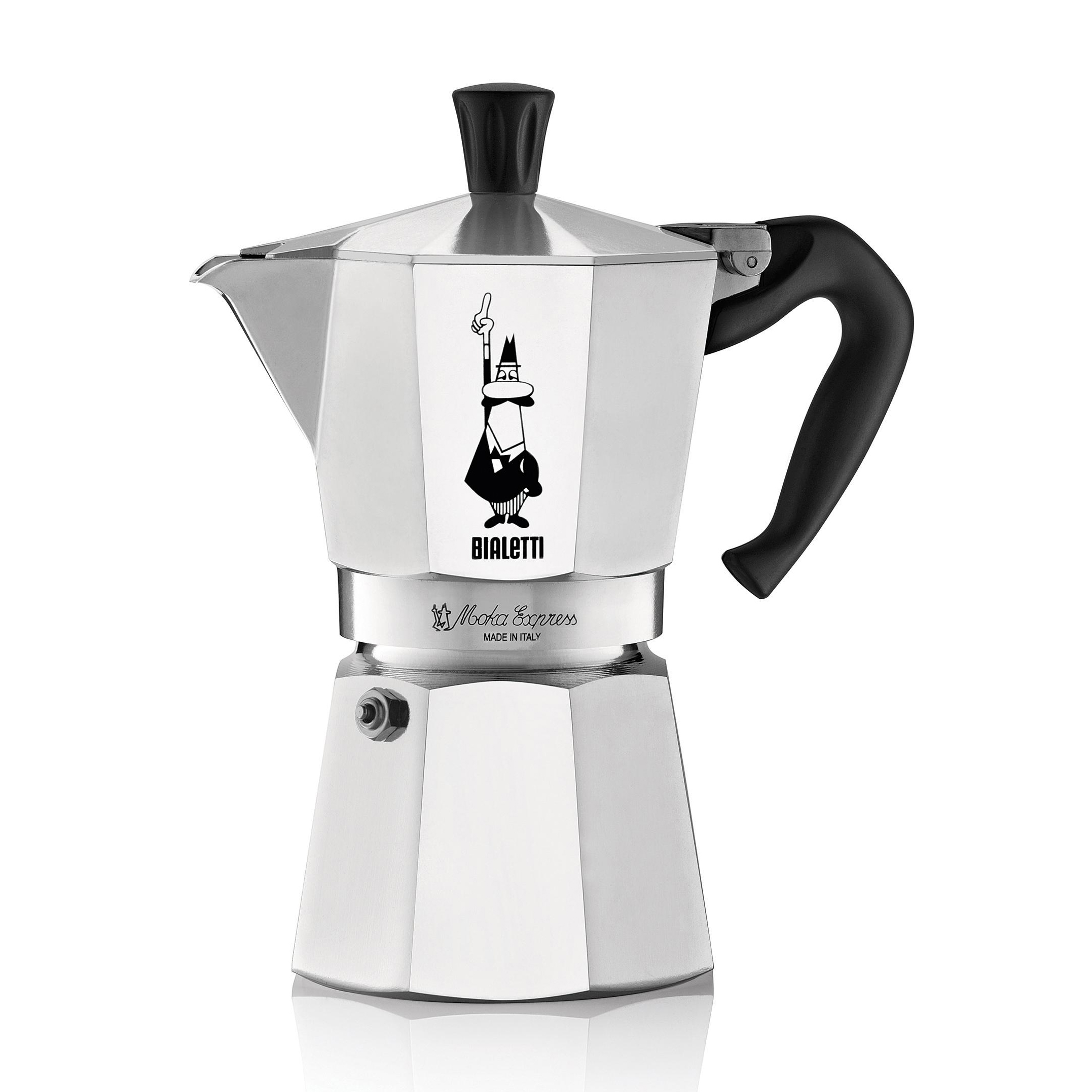
Zanelli, the defending champion, didn’t make it onto the podium. He said he would take solace from the nearly new Neapolitan coffee maker he found during the first championship two years ago. “I’ll always have my victory and the coffee maker, which I polished and now display in my home,” he said.

Contestants collected more than 6,600 pounds of trash. The haul included fridges, bikes, dozens of tires, baby seats, mattresses, lead pipes, stoves, chairs, TVs, 1980s-era boomboxes with cassettes still inside, motorcycle helmets, electric fans, traffic cones, air rifles, a toilet and a soccer goal.

“This park hasn’t been this clean since the 15 century,” said Genoa’s ambassador for sport, Roberto Giordano.

Interest rates stay on hold – for now

Interest rates will stay on hold this month following a meeting of the RBA Board today.

In a widely anticipated move, the announcement comes despite an uptick in the rate of inflation in August, which saw a rise from 4.9 percent in July to 5.2 percent.

All four of the big banks predicted the official rate to remain steady at 4.1 percent for the October meeting, although NAB has forecast that a further 0.25 percent increase was still an option, possibly next month. 

The board meeting was the first with Michele Bullock as governor, following the departure of Dr Philip Lowe last month. Dr Lowe was criticised for telling borrowers back in March 2021 that rates were ‘likely to remain at current levels’ until 2024. However, the RBA began raising the cash rate in May 2022 from 0.1 percent to 4.1 percent over a 12-month period in efforts to curb the rate of inflation.

Inflation peaked over the 12 months to December 2022 at 7.8 percent, well above target levels of between 2-3 percent.

CEO of the Real Estate Institute of NSW, Tim McKibbin, said despite the slight increase in inflation, it was important that rates remained on hold this month as the impact of earlier rate rises continues to play out.

“Until last week’s concerning CPI figures, which show the battle against inflation is far from over, it seemed a foregone conclusion that the new-look RBA Board would leave rates unchanged when it meets tomorrow,” he said. 

“REINSW believes it is appropriate for rates to remain steady for at least the short-term.”

CoreLogic Research director Tim Lawless said the rate of rising home values had slowed over the past quarter as cost of living pressures kept a firm grip on household budgets.

He noted that the Board had sought a balance between supply and demand in the economy.

“Clearly inflation remains high on the RBA’s risk radar,” he said. “Higher fuel and energy prices, alongside persistently high services and rental inflation have the potential to trigger another rate hike later this year.

“Logically, the RBA will be waiting to see September quarter inflation data, released the week ahead of the RBA’s November meeting.  With this in mind, the November meeting will be closely watched.”


Americans Are Still Spending Like There’s No Tomorrow

Consumers should be spending less by now.

Interest rates are up. Inflation remains high. Pandemic savings have shrunk. And the labour market is cooling.

Yet household spending, the primary driver of the nation’s economic growth, remains robust. Americans spent 5.8% more in August than a year earlier, well outstripping less than 4% inflation. And the experience economy boomed this summer, with Delta Air Lines reporting record revenue in the second quarter and Ticketmaster selling over 295 million event tickets in the first six months of 2023, up nearly 18% year-over-year.

Economists and financial advisers say consumers putting short-term needs and goals above long-term ones is normal. Still, this moment is different, they say.

A tough housing market has more consumers writing off something they’d historically save for, while the pandemic showed the instability of any long-term plans related to health, work or day-to-day life. So, they are spending on once-in-a-lifetime experiences because they worry they may not be able to do them later.

“It’s not a regret-filled, spur-of-the-moment decision,” says Michael Liersch, who oversees a team of advisers as head of advice at Wells Fargo. “It’s the opposite of that, where I would regret not having done it.”

Liersch cautions that it’s too soon to say whether the spate of spending is a fleeting moment or a new normal. And consumers remain frustrated about inflation as the price of many goods remains significantly higher than a few years ago.

Ibby Hussain, who works in marketing for a financial communications firm, says the Brooklyn, N.Y., apartment he and his fiancée rent for $3,000 a month would cost a million dollars to buy. At current rates, that means around $5,000 a month after a $200,000 down payment, not including property taxes. “And it’s not even that nice of an apartment.”

So, instead of saving for a down payment like he expected to after turning 30 and getting engaged in the past year, he splurged.

First, he bought a $1,600 Taylor Swift Eras Tour ticket and then he spent $3,500 on a bachelor party trip to Ibiza, Spain.

“I might as well just enjoy what I have now,” he says.

A travel boom

Ally Bank, whose online platform started allowing customers to create savings buckets for different goals in 2020, says users create about one-and-a-half times more experience-oriented buckets such as travel and “fun funds” versus those associated with longer-term planning.

Lindsey and Darrell Bradshaw went into credit-card debt to finance a vacation to Maui this past spring. The couple booked the trip only a few weeks after Lindsey, 37, quit her job to be a full-time caregiver to their 8-year-old son, who has special needs.

“We did not have the money and we were like, ‘Let’s just do this anyway,’ ” says Darrell Bradshaw, a 39-year-old general contractor in Seattle.

The trip cost about $10,000, including three, $1,000 last-minute plane tickets, 10 nights at a $385-a-night 4-star resort and several elaborate meals.

Even though the family decided to cancel subscriptions and cut back on dining out to help offset the bill, they say they have no regrets—especially since they got to see Lahaina just a few months before it was decimated by deadly wildfires.

Fears about a changing climate are driving some people to try to see places before they’re gone. In a monthly Deloitte survey of 19,000 global consumers, climate change was the only topic among 19 different concerns that respondents reported feeling significantly more worried about over the past year.

Josh Richner says he greatly lowered his retirement contribution to afford a cross-country trip that included a $7,000 Alaskan cruise so his family could see the ice caps, which have been melting at a rapid clip.

“I’ve never spent that much on a trip before,” says the 35-year-old, who says the splurge was also motivated by the pandemic and a health scare.

About six months ago, Richner and his wife decided to sell their Columbus, Ohio, home to travel the country with their two young children. Working for National Legal Center, a law firm that helps consumers resolve debt, he knows the potential consequences of living in a way that gives priority to the present. But he isn’t worried.

“I just hit a point where the thing that we had been talking about maybe hopefully doing some day, we’re going to do it now,” he says. “I’m not going to worry about money anymore. I don’t have it in me.”

Splurge purchases

Consumers might not be able to keep splurging forever. Labour strikes and student loan repayments could both lead people to pull back. Rising gas prices could also deter travel.

For those who study spending, however, the robustness up to this point has been a surprise.

In the New York Federal Reserve Bank’s August SCE Household Spending Survey, households reported spending 5.5% more than last year. The share of households that said they made at least one large purchase in the previous four months increased to 64% from 57%, its highest reading since August 2015.

“Normally at a time when you have higher inflation, but also higher interest rates, you don’t expect spending to hold up so well,” says Wilbert van der Klaauw, an economic research adviser on household and public policy at the Fed.

Rather than funnel all their spare change into a house or retirement account, Candice and Jasmine Kelly started a bucket-list fund after attending back-to-back funerals a few months ago. The couple adds a few hundred dollars from their paychecks each month into the fund, which they have used to try fancy restaurant tasting menus and buy Jasmine her dream designer handbag.

Instead of waiting to have fun when they retire, Candice, a 26-year-old management analyst in Charlotte, N.C., says the couple is trying to do the opposite. They want to enjoy their money while they’re young—even if it means working longer.

“All the rules that exist around money and lifestyle are just things people made up, so we’re playing a different game, and honestly I think we’re having more fun,” says Candice.

Jean Arnault Has New Goals for Louis Vuitton Watches. Profit Isn’t One of Them.

Jean Arnault was standing in a gilded, mirrored room of Paris’s Musée d’Orsay showing off Louis Vuitton’s newest watch model to a clutch of experts one July morning. The thin unisex watch, named the Tambour, is available in finishes including stainless steel, yellow gold and rose gold, he explains, and was the result of almost two years of work.

But the most valuable Tambour in the building wasn’t on display with the others. It was on Arnault’s wrist.

His version was made of a rare metal, tantalum. Tantalum gave the watch its gunmetal colour, though the metal’s hardness also meant that the watch took twice as much time to manufacture. This made it “insanely expensive” when he bought it, Arnault told me, though he refused to reveal what he paid.

“We’re only going to make one,” Arnault, 24, adds. “That’s it. It’s the only one.”

Jean, the youngest son of LVMH chief Bernard Arnault, has been fascinated by the opportunity in rare-materials watches for a while. The Swiss watchmaker Audemars Piguet began using tantalum in some of its watches, including the Royal Oak, beginning in the 1980s, before the younger Arnault was even born. “Incredible watches,” he says. “[Some] have rose-gold accents. Stunning.” But he says he wouldn’t feel comfortable selling a simpler, three-hand watch like the Tambour to the general public for anything near the eye-watering price he paid for his.

“Even though it costs us that much, it would be taking the client for a fool,” he says.

With Arnault, who is learning the ropes of his father’s luxury’s empire, Louis Vuitton has bet on a 24-year-old to turn itself into a player in high-end, mechanical watchmaking.

Two years ago, when he first joined Louis Vuitton’s watches division as marketing and development director, Louis Vuitton watches ran a wide gamut. They ranged from watches costing hundreds of thousands of dollars to quartz timepieces that sold for around $4,000. These are “something that could be done by a machine, almost,” says Arnault, sitting in his corner office at the Louis Vuitton headquarters in Paris’s 1st arrondissement, overlooking the Pont Neuf. On a shelf is an 18th-century French clock and a limited-edition Marc Newson–designed hourglass with blue steel nanoballs, made in collaboration with De Bethune.

Now Arnault has decided to eliminate the entry-level Tambours. His thinking was that instead of producing more affordable collections, Louis Vuitton needed to play in a different class. So the new iteration of the timepiece ranges in price from $18,500 to $52,000, putting it in competition with similar creations from the likes of Audemars Piguet and Vacheron Constantin. Nearly a third of the Tambour’s watchcase has been shaved off, making it much sleeker. Inside there is a proprietary movement, made in collaboration with Le Cercle des Horlogers, a specialist movement workshop just outside La Chaux-de-Fonds, Switzerland.

The average price of a Louis Vuitton timepiece overall will jump fivefold to over $20,000. But it’s a challenge much more daunting than adjusting the price point.

“We’re not going to make a ton of money with this,” Arnault says of the company’s strategic about-face. “It’s not going to be highly profitable at all, but it’s really about making sure that we switch the message completely.”

Building a pedigree in watchmaking—which Louis Vuitton embarked on only two decades ago—is particularly challenging. Watch fans are deeply conservative, with models that have been around for decades like the Rolex Daytona, the Omega Speedmaster or Audemars Piguet’s Royal Oak still among the bestsellers globally. Vacheron Constantin’s origins trace back to 1755, while Patek Philippe was founded in 1839. Rolex has been around since 1905.

Craig Karger, a former lawyer in New York City who collects watches and runs the blog Wrist Enthusiast, said Louis Vuitton faces an uphill battle in competing with heritage brands that focus solely on watches. “I wouldn’t personally invest 19,000 euros [about $20,300] in a steel Louis Vuitton watch, as nice as it is,” Karger says.

Louis Vuitton is hardly alone in moving upmarket in recent years, says Jeff Fowler, CEO of e-commerce watch website Hodinkee. The trend in the Swiss watch industry is clear: There are fewer watches for sale, and those that are for sale cost more—in part a reaction to the introduction of the popular Apple watch in 2015, says Fowler. The watch was so successful and ubiquitous, he explains, that it brought renewed consumer focus on timepieces, and resulted in the Swiss watch industry regrouping around higher-end products.

Founded as a trunk manufacturer by a French carpenter in 1854, Louis Vuitton has successfully expanded into categories like high fashion, menswear, jewelry and fragrances. Watches currently account for a tiny fraction of Louis Vuitton’s sales, meaning Arnault can afford to take a risk.

“Vuitton is going to have to build demand up over time,” says Fowler. “It’s not given to you.”

Jean Arnault is closely watched in the luxury industry. He is the fifth child of Bernard Arnault, the 74-year-old who built LVMH over the past four decades by buying up rival luxury firms while cultivating generations of designers. In recent years, the company has ridden a global surge of demand for luxury goods. This has cemented its position as one of the most valuable listed companies in Europe. It has also helped the elder Arnault, who is CEO and controlling shareholder, compete with Elon Musk for the title of the world’s richest person.

Growing up in the west of Paris, Jean Arnault attended a prestigious Jesuit school where one of his teachers was Brigitte Macron, now the wife of French President Emmanuel Macron. Like his siblings, he was carefully introduced to the family business, joining his father on his Saturday morning rounds to the group’s main boutiques. He would also tag along on official LVMH trips, including to China. As a teenager, however, Arnault was into cars, planes and engines. He used to tell his family that he wanted a career in Formula 1. But when he worked at the McLaren Technology Centre while studying mechanical engineering at Imperial College London, he realised it wasn’t the place for him.

“You work at the end of the day for something, which is making tenths of seconds of gains for a car to go around a track,” he says. “There’s a lot of moving parts…. I realised then that I wanted to work on [the] product as a whole.”

Bernard Arnault has always encouraged his children to pursue their interests, starting with their early roles at the conglomerate. Delphine, his oldest child, had an eye for product development, and spent some time at John Galliano’s eponymous label before joining Dior. Antoine, who loves literature, worked in the advertising department at Louis Vuitton. Alexandre brought contemporary artists to Rimowa when he was CEO. For Jean, as it was for his brother Frédéric, the passion was watches.

During his journey to McLaren in Woking, a sleepy town an hour outside of London, Jean used the time to delve into blogs about mechanical watches. He then did his fourth-year project on a component of Tag Heuer’s watches. The Swiss brand is also part of the LVMH empire and is run by his brother Frédéric, who is four years older than Jean. The two of them would frequently discuss the watch industry as well as Frédéric’s business plans—and he even allowed Jean to work on a few mechanisms.

In early 2020, Jean spent a week at Louis Vuitton’s watchmaking plant near Geneva, as he was trying to decide which of the group’s brands he would join. Michel Navas, one of the brand’s master watchmakers, recalls that Arnault spent some time taking apart and putting together a watch. At one point, Navas gave the young man a screw to clean and polish, which Arnault did with a fine abrasive. A colleague told Navas that he was going too far by assigning Arnault menial workshop tasks.

“Hang on, he’s clearly enjoying himself,” Navas answered. “He seems to love craftsmanship.”

By the time Arnault joined LVMH, following stints at Morgan Stanley and McLaren, he already had built an enviable personal watch collection. Today it includes a vintage Patek Philippe from the 1920s, a rare François-Paul Journe prototype and even a big, bulky modular timing system that was once reportedly used in a German nuclear power plant.

At Louis Vuitton, Arnault’s first public move was to establish a new watchmaking prize, which the company plans to award every two years starting in January 2024. Arnault convened a committee of watch experts and aficionados to decide on the winners, including Rexhep Rexhepi, a young watchmaker from Kosovo who founded his own label, Akrivia, in 2012.

When Arnault came to visit in early 2021, the two of them spent a couple of hours talking about watches in the atelier’s small meeting room, which looks over the garden. Rexhepi was impressed. He later agreed to a collaboration with Louis Vuitton, producing a double-sided chronograph that will be released this month. The model, limited to 10 pieces, exposes the watch’s inner workings on one side, with a white enamel dial on the other.

If Rexhepi agreed to work with him, it was in part due to the impression he’d formed back in their first meeting, when he noticed that Arnault was wearing a Journe watch.

“Oh,” Rexhepi thought, “he has good taste.”

Alongside the prize, Arnault was working on bringing high watchmaking into Louis Vuitton’s stores. Since 2011, the brand has owned La Fabrique du Temps, the atelier co-founded by Navas and Enrico Barbasini, situated in Meyrin outside Geneva. It has become synonymous with innovative, complex watch movements, but these were being used in only a handful of Louis Vuitton offerings.

On just his second day on the job, Arnault sat down for coffee near Geneva with Navas and Barbasini. “We need to stop doing quartz,” Arnault recalls them saying, referring to the fashion-oriented watches Louis Vuitton sold.

Arnault grew convinced that Navas and Barbasini were right. He pitched the idea of repositioning Louis Vuitton’s watches to his father and Michael Burke, then the brand’s CEO. Arnault wanted to upgrade the Tambour, a mainstay of the brand since 2002. He felt there were issues beyond its quartz mechanisms: It was far too chunky, for one, and its big lugs seemed outdated. Both men were cautious, he says. They wanted to ensure that a new model was ready before they signed off on any strategic shift.

By January 2022, Arnault had three prototypes of the new Tambour to show Burke and, most important, his father. Bernard Arnault has a hands-on, detail-oriented approach. He has been known to ask staff to go back to the drawing board if a design doesn’t meet his exacting standards.

A no from Arnault “has happened in the past many times,” says Jean. “It has happened to me since with products that were supposed to happen in the future but aren’t happening now…. Whether it be Michael [Burke], Pietro [Beccari, the Louis Vuitton CEO] and obviously my dad, they have a vision that we don’t have.

“Later on, once the emotions are gone and the process has been canceled, you say, ‘OK, they were right,’ ” he adds.

But this time, the meeting lasted only around five minutes. “In, out, boom—done,” the younger Arnault recalls. Bernard Arnault’s approval put the repositioning in motion. Louis Vuitton is retiring many existing models, Jean Arnault said, as well as reducing “tremendously” the number of Louis Vuitton stores that sell watches.

Since each Tambour will now be entirely handmade, Arnault says production of the Tambour would be “more in the hundreds than the thousands,” though he declined to give an exact number. He also says Louis Vuitton wouldn’t riff on the product. “We’re asking for a significant chunk of money from these people,” he says. “I don’t want to jeopardise their investment by releasing a green dial, by releasing a purple dial, by releasing a different metal. The desirability that will come from these five references will be the same over a long period of time.”

At a summer gala to celebrate the launch of the Tambour, held at the Musée d’Orsay, Arnault was surrounded by partygoers and stars, including Alicia Vikander, Michael Fassbender and Bradley Cooper, who appears in the new ad campaign to promote the Tambour. Signs of the broader Louis Vuitton brand’s reach were everywhere. Outside the museum, a giant billboard hung on the side of the museum showing Rihanna and her baby bump in a Louis Vuitton ad campaign.

“This is the pinnacle of what we can do, and the beginning of an amazing journey,” Arnault told those gathered. “Hopefully you’ll remember this moment as a historic moment for us.”

These days, Arnault splits his time between Louis Vuitton’s high watchmaking site near Geneva and the brand’s headquarters in Paris, where he tends to stay on weekends. In his spare time, he pursues what he calls his “unfortunate” passion for cars. “I’m trying to understand more,” he says. On Instagram, he sometimes shares photos of himself with his girlfriend, Zita d’Hauteville, the daughter of Eric d’Hauteville, who owns a watch brand and is also a French count, and Isabelle de Séjournet, an arts consultant. The two are pictured together traveling to Japan, or enjoying a meal together at a pizzeria in Naples. In one of her recent posts, d’Hauteville is taking a photo of herself in the mirror while Arnault is in the background, bent over double, chasing after her dog, Ovni.

Meanwhile, Bernard Arnault is never far away, sometimes asking senior executives how his youngest son is doing. He also has monthly lunches with his five children at the LVMH headquarters to talk shop and check in.

Jean encouraged his father to visit Louis Vuitton’s high watchmaking hub near Geneva. When Bernard Arnault did so, a few months after Jean had started, he was impressed, asking Navas during a tour of the facility whether he could take photos with his cellphone.

“Mr. Arnault, this is your house!” Navas said.

After the tour, Bernard Arnault sat with Jean, Navas and Barbasini for coffee. He asked Navas and Barbasini about their career history. Both men listed a host of prestigious names, including Swiss watchmaker Gérald Genta.

Arnault senior turned to his son. “Genta—we own this, right?”

Jean says he told him they did. LVMH had acquired the brand as part of its acquisition of Bulgari in 2011. Genta had released a few editions over the years since, but not much was going on with the brand.

Arnault senior turned again to Navas and Barbasini, asking them whether they’d like to bring back the brand. The two men briefly looked at each other before accepting. “Hell, yeah, we’ll do it,” Jean Arnault recalls them saying. He invited Genta’s widow, Evelyne, to visit Louis Vuitton’s watchmaking hub, and she quickly got on board with the relaunch. Hundreds of her late husband’s designs were never produced—and now they will serve as inspiration for the brand’s new creations, the first of which will be available next year.

Love Patterns? Try This Design Trick to Pull Any Room Together

THE HUMAN BRAIN loves a good pattern. Evolutionarily speaking, we’re hard-wired to recognize repetitive shapes. They organize the world around us. From a design standpoint, patterns can also help our homes feel harmonic. Applying the same one to multiple elements in a room pulls your décor together. We asked design pros for some tips on nailing the technique.

The Appeal

The right motif in the right places brings order and structure to an interior scheme, said Barrie Benson. In the library of one Charlotte, N.C., home, the local designer used a tartan print in small doses as roman shades and the upholstery of a settee. “There was a lot going on—textures and patterns, books, oriental rugs. The plaid worked because it added straight lines and a kind of framework,” she said.

A bolder repetition of pattern across multiple surfaces can engender a sense of snugness. Elizabeth Hay, a designer who splits her time between Singapore and the U.K., clad the walls and a big sofa in a TV room in the same motif. “It creates an enveloping, cozy feel,” she said.

The Tips

Such pattern echoes work best when deployed in understated ways—on just seat covers and window shades, say—or taken intentionally over-the-top, explained Benson. “One more place would have been too much—unless I did the entire room in plaid,” she said of her limited use of tartan in the library. “You do it completely, or you pick two places.” Treatments that occupy the middle ground tend to look cloyingly matchy-matchy.

But beware: Heavy-handed repetition can skew old-fashioned if the pattern is too fussy or traditional, says Hay. “You used to see rooms with chintz on everything—the walls, the curtains, the bed, the bed skirt—with lots of ruffles and gathers,” she said. “That can feel a bit claustrophobic.”

“What works very well is what we call in French ‘décalé,’” said Paris designer Laura Gonzalez by way of pattern guidance. The translation: offbeat, like the unusual boho geometric she chose for the wall and sofa shown in the photo below.

The Caveats

Patterns are often available as both wallpaper and fabric, but the two renderings are likely printed at different mills, warned Benson. “Make sure you’re getting samples, because often the colors are a little off. They should be very, very close.”

Just as the brain is built for pattern recognition, it instantly detects disruptions. Take care with seaming and matching. The smallest offset can spoil allover patterning. “When you match the lines perfectly, it can look like a sofa is growing from the wall,” Gonzalez said. “There is an infinity illusion,” which can make even a tiny room seem much bigger.

While liberal use of bold patterns calls for courage, Hay cautions against the wishy-washy accent wall. “Your room will feel much busier with just one patterned wall, because it’s not balanced,” she said. If you paper the whole room and carry the pattern to the headboard or the curtains, “it’ll actually be softer on the eye.”

Profiting From the Pet Boom

Humans may not be acquiring pets at a pandemic-induced pace anymore, but they still are spending plenty on food, supplies, and services to take care of the furry members of their families.

Investors in public and private markets have their eyes on all that pet-care spending. Increasingly, consumers have gone beyond buying kibble to snapping up premium products and services that ensure their pets are living healthy, environmentally friendly lives. It’s a trend familiar to anyone who has followed the growth in eco-friendly wellness products and services for humans.

The shorthand for this phenomenon? The “humanisation of pets,” according to Milwaukee-based Baird.

“What that meant 10 years ago was you started to see the premiumisation of the quality of the diets and the emergence of grain-free brands and premium, cleaner-labeled food brands,” says Spencer DePree, a director in Baird’s global consumer and retail group. “That certainly is true today, but you’re starting to see that expand into other parts of the lifestyle of the pet.”

The entire pet economy is valued at about US$130 billion to US$140 billion, divided into four main categories: nutrition, products and supplies, healthcare, and services, according to Baird. Nutrition products snag most consumer dollars, but the so-called humanisation trend touches all of them.

Australia, Canada, and parts of Europe are leading the pet-market conversion to “non-traditional, more premium food and nutrition,” says Scott Ehlen, a director in Baird’s global consumer investment banking group. For the U.S., it’s a question of “how quickly, not if,” the trend will take hold, Ehlen says.

Penta spoke with DePree and Ehlen about what’s driving the growth in pet-related purchases and some of the companies on their radar screen.

Proactive vs. Reactive

One reason for the uptick in purchases of healthier pet products is consumers have realised they can proactively keep their pets happy and free from illness. The simplest step is to provide them with a diet that won’t lead to health problems in future years, and, as with humans, mix in nutritional supplements and treats with health benefits, such as dental care.

“That’s something you’ve seen in human wellness over the last five to seven years,” DePree says.

In pet food, that’s led companies to go beyond making grain-free kibble to producing fresh foods and to offering “toppers,” such as fish oils or freeze-dried raw meat. Companies are even developing foods that don’t rely on traditional beef and poultry proteins, such as Berkeley, Calif.-based Jiminy’s insect-based pet foods—a company backed by venture capital, according to private-markets data company PitchBook.

“Their value proposition is pretty impressive when you just look at the energy consumption that goes into producing a pound of beef,” DePree says.

As people spent more time at home with their pets during the pandemic, they also realized their furry companions have a lot of downtime. Humans that have returned to the office want to make sure their pets stay happy and active, so many are putting their dogs in daycare facilities with cameras that allow them to check in to see how their pup is doing.

“It’s not a kennel, it’s doggy daycare, where it’s analogous to taking your child to daycare,” Ehlen says.

There are a handful of franchisors backed by private equity in this sector including Dogtopia, which Ehlen says is one of the larger companies with at least 200 franchisees and more in the pipeline. An investment vehicle formed by the New York-based private-equity firm Red Barn Equity Partners with funding from institutions and family offices made a major investment in 2020 in the company, which offers daycare, boarding, and spa facilities, according to a news release.

Pet grooming is another area that’s prime for investment. Ehlen says he takes his own dog to a groomer who keeps track of appointments on a paper calendar. “It’s impossible to get a hold of her, impossible to schedule,” he says.

“A vast majority of the market continues to exist in that state in 2023,” Ehlen says. “You’re finally starting to see folks realise that this is a huge market, it’s a non-discretionary market, it’s going to be around forever. It’s just in desperate need of investment, of capital, of innovation.”

The ‘Pet’ Play in Food

The importance of pets to the economy is evident within the four major consumer products companies—Mars, Nestlé, Post Holdings, and General Mills. All include pet foods among their brands; Post, in fact, made a push into the business in February by purchasing Nature’s Way and Rachael Ray Nutrish, among other more standard pet food brands, from J.M. Smucker Co. for $1.2 billion.

For an investor interested in the growth of premium natural pet food, the only pure public-market play is Freshpet, based in Secaucus, N.J., DePree says.

While bigger companies have grabbed more market share, independent, private companies are “still the birthplace of new brands, new innovation, and that could be coming from either new companies or new product lines,” he says. “When the category validates itself or the scale hits, then you may see one of the bigger players jump in through an acquisition.”

Independent companies in the natural pet food space include the Farmer’s Dog, based in New York, which is backed by venture capital, according to Pitchbook. Denver-based Alphia, a pet food co-manufacturer that supplies other companies, was bought late last month by PAI Partners, a private-equity firm, from another PE firm, J.H. Whitney, according to a news release.

In March, the specialty pet food brand Natural Balance, announced it would merge with Canidae, which makes premium sustainable pet food, a news release said.

Before the stock market became more volatile last year, there was a “big queue of folks circling the wagons,” DePree says. Considering that the large consumer products companies are still trying to figure out how to grow this market, “over the next 18, 24 months, you’ll see some more stories become public.” For now, he says, “the demand for ways to play ‘pet’ outstrips the supply.”

The Internet-of-Things for Dogs

Pets aren’t exempt from humans’ obsession with tech, either. The latest pet-tech trends range from fitness trackers to food-monitoring devices that not only monitor how much and when your pet is eating, but also automatically order more food when you’re running low, DePree says.

Old-tech—such as electronic fences that keep dogs confined to a designated space—are being replaced by devices considered more humane and able to collect data on a pet’s behaviour, Ehlen says.

An example is Halo Collar, which uses wireless GPS and allows owners to set up zones to contain their pets wherever they are. The company, based in Woodcliff, N.J., and co-founded by dog psychologist Cesar Millan and tech innovator Ken Ehrman, was backed in May by Utah-based Decathlon Capital Partners, which provides revenue-based financing.

Most innovations in the pet economy so far have focused on dogs, but Ehlen and DePree say companies also have their sights on improving the lives of cats.

“If anyone is doing any innovation in cat, it’s alongside dog, but now you’re starting to see a more purpose-driven and specific sort of focus on the category,” DePress says. But he chides, “cats might be insulted at the humanisation concept—they probably hold themselves in a higher place.”

Claude Monet Water Lily Painting, Never Shown Publicly, Could Fetch at Least $65 Million

A water lily painting by Claude Monet of his Giverny gardens is expected to achieve at least US$65 million at Christie’s November sale of 20th-century art in New York

Le bassin aux nymphéas, or water lily pond, painted around 1917 to 1919, is a monumental canvas extending more than six-and-a-half feet wide and more than three-feet tall, that has been in the same anonymous private collection since 1972. According to Christie’s, the painting has never been seen publicly.

The artwork is “that rarest thing: a masterpiece rediscovered,” Max Carter, Christie’s vice chairman of 20th and 21st century art said in a news release Thursday.

A first look at this thickly painted example of Monet’s famed and influential water lily series will be on Oct. 4, when it is revealed in Hong Kong.

The price record for a Nymphéas painting by Monet was set in May 2018 for Nymphéas en fleur, another large-scale work that had been in the collection of Peggy and David Rockefeller. That painting sold for nearly US$85 million.

The current work for sale is guaranteed, Christie’s confirmed. The auction house did not provide further details on the seller.

Can a Rug Make a Room Look Bigger? Is Wall-to-Wall Ever OK? Your Carpet Questions, Answered

1. Can a rug make my small room look bigger?

Yes. Get the largest rug possible so it defines the room as one big, inviting space. Optimally, the visible perimeter of floor is no wider than 8 or 9 inches. Size tip: Designers consider a 9-foot-by-12-foot rug—which will fill a small living room and can visually anchor a queen-size bed in most bedrooms—the most versatile size to repurpose if you someday move to a new home. In a living room make sure the carpet is at least big enough that the front two legs of the sofa and armchairs in the main seating area can sit on it. And always match its shape to the shape of the room. “Don’t put a square rug in a rectangular room, because it will make everything look off-balance,” said rug consultant Elisabeth Poole Parker, a former vice president at Christie’s New York and international head of the auction house’s carpet department.

2. Any advice on runners?

Patterns hide stains in high-traffic areas like entryways, staircases and the kitchen (where they add color to an aisle between prep island and sink). Give a runner breathing room without making it look like a skinny Band-Aid. Ideal margins in a hallway are 4 to 5 inches, says antique-rug seller Georgia Hoyler, of Passerine in Washington, D.C. “Tape it out on the floor before you buy to be sure it will feel proportional.” On stairs, 3 to 4 inches suffices, as in the space above designed by Liz Caan, of Newton, Mass. Multiple runners in a single room, or throughout a home, are easy to mix and match if you choose rugs with the same color palette and patterns similar in scale and shape, says Kate Marker, an interior designer in Barrington, Ill.

3. Did Aladdin have a flying carpet?

No. Disney invented it. In the Arabian Nights stories, Aladdin had a magic lamp. (The magic carpet belonged to Prince Hussain, a character in a different tale.) “But in the film, Disney juiced up the romantic angle of the story with an escape on a magic carpet,” said Jack Zipes, a professor emeritus at the University of Minnesota.

4. Can cheap rugs look expensive? How?

Here are three ways.

A.Buy an inexpensive, neutral room-size rug made of a natural fiber such as sisal (which costs as little as $1.50 a square foot), then center a pricier, but smaller, rug on top of it. “The space will be defined by the larger sisal rug, so the rug on top doesn’t need to be big enough to sit under the furniture to look amazing,” said Nadia Watts, an interior designer in Denver who frequently employs this strategy if clients bring along a favorite rug when they move to a new home.

B. Another technique: Find a vintage carpet with a beautiful patina going cheap due to rips or stains and cut it down to create a runner or a foot-of-the-bed rug. A rug installer can bind the rug’s perimeter with a selvage stitch to prevent threads from unraveling.

C. If your layout includes a long, narrow room, commonly found in brownstones and other row houses, search for a vintage or antique rug in what is known as a gallery size. Frequently woven during decades and centuries past, their quirky dimensions (5 feet by 10 feet or 8 feet by 17 feet, for example) make these rugs harder to sell and therefore inexpensive to buy relative to their size, says Jason Nazmiyal, an antique-rug dealer in Manhattan.

5. Etsy sells a bazillion rugs and a lot of them look great on my screen. How do I avoid getting ripped off when buying a carpet I haven’t seen IRL from someone I don’t know?

Start by sleuthing before you shop. Research rug types and styles to zero in on what you like, and then do enough window shopping online to train your eye to recognize the difference between a good and a bad example when you see it. Now you’re ready for Etsy, where you will continue to behave like Sherlock Holmes.

  • Research the seller. Comb through customer reviews for red flags.
  • Pose questions. For instance, if a rug is described as “vintage,” (which Etsy defines as at least 20 years old) ask the seller to pinpoint the decade or year the rug was made.
  • Ask for more pictures. You want photos taken in natural light, to give you a real sense of color; close-up photos of any damage, uneven wear or alterations; and even photos of the backside. “Ask a seller to flip it over and take a photo, so you can see the knots and whether the fringe is an actual part of the rug—which would confirm it’s hand knotted—or something applied afterward,” said Bailey Ward, an interior designer in Atlanta.
6. Materials matter. May I have a cheat sheet, please?

WOOL

Considered the gold standard for rugs, this natural fibre appears in tufted and flatweave rugs in virtually any colour or design. Soft underfoot and stain-resistant, wool can last a lifetime (or longer—some antique wool rugs are hundreds of years old).

SISAL

Woven from agave-plant fibres, sisal is a neutral tan colour that works well as a quiet backdrop for colourful, patterned furnishings. “It has a casual look that is a very nice contrast in a formal living room,” said interior designer Ward.

SILK

A delicate luxury fibre with a beautiful sheen, silk belongs in a low-traffic bedroom. “Like a silk blouse, a silk rug should be dry cleaned” to avoid damaged fibres, says Scott Johnston, owner of Carpet Care of the Carolinas in Raleigh, N.C.

POLYPROPYLENE

Made from recycled plastics, this durable material comes in any colour or pattern and is easy to clean, stain-resistant and a good choice for outdoor rugs. However, tufted polypropylene rugs “just don’t bounce back after cleaning,” said Johnston.

COTTON

A fluffy fibre, cotton has an airy look but requires frequent cleaning because it quickly exhibits any and all signs of dirt and wear. For that reason, the most practical cotton rugs are those small enough to fit into a laundry machine.

7. Rug pads are like the orthotics of rugs. What’s the best kind?

“Without a thick protective pad, you’ll grind grit into the rug and wear down its foundation,” warned carpet-care expert Johnston. The best are at least 1/4-inch thick with a layer of felt atop a nonskid rubber backing, he says. Feel free to use one of those cheap, 1/8-inch thick, waffle-weave rubber things they sell at hardware stores if you have a tight fit beneath a door. In such cases, “even a thin pad is better than no pad—think of it like a sock keeping your shoe from causing a blister,” said antique-rug seller Hoyler.

8. Are rugs in the kitchen totally ick?

Don’t assume a kitchen rug is unsanitary, said Manhattan interior designer Sasha Bikoff, who has an antique French Aubusson in her own kitchen (between the island and the sink where it provides a cushioned surface for anyone doing the dishes). Wool rugs are super durable and don’t absorb liquid quickly, so it’s easy to wipe spills. “So live a little bit,” she said, adding that a patterned rug “is a cozy way to add pattern and color” to a room where stainless steel and cold stone surfaces would otherwise dominate the décor.

9. Is wall-to-wall carpet ever not cheesy?

Yes, it can be quite chic in a bedroom, where it can turn a room into a sanctuary. “We use it because it feels cozy, and it brings a softness to a space,” said interior designer Watts. Perhaps for that reason, “for the most part, today wall-to-wall carpet has been primarily relegated to bedrooms,” said Jamie Welborn, a senior vice president at flooring manufacturer Mohawk Industries. Make that a lot of bedrooms: Wall-to-wall carpeting still covers 35% of the square footage in American homes, Welborn says.

10. Nearly every town has a rug store that’s been going out of business for 10 years. Why?

Because they have no intention of actually going out of business. They’re trying to lure customers who assume they are desperate merchants offering rock-bottom prices. “Rugs are a product category that people buy rarely, so these stores are not trying to build a loyal customer base,” said Katrijn Gielens, professor of marketing at the University of North Carolina. In reality? Prices may be marked up.