Footy fever and holiday vibes impact property auctions

Grand final fever and the long weekend have dampened scheduled auction activity this weekend, CoreLogic reports.

The number of homes scheduled for auction this weekend is set to halve, with 1,324 properties listed, marking the quietest week since mid June. Melbourne will experience the quietest week since Easter, CoreLogic data shows, with 223 homes prepared to go under the hammer. In Sydney, 805 properties are expected to go to market, the lowest number in seven weeks.

With long weekends in Queensland and South Australia, numbers are also down in Brisbane (111) and Adelaide (86), less than half the properties available for auction the previous week. It’s a less dramatic drop in Canberra, where 83 homes are scheduled for auction, down -22.4 percent on the previous week. 

Is China’s Economy Stabilising? Why September’s Data May Disappoint.

China’s economic recovery isn’t gaining the momentum money managers are awaiting.

Data from China Beige Book show that the economic green shoots glimpsed in August didn’t sprout further in September. Job growth and consumer spending faltered, while orders for exports came in at the lowest level since March, according to a monthly flash survey of more than 1,300 companies the independent research firm released Thursday evening.

Consumers’ initial revenge spending after Covid restrictions eased could be waning, the results indicate, with the biggest pullbacks in food and luxury items. While travel remains a bright spot ahead of the country’s Mid-Autumn Festival, hospitality firms and chain restaurants saw a sharp decline in sales, according to the survey.

And although policy makers have shown their willingness to stabilise the property market, the data showed another month of slower sales and lower prices in both the residential and commercial sectors.

Even more troubling are the continued problems at Evergrande Group, which has scuttled a plan to restructure itself, raising the risk of a liquidation that could further destabilise the property market and hit confidence about the economy. The embattled developer said it was notified that the company’s chairman Hui Ka Yan, who is under police watch, is suspected of committing criminal offences.

Nicole Kornitzer, who manages the $750 million Buffalo International Fund (ticker: BUIIX), worries about a “recession of expectations” as confidence continues to take a hit, discouraging people and businesses from spending. Kornitzer has only a fraction of the fund’s assets in China at the moment.

Before allocating more to China, Kornitzer said, she needs to see at least a couple quarters of improvement in spending, with consumption broadening beyond travel and dining out. Signs of stabilisation in the housing market would be encouraging as well, she said.

She isn’t alone in her concern about spending. Vivian Lin Thurston, manager for William Blair’s emerging markets and China strategies, said confidence among both consumers and small- and medium-enterprises is still suffering.

“Everyone is still out and about but they don’t buy as much or buy lower-priced goods so retail sales aren’t recovering as strongly and lower-income consumers are still under pressure because their employment and income aren’t back to pre-COVID levels,” said Thurston, who just returned from a visit to China.

“A lot of small- and medium- enterprises are struggling to stay afloat and are definitely taking a wait-and-see approach on whether they can expand. A lot went out of business during Covid and aren’t back yet. So far the stimulus measures have been anemic.”

Beijing needs to do more, especially to stabilise the property sector, Thurston said. The view on the ground is that more help could come in the fourth quarter—or once the Federal Reserve is done raising rates.

The fact that the Fed is raising rates while Beijing is cutting them is already putting pressure on the renminbi. If policy makers in China wait until the Fed is done, that would alleviate one source of pressure before their fiscal stimulus adds its own.

Frank Stella’s ‘Abra I’ to Lead at Christie’s Post-War to Present Sale

More than 280 modern and contemporary artworks will be up for sale Friday at Christie’s Post-War to Present auction in New York.

The live sale, which will be held at Christie’s Rockefeller Center sale room, has a low estimate of more than US$27 million and will be led by Frank Stella’s Abra I, 1968, which is estimated to fetch between US$1.2 million and US$1.8 million, according to a news release from Christie’s.

Abra I is a fantastic example by Stella, a large-scale canvas from the protractor series,” says head of sale Julian Ehrlich. “It engages so many crucial aspects of his practice, including scale, geometry and colour, and has appeal to established post-war collectors and others who are just coming to historical art.”

Ehrlich, who has overseen the semiannual Post-War to Present sale since its first March 2022 auction, says his goal in curating the sale was to “assemble a thoughtful and dynamic auction” with works from both popular and lesser-known artists.

“With Post-War to Present, we really have a unique opportunity to share new artistic narratives at auction. It’s a joy to highlight new artists or artists who have been overlooked historically and be a part of that conversation in a larger art world context,” he says.

Joe Overstreet’s ‘Untitled’, 1970
Christie’s

Works from a number of female artists who were pioneers of post-war abstract painting, including Helen Frankenthaler, Lynne Drexler, and Hedda Sterne, will be included. The auction will also include pieces from a group of Black artists from the 1960s to present day, including Noah Purifoy, Jack Whitten, and David Hammons, in addition to a Christie’s debut from Joe Overstreet (Untitled, 1970) and an auction debut from Rick Lowe (Untitled, 2021).

“The story of art is necessarily diverse,” Ehrlich says. “The sale itself is broad, with more than 280 works this season, and it has been fun to think through artists inside and outside of the canon that we can put forward as highlights of the auction.”

In addition to Abra I, other top lots include Tom Wesselmann’s Seascape #29, 1967, (with an estimate between US$800,000 and US$1.2 million); Keith Haring’s Andy Mouse, 1986, (also with an estimate between US$800,000 and US$1.2 million); and Jack Whitten’s Garden in Bessemer, 1986 (with an estimate between US$700,000 andUS$1 million).

“I think of the Post-War to Present sale as being especially dynamic … in the best case, even for someone deeply embedded in the market, there should be works which surprise and delight and are unexpected, as well as celebrated market-darlings and art-historical greats,” Ehrlich says.

Levels of wealth continue to rise for Australians

Australians are wealthier than they were last quarter – and it’s thanks to rising property values, new data from the ABS has shown.

Information released by the Australian Bureau of Statistics shows that household wealth rose for the third consecutive quarter, up 2.6 percent to June 2023. This is the equivalent of $379 billion and brings total household wealth up to $15.1 trillion.

ABS head of finance statistics, Dr Mish Tan, said there was a clear driver at play. 

“Household wealth has grown alongside increasing house prices this year,” Dr Tan said. “Population growth has supported demand for housing while the supply of new and established dwellings to the market remained constrained.”

However, statistics also showed household budgets were under pressure with household deposit accounts contracting by $6 billion, the first quarterly decline since June quarter 2007.

Dream property not on the market? You can still find it here

Hot on the heels of the launch of View Media Group last year, Australia’s newest proptech digital media company has gone live with its consumer-facing real estate site, view.com.au.

The new site offers a ‘freemium’ model allowing vendors to list their properties for free while having the option of further upgrades for agents looking to enhance their listings.

VGM executive chairman Anthony Catalano said the model was a ‘game changer’ in the digital real estate space.

“While VMG is much more than a portal play, it’s critical that we have a consumer-facing brand that will act as the front door to attract consumers and in turn allow us to offer products and services in a range of verticals across the property ecosystem,” Mr Catalano said. “Our plan is to create a digital real estate superstore under the new View brand that will play in the $300 billion adjacency categories rather than solely focus on the $1

billion of digital property advertising.”

“We’ve listened to the industry and the time is right for an offer to come to market with an alternative model that addresses the real estate industry’s concern at the continually

escalating price of advertising.”

The View portal is available through app stores and will include properties across the country, not just those on the market right now.

“That means view.com.au will showcase more than 11 million properties in Australia compared to some of the portals which feature around 140,000 properties for sale,” Mr Catalano said. “From Day 1 we will provide consumers with a complete view of the market.’’ 

View has worked with mapping partner Nearmap to create the ability to have a comprehensive overview of all properties.

“We’ve had a look globally at best practice search for property and we’ve consumer tested a range of options and without doubt the preferred experience is map-based search,” View CEO Toby Blazs said. “So unlike others in the market who default consumers to a list view, we’ll default our search results via a map.”

Mr Catalano said the innovative site was designed to be a true disruptor in the proptech sector.

“VMG continues to grow and tick off the key parts of its strategic plan,” he said. “We are well on the way to forming a global-first conglomerate of proptech assets including portals, ad tech, lead generation, lead management solutions, media planning and buying, AI services, data and connections all under the one roof.”

Meta Unveils New Mixed Reality Headset in Push for Traction on Metaverse

Facebook parent Meta Platforms on Wednesday announced the release date of its coming Quest 3 mixed-reality headset and new Ray-Ban smart glasses along with a bevy of AI assistants for its social apps.

“The limits of your physical space are going to be able to expand,” Meta CEO Mark Zuckerberg said when announcing the new products. “You’re going to be able to be a part of much larger worlds.”

The company is hoping the devices will jump-start its push to bring users into the so-called metaverse, an effort on which it has spent billions of dollars and seen limited returns. Apple is set to release its Vision Pro headset in 2024, years after Zuckerberg renamed the company in an attempt to focus on what he’s said may be the next emerging computing platform.

The Quest 3 will place an emphasis on the ability for users to work or play in apps that overlay virtual objects within users’ physical spaces, Zuckerberg said. The headset will begin shipping to users on Oct. 10, with preorders for the $499 device starting on Wednesday. Zuckerberg said the device will place emphasis on the ability for users to work or play in apps that project virtual objects within users’ physical spaces.

Zuckerberg said the company designed the device to have the “world’s best immersive content library.” As part of the presentation, Zuckerberg showed a demonstration of a Lego game and announced that Meta has joined with Microsoft to bring Xbox Cloud Gaming to the device in December. Additionally, Microsoft 365 will come to the Quest by the end of the year, Zuckerberg said.

The Quest 3 “is going to be the best value spatial computing headset on the market for a long time to come,” said Meta Chief Technology Officer Andrew Bosworth, adding that the device features no wires or a battery pack, a shot at Apple’s Vision Pro device. That headset will cost $3,499.
Meta will also release the second generation of its Ray-Ban smart glasses on Oct. 17 for $299. The Wall Street Journal had previously reported that the devices would arrive as soon as this fall.

The second generation Ray-Ban smart glasses will allow users to livestream their perspective to their followers. The new smart glasses will include a 36-hour battery life and will be available in more Ray-Ban models than its predecessor.

The device will also come equipped with Meta AI, an artificial-intelligence assistant announced by Zuckerberg on Wednesday. Users will also be able to point at objects or landmarks they are looking at and ask Meta AI for information about it.

“Smart glasses are the ideal form factor to let an AI assistant see what you’re seeing and hear what you’re hearing,” Zuckerberg said.

Meta AI is built on the company’s Llama 2 large-language model and is a general purpose AI assistant that can answer user questions within Messenger, WhatsApp and Instagram. Meta AI will be able to provide users with real-time information through a partnership with Microsoft Bing, Zuckerberg said.

Additionally, Meta announced that it will also release 28 AI chatbots that users will be able to interact with. Meta joined with a number of celebrities, including Tom Brady, Paris Hilton and Snoop Dogg, whose faces provide facial expressions as users interact with the chatbots. The Journal had previously reported that Meta would release AI chatbots with personalities.

“This is our first effort at training a bunch of AIs that are a bit more fun,” Zuckerberg said, adding that they will have a number of limitations that will become apparent to users.

Zuckerberg said the AI chatbots will be released in a limited beta mode on Wednesday.

In addition to the chatbots, Zuckerberg announced EMU, an AI model capable of taking users’ text prompts and turning them into images within five seconds. EMU, which won’t be open sourced, will be integrated within Meta AI and will roll out to English-speaking users over the next month, starting on Wednesday. The image-generating model will allow users to create custom stickers they can send to friends, and it will also allow users to edit their images on Instagram next month, Zuckerberg said.

—Meghan Bobrowsky contributed to this article.

Your Online Account May Have Been Breached? Don’t Just Sit There. Do Something.

How do consumers respond when their online accounts are exposed to hackers? Many of them simply don’t.

Data breaches at major firms have become all too common, with more than 110 million user accounts exposed in just the second quarter of 2023. Yet our research found that nearly two-thirds of U.S. consumers would return to a site after they were notified of a breach—with only the bare minimum of precautions, like changing their passwords.

Almost a quarter of the roughly 200 people we surveyed said they would return to the compromised website with no changes to their behavior at all. Only 10% said they wouldn’t go back.

Even people who had cybersecurity training within the past 90 days—in other words, people who should be primed to protect themselves—took risks. In this subsequent study, over a quarter of roughly 500 people said they would return to the breached website while taking the absolute minimum security measures, and only about 9% would take more-complicated steps such as setting up two-factor authentication. And they would do that only if they experienced real financial consequences, like fraudulent charges on their credit cards.

Why wouldn’t people protect themselves? Many of the consumers we surveyed believed that there were few—if any—alternatives to the websites they used frequently, and all websites seemed to be affected by data breaches. Why bother beefing up security? Likewise, some people said they would stick with a compromised site because they had put so much time and effort into their presence on it—a classic sunk-cost fallacy.

Since doing nothing may put your finances and personal information at risk, what should you do in case of a breach? Based on my experience as a researcher in this domain and guided by input from customers recovering from data breaches, I recommend the following actions.

The first steps

Take each data-breach notification seriously. Immediately change passwords on the affected sites and sign up to follow the updates from the breached firm. This is also a good time to ensure your passwords are unique and not being used across several sites.

Find out what kind of breach it is. Some breaches violate your privacy—such as stealing your playlist or viewing preferences—but may not be as damaging as other hacks. So they may just require a simple password change on the affected site. Even the breach of encrypted password data, such as in the LastPass data breach, while serious, isn’t an immediate threat.

On the other hand, things like compromised credit-card numbers, financial data and personally identifiable information need stronger attention. Even seemingly innocuous breaches of social-media networks may reveal data that can be used to impersonate you and perhaps be used to invade the privacy of those around you. For instance, hackers might be able to figure out your “forgot password” questions on websites by learning where you grew up, the names of your pets and more.

The next steps

Set up push notifications for financial data. When you’re notified of data breaches that involve credit cards or payment information, review the transactions on the affected accounts, going back to the previous payment period. Whether or not there has been unusual activity, protect yourself by adding mobile push notifications for credit-card transactions—an option offered by most credit cards, online-payment mechanisms and banks. Most notifications happen in real time, so consumers affected by data breaches can quickly identify and contest improper charges.

Use free credit monitoring. Some credit cards and banking firms such as Discover and Chase provide free monitoring of consumer credit and provide monthly updates of noteworthy events and changes. Some go further and provide benefits such as removal of your personally identifiable information found on public sites, including data brokers. Using these services is an easy way to identify and report fraudulent activity, as well as protect against identity theft—so review this data regularly if your information has been exposed.

Enable dual-factor authentication on all of your accounts. This is a good practice in general but is especially important for anyone affected by data breaches. With dual-factor authentication, you enter your password as usual but then confirm your identity using a personal device, typically a mobile phone. This limits someone from logging into the account with a stolen password.

If your social-media platform has been breached

Along with enabling dual-factor authentication, there are a number of steps you should take in the event of a social-media breach.

First, change the password and log in with the new one. Check the login-activity page to see if anyone other than you has logged in, and then look for the option to delete all other active sessions—so every other device that is currently logged in is effectively logged out.

Also review all direct messages, posts, and comment activity on the account, and report anything suspicious. If it affects other people, let them know. Finally, pause or temporarily deactivate the account, if that is an option, to make it even tougher for hackers to get access.

Rajendran Murthy is the J. Warren McClure Research Professor of Marketing at the Rochester Institute of Technology’s Saunders College of Business.

Inflation trends upwards ahead of RBA meeting

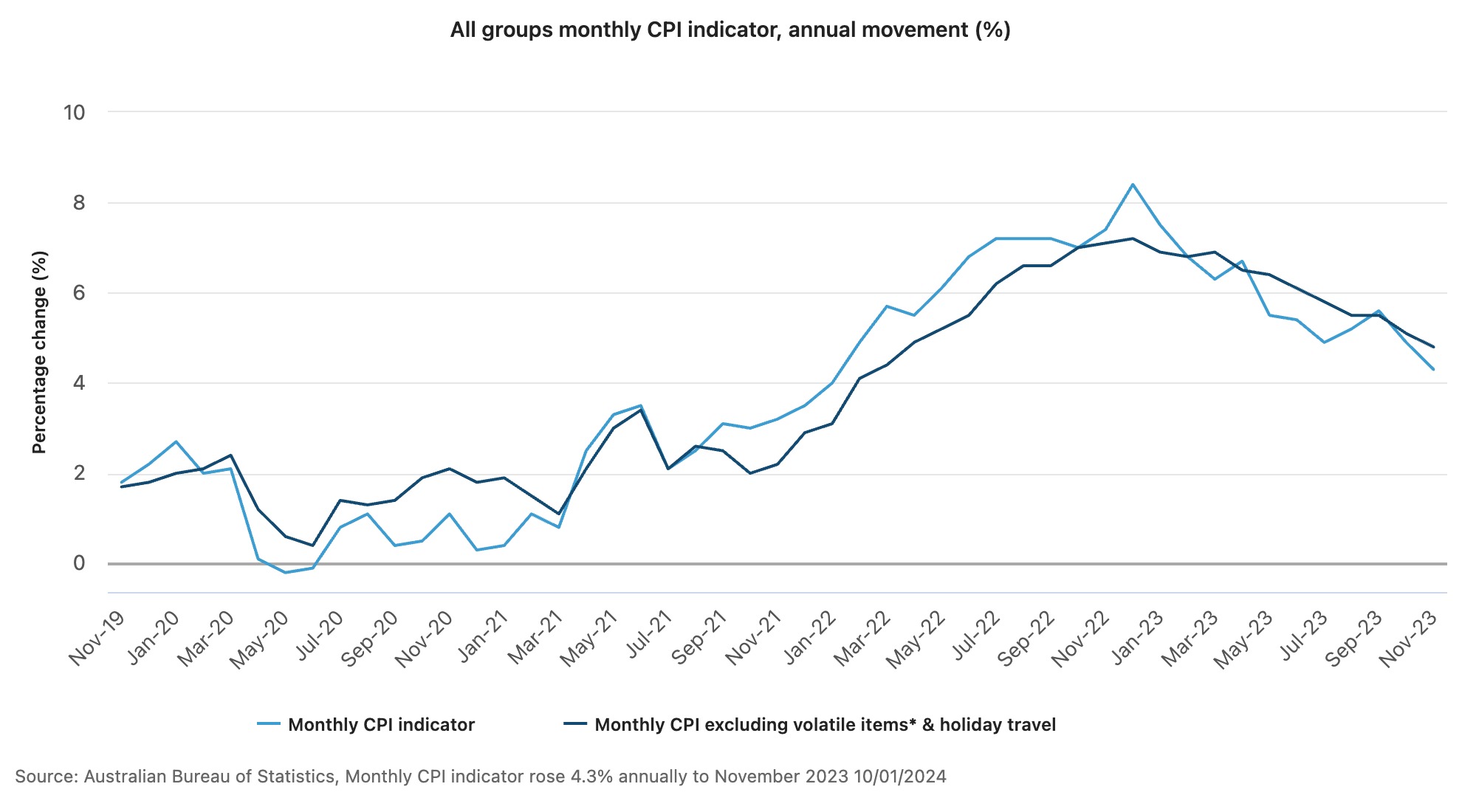
After trending downwards in recent months, inflation went up last month, fuelling fears of further rate rises. Data released today shows the Consumer Price Index rose to 5.2 percent in August, up from 4.9 percent in July.

The cost of housing, transport, food and non-alcoholic beverages as well as insurance and financial services rose the most according to data from the Australian Bureau of Statistics. While the acceleration in prices was anticipated, it could put pressure on the RBA Board to raise interest rates when they meet next month, despite community expectation that further increases were off the table.

Specific areas of concern had a familiar ring to them, with fuel prices showing an increase of 9.1 percent in August and the cost of housing up 6.6 percent. Higher costs associated with reinsurance and the impacts of natural disasters accounted for an annual rise in costs of 14.7 percent in August, up from 14.2 percent in July. The ABS noted: “This is the highest annual price movement since the beginning of the monthly CPI indicator.”  

Australian house prices set to surge across the country

Hobart is set to be the new property hotspot over the next two years as house prices surge across the country, a new report from KPMG has shown.

The southern capital is expected to overtake Perth, where house prices will be strongest in the short term, rising by 8.4 percent over the second half of 2024, to increase by 14.2 percent in 2025. 

Not surprisingly, the Melbourne and Sydney markets will experience long term price rises, up by 12 percent and 10.3 percent respectively to June 2025.

The KPMG report revealed that prices will increase nationally by 4.9 percent over the next nine months before a 9.4 percent uptick by June 2025.

KPMG chief economist Dr Brendan Rynne said a lack of supply had overtaken concerns about the impact of interest rate rises.

“Despite high interest rates, constrained supply will likely dominate the factors influencing property prices in the short term and result in continued price gains in most markets during FY24,” Dr Rynne said. “House and unit prices will then accelerate further in the next financial year as dwelling supply continues to be limited, due to scarcity of available land, falling levels of approvals and slower or more costly construction activity.”

Demand will be further fuelled by higher levels of migration, he said, while anticipated interest rate cuts in 2025 could well draw more buyers into the market, putting further pressure on prices. From a supply perspective, he said barriers for developers building new homes was hindering the availability of future stock.

Dr Rynne said the impact of mortgage stress was still a potential factor putting downward pressure on prices but had been outstripped by market demand.

“There are some factors pushing the other way – the main one being mortgage stress,” he said. “First-time buyers now need to use around half their earnings on mortgage payments – a significant rise from a third just three years ago. 

“We estimate around $350 billion of mortgages, or half of all fixed rate credit will expire this year – covering 880,000 Australian households. The remaining 38 percent of fixed rate credit, which includes about 450,000 loan facilities, will expire in 2024 and beyond. Some homeowners who previously locked in low rates might be unable to pay – and won’t be able to refinance to a lower and competitive rate.”

The World’s Biggest Crypto Firm Is Melting Down

After FTX crashed, the world of crypto seemed to belong to the largest exchange, Binance. Less than a year later, Binance is the one in distress.

Under threat of enforcement actions by U.S. agencies, Binance’s empire is quaking. Over the past three months, more than a dozen senior executives have left, and the exchange has laid off at least 1,500 employees this year to cut costs and prepare for a decline in business. And while Binance still looms large in crypto, its dominance is dwindling.

Binance now handles about half of all trades where cryptocurrencies are directly bought and sold, down from about 70% at the start of the year, according to data provider Kaiko.

What happens to Binance will have immense implications for the crypto industry because the exchange is so big. Industry players and watchers say other exchanges would fill the void if Binance were to collapse. But in the short term, liquidity in the market could evaporate, driving the price of tokens sharply down.

One institutional trader told The Wall Street Journal that his company has conducted fire drills to withdraw its assets from Binance quickly in the event of a meltdown.

Yi He, Binance’s co-founder and chief marketing officer, vowed to overcome the troubles in a message to Binance staff last month.

“Every battle is a do-or-die situation, and the only thing that can defeat us is ourselves,” she wrote in the message viewed by the Journal. “We have won countless times, and we need to win this time as well.”

Binance is a frequent investor in third-party crypto projects and beyond. Binance has invested in X, formerly known as Twitter. Binance co-founder Changpeng Zhao—or CZ as his 8.6 million X followers know him—is the biggest face of crypto.

“You just can’t quantify what would happen to the industry if Binance disappeared, given it has been responsible for fostering a huge amount of innovation and growth,” said Anthony Georgiades, a general partner at Innovating Capital, a fund that invests in early-growth companies.

The U.S. Justice Department has undergone a years long investigation that could result in criminal charges for Binance and Zhao as well as billions of dollars of fines, according to people familiar with the probe.

Binance also faces a Securities and Exchange Commission lawsuit that alleges it and Zhao operated illegally in the U.S. and misused customers’ funds. The firm has acknowledged past mistakes but says customer money is safe and it is committed to compliance.

“We have worked tirelessly not just to learn the lessons of the past, but also to continue to invest in the teams and systems that ensure user protection,” a spokesman said.

Binance launched in China in 2017, though it claims to be based nowhere, with staff scattered around the world. Its global website is accessible by traders almost everywhere, but that number is falling as its presence has been forbidden in many countries. In Europe, more countries are shutting their doors to the exchange.

In the U.S., activity at its local exchange, Binance.US, has basically dissipated. Its chief executive officer, legal chief and risk head all left recently.

In a virtual Binance.US meeting days before his departure earlier this month, Binance.US CEO Brian Shroder said revenue at the exchange had fallen 70% year to date, according to a presentation viewed by the Journal. Executives looked on with dismay.

Shroder told employees Zhao would need to resolve “his regulatory matters, put his .US holdings in a blind trust, or sell his shares” in order for the U.S. platform to maintain its growth initiative. Those steps would allow the company to unblock banking relationships and get licenses, he said. Zhao is the majority owner of Binance.US and the global exchange.

A spokeswoman for Binance.US declined to comment.

Binance and the DOJ have been talking for months, according to people familiar with the discussions, and inside Binance, there have been discussions on whether Zhao should step down.

Zhao’s insistence in remaining at the helm of the company has frustrated some executives who believed him leaving would improve the chances of the company surviving, the Journal previously reported.

The company upheaval has also hurt employee morale.

Employees confronted Zhao in a summer meeting following layoffs, according to messages viewed by the Journal, in a rare showing of criticism.

“Some ppl laid off were given 0 days notice and/or found out they got laid off because they couldn’t login to the system anymore. How is that treating them respectfully? Is 2 weeks severance respectful?” one anonymous employee asked Zhao in the all-hands meeting chat. Nine others upvoted that. The question went unanswered.

A further stumbling block for Binance came in late August, when the Journal published an article on Binance customers’ use of sanctioned Russian banks. The DOJ has also been investigating Binance in connection with possible violations of U.S. sanctions on Russia, the Journal has reported.

Following the Journal story, the Justice Department questioned Binance about the banks’ usage, and Binance’s chief compliance officer, Noah Perlman, met with department officials to discuss their concerns, a person with direct knowledge of the matter said.

Pressure from the DOJ was partly responsible for Zhao’s decision to begin winding down Binance’s business in Russia, once one of its most important markets, the person said. Over the following two weeks, Binance barred customers from using the sanctioned banks and forced out the executives managing its Russia business. It said it was considering a full withdrawal from Russia.

Zhao publicly remained defiant. “We are one community,” he wrote on X on the day the Russia executives left. “Keep building!”

But behind closed doors, Zhao has been bringing new lawyers to handle the DOJ case, according to people familiar with the move. And Zhao has been staying put in his home in the United Arab Emirates, which doesn’t have a mutual extradition treaty with the U.S.

Meet the Dark Knight—a Brooding, Souped-up Tesla Model S

The US$104,990 three-motor 2023 Tesla Model S Plaid Edition is among the fastest cars in the world, able to reach 60 miles per hour in just two seconds. It puts out 1,020 horsepower and 1,050 pound-feet of torque.

The Plaid is so quick it leaves its drivers gasping for breath, but can the car be improved? Unplugged Performance, a tuning shop in Hawthorne, Calif., that launched in 2013, thinks it can. So was born the Dark Knight, a tweaked Model S-APEX Plaid that has been extensively reworked to better hug the pavement. It sells for approximately US$230,000, including the donor car. But the many options could make it costlier.

The powertrain stays the same, but the car gets a 19-piece carbon fibre wide body kit that allows it to wear big 21-inch, lightweight forged wheels. Airflow is improved with “bargeboard” bodywork in front of the front wheels, a technique adapted from Formula One. Also directing air is the company’s Autobahn front carbon-fibre diffuser. The car meets the world with a sinister satin-black finish, featuring more exposed carbon fibre.

The car’s centre of gravity is lowered via a kit, and there’s a three-way adjustable rear sway bar and a rear-mounted GT strut tower brace. Also part of the suspension build are a series of billet-aluminium adjustable control arms that cut weight, increase strength, and allow some fine adjustments. For those choosing optimum track performance, there are full-race coilover suspension choices available. The Dark Knight needs to stop, so there are carbon ceramic brakes all around, cooled via a ducting system.

The interior was designed in collaboration with von Holzhausen, a company created by Vicki von Holzhausen (married to Tesla chief designer Franz von Holzhausen) that specialises in vegan leather products, including handbags. The tough-wearing interior fabric is in Serrano red and made from bamboo.

The Dark Knight interior uses vegan leather from von Holzhausen.
Unplugged Performance

Unplugged also makes over the other Teslas, including the S, 3, X, Y, and will also tweak the forthcoming Cybertruck. Brendan Sangerman, who directs marketing at Unplugged, says the Dark Knight is “the ultimate daily driver sports sedan.” Asked why the electric motors are left alone, he says, “You wouldn’t want it to be any faster than it is. Instead, we match the performance of the suspension and braking to the level of performance that the car already has.”

Sangerman emphasises that the Dark Knight is a bespoke product, and that the customer has a wide choice in the interior colors and fabrics. “We want customers to be very hands-on in the process,” he said. “If you tell us you like the interior shade in a specific Rolls-Royce, we can match it. Our parts catalog is pretty extensive.”

Unplugged is located close to the Tesla Design Center in Hawthorne. Its first Model S build was shown at the SEMA Show in Las Vegas in 2014, and the company exhibited at the Tokyo Auto Salon in 2016. Unplugged began putting its vehicles to the test on race tracks, and it set some EV records. It also won the exhibition class at the Pikes Peak International Hill Climb in 2021.

There will always be a market for performance tuners, and Unplugged has found a niche market in making some of the world’s most exciting EVs be just that little bit more intoxicating.

Friday on my mind: The workers avoiding the CBD

Massages, pilates classes, free food and beverages and discounted parking have not been enough to lure office staff back to the CBD, a commercial property expert said this week.

Head of research at Ray White Commercial, Vanessa Rader said despite best efforts by employers, staff have been less inclined to come into the city on Fridays, prompting calls for the introduction of a four-day week.

“While office owners and employers are doing their bit to encourage staff interaction in the office by way of perks and experiences such as massages, pilates classes, free cannolis and iced lattes, occupancy levels remain subdued,” she said. “Now Transport NSW has weighed in, Sydney’s public transport prices are set to increase next month, weekly caps however have remained unchanged and Friday is now considered a weekend.”

Head of research at Ray White Commercial, Vanessa Rader

Last weekend, NSW Transport announced that weekend fares will also apply on Fridays, providing all-day travel for no more than $8.90 for adults on metro, train, light rail and bus services.

“However, half-price trips after eight journeys will no longer be available when the fare change comes into effect,” the statement said. “Fewer people are travelling five days a week, resulting in lower uptake of the half- price trips benefit, which has dropped from 24 percent pre-Covid to 14 percent in 2023.”  

City office vacancies are at their highest rates since the late 1990s, with Sydney and Melbourne recording 11.5 percent and 15 percent respectively. Ms Rader said there were several factors keeping occupancy rates consistently low.

“The prolonged historically low 3.7 percent unemployment rate is a stumbling block for many businesses, the lack of quality talent leading to employers having to provide greater flexibility to secure quality staff,” she said. “Hybrid working models allow remote working, be it from home, in regional areas or even interstate with limited need for “in the office” interaction continuing to be commonplace.”

However, data released by CoreLogic last month showed the desire for regional areas has cooled, with key areas such as the Richmond-Tweed, Shoalhaven and Southern Highlands in NSW and Ballarat and Geelong in Victoria experiencing falls in values between -10.4 percent and -20.4 percent, indicating a return to city areas.

In the meantime, Ms Rader said the case for a four-day week to entice workers back to the city while maintaining work-life balance is growing.

“The mandating of staff back into the workplace for a four-day week, would do much to stimulate the office market’s demand for space, while promoting better work/life balance, reduced stress and growth in health benefits,” she said. “(This would) leave the three-day weekend to explore Sydney on public transport at a discounted rate, or travelling across toll roads, growing family time and healthy lifestyle habits.”

How Candid Can You Really Be With Your Boss?

Marchiano Loen stared at his screen for two hours. He drafted one response, then another. He begged someone in human resources for help. Still, the question vexed him.

What can your manager improve on?

“Oh God, I actually have to answer this,” the tech worker thought as he pondered the employee survey. “What am I going to write?”

Bosses claim they want honest feedback. Telling the truth can spark change, make your work life better and show off your own assertiveness. Or you could get fired. (At least it feels that way.)

Like it or not, silence isn’t an option. But you have to be really careful about just how candid to get with the boss.

Loen says he was once frozen out by a manager after suggesting he could improve his communication style during presentations. Warm small talk and jokes evaporated, and Loen’s big projects were redistributed.

Now he uses what he calls “the Jacuzzi approach.” He dips a toe in with bosses to test the water, seeing how they react to a fairly neutral piece of commentary before saying anything of substance. He might ask, would that meeting be better on Tuesday than Monday?

“It’s a survival mechanism,” he says.

The lies we tell

The average person lies three times in the first 10 minutes of meeting someone new, according to research from Robert Feldman, a professor of psychological and brain sciences at the University of Massachusetts Amherst. Such superficial fibs lubricate many of our social interactions, he says, helping us fit in and getting people to like us.

This salad is delicious, we insist. Or I loved the “Barbie” movie, too! With the boss, the photo of their kid is suddenly extraordinarily cute, their jacket perfect for today’s presentation.

“At the end of the day, we want to hear good things,” Feldman says. “Your boss is just like everybody else.”

What about when bosses want to be tapped into what’s really going on, too? After all, you’re the one who’s connected to collegial chatter and gossip, which can give managers insight into how they can do a better job and get ahead. Giving the right information to your boss can help you, too. You just have to share it the right way.

“I want people to feel like they can be them,” says Karin Storm Wood, who manages a team of communication professionals at a private school. But, “I don’t want everything.”

Don’t assume you have all the facts, she says. Acknowledge you’re just sharing one person’s perspective. And keep your language grounded. For instance, describe a behaviour instead of lobbing a negative adjective at your boss.

Wood says she’s OK with hearing that she sometimes jumps around from idea to idea in brainstorming sessions. She doesn’t want you to call her “scattered.”

“That’s like, ‘Ouch,’ ” she says. “It has that element of judgment.”

Feedback, please!

Everyone seems to want our take these days. We’re subjected to quarterly 360 reviews, weekly pulse surveys and drive-by requests for input by the coffee machine. It’s part of a longstanding shift from command-and-control leadership styles to more collaborative ways of running companies, says Doug Stone, who teaches conflict management at Harvard Law School and co-wrote the book, “Thanks for the Feedback.” A lot of it stems from employees who have demanded more of a voice…even if another app wasn’t what they had in mind.

Be careful what you wish for.

“You have to say something,” says Matt Abrahams, who teaches at the Stanford Graduate School of Business and has a book coming out this week about spontaneous communication.

A smart start is to ask some questions of your own to the boss, says Abrahams. What kind of guidance do they typically find useful? If they readily divulge a time they messed up or made a change, be more candid, he suggests.

Emphasising the positive might subconsciously correct the negative. For example, praising the boss for being so focused at the start of her speech could imply that she completely lost her train of thought by the end, without you having to spell it out. But don’t get too soft, Abrahams warns, devolving into coded language and euphemisms.

“You’re being coy. You’ve got something to say but you’re not saying it. That can look really bad for you,” he says. After all, we were all hired to be experts in our jobs.

The risk of always saying yes

Earlier in his career, Irvan Krantzler used to nod his head yes to everything, eager to fit in. That project idea? It sounded great. A deadline next week? Sure, he could handle it.

The result, he says, was often “bad news, late.” The issue he didn’t speak up about—an unrealistic timeline, not enough people on the team—would fester and eventually send a project sideways.

“I can’t be put in a situation where I can’t be open with people,” he says he realised. He started voicing his concerns more, and left one employer where everyone was expected to agree all the time.

When Leslie Venetz’s boss asked her what she thought about a new team of salespeople, she assumed the pair were just spitballing thoughts in confidence. A few months later, her comments were shared with HR, she says, and a person she had identified as weak was fired.

She felt guilty and betrayed, and soon left the company.

Now when clients of her sales training and consulting firm request her feedback, she asks how they’re going to use it. Are they deciding the fate of a division this week? Or just considering a possibility, and gathering dozens of opinions in the meantime?

The answer, she says, determines her candour.

“Everyone says that they want feedback,” she says. “There’s something to be said for taking a moment.”

American Express Travel President Talks About the Post-Pandemic Vacation Boom

Audrey Hendley, as the president of American Express Travel, is attuned to how trips have evolved in recent years and what vacationers are seeking on those getaways.

The organisation is one of the largest travel and lifestyle networks in the world and spans 7,000 travel consultants in 23 countries. Its global footprint includes 1,400 lounges in 140 countries and more than 1,500 properties in its collection of Fine Hotels + Resorts.

Business at American Express Travel is bouncing back from the pandemic slump: In the second quarter of this year, bookings through the network across 138 million American Express cards that are currently in use reached pre-Covid levels.

Hendley, who lives in Westchester, New York, speaks to Penta about the most in-demand travel destinations, the new movement of traveling with a purpose, and her top advice for maximising any trip.

Penta: What are some travel trends you’re seeing this year?

Audrey Hendley: We have seen a notable shift in people’s interests driving travel decisions. Travellers are booking “set-jetting” trips that are inspired by shows like The White Lotus and Emily in Paris because they are increasingly inspired by pop culture.

Food also continues to impact booking decisions, with people building entire trips around reservations at incredible restaurants like Noma in Copenhagen or blocking off afternoons to do a taco tour in Mexico City. Travel has become less about the “where” and more about the “why.”

Which destinations are the most popular and what’s up and coming?

We put out a Trending Destinations list every year that highlights the places our card members are traveling to; 2023 is a mix of perennial favourites like Paris and the Florida Key, and some lesser-known destinations like Woodstock, Vermont, and Montenegro. While people are still revisiting the cities they love, we are also seeing an increase in trips to places that are off the beaten path. And as borders have opened post-pandemic, we’re seeing more trips being booked to places like Asia and Australia.

How do you think the rising cost of travel will impact decisions in 2023?

Our 2023 Global Travel Trends Report found that 80% of travellers would rather take a dream vacation than purchase a new luxury item. Our values have fundamentally shifted since the pandemic, and now, people want meaning in everything they do—travel included. They’re more purposeful.

Pre-pandemic, travel was about checking off a list of destinations you wanted to see. Now, it’s about really exploring and seeing a place in depth. Travelers will go to fewer places but see more where they do go. And they’re willing to spend on experiences and memories—what better way to create those things than travel?

How are younger generations shepherding the travel trends that we are seeing today?

As they continue to gain independence and financial freedom, millennial and Gen Z travellers are putting their stamp on modern travel trends. They want experiences, especially ones that look good in photos on social media. We are also seeing that they are extremely conscious of the impact their trips have on the environment and the communities they visit. They are pushing the industry to be more purposeful—they want hotels that prioritise sustainability, support local economies by employing locals, and value inclusion and diversity.

Can you speak to the hallmark of a great hotel and a great hotel stay?

It’s a property that knows you when you’re there. The staff addresses you by name and makes you feel at home. They offer exceptional service, a luxury that’s relaxed and infuses your stay with personal touches. I was in Paris on a recent work trip, for example, and stayed at the Maison Delano, one of the newest properties in the city. I walked into my room and found a charger that worked in France waiting for me as a welcome gift. It was such a simple gesture but meant so much on a work trip.

The Centurion Lounge Network has been regarded as one of the most luxurious airport lounge experiences. What sets it apart from other airport lounges?

I think it’s the quality of the product. We try to offer elevated food and local flavours. The lounge at San Francisco Airport, for example, features wines from nearby Napa Valley, and in Seattle, home to a big coffee culture, we have a coffee and espresso bar. With cuisine, we try to use chefs from that location to create menus, and they’re all different by location. We also try to use as many local producers as possible.

In addition, we offer high-touch services like chair massages and manicures in some lounges.

As a globetrotter yourself, what are some of your best travel tips?

I like to travel like a local, especially to touristy destinations. I always look for the small shops and restaurants that give me the true flavour of a destination rather than the big names where all the tourists go.

I also enjoy visiting popular destinations during the so-called off-peak season. I was in Venice [Italy] in February where the weather was glorious, and there weren’t nearly as many crowds as there are during the summer.

On business trips, I love carving out some personal time to balance the intensity of long workdays. I also start the day with some form of exercise whether it’s a run or jog—this also gives me an opportunity to see the destination.

This interview has been edited for length and clarity.

Western Sydney’s hottest place to cool down opens

Parramatta has a cool new destination for beating the heat, just in time for summer.

Today marks the opening of the Parramatta Aquatic Centre, a multi-million dollar facility designed to service the diverse communities of Western Sydney. Jointly crafted by award-winning architectural firms Grimshaw, Andrew Burges Architects and landscape architects McGregor Coxall, the facility includes a 10-lane 50m outdoor pool, a 25m indoor pool and a Learn to Swim pool as well as an indoor water playground, a fully-equipped gym in the health and wellness centre, community rooms and steam, spa and sauna facilities.

The $88.6 million centre is situated in Parramatta Park at Mays Hill and has been designed to ‘minimally disrupt’ the park, which is inscribed on the UNESCO World Heritage List. With the outdoor pool as the centrepiece, the aquatic centre has been largely worked into the topography of the park, maintaining community access to the site as well as protecting views across the park to Old Government House.

In addition to the public-facing facilities, the centre has 360 solar panels powering a 193kW system and an automated natural ventilation system instead of air conditioning. 

Parramatta has been without an aquatic centre since 2017 when the Parramatta Memorial Pool was bulldozed to make way for the Western Sydney Stadium. The outdoor pool has been named the Memorial Pool in honour of the former pool.

Architect Andrew Burges said the aquatic centre had been designed with the future in  mind.

“Our goal was to provide a completely new vision of what an Aquatic Centre could be – we wanted to create a destination for the community, one that provides opportunity for many forms of recreation in a safe and inspiring facility that feels more like a landscape setting than a building,” he said.

Project director for Grimshaw, Josh Henderson, said the centre was a culmination of years of planning and collaboration that would serve the needs of the community for years to come.

“The new Parramatta Aquatic Centre will provide a much-needed destination for swimming, fitness, and leisure in Western Sydney,” he said. 

“The design team, City of Parramatta and builder have all collaborated to create a valuable community asset that is enjoyable to experience, well made, highly functional and accessible. As a new home to many community groups, the opening of the facility will provide vibrant landscaped public spaces for fitness, sport, learn to swim classes and for time with friends and family.”

The new aquatic centre is projected to attract one million visitors a year.