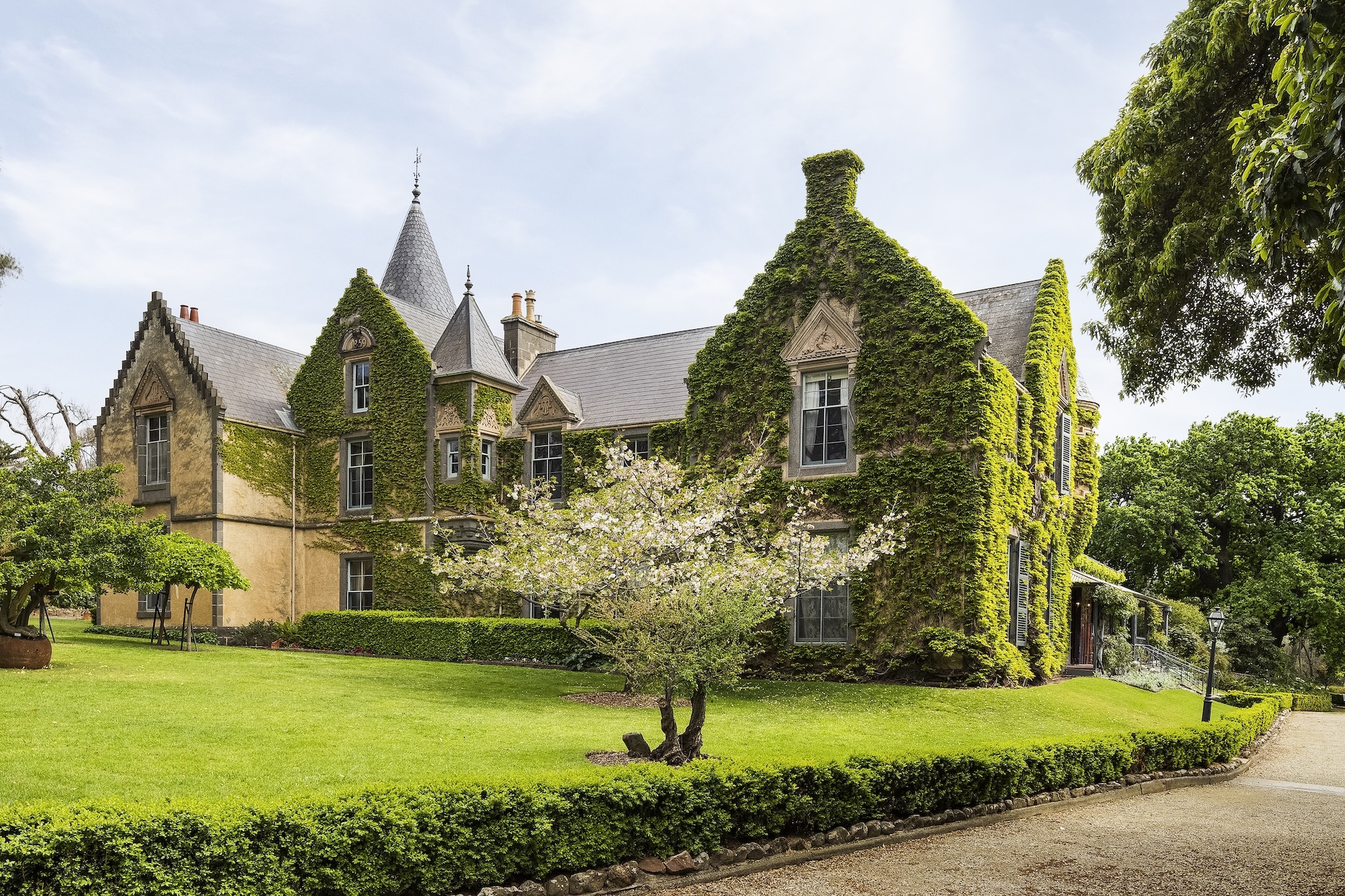
TOTNES, A BRIGHTON ICON SINCE 1890, RETURNS TO THE MARKET
Brighton icon Totnes hits the market with history, luxury and a $9.25m price tag.
 2 min
2 min


There’s nothing middle of the road about Middle Crescent in Melbourne’s coveted bayside suburb of Brighton.
The celebrated semi-circular street is not only known for its Victorian-era architecture, but it has also been home to a long list of remarkable residents.
Number 32 was famously owned (not once, but twice) by the late, great test cricketer Shane Warne, while 43 Middle Crescent featured in the final season of The Bachelor Australia. Brighton’s “White House” at number 31 is also another architectural icon.
Right across the road, at number 36, Totnes has come to market with $9.25 million to $9.75 million price expectations through Kay & Burton Bayside agents Alex Schiavo, James Driver and Shantelle Francis.
The four-bedroom parkside residence last sold in December 2013 for $3.752 million.
Completed around 1890 for local dentist John Davy, the elegant period property is situated on a vast 1,169 sq m block surrounded by a mix of ultra-modern mansions and heritage dream homes.
For more than 130 years, Totnes’ storybook facade has remained largely unchanged, making it one of the neighbourhood’s most iconic homes.
Beyond its fairytale frontage, complete with wrought-iron fences and ornate lacework, Totnes features a traditional tessellated-tile veranda and manicured gardens.
Behind the commanding front door with stained glass detailing, an elaborate entry hall awaits, featuring stately archways, herringbone parquetry, and high patterned ceilings that set a great first impression for the rest of the house.
Centred on the spacious footprint, there is an illuminated open-plan family room with a conservatory-style glass ceiling and a kitchen featuring Miele appliances, a huge island bench, and a wine room. The icing on the architectural cake is the combined butler’s pantry and laundry with a secret wrought-iron spiral staircase leading up to the “tower” office and roof top terrace showcasing city and bay views.
Spoiled for choice, homeowners have two separate living rooms with fireplaces, as well as a louvred alfresco dining area and an integrated barbecue for poolside entertaining all year round.
In the palatial main bedroom suite, there is a long walk-in wardrobe and a deluxe ensuite, while two more bedrooms share another ensuite, and a third family-friendly bathroom has a tub.
Additional highlights at Totnes include intricate stained-glass and sash windows throughout, garden irrigation, a security system, and a two-car garage.
Facing Wilson Reserve from its corner block, Totnes is close to Brighton and Firbank Grammar Schools, Bay and Church St eateries, local shopping, swimming beaches, and the foreshore’s Yacht Club.
Totnes at 36 Middle Crescent, Brighton is listed with Kay & Burton Bayside with a price guide of $9.25 million to $9.75 million.

From making unpopular decisions to learning when to listen, leaders from five businesses reveal what nobody prepared them for — and how running a company has challenged their expectations.

Technology and semiconductor shares fell sharply as investors questioned the debt financing the AI infrastructure boom and confronted higher rates and Chinese competition.

Mirvac’s 45-level Trielle has topped out at Yarra’s Edge, pairing riverfront apartments with wellness facilities, private dining and resident services.
3 min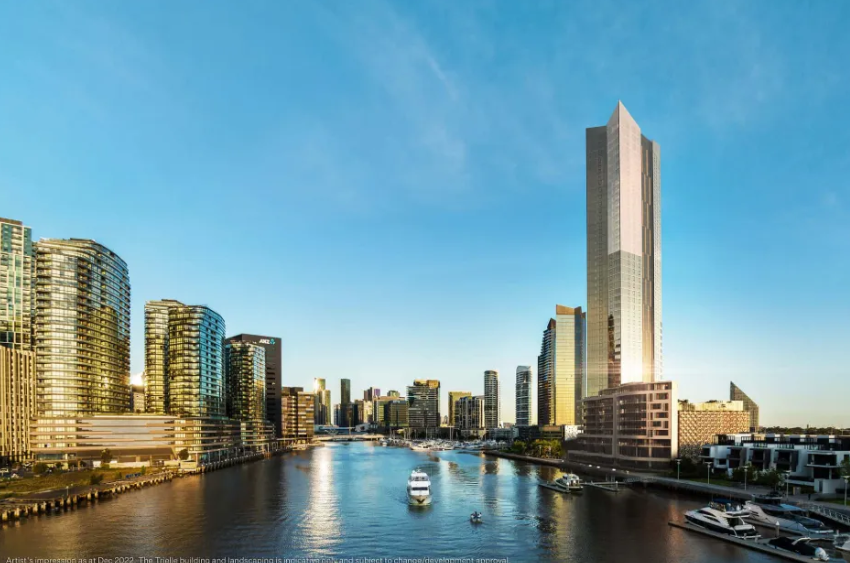
Mirvac has topped out Trielle at Melbourne’s Yarra’s Edge, with more than 70 per cent of the riverfront development sold and approximately 80 per cent of purchasers intending to make their apartment a home.
The figures, released on September 22, point to an owner-occupier audience for one of the precinct’s final residential towers. Mirvac began developing Yarra’s Edge in 2003, and its latest addition occupies one of the remaining absolute riverfront sites.
Mirvac CEO of Development Stuart Penklis said existing residents were among those moving up within the neighbourhood.
“Many purchasers already have a connection to Yarra’s Edge,” Mr Penklis said, describing buyers whose changing needs were encouraging an upgrade within the precinct.
“As one of the final residential towers within Yarra’s Edge, Trielle represents the culmination of more than two decades of creating one of Melbourne’s most established and sought-after waterfront communities,” Penklis said.
“Positioned on the Collins Street axis with absolute river frontage, Trielle offers residents a rare opportunity to enjoy sweeping views across the Yarra River, Melbourne skyline and Port Phillip Bay, while remaining seamlessly connected to the CBD. With Trielle now more than 70 per cent sold, we’re continuing to see strong demand from buyers seeking quality homes in established locations.”
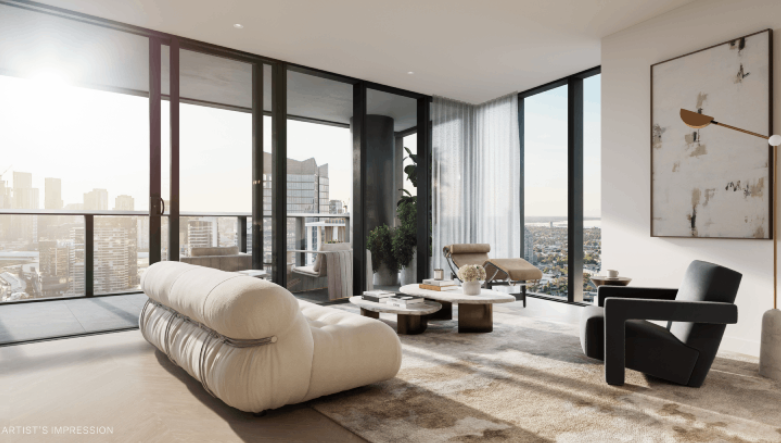
The developer also flagged a penthouse and sub-penthouse collection with larger layouts, premium finishes and broad outlooks. The planned wellness centrepiece, The Oasis, encompasses a 900-square-metre elevated urban rainforest.
Mirvac General Manager Residential Development Victoria Elysa Anderson said Trielle had resonated strongly with buyers seeking a rare lifestyle offering in Melbourne.
“Opportunities to secure a new luxury residence on a riverfront site of this calibre are incredibly rare, particularly within a community like Yarra’s Edge,” Anderson said.
“What makes Trielle unique is the combination of exceptional views, world-class residential facilities and the lifestyle that already exists around it. Residents are buying into a mature waterfront community with parks, promenades, dining, wellness and strong community connections already in place.”
The 45-level tower brings a substantial new presence to that waterfront. Its residential offering spans one-, two-, three- and four-bedroom apartments, with Signature, Prestige and Sub-Penthouse collections accommodating different household sizes. The north-facing position connects the apartments visually to the river and city beyond.
Seven storeys above the promenade, the planned Oasis combines planting and a running stream with a Scandinavian-inspired wellness club developed with spa specialist Naomi Gregory. Facilities include a 25-metre lap pool, hot magnesium pool, sauna, hydrotherapy, a gym, yoga and Pilates room, and treatment spaces.
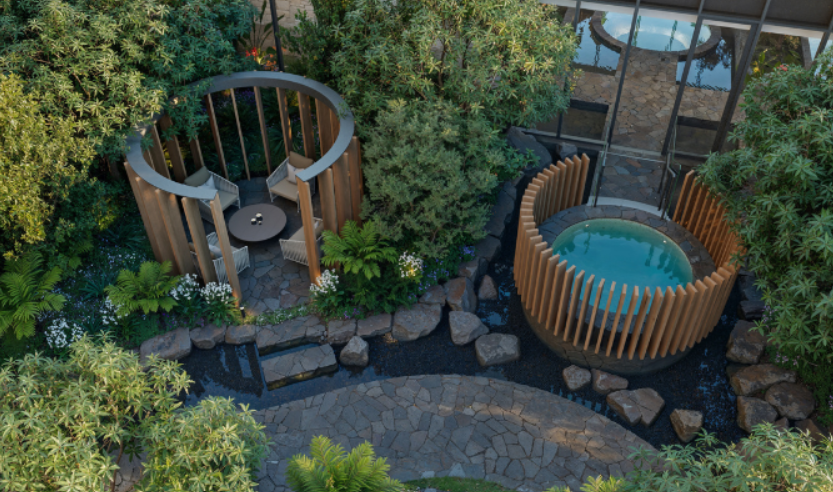
The amenity extends beyond exercise. Residents will have access to The Biblioteca library and workspaces, ground-floor work pods, and The Salone piano lounge. A private Chef’s Table dining room offers a setting for larger gatherings, while a cinema, games room and sports lounge broaden the entertaining options. Concierge services and a dog-wash area support everyday routines.
Trielle comprises a collection of one, two, three and four-bedroom residences. Reflecting strong demand from owner occupiers, approximately 80 per cent of purchasers to date intend to live in their homes, highlighting the project’s appeal to those seeking a long-term waterfront lifestyle.
Mirvac has recently delivered The Albertine, a premium apartment development on the edge of Melbourne’s CBD, and is nearing completion of Prince & Parade in Brunswick, further strengthening its portfolio of thoughtfully designed apartment communities in some of Melbourne’s most sought-after urban locations.

The Perpetual Padellone draws its name from the coveted reference 8171 while introducing an instantaneous complete annual calendar to Rolex’s modern Perpetual collection.

A Vaucluse masterpiece by MHNDU with interiors by Poco Designs brings architectural ambition and breathtaking ocean outlook to the auction block.