

What It Takes to Become a Westminster Dog Show Champion
In the lead-up to the country’s biggest dog show, a third-generation handler prepares a gaggle of premier canines vying for the top prize.

 2 min
2 min
The elite athlete is capable of tremendous discipline. At the moment, though, he’s humping the competition.
Sonny, the star Portuguese water dog, went nosing around for a girlfriend when he was supposed to be attending to press obligations in the Long Island living room of his professional dog-show handler, Kimberly Calvacca.
But there is much work to be done: In just a few days, Calvacca will load the freshly fluffed Sonny and five other crème-de-la-crème canines into a van and head to Manhattan to compete at the country’s biggest dog-sporting event: the Westminster Kennel Club Dog Show.
The pedigreed dogs are the epitome of their breeds, owned by enthusiasts who pay Calvacca $150 per show day for her more than 100 dog shows each year.
The circuit reaches divine heights Tuesday in Madison Square Garden with Westminster’s top award of best in show, a status symbol that has eluded Calvacca, a third-generation dog handler in her 50s who started showing dogs in high school.
Competing alongside Sonny are Valentina, a min pin and the only contender Calvacca partly owns; Tango, a pug; Estee, a canaan; Shindig, a vizsla; and Nala, a rambunctious toller who reacted to getting kicked out of this photo shoot by peeing on the floor.
When it’s showtime, the dogs perform. “It’s a lot of time, a lot of effort and making sure that this dog is raised right so it has the temperament to say, ‘Pick me!’” Calvacca says.
She trains them to stand stock-still when a judge inspects them nose to tail, or trot in a circle without getting distracted by the crowd.
At times, she recreates show conditions at home so her pageant queens and kings won’t be spooked by whatever the competition throws at them.
Most preshow work happens in her “dog room,” a basement utility space where pet scrubs and tinctures abound like makeup at Sephora.
She says the room is filled with the good juju of champions her grandfather groomed there when this was his house.
On her boombox, when Sade’s “Smooth Operator” switches to Britney Spears’s “Toxic,” the frantic synth reflects the chaos.
First, she must wash the dogs one by one in an elevated bathtub. Then she hoists each dog onto a work table, attaching the animal loosely to a loop she cheerfully calls a noose.
She trims their toenails with a repurposed woodworking tool, styles their fur with a $600 dog blow dryer and clips their coats with $1,000 scissors. She cleans their teeth with an electric toothbrush, a dental tool for plaque and a breath-freshener spray.
Each dog spends 15 to 30 minutes daily on treadmills, one of which costs $3,500 and is specifically for dogs.
Then come meals from 40-pound bags of dog food—she’s sponsored by Purina—and various biscuits and canned meats. In the ring, she gives them human treats such as salmon, steak and meatballs.
On a recent day, she heaved a 10-pound bag of frozen chicken from Costco onto her kitchen counter, then boiled breasts with onion powder and garlic powder.
She calls it her “winning chicken,” and during shows she’ll sometimes store a chunk of it between her teeth for quick access.
Calvacca doesn’t play favorites, she says, but she snuggles Valentina and calls Sonny Mister Handsome.
He is the exuberant frat boy, the alpha of the group. He licks, he yodels, he sleeps on a purple pillow. He plays it up in the ring. “Sonny always thinks he wins,” Calvacca says.
 Copyright 2020, Dow Jones & Company, Inc. All Rights Reserved Worldwide. LEARN MORE




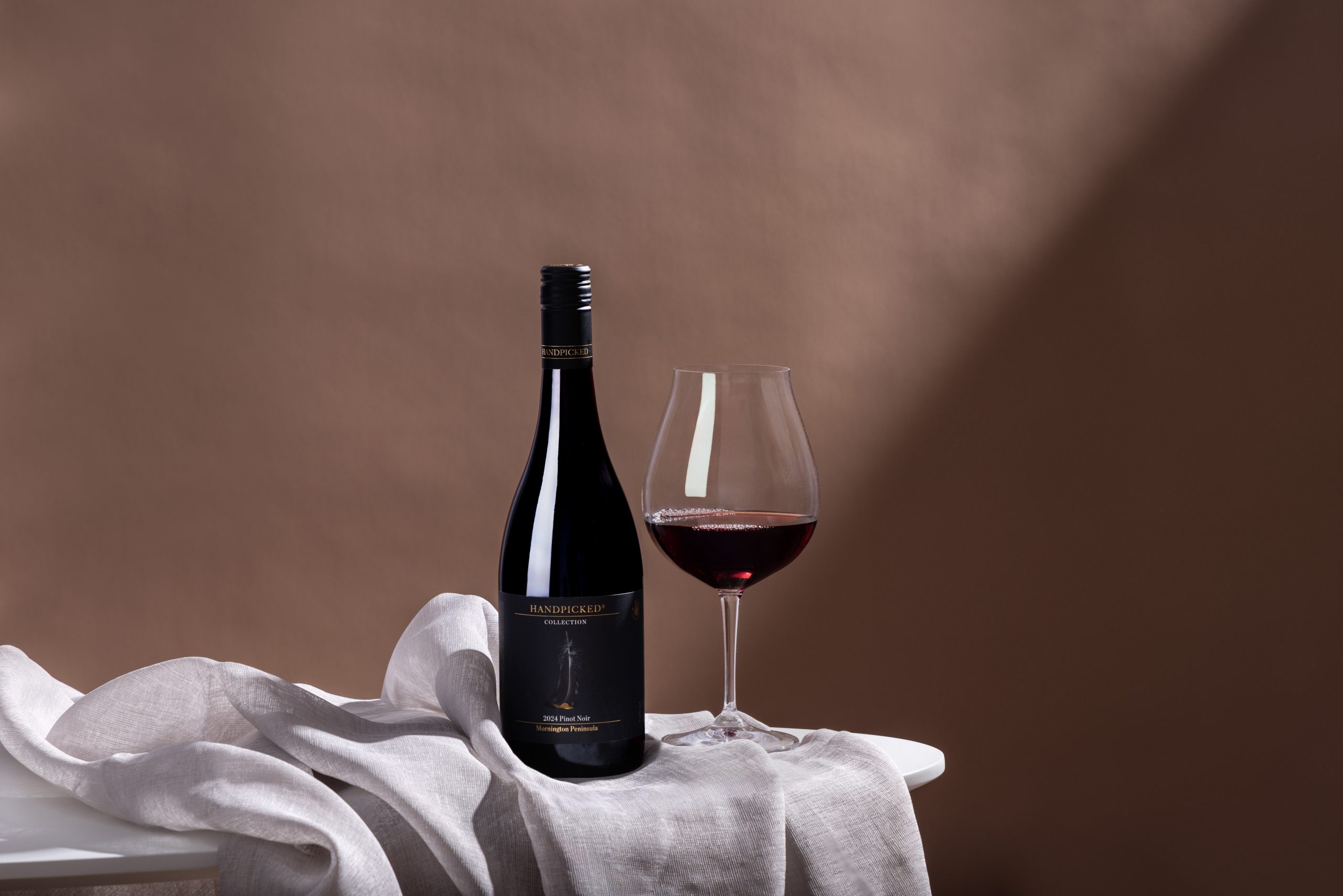
As the season turns, Handpicked Wines’ latest Pinot Noir and Chardonnay releases reveal how subtle shifts in place shape what ends up in the glass.

Exclusive eco-conscious lodges are attracting wealthy travellers seeking immersive experiences that prioritise conservation, community and restraint over excess.

As the season turns, Handpicked Wines’ latest Pinot Noir and Chardonnay releases reveal how subtle shifts in place shape what ends up in the glass.
3 minThe shift into autumn brings with it a quiet recalibration. Evenings lengthen, temperatures soften, and the wines we reach for begin to change.
Crisp aperitif styles give way to something more structured and contemplative. Chardonnay regains its depth, and Pinot Noir returns as the season’s defining red.
It is against this backdrop that Handpicked Wines has unveiled its latest premium collection, anchored in the 2024 vintage and spanning Tasmania, the Yarra Valley and the Mornington Peninsula.
While geographically diverse, the wines share a common philosophy: that place, rather than process, should define the final expression.
“Pinot Noir and Chardonnay are the bread and butter of Handpicked. They are our signature and what we do best,” said Chief Winemaker Peter Dillon.
“While we focus solely on our two hero varieties with this release, there is so much diversity to be found from the sites, with each one bringing a new quality and dimension to the variety.”
A tale of two vineyards
Nowhere is that diversity more evident than in the Yarra Valley, where two single vineyard Chardonnays offer a compelling study in contrast.
Separated by just a 45-minute drive, the Wombat Creek and Highbow Hill sites illustrate how dramatically elevation and soil can influence character.
Wombat Creek, perched at 420 metres above sea level in the Upper Yarra, produces a wine defined by finesse.
Volcanic soils and cooler temperatures deliver aromatic precision and a tight structural line. By contrast, Highbow Hill, located on the valley floor, offers a broader, more textural profile, shaped by slightly warmer conditions and different soil composition.
For Dillon, the comparison is central to understanding the essence of fine wine.
“Taking two wines from the same producer, region, and price point, made by the very same winemakers and viticulturists, has got to be the ultimate and most tangible way to explore terroir,” he said.
“It’s a joy for us as winemakers to create a totally new expression of the wine with the same grape; it really shows how the vineyard’s personality carries across into the bottle and onto the palate.
The rise of site-led winemaking
Across Australia’s leading wine regions, there has been a growing shift away from heavily manipulated styles towards wines that reflect their origin more transparently. Handpicked’s latest releases sit firmly within this movement, prioritising vineyard stewardship and minimal intervention.
Several of the wines now carry Certified Organic status, part of a broader transition that reflects a long-term commitment to soil health and environmental sustainability. The flagship Capella Pinot Noir, sourced from Tasmania, represents the culmination of more than a decade of work refining both site and technique.
The result is a Pinot Noir defined less by overt power than by restraint and clarity, characteristics increasingly associated with Australia’s finest cool-climate sites.
A seasonal return
The timing of the release is not incidental. Autumn remains the natural home of both Pinot Noir and Chardonnay, varieties that reward slower drinking and closer attention. Where summer wines are defined by immediacy, these are built for contemplation.
In this sense, the latest collection reflects more than a single vintage. It captures a broader evolution in Australian wine, one that places increasing emphasis on nuance, origin and longevity.
As the season settles and the pace of the year begins to shift, these are wines that invite pause. Not simply to drink, but to consider the journey from vineyard to glass, and the quiet influence of place that shapes every bottle.

From farm-to-table Thai to fairy-lit mango trees and Coral Sea vistas, Port Douglas has award-winning dining and plenty of tropical charm on the side.

A long-standing cultural cruise and a new expedition-style offering will soon operate side by side in French Polynesia.