When It Comes to Private Jet Perks, the Sky’s the Limit

 6 min
6 min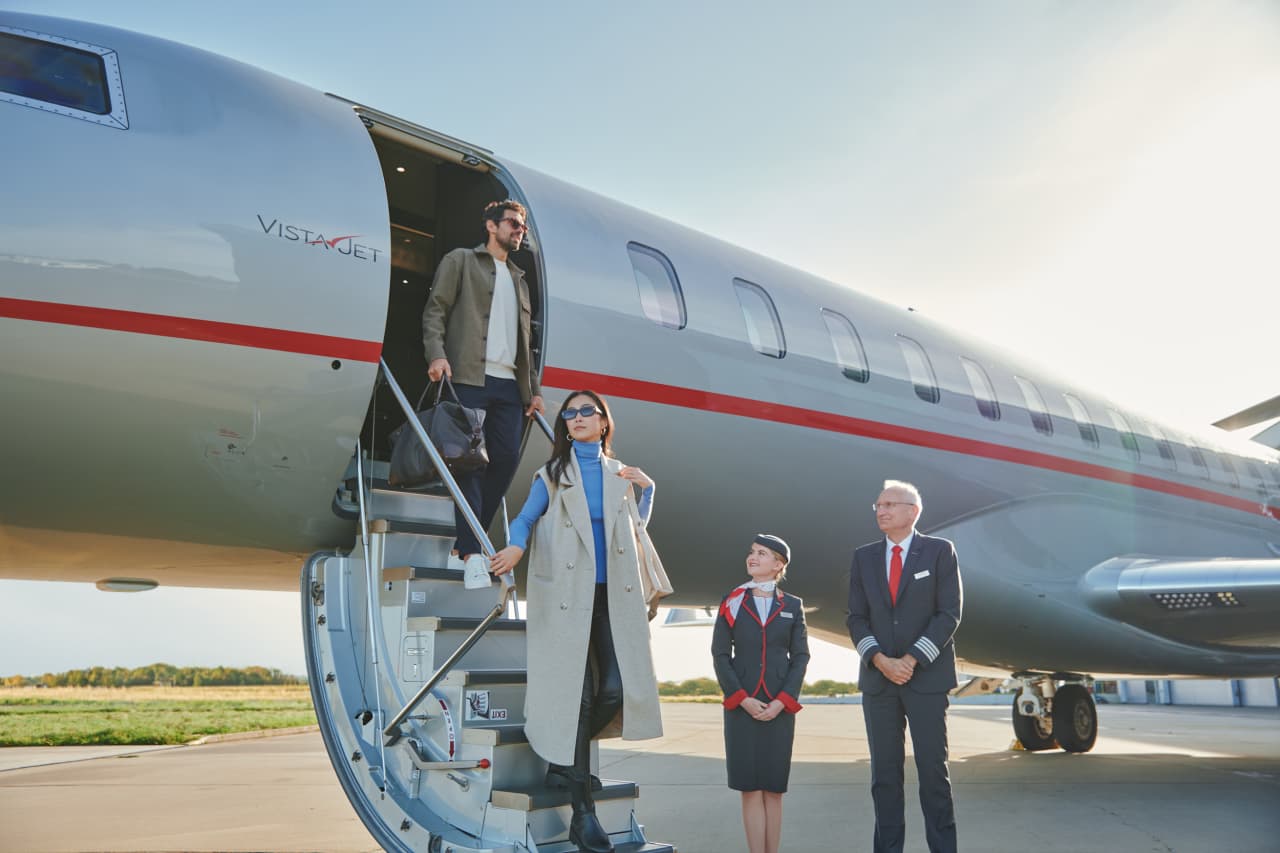
With competition among private aviation firms as fierce as ever, the perks available to new and existing customers keep getting bigger. Gone are the days when complimentary transfers and customised in-flight amenities moved the needle. The industry’s top providers have entered into a virtual arms race, trying to out-do one another with one splashy offering after the next.
“The partnerships with celebrity chefs, VIP access to famous vineyards and sporting events, being invited to play in golf pro-ams … these comped memberships and perks valued at tens of thousands of dollars are part of a tried and tested marketing strategy among private jet companies,” says Doug Gollan, president and editor of Private Jet Card Comparisons, a buyer’s guide that tracks pricing, rules, and policies for more than 80 jet card, membership, and fractional providers.
Jet cards are a way to charter a private flight by pre-paying into a company’s program; a membership requires customers to pay an annual fee to unlock private aviation services; and fractional ownership allows individuals or businesses to share the cost and use of a private jet.
Key players such as NetJets, Flexjet, VistaJet, Wheels Up, and OneFlight have hospitality areas at in-demand events such as Formula 1, the Masters, and the Super Bowl, “places customers want to go, and where you want to make sure you are getting the VIP treatment because the crowds are overwhelming,” Gollan says.

Courtesy of VistaJet
Though the perks don’t motivate users to pick a company, they play an important role for the jet companies, Gollan says.
“The perks don’t drive savvy [ultra-high-net-worth] consumers to choose one company over the other. However, they generate awareness of the companies via media coverage; they spark interest via partnering with luxury partner companies—fashion houses, private vacation clubs, luxury hotels, and automakers—and they allow the partners to market to each other’s clients,” he says. “They also allow executives to mix with their customers.”
This is important because there is a high cost of acquisition when it comes to finding potential clients who can afford private aviation. According to Gollum’s latest subscriber survey, around 40% said they were considering switching providers.
“That’s in line with previous years,” he says. “The perks and the personal interaction can be important in getting renewals.”
Earlier this year, flyExclusive announced that eligible customers will be granted one 12-month complimentary membership to Inspirato, which allows participants to book luxury travel experiences—including five-star vacation homes from Breckenridge, Colo., to Bordeaux, France—without paying a membership fee.
“We do see a wide variety of short-term perks offered in today’s market to win business,” says Brad Blettner, flyExclusive’s chief revenue officer. “We work to build relationships and lean into what our customers value—time, choice, and control—because every minute matters.”
Since becoming a flyExclusive client in 2020, a Delray Beach, Florida-based CEO of a software company who declined to be identified, has attended a number of private member events, from fishing trips and the 2024 U.S. Open at Pinehurst—where flyExclusive hosted around 100 guests in a luxury suite—to the Firestone Grand Prix of St. Petersburg, Fla..
“In terms of the additional stuff, it’s icing on the cake. We’ve had amazing experiences,” he says. “It’s more than just a jet card. It’s like joining a real club with events you can look forward to. The perks definitely enhance customer loyalty.”
Another provider famous for its events is Wheels Up, whose members receive an invitation to join the brand every year for the Masters. During the golf tournament, the “Wheels Up Clubhouse” offers an array of luxury hospitality, including food, beverages, and entertainment.
Sentient Jet, which is celebrating its 25th anniversary, has added 12 partners—ranging from high-end hotels to luxury leather goods brands—to its latest “Exclusive Benefits Guide,” an annual premium perk available exclusively to its jet card owners.
Now in its 11th edition, the guide includes benefits across the worlds of travel, food and beverage, wellness, sporting events, and beyond. The estimated total value exceeds US$225,000, including exclusive discounts and partnerships with brands such as Auberge Resorts, Human Longevity Wellness & Medical Testing, and the Little Nell in Aspen.
“Sentient’s Exclusive Benefits Guide is like the Neiman Marcus holiday catalog, except everything is free or discounted. It’s impressive,” says Gollan of Private Jet Card Comparisons.
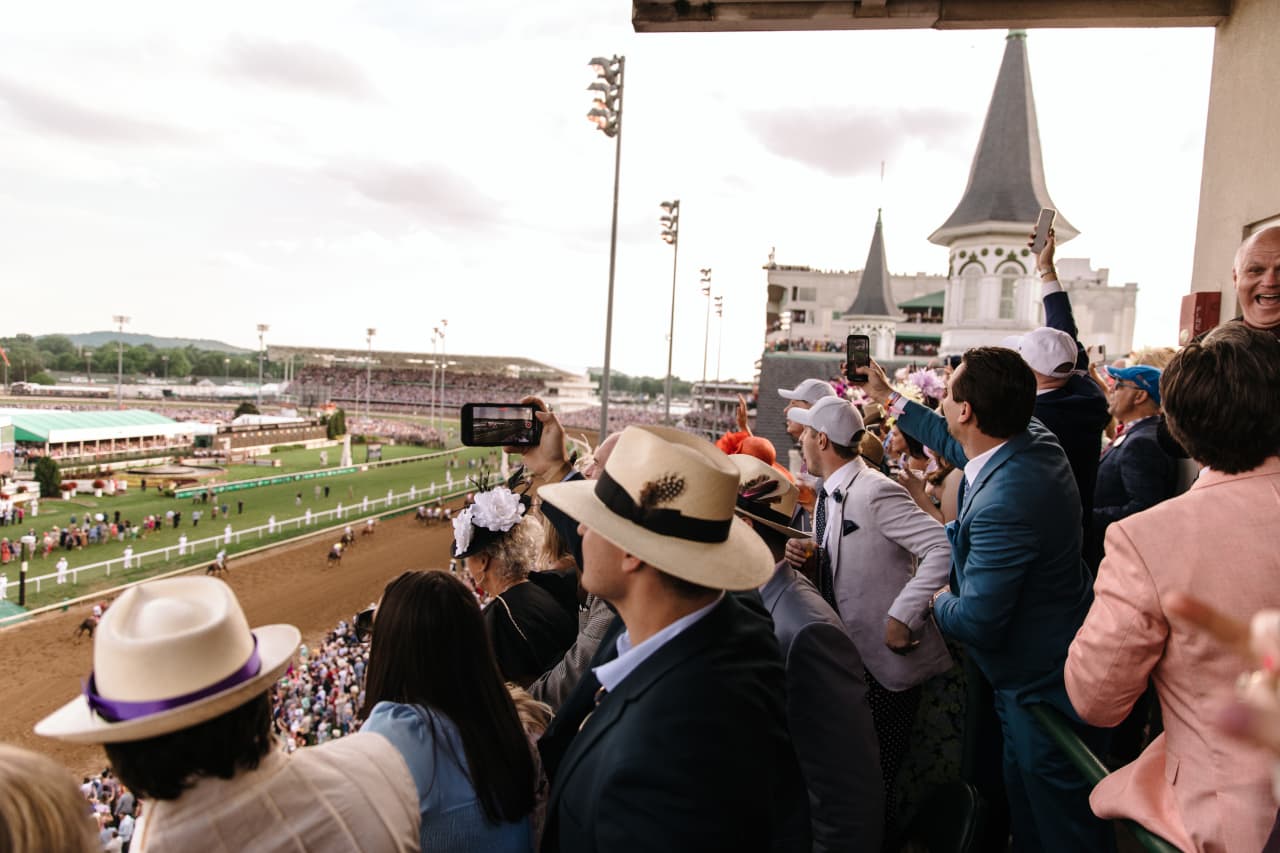
The provider’s best-known perk can be enjoyed every May through its partnership with the Kentucky Derby. (Sentient was the first private aviation partner of Churchill Downs beginning in 2016.) Card owners enjoy a “behind the gates” experience including access to Sentient’s private suite, where they can mingle with celebrity guests. A highlight is the annual Derby Day breakfast, a French-inspired bash in the Hotel Distil hosted by celebrity chef and Sentient Jet brand ambassador Bobby Flay. (As an extra perk for new card owners, Sentient offers a complimentary hour of flight time and a US$2,500 betting voucher.)
“Our longstanding partnership with the Kentucky Derby and Bobby Flay goes beyond a hosted breakfast—it’s a reflection of how we like to curate experiences for our card owners,” says Kirsten LaMotte, senior vice president, business development, partnerships and events at Sentient Jet. “We are proud to help our card owners focus less on the stress of getting to their events, and more on helping create unique travel memories.”
Meagan Jordan
VistaJet offers its biggest perks through its “Private World” portfolio of bespoke adventures crafted by the provider and its network of hundreds of trusted partners. In 2023, member requests more than doubled from the previous year, and 2024 is on track to surpass this, according to the company.
“We view Private World as a valuable enhancement to our members’ lives that extends beyond their time spent in the air,” says Matteo Atti, VistaJet’s chief marketing officer. “Private World is more than hedonistic; it’s a testament to our dedication to our members’ lives, in the air and on the ground.”
Notable examples include personalised wine tours, rejuvenating wellness retreats, and ultimate Formula 1 packages—a benefit of VistaJet’s partnership with Ferrari—featuring private dinners with drivers Charles Leclerc and Carlos Sainz.
The newest curated experiences and events for VistaJet members include a luxury cacao travel experience in Ecuador, and a humpback whale helicopter safari in Mozambique.
Like most providers, VistaJet refrains from commenting on specific customers.
Nearing 25 years in business, Flexjet has introduced its “Red Label” program. Offered to super-midsize aircraft fractional owners and above, key features include flight crews assigned to a single, specific aircraft, custom cabin interiors, and exclusive experiences such as the inaugural “Chairman’s Club” event. Clients have jetted to the likes of Anguilla and Lake Como, where they’ve been hosted by Flexjet’s chairman Kenn Ricci and CEO Mike Silvestro. (The only caveat was that the owners were required to use their fractional share to travel to the destination—the rest of the trip was complimentary.)
At the Anguilla event, 12 couples enjoyed accommodations at Cap Juluca, a Belmond Hotel, along with golfing and spa experiences, an exclusive luncheon on a private island, and a fireworks display that concluded the extended weekend. Earlier this year, 15 couples were hosted at Lake Como’s Villa d’Este while enjoying one-of-a-kind experiences including shopping with a Vogue fashion editor and a helicopter excursion to Lake Iseo where they enjoyed a private tour of Ferretti Group’s Riva shipyard (a tour not available to the public).
Next year, Ricci and Silvestro will be hosting the next Chairman’s Club event in San Miguel, Mexico.
According to David Gitman, CEO of Monarch Air Group, a Fort Lauderdale-based private jet charter provider, the private aviation industry has been experiencing a correction following a surge of interest during the pandemic.
“As the market cools off, the consumer has many more choices now as there are more available aircraft, compared to the shortage we experienced a few years earlier. This causes charter companies to provide more perks to the consumer,” he says. “In my opinion, the main perk that is happening right now is the competition between the various private jet providers. Clients that are not locked in to an agreement are benefiting from this market correction.”
 Copyright 2020, Dow Jones & Company, Inc. All Rights Reserved Worldwide. LEARN MORE




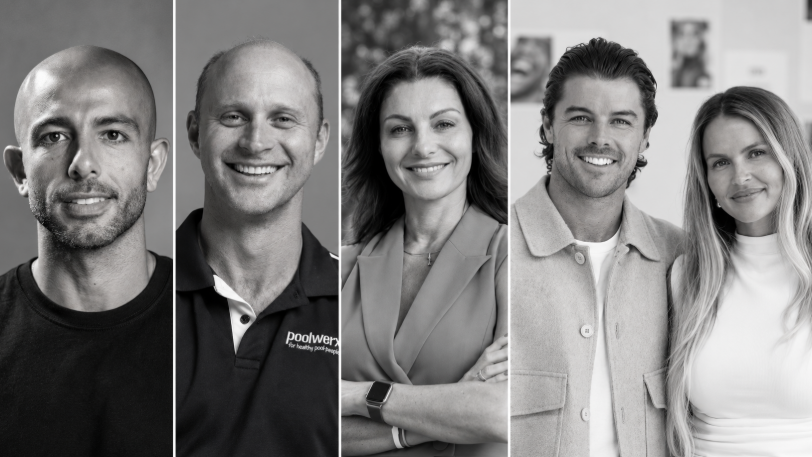
From making unpopular decisions to learning when to listen, leaders from five businesses reveal what nobody prepared them for — and how running a company has challenged their expectations.

Technology and semiconductor shares fell sharply as investors questioned the debt financing the AI infrastructure boom and confronted higher rates and Chinese competition.

Elon Musk is exploring a potential merger between Tesla and SpaceX, a deal that could reshape the future of AI, robotics, autonomous vehicles and space technology. With a combined valuation potentially reaching $3.5 trillion, the move could bring Musk’s vision of an interconnected technology ecosystem closer to reality, although a deal remains uncertain.
5 min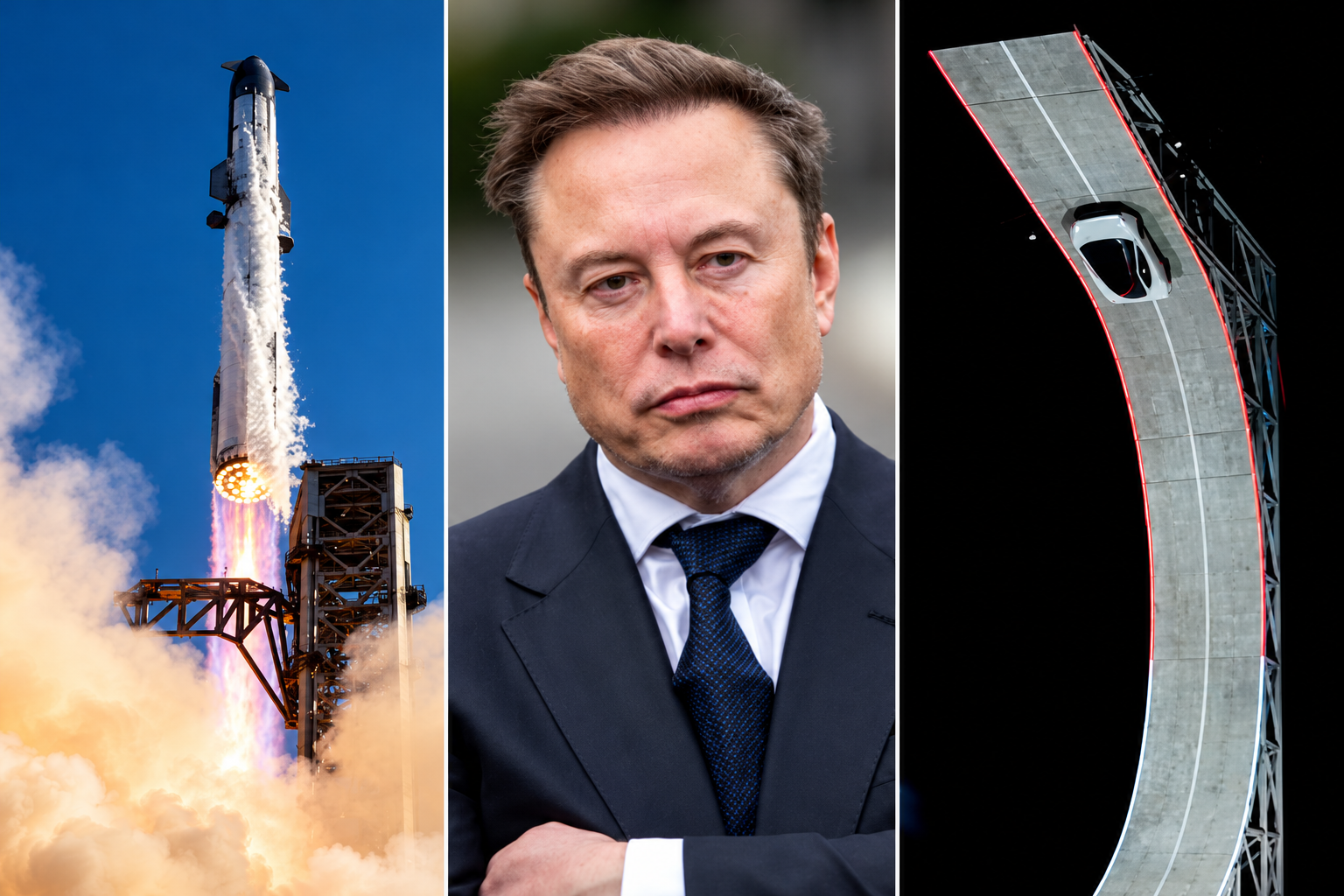
Elon Musk has engineered ties between Tesla TSLA 3.41%increase; up pointing triangle and SpaceX SPCX 7.79%increase; up pointing triangle that are hard to break, and now he wants to fuse them together permanently.
Musk has run both Tesla and SpaceX concurrently over the past two decades, using a schedule that dictated which days he spent focused on each business.
The companies have often shared resources and personnel, signaling their close ties. Last year, SpaceX looked into creating a spacesuit for Tesla’s humanoid robot Optimus, a person familiar with the matter said. Tesla last week showed off its new Roadster, a vehicle featuring SpaceX rocket thrusters that it hopes to soon bring to market.
And in recent months, Musk has repositioned both companies by expanding beyond their core operations toward a shared mission centered on artificial intelligence.
The world’s richest man on Tuesday signaled his interest in tying up SpaceX and Tesla, marking what would be the biggest corporate merger of all time. Because he serves as chief executive of SpaceX and Tesla, Musk said committees of independent directors at both companies are evaluating a possible deal, adding that a transaction might not come to fruition.
The committees will likely evaluate, with lawyers and bankers, how each company would fare in a potential deal and how a deal might best be structured. They then present their conclusions to their respective boards, who typically vote on whether to proceed.
“It’s an odd Kabuki dance where two groups of people are talking and I can’t be in the conversation,” Musk told SpaceX investors on Tuesday in response to an analyst’s question about a potential deal.
For Musk, the merger supports his vision of a world full of autonomous cars, humanoid robots and weekly rocket launches, as well as the data centers and satellites required to keep the whole thing running.
Some investors and analysts said they expect a transaction would be structured as an all-stock deal, with SpaceX potentially paying a modest premium for Tesla shares.
SpaceX, which has a market value of about $2 trillion, said it is seeing sharp growth in revenue across its businesses, which include operating data centers, launching rockets and operating satellite networks such as the internet service Starlink. Tesla is valued at about $1.5 trillion and is expanding its operations beyond its automotive and energy business. Shares in both companies traded higher following the news Tuesday.
Musk’s substantial ownership stakes in both companies, along with voting control at SpaceX, has enabled him to set the deal in motion. Analysts and investors said the deal will probably face regulatory scrutiny internationally, though some see Musk’s close relationship with the Trump administration as an asset to getting approval.
Blurred lines
The companies haven’t said which directors are on the special committees evaluating a potential deal. Several SpaceX and Tesla board members have either personal or business ties to Musk. And like Musk, venture capitalist Ira Ehrenpreis sits on both boards.
In a filing this week, Tesla outlined millions of dollars in business agreements with SpaceX and its subsidiaries last year, including $143 million in car sales to SpaceX, $3.3 million in advertising that it bought on the social-media platform X and $430 million in revenue from the sale of Megapack batteries for SpaceX’s data centers.
The companies also split the cost of resources including the use of Musk’s SpaceX jet and the bill for his personal security, which he runs through a private company.
Employees at both companies routinely move between companies to work on special projects, and some executives have dual roles, including Charles Kuehmann, vice president of materials engineering at both SpaceX and Tesla, and Ashok Elluswamy, the vice president of AI software at Tesla who runs a joint venture with SpaceX called Digital Optimus.
Over the years, Musk has launched new startups within his empire, including brain-implant company Neuralink, underground-tunnel developer the Boring Company and xAI, the AI startup that merged with SpaceX in February.
It is that AI business that Musk thinks can serve a market worth tens of trillions of dollars, justifying the need for a merger.
The business case goes like this: Tesla is developing robotaxis and robots, which it calls “physical AI.” SpaceX is working on the back end of physical AI: the data-center capacity and internet connection required for those robotaxis and robots to operate continuously.
“I don’t see what the value of Tesla is if it’s not merged with SpaceX,” said investment adviser Ross Gerber, a former Tesla bull turned critic invested in both companies. “If they don’t merge, the brains of everything that runs Tesla is owned by another company.”
On top of it all, both companies face constraints on the supply chains they need to make this world a reality, particularly when it comes to chips. To address this, Musk earlier this year announced a joint venture between Tesla, SpaceX and Intel to design and manufacture chips in Texas. “The most epic chip-building exercise by far,” he has said.
Musk at the wheel
For Musk, a merger would also solve two problems: demands on his attention and his lack of control at Tesla.
Tesla for years was Musk’s only public company, a status that came with greater scrutiny. There, Musk reports to a public board, as well as individual investors who make up around 30% of Tesla’s voting power, according to FactSet.
The question of Musk’s attention became a particular focus for investors and the board in recent years after he acquired Twitter in 2022 and launched xAI in 2023, and again in 2025 as he spent time in Washington, D.C., running the Department of Government Efficiency in the early months of President Trump’s second term.
As Tesla’s car business suffered in 2025, Musk threatened to take his AI ambitions outside the company if he wasn’t granted 25% voting control. Last November, Tesla shareholders approved a new pay package for Musk, which created a path for him to vastly expand his stake.
As of Sept. 30, Musk owned a roughly 20% stake in Tesla, according to the company’s proxy filing.
The SpaceX IPO gave Musk a different path. When SpaceX went public in June, the deal’s structure enabled him to have more than 80% voting power at the company—so much that he can’t be fired and decisions can’t be made without his support.
If SpaceX acquires Tesla, he will likely stay in control.
From mud baths to herbal massages, Fiji’s heat rituals turned one winter escape into a soul-deep reset.

Warmer minimalism, tactile materials and wellness focused layouts are redefining luxury interiors as homeowners design for comfort, connection and lasting appeal.