


When Your Boss Is Tracking Your Brain
Bioethicist Nita Farahany says privacy law hasn’t kept up with science as employers increasingly use neurotechnology in the workplace

 4 min
4 min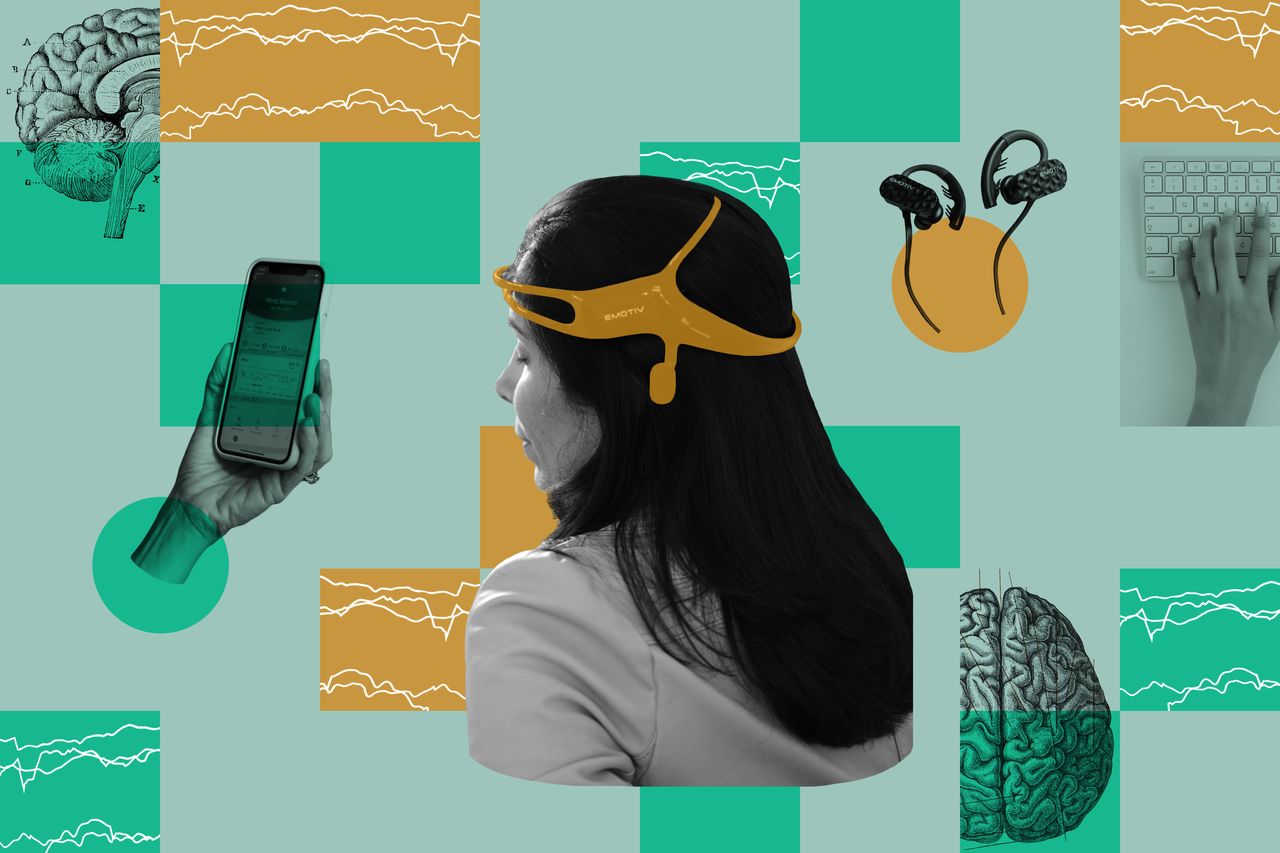
Employers can track workers’ emails, computer keystrokes and calls. What happens when they routinely start tracking employees’ brains?
Nita Farahany, 46, has been studying the possibility for years. A professor of law and philosophy at Duke University School of Law, Dr. Farahany has long been intrigued by potential legal challenges posed by devices in the workplace that measure electrical activity in the brain.
Over the years, these electroencephalogram, or EEG, devices, along with the software and algorithms that power them, have gotten better at tracking brain-wave signals and decoding people’s emotions and cognitive skills. Some employers use the devices to monitor employees’ fatigue and offer brain-wave tracking as part of wellness programs designed to decrease stress and anxiety, Dr. Farahany says.
But the law hasn’t kept up with the science, she says. “There is no existing set of legal rights that protect us from employers scanning the brain or hacking the brain.”
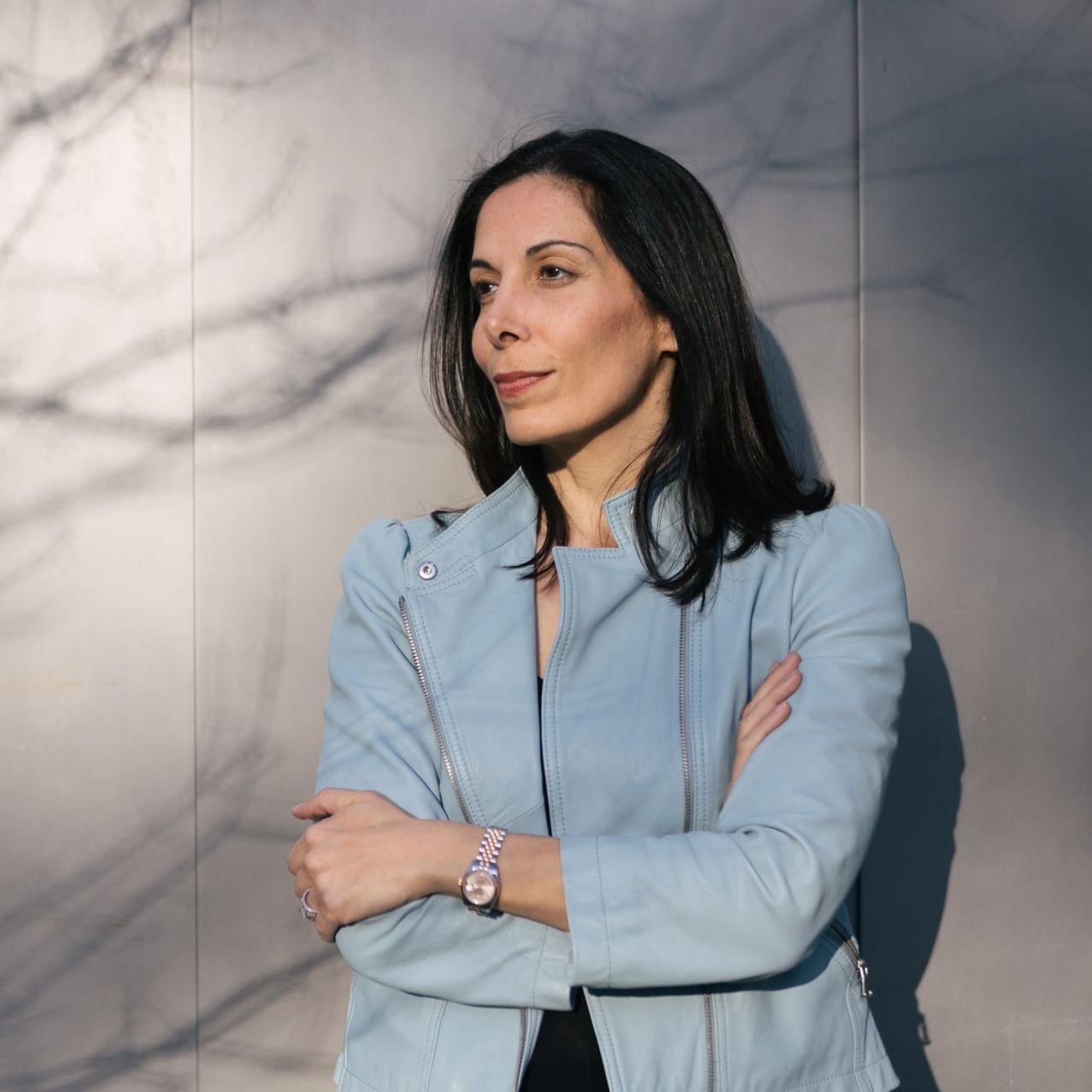
Dr. Farahany’s interest in the issue stems in part from her childhood. Her parents both came to the U.S. from Iran, her father moving in 1969 for a medical residency and her mother arriving a year later. They had planned to return to Iran in 1979 but decided against it because of the political unrest. After the Shah of Iran’s ouster, her mother’s brother, who had served in the military, was arrested. Dr. Farahany’s family often discussed politics, including the way surveillance technology can be misused by governments.
In her book coming out in March, “The Battle for Your Brain: Defending the Right to Think Freely in the Age of Neurotechnology,” Dr. Farahany argues the workplace will be a crucial arena in the fight for the future of mental privacy. She spoke with The Wall Street Journal about how employers are increasingly gathering workers’ brain data and the need for limits on how the information is used.
How are employers already tracking our brains?
The first example that I came across was a few years ago. Train drivers in China on the Beijing-Shanghai [high-speed rail] line are required to wear caps that have electrodes embedded in order to track their brain activity to see if they are focused or fatigued. There are even reports of tracking of the emotion levels of factory workers. The workers can be sent home if emotional levels signal they could be disruptive on the factory floor. I thought, I’m glad that isn’t happening in the U.S. But it turns out that it is happening in the U.S. Some companies have started to look into technology that could allow them to track fatigue levels and also attention and focus.
There are some beneficial uses. Brain-wave activity monitors can be used by employees. As your mind starts to wander, it can give you an alert and tell you, “Hey, it is time for a brain break.”
Companies are also using it to track wellness and health. Wellness programs don’t fall under the same kinds of protections that employees have from misuse of health data. The data could track everything from a person’s cognitive decline over time to a lot of other brain metrics, through brain-training games and headsets that measure brain-wave activity.
Can you see employers gathering the data through wellness programs and then sharing a report every quarter?
They could. They could evaluate it. They could use it for managerial purposes. They can make decisions about who is going to be very expensive to continue to employ over time, whose brain is slowing and less likely to be as effective over time. There really is no check on how they use that data right now.
In many instances, we voluntarily give up this information. And in other instances, we don’t have a choice, it is part of the process of applying for a job. What troubles you?
People may not recognise how much information you can decode already from a person’s brain. There are a lot of things that can be learned about the individual, like whether they suffer from cognitive decline or whether they have early stages of glioblastoma, a brain tumour—even their cognitive preferences.
I do worry people are unwittingly giving up [information] without realising the full implications. That is true for privacy in general, but we ought to have a special place we think about when it comes to the brain. It is the last space where we truly have privacy.
If employers collect brain data over time, could they go back and reanalyzs the raw data?
Technologists in the field a decade ago would have told people, “What are you worried about collecting neural data, there is so little we will ever be able to decode from surface-based electrodes rather than ones that are implanted in the brain.” They don’t say that anymore.
They recognise that we can already do so much more than we ever expected. As the algorithms get better and the more data we amass, the more precise the models become.
Given that most of this data is being uploaded to cloud servers and kept there indefinitely, you can have very significant longitudinal data. I hired this person when they were 23 and they are 43 now, how effective is their brain at this point? Have they served their good useful lifetime of service to us?
One of the things in your book is the idea that the brain waves reveal biases that we are not conscious of and can present us in our worst possible light. How does that work exactly?
Yes, potentially. The question is how effectively are they going to be able to do that in real time today. Can they set you up with a headset and probe your brain and figure out how you are reacting? Probably not. In the future can they do it? I think so.
Are there ways people can protect themselves?
We can and should require employers to do better. To say, here’s a transparent way that we’re planning on implementing [best practices] in the workplace. We’re giving the data to you to use. We’re not storing it.
There is a real risk that people won’t have choices. You can’t choose to interview with the only company that doesn’t use brain-based metrics if everybody decides to use them. So I think it’s a combination of people looking out for themselves but also putting into place appropriate default rules at the government level and trying to encourage corporate responsibility.
Interview has been condensed and edited.
 Copyright 2020, Dow Jones & Company, Inc. All Rights Reserved Worldwide. LEARN MORE





A long-standing cultural cruise and a new expedition-style offering will soon operate side by side in French Polynesia.

The pandemic-fuelled love affair with casual footwear is fading, with Bank of America warning the downturn shows no sign of easing.


A long-standing cultural cruise and a new expedition-style offering will soon operate side by side in French Polynesia.
3 minFrom late 2026 and into 2027, PONANT Explorations Group will base two ships in French Polynesia, offering travellers a choice between a culturally immersive classic and a far more exploratory deep-Pacific experience.
The move builds on more than 25 years of operating in the region with the iconic m/s Paul Gauguin, while introducing the expedition-focused Le Jacques Cartier to venture into lesser-known waters.
Together, the two vessels will cover all five Polynesian archipelagos — the Society, Tuamotu, Austral, Gambier and Marquesas Islands — as well as the remote Pitcairn Islands.
THE PAUL GAUGUIN: CULTURAL IMMERSION, POLYNESIAN STYLE
Long regarded as the benchmark for cruising in French Polynesia, m/s Paul Gauguin will remain based year-round in the region.
Renovated in 2025, the ship continues to focus on relaxed, culturally rich journeys with extended port stays designed to allow guests to experience daily life across the islands.
A defining feature of the onboard experience is the presence of the Gauguins and Gauguines — Polynesian hosts who share local traditions through music, dance and hands-on workshops, including weaving and craft demonstrations.
The atmosphere is deliberately intimate and internationally minded, catering to travellers seeking depth rather than distance.
Across the 2026–27 seasons, the ship will operate 66 departures, primarily across the Society Islands, Tuamotu and Marquesas, with select voyages extending to Fiji, Tonga and the Cook Islands.
LE JACQUES CARTIER: EXPLORATION AT THE EDGE
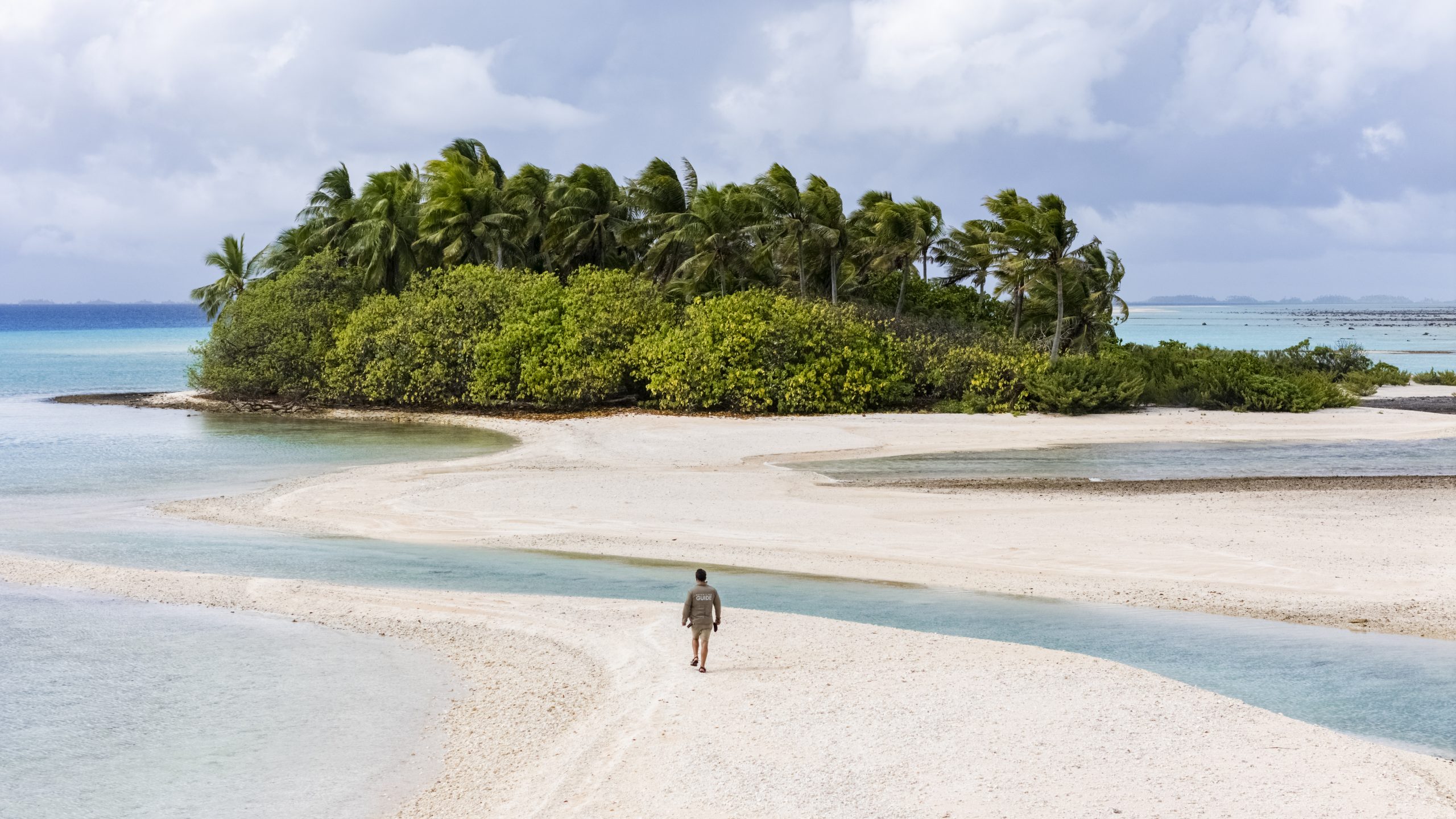
Le Jacques Cartier introduces a more adventurous dimension to PONANT’s Polynesian offering, with itineraries focused on the least visited corners of the South Pacific.
The ship will debut three new “Discovery” itineraries, each 14 nights in length, which can also be combined into a single, extended 42-night voyage — the most comprehensive Polynesian itinerary currently available.
In total, the combined journey spans six archipelagos, 23 islands and the Pitcairn Islands, a British Overseas Territory rarely included on cruise itineraries.
Unlike the Paul Gauguin’s cultural focus, Le Jacques Cartier centres on exploration.
Each day includes one guided activity led by local experts, with excursions conducted via tenders, local boats and zodiacs. Scuba diving is available on board, supported by a resident instructor.
Across the 2026–27 period, the ship will operate nine departures, offering a deliberately limited and low-impact presence in some of the Pacific’s most isolated communities.
THREE NEW DISCOVERY ITINERARIES
The new itineraries aboard Le Jacques Cartier include:
– Secret Polynesia: Unexplored Tuamotu, the Gambier Islands and the Austral Islands
– From Confidential French Polynesia to Pitcairn Island
– Polynesian Bliss: Marquesas and Tuamotu
Each voyage departs from Papeete, with prices starting from $15,840 per person.
SCOUTING THE PACIFIC’S MOST REMOTE COMMUNITIES
In preparation for the new itineraries, PONANT Explorations Group undertook extensive scouting across the Austral and Tuamotu Islands to develop activities in collaboration with local communities.
José Sarica, the group’s R&D Expedition Experience Director, worked directly with residents to design experiences including welcome ceremonies, cultural workshops and visits to marae, the region’s sacred open-air temples.
Six new ports of call have been confirmed as part of this process, spanning both the Tuamotu and Austral archipelagos.
SIX NEW PORTS OF CALL CONFIRMED
New stopovers include:
– Mataiva, known for its rare mosaic lagoon
– Hikueru, home to one of the largest lagoons in the Tuamotus
– Makemo, noted for its red-footed boobies and frigatebirds
– Raivavae, famed for its crystal-clear lagoon pools
– Tubuai, rich in marae and spiritual heritage
– Rurutu, known for limestone caves and seasonal humpback whale sightings
A DUAL EXPERIENCE, ONE DESTINATION
By pairing its long-established cultural voyages with expedition-led exploration, PONANT Explorations Group is positioning French Polynesia not as a single experience, but as two distinct journeys — one grounded in tradition and comfort, the other pushing into the furthest reaches of the Pacific.
For travellers seeking either immersion or discovery, the South Pacific is about to feel both familiar and entirely new.

Three completed developments bring a quieter, more thoughtful style of luxury living to Mosman, Neutral Bay and Crows Nest.

A cluster of century-old warehouses beneath the Harbour Bridge has been transformed into a modern workplace hub, now home to more than 100 businesses.