It’s a bet each way ahead of today’s RBA Board meeting on interest rates

Economic experts are split over whether another interest rate increase is likely ahead of this afternoon’s meeting of the RBA Board.

While three of the four top banks predicted a few months ago that rates would most likely increase in August, last week’s inflation figures have cast doubt on that outcome. The Australian Bureau of Statistics released data showing that the rate of inflation had fallen for the second consecutive month, down to 6 percent from a peak of 7.8 percent in December last year. While it is heading in the right direction, the pace of the decrease may not be enough to head off a further rise in the cash rate.

Under the governorship of Philip Lowe, the RBA Board has been determined to drive down inflation to a more manageable range of 2 to 3 percent. However, interest rates have risen by 4 percent in little over a year, putting increasing pressure on household budgets and fuelling concerns that any further hikes could push Australia into recession. Dr Lowe will step down as governor after the September board meeting, with deputy governor Michele Bullock taking on the role, the first woman to do so.

The competing economic concerns have left the major banks split down the middle about which way this afternoon’s decision will go, with Westpac and the Commonwealth Bank predicting an increase to 4.35 percent and ANZ and NAB suggesting rates will stay on hold at 4.1 percent.

The decision will be announced later this afternoon.

Catering to Your Midlife Crisis Is a Growing Business

Americans want their midlife crisis to be more productive. This presents, for a growing number of companies, coaches and consultants, a multimillion-dollar opportunity.

Some programs are online and charge a couple hundred dollars. Others take place in exotic spots and feature luxury accommodations, yoga and surfing classes for thousands of dollars. Discounts are sometimes available.

Fuelling the businesses are longer lifespans, leading more people to search for meaningful pursuits in their 40s, 50s and 60s. Some psychologists call this period a second adulthood when identity-shaping roles, from executive to full-time parent to caregiver, can fall away, causing some to re-evaluate.

“Transition is a skill we need to master in an era of increased longevity and change,” said Chip Conley, co-founder of Modern Elder Academy, or MEA, which offers online and in-person workshops.

Some studies show life satisfaction reaches a low point around the mid-40s, perhaps because of stress linked to the demands of work and family. That juggle, coupled with little time for self-reflection, leaves many people unsure how to approach their next chapter.

Instructors in midlife programs explore topics including psychological development in midlife and ageism, which can cause people to believe they are “irrelevant, over the hill, and that their best years are behind them,” said Conley.

He created MEA after working at Airbnb, where the home-sharing company’s young founders dubbed him a modern elder at age 52. The workshops aim to help participants learn to better navigate stressful transitions, including layoffs, divorce and the death of loved ones.

Space for self-reflection

Like the months long academic programs several universities have launched for adults nearing the end of careers, most midlife courses bring together groups of eight to 50 people.

“These programs give people the space and structure to consider not just what, but who they want to be at this stage,” said Barbara Waxman, a gerontologist who teaches at MEA.

Nadia Al Yafai, 46, said she discovered the Midlife ReThink, a $385 online program, after being laid off recently from a senior position at a U.K. insurer.

The Midlife ReThink proved transformational, she said, adding that meeting others who felt similarly unanchored comforted her.

Started in 2020 by Avivah Wittenberg-Cox, a coach and consultant who specialises in gender and generational balance in the workforce, the program consists of three 90-minute online sessions for about 25 participants.

“A lot of people suffer through transitions on their own, as if this is some terrible thing they are going through,” said Wittenberg-Cox. “Community is the key to helping people realize it’s normal and fairly predictable at this age and stage to get restless” and crave change, she said.

Al Yafai said an exercise that asked her to define what she wants from the next seven years led her to start a consulting business.

“I went from feeling a bit lost at not being part of my old world anymore to realising there’s this new world of people doing really interesting things,” she said.

‘We still have value’

Reboot Partners, which provides workshops and coaching on career and other transitions, has organised two weekend-long retreats this year, in Santa Fe, N.M., and Sag Harbor, N.Y., for $1,895. Participants visualize their perfect life and discuss fears and motivations around change, said co-founder Jaye Smith.

On an oceanfront campus in Mexico’s Baja California Sur, MEA teaches courses on re-creating careers, embracing midlife and optimising longevity. It also offers weeks long online programs on transitions, purpose and reframing retirement for $395 to $1,250. It plans to open a campus in Santa Fe, N.M., next year.

Lisa Fitzpatrick said MEA, which she first attended in 2019, helped her face down barriers to success.

Dr. Fitzpatrick, 55, was launching Grapevine Health, which publishes online health information for low-income communities. She relished the opportunity to interact with Conley, a veteran entrepreneur.

The Washington, D.C., resident said an exercise to identify self-limiting beliefs helped her conquer a fear of being too old to start a business. She returned to Baja five times to attend workshops on entrepreneurship and healthcare.

For that first visit, she received a scholarship for a seven-day stay that now costs $4,000 to $5,500.

One exercise Fitzpatrick particularly enjoys involves stacking rocks on the beach. “It sounds kind of woo-woo,” she said. But the task of balancing a big rock on a small one helped her overcome mental barriers to what she could achieve. “MEA helps people in midlife realise we still have value,” she said.

Finding a purpose

Some programs explore next acts or spirituality.

Dallas-based Halftime Institute’s offerings include a two-day, $2,500 couples retreat and a $25,000 yearlong program. The latter features in-person and online sessions, as well as one-on-one coaching on relationships, health, faith and finding one’s calling.

“Not everyone who goes through it is Christian but that’s the perspective we come from,” said Co-Chief Executive Jim Stollberg. “We talk about a calling, rather than a purpose.”

For $2,500, Union Theological Seminary in New York offers a four-month Encore Transition program, with virtual sessions on topics such as spirituality in midlife and finding work with social purpose.

Consultant Carolyn Buck Luce leads a group of women through a weeks long online program called the Decade Game that costs $2,250. It challenges participants to set goals to guide their next decade in areas including education and purpose.

“It’s about being able to declare the purpose you were called to,” said Luce.

Don’t Be a Jerk at Work. (But Don’t Be Too Nice, Either.)

How nice should you be at work?

We’ve supposedly moved on from the era of the militaristic chief executive who barks orders and threats. Most of us agree: We don’t like jerks. Be kind, we implore our kids.

Then we get to the office. We’ve got direct reports to rally, colleagues in other departments to convince and bosses who claim they want honest feedback. Speak with hesitation and you’re ignored. Handle your team with kid gloves and you’re a pushover, not a force to be reckoned with.

“I, personally, think you’re too nice a person to be in the job that you’re in.” That’s what Rep. Greg Murphy (R., N.C.) told Katherine Tai, the lead trade negotiator for the U.S., this spring during a hearing. His comments summed up feedback so many of us, especially women, have heard. We’re too bubbly or kind. We deploy too many apologies or exclamation marks. Yet when we do too little of all that, we’re overly aggressive.

“I want to be a nice person,” Sarah Kleinberg, the director of operations at a healthcare consulting firm, told me. She has realised, though, that being nice often makes others feel good, without actually moving a project forward or prompting a team member to improve.

“You have to have the level of confidence to be beyond people-pleasing,” she says.

‘Customer-service voice’

Many people, desperate not to offend, resort to what speaking coach Samara Bay calls “customer-service voice.” It’s that high-pitched, upspeak-y tone meant to inform the barista, I think you might be out of oat milk?

What are we saying when we use that tone? “I’m not powerful, don’t worry,” Bay says.

Making yourself non intimidating and as small as possible might work earlier in careers, she adds, making the people in charge feel secure. But as we ascend, or try to, the wavering voices can confuse others. Do it enough and people might question whether you’re leadership material, Bay says.

She recommends a vocal exercise for speaking more confidently. Pretend that you’re introducing yourself—“Hi, my name is Rachel”—while throwing a pretend ball against the wall. Match your vocal pitch to the ball’s trajectory. When you throw the ball down to the ground, you’ll hear your voice droop in energy along with the ball. Then throw the ball up, and notice the way your words sound as if you’re half taking them back. Last, throw the ball straight and allow your words to follow through, too.

“It’s the weirdest feeling to say something and mean it all the way to the end,” Bay says. “It feels brave.”

No hedging allowed

When pitching an idea, don’t undercut yourself with hedging language, says Bob Bordone, a negotiations coach. He cringes at questions like: “Would you be willing to consider letting me work remotely on Fridays?”

“It makes me just want to say no because it’s such a weak thing,” he says.

Instead, he says, start with a statement: “I wanted to talk to you about working out a new schedule.” Assure that any agreement you come to would be good for your manager and the company.

When someone tells you no, Bordone suggests trying: “How can we tackle this, even though we see it differently?” You sound strong and assertive, but not nasty, he says.

Good news for the nice guys among us: You don’t have to give up your personality to be taken seriously.

“I’m, 99.9% of the time, a jovial, happy-go-lucky guy,” says Colton Schweitzer, a user-experience designer and educator in Vancouver, Wash. When he doesn’t like the direction a project is going, he pushes back by asking questions and inserting the occasional joke.

“I’m smiling,” he says, “Even when I’m saying, ‘Are you sure about that?’”

Because he’s so pleasant, his serious moments carry weight. At one job, he cheerfully took on more work when colleagues asked—until his manager asked him to pick up the slack for an underperforming employee. He gave a resolute no. His manager dropped the issue, and seemed surprised and impressed by his response, he says.

“It’s like a currency,” he says of invoking a more stern style. “When I use it, it’s really valuable.”

Less yelling, more intensity

To be tough but not jerky, set clear expectations, says Harry Kraemer, a professor of leadership at Northwestern University’s Kellogg School of Management.

Before teaching, Kraemer rose to be chief executive of Baxter International, the healthcare company where he worked for 25 years. As a new manager, he would try to be everyone’s breezy friend, shrugging it off when his team turned in a project hours past deadline. The second time it happened, he devolved into yelling, only to realise he hadn’t made the stakes clear from the start.

“If I focus on being liked, the chance of being respected is very low,” he says.

He adopted a new leadership style of, “I’m not going to surprise you.” He says the yelling just made him look out of control, but following through with consequences worked. When his team missed sales targets, he gathered them for a two-hour debrief—no smiling, his voice intense.

“I don’t need a sorry,” he would tell them. “Hit the number. Do what you told me you were going to do.”

Dinah Davis, a Realtor in Highlands, N.C., still remembers advice an old friend gave her years ago on the golf course. The friend was a skilled neurosurgeon known for being direct, not touchy-feely.

“I have a great bedside manner,” she told Davis. “I just don’t have time for it.”

The advice was freeing for Davis, a former lawyer more comfortable with staunch negotiations than chirpy small talk.

“Do you want your pilot to be nice?” Davis asks. “Or do you want your pilot to get the plane on the ground?”

Developers Are Racing to Give Affluent Buyers the Gift of More Free Time

Luxury developments, already stacked with gyms, theatres and other amenities built to lure wealthy buyers, are now going beyond physical spaces to offer the most precious perk of all: More free time.

Take 1428 Brickell in Miami, for one. The condominium, slated to debut in 2027, will have a bevy of full-time experts to serve homeowners. A sommelier will keep them well supplied with their wines and spirits of choice, source rare vintages and help them discover new producers.

There will also be a wellness concierge to schedule personal training sessions, IV drips and spa treatments and several butlers, porters and valets to fulfil requests like late-night pizza cravings and help packing for a trip.

One Wall Street in Manhattan’s Financial District, which opened in March, counts on its onsite lifestyle manager, Michael Lawrence, to be a constant resource to its residents. The former executive director of operations for the renowned chef Daniel Boulud said that means establishing a relationship with them prior to their move-in date with a handwritten welcome letter.

MoreLazy Rivers, Water Slides—Homeowners Are Splashing out to Bring the Family Together

His notes offer to help them find a moving company, assist with unpacking boxes and stock their kitchen with groceries from the nearby Whole Foods. Lawrence can also arrange for their audio systems to be set up and make appointments with phone and cable providers.

Once owners are settled in, Lawrence acts as a go-to for a variety of needs: He’ll set up daily wake-up calls, make restaurant reservations and even plan their vacations. Most recently, the latter entailed booking a trip to Nashville for an avid Taylor Swift fan to catch the singer’s concert in May. The itinerary also included meals at famous restaurants like Martin’s Bar-B-Que Joint, a shopping tour and museum visits.

“Our goal is to anticipate what residents need and do whatever it takes to fulfil those needs,” said Lawrence. “That’s what true hospitality is all about.”

HALL Arts Residences, a 48-unit tower located in Dallas’s Arts District, also offers a full-time lifestyle manager, Rebecca Roberts. The former event planner maintains residents’ homes while they’re gone, secures theatre tickets for coveted shows and orchestrates their dinner parties and other social events.

More‘Star Trek’ Mansion Brings the Show to Life

The social lounge in ONE Tampa, a new Tampa, Florida, development debuting in 2025. Kolter Urban

Lynda Ludeman owns a home in the development and said that Roberts was a “huge selling point” for her and her husband when they were deciding where in Dallas they wanted to live.

“I’ll text her when I’m away asking for our plants to be watered and it’s done,” Ludeman said. “I threw a lunch for my friends, and she found the caterer and sourced flowers for the occasion. She’s also arranged for my art to be hung.”

Cindi Caudle, an agent with Briggs Freeman Sotheby’s International Realty in Dallas, is the co-lead broker for HALL Arts Residences and said that the building’s service factor is a primary component in closing deals.

“Wealthy buyers, especially since Covid, want the convenience and time savings of a lock-and-leave lifestyle, and unparalleled service gives you that,” she said. “The service levels in luxury developments have significantly stepped up as a result.”

While amenities in the most expensive residential developments have become “bolder and blingier, the quality of service is quickly catching up. said Chris Graham, the founder of the London-based luxury real estate branding consultancy Graham Associates. “The concierge piece of these projects taps into creating a lifestyle that’s supposed to be hard to match,” he said. “High-end real estate nowadays has evolved from the tangible to experiential, and service is the lead.”

The trend applies to both branded and unbranded residences, Graham said.

Other examples of service that aims to transcend the standard to reach the superlative are proliferating in the highest end of residential real estate.

At the yet-to-open Villa Miami, located in the Edgewater neighbourhood, for instance, chefs trained at the perennially popular Major Food Group restaurants like Carbone will be available to cook meals for residents in their homes and ensure that their pantries are continually restocked.

MANSION GLOBAL BOUTIQUE: 9 Chic Home Finds From Nordstrom’s Anniversary Sale

A residence kitchen in Villa Miami.
Binyan Studios

ONE Tampa, debuting in 2025, is also trying to increase the appeal on the food and beverage front with its Skyline Bistro which will serve food throughout the day and have a barista on staff.

Ed Kahn, the senior vice president for ONE Tampa’s developer Kolter Urban, said that residents will be able to order food to their homes or anywhere else in the building, such as poolside or for pickup through the development’s app.

The Ritz-Carlton Residences, Palm Beach Gardens, an 11-acre development on Palm Beach’s Intracoastal Waterway that’s launching in 2025, will offer personalised service for each of its residents, according to its developer Dan Catalfumo.

“We are going to ask owners to input their likes and preferences into an online system that they can update at any time,” he said. “It will let us know whether they want us to get their boat ready for a day on the water and their favourite poolside drink.”

Boat dock at The Ritz-Carlton Residences in Palm Beach Gardens.
Catalfumo Companies

The Right Way to Lay Out Your Living Room: The 7 Formulas Interior Designers Rely On

“DESIGNING A ROOM is like putting a puzzle together,” Paul Corrie, an interior designer in Washington, D.C., told me. Despite my having interviewed dozens of design wizards as a journalist, my own suburban Colorado living room remains “unsolved.”

So I reached out to my decorating contacts to see if they could prescribe formulas for living rooms: from optimal rug sizing to how high to hang lights. None of these rules are etched in parquet, but even experienced designers largely stick to them. And they’ll help you (and hopefully me) map out a handsome but homey living room.

1. Keep Your Friends Close

Conversation can sputter fast if your seat is too far from—or discomfitingly near to—your chatmate. The minimum distance between the fronts of seats, says Atlanta designer Vern Yip, is 42 inches. Anything within that “feels like you’re intruding on somebody’s personal space,” said Yip, author of “Design Wise” (Running Press, 2016). The max separation is 120 inches. Any farther and “you no longer feel like you’re in the conversation.”

When laying out seating in a living space, Ellen S. Fisher, vice president for academic affairs and dean of the New York School of Interior Design, often conjures an image of three sides of a square for inspiration. “Why this shape? Because everyone likes a corner seat and to sit at right angles to others when conversing,” she said. Passageways between pieces that will see traffic should be at least 24 to 36 inches wide, says Yip.

2. Serve Up Comfort

My own coffee table is all wrong: a 33-inch wide ellipse of marble that, at just 12 inches tall, means my 6-foot-5-inch husband stoops like a drooping tulip just to pick up his morning tar. Ideally, says Yip, the table surface and seat should be the same height (as should a side table and sofa arm). And place the coffee table no further than 15 inches from the sofa, says Fisher, author of “Home: The Foundations of Enduring Spaces” (Clarkson Potter, 2018). Or even 12 inches, said Fisher. “That might seem too close, but if the table is too far away, a person on the sofa can’t pick up an hors d’oeuvre.” And the table should be one half to two-thirds the length of your settee, “small enough that you can negotiate around it but large enough that people sitting on the ends can still easily access the table,” Yip said.

3. Lower the Lights

You probably know to layer your lighting. An optimal scheme, says Yip, includes recessed, atmospheric and task lighting. But are you aware of ideal placements? Table and floor lamps, for example, should be low enough “so when you’re sitting, the shade doesn’t go above eye-level,” he said. Chandeliers need a minimum of 76 inches from the floor to the lowest point of the light but a maximum of 84 inches. “You see a lot of houses that have double stories—you know, homes in suburbia trying to be mansions—where the poor fixture is hugging the ceiling and doesn’t feel like part of the room,” said Yip. The aim is to have walking space while lending “ambience, atmosphere and scale to the space,” said Yip. Got sconces? Place them on either side of whatever they’re bracketing, be it a painting or mirror, aligned with the centerline.

4. Roll Out a Big Rug

Though I loathe the bland, taupe wall-to-wall carpet we inherited from our home’s previous owners, I have to admit, it creates a boundless horizon and feels dang good underfoot. Conversely, a too-small rug is bound to shrink the room. At minimum, the front feet of the furniture should sit on the rug. Better: all four feet, said Fisher. Yip takes it a step further, often custom-ordering expansive rugs so they extend to within 12 to 18 inches of the “limiting factor” (such as a wall or fireplace hearth).

5. Careful With the Couch

“A 6- to 8-foot long sofa is going to give you the most flexibility in designing a room,” said Corrie. As to the depth of the seat, a person can sit back about 24 inches before he or she starts to recline. Anything deeper calls for throw pillows. As for the overall depth of a sofa, “less than 33 inches starts to feel like a bench seat, and more than 38 inches creates a footprint that will impact everything else,” Corrie said.

6. Aim Higher

I dream of flinging open silk velvet draperies each morning, like a “Downton Abbey” maid. But if I make the splurge, how high should they be hung? “It doesn’t matter if you have thousand-foot-tall ceilings,” Yip said. “Take your drapery as high as you can go,” and don’t stop short of the floor. If you have crown molding, roost your curtain rods just below it. Yes, this costs, but it also makes rooms feel voluminous.

7. Max Out the Viewing

Whether placing a TV, mirror or painting, consider where the observing peepers will be. Hang art so that its center is 60 inches from the floor—“the average human eye level,” said Yip. Televisions, since they’re watched while sitting, can be hung as low as 48 inches floor-to-center. Ideal viewing distance? “Roughly 1½ to 2½ times the diagonal measurement of the screen,” Yip said. For example, a 60-inch screen is best placed 90 to 150 inches from your seats. Any closer and you’ll notice a breakdown in picture quality, says Yip. “Any farther and you won’t feel engaged.”

EOFY sales not enough to tempt shoppers to spend more

Retail spending fell at end-of-financial-year sales in June, as cost of living pressures continue to make an impact.

Data released today by the Australian Bureau of Statistics showed a drop of -0.8 percent in retail spending in June, with department stores bearing the brunt of the damage, with a fall of -5.0 percent. This was followed by other retailing (-2.2 percent) and clothing, footwear and personal accessory retailing (-2.2 percent).

In further signs of belt tightening in household budgets, spending at cafes, restaurants and takeaway services saw a marginal decrease of -0.3 percent.

The data follows on from results collated in May, where spending increased by 0.8 percent.

Head of ABS retail statistics Ben Dorber said the mixed results indicated that consumers were continuing to grapple with cost-of-living pressures.

“There was extra discounting and promotional activity in May, leading up to mid-year sales events,” he said. “This delivered a boost in turnover for retailers, but that proved to be temporary as consumers pulled back on spending in June.”

He noted that while eating out had become less frequent, food spending in general was consistent, if slightly altered.

“Over the last 12 months, growth in food-related spending has mostly been driven by rising food prices,” Mr Dorber said. “We saw in Wednesday’s release of the Consumer Price Index (CPI) that food prices rose again in the June quarter. 

“Consumers are responding to these price rises by changing to cheaper brands or by simply buying less.”

The ‘shot in the arm’ for Australian affordable housing

The Federal Government’s proposed housing fund is the ‘shot in the arm’ required to address the housing crisis, the Property Council of Australia said today.

Property Council chief executive Mike Zorba said the Albanese Government’s second attempt to pass the Housing Australia Future Fund (HAFF) Bill through the Senate next week was to be welcomed.

The Federal Government announced the HAFF in June this year, describing it as ‘an ambitious agenda’ for affordable and social rental housing. At that time, Federal Housing Minister Julie Collins signed an amendment to the National Housing Finance and Investment Corporation’s (NHFIC) investment mandate to increase its liability cap from $5.5 billion to $7.5 billion.

However, the bill failed to pass the senate on its first attempt, sparking talk of a double dissolution trigger if it fails again next week.

Mr Zorba said Senate approval would go some way to addressing the housing shortfall in Australia. Estimates based on data from the 2021 Census revealed that more than 500,000 Australians on low income were in inappropriate housing on census night, which included homelessness, overcrowding or households where more than 30 percent of income was spent on rent.

Minister Collins said the $10 billion HAFF represented ‘the single biggest investment in social and affordable housing by a Federal Government in more than a decade’. The new initiative is expected to fund 30,000 new social and affordable rental homes.

Mr Zorba said Senate approval would kickstart the housing supply recovery.

“The HAFF is the shot in the arm the nation needs to close the housing deficit,” Mr Zorbas said.

“The 30,000 new social and affordable houses that hang in the balance need to be green-lighted by all Senators as soon as possible.

“Beyond the HAFF, the fastest paths to new housing remain setting housing targets, creating incentives for more supply and fixing broken state planning systems.

“We also need governments to boost helpful asset classes like purpose-built student accommodation, retirement living communities and build-to-rent housing,” he said. 

Green Standards Gives a Second Life to Office Furnishings

When a company office needs a refresh, surplus items typically follow a straight line journey: out the door toward the landfill. Yet, much of this furniture and equipment could have a second life instead of being junked.

“It’s so critical with all the churn that’s happening at this moment in workplaces that we are thinking in a circular way about that journey,” says Green Standards CEO Trevor Langdon.

That’s where the Toronto-based global workplace decommissioning firm comes in. Green Standards acts as a project manager when companies upgrade or downsize, helping firms coordinate the process and the donation, sale, and disposal of items they no longer need.

The U.S. Environmental Protection Agency reports about 80% of furnishings end up in landfills, but Green Standards has diverted 98.6% of workplace goods away from landfills for its projects.

More: Legislation Could Wipe out Credit Card Rewards—Big Spenders Stand to Lose the Most

Green Standards has always had a limited audience of early adopters, but Langdon, 37, says its approach is now considered the minimum standard.

“Tastes and attitudes have changed,” he says. Employees expect companies to follow through on their promises to be good corporate citizens, and not to abandon those standards on moving day.

Langdon witnessed these shifts firsthand during the past 11 years as he rose from a project coordinator position seeking charity partners for Green Standards to the CEO office. There’s been an acceleration in business since the start of the Covid-19 pandemic, not only because of its massive impact on corporate real estate portfolios but because it sped up discussions of the impact of climate change, he says. Now more companies than ever before, including more than 25% of Fortune 100 firms, are seeking his company’s services.

THE SERVICE

“We take on the scoping of the project,” Langdon says, which includes bidding for and managing the logistics companies that take everything down and vacate the spaces.

Green Standards also manages the disposition strategy and tracks the outcome for each item. “We take an inventory and then figure out what’s going to go where,” Langdon says. The value of each item is determined by considering its age, quality, and reuse potential.

The firm uses a process it calls “sustainable decommissioning” to determine the best solution for items. This includes recycling (with specialized recyclers offering preferred rates), selling (through a network of furniture brokers and buyers), or donating items. One of several proprietary elements of the process is the network of over 20,000 nonprofits that have opted in to receive furniture donations from Green Standards clients.

More:Jeff Bezos Is Spending US$400 Million to Make Underserved Communities Greener

Though Green Standards does 95% of its business in North America, it’s recently started taking on international projects and is now active in 35 countries.

THE PRICE

“On the whole, we’re pretty cost-competitive with the conventional approach of sending everything to the dump,” Langdon says. Regardless of how companies dispose of items when they downsize or move offices, removing thousands of pieces of furniture from buildings comes with costs.

“Nobody volunteers their time to come do that,” says Langdon. “Often in a typical project, US$1 to US$2 a square foot is pretty standard.”

The type of office building and its geographical location often dictates hard costs like labor. He notes that higher-than-average local labor costs or elements that complicate removing goods like minimal freight elevators or the need to work after hours so as not to disturb neighbouring companies can increase costs to US$3-US$4 per square foot.

The residual value of office items dictates the offsets. Though some projects are cost neutral for clients, others with newer, high-quality furniture can be profitable. Because companies update their offices more frequently today than in the past, furnishings can often be less than 10 years old, Langdon says.

WHAT’S THE GOOD

Besides diverting goods from landfill, Green Standards has helped corporations make nearly US$40 million worth of in-kind donations to nonprofits. “It’s not a little bit here or there,” Langdon says. The donations enable these organisations to put money toward their missions and programming, rather than using it to purchase furniture and other items.

Green Standards prepares a report for each company at the end of the process detailing the disposition strategies and impact created. Some clients integrate this information into their annual sustainability reports, he says. These figures help show the ripple effect of Green Standards’ approach.

From Mansion Global:Murder Manor—an English Estate Where an Infamous Victorian Slaying Took Place Is Selling for £5.25 Million

When decommissioning multiple corporate campuses across Michigan for automotive giant General Motors, Green Standards kept “7,000-plus tons of surplus furniture from landfill while making in-kind donations of more than US$1,000,000 to 102 non-profits,” according to a Green Standards case study. By recycling items instead of taking them to landfill, the company estimates General Motors avoided creating more than 30,000 metric tons of carbon dioxide emissions.

Meanwhile, in projects completed for Menlo Park, Calif.-headquartered software company Genesys, nearly 40% of items were donated to 25 nonprofits. In Genesys projects Green Standards oversaw in the Netherlands, Poland, and the U.K., the firm reached 100% landfill diversion rates.

WHAT’S NEXT

Aside from increasing its global presence, Langdon is looking at other areas of expansion. These include working with other types of companies, such as bank branches or clinical health offices. There are even possibilities, he says, to leverage the company’s technology to help clients track internal reuse of resources like furniture to re-deploy and extend lifecycles. Clients are “looking to us to help with that, which is really exciting,” he says.

The company is also having conversations with original equipment manufacturers who want to rethink how to improve product designs to account for their end-of-life reuse. Some products Green Standards encounters are made with multiple types of plastic, glass, metal, and other materials that make recycling challenging.

“Ten years down the road, we might see product that’s coming out of buildings that we had a bit of input into how to design for getting that out of the building effectively,” Langdon says.

‘It’s Business in Front and a Party in Back’: Welcome to the Mullet House

Houses in Carmel, Calif., tend to have tongue-in-cheek names, like Cabin-on-the-Rocks and Last Resort. So Marguerite Woung-Chapman and Stan Chapman decided to christen the house they built in this charming seaside community with a name that gives a humorous nod to its contemporary twist on modern architecture.

“We call it Mullet House. It’s business in front and a party in back,” says Chapman, 57, a senior executive at an energy infrastructure company in Houston. The reference, of course, is to the haircut popularised in the 1980s that was short at the front and sides but long in the back.

From the street, the house, a second home for the Texas couple, has an unassuming appearance. The front walls are shielded behind ribbed slats of white painted cedar, almost like a fence. And like a mullet, there is a hint from first glance that something interesting is happening on the other side: A portion of the ribbed slats reveals an entryway’s glass wall that offers a glimpse of the interior and views of the valley beyond.

Inside, the space unfolds into multiple levels, with sweeping views of the beach and mountains seen through glass walls and courtyards.

“People stop when they’re driving or walking down the street to look through our house,” says Woung-Chapman, 57, a former general counsel for an energy company in Houston and currently on several boards. She says she is comfortable being observed and waves if she catches people’s eyes. “They’re usually more embarrassed than I am,” she says.

It was this sense of discreet boldness that drove much of the interior design of the house, says Susan Collins Weir, founding principal of Sausalito-based Studio Collins Weir. She chose furnishings and fixtures that had clean lines but were textured and layered, such as olive-colour leather Poliform chairs with leather-upholstered legs and heavy stitching in a dining room that also has a porcelain art piece on the wall that hangs like a woolly fabric.

“They both have a quiet strength,” Collins Weir says of the couple.

Owners Marguerite Woung-Chapman and Stan Chapman live in both Houston and Carmel.

To immerse the $9 million house in its surrounding nature, it was sited as close to the front of the property line as possible instead of in the middle of the lot, as is typical in this Carmel Meadows neighbourhood, says Daniel Piechota, founding principal of San Francisco-based Piechota Architecture, which designed the house. The other three sides were at the setback limit, allowing them to max out the envelope at the perimeter and then carve out courtyards.

The property has a large courtyard in the middle, spanned by an open-air bridge that acts as a patio for dining and lounging, and connects the two sides of the house. Below the bridge is a sunken outdoor conversation pit, with a fire pit in the middle, that opens to a backyard space with a hot tub. Glass walls give the whole house transparency.

On one side of the bridge is the main bedroom and bathroom, leading to a smaller courtyard through a large shower. On the other side is the main living and dining area and the kitchen. Two of the three bedrooms are on the bottom floor, where a media room opens to the garden level with the conversation pit. There is also a workout room and a wine room at one end of that level.

The kitchen has three islands lined up in a row: two stainless steel ones for cooking and prepping food, and a marble one for dining. Reflecting the couple’s love for meat, there is a Dry Ager, a butcher block and a bone saw.

Chapman and Woung-Chapman, who were both married before, met when they were working at the same energy company in Houston. They married in 1999. An acquaintance joked they were “a train wreck waiting to happen” because they were such opposites. She grew up in Kingston, Jamaica; briefly in Queens, N.Y.; and then in Miami, with a father she describes as a socialist. He grew up in Colonia, N.J., in a politically conservative, Catholic family, he says.

Chapman says he loved how Woung-Chapman challenged him intellectually. “Early on, I thought I’d make her see the light, but I’ve learned not to try anymore,” he says.

Woung-Chapman, whose ancestry includes Chinese, German, Indian and African, says she liked how intensely curious Chapman was about her background. Both their parents were surprised by their union, but she jokes that her father’s heavy Jamaican accent warded off fights because it made it hard for Chapman to understand him. She says they give each other grace from having to attend too many family events.

One thing they agree on is where and how they live. After renovating a house in the West University Place neighbourhood in Houston in 2001, they decided it was too small for the four kids, now ages 26 to 30, they share from their previous marriages. So they built a new house in the same neighbourhood in 2008. Chapman describes it as a Contemporary Craftsman: Prairie style (his preference) on the outside and stark white modern (her taste) inside. “It was a perfect blend. A really good compromise,” he says.

When they started thinking of where to retire, their criteria included wanting to build a house by the water and mountains that was within walking distance of stores and restaurants, and was relatively close to an airport. Their list of potential locations included Nashville, Annapolis, the Jersey Shore, Key West and Savannah. It didn’t include California—or anything on the West Coast.

Still, Chapman had fond memories of a trip to Carmel, so in February 2017 they decided to look at houses while on vacation there. “We said we know it won’t happen, but let’s start there and knock it out,” says Woung-Chapman.

She says the moment they entered Carmel Meadows, which has fairly traditional homes—including the one formerly owned by the late actress Betty White that sold for $10.775 million in 2022, well over its $7.95 million asking price—they knew that was where they would end up. They put in an offer immediately on the neighbourhood’s last remaining open lot with an ocean view and bought it in April 2017 for $1.25 million. “We just wanted it,” she says.

This time, Woung-Chapman says, she wanted a design determined by the site. Cameron Helland, a lead architect on the project who now has his own firm, Helland Architecture in San Francisco, says he came up with the idea of the bridge as a way to maximise the views of the ocean while keeping to the 18-foot, county-dictated limit on height. In response to early opposition from some neighbours, who felt that the aesthetic might not fit with the neighbourhood, Helland says he made the front of the house as unimposing as possible so the street presence would more closely tie in with the scale of the neighbouring houses.

The $9 million cost, including the lot, the architect, interior design, landscaping and building, was significantly higher than they expected, says Chapman. He sometimes thinks about what they could have gotten for the same amount at the Jersey Shore or Nashville. And he sometimes feels he should be spending more time there, as he commutes back and forth to Houston and is in Carmel less than six months a year.

But neither Chapman nor Woung-Chapman has any regrets about choosing Carmel. Their new home offers what they wanted in climate, views and the access to outdoors.

The Luxury Home Market Confronts Its New Reality: Not Enough Buyers and Sellers

When Joan Dangerfield, wife of the late comedian Rodney Dangerfield, first walked into her Los Angeles home in the early 2000s, she knew immediately that she would buy it. The Art Deco-style estate, perched in the coveted Bird Streets above L.A.’s Sunset Strip, had dramatic views spanning Downtown Los Angeles to the ocean and Catalina Island.

“I stepped 3 feet into the house and I knew it was the place for me,” said Dangerfield, who paid $6.25 million for the property. “It swept me away.”

Roughly two decades later, Dangerfield, 70, is trying to sell the home—and finding that would-be buyers aren’t as eager as she once was. The $17.8 million listing for her property has been active since February and while she has received several full-price offers, they have come with complicated contingencies, such as requiring her to provide seller financing, she said.

“I figured it would sell in a week, but didn’t quite work out that way,” she said of the house, which is comparably priced with other homes in the area. “It was a shock for me to just watch it sit there on the market.”

Joan Dangerfield PHOTO: OLIVIA ALONSO GOUGH FOR THE WALL STREET JOURNAL

Luxury sellers across the country are finding themselves in similar circumstances, as the high-end real-estate market faces a perfect storm of rising interest rates, recession fears and population shifts in the wake of the Covid-19 pandemic.

Sales of luxury homes nationwide, defined as the top 5% of homes based on estimated market value, declined by 24.13% in the three months ended June 30, compared with the same period last year, according to a new report by brokerage Redfin. Inventory of luxury homes was down 2.39% during that same period, while the median sales price for a luxury home was up by 4.55%. In many metros, homeowners appear to have pulled back on listing homes in light of the market shift. New luxury listings were down by 17.08% year-over-year in the three months ended June 30, Redfin’s data shows.

Sales of non luxury homes also fell during the same period, but that drop—19.42%—was smaller than the decline in the luxury market, according to Redfin.

“The luxury market is definitely hurting in terms of transactions,” said Daryl Fairweather, Redfin’s chief economist. “Even when you compare it to the rest of the market, it’s looking like luxury has really cooled off.”

The report marks the continuation of a market slide that began in earnest last spring, following an unprecedented deal-making frenzy during the pandemic. Redfin’s data shows that sales began to plummet significantly as early as June 2022, as buyers began to grapple with inflation and a volatile stock market. In the first quarter of 2023, luxury sales volume was down by 33.3% year-over-year.

Some of the biggest drops in sales volume over the three months ended June 30 were in markets that seemed unstoppable during the pandemic. The Miami metro area saw the largest drop in activity, for instance, with a 40.14% year-over-year reduction in luxury transaction volume for the three months ended June 30, according to Redfin.

Other metro areas with large drops included Nassau County on New York’s Long Island, where luxury sales volume dropped 39.34% year-over-year, followed by New York City, down 35.98%, Los Angeles, down 36.17%, and Chicago, which was down 34.13%.

Real-estate agents and industry experts said the luxury market’s performance has been uneven. That often comes down to pricing: In areas where sellers have capitulated to the declining market and dropped prices, transaction activity is holding relatively steady. But in markets where sellers are clinging to pandemic-era prices, activity has taken a nosedive.

In the San Francisco area, for instance, where median sales prices for luxury homes were down by 12.73%, there was only a 4.04% drop in transaction volume. “Because the prices have fallen, it’s opened up the opportunity for people who say, ‘I might finally be able to buy,’ ” Fairweather said.

In contrast, in markets like New York, Chicago and Los Angeles, prices have remained consistent or even risen slightly from last year, but transaction activity is way down. “There’s less demand, but it’s not enough of a pullback in demand to draw down prices,” Fairweather said.

In Miami, industry insiders say it is lack of supply, not lack of demand, that has caused the drop in activity. That’s thanks in large part to the mass migration to Miami and buying frenzy during Covid. “People who are going to sell have already sold,” Fairweather said, noting that new luxury listings in the Miami area were down by 33.1% year-over-year in the three months ended June 30. “There are definitely people who are moving to Miami who want to buy homes, but there are not necessarily homes for sale.”

Heigo Paartalu is among those buyers frustrated by a lack of inventory properties.

Paartalu, a Cigarette boat dealer and CEO of YachtWay, a digital boat show company, said he and his wife purchased a modern, five-bedroom house on Hibiscus Island, a gated island in Miami Beach, for $6 million in late 2021. The home value shot up 25% after about a year, so they cashed out and sold the house for $7.5 million in early 2023. Now, with a budget of around $10 million, they are looking for a waterfront property in the area without luck. “The inventory is very low and we’re not seeing the prices come down, which is what we were hoping for,” he said. The couple is currently renting in Miami’s Edgewater neighbourhood for $24,000 a month.

Jeff Miller of ONE Sotheby’s International Realty, Paartalu’s broker, said some homeowners aren’t selling because prices have gotten so high they won’t be able to buy something else in the area. Others don’t want to walk away from low mortgage rates. “It’s creating a huge shortage in our supply of available inventory and homes,” he said.

Even with a limited supply of inventory in Miami, Dina Goldentayer of Douglas Elliman said buyers have more leverage than they did last year for things like home inspections and closing credits. “I’m no longer taking the position of, ‘Take it or leave it,’ ” she said. “There are clear shifts that are making it seem like a normal market.”

In Los Angeles, the issues in the luxury market go far beyond an inventory crunch. Real-estate agent Juliette Hohnen of Douglas Elliman estimated that her business is down roughly 50% in that market from this time last year. At the height of the pandemic-fuelled market, she said, she had signed as many as 10 deals in a month. This July, she has only one so far. She chalked up the drop to rising interest rates, an outward migration from Los Angeles to lower-tax states, the introduction of a new mansion tax and more recently, the strike by both the actors’ and writers’ unions. She said she was slated to show an Oscar-winning writer around L.A. homes this month, but he called off his search in favour of renting amid the strikes.

The rising interest rates are keeping inventory low and stymying sales activity, Hohnen said. “Anyone who bought in the last few years has got these crazy low interest rates, usually between two and three percent,” she said. If those buyers sell now, they’ll be incurring rates that are almost double and potentially taking a loss on the sale.

Hohnen said she bought a $2.525 million home in 2021 in the Sag Harbor area of the Hamptons, securing an interest rate of just 1.875% for an adjustable-rate mortgage. Normally, she would buy, renovate and flip, but not this time, she said. “I’m never going to sell that house. I could never afford it if I was buying now. The monthly expenses on a new house would be too high.”

Dangerfield said she didn’t foresee how detrimental the mansion tax would be for her home’s prospects. The new measure, which was implemented April 1, requires sellers to pay 4% on sales of homes priced between $5 million and $10 million, and 5.5% on sales of properties at $10 million or above. “We were flooded with shoppers in March. Then, things just came to a screeching halt. It was such a change in the amount of people coming to view the home that it felt like it wasn’t even on the market,” she said.

One of Dangerfield’s agents, Marcy Roth of the Eklund Gomes team at Douglas Elliman, said the ULA tax “tainted buyer sentiment,” especially when combined with other issues like rising interest rates. “Everything is muddy and offers are complicated,” she said. “There aren’t a lot of quick, clean deals.”

In Chicago, real-estate agent Katherine Malkin of Compass said the city’s downtown area and so-called Gold Coast have been most affected by the slowdown. She said quality of life concerns like crime and an outward migration of some of the city’s businesses has put a damper on sales. Citadel, for instance, the hedge fund headed by billionaire Ken Griffin, recently left the city and moved to Miami. Other businesses that recently relocated their headquarters from Chicago include Boeing.

“You have businesses that are leaving because of the taxes,” Malkin said, noting that some prominent Chicago philanthropists and entrepreneurs have also left the city in the past few years. “They went to Florida, they went to Texas, they went to states that had a much lower tax circumstance. That’s been a difficult thing for people to grasp.”

Some sellers, Malkin said, have been reluctant to lower prices significantly—median luxury sales prices were actually up by more than 6.82% in Chicago in the three months ended June 30—which has been a further drag on sales. “No person of means wants to give their property away when they feel that they’ve invested in it,” she said.

When sellers have capitulated to the market, it has led to activity, Malkin said. She said one of her clients, who public records identify as private-equity executive John Weaver “Jay” Jordan II, recently lowered the price of a roughly 20,000-square-foot townhome in the Gold Coast neighbourhood to $15.75 million from the $18.75 million it listed for in 2020. While the home hasn’t yet sold, the price cut resulted in a new wave of interest, Malkin said. Jordan, who paid $1.8 million for the house in 1996 and remodelled it extensively, didn’t respond to a request for comment.

Although luxury median sale prices in the New York metro area are up by 7.69% for the three months ended June 30 compared with the year-earlier period, the slower pace of sales has allowed some opportunistic buyers to ink great deals. Vanessa Lucin of the Corcoran Group recently worked with buyers who paid $6 million for an Upper West Side apartment that was first listed for $7.495 million in June 2022. The roughly 3,383-square-foot apartment has two private balconies and is currently configured as a four bedroom, according to StreetEasy. Lucin said the couple is relocating to New York from California and began searching in January, when the market had slowed from its Covid peak. “There was another offer on the table but it wasn’t going anywhere,” she said.

Daniel Parker, co-head of Compass New Development Marketing Group, said some recent condo closings reflect deals struck during the more robust market in 2021 and 2022. In pockets of the city, such as Billionaires’ Row and Hudson Yards, developers have offered significant discounts. “They are embracing the market we have rather than the market they wish we had,” he said.

However, there are signs of life. Agents in New York reported a recent pickup in big-ticket deals this summer; in particular, large downtown condos have been the “golden sweet spot” of the market, said luxury real-estate agent Donna Olshan. A string of mega deals downtown over the past few weeks include the $52 million off-market sale of a penthouse at 150 Charles Street, the $50 million off-market sale of penthouse at 151 Wooster Street, and a signed contract for a penthouse asking $52 million at One High Line in Chelsea.

Sylvia Hughes, Lucin’s client, said she and her husband, John Hughes, saw several apartments before making an offer on their new four-bedroom on the Upper West Side. “I think the seller was motivated. This apartment had languished,” she said. By the time they saw it, the original $7.495 million asking price had been reduced to $6.195 million and their offer of $6 million was accepted. “I was beginning to wonder if we should have offered less.”

It’s So Hot, They’re Growing Mangoes in Italy

EBRO DELTA, Spain—So much seawater is seeping into the paddy fields of this prized rice-growing region that Montserrat Sérvulo is considering replacing at least some of the crop with seaweed and clams.

“There is too much salt here,” said the 56-year-old farmer, standing on the edge of a field where she used to grow rice until last year. It is now filled with patchy grass and mud. “Last year wasn’t a good year, but at least we had something.”

Rising sea levels, dry spells and heat waves are disrupting food production in the Mediterranean, a region whose diet is regarded as a cultural treasure.

This year, prolonged drought and the scorching heat have hit agricultural production especially hard, wreaking havoc from the olive groves of Spain to the wheat fields of Algeria, reducing yields and pushing farmers to consider switching to hardier crops.

The recent heat wave has affected food production in other ways, too. Cows are producing less milk and bees are less willing to forage for pollen, with honey production down 70% compared with last year in Italy, according to Coldiretti, the country’s agricultural trade association.

Fields on the Ebro Delta are particularly vulnerable to the warming climate.

The climate is changing faster in the Mediterranean than in most places on Earth. Average temperatures here have already risen by around 1.5 degrees Celsius since the dawn of the industrial age, more than in all other regions except the Arctic. The problems farmers face in the Mediterranean offer a preview into the challenges of feeding a hotter planet.

The Ebro Delta, where paddy fields are spread over some 20,000 hectares of land, is so vulnerable because it is coming under the twin pressures of rising sea levels and drought.

Seawater from the Mediterranean is reaching deeper inland than it used to, and there isn’t enough freshwater from the Ebro River to flush out the excess salt from the fields. Because of a prolonged drought, the river was running so dry this year that, for the first time ever, the water supply to the delta was interrupted for long stretches of time.

The result is what some farmers here say is shaping up as the worst harvest they have ever seen. “If we manage to harvest 30% of what we did last year, it will be a lot,” says Sérvulo, who grows rice varieties used to make beer, breakfast cereal and the local specialty, paella.

Short-term solutions include processing more wastewater and covering up canals to limit how much water evaporates. Creating buffer zones to counter coastal erosion, such as through artificial beaches, could also help. But that won’t solve the problem everywhere.

“In some areas, rice production isn’t feasible anymore,” says Carles Ibañez Martí, head of climate change at Eurecat, a Barcelona-based research centre, who has studied the Ebro Delta. “You can fight it to some extent, but adaptation has its limit and at some point you can’t adapt any more, you have to change.”

How close this turning point is depends on how fast the sea levels and temperatures rise. In the rice-producing areas of northern Italy the drought has been so acute this year that some farmers have already planted soybeans, which require less water, instead.

Scientists aren’t optimistic. The latest report by the United Nations Intergovernmental Panel on Climate Change says the effects of global warming in the Mediterranean Sea’s coastal countries are likely to intensify in the coming decades.

Scientists at IRTA, the Institute of Agrifood Research and Technology of Spain’s Catalonia region, are helping farmers adapt to climate change, including by studying fish, seaweed and clam varieties best suited to replace paddy fields in the wetlands of the Ebro Delta.

“We are developing the technology so that when there is need, we can easily transfer it. We need to have data from two-three years of production cycles to show [farmers] it’s a credible, feasible opportunity. If not, they will abandon these areas,” said Enric Gisbert, who oversees the aquaculture division of IRTA. “What is happening here will probably happen in other deltas of the Mediterranean.”

The IRTA has also developed a new breed of apple designed to withstand higher temperatures. Similar studies are happening elsewhere. In Israel, researchers recently developed a new variety of drought-proof tomato.

The drought is stressing the poorer southern rim of the Mediterranean, where economies are being forced to import more wheat and other food staples. In Algeria and Morocco, fields of wheat, barley and other staple crops along the country’s Mediterranean coast have turned yellow well before harvest time, dried out by a persistent lack of rainfall.

“There is no water. We can’t work,” said Mohammed Bahout, 80, whose family grows wheat and barley west of Algiers, in a region between the coast and the Algerian highlands that is the country’s bread basket. He used to grow tomatoes and other vegetables, but the lack of water forced him to grow less water-intensive staple crops instead.

“If the good Lord doesn’t send water, we’re finished,” Bahout said.

Some are trying to make the most of the changing climate. In southern Italy, farmers are growing tropical fruit such as mangoes.

The cultivation of fruits such as bananas, mangoes and avocados has increased threefold in Italy over the past five years, and now covers some 1,200 hectares of farmland in Italy’s southernmost regions of Sicily, Calabria and Puglia, according to Coldiretti.

In northern Italy, the warmer weather has enabled the large-scale production of tomatoes and olive oil—crops that until 15 years ago were a preserve of the peninsula’s central and southern regions.

“An increase in one or 1.5 degrees Celsius means we can now cultivate things such as wheat in northern Italy. But if the rise in temperature is followed by heavy rains and hailstorms with hails as big as tennis balls, that becomes a lot more complicated,” said Lorenzo Bazzana, who is in charge of economic analysis at Coldiretti. “Adapting to climate change isn’t so simple.”

In the Languedoc wine country in southern France, vineyards have been stifled by months of drought and now a heat wave. Lack of rain leaves grapes small and shrivelled, while heat can raise a wine’s alcohol content and dull the characteristic flavours of a terroir.

Languedoc, which stretches along the Mediterranean near Spain, is one of the French regions most at risk from rising heat and longer periods of drought.

“We have rarely seen a period this long without rain,” said Christophe Bousquet, president of Languedoc’s wine growers group. “The grapes aren’t very pretty. There are a lot of them, but they are extremely small.”

Languedoc wine growers are searching for ways to protect their livelihood from the growing impacts of climate change. Bousquet, who owns a vineyard in La Clape, a territory on the Mediterranean, is allowing the grass to grow around his vines to hold more moisture in the soil when it does rain.

They are also looking into planting different grape varieties that can better withstand drought and heat. That is a risky change, Bousquet said, and new vines take years to grow—time he says they don’t have.

“The problem is, time is against us,” he said. “The evolution of the climate in the Mediterranean is happening much faster than anticipated.”

José Bautista contributed to this article

Inflation down for second consecutive quarter

Inflation has fallen to 6 percent in June, the second consecutive fall this year. 

Data from the Australian Bureau of Statistics shows that the annual Consumer Price Index was at 7.0 percent in March this year, down from a high of 7.8 percent in December 2022.

The news comes ahead of the next RBA Board meeting on Tuesday. An uptick in the rate of inflation would have put pressure on the board to increase interest rates.

Annual food inflation has eased, down from 8 percent to 7.5 percent in June, with the highest increases for dairy, bread and cereal. Fresh food categories such as fruit and vegetables, meat and seafood have softened.

Automotive fuel prices have also fallen 0.7 percent thanks to a 6.5 percent fall in diesel prices. 

Australian rents have almost doubled in the past year

Rents have risen more than 90 percent across Australia and almost two thirds of unit suburbs recorded an annual increase of at least 10 percent, new data has shown.

In news that will be no surprise to many tenants, the CoreLogic Mapping the Market report revealed that rents in Adelaide and Perth increased by 100 percent for both houses and units, while in Brisbane, rents for units also doubled, with house rents close behind recording a 99.6 percent rise. The cost of renting in Darwin also rose considerably for those living in units, up 100 percent on the previous 12 months. Those renting houses in the Northern Territory’s capital fared slightly better, with their rents increasing on average by 71.4 percent. 

It was a predictable story in the eastern states where rents in the two biggest capitals have jumped over the past year. In Melbourne, the cost of renting went up 98.1 percent for houses and 99.1 percent for units. The news was not much better for renters in Sydney where rents shot up by 91.9 percent for houses.

Despite consistently strong growth in house values in recent years, Canberra recorded the lowest annual rent rise for houses at just 2.5 percent while the cost of renting a unit increased by 56.1 percent on average. CoreLogic data shows rents fell in 18 unit markets in Canberra over the past year.

Regional areas also experienced rental hikes over the past year, with the cost of renting housing doubling in Western Australia.

CoreLogic Economist Kaytlin Ezzy said the lack of housing supply and interest rate rises were the main drivers for the increases.

“Investors tend to shy away from the housing market during negative economic shocks. The sharp rise in interest rates has coincided with a -23.6 percent fall in new housing investment lending between April 2022 and May this year, and this includes a slight recovery in investment lending in recent months, which has lifted 10 percent from a low in February this year,” she said. 

“On the demand side, record levels of overseas migrants, many of whom rent in inner-city unit precincts, has bolstered rental demand this year, causing an imbalance between rental demand and supply. 

“For Perth in particular, there is a persistent shortage of rentals, with total rent listings now about – 50 percent lower than the historic five-year average.”

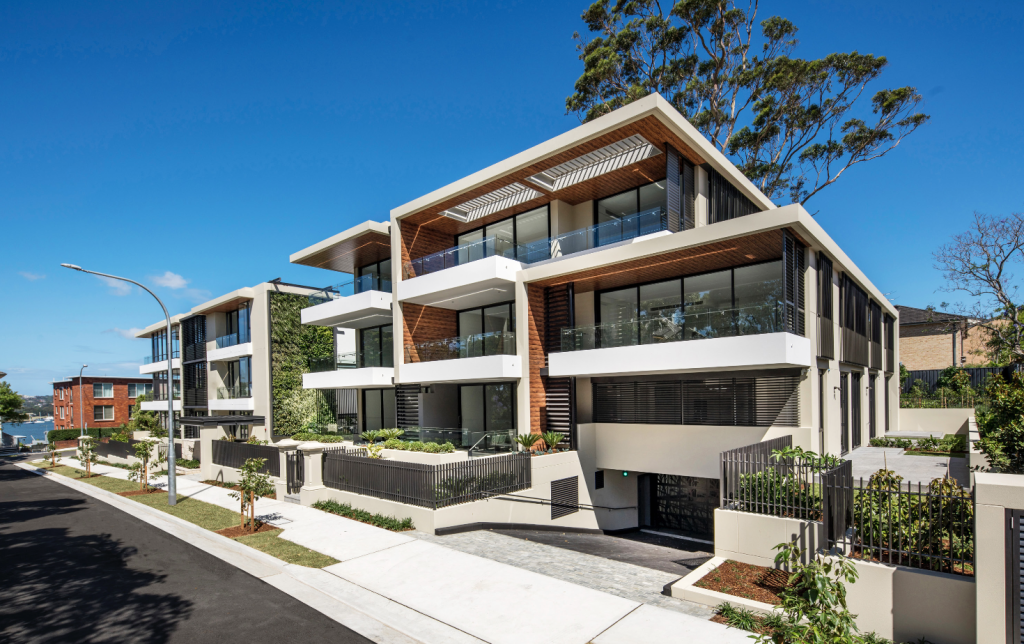
Riverside living and contemporary style meet in this secret Sydney enclave

Putney is one of those suburbs in Sydney that can go under the radar. Positioned near the better known and possibly more desirable neighbourhood of Hunters Hill, it is ideally located along the Parramatta River with easy access to ferries, waterfront parks and Ryde Shopping Centre. While the adjacent suburb of Gladesville has an abundance of apartments, contemporary family homes can be harder to find. 

Like many more coveted parts of the city, it is also experiencing a renewal of housing stock, as evidenced by this contemporary home at 111 Charles Street. Last sold in 2018 for $2.15m, the property on a 670.3sqm site has been transformed from a single storey 1970s brick residence into a five-bedroom, four-bathroom resort style home. 

Interior and exterior spaces have been treated as one, with an integrated alfresco, pool and outdoor entertaining area to the rear surrounded by well-maintained gardens.

An architect’s eye is obvious in this design, with careful attention paid to access to natural light, including double height voids over the formal living area at the front of the house, as well as the open plan living space at the rear. While finishes, including natural stone and glass balustrading, add a sense of luxury, custom designed joinery and Miele appliances ensure it is a highly functional family home.

All bedrooms are on the upper floor, with a spacious master suite with dressing room leading into the ensuite, as well as three additional bedrooms, including one with an additional ensuite.

At a time when trades are difficult to pin down and construction costs are still a concern, this property offers considered contemporary living with nothing to do. For Sydneysiders, it doesn’t get much better than that.


Address: 111 Charles Street Putney

Price Guide: $5.25 million

Auction: 9.45am August 26

Agent: Lee Dowdall Property Partner leedowdall@theagency.com.au 0408 690 921

Stephanie O’Sullivan Property Partner stephanieosullivan@theagency.com.au 0419 485 504


The World Tied $3.5 Trillion-Plus of Debt to Inflation. The Costs Are Now Adding Up.

Governments and companies around the world spent decades loading up on trillions of dollars of debt whose interest costs rise and fall alongside inflation. But what served as cheap funding when prices were stagnant has rapidly become more expensive.

The inflation-linked headache echoes the broader challenges arising at the end of more than a decade of global easy money, in which debtors borrowed vast amounts at very low, and sometimes negative, interest rates. Investors are on alert for financial vulnerabilities after a crisis in U.S. regional banks this year, and with strains emerging in commercial property.

Borrowing costs of all sorts have risen sharply for governments, businesses and consumers, as central banks have raised key interest rates to combat price pressures. Rates have surged on inflation-linked borrowings, but these aren’t the only source of pain.

As standard bonds with fixed rates mature, they need to be replaced with more expensive new debt. Meanwhile, interest rates on loans are often floating, meaning they quickly reflect changes in policy rates.

Yields on benchmark 10-year fixed-rate bonds, a proxy for government borrowing costs, have climbed to about 4.3% for the U.K. and 3.9% for the U.S. Both were below 1% during the pandemic.

Governments will pay roughly $2.2 trillion in overall debt interest this year, Fitch Ratings estimates. The U.S. Treasury’s interest cost grew 25% to $652 billion in the nine months through June. Germany’s debt-servicing bill is expected to soar to 30 billion euros this year, or some $33.2 billion, from €4 billion in 2021.

Governments had $3.5 trillion in outstanding inflation-linked debt at the end of 2022, according to the Bank for International Settlements, equivalent to about 11% of their total borrowings.

The poster child for the inflation-linked problem is Britain, which has experienced the fastest rise in debt costs in the Group of Seven advanced democracies. The U.K. first embraced such debt under Prime Minister Margaret Thatcher and in 1981 became one of the first developed economies to issue inflation-linked debt: securities that are known as linkers there and Treasury Inflation-Protected Securities, or TIPS, in the U.S. Both the amount due to investors once the bonds mature and the regular interest payments they receive move with inflation.

About a quarter of U.K. debt is now tied to inflation, trailing only a handful of emerging markets with a history of runaway prices such as Uruguay, Brazil and Chile.

“We stick out like a sore thumb,” said Sanjay Raja, chief U.K. economist at Deutsche Bank.

The U.K.’s debt woes are complicated by its longstanding reliance on a measure of price increases that has fallen out of favour: the retail price index, or RPI. Some 600 billion pounds, equivalent to roughly $770 billion, of bonds are linked to this gauge, which has consistently risen faster than more widely used consumer-price indexes. London has pledged to phase out RPI by 2030.

Inflation as measured by the RPI topped 14% in October and was still 11% in June compared with a year earlier. Economists expect U.K. inflation to keep falling this year, albeit more slowly than in other major economies.

In theory, higher interest payouts should be balanced by rising revenue. While higher inflation means bigger payouts to bondholders, it should also bring in more taxes.

That logic holds especially true in markets like the U.K., where inflation gauges are deeply embedded in the economy. Tax thresholds, pension and welfare payments, rail fares and cellphone bills are often linked to price indexes.

But the energy shock that fuelled recent inflation upended that math, since higher energy bills drove up RPI even as earnings and consumer spending lagged behind. The U.K. is experiencing the “wrong sort of inflation,” the U.K.’s Office for Budget Responsibility said this month. The sensitivity of U.K. debt to inflation was unprecedented, the watchdog said.

The U.K.’s debt sustainability is a focus for investors after a market meltdown last fall, triggered by then-Prime Minister Liz Truss’s tax-cutting plans.

Her successor Rishi Sunak and his Chancellor Jeremy Hunt have sought to restore market confidence with pledges to contain inflation and bring down debt. As the U.K.’s interest costs climb, and with debt now surpassing 100% of gross domestic product, those promises are getting harder to keep while maintaining investor confidence.

The debt burden also undermines Sunak’s hopes to woo voters and revive the economy with tax cuts and spending measures ahead of a general election expected to take place next year.

“We could quickly be in a situation where we’re facing some renewed sense of crisis, particularly with an economic backdrop of stagflation with really weak growth and overshooting inflation,” said Mark Dowding, chief investment officer at RBC BlueBay Asset Management in London. “Further policy missteps could easily be punished by the market.”

Higher bond yields and stickier inflation will add an extra £30 billion to the U.K.’s annual government debt bill, estimates Bank of America economist Robert Wood.

“The government has three options: You can plan for weaker spending, you could raise taxes or you could borrow more,” he said. “Certainly one could say that this rise in debt-interest costs is incompatible with cutting taxes.”

The U.K. is selling fewer linkers, which are likely to make up 11% of bond issuance this fiscal year, down from above 20% throughout the 2010s.

One veteran U.K. central banker said linkers had largely done their job as envisioned in the 1980s.

“We were coming out of a decade in which inflation had been extremely high. People were very skeptical about the ability of any government, particularly the Conservative government, to bring inflation down to a low and stable rate,” said Charles Goodhart, who was an adviser at the Bank of England between 1969 and 1985.

Fears that linkers would lead to fresh wage-price spirals as unions demanded inflation-linked increases, didn’t play out, he said. Thatcher, who called inflation “the destroyer of all,” saw linkers as “sleeping policemen,” ensuring the government wasn’t tempted to let inflation run to help inflate debt away.

“It makes the current fiscal position more difficult. But that’s what Mrs. Thatcher actually wanted,” said Goodhart. “She wanted governments to resist inflation more strongly.”

Companies are also feeling the pressure from inflation-linked borrowing. The U.K.’s largest water company, Thames Water, nearly collapsed in recent weeks as investors questioned its ability to repay £14 billion in debt, about half of which is linked to inflation. Thames Water’s debt is RPI-linked, but customer prices now track CPI, which lags behind the RPI by about 3 percentage points more slowly.