‘What’s Going On in That Room?’ A Dublin Townhouse Gets a Mystical, Leap-of-Faith Reimagining

Sometimes sad things happen to good houses. Take the proud former home of the family that founded Jameson Irish Whiskey, perched on a historic square in the Irish capital. More recently a law office, the circa 18th-century townhouse had been mired in drudgery.

“Businesses take on these prestigious old buildings and chuck in a lot of furniture,” said designer Suzie McAdam of the throng of mahogany desks, wall-to-wall carpet and fluorescent lights she found in the property. “Everything was grim and a bit tired.”

The new owner, an Irish businesswoman who would live there solo, hired Mc Adam, a local pro, to restore and decorate the four-story Georgian home. Put off by the dark, masculine energy of the panelling in the entrance and reception room, the client at first wanted to paint all of it white. “I think her sense was to make it feel fresher, more lightened,” said Mc Adam.

To convince the owner to rehab the wood instead, the designer proposed a brash, whimsical plan.

Where the client saw oppressive beams and coffers, Mc Adam saw…a forest. She would enlist Irish muralist Michael Dillon to hand paint the white plaster gaps between the woodwork with local flora and fauna, like mythical creatures from Irish folklore growing out from between the timbers.

“It almost has a sense of decay, something that had been creeping through an old wall,” said McAdam of the final mural. “It’s very fantastical,” she said.

The designer won the client’s buy-in, and the mahogany was refurbished. The woodwork-as-woods concept intrigued the owner, Mc Adam believes, in part because she spends her days in the black-and-grey world of business and finance. She also craved uniqueness.

“Having seen a lot of other buildings in Dublin, none of which energized or excited her, I think she wanted to be taken on a journey with the design,” said McAdam.

That might explain why the owner welcomed the curious light fixture—the Halti pendant by Cameron Design House —that loops from the reception room’s ceiling like pearls sized for the Statue of Liberty. During Paris Design Week, McAdam was captivated by a lavender version she saw draped inside an installation of ornate boiserie panelling.

She says she has a tendency to embrace this kind of forward-leaning design: “A guiding principle I return to is this: Would I see this piece at an auction in 20 years? If the answer is yes, then I know I am on to something.”

She texted a photo to her client, who asked if it came in other colours. “The lavender was quite strong, maybe a little too far for her,” said Mc Adam. They eventually landed on an opaque white version, a nervy update of the drippy crystal chandeliers common to homes of this vintage.

The room’s expansive windows make the necklace-like fixture visible from the street below. “Even taxi drivers are, like, ‘What’s going on in that room?’ ” said Mc Adam. One, while driving her past the property, remarked, “Sure you wouldn’t know what they’ll hang off a ceiling these days!”

She didn’t let on, and says today, “If something causes debate and conflict, I think that’s where it gets interesting.”

The chandelier in the library upstairs initially raised even her client’s eyebrows. McAdam recalls that, as an electrician was installing the Italian glass chandelier from Giopato & Coombes, the client commented that it “looked like bowling pins that had been smashed over.”

McAdam dug in her heels. “Hold firm is my approach sometimes. When people see something in isolation, it’s hard to get a full sense of how the room is going to turn out.” Today, the space is adorned with pastoral Schumacher wallpaper, its barrel-vaulted ceiling painted a sky blue. “She wasn’t enamoured initially with that fixture, but the room came together.”

McAdam’s aesthetic bravery respects and suits the historic home. Centuries ago, the Jameson family had their motto carved into the reception-room mantel alongside the three-masted sailing ship that serves as a logo on each whiskey label. It reads Sine Metu , Latin for “Without Fear.”

A Piece of Glass Thinner Than a Credit Card Could Solve America’s $25 Billion Energy Problem

Here’s one more thing we owe to the restless mind of Steve Jobs : hyper-efficient, ultra-tough windows for homes.

This new kind of window could save American households billions of dollars in wasted energy each year, while allowing expansive views of the outdoors and making our homes quieter, more comfortable and able to survive even the most violent weather. The key enabling technology is thin panes of glass—sandwiched between thicker standard glass—which exist because of the same manufacturing and chemistry breakthroughs that made possible the light, strong, scratch-resistant screens on our smartphones, tablets and watches.

Typical double-pane windows have hardly changed since their invention a century ago. Filling them with inert gases or adding coatings to reflect or let in heat has made them more effective. But it’s still generally accepted that, all other things being equal, your home’s energy bills will go up or down based on how many windows you have, and how big they are.

“Windows are always viewed as the problem, because windows typically lose 10 to 20 times more energy per square foot than a well-insulated wall,” says Stephen Selkowitz, an affiliate at the Lawrence Berkeley National Laboratory and a dean in the field of building energy efficiency. The Energy Department estimates that U.S. households each waste $200 to $400 a year on energy bills due to drafts, leaks and inefficiencies, for a total of at least $25 billion a year.

These new three- and four-pane windows can be even better insulators than the walls around them, but cost only about 20% more than standard energy-efficient windows. Installing them could bring big energy savings for those ready to retrofit, and could enable the construction of new homes that are so well-insulated that even when the power goes out in a winter storm, they stay warm for days. Another variant of these windows can meet the most stringent hurricane-related building codes in the country, while being significantly lighter than conventional stormproof windows.

The bad news is that Joe and Jane Consumer won’t be able to buy these kinds of windows at the local home-supply store—at least not yet. While the primary manufacturer of this type of window is offering its tech to other window makers, it’s only opened up U.S. production in the past few months, and it’s still scaling up manufacturing.

Bringing the panes

Scientists have long known the key to more efficient windows is similar to the relationship between razorblades and a closer shave: More is better. But it was hard to translate that into a product that could be mass manufactured, at a price that people would be willing to pay, says Selkowitz.

Enter Corning , maker of the thin, tough Gorilla Glass that has helped make possible today’s mobile devices. In order to win over Steve Jobs and land Apple as a client when it first started making iPhones, Corning offered Apple a fresh twist on its existing process for making glass for LCD displays and other applications, which yielded a new kind of chemically strengthened glass.

Traditional glass, called soda-lime glass, is made by floating molten glass on top of molten tin, which is a cheap and effective process but leaves microscopic flaws. With Gorilla Glass, molten glass with different additives than soda-lime glass cascades in a waterfall as thin as half a millimeter, which rapidly cools and is cut to size, yielding glass that is nearly flawless. The glass is also chemically strengthened, making it resistant to scratches and chipping.

As the smartphone industry ramped up, Corning built more factories to meet demand for Gorilla Glass. Some of these factories now use the same process, with a slightly modified chemistry, to create far larger sheets of similarly tough glass, for windows instead of hand-held devices. These sheets of glass are thinner than a credit card, yet they can be bigger than a queen-size mattress, says Ron Verkleeren , senior vice president of Corning’s emerging-innovations group.

This architectural glass doesn’t yet have a compelling name like Gorilla Glass, but they’re working on it, he adds. (“Orangutan Glass” has my vote.)

When three or even four layers of glass are put together, with inert gas in between, only the interior panes are the super-thin Corning panes, and they add little weight to the finished product.

When you go from a single air gap to the two or three that are possible with triple- and quad-pane windows, the insulating ability of a window can skyrocket, says Selkowitz, who has collaborated at the federally funded Lawrence Berkeley lab with Alpen, a Colorado-based maker of specialty windows, to research their capabilities.

Efficiency and more

Alpen’s windows have long been favored by architects who want to build super energy-efficient homes. Corning began collaborating with Alpen about five years ago, and now the company is ready to mass-manufacture reinforced windows at two facilities, one in Colorado and one in Pennsylvania. The first wave will be windows in standard sizes, says Andrew Zech, Alpen’s CEO. Key to keeping costs down are the company’s new automated, high-throughput assembly lines for making the windows, he adds.

David Schleicher, managing director of Kala, a high-performance builder in Kansas City, Mo., has been living with a wall of triple-pane windows comparable to Alpen’s on the south side of his home since 2015. Typically, such a vast expanse of glass—a total of 16 feet by 7—would create an unpleasantly cold patch during the winter. But this glass is so well insulated, it actually creates warmth in his living room: It admits the radiant heat of the low winter sun but prevents conductive heat loss through the window, says Schleicher.

“With the right glass in my house, my heat won’t even be running on a winter day, as long as the sun is shining and it’s coming in the window,” he says. “It is crazy—I will be in shorts and a T-shirt and it’s 20 degrees outside. Meanwhile, my neighbors are paying out the nose in heating and cooling bills.”

Whether or not these innovative new windows take off depends largely on the demand from builders, homeowners and landlords.

Historically, the biggest reason that energy-efficient technologies get adopted is that building codes require them, says Schleicher. Without explicit regulations that enforce minimum standards, builders often seek deals on materials so that they can maximize profits, and businesses and individuals who rent out properties often have little incentive to reduce tenants’ month-to-month energy bills.

Slashing home energy bills is just the next chapter for the tech that brought us smartphone glass.

Miter Brands is producing windows in North Venice, Fla. in which it layers Corning’s tough glass onto windows designed to withstand hurricane-force winds. Previously, the company’s impact-resistant glass doors weighed up to 600 pounds; using Corning thin glass inside has cut the weight by up to 40%, says Dean Ruark, vice president of engineering and innovation at Miter subsidiary PGT Innovations.

Despite being lighter, these new doors can pass the most stringent hurricane testing in the country: Miami Dade’s building codes for hurricane resistance. This involves withstanding ​​air pressure equivalent to a major hurricane, and a two-by-four fired from a cannon at 34 miles an hour…twice.

LUXURY PENTHOUSES REDEFINE HIGH-END LIVING IN NORWEST

A new benchmark for luxury living has arrived in Sydney’s Hills District, with the release of a collection of four-bedroom penthouses at Norwest Quarter, designed by acclaimed architect Richard Archer.

These residences, part of the Banksia building, promise a rare combination of spacious, house-like proportions and single-level convenience. They cater to high-net-worth buyers looking to downsize without compromise.

The Banksia penthouses are located in the Norwest Quarter in Norwest, a leafy suburb in Sydney’s Hills district, about 35 km from the city.

Mulpha, a leading property developer and investment group, developed the precinct to create a sustainable, mixed-use community. It integrates the penthouses with retail, green spaces, and lifestyle amenities within a beautiful natural setting.

“With expansive outdoor terraces, panoramic views, and open-plan interiors, these homes offer a rare sense of space in apartment living,” said Tim Spencer, Head of Development at Mulpha.

“They are designed to maximise light, airflow, and indoor-outdoor living. Each penthouse also incorporates custom finishes, high-end appliances, and adaptable spaces to suit many lifestyles.”

The penthouses boast concealed butler’s pantries, integrated smart home technology, and master retreats.

According to Richard Archer, director of Archer Design, the design challenge was to create a home that feels as open as a house but with the ease of apartment living.

“We wanted to craft a space that brings the outdoors in, with terraces that extend the living areas and maximise views of the Blue Mountains and surrounding landscape,” he said.

Australia is seeing a growing trend of luxury downsizing. Affluent buyers seek spacious, well-appointed apartments that provide high-end amenities without the maintenance of a traditional house.

Long associated with family homes, the Hills District in NSW is seeing an increasing demand for premium apartment living that doesn’t sacrifice space or prestige.

Norwest Quarter’s masterplan incorporates green spaces, sustainable design, and premium lifestyle amenities, including a resident-only mineral pool, fitness facilities, and a private garden sanctuary.

It is also near the Norwest Metro Station and local retail hubs. The Norwest Metro Station provides easy and quick access to the city with direct links to Barangaroo and Chatswood.

Norwest Quarter is Australia’s most ambitious zero-carbon mixed-use precinct, placing sustainability at the forefront of its design.

The spokesperson said, “With 70% of the development dedicated to green spaces, the master plan integrates tree-lined plazas, walking trails, and energy-efficient building design, offering a balance of urban convenience and environmental consciousness.”

For more information, visit norwestquarter.com.au/penthouses

7 Ways Biophilic Design Transforms Luxury Living

Sydney-based biophilic design expert Ozge Fettahlioglu, a.k.a. “Madame Cocoplum,” shares her top seven tips for transforming your home into a serene, sustainable sanctuary. Renowned for her local and international design projects, Ozge reveals how nature-inspired luxury can elevate your lifestyle and property value.

1. Create a Calming Sanctuary

Stress Reduction: Thoughtfully integrated natural elements—abundant daylight, elegant water features and organic textures—reduce stress and encourage relaxation.
Restorative Ambience: Imagine a home where the soft murmur of water and the dynamic play of sunlight instantly restore your sense of peace.

2. Enhances Property Value

Market Differentiator: Properties that merge nature with high-end design stand out in competitive markets and often command premium prices.
Tangible Benefits: Buyers are increasingly drawn to spaces offering refined aesthetics and measurable health benefits—making these homes a wise long-term investment.

3. Delivers a Multisensory Experience

Sensory Richness: From the warm touch of natural stone to the gentle echo of a water feature, every detail is curated to stimulate the senses.
Elevated Aesthetics: Reflective surfaces and organic forms create a dynamic interplay of light and shadow, turning each room into an immersive, ever-changing environment.

4. Integrates Sustainable Luxury

Premium Materials: Think of all-marble finishes, natural stone accents, and glass elements that echo organic shapes. These materials are as eco-conscious as they are elegant.
Responsible Design: Sustainable choices elevate your living space while demonstrating a commitment to environmental stewardship—an essential value in today’s luxury market.

5. Unites Science and Art

Evidence-Based Approach: Biophilic design is supported by neuroscience. Studies show that nature-rich environments improve mental clarity, elevate mood, and even enhance sleep.
Masterful Integration: This is more than just adding greenery—it’s a refined blend of architectural planning, smart climate control and artistic intent.

6. Respects and Reflects Any Style

Versatility in Design: Whether your aesthetic leans towards sleek minimalism, mid-century modern or the quiet elegance of Wabi-Sabi, biophilic principles can seamlessly align with your vision.
Tailored Sophistication: Every element is bespoke, curated to respect your personal style and complement your existing décor. It is never imposed as a one-size-fits-all solution.

7. Speaks a Universal Language

Global Resonance: Nature is a language we all understand, regardless of background or location.
Borderless Appeal: Whether your property is an urban penthouse or a coastal retreat, nature-integrated design has international allure and timeless charm.


An Inspiring Transformation: A Penthouse Lounge Case Study

Consider a recent project where a client sought to reimagine an underused penthouse lounge.

“We installed floor-to-ceiling glass panels to flood the space with natural light and frame breathtaking views—making the panorama the focal point of the design,” Ozge said.

“Strategically placed mirrors amplified the light, bringing movement into the room with the reflection of birds in flight and the shimmer of water below.

A sleek, self-contained water feature added a tranquil acoustic layer, while a carefully selected human-scale statue—an elegant nod to the organic form—served as a striking centrepiece.

“Materials were key: we used all-marble and natural stone, complemented by glass and other reflective surfaces that echoed nature’s fluidity.

“A subtle reconfiguration of the seating enhanced spatial flow, transforming a once-forgotten conversation pit into a coveted setting for intimate gatherings, quiet reflection and uninterrupted views.

This project exemplifies how true biophilic sophistication lies not in scattering houseplants but in the seamless integration of natural materials, spatial awareness, and sensory design.


What is Biophilic Design?

Biophilic design is the sophisticated integration of natural elements into the built environment to enhance well-being, sustainability, and aesthetic appeal. It goes beyond decorative touches to create immersive, harmonious spaces that speak to our innate connection with nature—transforming everyday interiors into serene, rejuvenating sanctuaries.
 

What are the 5 senses of Biophilic Design?

Biophilic design goes beyond aesthetics—it engages all five senses to create spaces that genuinely restore and inspire, such as natural light and greenery, the soothing sound of water or rustling leaves, and textures like timber or stone that invite touch. Subtle scents from plants or natural materials ground the space, while edible elements like herb walls can even evoke taste. It’s a full sensory experience that brings nature indoors.

The psychology behind biophilic design:

Biophilic design is rooted in the idea that humans have an innate connection to nature—a concept known as the biophilia hypothesis. Psychologically, exposure to natural elements has been shown to lower stress levels, boost mood, improve cognitive function and even support faster healing. Spaces designed with nature in mind can evoke calm, clarity and comfort—helping us feel more grounded, energised and emotionally balanced. It’s a design that doesn’t just look good, but feels good too.


What are the three principles of biophilic design?

Biophilic design is built on three key principles: bringing nature directly into the space through elements like light, plants or water; using natural analogues such as organic shapes, textures and patterns that mimic nature; and designing spaces that feel like nature—evoking a sense of calm, openness, or refuge, much like a forest clearing or ocean view. Together, these principles create environments that nurture both body and mind.
Ozge Fettahlioglu is the founder of Cocoplum | Biophilic Design Studio and Boxareno | Custom Modular Constructions. A wellness and biophilic design leader, she creates bespoke spaces that inspire, heal, and elevate daily living. Ozge is also a board member of Biophilic Cities Australia.

Automobili Lamborghini Achieves Record-Breaking Results in 2024

Luxury car manufacturer Automobili Lamborghini has posted its strongest-ever financial results, achieving record-breaking revenues of €3.09 billion in 2024, surpassing the €3 billion threshold for the first time in the company’s history.

Operating income also reached an all-time high of €835 million, reflecting a 15.5% increase over the previous year, while maintaining an impressive operating margin of 27%.

Global sales saw significant growth, with Lamborghini delivering 10,687 cars in 2024, a 5.7% increase year-over-year. This growth was consistent across key markets in the Americas, EMEA, and Asia-Pacific regions, highlighting the global strength of the Lamborghini brand despite challenging market conditions.

Chairman and CEO Stephan Winkelmann attributed the company’s success to the strategic renewal of its product range and the strength of its team. “Evolving the entire product range while continuing to grow: this is how we can summarize another record year for Automobili Lamborghini,” Winkelmann said. “We are confident and determined as we embrace the next challenges in the sector, continuing to combine performance, exclusivity, and innovation.”

The record results reflect an intense 18-month transformation period, marked by the introduction of three new models. The launch of the Revuelto—the first V12 High Performance Electrified Vehicle (HPEV)—combined Lamborghini’s iconic heritage with advanced hybrid technology. Additionally, the new Urus SE elevated the Super SUV segment, introducing cutting-edge innovations in technology, efficiency, and performance. Lamborghini also introduced the Temerario at the prestigious Monterey Car Week, embodying the brand’s uncompromising spirit and design ethos.

Paolo Poma, Managing Director and CFO, emphasized Lamborghini’s commitment to sustainable growth and innovation. “Our goal remains achieving sustainable growth from both financial and environmental perspectives, creating lasting value for all stakeholders,” said Poma.

The company’s ongoing success has boosted employment significantly, with 1,000 new employees joining the workforce over the past two years, representing a 30% increase. This expansion is supported by Lamborghini’s most substantial investment plan ever, designed to modernize production, enhance manufacturing capabilities, and improve the sustainability of the company’s industrial ecosystem.

Automobili Lamborghini remains a significant contributor to Italy’s economy, reinforcing the global prestige of Made in Italy through a commitment to exclusivity, craftsmanship, and technological innovation. With these strong results, Lamborghini is poised for further growth and continued excellence in the luxury automotive industry.


Temu Owner PDD Posts Slowest Revenue Growth Since Early 2022

The Chinese owner of bargain app Temu reported slower quarterly profit and revenue growth, capping a turbulent year for the e-commerce giant as it faced stiff competition at home, geopolitical tensions abroad and U.S. tariff uncertainties.

PDD Holdings on Thursday said fourth-quarter revenue climbed 24% to 110.61 billion yuan, equivalent to $15.30 billion, missing a Visible Alpha estimate of 117.83 billion yuan. It was the slowest pace of growth since the first quarter of 2022.

Net profit rose 18% from a year earlier to 27.45 billion yuan, topping analysts’ expectations of 27.00 billion yuan. However, the growth was slower than the 61% rise in the third quarter and the more than twofold increase a year earlier.

“Looking ahead, we will continue to prioritize investments in the platform ecosystem as the cornerstone of our long-term value creation strategy,” said Jun Liu, PDD’s vice president of finance.

Jefferies analysts in a note said PDD’s top-line miss was due to slower-than-expected revenue growth from transaction services, while revenue from online marketing services and others was in line with consensus.

The easing momentum contrasted sharply with the stunning growth rates the company delivered in past years. PDD last year repeatedly warned of a slowdown, pointing to intensifying competition and external challenges.

Pinduoduo, the company’s discount platform in China, has grown rapidly since it launched nearly a decade ago, taking market share from e-commerce stalwarts Alibaba and JD.com . Its sister platform Temu burst onto the international scene in 2022 and swiftly gained attention in the U.S., attracting customers with low prices.

However, Temu has also encountered regulatory scrutiny as it expands overseas. U.S. President Trump in February delayed his plan to end a provision for China imports that lets platforms avoid paying import duties and customs inspections on low-value packages, offering the likes of Temu a brief reprieve.

For the full year, PDD’s total revenue rose 59% to 393.84 billion yuan and net profit climbed 87% to 60.03 billion yuan.

Last month, rival Alibaba posted its fastest pace of revenue growth since late 2023, with revenue for the latest quarter rising 7.6% to 280 billion yuan. Online retailer JD.com earlier this month nearly tripled its quarterly net profit as revenue climbed 13% to 346.99 billion yuan.

U.S.-listed PDD was recently 6.5% lower in premarket trading after the results.

Bronte Stunner With Ocean Views and $24m Price Tag

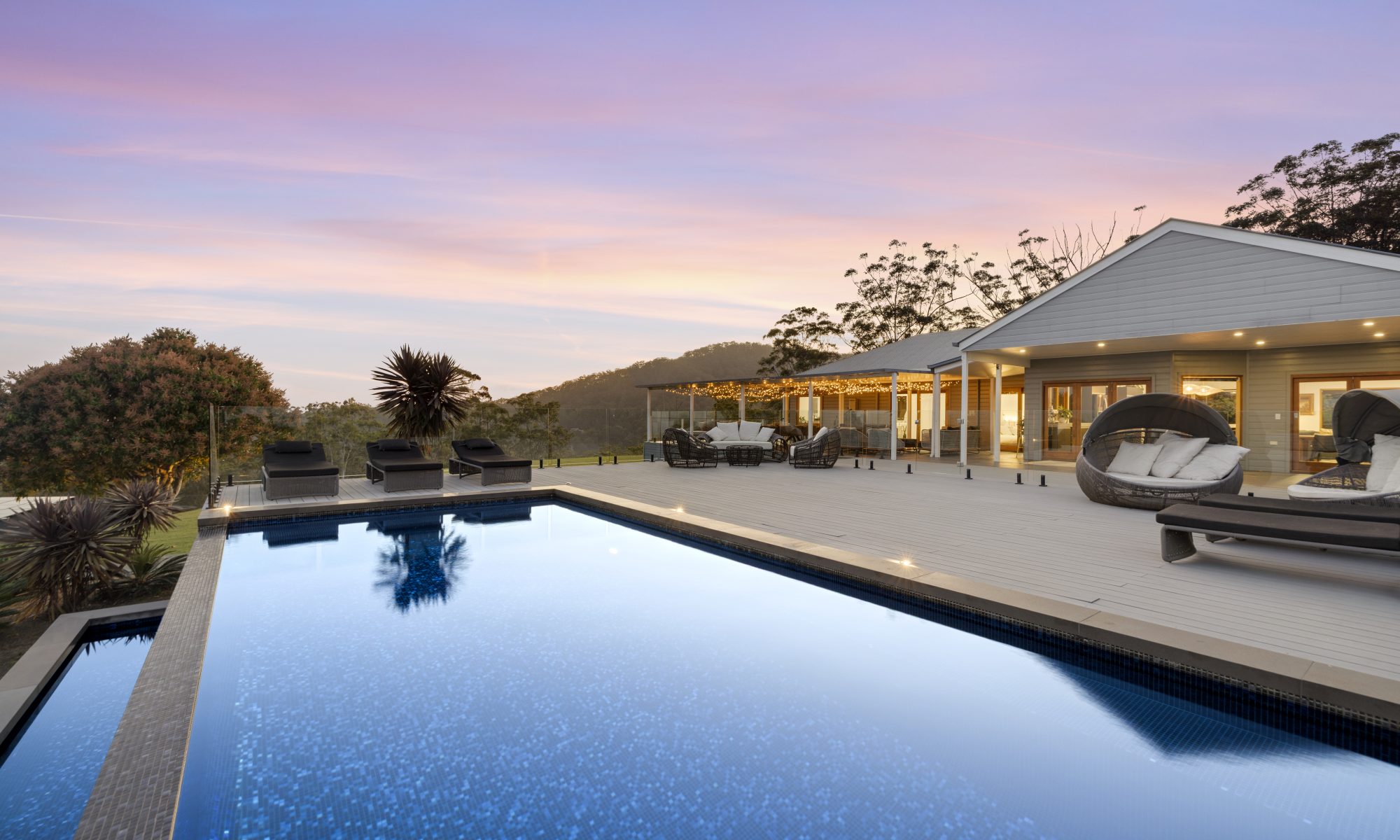
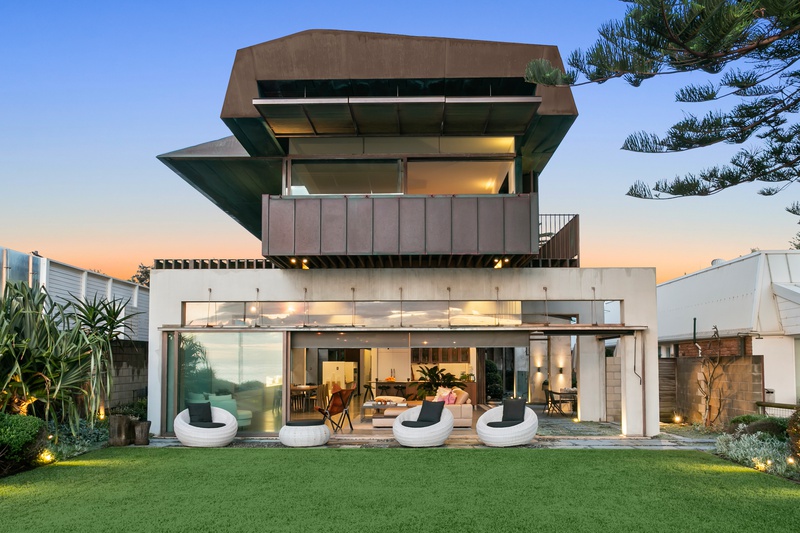
Architect Richard Cole and builder Jeff Towler joined forces to create a Bronte beach house that would turn heads. The brief was successfully met with Panorama House on Yanko Ave, taking home the 2019 NSW HIA-CSR House of the Year gong and the Waverley Design Award. 

Local anaesthetist Dr Erin Cook bought the existing house on the 841sq m site in 2010, paying $5.85 million for essentially just the land. 

Fast-forward almost 15 years, and the eastern suburbs medico has listed his contemporary four-bedroom residence with Sotheby’s International Realty Sydney agents James Ball and Alexander Phillips from PPD Real Estate. It’s going to auction on May 3, and it’s expected to sell near its guide price of $24 million. 

If the amount is achieved, Panorama House could become one of Bronte’s most expensive properties, but it will still fall short of the current $29.25 million Bronte record set at 3 Tipper Ave in 2023. 

While the modern design and luxury finishes are plenty to talk about, the property has earned its name thanks to the panoramic ocean and beach views over the escarpment. 

Cole created a house using a sophisticated palette of natural materials, including timber, stone, brick, zinc, and concrete. 

The home has been designed to open up to the elements or close down to the environment to regulate indoor temperatures and reduce the use of artificial air conditioners. As an added bonus, solar panels feed into a 10kW solar battery to supply electricity to the house. 

Sitting high on a private north-facing battle-axe block on the sandstone escarpment above Bronte Beach, Panorama House has been built to thrive in its coastal environment. 

Its cobblestone driveway and sculptural curved facade make a dramatic first impression, and inside, the grand double-height void enhances the uninterrupted water outlook. 

The three-storey home features a central living zone on the ground floor, which houses a lounge room with built-in seating, a two-way sandstone Escea fireplace, and a choice of dining spaces inside and out, including a cocktail bar with Vintec fridges. 

The sleek kitchen has a Calacatta Oro island and a butler’s pantry. 

Big, bold glass doors reveal a heated saltwater pool and spa almost hovering above the ocean, an all-weather entertainer’s pavilion, a fire pit, and an expansive lawn offering plenty of room for children and pets to explore. 

In addition to the two bedrooms and shared bathroom on the main level, two more bedrooms can be found on the first floor and feature an even more elevated outlook. The primary bedroom has a palatial ensuite with a tub framed by ocean views, a walk or wardrobes, and a neighbouring home office that could easily moonlight as an enviable dressing room.  

This upper level also houses a second living room, a sitting area with fireplace and balcony access, and another bedroom with an ensuite and balcony. 

Bonus inclusions at the Bronte Beach house include a lower ground-floor gym or potential home cinema, a cloakroom, powder room, laundry with side access, an outdoor shower, a David Trubridge Navicula pendant light in the entryway, solid Blackbutt floorboards, hydronic heating, Haiku fans, and a double garage with an EV charger. 

Panorama House is listed with Sotheby’s International Realty Sydney’s James Ball and Alexander Phillips of PPD Real Estate, who have scheduled an on-site auction for May 3. 

Tombs, Mountains, Souks: An Artist’s Guide to Traveling Marrakesh

Marrakesh offers a perfect mix of centuries-old history and a contemporary edge, said Yahya Rouach, a self-taught artist and designer who has lived in the Moroccan city for more than 20 years and only goes by his first name. Yahya has a gallery and showroom, Yahya Creation, in Marrakesh’s new town, Gueliz.

“Marrakesh is a melting pot of cultures, religions and people. It was the trade route from the north to the south and east to west,” Yahya said. “It’s anchored in its roots but open to the world, forward-looking, and able to reinvent itself to stay modern and fresh.”

Marrakesh is framed by the majestic Atlas Mountains, which he said, are “simply breathtaking.”

“The light, the beauty of the metalwork, and the city’s vibrant energy draw you in,” Yahya said

In his own words, he shres his top spots in Marrakesh that give visitors an authentic lens into the city’s present and past.

Stay

For an exceptional stay, I’d recommend the Royal Mansour. It is stunning, with lush gardens and an architectural elegance that feels like a masterpiece. For a taste of history, La Mamounia is a classic. Known as the grand dame, it was once frequented by Winston Churchill.

If you want something more intimate and immersive in the heart of the city’s Medina, a Unesco World Heritage Site, La Maison Arabe offers an authentic souk experience in a traditional setting. Also, Jnane Tamsna is a boutique hotel in a beautiful building with a garden. It feels like a private residence more than a hotel.

Eat

When it comes to dining, Marrakesh offers a feast for the senses.

The restaurants at Royal Mansour are exceptional. Sesamo is a fine-dining Italian spot, and the Moroccan restaurant Le Jardin offers an inventive, modern take on traditional dishes.

For something more casual yet extraordinary, Monas in Gueliz serves the most incredible Lebanese food I’ve ever had. It’s a small, unassuming spot, but the flavours are unforgettable. Another great option is Dai, a restaurant in the new town with fantastic food and ambience. The saffron risotto is a must.

For as traditional as it gets Moroccan cuisine like tagines and couscous, Dar Yacout is the place to go. It feels like you’re transported into “1001 Nights.” You get dropped off in the heart of the souk, and someone from the restaurant meets you and walks you through a labyrinth of alleyways. You won’t be able to find it otherwise. The restaurant is spread out over several floors and has been owned by the same family for decades. For coffee, you can’t beat Bacha Coffee in the former palace of Pasha Thami El Glaoui. It’s located in Dar El Bacha, a charming area filled with boutique shops, galleries, and a museum.

The options are endless, but two landmarks stand out. The Koutoubia Mosque, built over a thousand years ago, is the city’s iconic centrepiece. Its minaret can be seen from all over Marrakesh, thanks to the French planners who preserved its line of sight. Another fascinating spot is the Saadian Tombs. They date to the 16th century and were built by the Saadian ruler Sultan Ahmad al-Mansur to show off his wealth. You can see beautiful carvings as you walk through.

Day Trip

A visit to the Atlas Mountains is an unforgettable experience. My favorite spot is the Kasbah Bab Ourika, where you can enjoy lunch while enjoying gorgeous views. It’s an escape into tranquility, just a short trip from the bustling city. You can also go for a hike with a guide or take a donkey ride up the mountain and visit centuries-old villages that stand still in time.

Shop

Hire a guide and wander through the Medina or market. Khalid’s Art Gallery is unparalleled for antique treasures. For women’s fashion, particularly exquisite caftans, Fadila El Gadi in Gueliz is a genius designer and a favourite of the late designer Yves Saint Laurent. Her gallery is just across from mine in Passage Ghandouri, a creative hub that has evolved beautifully over the years.

This passage is also home to the Matisse Art Gallery and MACMA Museum, which blend modern and classical art. It’s a wonderful place to shop, explore, and soak up creativity.

Even Rich People Are Starting to Get Nervous About Trump’s Economy

If U.S. stock prices continue to fall, wealthy consumers could slow their spending, putting further pressure on the U.S. economy and markets.

That could mean everything from fewer luxury cars and handbags being sold to reduced demand for top-end homes and fancy vacations.

Broadly, retail sales rose a less-than-expected 0.2% in February from January, the Census Bureau reported earlier this week. There are signs affluent consumers are holding back, too. Major airlines cut their guidance for the first quarter last week on expectations of weak demand. And U.S. credit-card spending on top luxury brands declined 5% year over year in February, Citi reported on March 11.

Though it’s “too early to tell” whether spending will contract, every dollar decline in the value of assets, such as stocks or real estate, leads to a two cent decline in spending among “upper-end consumers,” according to Joseph Brusuelas, chief economist at RSM U.S.

Brusuelas’ calculation describes the so-called negative wealth effect, when a decline in investment portfolio value affects consumer attitudes toward how much they can spend.

Today, the S&P 500 is struggling, down just over 1% on Tuesday , leading to a 4.5% decline year to date, after slipping into correction territory last Thursday.

Even that 10% decline doesn’t mean a pullback in spending by the affluent is imminent, Brusuelas told Barron’s .

But the “volatility, uncertainty, complexity, and ambiguity,” in geopolitical, economic, and market news coming out of the U.S. doesn’t bode well for luxury spending in particular, according to Erwan Rambourg, global head of consumer and retail research at HSBC.

“Luxury demand is holding up in the U.S., but I’m not sure for how long,” Rambourg told Barron’s . “There might be a lag between the data points, the markets, and the actual spending.”

In addition to sharp declines in stocks and cryptocurrency since mid-February, affluent Americans are facing a decline of 5.39% in the value of the U.S. dollar against the euro this year. By contrast, the euro lost 6.2% against the dollar last year.

The dollar’s decline not only affects the price of luxury goods—many of which are made in Europe—but the desire of U.S. consumers to travel and spend across the Atlantic, according to HSBC.

Another challenge is the uncertain trajectory of tariffs on goods from Canada, Mexico, and Europe.

“I’ve always thought that you bought luxury not because you were wealthy, but because you were confident about the future,” Rambourg said. “The whole tariff conversation—the reversals on Canada and Mexico—one day it’s 25%, the following day it’s postponed by a month, the following day, you have some exceptions…if you’re a business manager and if you’re a consumer, obviously that will affect your confidence in a big way.”

Still, wealthier consumers have a significant buffer in their investment portfolios, which have grown substantially over several years of upward equity returns, according to Katie Nixon, CIO of Northern Trust Wealth Management.

“In any given year, you expect to have 5% pullbacks almost routinely,” Nixon said. “It’s just that we haven’t had one in a while so this feels kind of extreme.”

Investors know that markets can fall significantly, as happened during the financial crisis in 2008 or during the early days of pandemic, according to Scott Zelniker, private wealth advisor at UBS Wealth Management. “More often than not, the market was up significantly 12 months later,” Zelniker told Barron’s .

One topic of conversation among Zelniker’s clients, however, is whether to buy the cars they are leasing when their agreements expire instead of re-leasing them as usual, considering the potential for tariffs to lead to higher-priced automobiles, he said. “They already have a contract with a price.” Why buy, or lease, a new car?

‘Snow White’ Review: A Disney Princess’s Pointless Return

Even in Hollywood, pre-eminent in the field of chutzpah, greatness can be intimidating. Rarely does one hear producers discuss their plans to remake “Casablanca” or “Lawrence of Arabia.” It took Disney many years of creating live-action remakes of its classic animated features before it worked up the nerve to take another whack at its first, and perhaps most venerated, work, “Snow White and the Seven Dwarfs,” which in 1937 set the template for richly evocative animation that could appeal to all ages. It is still, in inflation-adjusted dollars, the 10th-highest-grossing movie ever released in North America.

Disney’s first “Snow White” isn’t perfect—the prince is badly underwritten and doesn’t even get a name—but it is, by turns, enchanting, scary and moving. Version 2.0, starring Rachel Zegler in the title role and Gal Gadot as her nefarious stepmother, has been in the works since 2016 and already feels like it’s from a bygone era. After fans seemed grumpy about the rumored storyline and the casting of Ms. Zegler, Disney became bashful about releasing it last March and ordered reshoots to make everyone happy. Unfortunately, the story is so dopey it made me sleepy.

Directed by Marc Webb (“The Amazing Spider-Man” with Andrew Garfield ), the remake is neither a clever reimagining (like “The Jungle Book” and “Pete’s Dragon,” both from 2016) nor a faithful retelling (like 2017’s “Beauty and the Beast”), but rather an ungainly attempt at modernization. The songs “I’m Wishing” and “Someday My Prince Will Come” have been cut; the big what-she-wants number near the outset is called “Waiting on a Wish.” Instead of longing for true love (=fairy tale), Snow White hopes to sharpen her leadership skills (=M.B.A. program). And she keeps talking about a more equitable distribution of wealth in the kingdom she is destined to rule after her mother, the queen, dies and her father, having made a questionable choice for his second spouse, goes missing.

Ms. Gadot, giving it her all, is serviceable as the wicked stepmother. But she doesn’t bring a lot of wit to the role, and the script, by Erin Cressida Wilson , does very little to help. Her hello-I’m-evil number, “All Is Fair,” is meant to be the film’s comic showstopper but it’s barely a showslower, a wan imitation of “Gaston” from “Beauty and the Beast” or “Poor Unfortunate Souls” from “The Little Mermaid.” The original songs, from the songwriting team of Benj Pasek and Justin Paul (“La La Land”), also stack up poorly against the three tunes carried over from the original “Snow White,” each of which has been changed from a sweet bonbon into high-energy, low-impact cruise-ship entertainment. So unimaginative is the staging of the numbers that it suggests such straight-to-Disney+ features as 2019’s “Lady and the Tramp.”

After escaping a plot to kill her, Snow White becomes friends with a digital panoply of woodland animals and with the Seven Dwarfs, who instead of being played by actors are also digital creations. The warmth of the original animation is totally absent here; the tiny miners look like slightly creepy garden gnomes, except for Dopey, who looks like Alfred E. Neuman . As for the prince, there isn’t one; the love interest, Jonathan (a forgettable Andrew Burnap ), is a direct lift of the rogue-thief Flynn Rider , from 2010’s “Tangled,” plus some Robin Hood stylings. His sour, sarcastic tribute to the heroine, “Princess Problems,” is the worst Snow White number since the one with Rob Lowe at the 1989 Oscars.

Ms. Zegler isn’t the chief problem with the movie, but as in her debut role, Maria in Steven Spielberg’s remake of “West Side Story,” she has a tendency to seem bland and blank, leaving the emotional depths of her character unexplored even as she nearly dies twice. Gloss prevails over heart in nearly every scene, and plot beats feel contrived. She and Jonathan seem to have no interest in one another until, suddenly, they do; and when he and his band of thieves escape from a dungeon, they do so simply by yanking their iron chains out of the walls. Everything comes too easily and nothing generates much feeling. When interrogated by the evil queen, who wants to know what happened to her stepdaughter, Jonathan replies, “Snow who?” Which would be an understandable reaction to the movie. “Snow White” is the fairest of them all, in the sense that fair can mean mediocre.

Colorado Estate Where President Lyndon Johnson and Frank Sinatra Vacationed Relists at a $10 Million Discount

A 110-year-old Colorado estate that has hosted Frank Sinatra and Lyndon B. Johnson just slashed $10 million off its price tag.

The 12,000-square-foot manor house—with 25 rooms—and its five accessory dwelling in the alpines of Evergreen was relisted on Friday asking $16.8 million, down from its initial $26.8 million price in 2023.

The sellers, Richard and Pamela Bard, who paid $1.3 million for the “legacy property” named Greystone Estate in 1992, have shopped it around on and off for the past 20 years, according to agent Jessica Northrop at Compass Real Estate.

Richard Bard, CEO of his own private equity firm, has “hosted many corporate events and retreats where important business is discussed but they are also able to relax,” Northrop said. “Greystone has a special way of making people feel at ease.”

Bard said “it’s not a casual effort” to sell. He said it’s difficult to find a buyer with the facilities to “take care of it.”

The Bards intend to move closer to their children in Denver.

Before the Bards, Greystone Estate had several eras—as a summer house, a guest ranch and a business base—since it was built in 1915 by Genevieve Phipps, an industrialist’s daughter.

Phipps, who spent her inheritance on the land, built the 54-acre summer escape with the “elegance and feel of a fine Adirondack mansion combined with a mountain rustic style,” according to an online record of the estate’s history.

Its heyday, arguably in the 1940s to 1980s, saw Sinatra, Johnson and Groucho Marx come through its doors, when its owner William Sandifer, a socialite and one the Empire State Building’s architects, operated a guest ranch out of the place.

The Bards, who used a carriage house on the property as their company headquarters, completed Greystone’s full modernization in 1997. They also opened up the living and dining areas to receive more light, raised the ceiling on the upper level and combined several rooms to create a primary suite.

They replaced an outdoor pavilion and its helipad with something more suitable for their daughter’s wedding in 2001, according to Northrop.

The main 25-room manor includes a wine cellar, bar, gym and library.

The additional structures, which include a cottage, a log cabin, a pool house, a carriage house and a pavilion and guest house, surround the pool area and overlook acres of aspen groves and mountains.

‘Walking Europe’s Last Wilderness’ Review: A Carpathian Ramble

The Carpathian Mountains are a horseshoe-shaped range that arcs from central to southeastern Europe. From their western edge in Austria and the Czech Republic, the Carpathians rise clockwise through Slovakia and southern Poland, curve around the Hungarian plains and through western Ukraine, run south into Romania, then turn back westward and finally protrude into northern Serbia. There are wild patches in Europe’s other major ranges, but the Carpathians have forests where the Alps have ski resorts and brown bears where the Pyrenees have the microstate of Andorra. The Carpathians are the last wild place in a crowded continent.

The Carpathians, Nick Thorpe writes in “Walking Europe’s Last Wilderness,” are the “geographical center of Europe.” Their peaks and ridges form the watershed between the Baltic Sea to the north and the Black Sea to the southeast. As geography shapes history and history shapes peoples, the mountains are a political “fault line between East and West.” Once contained within the Austro-Hungarian Empire, the Carpathians now curve through six European Union states, one candidate state (Serbia) and Ukraine, whose future is uncertain.

The cover art of “Walking Europe’s Last Wilderness” evokes John Craxton’s designs for Patrick Leigh Fermor’s travelogues “A Time of Gifts” (1977) and “Between the Woods and the Water” (1986). Though Mr. Thorpe describes the enduring exoticism of hospitable huts, historical grudges, handmade goat cheese and homebrewed  pálinka  fruit spirits, this is not a romanticizing epic from a lost era. Mr. Thorpe is a hiker and camper, and always ready to go barefoot in the meadows, but he lives in Budapest, one of the cities of the plains that surround the Carpathians. A BBC reporter, he launched a series of episodic explorations between 2018 and 2024. He has compiled a richly textured report on an ancient terrain that is being remade into a new political and economic landscape.

The nation-states of the region were created in the 19th and early 20th centuries by “unraveling the complex web of religious, cultural and linguistic threads that characterized Europe.” The nation-builders suppressed “local dialects, vernaculars and identities” and then the Soviets suppressed the nations. The mountains still hide the remnants of the peoples who neither attained statehood nor succumbed: Liptos, Lemkos, Boykos, Hutsuls, Bukovinians, Szeklers, Ruthenians. The revival of the nation-states and their economies after the Cold War threatens to erase the last traces of local identity.

Samo Hríbik, a shepherd in Slovakia, finds his flock by starlight without the help of a dog and fashions traditional  fujara  flutes, whose “long, shuddering notes,” Mr. Thorpe writes, suggest “the wind buffeting a thatched roof.” In western Ukraine, the 86-year-old Vasyl Kischuk puts on his traditional white smock and brown hat and demonstrates the  trembita , the traditional Hutsul wooden trumpet, and a “deep, mournful sound fills the meadow.”

As memories and traditional crafts are fading, incomers are reviving them. Mr. Thorpe meets brewers, cheesemakers, environmentalists and animal lovers mapping migration corridors for brown bears amid the refugee crisis caused by the Ukraine war. Oreste Del Sol, a Paris-born anarchist who shows Mr. Thorpe around his farm and the local slow-food cheese factory in the Ukrainian village of Nyzhnje Selyshche, tells him that being a shepherd in Ukraine is “illegal, or a-legal.” The production and sale of cheese is unregulated. The cheese, Mr. Thorpe finds, is “magnificent.”

For Slovaks, it is the mountains that matter; their national coat of arms carries three stylized ranges. Hungarians, however, speak of the “Carpathian basin” as their homeland and its ring of mountains as a lost shield against invaders. Romanians, whose country is bisected north-south by the Carpathians’ eastern flank, trace their origins to the Dacians, one of whose ancient tribes, the Carpi, gives the name of the mountains. For all their governments, forestry is big business. There are still “primeval forests” in the Carpathians, untouched by humans. There are many “old-growth” forests that were too remote or located on terrain too steep to be exploited in the past. There are also “buffer zones” such as national parks. But the forestry companies now have modern cutting technology and transport, and satellite imagery.

The bouncy IKEA Pöang chair in Mr. Thorpe’s Budapest home is made from beechwood. Romania has two-thirds of Europe’s old-growth forests and IKEA is “the largest private forest owner in Romania.” On paper, IKEA is a “champion of sustainable forestry.” Environmentalists claim, however, that some of its beechwood is “illegally logged—or, at best, over-logged.” IKEA insists it practices “responsible forest management.” Mr. Thorpe goes to a hilltop near Romania’s border with Ukraine. Google Maps shows it “thickly forested.” Mr. Thorpe finds only stumps and scattered branches.

Romsilva, the state forestry company, manages about two-thirds of Romania’s forests. It is charged with both protecting national parks and exploiting a national asset. According to the Romanian Forestry Inventory, 18 million cubic meters (about 635 million cubic feet) of timber were legally felled annually between 2014 and 2017, but “a further 18 million cubic meters were cut illegally each year.” Between 2010 and 2020, 600 members of the Forestry Guard were assaulted after intervening to stop illegal logging. Six were killed.

When Mr. Thorpe leaves the Slovakian capital of Bratislava, he notices that a “gulf of sheer incomprehension has opened up between the village and the city.” The gulf never narrows. “The mountain people, those born and bred here, don’t do much walking in the mountains,” says Sergiu Frusinoiu, a Romanian working with a mountain rescue group. Romania’s “bear problem” is worsening as humans expand into the mountainous territory of its large carnivores: bears, wolves, lynx and jackals. New roads cut across bear migration routes. New towns increase human-carnivore contact. The bears are learning to see humans as a source of food. The Romanian government will allow “the hunting of nearly 500 bears by the end of 2025.” Foreigners, Germans especially, will pay up to 20,000 euros to kill a big male. But no one can agree how many bears there are in Romania, or whether there are really “too many.”

The mayor of Băile Tușnad has educated his townspeople, spent €10,000 on bear-proof trash cans, and cut down the fruiting apple and plum trees in his town. The bears no longer come into Băile Tușnad but, he says, neither do other Romanian mayors in search of advice. Many politicians and businessmen are deep in corrupt forestry deals. The U.S. and EU’s plans for postwar Ukraine include building a “circular road through the Carpathians” to open the mountains for further development. The oligarchs will build ski resorts “where the playboys and playgirls of the new Ukraine will glide effortlessly at high speed, while their brothers, or uncles, sit bitterly at home in wheelchairs.” Old-growth forests make new money, and slow food comes second to a quick buck.

The Japanese Sake Masters Swimming Against a Rising Tide of Whisky

OSAKA, Japan: The Japanese have been drinking sake since the eighth century. Back then, it was believed the rice-based liquor warded off ghosts.

Today, it has a stronger spirit to contend with: whisky.

Enter Nishiya, a bar in downtown Osaka, and you are given little choice of what to drink. You might fancy a glass of sake or a shot of the stronger, more bitter shochu. But regulars will insist you try another, less traditional Japanese delicacy, a highball.

“It was invented in the U.K.,” says the bartender, mixing a glass of whisky, which is spelled the Scottish way here, ice and soda. “But it was perfected in Japan.”

The cocktail has been gaining ground in the country since the late 2000s. It pairs well with the local cuisine, and provides momentary relief in neighborhood taverns, or izakaya, during the country’s hot and humid summers. Between 2015 and 2020, domestic whisky sales increased 50%. Japanese drinkers spent $3.5 billion on the spirit in 2023.

This has left sake producers struggling to find a way to keep the party going. By some measures consumption has fallen by more than 75% since the 1970s, and 30% in the past decade, displaced in part by invasive species—sometimes beer, but especially whisky.

The government in Tokyo has stepped in, introducing a network of brand ambassadors—or “sake samurai”—to help promote the ailing industry. Last year the beverage obtained Unesco world heritage status, like French Champagne or Belgian beer.

But resistance is also coming from the factory floor. Brewers have begun experimenting with new recipes of “craft” sake, adding unusual ingredients to hit hoppy, beer-inspired flavors and floral, gin-like notes. One brewery has developed an Italian-inspired “margherita” sake, blending the umami of sun-dried tomatoes with the amino acids produced during sake’s traditional brewing process.

All this to make the whisky-and-soda brigade look a little staid.

“We want to honor tradition but also create things no one has ever seen before,” said Shuhei Okazumi, founder of the Japan Craft Sake Brewers Association. This community of young, entrepreneurial toji want to upend sake’s image as the drink of a bygone era. Dedicated craft sake bars are now popping up around Tokyo. Festivals debuting new and unusual varieties from around the country are sold-out events.

“They’re like the young, punk-rock generation of sake brewing,” said Monica Samuels, one of roughly a hundred government-certified sake samurai. “For so long, mainstream Japanese culture has told people to blend in. You’re not supposed to be outrageous. The craft sake movement wants to change that.”

They could be in for a long, thirsty fight.

Whisky is now deeply entrenched in Japanese drinking culture. The country’s taste for the amber nectar can be traced back to Masataka Taketsuru, revered as the godfather of Japanese whisky, who traveled to Scotland in 1919 to serve an apprenticeship before returning to help found Japan’s first distilleries. The spirit has had its ups and downs since then, but consumption really took off when people began adding soda and ice.

Takeshi Niinami , chief executive of Suntory, Japan’s largest distillery, says shifting consumption patterns are partly demographic. Japan’s rapidly aging population means health considerations are to the fore of many drinkers’ minds, he says. Sake tends to have a high sugar content.

“When I go out for sushi, I’ll go for a highball. Because sake might be delicious, but I can’t afford the sugar. Sure I can have maybe just one glass, that’s fine. But sake is too good—you can rarely just have one,” Niinami says.

But it also speaks to a turn in local production. Many traditional sake brewers are now pivoting to whisky, attracted not only by strong domestic demand but the high prices premium varieties can command overseas. International awards , marketing campaigns and actor Bill Murray’s turn in “Lost in Translation” have whetted appetites for Japanese whisky to such an extent that a bottle of Suntory’s Yamazaki whisky, aged for 55 years, can set you back close to $1 million.

Yoichiro Nishi, an eighth-generation sake and shochu producer, opened Ontake Distillery in 2019.

Nestled in the foothills of Mount Ontake, Japan’s second-largest volcano after Fuji, the distillery strikes a blend between old and new. Dark timber panels, autumnal maple trees and natural springs recall the traditional tea houses of Kyoto, or the temples of Koyasan, but an angular, concrete walkway, echoing the masters of Japanese brutalism, suggests tradition might be taking a turn.

Inside, burnt-black sherry casks carry a single-malt whisky, now five years old. A first edition was released in 2023, taking gold at the San Francisco Wine & Spirits Competition.

Nishi acknowledges the jump from sake to whisky was far from straightforward. He recalls his fascination with the idea that a drink could improve over time, maturing for five, 10, or 20-plus years. “As a brewer of sake, a drink best consumed fresh, this was an intriguing concept,” he says.

But time is money, and whisky is by nature a waiting game. To get around this, Nishi sells casks before they have matured. While waiting, customers are invited to stay in the distillery, sample a few drams and sink a few holes in Ontake’s on-site golf course. The distillery is open to everyone—everyone who can shell out $50,000 for a cask, that is.

Nishi is one of many newcomers to the industry. In 2016, there were 10 whisky distilleries in Japan. Today there are nearly 130. But an increasingly vibrant market has come at a cost. From record highs in 2022, exports of Japanese whisky have now started falling. Many are worried that an explosion of distilleries is diluting authenticity, with blends of local and overseas whiskies commonly sold under the Japanese whisky brand.

Some are calling for tighter industry regulations. Others insist the rules are made to be broken.

“Creativity has always been vital to the Japanese spirit,” says Brian Ashcraft, an author who has written extensively on Japanese drinking culture. “Any regulation shouldn’t come at the expense of that.”

It is a sentiment shared by the craft sake movement, whose proponents hope new ideas will drive demand both domestically and abroad. Exports have roughly doubled since 2018, with sake breweries popping up around the world, from Taiwan to the U.S. and Mexico, each with their own take on the drink.

Okazumi, the craft brewer, said the new varieties could do for sake what the California roll did for sushi.

“Sometimes tradition needs to innovate to go global,” he said.

Inside Sydney’s Ultra-Luxury Property Market: What’s Driving Demand in 2025

Q: Simon, what major trends do you think will shape Sydney’s ultra-luxury property market in 2025?

A: One of the most significant trends is the growing interest in family homes. People are increasingly looking at luxury homes not only as great places to live but also as sound investments. The demand for spacious properties, especially those catering to multi-generational living, will only grow in 2025.

Q: Do you think the preferences of luxury property buyers have evolved over the past few years?

A:  Absolutely. Luxury property buyers today are far more discerning. While investment potential is still important, there’s been a noticeable shift towards a home prioritising lifestyle. Buyers are seeking properties that offer a balance of functionality and indulgence, a change from years past when location alone was often the deciding factor.

Q: What about the types of properties people are purchasing? Are buyers prioritising investment properties or homes to live in?

A: The trend is definitely leaning more towards family homes as primary residences rather than purely investment properties. Buyers are looking for homes that suit their needs now but also offer long-term value, both financially and in terms of lifestyle. 

Last year, we saw this with the sale of Elaine, a historic mansion in Point Piper, which sold for $130 million, matching the national record. This was a prime example of a property that combines heritage, luxury, and the appeal of family living. Another noteworthy transaction was Rockleigh, also in Point Piper, which sold for $85 million. 

Q: Are there any areas in Sydney that will gain prominence in the ultra-luxury market next year?

A: Suburbs like Vaucluse, Bellevue Hill, and Mosman continue to dominate the ultra-luxury market, but I think areas like Woollahra are gaining even more prominence. These neighbourhoods combine prestige with accessibility, and they’re becoming increasingly sought after by affluent buyers.

Q: What features or amenities are non-negotiable for buyers in the ultra-luxury market?

A: Quality is everything in this market. Buyers expect premium finishes and high-end features, such as smart home technology, custom-designed interiors, and amenities like home cinemas, temperature-controlled wine cellars, and private gyms. However, simplicity in technology is key. Buyers want features like automated curtains or heated floors, with a focus on ease of use.

Q: Since you founded Cohen Handler in 2009, what has been the most significant change in the luxury property market?

A: The biggest change is the sheer scale of what buyers are willing to spend. In 2009, we thought we’d seen big numbers, but those pale compared to today. The level of competition and the international interest in Sydney’s luxury market have driven prices to unprecedented levels.

Q: If you could give one piece of advice to someone looking to invest in the luxury property market in Sydney in 2025, what would it be?

A: Do your homework and seek expert advice. In this market, there’s a right purchase and a wrong purchase, and the difference could mean tens of millions of dollars. Knowing what you’re buying and understanding the potential value is absolutely critical.

Want to Take the Pain Out of Planning Meals? Learn to Be an AI Whisperer.

Read the news, and it won’t take long to find a story about the latest feat of artificial intelligence. AI passed the bar exam! It can help diagnose cancer! It “painted” a portrait that sold at Sotheby’s for $1 million!

My own great hope for AI: that it might simplify the everyday problem of meal planning.

Seem a bit unambitious? Think again. For more than two decades as a food writer, I’ve watched families struggle to get weeknight meals on the table. One big obstacle is putting in the upfront time to devise a variety of easy meals that fit both budget and lifestyle.

Meal planning poses surprisingly complex challenges. Stop for a minute and consider what you’re actually doing when you compile a weekly grocery list. Your brain is simultaneously calculating how many people are eating, the types of foods they enjoy, ingredient preferences (and intolerances), your budget, the time available to cook and so on. No wonder so many weeknights end with mediocre takeout.

Countless approaches have tried to “disrupt” the meal-plan slog: books, magazines, apps, the once-vaunted meal kits, which even delivered the ingredients right to your door. But none could offer truly personalized plans. Could AI succeed where others failed?

The Weird Old Days

I conducted my first tests of AI in the summer of 2023, with mixed results. Early versions of Open AI’s ChatGPT produced some usable recipes. (I still occasionally make its gingery pork in lettuce wraps.) But the shopping lists it created were sometimes missing an ingredient or two. Bots! They’re just like us!

Eager to please, the chatbot also made some comical culinary suggestions. After I mentioned I had a blender, it determinedly steered me to use the blender…for everything, including fried rice, which it recommended I whiz into a kind of gruel. While it provided a competent recipe for pasta with zucchini, thyme and lemon, it thought it would be brilliant to add marshmallows, which I’d mentioned I had in my pantry, to the sauce. As a friend said: “If you’re having AI plan the recipes for you, it should definitely be doing something better than what your stoned friend would make you at two in the morning.”

Early AI could plan meals for the week, but required a lot of hand-holding. Like an overconfident intern.

More Fully Baked

Eighteen months after those first attempts—about 1,000 years in AI time—I was ready to try again. In January, DeepSeek AI, a Chinese chatbot, grabbed headlines around the world for its capabilities and speed (and potential security risks). There were also new and improved versions of the chatbots I’d found wanting.

This time, I decided to experiment with ChatGPT, Anthropic’s Claude and DeepSeek. (To see how they compared to one another, see “Bytes to Bites,” below.)

From my first AI rodeo, I knew to use short, direct sentences and get very specific about what I wanted. “Think like an experienced family recipe developer,” I told DeepSeek. “Create a week’s worth of dinners for a family of four. At least three meals should be vegetarian. One person doesn’t like fresh tomatoes. We like Italian, Japanese and Mexican cuisine. All meals should be cooked within 60 minutes.”

For the next 24 seconds, the chatbot “reasoned” through my request, spelling out concerns as I watched, rapt: Would the person who doesn’t like fresh tomatoes eat marinara sauce? Black bean and sweet potato tacos are a nice vegetarian entree, but opt for salsa verde to avoid tomatoes. Lemony chicken piccata is fast, but serve with broccolini. It was…amazing. The consolidated shopping list the chatbot provided was error free.

I tried the same prompt with Claude and ChatGPT, with curiously similar results. With all the options in the world, both bots suggested black bean and sweet potato tacos, and chicken piccata. The recipes’ instructions varied, as did suggested side dishes.

Relationship Counselling

I decided to write a more detailed request. “Long prompts are good prompts,” said Dan Priest, chief AI officer for consulting firm PwC in the U.S. The more information you provide, the more the AI can “align with your expectations.” Don’t try to get everything right the first time, Priest said: “Have a conversation.”

Good advice. I admit, when I first began my tests, I was searching for weak spots. But I learned it’s crucial to refine requests. As Priest said, AI will consider your various demands and make trade-offs—though perhaps not the ones you’d make.

So I started talking to AI. I said I like to cook with seasonal ingredients—that my dream dinner is a night at Chez Panisse, the Berkeley restaurant where chef Alice Waters redefined rustic-French cooking as California cuisine. Within seconds I had gorgeous recipes for spring lamb chops with fresh herbs, and miso-glazed cod with spring onions and soba. When I asked to limit the budget to $200, the bot swapped in pork for pricey lamb and haddock for cod. I requested meals that adhered to guidelines from the American Heart Association, and recipes that used only what was in my fridge. No problem.

But would the recipes work? Chatbots don’t have experience cooking; they are Large Language Models trained to predict what word should follow the last. As any cook knows, a recipe that reads well can still end in disaster. To my surprise, the recipes I tested worked exactly as written by the chatbots—and took no longer than advertised. Even my luddite husband called Claude’s rigatoni with butternut squash, kale and brown butter “a keeper.”

As yet no chatbot can compete with Alice Waters—or my husband, for that matter—in the kitchen. (For more on that, see “How Do Real Cooks Rate AI?” below.) But I’ll keep asking AI to, say, create shopping lists for recipes I upload, or come up with a recipe for what I happen to have in the refrigerator—as long as I’m there to whisper in the chatbot’s ear.

Bytes to Bites

Which chatbot is right for your kitchen?

Any of the three chatbots we tested can deliver a working meal plan—if you know how to talk to it. My personal pick was Anthropic’s Claude, for its intelligent tone and creativity, followed by DeepSeek AI for its “reasoning.” AI “agents” such as Open AI’s Operator, can, in theory, order the food needed to cook your recipes, but the consensus is they need a bit more time to develop.

Open AI’s ChatGPT • I had quibbles with ChatGPT’s first round of recipes. The seasoning skewed bland—only one tablespoon of soy sauce for a large veggie stir fry. It had me start by sautéing my chicken piccata, which then got cold while the pasta cooked. ChatGPT was also annoyingly chipper in its interactions. Still, with a few requested revisions, its lemon and pea risotto was perfection.

DeepSeek AI • I was impressed with this chatbot’s “reasoning” and the way it balanced sometimes-conflicting requests. Its recipes were seasonal (without prompting) and easy to follow; its shopping list, error free. Its one unforgivable mistake: presuming a paltry number of stuffed pasta shells would feed my hungry family. Some have voiced security concerns over using a Chinese chatbot; I felt comfortable sharing my meal preferences with it.

Anthropic’s Claude • I felt like Claude “got” me. This encouraged me to chat with it, resulting in recipes I liked and that worked, like a Mexican pozole for winter nights. This bot does need prompting; its initial instructions for brown butter and crispy sage leaves would have flummoxed an inexperienced cook. But when I suggested it offer step-by-step instructions, it praised me, which made me think it was even smarter.

Try This at Home

Have a conversation. Even a very specific meal-planning prompt requires AI to make assumptions and choices you might oppose. Ask it to revise. Add additional requirements. Follow up for more specific instructions. Time spent up front will deliver a more successful plan.

Role-play. Ask AI to think like a cook whose food you enjoy. (Told I like writer Tamar Adler’s recipes, Claude instantly offered one for wild mushroom bread pudding.) If you aren’t a skilled cook, it’s probably unwise to ask AI to mimic a three-star chef. Instead, ask it to simplify recipes inspired by your idol.

Read carefully and use common sense. It is always important to read through a recipe before you shop or set up in the kitchen, and this is especially true with AI. Recipes are invented on the fly and not tested. Ask for clarification if necessary, or a rewrite based on your skills, equipment or time.

Ask for a consolidated shopping list. In seconds, AI can aggregate the ingredients for your recipes into a single grocery list. Ask for total pounds or number of packages needed. (This saves you having to figure out, for example, how many red peppers to buy for 2 cups diced.)

Request cook times and visual cues. A good recipe writer lets you know how things will look or feel as they cook. Ask AI for the same. This will improve a vague “Bake for 20 minutes” to “bake for 20 minutes or until golden brown and the cake springs back to the touch.”

How Do Real Cooks Rate AI?

We asked AI to create dishes in the style of three favourite cooks, which it does base on text from the Internet and elsewhere it’s been trained on. And then we asked the cooks to judge the results. Verdict: The recipes didn’t reflect our panel’s expertise or attention to detail. Seems AI can’t replace them—yet.

Tamar Adler undefined Trained to cook at seminal restaurants including Prune and Chez Panisse; food writer, cookbook author, podcaster

AI dishes inspired by Tamar: Winter Squash and Wild Mushroom Bread Pudding; Braised Lamb Shoulder With White Beans and Winter Herbs; Pan-Roasted Cod With Leeks and Potatoes

Assessment: “Superficially, the recipes seem great and like recipes I would write.”

Critiques: “So much of everything I’ve written has been geared toward helping cooks build community and capability. Here, a cook is neither digging in and learning by trying and failing and repeating and growing; nor are they talking to another person, exchanging advice, smiles, jokes, ideas, updates.”

GRADE: C

Nik Sharma undefined Molecular biologist turned chef; editor in residence, America’s Test Kitchen; cookbook author

AI dishes inspired by Nik: Black Pepper and Lime Dal With Crispy Shallots; Roasted Spring Chicken With Black Cardamom and Orange; Roasted Winter Squash and Root Vegetables With Maple-Miso Glaze

Assessment: “A bit creepy. It’s trying too hard to imitate me but leaving out my intuition and propensity to experiment.”

Critiques: “Ingredients are not listed in order of use, and quantities and cook times are off. Black cardamom would kill that chicken. Also: I always list volumes for liquids and weights, whenever possible.” (AI did not—but you could ask it to!)

GRADE: C

Andrea Nguyen   undefined Leading expert on the cuisine of Vietnam, cookbook author, cooking teacher, creator of Viet World Kitchen

AI dishes inspired by Andrea: Quick Lemongrass Chicken Bowl; Winter Vegetable Banh Mi With Spicy Mayo; Quick-Braised Ginger Pork with Winter Citrus

Assessment: “Machine learning is good for certain things, like getting factual questions answered. AI mined my content near and far, and got some things right but not others. Good recipes contain nuances in instructions that offer visual and taste cues.”

Critiques: “Quantities were off—often way off. The rice bowl is only good for a desperate moment. The ginger pork is an awful mash up of ideas. Yuck.”

GRADE: C/C+