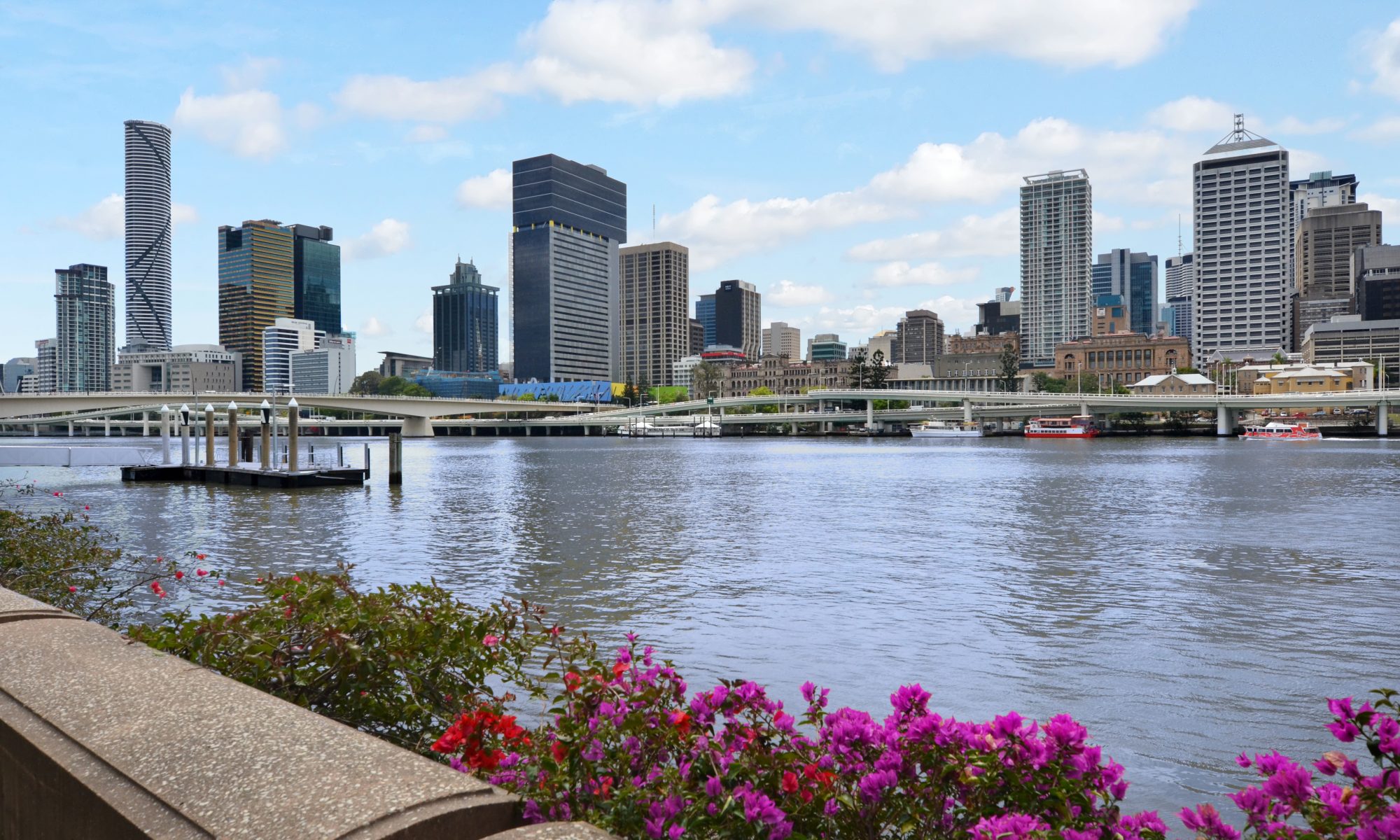
Brisbane has recorded the highest prime office rental growth in the Asia-Pacific region, with a year-on-year increase of 14.1%, according to new data from Knight Frank’s Q2 2025 Office Highlights report.
The report shows Brisbane’s growth outpaced all 23 tracked cities, ahead of Seoul (8.2%) and Bengaluru (7.9%). Quarterly, Brisbane rents rose 3.2%, trailing only Mumbai (3.5%) and Bengaluru (3.2%).
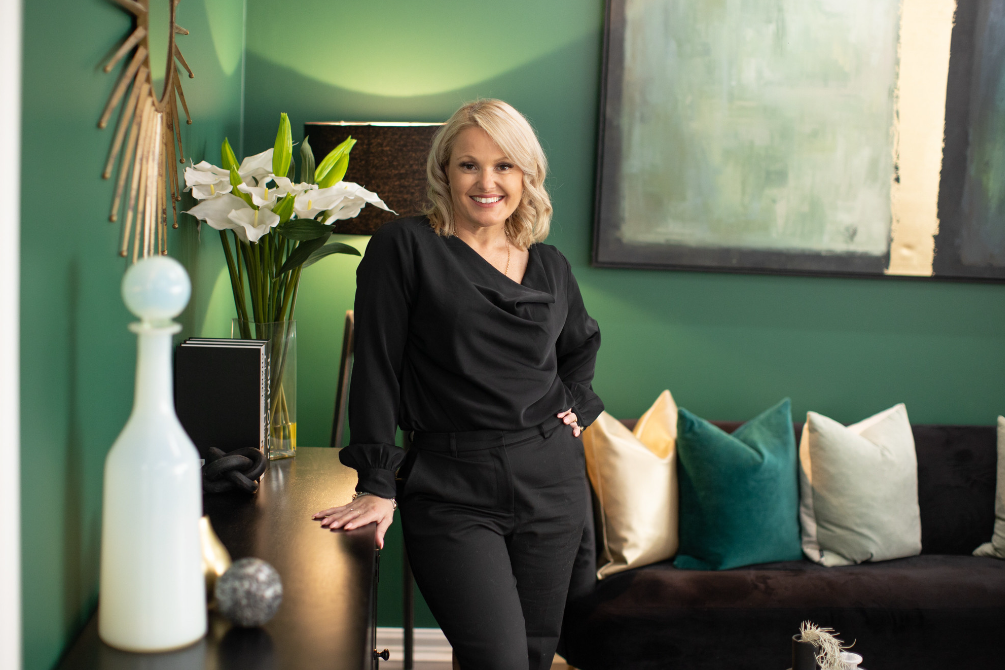
Knight Frank Partner Research and Consulting Jennelle Wilson said a lack of supply would continue to underpin prime rental growth in Brisbane’s CBD.
“The two new buildings entering the market this year will leave backfill space for lease, but little new space remains available, and no additional new supply is expected before late 2028,” Wilson said.
“Refreshed stock such as 140 Elizabeth St (9,908sqm) and 70 Eagle St (11,467sqm, 50% committed) will be available from mid-year.”
Wilson said no refurbishment projects would complete in 2026, with 450 Queen St (17,265sqm), a full building refurbishment, expected back online in H1 2027.
“The five-year forecast effective annual growth rate for Brisbane rents is 6.5%,” she said.
Knight Frank Head of Office Leasing Queensland Mark McCann noted a potential uplift in tenant movement.
“In Q2, lease volumes for tenant relocations remained low, with the exception being the sub 500sqm band, where tenants still have a large range of new and recycled fitted options to consider,” he said.
“However, we expect renewed focus from large corporate occupiers considering pre-commitments to new developments over the next six months as occupiers contemplate their new workplace environments and future needs from 2028 onwards.”
Knight Frank also forecast that Brisbane, Perth and Sydney would see further rental increases over the next year, while Melbourne rents were expected to remain stable.
In the glossy world of skincare and wellness, we often hear about the benefits of skin needling: tighter pores, improved texture, and that elusive post-treatment glow. What’s less discussed? Timing. More specifically, how the hormonal fluctuations of your menstrual cycle can impact the experience and your pain threshold, far more than the skincare forums let on.
I thought I had it all timed perfectly. I’ve done enough microneedling sessions to know that it’s not exactly a walk in the park – especially if you, like me, are the kind of person who winces at a deep tissue massage and cries a little during a bikini wax. So I planned carefully. I booked it during what I believed was a “safe” window, comfortably out of the PMS zone and well before Day One of my cycle.
Of course, my body had other plans. I woke up the morning of the appointment, cramps in tow, and immediately considered cancelling. That is, until I reread the clinic’s policy: 50% fee for rescheduling within 24 hours. And just like that, I found myself at the door, clutching my water bottle and whispering affirmations like I was about to sit an
Pain, Periods, and the Myth of the High Threshold
Let’s get one thing straight: we all have different pain thresholds. Some women breeze through labour with little more than a grimace. Others (hi, me) need to mentally prepare for eyebrow threading. But regardless of your usual threshold, during menstruation, everything changes.
As estrogen and progesterone levels drop in the days leading up to and during your period, the body becomes more inflamed, more sensitive, and, for many women, less tolerant of discomfort. You’re more prone to pain, your skin is more reactive, and even your emotional resilience takes a bit of a dip. These aren’t mood swings — they’re chemical fluctuations. And they affect everything.
That’s why, in hindsight, getting hundreds of tiny needles rolled into my face on the day my hormones hit rock bottom felt… intense.
But I wasn’t going to back out. I chose to stay. And to my own surprise, it became a moment of real resilience — not in a “push through the pain” way, but in a mindful, grounded, intentional way.
Leticia an hour after skin needling.
Breathing Through the Sting: A Masterclass in Mindfulness
As I lay back on the table, my therapist adjusted the pressure slightly and reminded me to breathe deeply, something I’ve heard in yoga studios a hundred times, but rarely applied to skincare.
At first, I distracted myself with light conversation – anything to keep my mind away from what was happening on my face. But when the more sensitive areas (cheeks, upper lip, forehead) were being treated, distraction didn’t quite cut it. That’s when I tapped into mindfulness.
I began to sync my breath with the pace of the roller: in for four counts, hold for two, out for four. I imagined breathing into the places that hurt, allowing the breath to soften the resistance. I reminded myself that pain is a wave — it rises, peaks, and passes.
And in that moment, I found something surprising: calm.
I wasn’t numbing myself or trying to “tough it out.” I was being incredibly present. Noticing the sensations, naming them (“sharp, hot, tingling”), and then letting them go. It felt like a meditation. One I hadn’t planned, but one I very much needed.
Wellness Beyond the Pretty
When we talk about wellness, we often imagine smooth transitions and well-curated rituals. But sometimes, wellness is uncomfortable. It’s showing up on a day you feel emotionally fragile and physically sore. It’s adjusting expectations, grounding into your body, and offering yourself compassion in real time.
That’s what this treatment became for me. Yes, I wanted clearer, more radiant skin – and I got that, eventually. But what I didn’t expect was to walk away with a deeper understanding of how connected my physical and emotional states really are. What we label as “low pain threshold” is often our body trying to communicate something important. And that there’s strength — a quiet, powerful kind — in choosing to stay present in discomfort.
So, Would I Recommend It?
Getting skin needling during your period isn’t ideal. Your skin is more sensitive, the inflammation response is heightened, and yes, it will likely hurt more. If you can reschedule without consequence, do it. But if you can’t, or if you choose to go ahead with it anyway, go in prepared.
Hydrate. Take paracetamol, not ibuprofen. Let your therapist know, so they can adjust their technique. And most importantly, take care of your emotional self as much as your physical one. Use breathwork to anchor you. Allow yourself to rest afterwards. And recognise that what you just did — despite the timing, despite the discomfort — was a form of self-care that goes beyond skincare.
Because wellness isn’t just about looking better. It’s about knowing yourself, trusting yourself, and supporting yourself through every phase — hormonal highs, lows, and everything in between.
Leticia Estrada Rahme is a writer, mother, and former TV journalist based in Bondi Beach. She explores beauty, mental health, and identity through the lens of storytelling and lived experience.
A rare parcel of Byron Bay is primed to hit the market this week along the glamorous holiday spot’s priciest stretch of sand – Belongil Beach.
The designer digs belong to Leah and Kurt Rettenmaier, head of digital asset investment firm Revolution Tech. The couple have listed their Byron Bay hideaway, which sits on Childe St and has two waterfronts, for $35 million with Kim Jones of Jones & Co Real Estate.
The Rettenmaiers bought an original beach house on the 1776sq m block back in 2016 for $3.6 million, according to title records, and then reimagined the unique property into a sleek boho retreat worthy of its multimillion-dollar price tag.
The three-bedroom, two-bathroom compound at 4 Childe St sits at the end of the enviable strip, which is bordered on three sides by Belongil Beach, the Belongil Creek and uninterrupted bushland teeming with native flora and fauna.
In addition to the natural neighbours, the property is also surrounded by VIP residents in the exclusive peninsula, including Chemist Warehouse boss Damien Gance and Sasha Robertson.
If the Rettenmaiers and Jones achieve their $35 million goal, the newest listing could break the Byron price barrier of $33.5 million set by the Gance-Robertsons earlier this year.
Jones is also reportedly the agent behind the current Far North Coast record of $37 million. That deal was struck when Tom and Emma Lane of Oroton handbag fame bought their property, The Range, in nearby Coopers Shoot.
The primary two-bedroom residence is home to rendered white walls with integrated shelving and statement archways reminiscent of the uniquely smooth lines of the Greek Isles. The flowing curved interiors also reflect the calming contours of the coastal landscape on the home’s doorstep.
Designed for entertaining inside and out, the property features a spacious covered alfresco area with a built-in barbecue, manicured lawns, a bespoke fire pit and a private self-contained studio with an outdoor claw-foot bathtub.
Even kids – big or small – have room to play with a fun built-in skate ramp and an expansive beachfront lawn with sweeping views over the bay, Julian Rocks and the iconic Cape Byron Lighthouse.
The dream has space to thrive with architect-designed plans for a more contemporary beach house (STCA).
Perfectly positioned for surfing at coveted Belongil Beach, or kayaking and stand up paddle boarding along the creek, the home’s prized location is within 600m of Treehouse restaurant, is a six-minute walk to the heart of Byron Bay and approximately half an hour to the Ballina/Byron Gateway Airport, or less than an hour to the Gold Coast Airport.
The dual aspect home at 4 Childe St, Byron Bay, is listed with Kim Jones of Jones & Co with price expectations of about $35 million.
The best games rooms aren’t just for kids or teens — they’re designed to bring people of all ages together for connection, fun and a little friendly competition. Whether it’s a dedicated space in a luxury home or a multifunctional retreat within your existing floor plan, the ultimate games room should be stylish, versatile and above all, welcoming.
As an interior designer, I’ve found the key to creating a truly successful games room is balancing playful energy with thoughtful design. Here’s how to build a space that entertains everyone, from grandparents to grandkids and every generation in between.
Start with your audience and purpose
Before choosing furniture or games, think about who will be using the room and how they will use it. Is it a place for after-dinner card games and drinks? A teen-friendly space for movie nights and gaming? Or a room where the whole family gathers for long weekends of pool, table tennis and classic board games?
Understanding the primary use will guide everything from layout to lighting and finishes. A multi-generational space should include zones for different types of play and relaxation.
Choose games that suit all ages
A true family games room needs variety. Include at least one traditional game that appeals across generations, such as a pool table, foosball or table tennis. These classics are always a hit and encourage movement, conversation and friendly rivalry.
Consider a dedicated console or digital gaming area for younger generations and create a nook for quieter moments with shelves stocked with board games, puzzles or cards. If space allows, add a bar or drinks trolley for adults, paired with comfortable seating for relaxed socialising.
Incorporate layered lighting
Lighting has a huge impact in games rooms. Overhead lighting is essential for gameplay, especially over pool or ping pong tables, but you’ll also want ambient lighting for mood and comfort. Add wall sconces, LED strip lighting behind shelves or smart lamps that can be dimmed depending on the activity.
If you include a screen or projector for gaming or movie nights, be sure to factor in blackout blinds or heavy curtains to reduce glare and enhance the experience.
Kellie Richardson
Opt for durable and stylish materials
Games rooms see plenty of action, so it’s important to choose materials that are both attractive and hard-wearing. Think timber or polished concrete floors, and furniture in wipeable fabrics like leather, linen blends or commercial-grade upholstery.
That said, this is still a space to impress. Introduce bold textures, rich colour palettes and eye-catching art to give the room its own personality. A statement wall, neon signage or oversized mural can add just the right amount of fun.
Include flexible seating options
Comfort is key in a multi-generational space. Incorporate a mix of seating — deep lounges, ottomans, bean bags and bar stools — so everyone can find their preferred spot to relax or play. Built-in benches with storage are another great way to maximise space while keeping things neat and accessible.
Add acoustic comfort
Games rooms can get noisy, so consider the acoustics. Rugs, curtains, padded wall panels or acoustic ceiling tiles can help reduce echo and soften sound, making the space more enjoyable for everyone.
Don’t forget storage and versatility
Games, consoles, extra cushions and accessories can quickly clutter a space. Incorporate clever storage solutions like built-in cabinetry, wall-mounted shelves or custom joinery to keep everything organised without compromising on style.
Furniture should be versatile and suit a range of different activities. Consider tables that fold out or extend to accommodate small and large numbers of players.
Final word
The ultimate games room is more than just a place to play — it’s a destination. A thoughtfully designed space that encourages togetherness, laughter and lasting memories across generations. When done well, it becomes one of the most loved and lived-in areas of the home.
Kellie Richardson is an Interior Designer and Founder of Kurved by Design
Commercial property can deliver higher yields, longer leases, and more passive income than residential. But with greater returns come greater risks. The rules are different, the stakes are higher, and one misstep can turn a promising asset into a financial burden.
Here, property expert Abdullah Nouh outlines five of the biggest risks in commercial investing and how to manage them strategically.
1. Vacancy risk
Vacancies in commercial property cut deeper than in residential. An empty building means no rent, yet you’re still footing the bill for rates, insurance and maintenance.
This is especially dangerous in oversupplied markets. In major CBDs like Melbourne and Sydney, office vacancy rates have climbed as high as 30 per cent. In such environments, landlords often need to offer high-end fit-outs or generous incentives to attract tenants.
How to minimise it: Invest in tightly held, high-demand locations. Choose properties with secure, long-term leases and flexible layouts that can suit multiple industries if a tenant moves out.
2. Weak lease structures
Not all leases offer equal protection. Some may appear strong – long-term, high rent, decent yield – but lack real security for the landlord. Some tenants can exit with minimal penalty. Others sign inflated leases that look good on sale but collapse at renewal.
How to minimise it: Scrutinise lease terms. Know how rent increases are structured, whether there are break clauses, and whether the rent reflects market conditions. Favour leases with guarantees, security deposits, or cash bonds – and always vet the financial health of the tenant.
3. Overpaying
A high yield doesn’t always mean a good deal. A 7.5 per cent return from a regional tenant in a shaky industry may be far riskier than a 5.5 per cent return from a stable, ASX-listed tenant in a prime location. Chasing numbers without context exposes you to tenant defaults, falling rents, or limited resale options.
How to minimise it: Focus on tenant quality and lease sustainability, not just the headline yield. Understand the tenant’s industry and how it might weather an economic downturn. Always base your valuation on true market rent – not inflated or unsustainable figures.
4, Market volatility
Commercial sectors respond differently to economic shifts. Retail has been hit by e-commerce, while office spaces face challenges from hybrid working. Yet some sectors – logistics, healthcare, childcare – have proven resilient.
How to minimise it: Target essential services less vulnerable to economic cycles. Stay across industry trends and adjust your portfolio as needed. Diversify across sectors and regions to spread risk.
5. Finance and liquidity
Commercial finance is trickier than residential. It requires larger deposits, stricter checks, and often hinges on lease strength, not your personal income. Selling can also be slower – especially if your tenant is weak or the lease is short.
How to minimise it: Use brokers who understand lease-doc lending, where loans are based on rental income. Buy properties with strong leases in prime locations to ensure broader buyer appeal. Always plan your exit strategy and maintain cash buffers to manage tenant turnover or delayed sales.
Commercial property isn’t for everyone – but for those who know the risks and manage them well, it can be a powerful tool for building wealth. Smart investors don’t just buy for today. They plan for what could go wrong and structure their deals to survive it.
Abdullah Nouh is the founder of Mecca Property Group, a boutique buyer’s agency in Melbourne, helping Australians build wealth through strategic property investment.
Local property icon and Far North Queensland developer, John Morris, is offloading one of his luxury villas in Port Douglas.
The 97-year-old, known as “Mr Port Douglas” thanks to his efforts in putting the coastal town on the tourism map, has recently completed a $50 million 17-villa development known as The Escapes Collection on Rachel Carson Lane in the popular holiday town.
Morris has been credited with transforming a sleepy seaside village into a thriving holiday hotspot after developing the Radisson Treetops Resort, the Toressian Resort (now known as Reef Resort Villas), and Cayman Villas.
Port Douglas’ most well-known hotel, the Sheraton Mirage, even bears Morris’s stamp after he collaborated on the development with Christopher Skase before the infamous businessman’s downfall.
Now Villa 15 of The Escapes Collection has hit the market with $7 million price expectations through Queensland Sotheby’s agent, Caroline Yarr.
The FIRB-approved residence is one of a collective developed by Morris’ family business, which counts his daughters among the team, with Janet as interior designer and Wendy in marketing.
Nine homes in collection have already sold, achieving prices between $3.65 million and $7 million. Sold to buyers from Sydney, Melbourne, New Zealand and South Australia, the glamorous holiday homes are earning as much as $2500 a night during the high season for a four-bedroom villa.
Fully furnished down to the linens and featuring hand-picked artwork by local artists, the grand residence is a turnkey property.
Several of the villas, including number 15, were designed by Gary Hunt, a renowned Port Douglas-based architect who specialises in island resorts and has lent his talents to rich lister Tim Gurner’s high profile projects such as The $250 million resort development, The Davidson on the site of the old Dougie’s backpacker hostel.
As a brand-new villa, the five-bedroom home combines bold contemporary bold aesthetics with its lush tropical setting to create a holistic Far North Queensland retreat.
Hunt’s savvy north-facing design, together with the bespoke interior design featuring unique pieces throughout, results in a modern footprint perfectly curated to its surrounds and northern Queensland climate.
The signature element of the property is its wraparound pool and all-weather alfresco spaces that seamlessly connect with inside living areas.
Inside, there are raw concrete and stone feature walls matched with spotted gum timber ceilings, as well as European oak, Italian porcelain Terrazzo and natural sisal carpeted floors.
At the heart of the floor plan, the family-friendly kitchen features Siemens appliances, an integrated fridge and freezer, Corian benchtops, and a unique Verde Luana marble splashback. For alfresco entertaining, the villa also has a complete outdoor kitchen.
Additional features at Villa 15 include a Savaria 4-person lift, Navurban sustainable timber laminate joinery, Astra Walker custom-made iron bronze tapware, Asko laundry appliances, remote-controlled blinds, pure linen curtains, ducted air-conditioning, solar panels and a double garage.
Select villas are designed by Gary Hunt, a renowned Port Douglas-based architect specialising in island resorts.
Melbourne developer and rich lister Tim Gurner have also engaged Gary on his Port Douglas developments, including three premium residences on ‘the hill’, which will set the benchmark for FNQ luxury residences, as well as the residential/resort development on Davidson Street.
Find out more about Villa 15, The Escape Collection Port Douglas at Queensland Sotheby’s, Port Douglas.
In a move that is equal parts audacious and inspired, luxury real estate group Black Diamondz has listed a newly completed five-bedroom mansion in Ryde with a reserve price of $1.
The property at 26 Clermont Avenue is anything but bargain basement – featuring four lavish levels, a concrete structure, a private cinema, a mineral lap pool, a wine cellar, a sauna and even lift access.
Meanwhile, Ryde’s median house price is hovering around $2.5 million.
“This is not just another house. It’s a showpiece,” says Monika Tu, founder of Black Diamondz. “We’re not asking the market to guess its worth; we’re inviting it to experience it.”
Spicing things up further, the sales campaign doubles as a philanthropic effort.
Tu, along with agents Courtney Wong and Blake Morris, is using the high‑profile auction to raise awareness (and funds) for the Children’s Cancer Institute as part of the 2025 Dare to Cure challenge.
“We believe in creating value beyond the transaction,” says Tu. “Shining a light on the Children’s Cancer Institute turns luxury into legacy.”
Property Highlights
Five bedrooms, four bathrooms, three en-suites
Private cinema, sauna, gym and wine cellar
Gourmet kitchen with Miele appliances and butler’s pantry
Tundra limestone, Venetian plaster finishes, mineral lap pool
Quiet street near top schools, parks and Top Ryde Shopping Centre
Whether the $1 reserve is a marketing masterstroke or the future of auction theatrics, one thing’s sure: this isn’t your average Ryde listing.
Bidding starts with a gold coin. Final sale price? That’s anyone’s guess.
Ophora at Tallawong has officially completed construction, marking a major milestone for first-home buyers, downsizers and families seeking affordable luxury with peace of mind.
It also becomes the first apartment development in the Blacktown Council area to be backed by a 10-year Latent Defects Insurance (LDI) policy and is now fully open for inspection.
The $50 million mixed-use project is being hailed as a standout offering in Sydney’s northwest, with one-bedroom apartments starting at $475,000, two-bedroom apartments from $625,000, and three-bedroom apartments from $745,000.
According to Alex Walker, Principal and project-marketing specialist at Boston Buckler Property, Ophora is delivering a level of quality and value rarely seen in today’s high-cost construction market.
“With construction costs so high, brand-new apartments priced under $600,000 basically don’t exist anymore,” Walker said. “Buyers who’ve walked through these completed homes have been gobsmacked by what they’re getting for the price.”
Unlike many new developments that are still selling off-the-plan, Ophora is now move-in ready, allowing buyers to see exactly what they’re purchasing before signing.
“You can walk through today and see everything for yourself,” Walker said. “Fully ducted air-conditioning, timber floors, fridge cavities with water plumbing, premium finishes throughout. Plus, the communal areas are absolutely amazing. There are landscaped rooftop spaces, shared gardens, EV chargers and more.
“Our closest competition is around $150,000 more for a new apartment. You simply won’t see this level of value again.”
Developed by KDMC and designed by Architex, the five-storey building includes 81 one-, two- and three-bedroom residences. It has been created with a focus on sustainability, liveability and long-term confidence, which is where the LDI policy comes in.
LDI, typically only available on luxury builds, covers structural defects for 10 years after completion. The policy is offered selectively and only to developers and builders with strong track records.
“Gaining LDI is no mean feat,” said Stefan Hicks, founder of SHC Insurance Brokers. “It’s offered selectively to developers and builders with a strong building history, and it requires both parties to employ independent inspectors throughout construction.”
Already used in more than 40 countries, LDI is increasingly being adopted in New South Wales as part of the state’s push to rebuild confidence in the construction sector. But it remains rare, especially in this price bracket.
“The fact that Ophora has joined this exclusive list of quality-assured builds is a coup for entry-level home buyers,” Hicks added.
Ronnie Rahme, Development Manager at KDMC, said LDI was part of the team’s mission to raise the standard for what buyers should expect, regardless of budget.
“We’ve been determined to deliver affordable luxury apartments built to an outstanding standard — with additional peace of mind for buyers via the highly sought-after LDI,” Rahme said.
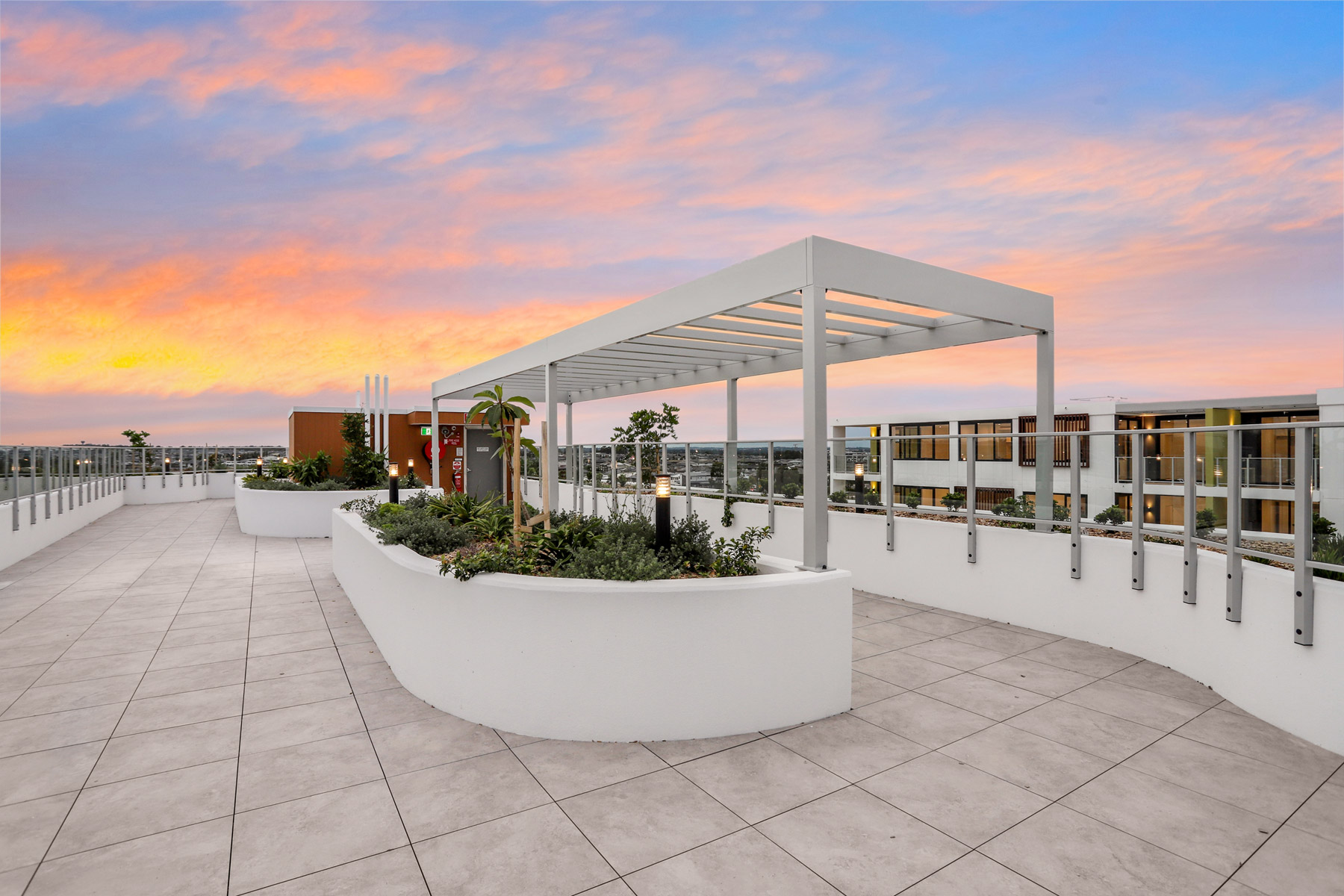
In addition to the high-end finishes and certification, Ophora includes FIBRE internet, video intercom systems, EV charging stations, landscaped gardens, ground-floor courtyards, and a rooftop terrace with sweeping views.
Perfectly located on a corner block just minutes from Tallawong Metro Station and Schofields train station, the development also offers enviable access to transport and future growth corridors, including the Western Sydney Airport.
Ophora is expected to appeal to a wide range of buyers, from young families and couples to investors and downsizers seeking long-term value.
Ready to elevate your lifestyle? Contact Ophora to arrange a private viewing or request more information.
Kelli Maple tenderly sets her bundle of joy, Naomi, into a Nuna car seat and drives her to the mall.
When they arrive, Maple, 23, places little Naomi, dressed in a onesie and hair bow, into a high-end stroller (complete with a portable sound machine, stuffed animal and a pacifier). Giggling, Maple and Naomi shop for tiny clothes.
Most passersby would mistake them for a typical mother and daughter.
But Naomi is not real.
She’s a lifelike “reborn doll.” These collectable baby dolls, which can run up to $10,000 apiece, have been around since the early 2000s, but in recent years they’ve exploded into a global phenomenon.
Collectors, who consider themselves parents, shell out for luxury baby gear and dote on their reborns as if they were human children.
In Brazil, they’ve become a lightning rod in recent months, with politicians introducing bills to try and ban the popular dolls from public places.
The reborn doll world is hidden in plain sight in the United States.
It’s a cottage industry, with amateur crafters hand-moulding and painting dolls in their basements. The process, especially for the more verisimilitudinous silicone dolls, is labour-intensive, including painting delicate pale-blue veins onto their soft peachy skin and hand-rooting individual goat or alpaca hairs into their scalps and eyebrows. The result is uncanny.
When I told a dollmaker that I’ve never seen someone carrying a reborn in New York, she smiled knowingly and said, “You have.”
Detractors find the dolls creepy, and some owners say they are taunted by families and online bullies.
What these critics misunderstand, collectors say, is the therapeutic potential of the dolls.
Women who have lost babies or experienced miscarriages are comforted by reborns. The dolls can also soothe women with post-traumatic stress disorder, Alzheimer’s, dementia and autism.
Britney Spears, who said she had a miscarriage, has been seen carrying a doll. Some women are fanatic collectors, amassing dozens if not hundreds of dolls and posting online videos of diaper changes and trips to the park. Children and teens play with them. Hollywood snaps them up as stunt babies.
At the Dolls of the World fair this June, around 1,500 participants—and their dolls—came together in a convention centre in Greensboro, N.C., where vendors sold accessories such as perfumes meant to make the dolls smell like real babies.
“People think it’s insane because it’s a doll,” said Hannah Hammond, 21, a teacher in Hampton, Va., who collects reborns. “But it’s just like any other hobby.” When we met, she offered to let me hold her prized silicone doll, Evie, then winced at my technique: “You have to support her head.”
Babies Who Never Cry
Maple is one of the stars of the reborn doll world, with over 2 million subscribers to her YouTube channel and selling her dolls for thousands of dollars.
At the Dolls of the World expo, she was mobbed by fans for selfies and autographs.
She had spent months in the room she calls her “nursery,” putting the finishing touches on babies to sell at her booth at the fair. “There are heads and limbs everywhere—it can be a little scary,” she said.
Awareness of the dolls is at an all-time high. “It’s just getting bigger and stronger,” said Dave Stack, the founder of Reborns.com, one of the largest marketplaces for handmade dolls. He charges $30 a month for makers to sell their dolls on the site, and has around 600 paying members.
Many of those makers were at the fair in North Carolina, one of a handful of American events where enthusiasts and dealers can buy and sell dolls, and take classes in the art of dollmaking. At evening events, women trade gifts like pacifiers and doll outfits, and awards are bestowed to the top artisans.
The doll fair was one of three conferences taking place at the same sprawling Sheraton complex. Over the course of one sweltering summer weekend, the doll people rubbed elbows with the brawny participants in the World Ninja League championships and the conspiracy theorists of the Cosmic Summit.
“We all thought they were real babies until we did not hear any crying,” marvelled Cosmic Summit attendee Ocean Norris while taking a smoke break. Her friend Angela Simmons of Pinehurst, N.C., said she was “shocked” to see the babies being handled like real babies.
“Unfortunately, we get a lot of hate in the doll community,” said Sally McMahon of Massapequa Park, N.Y., who dressed in a fairy outfit and showed off her rabbit-human hybrid doll.
This is part of a subset known as “fantasy dolls”—creatures such as chimp-human hybrids, blue-skinned lizard elves, and tiny-horned satyrs. “They say, ‘Oh my God, these crazy doll people.”
For the doll lovers, from small children to senior citizens in wheelchairs, the fair is a rare safe space for them to revel in their hobby.
Many of them budget the entire year to be able to pay cash for four-figure dolls and accessories (“I plan on spending a kidney, a lung and part of my liver,” joked attendee Mel Harrison on Facebook).
They clamoured around the reborn world’s niche celebrity doll artists, like Maple and the British duo Samantha Gregory and Nikki Johnston, asking for autographs and selfies. All around the hotel, groups clustered, with women and children passing babies around.
While reborn lovers find them comforting, the outside world often perceives them as terrifying. The Apple TV+ show “Servant,” which ran from 2019 to 2023, dramatised the spooky nature of reborn dolls.
Maggie Barnes, 12, from Clayton, N.C., showed me her new doll: Fang, a miniature werewolf. Barnes said she liked coming to the fair because “People are not judgmental at all.” Her mother, also a doll fan, purchased the $1,000 doll for her as a gift.
Although the best-known use for reborn dolls is as a comfort following infant loss and miscarriage, plenty of kids, as well as mothers and grandmothers of real children, collect the dolls. Keith and Dia Harris, 63 and 51 of Suwanee, Ga., have five children and seven grandchildren, and attended the fair with a baby reborn and a 6-year-old reborn.
Keith, hoisting the bigger doll around in a carrier, was one of the many supportive husbands at the fair. At their home, the Harrises have a nursery for their reborns with bunkbeds, which their grandkids share with the dolls when they visit.
Another grandmother, Holly Church, came to the fair to purchase a $3,200 green-skinned fantasy doll to add to her collection. Her husband was building a “she shed” in their backyard in Texas to house the dolls. She said that her eldest son didn’t understand her passion. “I say, ‘You don’t have to get it. You just have to respect it.’”
Church’s friend Mia Martone, a spiritual advisor in East Meadow, N.Y., purchased a $6,000 silicone reborn named Lucy at the fair. While she has grandchildren who visit, she said, “Sometimes I just want one that doesn’t cry.”
Reborns can help people heal from trauma. Katherine Hansell of St. Charles, Mo., cares for Crystal, her adopted adult daughter who experienced horrific childhood abuse. They use a reborn baby named Crystal to model love and care. “We say that this Crystal was never hurt,” said Hansell.
A Labour of Love
Making dolls can be an emotional job.
Dorothy Blue, a reborn dollmaker who works out of a basement studio in Dardenne Prairie, Mo., said that working with women who’d gone through infant loss and wanted a replica could be fraught. Sometimes, their vision of what the doll should look like could be hard to capture. “To be blunt, a deceased baby looks like a deceased baby,” said Blue.
Well-made silicone dolls can easily sell for over $5,000, because the labour that goes into them is significant. Most dollmakers start with a basic kit from one of the online retailers such as Bountiful Baby.
Then they personalise it through a painstaking process of tweaking and painting, often in dialogue with the client, who may have photos of what they want the doll to look like. Vinyl kits usually start around $100 and silicone kits run about $200. With products including paint, finishing powder, glass eyes and hair, the supplies for one doll can easily run over $500.
America has a long tradition of resourceful women cobbling together careers from home. Like selling Mary Kay beauty products or Tupperware, dollmaking can be a way to make money without a fancy education, or even consistent childcare.
Few people have gotten rich from the doll world, because it’s such a splintered, handmade process. But Nevin and Denise Pratt of Bountiful Baby in Salt Lake City are titans in the reborn community.
In 2000, Denise’s doll making spurred the duo to begin making moulds, which grew into a significant doll supply company. At its height in 2019, the company says its revenue was over $5 million. It’s 40% less today, which they attribute to a volatile economy and Chinese-made knockoff dolls and parts sold on sites like Amazon and Alibaba.
This year, Maple only sold three of her handmade dolls, compared to five at the last fair. “Sales have been down all year because of the economy.”
But for Maple and others in the reborn doll industry, it’s much more than a business. “I’ve gone through lots of different emotional things throughout my life and the dolls have definitely helped with mental health a lot,” she said.
Johnston, the British dollmaker, compared reborn dolls to Marmite, the divisive yeasty spread: “You either love them or you hate them.”
Google’s parent company reported a 14% jump in year-over-year revenue, driven by growth in its cloud and search divisions that was tempered by heavy spending on artificial intelligence.
The parent company, Alphabet , had record sales of $96.4 billion in the second quarter but also said capital expenditure expectations for the year would increase by 13% to about $85 billion. That compares with $52.5 billion in 2024.
Alphabet’s shares rose by more than 1% in after-market trading.
Google Chief Executive Sundar Pichai and other tech executives have poured tens of billions of dollars into AI development over the past few years as part of the broader AI boom . Much of that money has gone to build new data centres to develop and run AI models.
Google’s results were the first in a series of quarterly tech earnings, with Microsoft, Apple, Amazon and Meta Platforms reporting next week. Investors are keeping a close watch on spending levels at most of the biggest companies, which have ballooned as they seek to stay ahead in an escalating AI arms race.
Google’s results are unique in that its cloud division, which sells computing power in data centres, is a beneficiary of the AI boom, while its search business faces threats from users who are migrating toward AI products such as OpenAI’s ChatGPT.
Other areas of the company are spending at a fast clip to bring AI tools into its popular products like search and YouTube.
The cloud unit brought in $13.6 billion in second-quarter revenue. That was up 32% from the previous year, compared with 28% in the first quarter.
Alphabet reported total ad sales of $71.3 billion in the second quarter, an increase of 10.4% from the same period a year earlier. Google’s search division, which is core to the advertising business, grew 11.7%.
MoffettNathanson analyst Michael Nathanson said Google executives helped to allay shareholder concerns about the future of its search business, even if traffic volume declines.
“What people worry about is just the math around search,” he said. “Isn’t AI going to be a negative to search? And they went out of the way many times on the call to say, ‘That’s not what we’re seeing.’”
Google has for years been working to cut costs to help fund AI spending. The company at several points this year extended voluntary buyout offers to employees in multiple divisions.
To get ahead in the AI race, Google has been improving the capabilities of its own AI model and chatbot, known as Gemini, and adding AI features to many of its products. In May, it overhauled its classic search engine with the U.S. introduction of “AI Mode,” which answers search queries in a chatbot-style conversation with fewer links.
Investors have expressed concern about the potential outcome of an antitrust lawsuit targeting Google’s search dominance. A U.S. district judge overseeing the case is expected to rule next month on whether he should impose limits on Google, including putting curbs on how it competes in AI.
The decision will come after a monthslong trial that dealt extensively with just how much new AI players may erode Google’s search monopoly.
The Justice Department, which brought the case against Google in 2020, has proposed forcing the sale of its Chrome browser, preventing Google from being able to pay Apple to be its default search engine and requiring it to share data with competitors.
When actor Burt Reynolds was filming what would become the 1972 hit “Deliverance,” he fell in love with the Georgia wilderness in which it was filmed.
The film would mark his breakthrough onto the big screen, after his tenure as a television star in Western shows like “Gunsmoke” and “Hawk,” and he became one of the most famous actors throughout the 1970s and ’80s
About a decade after “Deliverance,” at the peak of his career, he purchased a home in the Blue Ridge Mountains just across the border in Highlands, North Carolina, according to previous reporting.
The 1970s home was designed by modernist architect Jim Fox, whose signature blend of simplicity and flair can be seen in the home’s flared roofs, glossy wooden interiors and suspended wraparound deck.
The home, which has traded hands several times since Reynolds sold it in the 1990s, is now back on the market asking $3.699 million with Jody Lovell of Highlands Sotheby’s International Realty.
Located on a 0.9-acre lot on King Gap Road, the three-bedroom home stands within the Nantahala National Forest at the far edge of a subdivision, giving it unobstructed views of the surrounding forests and the blue mountain skyline.
The house is designed to integrate into the surrounding nature. Photo courtesy of Highlands Sotheby’s International Realty
The home looks like a cross between a tree house and a yacht, with curved wood-clad ceilings, wood-panelled walls and floors, and wooden built-in furniture. The prevalent wood is balanced by large glass windows and stone walls, including a double-height stone monolith that centres the home.
The uniquely shaped home features a main level, an upper level and a lower level. The main level includes the common spaces, including a sunken living room with a half-circular couch facing the stone fireplace and a large, wood-framed window wall that slants over the garage.
The lower level includes a games room, office, wine cellar and an extra stone bathroom that Reynolds’ then-wife Lori Anderson built for the actor, according to Lovell. There is still an inscription on a painted wall in the “man cave” that Anderson wrote for him, signed in 1991.
The house was designed by modernist architect Jim Fox. Photo courtesy of Highlands Sotheby’s International Realty
In the early 2000s, the owners at the time hired the Highlands-based Fox to add an expansion, including a terrace with a stone fireplace, a plunge pool and waterfall. That’s in addition to a wraparound deck that extends from the main level as if suspended over the mountains, surrounded by minimalist green railings.
The sellers, who couldn’t be reached for comment, purchased the property in July 2024 for $2.975 million, above the asking price, and after only a few days on the market. Due to unforeseen health issues, they are looking to unload it sooner than expected, Lovell said.
Highlands, located in the southwest corner of North Carolina, is a popular vacation spot in the South because of its surrounding natural beauty and milder mountain climate. Since the pandemic, it has received a surge of interest from further afield.
“Deliverance” was filmed in Rabun County, Georgia, the pointed northeastern of the state, which juts into North Carolina and borders South Carolina.
Australian real estate is showing signs of a comeback, with new data revealing accelerating returns across all major property sectors and improving investor confidence.
The latest Q3 2025 Australian Real Asset Review from Dexus Research highlights a positive shift in momentum, driven by falling interest rates, stabilising vacancy rates and renewed business sentiment.
The report suggests that the market may be transitioning from a period of “Fear of Acting Too Early (FATE)” to “Fear of Missing Out (FOMO)” as capital begins to flow back into real assets.
Unlisted property funds are leading the resurgence, posting their strongest returns in two years in June 2025, particularly in retail and industrial.
Dexus forecasts sector-wide returns exceeding 7% per annum within the next 12 months, buoyed by positive revaluations and rising deal activity.
In the office sector, the Sydney CBD appears to be entering a classic recovery cycle.
For high-quality assets, capitalisation rates are believed to have peaked, vacancy rates are levelling off, and rental growth is back on the rise. With demand strengthening and limited new supply, Dexus says this could mark a rare window of opportunity for investors.
Retail property is also showing signs of renewed strength, helped by real wage growth and declining mortgage rates. CBD vacancy rates have dropped and rents are firming, especially in regional shopping centres.
Meanwhile, infrastructure transaction volumes rose significantly in Q2 2025, with renewed focus on renewable energy and battery storage projects.
Government spending is playing a major role, with the Federal Government’s $60 billion infrastructure pipeline and various state initiatives expected to drive new project originations into 2026.
Overall business confidence is improving, even amid a sluggish broader economy. Falling inflation, political stability, and a rising equities market are contributing to stronger leasing expectations in the second half of the year.
“Global uncertainty continues to influence sentiment in capital and occupier real asset markets,” said Peter Studley, Dexus Head of Research.
“However, with interest rates falling and supply constrained, there are compelling reasons to expect stronger real estate returns in the months ahead. The big question is, how quickly will the tide turn from Fear of Acting Too Early (FATE) to Fear of Missing Out (FOMO) for real asset investors?”
A quirky wooden Queensland hilltop home has hit the market with a converted train carriage on site.
The five-bedroom two-bathroom property at 52 Ray Booker Court, Kobble Creek in Moreton Bay is being marketed by Vicki Pain, selling principal at Ray White Rural Dayboro and Eumundi.
Ms Pain has been selling real estate in the area for the last 20 years and said it was the first time she had listed a property with a train carriage.
“This home is very unique,” Ms Pain said. “It’s not often something like this comes to market – there’s certainly some charm and uniqueness to this property.
“It is only 42km from Brisbane’s CBD and creates one of the best lifestyle property markets, attracting retirees looking for space or families with great schools and an excellent local community.”
Known as ‘Twin Peaks’, the property is owned by Peter and Zena Martin, who lived there for 15 years before moving to Agnes Waters for a change of lifestyle.
Mr Martin said the converted train carriage was always a talking point among those who drove past or visited their home.
“I was running my own business from home and started with one bedroom being converted into an office,” Mr Martin said. “Converting a shed was an enormous amount of money so I found the train carriage online.
“There’s a lot of history to it – it’s an original staff sleeper carriage, number 1471, from Queensland Railways’ The Sunlander (1952) which now sits at the front of the property with privacy hedging.”
Mr Martin said the carriage had top and bottom bunks; however, the bottom bunks were removed and replaced with custom-made desks.
He said the original bunks were still in storage at the property.
Mr Martin also had a wall cut out within the carriage to make it a meeting room with five offices.
He said another young family would be best suited to the “quirky wooden home”.
SINGAPORE: The gala felt straight out of the movie “Crazy Rich Asians.” In this tropical-island nation famously dense with millionaires, 600 guests gathered in September 2023 to fete one of Singapore’s most prominent success stories: the property empire that owns the global Millennium hotel chain and the Biltmore Los Angeles.
The politicians, business leaders and foreign envoys in attendance heaped praise on the company’s octogenarian executive chairman, Kwek Leng Beng , who built a family fortune estimated at $11.5 billion and made deals with the likes of Donald Trump. Guests at the black-tie dinner savoured abalone, bird’s nest soup and lobster, while dancers and musicians performed on a stage.
At the head table, the tycoon, clad in a blue tuxedo, reigned with his wife, Cecilia.
But there was another woman in the ballroom, wearing a red dress, whose presence wasn’t welcome to some in the family.
Catherine Wu, a Juilliard-trained pianist and former television host in her native Taiwan, was well-known to company executives for her close relationship with the chairman. Senior executives had long bristled at what they saw as her interference in the hotel business, according to people familiar with the matter. But until this moment, she had largely shunned the limelight and avoided public company events. The internal complaints about her outsize influence remained unknown to the public.
Now Wu was thrusting herself into the spotlight, introducing herself to the dignitaries—including Singapore’s prime minister-in-waiting—and posing for photos with them. Onlookers blanched. People sympathetic to Cecilia Kwek and concerned about Wu’s influence at the company thought Wu, by attending the gala, had crossed a line.
Earlier this year, the tensions that seethed at the event burst into the open.
The chairman’s elder son and chosen successor, Sherman Kwek, 49, and his allies moved to add new directors to the board, a manoeuvre he later said was meant to eliminate Wu’s influence at the family business, called City Developments Ltd., or CDL for short.
Kwek Leng Beng, shown here in April, oversees a family fortune that Forbes estimated last year to be worth $11.5 billion. Photo: Lionel Ng/Bloomberg News
“She has been interfering in matters going well beyond her scope, and she wields and exercises enormous influence,” Sherman Kwek said in a statement on behalf of the majority of the board, issued in February after the feud erupted into public view. “Due to her long relationship with the chairman, efforts that were made to manage the situation were done sensitively, but to no avail.”
Kwek Leng Beng fought back by trying to dismiss his son as chief executive and suing him for allegedly trying to usurp power—something that Sherman denies. The elder Kwek later said Wu had contributed to the business’s success and decried his son’s “unproven insinuations.”
Wu, in her first public comments on the matter, told The Wall Street Journal in an email this month that her relationship to the chairman was “purely professional.” She said the elder Kwek had “asked for and considered my feedback on business ideas,” adding that she had “had no role in the decision-making process” at CDL. She said the dispute was between board members and “has nothing to do with me, although some parties have used my name to stoke the flames.”
Weeks after the clash, the sides agreed to a truce. The public warring had done no good for a company dealing with high debt and a lacklustre share price.
In March, the elder Kwek announced Wu’s resignation as an adviser at CDL’s hotel subsidiary and dropped his lawsuit. His son remains CEO, backed by additional allies on the board and a company resolution declaring that Wu has no power to influence or direct management and staff at CDL and its hotel business.
But Wu is still in contact with one person at CDL: the 84-year-old chairman. People at the company say the elder Kwek and Wu, who turns 66 this month, have recently been seen meeting at CDL-owned properties. It means, the people say, that the saga is far from over.
Strictly business
Just north of the equator, six million people swelter in a city-state about a quarter of Rhode Island’s size. A disproportionate many are millionaires, and some of Singapore’s richest residents are members of family businesses that predate the nation’s 60 years of independence.
As Singapore transformed from a colonial outpost into a hub of prosperity, the Kwek clan was there to help build it every step of the way.
Kwek Leng Beng’s father, Kwek Hong Png, started a construction-materials store in 1941, when Singapore was a British colony. Kwek Leng Beng joined the business in 1963 and was given stern training by his father, as he and Cecilia recounted in an authorised biography, “Strictly Business.”
When the couple were dating, Kwek Leng Beng’s father imposed a curfew. “The old man wanted him to be in bed by 9 p.m.,” Cecilia said in the biography.
Kwek Leng Beng and Cecilia, both London-trained lawyers, wed in 1970. They spent much of the next few years in Singapore in the lobby of the company’s first hotel, where she’d drink hot chocolate while he quizzed staff about occupancy rates and mingled with guests for feedback, the biography said.
By the 1990s, Kwek was in charge of a flourishing family business that would eventually expand to more than 150 hotels worldwide, including Millennium hotels in New York and London. It controlled so much real estate in Singapore at one point that he was dubbed “Kwek Land Bank.”
As part of a venture with a Saudi prince, CDL bought New York City’s Plaza Hotel, the iconic establishment next to Central Park that’s played host to royalty, presidents and the fictional Kevin McCallister in the 1992 movie “Home Alone 2.” They paid $325 million to buy it from Trump in 1995, and then sold it nine years later for $675 million. In the mid-2000s, Kwek advised Las Vegas casino magnate Sheldon Adelson on building the Marina Bay Sands casino resort in Singapore. Today, it is a symbol of the island nation’s skyline.
Eyes and ears
As the years went by, an adviser by Kwek’s side became impossible for insiders to ignore. Catherine Wu, who holds a doctorate in music from New York University, was in her early 30s when she met Kwek in 1992 at a dinner party. She was well-known in Taiwan as a TV host and pianist, having released albums under the name Ingrid Wu with tracks such as “His Lover” and “I’ll Decide Before Dawn Whether I Love You.”
At the dinner, Kwek quizzed Wu about politics, economics and music “to see if my mind was flexible and if my answers were consistent,” Wu told a Singaporean newspaper last year. “Fortunately, I answered articulately.”
Catherine Wu released piano albums in Taiwan under the name Ingrid Wu. Photo: Chun Han Wong/WSJ
Wu decided to move to Singapore that same year, she told the newspaper, saying she wanted to escape attention by relocating to a place where she wasn’t well-known, and that the city-state’s East-meets-West vibes suited her. In her email to the Journal, Wu described music as her former career and said she had spent 30 years in business amassing professional achievements.
Kwek invited her to hotel-management meetings and events. “The chairman would scold me from time to time, but I wouldn’t take it to heart,” Wu said in the newspaper interview. “If a successful person is willing to put in the thought and energy to scold you, it means you are teachable.”
Paid not by the company but by Kwek himself, Wu acted as the chairman’s “eyes and ears” and often accompanied him to visit properties around the world, according to a 2018 U.K. labor tribunal ruling. The tribunal was investigating a dispute involving a former employee who accused a CDL subsidiary of unfair dismissal and other wrongdoing, a case the tribunal dismissed.
Some executives and employees—including people who later left the company—bristled at Wu’s conduct, filing complaints against her both internally and to a Singapore government-backed agency, according to people familiar with the matter. These complaints included allegations that Wu berated staff, meddled in business matters beyond her remit and used the elder Kwek’s name to rubber-stamp her decisions, the people said.
Sometimes, executives believed that business decisions they thought had been approved by the chairman were later overruled by Wu. In one instance cited in the complaints, the people said, Wu got the company to halt planned renovations to a hotel in London near the Harrods luxury department store, even though management believed the project would boost revenue and had spent years preparing for it.
Many employees came to believe that Wu was sometimes using one of the elder Kwek’s corporate email accounts to send instructions in his name, people close to CDL said. They said these employees learned to recognise what they believed to be Wu’s imprint on such emails—a more formal and detailed writing style, compared with the elder Kwek’s curt approach, and the signature “Sent from my iPad,” which was notable because the chairman wasn’t known to use an iPad. Kwek declined to comment, while Wu didn’t respond to requests for comment about this matter.
According to the people, some executives expressed unease when one of Wu’s six brothers, a former journalist for a Taiwanese television network, became general manager of the Biltmore Los Angeles in 2018. He had little experience in the hospitality industry, apart from a short stint as a business-development executive in CDL’s hotel subsidiary.
During the brother’s stint as general manager, he, the hotel and a company affiliated with CDL’s hotel subsidiary faced lawsuits from former Biltmore employees over allegations that included discrimination, harassment and wrongful termination, according to court papers. These cases have generally been settled out of court, according to court documents and people close to CDL, and the company didn’t make any public admission of wrongdoing. The brother has stepped aside as general manager and remains an owner’s representative—a supervisory role that oversees the hotel’s operations and liaises between its owner and management.
The brother didn’t respond to requests for comment.
The heir
Senior executives tried for years to persuade Sherman Kwek, the designated successor to the elder Kwek, to directly address the tensions over Wu, say insiders.
Sherman Kwek didn’t see much of his father as a child, as he recounted in his dad’s biography. After studying business at Boston University, he worked in venture capital and investment banking in New York before his father brought him to the family business.
Sherman Kwek had his own issues to deal with. After becoming CDL’s CEO, he had spearheaded a 2019 investment in a Chinese developer that went sour and led to a $1.4 billion write-down. “I wanted to hide my face in the sand” and came close to resigning, he recounted in a speech last year. “I went from hero to zero overnight.”
The younger Kwek retained his father’s support then and went on to strike profitable deals divesting some commercial properties, but he still faced scepticism from investors.
Sherman Kwek and his allies thought they had eased Wu out of the picture when she resigned as a director of CDL’s hotel subsidiary in January 2024, people close to the company say. But in August that year, Wu rejoined the subsidiary as an unpaid board adviser and the Singaporean newspaper published its interview with a headline that called her the elder Kwek’s “grand chamberlain.”
Wu’s return stunned some senior CDL figures and board members, who had to try again to remove her from the business, people close to the company say. They first appealed to the elder Kwek to act, and then—after seeing no results—initiated a move in late January to add new independent directors to the CDL board, the people say.
These efforts eventually led to the public feuding, which drew breathless coverage from local media that documented the boardroom spat blow-by-blow.
Following the truce earlier this year, after which Sherman Kwek continued as chief executive and his father as chairman, Wu now has no official title at the company.
Sherman Kwek remains in the hot seat, facing market pressure to execute plans to pare back CDL’s debt and lift its share price, which still languishes below prepandemic levels.
Singapore in the 1940s. The Kwek family has helped transformed the city over the past several decades. Photo: C P May/ClassicStock/Getty Images
Watching over him is his father, who remains a revered figure at CDL overseeing a family fortune that Forbes estimated last year to be worth $11.5 billion. The elder Kwek has maintained his contacts with Wu, whose protégés still hold positions in the hotel business, according to people close to CDL. One of these people says the company is looking into past complaints against Wu. This week, CDL said a long-serving board member, who sided with the chairman during the feud, will retire from the board at the end of July.
A CDL spokesman said Kwek Leng Beng, Sherman Kwek and the company declined to comment.
Both father and son continue to go into CDL’s headquarters at Republic Plaza, a soaring 66-story skyscraper in Singapore’s business district.
At a public space there, a holographic painting that Sherman Kwek presented to the elder Kwek at the 2023 gala—depicting either the grandfather Kwek, the father or the son depending on the viewing angle—remains on display. Next to it stands a piece of Chinese calligraphy penned by one of Wu’s brothers, which says, “Three generations of blood and sweat, six decades of honour and glory.”
The Brisbane apartment market has really come of age in the last few years.
Downsizers in particular have identified the apartment market as undervalued, due to the limited amount of new supply coming to the market in the Queensland capital.
This is primarily due to build cost escalation and the limited availability of builders, which is constrained by government infrastructure projects associated with the Brisbane 2032 Summer Olympics.
Those downsizers are descending on the most premium apartments at the top end of the tower. These penthouses are more akin to those found in Sydney and Melbourne, rather than their Gold Coast neighbour, prioritising view lines of the skyline rather than private rooftops.
From apartment-laden precincts like Newstead to a rare offering in Highgate Hill, we’ve wrapped up the top five penthouses on the market in 2025.
Upper House, South Brisbane. Developer: Aria Property Group
Award-winning developer Aria Property Group is offering one of the penthouses atop its multi-award-winning Upper House in South Brisbane. The four-bedroom penthouse, completed in 2024, crowns one of the first buildings in Brisbane designed by legendary Japanese architect Koichi Takada.
The 253 sqm apartment features 3.1m coffered ceilings, hand-blown lighting, and a sculptural stone wine bar. The chef’s kitchen includes integrated Gaggenau appliances, a Pitt cooktop, Sub-Zero fridge, butler’s pantry, and wine fridge.
The layout features four bedrooms (one configured as a media room) and a lavish master suite with custom timber panelling, a skylit wellness-style en-suite, and a gallery-style robe with a makeup station. The three parking spaces include an EV charger.
Upper House is one of Brisbane’s most iconic buildings, recognisable for its signature gold pergola known as The Nest, the largest structure of its kind in the world, comprising more than 681 individual cross-laminated timber pieces atop the 33rd level.
The building’s 32nd and 33rd levels house resident amenities, including an infinity-edge pool, spa, magnesium plunge, sauna, steam room, yoga studio, wine bar, private dining room, cinema, and a boardroom.
Luminare, Newstead. Developer: Cavale
The corner penthouse atop the Luminare building in Newstead is poised to become the 10th sale in the development to surpass the $5 million mark.
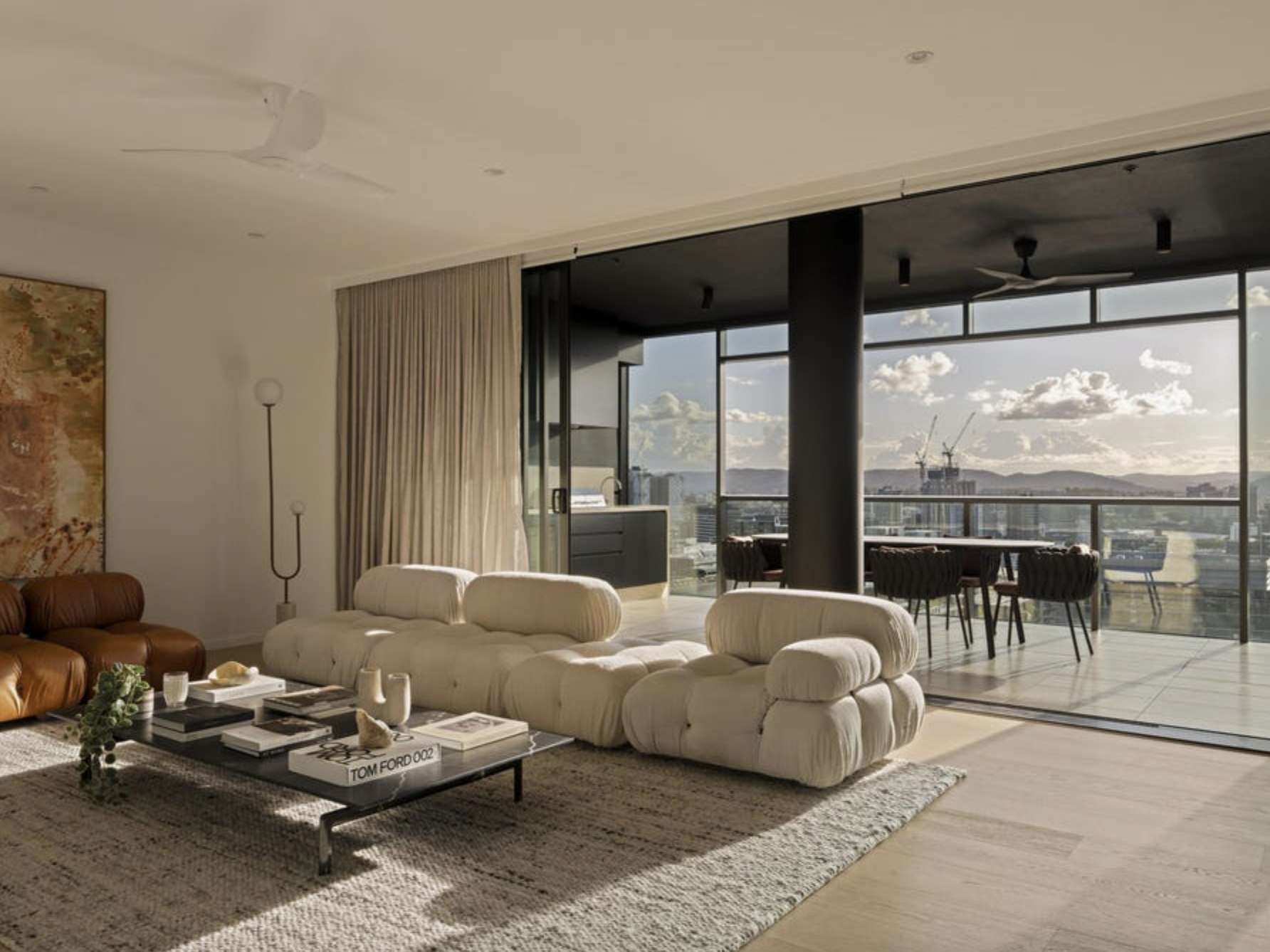
Sky Home 2302 offers uninterrupted views from Mt Coot-tha to the city skyline, thanks to its expansive 40m north-facing frontage. The penthouse spans 262 sqm of internal and external space and includes four bedrooms, two living rooms, and a study nook.
At its heart is a 5m Taj Mahal quartzite island, framed by a full suite of Miele appliances, Zip Tap, and concealed prep kitchen. A 330-bottle wine cellar, integrated bar, and outdoor kitchen with Hoshizaki ice machine complete the entertainer’s layout.
The master suite occupies its own wing and features floor-to-ceiling windows, a full-height walk-in robe, an ensuite with freestanding bath, and a unique “midnight kitchen” with minibar for skincare and wellness essentials.
Completed in 2023 and crowned Best Residential High-Rise in Australia at the Master Builders Queensland Awards, Luminare also leads Brisbane’s wellness evolution.
Residents enjoy access to cryotherapy, reformer Pilates, nutrition and sleep programs, rooftop horticulture workshops, and dog grooming. Atop the building sits Australia’s highest cantilevered glass-edge pool, magnesium spas, saunas, and a $300,000 Technogym facility.
High-profile residents include Domino’s Pizza boss Don Meij, who is believed to have set a city price-per-sqm record with his $12.95 million purchase, and Vita Group founder Maxine Horne.
The penthouse atop one of Hamilton’s newest developments is among the largest delivered in Brisbane in recent years. Perched atop Rivello on Wharf Street, this five-bedroom residence offers 438 sqm of internal space and a further 124 sqm across three balconies.
At its core is a gourmet kitchen with a stone benchtop, Gaggenau appliances, and a generous butler’s pantry.
The adjoining dining area, main living space with statement fireplace, and secondary living room with wet bar and Liebherr fridge provide ample entertaining options. A full-width main balcony maximises riverfront exposure.
Additional features include a dedicated cinema with seven seats, home gym, full home office, and five ensuited bedrooms — all expertly finished to a luxury standard.
Noura, Highgate Hill. Developer: Walter Iezzi Property Group
Arguably the most impressive apartment developed in Highgate Hill, the Noura Penthouse is now complete and on the market, with expectations that it will set a new suburb record.
Occupying the entire top floor of a boutique six-residence building on Beaconsfield Street, this sky home offers the largest external area on this list, with nearly 200 sqm of outdoor living.
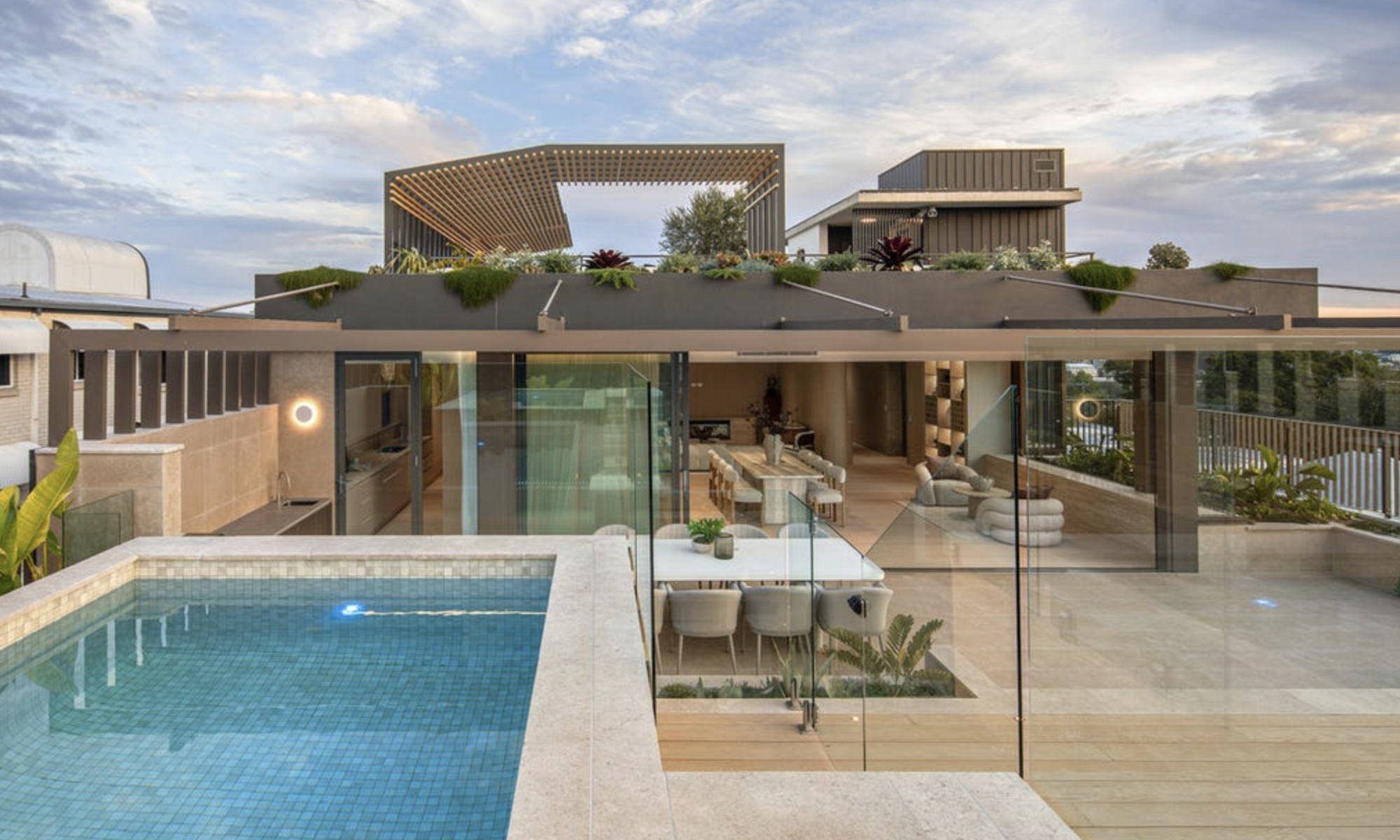
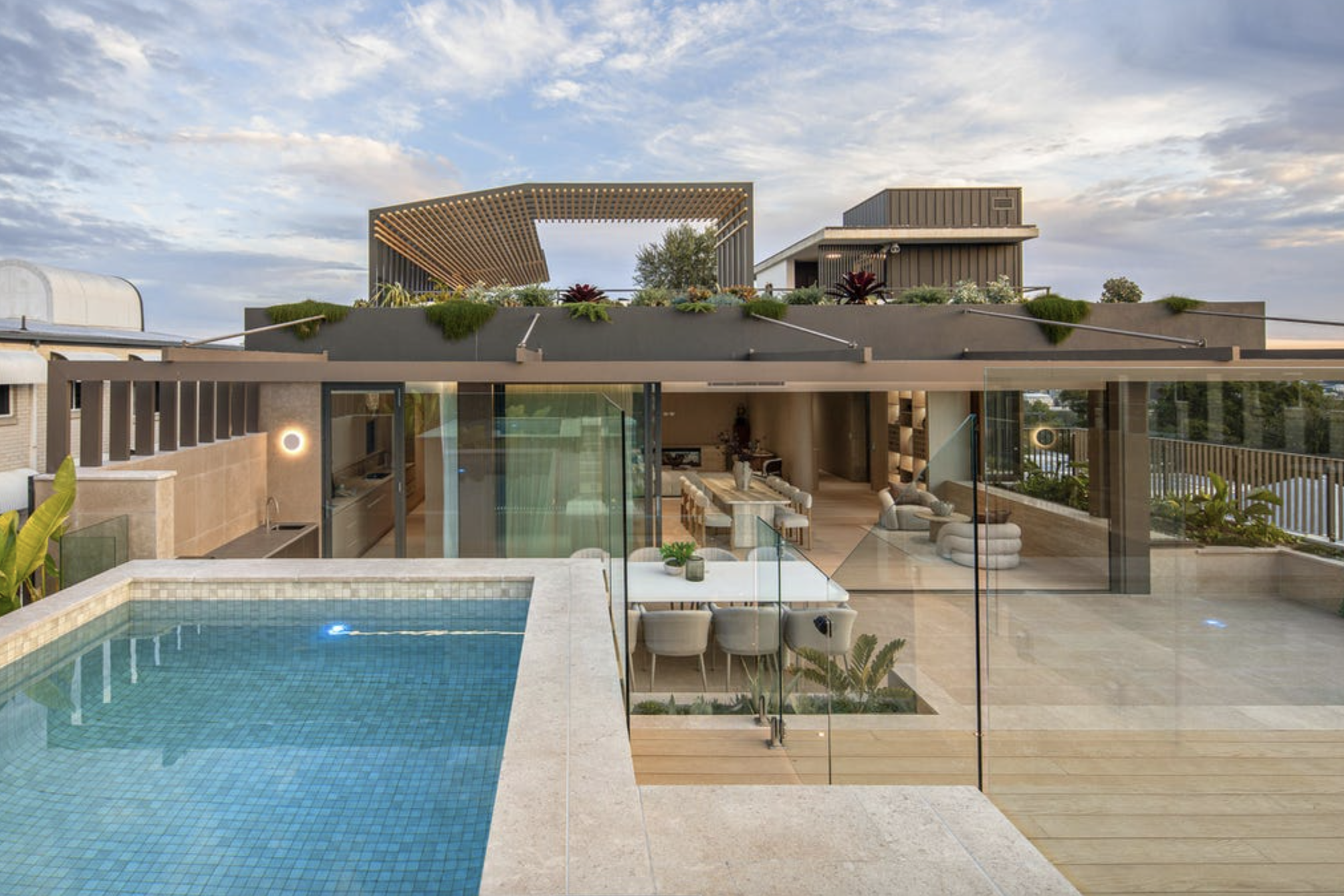
The rooftop features a private swimming pool, a full outdoor kitchen, a fireplace, alfresco dining, and a louvred roof for all-weather use.
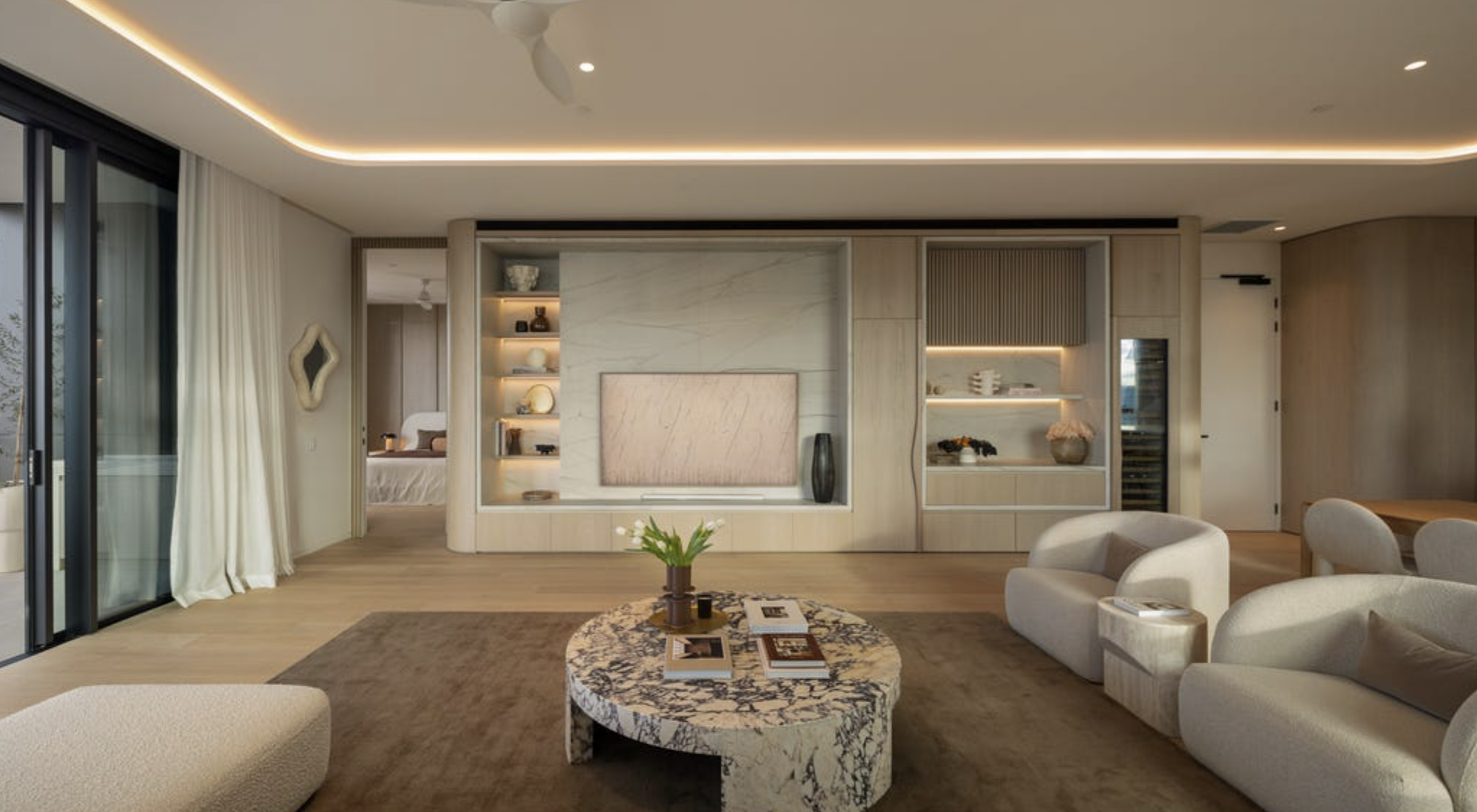
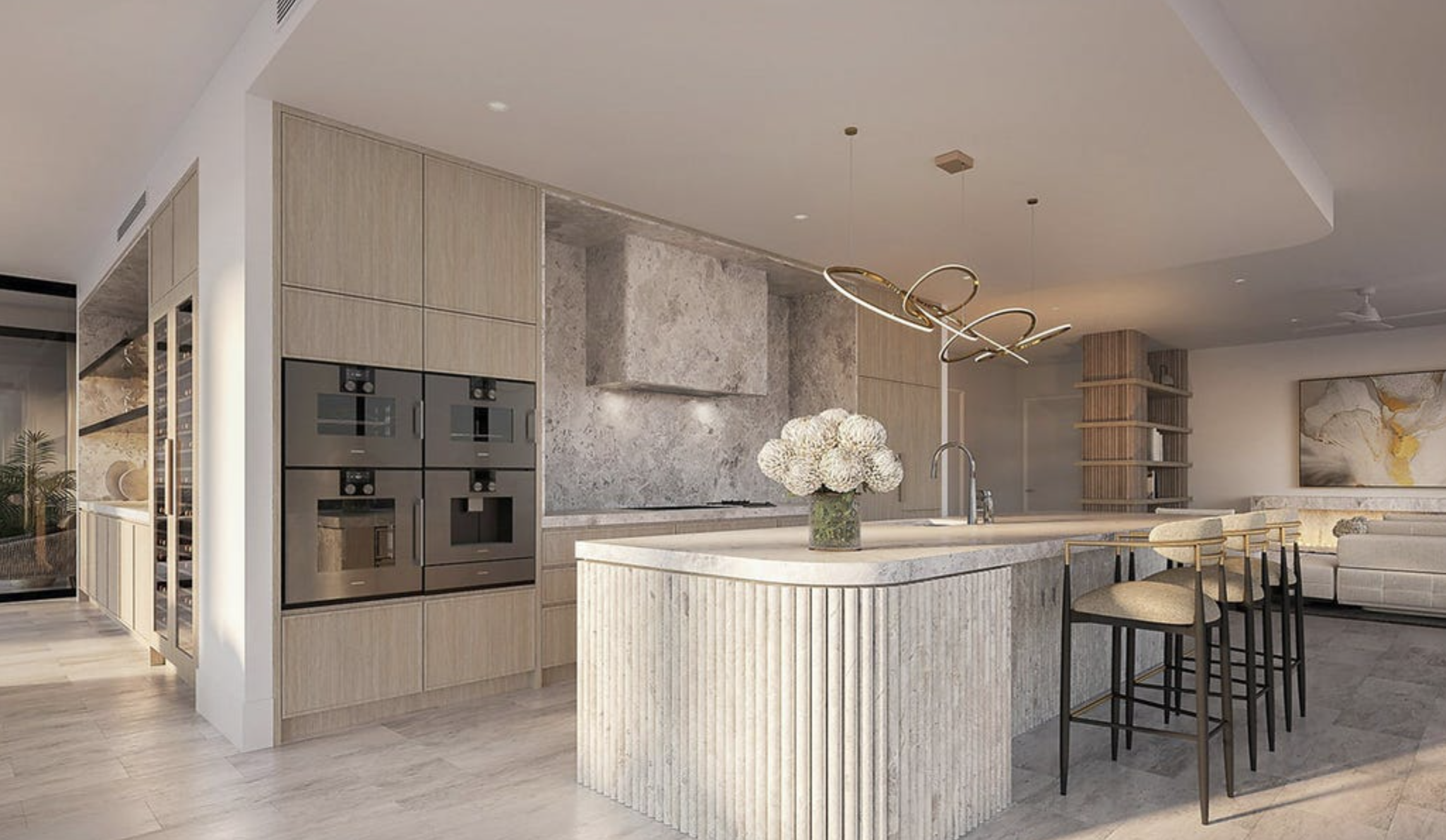
Inside, the apartment features a Roman Classico travertine kitchen with Gaggenau appliances, a custom stone rangehood, Liebherr fridge, and an expansive butler’s pantry. There are three oversized bedrooms, each with a travertine-clad ensuite, plus a media room that can double as a fourth bedroom and a steam room.
The Noura development also offers a communal rooftop pool, dining space, and BBQ facilities for residents.
The Ambrose, Milton. Developer: Kokoda Property Group
The final penthouse in Kokoda’s Ambrose development in Milton stands out for a unique layout rarely seen in the modern penthouse market.
The 325 sqm residence atop the Cottee Parker-designed tower on McDougall Street includes four bedrooms, one of which is a fully self-contained apartment with its own living area and kitchen, ideal for multi-generational living or an au pair.
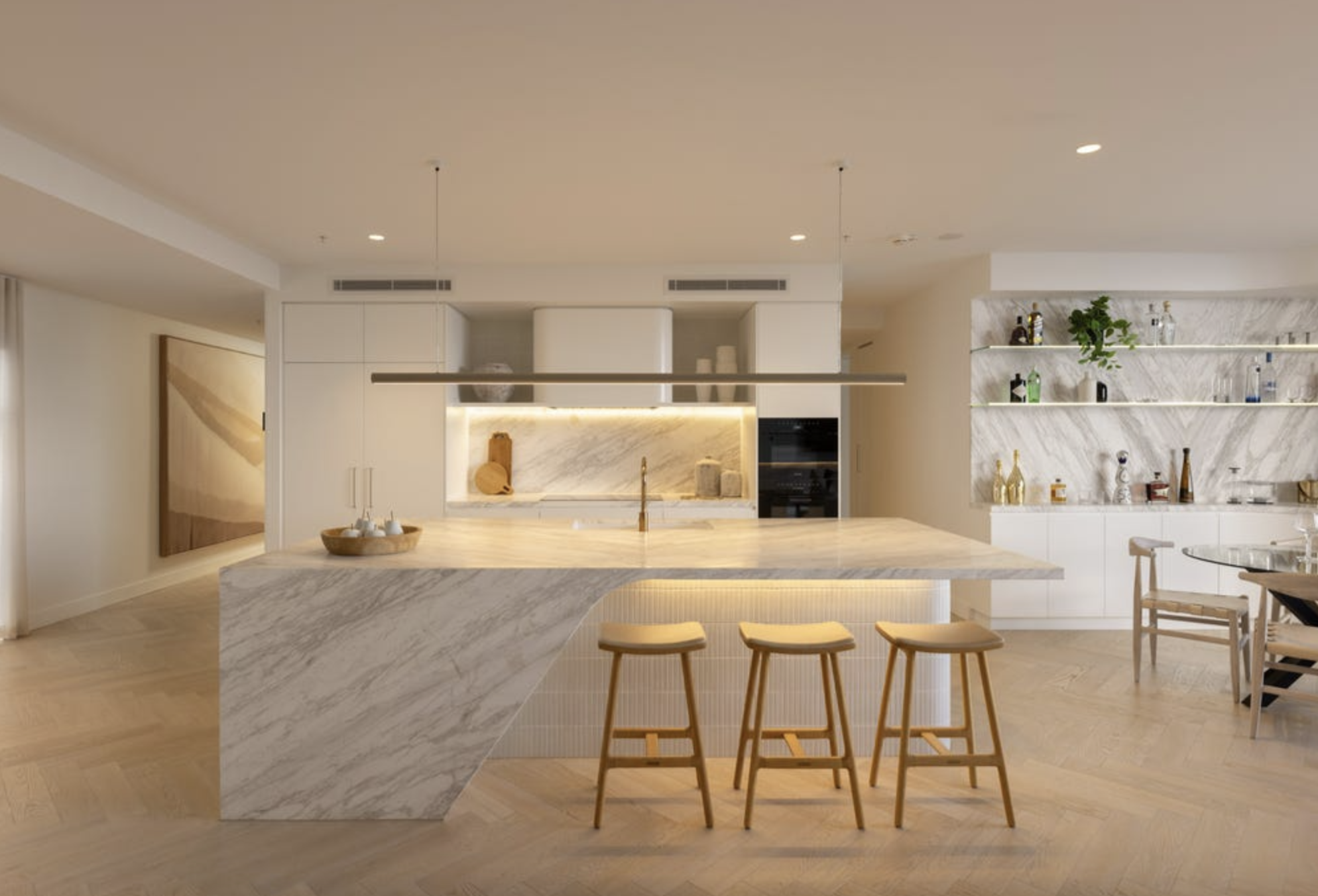
High-end inclusions run throughout: herringbone European oak floors, Volakas Classic marble, a custom bar, and a chef’s kitchen with Miele and Liebherr appliances, oversized island, and butler’s pantry.
The living area opens to a spacious balcony with sweeping city and river views and an integrated Artusi BBQ — also accessible from the master suite, which includes a walk-in robe, dressing area, and luxurious ensuite.
The Ambrose was an early adopter of Brisbane’s rooftop amenity trend. Completed in 2022, the rooftop features an infinity-edge pool, spa, barbecues, outdoor cinema, yoga lawn, residents’ lounge, private dining room, and a seven-day concierge.