Heritage mansion a rare piece of Melbourne’s architectural past
A rare John Beswicke-designed mansion in Hawthorn East has hit the market for the first time in over 50 years.
 2 min
2 min


Just over a dozen of John Beswicke’s residential designs remain today. So, when one of his unique heritage mansions resurfaces after more than half a century off the market, it’s enough to turn some history-lovers’ heads.
A rare piece of Melbourne’s architectural past is 13 Harcourt St, Hawthorn East—previously known as Tudor House or Hilton House—which is listed for the first time in 52 years with Davide Lettieri and Nikki McCarthy of Marshall White Boroondara.
Beswicke certainly influenced Melbourne’s built environment, designing hundreds of public and private buildings between the 1870s and 1915.
A prolific designer, he is credited with creating approximately 300 buildings, including more than 200 houses, 44 commercial buildings, 14 churches, 11 hotels, nine banks, and six town halls including prominent spaces such as, Brighton Town Hall, Malvern Town Hall, Essendon Town Hall, Dandenong Town Hall, and Hawthorn Town Hall.
He called Hawthorn home, specifically Harcourt St in Hawthorn East, where he and many of his family resided. Of the houses he designed in the coveted street, 14 still stand, including Rotha, his own home at 29 Harcourt St.
In March last year, number 35 made headlines when the impressive manor named Charlton set a new street record. The restored circa-1882 Hawthorn East home on 3422 sq m with Paul Bangay gardens was set to become the suburb’s first sale above $20 million, but only just missed the mark at $19,986,888.
Before that exchange, the previous benchmark for the street was $19.5m, set in 2022 with the sale of Ellerslie, a 3340sq m estate at 16 Harcourt St.
Today, the smaller but no less impressive residence at 13 Harcourt St, which is 2114 sq m and has a price guide of $13.25 million, is on the market.
Completed around 1875, the solid brick Victorian residence features a unique chateau-inspired facade and retains many of its period finishes by Beswicke.
The home is framed by lush private parkland gardens with a fountain, rolling lawns and a backyard pool.
Beyond the elegant castle-like exterior, there are voluminous interiors, including an impressive double-arched entrance hall featuring oak parquetry floors and leadlight windows. At the front of the floor plan sits a vast sitting room with a marble fireplace and a stately library with a gas fireplace and walls of bookshelves.
The showstopper is the grand former ballroom, now a combined living and dining area. It has a double-height timber-lined vaulted ceiling, yet another marble fireplace, and arched French doors opening out to the lush north-facing grounds.
The contemporary kitchen, which also spills out onto the yard, has stone bench tops, an integrated fridge/freezer, a meals area, and a hidden laundry.
On the ground floor a self-contained wing features a bedroom with ensuite and sitting area, ideal for a primary suite or guest quarters with direct access to the gardens.
On the first floor, three more bedrooms have built-in wardrobes. They share a full family-friendly bathroom and a balcony overlooking the large front lawn.
Outdoors, there is ample room for entertaining beside with a stone terrace and solar-heated pool.
Despite its 150-year-old status, the property also features many modern conveniences such as an alarm, ducted heating, reverse-cycle air-conditioners, irrigation, storage and multiple car spaces.
The Hawthorn East home is close to Auburn amenities and station, Burke Rd trams, sought-after schools, and Rathmines Reserve.
13 Harcourt St, Hawthorn East, is on the market via private sale with Marshall White Boroondara and has a price guide of $13.25 million.

From making unpopular decisions to learning when to listen, leaders from five businesses reveal what nobody prepared them for — and how running a company has challenged their expectations.

Technology and semiconductor shares fell sharply as investors questioned the debt financing the AI infrastructure boom and confronted higher rates and Chinese competition.
 4 min
4 min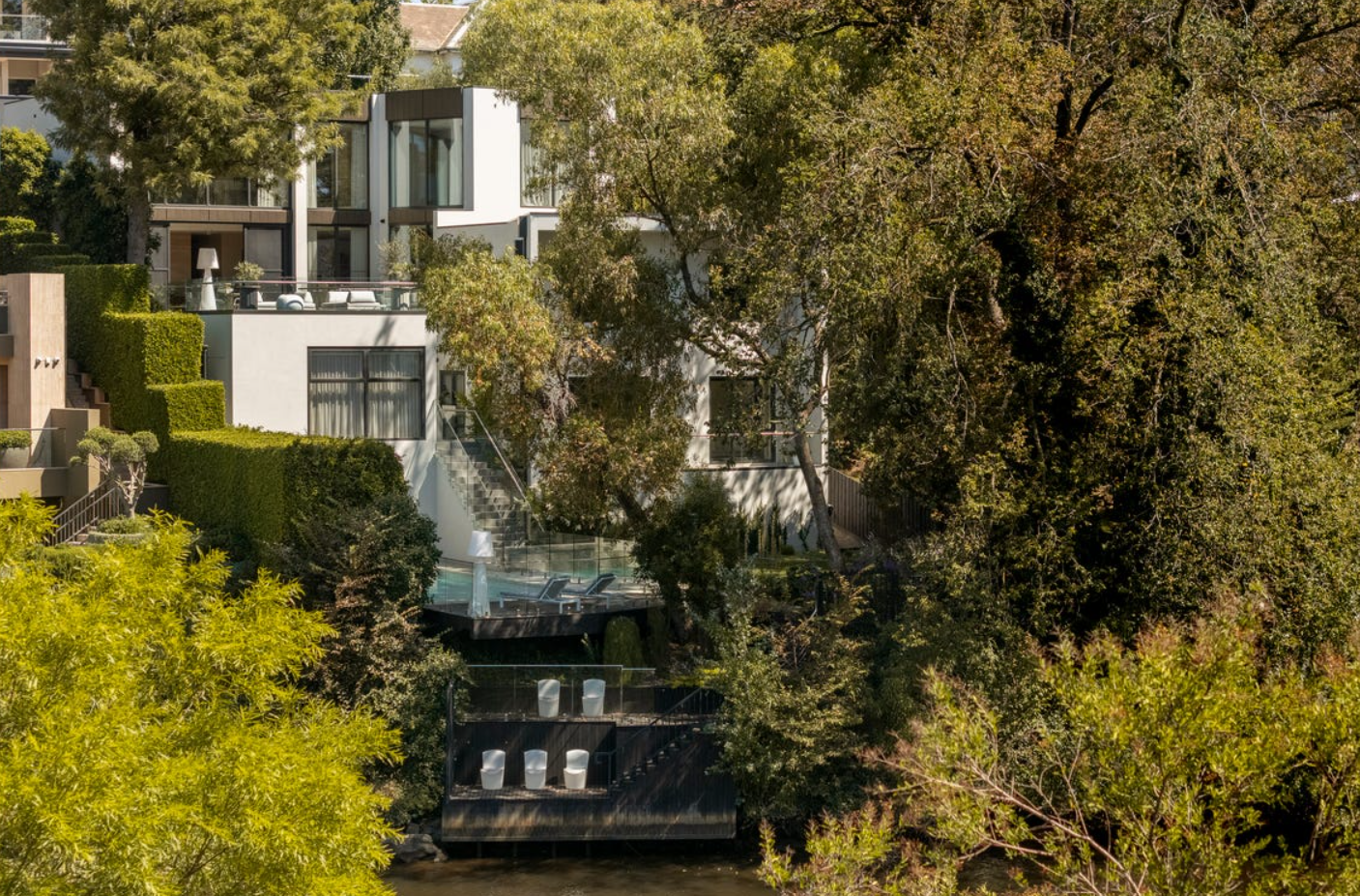
Toorak’s reputation has been built on grand estates, tightly held boulevards and some of Melbourne’s most valuable residential land. Yet one of its rarest attributes is largely hidden from the street: direct frontage to the Yarra River.
Although the river traces much of Toorak’s northern boundary, just over 20 homes in the blue-chip suburb are believed to border the water—and fewer still provide genuine river access. There is no definitive public register of Toorak homes with private jetties, but prestige agents have consistently described them as only a handful.
It is rare, then, for a property offering both river frontage and direct water access to become available in Melbourne’s so-called billionaire’s playground. The newly built Solara on Orrong Road presents precisely that opportunity.
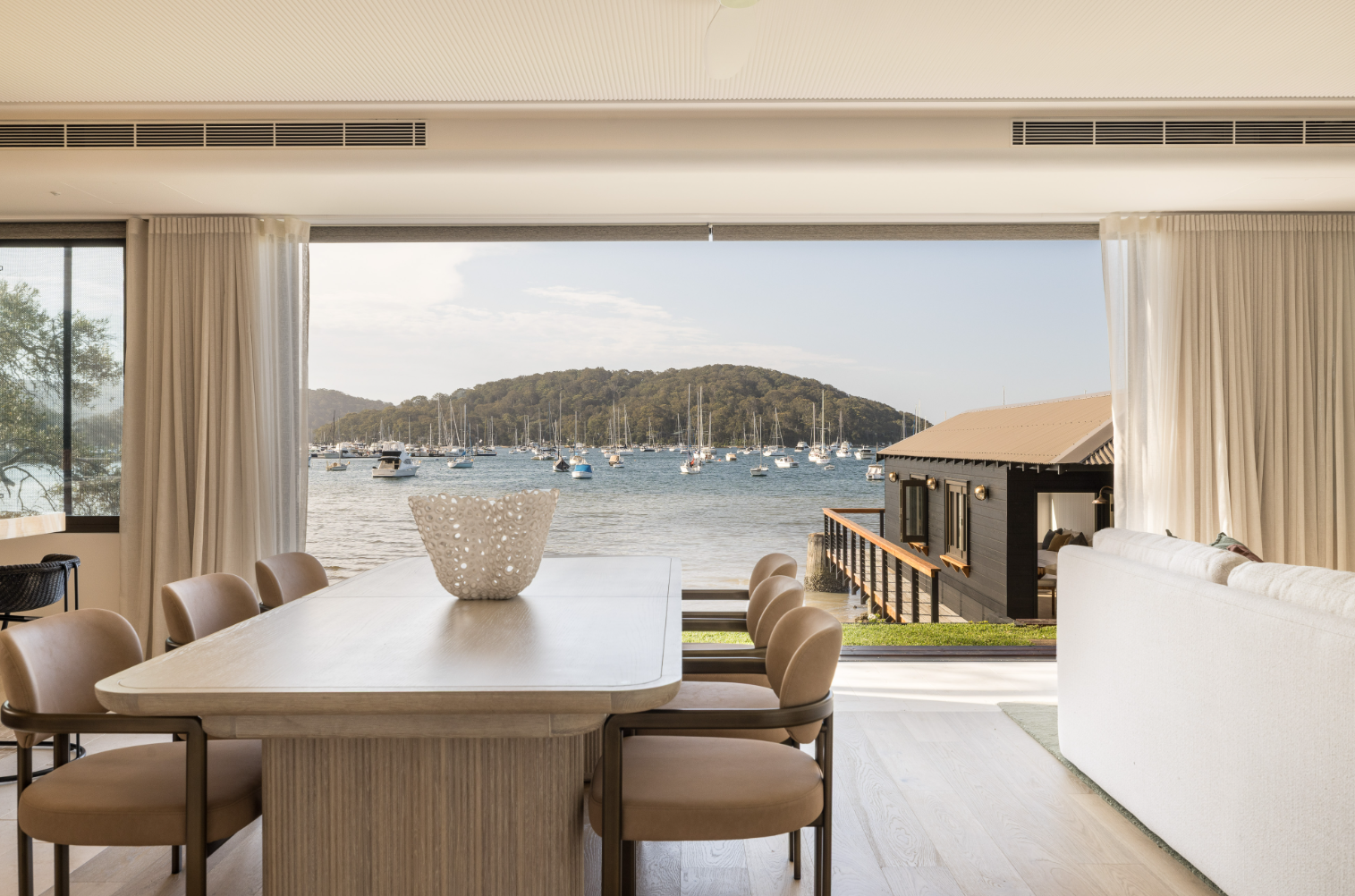
Set on approximately 1,129sqm, the five-bedroom residence descends towards the river, culminating in a private, double-tiered jetty. Here, the Yarra is more than a distant outlook: it becomes part of daily life, offering a place to launch a boat, relax beside the water or travel towards the city from home.
That distinction is significant in Toorak. Many of the suburb’s finest properties offer scale, security and architectural pedigree, but very few combine all three with direct access to the river.
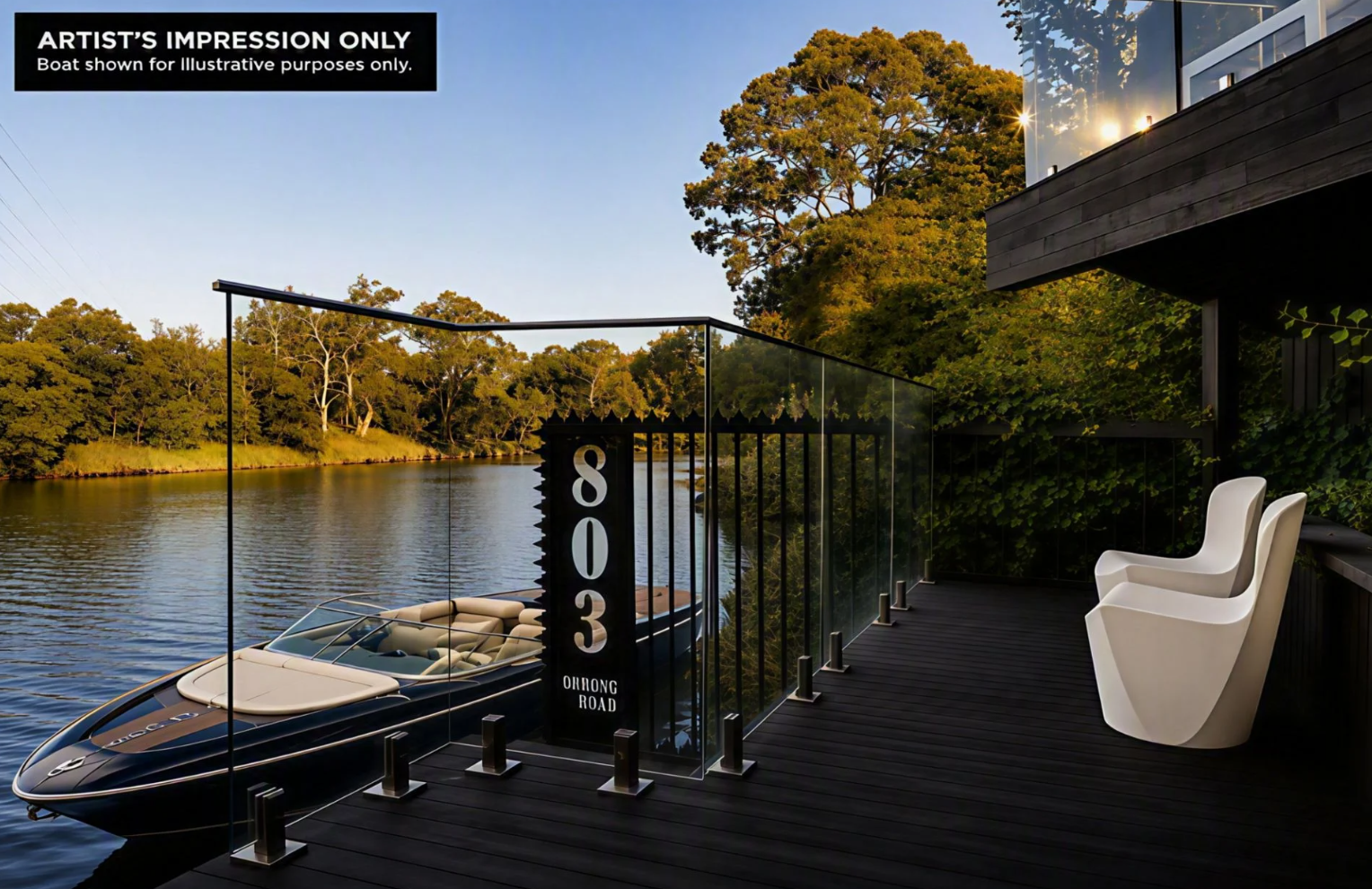
Architecture shaped by the site
Designed by Melbourne studio Alta and constructed by EASTON, Solara has been conceived as a series of interconnected levels descending towards the Yarra.
Rather than presenting as a single imposing volume, the house responds to its sloping site through stepped terraces, landscaped outdoor areas and large expanses of glazing. The architecture gradually reveals the water, drawing the eye through the interior and towards the river below.
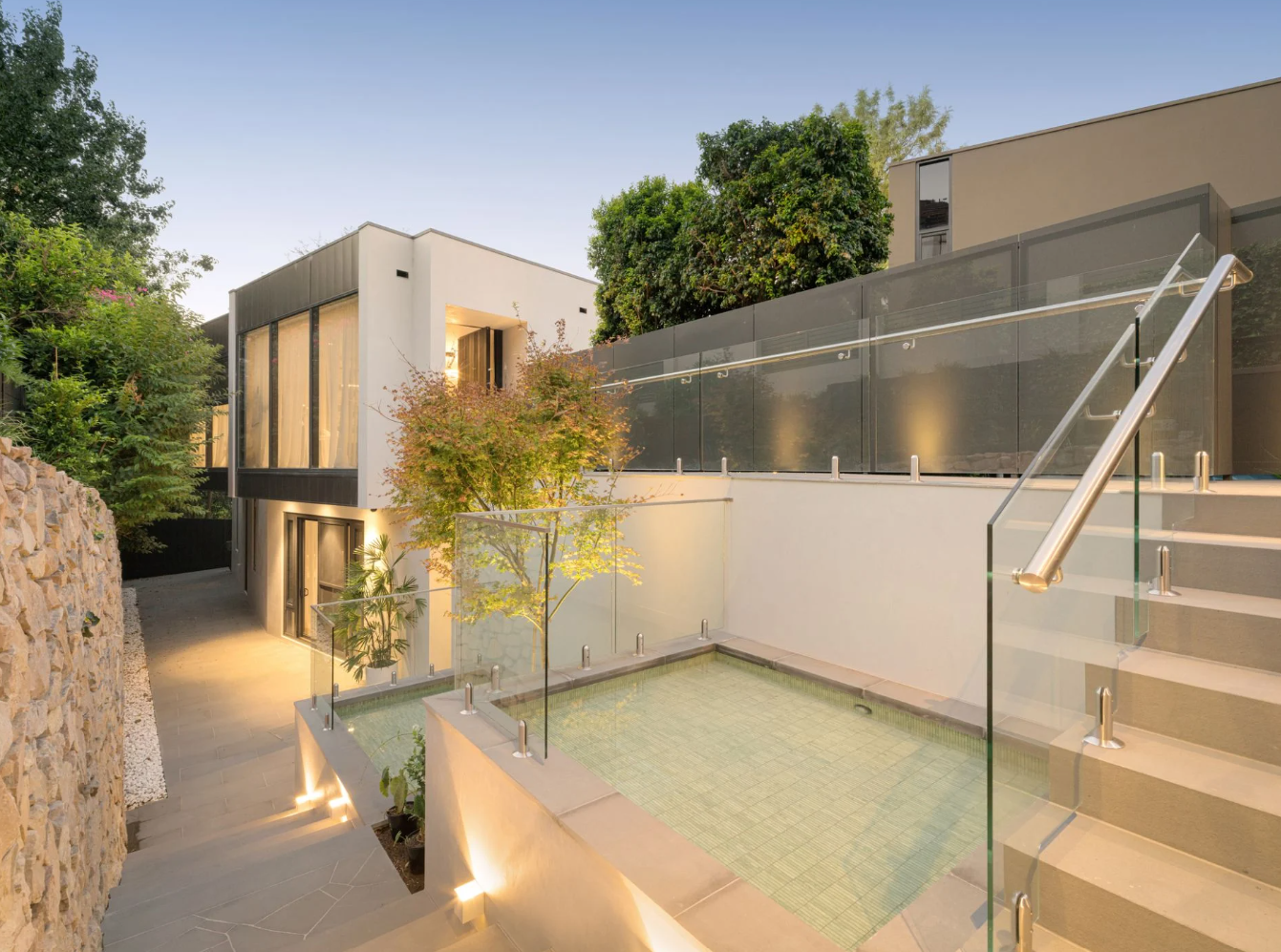
The design has earned Solara a nomination in the 2026 Master Builders Excellence in Housing Awards.
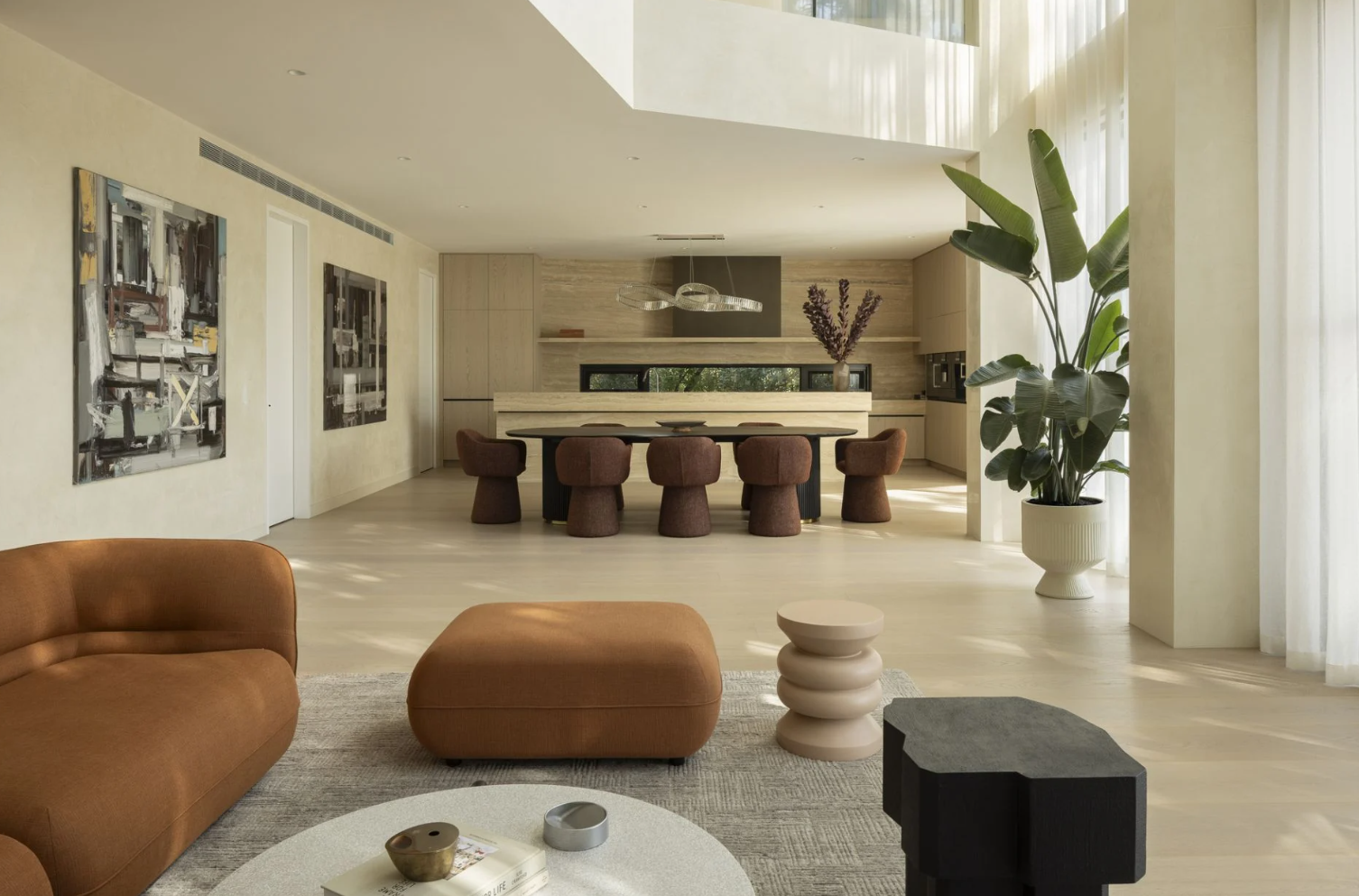
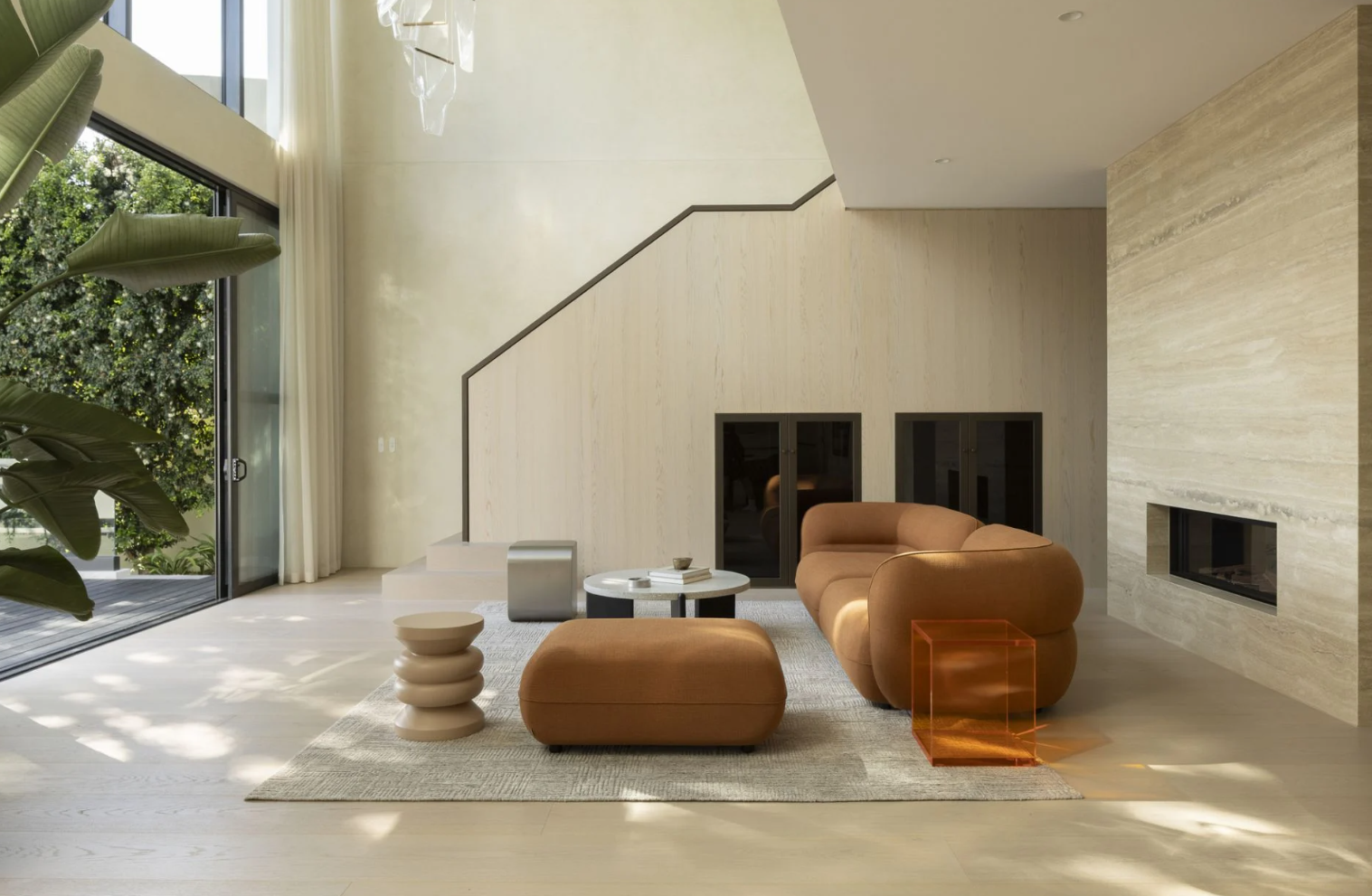
Inside, a restrained material palette allows texture, proportion and natural light to carry the design. Stone, timber, glass and finely detailed joinery establish a sense of permanence without overwhelming the river setting.
The principal living area is arranged beneath a dramatic double-height ceiling, giving the room the scale expected of a major Toorak residence while maintaining a strong connection to the garden and water.
Full-height glazing opens the house to its outlook, while multiple living and entertaining spaces allow the property to transition between intimate family use and larger gatherings.
A private resort beside the Yarra
Solara’s principal living spaces open onto an expansive river-facing terrace containing a swimming pool and spa.
The outdoor area has been positioned to take advantage of both the northern light and the relative seclusion of the riverbank. Mature landscaping provides another layer of privacy, softening the architecture and creating the atmosphere of a private resort.
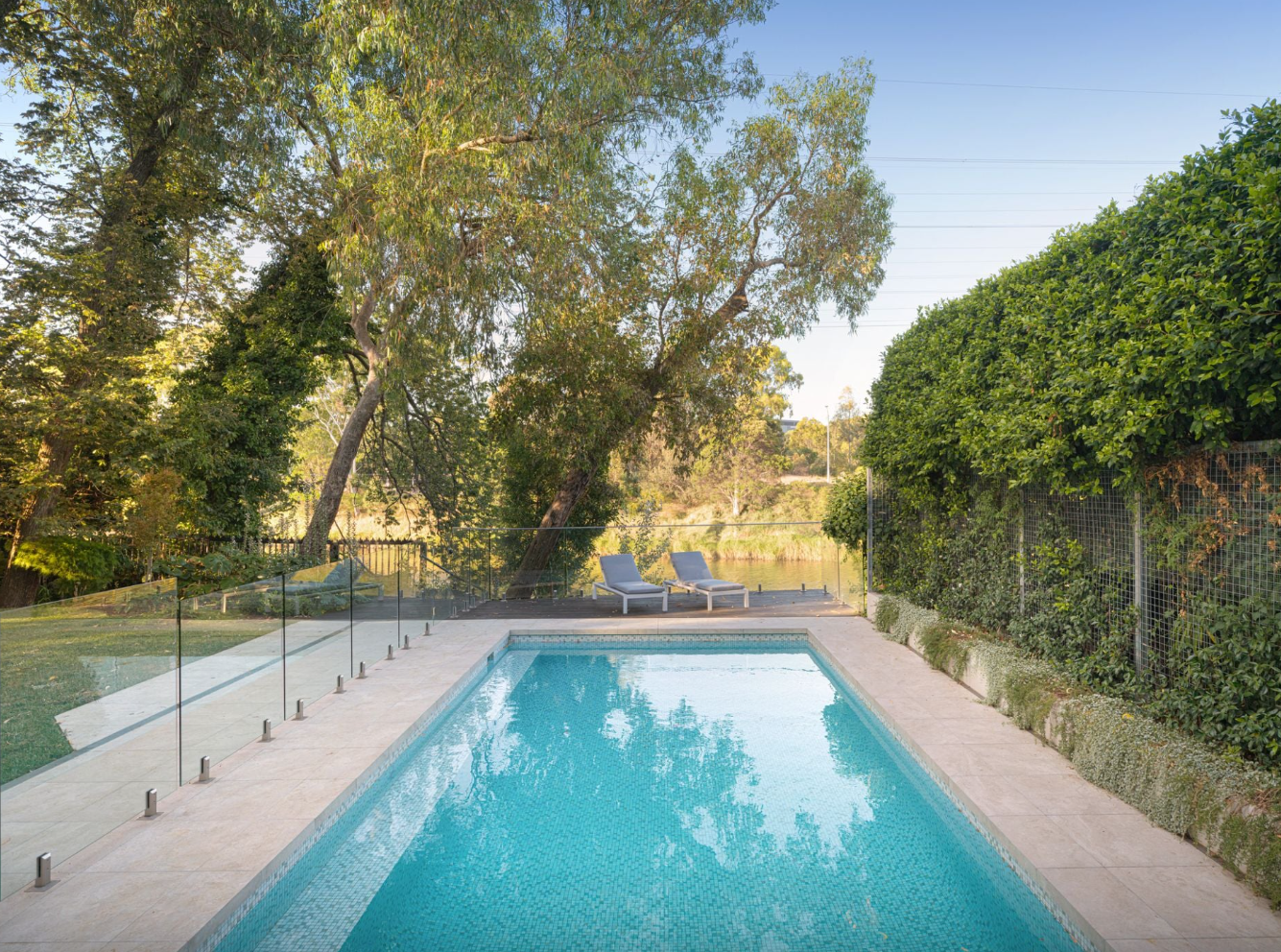
Below, the grounds continue towards the double-tiered jetty.
The residence also incorporates a dedicated wellness area and gym, reinforcing the sense that the home has been designed to provide a complete lifestyle within its boundaries.
Its accommodation includes five bedrooms and six bathrooms, with the principal suite occupying a private domain of its own. The house also provides garaging for four cars—an important consideration in a property of this scale.
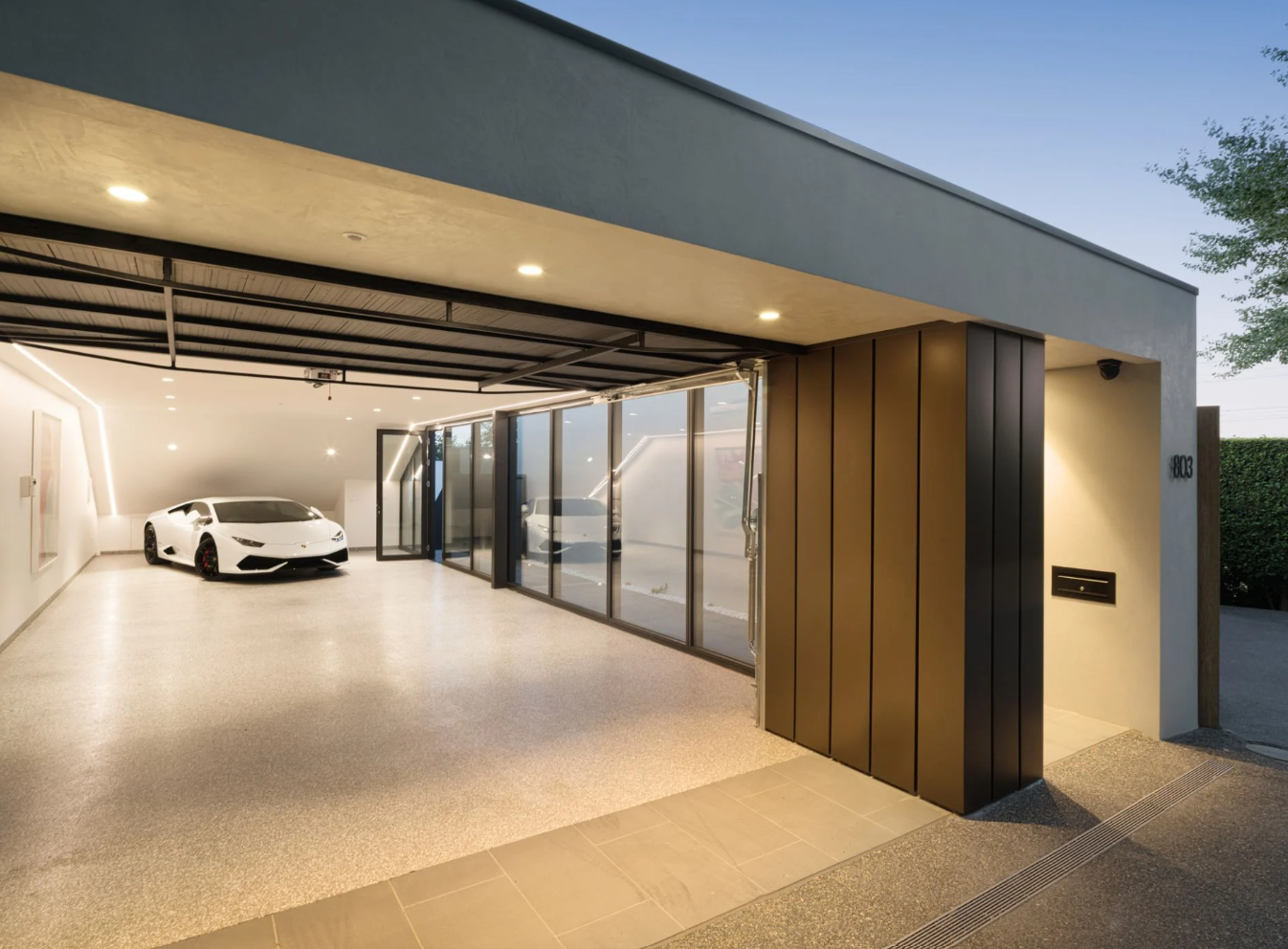
Across the residence, the emphasis is less on overt decoration than on volume, outlook and craftsmanship. Sightlines have been carefully managed so that the river is encountered repeatedly, rather than being confined to a single formal room.
A different expression of Toorak prestige
Toorak’s luxury market is often associated with historic mansions and large European-inspired estates. Solara represents a more contemporary interpretation of the suburb: architecturally ambitious, highly private and organised around lifestyle rather than formality.
Its position also places it within a particularly scarce segment of the market.
Riverfront homes have previously appeared along addresses including St Georges Road and Edzell Avenue, although they tend to remain in the same ownership for long periods. Even among these properties, private jetties and convenient access to the water are not universal.
That scarcity separates Solara from other prestige homes that may offer river views without actually reaching the river.
For buyers operating at the upper end of Melbourne’s residential market, the value proposition is therefore not simply the size of the house or its list of amenities. It is the combination of new architecture, substantial land, resort facilities and an attribute that cannot readily be recreated: private access to the Yarra from Toorak.
Solara is being marketed with a guide of $16.8 million to $18.3 million through Jamie Mi of Kay & Burton.
Property snapshot
Address: 803 Orrong Road, Toorak, Victoria
Guide: $16.8 million–$18.3 million
Agent: Kay & Burton agent Jamie Mi
Land: Approximately 1,129sqm
Accommodation: Five bedrooms, six bathrooms and four-car accommodation
Design: Alta
Builder: EASTON
Key features: Private jetty, direct river access, gym, indoor spa and double-height living volume
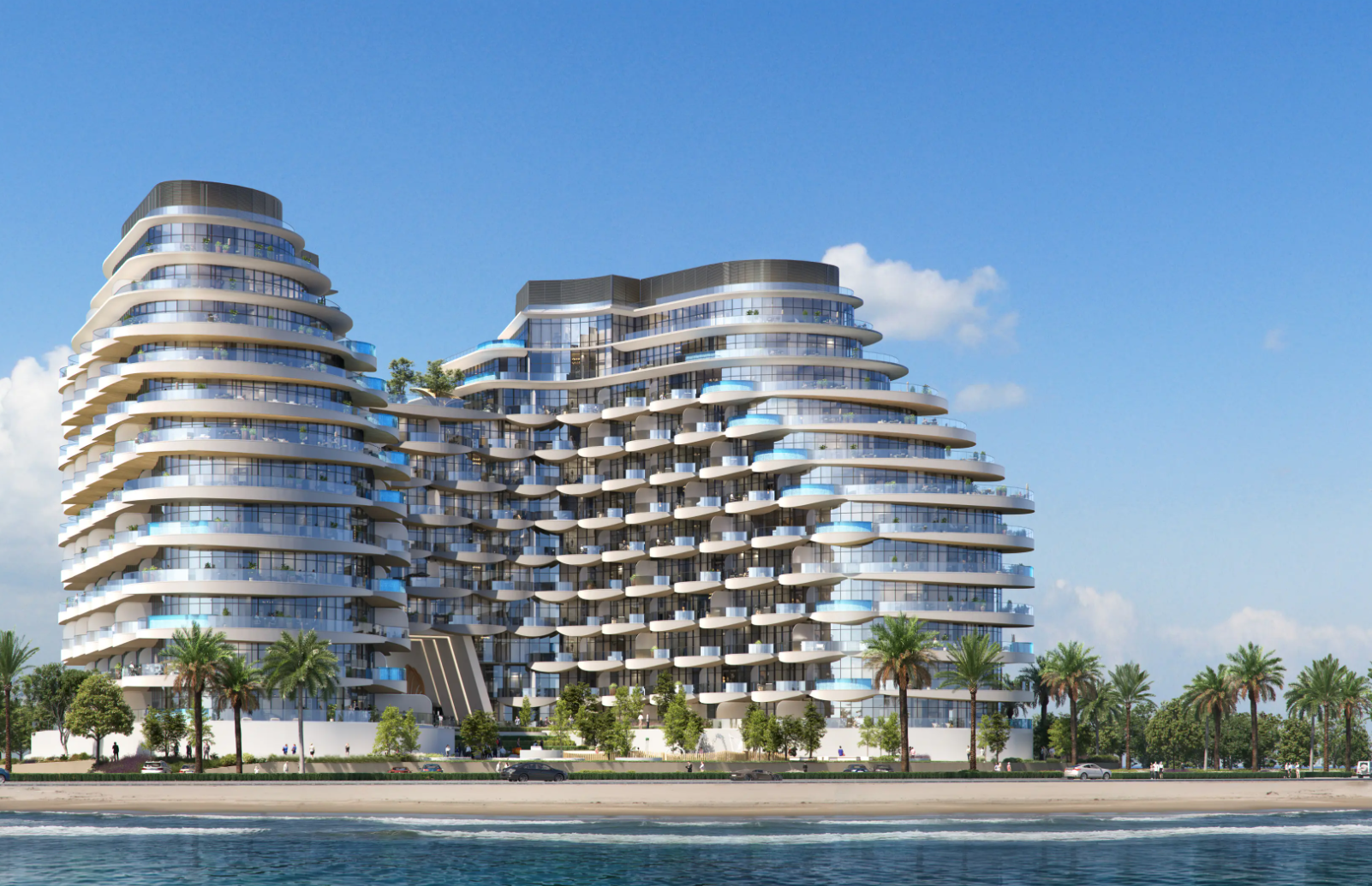
BNW Developments has established a Sydney presence, joining Arada and Sobha Realty among the growing number of UAE developers pursuing Australian buyers and development opportunities.

New research suggests that bonuses make employees feel more like a mere cog in a wheel.