These Are the Gifts Tween Girls Will Be Happy to Receive

 3 min
3 min
Tween girls are fun to shop for because they appreciate a wide range of gifts. Clothes and jewelry? Creativity kits? Room decor? Check, check, check. But the trick with this age group (generally considered from 8 to 12) is finding presents that match their maturity and don’t read as too babyish, says Jackie Schiavone, a Westport, Conn.-based fashion stylist and mum of a tween and teen girl. We asked Schiavone and other style pros to share their gift recommendations, so you can confidently shop for the tween girl on your list.
For making a personal style statement
Schiavone says that girls this age are often obsessed with initial jewelry, and Anthropologie’s 14-karat gold-plated Bubble Letter Necklace is a lovely take on the trend. The adjustable length (15 to 17 inches) on the snake-style chain means it works with different necklines and necklaces. “Tweens can stack it with other thin necklaces — think small beads and gold chains — or wear it solo as a statement piece,” Schiavone says.
For 3D design projects
“My daughter is 12 and really wants this 3D printer ,” says Brooklyn, N.Y.-based interior designer Jennifer Morris of JMorris Design . It comes with everything a tween needs to make their own toys and objects from non-toxic, biodegradable plastic. They can choose from the set’s 7,000 patterns (from toys to ornaments to planters) or create their own designs — a feature Morris appreciates. “I love giving an art gift that has creative freedom and doesn’t have a prescribed outcome,” she says.
For old-school selfies
Instant cameras, including the Instax Mini , are “the must-have tween gadget at the moment,” says Kimberly McLeod , the Toronto-based author of ” The Ultimate Book of Would You Rather Questions .” Digital natives get a kick out of seeing photos develop before their eyes, and they love the bubbly retro design and cute credit card-sized photos, she adds. This bundle supplies everything they need to capture memories: the camera (in blush pink, ice white, lilac purple, mint green or sky blue), a four-pack of Fuji film, a carrying case and a photo album.
For keeping cozy in style
Starting in the tween years, it’s “welcome to black clothing,” says Schiavone. This Sam. black and faux shearling jacket is a great gift (in fact, Schiavone has one that her daughter keeps stealing). She likes that the white faux shearling softens the black, while still feeling grown-up. Most importantly, it’s warm and cozy, with a faux sherpa lining, a sherpa-lined hood and impressive 90%-down, 10%-feather fill.
For staying inspired
A customizable letter board makes a fun gift for tweens because it lets them express themselves, says Athens, Greece-based Anna Tatsioni, lead interior designer at Decorilla , an online interior design service. This framed aqua felt board can be wall mounted or propped up on a surface and comes with 725 white and gold letters in different fonts to design with. Tweens like that they can keep changing up the message, whether it’s an inspiring quote, a personal mantra or a Taylor Swift lyric. “It also doubles as a great conversation starter when they have friends over,” Tatsioni says.
For a wardrobe staple
You can’t miss with black Lululemon Align leggings , says Schiavone. Tweens especially like the Mini Flare style because it doesn’t look like mom’s Lulus. The leggings are made from the brand’s signature super-soft and durable Nulu fabric, which means they feel wonderful and hold up well.
For screen-free fun
Morris loves this LED dart board for the fun factor. “Anything that encourages play and looks cute is a win,” she says. The acrylic target comes with a plug-in board and six darts for tweens to practice their aim — when they aren’t basking in its rainbow glow. “I love the light for an accent in a room,” Morris says.
For staying toasty — and connected
“A Bluetooth beanie hat is the gift of the season,” says Schiavone. Any tween with a smartphone, Apple Watch or iPad will love this cute pom-pom beanie with a smart upgrade: an embedded Bluetooth headset. Just pop the hat on and listen to a favorite song or podcast, or take mom’s call on the go. The knitted acrylic hat also comes in black, but Sciavone says “winter white is the way to go.”
For happy feet
Vans are back in style, and tweens are loving that they’re a bit bold and a breeze to kick on and off. In a fun color like olive green or not-so-basic black and off-white, “they’re just a classic,” says Morris.
For beauty lovers/For a beauty spree
“In the tween and teen years, half their wish list is for beauty products from Sephora, so I like to throw a gift card inside a fun cosmetic bag,” says interior designer Suzanne Flohr of Lennon and Flohr Interior Design in Charlottesville, S.C. You can personalize this Mark and Graham train case , which is made of printed canvas coated with plastic for easy cleaning. If you want to stock it with something besides a gift card, toss in Summer Fridays Holiday Lip Butter Set , a favorite of the middle-school set.
For blemish busting
“These Hero Cosmetics pimple patches may be the ultimate stocking stuffer,” says Schiavone. They’re invisible patches made with medical-grade hydrocolloid, a gel used to heal wounds and acne. When you peel the patch off, it removes gunk from the pimple, helping it to heal. “Everyone in my house uses these patches, including my son,” she says.
 Copyright 2020, Dow Jones & Company, Inc. All Rights Reserved Worldwide. LEARN MORE





From making unpopular decisions to learning when to listen, leaders from five businesses reveal what nobody prepared them for — and how running a company has challenged their expectations.

Technology and semiconductor shares fell sharply as investors questioned the debt financing the AI infrastructure boom and confronted higher rates and Chinese competition.

Elon Musk is exploring a potential merger between Tesla and SpaceX, a deal that could reshape the future of AI, robotics, autonomous vehicles and space technology. With a combined valuation potentially reaching $3.5 trillion, the move could bring Musk’s vision of an interconnected technology ecosystem closer to reality, although a deal remains uncertain.
5 min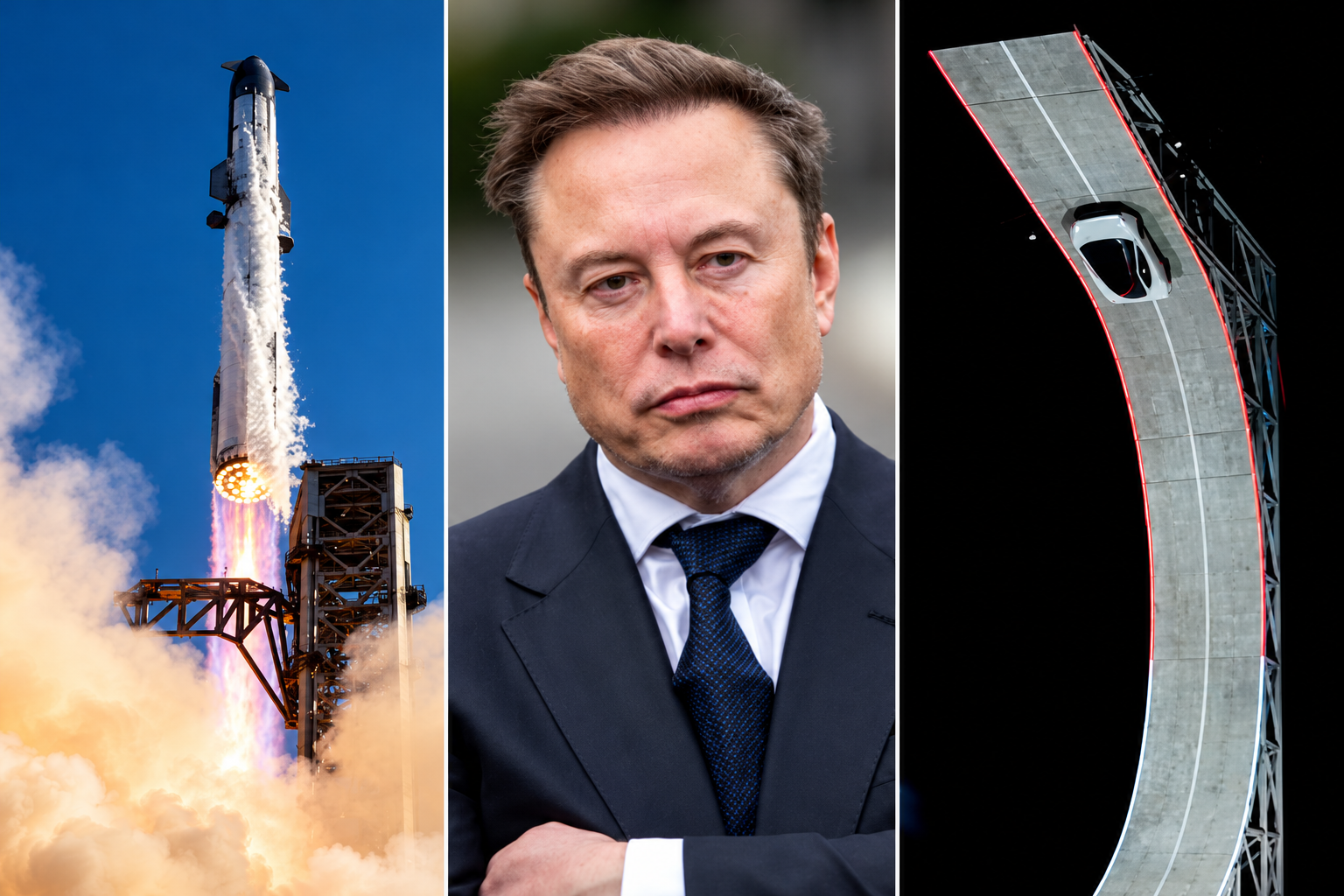
Elon Musk has engineered ties between Tesla TSLA 3.41%increase; up pointing triangle and SpaceX SPCX 7.79%increase; up pointing triangle that are hard to break, and now he wants to fuse them together permanently.
Musk has run both Tesla and SpaceX concurrently over the past two decades, using a schedule that dictated which days he spent focused on each business.
The companies have often shared resources and personnel, signaling their close ties. Last year, SpaceX looked into creating a spacesuit for Tesla’s humanoid robot Optimus, a person familiar with the matter said. Tesla last week showed off its new Roadster, a vehicle featuring SpaceX rocket thrusters that it hopes to soon bring to market.
And in recent months, Musk has repositioned both companies by expanding beyond their core operations toward a shared mission centered on artificial intelligence.
The world’s richest man on Tuesday signaled his interest in tying up SpaceX and Tesla, marking what would be the biggest corporate merger of all time. Because he serves as chief executive of SpaceX and Tesla, Musk said committees of independent directors at both companies are evaluating a possible deal, adding that a transaction might not come to fruition.
The committees will likely evaluate, with lawyers and bankers, how each company would fare in a potential deal and how a deal might best be structured. They then present their conclusions to their respective boards, who typically vote on whether to proceed.
“It’s an odd Kabuki dance where two groups of people are talking and I can’t be in the conversation,” Musk told SpaceX investors on Tuesday in response to an analyst’s question about a potential deal.
For Musk, the merger supports his vision of a world full of autonomous cars, humanoid robots and weekly rocket launches, as well as the data centers and satellites required to keep the whole thing running.
Some investors and analysts said they expect a transaction would be structured as an all-stock deal, with SpaceX potentially paying a modest premium for Tesla shares.
SpaceX, which has a market value of about $2 trillion, said it is seeing sharp growth in revenue across its businesses, which include operating data centers, launching rockets and operating satellite networks such as the internet service Starlink. Tesla is valued at about $1.5 trillion and is expanding its operations beyond its automotive and energy business. Shares in both companies traded higher following the news Tuesday.
Musk’s substantial ownership stakes in both companies, along with voting control at SpaceX, has enabled him to set the deal in motion. Analysts and investors said the deal will probably face regulatory scrutiny internationally, though some see Musk’s close relationship with the Trump administration as an asset to getting approval.
Blurred lines
The companies haven’t said which directors are on the special committees evaluating a potential deal. Several SpaceX and Tesla board members have either personal or business ties to Musk. And like Musk, venture capitalist Ira Ehrenpreis sits on both boards.
In a filing this week, Tesla outlined millions of dollars in business agreements with SpaceX and its subsidiaries last year, including $143 million in car sales to SpaceX, $3.3 million in advertising that it bought on the social-media platform X and $430 million in revenue from the sale of Megapack batteries for SpaceX’s data centers.
The companies also split the cost of resources including the use of Musk’s SpaceX jet and the bill for his personal security, which he runs through a private company.
Employees at both companies routinely move between companies to work on special projects, and some executives have dual roles, including Charles Kuehmann, vice president of materials engineering at both SpaceX and Tesla, and Ashok Elluswamy, the vice president of AI software at Tesla who runs a joint venture with SpaceX called Digital Optimus.
Over the years, Musk has launched new startups within his empire, including brain-implant company Neuralink, underground-tunnel developer the Boring Company and xAI, the AI startup that merged with SpaceX in February.
It is that AI business that Musk thinks can serve a market worth tens of trillions of dollars, justifying the need for a merger.
The business case goes like this: Tesla is developing robotaxis and robots, which it calls “physical AI.” SpaceX is working on the back end of physical AI: the data-center capacity and internet connection required for those robotaxis and robots to operate continuously.
“I don’t see what the value of Tesla is if it’s not merged with SpaceX,” said investment adviser Ross Gerber, a former Tesla bull turned critic invested in both companies. “If they don’t merge, the brains of everything that runs Tesla is owned by another company.”
On top of it all, both companies face constraints on the supply chains they need to make this world a reality, particularly when it comes to chips. To address this, Musk earlier this year announced a joint venture between Tesla, SpaceX and Intel to design and manufacture chips in Texas. “The most epic chip-building exercise by far,” he has said.
Musk at the wheel
For Musk, a merger would also solve two problems: demands on his attention and his lack of control at Tesla.
Tesla for years was Musk’s only public company, a status that came with greater scrutiny. There, Musk reports to a public board, as well as individual investors who make up around 30% of Tesla’s voting power, according to FactSet.
The question of Musk’s attention became a particular focus for investors and the board in recent years after he acquired Twitter in 2022 and launched xAI in 2023, and again in 2025 as he spent time in Washington, D.C., running the Department of Government Efficiency in the early months of President Trump’s second term.
As Tesla’s car business suffered in 2025, Musk threatened to take his AI ambitions outside the company if he wasn’t granted 25% voting control. Last November, Tesla shareholders approved a new pay package for Musk, which created a path for him to vastly expand his stake.
As of Sept. 30, Musk owned a roughly 20% stake in Tesla, according to the company’s proxy filing.
The SpaceX IPO gave Musk a different path. When SpaceX went public in June, the deal’s structure enabled him to have more than 80% voting power at the company—so much that he can’t be fired and decisions can’t be made without his support.
If SpaceX acquires Tesla, he will likely stay in control.

Formula 1 may be the world’s most glamorous sport, but for Oscar Piastri, it’s also one of the most lucrative. At just 24, Australia’s highest-paid athlete is earning more than US$40 million a year.

A haven for hedge-fund titans and Hollywood grandees, Greenwich is one of the world’s most expensive residential enclaves, where eye-watering prices meet unapologetic grandeur.